Article

Transcriptomic Profiles from Stereo-EEGs May Reflect the Local Brain Cell Microenvironment in Human Epilepsy


by
Julian Larkin
1,2,3,
Anuj Kumar Dwivedi
4,
Arun Mahesh
4,
Albert Sanfeliu
3,5,
Kieron J. Sweeney
3,6,
Donncha F. O’Brien
3,6,
Vijay K. Tiwari
4,7,8,9,
Peter Widdess-Walsh
1,3 and
David C. Henshall
3,5,*
1
Department of Neurology and Clinical Neurophysiology, Beaumont Hospital, D09 V2N0 Dublin, Ireland
2
Strategic Academic Recruitment Doctor of Medicine Programme, RCSI University of Medicine and Health Sciences in Collaboration with Blackrock Clinic, D02 YN77 Dublin, Ireland
3
FutureNeuro Research Ireland Centre, RCSI University of Medicine & Health Sciences, 123 St. Stephen’s Green, D02 YN77 Dublin, Ireland
4
Institute for Molecular Medicine, University of Southern Denmark, 5230 Odense M, Denmark
5
Department of Physiology & Medical Physics, RCSI University of Medicine & Health Sciences, D02 YN77 Dublin, Ireland
6
Department of Neurosurgery, Beaumont Hospital, D09 V2N0 Dublin, Ireland
7
Danish Institute for Advanced Study (DIAS), 5230 Odense M, Denmark
8
Department of Clinical Genetics, Odense University Hospital, 5000 Odense C, Denmark
9
Wellcome-Wolfson Institute for Experimental Medicine, School of Medicine, Dentistry, and Biomedical Science, Queens University Belfast, Belfast BT9 7BL, UK
*
Author to whom correspondence should be addressed.
Biomolecules 2025, 15(12), 1684; https://doi.org/10.3390/biom15121684
Submission received: 24 October 2025 / Revised: 23 November 2025 / Accepted: 27 November 2025 / Published: 2 December 2025
(This article belongs to the Special Issue Molecular Biomarkers of Epileptogenesis)

Abstract

Background: Our understanding of the pathomechanisms of epilepsy has improved through techniques that access the living human brain. We recently reported that explanted stereo-electroencephalography (SEEG) electrodes from patients with epilepsy carry residual biomolecules and cells, which may be utilised for transcriptome and DNA methylation profiling. Methods: Here, we applied bioinformatic and other analyses to explore the transcriptomes (RNA sequencing-based) of those SEEG cases to better understand the types of recovered transcripts in terms of representation of genes expressed by different cell types, brain structures, and the extent to which the signal may reflect local epileptiform activity. Results: Electrodes from all clinical cases retained protein-coding transcripts which reflected the local molecular microenvironment as well as epileptiform activity. Expression of genes involved in housekeeping functions, as well as markers of neuronal activity, was consistent between patients and between the electrode locations within the brain. We detected transcripts representing various cell types and subtypes, including excitatory and inhibitory neurons, all major classes of glia, and endothelial cells, as well as transcripts enriched in specific brain regions. Several genes showed a gradient of expression depending on the electrode position within the brain. We found examples of gene expression that correlated with epileptiform activity as recorded by SEEG. Conclusions: These findings extend the evidence that SEEG electrodes reflect the molecular microenvironments of brain activity in patients with epilepsy, both at sites of seizure onset and within the wider seizure network. The approach has potential applications in intraoperative surgical decision-making, as well as to identify molecular biomarkers or therapeutic targets for the drug-resistant epilepsies.

1. Introduction

The ability to map the transcriptional landscape of human epilepsy in vivo remains a major challenge in developing our understanding of the focal epilepsies. To date, the primary methods of profiling human epileptic brain tissue have been through fresh tissue samples removed during neurosurgery and post-mortem studies [1]. Stereo-electroencephalography (SEEG) involves implantation of intracranial electrodes into deep brain structures to characterise the epileptogenic network and guide surgical intervention in focal epilepsy [2,3]. Typically, intracranial depth electrodes are explanted and disposed of upon completion of the SEEG evaluation. Recent studies have demonstrated the feasibility of retaining intracranial depth electrodes upon explantation and using the trace amounts of nucleic acids from fluid and cells adherent to the surface for identification of brain-specific somatic variants in malformations of cortical development (MCD) and neuronal migration disorders [4,5,6,7,8,9,10]. Given that electrodes are implanted to provide coverage of a broad sample of deep and neocortical brain structures, this provides a unique opportunity to sample the human brain micro-environment in a minimally invasive manner. Furthermore, many of these electrodes are implanted in regions which are ultimately remote to the site of seizure onset, in tissue which is uninvolved in seizure onset or propagation (i.e., healthy brain). These samples represent a unique internal control which would normally be inaccessible in vivo, due to the technical and ethical barriers to sampling normal brain distant from epileptogenic tissue.
We recently reported the isolation of nucleic acids, including RNA from SEEG contacts, followed by genome-wide transcriptome and methylome profiling, overlaying this with clinical and neurophysiological data to achieve multimodal profiling of focal epilepsy [11]. Profiles comprising up to one hundred million mapped reads per sample were obtained from individuals with focal cortical dysplasia (FCD), non-lesional temporal lobe epilepsy (TLE), and Rasmussen’s encephalitis (RE). There remain additional opportunities to understand the type and value of the sampled gene expression profiles on SEEG contacts. For example, to what extent do the recovered transcripts reflect the local cellular and electrophysiologic milieu? Are transcripts recovered from a broad range of cell types, including neurons, astrocytes, and microglia? Is it possible to use such bulk RNA sequencing data to estimate cell type proportions and to do this throughout different brain regions? Indeed, do the data allow detection of brain structure-enriched genes, including those in the hippocampus, middle temporal gyrus (MTG), cingulate, and frontal lobe, along with grey and white matter? How well do gene expression profiles and the cell-type proportions correlate with epileptogenicity and the biological and pathological processes regulated by these genes? Finally, what are the current limitations of this approach? Here we present further analysis of the transcriptome data from this study. The findings suggest it is possible to integrate gene expression and neurophysiological data during the SEEG evaluation to better characterise the epileptogenic network.

2. Materials and Methods

2.1. Participant Recruitment, Sample Collection, and Neurophysiological Data Acquisition

Patient information has been reported previously [11]. Briefly, three patients with refractory focal epilepsy undergoing SEEG evaluation as part of the pre-surgical evaluation at the National Epilepsy Surgery Programme in Beaumont Hospital, Dublin, were recruited. Patient A had FCD type IIa, Patient B had a non-lesional TLE, and Patient C had remote RE. Between six and ten depth electrodes (Microdeep, DIXI Medical, Marchaux-Chaudefontaine, France) were implanted under robot-assisted stereotactic guidance. Continuous EEG at 1024 Hz and concurrent video were acquired with the Xltek EEG System (Natus Inc., Middleton, WI, USA). The duration of SEEG monitoring ranged from eleven to eighteen days. Upon explantation, electrodes were collected in sterile containers, immediately placed on dry ice and subsequently stored at −80 °C. Groups of five adjacent electrode contacts, from the base or tip of the SEEG electrode, corresponding to anatomical regions as defined by post-implantation CT and MRI co-registration, were clipped and pooled in each sample.

2.2. RNA Extraction, Purification, and Sequencing

Technical aspects of isolating and sequencing RNA from SEEG electrodes were previously reported [11]. Briefly, RNA was isolated using the PicoPure RNA Isolation Kit (Thermo Fisher Scientific, Waltham, MA, USA). RNA purification was performed using the GeneJET RNA Purification Kit (Thermo Fisher Scientific). The RNA integrity number (RIN) ranged from 1.2 to 5.9 for Patient A, 2.6 to 8.4 for Patient B, and 5.2 to 7.6 for Patient C. FLASH-seq, a single-cell sequencing protocol suited for low-input RNA sequencing, was used for the bulk RNA samples [12]. Raw FASTQ files were processed to remove adapter sequences using Cutadapt (v4.9) and were mapped against the human genome (GRCh38) using the STAR aligner [13,14]. The sample from the electrode placed within the FCD (SOZ) did not pass quality control, and so no seizure-onset samples were available from Patient A.

2.3. Neurophysiological Data Analysis

Electroencephalogram recordings were analysed by an experienced clinical neurophysiologist. Each brain region sampled was designated as a seizure-onset zone (SOZ), propagation zone (PZ), or non-involved zone (NIZ) by standard visual analysis. A channel was considered as PZ if it was involved within ten seconds of seizure onset. In addition, the epileptogenicity index (EI) plugin for Anywave (Marseille, France) was used to quantify the epileptogenicity of a given bipolar SEEG channel consisting of two adjacent grey matter contacts [15,16]. Given that each sample consisted of five contacts, the channel with the maximum EI value in each anatomical region was matched with its corresponding pooled RNA sample.

2.4. Transcriptome Data Analysis

Raw transcriptome counts were normalised, and differential gene expression analysis was performed using Deseq2 (version 1.46.0)\(Bioconductor, Boston, MA, USA) [17]. ClusterProfiler (version 4.14.6) (Bioconductor) was used for gene ontology (GO) enrichment analysis [18]. The BRETIGEA R package (version 1.0.3) was used for estimation of cell-type proportions from the bulk transcriptome data [19]. For the identification of genes enriched in specific brain structures, we used the Allen Human Brain Atlas Microarray data explorer [20]. The target region was contrasted with the region through which the SEEG electrode traverses during implantation en route to the target (e.g., the hippocampus was contrasted with the middle temporal gyrus). This list of transcripts was cross-referenced with the sample transcriptomes, and genes which were well represented in our data, significantly enriched, and with a high fold change were included.

2.5. Statistics and Data Visualisation

Student’s unpaired t-test (two-tailed) and one-way ANOVA tests were performed using SciPy (version 1.15.1). Seaborn (version 0.132) and Altair-Vega (version 5.5.0) Python packages were used for data visualisation [21,22].

3. Results

3.1. Clinical Characteristics

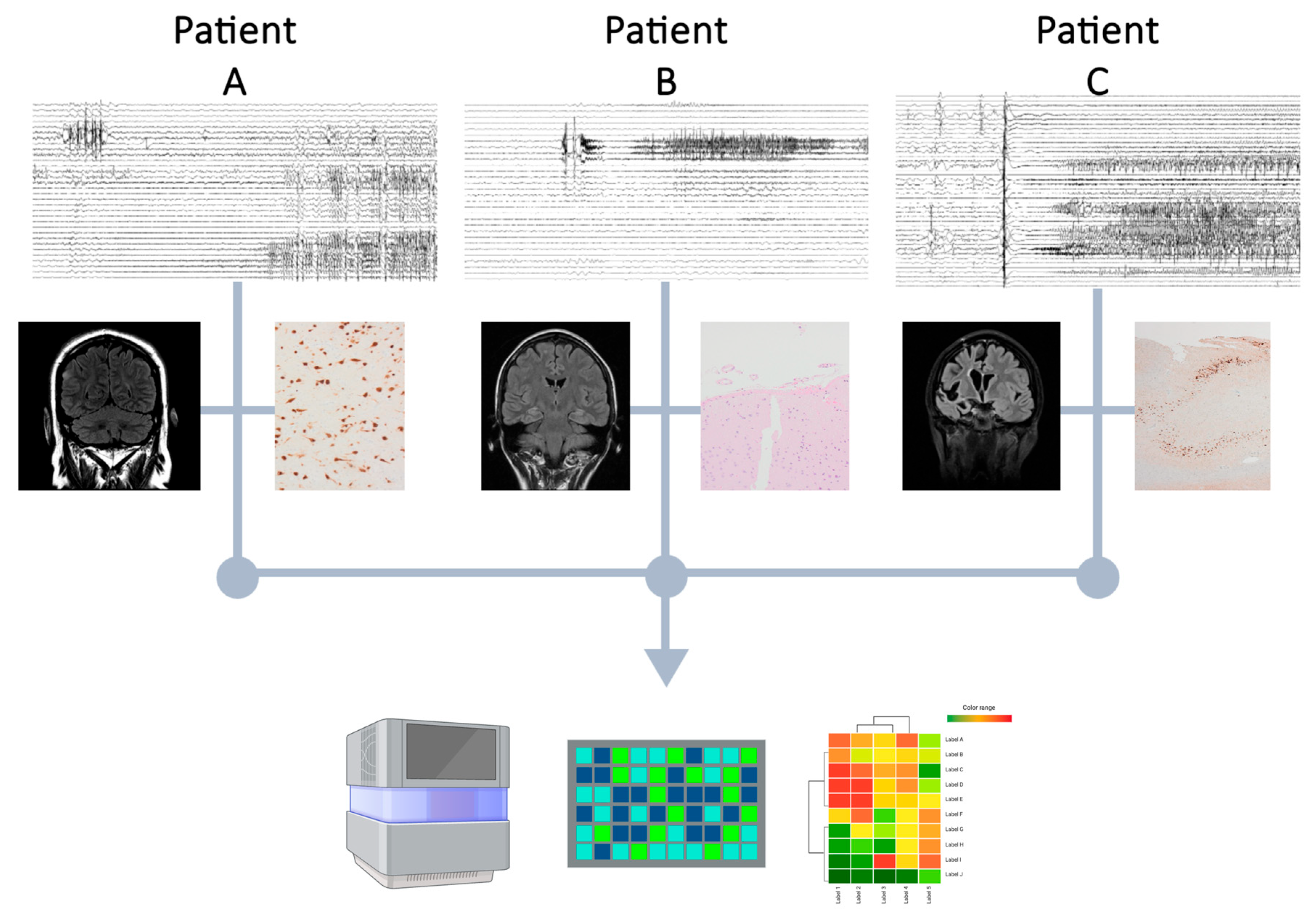
The clinical, pathological, and surgical outcome details were reported before [11], and are summarised in Supplementary Table S1 and Figure 1. Pathological diagnoses were made through histological examinations by an experienced neuropathologist. Twenty-four SEEG electrode samples were selected to give a broad representation of the SOZ, PZ, and NIZ. Study participants varied in terms of epilepsy aetiology, but also with respect to the extent of the epileptogenic network, from a focal frontal type II FCD (Patient A), to non-lesional TLE (Patient B), to right hemispheric RE (Patient C). Patient C was initially diagnosed with RE at sixteen years of age following a frontal lobe biopsy and underwent early immunotherapy. At the time of SEEG evaluation, the immune component of the RE was thought to be quiescent, later confirmed by histopathology.

3.2. RNA Sequencing Using Surface Material on Explanted SEEG Electrodes

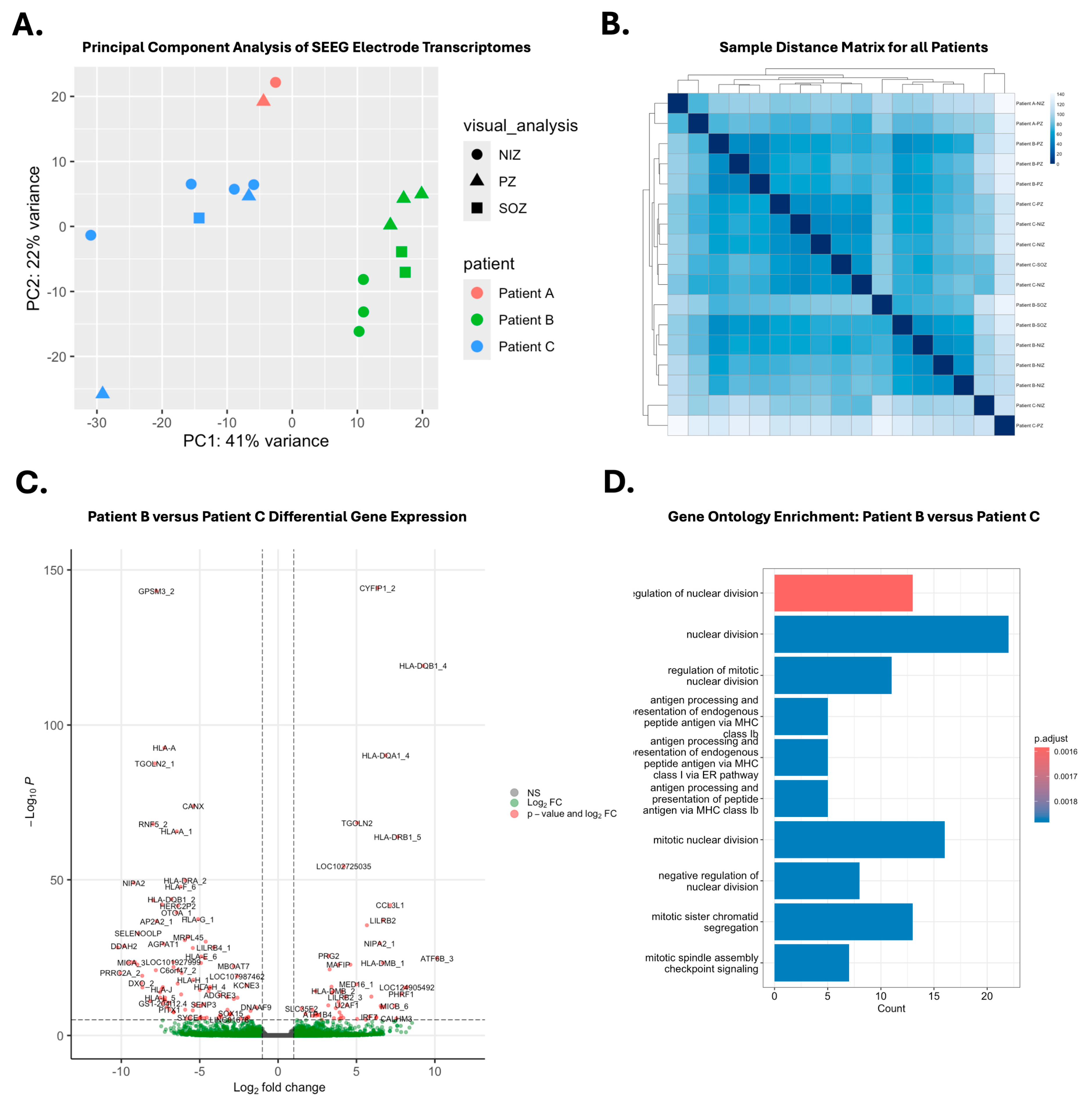
RNA from 19 of 24 samples was successfully sequenced [11]. Briefly, four SEEG samples were achieved from Patient A with an average of 76 million transcriptome reads mapped to the human genome, while eight samples were achieved from Patient B and seven samples from Patient C (average 97 million reads mapped). Principal component analysis (PCA) demonstrated that the greatest variance between transcriptome profiles was between patients rather than by anatomical origin or by involvement in the epileptogenesis (Figure 2A). Of note, two samples from Patient A were identified as outliers and were excluded from further analyses.
We first investigated the potential sources of the clustering of transcriptome differences between individuals. There was no significant difference in the expression of the commonly used housekeeping genes GAPDH and β-Actin across samples between patients (Supplementary Figure S1A). Among the most significantly differentially expressed genes between patients were human leucocyte antigen (HLA) related genes such as HLA-DRB5, HLA-DRB1, HLA-DRB3-1, and HLA-DQA1 (Supplementary Figure S1B). These genes were expressed at consistent levels across samples from each patient. Patients B and C show high expression of XIST and DDX3Y, consistent with female sex, while Patient A does not express these genes, consistent with male sex. Gene ontology (GO) analysis found that the terms most enriched in Patient C versus Patient B relate to nuclear division and antigen processing and presentation (Supplementary Table S2).

3.3. Transcripts from the Major Brain Cell Types Are Present on SEEG Electrode Surfaces

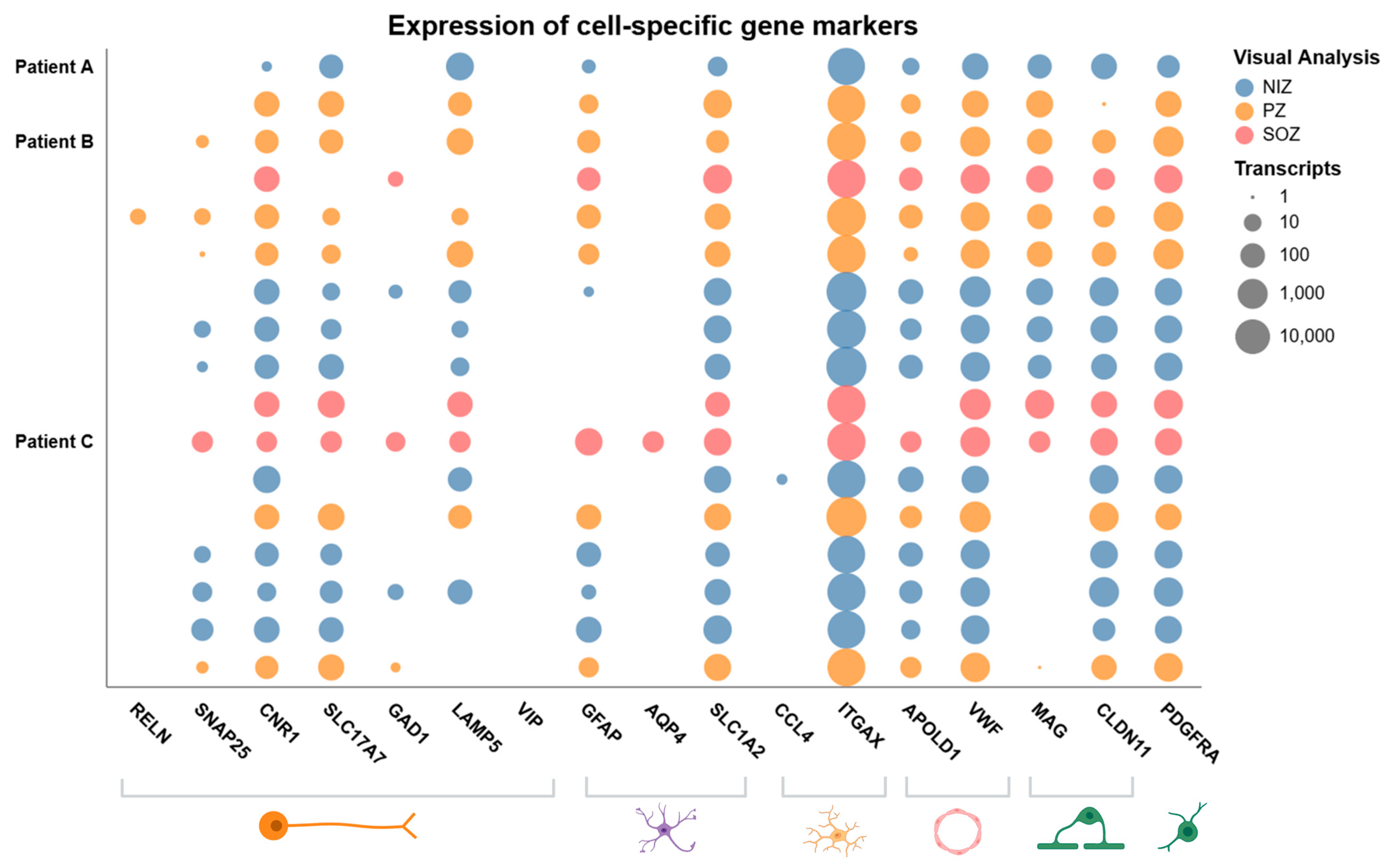
We previously reported the presence of both excitatory and inhibitory neuron marker genes among transcripts on SEEG contacts [11]. To extend these insights, we sought to understand whether contacts carry transcripts from additional brain cell types. Accordingly, we explored the presence of different cell phenotype markers among the detected transcriptomes using the Allen Brain Atlas and a ranked list of cell-type gene markers provided by McKenzie et al., selecting the genes with the highest specificity for a given cell type from human datasets [19]. Cell-type-specific gene markers for neurons, including excitatory and inhibitory neurons (RELN, SNAP25, CNR1, SLC17A1, GAD1, LAMP5 and VIP), astrocytes (GFAP, AQP4), microglia (CCL4, ITGAX), endothelial cells (APOLD1, VWF), and oligodendrocyte progenitor cells (PDGFRA) were present in the transcriptomes derived from SEEG electrodes (Figure 3). Marker genes for each cell type were present across samples from each patient, and these cell types were represented irrespective of the involvement of a sample in seizure onset or propagation. Some common marker genes, such as RELN, AQP4, and CCL4, were not detected across all samples. These findings demonstrate SEEG contacts retain gene expression data from a diverse cellular landscape from both normal and seizure-generating brain structures.

3.4. Cell Type Proportions Estimated by Bulk Transcriptomes Differ According to Patient

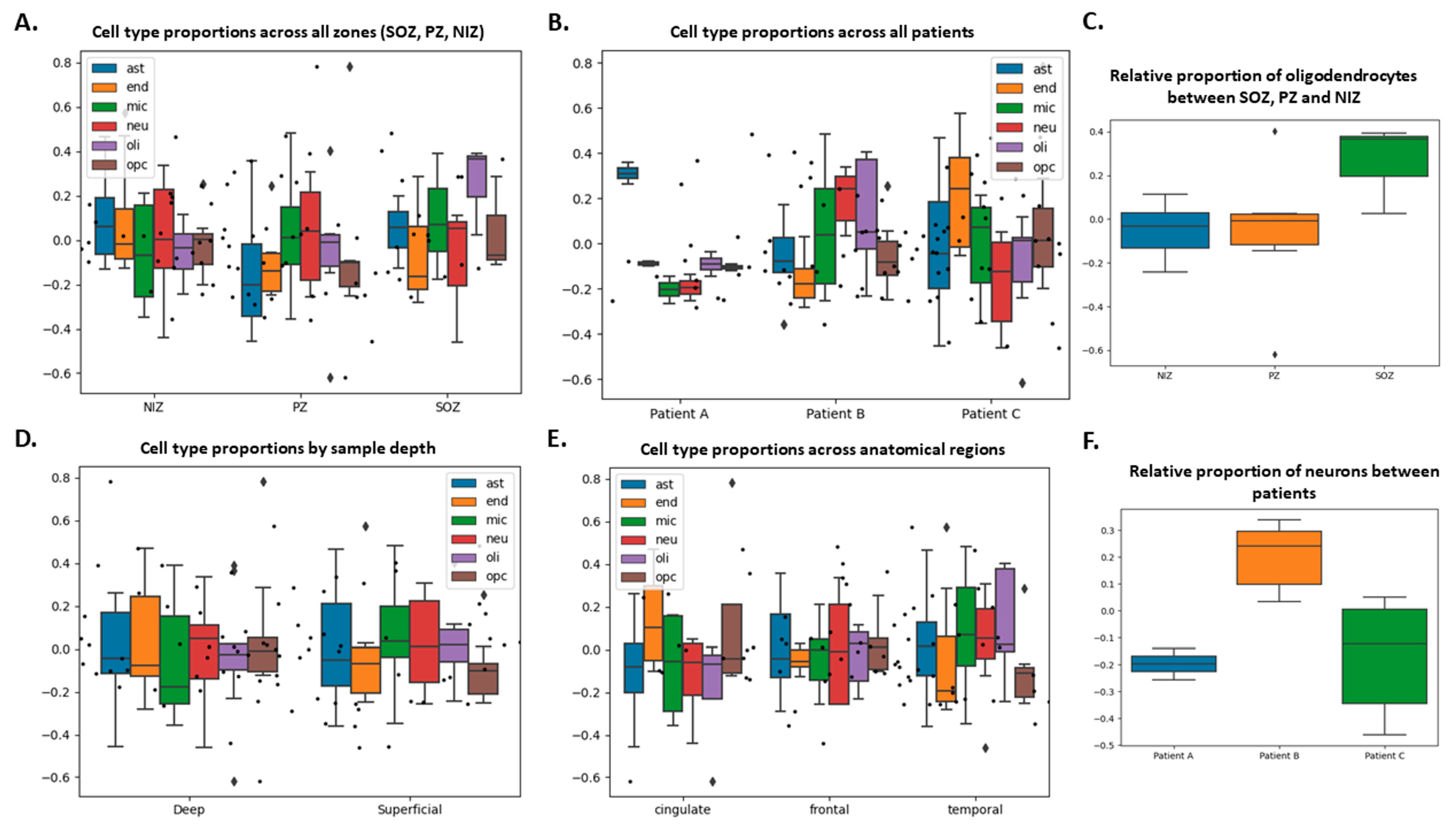
To understand if electrode contacts reflect a proportional contribution of major cell types to the transcriptional signature, we next used the bulk transcriptome data to estimate the relative proportion of each major brain cell type (Figure 4). Due to the more limited extent of zone coverage from Patient A, we focused this analysis on Patients B and C only. This revealed representation of multiple major cell types for NIZ, PZ, and SOZ as well as across patients (Figure 4A,B). The results indicated a similar ratio of neurons to other cell types (e.g., astrocytes). We noted a tendency to a higher proportion of oligodendrocytes in the SOZ when compared to the PZ and NIZ (p = 0.1364) samples across all patients (Figure 4C) and found a significantly higher relative proportion of neuronal cells in the Patient B samples when compared to Patient C (p = 0.0012) (Figure 4F). Last, we considered whether the placement of the electrode in terms of depth and brain region had an influence on the cellular sources of recovered transcripts on contacts. However, cell type proportions were consistent across samples taken from deep and superficial structures (Figure 4D) and across anatomical regions (Figure 4E). Taken together, the findings confirm transcriptome profiles from SEEGs display specific contributions from cell types and may be informative about the local neuropathology at sites of implantation.

3.5. SEEG Contacts Display Brain Region Molecular Profiles from Site of Implantation

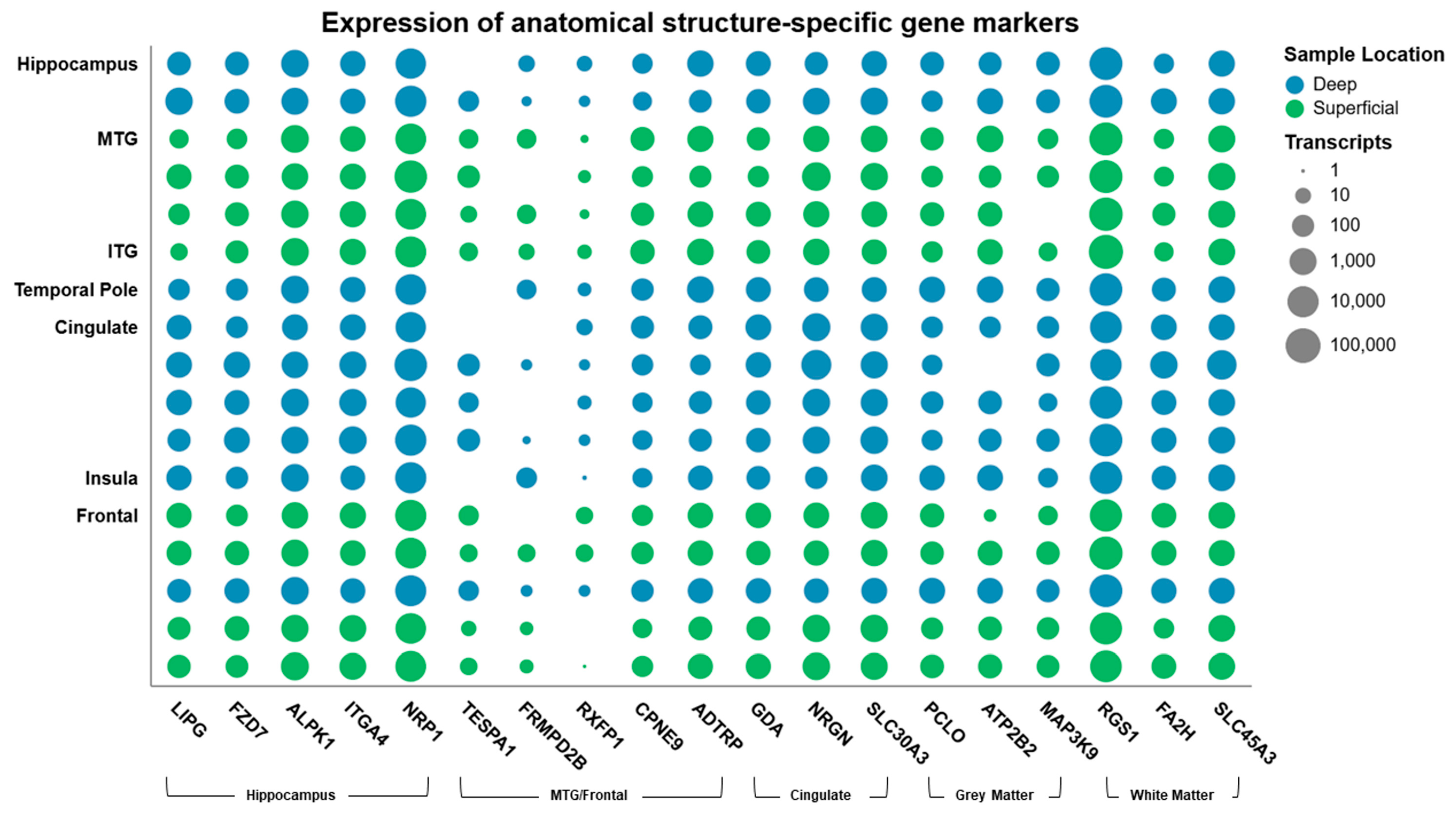
To complement the cell type analysis, we explored whether SEEGs retained transcripts reflective of the brain structure in which they were originally implanted (Figure 5). We identified transcripts that are highly enriched in the human hippocampus (LIPG, FZD7, ALPK1, ITGA4, and NRP1), frontal and temporal neocortex (TESPA1, FRMPD28, RXFP1, CPNE9, and ADTRP), and cingulate (GDA, NRGN, and SLC30A3). Genes enriched in grey matter (PCLO, ATP282, and MAP3K9) and white matter (RGS1, FA2H, and SLC45A3) were also identified. Expression of ADTRP, which is highly enriched in the frontal cortex compared to the cingulate cortex, was significantly lower in the cingulate samples (p = 0.00104). Expression of SLC30A3, which we found to be enriched in the cingulate, was more highly expressed in the cingulate (p = 0.00444). Expression of PCLO and ATP2B, which are both enriched in grey matter structures compared to white matter structures, had significantly lower expression in the cingulate (p = 0.0099 and p = 0.01, respectively) (Supplementary Figure S2).

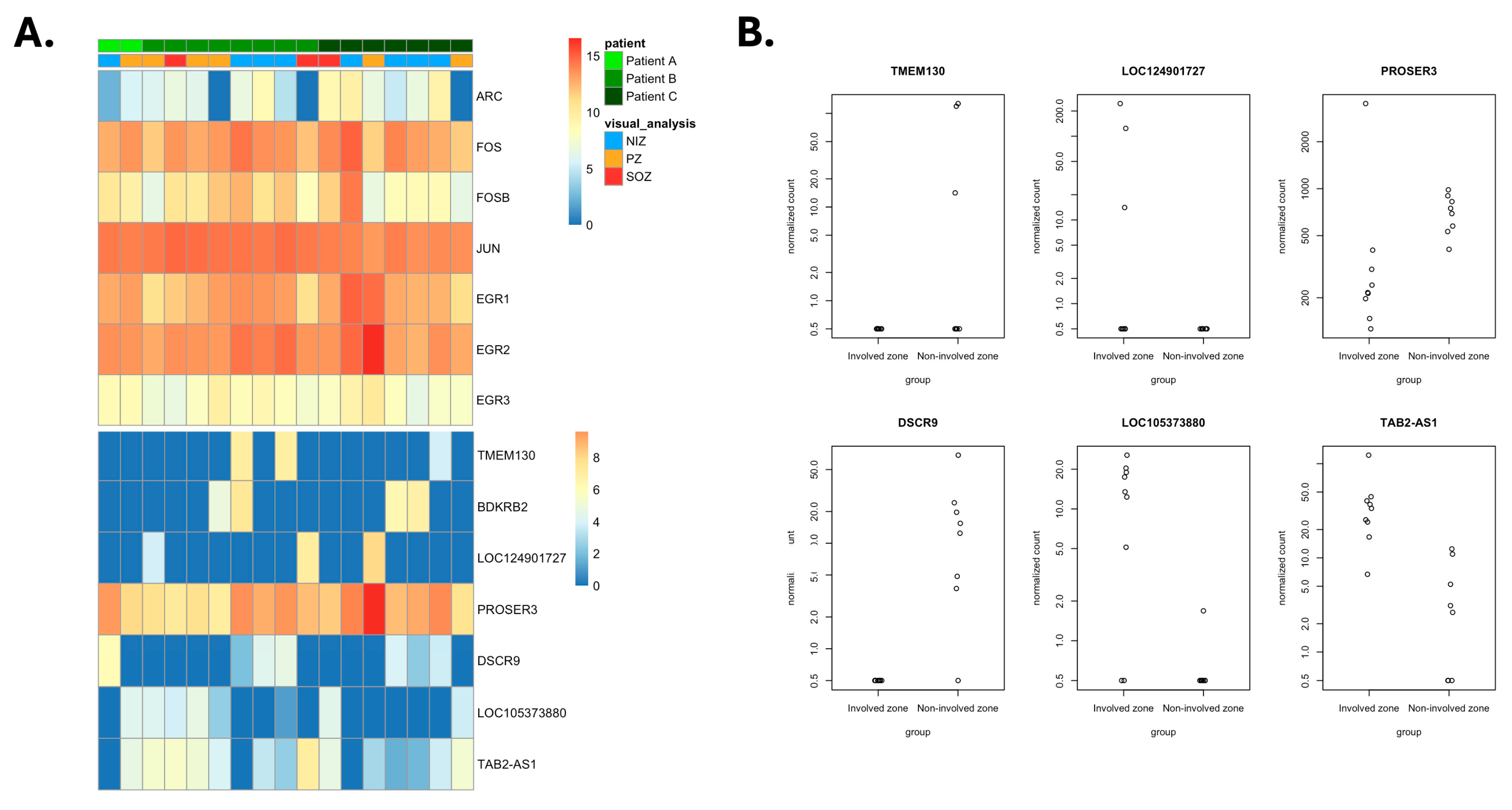
3.6. Identification of Gene Activity Reflective of Epileptogenicity

We previously reported a number of differentially expressed genes for the three cases according to the epileptogenicity index [11]. To extend these insights, we investigated the presence of transcripts whose levels correlated most with locally recorded epileptiform activity (Figure 6A). Two protein-coding genes were differentially expressed across the seizure network zones: TMEM130 and PROSER3 (Figure 6B). While TMEM130 was not detected in several samples, PROSER3 was consistently lower in samples placed within SOZ and PZ when compared to the NIZ. This gene is poorly characterised with no known role in epilepsy. We did not detect differential expression of immediate early genes between SEEGs placed within high versus low epileptogenicity, as determined by visual analysis. GFAP expression was non-significantly increased in brain regions involved in seizure onset and spread (Supplementary Figure S1A). There was a non-significant decrease in EGR1 across the SOZ, PZ, and NIZ (Supplementary Figure S1B).

4. Discussion

Focal epilepsy is a network disorder in which seizure activity generates and propagates from an epileptogenic brain region, such as a cortical dysplasia or heterotopia, across a wider group of brain structures [2,23]. Genetic and computational EEG techniques have each advanced considerably in recent years, and there now exists an opportunity to integrate both fields by combining neurophysiological data and molecular studies in order to elucidate the complex dynamics underlying seizure networks and ictogenesis. The present study extends the evidence that rich transcriptional data can be recovered from the surface of explanted depth electrodes from patients with epilepsy, which reflects the local cellular and brain region environment. These data can provide insights into the molecular changes in zones of seizure onset and spread relative to a healthy brain. Together, this approach offers new opportunities for understanding the molecular, cellular and network functions of the human brain in epilepsy.
Probing the human brain in vivo remains a major challenge in neuroscience that has been partly unlocked by the recent demonstration that nucleic acids can be recovered from explanted depth electrodes [24]. The first studies focused on DNA sequencing techniques using samples with lower spatial resolution. Montier et al. first reported using residual tissue on SEEG electrodes for genetic analysis, finding a somatic variant in MEN1 from pooled electrode tips placed within a periventricular nodular heterotopia [4]. Later, Ye et al. grouped whole electrodes, by broad anatomical location (quadrants), into three pools, across which a gradient of allele frequency in a KCNT1 loss-of-function variant was noted to correspond to EEG findings [5]. Checri et al. also identified mechanistic target of rapamycin (mTOR) pathway variants in patients with MCD but noted that spatial resolution was limited, as samples consisted of a single whole depth electrode which traversed neocortical, white matter, and deep cortical structures [6]. These studies represent an important advance in our ability to characterise brain-specific somatic mutations in a minimally invasive manner, but we have yet to realise the potential impact on clinical practice and our understanding of the neurobiology of the epilepsy microenvironment. Indeed, measurement of DNA mutations or even epigenetic modifications alone cannot reveal whether these genes are actively being transcribed.
Here, we extend our recent demonstration that explanted SEEG contacts carry sufficient RNA to support high-quality sequencing at high spatial resolution [11]. The first finding in the present study on the same three cases with distinct aetiologies was that transcriptional signatures varied more between patients than by any other factor. This indicates SEEG profiles are highly individual-specific, likely reflecting differences in the underlying pathophysiology as well as genetic, developmental and temporal biochemical differences between individuals. Notably, although SEEG implantation plans are tailored to each individual patient, many of the samples included in this study were derived from a common set of brain regions in each patient. Indeed, samples from each patient showed a distinct pattern of expression of HLA-associated genes. This is expected, given that individuals display varied HLA types which are influenced by factors such as inheritance and ethnicity [25]. The findings provide a technical validation of the ability to characterise neuro-immune markers throughout the brain that may provide insights to determine an individual’s susceptibility to disease and predict response to therapies.
Previous analysis of explanted electrodes did not explore the complete representation of cell types among the recovered nucleic acids [11]. We found that we could use bulk RNA sequence data to estimate cell types and proportions throughout different brain regions in vivo. This revealed recovery of a mix of transcripts from excitatory and inhibitory neurons, consistent with our previous study [11], as well as contributions from the major classes of glia. Glial cells are important contributors to both epileptogenesis and ictogenesis [26,27,28]. Thus, we extend the utility of electrode-recovered transcriptomic data and show value beyond simple differential gene expression analysis. Another important finding is that traces of the transcriptional signature of the brain region from which the electrode was removed are detectable. This counters the argument that the processes of removing the electrode from its implantation site would lose signal of origin during the passage through other regions on its route out of the brain. Electrodes remain in place for multiple days after implantation, and cells may become adherent to the electrode surface. Precise information on the placement of each electrode contact within the brain allows direct correlation with the locally recorded neurophysiological activity after explantation. The relatively lower proportion of neuronal cell types in the samples from Patient C compared to Patient B is congruent with neuronal cell loss and gliosis seen in late-stage Rasmussen’s encephalitis [29]. Although the higher proportion of oligodendrocytes in the SOZ compared to the PZ and NIZ was not statistically significant, the presence of increased oligodendrocyte cell density in tissue resected during epilepsy surgery is well described and is potentially the result of a regenerative process mediated by neuronal activity [30,31]. The enrichment of genes with molecular functions related to antigen presentation and mitotic division in Patient C samples compared to Patient B could also correspond to underlying the immune processes and gliotic changes. Cell type proportions were consistent across deep and superficial samples, which further supports that sample integrity is maintained after the procedure of electrode removal. Taken together, the present analyses reveal a rich and diverse cellular contribution to the gene expression signatures on SEEGs that may provide insights into the pathophysiology of drug-resistant epilepsy and inform surgical decision-making.
This study demonstrates that the sample transcriptomes derived from the surface of SEEG electrodes contain a signal of the anatomical structure within which they were implanted. The expression of genes enriched in the cingulate and frontal cortex differed significantly depending on the sample position within the brain. We did not see a difference in expression of frontal/neocortical enriched genes between these structures and the cingulate. Furthermore, the expression of two grey matter-enriched genes was lower in the cingulate samples. These findings may represent the passage of the electrode through anatomical structures during explantation, where deeper samples travel through the electrode tract, traversing white matter and superficial structures. While there is an inherent limitation in using gene markers to identify anatomical structures due to a lack of specificity, this was mitigated by selecting genes with the greatest change in expression between the two structures.
The ability to sample the nucleic acid and epigenetic landscape of SEEG contacts provides an opportunity to probe the mechanisms which sustain tissue that generates seizures (SOZ) while other connected sites to which seizure activity propagates (i.e., PZ) do not develop into tissue capable of initiating seizures. PZ contacts may bear molecular profiles in common with certain brain resilient states. It is well established experimentally that insults to the brain, when applied close to but below the threshold for actual injury, can activate endogenous protective programmes such that damage from a subsequent prolonged insult is reduced (‘tolerance’) [32]. Notably, while repeated seizures can foster epileptogenic tissue (i.e., kindling), seizure activity that is subthreshold for injury can also activate neuroprotective programmes in the brain that attenuate epileptogenesis [33]. The tolerant brain is associated with changes to DNA methylation and down-regulation of pathways associated with calcium signalling and transport, energy and metabolism, among others [34,35]. Notably, we detected lower expression of genes on SEEG contacts explanted from the PZ compared to SOZ for our TLE case associated with metal ions (e.g., multiple metallothionein genes), bioenergetics (MTCH1/2, MTMR2/3/4), as well as increases in processes associated with synaptic pruning (C1QB, C1QC) [11]. Future studies may explore whether such patterns reflect protective adaptations, for example, that limit the spread of the SOZ, or are neutral or maladaptive to the nature of the seizure activity occurring within PZ tissue. The findings may inform our understanding of how networks may expand, resist epileptogenesis or resolve in individuals to inform diagnostic, biomarker and therapy directions.
There are limitations to consider in the present findings. The study was not powered or intended to draw firm conclusions regarding the biological mechanisms underlying focal epilepsy, but rather to support the feasibility of a method to gain insight into gene activity with cellular resolution integrated with neurophysiological data in the living human brain in a neurosurgical setting. Low sample size and diverse aetiologies preclude novel insight into each of the conditions described, and disease-specific findings must be interpreted with caution. The SOZ sample from Patient A did not reach sufficient quality to include in the data analysis, further limiting identification of differentially expressed genes between the SOZ and other structures. The present study identified potential limitations with causality between gene activity detected on the surface of electrodes and neurophysiologic events. Specifically, we failed to detect higher levels of activity-regulated transcripts in SOZ and PZ compared to NIZ samples. Limited sample size and distinct aetiologies notwithstanding, immediate early genes such as ARC, FOS, and JUN do not appear to show higher expression in the SOZ than other sites. We must remember, however, that these transcripts are typically upregulated within minutes of a seizure before rapidly declining within thirty to sixty minutes [36]. Surprisingly, EGR1 showed a trend to graded reduction in expression across the NIZ, PZ, and SOZ. The process of reintroducing anti-seizure medications and anaesthetic induction in the operating theatre may also affect the activity of these and other epilepsy-associated genes. None of the study participants experienced seizures on the day of surgery, but seizure volume and frequency naturally vary between patients during the SEEG evaluation. Anaesthetic agents also have a variable but pronounced effect on gene expression in animal experiments [37]. Notably, isoflurane induction prevented transcription of ARC and other immediate-early genes in one study [38]. As a result, this technique may be unable to detect the dynamic transcriptional response of immediate early genes to seizures, but further studies will be required. However, the use of SEEG contacts allows for sampling of brain regions distant to the seizure focus, which may provide important insights into the dynamic changes throughout the brain that occur in response to seizures and epilepsy. Nevertheless, this study identifies several genes which showed a significant change in expression across the seizure network zones, indicating that the RNA sequencing data does contain a signal of epileptogenicity. Larger studies of people with epilepsy of similar aetiologies will be required to fully characterise the molecular signature of the seizure network. While functional analyses of differentially expressed genes are beyond the scope of the present report, these larger studies should further explore genes of interest both in vitro through human induced pluripotent stem cell models and in animal models. Electrophysiological studies of acute brain slices from tissue resected during epilepsy surgery may provide another method of exploring gene function with a high translational value [39].
There are parallels between the technique described here and emerging ‘liquid biopsy’ techniques by which concentrations of circulating extracellular vesicles and their constituent RNA species, along with cell-free DNA, are measured from non-solid tissues such as blood and cerebrospinal fluid [40]. These have shown promise in diagnosis and prognostication of various neurological diseases and malignancies, but remain exploratory and technically challenging [41,42]. Use of SEEG electrode-derived tissue is less useful in a diagnostic setting but may allow for greater precision, characterising the epileptogenic network in vivo in patients with drug-resistant focal epilepsy. Utility beyond this setting is theoretically possible but speculative.
Our study samples consisted of five consecutive contacts from either the tip or base of the electrodes, representing deep and superficial target structures, respectively. This is the highest spatial resolution achieved from a study of depth electrode-derived tissue to date, but future studies should focus on whether a single contact carries sufficient material for RNA sequencing, thus providing a spatial resolution matching that of individual SEEG electrode channels. Smaller samples will allow the detection of transcriptional differences within zones. Single-cell sequencing and spatial transcriptomic techniques, which were recently used to study lesional epilepsies, would offer greater resolution of cell-specific contributions to epilepsy pathogenesis and may mitigate the effect of sample contamination with non-brain tissue [43]. Additional research is also needed to determine the spatial extent of molecular findings across different pathologies and the effect of electrode explantation on sample integrity. Given the rapid advances in intraoperative molecular profiling of brain tumours to inform diagnosis and prognosis [44,45], we foresee applications of SEEG profiling integrated with neurophysiology for in-theatre diagnostic decision-making that could be applied to the epilepsies, as well as prospects for new biomarker and therapeutic target identification.

5. Conclusions

In summary, the present study demonstrates that explanted SEEG contacts can be used to detect trace RNAs that reflect gene activity, cellular source and brain region of implantation. We also identified potential limitations in how well transcript information can be mapped to recorded seizure activity. Larger cohorts will be required to explore the extent to which this approach can inform our biological understanding of the pathophysiologic basis of epilepsy or inform surgical decision-making.

Supplementary Materials

The following supporting information can be downloaded at: https://www.mdpi.com/article/10.3390/biom15121684/s1, Figure S1: Expression of housekeeping genes and HLA-related genes across patients; Figure S2: Expression of anatomical region-specific transcripts between the cingulate and all other structures; Figure S3: Normalised counts for selected genes across seizure network; Table S1: Clinical characteristics of patients; Table S2: Top 20 GO Enriched Processes, Patient B vs C (upregulated).

Author Contributions

J.L. conceived the study, performed data analysis, and co-wrote the manuscript. A.K.D., A.M., and A.S. performed data analysis. K.J.S. and D.F.O. supported patient consent, provided clinical samples and clinical data. V.K.T. and P.W.-W. supervised and co-conceived the study and edited the manuscript. D.C.H. obtained funding, co-conceived the study, and co-wrote the manuscript. All authors have read and agreed to the published version of the manuscript.

Funding

This publication has emanated from research supported by a research grant from the Higher Education Authority Ireland (SeeDeepER) jointly to DCH and VKT, Research Ireland under grant 16/RC/3948 and 21/RC/10294_P2 (FutureNeuro) and European Union Horizon 2020 (FET-Open award 964712) to DCH, and Novo Nordisk Foundation 3110103 and Danish National Research Foundation DNRF177 grants to VKT. Funding was also provided by the StAR MD programme at RCSI in collaboration with Blackrock Clinic, Dublin.

Institutional Review Board Statement

The present study was reviewed and approved (9 April 2021) by the Beaumont Hospital Medical Research Ethics Committee under study no. 20.58. All patients provided written informed consent.

Informed Consent Statement

Written, informed consent was obtained from all subjects involved in the study.

Data Availability Statement

The RNA sequencing data are available from the gene expression omnibus (GSE268714). The rest of the data generated or analysed during this study are included in this published article and its Supplementary Materials.

Acknowledgments

The authors thank the patients for the donation of samples for the present study. We thank Karina Halley for support with ethics and Austin Lacey for technical support with sample collection. We thank Ronan Kilbride, Department of Clinical Neurophysiology, Beaumont Hospital, Dublin, for additional visual inspection of SEEG data. We thank Alan Beausang, Department of Neuropathology, for the provision and interpretation of neuropathology slides, and our other clinical colleagues at Beaumont Hospital. We thank Michael Dolan for advice on microglial genes. We thank the iCLOUD team at SDU and the HPC team at Queen’s University Belfast (QUB) for computer and data management, and the QUB Genomics facility.

Conflicts of Interest

The authors declare no conflicts of interest.

Abbreviations

The following abbreviations are used in this manuscript:
NIZNon-involved zone
PZPropagation zone
RNARibonucleic acid
SEEGStereo-electroencephalography
SOZSeizure-onset zone

References

  1. Kirchner, A.; Dachet, F.; Loeb, J.A. Identifying targets for preventing epilepsy using systems biology of the human brain. Neuropharmacology 2020, 168, 107757. [Google Scholar] [CrossRef] [PubMed]
  2. Bartolomei, F.; Lagarde, S.; Wendling, F.; McGonigal, A.; Jirsa, V.; Guye, M.; Bénar, C. Defining epileptogenic networks: Contribution of SEEG and signal analysis. Epilepsia 2017, 58, 1131–1147. [Google Scholar] [CrossRef]
  3. Samanta, D. Recent developments in stereo electroencephalography monitoring for epilepsy surgery. Epilepsy Behav. 2022, 135, 108914. [Google Scholar] [CrossRef]
  4. Montier, L.; Haneef, Z.; Gavvala, J.; Yoshor, D.; North, R.; Verla, T.; Van Ness, P.C.; Drabek, J.; Goldman, A.M. A somatic mutation in MEN1 gene detected in periventricular nodular heterotopia tissue obtained from depth electrodes. Epilepsia 2019, 60, e104–e109. [Google Scholar] [CrossRef]
  5. Ye, Z.; Bennett, M.F.; Neal, A.; Laing, J.A.; Hunn, M.K.; Wittayacharoenpong, T.; Todaro, M.; Patel, S.K.; Bahlo, M.; Kwan, P.; et al. Somatic mosaic pathogenic variant gradient detected in trace brain tissue from stereo-EEG depth electrodes. Neurology 2022, 99, 1036–1041. [Google Scholar] [CrossRef]
  6. Checri, R.; Chipaux, M.; Ferrand-Sorbets, S.; Raffo, E.; Bulteau, C.; Rosenberg, S.D.; Doladilhe, M.; Dorfmüller, G.; Adle-Biassette, H.; Baldassari, S.; et al. Detection of brain somatic mutations in focal cortical dysplasia during epilepsy presurgical workup. Brain Commun. 2023, 5, fcad174. [Google Scholar] [CrossRef]
  7. Phillips, H.W.; D’GAma, A.M.; Wang, Y.; Chahine, Y.; Chiu, M.; Swanson, A.C.; Ahtam, B.; Bolton, J.B.; Madsen, J.R.; Lee, E.A.; et al. Somatic mosaicism in PIK3CA variant correlates with stereoelectroencephalography-derived electrophysiology. Neurol. Genet. 2024, 10, e200117. [Google Scholar] [CrossRef]
  8. Gatesman, T.A.; Hect, J.L.; Phillips, H.W.; Johnson, B.J.; Wald, A.I.; McClung, C.; Nikiforova, M.N.; Skaugen, J.M.; Pollack, I.F.; Abel, T.J.; et al. Characterization of low-grade epilepsy-associated tumor from implanted stereoelectroencephalography electrodes. Epilepsia Open 2024, 9, 409–416. [Google Scholar] [CrossRef]
  9. Klein, K.M.; Mascarenhas, R.; Merrikh, D.; Khanbabaei, M.; Maroilley, T.; Kaur, N.; Liu, Y.; Soule, T.; Manalo, M.; Tamura, G.; et al. Identification of a mosaic MTOR variant in purified neuronal DNA in a patient with focal cortical dysplasia using a novel depth electrode harvesting technique. Epilepsia 2024, 65, 1768–1776. [Google Scholar] [CrossRef]
  10. D’Gama, A.M.; Phillips, H.W.; Wang, Y.; Chiu, M.Y.; Chahine, Y.; Swanson, A.C.; Smith, R.S.; Pearl, P.L.; Tsuboyama, M.; Madsen, J.R.; et al. Analysis of DNA from brain tissue on stereo-EEG electrodes reveals mosaic epilepsy-related variants. Brain Commun. 2025, 7, fcaf113. [Google Scholar] [CrossRef] [PubMed]
  11. Dwivedi, A.K.; Mahesh, A.; Sanfeliu, A.; Larkin, J.; Siwicki, R.A.; Sweeney, K.J.; O’Brien, D.F.; Widdess-Walsh, P.; Picelli, S.; Henshall, D.C.; et al. High-resolution multimodal profiling of human epileptic brain activity via explanted depth electrodes. JCI Insight 2025, 10, e184518. [Google Scholar] [CrossRef]
  12. Hahaut, V.; Pavlinic, D.; Carbone, W.; Schuierer, S.; Balmer, P.; Quinodoz, M.; Renner, M.; Roma, G.; Cowan, C.S.; Picelli, S. Fast and highly sensitive full-length single-cell RNA sequencing using FLASH-seq. Nat. Biotechnol. 2022, 40, 1447–1451. [Google Scholar] [CrossRef]
  13. Martin, M. Cutadapt removes adapter sequences from high-throughput sequencing reads. EMBnet J. 2011, 17, 10. [Google Scholar] [CrossRef]
  14. Dobin, A.; Davis, C.A.; Schlesinger, F.; Drenkow, J.; Zaleski, C.; Jha, S.; Batut, P.; Chaisson, M.; Gingeras, T.R. STAR: Ultrafast universal RNA-seq aligner. Bioinformatics 2013, 29, 15–21. [Google Scholar] [CrossRef] [PubMed]
  15. Colombet, B.; Woodman, M.; Badier, J.M.; Bénar, C.G. AnyWave: A cross-platform and modular software for visualizing and processing electrophysiological signals. J. Neurosci. Methods 2015, 242, 118–126. [Google Scholar] [CrossRef]
  16. Bartolomei, F.; Chauvel, P.; Wendling, F. Epileptogenicity of brain structures in human temporal lobe epilepsy: A quantified study from intracerebral EEG. Brain 2008, 131 Pt 7, 1818–1830. [Google Scholar] [CrossRef] [PubMed]
  17. Love, M.I.; Huber, W.; Anders, S. Moderated estimation of fold change and dispersion for RNA-seq data with DESeq2. Genome Biol. 2014, 15, 550. [Google Scholar] [CrossRef]
  18. Wu, T.; Hu, E.; Xu, S.; Chen, M.; Guo, P.; Dai, Z.; Feng, T.; Zhou, L.; Tang, W.; Zhan, L.; et al. clusterProfiler 4.0: A universal enrichment tool for interpreting omics data. Innovation 2021, 2, 100141. [Google Scholar] [CrossRef]
  19. McKenzie, A.T.; Wang, M.; Hauberg, M.E.; Fullard, J.F.; Kozlenkov, A.; Keenan, A.; Hurd, Y.L.; Dracheva, S.; Casaccia, P.; Roussos, P.; et al. Brain cell type specific gene expression and co-expression network architectures. Sci. Rep. 2018, 8, 8868. [Google Scholar] [CrossRef]
  20. Shen, E.H.; Overly, C.C.; Jones, A.R. The Allen Human Brain Atlas: Comprehensive gene expression mapping of the human brain. Trends Neurosci. 2012, 35, 711–714. [Google Scholar] [CrossRef] [PubMed]
  21. Waskom, M. Seaborn: Statistical data visualization. J. Open Source Softw. 2021, 6, 3021. [Google Scholar] [CrossRef]
  22. VanderPlas, J.; Granger, B.; Heer, J.; Moritz, D.; Wongsuphasawat, K.; Satyanarayan, A.; Lees, E.; Timofeev, I.; Welsh, B.; Sievert, S. Altair: Interactive statistical visualizations for Python. J. Open Source Softw. 2018, 3, 1057. [Google Scholar] [CrossRef]
  23. Spencer, S.S. Neural Networks in Human Epilepsy: Evidence of and Implications for Treatment. Epilepsia 2002, 43, 219–227. [Google Scholar] [CrossRef] [PubMed]
  24. Checri, R.; Baldassari, S.; Baulac, S. Detection of brain somatic mutations from stereo-EEG electrodes in focal epilepsy: Current advances and future perspectives. Rev. Neurol. 2025, 181, 425–431. [Google Scholar] [CrossRef]
  25. Askar, M.; Daghstani, J.; Thomas, D.; Leahy, N.; Dunn, P.; Claas, F.; Doran, S.; Saji, H.; Kanangat, S.; Karoichane, M.; et al. 16 (th) IHIW: Global distribution of extended HLA haplotypes. Int. J. Immunogenet. 2013, 40, 31–38. [Google Scholar] [CrossRef]
  26. Patel, D.C.; Tewari, B.P.; Chaunsali, L.; Sontheimer, H. Neuron–glia interactions in the pathophysiology of epilepsy. Nat. Rev. Neurosci. 2019, 20, 282–297. [Google Scholar] [CrossRef]
  27. Vezzani, A.; Ravizza, T.; Bedner, P.; Aronica, E.; Steinhäuser, C.; Boison, D. Astrocytes in the initiation and progression of epilepsy. Nat. Rev. Neurol. 2022, 18, 707–722. [Google Scholar] [CrossRef]
  28. Knowles, J.K.; Xu, H.; Soane, C.; Batra, A.; Saucedo, T.; Frost, E.; Tam, L.T.; Fraga, D.; Ni, L.; Villar, K.; et al. Maladaptive myelination promotes generalized epilepsy progression. Nat. Neurosci. 2022, 25, 596–606. [Google Scholar] [CrossRef]
  29. Varadkar, S.; Bien, C.G.; Kruse, C.A.; Jensen, F.E.; Bauer, J.; Pardo, C.A.; Vincent, A.; Mathern, G.W.; Cross, J.H. Rasmussen’s encephalitis: Clinical features, pathobiology, and treatment advances. Lancet Neurol. 2014, 13, 195–205. [Google Scholar] [CrossRef] [PubMed]
  30. Sakuma, S.; Halliday, W.C.; Nomura, R.; Ochi, A.; Otsubo, H. Increased population of oligodendroglia-like cells in pediatric intractable epilepsy. Neurosci. Lett. 2014, 566, 188–193. [Google Scholar] [CrossRef] [PubMed]
  31. Gibson, E.M.; Purger, D.; Mount, C.W.; Goldstein, A.K.; Lin, G.L.; Wood, L.S.; Inema, I.; Miller, S.E.; Bieri, G.; Zuchero, J.B.; et al. Neuronal activity promotes oligodendrogenesis and adaptive myelination in the mammalian brain. Science 2014, 344, 1252304. [Google Scholar] [CrossRef]
  32. Dirnagl, U.; Simon, R.P.; Hallenbeck, J.M. Ischemic tolerance and endogenous neuroprotection. Trends Neurosci. 2003, 26, 248–254. [Google Scholar] [CrossRef]
  33. Jimenez-Mateos, E.M.; Henshall, D.C. Seizure preconditioning and epileptic tolerance: Models and mechanisms. Int. J. Physiol. Pathophysiol. Pharmacol. 2009, 1, 180–191. [Google Scholar]
  34. Jimenez-Mateos, E.M.; Hatazaki, S.; Johnson, M.B.; Bellver-Estelles, C.; Mouri, G.; Bonner, C.; Prehn, J.H.; Meller, R.; Simon, R.P.; Henshall, D.C. Hippocampal transcriptome after status epilepticus in mice rendered seizure damage-tolerant by epileptic preconditioning features suppressed calcium and neuronal excitability pathways. Neurobiol. Dis. 2008, 32, 442–453. [Google Scholar] [CrossRef]
  35. Miller-Delaney, S.F.C.; Das, S.; Sano, T.; Jimenez-Mateos, E.M.; Bryan, K.; Buckley, P.G.; Stallings, R.L.; Henshall, D.C. Differential DNA methylation patterns define status epilepticus and epileptic tolerance. J. Neurosci. 2012, 32, 1577–1588. [Google Scholar] [CrossRef] [PubMed]
  36. Kiessling, M.; Gass, P. Immediate early gene expression in experimental epilepsy. Brain Pathol. 1993, 3, 381–393. [Google Scholar] [CrossRef]
  37. Upton, D.H.; Popovic, K.; Fulton, R.; Kassiou, M. Anaesthetic-dependent changes in gene expression following acute and chronic exposure in the rodent brain. Sci. Rep. 2020, 10, 9366. [Google Scholar] [CrossRef]
  38. Bunting, K.M.; Nalloor, R.I.; Vazdarjanova, A. Influence of isoflurane on immediate-early gene expression. Front. Behav. Neurosci. 2016, 9, 363. [Google Scholar] [CrossRef] [PubMed]
  39. Jones, R.S.; da Silva, A.B.; Whittaker, R.G.; Woodhall, G.L.; Cunningham, M.O. Human brain slices for epilepsy research: Pitfalls, solutions and future challenges. J. Neurosci. Methods 2016, 260, 221–232. [Google Scholar] [CrossRef]
  40. Liang, Y.; Lehrich, B.M.; Zheng, S.; Lu, M. Emerging methods in biomarker identification for extracellular vesicle-based liquid biopsy. J. Extracell. Vesicles 2021, 10, e12090. [Google Scholar] [CrossRef] [PubMed]
  41. Malhotra, S.; Miras, M.C.M.; Pappolla, A.; Montalban, X.; Comabella, M. Liquid biopsy in neurological diseases. Cells 2023, 12, 1911. [Google Scholar] [CrossRef] [PubMed]
  42. Kumar, A.; Nader, M.A.; Deep, G. Emergence of extracellular vesicles as “Liquid Biopsy” for neurological disorders: Boom or bust. Pharmacol. Rev. 2024, 76, 199–227. [Google Scholar] [CrossRef] [PubMed]
  43. Baldassari, S.; Klingler, E.; Teijeiro, L.G.; Doladilhe, M.; Raoux, C.; Roig-Puiggros, S.; Bizzotto, S.; Couturier, J.; Gilbert, A.; Sami, L.; et al. Single-cell genotyping and transcriptomic profiling of mosaic focal cortical dysplasia. Nat. Neurosci. 2025, 28, 964–972. [Google Scholar] [CrossRef]
  44. Brändl, B.; Steiger, M.; Kubelt, C.; Rohrandt, C.; Zhu, Z.; Evers, M.; Wang, G.; Schuldt, B.; Afflerbach, A.-K.; Wong, D.; et al. Rapid brain tumor classification from sparse epigenomic data. Nat. Med. 2025, 31, 840–848. [Google Scholar] [CrossRef]
  45. Patel, A.; Göbel, K.; Ille, S.; Hinz, F.; Schoebe, N.; Bogumil, H.; Meyer, J.; Brehm, M.; Kardo, H.; Schrimpf, D.; et al. Prospective, multicenter validation of a platform for rapid molecular profiling of central nervous system tumors. Nat. Med. 2025, 31, 1567–1577. [Google Scholar] [CrossRef] [PubMed]
Figure 1. Clinical and pathological characteristics of study participants. Illustrative representation of multimodal data integration. Image created in part using Biorender.com.
Biomolecules 15 01684 g001
Figure 2. Transcriptome variation between patients. (A) Principal component analysis showing variation between transcriptomes derived from each SEEG electrode sample. (B) Sample distance matrix from all samples to all samples. (C) Volcano plot of differentially expressed genes between Patient B and Patient C samples. (D) Enriched biological processes in Patient B samples when compared to Patient C samples.
Biomolecules 15 01684 g002
Figure 3. Range of cell-type-specific transcripts identified from RNA sequencing. Dot matrix showing the number of transcripts (logarithmic scale) of selected gene markers of neuronal and non-neuronal cell types present in each sample. Markers for neurons (RELN, SNAP25, CNR1, SLC17A1, GAD1, LAMP5, and VIP), astrocytes (GFAP and AQP4), microglia (CCL4 and ITGAX), endothelial cells (APOLD1 and VWF), and oligodendrocyte progenitor cells (PDGFRA) are included. Samples are coloured according to the involvement in the ictogenic network.
Biomolecules 15 01684 g003
Figure 4. Cell type proportion analysis from bulk RNA sequencing. Relative proportions of brain cell types across samples using BRETIGEA. (A) Cell type proportions between the NIZ, PZ, and SOZ. (B) Cell type proportions across patients. (C) Relative proportions of oligodendrocytes between the NIZ, PZ, and SOZ (p = 0.1364, one-way ANOVA). (D) Cell type proportions between samples implanted within deep subcortical structures and samples placed within superficial cortical structures. (E) Cell type proportions in the frontal lobe, temporal lobe, and cingulate cortex. The single insula sample is excluded. (F) Significantly higher proportion of neuronal cells between Patient B samples compared to Patient C (p = 0.0012, one-way ANOVA). In (A,B,D,E), blue, orange, green, red, purple and brown represent astrocytes, endothelial cells, microglia, neurons, oligodendrocytes, and OPCs, respectively.
Biomolecules 15 01684 g004
Figure 5. Expression of transcripts enriched in sampled brain structures across samples. Dot matrix showing the number of transcripts (logarithmic scale) of the selected gene found to be enriched in each brain region under investigation. LIPG, FZD7, ALPK1, ITGA4, and NRP1 represent genes enriched in the hippocampus. TESPA1, FRMPD28, RXFP1, CPNE9, and ADTRP were enriched in the frontal and temporal neocortex, and GDA, NRGN, and SLC30A3 in the cingulate cortex. Genes enriched in grey matter (PCLO, ATP282, and MAP3K9) and white matter (RGS1, FA2H, and SLC45A3) are also included. The blue hue represents samples from electrode contacts within deeper brain structures, and green represents those samples from contacts within the superficial cortical structures.
Biomolecules 15 01684 g005
Figure 6. Correlation of gene expression with epileptogenicity. (A) Heatmap of gene expression according to the patient and sample involvement within the seizure network. The top panel displays genes expressed at higher levels, and the bottom panel displays genes of lower expression levels. (B) Scatter plots of expression of the significantly differentially expressed genes between the involved zone (SOZ and PZ) and NIZ, expressed in normalised counts of gene transcripts.
Biomolecules 15 01684 g006
Disclaimer/Publisher’s Note: The statements, opinions and data contained in all publications are solely those of the individual author(s) and contributor(s) and not of MDPI and/or the editor(s). MDPI and/or the editor(s) disclaim responsibility for any injury to people or property resulting from any ideas, methods, instructions or products referred to in the content.