

Developmental Toxicity of Ibrutinib: Insights from Stem Cell Dynamics and Neural Regeneration in Planarians

Abstract
1. Introduction
2. Materials and Methods
2.1. Animals and Treatment
2.2. Chemicals and IB Exposure
2.3. Morphological Observation and Locomotor Behavior Assessment
2.4. Whole-Mount Immunofluorescence
2.5. Whole-Mount in Situ Hybridization (WISH)
2.6. Quantitative Reverse Transcription PCR (qRT-PCR)
2.7. Reactive Oxygen Species (ROS) Assay
2.8. Western Blotting (WB)
2.9. RNA Interference (RNAi) Experiments
2.10. Statistical Analysis
3. Results
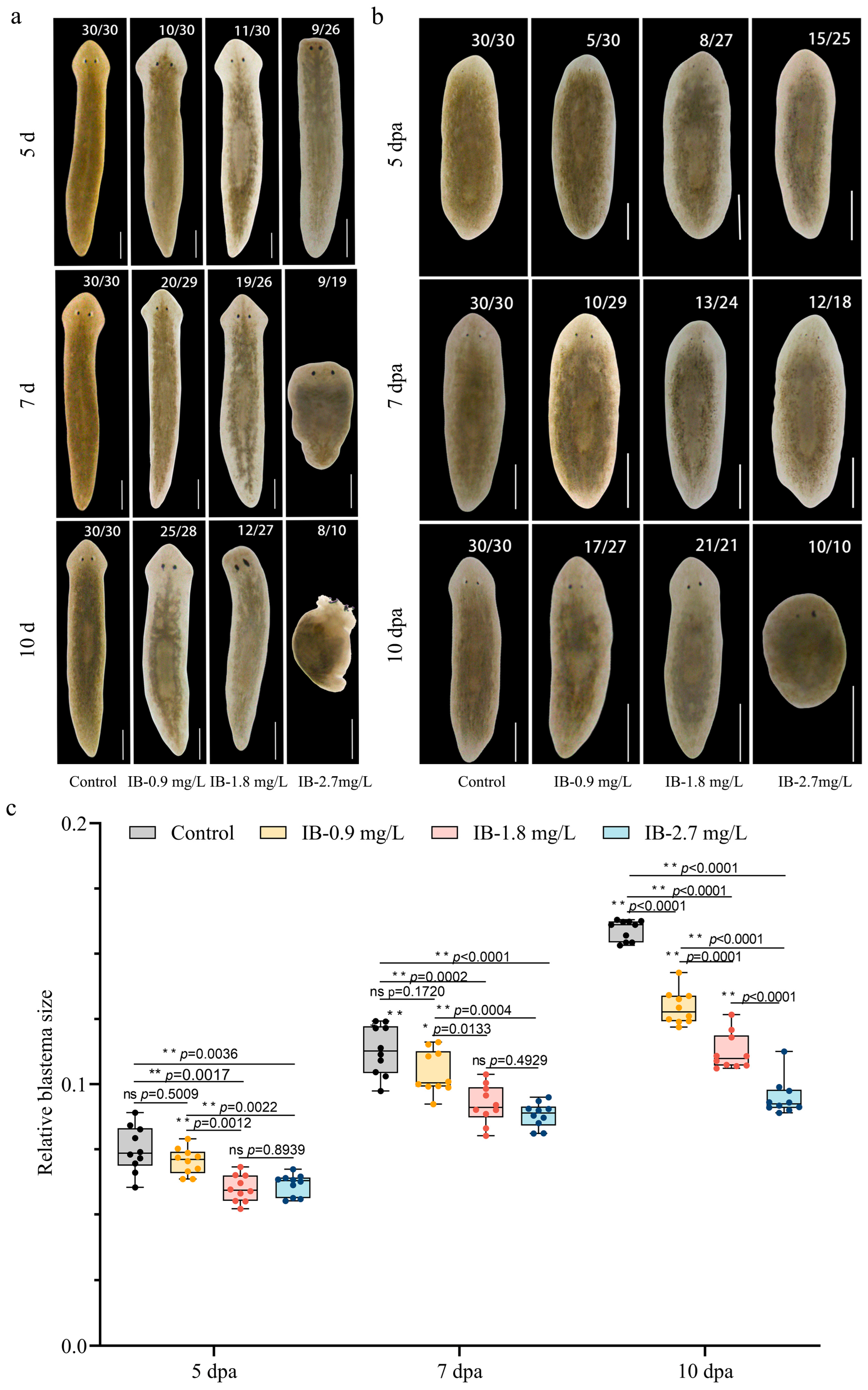
3.1. IB Exposure Induced Morphological Defects and Retarded Regeneration
3.2. IB Exposure Impaired the Structure and Regeneration of CNS
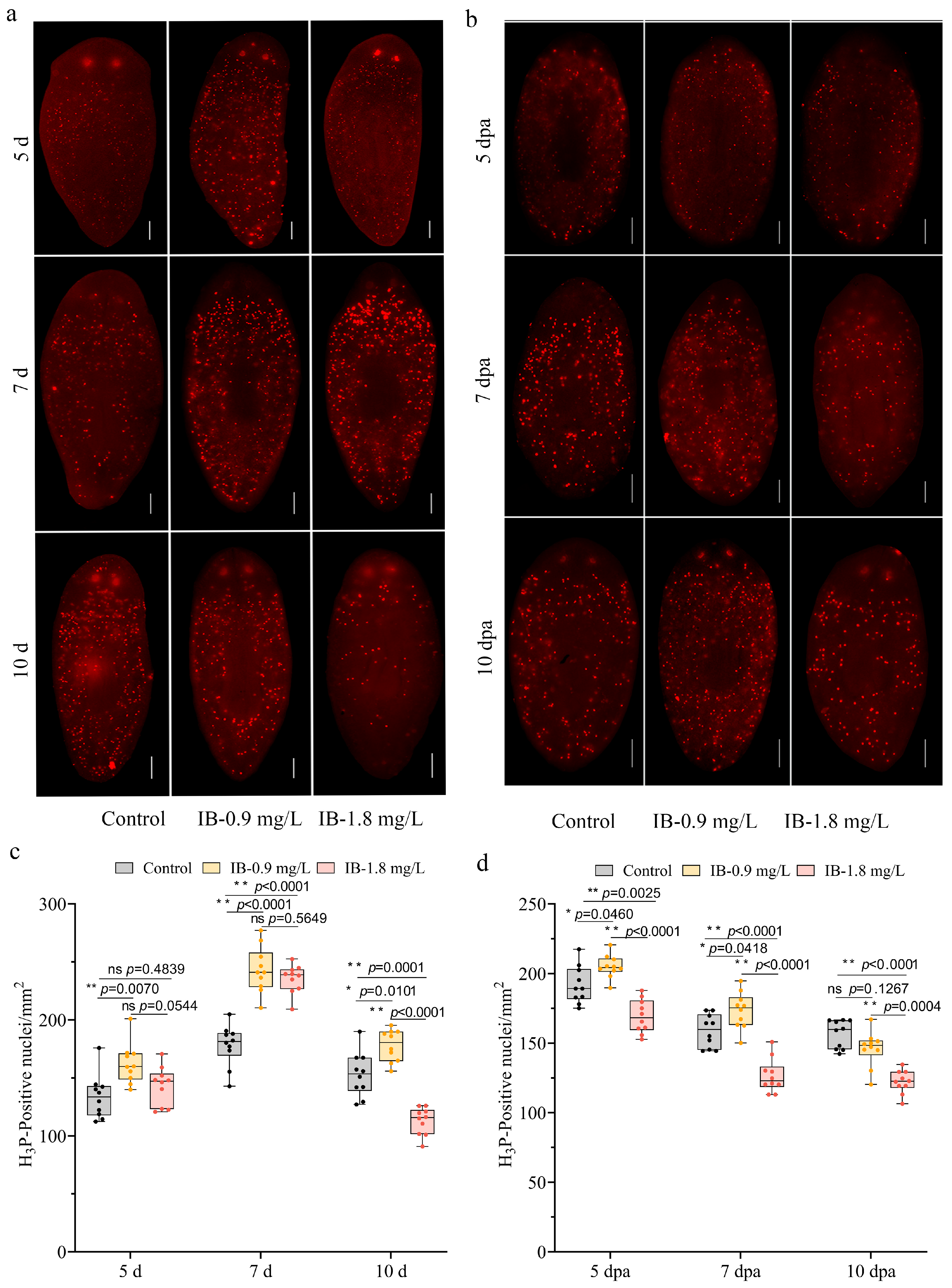
3.3. IB Exposure Disturbed Neoblast Proliferation and Differentiation
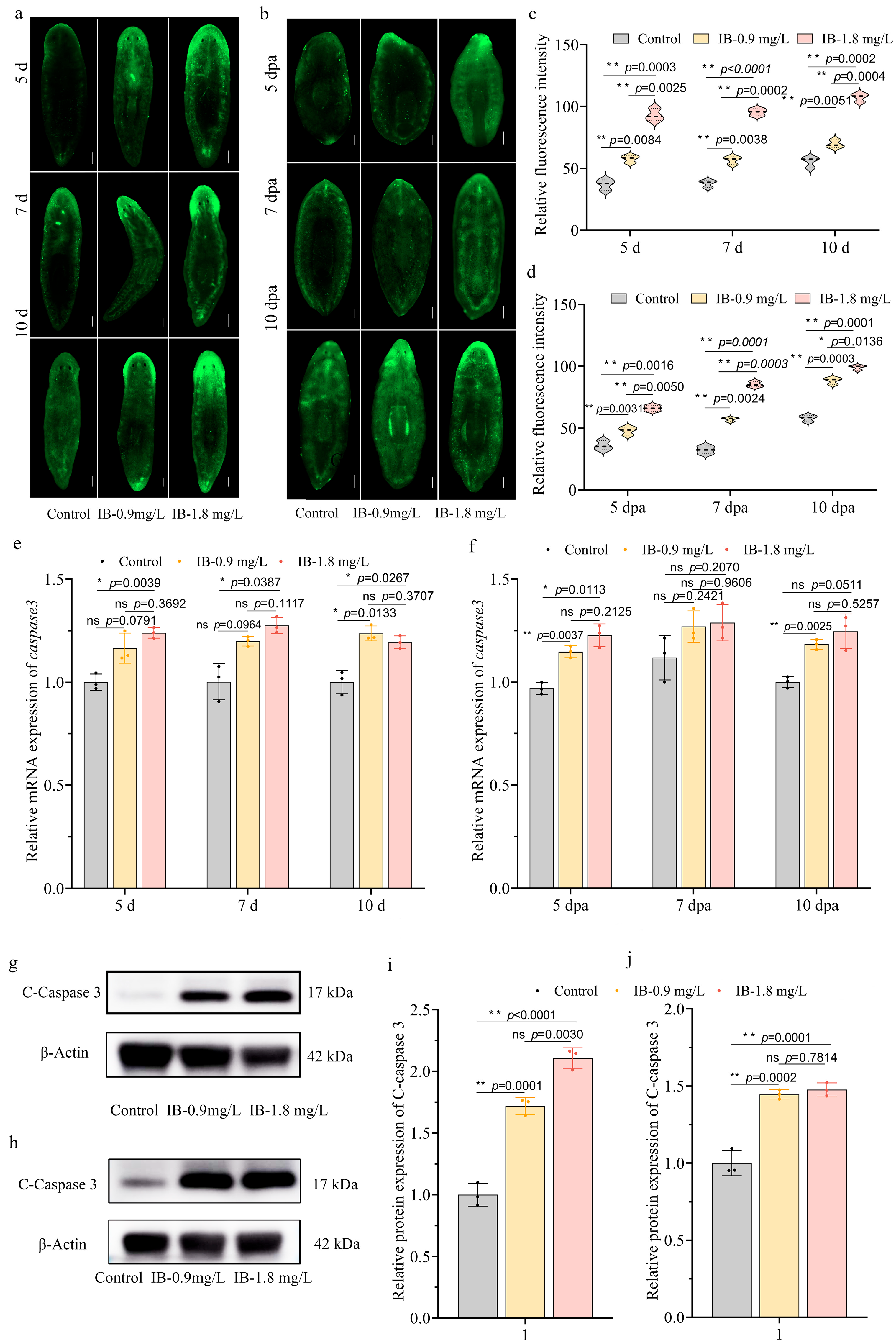
3.4. IB Exposure Led to Oxidative Stress and Excessive Apoptosis
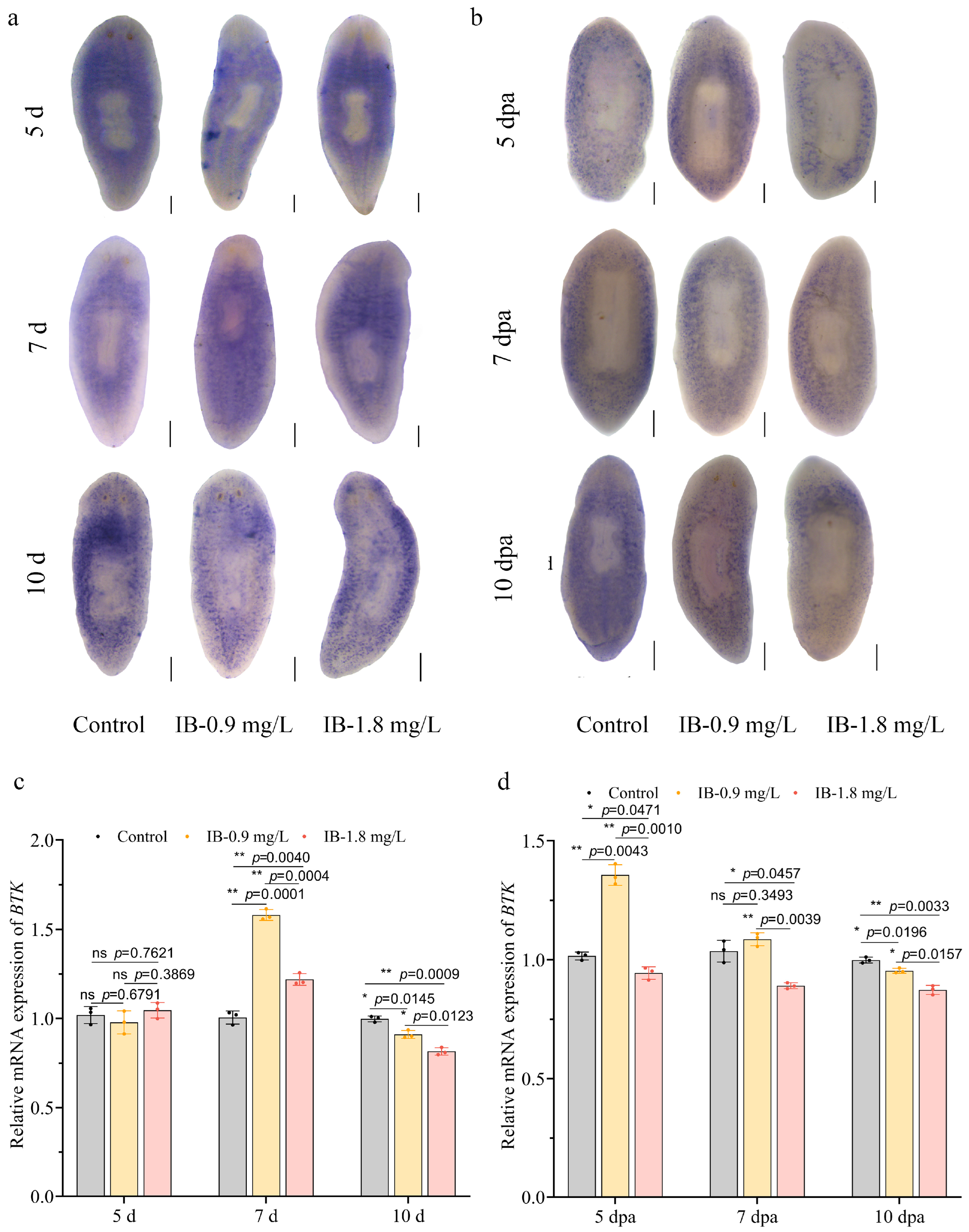
3.5. IB Exposure Downregulated BTK Expression
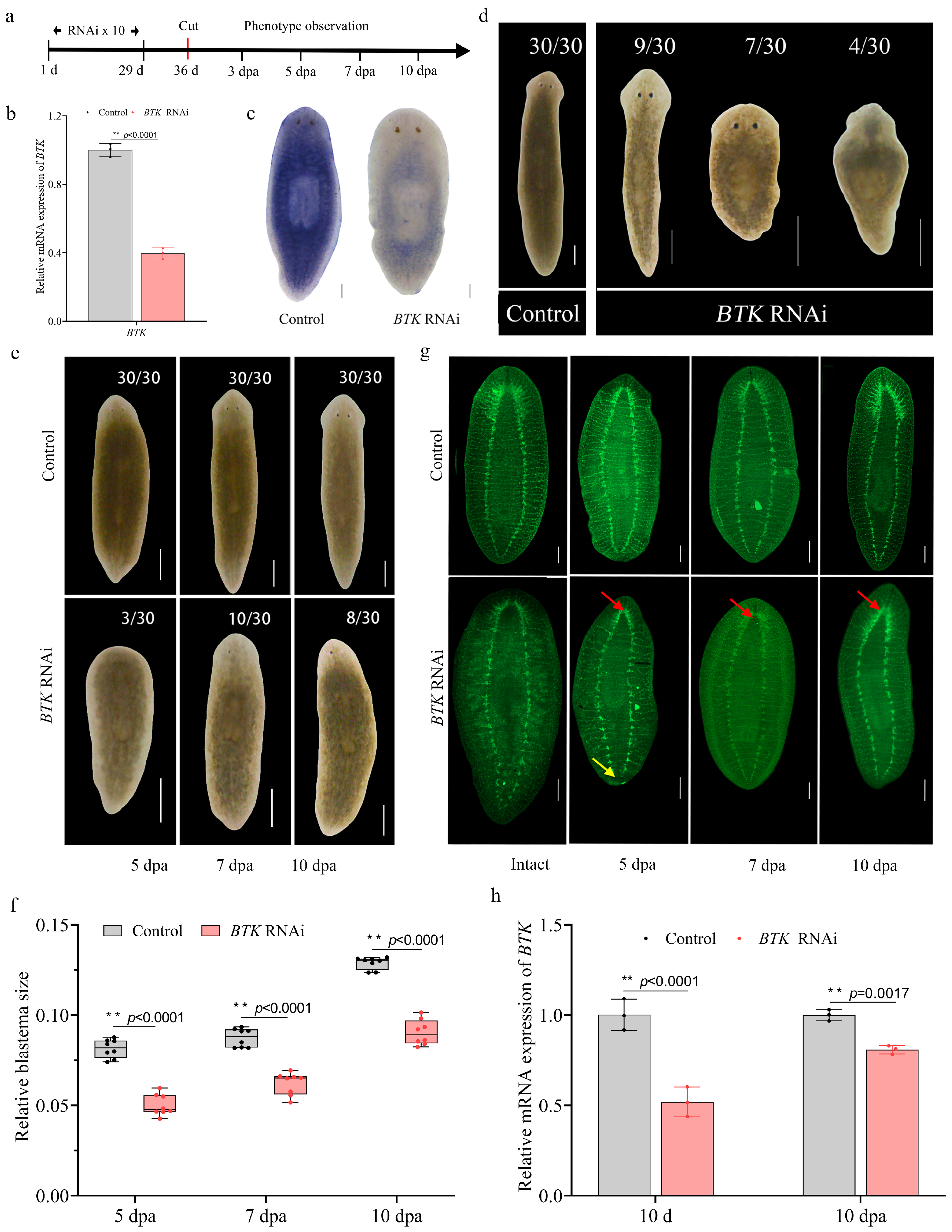
3.6. BTK RNAi Caused Morphological and Regenerative Defects
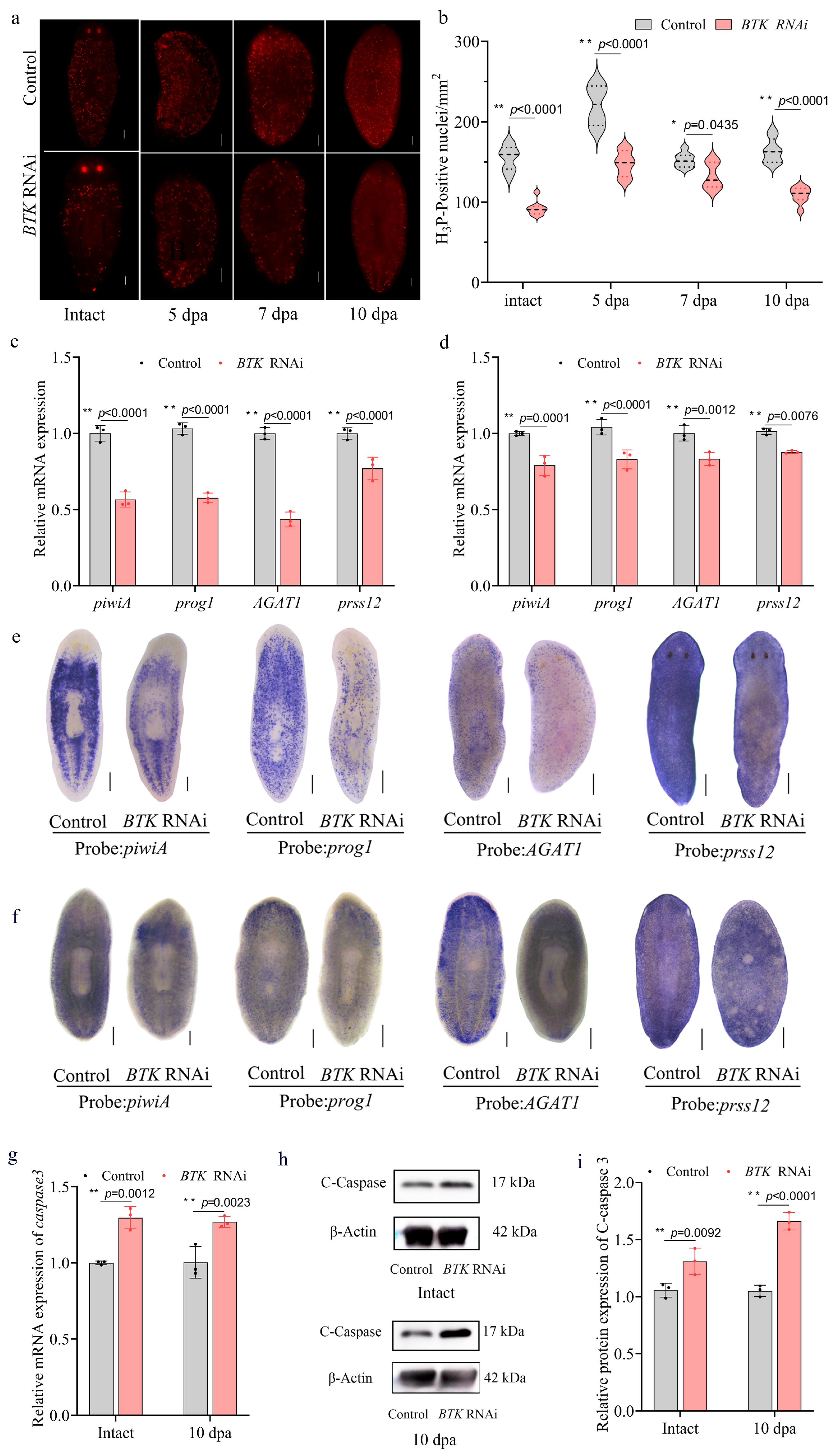
3.7. BTK RNAi Disturbed Neoblast Proliferation and Differentiation, and Increased Apoptosis
4. Discussion
5. Conclusions
Supplementary Materials
Author Contributions
Funding
Institutional Review Board Statement
Informed Consent Statement
Data Availability Statement
Conflicts of Interest
Abbreviations
| IB | Ibrutinib |
| BTK | Bruton’s Tyrosine Kinase |
| qRT-PCR | Quantitative Reverse Transcription Pcr |
| WISH | Whole-Mount in situ Hybridization |
| RNAi | Rna Interference |
| ROS | Reactive Oxygen Species |
| CLL | Chronic Lymphocytic Leukemia |
| MCL | Mantle Cell Lymphoma |
| DMSO | Dimethylsulfoxide |
| LC50 | Median Lethal Concentration |
| DCFH-DA | 2′, 7′-Dichlorofluorescein Diacetate |
| LSD | Least Significant Difference |
| CNS | Central Nervous System |
| H3P | Histone H3 Phosphorylated at Serine 10 |
References
- Vargas, L.; Hamasy, A.; Nore, B.F.; Smith, C.I. Inhibitors of BTK and ITK: State of the new drugs for cancer, autoimmunity and inflammatory diseases. Scand. J. Immunol. 2013, 78, 130–139. [Google Scholar] [CrossRef]
- Zhang, C.; Tian, B. Nonclinical Safety Assessment of Zanubrutinib: A Novel Irreversible BTK Inhibitor. Int. J. Toxicol. 2020, 39, 232–240. [Google Scholar] [CrossRef] [PubMed]
- Liu, J.; Chen, C.; Wang, D.; Zhang, J.; Zhang, T. Emerging small-molecule inhibitors of the Bruton’s tyrosine kinase (BTK): Current development. Eur. J. Med. Chem. 2021, 217, 113329. [Google Scholar] [CrossRef] [PubMed]
- Advani, R.H.; Buggy, J.J.; Sharman, J.P.; Smith, S.M.; Boyd, T.E.; Grant, B.; Kolibaba, K.S.; Furman, R.R.; Rodriguez, S.; Chang, B.Y.; et al. Bruton tyrosine kinase inhibitor ibrutinib (PCI-32765) has significant activity in patients with relapsed/refractory B-cell malignancies. J. Clin. Oncol. 2013, 31, 88–94. [Google Scholar] [CrossRef] [PubMed]
- Keam, S.J. Ibrutinib: Pediatric First Approval. Pediatr. Drugs 2023, 25, 127–133. [Google Scholar] [CrossRef]
- Krämer, J.; Bar-Or, A.; Turner, T.J.; Wiendl, H. Bruton tyrosine kinase inhibitors for multiple sclerosis. Nat. Rev. Neurol. 2023, 19, 289–304. [Google Scholar] [CrossRef]
- Santosa, D.; Rizky, D.; Tandarto, K.; Kartiyani, I.; Yunarvika, V.; Ardini, D.N.E.; Setiawan, B.; Pangarsa, E.A.; Suharti, C. Efficacy and Safety of Ibrutinib for Chronic Graft-Versus-Host Disease: A Systematic Review. Asian Pac. J. Cancer Prev. 2023, 24, 4025–4033. [Google Scholar] [CrossRef]
- Carpenter, P.A.; Kang, H.J.; Yoo, K.H.; Zecca, M.; Cho, B.; Lucchini, G.; Nemecek, E.R.; Schultz, K.R.; Stepensky, P.; Chaudhury, S.; et al. Ibrutinib Treatment of Pediatric Chronic Graft-versus-Host Disease: Primary Results from the Phase 1/2 iMAGINE Study. Transplant. Cell Ther. 2022, 28, 771.e1–771.e10. [Google Scholar] [CrossRef]
- U.S. Food and Drug Administration. IMBRUVICA Safely and Effectively. 2017. Available online: https://www.accessdata.fda.gov/drugsatfda_docs/label/2017/205552s016lbl.pdf (accessed on 10 January 2025).
- Wang, K.; Xu, Q.; Zhong, H. The Bruton’s Tyrosine Kinase Inhibitor Ibrutinib Impairs the Vascular Development of Zebrafish Larvae. Front. Pharmacol. 2020, 11, 625498. [Google Scholar] [CrossRef]
- Reddien, P.W. The Cellular and Molecular Basis for Planarian Regeneration. Cell 2018, 175, 327–345. [Google Scholar] [CrossRef]
- Scimone, M.L.; Cloutier, J.K.; Maybrun, C.L.; Reddien, P.W. The planarian wound epidermis gene equinox is required for blastema formation in regeneration. Nat. Commun. 2022, 13, 2726. [Google Scholar] [CrossRef]
- Ross, K.G.; Currie, K.W.; Pearson, B.J.; Zayas, R.M. Nervous system development and regeneration in freshwater planarians. Wiley Interdiscip. Rev. Dev. Biol. 2017, 6, e266. [Google Scholar] [CrossRef]
- Wagner, D.E.; Ho, J.J.; Reddien, P.W. Genetic regulators of a pluripotent adult stem cell system in planarians identified by RNAi and clonal analysis. Cell Stem Cell 2012, 10, 299–311. [Google Scholar] [CrossRef]
- Buttarelli, F.R.; Pellicano, C.; Pontieri, F.E. Neuropharmacology and behavior in planarians: Translations to mammals. Comp. Biochem. Physiol. C Toxicol. Pharmacol. 2008, 147, 399–408. [Google Scholar] [CrossRef]
- Sun, D.; He, S.; Li, X.; Jin, B.; Wu, F.; Liu, D.; Dong, Z.; Chen, G. Toxic effects and mechanistic insights of cadmium telluride quantum dots on the homeostasis and regeneration in planarians. J. Hazard. Mater. 2025, 486, 137047. [Google Scholar] [CrossRef]
- Wang, L.; Wang, Y.; Dong, Z.; Chen, G.; Sluys, R.; Liu, D. Integrative taxonomy unveils a new species of Dugesia (Platyhelminthes, Tricladida, Dugesiidae) from the southern portion of the Taihang Mountains in northern China, with the description of its complete mitogenome and an exploratory analysis of mitochondrial gene order as a taxonomic character. Integr. Zool. 2022, 17, 1193–1214. [Google Scholar] [CrossRef]
- Stevens, A.S.; Pirotte, N.; Plusquin, M.; Willems, M.; Neyens, T.; Artois, T.; Smeets, K. Toxicity profiles and solvent–toxicant interference in the planarian Schmidtea mediterranea after dimethylsulfoxide (DMSO) exposure. J. Appl. Toxicol. 2014, 35, 319–326. [Google Scholar] [CrossRef]
- Wu, F.; Kong, Z.; Ge, P.; Sun, D.; Liu, D.; Dong, Z.; Chen, G. Ecotoxicological evaluation and regeneration impairment of planarians by dibutyl phthalate. Environ. Res. 2024, 257, 119403. [Google Scholar] [CrossRef] [PubMed]
- Carvalhais, A.; Pereira, B.; Sabato, M.; Seixas, R.; Dolbeth, M.; Marques, A.; Guilherme, S.; Pereira, P.; Pacheco, M.; Mieiro, C. Mild Effects of Sunscreen Agents on a Marine Flatfish: Oxidative Stress, Energetic Profiles, Neurotoxicity and Behaviour in Response to Titanium Dioxide Nanoparticles and Oxybenzone. Int. J. Mol. Sci. 2021, 22, 1567. [Google Scholar] [CrossRef] [PubMed]
- Jin, B.; Li, X.; Zhang, Q.; Zhou, W.; Liu, Y.; Dong, Z.; Chen, G.; Liu, D. Toxicity assessment of microcystin-leucine arginine in planarian Dugesia japonica. Integr. Zool. 2023, 19, 1135–1150. [Google Scholar] [CrossRef] [PubMed]
- Majid, S.; Van Belleghem, F.; Ploem, J.-P.; Wouters, A.; Blust, R.; Smeets, K. Interactive toxicity of copper and cadmium in regenerating and adult planarians. Chemosphere 2022, 297, 133819. [Google Scholar] [CrossRef] [PubMed]
- Jin, B.; Ren, J.; Chen, J.; Dong, Z.; Chen, G.; Liu, D. Autophagy-related DjAtg1-1 plays critical role in planarian regeneration by regulating proliferation and cell death. Cell Tissue Res. 2022, 388, 273–286. [Google Scholar] [CrossRef]
- Forsthoefel, D.J.; Ross, K.G.; Newmark, P.A.; Zayas, R.M. Fixation, Processing, and Immunofluorescent Labeling of Whole Mount Planarians. Methods Mol. Biol. 2018, 1774, 353–366. [Google Scholar] [CrossRef]
- Jaenen, V.; Fraguas, S.; Bijnens, K.; Heleven, M.; Artois, T.; Romero, R.; Smeets, K.; Cebria, F. Reactive oxygen species rescue regeneration after silencing the MAPK-ERK signaling pathway in Schmidtea mediterranea. Sci. Rep. 2021, 11, 881. [Google Scholar] [CrossRef]
- Cebria, F. Organization of the nervous system in the model planarian Schmidtea mediterranea: An immunocytochemical study. Neurosci. Res. 2008, 61, 375–384. [Google Scholar] [CrossRef]
- Zhu, S.J.; Pearson, B.J. Smed-myb-1 Specifies Early Temporal Identity during Planarian Epidermal Differentiation. Cell Rep. 2018, 25, 38–46.e33. [Google Scholar] [CrossRef]
- Lindsay-Mosher, N.; Pearson, B.J. The true colours of the flatworm: Mechanisms of pigment biosynthesis and pigment cell lineage development in planarians. Semin. Cell Dev. Biol. 2019, 87, 37–44. [Google Scholar] [CrossRef]
- Wang, C.; Han, X.-S.; Li, F.-F.; Huang, S.; Qin, Y.-W.; Zhao, X.-X.; Jing, Q. Forkhead containing transcription factor Albino controls tetrapyrrole-based body pigmentation in planarian. Cell Discovery 2016, 2, 16029. [Google Scholar] [CrossRef]
- Wang, X.; Zhang, J.; Liu, Y.; Lu, C.; Hou, K.; Huang, Y.; Juhasz, A.; Zhu, L.; Du, Z.; Li, B. Effect of florasulam on oxidative damage and apoptosis in larvae and adult zebrafish (Danio rerio). J. Hazard. Mater. 2023, 446, 130682. [Google Scholar] [CrossRef] [PubMed]
- Hwang, J.S.; Kobayashi, C.; Agata, K.; Ikeo, K.; Gojobori, T. Detection of apoptosis during planarian regeneration by the expression of apoptosis-related genes and TUNEL assay. Gene 2004, 333, 15–25. [Google Scholar] [CrossRef] [PubMed]
- Zhang, J.; Wang, B.; Zhao, B.; Li, Y.; Zhao, X.; Yuan, Z. Blueberry anthocyanin alleviate perfluorooctanoic acid-induced toxicity in planarian (Dugesia japonica) by regulating oxidative stress biomarkers, ATP contents, DNA methylation and mRNA expression. Environ. Pollut. 2019, 245, 957–964. [Google Scholar] [CrossRef]
- Le Louedec, F.; Gallais, F.; Thomas, F.; White-Koning, M.; Allal, B.; Protin, C.; Ysebaert, L.; Chatelut, E.; Puisset, F. Limited Sampling Strategy for Determination of Ibrutinib Plasma Exposure: Joint Analyses with Metabolite Data. Pharmaceuticals 2021, 14, 162. [Google Scholar] [CrossRef]
- Sabourin, T.D.; Faulk, R.T.; LGoss, B. The efficacy of three non-mammalian test systems in the identification of chemical teratogens. J. Appl. Toxicol. 1985, 5, 227–233. [Google Scholar] [CrossRef]
- Patel, V.; Balakrishnan, K.; Bibikova, E.; Ayres, M.; Keating, M.J.; Wierda, W.G.; Gandhi, V. Comparison of Acalabrutinib, A Selective Bruton Tyrosine Kinase Inhibitor, with Ibrutinib in Chronic Lymphocytic Leukemia Cells. Clin. Cancer Res. 2017, 23, 3734–3743. [Google Scholar] [CrossRef]
- Rushworth, S.A.; Bowles, K.M.; Barrera, L.N.; Murray, M.Y.; Zaitseva, L.; MacEwan, D.J. BTK inhibitor ibrutinib is cytotoxic to myeloma and potently enhances bortezomib and lenalidomide activities through NF-kappaB. Cell. Signal. 2013, 25, 106–112. [Google Scholar] [CrossRef]
- Comert, P.; Albayrak, M.; Yildiz, A.; Sahin, O.; Ozturk, H.B.; Reis Aras, M. Ibrutinib-induced polyneuropathy: A case report. J. Oncol. Pharm. Pract. 2020, 26, 1501–1504. [Google Scholar] [CrossRef]
- Khan, W.N.; Alt, F.W.; Gerstein, R.M.; Malynn, B.A.; Larsson, I.; Rathbun, G.; Davidson, L. Defective B cell development and function in Btk-deficient mice. Immunity 1995, 3, 283–299. [Google Scholar] [CrossRef]
- Fan, F.; Yoo, H.J.; Stock, S.; Wang, L.; Liu, Y.; Schubert, M.L.; Wang, S.; Neuber, B.; Huckelhoven-Krauss, A.; Gern, U.; et al. Ibrutinib for improved chimeric antigen receptor T-cell production for chronic lymphocytic leukemia patients. Int. J. Cancer 2021, 148, 419–428. [Google Scholar] [CrossRef]
- Chen, J.; Kinoshita, T.; Sukbuntherng, J.; Chang, B.Y.; Elias, L. Ibrutinib Inhibits ERBB Receptor Tyrosine Kinases and HER2-Amplified Breast Cancer Cell Growth. Mol. Cancer Ther. 2016, 15, 2835–2844. [Google Scholar] [CrossRef]
- Goldwirt, L.; Beccaria, K.; Ple, A.; Sauvageon, H.; Mourah, S. Ibrutinib brain distribution: A preclinical study. Cancer Chemother. Pharmacol. 2018, 81, 783–789. [Google Scholar] [CrossRef]
- Li, W.; Ali, T.; He, K.; Liu, Z.; Shah, F.A.; Ren, Q.; Liu, Y.; Jiang, A.; Li, S. Ibrutinib alleviates LPS-induced neuroinflammation and synaptic defects in a mouse model of depression. Brain Behav. Immun. 2021, 92, 10–24. [Google Scholar] [CrossRef] [PubMed]





Disclaimer/Publisher’s Note: The statements, opinions and data contained in all publications are solely those of the individual author(s) and contributor(s) and not of MDPI and/or the editor(s). MDPI and/or the editor(s) disclaim responsibility for any injury to people or property resulting from any ideas, methods, instructions or products referred to in the content. |
© 2025 by the authors. Licensee MDPI, Basel, Switzerland. This article is an open access article distributed under the terms and conditions of the Creative Commons Attribution (CC BY) license (https://creativecommons.org/licenses/by/4.0/).
Share and Cite
Guo, W.; Jin, B.; Li, N.; Sun, D.; Liu, D.; Dong, Z.; Chen, G. Developmental Toxicity of Ibrutinib: Insights from Stem Cell Dynamics and Neural Regeneration in Planarians. Biomolecules 2025, 15, 1665. https://doi.org/10.3390/biom15121665
Guo W, Jin B, Li N, Sun D, Liu D, Dong Z, Chen G. Developmental Toxicity of Ibrutinib: Insights from Stem Cell Dynamics and Neural Regeneration in Planarians. Biomolecules. 2025; 15(12):1665. https://doi.org/10.3390/biom15121665
Chicago/Turabian StyleGuo, Weiyun, Baijie Jin, Nannan Li, Dandan Sun, Dezeng Liu, Zimei Dong, and Guangwen Chen. 2025. "Developmental Toxicity of Ibrutinib: Insights from Stem Cell Dynamics and Neural Regeneration in Planarians" Biomolecules 15, no. 12: 1665. https://doi.org/10.3390/biom15121665
APA StyleGuo, W., Jin, B., Li, N., Sun, D., Liu, D., Dong, Z., & Chen, G. (2025). Developmental Toxicity of Ibrutinib: Insights from Stem Cell Dynamics and Neural Regeneration in Planarians. Biomolecules, 15(12), 1665. https://doi.org/10.3390/biom15121665