
Article

Electron Temperature Anisotropy Effects on Alpha/Proton Instability in the Solar Wind

1
Department of Physics and Synergetic Innovation for Quantum Effects and Applications, Hunan Normal University, Changsha 410081, China
2
Institute of Space Physics, Luoyang Normal University, Luoyang 471934, China
3
Henan Key Laboratory of Electromagnetic Transformation and Detection, Luoyang Normal University, Luoyang 471934, China
*
Author to whom correspondence should be addressed.
Universe 2022, 8(9), 466; https://doi.org/10.3390/universe8090466

Submission received: 18 July 2022 / Revised: 25 August 2022 / Accepted: 26 August 2022 / Published: 7 September 2022

Abstract

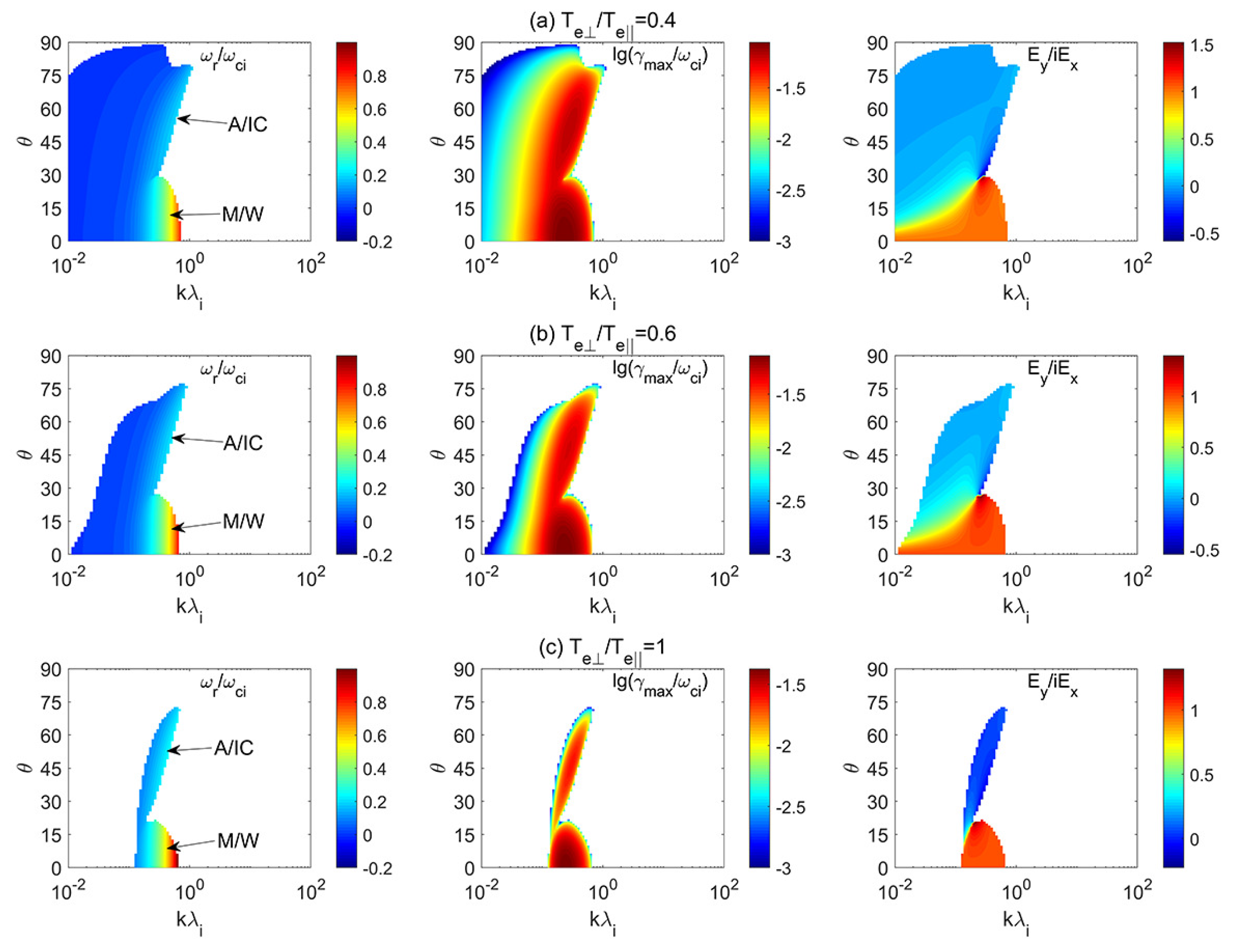
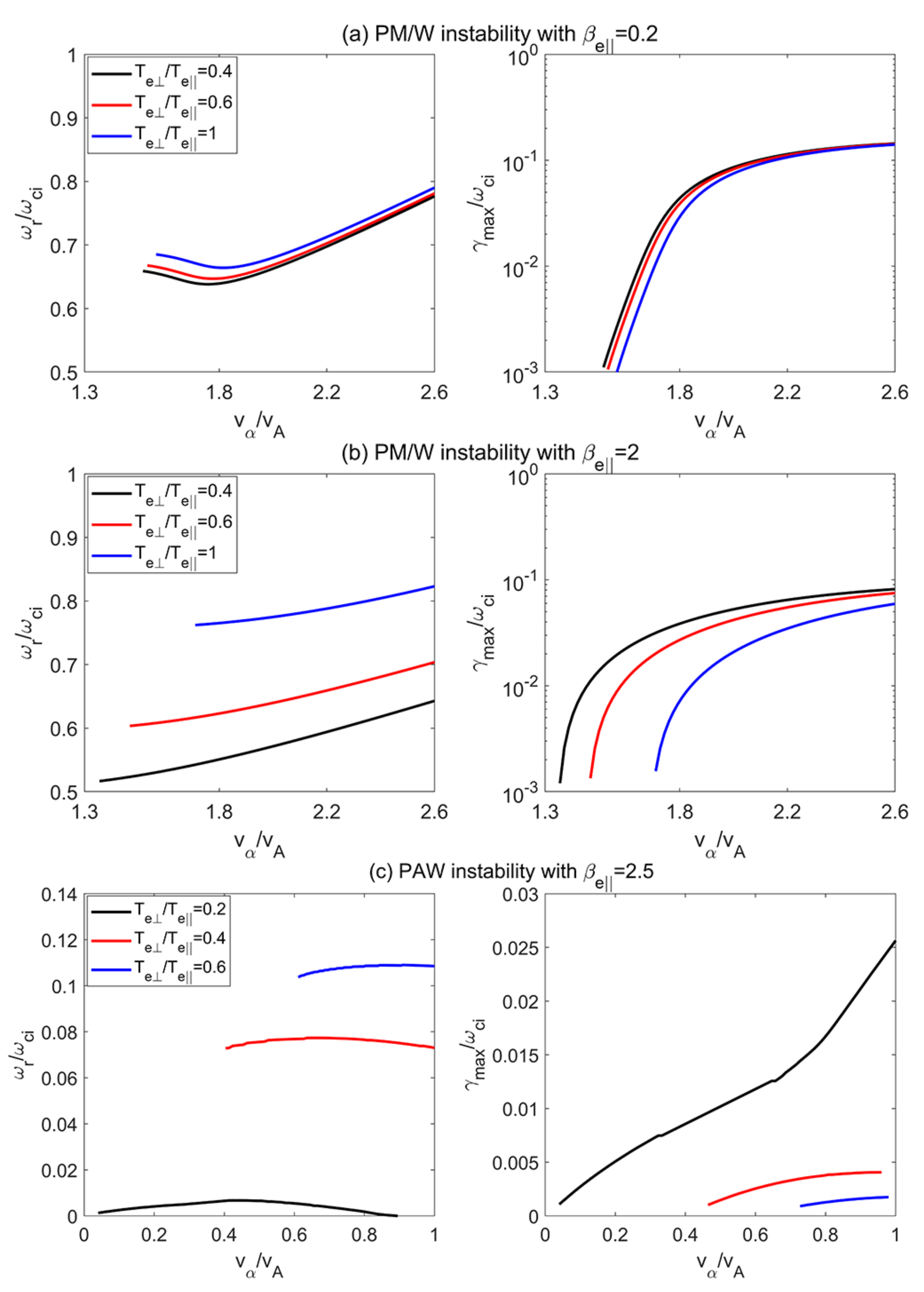
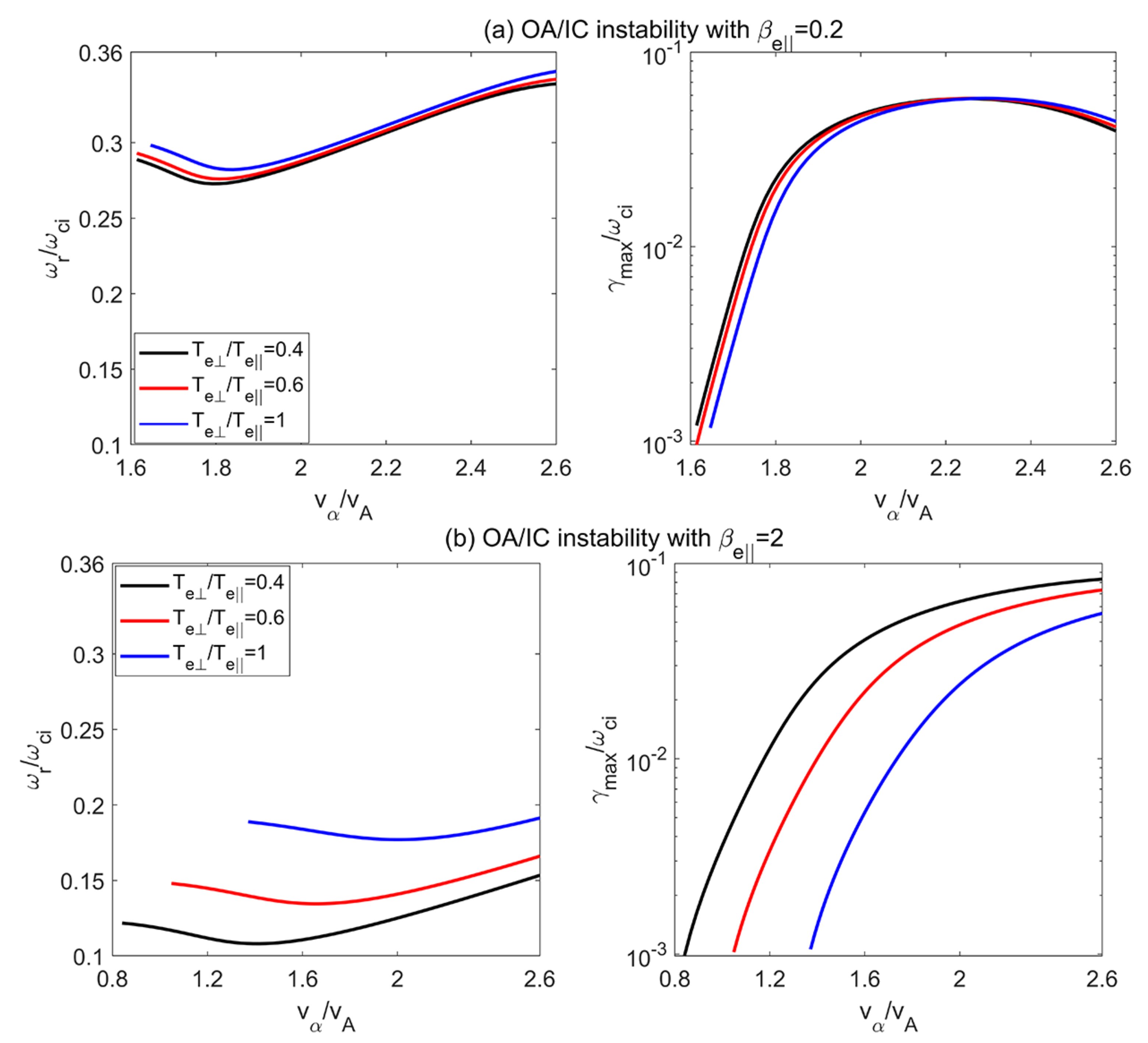
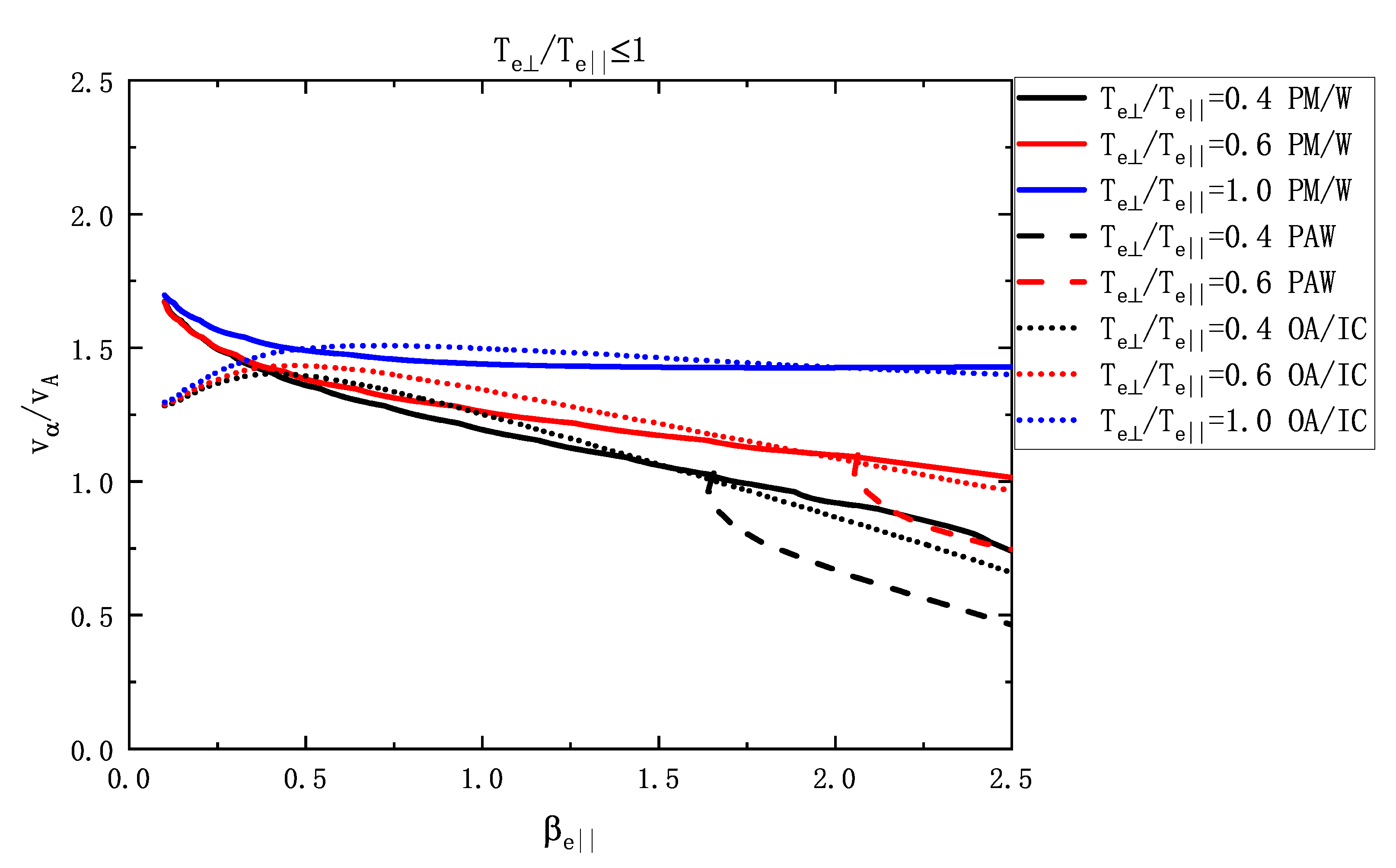
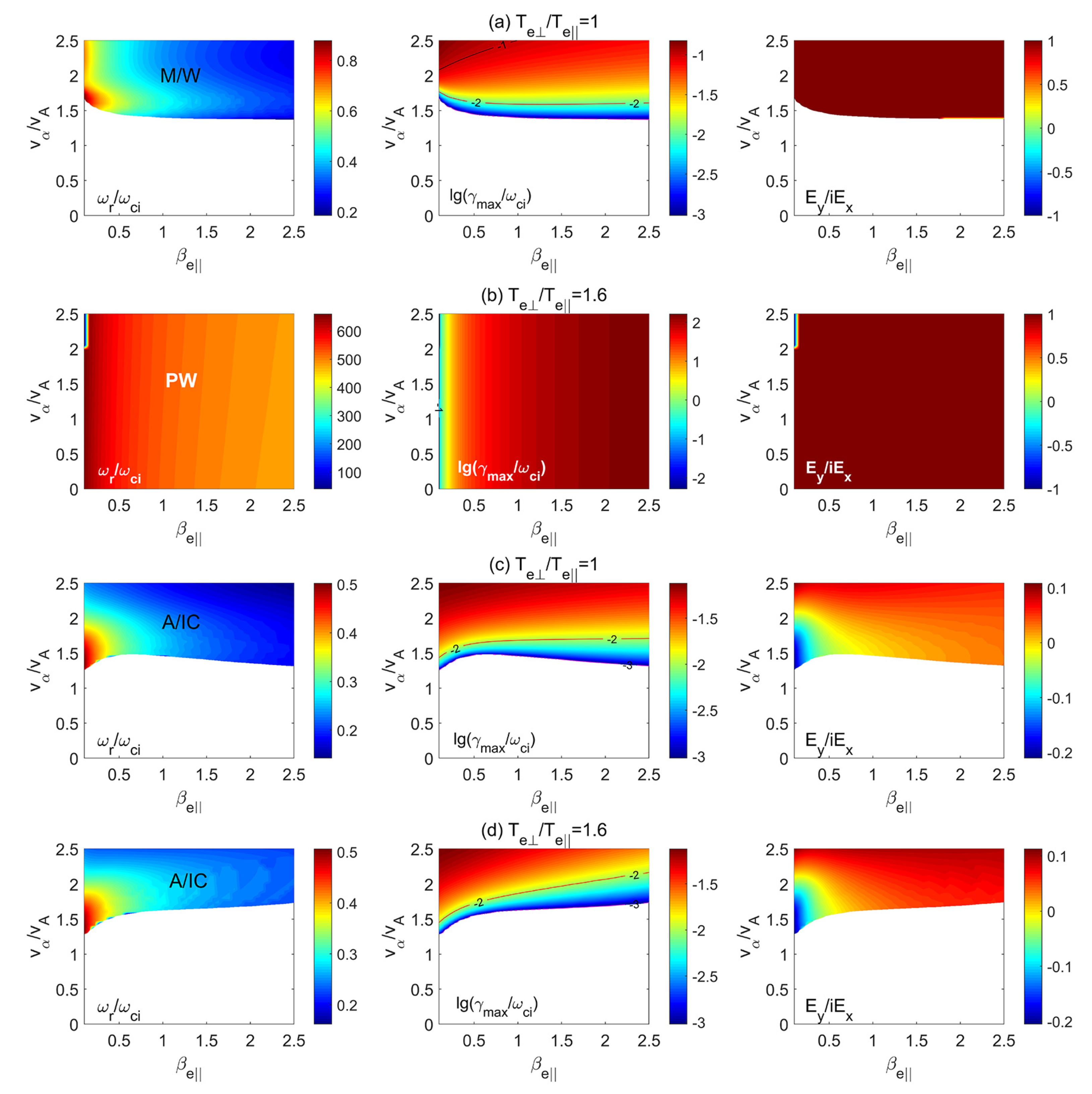
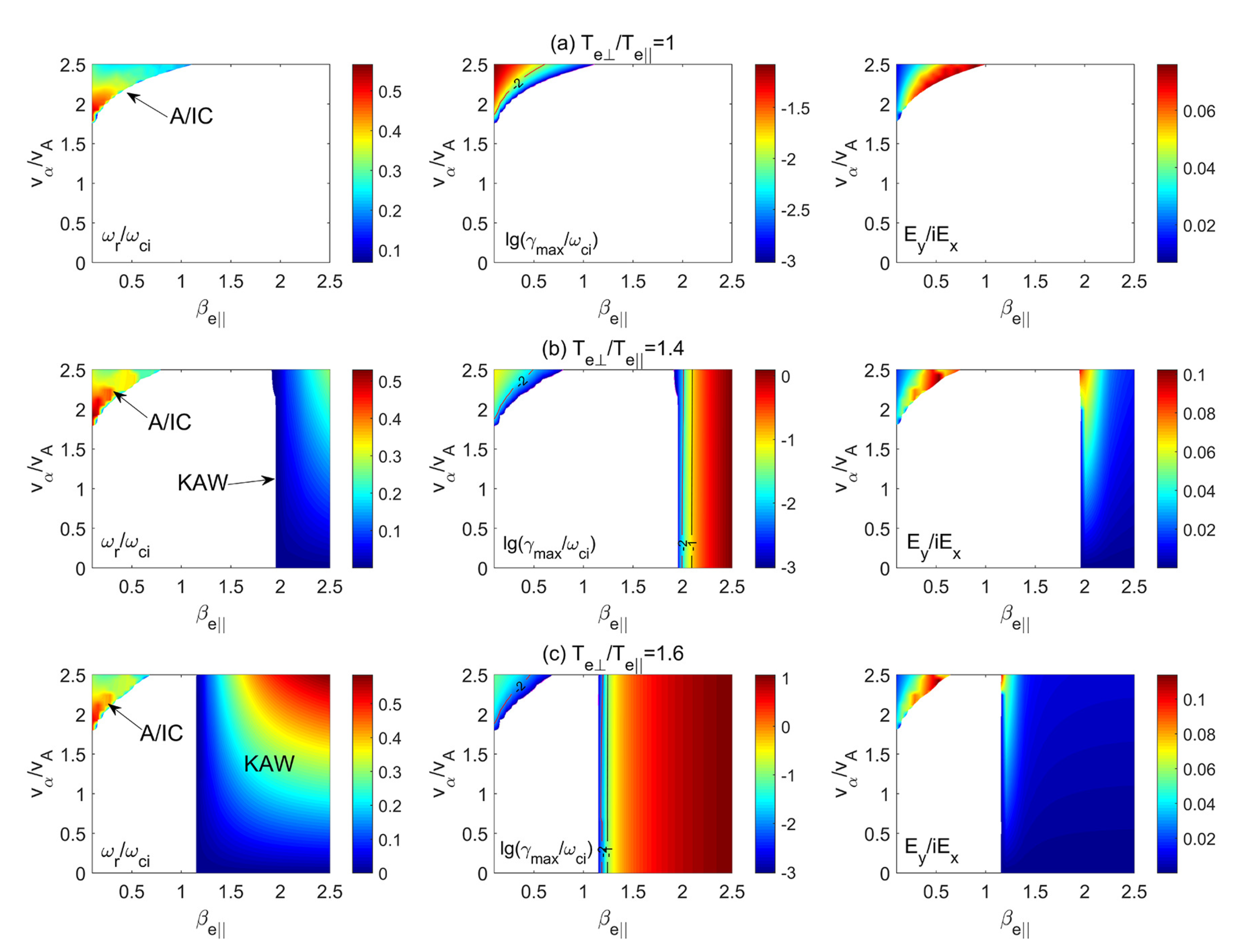
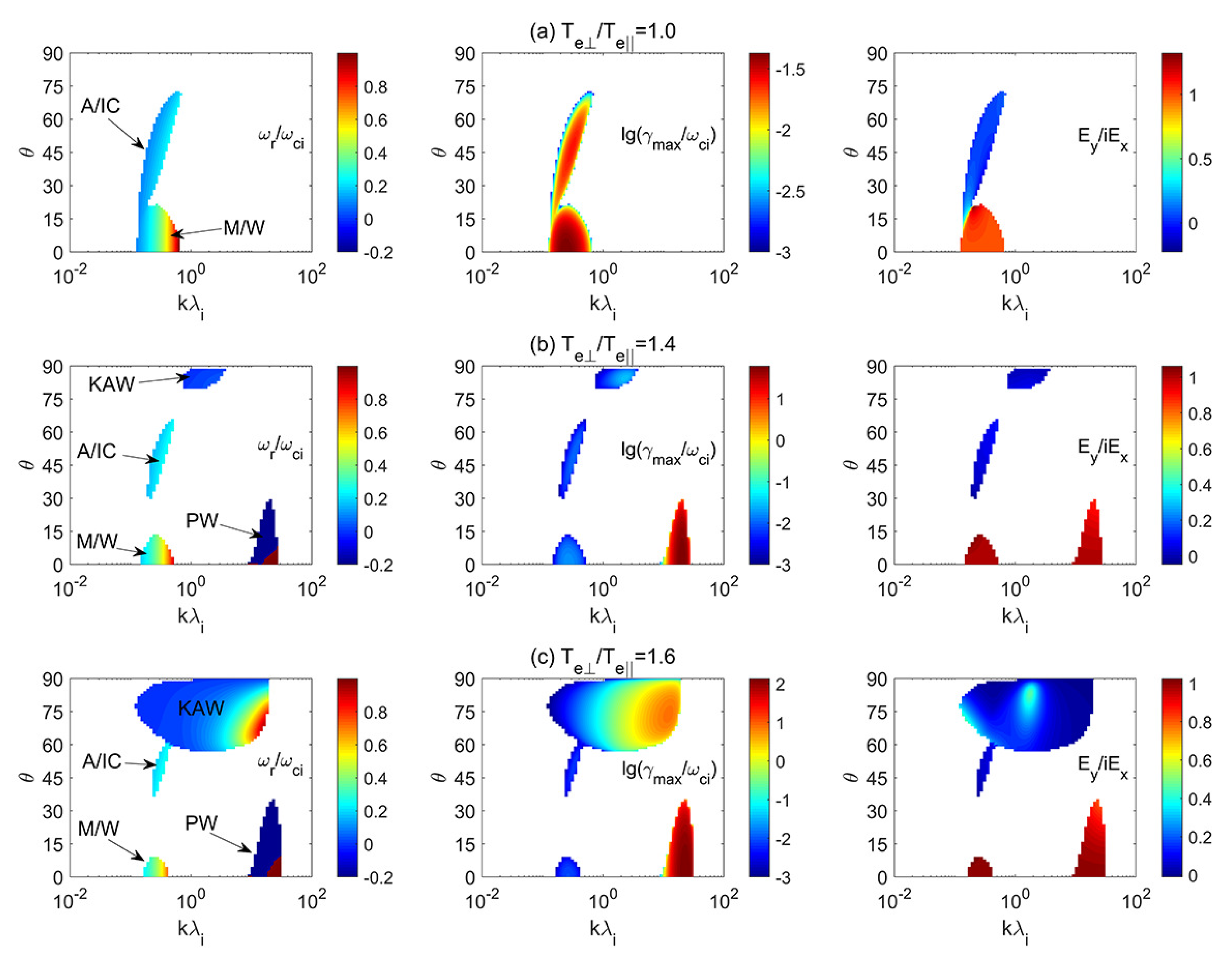
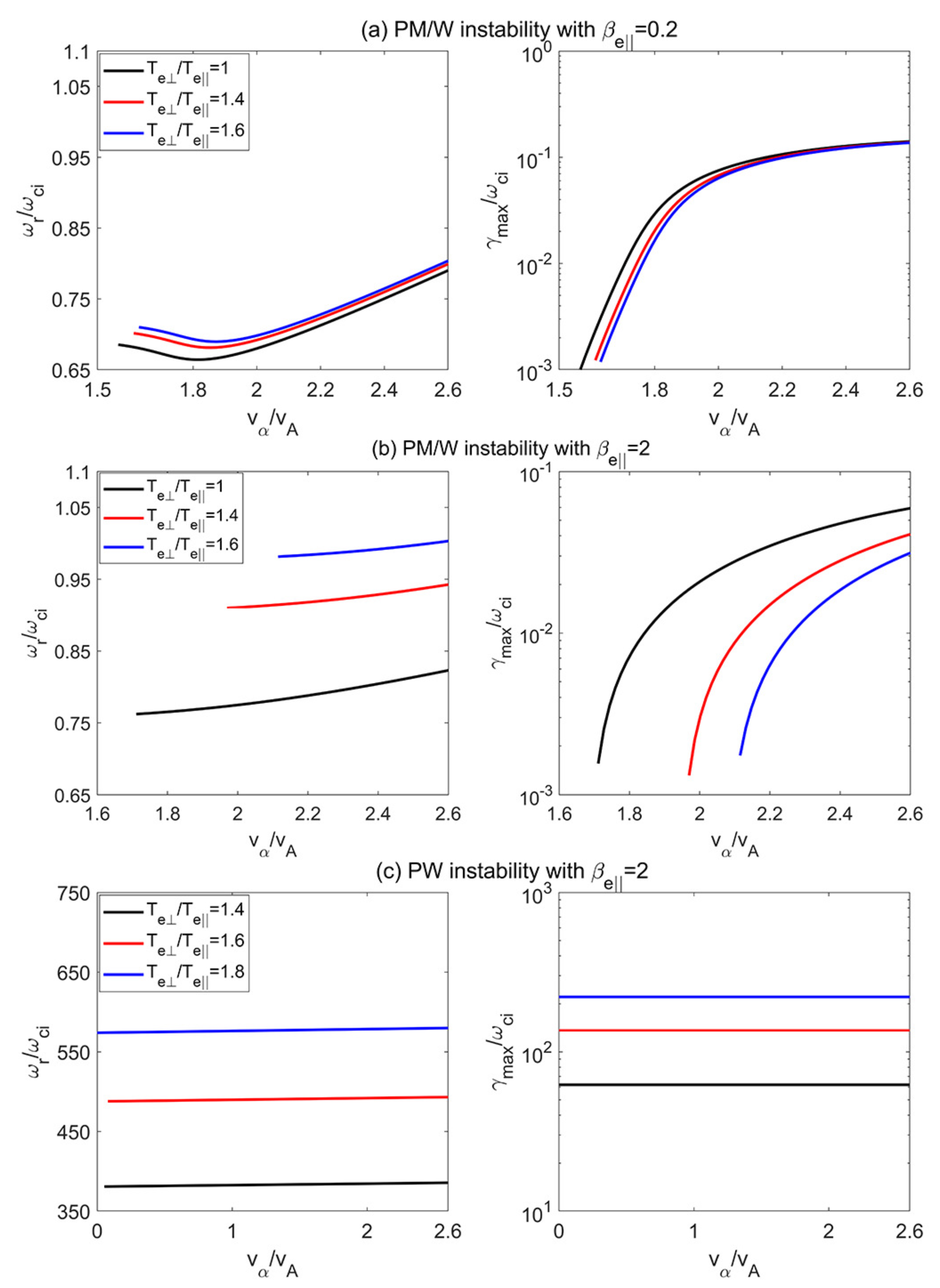
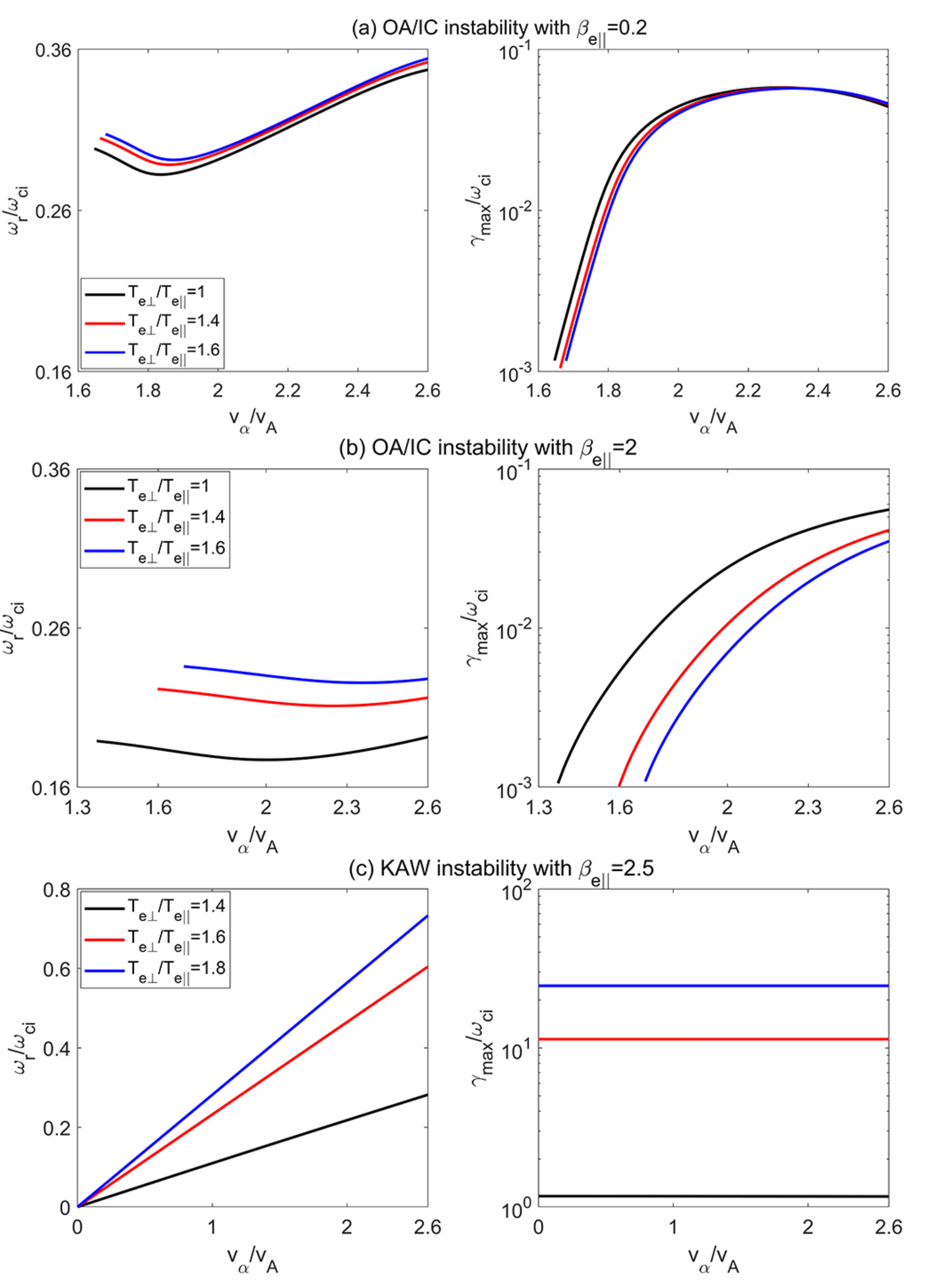
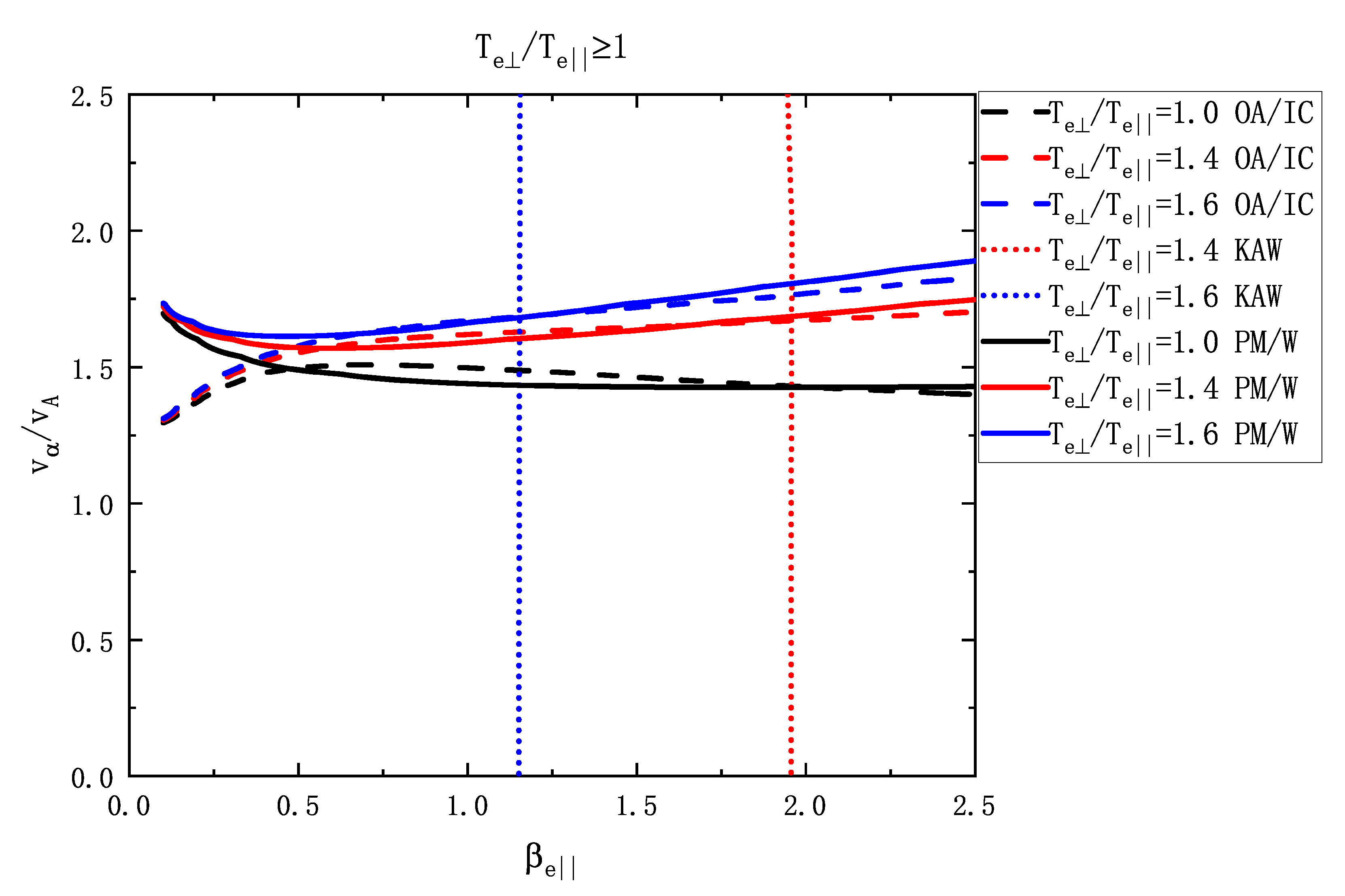
In situ recordings by the solar Wind spacecraft reveal the ubiquitousness of alpha particles, whose drift velocities to the background proton vα are generally less than or equal to the local Alfvén velocity vA. The alpha beam instability plays a significant role in the alpha beam deceleration in the solar wind; nonetheless, the detailed mechanism of deceleration remains unclear. By using the linear Vlasov equation of the PDRK/B0 solver, the present work investigates the kinetic instability caused by both the alpha beam and the electron temperature anisotropy in the solar wind and assesses the effects of the electron temperature anisotropy on such instability. The results show that both anisotropic electrons and alpha beams lead to the excitation of several plasma waves, and the wave frequency, growth rate, and polarization properties are sensitive to the electron temperature anisotropy (Te/Te), the parallel electron beta (βe), and the alpha beam drift velocity (vα/vA). With an excess parallel temperature Te/Te<1, the parallel magnetosonic/whistler (PM/W), parallel Alfvén wave (PAW), and oblique Alfvén/ion cyclotron (OA/IC) instabilities could be generated, while for an excess perpendicular temperature Te/Te>1, the PM/W, OA/IC, parallel whistler (PW), and kinetic Alfvén wave (KAW) instabilities could grow. In the region of Te/Te<1, the thresholds of the PM/W, PAW, and OA/IC instabilities extend to lower drift velocity vα/vA. In the region of Te/Te>1, the thresholds of the PM/W and OA/IC instabilities increase, while those of the PW and KAW instabilities are shifted to lower vα/vA. The current study presents a comprehensive overview for alpha beam instabilities that limit the alpha beam drift velocity in the solar wind.
Keywords: solar wind; waves; instabilities solar wind; waves; instabilities