

Temperature-Dependent Modulation of Cardiac Metabolism, Post-Injury Survival and Regenerative Rate in Axolotls
 , ,
, ,  ,
,
Abstract
1. Introduction
2. Materials and Methods
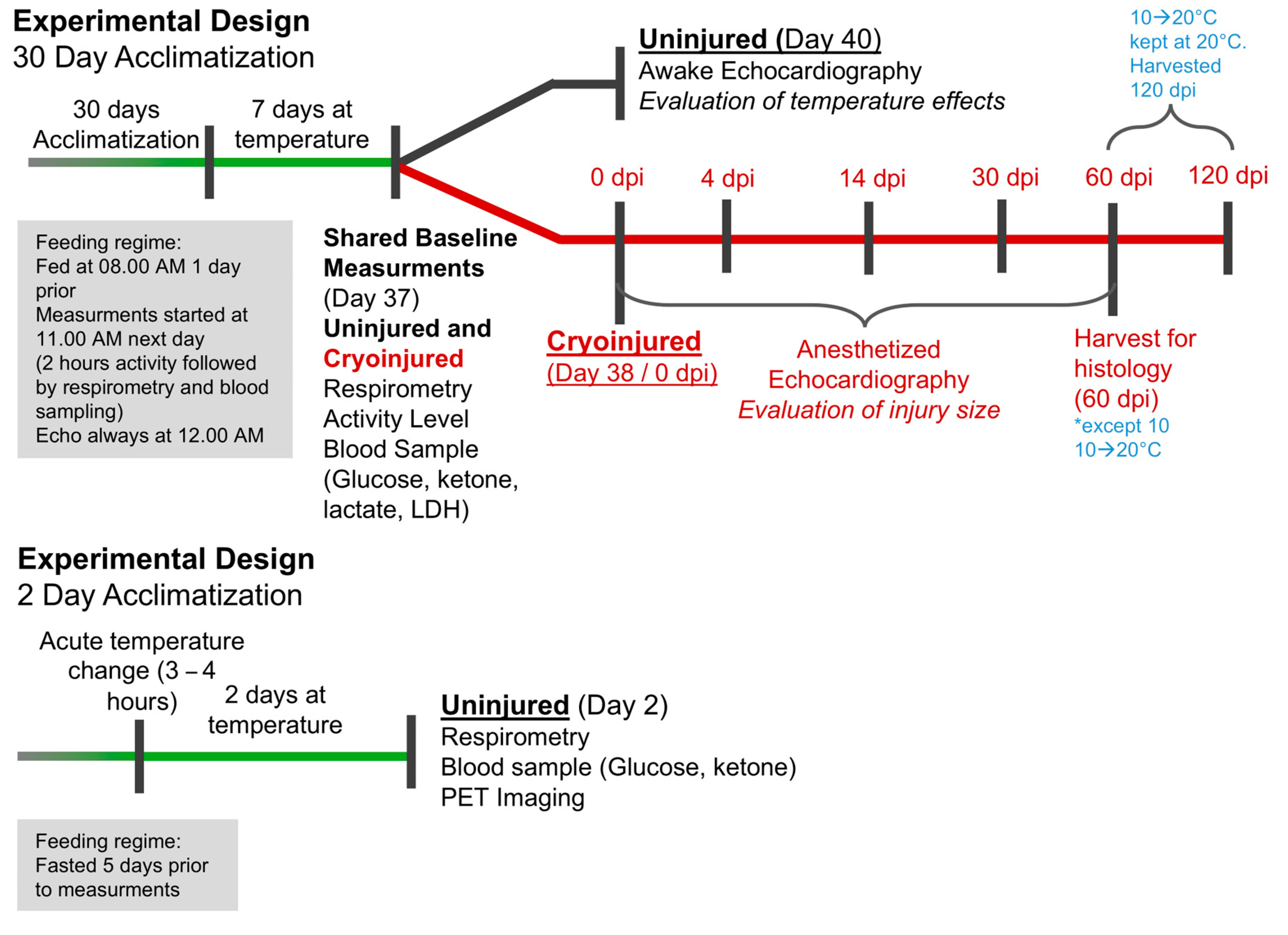
2.1. Animal Experiments
2.2. Echocardiography
2.3. Respirometry
2.4. Activity Tracking
2.5. PET-Imaging
2.6. Blood Metabolite Measurements
2.7. LDH Microplate Assay
2.8. Collection of Hearts
2.9. Immunofluorescence
2.10. Statistics
3. Results
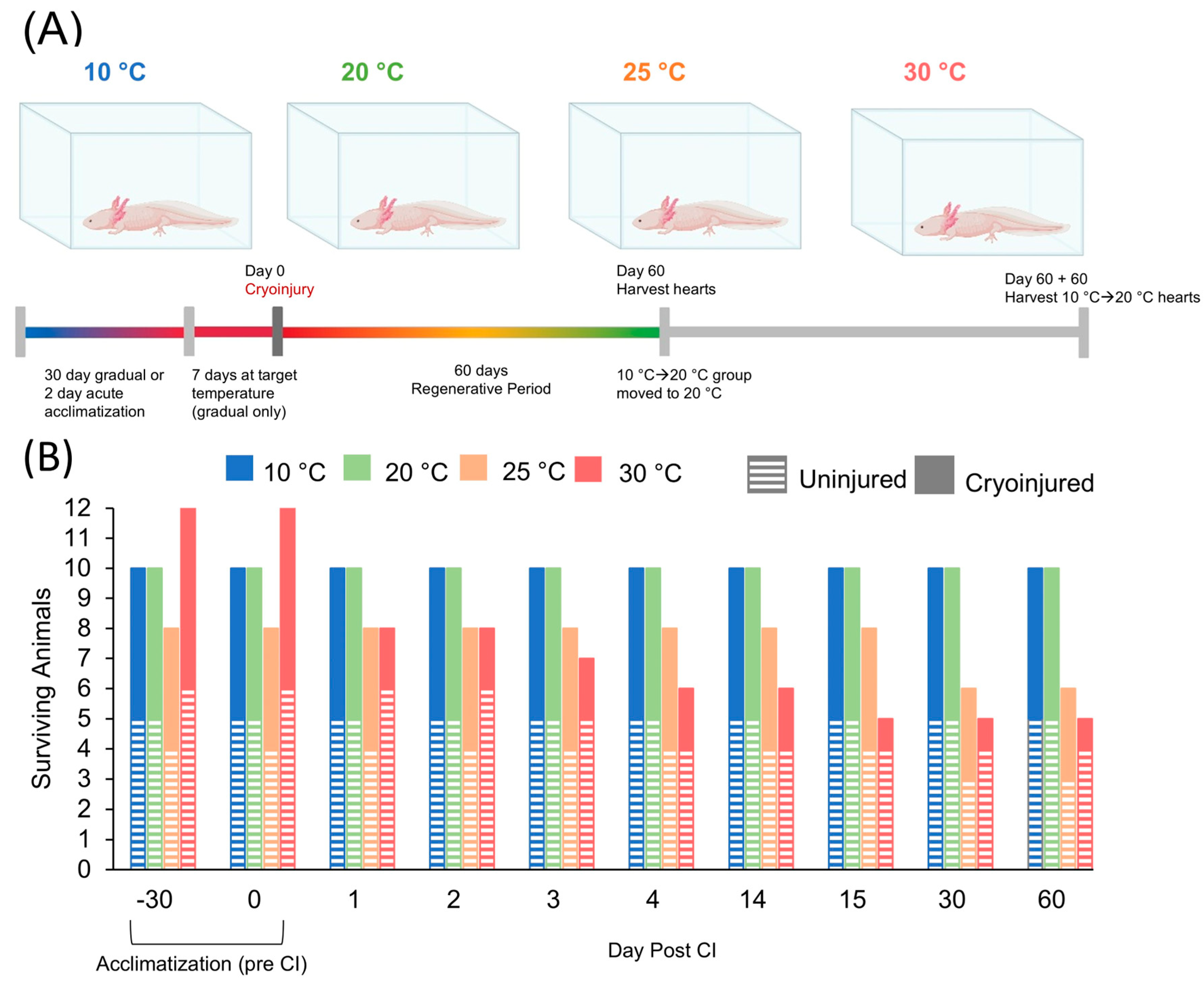
3.1. Axolotls Could Tolerate Housing Temperatures as High as 30 °C After a 30-Day Acclimatization, but Post-Injury Mortality Was Increased with Higher Temperatures
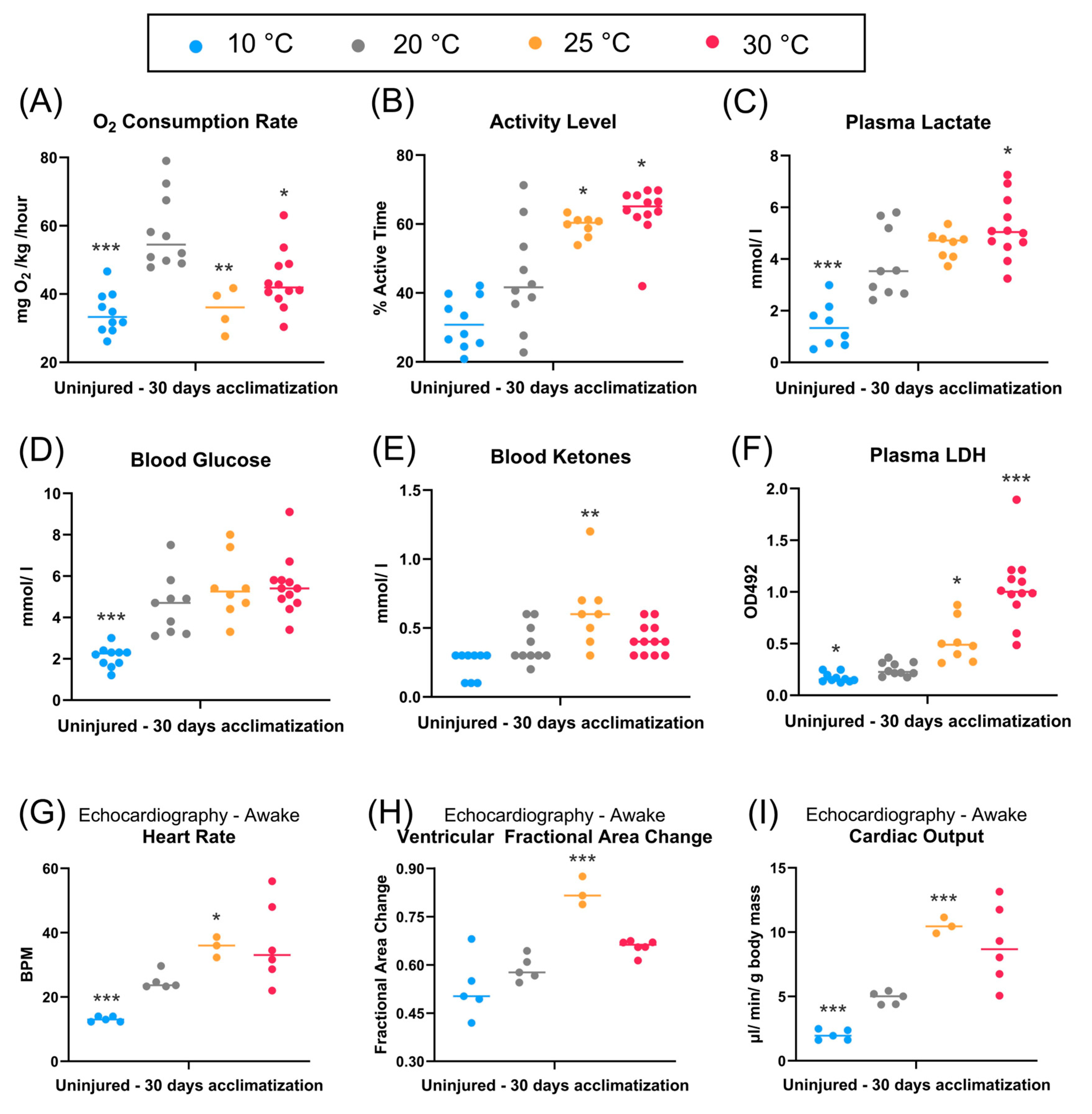
3.2. After 30 Days of Acclimatization, O2 Consumption Rate Was Affected but Did Not Scale with Temperature in Uninjured Animals
3.3. Changes in Plasma Lactate, Blood Glucose and Ketones After 30 Days of Temperature Acclimatization
3.4. Higher Housing Temperatures Were Associated with Elevated Tissue Damage After 30 Days of Acclimatization
3.5. Cardiac Function Was Altered by Temperature After 30 Days of Acclimatization in Uninjured and Awake Axolotls
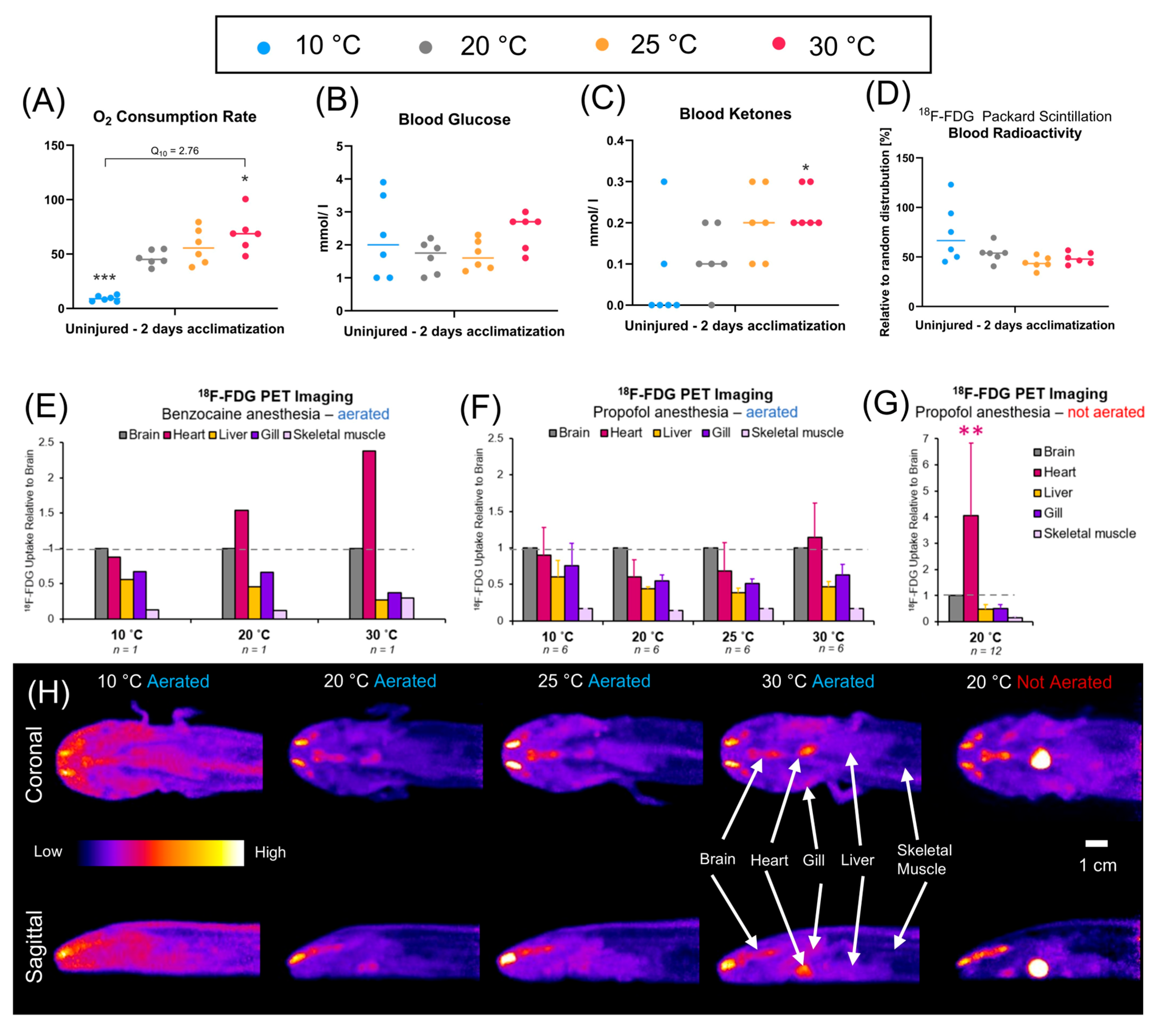
3.6. Acute Exposure to Different Housing Temperatures Led to a Successive Increase in Oxygen Consumption with Higher Temperatures in Uninjured Animals
3.7. Blood Ketone, but Not Glucose, Levels Were Affected After Acute Exposure to Different Temperatures in Uninjured Animals
3.8. The Increased Demand on the Heart in Response to Increased Temperatures Was Not Met by Increased Uptake of Glucose in Uninjured Animals
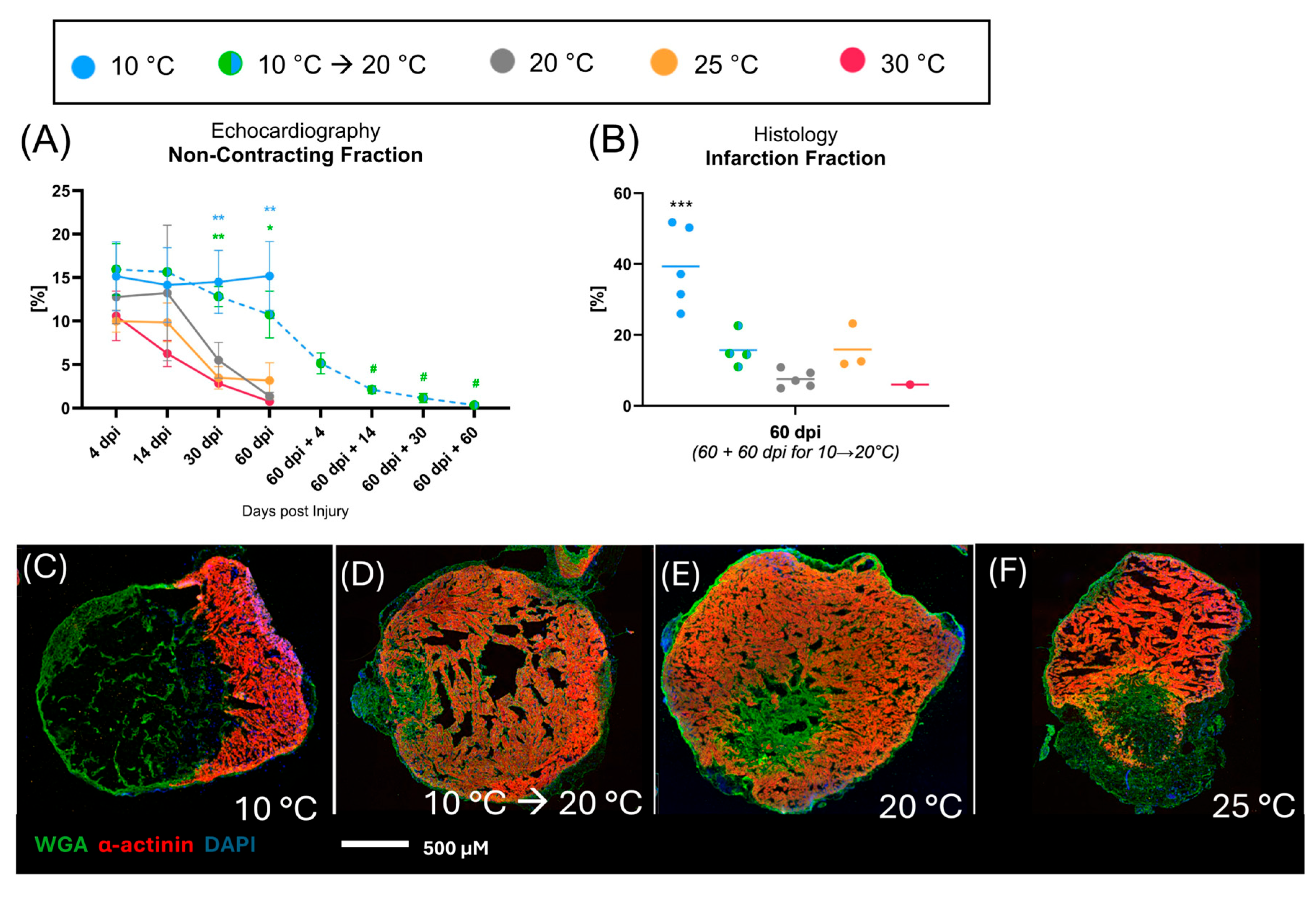
3.9. Heart Regeneration After Cryoinjury Progressed at a Lower Rate at Colder Temperatures but Was Not Affected by Survivable Higher Temperatures
3.10. Animals Housed at 10 °C and 20 °C Gained Body Weight During the Regenerative Period, While Those Housed at Warmer Temperatures Failed to Do the Same
4. Discussion
4.1. Metabolic Effects in Uninjured Animals
4.2. Heart Function in Uninjured Animals
4.3. Pathological Signs at Higher Temperatures
4.4. Regeneration at Different Temperatures
4.5. Study Limitations and Further Effects of Temperature
5. Conclusions
Supplementary Materials
Author Contributions
Funding
Institutional Review Board Statement
Informed Consent Statement
Data Availability Statement
Acknowledgments
Conflicts of Interest
Abbreviations
| CTmin | Critical maximum temperature |
| CTmax | Critical maximum temperature |
| Topt | Optimal temperature |
| Tlethal | Lethal temperature |
| VFAC | Ventricular fractional area change |
| CO | Cardiac output |
| NCF | Non-contracting fraction |
| FDG | Fludeoxyglucose |
| PET | Positron emission tomography |
| MRI | Magnetic resonance imaging |
| LDH | Lactate dehydrogenase |
| WGA | Wheat germ agglutinin |
| CI | Cryoinjury |
| BPM | Beats per minute |
| dpi | Days post-injury |
References
- Godwin, J.W.; Debuque, R.; Salimova, E.; Rosenthal, N.A. Heart regeneration in the salamander relies on macrophage-mediated control of fibroblast activation and the extracellular landscape. npj Regen. Med. 2017, 2, 22. [Google Scholar] [CrossRef]
- Dittrich, A.; Lauridsen, H. Cryo-injury Induced Heart Regeneration in the Axolotl and Echocardiography and Unbiased Quantitative Histology to Evaluate Regenerative Progression. J. Vis. Exp. 2021, 171, e61966. [Google Scholar] [CrossRef]
- Hirose, K.; Payumo, A.Y.; Cutie, S.; Hoang, A.; Zhang, H.; Guyot, R.; Lunn, D.; Bigley, R.B.; Yu, H.; Wang, J.; et al. Evidence for hormonal control of heart regenerative capacity during endothermy acquisition. Science 2019, 364, 184–188. [Google Scholar] [CrossRef]
- Payumo, A.Y.; Chen, X.; Hirose, K.; Chen, X.; Hoang, A.; Khyeam, S.; Yu, H.; Wang, J.; Chen, Q.; Powers, N.; et al. Adrenergic-Thyroid Hormone Interactions Drive Postnatal Thermogenesis and Loss of Mammalian Heart Regenerative Capacity. Circulation 2021, 144, 1000–1003. [Google Scholar] [CrossRef]
- Dittrich, A.; Hansen, K.; Simonsen, M.I.T.; Busk, M.; Alstrup, A.K.O.; Lauridsen, H. Intrinsic Heart Regeneration in Adult Vertebrates May be Strictly Limited to Low-Metabolic Ectotherms. BioEssays 2020, 42, 2000054. [Google Scholar] [CrossRef]
- Jørgensen, L.B.; Ørsted, M.; Malte, H.; Wang, T.; Overgaard, J. Extreme escalation of heat failure rates in ectotherms with global warming. Nature 2022, 611, 93–98. [Google Scholar] [CrossRef] [PubMed]
- Angilletta, M.J. Thermal Adaptation: A Theoretical and Empirical Synthesis; Oxford University Press: Oxford, UK, 2009; pp. 1–302. [Google Scholar]
- Cossins, A.R.; Bowler, K. Temperature Biology of Animals; Springer: Dordrecht, The Netherlands, 1987. [Google Scholar]
- Gillooly, J.F.; Brown, J.H.; West, G.B.; Savage, V.M.; Charnov, E.L. Effects of size and temperature on metabolic rate. Science 2001, 293, 2248–2251. [Google Scholar] [CrossRef] [PubMed]
- Zuo, W.; Moses, M.E.; West, G.B.; Hou, C.; Brown, J.H. A general model for effects of temperature on ectotherm ontogenetic growth and development. Proc. R. Soc. B Biol. Sci. 2011, 279, 1840. [Google Scholar] [CrossRef]
- Tattersall, G.J.; Sinclair, B.J.; Withers, P.C.; Fields, P.A.; Seebacher, F.; Cooper, C.E.; Maloney, S.K. Coping with thermal challenges: Physiological adaptations to environmental temperatures. Compr. Physiol. 2012, 2, 2151–2202. [Google Scholar] [CrossRef]
- Gangloff, E.J.; Telemeco, R.S. High Temperature, Oxygen, and Performance: Insights from Reptiles and Amphibians. Integr. Comp. Biol. 2018, 58, 9–24. [Google Scholar] [CrossRef] [PubMed]
- Viña, J. Biochemical adaptation: Mechanism and process in physiological evolution. Biochem. Mol. Biol. Educ. 2002, 30, 215–216. [Google Scholar] [CrossRef]
- Pörtner, H.O.; Bock, C.; Mark, F.C. Oxygen- and capacity-limited thermal tolerance: Bridging ecology and physiology. J. Exp. Biol. 2017, 220, 2685–2696. [Google Scholar] [CrossRef]
- Pörtner, H.O. Climate variations and the physiological basis of temperature dependent biogeography: Systemic to molecular hierarchy of thermal tolerance in animals. Comp. Biochem. Physiol. A Mol. Integr. Physiol. 2002, 132, 739–761. [Google Scholar] [CrossRef]
- Schulte, P.M.; Podrabsky, J.E.; Stillman, J.H.; Tomanek, L. The effects of temperature on aerobic metabolism: Towards a mechanistic understanding of the responses of ectotherms to a changing environment. J. Exp. Biol. 2015, 218, 1856–1866. [Google Scholar] [CrossRef]
- Gao, J.; Zhang, W.; Dang, W.; Mou, Y.; Gao, Y.; Sun, B.J.; Du, W.G. Heat shock protein expression enhances heat tolerance of reptile embryos. Proc. Biol. Sci. 2014, 281, 20141135. [Google Scholar] [CrossRef]
- Zatsepina, O.G.; Ulmasov, K.A.; Beresten, S.F.; Molodtsov, V.B.; Rybtsov, S.A.; Evgen’Ev, M.B. Thermotolerant desert lizards characteristically differ in terms of heat-shock system regulation. J. Exp. Biol. 2000, 203, 1017–1025. [Google Scholar] [CrossRef]
- Kaldis, A.; Atkinson, B.G.; Heikkila, J.J. Molecular chaperone function of the Rana catesbeiana small heat shock protein, hsp30. Comp. Biochem. Physiol.—A Mol. Integr. Physiol. 2004, 139, 175–182. [Google Scholar] [CrossRef]
- Ulmasov, K.A.; Shammakov, S.; Karaev, K.; Evgen’ev, M.B. Heat shock proteins and thermoresistance in lizards. Proc. Natl. Acad. Sci. USA 1992, 89, 1666. [Google Scholar]
- Dallas, J.; Warne, R.W. Heat hardening of a larval amphibian is dependent on acclimation period and temperature. J. Exp. Zool. A Ecol. Integr. Physiol. 2023, 339, 339–345. [Google Scholar] [PubMed]
- Ruthsatz, K.; Dausmann, K.H.; Peck, M.A.; Glos, J. Thermal tolerance and acclimation capacity in the European common frog (Rana temporaria) change throughout ontogeny. J. Exp. Zool. A Ecol. Integr. Physiol. 2022, 337, 477–490. [Google Scholar] [PubMed]
- Schauble, M.K.; Nentwig, M.R. Temperature and prolactin as control factors in newt forelimb regeneration. J. Exp. Zool. 1974, 187, 335–344. [Google Scholar]
- Dittrich, A.; Andersson, S.A.; Busk, M.; Hansen, K.; Foldager, C.B.; Palmfeldt, J.; Andersen, A.; Pedersen, M.; Vendelbo, M.; Nielsen, K.L.; et al. Metabolic changes during cardiac regeneration in the axolotl. Dev. Dyn. 2026, 255, 66–85. [Google Scholar] [PubMed]
- Sada, T.; Kimura, W. Transition from fetal to postnatal state in the heart: Crosstalk between metabolism and regeneration. Dev. Growth Differ. 2024, 66, 438–451. [Google Scholar] [CrossRef] [PubMed]
- Spelat, R.; Ferro, F.; Contessotto, P.; Aljaabary, A.; Martin-Saldaña, S.; Jin, C.; Karlsson, N.G.; Grealy, M.; Hilscher, M.M.; Magni, F.; et al. Metabolic reprogramming and membrane glycan remodeling as potential drivers of zebrafish heart regeneration. Commun. Biol. 2022, 5, 1365. [Google Scholar] [CrossRef]
- Honkoop, H.; de Bakker, D.E.; Aharonov, A.; Kruse, F.; Shakked, A.; Nguyen, P.D.; de Heus, C.; Garric, L.; Muraro, M.J.; Shoffner, A.; et al. Single-cell analysis uncovers that metabolic reprogramming by ErbB2 signaling is essential for cardiomyocyte proliferation in the regenerating heart. Elife 2019, 8, e50163. [Google Scholar] [CrossRef]
- White, C.R.; Phillips, N.F.; Seymour, R.S. The scaling and temperature dependence of vertebrate metabolism. Biol. Lett. 2006, 2, 125–127. [Google Scholar] [CrossRef]
- Secor, S.M.; Boehm, M. Specific dynamic action of ambystomatid salamanders and the effects of meal size, meal type, and body temperature. Physiol. Biochem. Zool. 2006, 79, 720–735. [Google Scholar] [CrossRef] [PubMed]
- Alstrup, A.K.O.; Busk, M.; Dittrich, A.; Hansen, K.; Wang, T.; Damkjær, M.; Andersen, J.B.; Lauridsen, H. Special Challenges in PET Imaging of Ectothermic Vertebrates. Semin. Nucl. Med. 2023, 53, 577–585. [Google Scholar] [CrossRef]
- Chen, H.; Yao, Q.; Dong, Y.; Tang, Z.; Li, R.; Cai, B.; Wang, R.; Chen, Q. The accuracy evaluation of four blood glucose monitoring systems according to ISO 15197:2003 and ISO 15197:2013 criteria. Prim. Care Diabetes 2019, 13, 252–258. [Google Scholar] [CrossRef]
- Schneider, C.A.; Rasband, W.S.; Eliceiri, K.W. NIH Image to ImageJ: 25 years of image analysis. Nat. Methods 2012, 9, 671–675. [Google Scholar] [CrossRef]
- Farkas, J.E.; Monaghan, J.R. Housing and maintenance of Ambystoma mexicanum, the mexican axolotl. Methods Mol. Biol. 2015, 1290, 27–46. [Google Scholar]
- McFarland, W.N. Upper Lethal Temperatures in the Salamander Taricha torosa as a Function of Acclimation. Copeia 1955, 1955, 191–194. [Google Scholar] [CrossRef]
- Farhana, A.; Lappin, S.L. Biochemistry, Lactate Dehydrogenase. In StatPearls [Internet]; StatPearls Publishing: Treasure Island, FL, USA, 2023. Available online: https://www.ncbi.nlm.nih.gov/books/NBK557536/ (accessed on 15 March 2026).
- Thygesen, M.M.; Rasmussen, M.M.; Madsen, J.G.; Pedersen, M.; Lauridsen, H. Propofol (2,6-diisopropylphenol) is an applicable immersion anesthetic in the axolotl with potential uses in hemodynamic and neurophysiological experiments. Regeneration 2017, 4, 124–131. [Google Scholar] [PubMed]
- Ordoño, J.; Pérez-Amodio, S.; Ball, K.; Aguirre, A.; Engel, E. The generation of a lactate-rich environment stimulates cell cycle progression and modulates gene expression on neonatal and hiPSC-derived cardiomyocytes. Biomater. Adv. 2022, 139, 213035. [Google Scholar] [CrossRef]
- Georgoulis, I.; Feidantsis, K.; Giantsis, I.A.; Kakale, A.; Bock, C.; Pörtner, H.O.; Sokolova, I.M.; Michaelidis, B. Heat hardening enhances mitochondrial potential for respiration and oxidative defence capacity in the mantle of thermally stressed Mytilus galloprovincialis. Sci. Rep. 2021, 11, 17098. [Google Scholar] [CrossRef] [PubMed]
- Wang, M.; Zhu, Z.; He, X.; Dai, S.; Liu, R.; Liu, J. The crosstalk between mitochondrial dysfunction and fatty acid metabolism in heart failure: Mechanisms and therapeutic strategies. Front. Pharmacol. 2025, 16, 1679085. [Google Scholar] [CrossRef]
- Gamperl, A.K.; Thomas, A.L.; Syme, D.A. Can temperature-dependent changes in myocardial contractility explain why fish only increase heart rate when exposed to acute warming? J. Exp. Biol. 2022, 225, jeb243152. [Google Scholar] [CrossRef]
- Warren, D.E.; Jackson, D.C. The role of mineralized tissue in the buffering of lactic acid during anoxia and exercise in the leopard frog Rana pipiens. J. Exp. Biol. 2005, 208, 1117–1124. [Google Scholar] [CrossRef]
- Tan, J.; Yang, M.; Wang, H.; Shen, C.; Wu, M.; Xu, H.; Wu, Y.; Li, Y.; Li, X.; Huang, T.; et al. Moderate heart rate reduction promotes cardiac regeneration through stimulation of the metabolic pattern switch. Cell Rep. 2022, 38, 110468. [Google Scholar] [CrossRef]
- Griffen, B.D.; Bolander, M.; Blakeslee, A.; Crane, L.C.; Repetto, M.F.; Tepolt, C.K.; Toscano, B.J. Past energy allocation overwhelms current energy stresses in determining energy allocation trade-offs. Ecol. Evol. 2023, 13, e10402. [Google Scholar] [CrossRef]
- Cooke, G.A.; Marshall, P.; al-Timman, J.K.; Wright, D.J.; Riley, R.; Hainsworth, R.; Tan, L.B. Physiological cardiac reserve: Development of a non-invasive method and first estimates in man. Heart 1998, 79, 289–294. [Google Scholar] [CrossRef]
- Pedersen, K.; Rasmussen, R.K.; Dittrich, A.; Lauridsen, H. Cardiac regeneration in the axolotl is unaffected by alterations in leukocyte numbers induced by lipopolysaccharide and prednisolone. BMC Res. Notes 2021, 14, 157. [Google Scholar] [CrossRef] [PubMed]
- Villiard, É.; Brinkmann, H.; Moiseeva, O.; Mallette, F.A.; Ferbeyre, G.; Roy, S. Urodele p53 tolerates amino acid changes found in p53 variants linked to human cancer. BMC Evol. Biol. 2007, 7, 180. [Google Scholar] [CrossRef] [PubMed]
- Garbern, J.C.; Lee, R.T. Heart regeneration: 20 years of progress and renewed optimism. Dev. Cell. 2022, 57, 424–439. [Google Scholar] [CrossRef] [PubMed]


Disclaimer/Publisher’s Note: The statements, opinions and data contained in all publications are solely those of the individual author(s) and contributor(s) and not of MDPI and/or the editor(s). MDPI and/or the editor(s) disclaim responsibility for any injury to people or property resulting from any ideas, methods, instructions or products referred to in the content. |
© 2026 by the authors. Licensee MDPI, Basel, Switzerland. This article is an open access article distributed under the terms and conditions of the Creative Commons Attribution (CC BY) license.
Share and Cite
Dittrich, A.; Andersson, S.A.; Alstrup, A.K.O.; Sørensen, P.L.; Simonsen, M.I.T.; Arildsen, M.H.; Aabling, R.R.; Lauridsen, H. Temperature-Dependent Modulation of Cardiac Metabolism, Post-Injury Survival and Regenerative Rate in Axolotls. Metabolites 2026, 16, 414. https://doi.org/10.3390/metabo16060414
Dittrich A, Andersson SA, Alstrup AKO, Sørensen PL, Simonsen MIT, Arildsen MH, Aabling RR, Lauridsen H. Temperature-Dependent Modulation of Cardiac Metabolism, Post-Injury Survival and Regenerative Rate in Axolotls. Metabolites. 2026; 16(6):414. https://doi.org/10.3390/metabo16060414
Chicago/Turabian StyleDittrich, Anita, Sofie Amalie Andersson, Aage Kristian Olsen Alstrup, Pernille Lajer Sørensen, Mette Irene Theilgaard Simonsen, Maibritt Hald Arildsen, Rasmus Roost Aabling, and Henrik Lauridsen. 2026. "Temperature-Dependent Modulation of Cardiac Metabolism, Post-Injury Survival and Regenerative Rate in Axolotls" Metabolites 16, no. 6: 414. https://doi.org/10.3390/metabo16060414
APA StyleDittrich, A., Andersson, S. A., Alstrup, A. K. O., Sørensen, P. L., Simonsen, M. I. T., Arildsen, M. H., Aabling, R. R., & Lauridsen, H. (2026). Temperature-Dependent Modulation of Cardiac Metabolism, Post-Injury Survival and Regenerative Rate in Axolotls. Metabolites, 16(6), 414. https://doi.org/10.3390/metabo16060414