
Relationship Between Calcium and Gut Microbial Composition and Metabolic Pathways in Children with Autism

Abstract
1. Introduction
2. Materials and Methods
2.1. Participants
2.2. Assessment of ASD Symptoms
- Autism Behavior Checklist (ABC). The ABC consists of 57 items covering five domains: sensory responses, social relating, body and object use, language, and social and self-help skills [21]. Parents or primary caregivers completed the questionnaire based on the child’s daily behavioral performance.
- Autism Treatment Evaluation Checklist (ATEC). The ATEC was completed by parents or caregivers and includes four subscales assessing speech/language communication, sociability, sensory/cognitive awareness, and health/physical/behavioral status [22]. Lower scores indicate fewer behavioral and functional impairments.
- Childhood Autism Rating Scale (CARS). Trained clinical evaluators administered the CARS based on direct behavioral observation and caregiver interviews [23]. This scale is widely used in clinical and research settings to assess autism-related symptom severity and support clinical grading of ASD.
2.3. Hair Calcium Measurement and Calcium-Group Definition
2.4. Fecal Sample Collection and DNA Extraction
2.5. Metagenomic Sequencing
2.6. Data Analysis
3. Results
3.1. Characteristics of the Enrolled Participants
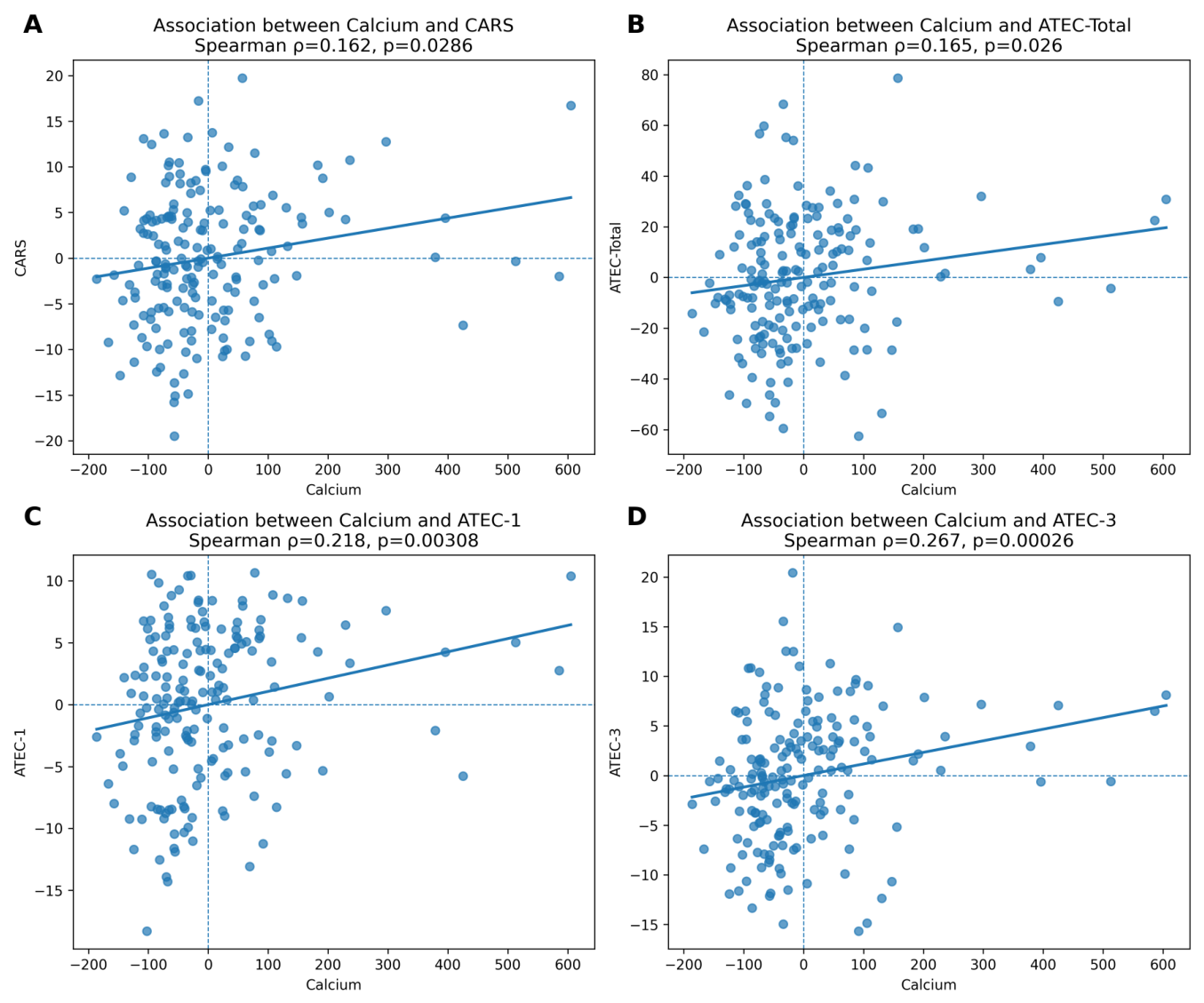
3.2. Association Between Hair Calcium Levels and ASD Behavioral Phenotypes
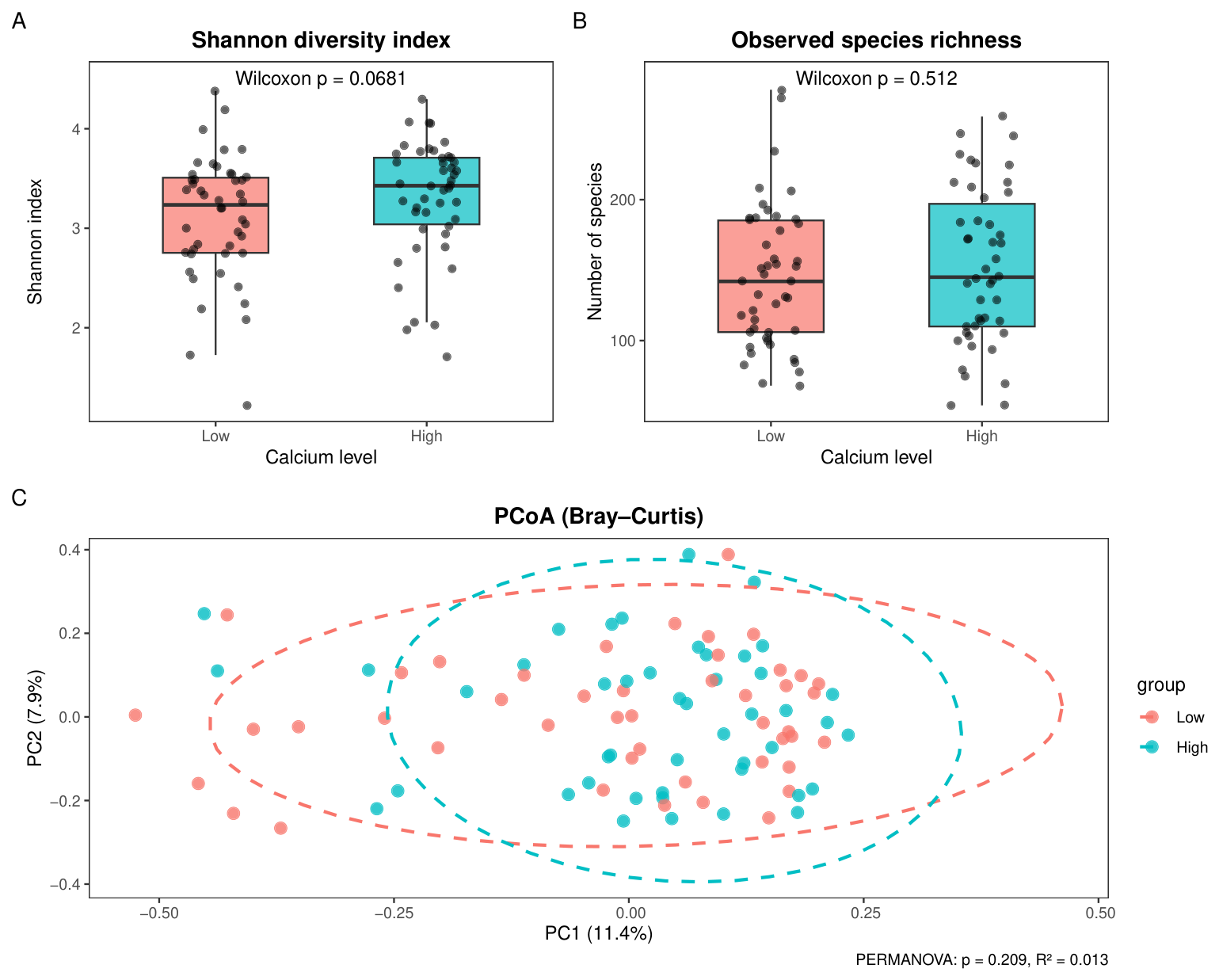
3.3. Overall Gut Microbial Diversity Between High- and Low-Calcium Groups
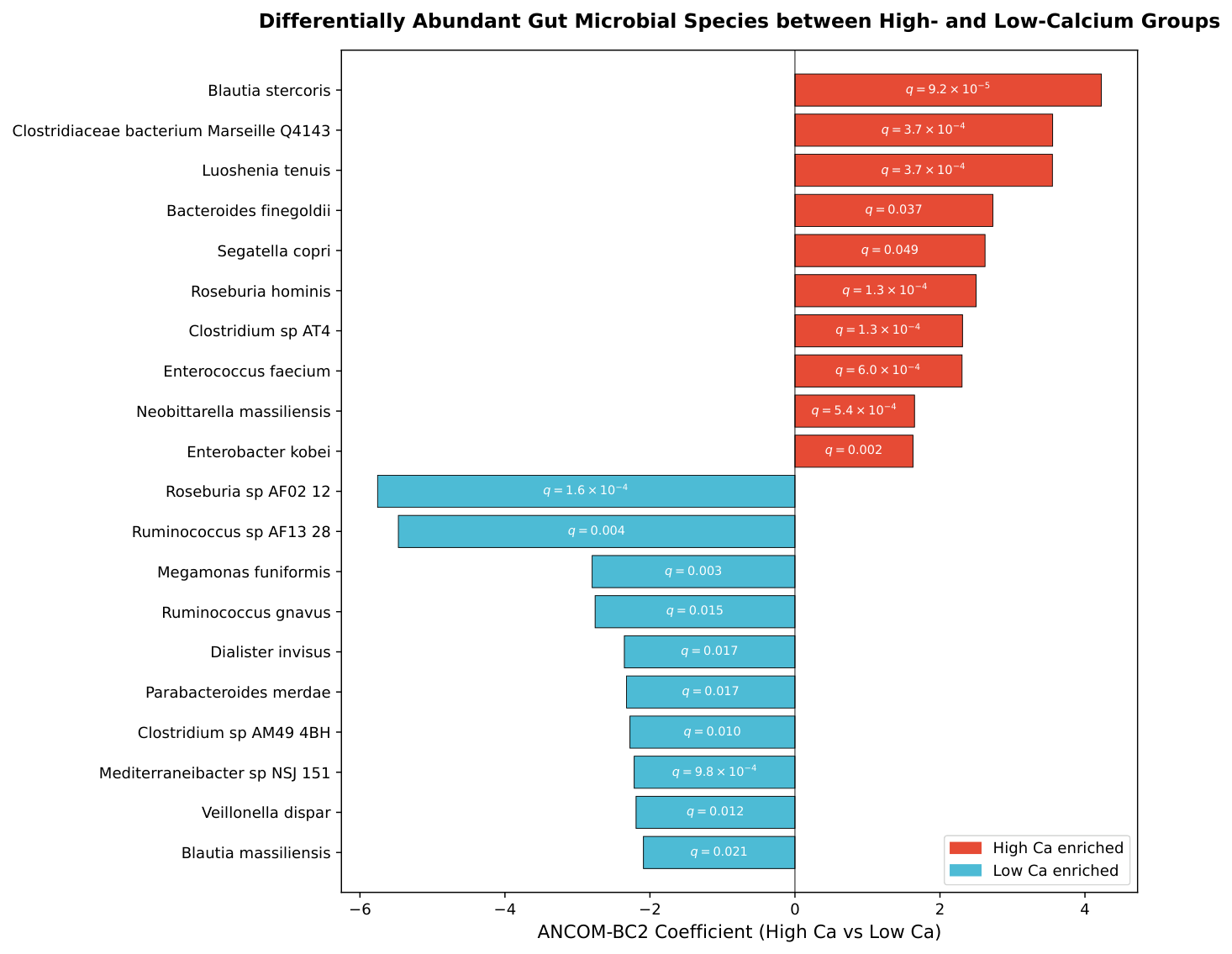
3.4. Differential Gut Microbial Species Between High- and Low-Calcium Groups
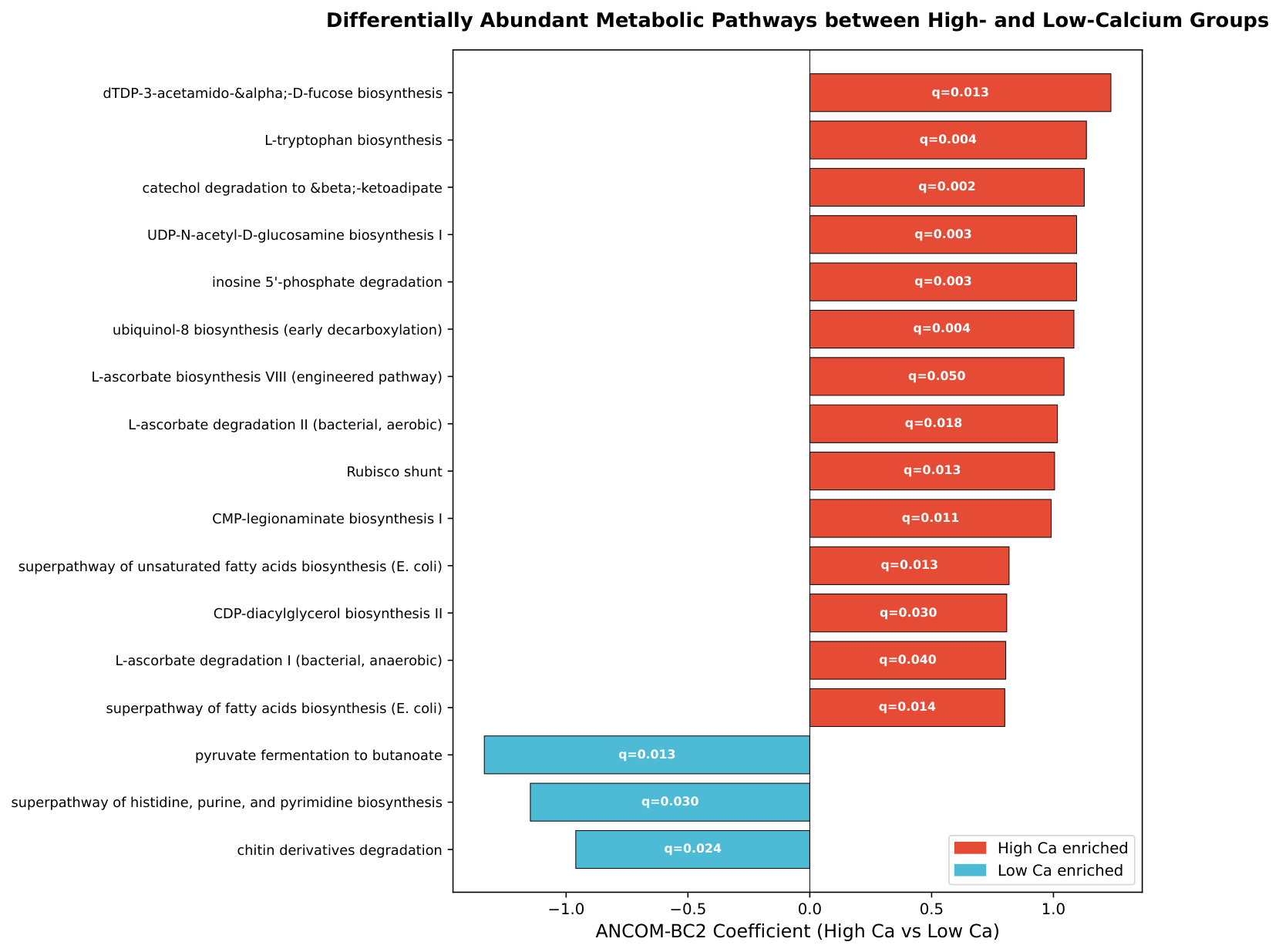
3.5. Differential Functional Pathways Between High- and Low-Calcium Groups
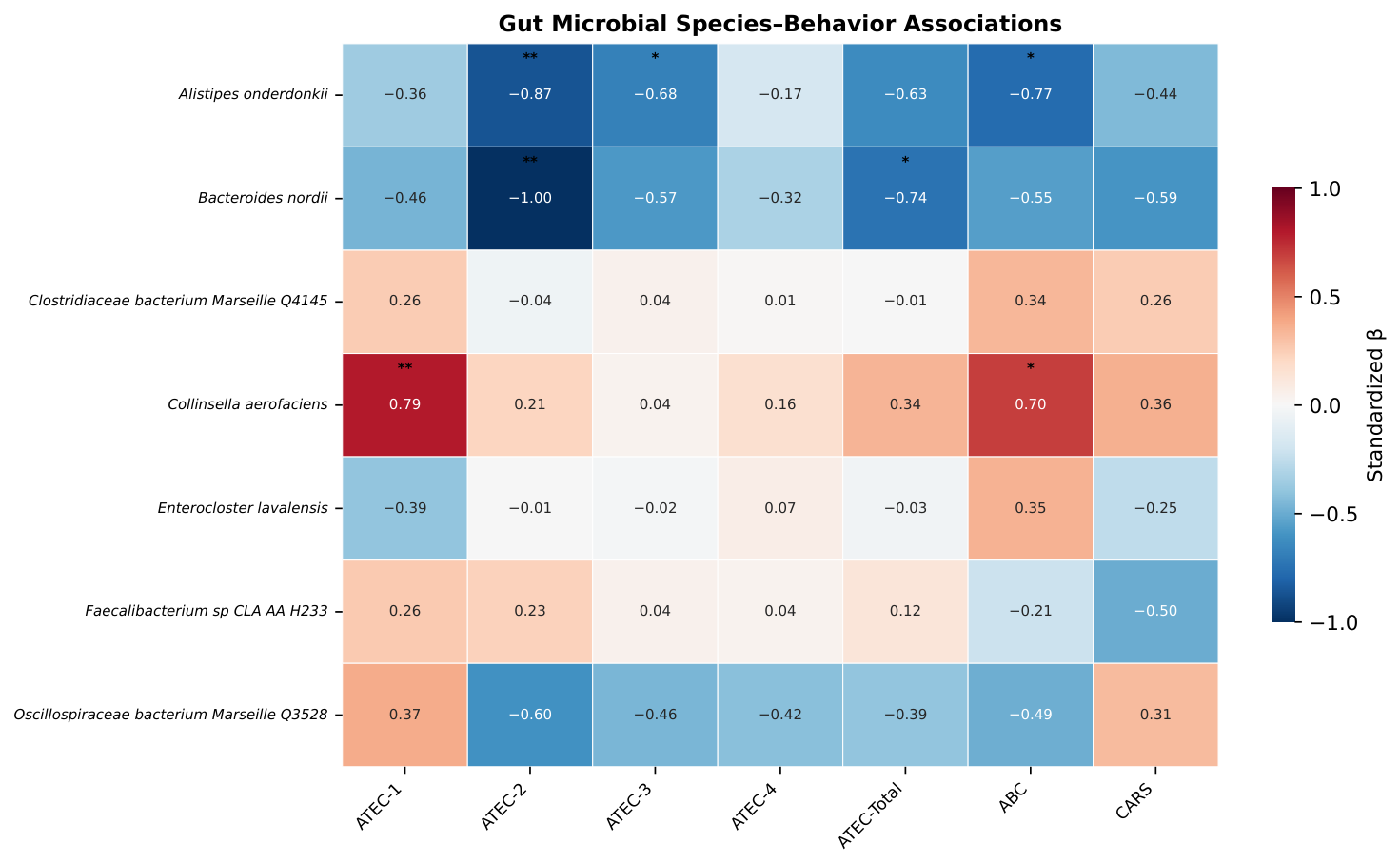
3.6. Associations Between Differential Microbial Taxa and ASD Behavioral Severity
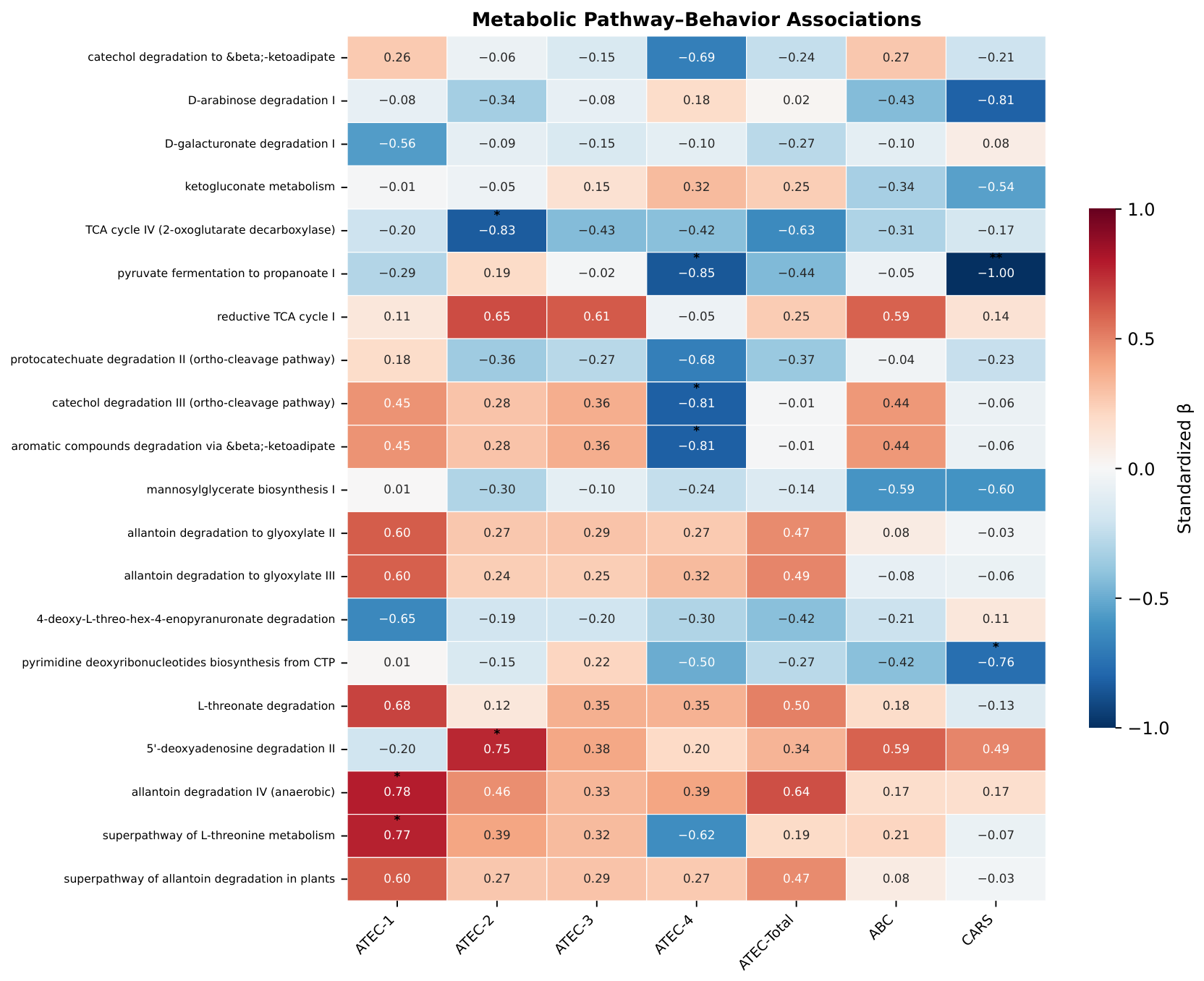
3.7. Associations Between Differential Metabolic Pathways and ASD Behavioral Severity
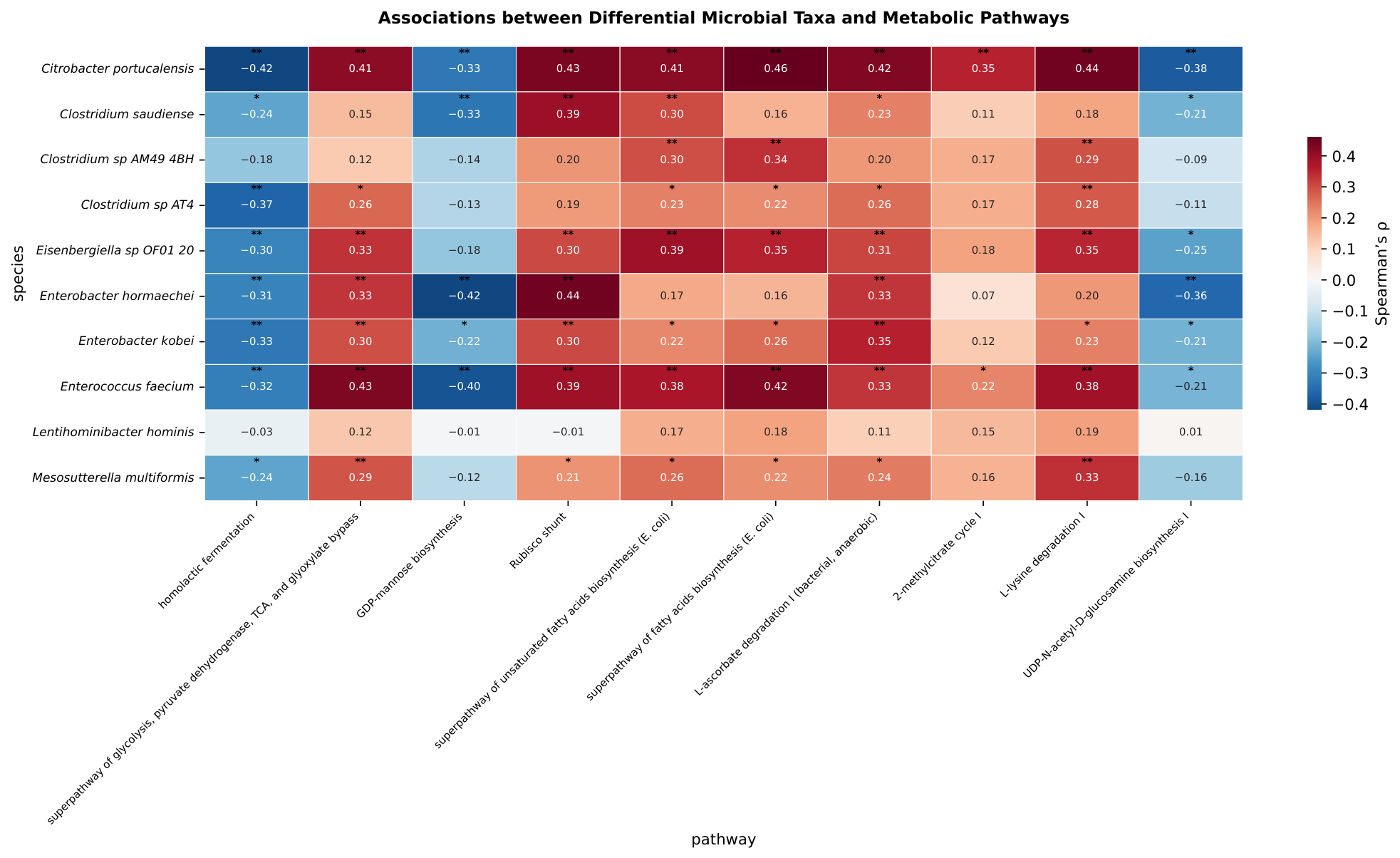
3.8. Associations Between Microbial Taxa and Differential Metabolic Pathways
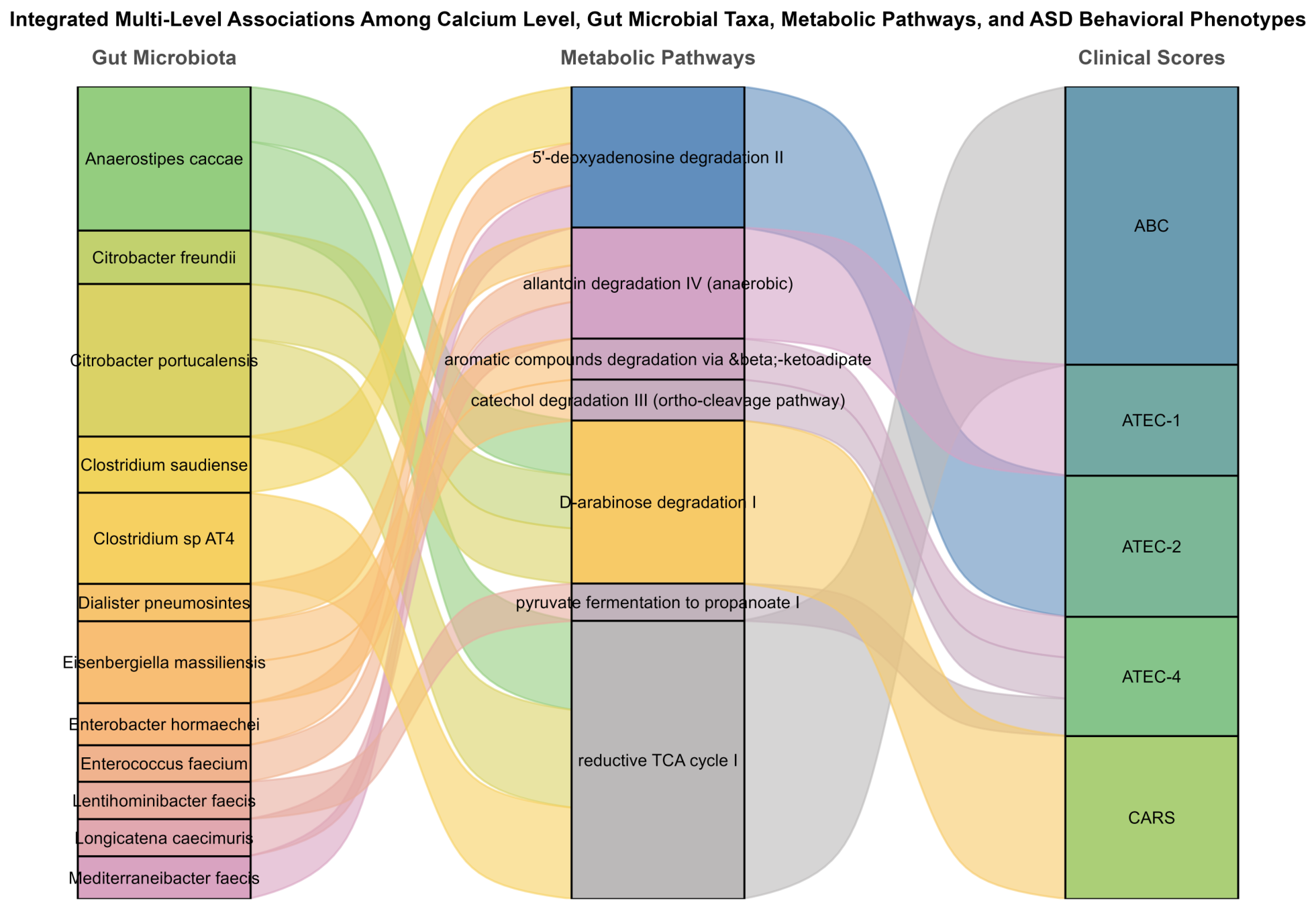
3.9. Integrated Associations Among Hair Calcium Levels, Gut Microbiota, Metabolic Pathways, and ASD Behavioral Phenotypes
4. Discussion
5. Conclusions
Author Contributions
Funding
Institutional Review Board Statement
Informed Consent Statement
Data Availability Statement
Acknowledgments
Conflicts of Interest
Abbreviations
| ABC | Autism Behavior Checklist |
| ANCOM-BC2 | Analysis of Composition of Microbiomes with Bias Correction 2 |
| ASD | Autism Spectrum Disorder |
| ATEC | Autism Treatment Evaluation Checklist |
| CARS | Childhood Autism Rating Scale |
| FDR | False Discovery Rate |
| ICP-MS | Inductively Coupled Plasma Mass Spectrometry |
| MetaCyc | Metabolic pathway database |
| PCoA | Principal Coordinate Analysis |
| PERMANOVA | Permutational Multivariate Analysis of Variance |
| Q1 | First quartile |
| Q4 | Fourth quartile |
References
- Hodges, H.; Fealko, C.; Soares, N. Autism spectrum disorder: Definition, epidemiology, causes, and clinical evaluation. Transl. Pediatr. 2020, 9, S55–S65. [Google Scholar] [CrossRef]
- Wang, M.; Zhang, X.; Zhong, L.; Zeng, L.; Li, L.; Yao, P. Understanding autism: Causes, diagnosis, and advancing therapies. Brain Res. Bull. 2025, 227, 111411. [Google Scholar] [CrossRef] [PubMed]
- Karimi, P.; Kamali, E.; Mousavi, S.M.; Karahmadi, M. Environmental factors influencing the risk of autism. J. Res. Med. Sci. 2017, 22, 27. [Google Scholar] [CrossRef]
- Alhowikan, A.M.; Al-Ayadhi, L.Y.; Halepoto, D.M. Impact of environmental pollution, dietary factors and diabetes mellitus on Autism Spectrum Disorder (ASD). Pak. J. Med. Sci. 2019, 35, 1179–1184. [Google Scholar] [CrossRef]
- Cho, J.M.; Shin, J.W. Nutrigenomics for Autism Spectrum Disorder: A Multidisciplinary Framework for Personalized Nutrition in Special Education. Clin. Nutr. Res. 2025, 14, 329–337. [Google Scholar] [CrossRef]
- Petropoulos, A.; Stavropoulou, E.; Tsigalou, C.; Bezirtzoglou, E. Microbiota Gut-Brain Axis and Autism Spectrum Disorder: Mechanisms and Therapeutic Perspectives. Nutrients 2025, 17, 2984. [Google Scholar] [CrossRef]
- Fattorusso, A.; Di Genova, L.; Dell’Isola, G.B.; Mencaroni, E.; Esposito, S. Autism Spectrum Disorders and the Gut Microbiota. Nutrients 2019, 11, 521. [Google Scholar] [CrossRef]
- Wang, H.; Liu, S.; Xie, L.; Wang, J. Gut microbiota signature in children with autism spectrum disorder who suffered from chronic gastrointestinal symptoms. BMC Pediatr. 2023, 23, 476. [Google Scholar] [CrossRef] [PubMed]
- Bu, W.; Chen, Z.; Liu, B.; Jia, X. Gut microbiota and its metabolism in autism spectrum disorder: From pathogenesis to therapy. Front. Cell. Infect. Microbiol. 2026, 15, 1687691. [Google Scholar] [CrossRef] [PubMed]
- Sharon, G.; Cruz, N.J.; Kang, D.W.; Gandal, M.J.; Wang, B.; Kim, Y.M.; Zink, E.M.; Casey, C.P.; Taylor, B.C.; Lane, C.J.; et al. Human Gut Microbiota from Autism Spectrum Disorder Promote Behavioral Symptoms in Mice. Cell 2019, 177, 1600–1618.e17. [Google Scholar] [CrossRef]
- Xiao, L.; Yan, J.; Yang, T.; Zhu, J.; Li, T.; Wei, H.; Chen, J. Fecal Microbiome Transplantation from Children with Autism Spectrum Disorder Modulates Tryptophan and Serotonergic Synapse Metabolism and Induces Altered Behaviors in Germ-Free Mice. mSystems 2021, 6, e01343-20. [Google Scholar] [CrossRef] [PubMed]
- Alhrbi, A.; Vlachopoulos, D.; Healey, E.M.; Massoud, A.T.; Morris, C.; Revuelta Iniesta, R. Nutritional Status of Children Diagnosed With Autism Spectrum Disorder: A Systematic Review and Meta-Analysis. J. Hum. Nutr. Diet. 2025, 38, e70099. [Google Scholar] [CrossRef] [PubMed]
- do Nascimento, P.K.d.S.B.; Oliveira Silva, D.F.; de Morais, T.L.S.A.; de Rezende, A.A. Zinc Status and Autism Spectrum Disorder in Children and Adolescents: A Systematic Review. Nutrients 2023, 15, 3663. [Google Scholar] [CrossRef] [PubMed]
- Krey, J.F.; Dolmetsch, R.E. Molecular mechanisms of autism: A possible role for Ca2+ signaling. Curr. Opin. Neurobiol. 2007, 17, 112–119. [Google Scholar]
- Wong, K.X.; Chen, S.T.; Ong, J.J.; Gan, W.Y.; Abdul Murad, N.A.; Chong, C.W.; Ramzi, N.H. Exploring gut microbiome and nutritional status among children with Autism Spectrum Disorder (MY-ASD Microbiome): A study protocol. PLoS ONE 2026, 20, e0338801. [Google Scholar]
- Chatzinikolaou, R.; Rouskas, K.; Argiriou, A. Exploring the links between nutrition, gut microbiome and neurodevelopmental disorders. Nutrition 2026, 148, 113030. [Google Scholar] [PubMed]
- Pozebon, D.; Scheffler, G.L.; Dressler, V.L. Elemental hair analysis: A review of procedures and applications. Anal. Chim. Acta 2017, 992, 1–23. [Google Scholar] [CrossRef]
- Peacock, M. Calcium metabolism in health and disease. Clin. J. Am. Soc. Nephrol. 2010, 5, S23–S30. [Google Scholar] [CrossRef]
- Hallmayer, J.; Cleveland, S.; Torres, A.; Phillips, J.; Cohen, B.; Torigoe, T.; Miller, J.; Fedele, A.; Collins, J.; Smith, K.; et al. Genetic Heritability and Shared Environmental Factors Among Twin Pairs with Autism. Arch. Gen. Psychiatry 2011, 68, 1095–1102. [Google Scholar] [CrossRef]
- World Medical Association. World Medical Association Declaration of Helsinki: Ethical principles for medical research involving human subjects. JAMA 2013, 310, 2191–2194. [Google Scholar] [CrossRef] [PubMed]
- Yousefi, N.; Dadgar, H.; Mohammadi, M.R.; Jalilevand, N.; Keyhani, M.R.; Mehri, A. The Validity and Reliability of Autism Behavior Checklist in Iran. Iran. J. Psychiatry 2015, 10, 144–149. [Google Scholar]
- Geier, D.A.; Kern, J.K.; Geier, M.R. A Comparison of the Autism Treatment Evaluation Checklist (ATEC) and the Childhood Autism Rating Scale (CARS) for the Quantitative Evaluation of Autism. J. Ment. Health Res. Intellect. Disabil. 2013, 6, 255–267. [Google Scholar] [PubMed]
- Duffy, F.H.; Shankardass, A.; McAnulty, G.B.; Eksioglu, Y.Z.; Coulter, D.; Rotenberg, A.; Als, H. Corticosteroid therapy in regressive autism: A retrospective study of effects on the Frequency Modulated Auditory Evoked Response (FMAER), language, and behavior. BMC Neurol. 2014, 14, 70. [Google Scholar] [CrossRef]
- Shannon, C.E. A mathematical theory of communication. Bell Syst. Tech. J. 1948, 27, 379–423. [Google Scholar] [CrossRef]
- Lozupone, C.A.; Stombaugh, J.I.; Gordon, J.I.; Jansson, J.K.; Knight, R. Diversity, stability and resilience of the human gut microbiota. Nature 2012, 489, 220–230. [Google Scholar] [CrossRef]
- Wilcoxon, F. Individual Comparisons by Ranking Methods. Biometrics 1945, 1, 196–202. [Google Scholar]
- Bray, J.R.; Curtis, J.T. An Ordination of the Upland Forest Communities of Southern Wisconsin. Ecol. Monogr. 1957, 27, 325–349. [Google Scholar] [CrossRef]
- Gower, J.C. Some Distance Properties of Latent Root and Vector Methods Used in Multivariate Analysis. Biometrika 1966, 53, 325. [Google Scholar] [CrossRef]
- Anderson, M.J. A new method for non-parametric multivariate analysis of variance. Austral Ecol. 2010, 26, 32–46. [Google Scholar]
- Lin, H.; Peddada, S.D. Multigroup analysis of compositions of microbiomes with covariate adjustments and repeated measures. Nat. Methods 2023, 21, 83–91. [Google Scholar] [CrossRef]
- Ho, L.K.H.; Tong, V.J.W.; Syn, N.; Nagarajan, N.; Tham, E.H.; Tay, S.K.; Shorey, S.; Tambyah, P.A.; Law, E.C.N. Gut microbiota changes in children with autism spectrum disorder: A systematic review. Gut Pathog. 2020, 12, 6. [Google Scholar] [CrossRef] [PubMed]
- Sonnenburg, J.L.; Bäckhed, F. Diet–microbiota interactions as moderators of human metabolism. Nature 2016, 535, 56–64. [Google Scholar] [CrossRef]
- Zhang, Y.; Chen, R.; Zhang, D.; Qi, S.; Liu, Y. Metabolite interactions between host and microbiota during health and disease: Which feeds the other? Biomed. Pharmacother. 2023, 160, 114295. [Google Scholar] [CrossRef] [PubMed]
- Kang, D.W.; Ilhan, Z.E.; Isern, N.G.; Hoyt, D.W.; Howsmon, D.P.; Shaffer, M.; Lozupone, C.A.; Hahn, J.; Adams, J.B.; Krajmalnik-Brown, R. Differences in fecal microbial metabolites and microbiota of children with autism spectrum disorders. Anaerobe 2018, 49, 121–131. [Google Scholar] [CrossRef]
- Strati, F.; Facciotti, F. Chapter 14-Gut microbiota-derived metabolites in host physiology. In Metabolomics Perspectives; Troisi, J., Ed.; Academic Press: Cambridge, MA, USA, 2022; pp. 515–534. [Google Scholar]
- Ahmed, H.; Leyrolle, Q.; Koistinen, V.; Kärkkäinen, O.; Layé, S.; Delzenne, N.; Hanhineva, K. Microbiota-derived metabolites as drivers of gut-brain communication. Gut Microbes 2022, 14, 2102878. [Google Scholar] [CrossRef] [PubMed]
- Louis, P.; Flint, H.J. Formation of propionate and butyrate by the human colonic microbiota. Environ. Microbiol. 2017, 19 1, 29–41. [Google Scholar] [CrossRef]
- Mirzaei, R.; Bouzari, B.; Hosseini-Fard, S.R.; Mazaheri, M.; Ahmadyousefi, Y.; Abdi, M.; Jalalifar, S.; Karimitabar, Z.; Teimoori, A.; Keyvani, H.; et al. Role of microbiota-derived short-chain fatty acids in nervous system disorders. Biomed. Pharmacother. 2021, 139, 111661. [Google Scholar] [CrossRef]
- Hsiao, E.; McBride, S.; Hsien, S.; Sharon, G.; Hyde, E.; McCue, T.; Codelli, J.; Chow, J.; Reisman, S.; Petrosino, J.; et al. Microbiota Modulate Behavioral and Physiological Abnormalities Associated with Neurodevelopmental Disorders. Cell 2013, 155, 1451–1463. [Google Scholar] [CrossRef]
- Tabolacci, C.; Caruso, A.; Micai, M.; Galati, G.; Lintas, C.; Pisanu, M.E.; Scattoni, M.L. Biogenic Amine Metabolism and Its Genetic Variations in Autism Spectrum Disorder: A Comprehensive Overview. Biomolecules 2025, 15, 539. [Google Scholar] [CrossRef]
- Nakamura, A.; Kurihara, S.; Takahashi, D.; Ohashi, W.; Nakamura, Y.; Kimura, S.; Onuki, M.; Kume, A.; Sasazawa, Y.; Furusawa, Y.; et al. Symbiotic polyamine metabolism regulates epithelial proliferation and macrophage differentiation in the colon. Nat. Commun. 2021, 12, 2105. [Google Scholar] [CrossRef]
- Dai, S.; Lin, J.; Hou, Y.; Luo, X.; Shen, Y.; Ou, J. Purine signaling pathway dysfunction in autism spectrum disorders: Evidence from multiple omics data. Front. Mol. Neurosci. 2023, 16, 1089871. [Google Scholar] [CrossRef] [PubMed]
- Fang, Z.; Zhou, Y.; Chen, K.; Wang, J.; Liu, X.; Jia, P. Gut microbiota and autism spectrum disorder: Advances in dietary intervention strategies based on the microbiota-gut-brain axis mechanism. Front. Neurosci. 2025, 19, 1587818. [Google Scholar] [CrossRef] [PubMed]
- Shaker, J.L.; Deftos, L.J. Calcium and Phosphate Homeostasis. In Endotext; MDText.com, Inc.: Portland, OR, USA, 2023. [Google Scholar]
- Skröder, H.; Kippler, M.; Nermell, B.; Tofail, F.; Levi, M.; Rahman, S.M.; Raqib, R.; Vahter, M. Major Limitations in Using Element Concentrations in Hair as Biomarkers of Exposure to Toxic and Essential Trace Elements in Children. Environ. Health Perspect. 2017, 125, 067021. [Google Scholar] [CrossRef]
- Fiłon, J.; Ustymowicz-Farbiszewska, J.; Krajewska-Kułak, E. Analysis of lead, arsenic and calcium content in the hair of children with autism spectrum disorder. BMC Public Health 2020, 20, 383. [Google Scholar] [CrossRef]
- Liu, Y.; Yang, Y.; Xia, Y.Y.; de Seymour, J.V.; Zhao, D.Z.; Li, Y.M.; Zhang, H.; Han, T.L. An Evaluation of Different Digestion Methods for the Quantitation of Inorganic Elements in Human Hair Using ICP-MS. J. Anal. Methods Chem. 2022, 2022, 5742468. [Google Scholar] [CrossRef]
- Runkel, A.A.; Jagodic Hudobivnik, M.; Zivkovic, I.; Klemencic, P.; Mazej, D.; Horvat, M. Optimisation of A Sample Preparation Method for the Determination of Multi-Elemental Compositions in Human Hair By Triple Quadrupole ICP-MS Analysis. Biol. Trace Elem. Res. 2026, 204, 4348–4362. [Google Scholar] [CrossRef]
- Li, H.; Huang, S.; Jing, J.; Yu, H.; Gu, T.; Ou, X.; Pan, S.; Zhu, Y.; Su, X. Dietary intake and gastrointestinal symptoms are altered in children with Autism Spectrum Disorder: The relative contribution of autism-linked traits. Nutr. J. 2024, 23, 27. [Google Scholar] [CrossRef]
- Mirizzi, P.; Esposito, M.; Ricciardi, O.; Bove, D.; Fadda, R.; Caffò, A.O.; Mazza, M.; Valenti, M. Food Selectivity in Children with Autism Spectrum Disorder and in Typically Developing Peers: Sensory Processing, Parental Practices, and Gastrointestinal Symptoms. Nutrients 2025, 17, 2798. [Google Scholar] [CrossRef]
- Tomaszek, N.; Urbaniak, A.D.; Bałdyga, D.; Chwesiuk, K.; Modzelewski, S.; Waszkiewicz, N. Unraveling the Connections: Eating Issues, Microbiome, and Gastrointestinal Symptoms in Autism Spectrum Disorder. Nutrients 2025, 17, 486. [Google Scholar] [CrossRef]
- Gao, X.; Fu, N.; Ben, Q.; Bu, X. A Meta-Analysis of the Effects of Gut Microbiota-Based Interventions on Gastrointestinal and Behavioral Symptoms in Children With Autism Spectrum Disorder. Nutr. Rev. 2026, 84, 500–513. [Google Scholar] [CrossRef] [PubMed]
- Wu, Y.; Wong, O.; Chen, S.; Wang, Y.; Lu, W.; Cheung, C.P.; Ching, J.Y.L.; Cheong, P.K.; Chan, S.; Leung, P.; et al. Distinct diet-microbiome associations in autism spectrum disorder. Nat. Commun. 2025, 17, 3109. [Google Scholar] [CrossRef]
- Berding, K.; Donovan, S.M. Diet Can Impact Microbiota Composition in Children With Autism Spectrum Disorder. Front. Neurosci. 2018, 12, 515. [Google Scholar] [CrossRef] [PubMed]
- Leader, G.; Abberton, C.; Cunningham, S.; Gilmartin, K.; Grudzien, M.; Higgins, E.; Joshi, L.; Whelan, S.; Mannion, A. Gastrointestinal Symptoms in Autism Spectrum Disorder: A Systematic Review. Nutrients 2022, 14, 1471. [Google Scholar] [CrossRef]
- Hung, L.Y.; Margolis, K.G. Autism spectrum disorders and the gastrointestinal tract: Insights into mechanisms and clinical relevance. Nat. Rev. Gastroenterol. Hepatol. 2024, 21, 142–163. [Google Scholar] [CrossRef] [PubMed]
- Korteniemi, J.; Karlsson, L.; Aatsinki, A. Systematic review: Autism spectrum disorder and the gut microbiota. Acta Psychiatr. Scand. 2023, 148, 242–254. [Google Scholar] [CrossRef]
- Zhang, S.; Chen, X.; Jin, E.; Wang, A.; Chen, T.; Zhang, X.; Zhu, J.; Dong, L.; Sun, Y.; Yu, C.; et al. The GSA Family in 2025: A Broadened Sharing Platform for Multi-Omics and Multimodal Data. Genom. Proteom. Bioinform. 2025, 23, qzaf072. [Google Scholar] [CrossRef]
- CNCB–NGDC Members and Partners. Database Resources of the National Genomics Data Center, China National Center for Bioinformation in 2026. Nucleic Acids Res. 2026, 54, D28–D47. [CrossRef] [PubMed]



| Variable | Low Ca Group () | High Ca Group () | p Value |
|---|---|---|---|
| Age (years) | 4.02 ± 1.13 | 4.57 ± 1.65 | 0.066 |
| Sex (male, %) | 78.3% (36/46) | 43.5% (20/46) | 0.001 ** |
| Gastrointestinal symptoms (%) | 86.7% (39/45) | 89.1% (41/46) | 0.758 |
| Picky eating (%) | 90.9% (40/44) | 84.8% (39/46) | 0.523 |
| Hyperactivity (%) | 95.7% (44/46) | 93.5% (43/46) | 1.000 |
| ABC score | 64.72 ± 24.72 | 70.33 ± 27.45 | 0.306 |
| CARS score | 37.98 ± 7.27 | 40.65 ± 7.19 | 0.080 |
| ATEC total score | 80.00 ± 23.00 | 85.89 ± 26.32 | 0.256 |
| Hair calcium | 194.85 ± 26.47 | 453.87 ± 148.55 | <0.001 *** |
| ATEC-3 Item | Partial | p Value | BH-FDR q |
|---|---|---|---|
| Draws or scribbles ** | 0.250 | 0.001 | 0.013 |
| Imagination * | 0.179 | 0.016 | 0.073 |
| Initiative * | 0.175 | 0.018 | 0.073 |
| Looks at pictures/TV * | 0.174 | 0.018 | 0.073 |
| Awareness of danger * | 0.172 | 0.020 | 0.073 |
| Responds to own name * | 0.166 | 0.025 | 0.073 |
| Uses toys appropriately * | 0.163 | 0.027 | 0.073 |
| Dresses independently * | 0.157 | 0.033 | 0.079 |
| Notices changes in surroundings * | 0.146 | 0.049 | 0.103 |
Disclaimer/Publisher’s Note: The statements, opinions and data contained in all publications are solely those of the individual author(s) and contributor(s) and not of MDPI and/or the editor(s). MDPI and/or the editor(s) disclaim responsibility for any injury to people or property resulting from any ideas, methods, instructions or products referred to in the content. |
© 2026 by the authors. Licensee MDPI, Basel, Switzerland. This article is an open access article distributed under the terms and conditions of the Creative Commons Attribution (CC BY) license.
Share and Cite
Li, J.; Xu, X.; Wang, H.; Gao, R.; Li, B.; You, X. Relationship Between Calcium and Gut Microbial Composition and Metabolic Pathways in Children with Autism. Metabolites 2026, 16, 405. https://doi.org/10.3390/metabo16060405
Li J, Xu X, Wang H, Gao R, Li B, You X. Relationship Between Calcium and Gut Microbial Composition and Metabolic Pathways in Children with Autism. Metabolites. 2026; 16(6):405. https://doi.org/10.3390/metabo16060405
Chicago/Turabian StyleLi, Jialin, Xinjie Xu, Huinuo Wang, Rui Gao, Bing Li, and Xin You. 2026. "Relationship Between Calcium and Gut Microbial Composition and Metabolic Pathways in Children with Autism" Metabolites 16, no. 6: 405. https://doi.org/10.3390/metabo16060405
APA StyleLi, J., Xu, X., Wang, H., Gao, R., Li, B., & You, X. (2026). Relationship Between Calcium and Gut Microbial Composition and Metabolic Pathways in Children with Autism. Metabolites, 16(6), 405. https://doi.org/10.3390/metabo16060405