

Age-Specific Ex Vivo Modulation of Gut–Brain Axis-Associated Metabolites by Galacto-Oligosaccharides and Nutrient Blends in Early Childhood

 , , ,
, , ,  and
and
Abstract
1. Introduction
2. Materials and Methods
2.1. Test Products
2.2. Fecal Donor Selection Criteria
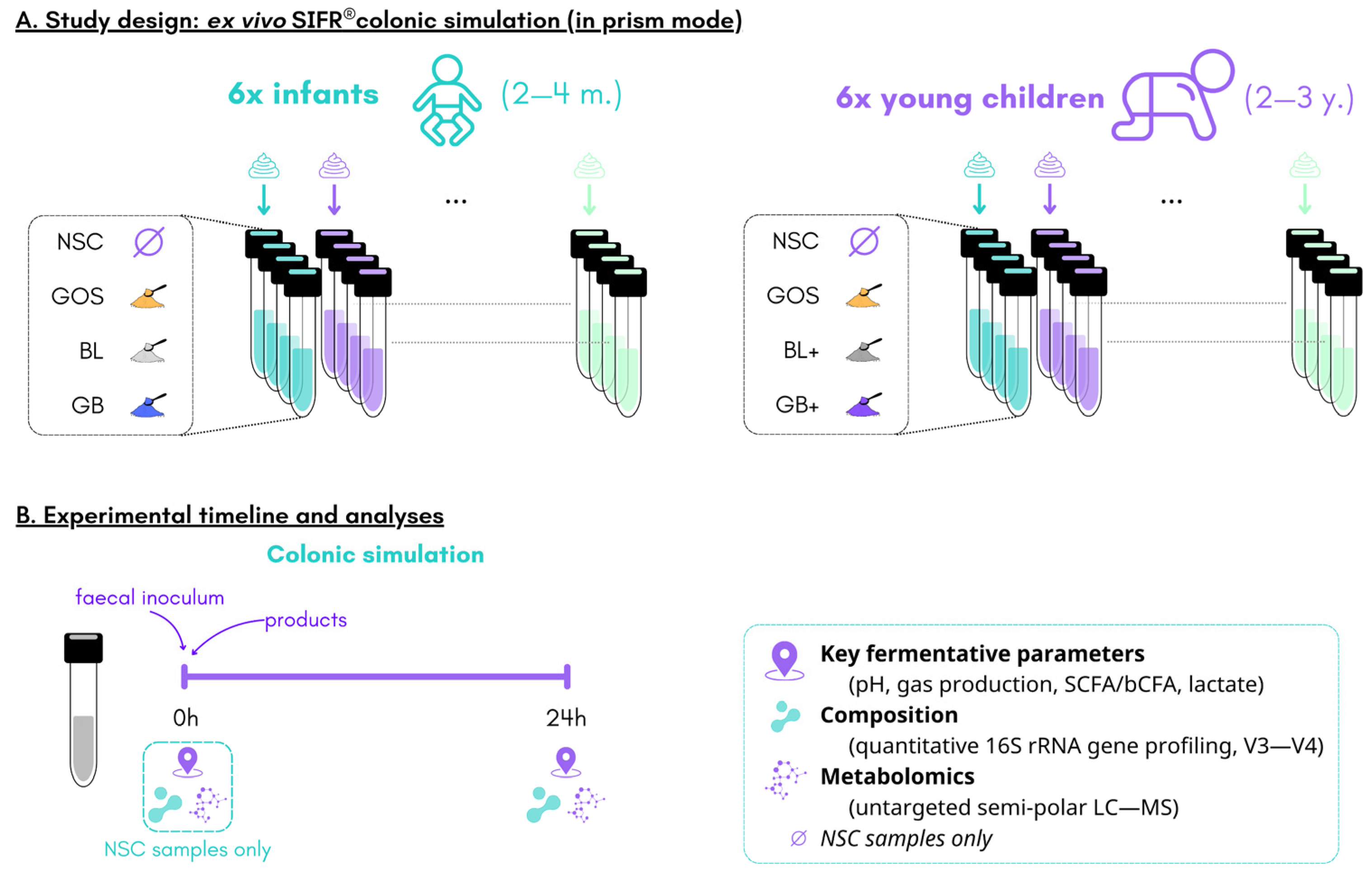
2.3. Ex Vivo Intestinal Fermentation Assay (SIFR®) Design
2.4. Key Fermentative Parameters
2.5. Taxonomic Microbiota Analysis by Quantitative 16S rRNA Gene Profiling
2.6. Untargeted Metabolite Profiling
2.7. Data Analysis
3. Results
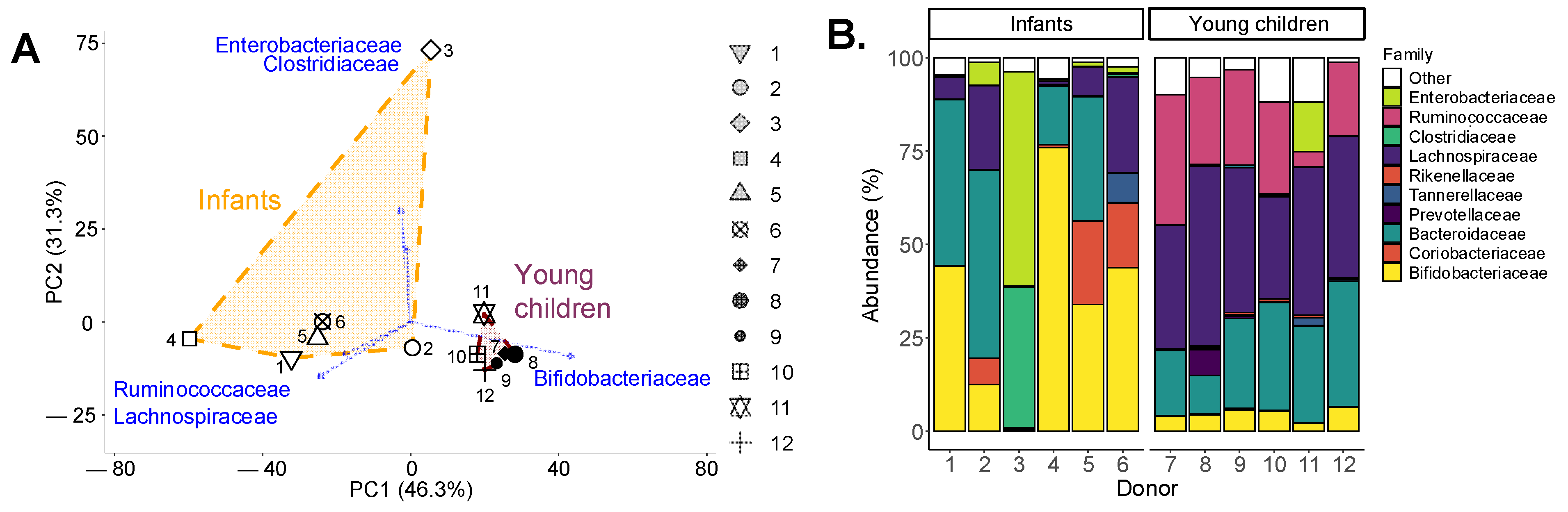
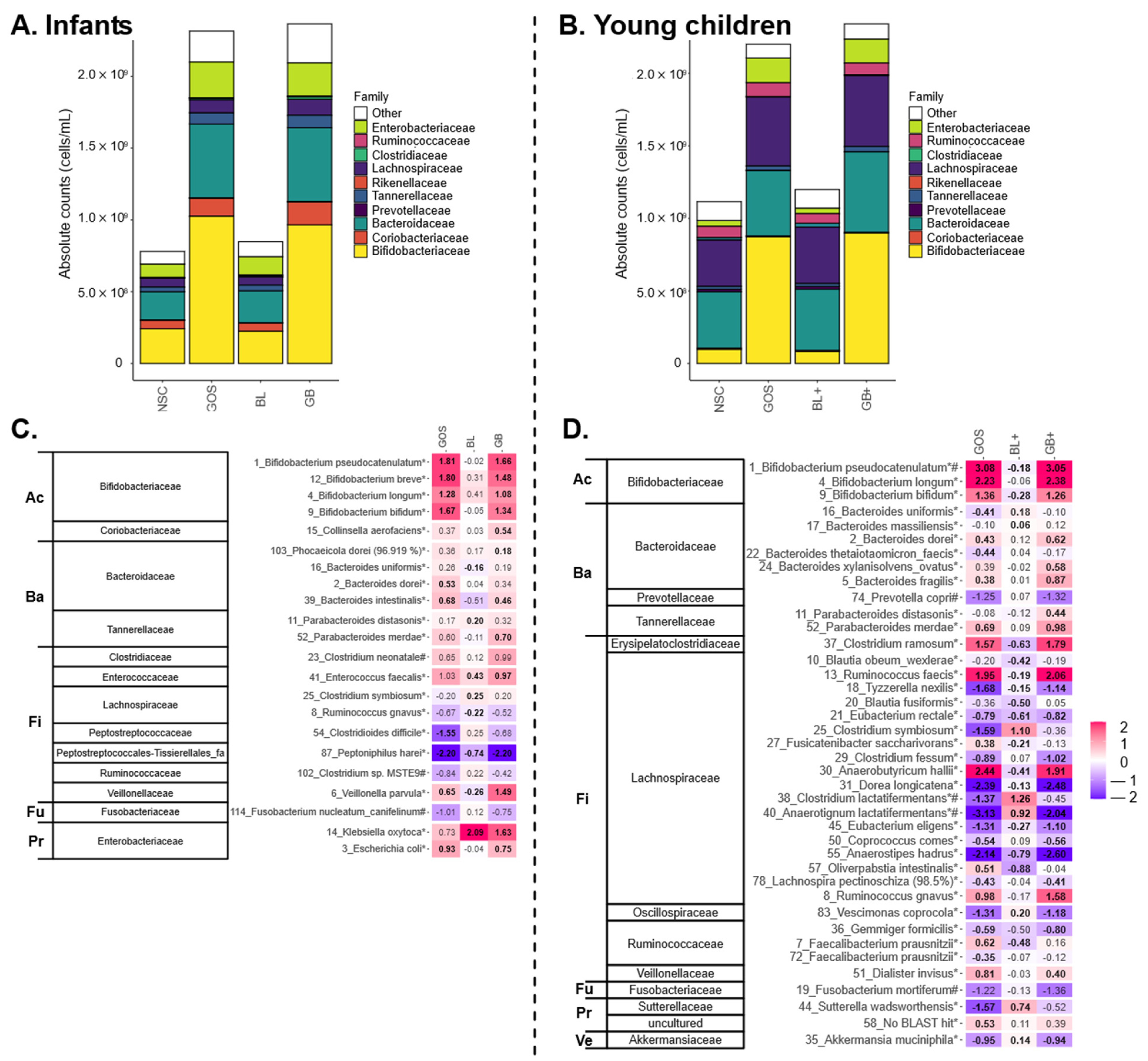
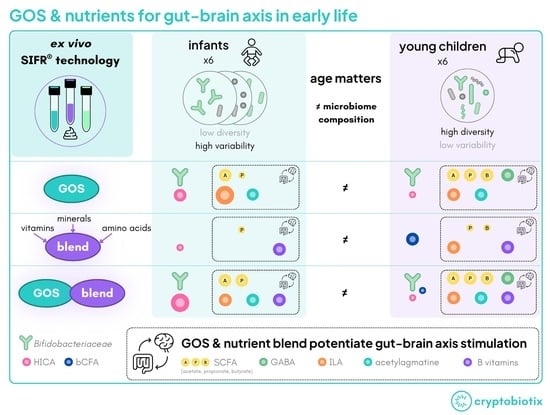
3.1. Microbiome Composition Reflected Expected Age-Related Differences
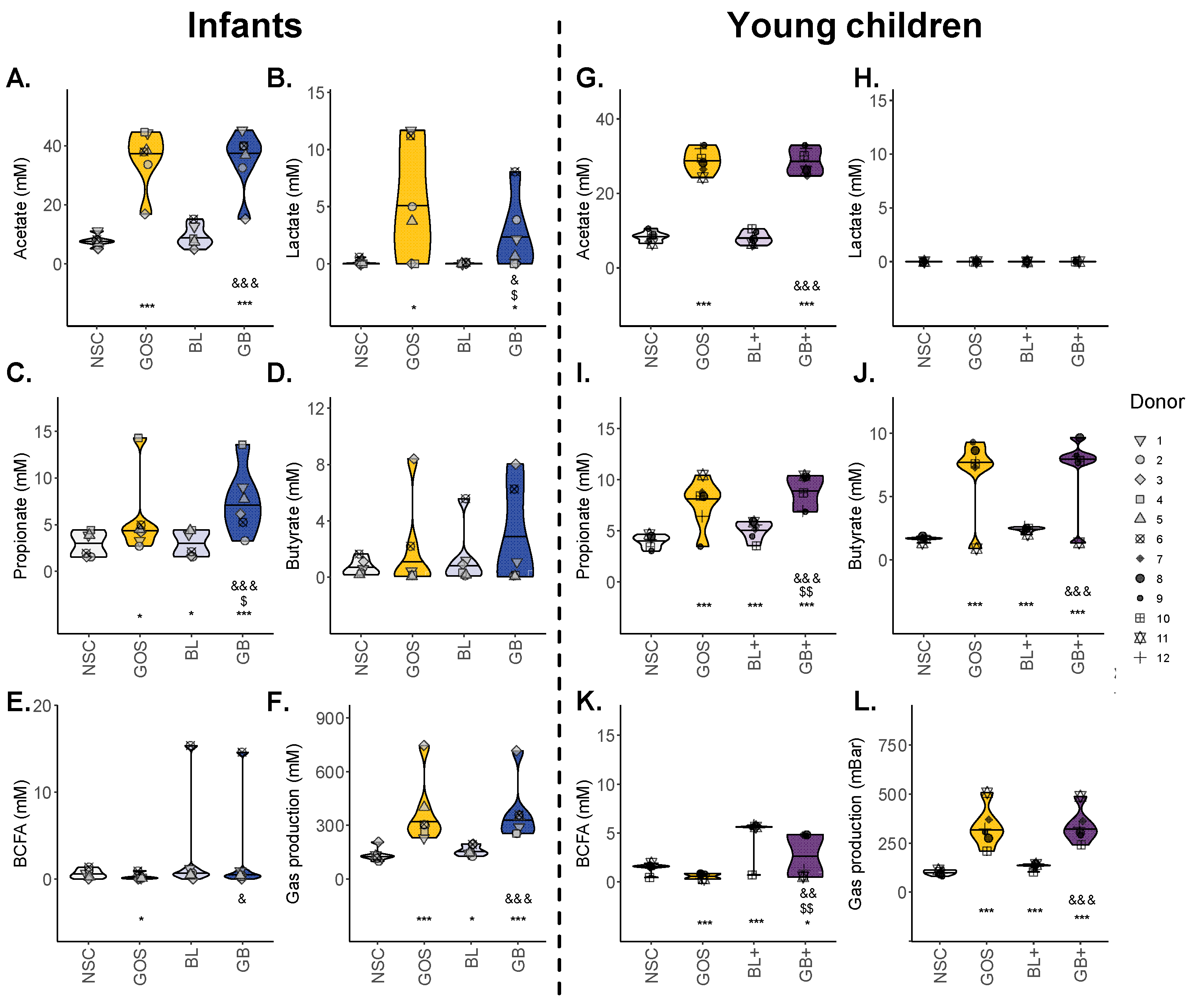
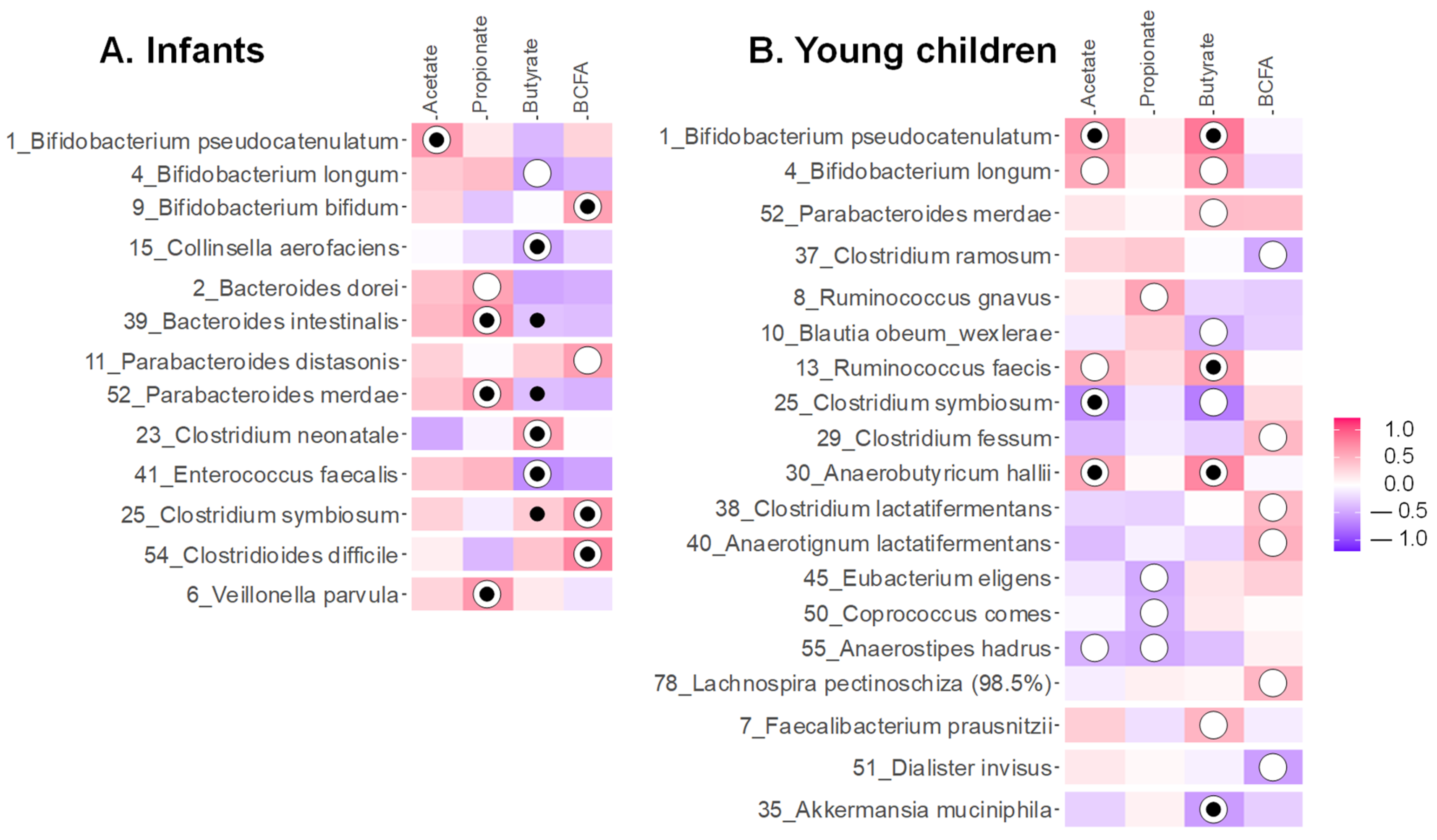
3.2. GOS-Containing Treatments Stimulated SCFA, While Nutrient Blends Enhanced BCFA
3.3. GOS and Nutrient Blend Altered Gut Microbiome Composition of Infants and Young Children in a Product-Specific Manner
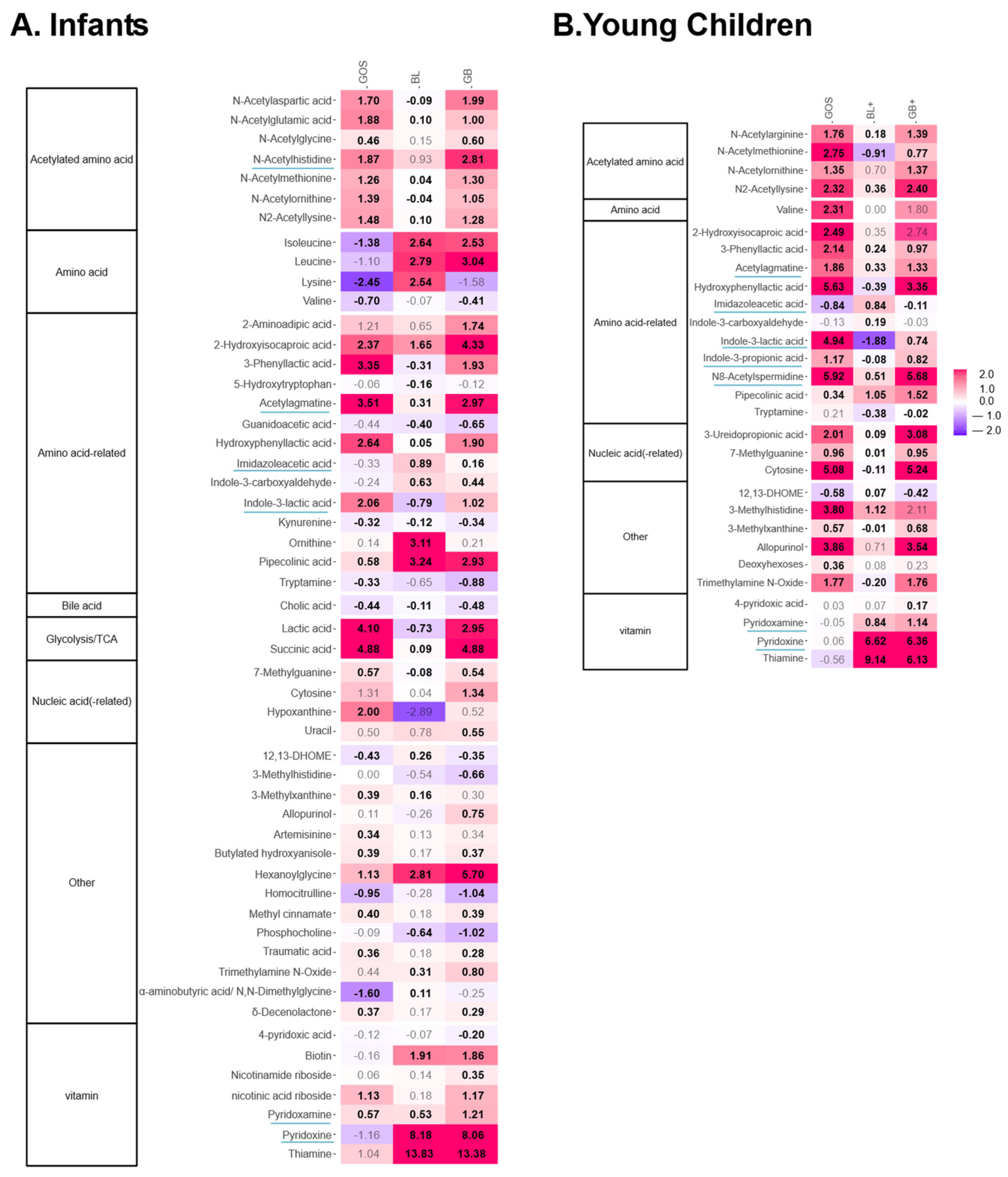
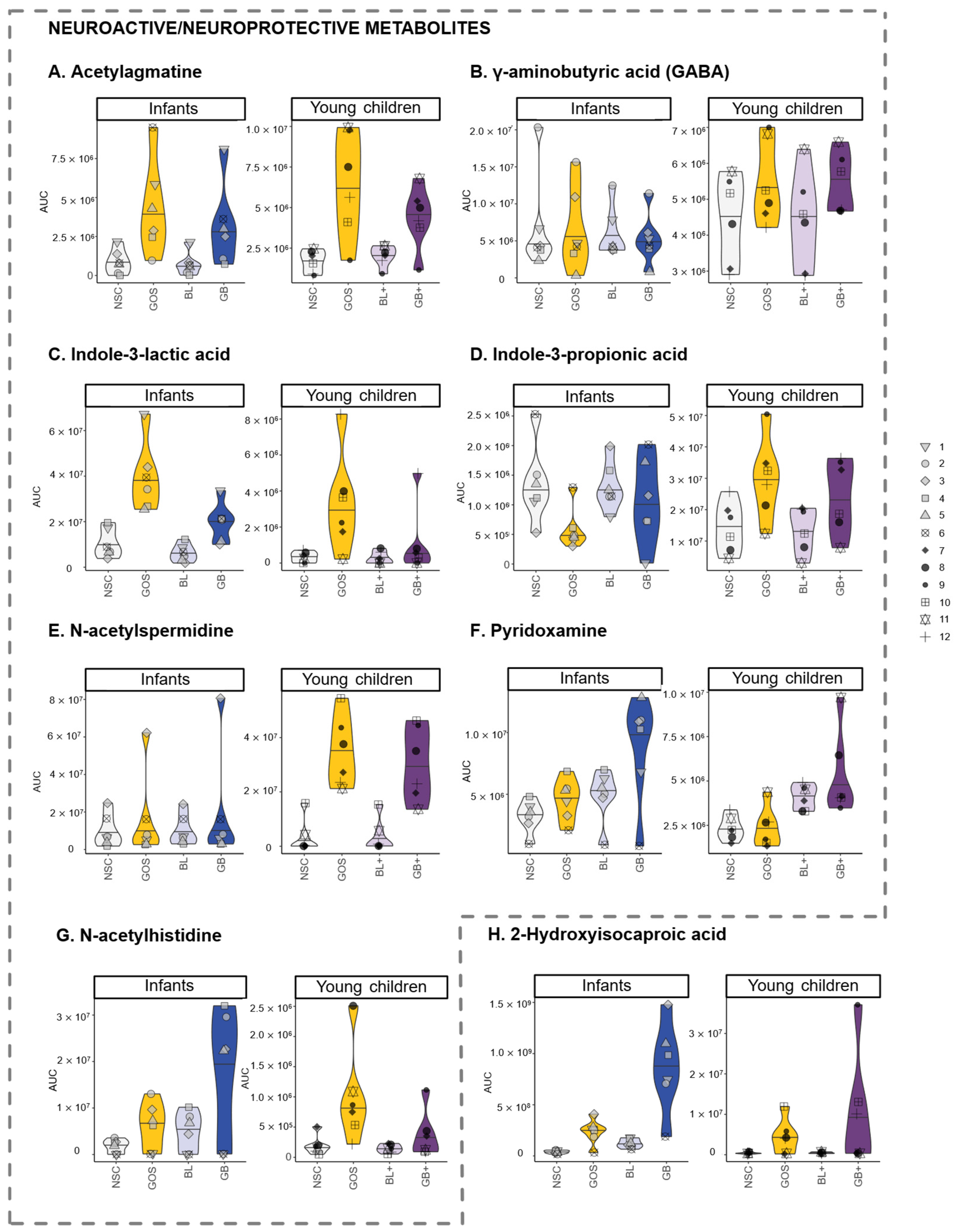
3.4. GOS and Nutrient Blends Altered the Gut Metabolome of Infants and Young Children
4. Discussion
4.1. Summary of Main Findings in Perspective to the Literature
4.2. Strengths and Limitations of the Study
4.3. Potential Synergistic Effects Between GOS and Nutrient Blends
5. Conclusions
Supplementary Materials
Author Contributions
Funding
Institutional Review Board Statement
Informed Consent Statement
Data Availability Statement
Conflicts of Interest
Abbreviations
| SCFA | Short-chain fatty acid |
| BCFA | Branched-chain fatty acid |
| SIFR® | Systemic Intestinal Fermentation Research |
| GOS | Galacto-oligosaccharides |
| HICA | 2-Hydroxyisocaproic acid |
| GABA | γ-Aminobutyric acid |
| MAMP | Microorganism-associated molecular patterns |
| BL | Nutrient blend |
| GB | GOS combined with nutrient blend |
| NSC | No-substrate control |
| OTU | Operational taxonomic unit |
References
- Carabotti, M.; Scirocco, A.; Maselli, M.A.; Severi, C. The Gut-Brain Axis: Interactions between Enteric Microbiota, Central and Enteric Nervous Systems. Ann. Gastroenterol. Q. Publ. Hell. Soc. Gastroenterol. 2015, 28, 203. [Google Scholar]
- Silva, Y.P.; Bernardi, A.; Frozza, R.L. The Role of Short-Chain Fatty Acids From Gut Microbiota in Gut-Brain Communication. Front. Endocrinol. 2020, 11, 508738. [Google Scholar] [CrossRef] [Scilit]
- Gao, K.; Mu, C.; Farzi, A.; Zhu, W. Tryptophan Metabolism: A Link Between the Gut Microbiota and Brain. Adv. Nutr. 2020, 11, 709–723. [Google Scholar] [CrossRef] [Scilit] [PubMed]
- Morais, L.H.; Schreiber, H.L.; Mazmanian, S.K. The Gut Microbiota–Brain Axis in Behaviour and Brain Disorders. Nat. Rev. Microbiol. 2021, 19, 241–255. [Google Scholar] [CrossRef] [Scilit]
- Martin, C.R.; Osadchiy, V.; Kalani, A.; Mayer, E.A. The Brain-Gut-Microbiome Axis. Cell. Mol. Gastroenterol. Hepatol. 2018, 6, 133–148. [Google Scholar] [CrossRef] [Scilit]
- Cerdó, T.; Diéguez, E.; Campoy, C. Impact of Gut Microbiota on Neurogenesis and Neurological Diseases during Infancy. Curr. Opin. Pharmacol. 2020, 50, 33–37. [Google Scholar] [CrossRef] [Scilit] [PubMed]
- Laursen, M.F.; Bahl, M.I.; Michaelsen, K.F.; Licht, T.R. First Foods and Gut Microbes. Front. Microbiol. 2017, 8, 356. [Google Scholar] [CrossRef] [Scilit]
- Derrien, M.; Alvarez, A.-S.; de Vos, W.M. The Gut Microbiota in the First Decade of Life. Trends Microbiol. 2019, 27, 997–1010. [Google Scholar] [CrossRef] [Scilit]
- Fattorusso, A.; Genova, L.D.; Dell’Isola, G.B.; Mencaroni, E.; Esposito, S. Autism Spectrum Disorders and the Gut Microbiota. Nutrients 2019, 11, 521. [Google Scholar] [CrossRef] [Scilit] [PubMed]
- Hill, C.; Guarner, F.; Reid, G.; Gibson, G.R.; Merenstein, D.J.; Pot, B.; Morelli, L.; Canani, R.B.; Flint, H.J.; Salminen, S.; et al. The International Scientific Association for Probiotics and Prebiotics Consensus Statement on the Scope and Appropriate Use of the Term Probiotic. Nat. Rev. Gastroenterol. Hepatol. 2014, 11, 506–514. [Google Scholar] [CrossRef] [Scilit]
- Pärtty, A.; Kalliomäki, M.; Wacklin, P.; Salminen, S.; Isolauri, E. A Possible Link between Early Probiotic Intervention and the Risk of Neuropsychiatric Disorders Later in Childhood: A Randomized Trial. Pediatr. Res. 2015, 77, 823–828. [Google Scholar] [CrossRef] [Scilit]
- Gibson, G.R.; Hutkins, R.; Sanders, M.E.; Prescott, S.L.; Reimer, R.A.; Salminen, S.J.; Scott, K.; Stanton, C.; Swanson, K.S.; Cani, P.D.; et al. Expert Consensus Document: The International Scientific Association for Probiotics and Prebiotics (ISAPP) Consensus Statement on the Definition and Scope of Prebiotics. Nat. Rev. Gastroenterol. Hepatol. 2017, 14, 491–502. [Google Scholar] [CrossRef] [Scilit]
- Laursen, M.F.; Sakanaka, M.; von Burg, N.; Mörbe, U.; Andersen, D.; Moll, J.M.; Pekmez, C.T.; Rivollier, A.; Michaelsen, K.F.; Mølgaard, C.; et al. Bifidobacterium Species Associated with Breastfeeding Produce Aromatic Lactic Acids in the Infant Gut. Nat. Microbiol. 2021, 6, 1367–1382. [Google Scholar] [CrossRef] [Scilit]
- Turroni, F.; Milani, C.; Ventura, M.; van Sinderen, D. The Human Gut Microbiota during the Initial Stages of Life: Insights from Bifidobacteria. Curr. Opin. Biotechnol. 2022, 73, 81–87. [Google Scholar] [CrossRef] [Scilit] [PubMed]
- Vandenplas, Y.; Greef, E.D.; Veereman, G. Prebiotics in Infant Formula. Gut Microbes 2014, 5, 681–687. [Google Scholar] [CrossRef] [Scilit]
- Ambrogi, V.; Bottacini, F.; Cao, L.; Kuipers, B.; Schoterman, M.; van Sinderen, D. Galacto-Oligosaccharides as Infant Prebiotics: Production, Application, Bioactive Activities and Future Perspectives. Crit. Rev. Food Sci. Nutr. 2023, 63, 753–766. [Google Scholar] [CrossRef] [Scilit] [PubMed]
- Bakshi, S.; Paswan, V.K.; Yadav, S.P.; Bhinchhar, B.K.; Kharkwal, S.; Rose, H.; Kanetkar, P.; Kumar, V.; Al-Zamani, Z.A.S.; Bunkar, D.S. A Comprehensive Review on Infant Formula: Nutritional and Functional Constituents, Recent Trends in Processing and Its Impact on Infants’ Gut Microbiota. Front. Nutr. 2023, 10, 1194679. [Google Scholar] [CrossRef] [Scilit]
- Kanellopoulos, A.K.; Costello, S.; Mainardi, F.; Koshibu, K.; Deoni, S.; Schneider, N. Dynamic Interplay between Social Brain Development and Nutrient Intake in Young Children. Nutrients 2023, 15, 3754. [Google Scholar] [CrossRef] [Scilit] [PubMed]
- Van den Abbeele, P.; Deyaert, S.; Thabuis, C.; Perreau, C.; Bajic, D.; Wintergerst, E.; Joossens, M.; Firrman, J.; Walsh, D.; Baudot, A. Bridging Preclinical and Clinical Gut Microbiota Research Using the Ex Vivo SIFR® Technology. Front. Microbiol. 2023, 14, 1131662. [Google Scholar] [CrossRef] [Scilit]
- Van den Abbeele, P.; Kunkler, C.N.; Poppe, J.; Rose, A.; van Hengel, I.A.J.; Baudot, A.; Warner, C.D. Serum-Derived Bovine Immunoglobulin Promotes Barrier Integrity and Lowers Inflammation for 24 Human Adults Ex Vivo. Nutrients 2024, 16, 1585. [Google Scholar] [CrossRef] [Scilit]
- Van den Abbeele, P.; Deyaert, S.; Albers, R.; Baudot, A.; Mercenier, A. Carrot RG-I Reduces Interindividual Differences between 24 Adults through Consistent Effects on Gut Microbiota Composition and Function Ex Vivo. Nutrients 2023, 15, 2090. [Google Scholar] [CrossRef] [Scilit]
- Van den Abbeele, P.; Poppe, J.; Deyaert, S.; Laurie, I.; Otto Gravert, T.K.; Abrahamsson, A.; Baudot, A.; Karnik, K.; Risso, D. Low-No-Calorie Sweeteners Exert Marked Compound-Specific Impact on the Human Gut Microbiota Ex Vivo. Int. J. Food Sci. Nutr. 2023, 74, 630–644. [Google Scholar] [CrossRef] [Scilit]
- Benjamini, Y.; Hochberg, Y. Controlling the False Discovery Rate: A Practical and Powerful Approach to Multiple Testing. J. R. Stat. Soc. Ser. B 1995, 57, 289–300. [Google Scholar] [CrossRef] [Scilit]
- Rohart, F.; Gautier, B.; Singh, A.; Cao, K.-A.L. mixOmics: An R Package for ‘omics Feature Selection and Multiple Data Integration. PLoS Comput. Biol. 2017, 13, e1005752. [Google Scholar] [CrossRef] [Scilit]
- Chen, C.; Xiao, Q.; Wen, Z.; Gong, F.; Zhan, H.; Liu, J.; Li, H.; Jiao, Y. Gut Microbiome-Derived Indole-3-Carboxaldehyde Regulates Stress Vulnerability in Chronic Restraint Stress by Activating Aryl Hydrocarbon Receptors. Pharmacol. Res. 2025, 213, 107654. [Google Scholar] [CrossRef] [Scilit]
- Tunnicliff, G. Pharmacology and Function of Imidazole 4-Acetic Acid in Brain. Gen. Pharmacol. Vasc. Syst. 1998, 31, 503–509. [Google Scholar] [CrossRef] [Scilit] [PubMed]
- Prell, G.D.; Martinelli, G.P.; Holstein, G.R.; Matulić-Adamić, J.; Watanabe, K.A.; Chan, S.L.F.; Morgan, N.G.; Haxhiu, M.A.; Ernsberger, P. Imidazoleacetic Acid-Ribotide: An Endogenous Ligand That Stimulates Imidazol(in)e Receptors. Proc. Natl. Acad. Sci. USA 2004, 101, 13677–13682. [Google Scholar] [CrossRef] [Scilit]
- Matsumoto, S.; Yamamoto, S.; Sai, K.; Maruo, K.; Adachi, M.; Saitoh, M.; Nishizaki, T. Pipecolic Acid Induces Apoptosis in Neuronal Cells. Brain Res. 2003, 980, 179–184. [Google Scholar] [CrossRef] [Scilit] [PubMed]
- Gutierrez, M.D.C.; Giacobini, E. Identification and Characterization of Pipecolic Acid Binding Sites in Mouse Brain. Neurochem. Res. 1985, 10, 691–702. [Google Scholar] [CrossRef] [Scilit] [PubMed]
- Tannock, G.W.; Lee, P.S.; Wong, K.H.; Lawley, B. Why Don’t All Infants Have Bifidobacteria in Their Stool? Front. Microbiol. 2016, 7, 834. [Google Scholar] [CrossRef] [Scilit]
- Van den Abbeele, P.; Ghyselinck, J.; Marzorati, M.; Koch, A.-M.; Lambert, W.; Michiels, J.; Chalvon-Demersay, T. The Effect of Amino Acids on Production of SCFA and bCFA by Members of the Porcine Colonic Microbiota. Microorganisms 2022, 10, 762. [Google Scholar] [CrossRef] [Scilit] [PubMed]
- Barker, H.A. Amino Acid Degradation by Anaerobic Bacteria. Annu. Rev. Biochem. 1981, 50, 23–40. [Google Scholar] [CrossRef] [Scilit]
- Ueki, A.; Goto, K.; Ohtaki, Y.; Kaku, N.; Ueki, K. Description of Anaerotignum aminivorans Gen. Nov., Sp. Nov., a Strictly Anaerobic, Amino-Acid-Decomposing Bacterium Isolated from a Methanogenic Reactor, and Reclassification of Clostridium propionicum, Clostridium neopropionicum and Clostridium lactatifermentans as Species of the Genus Anaerotignum. Int. J. Syst. Evol. Microbiol. 2017, 67, 4146–4153. [Google Scholar] [CrossRef] [Scilit]
- Heath, A.-L.M.; Haszard, J.J.; Galland, B.C.; Lawley, B.; Rehrer, N.J.; Drummond, L.N.; Sims, I.M.; Taylor, R.W.; Otal, A.; Taylor, B.; et al. Association between the Faecal Short-Chain Fatty Acid Propionate and Infant Sleep. Eur. J. Clin. Nutr. 2020, 74, 1362–1365. [Google Scholar] [CrossRef] [Scilit]
- Sakko, M.; Tjäderhane, L.; Sorsa, T.; Hietala, P.; Järvinen, A.; Bowyer, P.; Rautemaa, R. 2-Hydroxyisocaproic Acid (HICA): A New Potential Topical Antibacterial Agent. Int. J. Antimicrob. Agents 2012, 39, 539–540. [Google Scholar] [CrossRef] [Scilit]
- Nieminen, M.T.; Hernandez, M.; Novak-Frazer, L.; Kuula, H.; Ramage, G.; Bowyer, P.; Warn, P.; Sorsa, T.; Rautemaa, R. Dl-2-Hydroxyisocaproic Acid Attenuates Inflammatory Responses in a Murine Candida Albicans Biofilm Model. Clin. Vaccine Immunol. 2014, 21, 1240–1245. [Google Scholar] [CrossRef] [Scilit] [PubMed]
- Lang, C.H.; Pruznak, A.; Navaratnarajah, M.; Rankine, K.A.; Deiter, G.; Magne, H.; Offord, E.A.; Breuillé, D. Chronic α-Hydroxyisocaproic Acid Treatment Improves Muscle Recovery after Immobilization-Induced Atrophy. Am. J. Physiol.-Endocrinol. Metab. 2013, 305, E416–E428. [Google Scholar] [CrossRef] [Scilit]
- Parra, M.; Stahl, S.; Hellmann, H. Vitamin B6 and Its Role in Cell Metabolism and Physiology. Cells 2018, 7, 84. [Google Scholar] [CrossRef] [Scilit]
- Li, X.; Zhang, B.; Hu, Y.; Zhao, Y. New Insights into Gut-Bacteria-Derived Indole and Its Derivatives in Intestinal and Liver Diseases. Front. Pharmacol. 2021, 12, 769501. [Google Scholar] [CrossRef] [Scilit] [PubMed]
- Li, H.; Xiao, H.; Yuan, L.; Yan, B.; Pan, Y.; Tian, P.; Zhang, W. Protective Effect of L-Pipecolic Acid on Constipation in C57BL/6 Mice Based on Gut Microbiome and Serum Metabolomic. BMC Microbiol. 2023, 23, 144. [Google Scholar] [CrossRef] [Scilit]
- Ou, Y.; Chen, S.; Ren, F.; Zhang, M.; Ge, S.; Guo, H.; Zhang, H.; Zhao, L. Lactobacillus Casei Strain Shirota Alleviates Constipation in Adults by Increasing the Pipecolinic Acid Level in the Gut. Front. Microbiol. 2019, 10, 324. [Google Scholar] [CrossRef] [Scilit] [PubMed]
- Giovannini, M.; Verduci, E.; Gregori, D.; Ballali, S.; Soldi, S.; Ghisleni, D.; Riva, E.; PLAGOS Trial Study Group. Prebiotic Effect of an Infant Formula Supplemented with Galacto-Oligosaccharides: Randomized Multicenter Trial. J. Am. Coll. Nutr. 2014, 33, 385–393. [Google Scholar] [CrossRef] [Scilit] [PubMed]
- De Vuyst, L.; Moens, F.; Selak, M.; Rivière, A.; Leroy, F. Summer Meeting 2013: Growth and Physiology of Bifidobacteria. J. Appl. Microbiol. 2014, 116, 477–491. [Google Scholar] [CrossRef] [Scilit] [PubMed]
- Jiang, H.; Chen, C.; Gao, J. Extensive Summary of the Important Roles of Indole Propionic Acid, a Gut Microbial Metabolite in Host Health and Disease. Nutrients 2022, 15, 151. [Google Scholar] [CrossRef] [Scilit]
- Serger, E.; Luengo-Gutierrez, L.; Chadwick, J.S.; Kong, G.; Zhou, L.; Crawford, G.; Danzi, M.C.; Myridakis, A.; Brandis, A.; Bello, A.T.; et al. The Gut Metabolite Indole-3 Propionate Promotes Nerve Regeneration and Repair. Nature 2022, 607, 585–592. [Google Scholar] [CrossRef] [Scilit]
- Kim, C.-S.; Jung, S.; Hwang, G.-S.; Shin, D.-M. Gut Microbiota Indole-3-Propionic Acid Mediates Neuroprotective Effect of Probiotic Consumption in Healthy Elderly: A Randomized, Double-Blind, Placebo-Controlled, Multicenter Trial and in Vitro Study. Clin. Nutr. 2023, 42, 1025–1033. [Google Scholar] [CrossRef] [Scilit]
- Perdijk, O.; Butler, A.; Macowan, M.; Chatzis, R.; Bulanda, E.; Grant, R.D.; Harris, N.L.; Wypych, T.P.; Marsland, B.J. Antibiotic-Driven Dysbiosis in Early Life Disrupts Indole-3-Propionic Acid Production and Exacerbates Allergic Airway Inflammation in Adulthood. Immunity 2024, 57, 1939–1954. [Google Scholar] [CrossRef] [Scilit]
- Mercenier, A.; Vu, L.D.; Poppe, J.; Albers, R.; McKay, S.; Van den Abbeele, P. Carrot-Derived Rhamnogalacturonan-I Consistently Increases the Microbial Production of Health-Promoting Indole-3-Propionic Acid Ex Vivo. Metabolites 2024, 14, 722. [Google Scholar] [CrossRef] [Scilit]
- Wong, C.B.; Tanaka, A.; Kuhara, T.; Xiao, J. Potential Effects of Indole-3-Lactic Acid, a Metabolite of Human Bifidobacteria, on NGF-Induced Neurite Outgrowth in PC12 Cells. Microorganisms 2020, 8, 398. [Google Scholar] [CrossRef] [Scilit]
- Xu, W.; Gao, L.; Li, T.; Shao, A.; Zhang, J. Neuroprotective Role of Agmatine in Neurological Diseases. Curr. Neuropharmacol. 2018, 16, 1296–1305. [Google Scholar] [CrossRef] [Scilit]
- Meylan, E.M.; Breuillaud, L.; Seredenina, T.; Magistretti, P.J.; Halfon, O.; Luthi-Carter, R.; Cardinaux, J.-R. Involvement of the Agmatinergic System in the Depressive-like Phenotype of the Crtc1 Knockout Mouse Model of Depression. Transl. Psychiatry 2016, 6, e852. [Google Scholar] [CrossRef] [Scilit]
- Madeo, F.; Eisenberg, T.; Pietrocola, F.; Kroemer, G. Spermidine in Health and Disease. Science 2018, 359, eaan2788. [Google Scholar] [CrossRef] [Scilit]
- Yang, Y.; Chen, S.; Zhang, Y.; Lin, X.; Song, Y.; Xue, Z.; Qian, H.; Wang, S.; Wan, G.; Zheng, X.; et al. Induction of Autophagy by Spermidine Is Neuroprotective via Inhibition of Caspase 3-Mediated Beclin 1 Cleavage. Cell Death Dis. 2017, 8, e2738. [Google Scholar] [CrossRef] [Scilit] [PubMed]
- Qi, L.; Zhang, X.; Liu, Y.; Guo, P.; Siddique, R.; Mazhar, M.; Xue, S.; Yong, V.W.; Xue, M. Spermidine Exerts Neuroprotective Effects Following Intracerebral Hemorrhage in Mice Through Anti-Inflammation and Blood-Brain Barrier Protection. J. Inflamm. Res. 2025, 18, 7401–7417. [Google Scholar] [CrossRef] [Scilit] [PubMed]
- Foster, A.C.; Kemp, J.A. Glutamate- and GABA-Based CNS Therapeutics. Curr. Opin. Pharmacol. 2006, 6, 7–17. [Google Scholar] [CrossRef] [Scilit] [PubMed]
- Shetty, S.A.; Zuffa, S.; Bui, T.P.N.; Aalvink, S.; Smidt, H.; De Vos, W.M. Reclassification of Eubacterium hallii as Anaerobutyricum hallii Gen. Nov., Comb. Nov., and Description of Anaerobutyricum soehngenii Sp. Nov., a Butyrate and Propionate-Producing Bacterium from Infant Faeces . Int. J. Syst. Evol. Microbiol. 2018, 68, 3741–3746. [Google Scholar] [CrossRef] [Scilit]
- Engels, C.; Ruscheweyh, H.-J.; Beerenwinkel, N.; Lacroix, C.; Schwab, C. The Common Gut Microbe Eubacterium Hallii Also Contributes to Intestinal Propionate Formation. Front. Microbiol. 2016, 7, 713. [Google Scholar] [CrossRef] [Scilit]
- Appert, O.; Garcia, A.R.; Frei, R.; Roduit, C.; Constancias, F.; Neuzil-Bunesova, V.; Ferstl, R.; Zhang, J.; Akdis, C.; Lauener, R.; et al. Initial Butyrate Producers during Infant Gut Microbiota Development Are Endospore Formers. Environ. Microbiol. 2020, 22, 3909–3921. [Google Scholar] [CrossRef] [Scilit]
- Nilsen, M.; Madelen Saunders, C.; Leena Angell, I.; Arntzen, M.Ø.; Lødrup Carlsen, K.C.; Carlsen, K.-H.; Haugen, G.; Hagen, L.H.; Carlsen, M.H.; Hedlin, G.; et al. Butyrate Levels in the Transition from an Infant- to an Adult-Like Gut Microbiota Correlate with Bacterial Networks Associated with Eubacterium Rectale and Ruminococcus Gnavus. Genes 2020, 11, 1245. [Google Scholar] [CrossRef] [Scilit]
- Ruppin, H.; Bar-Meir, S.; Soergel, K.H.; Wood, C.M.; Schmitt, M.G. Absorption of Short-Chain Fatty Acids by the Colon. Gastroenterology 1980, 78, 1500–1507. [Google Scholar] [CrossRef] [Scilit]
- Delcour, J.A.; Aman, P.; Courtin, C.M.; Hamaker, B.R.; Verbeke, K. Prebiotics, Fermentable Dietary Fiber, and Health Claims. Adv. Nutr. 2016, 7, 1–4. [Google Scholar] [CrossRef] [Scilit] [PubMed]
- Van den Abbeele, P.; Sprenger, N.; Ghyselinck, J.; Marsaux, B.; Marzorati, M.; Rochat, F. A Comparison of the In Vitro Effects of 2’Fucosyllactose and Lactose on the Composition and Activity of Gut Microbiota from Infants and Toddlers. Nutrients 2021, 13, 726. [Google Scholar] [CrossRef] [Scilit] [PubMed]



| Ingredient | BL (Infants) | BL+ (Young Children) |
|---|---|---|
| Vitamin B1 | 0.00115 | 0.00027 |
| Vitamin B2 | 0.00175 | 0.00040 |
| Vitamin B6 | 0.00158 | 0.00036 |
| Zinc | 0.00936 | 0.00215 |
| Iron | 0.01458 | 0.00334 |
| Copper | 0.00095 | 0.00022 |
| Histidine | 0.36728 | 0.08429 |
| Isoleucine | 0.88298 | 0.20265 |
| Lysine | 0.88261 | 0.20257 |
| Leucine | 1.59484 | 0.36603 |
| Total | 3.75708 | 0.86228 |
Disclaimer/Publisher’s Note: The statements, opinions and data contained in all publications are solely those of the individual author(s) and contributor(s) and not of MDPI and/or the editor(s). MDPI and/or the editor(s) disclaim responsibility for any injury to people or property resulting from any ideas, methods, instructions or products referred to in the content. |
© 2026 by the authors. Licensee MDPI, Basel, Switzerland. This article is an open access article distributed under the terms and conditions of the Creative Commons Attribution (CC BY) license.
Share and Cite
Ferrier, L.; Dogra, S.K.; Vu, L.D.; Kanellopoulos, A.K.; Poppe, J.; Biehl, L.; Baudot, A.; Van den Abbeele, P. Age-Specific Ex Vivo Modulation of Gut–Brain Axis-Associated Metabolites by Galacto-Oligosaccharides and Nutrient Blends in Early Childhood. Metabolites 2026, 16, 255. https://doi.org/10.3390/metabo16040255
Ferrier L, Dogra SK, Vu LD, Kanellopoulos AK, Poppe J, Biehl L, Baudot A, Van den Abbeele P. Age-Specific Ex Vivo Modulation of Gut–Brain Axis-Associated Metabolites by Galacto-Oligosaccharides and Nutrient Blends in Early Childhood. Metabolites. 2026; 16(4):255. https://doi.org/10.3390/metabo16040255
Chicago/Turabian StyleFerrier, Laurent, Shaillay Kumar Dogra, Lam Dai Vu, Alexandros K. Kanellopoulos, Jonas Poppe, Laurence Biehl, Aurélien Baudot, and Pieter Van den Abbeele. 2026. "Age-Specific Ex Vivo Modulation of Gut–Brain Axis-Associated Metabolites by Galacto-Oligosaccharides and Nutrient Blends in Early Childhood" Metabolites 16, no. 4: 255. https://doi.org/10.3390/metabo16040255
APA StyleFerrier, L., Dogra, S. K., Vu, L. D., Kanellopoulos, A. K., Poppe, J., Biehl, L., Baudot, A., & Van den Abbeele, P. (2026). Age-Specific Ex Vivo Modulation of Gut–Brain Axis-Associated Metabolites by Galacto-Oligosaccharides and Nutrient Blends in Early Childhood. Metabolites, 16(4), 255. https://doi.org/10.3390/metabo16040255