
Comparative Metabolomics Analysis of Gastrodia elata Blume Different Growth Stages: Insights into Chemical Composition and Bioactivities
Abstract
1. Introduction
2. Materials and Methods
2.1. Materials and Reagents
2.2. Sample Collection and Sample Preparation
2.3. UHPLC–Orbitrap–MS/MS Analysis
2.4. Data Processing and Multivariate Statistical Analysis
2.5. Determination of Chemical Components
2.6. Determination of Antioxidant Activity
2.7. α-Glucosidase and α-Amylase Inhibitory Assays
2.8. Statistical Analysis
3. Results and Discussion
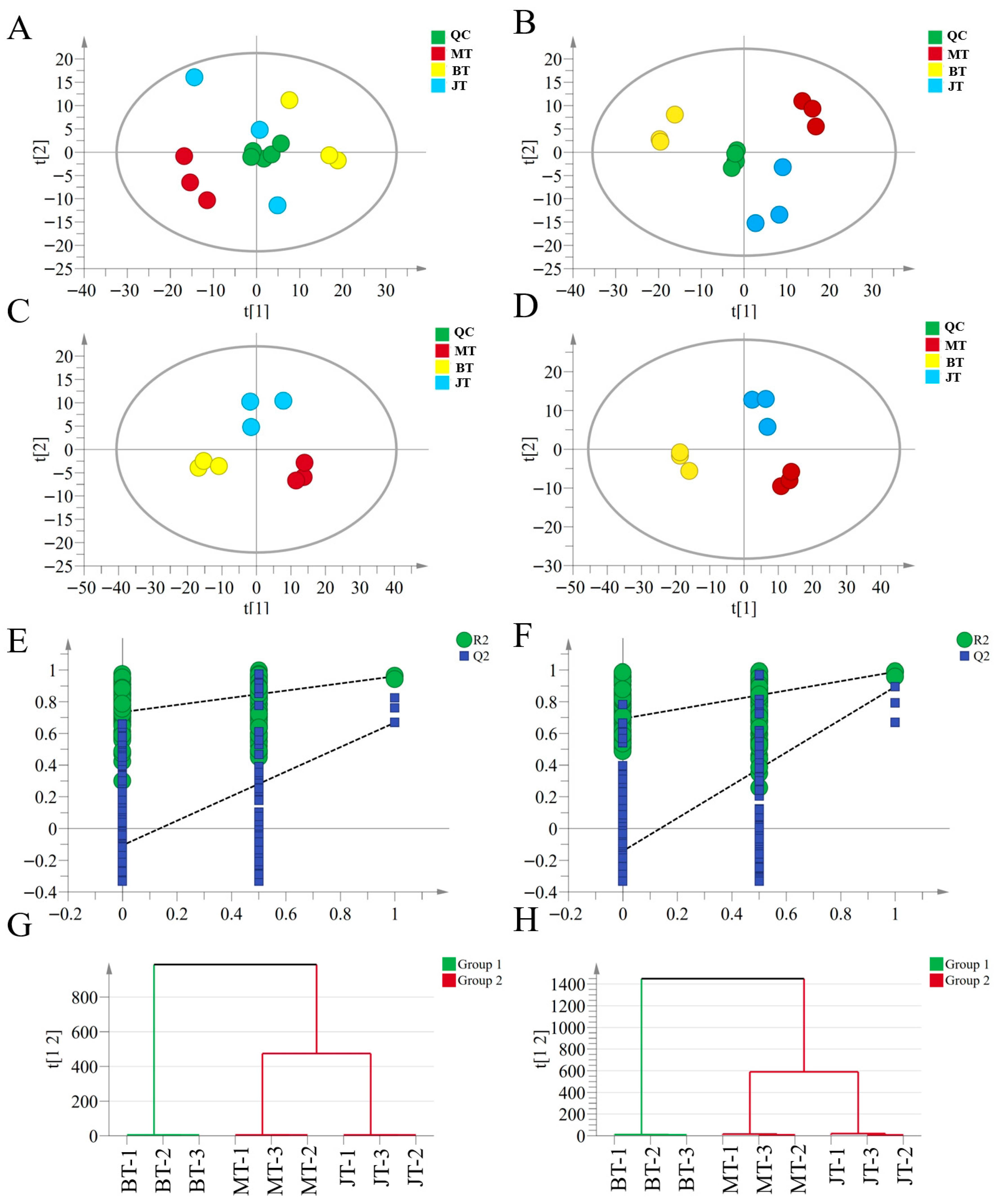
3.1. Significantly Different Chemical Profiles Among Three Growth Stages of GE
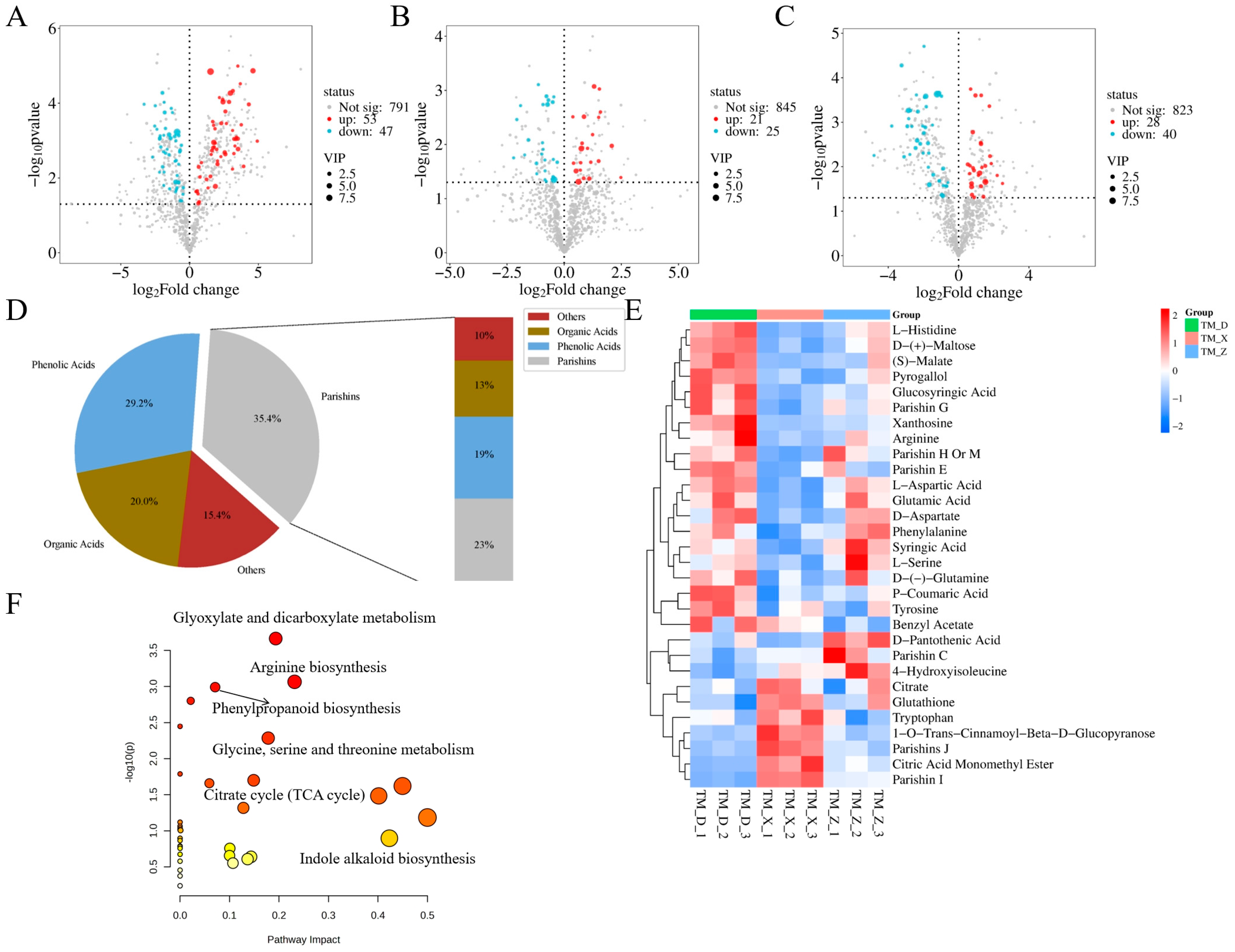
3.2. Characteristic Metabolites Among Three Growth Stages of GE
3.2.1. Amino Acids
3.2.2. Parishins
3.2.3. Phenolic Acids and Their Derivatives
3.2.4. Organic Acids
3.2.5. Other Metabolites
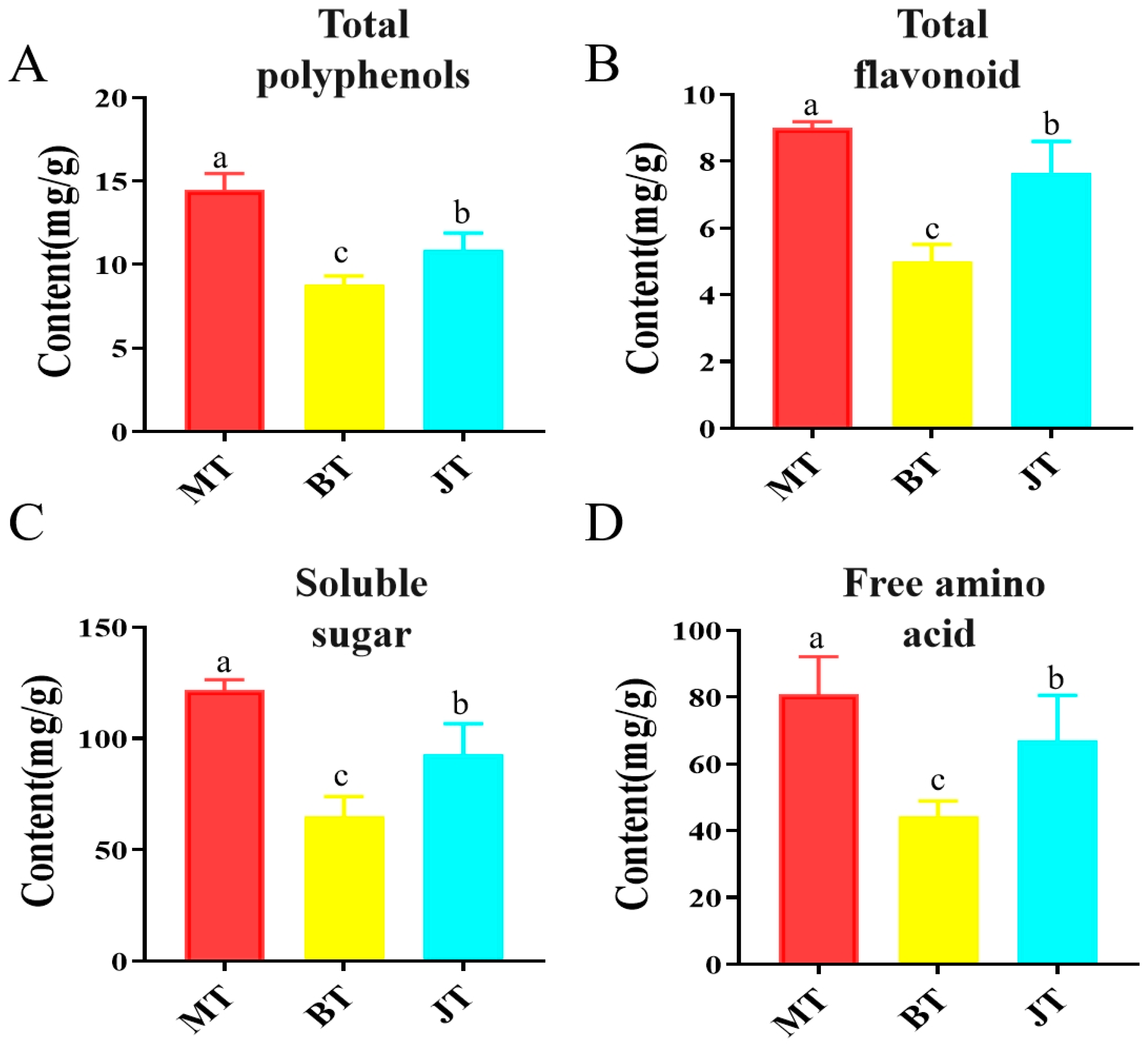
3.3. Changes in Active Components During Three Growth Stages of GE
3.4. Change in Antioxidant Activity, α-Glucosidase and α-Amylase Inhibitory Activity of GE During Three Growth Stages
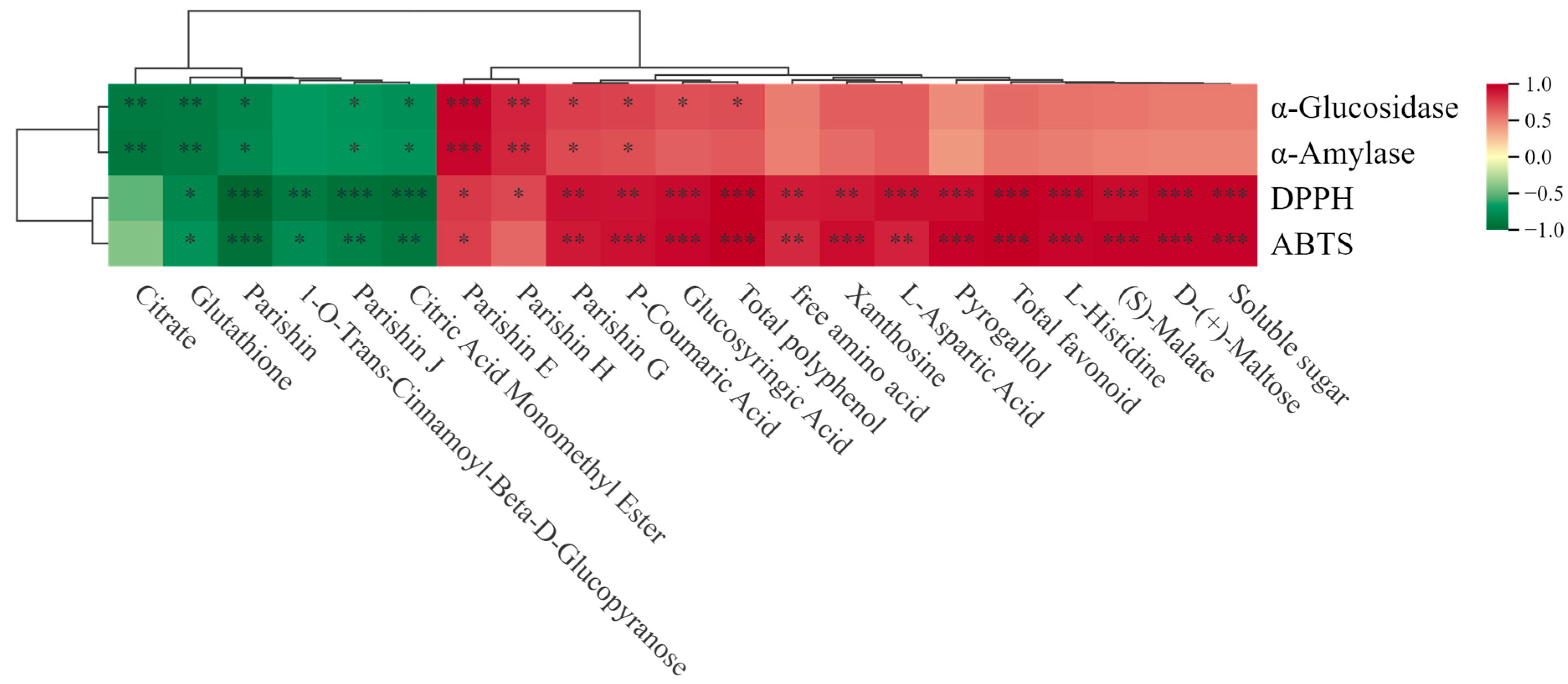
3.5. Correlation Analysis Between Active Components and Bioactivities in Three Growth Stages of GE
4. Conclusions
Supplementary Materials
Author Contributions
Funding
Institutional Review Board Statement
Informed Consent Statement
Data Availability Statement
Conflicts of Interest
References
- An, S.-M.; Park, C.-H.; Heo, J.-C.; Park, J.-Y.; Woo, S.-U.; Seo, J.-H.; Lee, M.-S.; Cho, K.-J.; Cho, H.-S.; Shin, H.M.; et al. Gastrodia Elata Blume Protects against Stress-Induced Gastric Mucosal Lesions in Mice. Int. J. Mol. Med. 2007, 20, 209–215. [Google Scholar] [CrossRef] [PubMed][Green Version]
- Yang, X.; Li, L.; Yan, Y.; Hu, X.; Li, Q.; Li, L.; Wang, Y.; Tao, X.; Yang, L.; Peng, M.; et al. Investigation of the Pharmacodynamic Components of Gastrodia Elata Blume for Treatment of Type 2 Diabetes Mellitus through HPLC, Bioactivity, Network Pharmacology and Molecular Docking. Int. J. Mol. Sci. 2024, 25, 10498. [Google Scholar] [CrossRef] [PubMed]
- Wang, D.; Liu, W.; Lu, M.; Xu, Q. Neuropharmacological Effects of Gastrodia Elata Blume and Its Active Ingredients. Front. Neurol. 2025, 16, 1574277. [Google Scholar] [CrossRef]
- Xiao, G.; Tang, R.; Yang, N.; Chen, Y. Review on Pharmacological Effects of Gastrodin. Arch. Pharm. Res. 2023, 46, 744–770. [Google Scholar] [CrossRef] [PubMed]
- Liu, Y.; Gao, J.; Peng, M.; Meng, H.; Ma, H.; Cai, P.; Xu, Y.; Zhao, Q.; Si, G. A Review on Central Nervous System Effects of Gastrodin. Front. Pharmacol. 2018, 9, 24. [Google Scholar] [CrossRef] [PubMed]
- Matias, M.; Silvestre, S.; Falcão, A.; Alves, G. Gastrodia Elata and Epilepsy: Rationale and Therapeutic Potential. Phytomed. Int. J. Phytother. Phytopharm. 2016, 23, 1511–1526. [Google Scholar] [CrossRef]
- Analytical Techniques and Pharmacokinetics of Gastrodia Elata Blume and Its Constituents—PubMed. Available online: https://pubmed.ncbi.nlm.nih.gov/28698450/ (accessed on 1 March 2026).
- Mihai, R.A.; Canchignia Guacollantes, M.G.; Vivanco Gonzaga, R.F.; Cubi-Insuaste, N.S.; Catana, R.D. Impact of Babaco (Vasoncelea x Pentagona (Heilborn) Mabb.) Fruit Ripening Stages on Phytochemical Composition and Biological Properties. Metabolites 2024, 14, 718. [Google Scholar] [CrossRef]
- Multari, S.; Licciardello, C.; Caruso, M.; Martens, S. Monitoring the Changes in Phenolic Compounds and Carotenoids Occurring during Fruit Development in the Tissues of Four Citrus Fruits. Food Res. Int. 2020, 134, 109228. [Google Scholar] [CrossRef]
- Karagiannis, E.; Michailidis, M.; Skodra, C.; Stamatakis, G.; Dasenaki, M.; Ganopoulos, I.; Samiotaki, M.; Thomaidis, N.S.; Molassiotis, A.; Tanou, G. Proteo-Metabolomic Journey across Olive Drupe Development and Maturation. Food Chem. 2021, 363, 130339. [Google Scholar] [CrossRef]
- Sun, X.; Qin, A.; Wang, X.; Ge, X.; Liu, Z.; Guo, C.; Yu, X.; Zhang, X.; Lu, Y.; Yang, J.; et al. Spatiotemporal Transcriptome and Metabolome Landscapes of Cotton Fiber during Initiation and Early Development. Nat. Commun. 2025, 16, 858. [Google Scholar] [CrossRef]
- Alvarez, S.; Naldrett, M.J. Mass Spectrometry Based Untargeted Metabolomics for Plant Systems Biology. Emerg. Top. Life Sci. 2021, 5, 189–201. [Google Scholar] [CrossRef]
- UHPLC-Orbitrap-MS/MS Metabolite Profiling Combined with HPLC-PDA Targeted Chemical Fingerprint Reveals the Geographic-Environment (G × E) Effect on Chemical Constituents of Bilvamula (Aegle Marmelos Root)—PubMed. Available online: https://pubmed.ncbi.nlm.nih.gov/41046004/ (accessed on 16 March 2026).
- Identification of Chemical Constituents of Smilax Glabra Roxb. and Comparative Study on Pharmacokinetics of 12 Main Bioactive Components in Normal and Hyperuricemia Rats by UPLC-Q-Exactive Orbitrap-HRMS Method—PubMed. Available online: https://pubmed.ncbi.nlm.nih.gov/40972479/ (accessed on 16 March 2026).
- Liu, G.; Wang, L.; Wang, J.; Zheng, H.; Yang, S.; Zhou, Q.; Fu, L.; Cai, Z.; Zhang, S.; Wang, C.; et al. Temporal Dynamics of Bioactive Compounds in Sweet Tea (Lithocarpus Litseifolius (Hance) Chun): Linking Harvest Stages to Flavor and Health Benefits. Food Res. Int. 2025, 218, 116918. [Google Scholar] [CrossRef]
- Yu, Y.; Yao, C.; Zhang, J.; Huang, Y.; Yao, S.; Qu, H.; Zhang, T.; Guo, D. Profiling the Chemical Differences of Diterpenoid Alkaloids in Different Processed Products of Aconiti Lateralis Radix Praeparata by UHPLC-LTQ-Orbitrap Mass Spectrometry Combined with Untargeted Metabolomics and Mass Spectrometry Imaging. Chin. J. Nat. Med. 2025, 23, 1009–1015. [Google Scholar] [CrossRef]
- Liu, H.-Y.; Liu, Y.; Mai, Y.-H.; Guo, H.; He, X.-Q.; Xia, Y.; Li, H.; Zhuang, Q.-G.; Gan, R.-Y. Phenolic Content, Main Flavonoids, and Antioxidant Capacity of Instant Sweet Tea (Lithocarpus Litseifolius [Hance] Chun) Prepared with Different Raw Materials and Drying Methods. Foods 2021, 10, 1930. [Google Scholar] [CrossRef]
- Wu, G.; Chen, Z.; Tang, Y.; Xu, S.; Fan, W.; Wu, L.; Ji, Y.; Qu, C. Comparative Effects of Maturity and Processing on Chemical Composition and Bioactivities in Toona Sinensis Leaves. Foods 2025, 14, 2717. [Google Scholar] [CrossRef]
- Li, M.; Luo, X.; Ho, C.-T.; Li, D.; Guo, H.; Xie, Z. A New Strategy for Grading of Lu’an Guapian Green Tea by Combination of Differentiated Metabolites and Hypoglycaemia Effect. Food Res. Int. 2022, 159, 111639. [Google Scholar] [CrossRef]
- Li, M.; Liu, D.; Han, T.; Li, J.; Chen, L.; Li, D.; Xie, Z. Comparative Investigation of Metabolite Signatures and Hypoadiposity Effect between Dali Tea and Yunkang Tea. Food Chem. X 2024, 24, 101989. [Google Scholar] [CrossRef] [PubMed]
- Buzgaia, N.; Lee, S.Y.; Rukayadi, Y.; Abas, F.; Shaari, K. Antioxidant Activity, α-Glucosidase Inhibition and UHPLC-ESI-MS/MS Profile of Shmar (Arbutus Pavarii Pamp). Plants 2021, 10, 1659. [Google Scholar] [CrossRef] [PubMed]
- Pérez, M.; Dominguez-López, I.; Lamuela-Raventós, R.M. The Chemistry Behind the Folin-Ciocalteu Method for the Estimation of (Poly)Phenol Content in Food: Total Phenolic Intake in a Mediterranean Dietary Pattern. J. Agric. Food Chem. 2023, 71, 17543–17553. [Google Scholar] [CrossRef]
- Perpetuini, G.; Rossetti, A.P.; Rapagnetta, A.; Tofalo, R. Unlocking the Potential of Kluyveromyces Marxianus in the Definition of Aroma Composition of Cheeses. Front. Microbiol. 2024, 15, 1464953. [Google Scholar] [CrossRef] [PubMed]
- Sun, L.; Su, Y.; Hu, K.; Li, D.; Guo, H.; Xie, Z. Microbial-Transferred Metabolites of Black Tea Theaflavins by Human Gut Microbiota and Their Impact on Antioxidant Capacity. Molecules 2023, 28, 5871. [Google Scholar] [CrossRef]
- Guo, X.; Long, P.; Meng, Q.; Ho, C.-T.; Zhang, L. An Emerging Strategy for Evaluating the Grades of Keemun Black Tea by Combinatory Liquid Chromatography-Orbitrap Mass Spectrometry-Based Untargeted Metabolomics and Inhibition Effects on α-Glucosidase and α-Amylase. Food Chem. 2018, 246, 74–81. [Google Scholar] [CrossRef] [PubMed]
- Hui, X.; Wu, G.; Han, D.; Stipkovits, L.; Wu, X.; Tang, S.; Brennan, M.A.; Brennan, C.S. The Effects of Bioactive Compounds from Blueberry and Blackcurrant Powders on the Inhibitory Activities of Oat Bran Pastes against α-Amylase and α-Glucosidase Linked to Type 2 Diabetes. Food Res. Int. 2020, 138, 109756. [Google Scholar] [CrossRef] [PubMed]
- Perez de Souza, L.; Alseekh, S.; Naake, T.; Fernie, A. Mass Spectrometry-Based Untargeted Plant Metabolomics. Curr. Protoc. Plant Biol. 2019, 4, e20100. [Google Scholar] [CrossRef]
- Zhou, J.; Wu, Y.; Long, P.; Ho, C.-T.; Wang, Y.; Kan, Z.; Cao, L.; Zhang, L.; Wan, X. LC-MS-Based Metabolomics Reveals the Chemical Changes of Polyphenols during High-Temperature Roasting of Large-Leaf Yellow Tea. J. Agric. Food Chem. 2019, 67, 5405–5412. [Google Scholar] [CrossRef]
- Li, R.; Ru, Y.; Wang, Z.; He, X.; Kong, K.-W.; Zheng, T.; Zhang, X. Phytochemical Composition, Antioxidant Activity, and Enzyme Inhibitory Activities (α-Glucosidase, Xanthine Oxidase, and Acetylcholinesterase) of Musella Lasiocarpa. Molecules 2021, 26, 4472. [Google Scholar] [CrossRef]
- Wu, G.; Xu, S.; Chen, Z.; Wu, L.; Fan, W.; Wu, X.; Li, M.; Qu, C.; Ji, Y. Comparative Analysis of Metabolite Signatures and Hypoglycemic Effects in Toona Sinensis Leaves Processed by Two Distinct Methods. Food Chem. X 2025, 29, 102821. [Google Scholar] [CrossRef]
- An, Y.; Zhang, L.; Li, X.; Mi, X.; Qiao, D.; Jing, T. Integrated Multi-Omics Reveals Distinct Non-Volatile and Aroma Signatures in Albino, Yellow, and Purple Tea Varieties. Food Chem. X 2025, 29, 102830. [Google Scholar] [CrossRef] [PubMed]
- Hildebrandt, T.M. Synthesis versus Degradation: Directions of Amino Acid Metabolism during Arabidopsis Abiotic Stress Response. Plant Mol. Biol. 2018, 98, 121–135. [Google Scholar] [CrossRef]
- Yao, X.; Sui, X.; Zhang, Y. Amino Acid Metabolism and Transporters in Plant-Pathogen Interactions: Mechanisms and Implications. Plant Cell Environ. 2025, 48, 6086–6098. [Google Scholar] [CrossRef]
- Lin, S.; Chen, Z.; Chen, T.; Deng, W.; Wan, X.; Zhang, Z. Theanine Metabolism and Transport in Tea Plants (Camellia sinensis L.): Advances and Perspectives. Crit. Rev. Biotechnol. 2023, 43, 327–341. [Google Scholar] [CrossRef]
- Haghighi, M.; Barzegar Sadeghabad, A.; Abolghasemi, R. Effect of Exogenous Amino Acids Application on the Biochemical, Antioxidant, and Nutritional Value of Some Leafy Cabbage Cultivars. Sci. Rep. 2022, 12, 17720. [Google Scholar] [CrossRef]
- Glutamate: A Multifunctional Amino Acid in Plants—PubMed. Available online: https://pubmed.ncbi.nlm.nih.gov/35351313/ (accessed on 16 March 2026).
- L-Aspartate: An Essential Metabolite for Plant Growth and Stress Acclimation—PubMed. Available online: https://pubmed.ncbi.nlm.nih.gov/33810495/ (accessed on 16 March 2026).
- LC-MS/MS-Based Profiling of Tryptophan-Related Metabolites in Healthy Plant Foods—PubMed. Available online: https://pubmed.ncbi.nlm.nih.gov/31940983/ (accessed on 16 March 2026).
- Sabuj, M.S.S.; Islam, M.S.; Akanda, M.R.; Lee, J.; Kim, R.; Lee, S.H.; Kim, Y.J.; Oh, J.M.; Ro, H.G.; Kim, I.-S.; et al. Macluraparishin C Enhances Neuroprotection Against Oxidative Stress-Induced Neurodegeneration by Activating the Antioxidant/MAPK Signaling Pathway. Mol. Neurobiol. 2025, 62, 13736–13747. [Google Scholar] [CrossRef] [PubMed]
- Zhang, Y.; Zhao, X.; Gong, L.; Lai, C.; Liu, J.; Xie, J. Neuroprotective Effects of Gastrodia Elata and Its Compounds in a Caenorhabditis Elegans Alzheimer’s Disease Model. Phytomed. Int. J. Phytother. Phytopharm. 2025, 143, 156876. [Google Scholar] [CrossRef]
- Wang, Q.; Li, Z.; Wang, D.; Yang, S.; Feng, Y. Myocardial Protection Properties of Parishins from the Roots of Gastrodia Elata Bl. Biomed. Pharmacother. Biomed. Pharmacother. 2020, 121, 109645. [Google Scholar] [CrossRef] [PubMed]
- Liu, X.; Zhou, H.; Yang, N.; Yang, L.-J.; Zi, Z.-Y.; Han, Y.-L.; He, J.; Su, L.-Y. Parishin from Gastrodia Elata Ameliorates DSS Induced Colitis and Anxiety-like Behavior in Mice by Regulating Intestinal Barrier Function and Microviota-Gut-Brain Axis. Phytomed. Int. J. Phytother. Phytopharm. 2025, 145, 157019. [Google Scholar] [CrossRef]
- Liu, P.; Zhao, Z.; Zhang, H.; Xiao, C.; Wang, M.; Yang, C.; Liu, Y.-E.; Wang, L.; He, H.; Ge, Y.; et al. A Comprehensive Pharmacology Study Reveals the Molecular Mechanisms Underlying the Antidepressant Effects of Gastrodiae Rhizoma. Phytomed. Int. J. Phytother. Phytopharm. 2025, 142, 156761. [Google Scholar] [CrossRef]
- Liang, Z.; Zhang, P.; Ma, W.; Zeng, X.-A.; Fang, Z. Physicochemical Properties, Antioxidant Activities and Comprehensive Phenolic Profiles of Tea-Macerated Chardonnay Wine and Model Wine. Food Chem. 2024, 436, 137748. [Google Scholar] [CrossRef]
- Metabolite Differentiation and Antiobesity Effects between Different Grades of Yuexi Cuilan Green Tea—ScienceDirect. Available online: https://www.sciencedirect.com/science/article/pii/S1756464621004436 (accessed on 1 March 2026).
- Biosynthetic Pathway and Metabolic Engineering of Plant Dihydrochalcones—PubMed. Available online: https://pubmed.ncbi.nlm.nih.gov/29171271/ (accessed on 16 March 2026).
- Shirai, N. Organic Acid Analysis in Green Tea Leaves Using High-Performance Liquid Chromatography. J. Oleo Sci. 2022, 71, 1413–1419. [Google Scholar] [CrossRef] [PubMed]
- Yang, S.; Meng, Z.; Li, Y.; Chen, R.; Yang, Y.; Zhao, Z. Evaluation of Physiological Characteristics, Soluble Sugars, Organic Acids and Volatile Compounds in “Orin” Apples (Malus Domestica) at Different Ripening Stages. Molecules 2021, 26, 807. [Google Scholar] [CrossRef]
- Ma, Z.; Ma, Y.; Liu, Y.; Zhou, B.; Zhao, Y.; Wu, P.; Zhang, D.; Li, D. Effects of Maturity and Processing on the Volatile Components, Phytochemical Profiles and Antioxidant Activity of Lotus (Nelumbo Nucifera) Leaf. Foods 2023, 12, 198. [Google Scholar] [CrossRef] [PubMed]
- Yang, J.; Li, Y.; He, Y.; He, H.; Chen, X.; Liu, T.; Zhu, B. Wild vs. Cultivated Zingiber Striolatum Diels: Nutritional and Biological Activity Differences. Plants 2023, 12, 2180. [Google Scholar] [CrossRef] [PubMed]
- Hanhineva, K.; Törrönen, R.; Bondia-Pons, I.; Pekkinen, J.; Kolehmainen, M.; Mykkänen, H.; Poutanen, K. Impact of Dietary Polyphenols on Carbohydrate Metabolism. Int. J. Mol. Sci. 2010, 11, 1365–1402. [Google Scholar] [CrossRef] [PubMed]



| No. | Compound Name | Formula | RT [min] | Reference Ion | Adduct m/z | Error (ppm) | Fragments | FC (BT/MT) | FC (JT/MT) |
|---|---|---|---|---|---|---|---|---|---|
| Amino Acid | |||||||||
| 1 | Tryptophan | C11H12N2O2 | 2.66 | [M + H]+1 | 205.09711 | −0.22 | 188, 146, 118 | 1.62 | 0.83 |
| 2 | L-Aspartic Acid | C4H7NO4 | 1.15 | [M + H]+1 | 134.04482 | 0.29 | 134 | 0.47 | 0.84 |
| 3 | D-aspartate | C4H7NO4 | 1.08 | [M-H]−1 | 132.02918 | −4.89 | 132, 88 | 0.38 | 0.83 |
| 4 | D-(-)-Glutamine | C5H10N2O3 | 1.16 | [M + H]+1 | 147.07638 | −0.24 | 146 | 0.63 | 0.87 |
| 5 | Glutamic Acid | C5H9NO4 | 1.15 | [M + H]+1 | 148.06036 | −0.16 | 130, 84 | 0.57 | 0.96 |
| 6 | 4-Hydroxyisoleucine | C6H13NO3 | 1.16 | [M + H]+1 | 148.09671 | −0.54 | 148 | 1.23 | 1.43 |
| 7 | L-Serine | C3H7NO3 | 1.16 | [M + H]+1 | 106.05015 | 2.66 | 106 | 0.67 | 1.18 |
| 8 | L-Histidine | C6H9N3O2 | 1.14 | [M + H]+1 | 156.07678 | 0.15 | 156, 111, 95 | 0.22 | 0.60 |
| 9 | Phenylalanine | C9H11NO2 | 1.75 | [M + H]+1 | 166.08627 | 0.11 | 120, 93 | 0.72 | 1.04 |
| 10 | Arginine | C6H14N4O2 | 1.13 | [M + H]+1 | 175.11894 | −0.09 | 175, 116, 70, 60 | 0.22 | 0.55 |
| 11 | Tyrosine | C8H8O3 | 1.45 | [M + H]+1 | 182.08117 | 0.02 | 166, 136, 123 | 0.83 | 0.80 |
| Parishins | |||||||||
| 12 | Parishin G * | C19H24O13 | 1.59 | [M-H]−1 | 459.11487 | 1 | 173, 111 | 0.42 | 0.71 |
| 13 | Parishin E * | C19H24O13 | 2.13 | [M-H]−1 | 459.11454 | 0.31 | 173, 111 | 0.66 | 0.76 |
| 14 | Parishins J | C20H26O13 | 3.28 | [M-H]−1 | 473.13028 | −0.05 | 169, 111, 73 | 3.64 | 1.34 |
| 15 | Parishin H | C33H42O20 | 3.53 | [M-H]−1 | 757.22064 | −0.47 | 423, 161, 111 | 0.40 | 0.93 |
| 16 | Parishin I | C38H50O24 | 2.91 | [M-H]−1 | 889.26329 | −3.24 | 423, 161, 111 | 6.52 | 3.12 |
| 17 | Parishin C * | C32H40O19 | 3.45 | [M + NH4]+1 | 746.24939 | −1.18 | 697, 269, 107 | 1.28 | 1.70 |
| 18 | Gastrodin * | C13H18O7 | 2.35 | [M-H]- | 285.098 | 0.21 | 285, 267, 241, 123, 93 | 1.30 | 1.62 |
| Phenolic Acids | |||||||||
| 19 | Glucosyringic Acid | C15H20O10 | 1.70 | [M-H]−1 | 359.09864 | 0.72 | 359, 197, 123 | 0.45 | 0.62 |
| 20 | Pyrogallol | C6H6O3 | 1.19 | [M + H]+1 | 127.03909 | 0.92 | 127, 109, 81 | 0.61 | 0.72 |
| 21 | 1-O-Trans-Cinnamoyl-Beta-D-Glucopyranose | C15H18O7 | 5.15 | [M + Na]+1 | 333.09422 | −0.8 | 333, 185 | 3.93 | 1.21 |
| 22 | Syringic Acid | C9H10O5 | 1.70 | [M-H]−1 | 197.04494 | −3.04 | 197, 182, 160, 123 | 0.56 | 1.21 |
| 23 | Hydrocinnamic acid | C9H10O2 | 1.51 | [M + H]+1 | 151.07538 | 0.13 | 151, 136, 107, 91 | 0.88 | 0.48 |
| 24 | P-Coumaric Acid | C9H11NO3 | 1.20 | [M + NH4]+1 | 182.08116 | −0.02 | 136 | 0.73 | 0.81 |
| Organic Acid | |||||||||
| 25 | D-Pantothenic Acid | C9H17NO5 | 1.62 | [M-H]−1 | 218.10298 | −1.88 | 218, 146, 88 | 0.84 | 1.39 |
| 26 | (S)-Malate | C4H6O5 | 1.14 | [M + FA-H]−1 | 133.01318 | −1.41 | 133, 115, 71 | 0.53 | 0.68 |
| 27 | Citrate | C6H8O7 | 1.13 | [M-H]−1 | 191.01897 | −3.93 | 111 | 1.40 | 1.09 |
| 28 | Citric Acid Monomethyl Ester | C7H10O7 | 1.51 | [M-H]−1 | 205.03482 | −2.71 | 173, 111 | 4.15 | 1.95 |
| Others | |||||||||
| 29 | Xanthosine | C10H12N4O6 | 2.19 | [M-H]−1 | 282.06192 | −3.75 | 282, 167, 123 | 0.07 | 0.24 |
| 30 | Glutathione | C10H17N3O6S | 1.45 | [M + H]+1 | 308.09084 | −0.78 | 179, 162, 149, 84, 76 | 1.58 | 1.26 |
| 31 | Melibiose | C12H22O11 | 1.13 | [M + K]+1 | 381.079 | −0.99 | 381 | 0.53 | 0.74 |
| Sample | MT | BJ | JT |
|---|---|---|---|
| DPPH IC50 (mg/mL) | 32.35 ± 2.02 a | 51.25 ± 2.90 c | 42.28 ± 3.34 b |
| ABTS IC50 (mg/mL) | 32.31 ± 0.82 a | 38.93 ± 0.81 c | 36.58 ± 1.92 b |
| α-Glucosidase IC50 (mg/mL) | 2.38 ± 0.13 a | 2.38 ± 0.13 c | 2.63 ± 0.36 b |
| α-AmylaseIC50(mg/mL) | 5.25 ± 0.28 a | 5.25 ± 0.28 c | 5.80 ± 0.80 b |
Disclaimer/Publisher’s Note: The statements, opinions and data contained in all publications are solely those of the individual author(s) and contributor(s) and not of MDPI and/or the editor(s). MDPI and/or the editor(s) disclaim responsibility for any injury to people or property resulting from any ideas, methods, instructions or products referred to in the content. |
© 2026 by the authors. Licensee MDPI, Basel, Switzerland. This article is an open access article distributed under the terms and conditions of the Creative Commons Attribution (CC BY) license.
Share and Cite
Zhou, G.; An, J.; Li, Y.; Zhang, Z.; Chang, Y.; Xiao, G. Comparative Metabolomics Analysis of Gastrodia elata Blume Different Growth Stages: Insights into Chemical Composition and Bioactivities. Metabolites 2026, 16, 223. https://doi.org/10.3390/metabo16040223
Zhou G, An J, Li Y, Zhang Z, Chang Y, Xiao G. Comparative Metabolomics Analysis of Gastrodia elata Blume Different Growth Stages: Insights into Chemical Composition and Bioactivities. Metabolites. 2026; 16(4):223. https://doi.org/10.3390/metabo16040223
Chicago/Turabian StyleZhou, Guoqiang, Jiayi An, Yi Li, Zunhan Zhang, Yaru Chang, and Guanxiu Xiao. 2026. "Comparative Metabolomics Analysis of Gastrodia elata Blume Different Growth Stages: Insights into Chemical Composition and Bioactivities" Metabolites 16, no. 4: 223. https://doi.org/10.3390/metabo16040223
APA StyleZhou, G., An, J., Li, Y., Zhang, Z., Chang, Y., & Xiao, G. (2026). Comparative Metabolomics Analysis of Gastrodia elata Blume Different Growth Stages: Insights into Chemical Composition and Bioactivities. Metabolites, 16(4), 223. https://doi.org/10.3390/metabo16040223