Article

Design of MIMO Antenna with an Enhanced Isolation Technique


1
School of Electrical and Electronic Engineering, North China Electric Power University, Beijing 102206, China
2
School of Control and Computer Engineering, North China Electric Power University, Beijing 102206, China
3
Department of Electrical Power and Machines, Faculty of Engineering, Cairo University, Giza 12613, Egypt
*
Authors to whom correspondence should be addressed.
Electronics 2020, 9(8), 1217; https://doi.org/10.3390/electronics9081217

Submission received: 30 June 2020 / Revised: 21 July 2020 / Accepted: 24 July 2020 / Published: 28 July 2020
(This article belongs to the Special Issue Antennas for Next-Generation Communication Systems)

Abstract

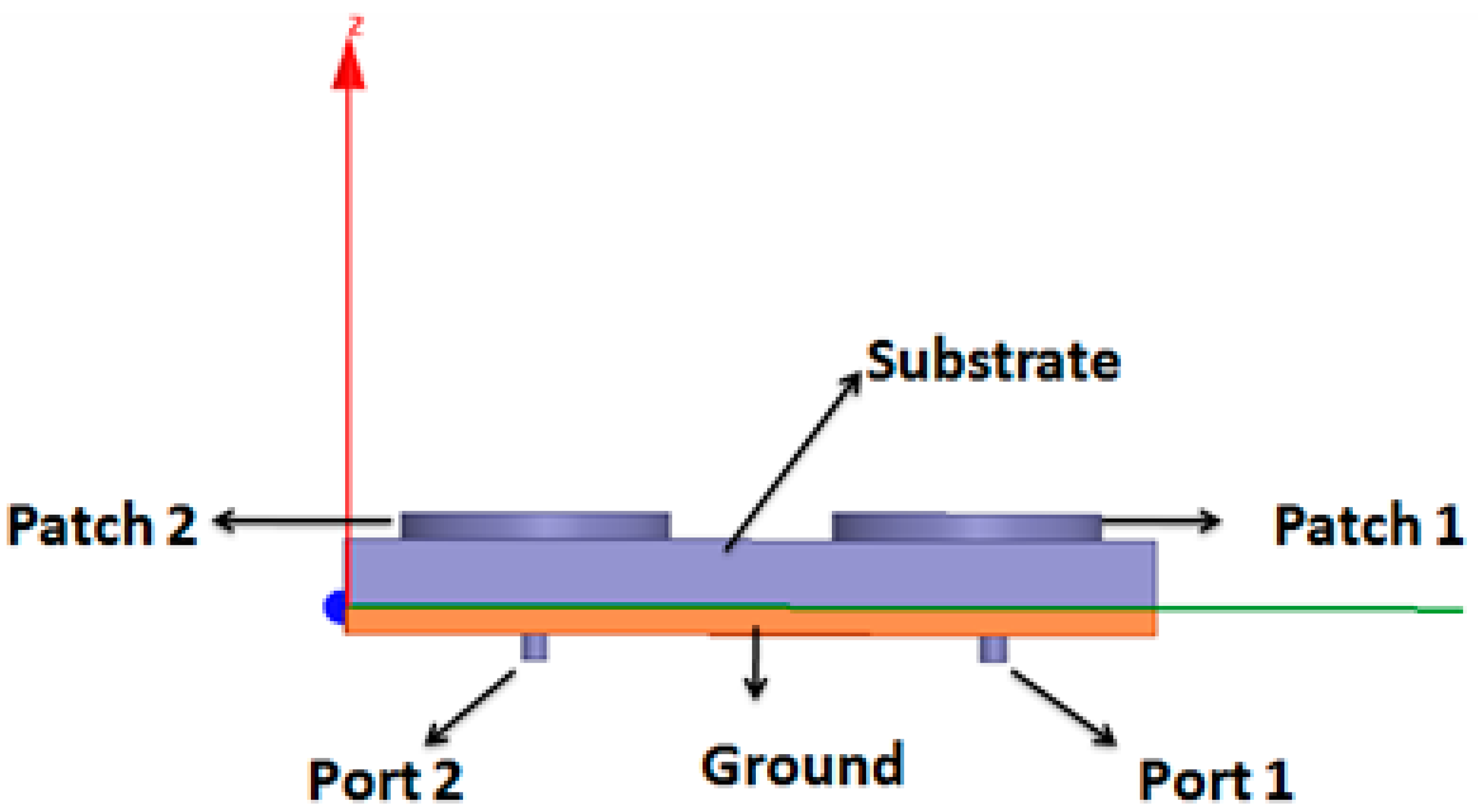
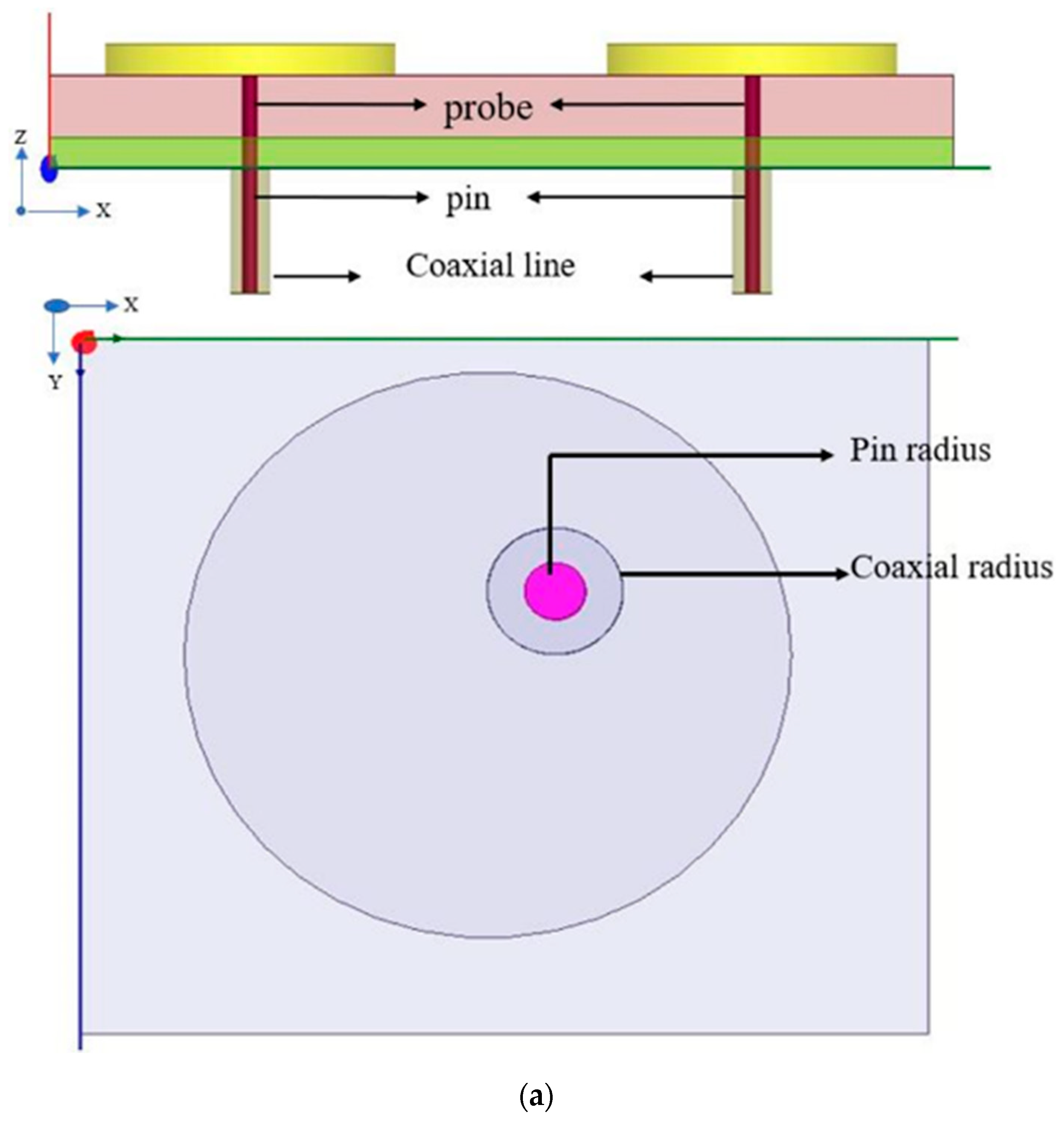
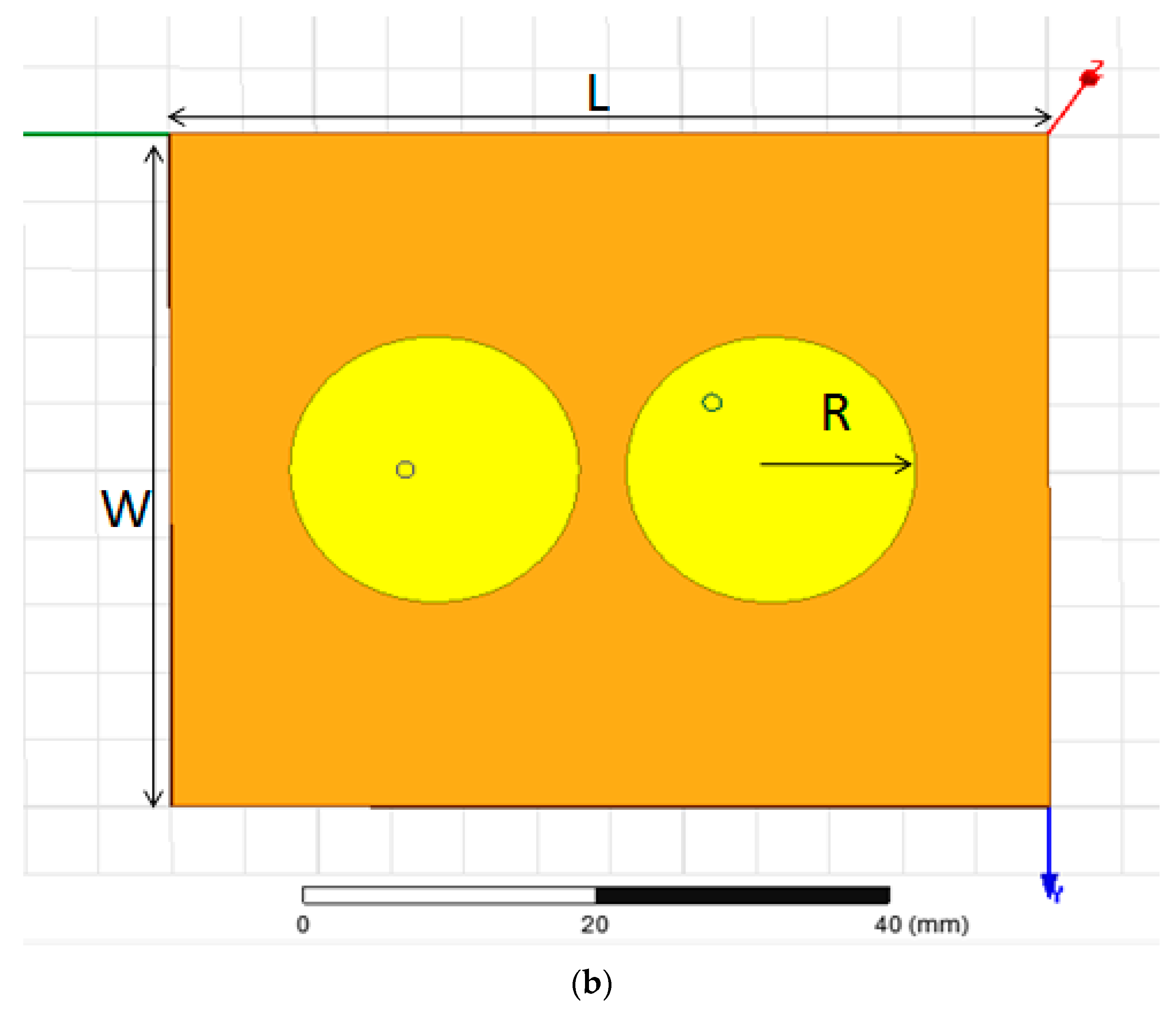
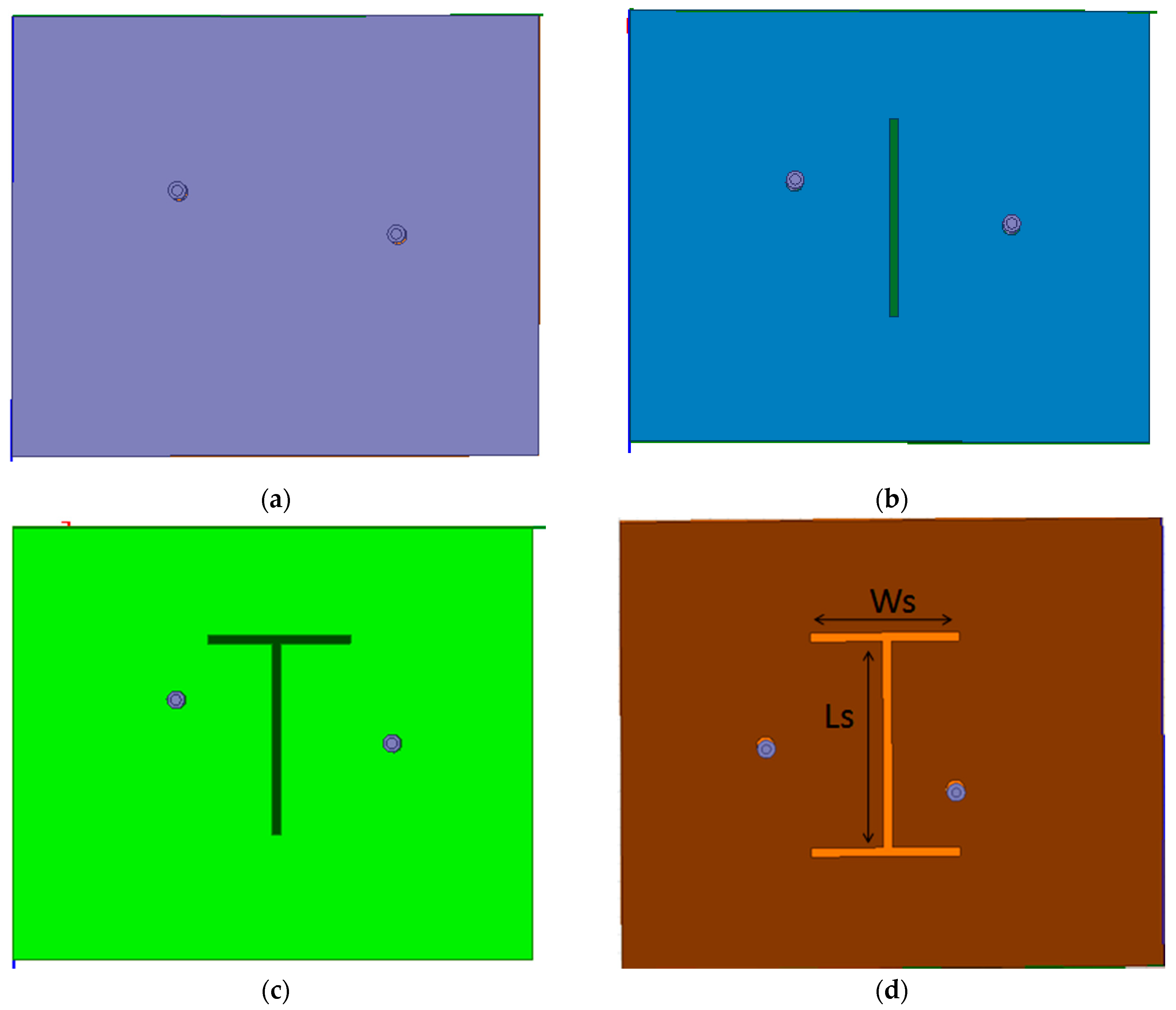
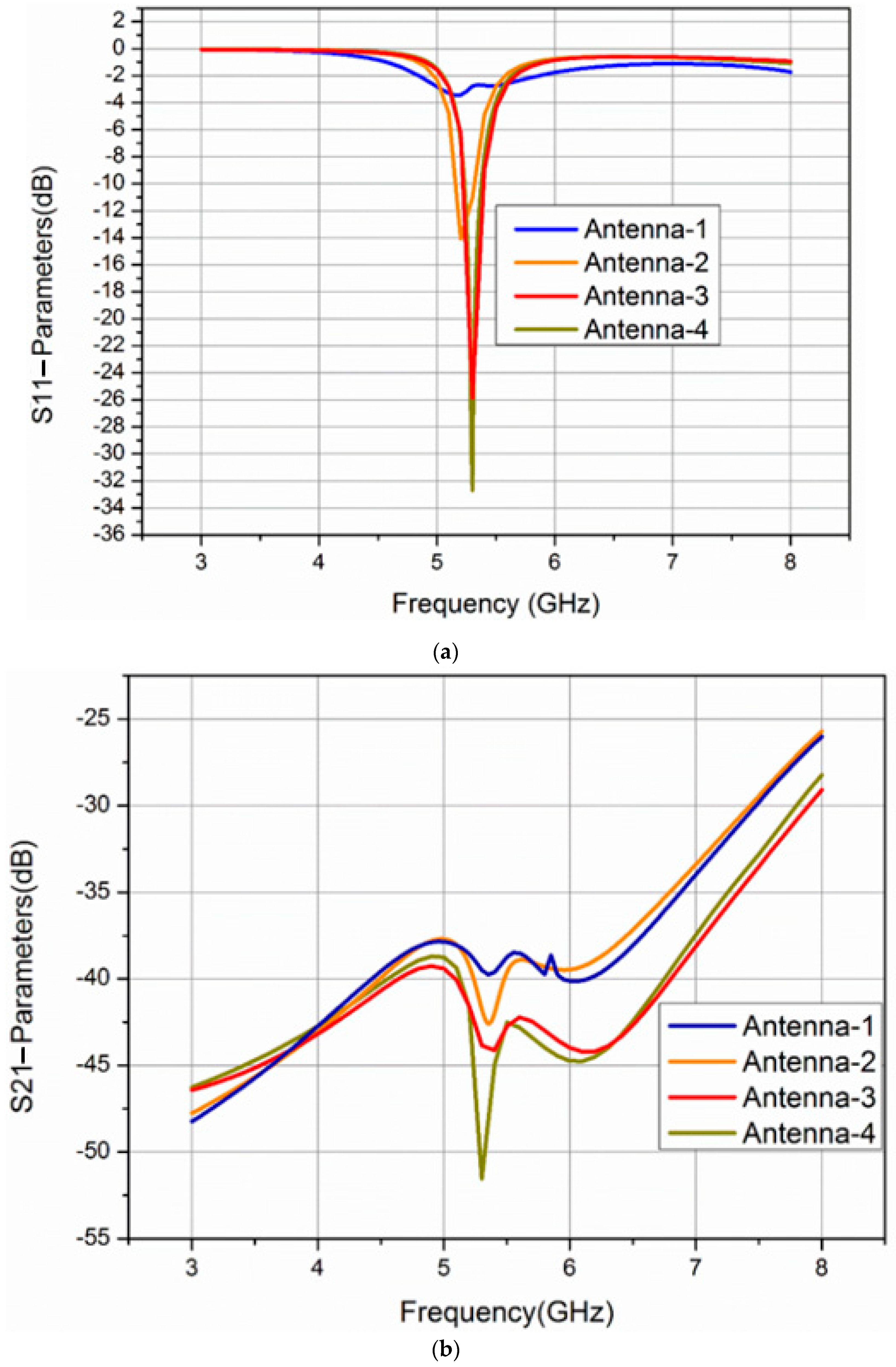
The isolation between the microstrip patches has a great significance to examine the performance of the multiple-input-multiple-output (MIMO) antennas. The patch antennas are placed on the top of 1.46 mm thick Rogers RO3003 substrate having a length of 60 mm, a width of 50 mm, and relative permittivity of 3. The distance between the resonators is 0.06λ and they are stimulated by two coaxial probes extended from the bottom ground layer. The defective ground structure of the H-shape slot is inserted on the bottom ground layer to achieve high isolation (mutual coupling reduction). The proposed MIMO antenna operates at 5.3 GHz frequency, which can be used for WiMAX, Wi-Fi, and future 5G services all over the world. The results of the designed structure have been simulated in a finite element method-based solver high-frequency structure simulator (HFSS). The simulated results show that the reflection coefficient (S11) and isolation (S21) at the desired frequency are −32 dB and −41 dB, respectively.
Keywords: envelope correlation coefficient; defective ground structure; isolation; MIMO antenna; reflection coefficient envelope correlation coefficient; defective ground structure; isolation; MIMO antenna; reflection coefficient