Article

Measuring Traffic Volumes Using an Autoencoder with No Need to Tag Images with Labels

Department of Urban Engineering, Chung-Ang University, 84 Heukseok-ro, Dongjak-gu, Seoul 156-756, Korea
*
Author to whom correspondence should be addressed.
Electronics 2020, 9(5), 702; https://doi.org/10.3390/electronics9050702

Submission received: 31 March 2020 / Revised: 23 April 2020 / Accepted: 24 April 2020 / Published: 25 April 2020
(This article belongs to the Special Issue AI-Based Transportation Planning and Operation)

Abstract

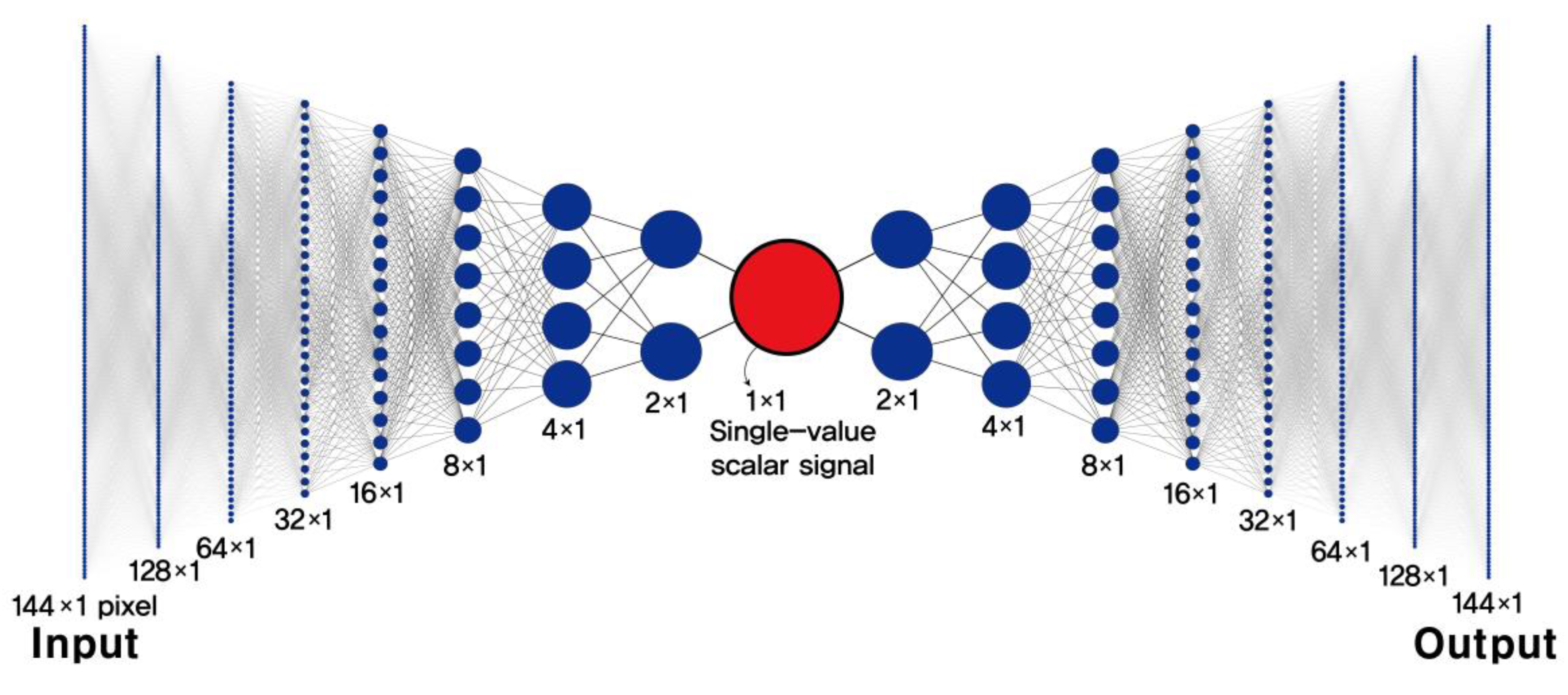
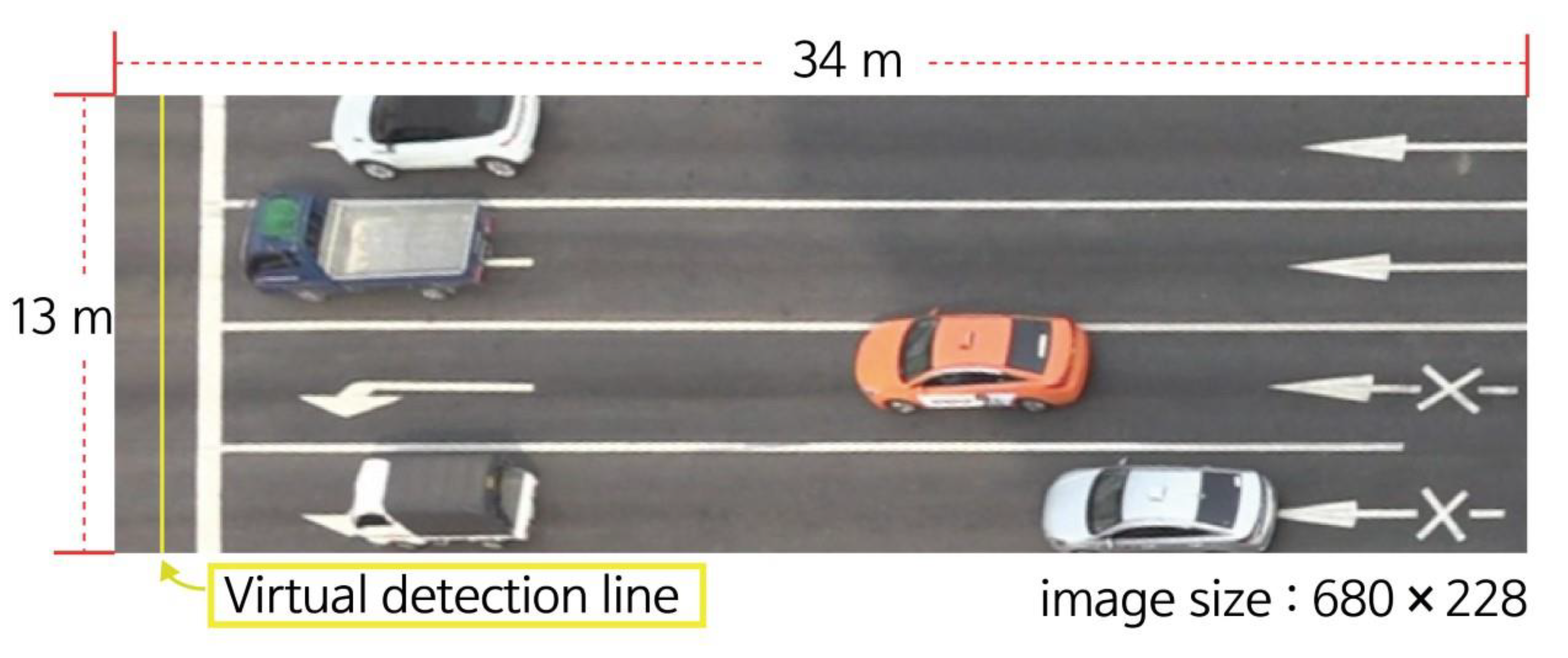
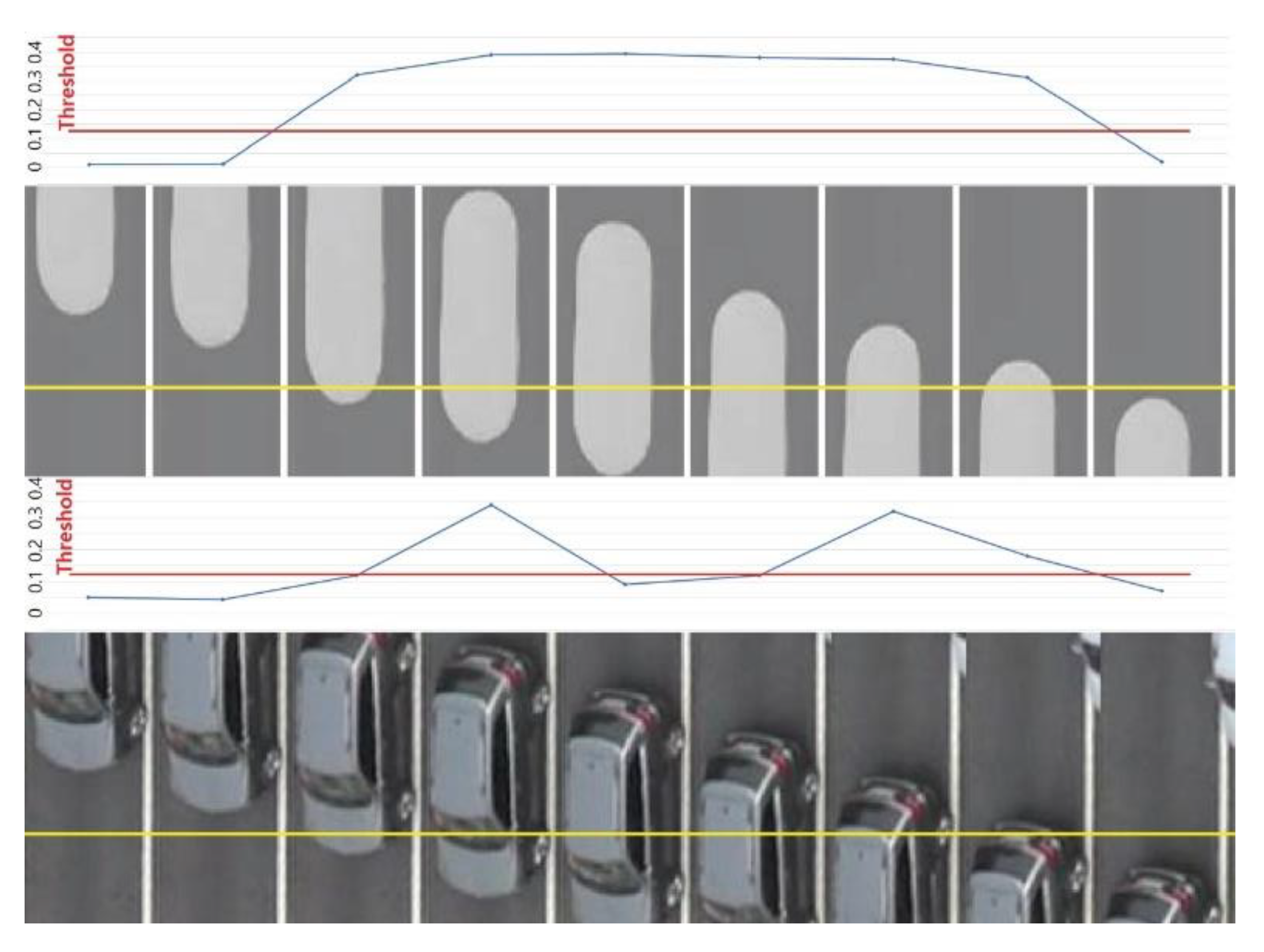
Almost all vision technologies that are used to measure traffic volume use a two-step procedure that involves tracking and detecting. Object detection algorithms such as YOLO and Fast-RCNN have been successfully applied to detecting vehicles. The tracking of vehicles requires an additional algorithm that can trace the vehicles that appear in a previous video frame to their appearance in a subsequent frame. This two-step algorithm prevails in the field but requires substantial computation resources for training, testing, and evaluation. The present study devised a simpler algorithm based on an autoencoder that requires no labeled data for training. An autoencoder was trained on the pixel intensities of a virtual line placed on images in an unsupervised manner. The last hidden node of the former encoding portion of the autoencoder generates a scalar signal that can be used to judge whether a vehicle is passing. A cycle-consistent generative adversarial network (CycleGAN) was used to transform an original input photo of complex vehicle images and backgrounds into a simple illustration input image that enhances the performance of the autoencoder in judging the presence of a vehicle. The proposed model is much lighter and faster than a YOLO-based model, and accuracy of the proposed model is equivalent to, or better than, a YOLO-based model. In measuring traffic volumes, the proposed approach turned out to be robust in terms of both accuracy and efficiency.
Keywords: autoencoder; deep learning; traffic volume; vehicle counting; CycleGAN autoencoder; deep learning; traffic volume; vehicle counting; CycleGAN