Article

Effective Position Control for a Three-Phase Motor


by
Patxi Alkorta
1,*,
Oscar Barambones
2,
José Antonio Cortajarena
1,
Itziar Martija
3 and
Fco. Javier Maseda
3
1
Engineering School of Gipuzkoa, University of the Basque Country; Otaola hirib. 29, 20600 Eibar, Spain
2
Engineering School of Vitoria, University of the Basque Country; Nieves Cano 12, 01006 Vitoria, Spain
3
Engineering School of Bilbao, University of the Basque Country; Rafael Moreno 3, 48013 Bilbao, Spain
*
Author to whom correspondence should be addressed.
Electronics 2020, 9(2), 241; https://doi.org/10.3390/electronics9020241

Submission received: 31 December 2019 / Revised: 24 January 2020 / Accepted: 27 January 2020 / Published: 1 February 2020
(This article belongs to the Special Issue Advanced Control Systems for Electric Drives)

Abstract

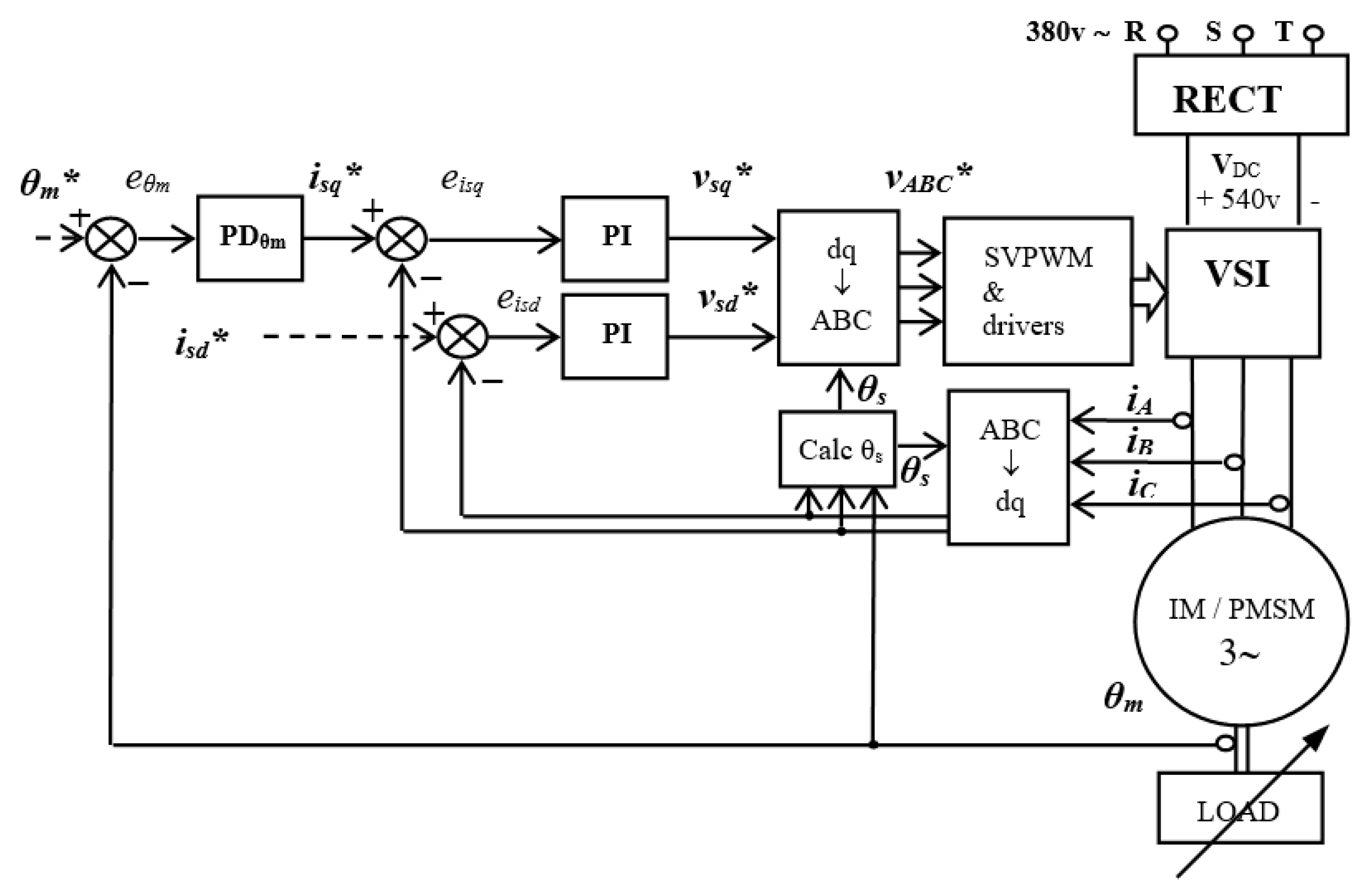
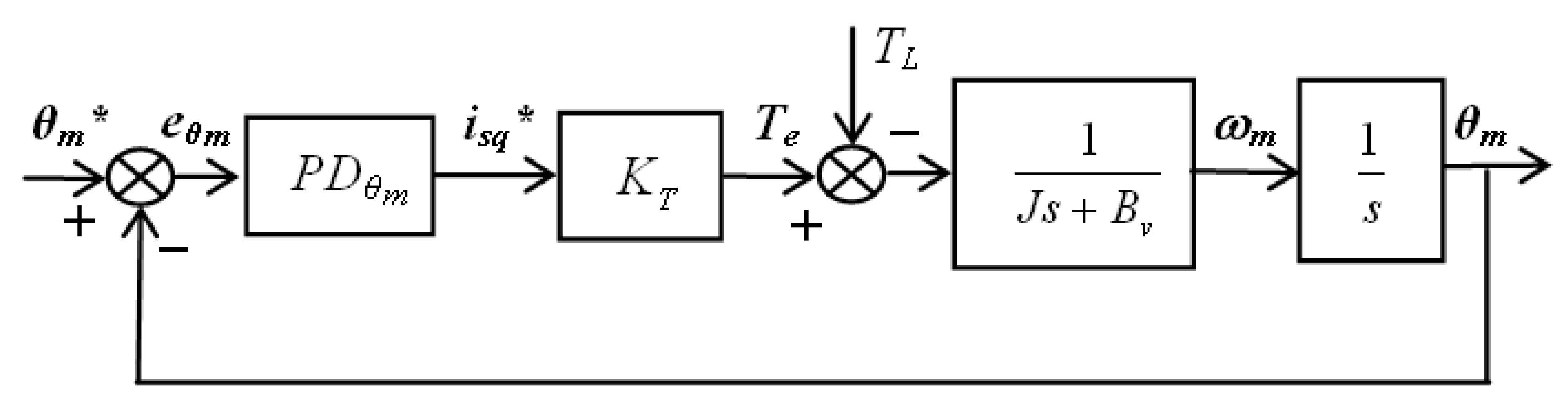
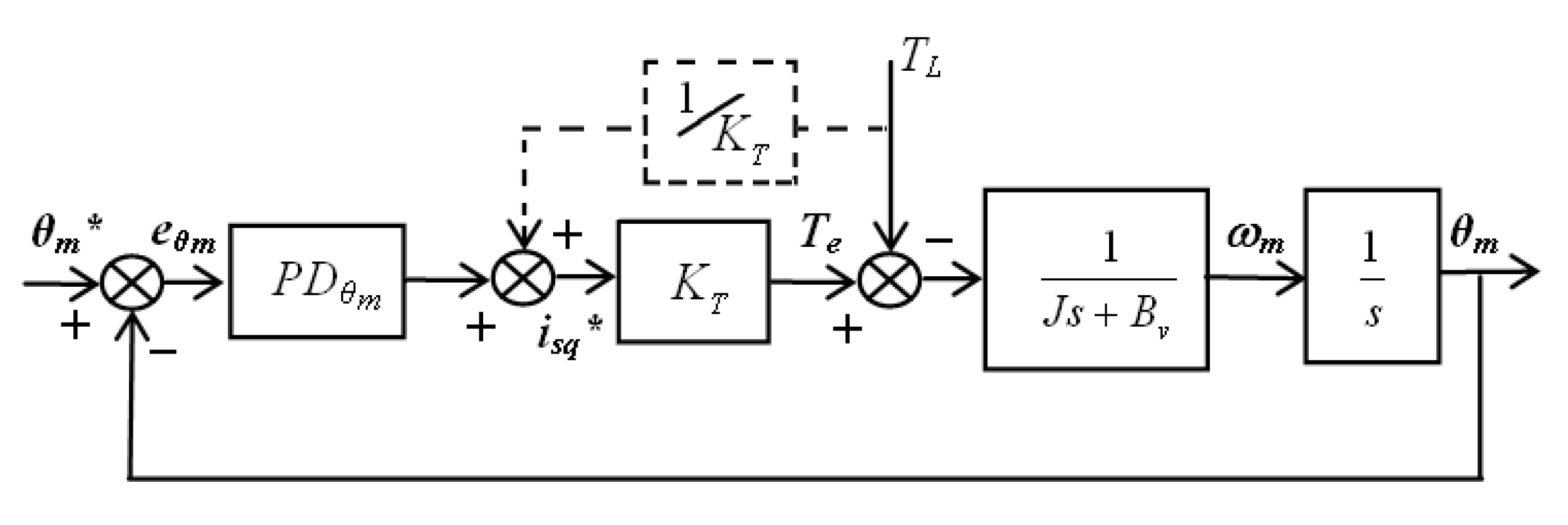
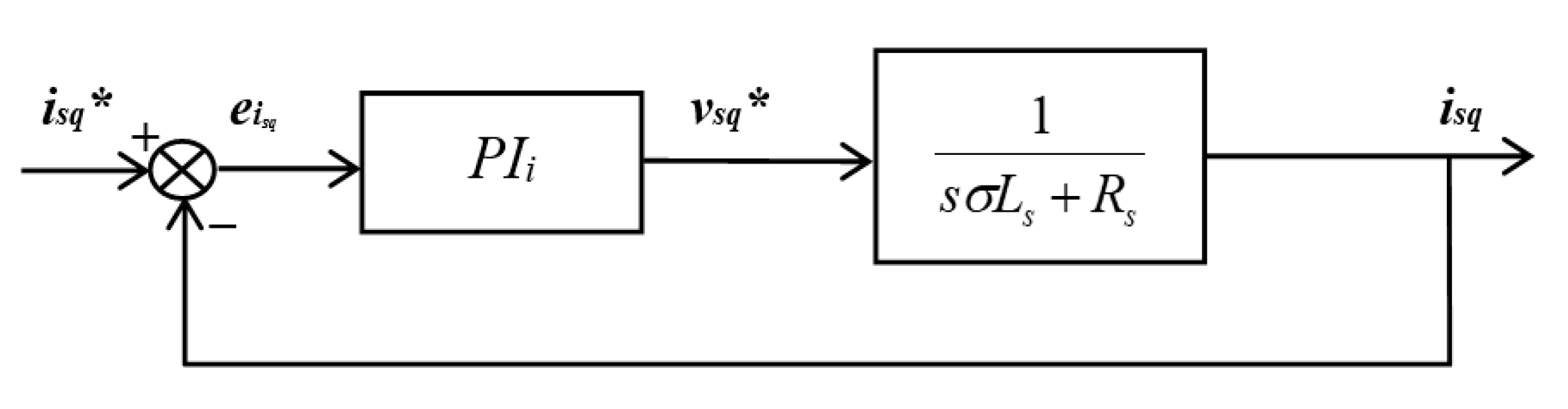
This document presents an efficient proportional derivative (PD) position controller for three-phase motor drives. The regulator has been designed in frequency domain, employing the direct–quadrature (dq) synchronous rotating reference frame and the indirect vector control. The presented position regulator is easy to tune and incorporates a feed forward (FF) term to compensate effectively the effect of the load disturbance. This position controller has been validated experimentally by using two industrial three-phase motors: an induction motor (IM) of 7.5 kW and a permanent magnet synchronous motor (PMSM) of 3.83 kW. The inner proportional integral (PI) current loops of both machines have also been designed in the frequency domain. Each machine has connected in its shaft an incremental encoder of 4096 pulses per revolution, to measure the position. Several simulations and experimental tests have been carried out with both motors, in favorable conditions and also with various types of adversities (parametric uncertainties, unknown load disturbance and measurement noise in the position and current loops), getting very good results and suggesting that this controller could be used in the research area and also in the industry.
Keywords: indirect vector control; position control of motor; induction motor; permanent magnet synchronous motor indirect vector control; position control of motor; induction motor; permanent magnet synchronous motor