Article

An Energy-Efficient Fail Recovery Routing in TDMA MAC Protocol-Based Wireless Sensor Network


Electronics Engineering Department, School of Electronics Engineering, Chungbuk National University, Cheongju 371763, Korea
*
Author to whom correspondence should be addressed.
Electronics 2018, 7(12), 444; https://doi.org/10.3390/electronics7120444

Submission received: 15 November 2018 / Revised: 10 December 2018 / Accepted: 11 December 2018 / Published: 17 December 2018
(This article belongs to the Special Issue Advanced Technologies in Low Power Wide Area Networks (LPWAN))

Abstract

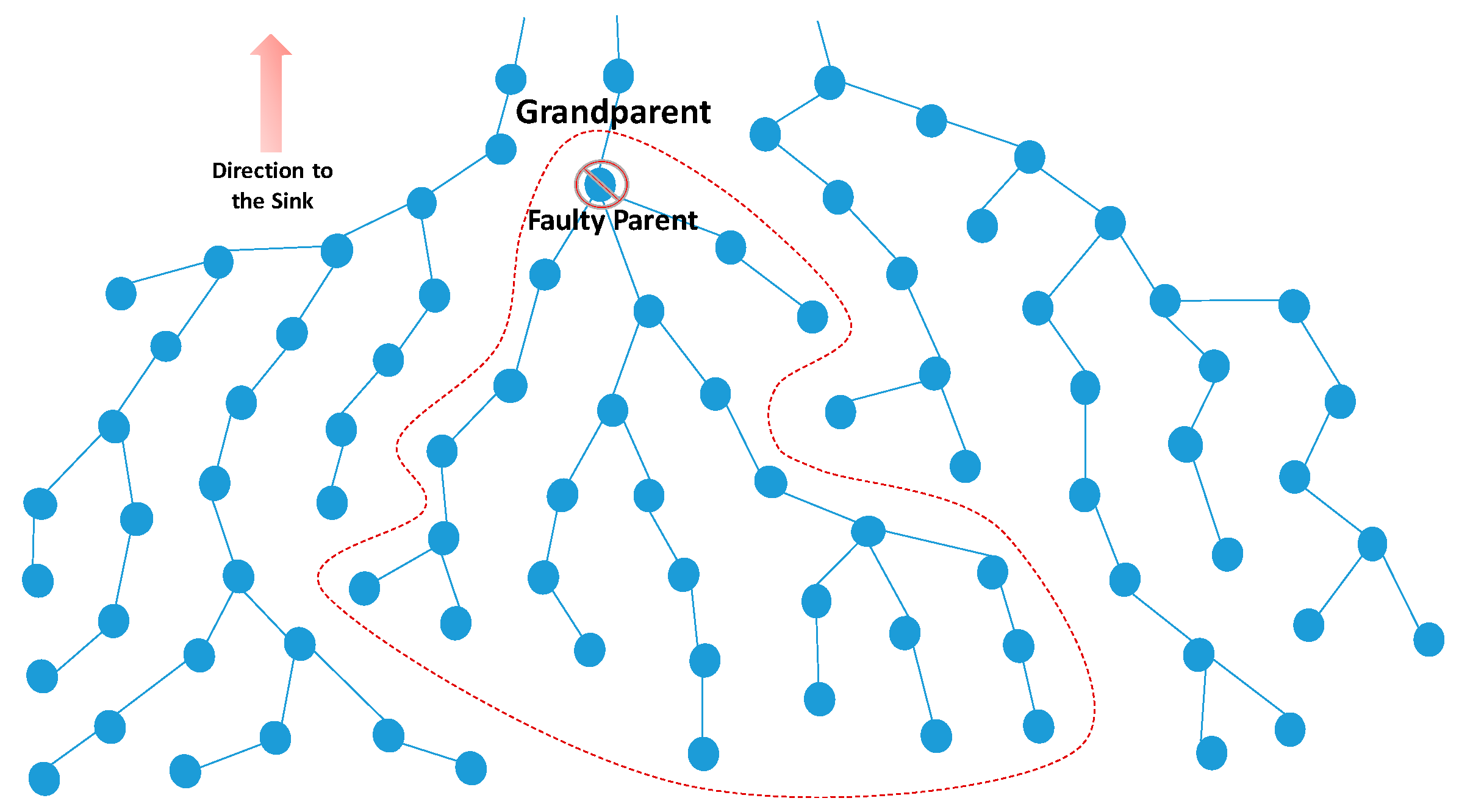
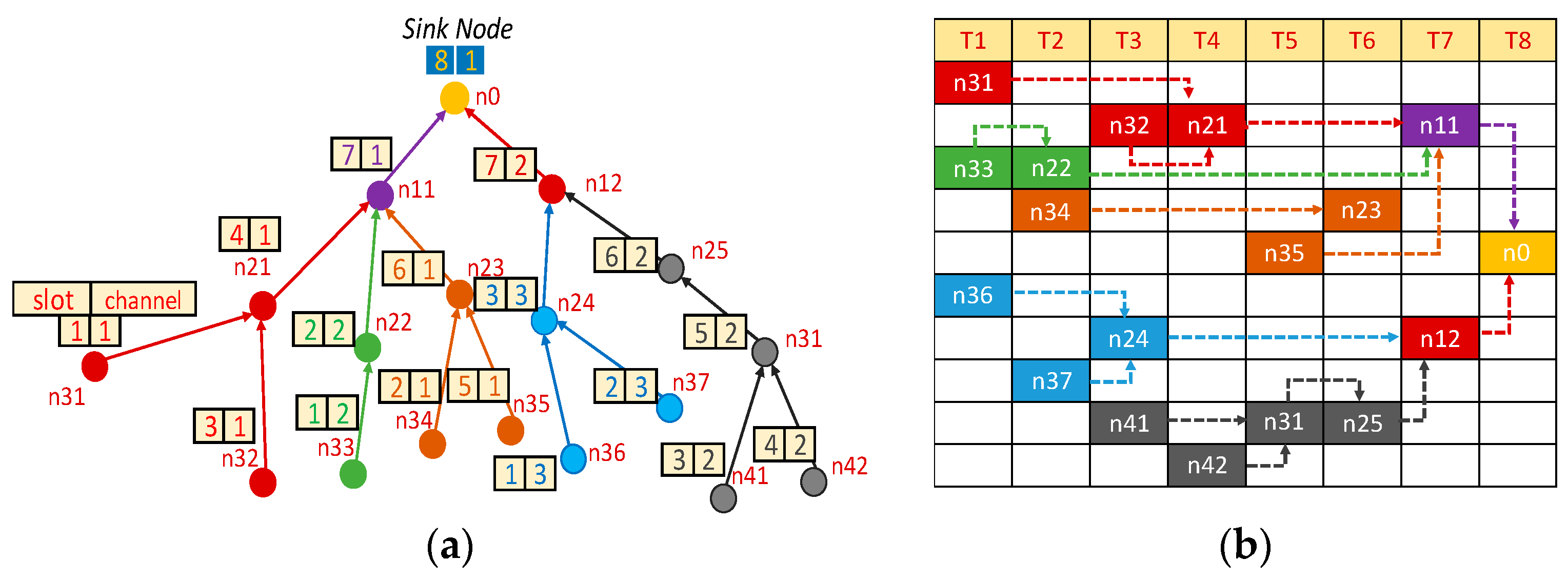
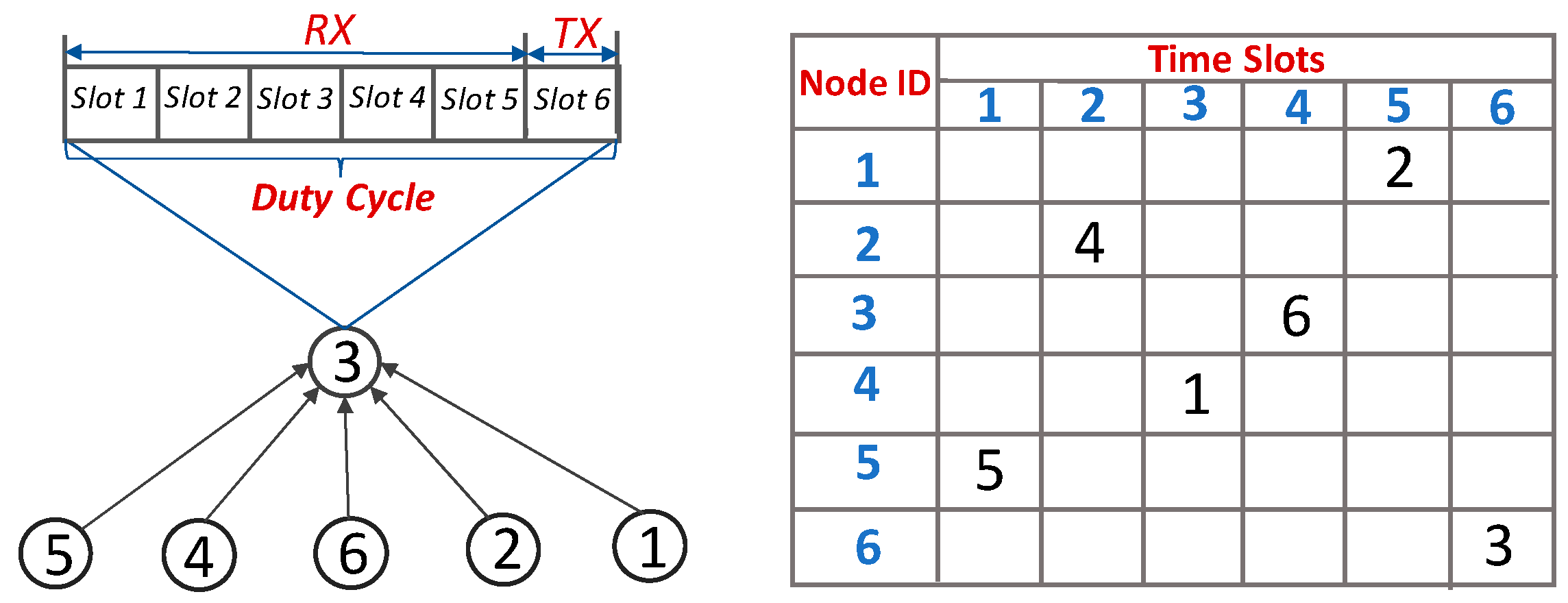
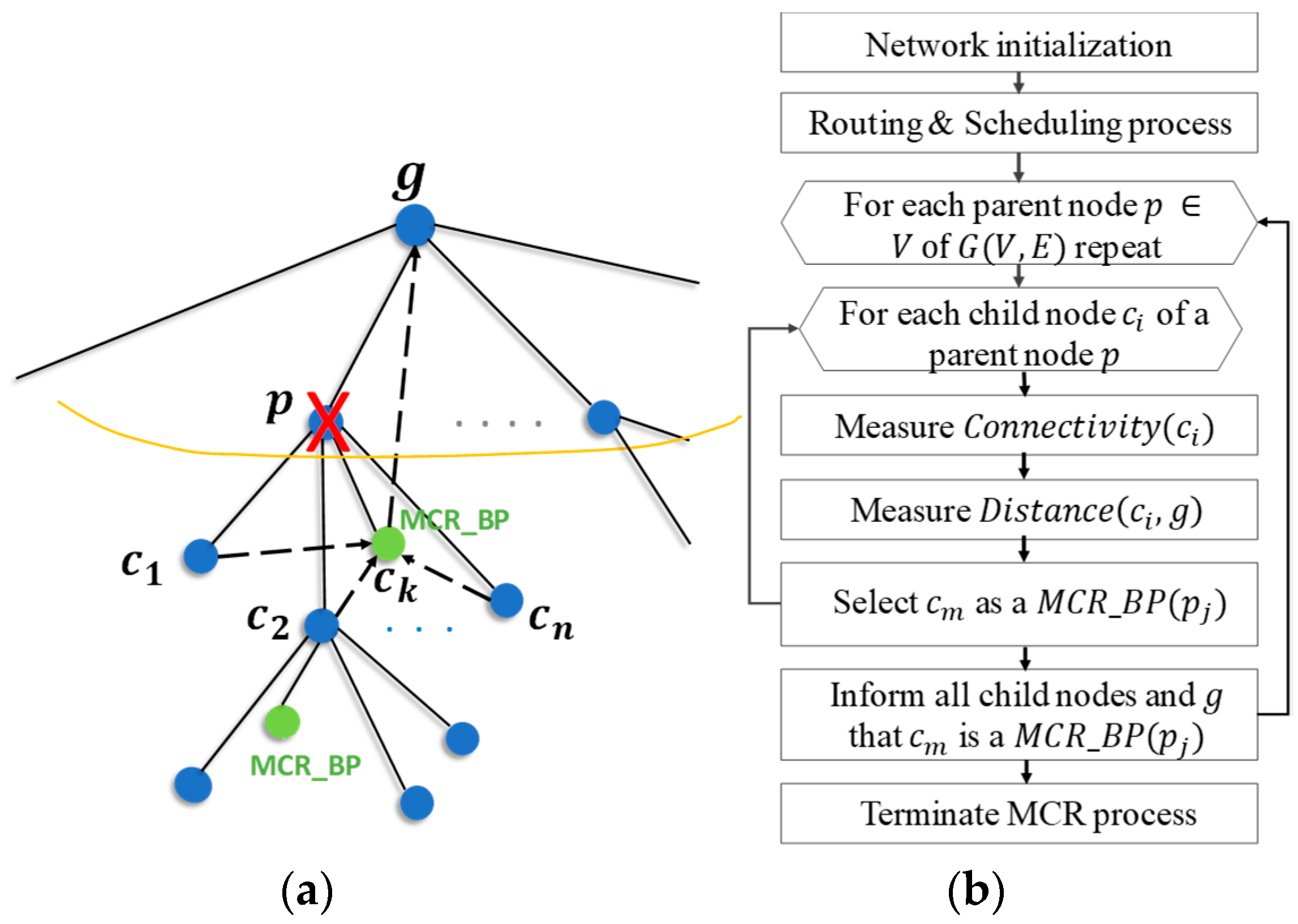
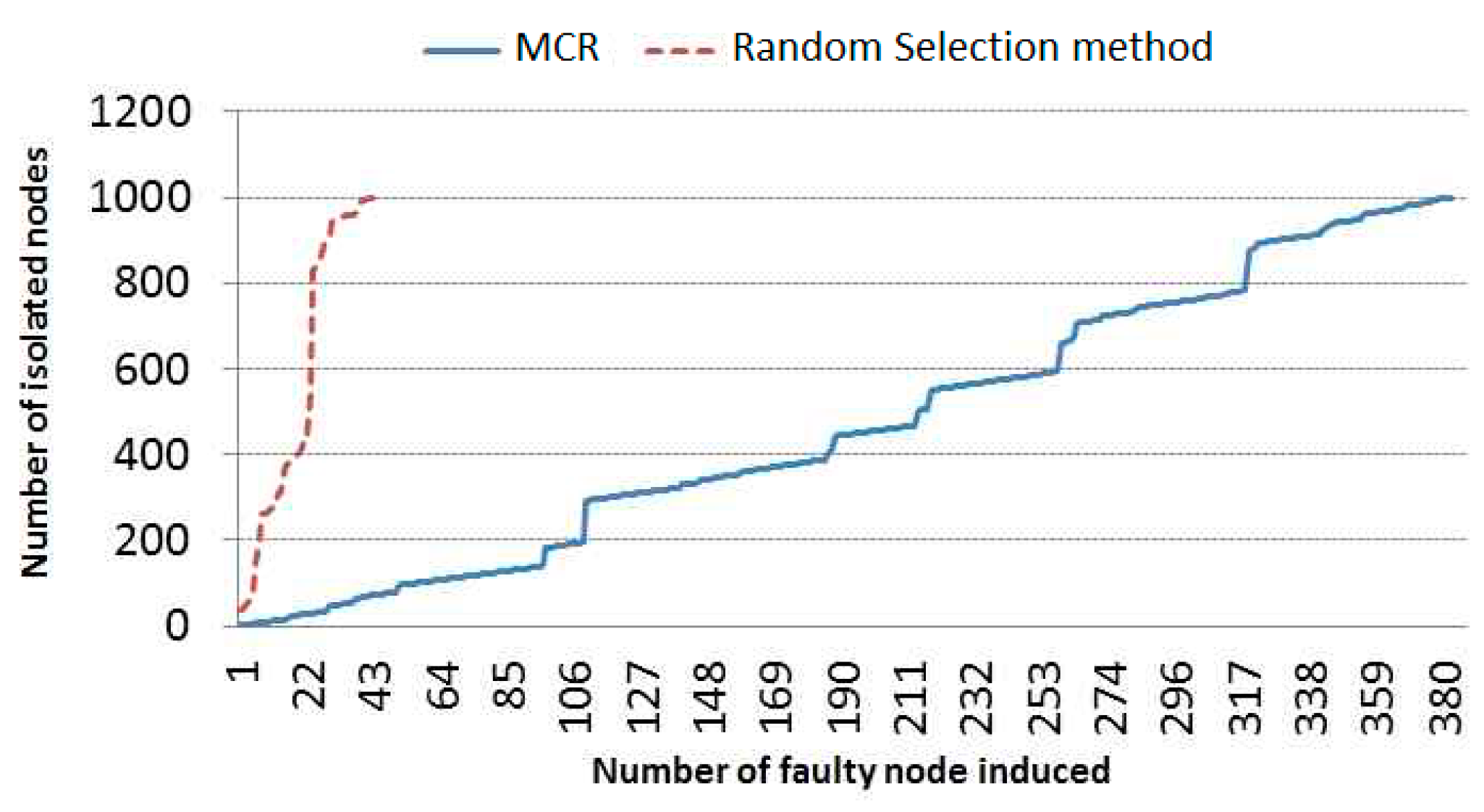
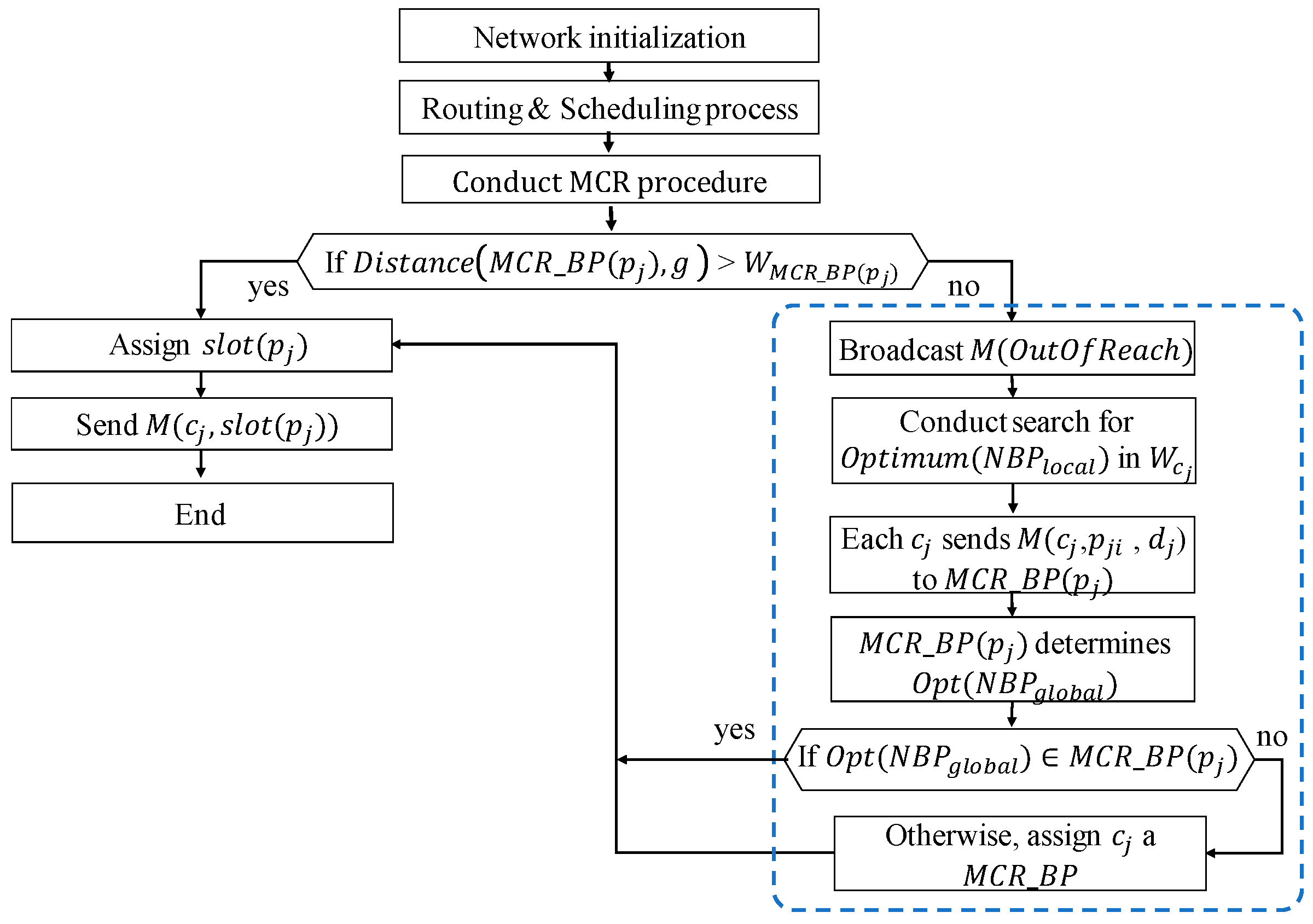
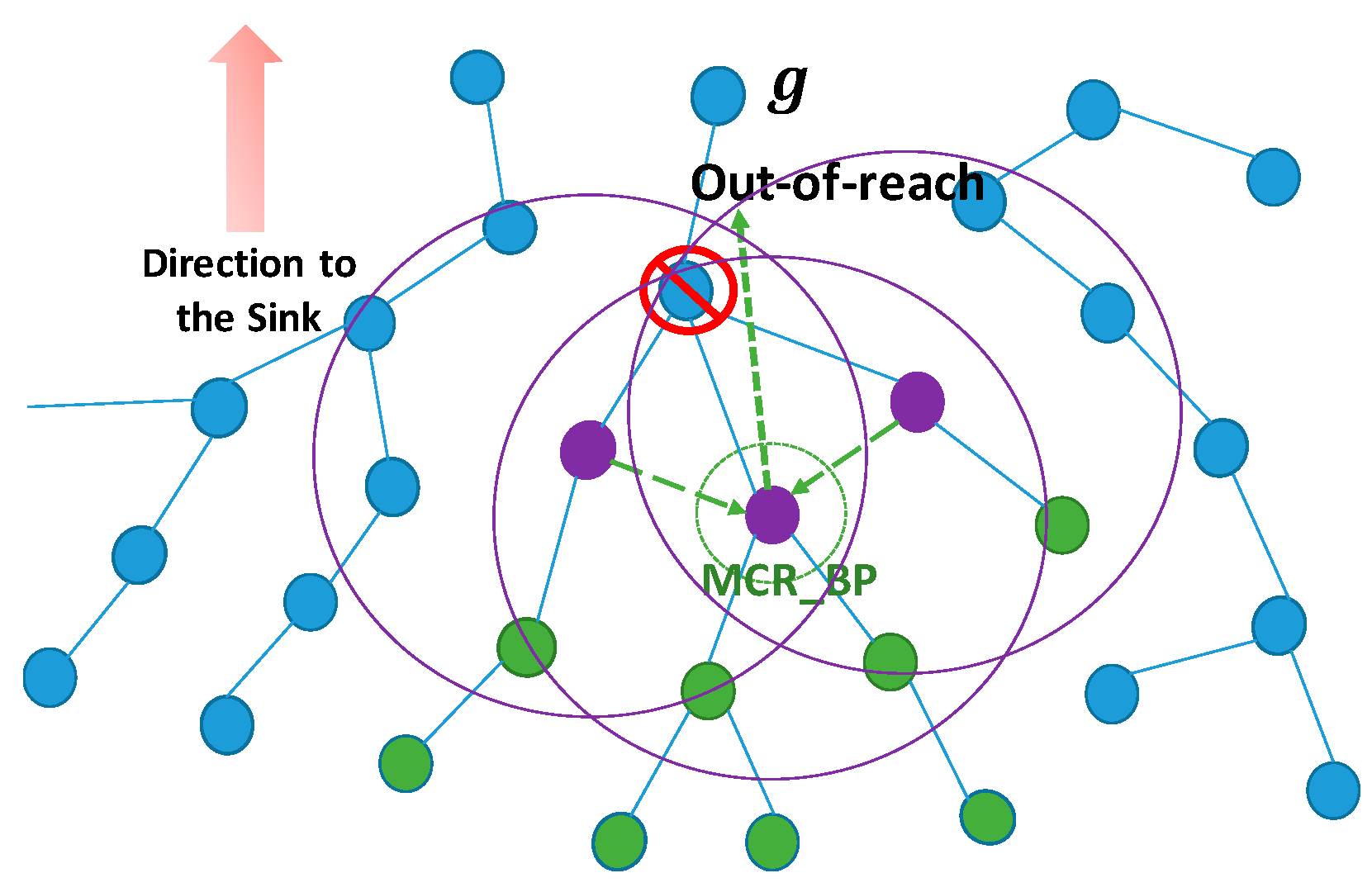
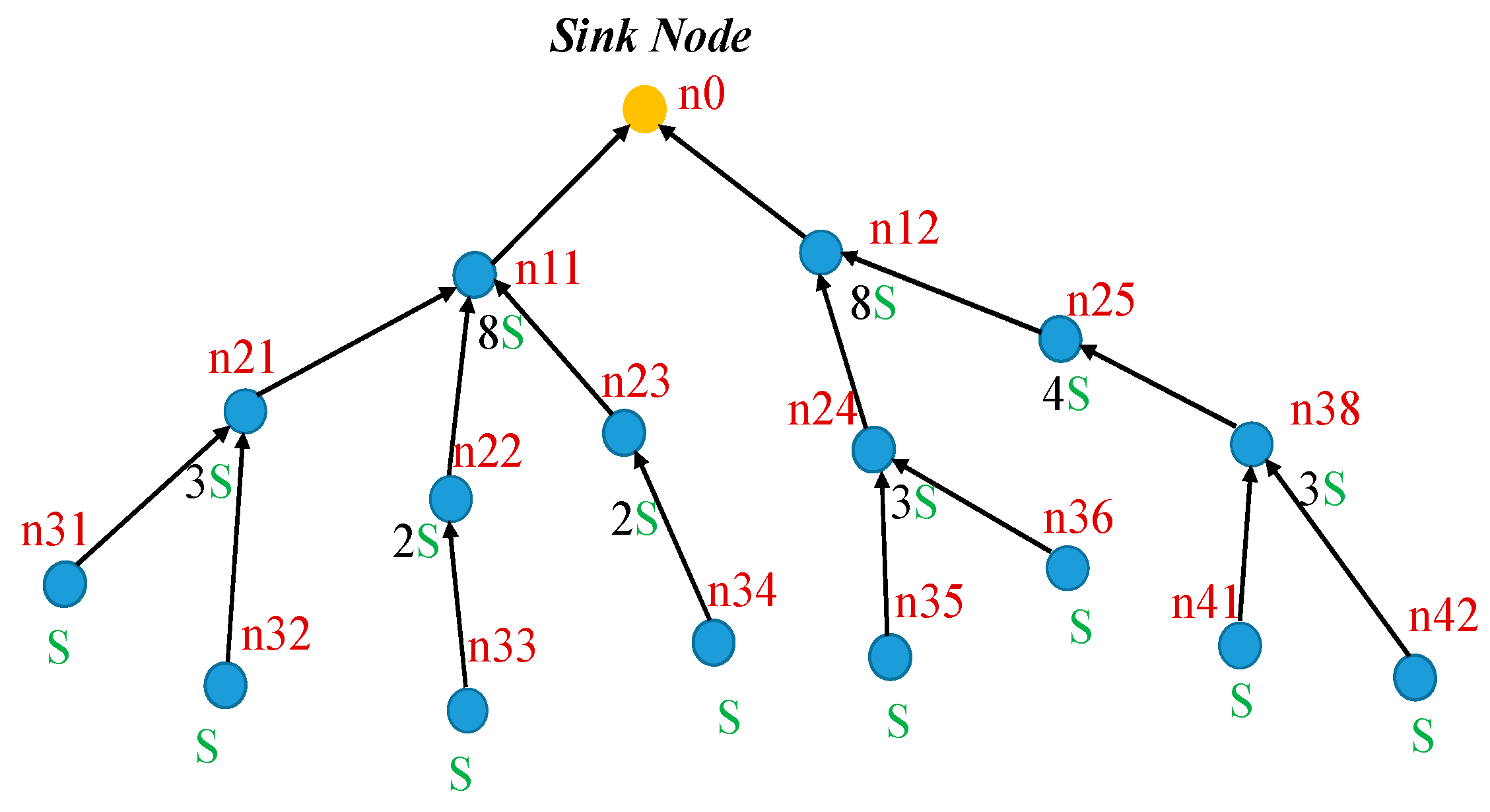
Conventional IoT applications rely on seamless data collection from the distributed sensor nodes of Wireless Sensor Networks (WSNs). The energy supplied to the sensor node is limited and it depletes after each cycle of data collection. Therefore, data flow from the network to the base station may cease at any time due to the nodes with a dead battery. A replacement of the battery in WSNs is often challenging and requires additional efforts. To ensure the robust operation of WSNs, many fault recovery routing mechanisms have been proposed. Most of the previous fault recovery routing methods incur considerable delays in recovery and high overhead in either energy consumption or device cost. We propose an energy-efficient fail recovery routing method that is aimed to operate over a data aggregation network topology using a TDMA media access control (MAC). This paper introduces a novel fault recovery routing algorithm for TDMA-based WSNs. It finds an optimal neighbor backup parent (NBP) for each node in a way that reduces the energy consumption. The proposed method allows the NBPs to utilize the time slot of the faulty parent nodes, so it eliminates the overhead of TDMA rescheduling for NBPs. To evaluate the fault recovery performance and energy efficiency of the proposed method, we implemented it in C++ simulation program. Simulation experiments with an extensive set of network examples demonstrate that the proposed method can extend the network lifetime by 21% and reduce the energy consumption by 23% compared with the reference methods.
Keywords: failure recovery; routing; wireless sensor network; redundant path; backup parent node; network lifetime and power consumption; active period failure recovery; routing; wireless sensor network; redundant path; backup parent node; network lifetime and power consumption; active period