Dual-Layer Multi-Port High-Gain DC-DC Power Converter with Hybrid Voltage/Current Distribution Strategy

Abstract
1. Introduction
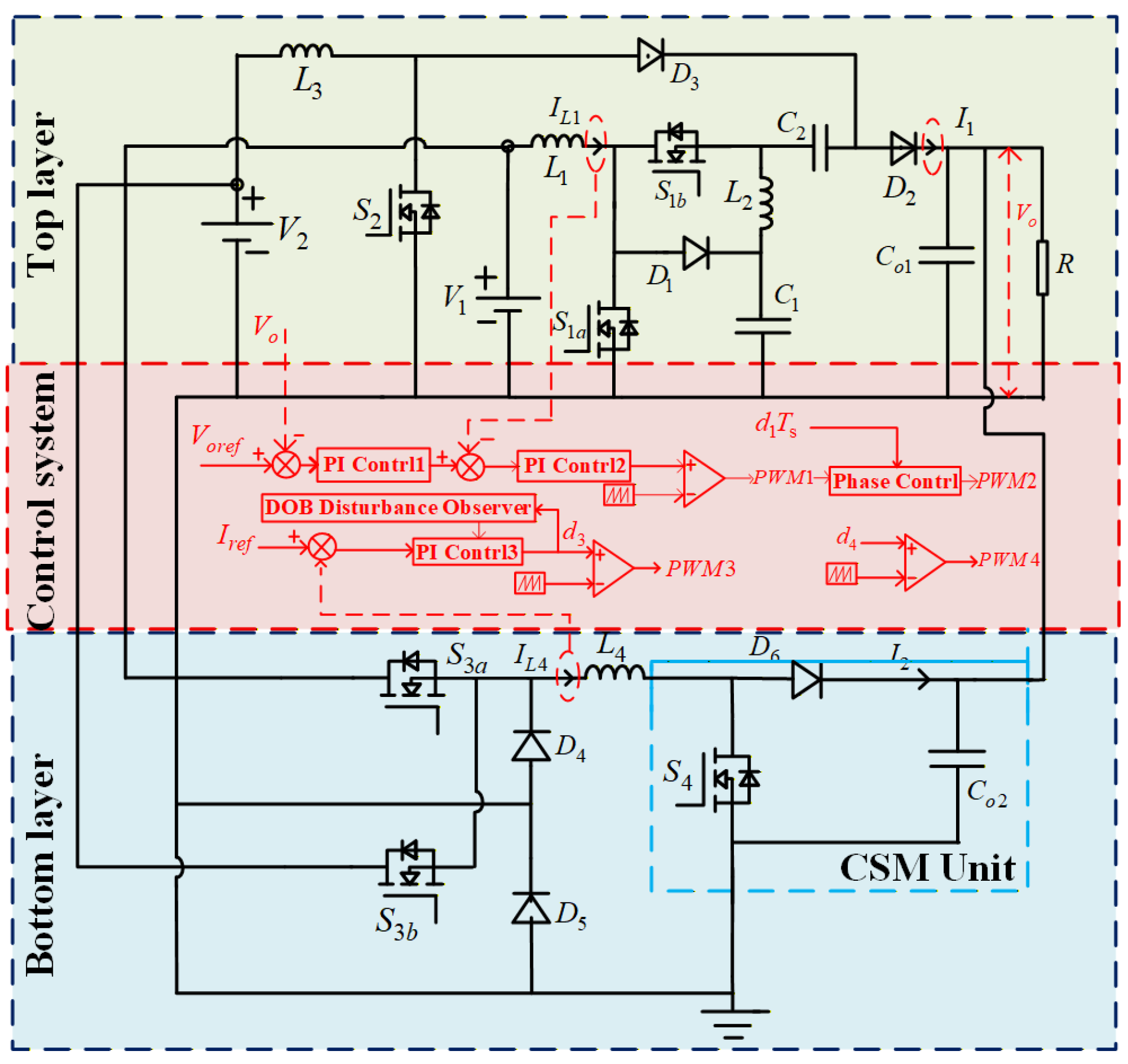
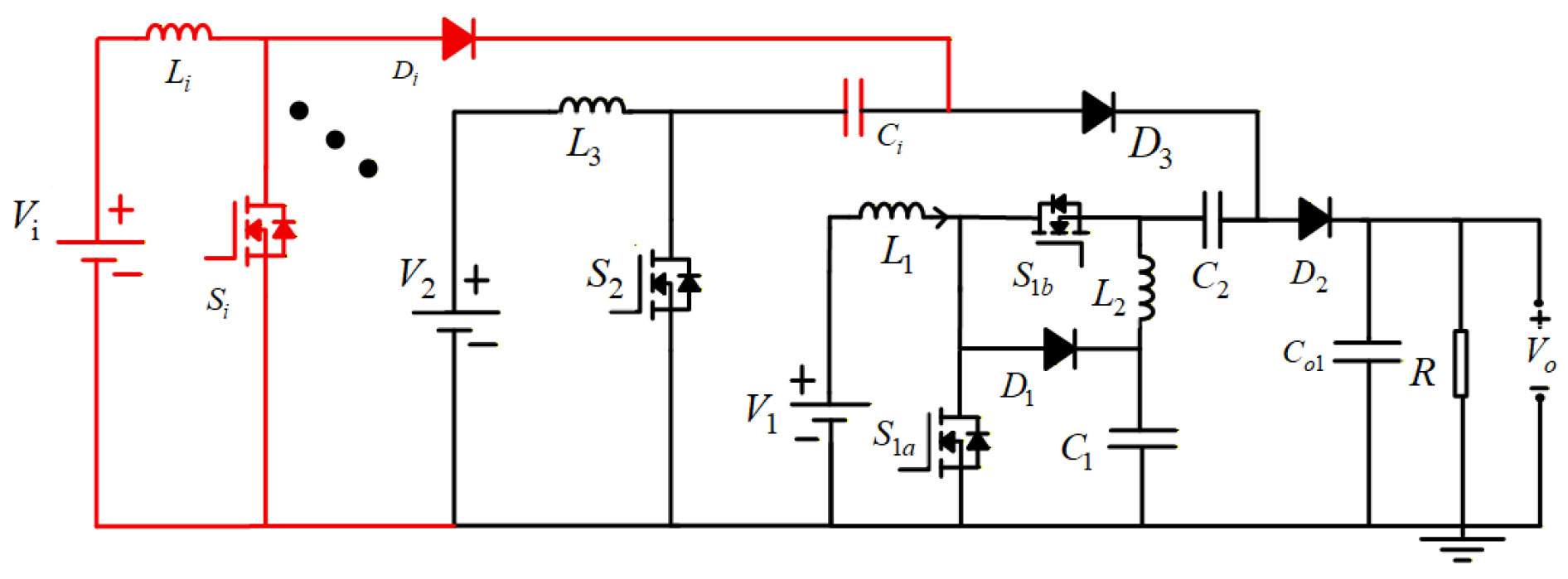
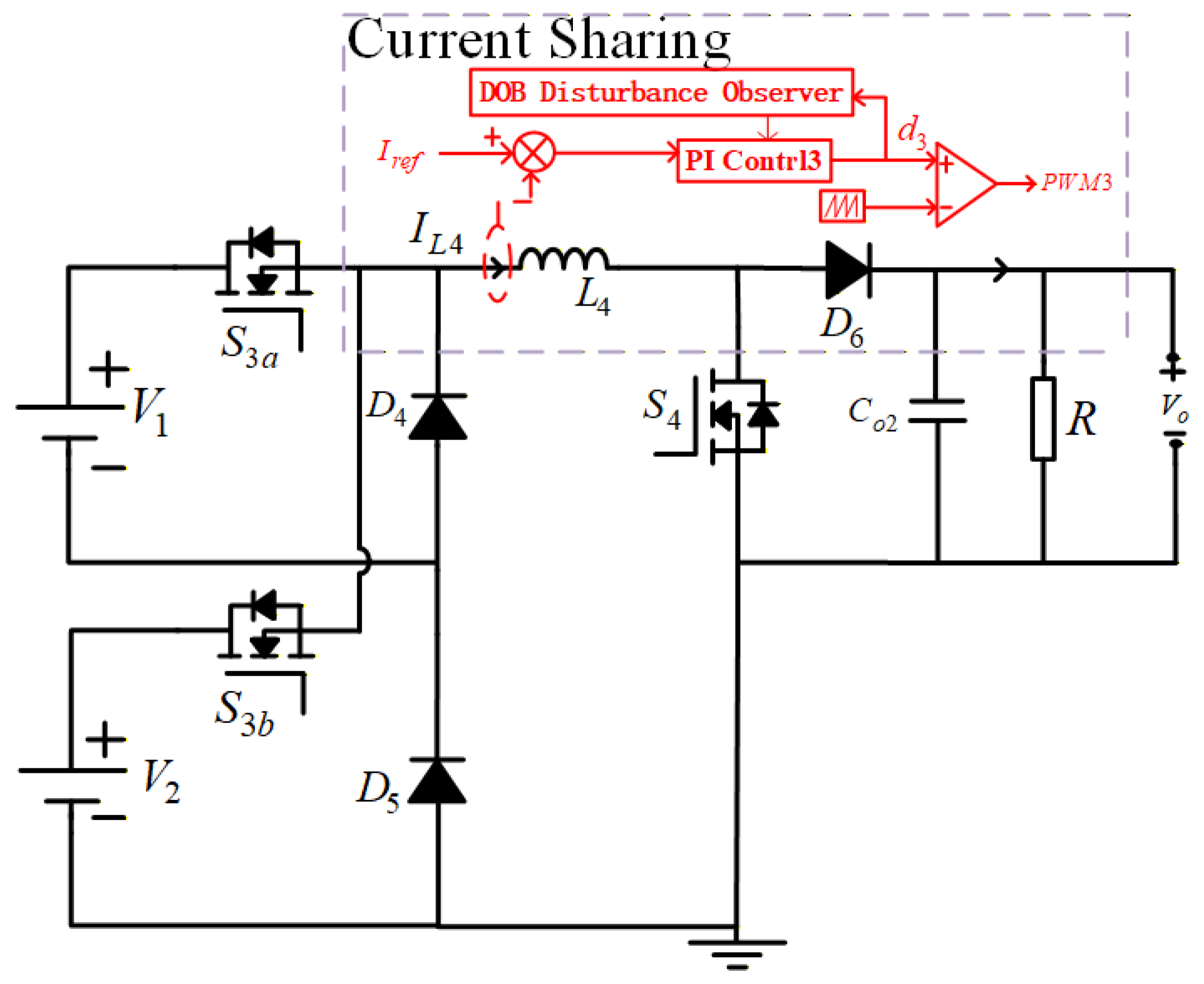
- A novel non-isolated dual-layer multi-port high-gain DC–DC converter topology is proposed. Unlike conventional single-stage high-gain converters, which suffer from limited power capacity and high device stress, the proposed architecture decouples voltage boosting and power sharing into two coordinated layers. The upper layer achieves high voltage gain, while the lower layer enables flexible current sharing among input ports. This dual-layer structure effectively enhances both voltage conversion capability and system power scalability.
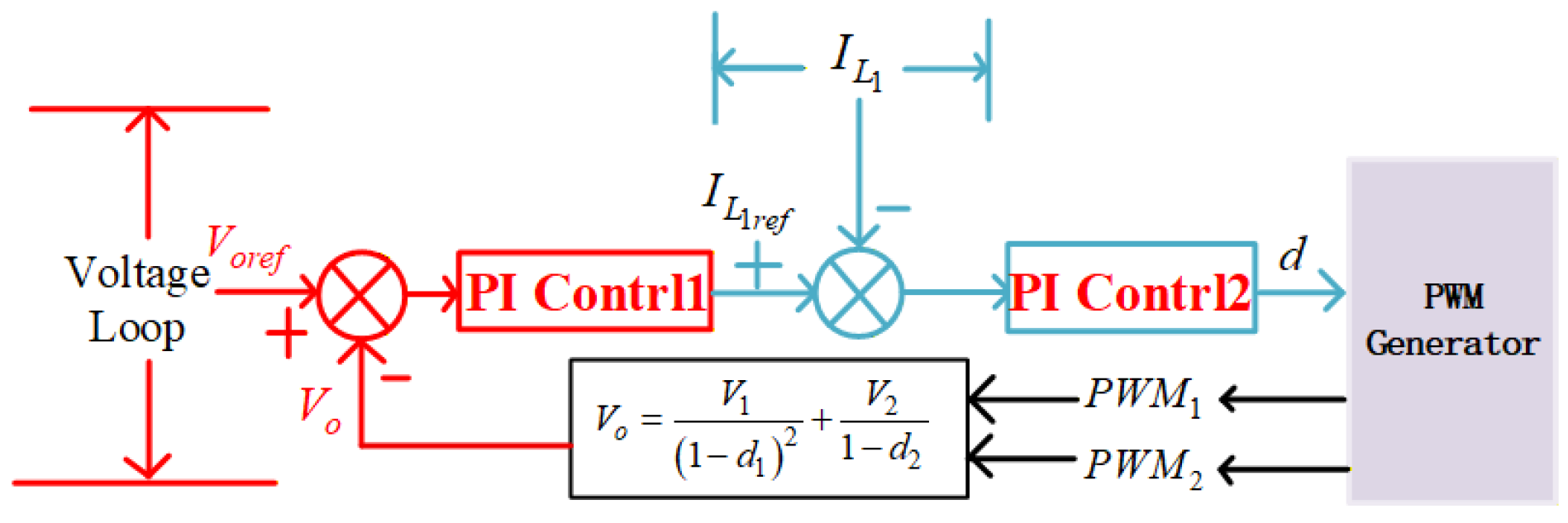
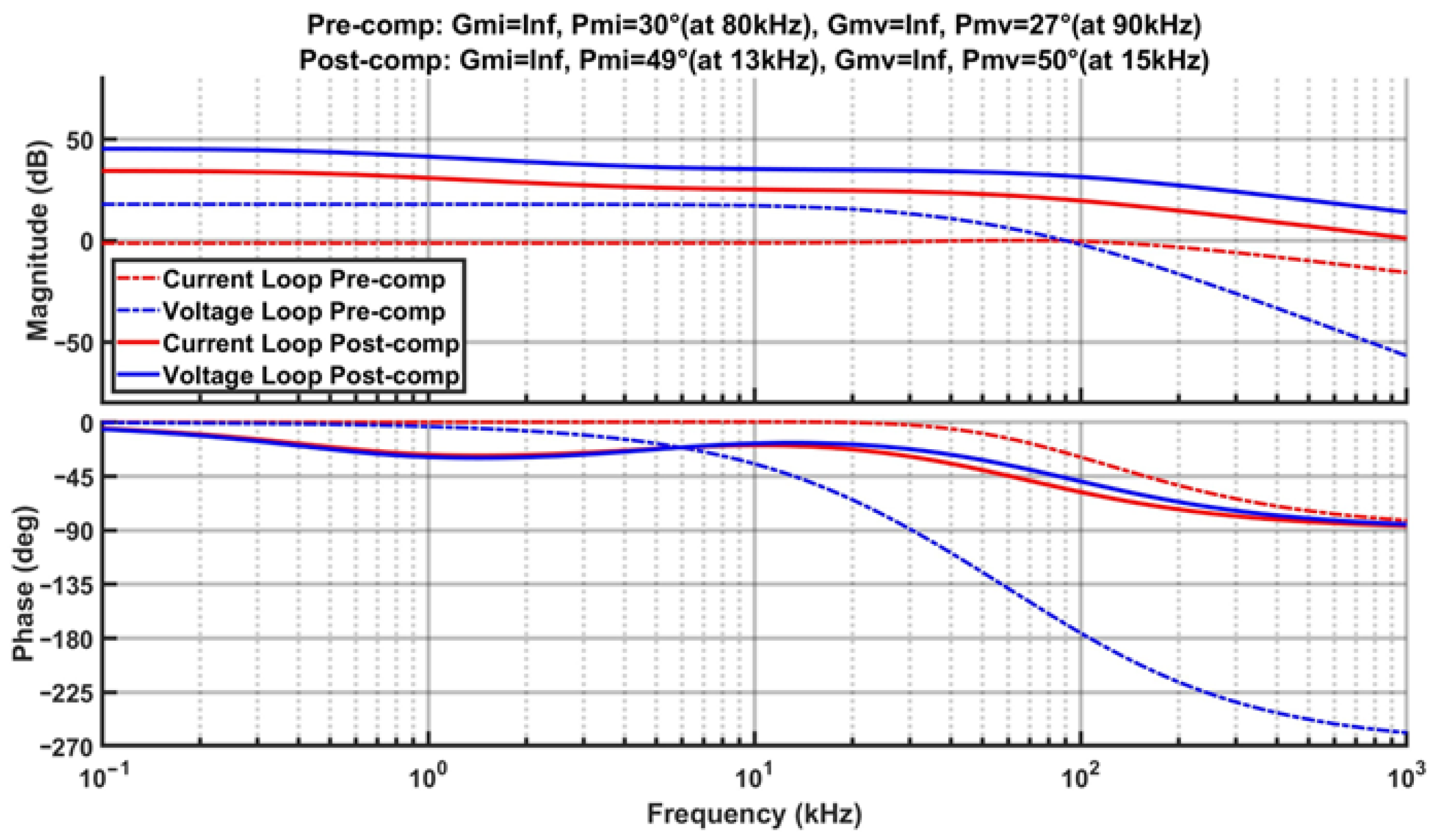
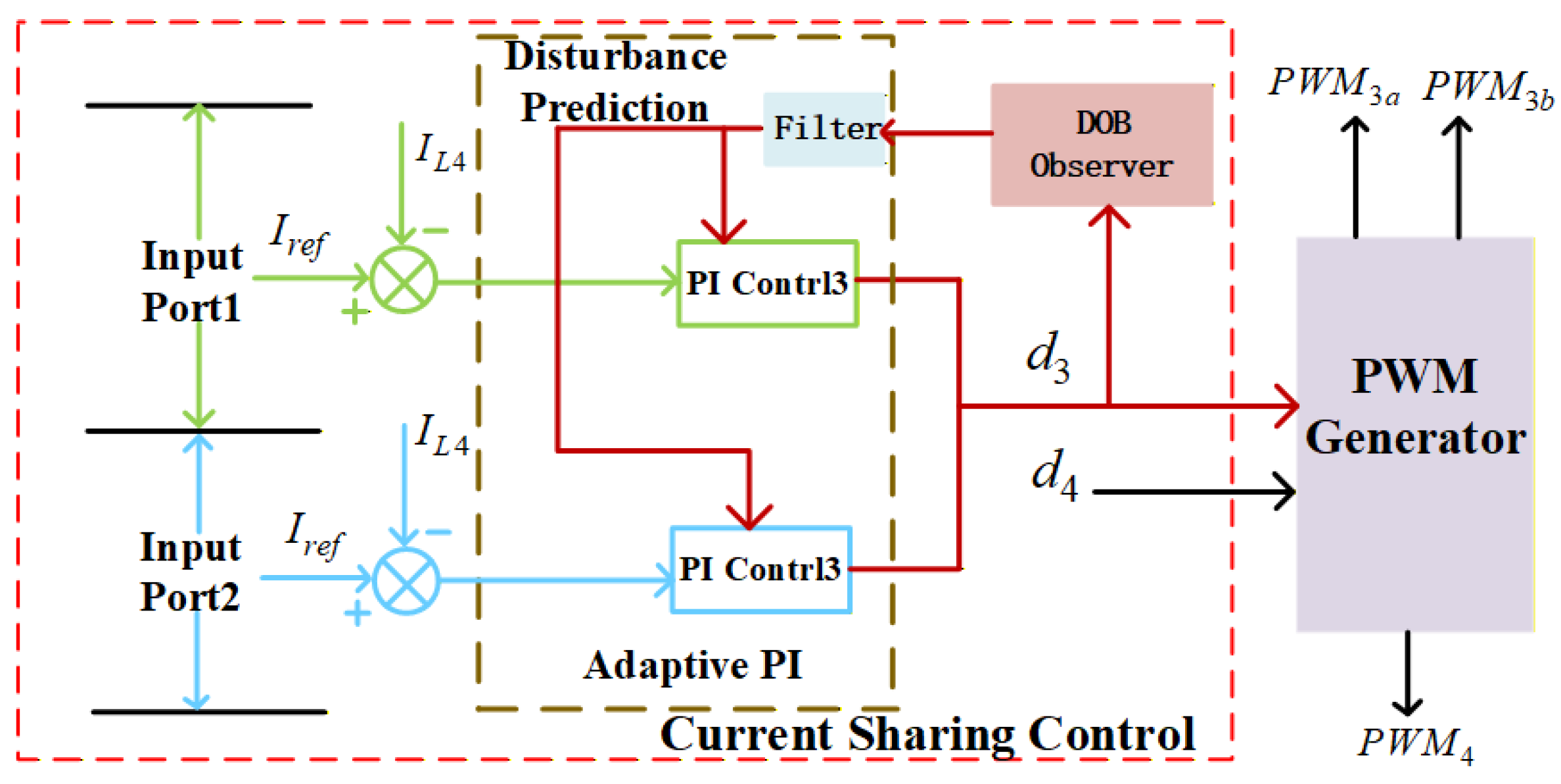
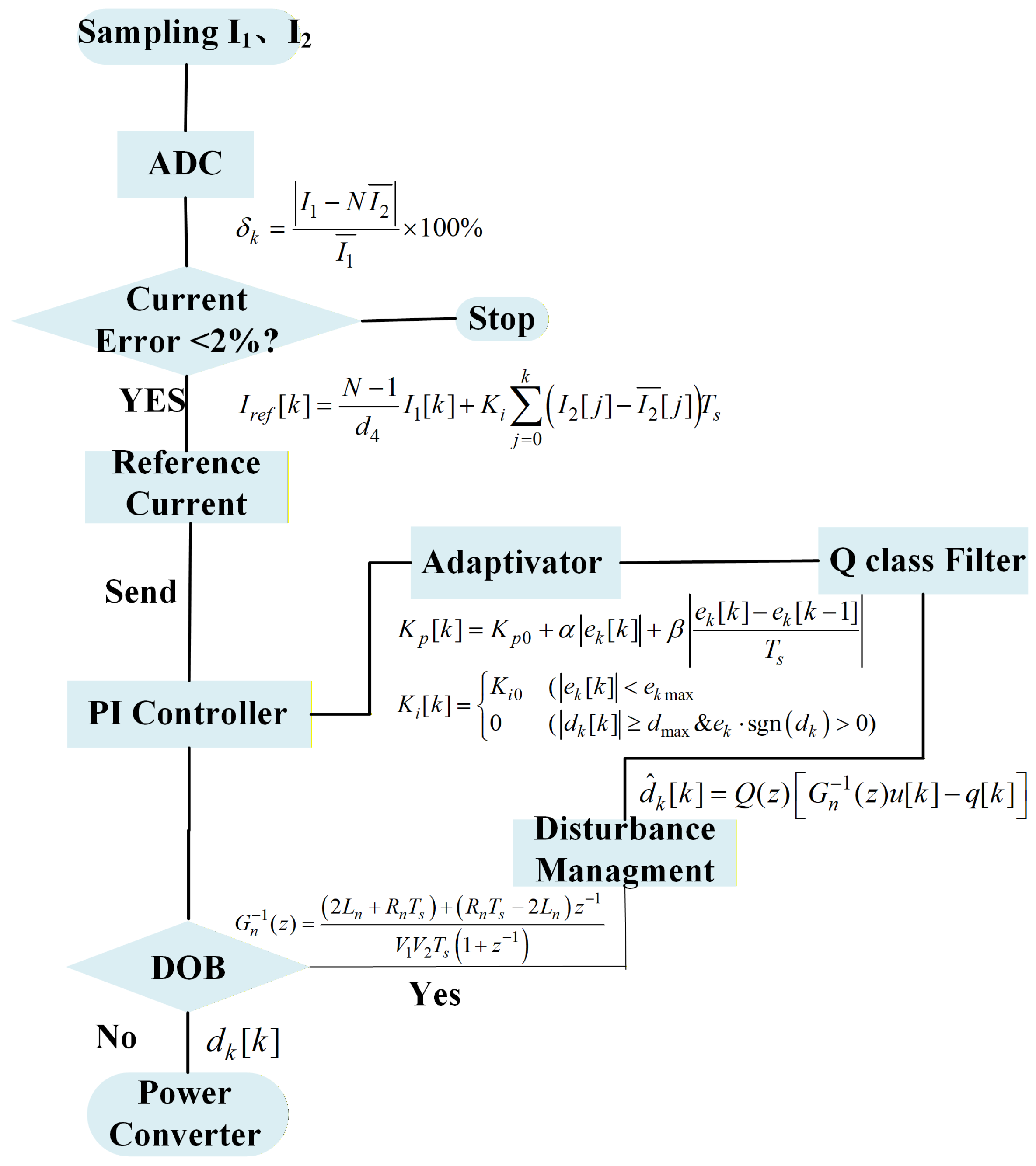
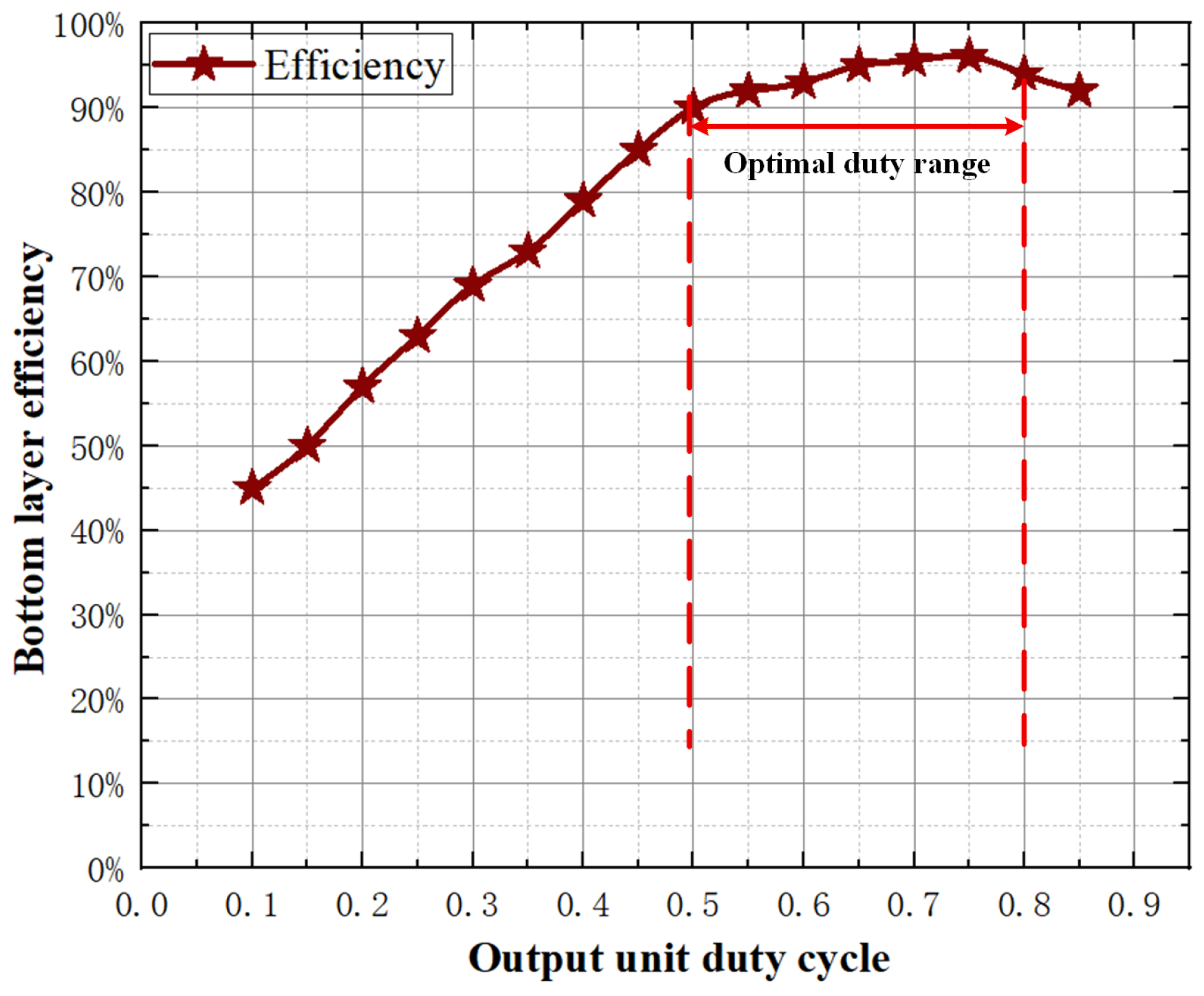
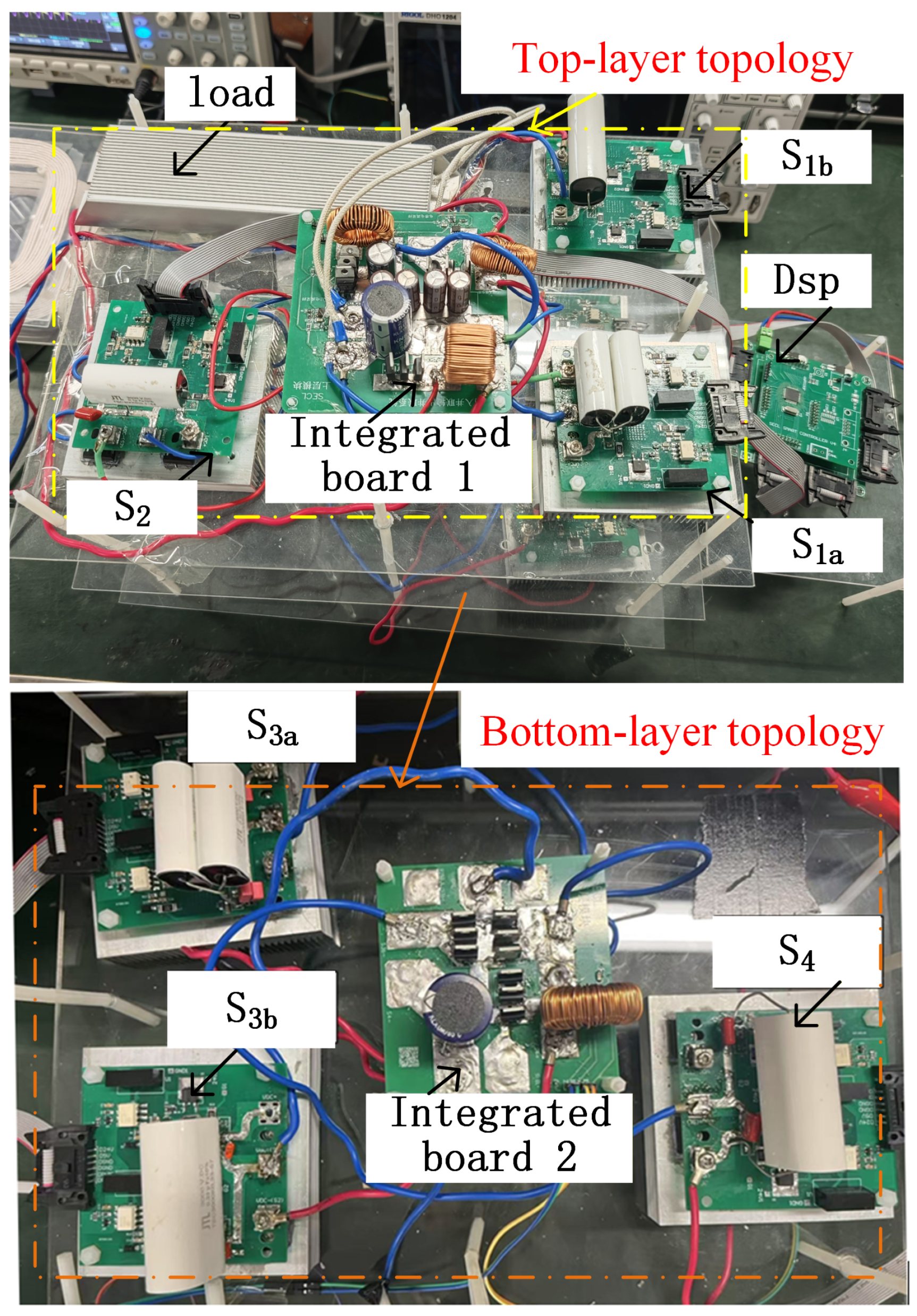
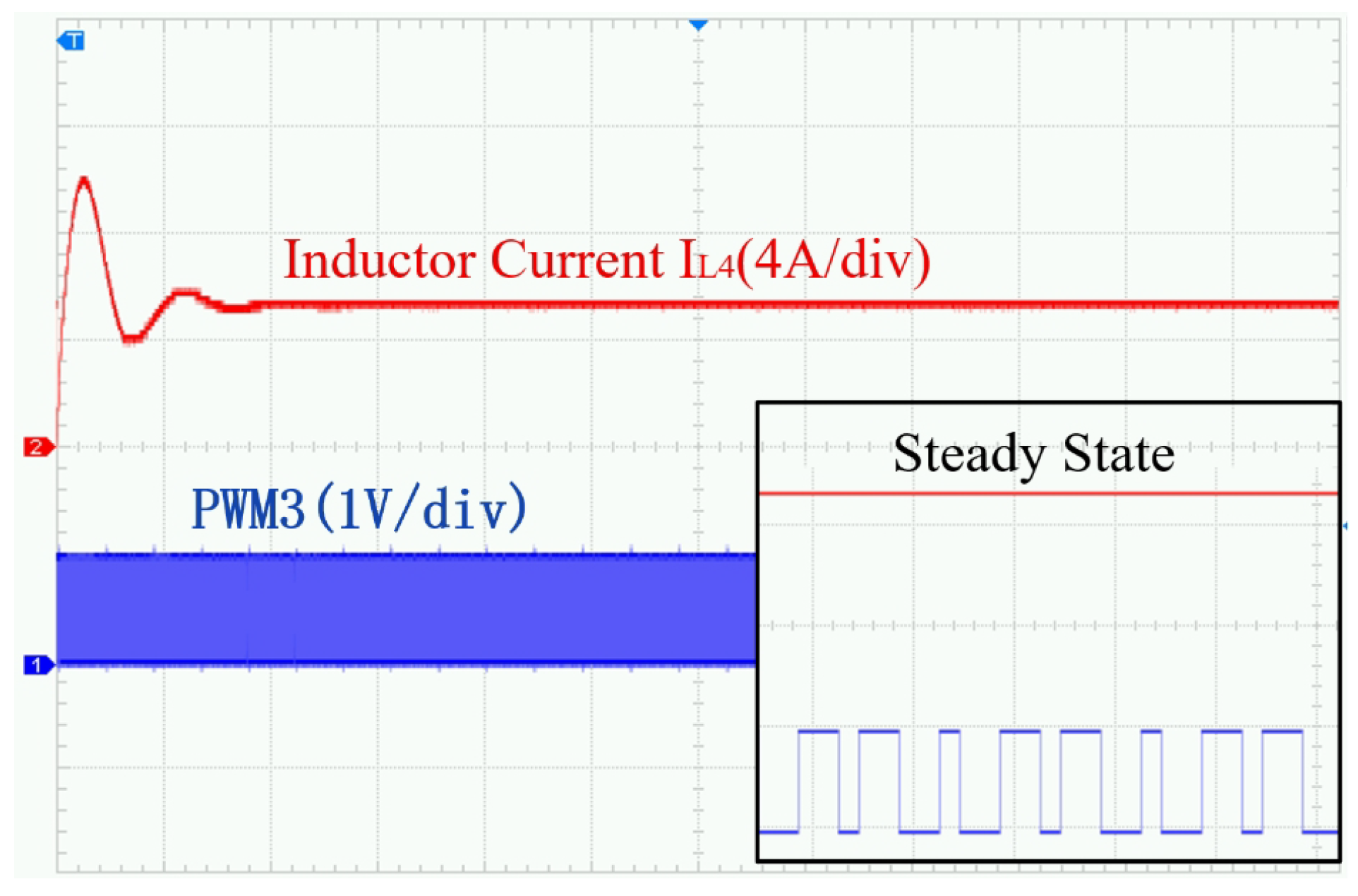
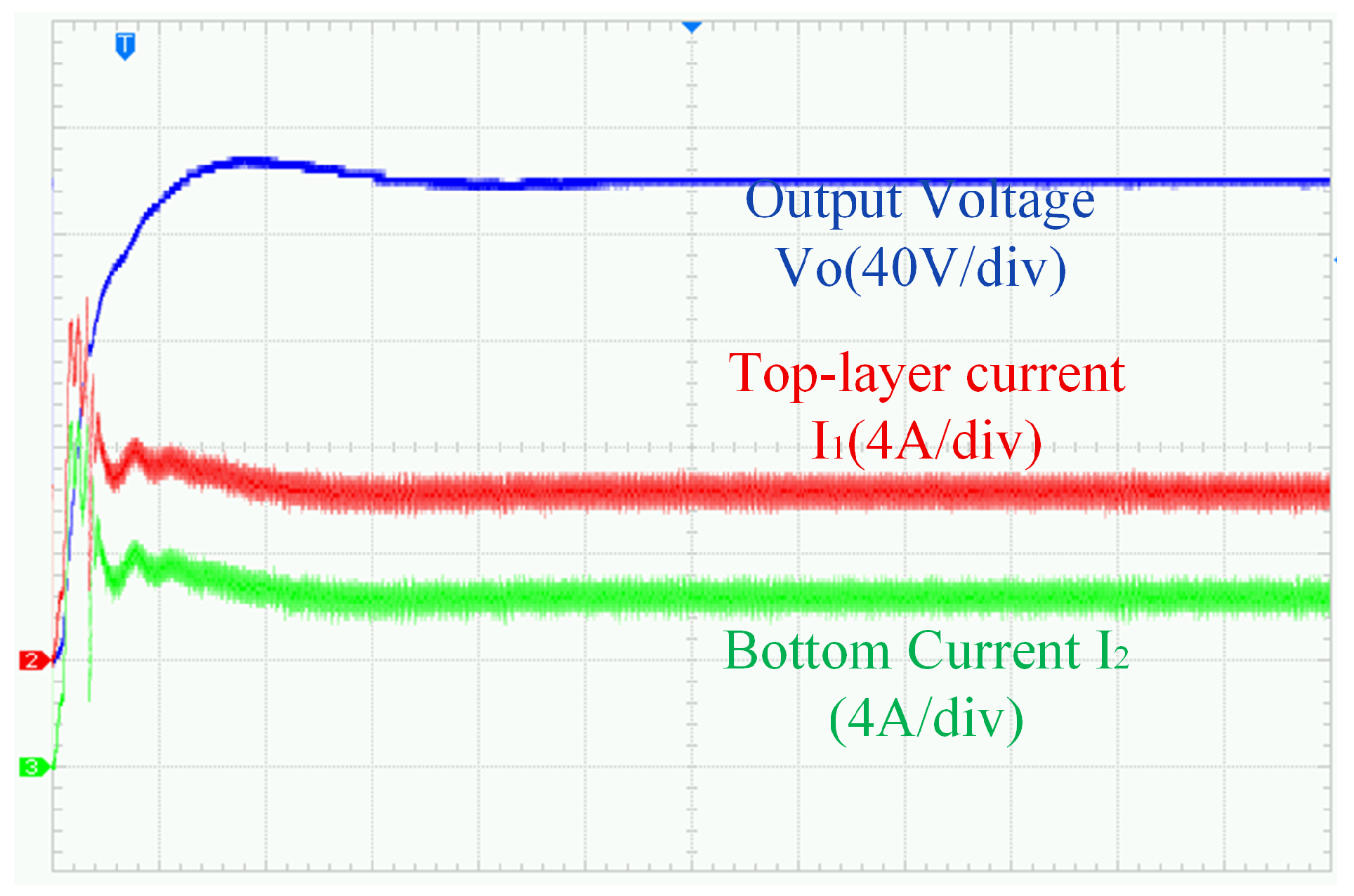
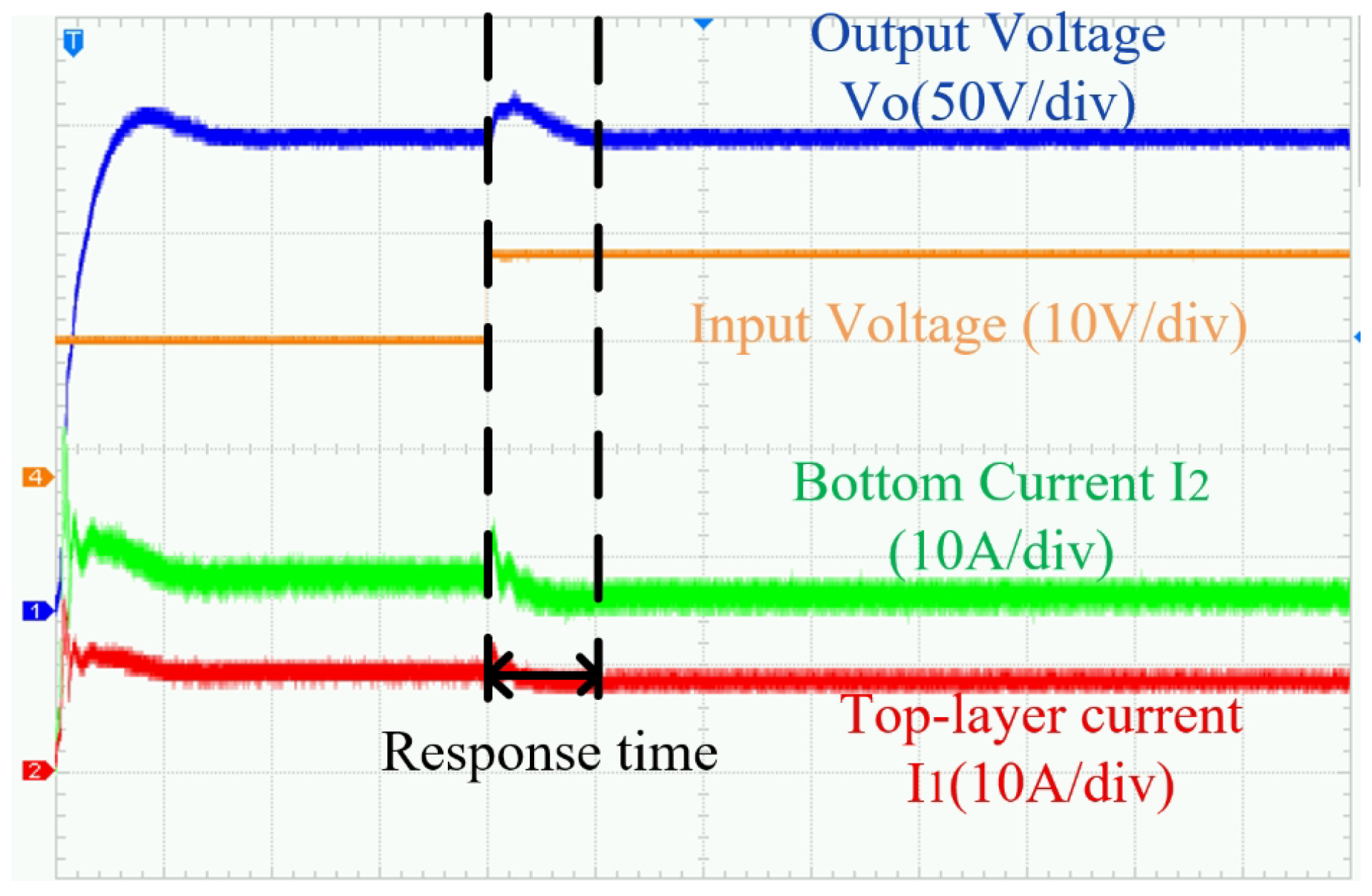
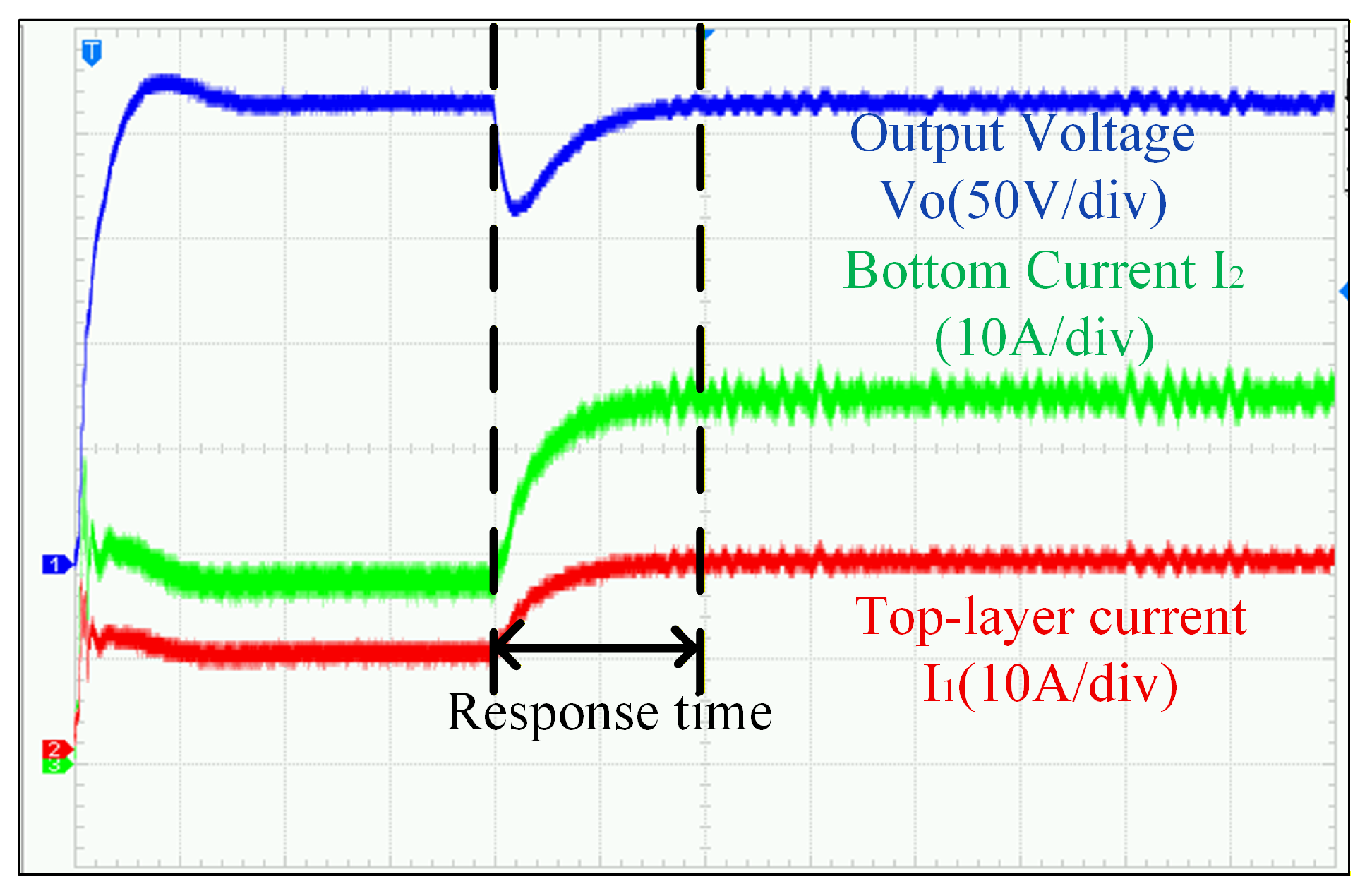
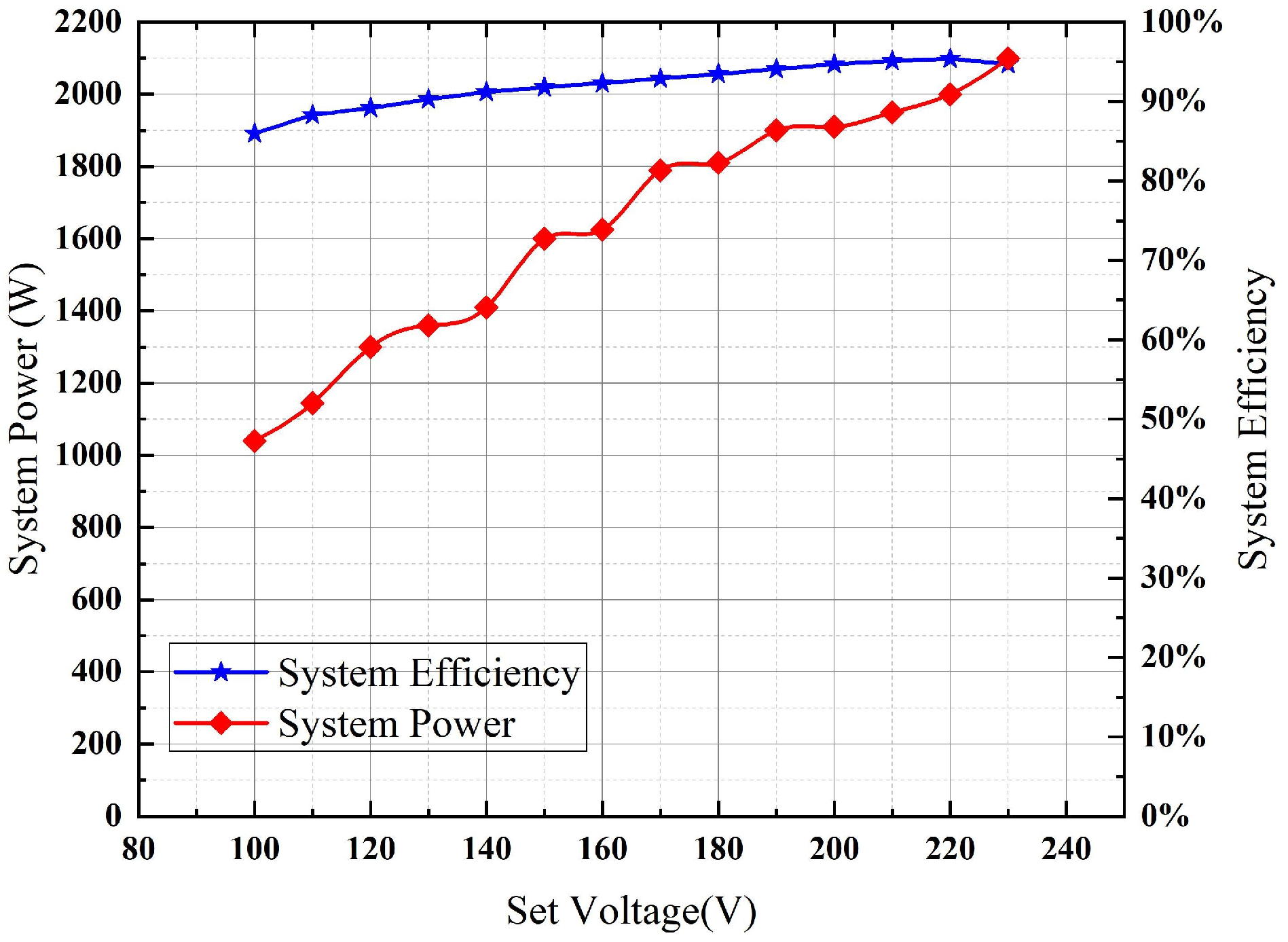
- An adaptive current-sharing control strategy based on small-signal modeling is developed to regulate the output voltage and dynamically distribute current between the two layers. Compared with conventional control methods that focus only on voltage regulation or fixed current sharing, the proposed strategy enables coordinated voltage regulation and real-time current allocation according to load conditions. A 2000 W experimental prototype controlled by a dsPIC33FJ64GS606 digital controller is built to validate the proposed topology and control scheme, achieving a peak efficiency of 95.7%.
2. Analysis of the Converter Framework and Control System Structure
3. Analysis and Modeling of the Proposed System
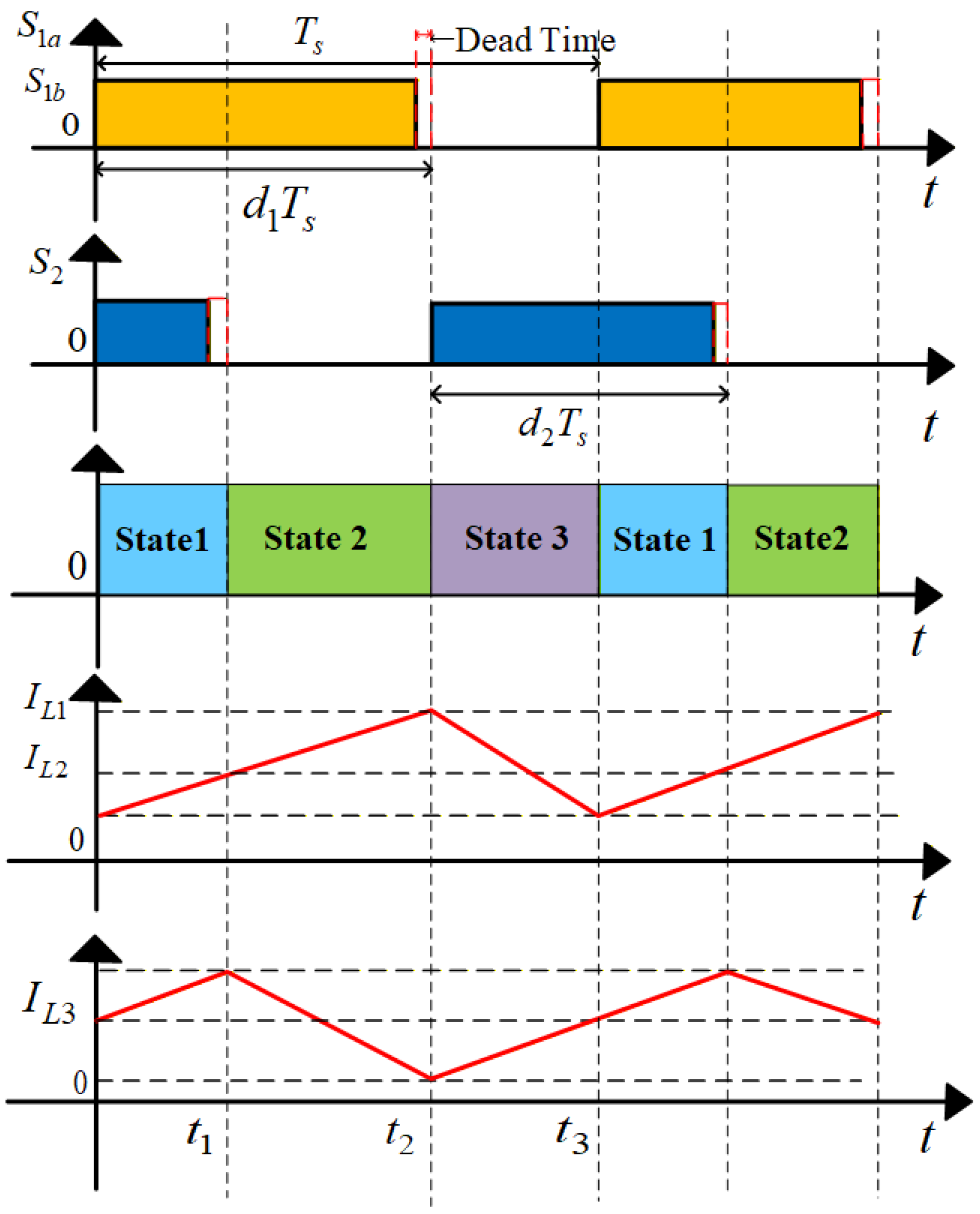
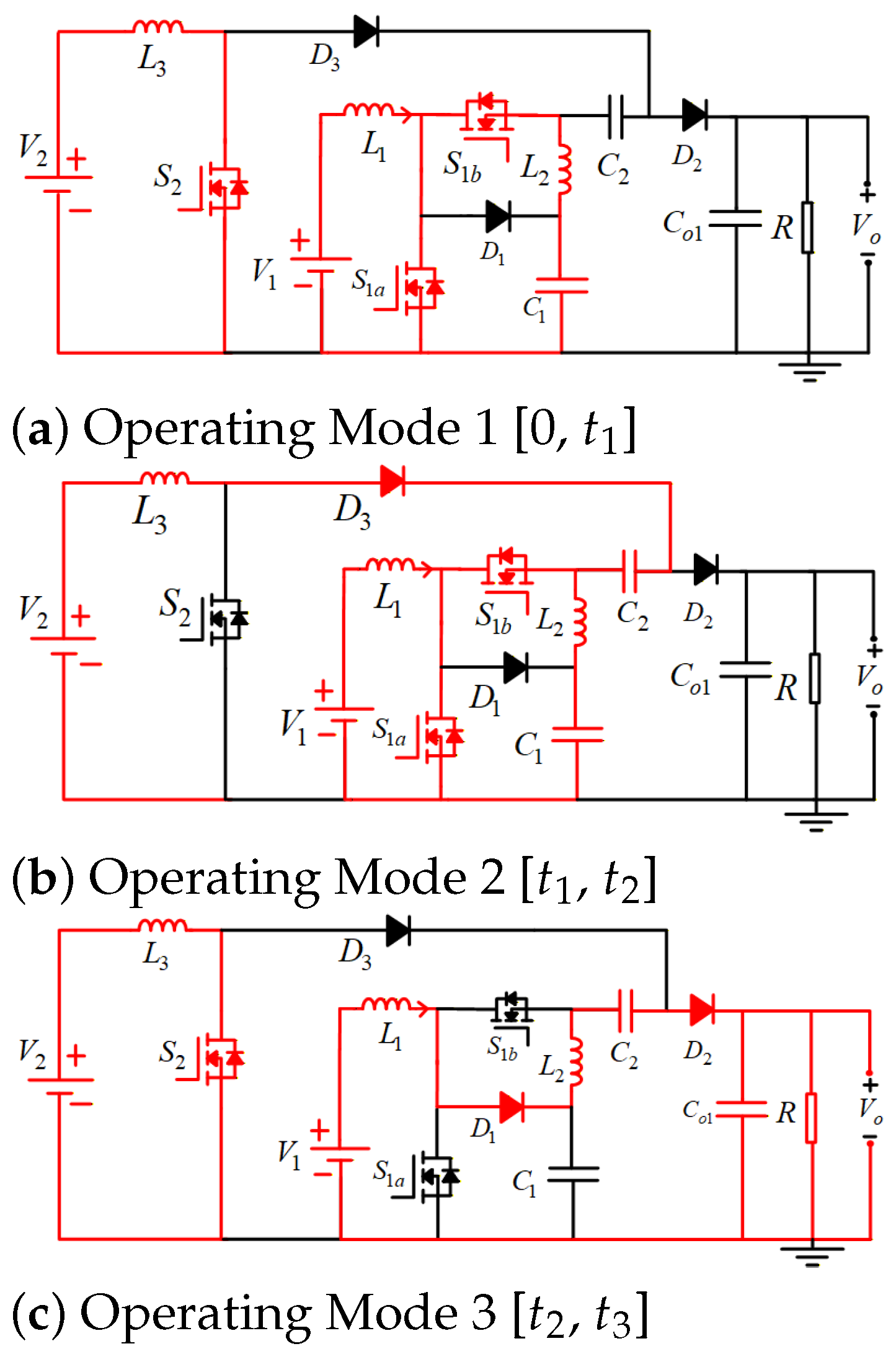
3.1. Analysis of Operating Modes in the Upper-Layer Topology Based on Switching Period
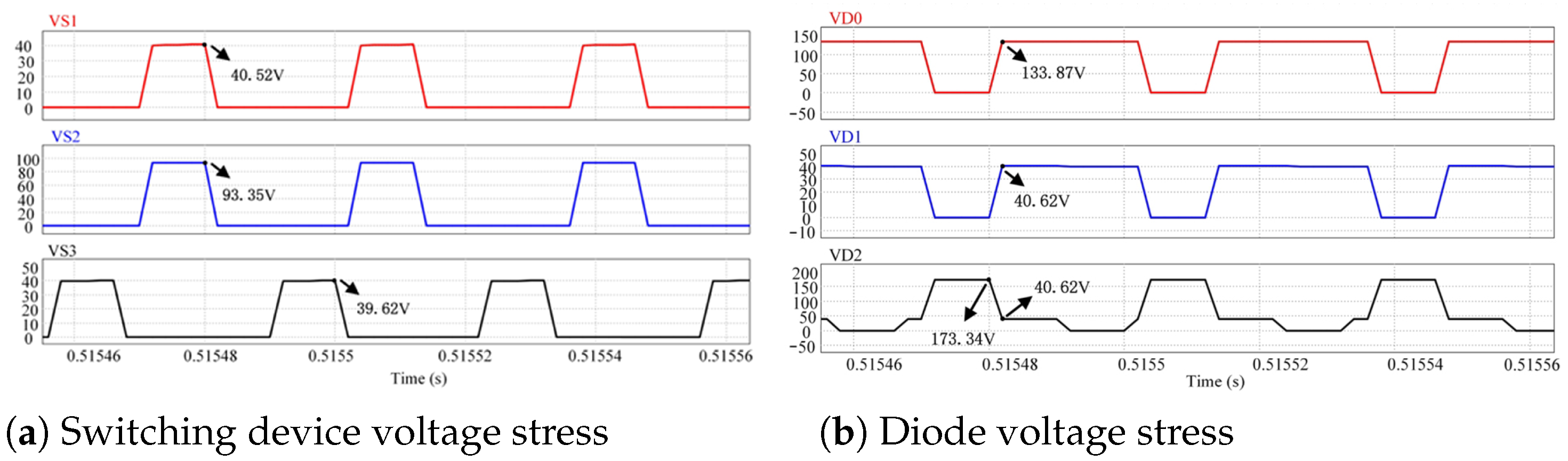
3.2. Analysis of Voltage and Current Stresses on Switching Devices and Diodes
3.3. Analysis of the Lower-Level Topology
4. Design of the Control System
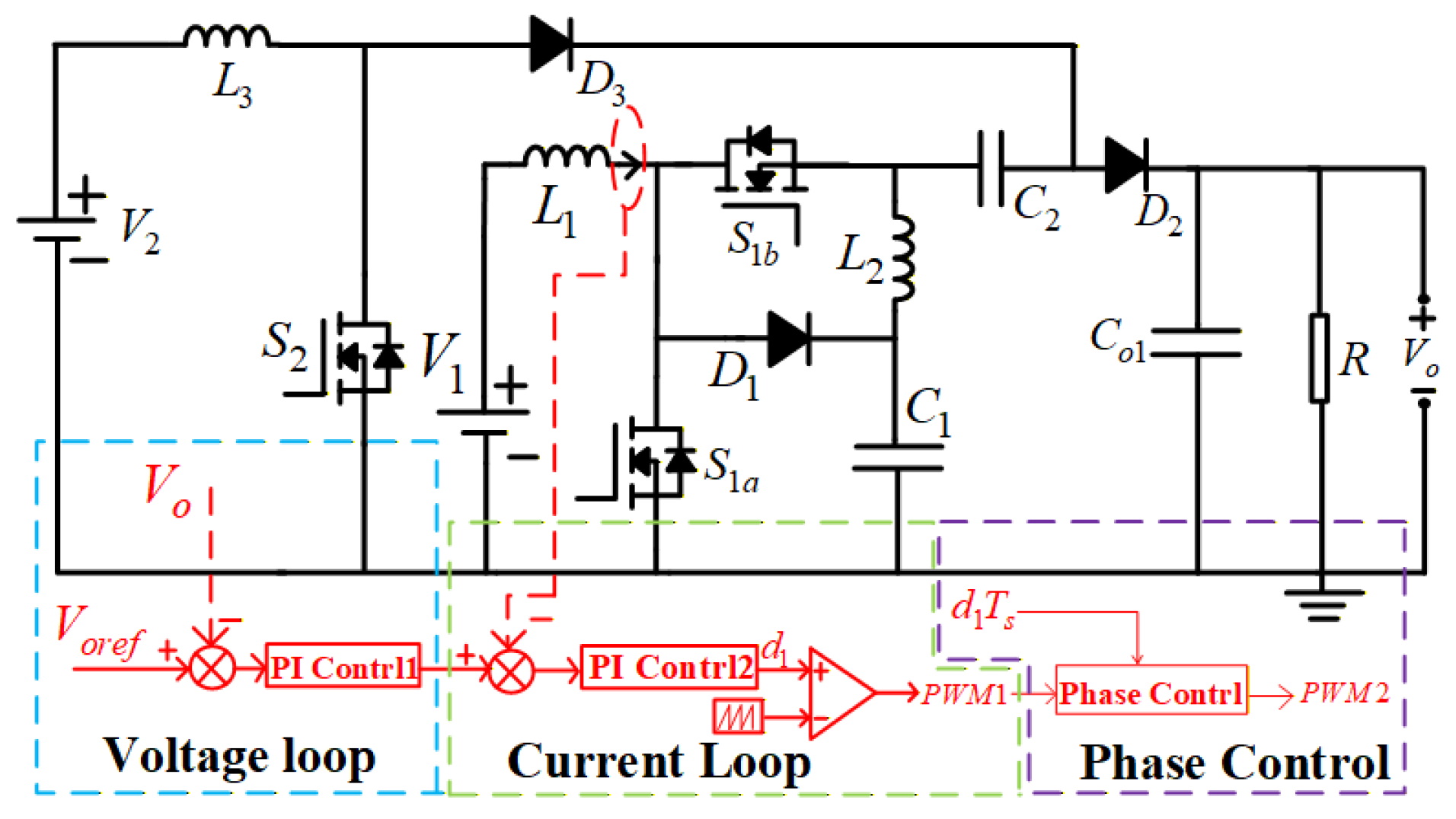
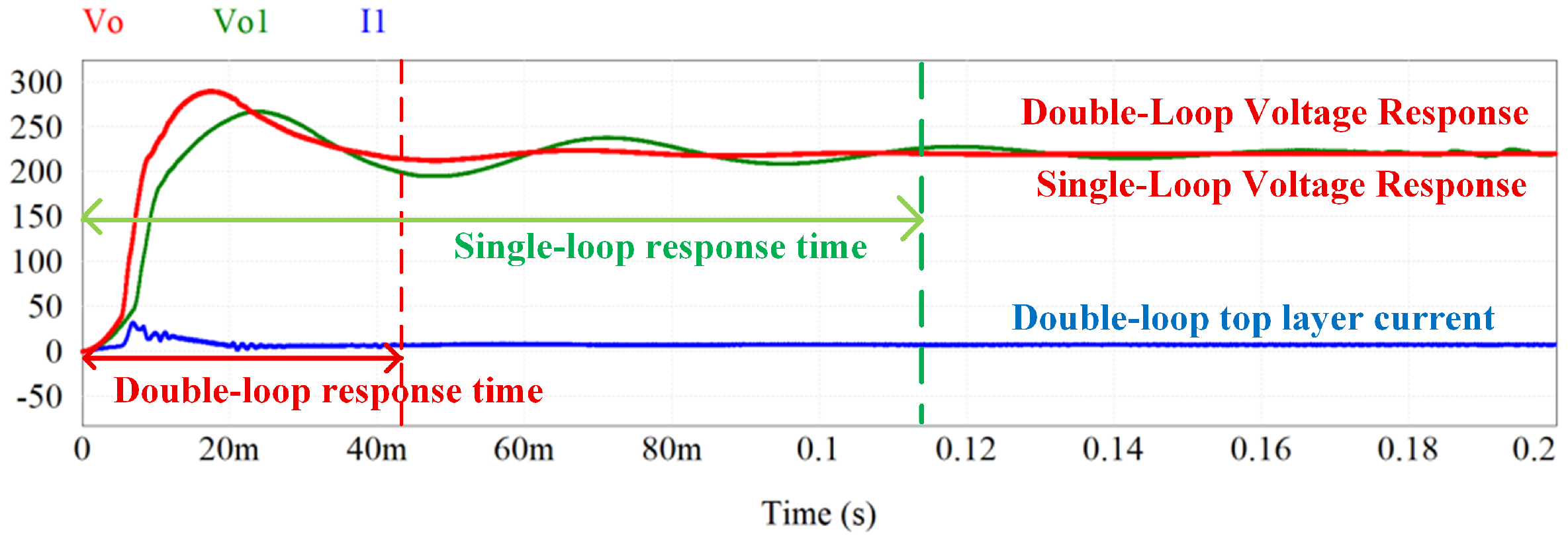
4.1. Design of the Upper-Level Topology Controller
4.2. Design of the Lower-Level Topology Controller
5. Analysis of Simulation Results for the Parallel Dual-Mode DC–DC Converter Based on PSIM
5.1. Open-Loop Sweep and Closed-Loop Simulation of the Upper-Level Topology
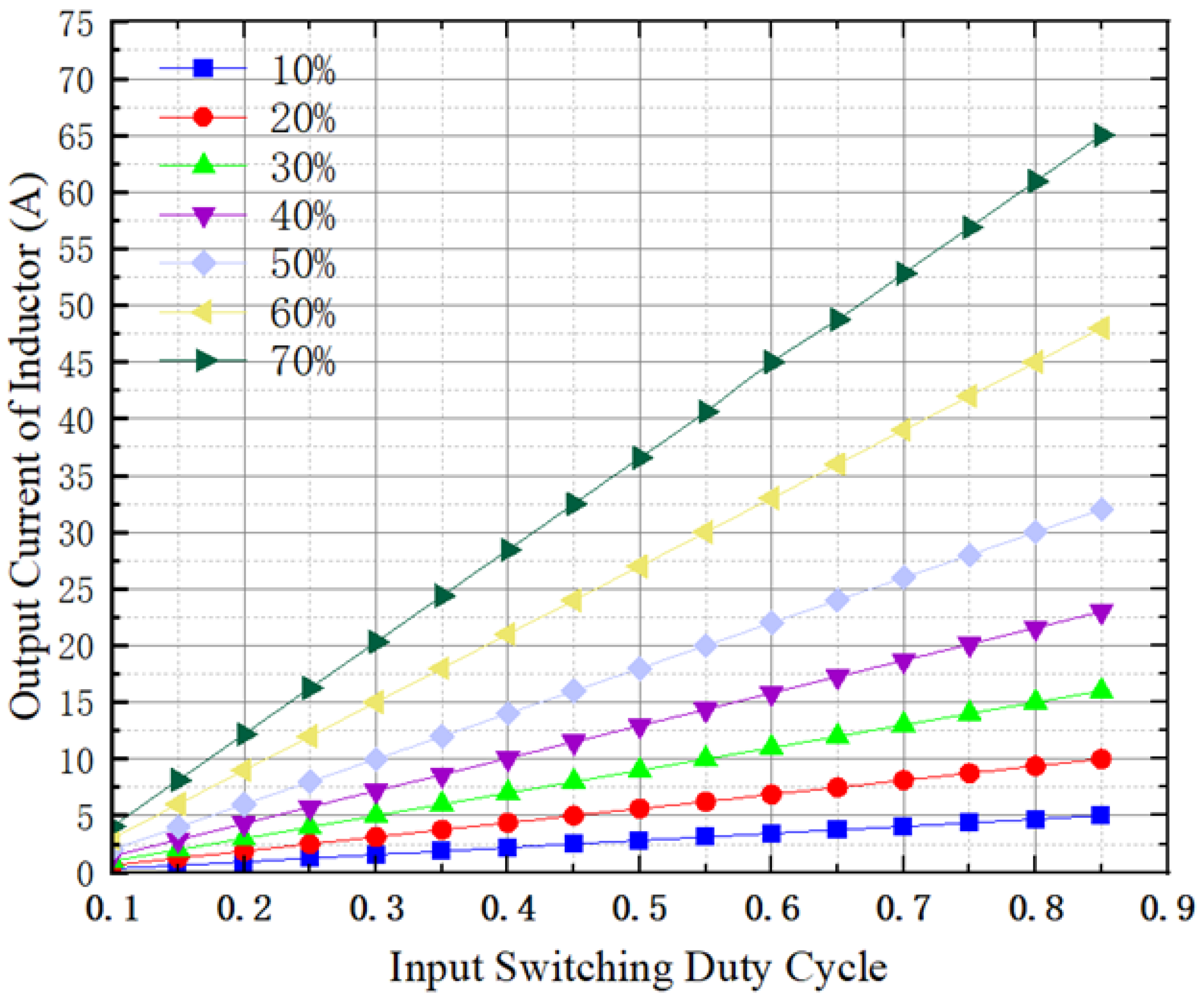
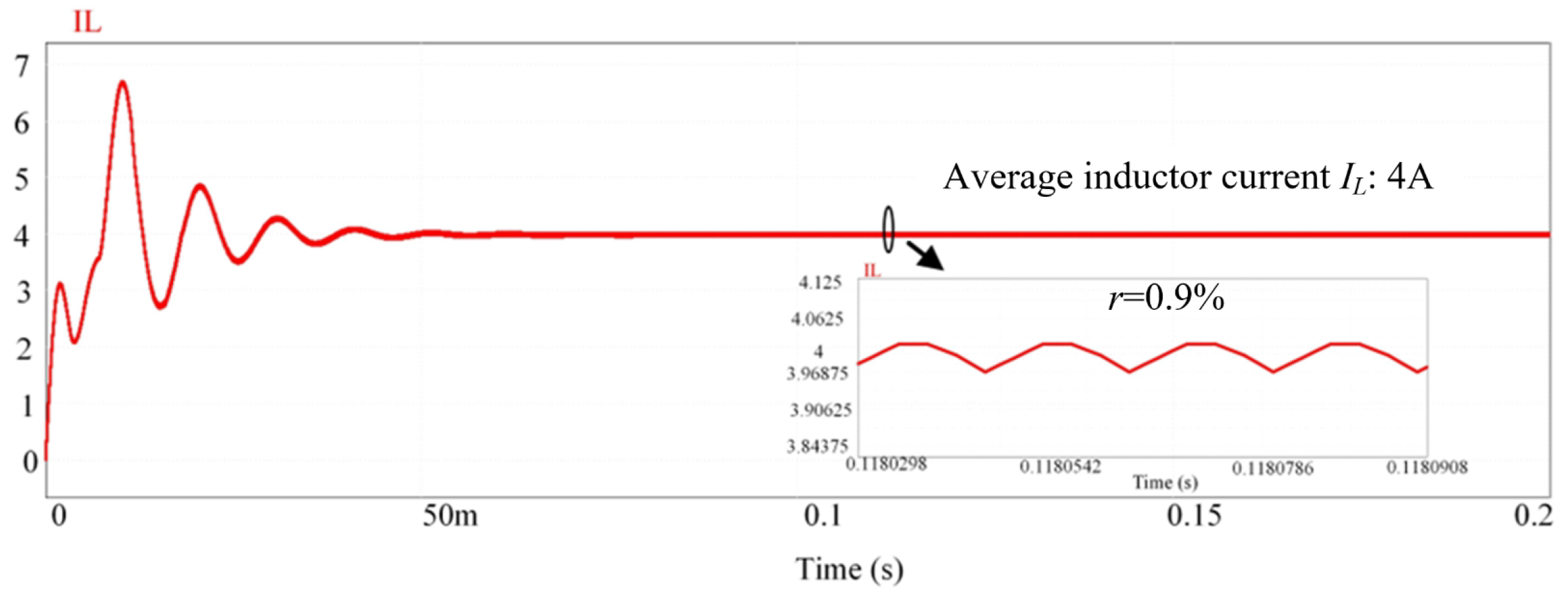
5.2. Open-Loop Sweep and Closed-Loop Simulation of the Lower-Level Topology
5.3. Closed-Loop Simulation of the Overall Converter Operation
6. Analysis of Experimental Results
6.1. Analysis of Upper-Layer Topology Experimental Results
6.2. Analysis of Lower-Layer Topology Experimental Results
6.3. Analysis of Overall Converter Experimental Results
6.3.1. Steady-State Characterization of Output Voltage and Current Sharing
6.3.2. Dynamic Response to Input Voltage Disturbance
6.3.3. Robustness Test Under Load Transients
6.4. Investigation into Converter Transfer Efficiency
7. Conclusions
Author Contributions
Funding
Data Availability Statement
Conflicts of Interest
References
- Wu, Y.; Nie, P.; Wang, Z.; Wang, L.; Hashimoto, S.; Kawaguchi, T. A comprehensive review of magnetic coupling mechanisms, compensation networks, and control strategies for electric vehicle wireless power transfer systems. Processes 2026, 14, 287. [Google Scholar] [CrossRef]
- Singh, S.; Saket, R.K.; Khan, B. A comprehensive review of reliability assessment methodologies for grid-connected photovoltaic systems. IET Renew. Power Gener. 2023, 17, 1859–1880. [Google Scholar] [CrossRef]
- Franzese, P.; Patel, D.D.; Mohamed, A.A.S.; Iannuzzi, D.; Fahimi, B.; Risso, M.; Miller, J.M. Fast DC charging infrastructures for electric vehicles: Overview of technologies, standards, and challenges. IEEE Trans. Transp. Electrif. 2023, 9, 3780–3800. [Google Scholar] [CrossRef]
- Xu, S.; Nie, P.; Jiang, W.; Hashimoto, S. Synthesis and control of a three-port LCL resonant wireless power transfer system for DC energy conversion applications. IEEE Trans. Power Electron. 2024, 39, 8916–8927. [Google Scholar] [CrossRef]
- Kanaparthi, R.K.; Singh, J.P.; Ballal, M.S. A review on multi-port bidirectional isolated and non-isolated dc-dc converters for renewable applications. In 2022 IEEE International Conference on Power Electronics, Drives and Energy Systems (PEDES); IEEE: Piscataway, NJ, USA, 2022. [Google Scholar]
- Aravind, R.; Chokkalingam, B.; Mihet-Popa, L. A transformerless non-isolated multi-port DC–DC converter for hybrid energy applications. IEEE Access 2023, 11, 52050–52065. [Google Scholar] [CrossRef]
- Imanlou, A.; Najmi, E.S.; Behkam, R.; Nazari-Heris, M.; Gharehpetian, G.B. A new high voltage gain active switched-inductor based high step-up DC–DC converter with coupled-inductor. IEEE Access 2023, 11, 56749–56765. [Google Scholar] [CrossRef]
- Hosseini, S.J.A.; Hasanpour, S.; Shahgholian, G.; Moazzami, M.; Baktash, A. A new ultra-high voltage gain DC/DC converter based on coupled-inductor. Sci. Rep. 2025, 15, 5330. [Google Scholar] [CrossRef] [PubMed]
- Hasanpour, S.; Nouri, T. New coupled-inductor high-gain DC/DC converter with bipolar outputs. IEEE Trans. Ind. Electron. 2023, 71, 2601–2613. [Google Scholar] [CrossRef]
- Han, C.; Wu, Y.; Dai, Z.; Wu, W.; Zhang, F.; Lai, R.; Tang, L.; Hou, J. A switched-capacitor-based active-interleaved-network with high voltage gain. Int. J. Circuit Theory Appl. 2024, 52, 5647–5665. [Google Scholar] [CrossRef]
- Wang, Y.; Ye, J.; Ku, R.; Shen, Y.; Li, G.; Liang, J. A modular switched-capacitor multilevel inverter featuring voltage gain ability. J. Power Electron. 2023, 23, 11–22. [Google Scholar] [CrossRef]
- Cortez, D.F.; Barbi, I. A three-phase multilevel hybrid switched-capacitor PWM PFC rectifier for high-voltage-gain applications. IEEE Trans. Power Electron. 2016, 31, 3495–3505. [Google Scholar] [CrossRef]
- Folmer, S.; Stala, R. DC-DC high voltage gain switched capacitor converter with multilevel output voltage and zero-voltage switching. IEEE Access 2021, 9, 129692–129705. [Google Scholar] [CrossRef]
- Yang, L.; Yu, W.; Zhang, J. High voltage gain ratio isolated resonant switched-capacitor converter for sustainable energy. IEEE Access 2019, 7, 23055–23067. [Google Scholar] [CrossRef]
- Stala, R.; Chojowski, M.; Waradzyn, Z.; Mondzik, A.; Folmer, S.; Penczek, A.; Skała, A.; Piróg, S. High-gain switched-capacitor DC-DC converter with low count of switches and low voltage stress of switches. IEEE Access 2021, 9, 114267–114281. [Google Scholar] [CrossRef]
- Khan, A.A.; Zaffar, N.A.; Ikram, M.J. Dc-link ripple reduction for parallel inverter systems by a novel formulation using multiple space vector-based interleaving schemes. Electronics 2023, 12, 1496. [Google Scholar] [CrossRef]
- Zhang, J.; He, Y.; Hang, L. A novel interleaved parallel cascaded three-level PFC with low inductance volt-second and low common-mode noise. IEEE Trans. Power Electron. 2022, 38, 17–21. [Google Scholar] [CrossRef]
- Zhang, M.; Xiao, X.; Zheng, Z.; Chen, Y.; Li, S.; Ma, J.; Chen, X. Multiport Current-Limiting Interline Dynamic Voltage Restorer for Power Quality Enhancement in Renewable DC Microgrid. IEEE J. Emerg. Sel. Top. Power Electron. 2025, 1. [Google Scholar] [CrossRef]
- Altin, N.; Ozdemir, S.; Khayamy, M.; Nasiri, A. A novel topology for solar PV inverter based on an LLC resonant converter with optimal frequency and phase-shift control. IEEE Trans. Ind. Appl. 2022, 58, 5042–5054. [Google Scholar] [CrossRef]
- Sang, X.; Gao, S.; Wang, Y.; Xu, D. A high step-up partial power regulated DC–DC converter with zero input current ripple and wide input range. IEEE Trans. Ind. Electron. 2024, 71, 14097–14110. [Google Scholar] [CrossRef]
- Acosta-Rodríguez, R.A.; Rosero-García, J.; Rivera, M.; Chaimanekorn, K. Recent Advances in Non-Isolated DC/DC Converter Topologies: A Review and Future Perspectives. Appl. Sci. 2025, 15, 12868. [Google Scholar] [CrossRef]



| Component | Model |
|---|---|
| Input Voltage | 5 V–24 V |
| Input Voltage | 5 V–24 V |
| Switching Frequency | 100 kHz |
| Inductor | |
| Capacitor | |
| R | 5–200 |
| Inductor |
| Components | Model/Part Number |
|---|---|
| Current Sensor | CHCS-PS3.3 Closed-loop Hall-effect Sensor (Microchip Technology, Chandler, AZ, USA) |
| Voltage Sensor | HVS-AS3.3 High-Precision Voltage Sensor (Microchip Technology, Chandler, AZ, USA) |
| Digital Controller | dsPIC33FJ64GS606 (Microchip Technology, Chandler, AZ, USA) |
| Power Switch | 80 V/200 A SiC N-Channel MOSFET (Microchip Technology, Chandler, AZ, USA) |
| Diode | STTH30R04 (Microchip Technology, Chandler, AZ, USA) |
| Load Resistor (R) | 15 |
Disclaimer/Publisher’s Note: The statements, opinions and data contained in all publications are solely those of the individual author(s) and contributor(s) and not of MDPI and/or the editor(s). MDPI and/or the editor(s) disclaim responsibility for any injury to people or property resulting from any ideas, methods, instructions or products referred to in the content. |
© 2026 by the authors. Licensee MDPI, Basel, Switzerland. This article is an open access article distributed under the terms and conditions of the Creative Commons Attribution (CC BY) license.
Share and Cite
Wang, L.; Zhou, F.; Nie, P.; Hashimoto, S.; Kawaguchi, T. Dual-Layer Multi-Port High-Gain DC-DC Power Converter with Hybrid Voltage/Current Distribution Strategy. Electronics 2026, 15, 1454. https://doi.org/10.3390/electronics15071454
Wang L, Zhou F, Nie P, Hashimoto S, Kawaguchi T. Dual-Layer Multi-Port High-Gain DC-DC Power Converter with Hybrid Voltage/Current Distribution Strategy. Electronics. 2026; 15(7):1454. https://doi.org/10.3390/electronics15071454
Chicago/Turabian StyleWang, Lijuan, Feng Zhou, Pengqiang Nie, Seiji Hashimoto, and Takahiro Kawaguchi. 2026. "Dual-Layer Multi-Port High-Gain DC-DC Power Converter with Hybrid Voltage/Current Distribution Strategy" Electronics 15, no. 7: 1454. https://doi.org/10.3390/electronics15071454
APA StyleWang, L., Zhou, F., Nie, P., Hashimoto, S., & Kawaguchi, T. (2026). Dual-Layer Multi-Port High-Gain DC-DC Power Converter with Hybrid Voltage/Current Distribution Strategy. Electronics, 15(7), 1454. https://doi.org/10.3390/electronics15071454