Global Perspectives on AI-Based Digital Twins in Smart Rehabilitation and Physiotherapy: Convergence of IoMT, Multiphysics Modeling, and Wireless Bio-Integrated Sensing

 and
and 
Abstract
1. Introduction
2. Materials and Methods
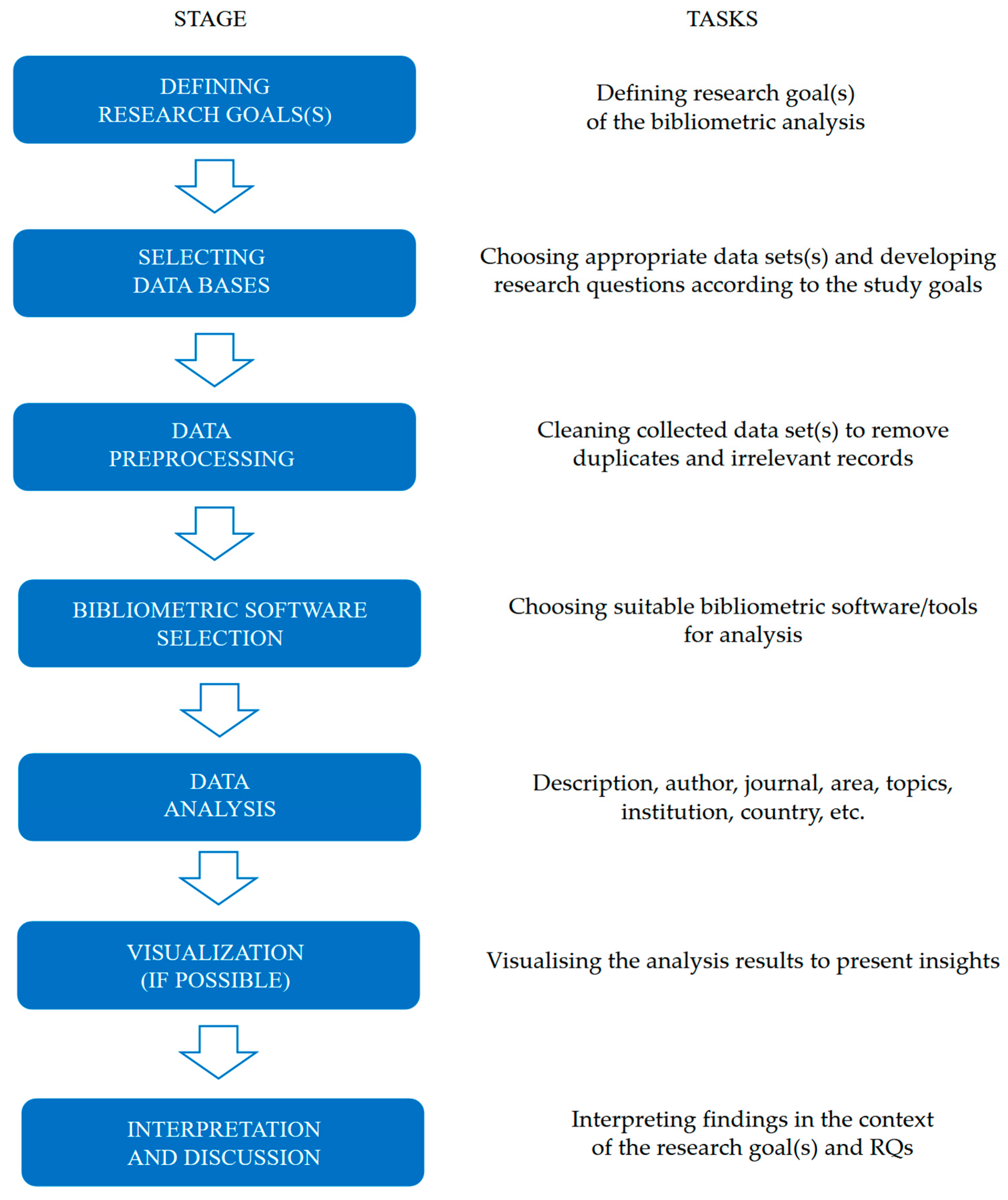
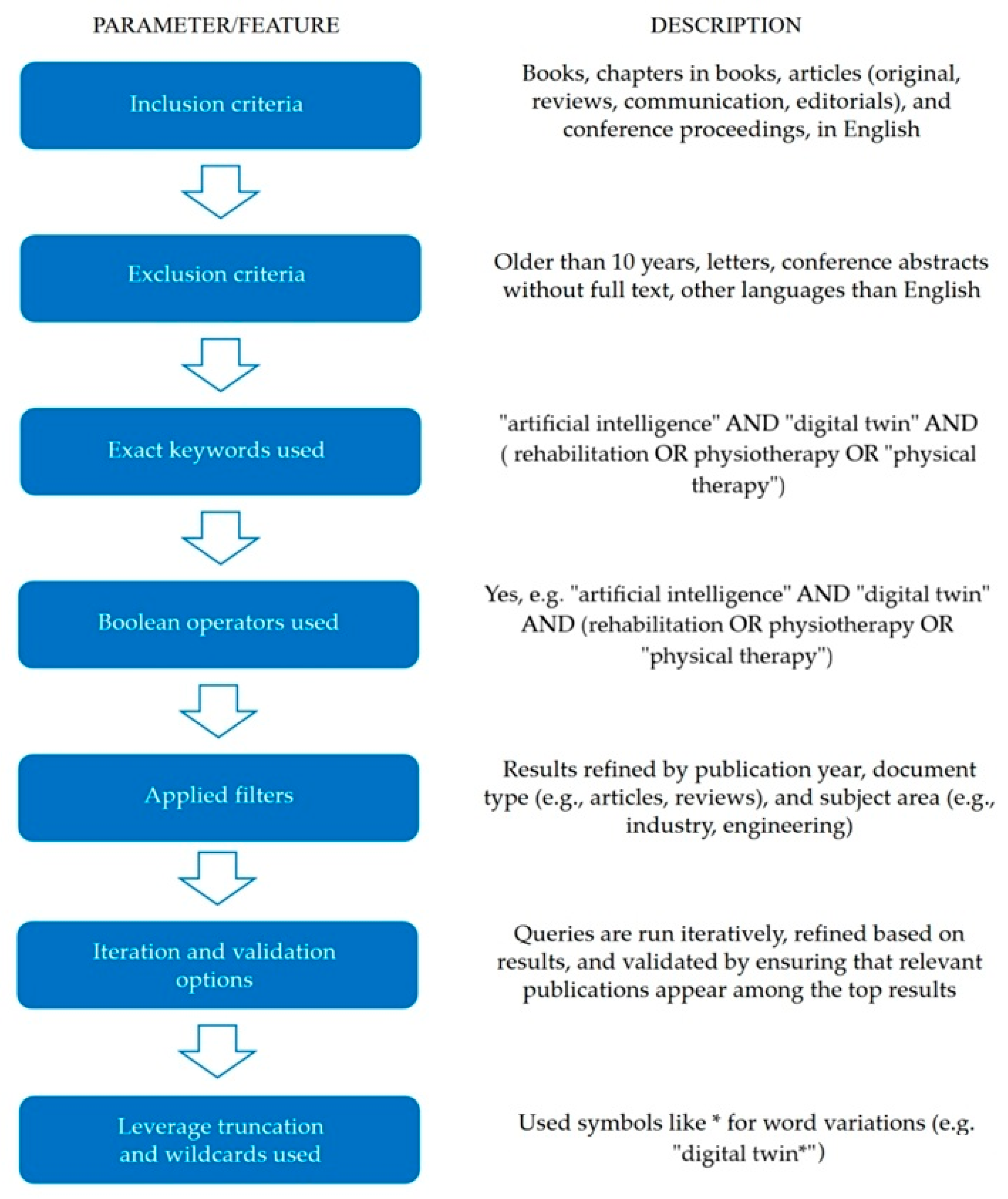
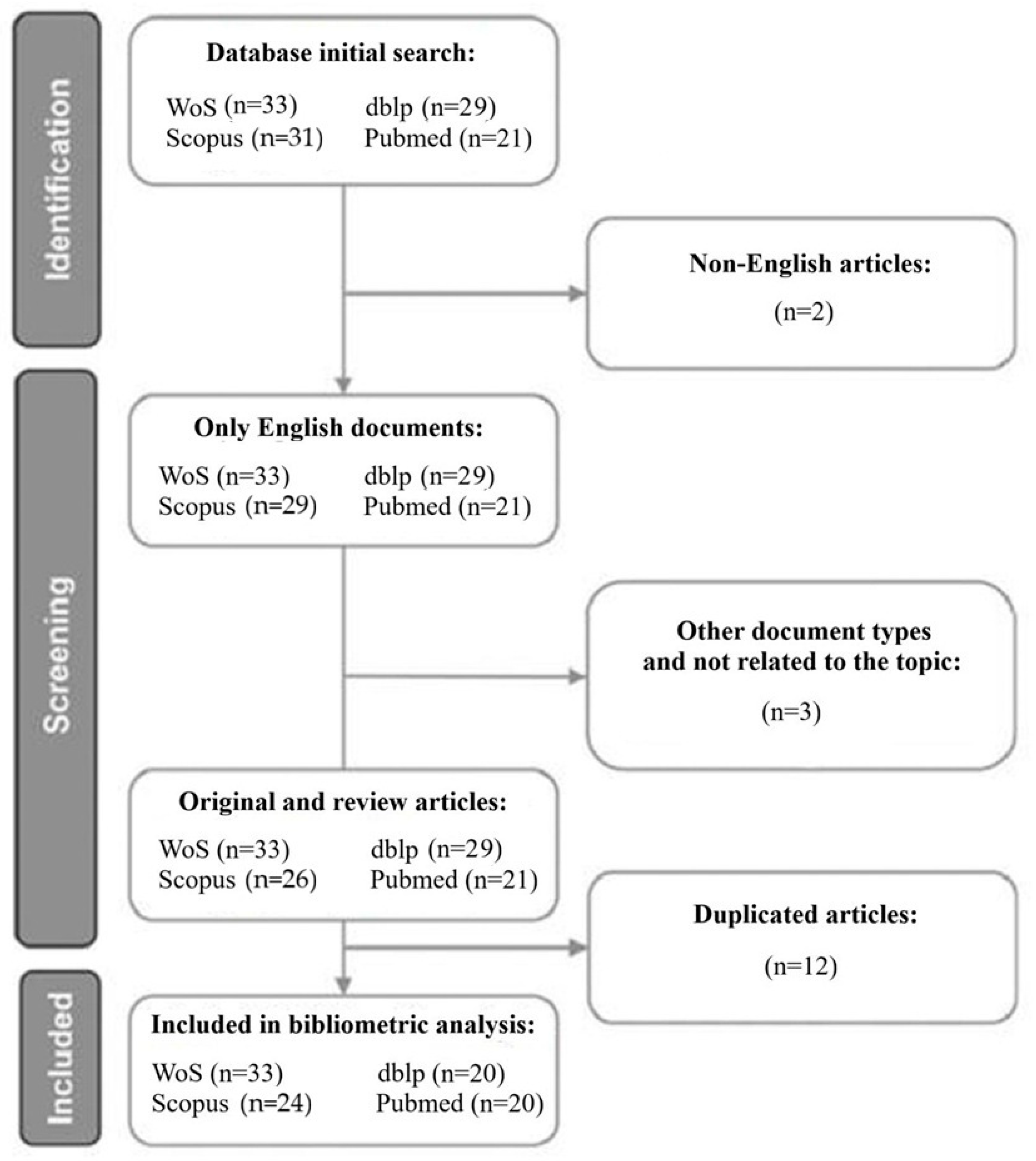
2.1. Review Design, Search Strategy, and Study Selection
- RQ1: How are AI-based digital twins integrating with the Internet of Things (IoMT), wearable technologies, and wireless bio-integrated sensor systems to enable real-time intelligent monitoring and personalized rehabilitation in physiotherapy?
- RQ2: What role do multiphysics modeling, ML, and DL play in improving biomechanical analysis, digital biomarker extraction, predictive assessment, and adaptive therapy in rehabilitation systems using digital twins?
- RQ3: What are the main technical, ethical, cybersecurity, interoperability, and data management challenges impacting the implementation, scalability, and global adoption of AI-based digital twin ecosystems in smart rehabilitation?
- RQ4: What emerging research trends, technological opportunities, and future directions could accelerate the development of secure, understandable, scalable, and equitable AI-based digital twin platforms for precision rehabilitation and next-generation wireless healthcare?
2.2. Bibliometric and Thematic Analysis
3. Bibliometric Results
3.1. Publication Trends
3.2. Geographic and Institutional Distribution
3.3. Thematic Focus
4. Thematic Synthesis of AI-Based Rehabilitation DTs
4.1. IoMT and Bio-Integrated Sensing
4.2. AI, XAI, and Agentic Intelligence
4.2.1. Emerging Role of XAI
4.2.2. Rise of Agentic AI
4.3. Multiphysics Modeling
4.4. Clinical and Home Rehabilitation
4.5. Interoperability, Regulation, and Governance
5. Proposed GIR-DT Framework and Validation Roadmap
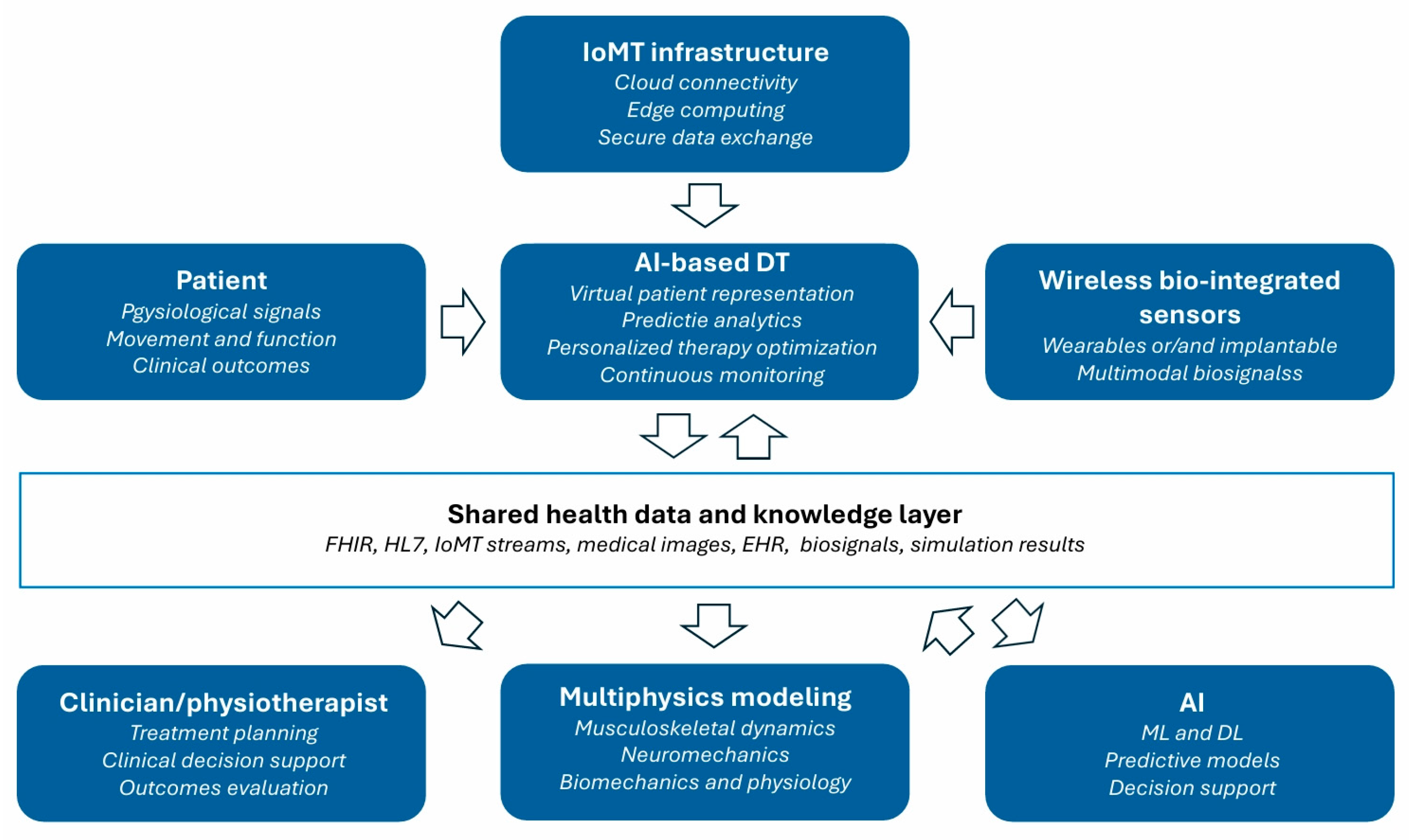
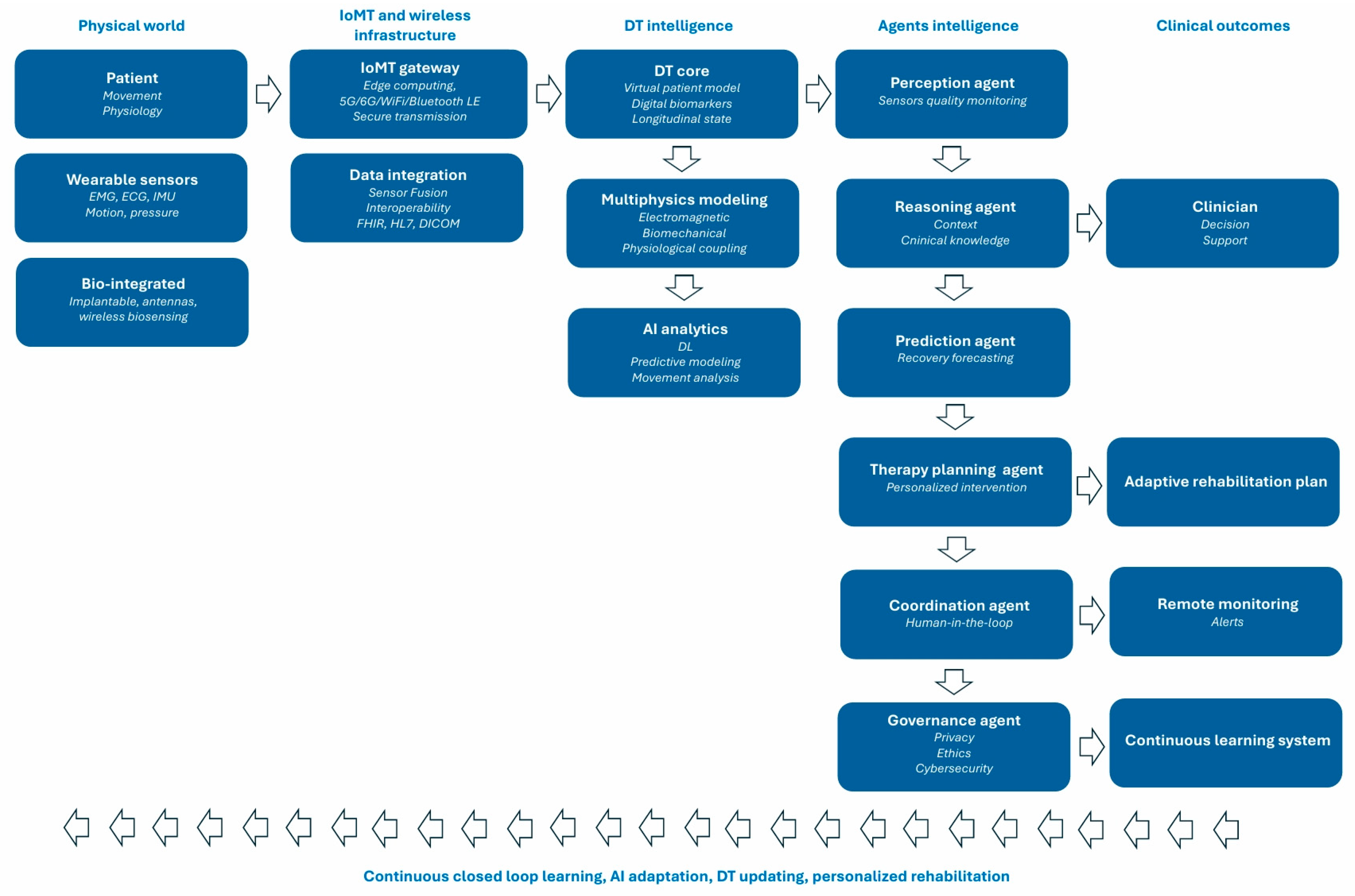
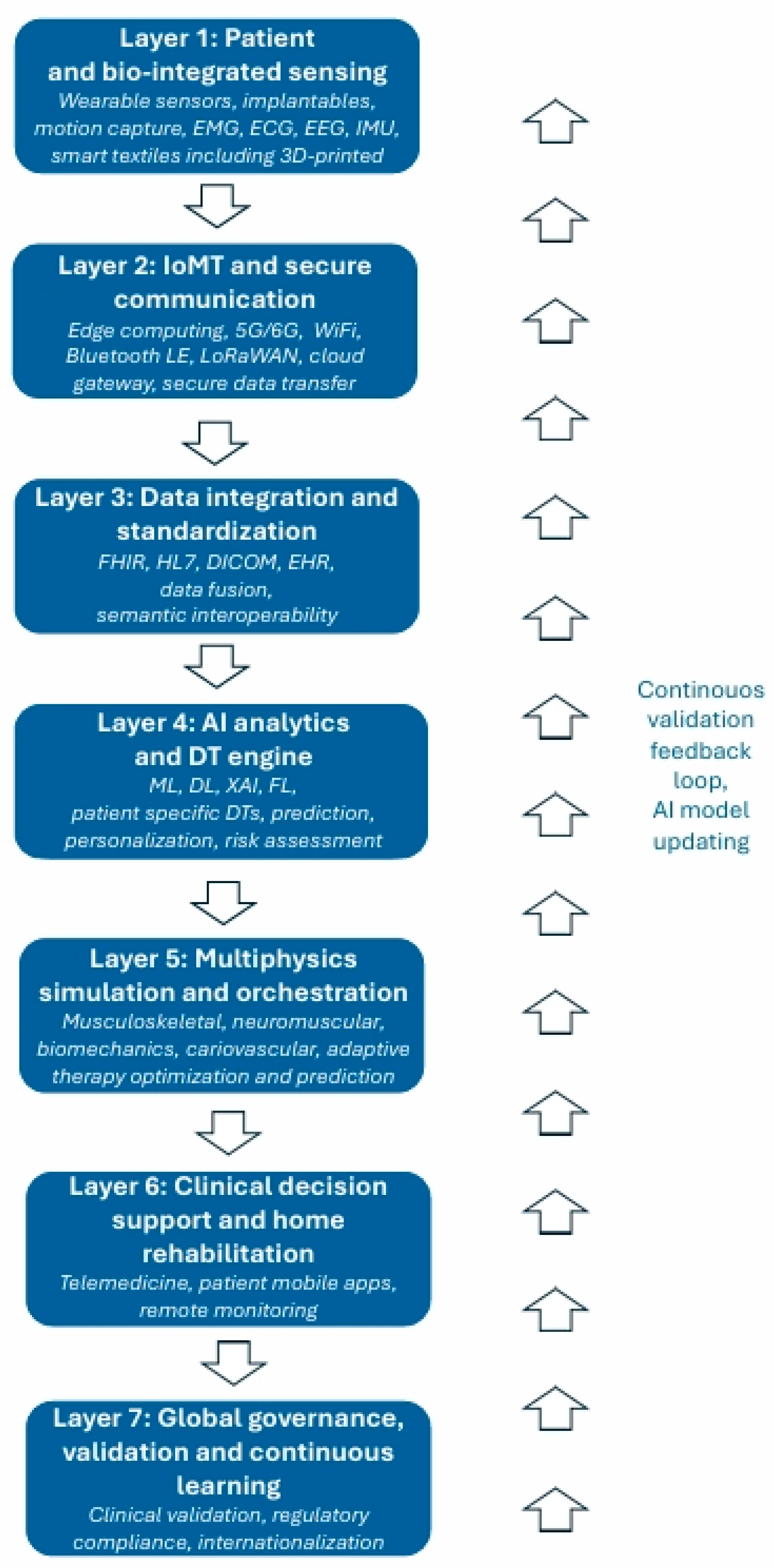
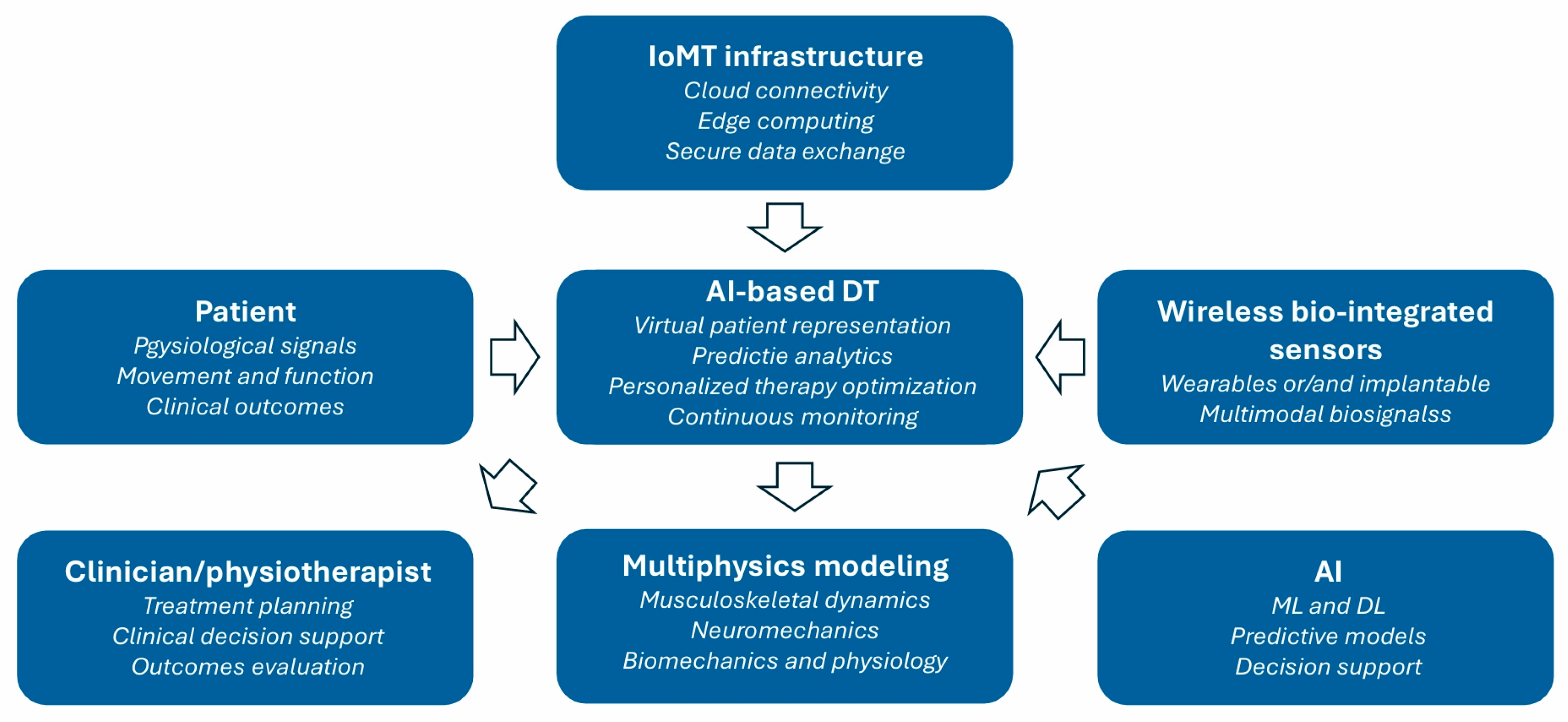
- Hierarchical edge and cloud intelligence, enabling low-latency AI inference on wearable devices while maintaining computationally intensive DTs in the cloud.
- A dedicated data integration and standardization layer, enabling interoperability through standards such as HL7, Fast Healthcare Interoperability Resources (FHIR) and Digital Imaging and Communications in Medicine (DICOM), rather than assuming compatibility.
- FL in the AI layer, enabling institutions to collaboratively improve models without exchanging raw patient data.
- A rehabilitation coordination layer, which combines AI predictions with multiphysics simulations to dynamically adapt rehabilitation protocols instead of relying on rigid treatment plans.
- Support for hybrid clinical and home rehabilitation, enabling seamless transitions between inpatient care and remote physiotherapy.
- A management layer, emphasizing continuous clinical validation, cybersecurity, regulatory compliance, ethical AI, and international standardization, makes the platform suitable for implementation across diverse healthcare systems.
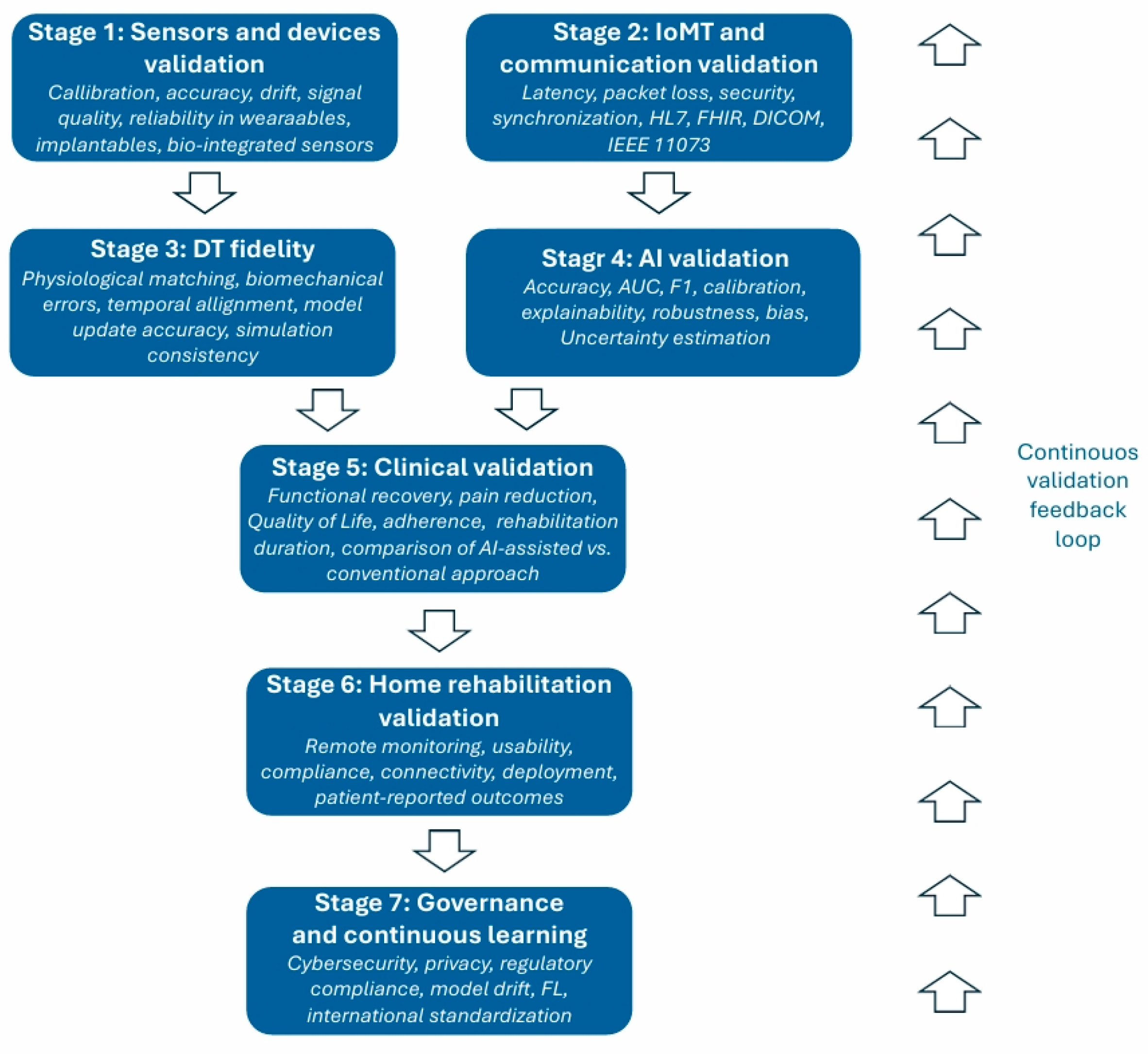
- Step 1: Device and Sensor Validation. All wearable and bio-integrated sensors should be calibrated against certified medical reference devices. Signal quality, accuracy, repeatability, latency, power consumption, and robustness should be assessed in laboratory and field settings in rehabilitation settings.
- Step 2: Data Communication and Interoperability Validation. IoMT should be assessed for communication security, packet loss, timing accuracy, transmission latency, scalability, and compliance with international interoperability standards such as HL7 FHIR, DICOM, IEEE 11073, and ISO/IEEE communication protocols.
- Step 3: DT Fidelity Validation. The DT should be quantitatively compared to the patient’s actual physiological and biomechanical state using multimodal clinical data. Validation metrics should include, at a minimum, geometric similarity, biomechanical simulation error, temporal synchronization, physiological prediction error, and model update rate.
- Step 4: AI Validation. ML and DL models should be evaluated using external, multi-center datasets with prospective validation. Performance should be assessed in terms of accuracy, sensitivity, specificity, precision, F1 score, ROC-AUC, calibration, uncertainty estimation, reliability analysis, explainability, and robustness to noisy or incomplete data.
- Step 5: Clinical Rehabilitation/Physiotherapy Validation. The entire GIR-DT ecosystem should be validated in randomized, controlled clinical trials comparing AI-assisted rehabilitation with conventional physiotherapy. Primary outcomes should include functional recovery, pain reduction, quality of life, adherence, rehabilitation time, clinician workload, and patient satisfaction.
- Step 6: Home Rehabilitation Validation. The framework should be evaluated in a real-world home rehabilitation setting by assessing continuous monitoring performance, communication reliability, patient adherence, usability, remote intervention effectiveness, digital literacy requirements, and long-term system stability.
- Step 7: Global Governance and Continuous Learning Validation. Continuous post-implementation monitoring should assess cybersecurity, privacy protection, regulatory compliance, federated learning performance, model drift, international interoperability, and continuous improvement of clinical performance through periodic AI model updates and independent external auditing.
6. Challenges and Future Directions
6.1. Technological Implications
6.2. Economic and Organizational Implications
6.3. Social Implications
6.4. Ethical and Legal Implications
6.5. Implications for Sustainability
6.6. Limitation of the Proposed Approach
6.7. Key Directions for Further Studies
8. Conclusions
Supplementary Materials
Author Contributions
Funding
Data Availability Statement
Conflicts of Interest
Abbreviations
| AI | Artificial intelligence |
| DICOM | Digital Imaging and Communications in Medicine |
| DL | Deep learning |
| DT | Digital twin |
| EHR | Electronic Health Record |
| FHIR | Fast Healthcare Interoperability Resources |
| FL | Federated learning |
| GIR-DI | Global intelligent rehabilitation digital twin |
| IoMT | Internet of Medical Things |
| ML | Machine learning |
| RQ | Research question |
| WoS | Web of Science |
| XAI | eXplainable artificial intelligence |
References
- Witt, C.M.; An, J.; Christen, M. AI, digital twins, and healthcare utilization behaviour: Evidence from a Swiss population survey. BMC Health Serv. Res. 2026, 26, 1. [Google Scholar] [CrossRef] [Scilit] [PubMed]
- Wang, P.; Yu, H.; Jing, W.; Zhang, W.; Cao, J.; Gao, C. Research progress on the curing process and degree-of-cure monitoring techniques of UV-CIPP resin-based composites. Sens. Actuators A Phys. 2026, 405, 117772. [Google Scholar] [CrossRef] [Scilit]
- Gkintoni, E.; Halkiopoulos, C. Digital twin cognition: AI-biomarker integration in biomimetic neuropsychology. Biomimetics 2025, 10, 640. [Google Scholar] [CrossRef] [Scilit] [PubMed]
- Roopa, M.S.; Venugopal, K.R. Digital twins for cyber-physical healthcare systems: Architecture, requirements, systematic analysis and future prospects. IEEE Access 2025, 13, 44963–44996. [Google Scholar] [CrossRef] [Scilit]
- Șerban, M.; Toader, C.; Covache-Busuioc, R.A. CRISPR and artificial intelligence in neuroregeneration: Closed-loop strategies for precision medicine, spinal cord repair, and adaptive neuro-oncology. Int. J. Mol. Sci. 2025, 26, 9409. [Google Scholar] [CrossRef] [Scilit] [PubMed]
- Olawade, D.B.; Almarzook, S.; Ogunbona, M.A.; Makanjuola, B.D.; Olawuyi, O.F.; Wada, O.Z. Digital twin applications in healthcare for people living with disability. Int. J. Med. Inform. 2026, 212, 106359. [Google Scholar] [CrossRef] [Scilit] [PubMed]
- Silva, A.; Vale, N. Digital twins in personalized medicine: Bridging innovation and clinical reality. J. Pers. Med. 2025, 15, 503. [Google Scholar] [CrossRef] [Scilit] [PubMed]
- Covache-Busuioc, R.A.; Toader, C.; Rădoi, M.P.; Șerban, M. Precision Recovery After Spinal Cord Injury: Integrating CRISPR Technologies, AI-Driven Therapeutics, Single-Cell Omics, and System Neuroregeneration. Int. J. Mol. Sci. 2025, 26, 6966. [Google Scholar] [CrossRef] [Scilit] [PubMed]
- Badani, A.; de Moraes, F.Y.; Vollmuth, P.; Chung, C.; Mansouri, A. AI and innovation in clinical trials. npj Digit. Med. 2025, 8, 683. [Google Scholar] [CrossRef] [Scilit] [PubMed]
- Varrassi, G.; Leoni, M.L.G.; Al-Alwany, A.A.; Sarzi Puttini, P.; Farì, G. Bioengineering support in the assessment and rehabilitation of low back pain. Bioengineering 2025, 12, 900. [Google Scholar] [CrossRef] [Scilit] [PubMed]
- Alharthi, S. AI-powered in silico twins: Redefining precision medicine through simulation, personalization, and predictive healthcare. Saudi Pharm. J. 2026, 34, 1. [Google Scholar] [CrossRef] [Scilit] [PubMed]
- Wolf, E.; Morisse, K.; Meister, S. Identifying Design Requirements for an Interactive Physiotherapy Dashboard with Decision Support for Clinical Movement Analysis of Musicians with Musculoskeletal Problems: Qualitative User Research Study. JMIR Hum. Factors 2025, 12, e65029. [Google Scholar] [CrossRef] [Scilit] [PubMed]
- Rong, Y.; Crippa, P.; Mansour, A.; Al-Jumaily, A. A Comprehensive Survey on Advanced Technologies Introduced for Rehabilitation. IEEE Sens. Rev. 2025, 2, 265–291. [Google Scholar] [CrossRef] [Scilit]
- Ghram, A.; Loureiro Diaz, J.; Raghavan, P.; Hautala, A.J.; Kaddoura, R.; Laukkanen, J.A.; Ben Saad, H. Toward Precision Cardiac Rehabilitation: Current Limitations and Future Opportunities of Omics and Artificial Intelligence. Sports Med. 2026, 1–22. [Google Scholar] [CrossRef] [Scilit] [PubMed]
- Glinkowski, W.M.; Gieroba, T.; Śliwczyński, A. Digital Twins in Orthopedics and Trauma: Concepts, Emerging Evidence, and Barriers to Clinical Translation. J. Clin. Med. 2026, 15, 4127. [Google Scholar] [CrossRef] [Scilit] [PubMed]
- Parween, G.; Al-Anbuky, A.; Mawston, G.; Lowe, A. Digital Twin Prospects in IoT-Based Human Movement Monitoring Model. Sensors 2025, 25, 6674. [Google Scholar] [CrossRef] [Scilit] [PubMed]
- Meng, H.; Zhao, Z.; Li, S.; Wang, S.; Wang, J.; Yang, C.; Gao, S. Active Rehabilitation Technologies for Post-Stroke Patients. Biosensors 2025, 16, 20. [Google Scholar] [CrossRef] [Scilit] [PubMed]
- Tariq, M.U. Robotic and IoT Integration in Post-Acute Rehabilitation: Enhancing Patient Recovery Through Data-Driven Assistive Systems. In Robotics and IoT Synergy in Next-Generation Healthcare; IGI Global Scientific Publishing: Hershey, PA, USA, 2026; pp. 163–188. [Google Scholar]
- Sun, Z.; Yin, L. Intelligent textile sensors coupled with machine learning for athlete physiological monitoring: A review of recent progress. Sens. Rev. 2026, 46, 583–603. [Google Scholar] [CrossRef] [Scilit]
- Rasheed, M.S.; Rasheed, M.H. Technologies Driving Human–Machine Collaboration. In Augmenting Humanity: Industry 5.0 and the Rise of Human–Machine Collaboration; Emerald Publishing Limited: Bingley, UK, 2025. [Google Scholar] [CrossRef] [Scilit]
- Page, M.J.; McKenzie, J.E.; Bossuyt, P.M.; Boutron, I.; Hoffmann, T.C.; Mulrow, C.D.; Shamseer, L.; Tetzlaff, J.M.; Akl, E.A.; Brennan, S.E.; et al. The PRISMA 2020 statement: An updated guideline for reporting systematic reviews. BMJ 2021, 372, n71. [Google Scholar] [CrossRef] [Scilit] [PubMed]
- Anandh, S.; Vairalkar, M. Smart Rehabilitation: AI-Driven Biomechanical Solutions for Physiotherapy. Physiother. Using Artif. Intell. Enhancing Biomech. Optim. Rehabil. 2026. [Google Scholar] [CrossRef] [Scilit]
- Biswas, P.; Kim, T.M.; Kim, W.S. Integration of digital twins and physical AI in cyber-physical systems. Intell. Syst. Appl. 2026, 30, 200649. [Google Scholar] [CrossRef] [Scilit]
- Rabinowitz, A.; Trauger, M.; Williams, M. Reining in Unbridled AI Enthusiasm: Protecting the Integrity of Rehabilitation Science and Clinical Care. Arch. Phys. Med. Rehabil. 2026, in press. [Google Scholar] [CrossRef] [Scilit] [PubMed]
- Barricelli, E.R.; Cerutti, F.; Marzenti, S. Human digital twins in sports and rehabilitation: A systematic review. Behav. Inf. Technol. 2026, 1–22. [Google Scholar] [CrossRef] [Scilit]
- Kadam, N.; Deshpande, V. AI-Enhanced Biomechanics: Personalizing Physiotherapy for Optimal Recovery. Physiother. Using Artif. Intell. 2026. [Google Scholar] [CrossRef] [Scilit]
- Jantos, B.; Tomaszewski, M. Towards Digital Twins in Rehabilitation Processes—Examples of Publicly Available Datasets. In Proceedings of the 4th International Workshop on Information Technologies: Theoretical and Applied Problems 2024, ITTAP 2024, Ternopil, Ukraine; Opole, Poland, 23–25 October 2024; CEUR Workshop Proceedings. Volume 3896. [Google Scholar]
- Alkhattabi, K.; Belhaj, S.; Selecky, J.; Talha, M. An adversarial-resilient intrusion detection framework for internet of medical things (IoMT) using digital twin-enabled behavioral threat modeling and federated hybrid ensemble learning. Sci. Rep. 2026. [Google Scholar] [CrossRef] [Scilit] [PubMed]
- Skalidis, I.; Maurizi, N.; Salihu, A.; Fournier, S.; Cook, S.; Iglesias, J.F.; Laforgia, P.; D’angelo, L.; Garot, P.; Hovasse, T.; et al. Artificial Intelligence and Advanced Digital Health for Hypertension: Evolving Tools for Precision Cardiovascular Care. Medicina 2025, 61, 1597. [Google Scholar] [CrossRef] [Scilit] [PubMed]
- Imam, N.H. Adversarial Examples on XAI-Enabled DT for Smart Healthcare Systems. Sensors 2024, 24, 6891. [Google Scholar] [CrossRef] [Scilit] [PubMed]
- Al-Rashed, W.S. Wastewater Membrane Bioreactors: A Comprehensive Review of Explainable Artificial Intelligence and Digital Twin Applications. Membranes 2026, 16, 181. [Google Scholar] [CrossRef] [Scilit] [PubMed]
- Almadhor, A.; Ghazouani, N.; Bouallegue, B.; Kryvinska, N.; Alsubai, S.; Krichen, M.; Al Hejaili, A.; Sampedro, G.A. Digital twin based deep learning framework for personalized thermal comfort prediction and energy efficient operation in smart buildings. Sci. Rep. 2025, 15, 24654. [Google Scholar] [CrossRef] [Scilit] [PubMed]
- Pylarinou, C.; Gortzis, L.; Leivaditis, V.; Liolis, E.; Antzoulas, A.; Papadoulas, S.; Nikolakopoulos, K.; Panagiotopoulos, I.; Mitsos, S.; Tomos, P.; et al. An Agentic LLM Framework for Autonomous Surgical Continuum Monitoring: ReAct-Driven Tool-Use Agents for Presurgical, Intraoperative, and Postsurgical Cardiopulmonary Care. Bioengineering 2026, 13, 686. [Google Scholar] [CrossRef] [Scilit] [PubMed]
- Walling, B.; Desens, L.; Howard, V.; O’NEill, R.; Scannell, D.; Giammarino, M.; Elson, S.B.; Rosen, S. Digital twin simulations of theory-driven crisis messaging during hurricane evacuations in synthetic populations: A Miami-Dade County case study. Front. Artif. Intell. 2026, 9, 1715883. [Google Scholar] [CrossRef] [Scilit] [PubMed]
- Desens, L.; Walling, B.; O’Neill, R.; Howard, V.; Giammarino, M.; Scannell, D.; Kemble, A.; Wilkerson, T.; Nhial, N.; Elson, S.B.; et al. The realism of behavioral theory-based vs. non-theory-based AI agents during a simulated infant formula shortage. Front. Artif. Intell. 2026, 9, 1719703. [Google Scholar] [CrossRef] [Scilit] [PubMed]
- Malakhov, K.S.; Vakulenko, D.V. Letter to the Editor—Human Digital Twin in Ukraine: Converging Digital Health and Digital Education for Next-Generation Telerehabilitation. Int. J. Telerehabilitation 2025, 17, 1–10. [Google Scholar] [CrossRef] [Scilit] [PubMed]
- Adeniyi, A.E.; Awotunde, J.B.; Arulogun, T.; Ubaru, S.; Alaeba, C. Digital Twins and Extended Reality for AI-Infused Metaverse Solutions for Smart Healthcare System. Stud. Comput. Intell. 2026, 1224, 393–426. [Google Scholar] [CrossRef] [Scilit]
- Palaniappan, R.; Sica, R. Revolutionizing MS Rehabilitation with Digital Twins and Machine Learning: A Promising Path to Precision Medicine. Commun. Comput. Inf. Sci. 2024, 2176, 182–192. [Google Scholar] [CrossRef] [Scilit]
- Tacchino, A.; Parda, J.; Bergamaschi, V.; Pedulla, L.; Brichetto, G. Cognitive rehabilitation in multiple sclerosis: Three digital ingredients to address current and future priorities. Front. Hum. Neurosci. 2023, 17, 1130231. [Google Scholar] [CrossRef] [Scilit] [PubMed]
- Gaikwad, V.; Chavan, R.; Galkwad, S.; Patil, C. AI Metaverse in Healthcare: Opportunities, Challenges, and Future Directions. In Proceedings of the 2025 2nd International Conference on Integration of Computational Intelligent System, ICICIS; IEEE: New York, NY, USA, 2025. [Google Scholar] [CrossRef] [Scilit]
- Diniz, P.; Grimm, B.; Garcia, F.; Fayad, J.; Ley, C.; Mouton, C.; Oeding, J.F.; Hirschmann, M.T.; Samuelsson, K.; Seil, R. Digital twin systems for musculoskeletal applications: A current concepts review. Knee Surg. Sports Traumatol. Arthrosc. 2025, 33, 1892–1910. [Google Scholar] [CrossRef] [Scilit] [PubMed]
- Li, C.; Zuo, K.; Duan, R.; Ouyang, X.; Zhang, Y.; Zeng, L.; Ge, L. AI-driven aging digital twins: A roadmap for clinical translation in precision geriatrics. Ageing Res. Rev. 2026, 113, 102931. [Google Scholar] [CrossRef] [Scilit] [PubMed]
- Chen, J. Generative-AI-Driven Human Digital Twin in IoT Healthcare: A Comprehensive Survey. IEEE Internet Things J. 2024, 11, 34749–34773. [Google Scholar] [CrossRef] [Scilit]
- Becher, S.; Lovelace, B. Leveraging digital twin tools for the Minnesota DOT Robert Street Bridge inspection. In Bridge Maintenance, Safety, Management, Digitalization and Sustainability: Proceedings of the 12th International Conference on Bridge Maintenance, Safety and Management, 24–28 June 2024, Copenhagen, Denmark; CRC Press: London, UK, 2024; pp. 1877–1883. [Google Scholar] [CrossRef] [Scilit]
- Ma, Y.; Huo, Y.; Yan, J.; Hu, Z.; Ye, R.; Luo, J.; Zhou, X.; Xu, Y.; Yang, Z.; Wang, J.; et al. Application of Emerging Internet Technologies in Stroke Rehabilitation. Chin. J. Stroke 2026, 12, 118–129. [Google Scholar] [CrossRef]
- Lee, Y.K.; Yoon, E.-J.; Kim, T.H.; Kim, J.-I.; Kim, J.-H. Musculoskeletal Digital Therapeutics and Digital Health Rehabilitation: A Global Paradigm Shift in Orthopedic Care. J. Clin. Med. 2025, 14, 8467. [Google Scholar] [CrossRef] [Scilit] [PubMed]
- López, C.Á.; Rodríguez Pérez, A.; Alonso-Rincón, R.; Carrera, A.; Rodríguez González, S. Digital Twins and Virtual Assistants for Proactive Long-Term Care: The SALUS Architecture. In Highlights in Practical Applications of Agents, Multi-Agent Systems and Computational Social Science. The PAAMS Collection. PAAMS Workshop 2025. Communications in Computer and Information Science; Nongaillard, A., Caron, A.C., González-Briones, A., Fernández, A., Durães, D., Sharaf, N., Eds.; Springer: Cham, Switzerland; Volume 2644. [CrossRef] [Scilit]
- Gayathri, J.; Esitha, M. IoT-Driven Real-Time Patient Monitoring Platform with Artificial Intelligence Assisted Cloud Environment. In 2026 13th International Conference on Computing for Sustainable Global Development (INDIACom); IEEE: New York, NY, USA; pp. 1–6.
- Gallo, J.; Stefancik, M.; Mik, P.; Lhotska, L. Bioengineering Innovations for Personalized Care in Low Back Pain: From Sensors to Smart Therapeutics. Bioengineering 2026, 13, 212. [Google Scholar] [CrossRef] [Scilit] [PubMed]
- Chen, F.; Chen, H.; Yu, T.; Wang, R.; Wang, Y.; Zhang, X.; Li, J.; Liu, K.; Hai, D.; Bao, X.; et al. AI-Driven Revolution of Medical Robotics Across Surgical Innovation, Rehabilitation Intelligence, and Multimodal Healthcare Delivery. MedComm 2026, 7, e70597. [Google Scholar] [CrossRef] [Scilit] [PubMed]
- Gámez Díaz, R.; Yu, Q.; Ding, Y.; Laamarti, F.; El Saddik, A. Digital Twin Coaching for Physical Activities: A Survey. Sensors 2020, 20, 5936. [Google Scholar] [CrossRef] [Scilit] [PubMed]
- Calderita, L.V.; Vega, A.; Barroso-Ramírez, S.; Bustos, P.; Núñez, P. Designing a Cyber-Physical System for Ambient Assisted Living: A Use-Case Analysis for Social Robot Navigation in Caregiving Centers. Sensors 2020, 20, 4005. [Google Scholar] [CrossRef] [Scilit] [PubMed]
- Farhadiyadkuri, F.; Zhang, X. A Five-Dimensional Three-Layer Digital Twin to Train a Reinforcement Learning Agent for Interaction Control of a Robotic Exoskeleton in Adolescent Idiopathic Scoliosis Rehabilitation. Int. J. Mech. Syst. Dyn. 2025, 5, 385–400. [Google Scholar] [CrossRef] [Scilit]
- Lloyd, D.G.; Saxby, D.J.; Pizzolato, C.; Worsey, M.; Diamond, L.E.; Palipana, D.; Bourne, M.; de Sousa, A.C.; Mannan, M.M.N.; Nasseri, A.; et al. Maintaining soldier musculoskeletal health using personalised digital humans, wearables and/or computer vision. J. Sci. Med. Sport 2023, 26, S30–S39. [Google Scholar] [CrossRef] [Scilit] [PubMed]
- Franceschini, C.; Ahmadi, M.; Zhang, X.; Wu, K.; Lin, M.; Weston, R.; Rodio, A.; Tang, Y.; Engeberg, E.; Pires, G.; et al. Revolutionizing spine surgery with emerging AI–FEA integration. J. Robot. Surg. 2025, 19, 615. [Google Scholar] [CrossRef] [Scilit] [PubMed]
- Misir, A.; Yuce, A. AI in Orthopedic Research: A Comprehensive Review. J. Orthop. Res. 2025, 43, 1508–1527. [Google Scholar] [CrossRef] [Scilit] [PubMed]
- Wang, P.; Wang, A.; Wang, S. Integrating multimodal AI technologies for sports injury prediction and rehabilitation: Systematic review. J. Hum. Sport Exerc. 2025, 21, 22–37. [Google Scholar] [CrossRef] [Scilit]
- Hu, X.; Wei, Z.; Liu, M.; Geng, H.; Zhang, H. Digital therapeutics into geriatric cardiovascular emergency care. Front. Digit. Health 2026, 8, 1673080. [Google Scholar] [CrossRef] [Scilit] [PubMed]
- Shi, X. Leveraging emerging technologies to address the crisis of aging concrete infrastructure. J. Infrastruct. Preserv. Resil. 2025, 6, 44. [Google Scholar] [CrossRef] [Scilit]
- Shao, X.; Hu, Y.; Jia, H.; Song, J. Digital Therapeutics in Cardiovascular Healthcare: A Narrative Review. Curr. Cardiol. Rep. 2025, 27, 119. [Google Scholar] [CrossRef] [Scilit] [PubMed]
- Demiral, M.; Mamedov, A.; Köklü, U. Engineering Applications of Biomechanics in Medical Sciences: Insights from Musculoskeletal and Cardiovascular Systems—A Narrative Review of the 2020–2026 Literature. Eng 2026, 7, 235. [Google Scholar] [CrossRef] [Scilit]
- Covaciu, F.; Gherman, B.; Vaida, C.; Pisla, A.; Tucan, P.; Caprariu, A.; Pisla, D. A Combined Mirror–EMG Robot-Assisted Therapy System for Lower Limb Rehabilitation. Technologies 2025, 13, 227. [Google Scholar] [CrossRef] [Scilit]
- Jayakumar, P.; Rathouz, P.J.; Lin, E.; Trutner, Z.; Uhler, L.M.; Andrawis, J.; Koenig, K.M.; Tsevat, J.; Bozic, K.J. Shared decision making using digital twins in knee osteoarthritis care: A randomized clinical trial of an AI-enabled decision aid versus education alone on decision quality, physical function, and user experience. eClinicalMedicine 2025, 89, 103545. [Google Scholar] [CrossRef] [Scilit] [PubMed]
- Patil, D.; Badjate, S. AI-Driven Wearable Sensors for Personalized Cancer Recovery Programs. In AI-Driven Innovations in Physiotherapy and Oncology 3; Kumar, A., Batta, P., Ahuja, S., Rathore, P.S., Eds.; Wiley: Hoboken, NJ, USA, 2026. [Google Scholar] [CrossRef] [Scilit]
- Taheri, A.; Sobanjo, J. Civil Integrated Management (CIM) for Advanced Level Applications to Transportation Infrastructure: A State-of-the-Art Review. Infrastructures 2024, 9, 90. [Google Scholar] [CrossRef] [Scilit]
- Regmi, A.; Jain, V.; Baral, S.; Jain, V.K.; Iyengar, K.P. Industry 6.0 capabilities in orthopaedics: Towards hyper-personalized and autonomous surgical care. J. Orthop. 2026, 73, 184–192. [Google Scholar] [CrossRef] [Scilit] [PubMed]
- Caselli, B.; Panebianco, A.; La Placa, S.; Laera, R. GIS-Based Accessibility and Safety Assessment in Small Historic Centres in Inner Areas. Pilot Application in Stigliano and Interoperability with a Digital Twin. In Computational Science and Its Applications—ICCSA 2025 Workshops. ICCSA 2025. Lecture Notes in Computer Science; Gervasi, O., Murgante, B., Garau, C., Karaca, Y., Faginas Lago, M.N., Scorza, F., Braga, A.C., Eds.; Springer: Cham, Switzerland; Volume 15898. [CrossRef] [Scilit]
- Kashyap, V.R.; Bhushan, B.; Farhaoui, Y.; Alkhayyat, A. Digital Twin Robots for Securing IoT Based Healthcare 4.0 Application: Key Technologies, Integration Trends and Recent Advancement. In Data Analytics for Smart Robotics and Its Applications. Intelligent Systems Reference Library; Sharma, R., Jeon, G., Eds.; Springer: Berlin/Heidelberg, Germany, 2025; Volume 272. [Google Scholar] [CrossRef] [Scilit]
- Ortega-Martorell, S.; Olier, I.; Ohlsson, M.; Lip, G.Y.H. Advancing personalised care in atrial fibrillation and stroke: The potential impact of AI from prevention to rehabilitation. Trends Cardiovasc. Med. 2025, 35, 205–211. [Google Scholar] [CrossRef] [Scilit] [PubMed]
- Chen, J.; Yi, C.; Okegbile, S.D.; Cai, J.; Shen, X. Networking Architecture and Key Supporting Technologies for Human Digital Twin in Personalized Healthcare: A Comprehensive Survey. IEEE Commun. Surv. Tutor. 2024, 26, 706–746. [Google Scholar] [CrossRef] [Scilit]
- Zhou, H.; Gao, J.-Y.; Chen, Y. The paradigm and future value of the metaverse for the intervention of cognitive decline. Front. Public Health 2022, 10, 1016680. [Google Scholar] [CrossRef] [Scilit] [PubMed]
- Gabrić, I.D. Digital Health Monitoring in Cardiology. Medicus 2025, 34, 1. [Google Scholar] [CrossRef] [Scilit] [PubMed]
- Araniti, G.; Jose, A.; Marcello, F.; Pilloni, V.; Sciarrone, A.; Suraci, C.; Zerbino, M. Medical Digital Twins for Elderly Care: Human-Centered Technologies for Continuous Health Monitoring. In GLOBECOM 2025-2025 IEEE Global Communications Conference; IEEE: Taipei, Taiwan, 2025; pp. 1883–1888. [Google Scholar]
- Harlan, B.; Tjahyadi, H. Minimally Invasive Motor Function Rehabilitation Through Digital Twin Technology: A Review. In Proceedings of the 2024 2nd International Conference on Technology Innovation and Its Applications (ICTIIA); IEEE: Medan, Indonesia, 2024. [Google Scholar] [CrossRef] [Scilit]
- Chaparro-Cárdenas, S.L.; Ramirez-Bautista, J.-A.; Terven, J.; Córdova-Esparza, D.-M.; Romero-Gonzalez, J.-A.; Ramírez-Pedraza, A.; Chavez-Urbiola, E.A. A Technological Review of Digital Twins and Artificial Intelligence for Personalized and Predictive Healthcare. Healthcare 2025, 13, 1763. [Google Scholar] [CrossRef] [Scilit] [PubMed]
- Krilovicius, T.; De Paolis, L.T.; De Luca, V.; Spjut, J. EXtended Reality and Artificial Intelligence in Medicine and Rehabilitation. Inf. Syst. Front. 2025, 27, 1. [Google Scholar] [CrossRef] [Scilit]
- Chen, J.; Yi, C.; Du, H.; Niyata, D.; Kang, J.; Cai, J.; Shen, X. A Revolution of Personalized Healthcare: Enabling Human Digital Twin with Mobile AIGC. IEEE Netw. 2024, 38, 234–242. [Google Scholar] [CrossRef] [Scilit]
- León-Domínguez, U. Towards an artificial intelligence clinical decision-support system based on immersive virtual reality for neurocognitive assessment. Ergonomics 2025, 1–18. [Google Scholar] [CrossRef] [Scilit] [PubMed]
- Ouhmida, S.; Moulay Abdelali, H.; Lamdouar, N. Revolutionizing bridge rehabilitation through artificial intelligence: A comprehensive review and future directions. Asian J. Civ. Eng. 2025, 26, 2287–2301. [Google Scholar] [CrossRef] [Scilit]
- Bian, M.; Mao, Y.; Huang, D.F. The Practice and Application of Intelligent Rehabilitation in Clinical Practice. In Automation in Tele-Neurorehabilitation; CRC Press: London, UK, 2025. [Google Scholar] [CrossRef] [Scilit]
- Ali Shah, S.T.; Oliveira Santos, J.P.; Constantinescu, G.; Amaral Fernandes, J.M.; de Bastos Pereira, A.M. Physio-Digital Twin for Human-Centered IoT Mobility: A Proof-of-Concept Implementation on the E-Bike Platform. In Proceedings of the 2026 9th International Conference on Information and Computer Technologies (ICICT 2026); Association for Computing Machinery: New York, NY, USA, 2026; pp. 494–500. [Google Scholar] [CrossRef] [Scilit]
- Petrova-Antonova, D.; Spasov, I.; Krasteva, I.; Manova, I.; Ilieva, S. A Digital Twin Platform for Diagnostics and Rehabilitation of Multiple Sclerosis. In Computational Science and Its Applications—ICCSA 2020. ICCSA 2020. Lecture Notes in Computer Science; Gervasi, O., Murgante, B., Misra, S., Garau, C., Blečić, I., Taniar, D., Apduhan, B.O., Rocha, A.M.A.C., Tarantino, E., Eds.; Springer: Berlin/Heidelberg, Germany, 2020; Volume 12249. [Google Scholar] [CrossRef] [Scilit]
- Oliveira, M.A. Navigating the GenAI Revolution: A Call to Advance Academic Excellence in Kinesiology and Beyond. Kinesiol. Rev. 2025, 14, 387–393. [Google Scholar] [CrossRef] [Scilit]
- Shakenov, M.; Khawaja, A.R.; Karibzhanova, D.; Goyal, T.; Sagidoldin, D. Robotic Technologies in Rehabilitation Treatment of Cerebral Palsy in Children. In Proceedings of the International Conference on AI and Robotics. AIR 2025. Lecture Notes in Networks and Systems; Bansal, J.C., Jamwal, P., Hussain, S., Eds.; Springer: Berlin/Heidelberg, Germany, 2026; Volume 1628. [Google Scholar] [CrossRef] [Scilit]
- Al-Smadi, F.; Al-Smadi, S.; Xie, X.; Abudourusuli, X.; Ouyang, L.; Zeng, R.; Du, L.; Liao, Y.; Mi, B.; Liu, G. Artificial intelligence and robotic technologies redefining precision and personalization in orthopedic surgery: A narrative review. Front. Bioeng. Biotechnol. 2026, 14, 1765936. [Google Scholar] [CrossRef] [Scilit] [PubMed]
- Ye, D.; Luo, H.; Winstein, C.; Schweighofer, N. Towards AI-based precision rehabilitation via contextual model-based reinforcement learning. J. Neuroeng. Rehabil. 2025, 22, 263. [Google Scholar] [CrossRef] [Scilit] [PubMed]
- Liew, S.L.; Cotton, R.J.; Burdet, E.; Bermúdez i Badia, S.; Celnik, P.; Cole, J.H.; Liu, R.; Soekadar, S.R.; Winstein, C.; Schweighofer, N. Collaborative AI for precision neurorehabilitation: A roadmap. J. Neuroeng. Rehabil. 2025, 22, 269. [Google Scholar] [CrossRef] [Scilit] [PubMed]
- Tarantino, L.; Attanasio, M.; Valenti, M.; Mazza, M. Challenges in future all-round digitalized ASD care services. In Proceedings of the 9th International Conference on Socio-Technical Perspective in Information Systems Development (STPIS 2023); CEUR Workshop Proceedings: Aachen, Germany, 2023; p. 3598. [Google Scholar]
- Ghai, L.; Ladwan, S.; Bhute, K.; Chaudhari, P.; Bobade, V.; Pacharaney, U. Proceedings of the 2025 3rd DMIHER International Conference on Artificial Intelligence in Healthcare, Education and Industry (IDICAIHEI); IEEE: Wardha, India, 2025. [Google Scholar] [CrossRef] [Scilit]
- Cho, J.; Kim, D.; Lee, M. Integrative Approach and Innovative Strategies for Neurophysiology-Based Functional Training. Exerc. Sci. 2025, 34, 388–394. [Google Scholar] [CrossRef] [Scilit]
- Amadiaz, Y.; Alfonso-Lizarazo, E.; Nait Sidi Moh, A. A systematic review of healthcare cyber–physical systems with associated innovative technologies for Alzheimer’s and Parkinson’s Diseases. Array 2025, 28, 100575. [Google Scholar] [CrossRef] [Scilit]
- Grashof, R.; Yavuz, S.; Naroska, E.; Nitsche, T.; Breil, B. Identifying and Evaluating User-Centered Requirements for Pro-Adaptive Assistive Systems in Parkinson Disease. In Studies in Health Technology and Informatics Volume 336: Opening the Personal Gate between Technology and Health Care; IOS Press: Amsterdam, The Netherlands, 2026; pp. 1979–1983. [Google Scholar] [CrossRef] [Scilit] [PubMed]
- Prajapati, S.; Yadav, S.; Singh, A.P. Harnessing the Metaverse in Modern Medicine: Virtual, Augmented, and Extended Reality as Catalysts for Healthcare Innovation and Education. Curr. Signal Transduct. Ther. 2026, 21, 1. [Google Scholar] [CrossRef] [Scilit]
- Carda, S.; Molteni, F.; Grana, E. Artificial Intelligence in Spasticity Assessment. Phys. Med. Rehabil. Clin. 2026, 37, 341–356. [Google Scholar] [CrossRef] [Scilit] [PubMed]
- Ortega-Martorell, S.; Olier, I.; Ohlsson, M.; Lip, G.Y.H. TARGET Consortium. TARGET: A Major European Project Aiming to Advance the Personalised Management of Atrial Fibrillation-Related Stroke via the Development of Health Virtual Twins Technology and Artificial Intelligence. Thromb. Haemost. 2025, 125, 7–11. [Google Scholar] [CrossRef] [Scilit] [PubMed]
- Guo, H.; Mao, L.; Meng, W.; Yang, M.; Li, Z. A survey of revolutionizing football coaching with virtual reality. Vis. Comput. 2026, 42, 137. [Google Scholar] [CrossRef] [Scilit]
- Poonsiriwong, R.; Archiwaranguprok, C.; Albrecht, C.; Yin, P.; Powdthavee, N.; Hershfield, H.; Lertsutthiwong, M.; Winson, K.; Pataranutaporn, P. Simulating Life Paths with Digital Twins: AI-Generated Future Selves Influence Decision-Making and Expand Human Choice. In Proceedings of the Augmented Humans International Conference 2026 (AHs 2026); ACM: New York, NY, USA, 2026; pp. 264–278. [Google Scholar] [CrossRef] [Scilit]
- Moztarzadeh, O.; Jamshidi, M.B.; Sargolzaei, S.; Jamshidi, A.; Baghalipour, N.; Moghani, M.M.; Hauer, L. Metaverse and Healthcare: Machine Learning-Enabled Digital Twins of Cancer. Bioengineering 2023, 10, 455. [Google Scholar] [CrossRef] [Scilit] [PubMed]
- Ashraf, I.; Artelt, A.; Hammer, B. Scalable and Robust Physics-Informed Graph Neural Networks for Water Distribution Systems. In Proceedings of the 2025 International Joint Conference on Neural Networks (IJCNN); IEEE: Rome, Italy, 2025; pp. 1–8. [Google Scholar] [CrossRef] [Scilit]
- Rojek, I.; Mikołajewski, D.; Galas, K.; Piszcz, A. Advanced Deep Learning Algorithms for Energy Optimization of Smart Cities. Energies 2025, 18, 407. [Google Scholar] [CrossRef] [Scilit]
- Samprón, N.; Lafuente, J.; Presa-Alonso, J.; Ivanov, M.; Hartl, R.; Ringel, F. Advancing spine surgery: Evaluating the potential for full robotic automation. Brain Spine 2025, 5, 104232. [Google Scholar] [CrossRef] [Scilit] [PubMed]
- van der Kooij, H.; van Asseldonk, E.H.F.; Sartori, M.; Basla, C.; Esser, A.; Riener, R. AI in therapeutic and assistive exoskeletons and exosuits: Influences on performance and autonomy. Sci. Robot. 2025, 10, eadt7329. [Google Scholar] [CrossRef] [Scilit] [PubMed]
- Wah, J.N.K. The rise of robotics and AI-assisted surgery in modern healthcare. J. Robot. Surg. 2026, 19, 311. [Google Scholar] [CrossRef] [Scilit] [PubMed]
- Kotis, K.; Angoura, E.; Lyngri, E.-I. Emerging Technologies in Smart Libraries for Visually Impaired People: Challenges and Design Considerations. J. Comput. Cult. Herit. 2025, 18, 3. [Google Scholar] [CrossRef] [Scilit]
- Lee, J.; Tayerani Charmchi, A.S.; Ghobadi, F.; Kim, M.I. Green AI architectures: Navigating the security-sustainability paradox in critical infrastructure protection. Environ. Sci. Ecotechnol. 2026, 31, 100697. [Google Scholar] [CrossRef] [Scilit] [PubMed]
- Schmitt, U. Memetic/Metaphorical Digital Twins: Extending Knowledge Co-Creation Across Economics, Architecture, and Beyond. Biomimetics 2026, 11, 220. [Google Scholar] [CrossRef] [Scilit] [PubMed]
- Gao, Y.; Wang, J.; Chen, X.; Peng, S.; Mustafa, S. Leveraging Industry 4.0 technologies for organizational sustainability performance in Chinese firms: An NRBV-mediated model advancing UN SDGs 9 and 12. Sci. Rep. 2026, 16, 14432. [Google Scholar] [CrossRef] [Scilit] [PubMed]
- Wei, D.; Wang, Z.; Lin, H.; Yin, X.P.; Wang, Y. Research Progress in Artificial Intelligence-Assisted Preparation of High-Quality Biomaterials. ACS Omega 2026, 11, 10971–11000. [Google Scholar] [CrossRef] [Scilit] [PubMed]
- Moor, C.C.; Wijsenbeek, M.S. The lung way home: Ready for home monitoring in lung diseases? Curr. Opin. Pulm. Med. 2023, 29, 256–258. [Google Scholar] [CrossRef] [Scilit] [PubMed]
- Zhao, S.; Cheang, C.; Lin, J.; Mio, W.; Che, S.; Kuok, K. A multimodal, risk-stratified framework for AI-driven early risk prediction and personalised prevention in obesity. Front. Artif. Intell. 2026, 9, 1865219. [Google Scholar] [CrossRef] [Scilit] [PubMed]
- Rudnicka, Z.; Proniewska, K.; Perkins, M.; Pregowska, A. Cardiac Healthcare Digital Twins Supported by Artificial Intelligence-Based Algorithms and Extended Reality—A Systematic Review. Electronics 2024, 13, 866. [Google Scholar] [CrossRef] [Scilit]
- Witt, C.M. Digital Twins as catalysts for Whole Person Health Mind Body Medicine in Integrative Oncology. Front. Oncol. 2026, 16, 1868314. [Google Scholar] [CrossRef] [Scilit] [PubMed]
- Shen, S.; Qi, W.; Liu, X.; Zeng, J.; Li, S.; Peng, G.; Li, P.; Wang, J.; Lu, X.; Cao, S. Mapping the landscape of AI-driven digital twins in medical diagnosis: A scoping review on core technologies, applications, and implementation barriers. Artif. Intell. Med. 2026, 180, 103474. [Google Scholar] [CrossRef] [Scilit] [PubMed]
- Burr, C.D.; Qian, S.; Winter, P.; Chico, T.; Smith, C.R.; Wagg, D.; Niederer, S.A. Realising the digital twin: A thematic review and analysis of the ethical, legal, and social issues for digital twins in healthcare. AI Soc. 2026, 41, 5243–5267. [Google Scholar] [CrossRef] [Scilit] [PubMed]
- Winter, P.D.; Chico, T.J.A. Using the Non-Adoption, Abandonment, Scale-Up, Spread, and Sustainability (NASSS) Framework to Identify Barriers and Facilitators for the Implementation of Digital Twins in Cardiovascular Medicine. Sensors 2023, 23, 6333. [Google Scholar] [CrossRef] [Scilit] [PubMed]
- Bangla, S.; Kapoor, A.; Jeer, G. Toward equitable digital health: An integrated framework addressing exclusion, ethics, and implementation across healthcare systems. Int. J. Equity Health 2026, 25, 170. [Google Scholar] [CrossRef] [Scilit] [PubMed]
- Sarani Rad, F.; Bitaraf, E.; Jafarpour, M.; Li, J. Technologies, Clinical Applications, and Implementation Barriers of Digital Twins in Precision Cardiology: Systematic Review. JMIR Cardio 2026, 10, e78499. [Google Scholar] [CrossRef] [Scilit] [PubMed]
- Mikołajewska, E.; Prokopowicz, P.; Mikołajewski, D. Computational gait analysis using fuzzy logic for everyday clinical purposes-preliminary findings. Bio-Algorithms Med.-Syst. 2017, 13, 37–42. [Google Scholar] [CrossRef] [Scilit]
- Prokopowicz, P.; Mikołajewski, D.; Tyburek, K.; Mikołajewska, E. Computational gait analysis for post-stroke rehabilitation purposes using fuzzy numbers, fractal dimension and neural networks. Bull. Pol. Acad. Sci. Tech. Sci. 2020, 68, 191–198. [Google Scholar] [CrossRef] [Scilit]
- Venkatraman, S.; Fahd, K.; Wang, X.; Parvin, S.; Minicz, J. Introducing Digital Twin Capability Building in Healthcare through AI Powered Projects: AI powered project strategies in capability building and transformation of digital healthcare. In Proceedings of the 2025 18th Health Informatics Knowledge Management Conference (HIKM); ACM: New York, NY, USA, 2025; pp. 1–9. [Google Scholar]
- Prokopowicz, P.; Mikołajewski, D.; Mikołajewska, E.; Kotlarz, P. Fuzzy system as an assessment tool for analysis of the health-related quality of life for the people after stroke. In Lecture Notes in Computer Science (Including Subseries Lecture Notes in Artificial Intelligence and Lecture Notes in Bioinformatics); Springer: Cham, Switzerland, 2017; Volume 10245, pp. 710–721. [Google Scholar]
- Yao, K.C.; Lin, F.Y.; Chiang, S. A Real-Time Digital Twin Synchronization Framework for Multi-Sensor Cardiopulmonary Resuscitation Measurement. Sensors 2026, 26, 3459. [Google Scholar] [CrossRef] [Scilit] [PubMed]
- Wickramasinghe, N.; Ulapane, N. A Solution for the Health Data Sharing Dilemma: Data-Less and Identity-Less Model Sharing Through Federated Learning and Digital Twin-Assisted Clinical Decision Making. Electronics 2025, 14, 682. [Google Scholar] [CrossRef] [Scilit]
- Krzysztoń, E.; Rojek, I.; Mikołajewski, D. A Comparative Analysis of Anomaly Detection Methods in IoT Networks: An Experimental Study. Appl. Sci. 2024, 14, 11545. [Google Scholar] [CrossRef] [Scilit]
- Gonzalez-Abril, L.; Angulo, C.; Ortega, J.-A.; Lopez-Guerra, J.-L. Generative Adversarial Networks for Anonymized Healthcare of Lung Cancer Patients. Electronics 2021, 10, 2220. [Google Scholar] [CrossRef] [Scilit]
- Kerrison, S.; Jusak, J.; Huang, T. Blockchain-Enabled IoT for Rural Healthcare: Hybrid-Channel Communication with Digital Twinning. Electronics 2023, 12, 2128. [Google Scholar] [CrossRef] [Scilit]
- Jin, G.Z. Exercise-Based Mechanotherapy: From Biomechanical Principles and Mechanotransduction to Precision Regenerative Rehabilitation. Int. J. Mol. Sci. 2026, 27, 694. [Google Scholar] [CrossRef] [Scilit] [PubMed]
- Bai, B.; Liu, X.; Li, H. Federated multimodal AI for precision-equitable diabetes care. Front. Digit. Health 2026, 7, 1678047. [Google Scholar] [CrossRef] [Scilit] [PubMed]
- Gudur, R.; Nimbarte, M. AI-Driven Digital Twins for Simulating Physiotherapy Outcomes in Cancer Care. In AI-Driven Innovations in Physiotherapy and Oncology 3; Wiley: Hoboken, NJ, USA, 2026; pp. 123–139. [Google Scholar] [CrossRef] [Scilit]
- Mikołajewska, E.; Mikołajewski, D. Integrated IT environment for people with disabilities: A new concept. Cent. Eur. J. Med. 2014, 9, 177–182. [Google Scholar] [CrossRef] [Scilit]
- López, C.Á.; Rodríguez Pérez, A.; Alonso-Rincón, R.; Carrera, A.; Rodríguez González, S. Digital Twins and Virtual Assistants for Proactive Long-Term Care: The SALUS Architecture. In International Conference on Practical Applications of Agents and Multi-Agent Systems; Springer Nature: Cham, Switzerland, 2025; pp. 42–53. [Google Scholar]
- Rojek, I.; Mikołajewski, D.; Kempiński, M.; Galas, K.; Piszcz, A. Emerging Applications of Machine Learning in 3D Printing. Appl. Sci. 2025, 15, 1781. [Google Scholar] [CrossRef] [Scilit]
- Qin, S.; Pourkhamisi, N. Transforming Athletic Performance: The Role of Innovative Health Technologies in Training, Recovery, and Injury Prevention. Sci. Hypotheses 2025, 2, 117–125. [Google Scholar] [CrossRef] [Scilit]
- Macko, M.; Szczepański, Z.; Mikołajewski, D.; Mikołajewska, E.; Listopadzki, S. The method of artificial organs fabrication based on reverse engineering in medicine. In Proceedings of the 13th International Scientific Conference: Computer Aided Engineering. Lecture Notes in Mechanical Engineering; Rusiński, E., Pietrusiak, D., Eds.; Springer: Cham, Switzerland, 2016. [Google Scholar] [CrossRef] [Scilit]
- Avhad, P.R.; Radhakrishnan, G.V.; Parashar, J.; Malik, K.; Gupta, K.; Upreti, K. Patient Digital Twins for Dynamic Hospital Supply Chain Management AI-Based Predictive Resource Allocation. In 2025 International Conference on Digital Innovations for Sustainable Solutions (ICDISS); IEEE: Faridabad, India, 2025; pp. 1–6. [Google Scholar]
- Mikołajewska, E.; Mikołajewski, D. Non-invasive EEG-based brain-computer interfaces in patients with disorders of consciousness. Mil. Med. Res. 2014, 1, 14. [Google Scholar] [CrossRef] [Scilit] [PubMed]
- Ashfaq, M.H.; Khan, A.R.A.; Magsi, S.K.; Kumar, S. Revolutionizing Rehabilitation: The Role of Artificial Intelligence in Modern Physiotherapy. J. Med. Health Sci. Rev. 2025, 2, 2. [Google Scholar] [CrossRef] [Scilit]
- Mikołajewska, E.; Mikołajewski, D. Neuroprostheses for Increasing Disabled Patients’ Mobility and Control. Adv. Clin. Exp. Med. 2012, 21, 263–272. [Google Scholar] [PubMed]
- Prasanth, A. Digital twins in Oncology: AI-based Multimodal Data Framework for Cancer Patient Care. In 2025 International Conference on Sustainable Communication Networks and Application (ICSCN); IEEE: Theni, India, 2025; pp. 325–330. [Google Scholar]
- Dobrosielski, W.T.; Czerniak, J.M.; Szczepanski, J.; Zarzycki, H. Two New Defuzzification Methods Useful for Different Fuzzy Arithmetics. In Uncertainty and Imprecision in Decision Making and Decision Support: Cross-Fertilization, New Models and Applications; Atanassov, K.T., Kacprzyk, J., Kałuszko, A., Krawczak, M., Owsiński, J.W., Sotirov, S., Sotirova, E., Szmidt, E., Zadrożny, S., Eds.; Springer: Cham, Switzerland, 2018; Volume 559, pp. 83–101. [Google Scholar] [CrossRef] [Scilit]
- Lee, J.; Hong, Y.M.; Kim, E.; Seo, H.; Chung, W.G.; Park, W.; Park, J.U. AI-driven tripartite classification for optimizing wearable bioelectronics in depression management. Sci. Adv. 2026, 12, 26. [Google Scholar] [CrossRef] [Scilit] [PubMed]
- Zarzycki, H.; Ewald, D.; Skubisz, O.; Kardasz, P. A Comparative Study of Two Nature-Inspired Algorithms for Routing Optimization. In Uncertainty and Imprecision in Decision Making and Decision Support: New Advances, Challenges, and Perspectives; Atanassov, K.T., Atanassova, V., Kacprzyk, J., Kałuszko, A., Krawczak, M., Owsiński, J.W., Sotirov, S.S., Sotirova, E., Szmidt, E., Zadrożny, S., Eds.; Springer: Cham, Switzerland, 2022; pp. 215–228. [Google Scholar] [CrossRef] [Scilit]
- Li, Q. AI-driven communication networks for real-time sports analytics and fan engagement in edge-IoT environments. Int. J. Inf. Commun. Technol. 2026, 27, 66–87. [Google Scholar] [CrossRef] [Scilit]
- Apiecionek, L.; Czerniak, J.M.; Ewald, D.; Biedziak, M. IoT Heating Solution for Smart Home with Fuzzy Control. J. Univers. Comput. Sci. 2020, 26, 747–761. [Google Scholar] [CrossRef] [Scilit]
- Luo, L.; Li, Y.; Wei, L.; Han, D.; Cao, R.; Chen, B.; Pan, Y.; Chen, Y. EdgeElderCare: A Resource-Aware, Scene-Adaptive Edge-Cloud Collaborative System for Long-Term Elderly Safety and Health Monitoring. Electronics 2026, 15, 2601. [Google Scholar] [CrossRef] [Scilit]
- Lifelo, Z.; Ding, J.; Ning, H.; Dhelim, S. Artificial Intelligence-Enabled Metaverse for Sustainable Smart Cities: Technologies, Applications, Challenges, and Future Directions. Electronics 2024, 13, 4874. [Google Scholar] [CrossRef] [Scilit]
- Apiecionek, L.; Zarzycki, H.; Czerniak, J.M.; Dobrosielski, W.T.; Ewald, D. The Cellular Automata Theory with Fuzzy Numbers in Simulation of Real Fires in Buildings. In Uncertainty and Imprecision in Decision Making and Decision Support: Cross-Fertilization, New Models and Applications; Atanassov, K.T., Kacprzyk, J., Kałuszko, A., Krawczak, M., Owsiński, J.W., Sotirov, S., Sotirova, E., Szmidt, E., Zadrożny, S., Eds.; Springer: Cham, Switzerland, 2016; Volume 559, pp. 169–182. [Google Scholar]
- Gao, H.; Wang, F.; Zhao, T.; Gu, Y. MetaD-DT: A Reference Architecture Enabling Digital Twin Development for Complex Engineering Equipment. Electronics 2026, 15, 38. [Google Scholar] [CrossRef] [Scilit]
- Liu, T.; Sun, L.; Sun, C.; Chen, Z.; Li, J.; Su, P. A Digital Twin System for the Sitting-to-Standing Motion of the Knee Joint. Electronics 2025, 14, 2867. [Google Scholar] [CrossRef] [Scilit]
- Czerniak, J.M.; Dobrosielski, W.T.; Apiecionek, L.; Ewald, D.; Paprzycki, M. Practical Application of OFN Arithmetics in a Crisis Control Center Monitoring. In Recent Advances in Computational Optimization; Workshop on Computational Optimization (WCO), Lodz, POLAND, 13–16 September 2015, Series Studies in Computational Intelligence; Fidanova, S., Ed.; Springer: Cham, Switzerland, 2016; Volume 655. [Google Scholar] [CrossRef] [Scilit]
- Kabashkin, I. Federated Unlearning Framework for Digital Twin–Based Aviation Health Monitoring Under Sensor Drift and Data Corruption. Electronics 2025, 14, 2968. [Google Scholar] [CrossRef] [Scilit]
- Salvi, S.; Vu, G.; Gurupur, V.; King, C. Digital Convergence in Dental Informatics: A Structured Narrative Review of Artificial Intelligence, Internet of Things, Digital Twins, and Large Language Models with Security, Privacy, and Ethical Perspectives. Electronics 2025, 14, 3278. [Google Scholar] [CrossRef] [Scilit]
- Czerniak, J.M.; Zarzycki, H.; Apiecionek, L.; Palczewski, W.; Kardasz, P. A Cellular Automata-Based Simulation Tool for Real Fire Accident Prevention. Math. Probl. Eng. 2018, 2018, 1–12. [Google Scholar] [CrossRef] [Scilit]
- Inamdar, A.; van Driel, W.D.; Zhang, G. Digital Twin Technology—A Review and Its Application Model for Prognostics and Health Management of Microelectronics. Electronics 2024, 13, 3255. [Google Scholar] [CrossRef] [Scilit]






| Parameter/Feature | Value |
|---|---|
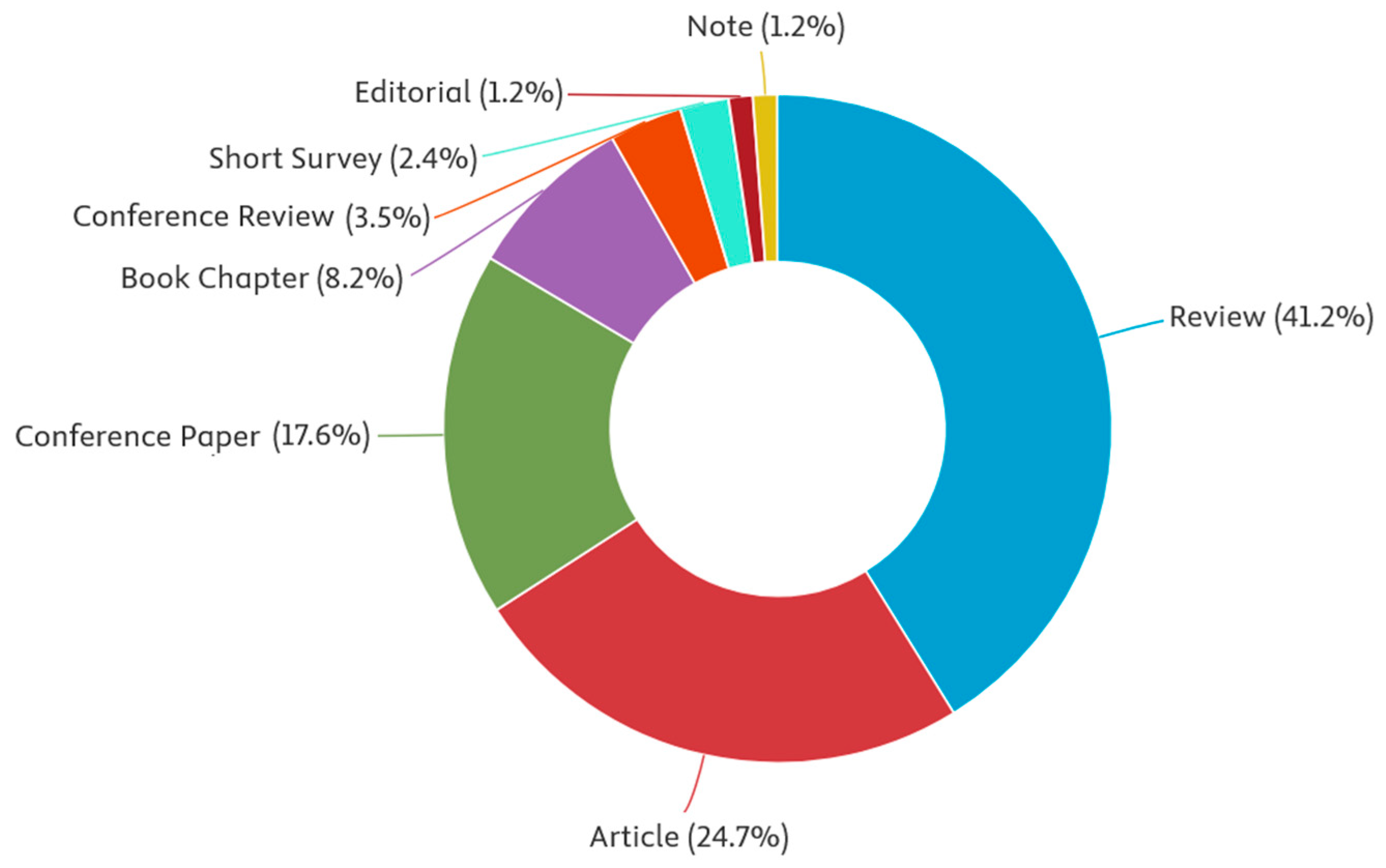
| Dominant publication types | Review (41.20%), Article (24.70%), Conference paper (17.60%) |
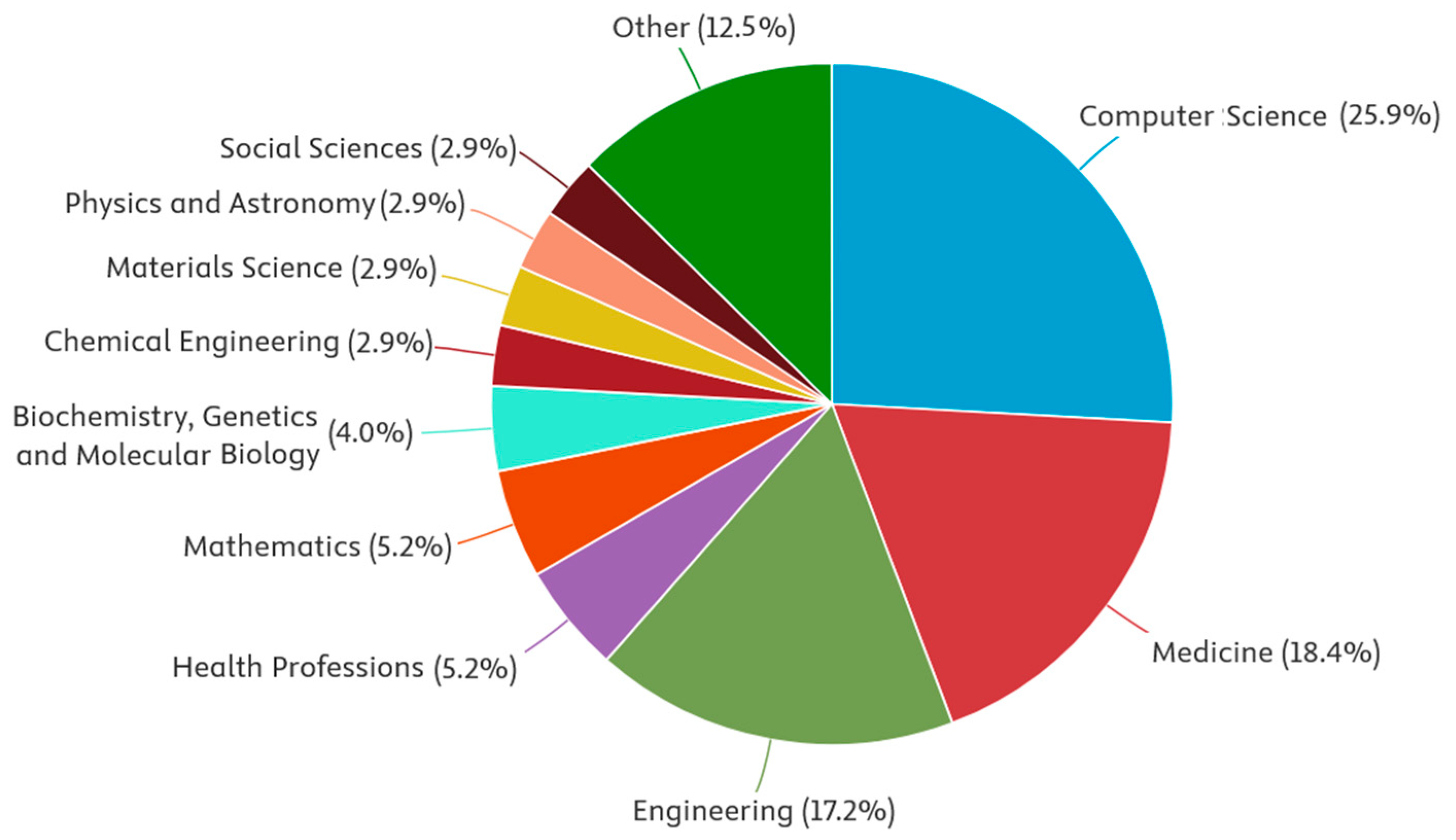
| Dominant science areas | Computer Science (25.90%), Medicine (18.40%), Engineering (17.20%) |
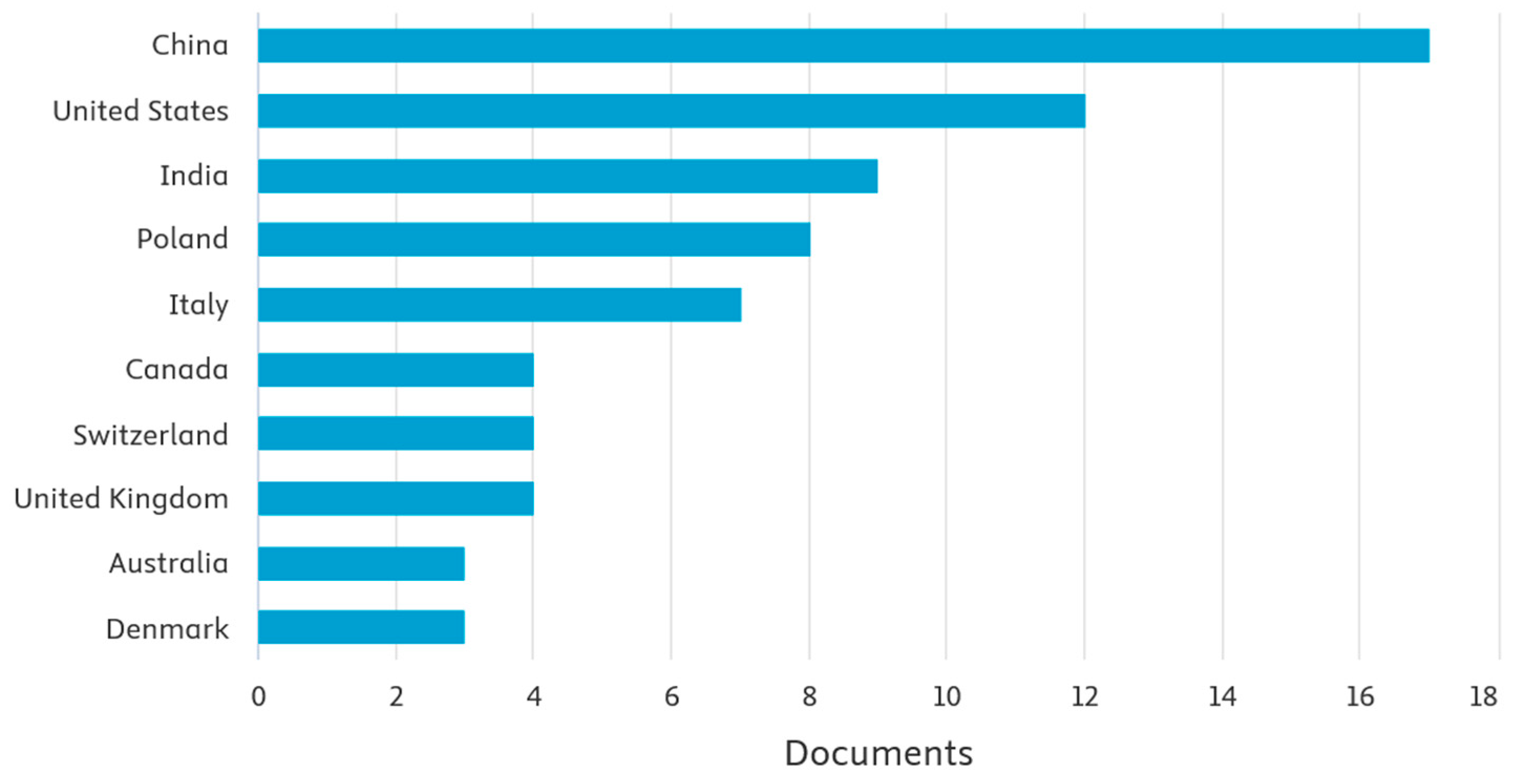
| Dominant countries/territories | China (17), USA (12), India (9), Poland (8), Italy (7), Canada (4), Switzerland (4), UK (4) |
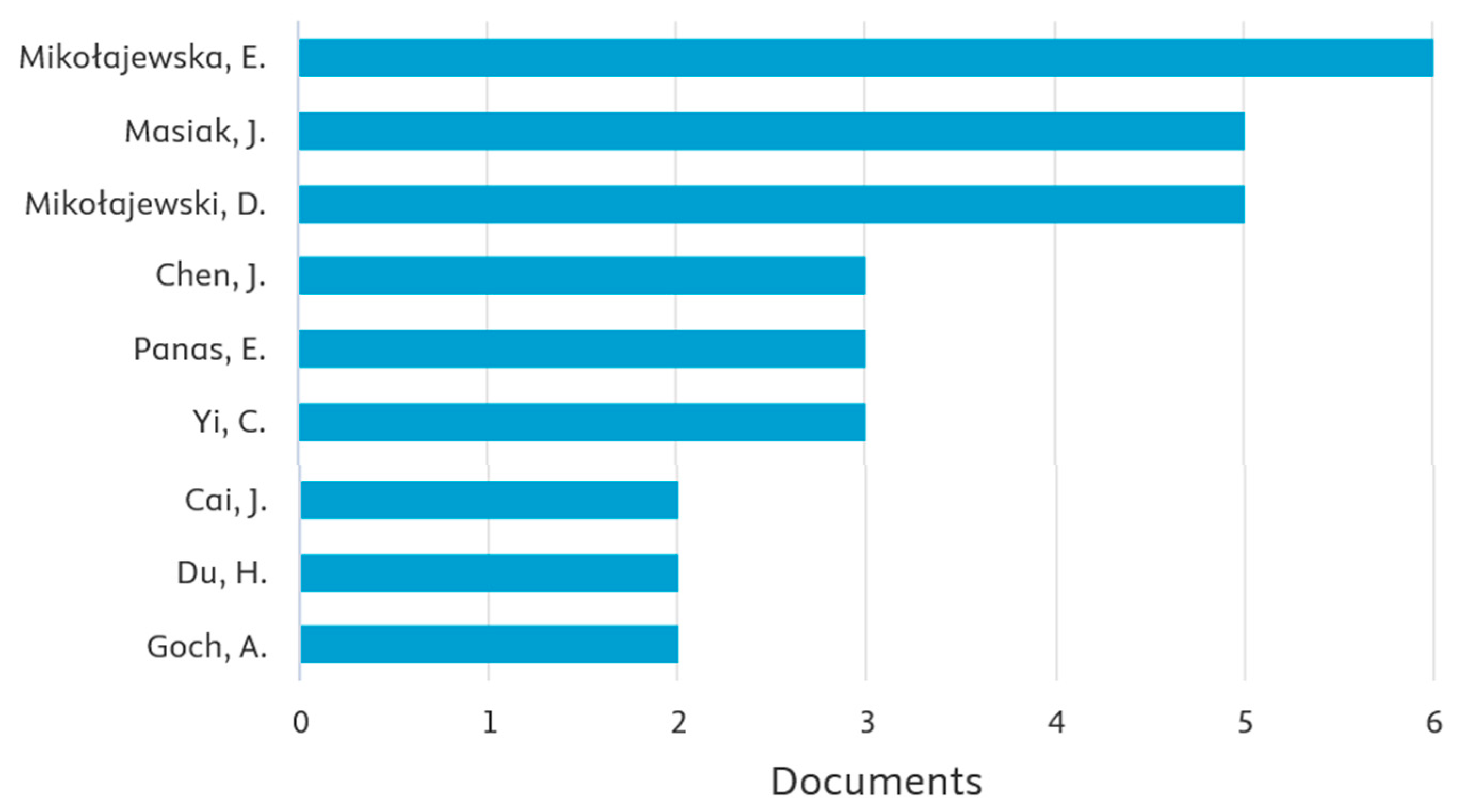
| Dominant scientists | Mikołajewska E. (6), Masiak J. (5), Mikołajewski D. (5), Chen J. (3), Panos E. (3), Yi C. (3) |
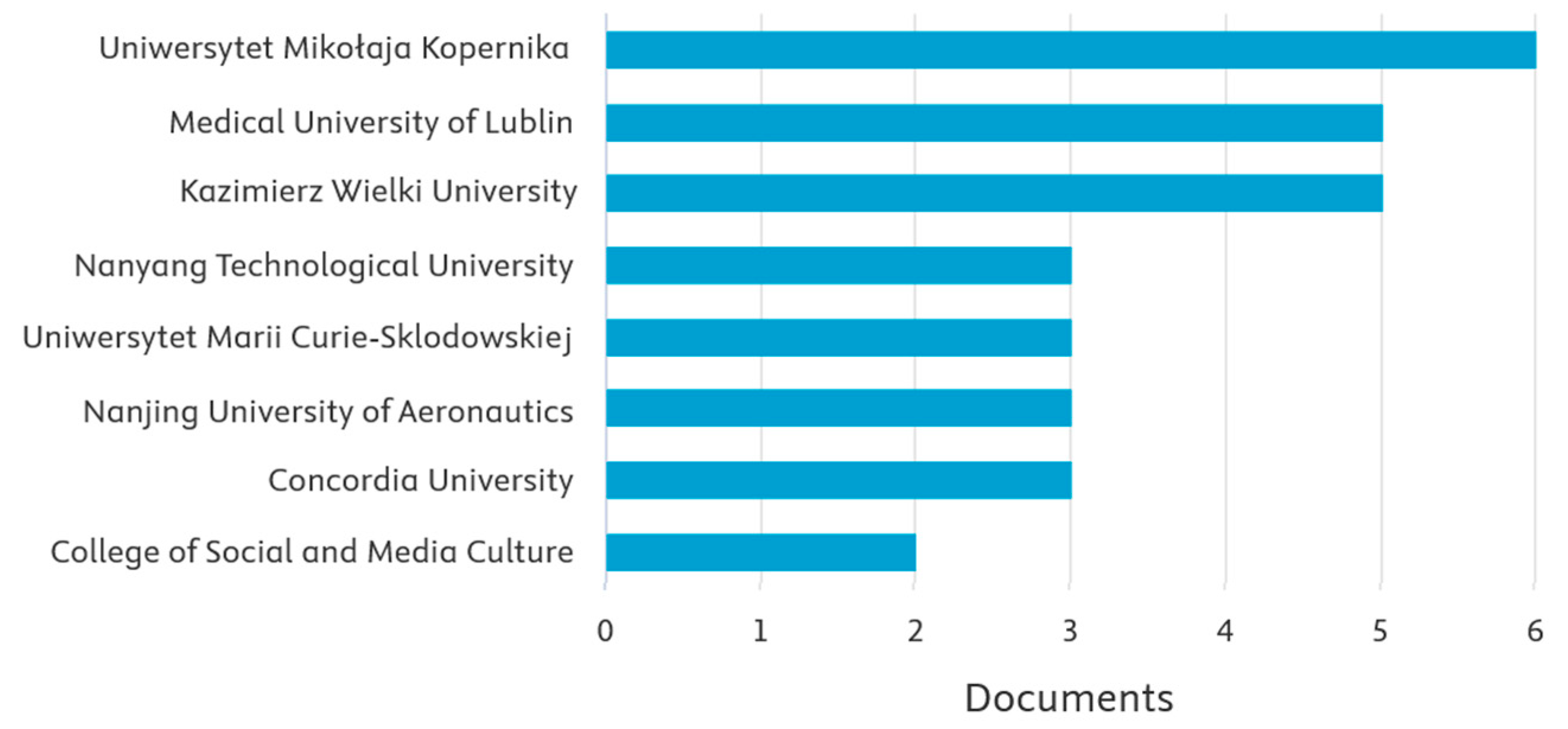
| Dominant affiliations | Nicolaus Copernicus University (6), Medical University of Lublin (5), Kazimierz Wielki University (5) |
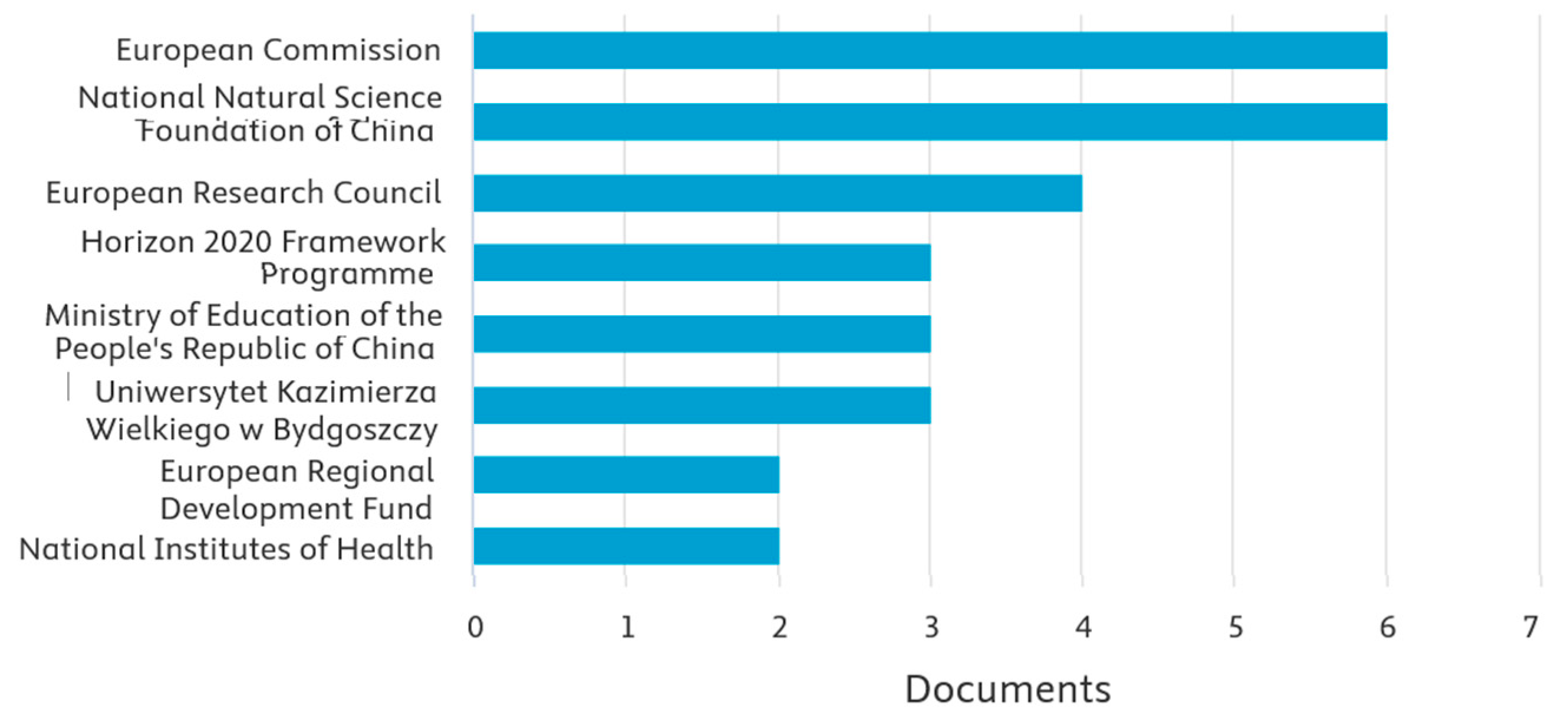
| Dominant funders (where information available) | European Commission (6), National Natural Science Foundation of China (6) |
| Dominant SDGs | Good Health and Wellbeing (8), Industry Innovation and Infrastructure (7), Responsible Consumption and Production (6), Quality Education (1), Sustainable Cities and Communities (1), Partnership for the Goals (1) |
| GIR-DT Layer | Validation Objective | Representative Metrics |
|---|---|---|
| Layer 1 Bio-integrated sensing | Sensor accuracy and reliability | Signal-to-noise ratio, RMSE, drift, battery life, sampling stability |
| Layer 2 IoMT communication | Reliable data transfer | Latency, jitter, packet loss, throughput, synchronization error |
| Layer 3 Data integration | Interoperability | FHIR conformance, semantic consistency, data completeness |
| Layer 4 AI and DT | Predictive performance | Accuracy, F1-score, ROC-AUC, calibration error, explainability, uncertainty |
| Layer 5 Multiphysics models | Model fidelity | Simulation error, biomechanical agreement, computational time |
| Layer 6 Clinical workflow | Clinical benefit(s) | Functional scales, recovery time, adherence, clinician acceptance |
| Layer 7 Governance | Safety and sustainability | Cybersecurity, privacy compliance, model drift, auditability, regulatory conformity |
Disclaimer/Publisher’s Note: The statements, opinions and data contained in all publications are solely those of the individual author(s) and contributor(s) and not of MDPI and/or the editor(s). MDPI and/or the editor(s) disclaim responsibility for any injury to people or property resulting from any ideas, methods, instructions or products referred to in the content. |
© 2026 by the authors. Licensee MDPI, Basel, Switzerland. This article is an open access article distributed under the terms and conditions of the Creative Commons Attribution (CC BY) license.
Share and Cite
Mikołajewska, E.; Masiak, J.; Panas, E.; Rogalla-Ładniak, U.; Mikołajewski, D. Global Perspectives on AI-Based Digital Twins in Smart Rehabilitation and Physiotherapy: Convergence of IoMT, Multiphysics Modeling, and Wireless Bio-Integrated Sensing. Electronics 2026, 15, 3795. https://doi.org/10.3390/electronics15173795
Mikołajewska E, Masiak J, Panas E, Rogalla-Ładniak U, Mikołajewski D. Global Perspectives on AI-Based Digital Twins in Smart Rehabilitation and Physiotherapy: Convergence of IoMT, Multiphysics Modeling, and Wireless Bio-Integrated Sensing. Electronics. 2026; 15(17):3795. https://doi.org/10.3390/electronics15173795
Chicago/Turabian StyleMikołajewska, Emilia, Jolanta Masiak, Ewelina Panas, Urszula Rogalla-Ładniak, and Dariusz Mikołajewski. 2026. "Global Perspectives on AI-Based Digital Twins in Smart Rehabilitation and Physiotherapy: Convergence of IoMT, Multiphysics Modeling, and Wireless Bio-Integrated Sensing" Electronics 15, no. 17: 3795. https://doi.org/10.3390/electronics15173795
APA StyleMikołajewska, E., Masiak, J., Panas, E., Rogalla-Ładniak, U., & Mikołajewski, D. (2026). Global Perspectives on AI-Based Digital Twins in Smart Rehabilitation and Physiotherapy: Convergence of IoMT, Multiphysics Modeling, and Wireless Bio-Integrated Sensing. Electronics, 15(17), 3795. https://doi.org/10.3390/electronics15173795