Article

Full-Topology Real-Time Simulation Modeling Method and the Application in Super-Synchronous Oscillation Analysis of Large-Scale Offshore Wind Farms

State Key Laboratory of HVDC, Electric Power Research Institute, China Southern Power Grid Co., Ltd., Guangzhou 510663, China
*
Author to whom correspondence should be addressed.
Electronics 2026, 15(13), 2860; https://doi.org/10.3390/electronics15132860
Submission received: 13 May 2026 / Revised: 13 June 2026 / Accepted: 15 June 2026 / Published: 1 July 2026
(This article belongs to the Special Issue Advanced Power Conversion Technologies for Smart Grids)

Abstract

In response to an actual super-synchronous oscillation event in an offshore wind farm, this paper proposes a full-topology real-time simulation (FTRT) scheme based on a self-developed universal link library execution device. The technical challenges of FTRT are systematically analyzed, and a complete modeling and implementation methodology is established. Using this scheme, a hardware-in-the-loop real-time simulation platform incorporating the same type of field controller is built, and the 70 Hz voltage oscillation is accurately reproduced. The analysis reveals that the submarine-cable-based transmission network possesses an inherent resonance point in the super-synchronous frequency band. The system stability boundary is then evaluated by comparing the phase–frequency characteristics of the grid-side and wind-farm impedances. Finally, oscillation suppression measures, including controller parameter unification, impedance reshaping, and SVG (Static Var Generator) deployment, are proposed and verified. The adopted FTRT technology overcomes the accuracy limitations of conventional offline simulations and simplified mechanism analyses, and the results can provide reliable, direct engineering decision support for the planning, design, and operation of offshore wind farms.

1. Introduction

With the acceleration of the global energy transition, offshore wind power, as an important component of clean energy, is developing rapidly toward large-scale and clustered deployment [1]. China is rich in offshore wind power resources. In recent years, a number of large-scale offshore wind power bases have been built in coastal areas such as Changyi in Shandong, Rudong in Jiangsu, and Zhangpu in Fujian, which are of great significance for optimizing the regional energy structure and achieving the “carbon peaking and carbon neutrality” goals. However, large-scale wind farms usually consist of hundreds or even thousands of wind turbines with different models and operating modes. In addition, most wind farms are located in remote areas and achieve long-distance transmission through series compensation or high-voltage direct current (HVDC) transmission technology. These factors all increase the risk of sub-/super-synchronous oscillation.
Numerous sub-/super-synchronous oscillation incidents have occurred in wind farms. In October 2009, a doubly fed wind farm in Texas, USA, was connected to the grid via a line with 75% series compensation, causing oscillations at approximately 20 Hz and resulting in system voltage oscillation [2]. In 2015, a direct-drive wind farm in Hami, Xinjiang, was connected to the grid via a weak AC system, which interacted with the power grid and triggered oscillations [3]. From 2012 to early 2024, multiple series compensation-induced sub-synchronous resonance events occurred in the Guyuan Wind Farm in North China [4]. These incidents demonstrate that oscillation has become a significant challenge for the safe and stable operation of large-scale wind power grid-connected systems.
For offshore wind farms, the sub-/super-synchronous oscillation problem remains prominent. In 2014, with the increase in output power, oscillations in the 20–30 Hz range occurred in the Nanao offshore wind power VSC-HVDC transmission project [5]. In August 2019, the equivalent grid strength at the grid connection point of the Hornsea Wind Farm in the UK was extremely weak, and a lightning strike caused oscillations of approximately 10 Hz in the reactive power system, leading to large-scale disconnection of wind turbines [6]. For offshore wind farms, the ground capacitance of submarine cables is dozens of times that of overhead lines, which leads to increased system capacitance and elevated resonance risk. Meanwhile, variations in wind speed affect the output of wind turbines and consequently the oscillation characteristics of the wind farm. In addition, mismatched wind turbine control parameters and weak grid strength further aggravate the oscillation risk.
From the perspective of system stability, the aforementioned oscillations fall under small-disturbance analysis. Its mathematical essence lies in the Lyapunov stability assessment of linearized systems, and the evolution of relevant research focuses on transitioning from abstract mathematical theory to practical engineering analysis. At present, the consensus on the oscillation mechanism mainly focuses on three categories: sub-synchronous resonance (SSR), device-induced sub-synchronous oscillation (SSTI), and sub-synchronous control interaction (SSCI) [7]. At the analytical level, time-domain state-space methods represented by eigenvalue analysis [8,9,10], and frequency-domain methods represented by the complex torque coefficient method [11,12] and the impedance analysis method [13,14,15], have been established. Recent studies have investigated offshore wind energy wide-band oscillations and converter-driven resonance mechanisms, highlighting how interactions between wind farm controllers and weak grids can excite multi-frequency resonant modes [16,17,18]. For oscillation suppression, existing methods primarily rely on optimizing electrical parameters, introducing additional damping control, or installing compensation devices. Researchers have also published linear time-varying (LTP) modeling and analysis methods for offshore wind power transmission via VSC-HVDC. In recent years, with the paradigm shift toward grid-forming control to provide active voltage and frequency support, novel sub-synchronous and high-frequency oscillation modes linked to multi-wind converter coupling and MMC-HVDC interactions have been identified [19]. While mathematical theoretical analysis possesses considerable theoretical value, the inherent complexity of practical engineering scenarios renders time-domain simulation equally indispensable [20].
Currently, accurate accident analysis relies on hardware-in-the-loop (HIL) real-time simulation. Although mainstream commercial simulation platforms such as RTDS (Manitoba HVDC Research Centre, Canada), RT-LAB (Opal-RT Technologies, Canada), ADPSS (China Electric Power Research Institute), and CloudPSS (Tsinghua University) are equipped with real-time simulation capabilities for renewable energy, they still face challenges [21]. From the perspective of power system operation and control, real-time simulation serves as the “last checkpoint” for operational mode verification and optimization strategy validation, and its computational accuracy directly affects the security of power grid decision-making. Therefore, achieving high-precision real-time simulation under limited hardware resources has become another key challenge. Reference [21] proposes an FTRT modeling method for wind and solar stations based on multi-core CPUs, which focuses on the electrical component modeling of renewable energy stations and serves as the foundation for wind farm full-topology modeling. References [22,23] present a novel interface modeling scheme after model partitioning, enabling multi-core parallel processing of wind farm models to improve simulation efficiency. Reference [24] develops an automatic hierarchical topology identification method for power systems, which can identify wind farm topology and divide the farm into subsystems for core-level parallel simulation. Furthermore, Reference [25] introduces a GPU-accelerated simulation approach by constructing an MMC-based energy storage system (MMC-EES) HVDC model and investigates its performance in smoothing wind power fluctuations. Reference [26] demonstrates a detailed real-time simulation of a 450 MW wind farm using the Opal-RT simulator.
The aforementioned studies primarily concentrate on simulation acceleration techniques or modeling methods that enable larger simulation scales. To achieve higher simulation fidelity, incorporating the digital control hardware of renewable energy devices into the simulation loop—i.e., HIL simulation—is an essential approach. However, existing works rarely address how to implement HIL simulation involving a large number of devices. Moreover, the process of leveraging real-time simulation to solve concrete engineering problems has seldom been demonstrated.
To address these challenges, this paper investigates the 70 Hz super-synchronous oscillation event in a Guangdong offshore wind farm through an FTRT approach. The main contributions are twofold: first, a universal link library execution device is introduced to enable high-fidelity, cross-platform FTRT for large-scale renewable energy stations; second, the FTRT scheme is applied to reconstruct the field accident. Frequency-domain impedance analysis reveals an inherent network resonance point in the super-synchronous band, and the system stability boundary is quantified by comparing the phase–frequency characteristics of the network and wind farm impedances. Based on this, the effectiveness of control parameter optimization and SVG deployment in expanding the stability margin is validated. This study bridges the gap between theoretical impedance analysis and engineering decision-making, providing a practical framework for ensuring the stability of offshore wind power systems.

2. Full-Topology Electromagnetic Modeling and Real-Time Simulation Technology

2.1. Challenges of Full-Topology Electromagnetic Modeling and Real-Time Simulation

Constraints in simulation computing resources often lead traditional real-time simulations to employ single-unit equivalent modeling for renewable energy stations. However, this simplification fails to characterize internal device interactions or accurately reproduce the sequential disconnection of units. Furthermore, inherent modeling errors significantly compromise the reproduction of field electrical behaviors, such as actual reactive power response and wide-band dynamics. While FTRT offers the most precise means of studying system dynamics under high penetration of renewable energy and complex grid conditions, its implementation faces several critical challenges.
The determination of an optimal simulation step size remains a primary hurdle. According to the Nyquist sampling theorem, capturing high-frequency switching dynamics—such as the 10 kHz switching of photovoltaic converters or the 2 kHz switching of wind converters—requires microsecond-level step sizes. Although average-value models can relax this to tens of microseconds for medium-to-low frequency studies, a trade-off persists: smaller step sizes improve accuracy but restrict the supported modeling scale. Furthermore, HIL simulations necessitate that hardware sampling periods be integer multiples of the simulation step, requiring a multi-factored balance among the simulation object, dynamic time scales, and model scale.
Furthermore, full-topology modeling imposes severe constraints on computing resources due to the drastic increase in the number of electrical nodes; a typical wind farm involves hundreds of nodes, while photovoltaic stations are even more complex. The high-order and switching dynamics of renewable energy devices further increase control node density compared to traditional synchronous generators. Consequently, large-scale simulations must utilize decoupling and multi-core parallel computing. While methods such as section-equivalent controlled sources and transmission line decoupling are common, they often introduce significant errors when internal electrical distances are short or incur accuracy losses due to communication and computation delays. Achieving efficient, high-fidelity multi-core parallel simulation remains a formidable technical task.
Finally, equipment model accuracy and cross-platform compatibility present significant limitations. Current simulation models range from simplified “white-box” models with limited dynamic accuracy to manufacturer-provided “black-box” models. Among the latter, hardware controllers offer maximum fidelity but are difficult to scale due to I/O and resource constraints. Link library models provide a high-fidelity alternative by packaging actual control logic, yet they frequently encounter cross-platform invocation issues.
In engineering practice, both RT-LAB and RTDS can achieve hardware-in-the-loop simulation. RT-LAB is predominantly used for single-device and fine-grained component simulation and is convenient for compiling custom link libraries, whereas RTDS is better suited for large-scale system-level transient analysis. Therefore, the efficient and stable invocation of link library models across these platforms remains a key technical barrier for co-simulation.

2.2. FTRT Modeling and Simulation Technology Based on Link Library

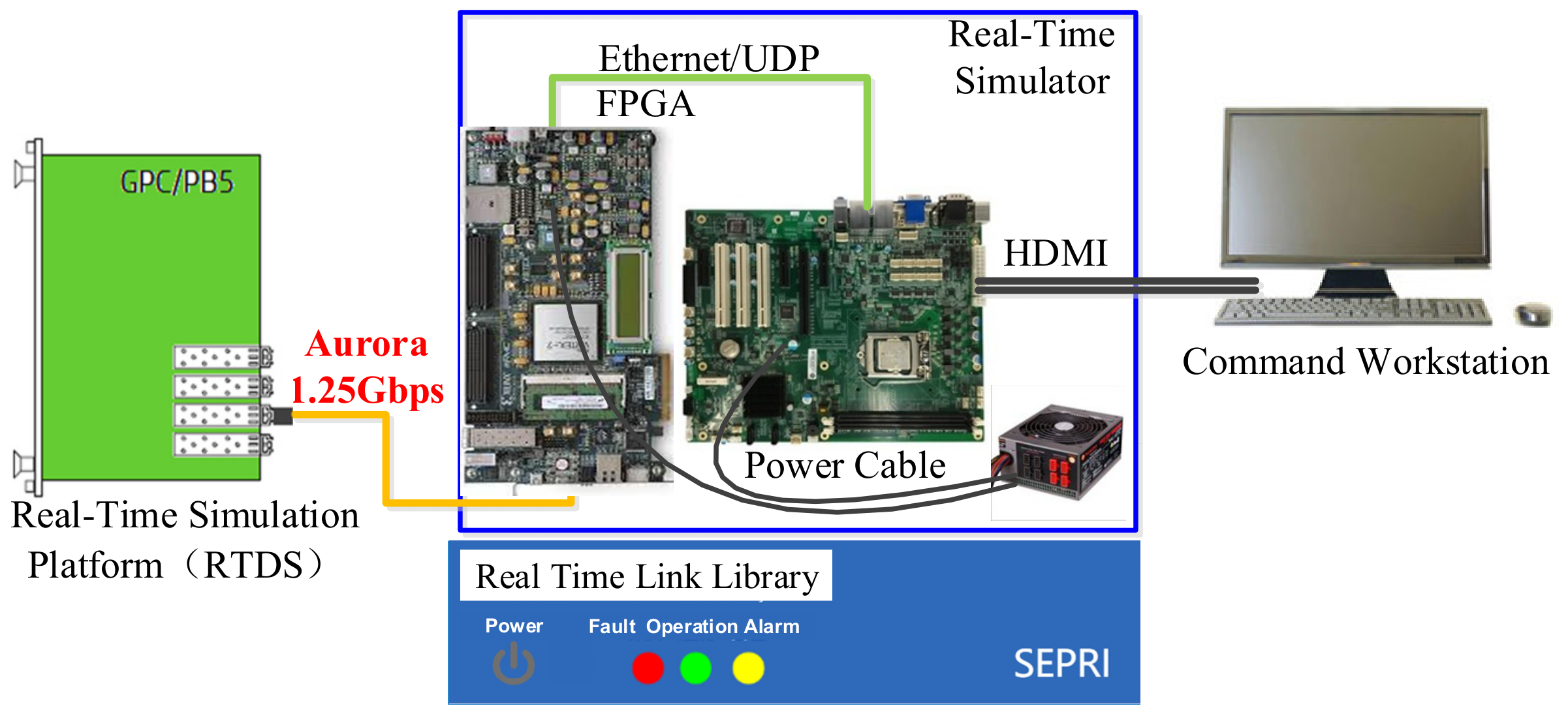
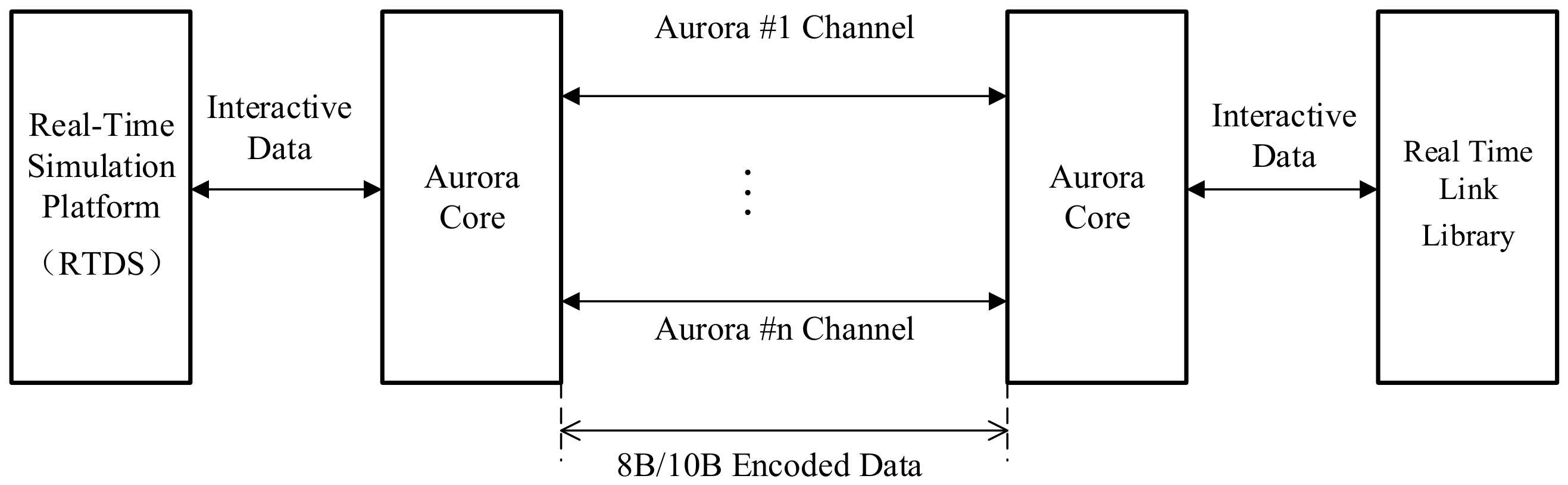
To address the challenges of cross-platform real-time simulation, this study develops a universal link library execution device [27]. It is designed to be compatible with renewable energy link library models generated on various platforms including RT-LAB and ADPSS, enabling co-simulation with the mainstream large-scale power system real-time simulator RTDS. The device supports unified invocation of Windows dynamic libraries (.dll), Linux static libraries (.a), and Linux dynamic libraries (.so). As illustrated in Figure 1, the system architecture consists of a command workstation and the execution device. The device itself is a real-time simulator running an ×86-64-based real-time Linux operating system, specifically optimized for the real-time execution of control and protection link libraries. It features six SFP optical ports to facilitate high-speed data exchange with RTDS. The Windows-based command workstation runs proprietary monitoring software to manage I/O port mapping, CPU core binding, and the compilation and monitoring of real-time tasks via Ethernet. High-speed communication between the device and RTDS is achieved through an architecture based on multi-channel Aurora protocols, as shown in Figure 2.
The device implements unified interface encapsulation by developing dedicated invocation programs for various platform-specific link libraries. A general scheduling module invokes these libraries through standardized interfaces, completing the co-simulation loop with the RTDS platform. Within the real-time scheduling module, a high-precision timer and task scheduling list manage varying invocation cycles; the system traverses the task list at every simulation step to execute scheduled libraries. By employing optimization techniques—including startup parameter tuning, kernel interrupt binding, real-time task priority adjustment, and memory pre-allocation—the device significantly minimizes timing jitter. Experimental results demonstrate that the calling timing jitter of the proposed device is far smaller than typical simulation steps such as 50 μs. Hence, the calling procedure barely deteriorates simulation accuracy. Moreover, based on our accumulated experimental tests, each optical port is capable of running six renewable energy link library instances with the corresponding CPU load kept below 30%, and multiple optical ports can perform parallel computation simultaneously. In this way, the device helps remove core barriers to full-topology co-simulation of renewable-energy link library models supplied by different manufacturers.
Addressing the full-topology simulation challenges outlined in Section 2.1, this paper proposes an FTRT implementation scheme based on the universal link library execution device. The scheme consists of the following four phases:
  • Simulation Step Size Selection. To balance medium-to-low-frequency dynamic requirements with the scale of regional grids, and considering the sampling constraints of conventional hardware controllers, the simulation step size is set to 50 μs. For capturing high-frequency switching dynamics, multi-rate components—such as large/small-step interface transformers—are utilized to achieve coupled simulation across different time scales.
  • Single-Unit Model Verification. To ensure high fidelity, the renewable energy link library models undergo comparative verification against actual hardware controllers. This includes small-disturbance tests (e.g., impedance scanning) and large-disturbance tests (e.g., high/low voltage ride-through), ensuring that the protection and control logic aligns with actual system requirements.
  • Single-Unit Cross-Platform Validation. The universal link library execution device enables the deployment of verified RTLAB-based link library models within the RTDS platform. This single-device-level simulation validates the reliability of the device’s communication interfaces and its real-time scheduling mechanism.
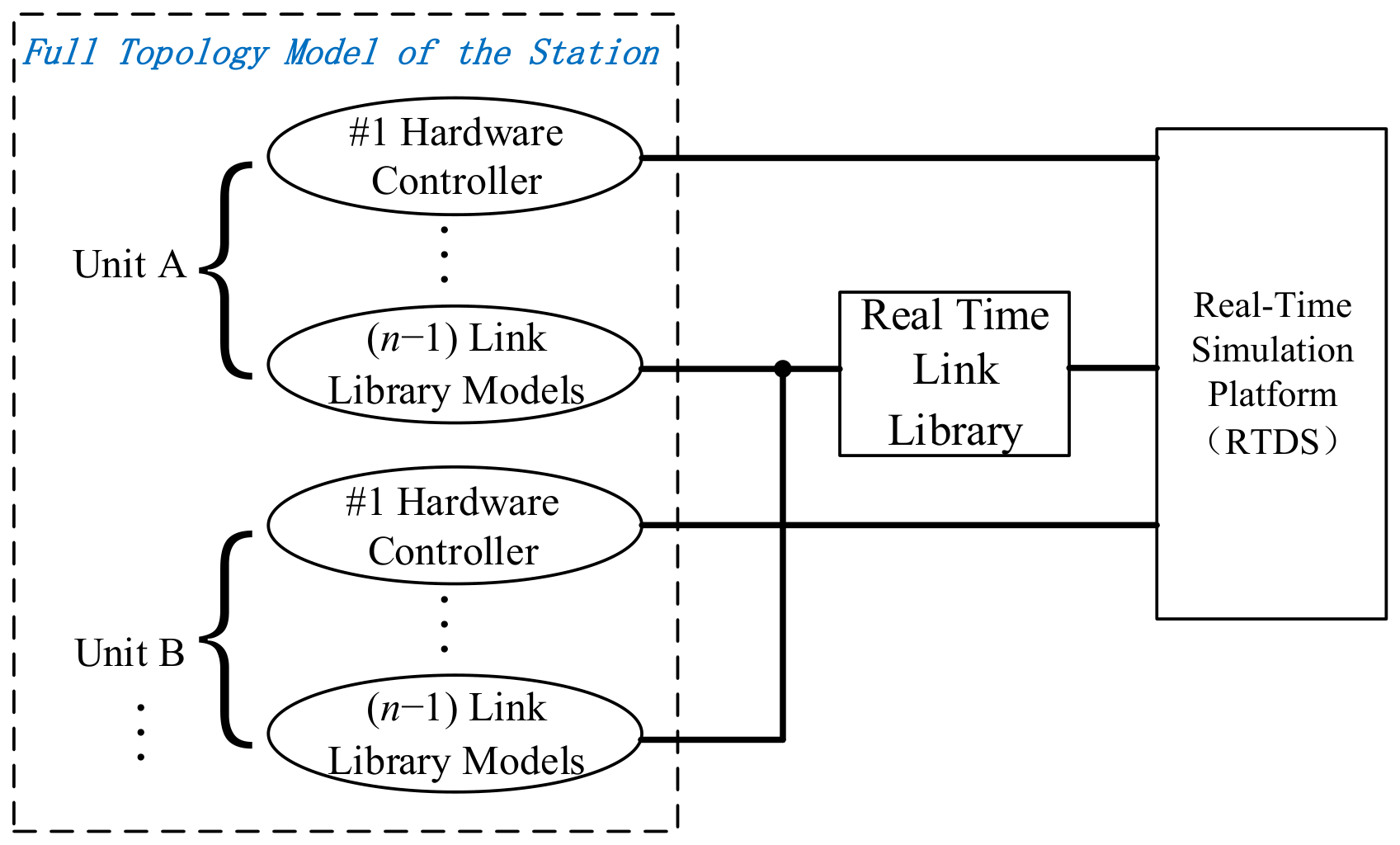
  • Full-Topology System Integration and Implementation. A hybrid modeling strategy of “hardware-in-the-loop + link library model” is adopted, in which at least one hardware controller is used for critical equipment while similar or non-critical units utilize corresponding link library models. To optimize simulation resources, device-level electrical and control nodes are minimized, and non-dynamic switching elements are simplified to reduce the admittance matrix scale. For parallel computing, decoupling sections are strategically selected along longer transmission lines within the topology’s minimum cut set to minimize decoupling errors.
By integrating these modeling, order-reduction, and decoupling strategies, the construction of an FTRT platform is achieved. This scheme leverages the universal link library execution device to resolve cross-platform compatibility issues, effectively balancing modeling precision with resource constraints to provide a viable path for engineering-grade simulation of large-scale renewable energy stations. The platform architecture is illustrated in Figure 3.

3. Time-Domain Simulation Analysis Based on Full-Topology Modeling Technology

3.1. Super-Synchronous Oscillation Event of an Offshore Wind Farm

An offshore wind farm in Guangdong Province, with a total capacity of 1000 MW, experienced a significant voltage fluctuation event in February 2024. The facility comprises 92 domestic 11 MW permanent magnet direct-drive wind turbines across 16 collection lines, integrated via a 500 kV offshore step-up substation and an onshore control center.
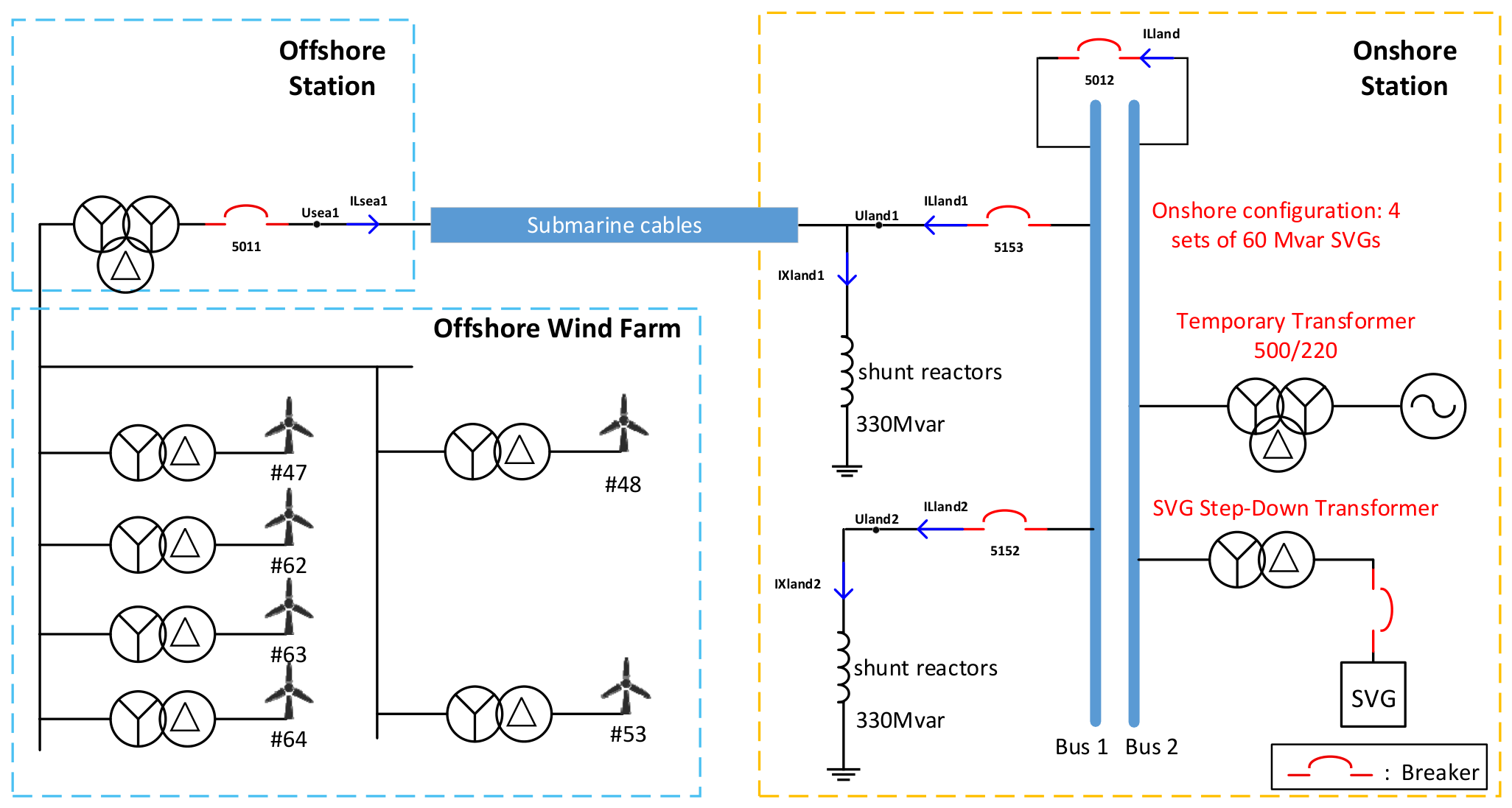
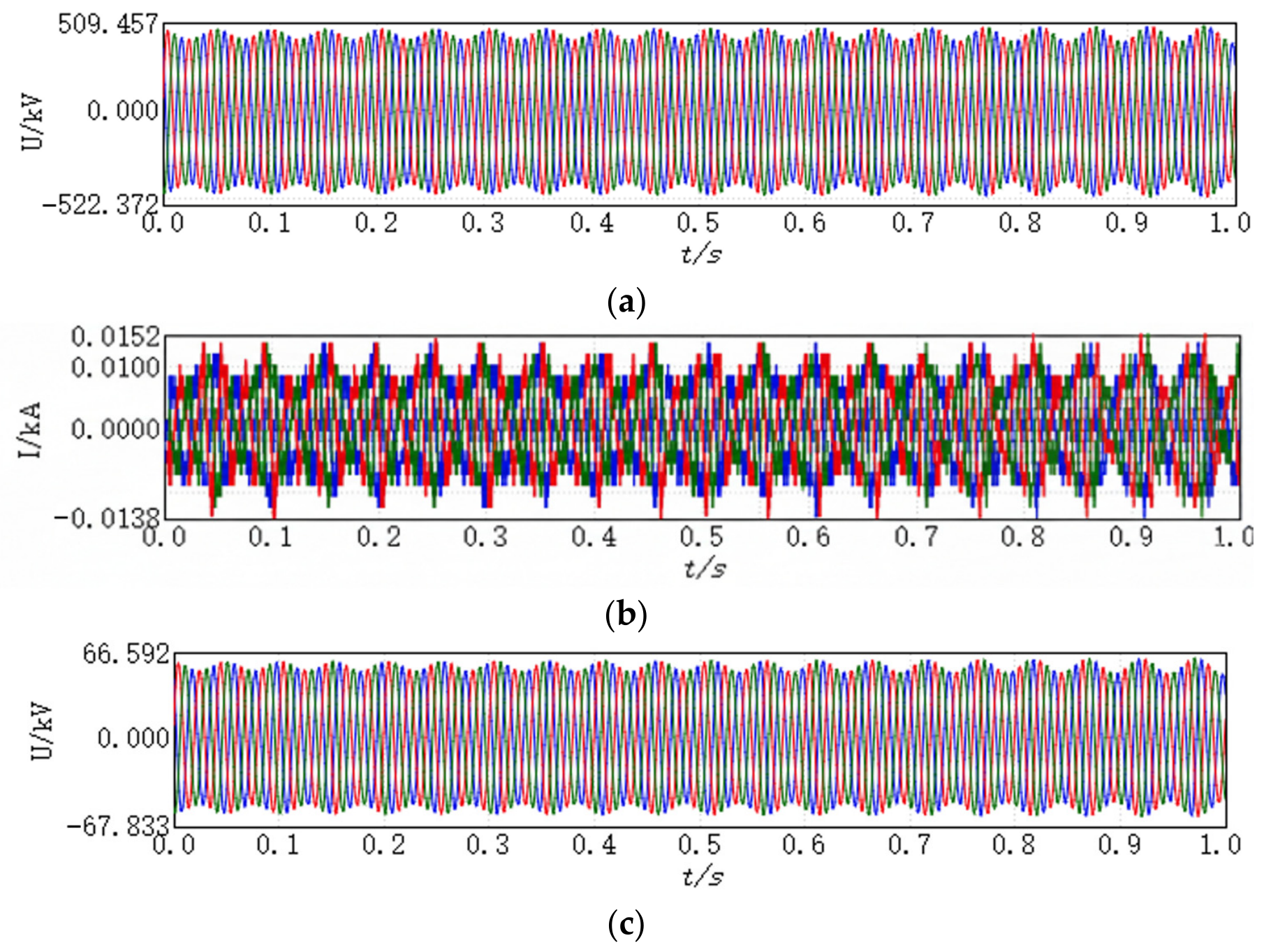
Before the event, the offshore wind farm operated in a temporary wiring configuration. Specifically, only one of the two 500 kV submarine cables was active, the SVG was offline, and only the two 330 Mvar high-voltage shunt reactors located on both sides of the submarine cable were in service. The topology is shown in Figure 4. The #1 main transformer of the offshore station operated with 69 kV #1, #2, #3, and #4 busbars, and a total of five 11 MW permanent magnet direct-drive wind turbines on collection line 9 (#53 wind turbine) and collection line 10 (#47, #62, #63, #64 wind turbines) were connected to the grid. These five wind turbines were all in a limited power operation state, with a single-unit output of approximately 100 kW; the measured total output of the whole farm was 527.5 kW, and the measured value of the grid connection point voltage was 534.7 kV. The event process is as follows: at 9:40:05, the #48 wind turbine (the 6th wind turbine) was connected to the grid. At 9:42:14, abnormal voltage fluctuations occurred in the offshore wind farm. At 9:42:20, the station staff reported the incident and disconnected all 6 wind turbines from the grid. At 9:44:14, the voltage fluctuation of the station subsided. From 9:42:14 to 9:44:14, the voltage of the 500 kV #1 and #2 busbars in the offshore wind farm fluctuated; the maximum amplitude of the 500 kV #1 busbar voltage was 560 kV, the minimum amplitude was 509 kV, lasting for 120 s, and the PMU/wideband measurement device in the farm issued an alarm.
After the incident, it was determined that the first five grid-connected wind turbines all adopted normal control parameters, while the newly incorporated 6th wind turbine had adopted standby control parameters due to an operational error.
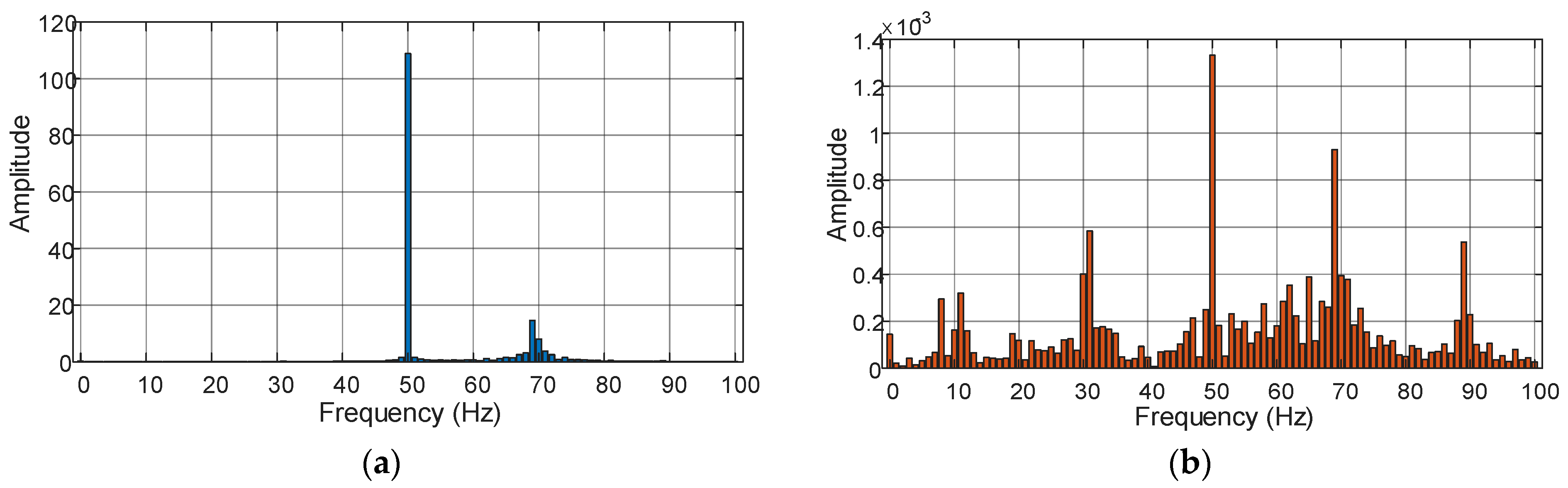
The on-site waveform recording is shown in Figure 5, including the voltage and current of line A of the offshore wind farm and the voltage on the 66 kV side of the main transformer. Fourier decomposition of the 500 kV voltage at the onshore station reveals a significant 69 Hz harmonic component, as shown in Figure 6. Based on these measurements, the incident was categorized as a characteristic wind farm total disconnection event triggered by super-synchronous oscillation.
To accurately reproduce the on-site oscillation incident, this paper conducts real-time simulation analysis based on full-topology modeling for the offshore wind farm.

3.2. Construction of FTRT Model for the Offshore Wind Farm

In terms of control system modeling, the critical unit that triggered the fault (WT#48) is represented by a physical hardware controller identical to the one used on-site. This controller is interfaced with the RTDS simulation platform via a Giga-Transceiver Input/Output (GTIO) board (refer to Appendix A for the hardware configuration). For the remaining units (WT#53, #47, #62, #63, and #64), converter control is modeled using packaged static link libraries compiled in RT-LAB (software version: V2024.1.1.38). These libraries are integrated into the RTDS environment through the universal link library execution device to ensure real-time cross-platform execution.
Given that this oscillation occurs on an electromagnetic time scale, the grid-connection characteristics of the direct-drive wind turbine at this particular time scale are predominantly governed by the converter. Therefore, a simplified modeling approach is adopted for the permanent magnet generator, which operates with a constant torque input. It should be noted that all wind turbines in this project adhere to the same model and parameter specifications.
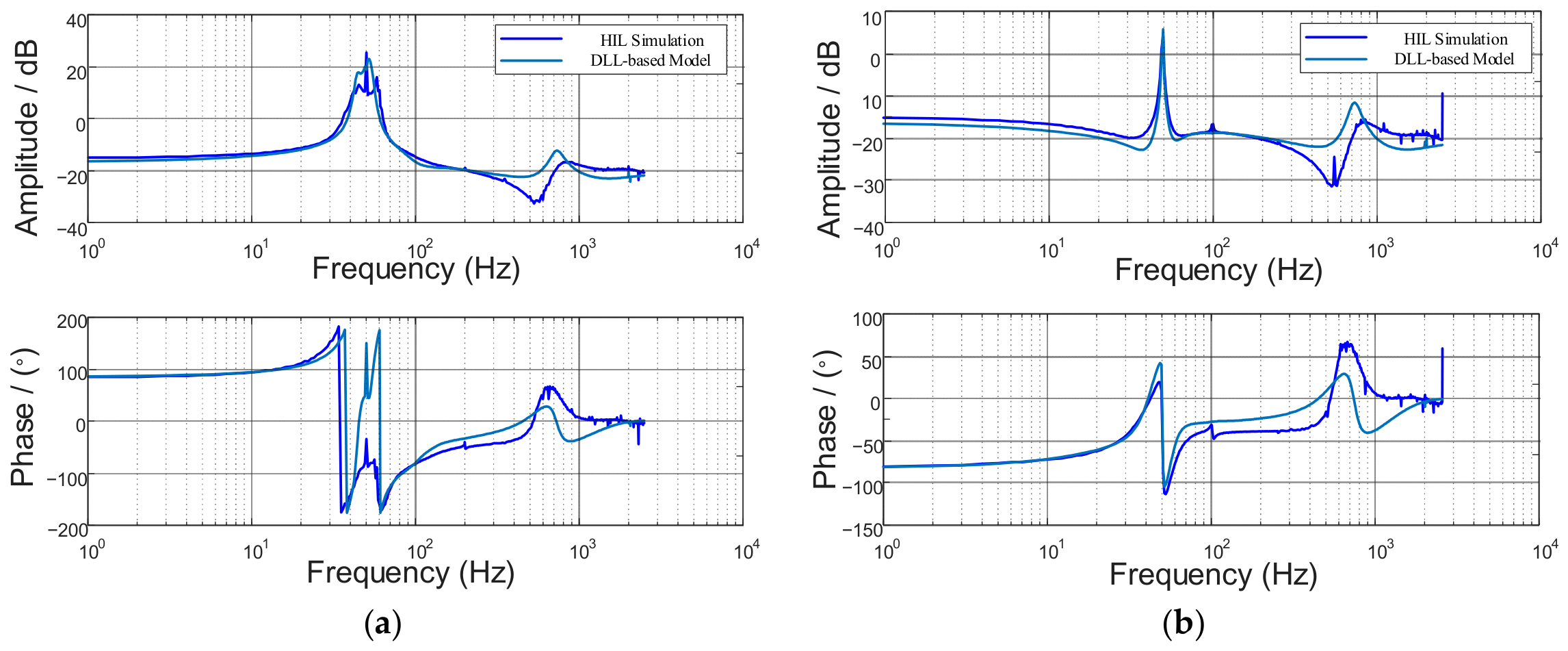
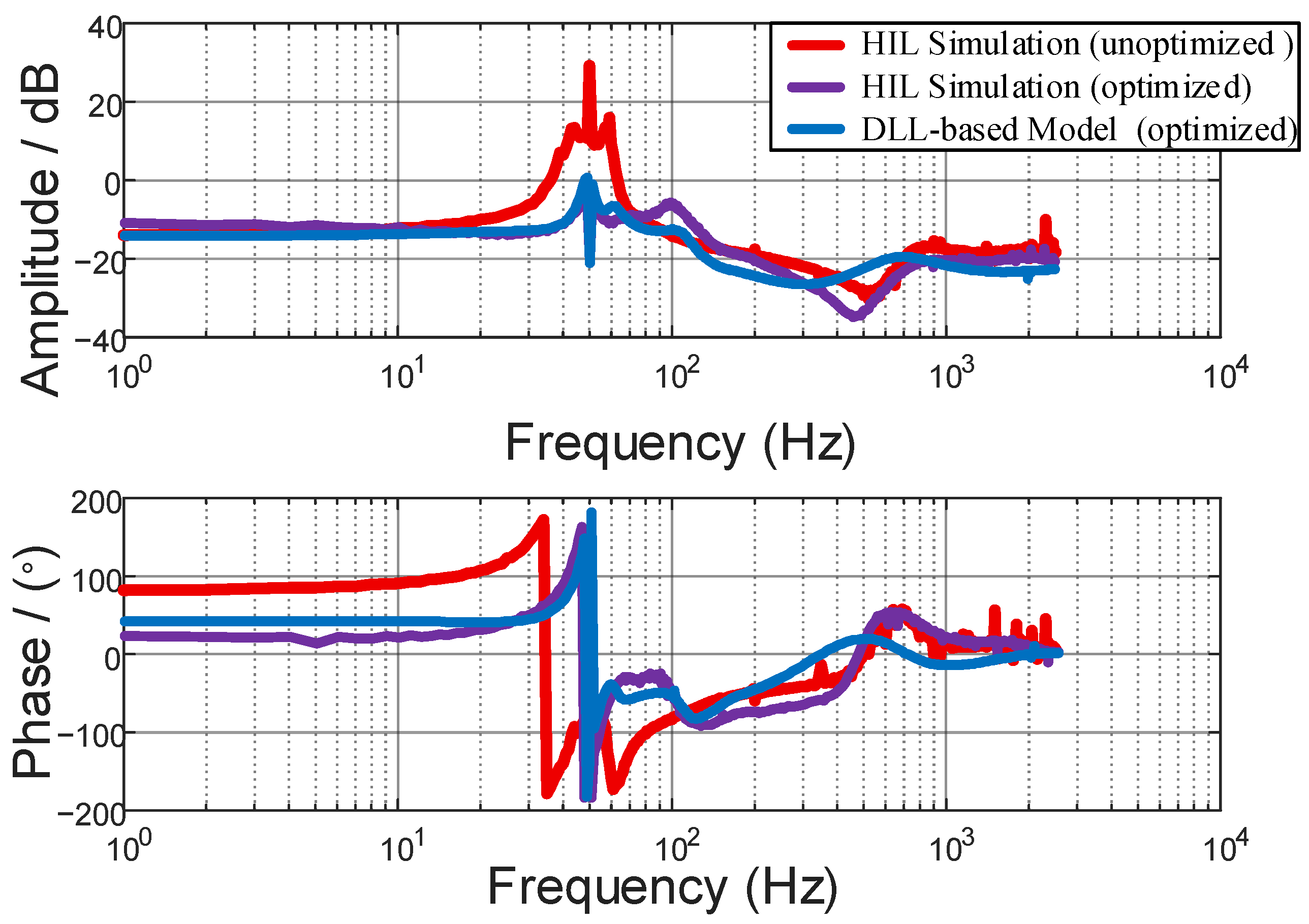
An impedance scanning experiment was conducted on the RT-LAB platform to evaluate the consistency between the packaged link library and the hardware controller. The comparison of the wind turbine’s positive- and negative-sequence impedances is illustrated in Figure 7. Furthermore, the fault ride-through (FRT) responses of both the link library and the hardware controller were benchmarked.
The experimental results demonstrate that under the measured operating conditions, the control characteristics of the link library are essentially consistent with those of the hardware controller. Owing to inherent limitations of small-signal impedance measurement, the disturbance-induced current at the fundamental frequency cannot be accurately separated; therefore, the impedance results near the fundamental frequency are excluded from comparison. In addition, measurement errors of high-frequency impedance have negligible influence on the experiment and can be ignored.
In conclusion, an architecture integrating a single hardware controller with multiple link library models effectively captures the authentic physical characteristics of the equipment while maintaining a faithful simulation for the entire wind farm.
In the RTDS full-topology wind farm model, the collection lines between wind turbines adopt the Bergeron model. The grid-side model of the RTDS system includes the wind farm collection busbar, offshore step-up transformer, submarine cable, two groups of high-voltage shunt reactors, onshore step-down transformer, and the connected 220 kV power grid. The system parameters are provided in Appendix A.

3.3. Time-Domain Oscillation Reproduction of the Offshore Wind Farm

Real-time simulation was conducted using the established RTDS model to replicate the event. Initially, five wind turbines configured with standard operational parameters were connected to the grid, each with an output of 100 kW. The simulation results confirmed stable system operation with no observable oscillations.
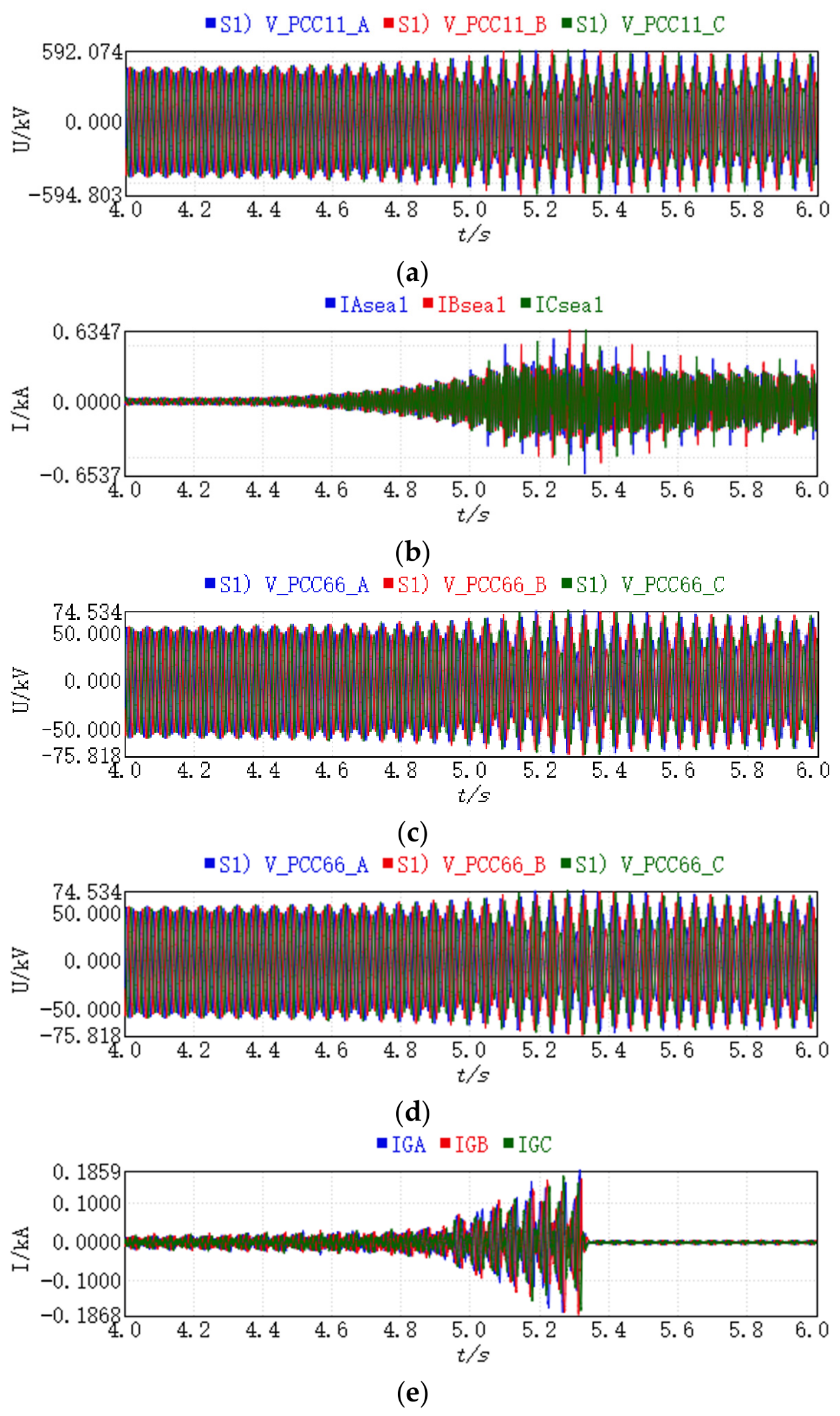
Subsequently, the actual field operational sequence was simulated by introducing WT#48, which was configured with standby control parameters. Upon its integration, the system immediately exhibited sustained voltage fluctuations. The resulting simulation waveforms, illustrated in Figure 8, demonstrate the onset of instability triggered by the parameter mismatch.
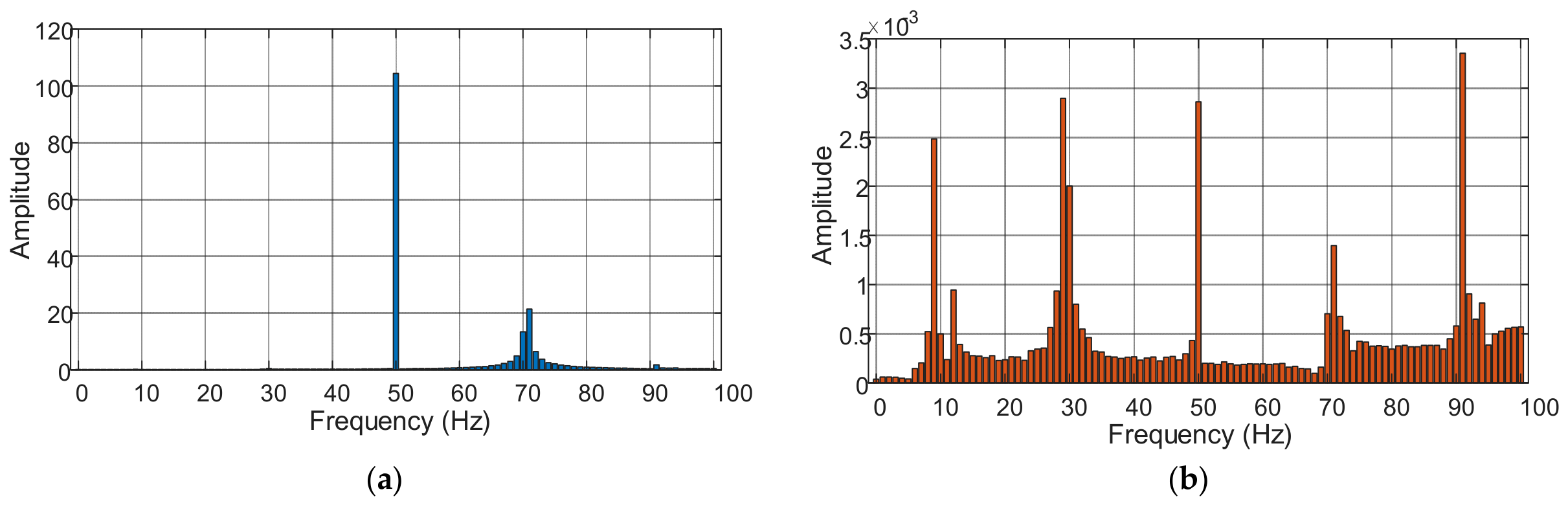
Fourier decomposition is performed on the voltage on the high-voltage side of the offshore step-up substation. The spectrum analysis results show that there is a harmonic component of approximately 70 Hz in the voltage, as shown in Figure 9. The oscillation frequency obtained by the simulation is essentially consistent with the on-site measured data, which verifies the accuracy of the built model and the preliminary judgment that the standby parameters caused the oscillation.

4. Oscillation Risk Identification and Optimization Measures Based on Frequency-Domain Impedance Method

4.1. Inherent Resonance Point of the Network

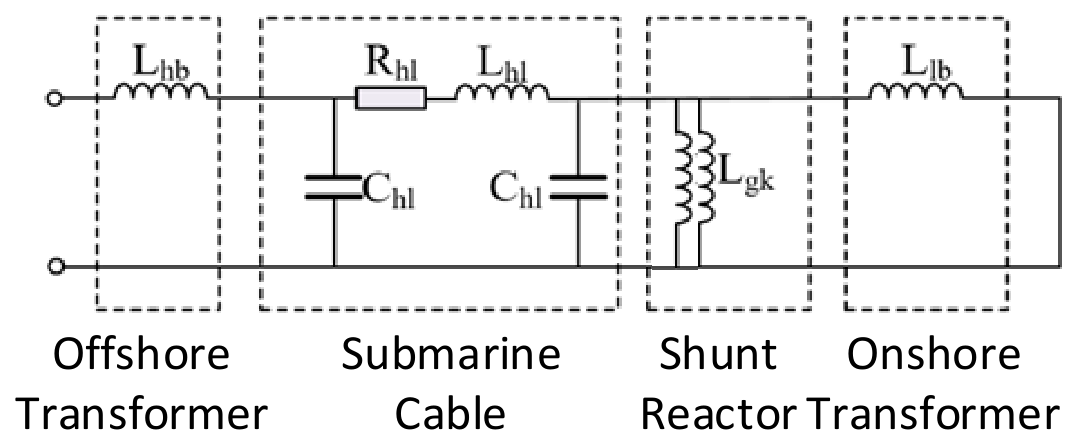
The system topology can be simplified as shown in Figure 10. The on-shore power grid is regarded as a voltage source type; therefore, short-circuit equivalence is implemented based on Thevenin’s theorem. Transformers are represented by lumped inductances while submarine cables are modelled using standard π-equivalent circuits. Lhb denotes the equivalent reactance of the offshore transformer. Rhl, Lhl and Chl denote the equivalent resistance, reactance, and shunt capacitance to ground on one side of the submarine cable, respectively. Lgk represents the high-voltage shunt reactor; in this case, two sets of reactors are configured. Llb denotes the equivalent reactance of the onshore transformer.
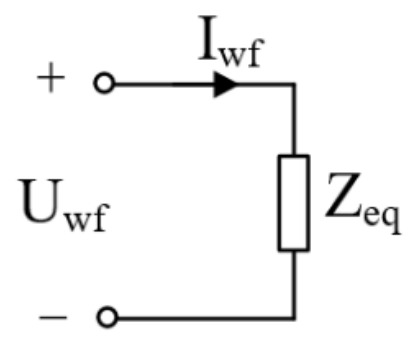
The voltage–current relationship at the grid connection point of the wind turbine satisfies Uwf = IwfZeq, as shown in Figure 11, where Zeq is the network equivalent impedance. The network resonance points correspond to the poles of Zeq (s), where an extremely large impedance magnitude allows even minor current fluctuations to induce significant voltage oscillations. The overall system stability depends on both the wind turbine impedance and the network impedance, but the network resonance points inherently mark these frequencies as high-risk bands where oscillations are prone to occur. This will be demonstrated in the subsequent analysis.
According to the series/parallel relationships in Figure 10, the impedance is calculated step by step from right to left, and the expression for the total impedance can be derived.
Z 1 = L lb L gk L lb + L gk s X Chl = 1 s C hl Z 2 = Z 1 X Chl Z 1 + X Chl Z 3 = Z 2 + R hl + s L hl X Chl Z 2 + R hl + s L hl + X Chl Z eq = Z 3 + s L hb
By substituting the values from Appendix A, it is obtained that Lhb = 0.2887 H, Llb = 1.3923 H, Rhl = 2.8859 Ω, Lhl = 0.0249 H, Chl = 3.8012 × e−6 F, Lgk = 1.3293 H. Substituting these values into Equation (1) yields:
Z e q = 0.29 s 5 + 33.45 s 4 + 6.47 s + 43.4 × 10 6 s 2 + 4.06 s + 11.8 × 10 12 s 4 + 115.9 s 3 + 2.15 × 10 7 s 2 + 4.483 × 10 7 s + 4.086 × 10 12
The system possesses two pairs of conjugate poles, p1,2 and p3,4. The oscillation mode associated with p3,4 exhibits high damping and a frequency of approximately 735 Hz; its high-frequency nature limits its propagation within the system. Conversely, the mode corresponding to p1,2 has low damping and a frequency of approximately 70 Hz, identifying it as the dominant pole. The dominant pole, located nearest the imaginary axis, governs the system’s dynamic and oscillatory behavior. This confirms that the system possesses an inherent resonance point near 70 Hz under the specific network topology present during the event.
The estimated short-circuit ratio of the wind farm is approximately 1.1. Therefore, the grid strength is weak under the temporary wiring configuration of the system, which increases the risk of oscillation.

4.2. Single Unit Impedance Scanning of Wind Turbines

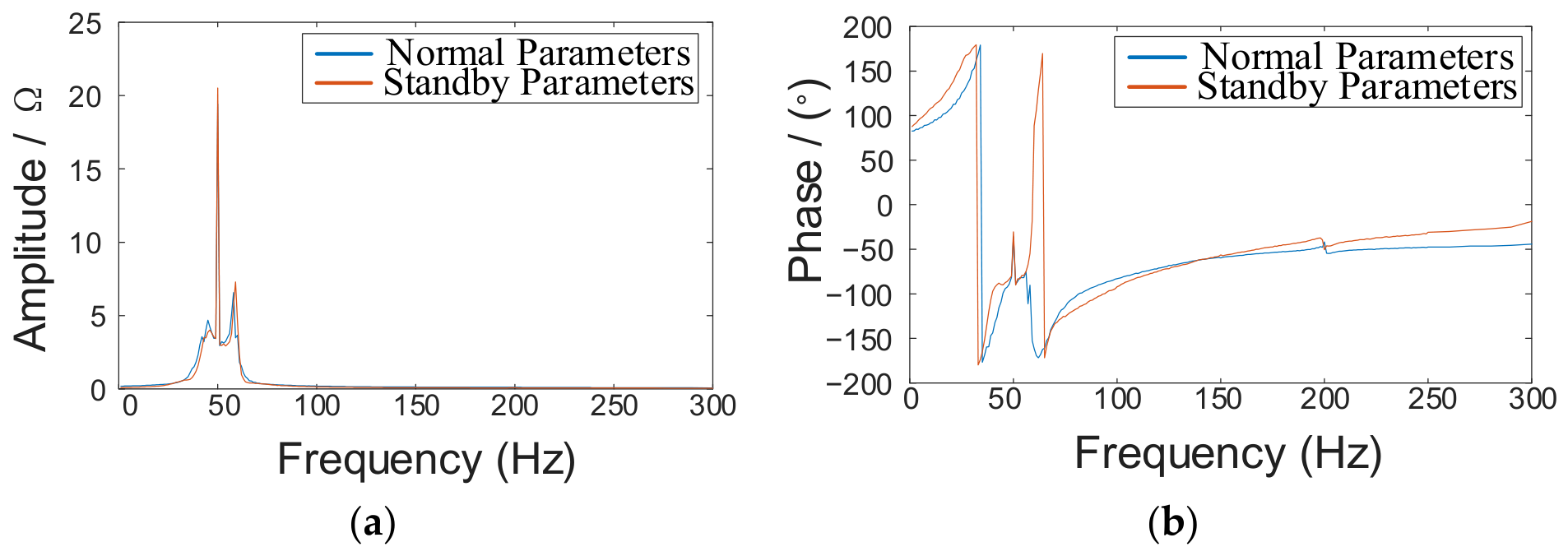
Positive-sequence impedance scanning was conducted on the RT-LAB platform to compare wind turbines configured with normal versus standby parameters. The resulting frequency sweep curves, presented in Figure 12, reveal that the phase–frequency characteristics of the turbine with standby parameters deviate significantly from the normal profile near 70 Hz. This discrepancy directly compromises system stability within the super-synchronous frequency band.

4.3. Oscillation Risk Identification Based on Frequency-Domain Impedance Method

Based on the impedance characteristics of the grid-connected system, the wide-band oscillation risk is evaluated using the Nyquist stability criterion. Specifically, the stability of the system is assessed by analyzing the Bode plot of the open-loop transfer function Zsys/Zwf. The system is considered to have an oscillation risk if the phase angle at the gain crossover frequency—the frequency at which the magnitude ratio |Zsys/Zwf| = 1—exceeds 180° (i.e., the phase margin is negative) [16].
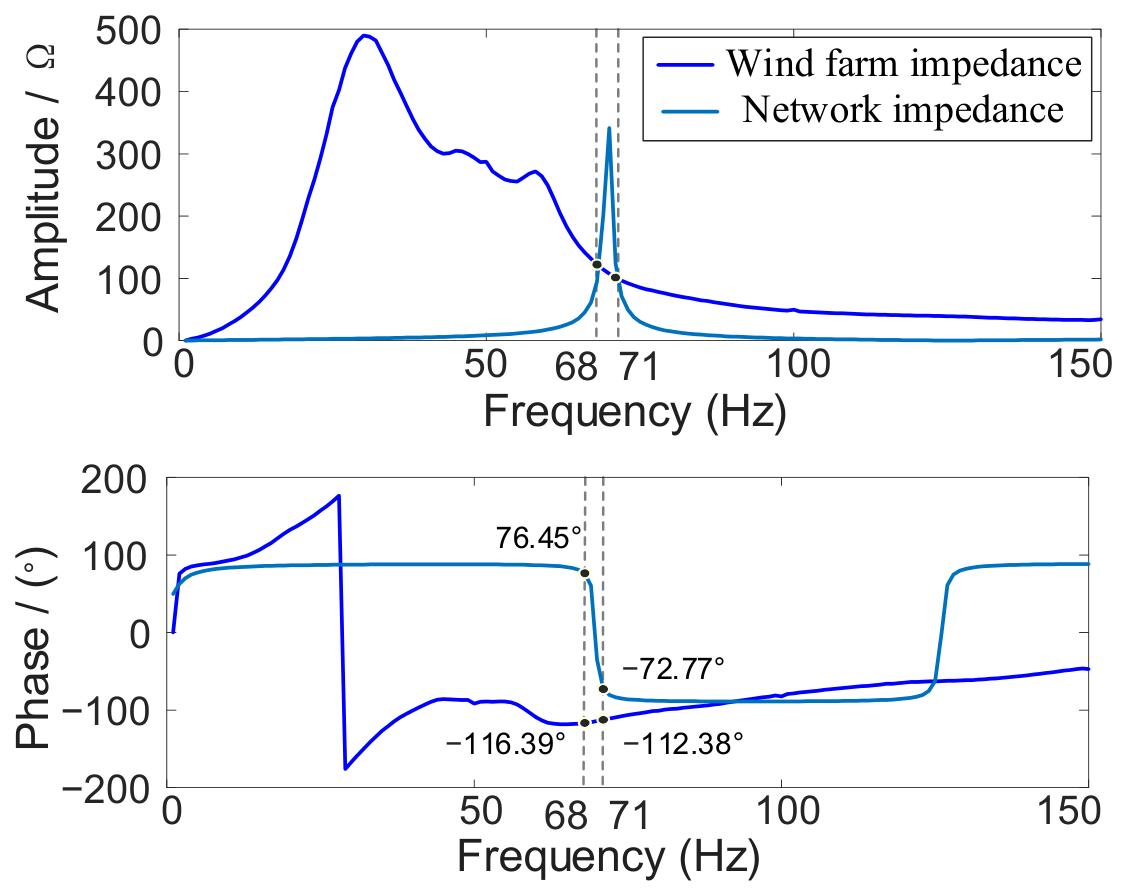
Figure 13 illustrates the grid-connected impedance characteristics during the simultaneous operation of five wind turbines with normal parameters and one turbine with standby parameters. The network impedance curve Zsys and the wind farm impedance curve Zwf are plotted for this specific operating condition.
The analysis identifies two intersection points in the amplitude–frequency curves near 68 Hz and 71 Hz, as detailed in Table 1. At the 68 Hz intersection, the phase difference between Zsys and Zwf reaches 192.8°, exceeding the 180° stability threshold. This negative phase margin confirms the system’s instability and explains the onset of the observed oscillations.
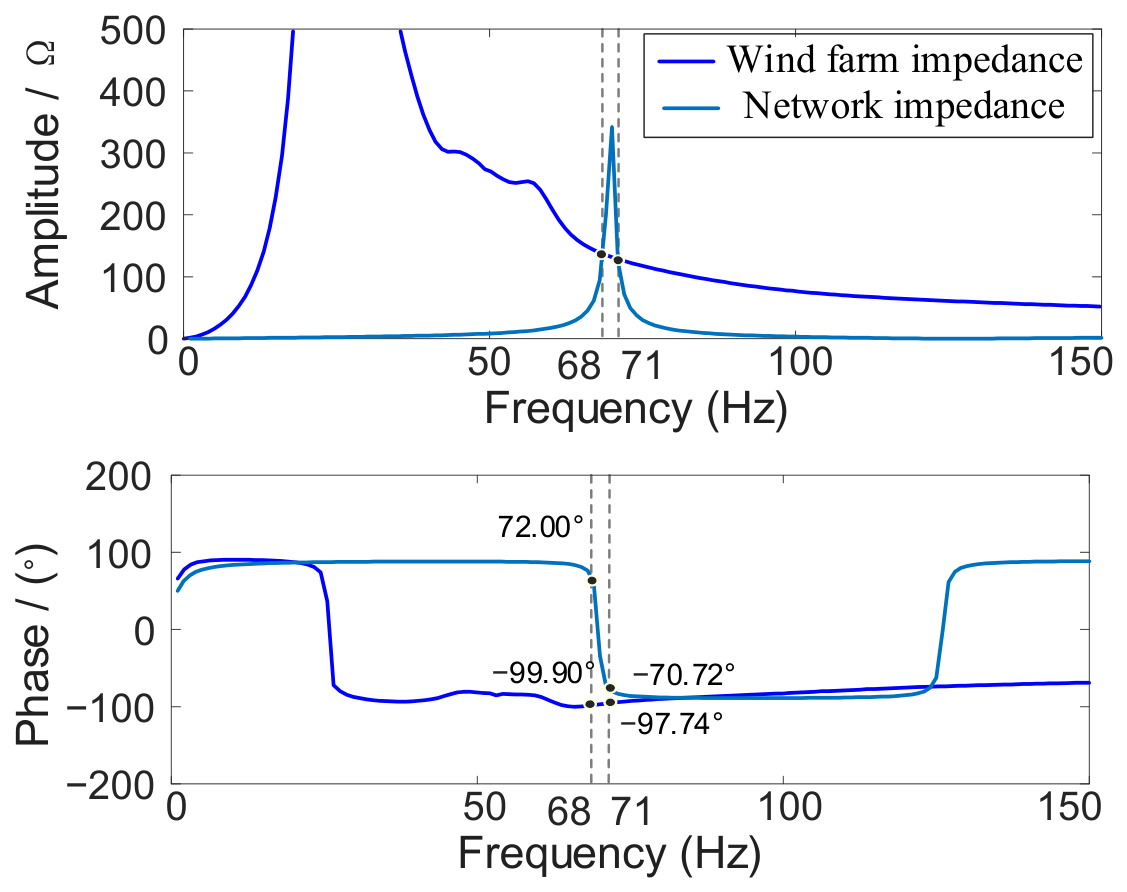
In contrast, Figure 14 presents the grid-connected impedance characteristics during the operation of only the five wind turbines configured with normal parameters. Although the amplitude–frequency curves still exhibit two intersection points near 68 Hz and 71 Hz, the corresponding phase differences are 172° and 27°, respectively, as shown in Table 2. Since neither value exceeds the 180° stability threshold, the system maintains stable operation.
In such scenarios, the network and wind farm impedance curves typically intersect at two frequencies. Because the phase difference at the first intersection point is generally much larger than that at the second, it exerts a more critical influence on system stability. Consequently, the subsequent analysis focuses on the characteristics of this primary intersection point.

4.4. System Oscillation Optimization and Stability Boundary Evaluation

4.4.1. Optimization of Wind Turbine Control Parameters

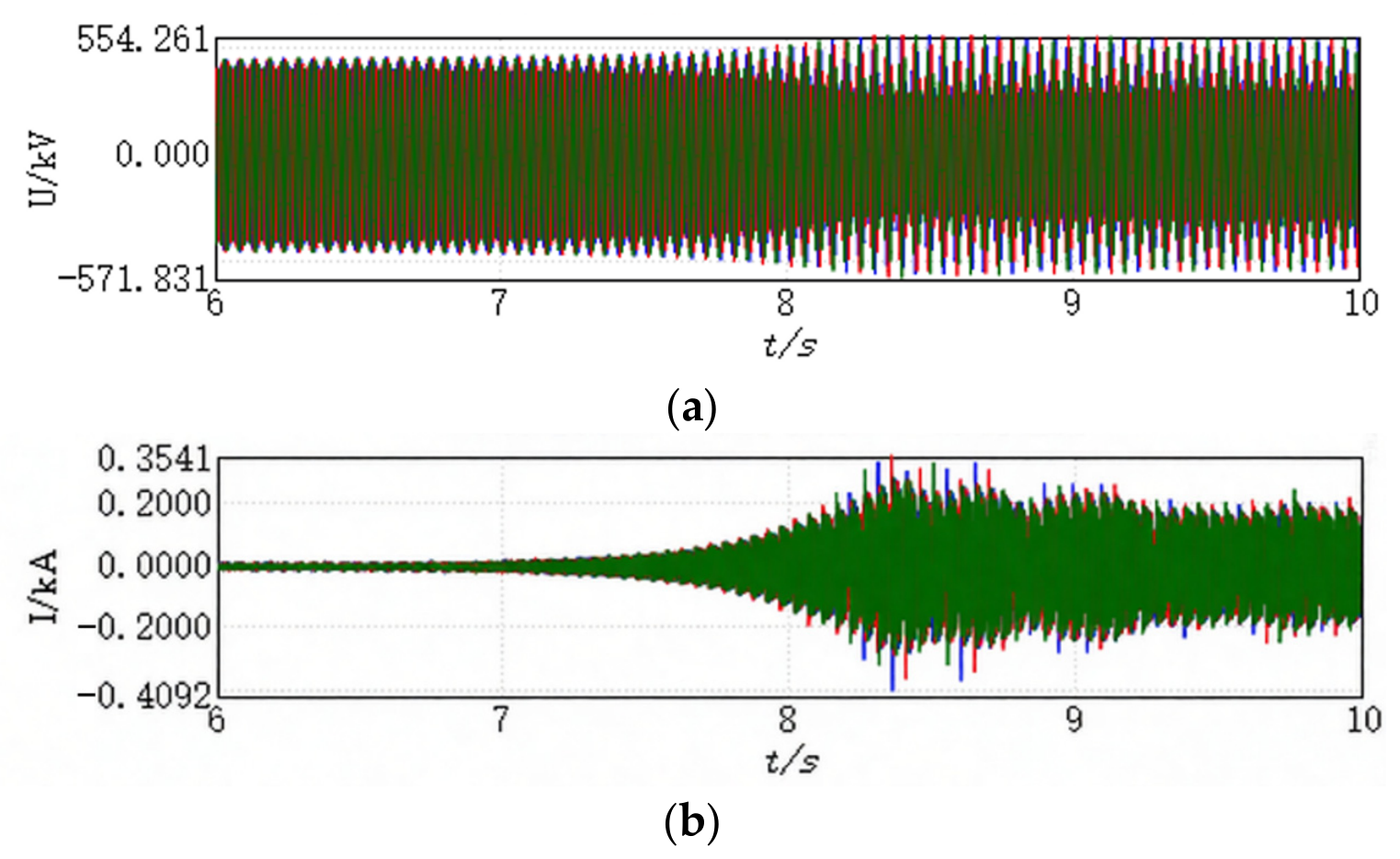
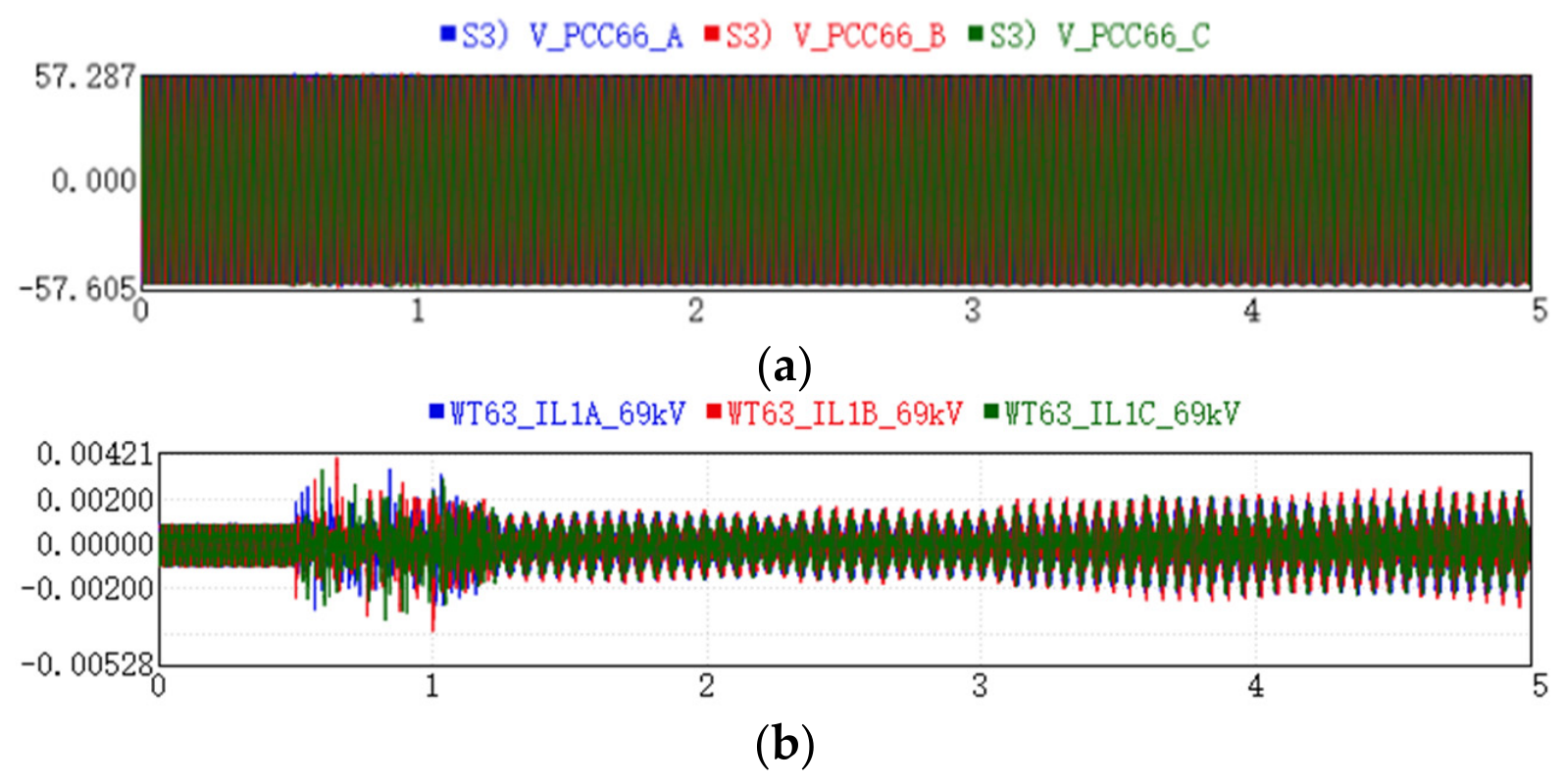
First, the control parameters for all wind turbines were unified to the standard operational values. Based on this correction, a real-time simulation was conducted, connecting the turbines to the grid sequentially to determine the stable operation limit under the current configuration. With each unit’s output set to 100 kW, the system state was monitored via the turbine output current and the 525 kV bus current. Upon the integration of the 8th turbine, both the system and unit currents exhibited oscillations. As shown in Figure 15, these results demonstrate that under the current temporary wiring configuration, the system reaches its stability limit at seven connected turbines.
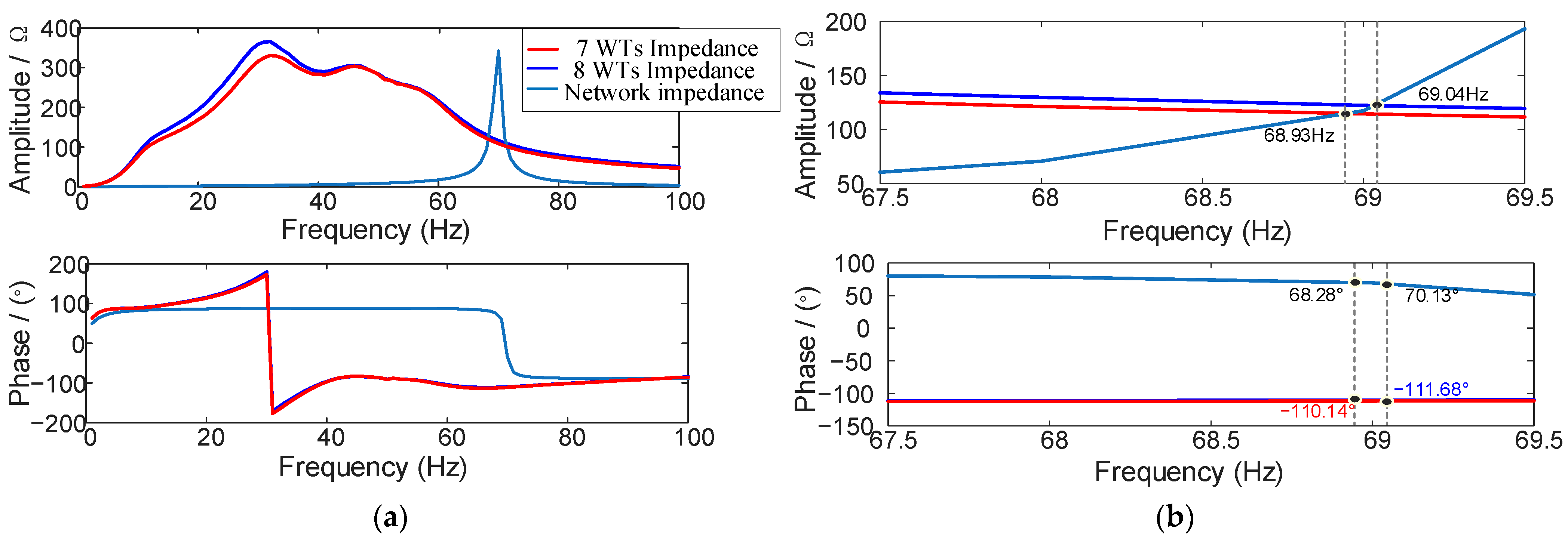
To validate these time-domain findings from a frequency-domain perspective, impedance scanning was performed for different unit counts. The equivalent wind farm impedance was calculated for seven and eight operating units (at 100 kW per unit), as compared in Figure 16. The analysis reveals that with seven turbines (blue line), the wind farm impedance intersects the system impedance (red line) at 68.93 Hz with a phase difference of 178.42°, indicating a critically stable state. When the count increases to eight, the intersection shifts to 69.04 Hz (cyan line) and the phase difference reaches 181.80°, as shown in Table 3. Exceeding the 180° threshold confirms the onset of instability, demonstrating high consistency between frequency-domain scanning and time-domain simulation.
Furthermore, the wind turbine parameters are optimized through impedance reshaping. To eliminate the negative-resistance effect of wind turbines, the impedance phase angle is constrained within the range of −90° to +90° across the full frequency band except near the fundamental frequency [28,29]. Control parameters including the PLL, DC voltage loop, current loop, and feedforward filter are tuned to reshape the output impedance characteristic of the wind turbines, and the detailed optimized control parameters are listed in Table A5. The comparison of unoptimized and optimized impedance curves is shown in Figure 17. At this stage, the number of grid-connected units in the system is increased to 12. As shown in Figure 18, the system becomes unstable when the #13 wind turbine is connected to the grid.

4.4.2. SVG Configuration

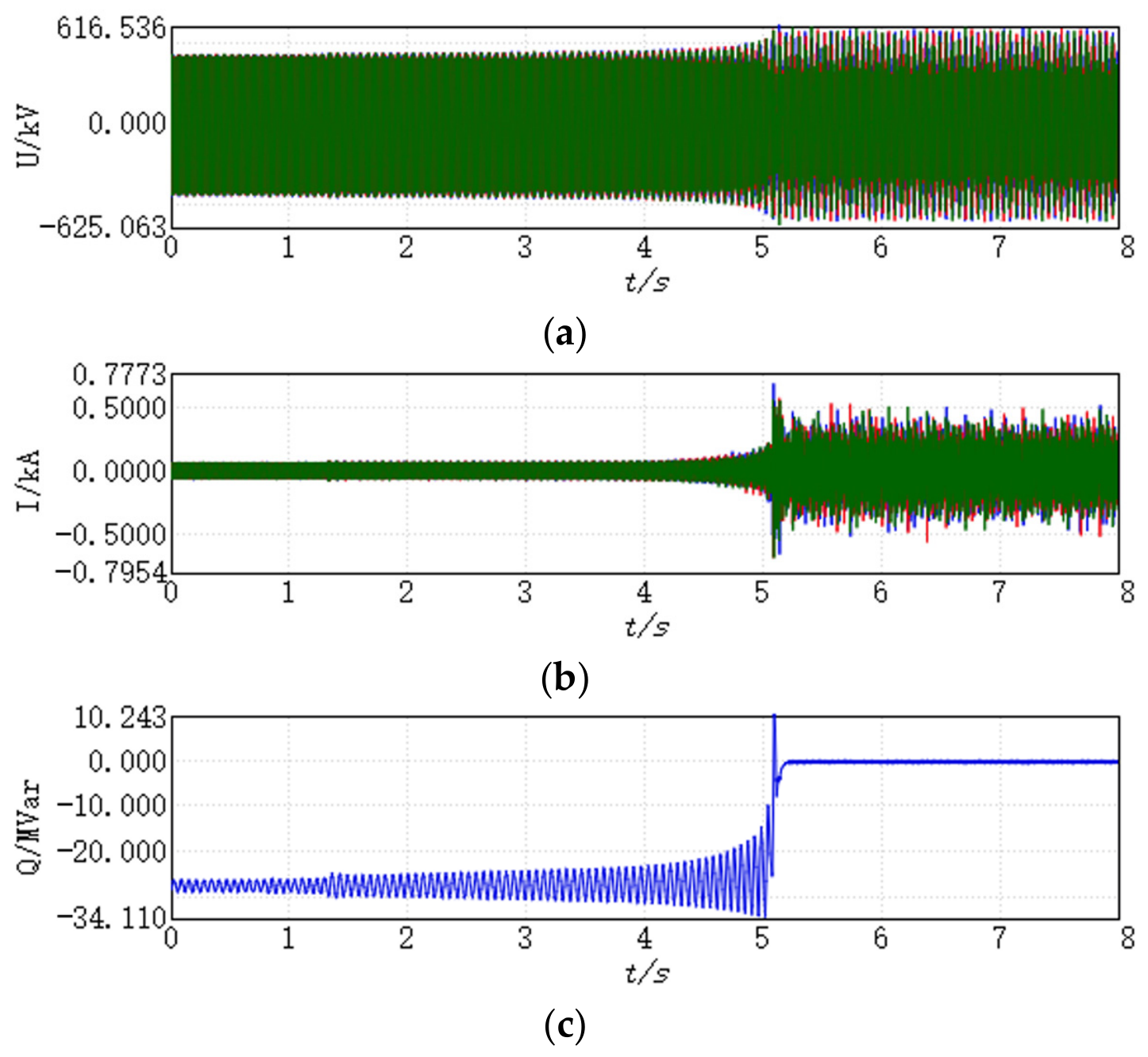
An SVG with a capacity of 60 Mvar was installed on the 500 kV side of the site, but it was not put into operation at the time of the accident. The impact of deploying the SVG is investigated. Following this deployment, the real-time simulation was repeated with sequential grid connection of the wind turbines (each at 100 kW output). The results indicate that the SVG significantly improves the system’s hosting capacity. As illustrated in Figure 19, the system maintains stability until the #23 wind turbine is connected, at which point an oscillation occurs, leading to an SVG trip due to protection intervention.
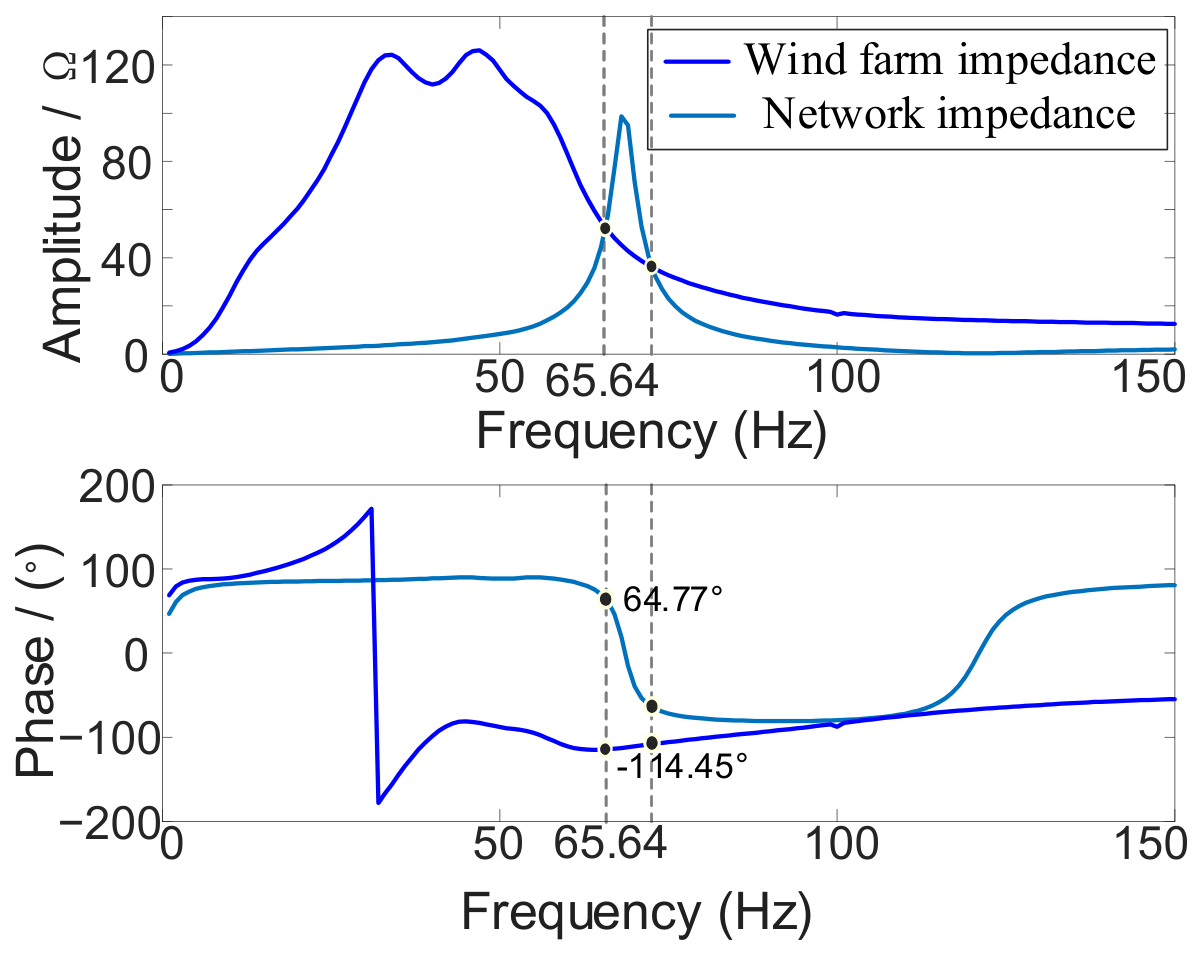
Frequency-domain scanning was subsequently performed for the 23-unit operating condition, as shown in Figure 20. The wind farm impedance curve intersects the system impedance curve at 65.6 Hz, as shown in Table 4. At this frequency, the phase difference is 179.22°, which closely approaches the 180° stability threshold. These frequency-domain findings are highly consistent with the time-domain simulations, further verifying that SVG integration effectively optimizes system impedance characteristics and substantially improves the grid-connection stability of the wind farm.

5. Conclusions

This paper systematically addresses the technical challenges of full-topology real-time simulation (FTRT) for renewable energy stations by proposing a scheme based on a self-developed universal link library execution device. This approach successfully overcomes cross-platform compatibility barriers, significantly enhancing simulation fidelity and validating the effectiveness of FTRT in analyzing practical engineering problems.
By applying this FTRT scheme, a 70 Hz voltage oscillation event in a Guangdong offshore wind farm was investigated. An RTDS real-time simulation model integrated via long submarine cables was established to accurately reproduce the severe oscillation issue. The investigation reveals two root causes: first, a temporary wiring configuration resulted in a weak grid with an inherent resonance point in the super-synchronous frequency band, and second, a mismatch existed between the converter control parameters and the weak grid environment. These factors ultimately triggered small-disturbance instability upon the integration of the #6 turbine. Based on these findings, stability-enhancement measures—such as optimizing converter control parameters, performing impedance reshaping, and deploying reactive power compensation equipment (e.g., SVGs)—were proposed and verified. The current analysis is bounded by the specific conditions of the investigated field event, which concerns a special temporary grid configuration, a small number of operating turbines, and a low per-unit output (approximately 100 kW). Consequently, the system behavior, impedance interactions, and stability margins at higher generation levels or under permanent grid topologies may differ and warrant further dedicated evaluation.
The proposed FTRT framework demonstrates strong generalizability for engineering practice. Future research will focus on extending and customizing this simulation paradigm to evaluate dynamic interactions in other complex scenarios, such as large-scale photovoltaic power plants, hybrid renewable plants, and multi-terminal offshore grids. Ultimately, this study provides a verified, high-fidelity technical reference for risk assessment and the formulation of active prevention strategies in similar modern renewable energy systems.

6. Discussion

While the proposed high-fidelity full-topology hardware-in-the-loop (HIL) simulation route effectively reconstructs the specific super-synchronous oscillation event, certain limitations in the current study should be acknowledged, which also outline the directions for our future work.
Regarding the simulation platform, the self-developed universal link-library execution device is currently in an iterative development phase. The present study primarily validates its feasibility, compatibility, and parallel computational capabilities for large-scale wind farm simulations. However, to mature into a standardized simulation hardware, a more rigorous and systematic performance evaluation is necessary. Future development will focus on establishing detailed measurement procedures to precisely quantify execution timing jitter, cross-platform communication delays, and CPU load dynamics under extreme boundary operating conditions.
In addition, extended sensitivity analysis regarding grid conditions, line parameters, equipment quantities, and operating power levels can be further explored in future work to supplement the relevant simulation and analytical conclusions.


Author Contributions

The authors confirm their contributions to the paper as follows: Conceptualization, J.Y. and X.C.; methodology, J.Y.; software, J.Y. and B.H.; validation, J.Y., X.C. and C.L.; formal analysis, J.Y.; investigation, J.Y.; resources, X.C., Y.Z. and L.T.; data curation, J.Y., B.H. and F.X.; writing—original draft preparation, J.Y.; writing—review and editing, X.C.; visualization, J.Y.; supervision, X.C.; project administration, X.C.; funding acquisition, X.C. All authors have read and agreed to the published version of the manuscript.

Funding

This work was supported by the National Key Research and Development Program of China (Grant No. 2023YFB4203200).

Data Availability Statement

The data involved in this study cannot be publicly released due to power grid security restrictions and manufacturer technical confidentiality.

Conflicts of Interest

The authors are employees of China Southern Power Grid Co., Ltd. This work was funded by the National Key Research and Development Program of China (Grant. 2023YFB4203200). China Southern Power Grid Co., Ltd. did not commission this study in a commercial capacity, nor did it participate in or interfere with the study design, data collection and analysis, manuscript drafting, or the final publication decision. The authors declare no additional commercial interests or potential conflicts of interest related to the work reported in this paper.

Abbreviations

The following abbreviations are used in this manuscript:
FTRTFull-topology Real-time Simulation
HILHardware-in-the-Loop
SVGStatic Var Generator
SCRShort Circuit Ratio
PLLPhase-Locked Loop
PIProportional–Integral
RTDSReal-Time Digital Simulator
ADPSSAdvanced Digital Power System Simulator
HVDCHigh-Voltage Direct Current
SSRSub-synchronous Resonance
GTIOGiga-Transceiver Input/Output

Appendix A. System Equipment Parameters

Table A1. Transmission Line Parameters.
Component NamePositive Sequence ResistancePositive Sequence InductancePositive Sequence CapacitanceLength
Submarine Cable0.0495 Ω/km0.4272 mH/km0.1304 μF/km58.3 km
High-Voltage Shunt Reactor/2.658 H//
Table A2. Transformer Parameters.
Component NameRated Capacity (MVA)Rated Voltage (kV)Short-Circuit Impedance
Offshore Transformer550525/66/1018.10 (H-M)/104.5 (H-L)/82.8 (M-L) %
Onshore Transformer100525/220/3515.87%

Appendix B. Wind Turbine Control Parameters

Table A3. Normal Control Parameters of the Wind Turbine.
Parameter NameValue
Voltage Outer Loop Proportional Coefficient8200
Voltage Outer Loop Integral Coefficient170
Positive Sequence Current Inner Loop Proportional Coefficient2800
Positive Sequence Current Inner Loop Integral Coefficient100
Negative Sequence Current Inner Loop Proportional Coefficient2800
Negative Sequence Current Inner Loop Integral Coefficient100
Table A4. Standby Control Parameters of the Wind Turbine.
Parameter NameValue
Voltage Outer Loop Proportional Coefficient5000
Voltage Outer Loop Integral Coefficient100
Positive Sequence Current Inner Loop Proportional Coefficient1500
Positive Sequence Current Inner Loop Integral Coefficient100
Negative Sequence Current Inner Loop Proportional Coefficient1500
Negative Sequence Current Inner Loop Integral Coefficient100
Table A5. Optimized Control Parameters of the Wind Turbine.
Parameter NameValue
Voltage Outer Loop Proportional Coefficient6000
Voltage Outer Loop Integral Coefficient170
Positive Sequence Current Inner Loop Proportional Coefficient4000
Positive Sequence Current Inner Loop Integral Coefficient40
Negative Sequence Current Inner Loop Proportional Coefficient4000
Negative Sequence Current Inner Loop Integral Coefficient40

References

  1. Guo, Q.; Wang, Q.H.; Tan, W.T.; Wang, H.; Liu, Q.; Chang, D.; Liu, Y. Analysis of the blackout accident in Spain and Portugal on April 28 and its enlightenment to China’s power grid. South. Power Syst. Technol. 2025, 19, 1–10. [Google Scholar]
  2. Amin, M.; Molinas, M.; Lyu, J. Oscillatory phenomena between wind farms and HVDC systems: The impact of control. In Proceedings of the 2015 IEEE 16th Workshop on Control and Modeling for Power Electronics (COMPEL), Vancouver, BC, Canada, 12–15 July 2015. [Google Scholar]
  3. Xiong, H.Q.; He, P.F.; Sun, R.; Sun, H.S.; Ba, G.; Tian, C.S. Study on oscillation scenarios and key influencing factors of grid-connected doubly-fed wind farm without series compensation. High Volt. Eng. 2024, 50, 660–672. [Google Scholar]
  4. Dong, X.L.; Tian, X.; Zhang, Y.; Song, J. Analysis of typical subsynchronous resonance events and influencing factors in series compensation transmission system of Guyuan wind farm. High Volt. Eng. 2017, 43, 321–328. [Google Scholar]
  5. Shao, B.; Zhao, S.; Gao, B.; Yang, Y.; Blaabjerg, F. An equivalent model for sub-synchronous oscillation analysis in direct-drive wind farms with VSC-HVDC systems. Int. J. Electr. Power Energy Syst. 2021, 125, 106498. [Google Scholar]
  6. Sun, H.D.; Xu, T.; Guo, Q.; Li, Y.L.; Lin, W.F.; Yi, J.; Li, W.F. Analysis of the blackout in UK on August 9th and its enlightenment to power grid in China. Proc. CSEE 2019, 39, 6183–6192. [Google Scholar]
  7. Kundur, P. Power System Stability and Control; McGraw-Hill: New York, NY, USA, 1994. [Google Scholar]
  8. Yu, J.; Yang, Z.; Kurths, J.; Zhan, M. Small-Signal Stability of Multi-Converter Infeed Power Grids with Symmetry. Symmetry 2021, 13, 157. [Google Scholar]
  9. Uros, M.; Ognjen, S.; Petros, A.; Evangelos, V.; Duncan, C.; Gabriela, H. Understanding small-signal stability of low-inertia systems. IEEE Trans. Power Syst. 2021, 36, 3997–4017. [Google Scholar]
  10. Gao, X.; Javaid, M.S.; Chaudhuri, B.; Houssem, R.E.H.; Zhou, D.; Anvari-Moghaddam, A. Impact of Inverter Controls in Small-Signal Stability of Power Systems Dominated by Inverter-Based Resources. IEEE Access 2025, 13, 204796–204806. [Google Scholar]
  11. Liu, J.; Yao, W.; Wen, J.Y. Small-signal stability analysis and control of doubly-fed induction generator considering PLL and grid strength. Proc. CSEE 2017, 37, 3162–3173. [Google Scholar]
  12. Zhu, D.; Zhou, S.; Zou, X.; Kang, Y. Improved design of PLL controller for LCL-type grid-connected converter in weak grid. IEEE Trans. Power Electron. 2019, 35, 4715–4727. [Google Scholar]
  13. Zhao, S.; Yuan, H.; Wang, Z.M. Fast estimation of subsynchronous oscillation eigenvalues based on admittance frequency response characteristics. South. Power Syst. Technol. 2024, 18, 55–62. [Google Scholar]
  14. Sun, J. Impedance-Based Stability Criterion for Grid-Connected Inverters. IEEE Trans. Power Electron. 2011, 26, 3075–3078. [Google Scholar] [CrossRef]
  15. Shah, S.; Parsa, L. Impedance modeling of three-phase voltage source converters in DQ, sequence, and phasor domains. IEEE Trans. Energy Convers. 2017, 32, 1139–1150. [Google Scholar] [CrossRef]
  16. Ji, K. Harmonic power modeling for converter-driven stability study. IEEE Trans. Power Deliv. 2023, 38, 3968–3979. [Google Scholar] [CrossRef]
  17. Zhao, S.; Yuan, H.; Wang, Z. Fast Estimation of SSO Eigenvalues Based on Admittance Frequency Response Characteristics. South. Power Syst. Technol. 2024, 18, 55–62. [Google Scholar]
  18. Xiang, F.; Liao, S.; Zhang, H.; Luo, L. Sub-Synchronous Oscillation Phenomenon Analysis of Grid-Connected Direct Drive-Doubly Fed Hybrid Wind Farms via VSC-HVdc System. IEEE Access 2025, 13, 37966–37978. [Google Scholar]
  19. July, A.; Savaghebi, M.; Roozbehani, S.; Li, G.; Cutululis, N.; Saeedifard, M. Sub-Synchronous Oscillation in Offshore Energy Islands With MMC-HVDC Links: Mechanism, Analysis and Mitigation. IET Gener. Transm. Distrib. 2026, 20, e70312. [Google Scholar]
  20. Zhu, J.X. Linear Periodic Time-Varying Modeling and Stability Analysis of AC Current Scale for Modular Multilevel Converter Grid-Connected System. Doctoral Thesis, Huazhong University of Science and Technology, Wuhan, China, 2020. [Google Scholar]
  21. Huang, L.B.; Guo, L.H.; Guo, T.Y.; Zhao, Y.; Hu, B.; Xu, J. Full-topology real-time simulation modeling method for wind and solar new energy stations based on multi-core CPU. South. Power Syst. Technol. 2024, 18, 79–88. [Google Scholar]
  22. Ren, J.; Sun, Z.G.; He, L.P.; Ge, Y.; Tang, Y.B.; Ren, H. Research on full-topology real-time simulation acceleration strategy for large-scale wind farms. Dev. Innov. Mach. Electr. Prod. 2023, 36, 39–41. [Google Scholar]
  23. Lou, G.F.; Hao, Z.H.; Li, Q.S.; Wang, J.; Chen, Z. Acceleration method for full-topology real-time simulation of large-scale wind farms. South. Power Syst. Technol. 2022, 16, 20–27+67. [Google Scholar]
  24. Tang, L.; Shi, H.B.; Yuan, C.; Ding, L.J.; Zhou, B. A power system topology hierarchical identification method based on island search. Sichuan Electr. Power Technol. 2018, 41, 18–23. [Google Scholar]
  25. Shang, B.; Lin, N.; Dinavahi, V. Detailed Nonlinear Modeling and High-Fidelity Parallel Simulation of MMC With Embedded Energy Storage for Wind Farm Grid Integration. IEEE Open Access J. Power Energy 2024, 11, 196–206. [Google Scholar] [CrossRef]
  26. Nguyen, T.-T.; Vu, T.; Ortmeyer, T.; Stefopoulos, G.; Pedrick, G.; MacDowell, J. Real-Time Transient Simulation and Studies of Offshore Wind Turbines. IEEE Trans. Sustain. Energy 2023, 14, 1474–1487. [Google Scholar] [CrossRef]
  27. Electric Power Research Institute; China Southern Power Grid Co., Ltd. Universal System for Link Library, Control Method and Device of Universal System for Link Library. China Patent CN202310645213.9, 15 September 2023. [Google Scholar] [PubMed]
  28. Tang, X.; Li, Z.; Tang, K.X.; He, Y.; Qu, B.; Yue, Y.F. Admittance reshaping method for improving stability of grid-connected converters under weak grid. Proc. CSEE 2024, 44, 6123–6136. [Google Scholar]
  29. Wang, X.; Blaabjerg, F.; Wu, W. Impedance-Based Analysis of Grid-Tied Converter Instability Caused by PLL Dynamic Interaction in Weak Grid. IEEE Trans. Power Electron. 2018, 33, 10232–10243. [Google Scholar]
Figure 1. Hardware Architecture of the universal link library execution device.
Electronics 15 02860 g001
Figure 2. Communication Diagram of the universal link library execution device.
Electronics 15 02860 g002
Figure 3. Schematic Diagram of FTRT.
Electronics 15 02860 g003
Figure 4. Schematic Diagram of Submarine Cables and Transformer Connections in the Offshore Wind Farm.
Electronics 15 02860 g004
Figure 5. On-Site PMU Recorded Waveforms Under Voltage Fluctuation Conditions. (a) Voltage and (b) current of line A of the offshore wind farm; (c) Voltage on the 66 kV side of the main transformer.
Electronics 15 02860 g005
Figure 6. Fourier Decomposition of 500 kV Voltage and Current at the Onshore Substation of the Wind Farm. Fourier decomposition of on-site measured (a) voltage and (b) current.
Electronics 15 02860 g006
Figure 7. Comparison of Impedance Between DLL-based Model and HIL Simulation. (a) Positive sequence impedance; (b) Negative sequence impedance.
Electronics 15 02860 g007
Figure 8. Grid-Side Operating Conditions After the Fault. (a) Three-phase voltage on the high-voltage side of the onshore step-up substation; (b) Three-phase current of the submarine cable; (c) Three-phase voltage of the wind farm collection line; (d) Three-phase voltage of #48 wind turbine; (e) Three-phase current of #48 wind turbine.
Electronics 15 02860 g008
Figure 9. Fourier Decomposition of High-Voltage Side Voltage and Current at the Offshore Substation. Fourier decomposition of (a) voltage and (b) current from real-time simulation data.
Electronics 15 02860 g009
Figure 10. Network Impedance Model.
Electronics 15 02860 g010
Figure 11. Simplified Network Impedance.
Electronics 15 02860 g011
Figure 12. Magnitude and Phase Frequency Response of the Wind Turbine: Normal Parameters (Blue) vs. Standby Parameters (Red). (a) Amplitude–frequency curves and (b) Phase–frequency curves.
Electronics 15 02860 g012
Figure 13. Combined Impedance Characteristics with 5 WTs Using Normal Parameters and One WT Using Standby Parameters.
Electronics 15 02860 g013
Figure 14. Impedance Characteristics with 5 WTs Using Normal Parameters Only.
Electronics 15 02860 g014
Figure 15. Real-Time Simulation Waveforms with 8 WTs Connected to the Grid. (a) Voltage and (b) current of line A of the offshore wind farm.
Electronics 15 02860 g015
Figure 16. Comparison of Wind Farm Impedance with 7 WTs, 8 WTs and Network Impedance. (a) Wind farm impedance curves and network impedance curve; (b) Partial enlargement of (a).
Electronics 15 02860 g016
Figure 17. Optimized Impedance Curve of the Wind Turbine.
Electronics 15 02860 g017
Figure 18. Real-Time Simulation Waveforms When the 13th WT is Connected to the Grid After Optimization. Three-phase (a) voltage and (b) current on the high-voltage side of the wind turbine.
Electronics 15 02860 g018
Figure 19. Real-Time Simulation Waveforms with 23 WTs Connected to the Grid After SVG is Connected. (a) Voltage and (b) current of line A of the offshore wind farm; (c) Reactive power waveforms of SVG.
Electronics 15 02860 g019
Figure 20. Wind Farm Impedance with 23 WTs and Network Impedance After SVG is Connected.
Electronics 15 02860 g020
Table 1. Intersection frequency, impedance magnitude, phase difference, and stability margin for Figure 13.
Intersection Frequency (Hz)Impedance Magnitude (Ω)Wind Farm Phase (°)Network Phase (°)Phase Difference (°)Stability Margin (°)Stability
68123−116.39+76.45192.84−12.84Unstable
71101−112.38−72.7739.61140.39Stable
Table 2. Intersection frequency, impedance magnitude, phase difference, and stability margin for Figure 14.
Intersection Frequency (Hz)Impedance Magnitude (Ω)Wind Farm Phase (°)Network Phase (°)Phase Difference (°)Stability Margin (°)Stability
68146−99.90+72.00171.908.1Stable
71125−97.74−70.7227.02152.98Stable
Table 3. Intersection frequency, impedance magnitude, phase difference, and stability margin for Figure 16.
Number of Wind TurbinesIntersection Frequency (Hz)Impedance Magnitude (Ω)Wind Impedance Phase (°)Network Phase (°)Phase Difference (°)Stability Margin (°)Stability
7 WTs68.93125−110.1468.28−178.42+1.58Stable
8 WTs69.04121−111.6870.13−181.81−1.81Unstable
Table 4. Intersection frequency, impedance magnitude, phase difference, and stability margin for Figure 20.
Intersection Frequency (Hz)Impedance Magnitude (Ω)Wind Farm Phase (°)Network Phase (°)Phase Difference (°)Stability Margin (°)Stability
68.6452−114.4564.77179.220.78Stable
73.2439−100.08−62.9137.17142.83Stable
Disclaimer/Publisher’s Note: The statements, opinions and data contained in all publications are solely those of the individual author(s) and contributor(s) and not of MDPI and/or the editor(s). MDPI and/or the editor(s) disclaim responsibility for any injury to people or property resulting from any ideas, methods, instructions or products referred to in the content.