1. Introduction
The high penetration of renewable energy leads to a continuously increasing share of power electronic devices in power systems, which weakens inertia support of power systems and poses severe challenges to frequency stability [
1,
2,
3,
4]. Large-scale load switching or generation output fluctuations may cause significant power imbalances, which gives rise to the risk of frequency violations or even system collapse [
5,
6]. Flywheel energy storage systems (FESSs), with their fast response, high power density, and flexible control, have become an effective way of improving system frequency response [
7,
8,
9,
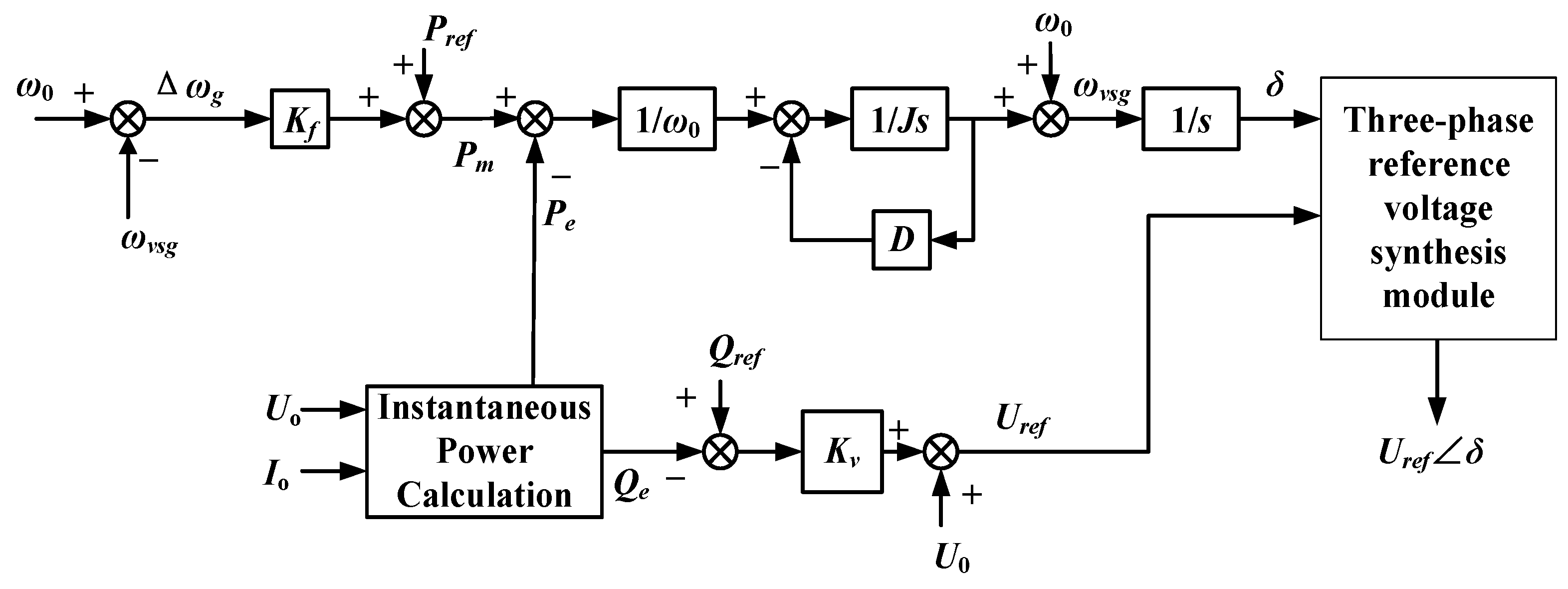
10]. Virtual synchronous generator (VSG) technology emulates the rotor motion equation of a synchronous generator, endowing grid-connected inverters with virtual inertia and damping characteristics and enabling them to actively participate in frequency regulation; as a result, it has been widely adopted in grid-connected energy storage control [
11,
12,
13,
14].
Owing to the intermittency and volatility of renewable energy sources and loads, conventional VSG control struggles to achieve satisfactory dynamic performance across multiple operating conditions. When the system frequency fluctuates significantly, merely adjusting the moment of inertia and damping coefficient leaves the regulation capability of a VSG-based energy storage system limited; the rate of change of frequency may become excessively high, making it difficult to meet grid operational safety requirements. To address this, ref. [
15] introduces model predictive control (MPC) into the voltage and current loops of the VSG to replace PI control. Although this improves the response speed of the two loops, the frequency control loop itself is not optimized. A MPC-VSG method for energy storage system control is proposed in [
16], where a VSG prediction model is established to compute the required incremental power by solving an optimization cost function subject to frequency variation constraints. The proposed method in [
16] can effectively reduce frequency deviations during transients, but the cost function with fixed weighting coefficients cannot satisfy the needs to handle various operation conditions. Based on the study above, a MPC-VSG strategy based on fuzzy control was presented in [
17]; however, the fuzzification approach relies on experience and trial-and-error, resulting in a relatively complex design process. To effectively reduce the rate of change of frequency (ROCOF) under sudden load changes, a ROCOF constraint was introduced into the cost function in [
18]. Some scholars have combined parameter adaptive control with variable-weight MPC and proposed a variable-weight adaptive MPC-VSG control strategy that dynamically adjusts the weighting coefficients in the MPC objective function according to the severity of frequency fluctuations in [
19].
Most current research on MPC-VSG is based on multi-step predictive control. For multi-step predictive control, methods can be classified by control input set into Finite Control Set MPC (FCS-MPC) and Continuous Control Set MPC (CCS-MPC). The CCS-MPC adopted herein solves only one constrained finite-horizon optimization problem per step without exhaustive search, offering higher feasibility for long-horizon control. According to whether the prediction is model-based, the methods are further divided into single-step iterative prediction and direct multi-step prediction. The former recursively applies the model and has strong constraint-handling capability, making it the dominant long-horizon approach in current MPC-VSG applications. The latter has a lower online computational burden. Given its better prediction accuracy for long horizons, relevant research has emerged this year [
20]; however, its weak constraint handling limits engineering feasibility.
Nevertheless, existing MPC-VSG control strategies generally target frequency regulation without adequately considering the impact of the flywheel’s remaining energy on its subsequent support capability. The control laws of fixed-weight MPC-VSG and purely frequency-adaptive MPC-VSG do not incorporate flywheel speed or energy state information and therefore cannot adjust control priorities in real time as the flywheel speed drops and the remaining energy decreases. As a result, the flywheel is still commanded to deliver high-power support even when its power capability has significantly deteriorated, tending to over-discharge under low SOC conditions in the pursuit of frequency regulation accuracy, and thereby prematurely losing its ability to support the grid frequency. Continuous high-power discharge may cause the flywheel’s speed to drop rapidly out of the safe operating range, making it difficult to cope with consecutive grid disturbances. According to grid operation standards, frequency is permitted to deviate within a certain band during transients. If the frequency control objective can be dynamically adjusted based on the flywheel’s current energy state, and the frequency regulation accuracy can be reasonably tuned within the allowable deviation band, the effective support time of the flywheel can be extended, thereby buying sufficient time for other forms of energy storage or regulation systems to intervene.
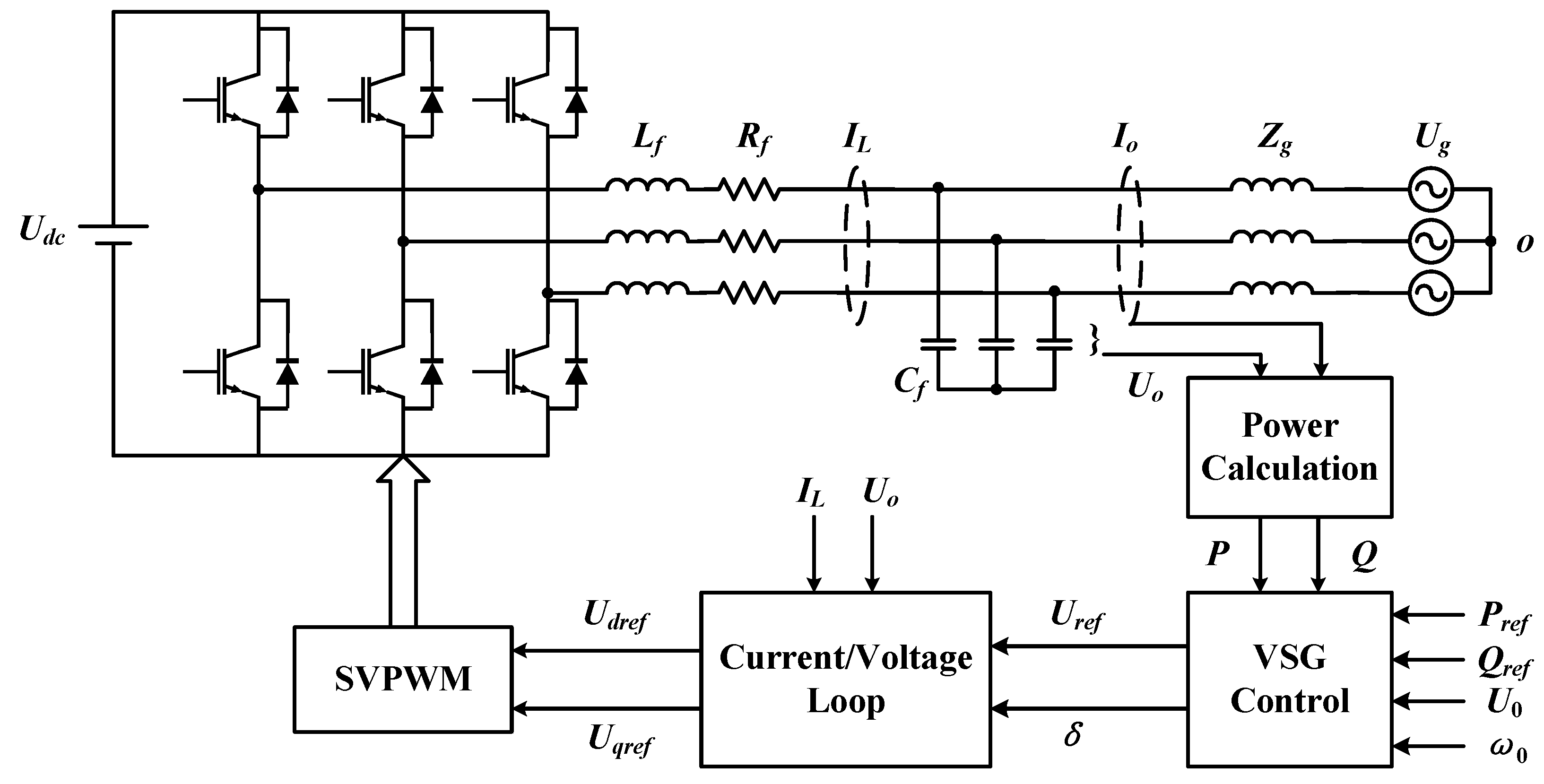
Based on the above analysis, this paper proposes a multi-time-step MPC-VSG control strategy that accounts for both system inertia/frequency support capability and continuity considering the flywheel energy state. The frequency response speed is regulated by the number of time prediction steps, and the normalized rotational speed is employed to represent the remaining energy of the flywheel. A variable frequency weighting factor is introduced into the multi-time-step MPC cost function, and both the frequency target and the associated weighting coefficient are adaptively adjusted according to the flywheel energy state. During frequency regulation with the flywheel energy storage, when the flywheel energy is sufficient, the rated frequency is set as the control target to fully exploit its rapid frequency regulation capability; when the flywheel energy is insufficient, the support duration should also be considered and prolonged while ensuring that the frequency deviation does not exceed the allowable limit, thereby achieving coordinated optimization between frequency regulation quality and support duration. When the flywheel energy storage is not providing frequency regulation, a corresponding SOC self-recovery rule is designed to drive the SOC back to its desired state. The comparison of the proposed strategy with the state-of-the-art technologies in terms of control structure and SOC management is shown in
Table 1.
The rest of the paper is organized as follows.
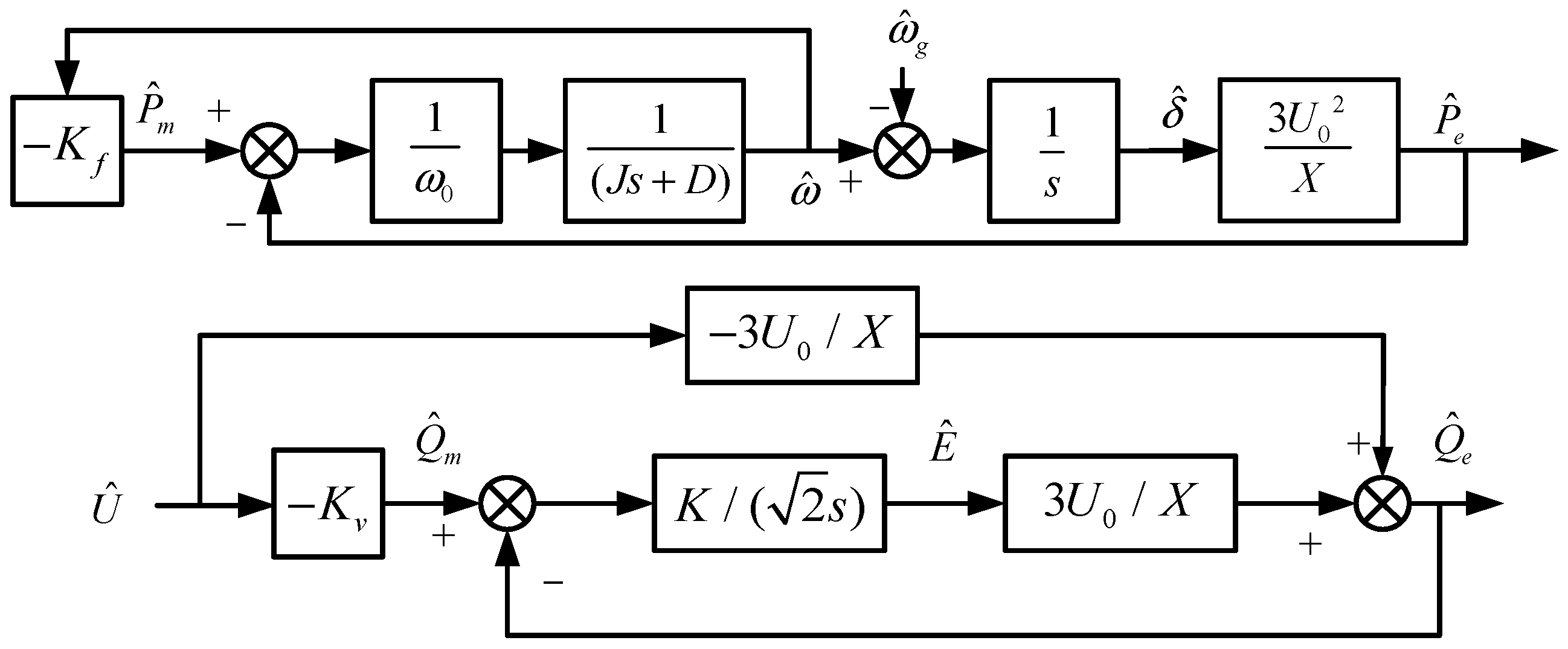
Section 2 presents the fundamental principles of conventional VSG control and conducts small-signal modeling and analysis.
Section 3 derives the multi-time-step MPC-VSG control law incorporating the flywheel energy state for the condition where the flywheel provides system inertia/frequency support and employs a hyperbolic tangent function to construct the mapping between the weighting coefficient α and the SOC.
Section 4 validates the effectiveness of the proposed method through simulations under various operating conditions.
3. MPC-VSG Frequency Regulation Strategy Considering SOC
For energy storage system control based on the conventional VSG, when the system frequency fluctuates significantly, the regulation capability is limited if only the inertia and damping coefficients are adjusted. When the rate of change of frequency is excessively large, grid frequency security is jeopardized. To address this, this paper introduces multi-step model predictive control, which detects the system frequency variation in real time and adjusts the active and reactive power outputs of the VSG based on system model predictions, thereby effectively enhancing the frequency regulation capability of the VSG.
3.1. Design of MPC-VSG Control Law
For Equation (1), the inertia equation can be rewritten as the following state-space model:
where
ω = ωvsg − ω0. The discrete incremental model is obtained by discretizing Equation (Equation (5)) with a sampling period
Ts:
where
Ts is the sampling period, and Δ
ω(
k), Δ
Pm(
k), and Δ
Pe(
k) are the variations of the angular frequency, mechanical power, and electrical power between two adjacent sampling instants, respectively:
When a single-time-step prediction horizon is adopted to achieve the control target, it becomes deadbeat control, which can support the grid frequency to return to its rated value in the shortest time. However, high charging/discharging power is required to achieve fast frequency response, which imposes significant stress on the flywheel energy storage system. Therefore, this paper introduces a multi-time-step prediction horizon with a time prediction length of
n steps with variable weighting coefficients, so that a balance between the frequency response speed and charging/discharging power stress can be achieved. The system frequency prediction equation is then given by
the symbols in bold mean they are vectors/matrices, and variables with a caret symbol ^ represent predicted values obtained from the prediction model, where
3.2. Solution of the MPC-VSG Cost Function
The cost function considers the angular frequency variation Δ
ω and the variation in the VSG reference power Δ
Pm between two adjacent sampling instants, and the weighted sum of squares of these two terms should be minimized. The cost function is expressed as
where
αi and
βi are the weighting coefficients for the frequency and power variation at the
i-th prediction step, respectively. The relative magnitudes of
α and
β determine the control emphasis: when
α >>
β, the system prioritizes the accuracy of frequency restoration, resulting in larger output power; when
β >>
α, the system prioritizes limiting the power variation, and the frequency regulation effect is weakened. In addition,
and
are the angular frequency variation and active power variation between two adjacent sampling instants, respectively. Since frequency fluctuations should be confined within a certain range, the MPC optimization problem with constraints is described as
The cost function should satisfy the following frequency constraint:
Therefore, the cost function can be organized into the following form:
where
Γy and
ΓPm represent the weighting coefficient matrices for the angular frequency and active power variations, respectively;
R(
k + 1) is the reference sequence output by the controller at time step
k + 1.
Γy,
ΓPm, and
R(
k + 1) are expressed as
Therefore, the cost function can be organized into the following form:
where
Erated is the rated available energy of the flywheel energy storage system, i.e., the energy that the flywheel can release when going from SOC = 1 to SOC = 0.
In each sampling period, Equation (13) constitutes a quadratic programming problem with inequality constraints under the frequency deviation limit. Because the weighting matrices are positive definite, this problem is convex and can be transformed into a standard QP form and solved efficiently, yielding the optimal power increment sequence. Following the receding horizon optimization principle, only the first term of the sequence ΔPm*(k) is applied to the system for updating, and the solving and updating process is repeated in the next sampling period, thereby achieving fast frequency response.
It should be noted that the predictive controller designed in this paper adopts a multi-time-step prediction horizon, and the selection of its length
n needs to comprehensively consider the dynamic characteristics of the flywheel energy storage system and the real-time requirements of grid frequency support. To balance the response time and the system load while ensuring manageable computational cost, this paper selects n = 3 for prediction [
16].
3.3. Energy Storage Frequency Regulation Strategy Considering Flywheel State
3.3.1. Construction of the Weight Function
A flywheel energy storage system (FESS) stores and converts electrical energy through the kinetic energy of a rotating rigid body, and its stored energy is proportional to the square of the rotational speed:
where
J is the moment of inertia and
ωm is the mechanical angular velocity. To quantify the remaining available energy of the flywheel, the state of charge (SOC) is defined as
where
ωmmin and
ωmax are the maximum and minimum safe operating angular velocities of the flywheel, respectively. The SOC value directly reflects the relative magnitude of the remaining frequency regulation capability of the flywheel: when the SOC is close to 1, the energy is ample and the flywheel can participate in frequency regulation at full capacity; when the SOC is close to 0, the energy is nearly depleted and the output must be restricted to maintain basic support capability.
As analyzed in
Section 2.2, the frequency deviation weighting coefficient
α in the MPC cost function directly determines the extent of frequency control: a larger
α makes the system more inclined to restore the frequency precisely, resulting in higher power extracted from the flywheel and a faster drop in rotational speed. Conversely, reducing
α lowers the power demand and slows down the speed decay.
Existing MPC-VSG strategies typically set α as a fixed value or adapt it solely based on frequency response requirements, without considering the impact of the flywheel energy state on sustainable support capability. When the flywheel operates in the low-speed region, if the rated frequency is still taken as the restoration target, high power output will cause the rotational speed to rapidly fall out of the safe range, depriving the flywheel of the ability to respond to subsequent disturbances.
According to grid operation standards, the grid frequency is allowed to deviate within ±0.2 Hz during non-fault transient processes. Therefore, when the flywheel energy is insufficient, the requirement for frequency restoration accuracy can be appropriately relaxed—merely ensuring that the frequency does not exceed the allowable limit—so as to extend the support time of the FESS and prevent the flywheel from stalling due to excessive discharge. Based on this, this paper proposes an SOC-dependent weight adaptation strategy: when there is ample energy, the maximum weight is adopted to pursue the optimal frequency regulation performance; when there is insufficient energy, the weight is reduced to sacrifice part of the regulation accuracy within the allowable frequency deviation range in exchange for a longer effective support duration.
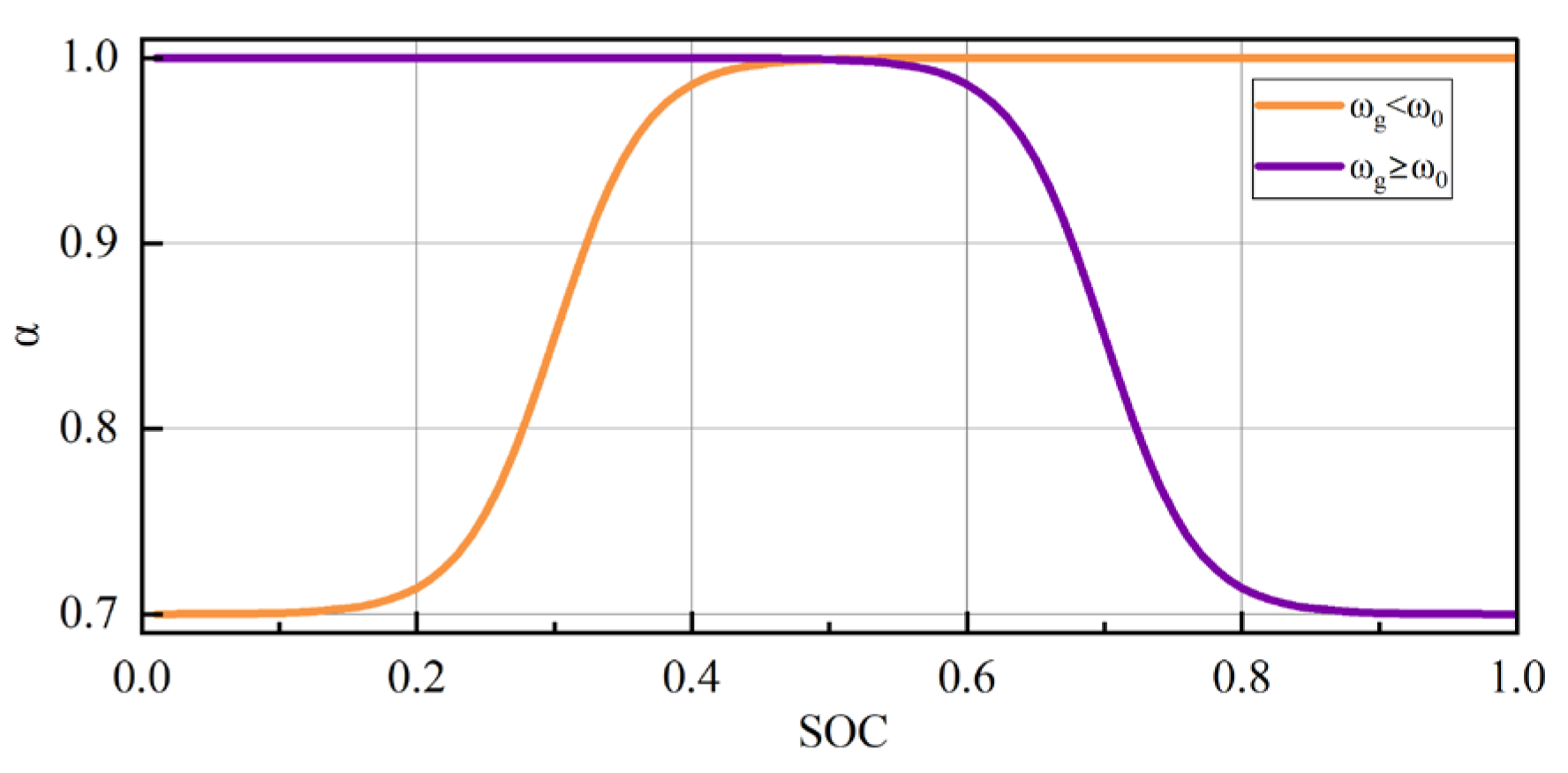
To realize the above design concept, the flywheel operating state is divided into two regions: when SOC ≥ 0.4, the flywheel energy is sufficient, and the primary objective is zero-error frequency regulation, with α maintained at its maximum value; when SOC < 0.4, the flywheel energy is insufficient, and the control objective is to maximize the support duration within the allowable frequency deviation range, with α decreasing as the SOC drops. Unlike hard-threshold switching methods that cause a rapid drop in the power command when the SOC crosses a fixed boundary, the proposed smooth SOC-adaptive weighting continuously modulates the cost function weights. This gradual transition ensures control continuity, thereby preventing low frequency nadir typically induced by discontinuous weighting jumps.
A hyperbolic tangent function is selected to construct the mapping between the weighting coefficient
α and the SOC:
where
αmin is the minimum value of the frequency deviation weighting coefficient. Compared with hard threshold switching, the smooth characteristic of the hyperbolic tangent function avoids abrupt power command changes caused by sudden weight variations, thereby ensuring control continuity. The characteristics of this function are shown in
Figure 4.
3.3.2. SOC Self-Recovery Control Strategy
Under normal grid operation, the frequency fluctuates within a very small range around the rated value. When |Δω| lies within the frequency regulation deadband, the demand for energy storage to participate in fast frequency response is weak. Moreover, after multiple engagements in power support, the flywheel SOC may deviate from the desired operating region, reducing its support margin for subsequent disturbances. Therefore, when the flywheel remains connected to the grid, it is necessary to perform SOC self-recovery within the frequency deadband to return the flywheel SOC to the optimal operating point and reserve energy for the next frequency regulation task.
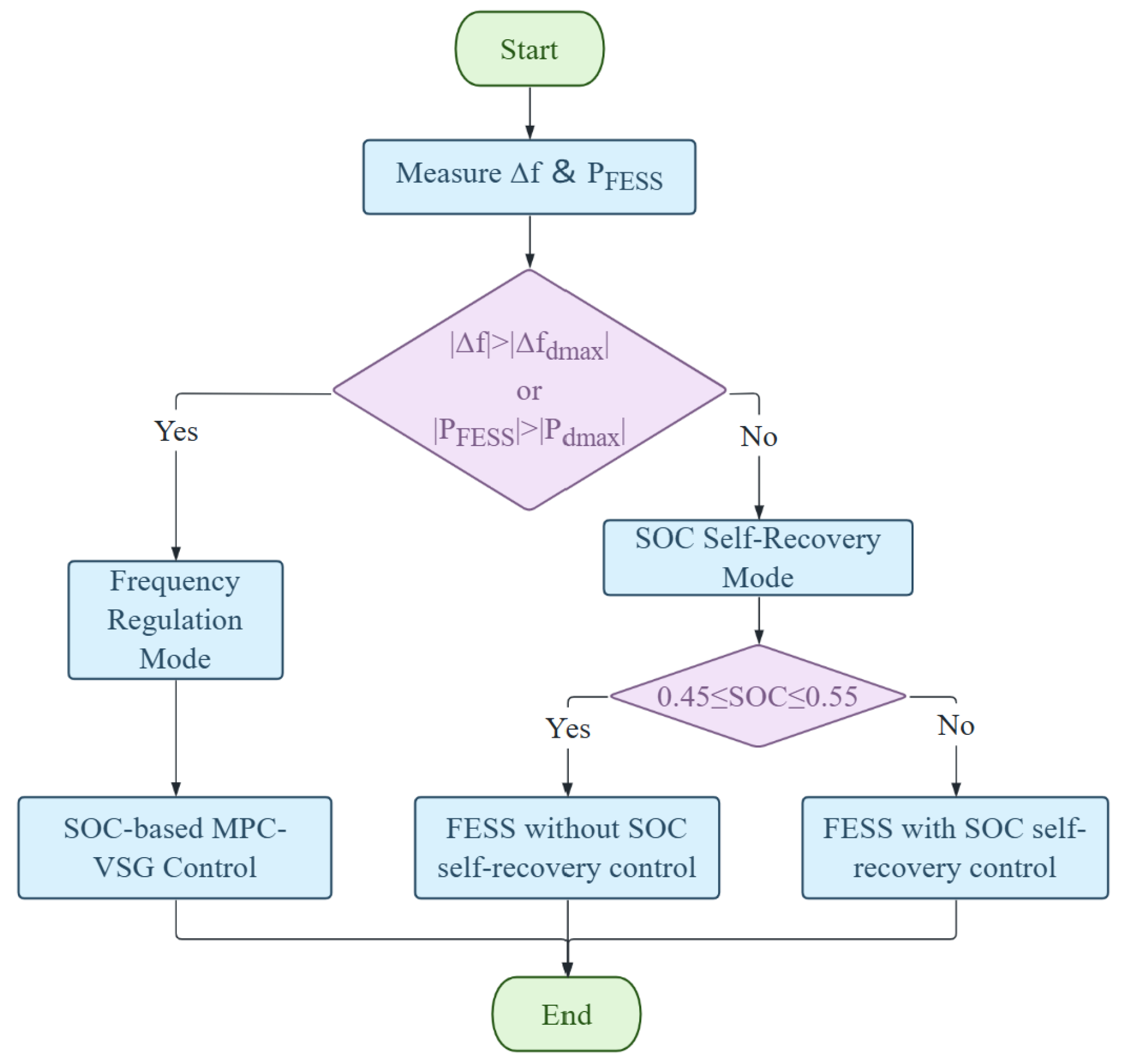
The flywheel operating state is divided into a frequency regulation mode and an SOC self-recovery mode: when the actual grid frequency deviation |Δ
f| exceeds the frequency deadband threshold |Δ
fdmax| = 0.05 Hz or the flywheel charging/discharging power |
PFESS| exceeds the normal fluctuation range of flywheel power |Δ
Pdmax| under grid power balance, the flywheel responds to frequency changes according to the SOC-based MPC-VSG strategy and provides active power support. When |Δ
f| is within the frequency deadband and |
PFESS| is within the normal flywheel power fluctuation range under grid power balance, if the flywheel SOC lies within the normal operating range, no additional charging/discharging is required; otherwise, the flywheel performs SOC self-recovery. In this paper, the normal flywheel power fluctuation range |Δ
Pdmax| under grid power balance is set to 1% of the rated power of the flywheel energy storage motor, and the normal SOC operating range is 0.45–0.55. Based on the above analysis, the control flowchart of the proposed flywheel energy storage grid-connected inverter is shown in
Figure 5.
For the SOC self-recovery control of the flywheel energy storage system, this paper adopts a linear function to limit the actual power of SOC self-recovery. The frequency margin coefficient
λ is defined as
where
f is the real-time grid frequency. The actual self-recovery power
Prec is
Prec0 is the rated self-recovery power of the flywheel energy storage, which is taken as 5% of the flywheel rated power in this paper.
When the system frequency is exactly 50 Hz, λ takes the value of 1, and the flywheel can recover its SOC at Prec0; as the frequency approaches the deadband threshold, λ tends to 0 and the recovery power decreases synchronously. This mechanism ensures that the frequency remains within the grid’s safe allowable range throughout the SOC self-recovery process, thereby avoiding the risk of frequency violation caused by the recovery action itself. In addition, because the self-recovery power is limited to 5% of the flywheel rated power, it is far below the instantaneous power limit of the converter. Moreover, the self-recovery process is only activated within the frequency deadband and the power smoothly decays to zero as the frequency approaches the deadband boundary, avoiding abrupt power steps and frequent charge/discharge switching. Therefore, the proposed strategy inherently respects the hardware constraints of the flywheel energy storage system, including instantaneous power capability and mechanical fatigue caused by frequent mode transitions.
4. Verification
Based on the above theoretical derivation, to verify the feasibility of the proposed method, a corresponding FESS is built in Matlab R2023b/Simulink, and simulations are conducted under sudden load increase and decrease conditions. To provide an evaluable baseline, this study quantifies the control objective as maintaining the system frequency deviation within ±0.2 Hz. Comparative analyses are performed on the frequency, ROCOF, and the variation in the energy storage output power. The main parameters of the VSG are shown in
Table 2, and the main parameters of the flywheel motor are shown in
Table 3.
Initially, the grid side carries a 40 kW load. From 0.1 to 0.3 s, the flywheel energy storage performs pre-synchronization; at 0.3 s, the energy storage system is connected to the grid; at 0.8 s, the grid-side load suddenly increases to 100 kW; and at 1.3 s, the load suddenly decreases back to 40 kW. The system operation is observed within 1.8 s.
4.1. System Performance Under Different Control Strategies at Different SOC
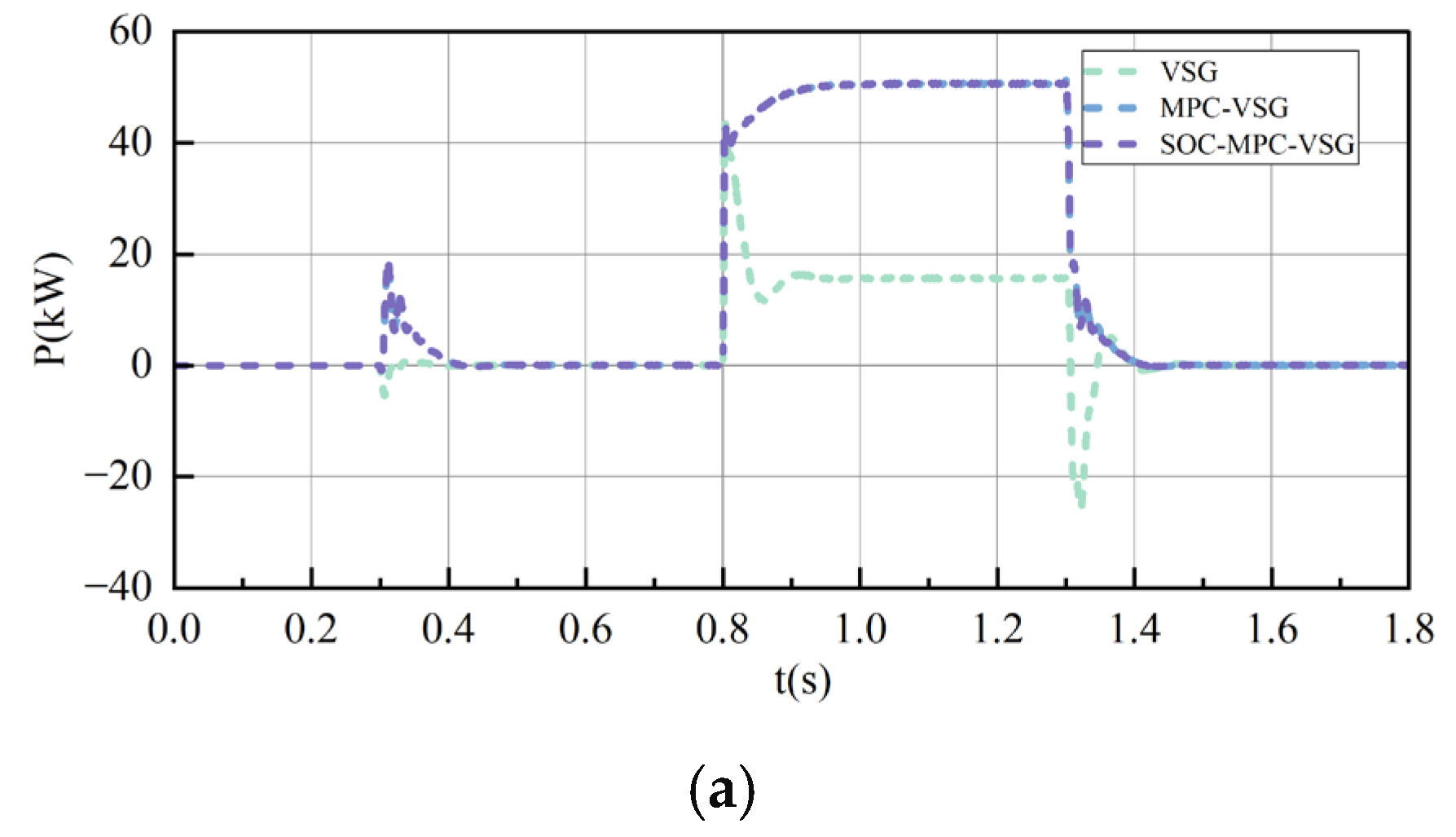
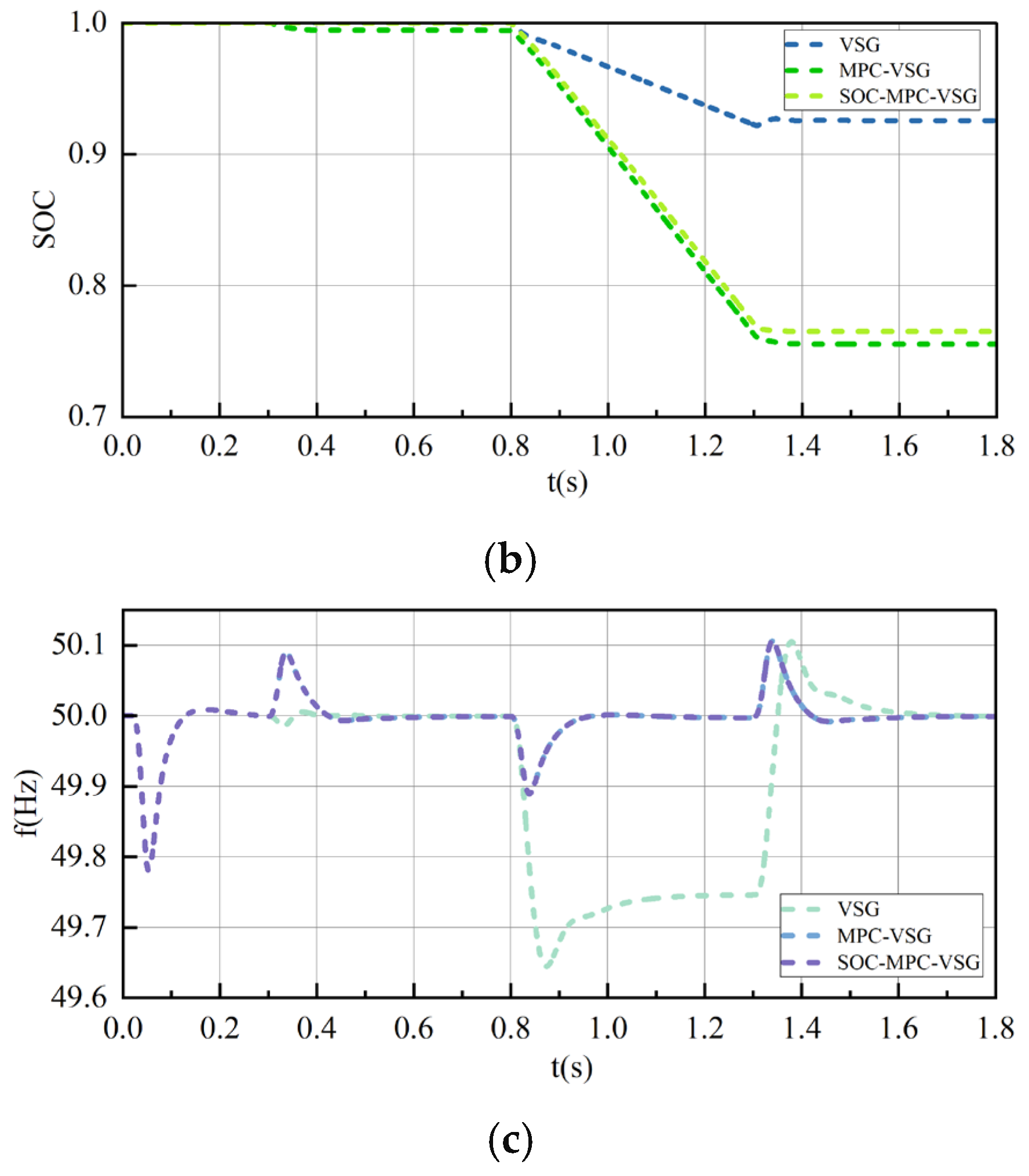
The model’s performance is examined under conventional VSG control, MPC-VSG control, and MPC-VSG control considering SOC (denoted as SOC-MPC-VSG), with the initial flywheel SOC set to 1 and the initial frequency deviation weight of the MPC set to α = 0.99.
From
Figure 6a,b, it can be seen that after the load step increase at 0.8 s, the output power response of the conventional VSG control is the weakest, with a steady-state value of approximately 15.7 kW; the output power of the MPC-VSG strategy significantly increases to 50.9 kW. Since the flywheel energy storage system SOC is 0.7 at this moment and the remaining energy is sufficient, the output power of the proposed SOC-MPC-VSG strategy is also 50.9 kW. Under the four strategies, the decrease in the flywheel SOC is positively correlated with the output power.
At the moment of the 0.8 s load step, the frequency nadir of the conventional VSG control is 49.64 Hz, while the frequency nadirs of both the MPC-VSG control and the MPC-VSG strategy considering SOC are 49.89 Hz. After achieving system inertia/frequency support and reaching the new steady state, the frequencies are 49.74 Hz, 49.99 Hz, and 49.99 Hz, respectively. Compared with the conventional VSG control, the MPC-VSG control and the MPC-VSG control considering SOC reduce the steady-state frequency deviation by 96%. It can be observed that, compared with other control strategies, the VSG control with the addition of MPC not only suppresses the frequency deviation at the moment of load power change but also further improves the steady-state frequency recovery, providing a safety margin against potential cascading events. The above results indicate that the introduction of the power prediction method effectively enhances the active power support capability of the system. Under the condition of abundant flywheel SOC (SOC = 0.7), the proposed strategy performs identically to the fixed-weight MPC-VSG when the SOC is sufficient.
4.2. System Performance Under SOC-MPC-VSG Strategy at Different SOC
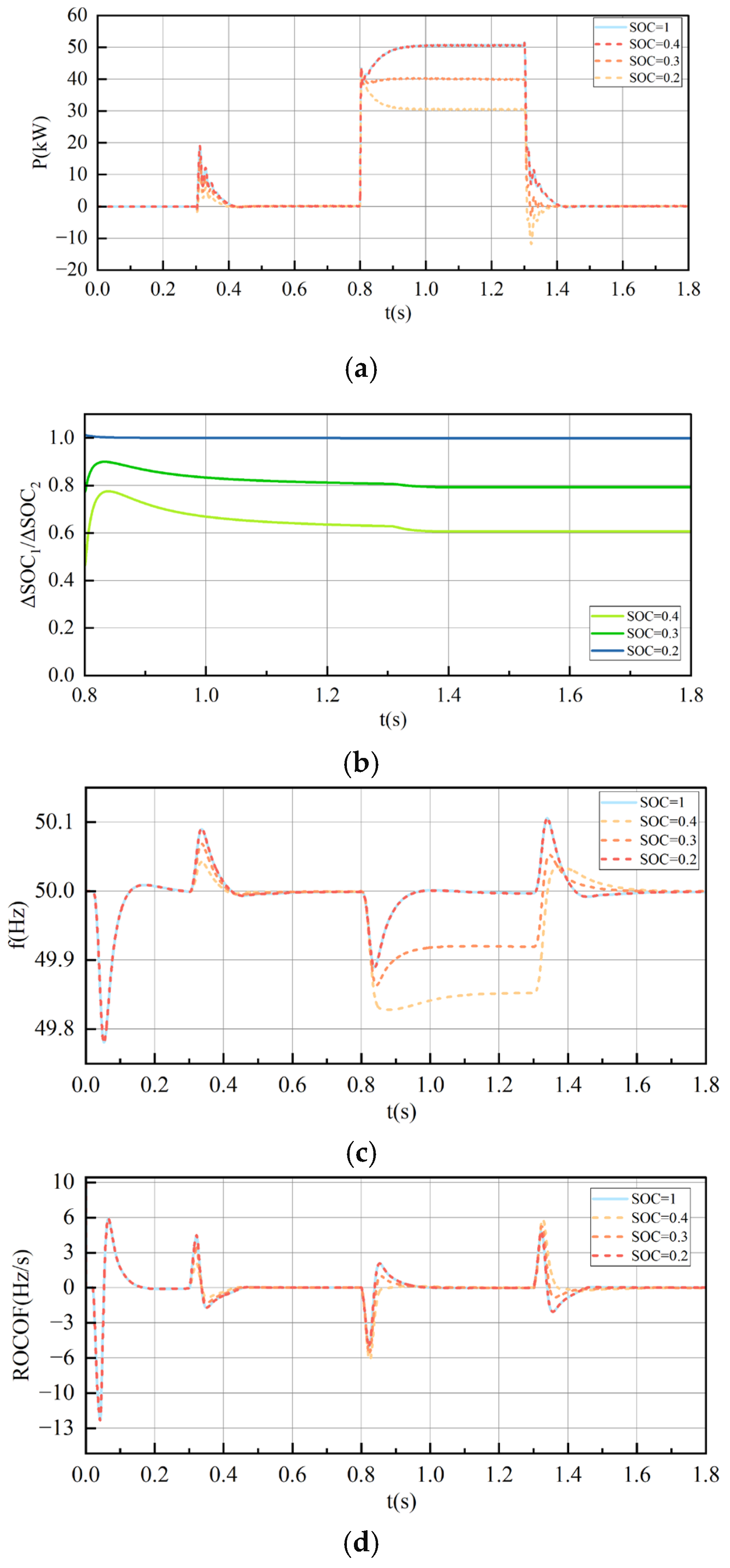
Four operating conditions are set with the initial flywheel SOC at 1, 0.4, 0.3, and 0.2, respectively, to compare the control performance of the fixed-weight MPC-VSG and the proposed SOC-MPC-VSG strategy.
As shown in
Figure 7, when SOC = 1,
α = 0.99; the energy storage output power can serve as a reference, with a steady-state system output power of 50.5 kW. After the 0.8 s load step, the steady-state system output powers under SOC = 0.4, SOC = 0.3, and SOC = 0.2 are 50.5 kW, 40.2 kW, and 30.6 kW, respectively, demonstrating that with the proposed adaptive weighting coefficient method, the system output power decreases as the SOC decreases when the SOC is insufficient.
To further quantify the difference in energy consumption between the two strategies under different initial energy states,
η is defined as follows:
where SOC is the initial SOC value, SOC
1 is the real-time SOC under MPC-VSG, and SOC
2 is the real-time SOC under the proposed method;
η reflects the proportion of SOC consumption of the proposed method relative to the MPC-VSG method.
After the power deficit is restored at 1.3 s, η is approximately at 1 when SOC = 0.4; at steady state, the energy consumption of the proposed strategy is only 79% of that of the fixed-weight strategy when SOC = 0.3, and only 61% when SOC = 0.2.
As can be observed from
Figure 7, when SOC = 0.4, the MPC under the proposed method still maintains a fixed high weight, resulting in high frequency restoration accuracy; the frequency nadir is 49.89 Hz, and the frequency recovers to 49.99 Hz in steady state, with the frequency response and ROCOF showing little difference between the two strategies. As the SOC decreases to 0.3 and 0.2,
α gradually decreases, reducing the frequency restoration accuracy. At SOC = 0.3 and SOC = 0.2, the frequency nadirs are 49.86 Hz and 49.82 Hz, respectively, and the steady-state frequencies are 49.91 Hz and 49.85 Hz, respectively. Both the frequency nadirs and the steady-state frequencies are strictly confined within the hard constraint of ±0.2 Hz, in exchange for a more gradual SOC decay rate.
The above results indicate that the lower the initial SOC, the more prominent the energy saving advantage of the proposed strategy. As the flywheel energy becomes more constrained, the weight α decreases more significantly, and the MPC imposes a weaker penalty on the frequency deviation, thereby effectively slowing the decay rate of the flywheel speed while ensuring that the frequency does not exceed the allowable limit, achieving a dynamic balance between support duration and regulation accuracy.
4.3. Verification of the SOC Self-Recovery Strategy
To verify the effectiveness of the SOC self-recovery strategy proposed in
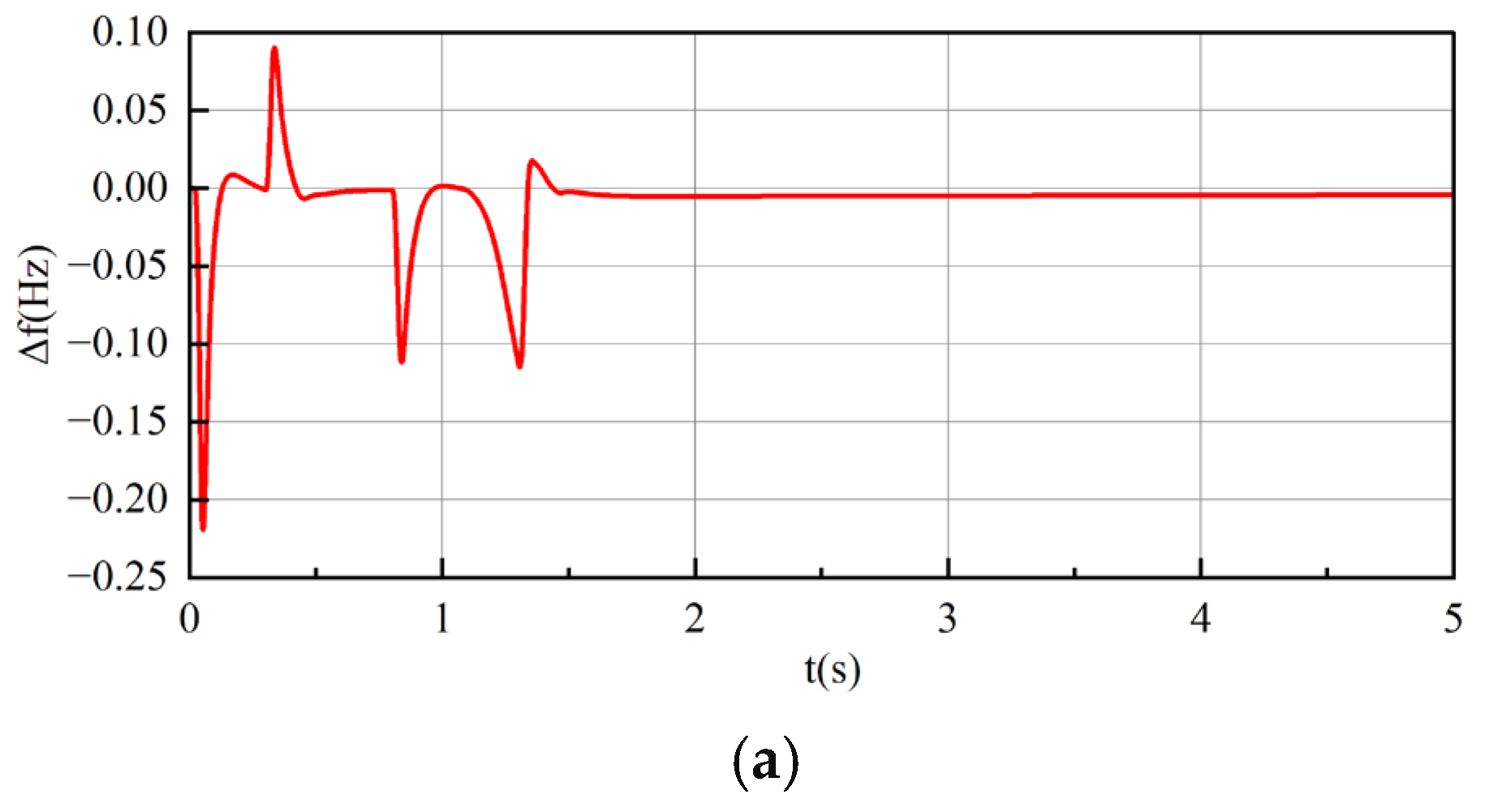
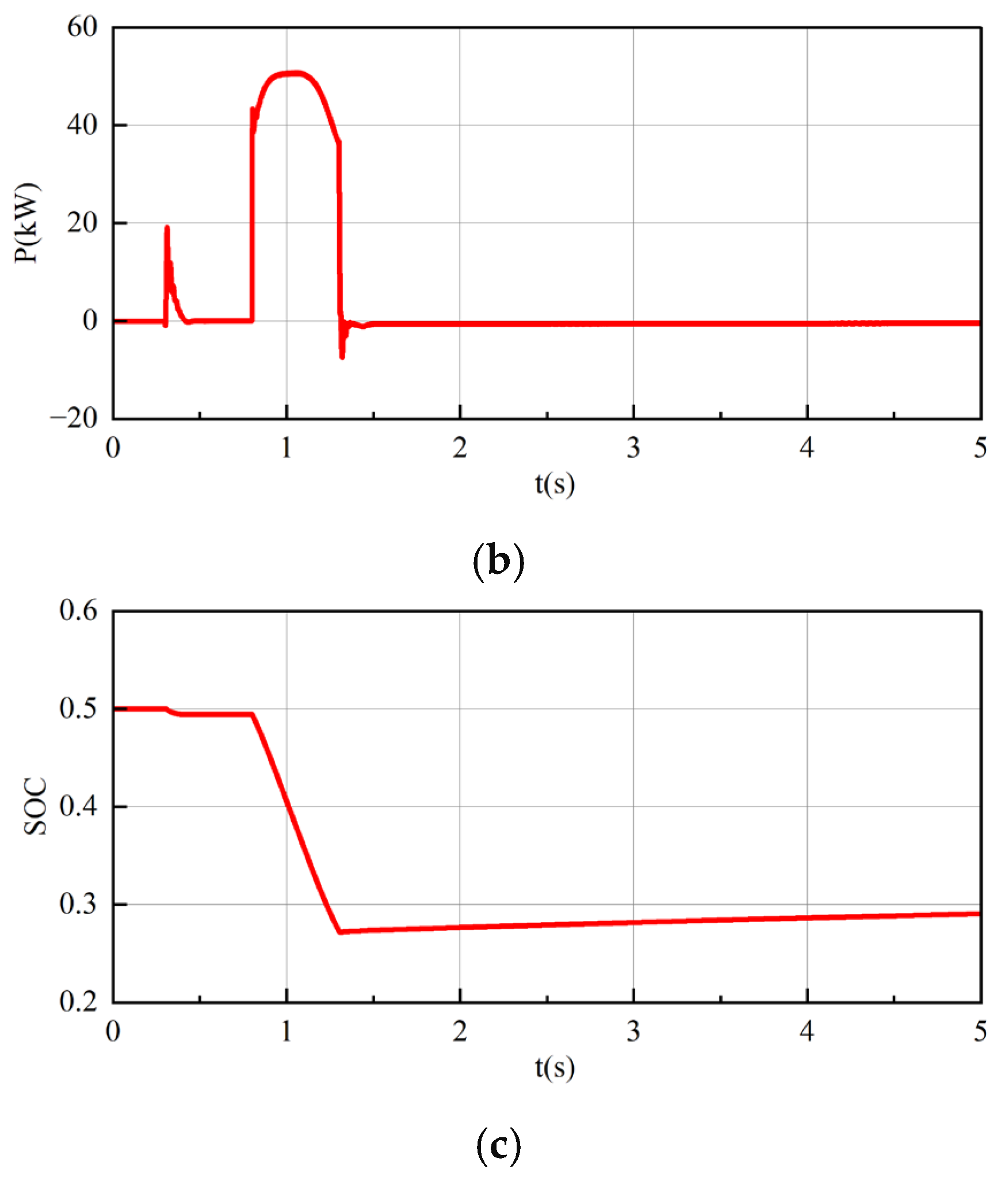
Section 3.3.2, the following simulation scenario is configured: the initial SOC of the flywheel is 0.5, and the flywheel participates in grid frequency regulation by discharging during the period 0.8–1.3 s to simulate the condition where the SOC deviates from the desired operating region after the frequency regulation task. After 1.3 s, the grid power returns to balance, the flywheel no longer participates in frequency regulation, and the frequency stabilizes within the deadband, thereby satisfying the triggering condition for self-recovery.
Figure 8a–c presents the grid frequency curve, the flywheel input/output power curve, and the flywheel SOC variation curve during the self-recovery process, respectively. The frequency deviation in
Figure 8a remains within the ±0.05 Hz deadband throughout and does not exceed the limit due to recovery charging/discharging, verifying the safety of the linear frequency margin limiting method. In
Figure 8b, the flywheel charges at a low power level, with the recovery power being significantly smaller than the frequency regulation power before 1.3 s, and it dynamically adjusts with minor frequency fluctuations, reflecting the effect of the frequency margin limiting. In
Figure 8c, the SOC gradually rises after charging and approaches the target range of [0.45, 0.55]. The above results demonstrate that the proposed SOC self-recovery strategy can effectively pull the SOC back to the desired operating region for different deviation directions while ensuring frequency safety, thereby providing sufficient energy reserves for the next frequency regulation task.