1. Introduction
Permanent magnet synchronous motors (PMSMs) have been widely employed in new-energy systems, robotics, aerospace, and other high-performance applications owing to their high efficiency, simple structure, high power density, and wide speed regulation capability [
1,
2]. With the continuous expansion of application scenarios, increasingly stringent requirements have been imposed on drive performance, particularly in terms of stability, transient response speed, and robustness [
3].
However, the PMSM control system is inherently multivariable, strongly coupled, and nonlinear, and is subject to multiple uncertainties, including internal parameter variations and external load disturbances [
4]. These uncertainties significantly affect speed-tracking performance and may deteriorate system stability under varying operating conditions. Therefore, achieving reliable speed regulation requires control strategies that explicitly account for both internal parameter uncertainties and external disturbances [
5,
6,
7].
In practical applications, proportional-integral (PI) controllers remain widely adopted for PMSM speed regulation due to their simplicity and ease of implementation [
8,
9]. Nevertheless, PI controllers rely heavily on accurate system modeling and fixed parameter tuning. Their performance is easily degraded by nonlinear dynamics and time-varying operating conditions, resulting in limited robustness and reduced adaptability to complex working environments.
To address these limitations, various nonlinear control strategies have been proposed, including neural network control [
10], adaptive control [
11], model predictive control [
12], fuzzy control [
13,
14], and sliding-mode control (SMC) [
15,
16]. These approaches enhance PMSM control performance from different perspectives. Among them, SMC has attracted considerable attention in engineering applications due to its simple structural design, reduced dependence on precise system modeling, and strong robustness against parameter variations and external disturbances. Motor speed regulation represents one of its most important application domains.
Sliding-mode control (SMC) is a representative variable-structure control strategy in which a sliding surface is designed to drive the system states toward and subsequently along a predefined manifold. Owing to its inherent robustness against parameter variations and external disturbances, SMC has been widely applied in motor drive systems. However, the discontinuous switching nature of conventional SMC introduces high-frequency control signals, which may cause severe chattering phenomena, leading to mechanical vibration, increased losses, and degradation of control accuracy.
To alleviate the chattering problem while preserving robustness, various improved SMC schemes have been developed, which can generally be classified into first-order, second-order, and higher-order sliding-mode methods according to the order of the sliding-variable derivatives.
For first-order SMC, numerous convergence-law and sliding-surface modifications have been proposed. In [
17], a hyperbolic sinusoidal function with a variable boundary-layer thickness was introduced to achieve smoother switching behavior, and fuzzy logic was employed to adjust the function coefficients online, thereby attenuating chattering and improving both dynamic and steady-state performance of the PMSM drive. A fixed-time dynamic convergence law combined with a nonsingular fast terminal sliding surface was presented in [
18] to enhance convergence speed while reducing oscillations. In [
19], a composite convergence law integrating terminal and exponential proportional terms was developed, and an extended disturbance observer was incorporated to improve disturbance rejection capability. An integral sliding surface together with an improved convergence law introducing state variables was designed in [
20], further enhancing system response performance.
Among second-order sliding-mode approaches, the super-twisting algorithm (STA) is the most widely adopted due to its relatively simple structure and effective chattering attenuation. In [
21], an STA-based PMSM controller was proposed, and a parameter-tuning method grounded in high-gain theory was developed to improve robustness. An improved STA incorporating linear correction terms was introduced in [
22], achieving enhanced convergence speed and stability. Furthermore, Ref. [
23] combined a segmented integral terminal sliding surface with the STA to realize improved tracking performance and reduced chattering in PMSM speed control.
Higher-order sliding-mode techniques theoretically provide superior chattering suppression compared with lower-order counterparts. However, they often involve significantly increased computational complexity and typically require high-resolution encoders and high-precision sensing devices, which restricts their practical implementation in industrial motor drives. To simplify higher-order sliding-mode structures, a relay-polynomial algorithm was proposed in [
24] to reduce controller complexity.
In summary, first-order SMC features structural simplicity and fast response but suffers from residual chattering and limited robustness. Higher-order SMC offers excellent theoretical performance in chattering suppression but entails substantial computational burden and demanding hardware requirements. Second-order SMC, particularly the super-twisting algorithm, provides a favorable compromise between robustness, convergence speed, and implementation complexity. Therefore, this paper adopts a second-order sliding-mode framework to design the speed controller and load observer.
In sliding-mode-based PMSM control systems, accurate rotor position and speed information is a prerequisite for achieving high-performance regulation. Conventionally, such information is obtained using mechanical sensors mounted on the rotor shaft. However, the use of physical sensors increases system cost, volume, and mechanical complexity, while potentially reducing reliability and robustness. Consequently, sensorless control technology has attracted considerable research interest in recent years [
25].
Sensorless control strategies estimate rotor position and speed from measurable electrical quantities, such as stator voltages and currents [
26]. Existing PMSM sensorless techniques mainly include high-frequency signal injection methods [
27], Kalman filtering approaches [
28], and sliding-mode-observer (SMO)-based schemes. Among these methods, SMO demonstrates strong potential due to its inherent robustness, disturbance rejection capability, and relatively simple algorithmic structure.
The SMO typically estimates the back electromotive force (EMF) by exploiting the mismatch between the measured stator current and the observer output, and subsequently extracts rotor position information from the estimated EMF. However, conventional SMOs often rely on low-pass filters to obtain the EMF components, which introduces phase delay and residual chattering, thereby degrading estimation accuracy. To overcome these limitations, numerous improvements have been proposed, focusing on enhanced convergence laws and reduced sensitivity to parameter variations.
For instance, a sliding-mode predictive observer was introduced in [
29] to achieve fast convergence and reduced chattering without requiring manual tuning of sliding gains, while mitigating the influence of motor parameter variations. In [
30], a sigmoid switching function combined with fuzzy adaptive tuning was employed to modify convergence characteristics and suppress chattering. A novel convergence-law-based SMO was developed in [
31], enabling different convergence behaviors during distinct stages of the sliding process to improve dynamic response and reduce oscillations. Moreover, an adaptive phase-locked loop (PLL) was proposed in [
32] to dynamically adjust bandwidth and minimize rotor position estimation error.
In summary, although existing speed control and sensorless strategies have achieved notable improvements in robustness and estimation accuracy, challenges remain in simultaneously enhancing response speed and smoothness while maintaining implementation simplicity. To address these issues, this paper proposes a nonsingular terminal sliding-mode speed control scheme based on an integral-type fast terminal sliding surface combined with a fast super-twisting algorithm. Furthermore, a corresponding load torque observer and a super-twisting-based sensorless control strategy are developed to improve disturbance rejection and estimation performance.
This paper develops an integrated STA-based sensorless sliding-mode control framework for PMSM drives by combining speed regulation, load torque observation, and sensorless estimation. Since the focus is on the speed-loop and observer design, a conventional PI current controller is retained to ensure stable current tracking and to avoid introducing additional current-loop optimization effects into the performance comparison [
33].
The remainder of this paper is organized as follows.
Section 2 presents the proposed sliding-mode speed controller.
Section 3 describes the load torque observer design.
Section 4 introduces the super-twisting-based sensorless control strategy. Experimental validation is provided in
Section 5, and conclusions are drawn in
Section 6.
2. Sliding-Mode Speed Controller Design
This study considers a surface-mounted permanent magnet synchronous motor (SPMSM). For analytical tractability, magnetic saturation, eddy-current losses, and hysteresis effects are neglected. It is further assumed that the stator windings generate sinusoidally distributed air-gap flux, and that rotor motion induces a corresponding sinusoidal back electromotive force (EMF).
To address the limitations of conventional first-order sliding-mode control, particularly the residual chattering and limited robustness, a second-order super-twisting sliding-mode algorithm is adopted to optimize the design of the speed controller. The super-twisting framework enhances convergence performance while reducing control discontinuity, thereby improving smoothness and robustness in PMSM speed regulation.
For the SPMSM with
control, the electromagnetic torque is mainly determined by the
-axis current. Therefore, the mechanical dynamics can be expressed as follows:
Thus, the -axis reference current is regarded as the control input of the speed loop, while the load torque is treated as an external disturbance. The control objective is to make track the reference speed with fast response, small steady-state fluctuation, and strong robustness against load disturbance.
2.1. Conventional Sliding-Mode Control
Sliding-mode control (SMC) is a nonlinear control method that forces the system states to reach and subsequently move along a predefined trajectory, known as the sliding surface, thereby ensuring system stability.
The conventional sliding surface is defined as a linear function given by the following expression:
where
and
denote the speed-tracking error and its derivative, respectively.
The conventional exponential reaching law is given by the following:
In the formulation,
denotes the error weighting gain,
represents the switching gain coefficient, and
denotes the exponential reaching-law coefficient. Under the
id = 0 control strategy, the q-axis reference current
is given by the following:
In the equation, ω denotes the actual rotor speed, iq represents the quadrature-axis current, Pn is the number of pole pairs in the PMSM, ψf indicates the permanent magnet flux linkage, J is the rotational inertia, B is the damping coefficient, TL corresponds to the load torque, and sgn(·) defines the signum function.
In conventional sliding-mode control, the convergence behavior of the linear sliding surface is determined by the reaching law, as shown in Equation (3). The exponential reaching law introduces the convergence coefficient to improve the convergence rate under the guidance of the linear sliding surface. However, due to the inherent characteristics of the exponential function, the system state cannot converge to zero within finite time.
Moreover, under the exponential reaching law, the presence of the discontinuous switching term prevents the state trajectory from strictly remaining on the sliding surface. Instead, it oscillates in the vicinity of the surface, resulting in the well-known chattering phenomenon.
2.2. Design of a Sliding-Mode Speed Controller Based on STA
To rapidly reduce tracking errors, suppress sliding-mode chattering at its source, and accelerate both the reaching and sliding phases, this paper proposes a sliding-mode speed controller that combines an integral-type nonsingular fast terminal sliding surface with the super-twisting algorithm (STA).
Since the PMSM is a nonlinear multivariable system, it can be described by the following nonlinear state equation:
In the equation, .
To drive the system trajectory toward the sliding-mode surface, the sliding-mode surface is designed as follows:
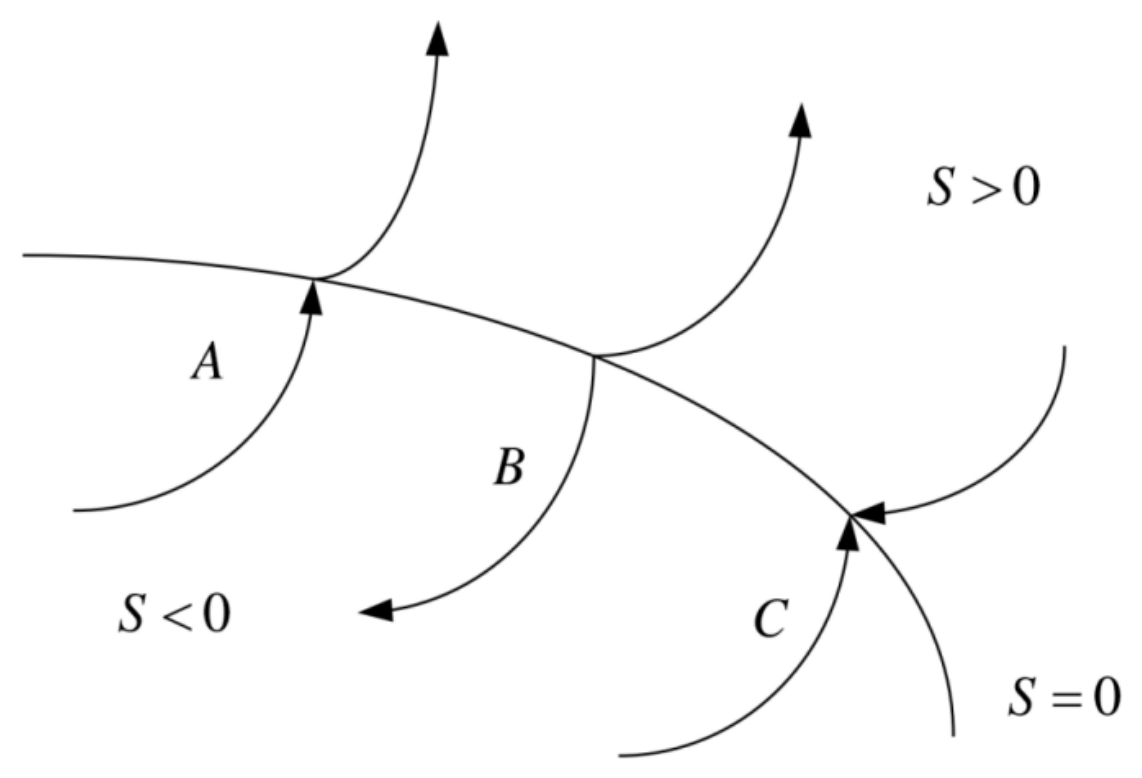
At this stage, the state space is divided by the sliding-mode surface into three regions,
,
, and
, as illustrated in
Figure 1.
The control function is as follows:
where the control function
should satisfy the reachability condition as well as ensure the stability of the subsequent sliding-mode motion. On this basis, the sliding-mode control function is designed to optimize the dynamic performance of the control system.
Building upon Equation (6), a fast nonsingular terminal sliding surface is designed by introducing a fractional-order term to eliminate singularity and an integral term to enhance robustness against disturbances, which is expressed as follows:
In the formulation, S2 denotes the designed sliding surface, k1, k2, and k3 represent sliding-surface gains, p and q are constants satisfying p > q, and t specifies the controller sampling period.
In conventional terminal sliding-mode control, singularity may occur because negative-power error terms are generated after differentiating the sliding surface. In the proposed integral-type nonsingular terminal sliding surface, the fractional-power term is introduced in integral form; therefore, its derivative only contains the bounded term and no negative-power error term appears. Thus, the proposed method avoids singularity while maintaining fast convergence.
Differentiating Equation (8) yields the following:
The derivative of the fast nonsingular terminal sliding surface can be obtained as follows:
To effectively suppress chattering during the reaching phase of sliding-mode motion, a fast STA incorporating proportional and integral terms is designed as the reaching law. The proportional term accelerates the convergence process, while the integral term suppresses chattering on the sliding surface. The reaching law is expressed as follows:
In the formulation, is the proportional term, is the integral term, and α, β, γ, and η are all constants.
Combining the derivative of the sliding surface with the proposed fast STA reaching law, the q-axis reference current is derived as follows:
2.3. Stability and Convergence Analysis
This section first analyzes the stability of the proposed controller based on Lyapunov theory and then verifies the convergence behavior of the sliding variable through simulation.
Based on the Lyapunov theorem, the stability of the proposed controller is proven by selecting the state as follows:
A positive-definite Lyapunov function is chosen as follows:
where
is a real symmetric positive-definite matrix.
Taking the time derivative of
along the trajectories,
Since
,
, and
, Equation (17) further yields
where
and denote the minimum and maximum eigenvalues of the corresponding matrix, respectively.
From Equation (16),
is strictly decreasing for
, and the closed-loop sliding dynamics are stable. Moreover, since
, the state vector
converges to the origin in finite time. The reaching time satisfies
where
is the initial value of the Lyapunov function. Therefore,
,
, and
converge to zero in finite time. This proves that the proposed fast-STA-based sliding-mode speed controller ensures finite-time convergence of the sliding variable and improves the robustness of the PMSM speed control system against bounded disturbances.
To further verify the stability of the designed sliding-mode controller, a corresponding simulation model was established in Simulink. A comparative analysis of the sliding variables with those of the conventional sliding-mode controller was conducted, and the PMSM parameters used in the simulation are listed in
Table 1.
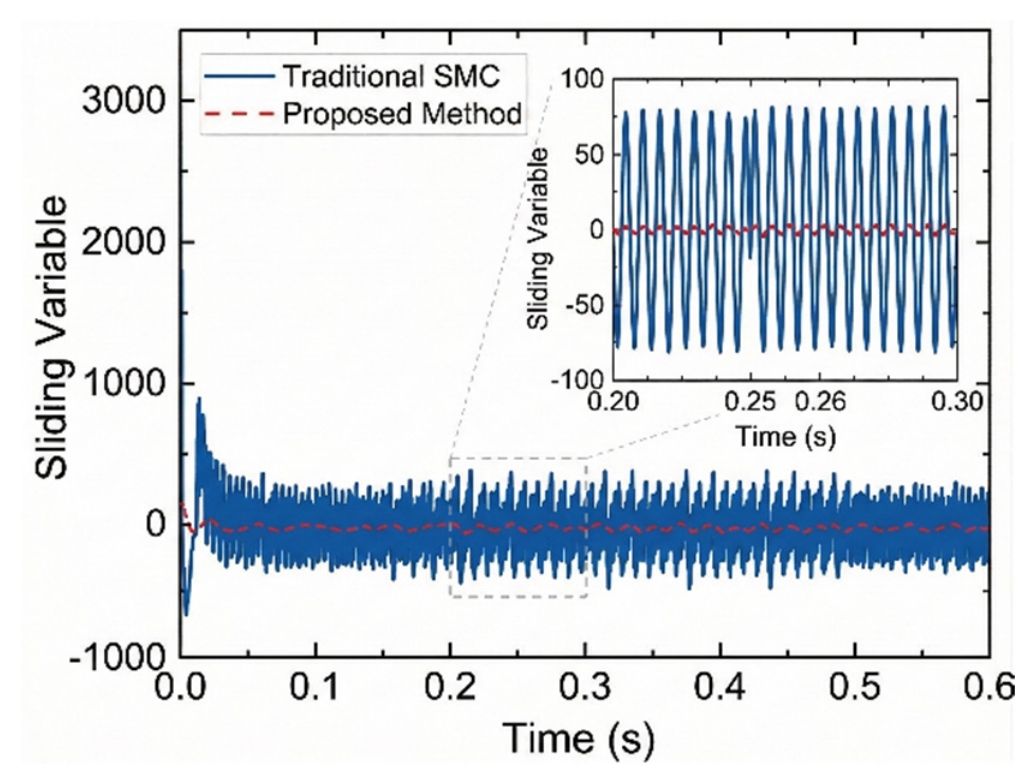
The comparison results of the sliding variables are shown in
Figure 2. The traditional sliding-mode controller requires approximately 0.019 s to reach the sliding surface, whereas the proposed method converges within about 0.01 s. In addition, the sliding variable under the proposed approach exhibits improved smoothness compared with the conventional scheme, and the chattering phenomenon is significantly reduced.
In summary, the proposed fast-STA-based controller is stable and outperforms the conventional sliding-mode controller in terms of chattering suppression and convergence time, thereby improving the dynamic performance of the system.
5. Simulation and Experimental Verification
To improve reproducibility, the main simulation and implementation settings are further specified. The PMSM drive system was implemented in MATLAB/Simulink R2023b using the vector control strategy and SVPWM. A fixed-step solver with the ode3 integration method was adopted, and the fixed-step size was set to . The PWM carrier period was s, corresponding to a switching frequency of 5 kHz. The DC-link voltage was set to 560 V, and the total simulation time was 0.6 s. In the comparative simulations, speed and load changes were applied at 0.2 s and 0.4 s, respectively. The motor parameters, current-loop controller, sampling time, PWM frequency, and operating conditions were kept identical for all compared methods.
The main gains used in the reported results were specified as follows. The current-loop PI gains were set as and . The baseline speed-loop PI gains were and . For the proposed STA-based speed control module, the main implementation gains were and . The load torque observer parameters were , , and .
The parameters were tuned sequentially. The current-loop PI controller was first adjusted to ensure stable current tracking, and the baseline speed-loop controller was then tuned for comparison. Based on the stability and finite-time convergence requirements, the STA-related gains were selected and further refined through simulation by balancing response speed, chattering suppression, disturbance rejection, and steady-state fluctuation [
35]. Finally, the load torque observer and STA-based sliding-mode observer parameters were adjusted to improve load-disturbance estimation, back-EMF estimation, and sensorless estimation accuracy, while avoiding excessively large gains that may cause high-frequency oscillations or current command fluctuations.
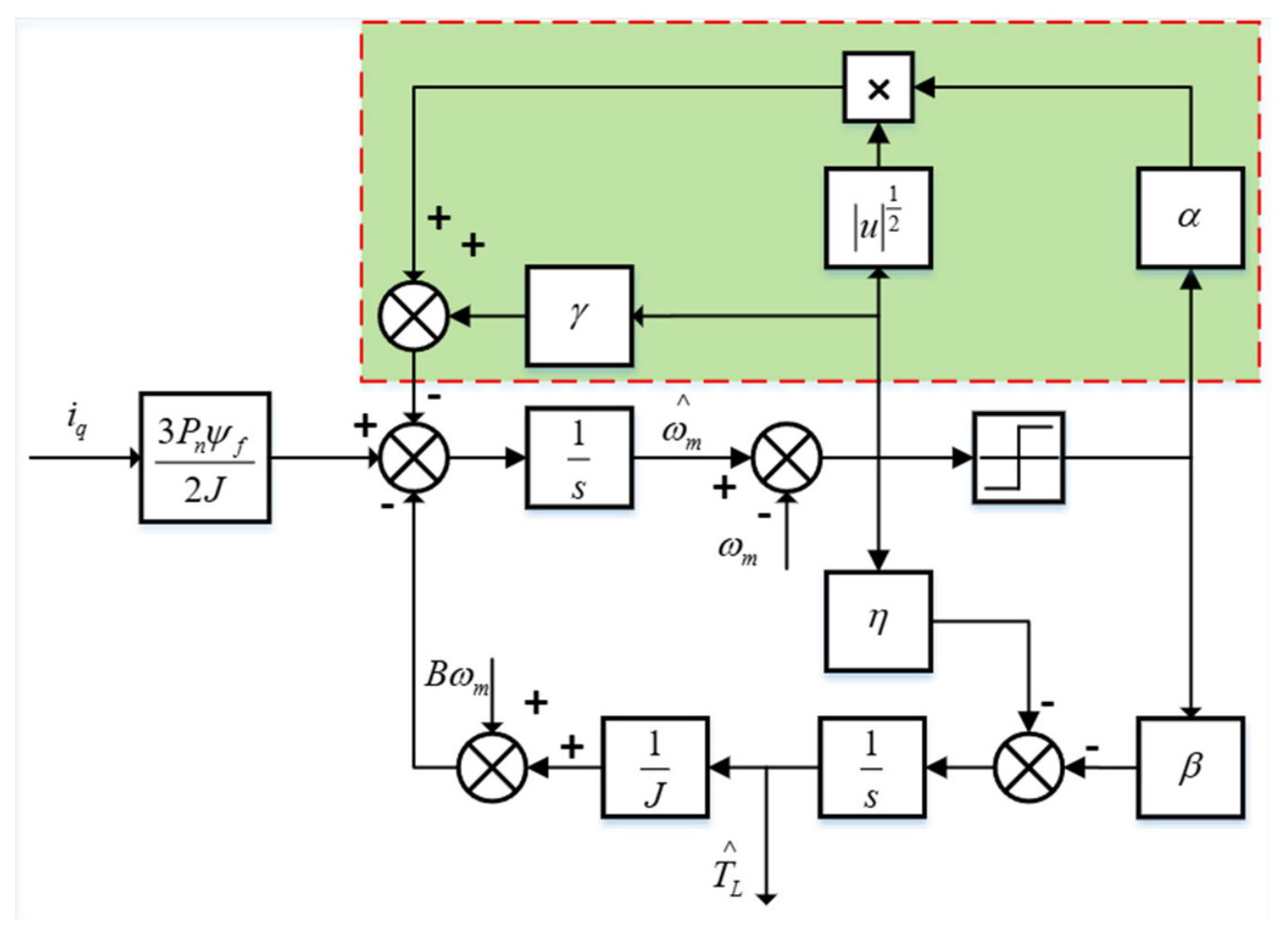
The block diagram of the speed control system based on the integral fast terminal sliding-mode surface combined with STA is shown in
Figure 4.
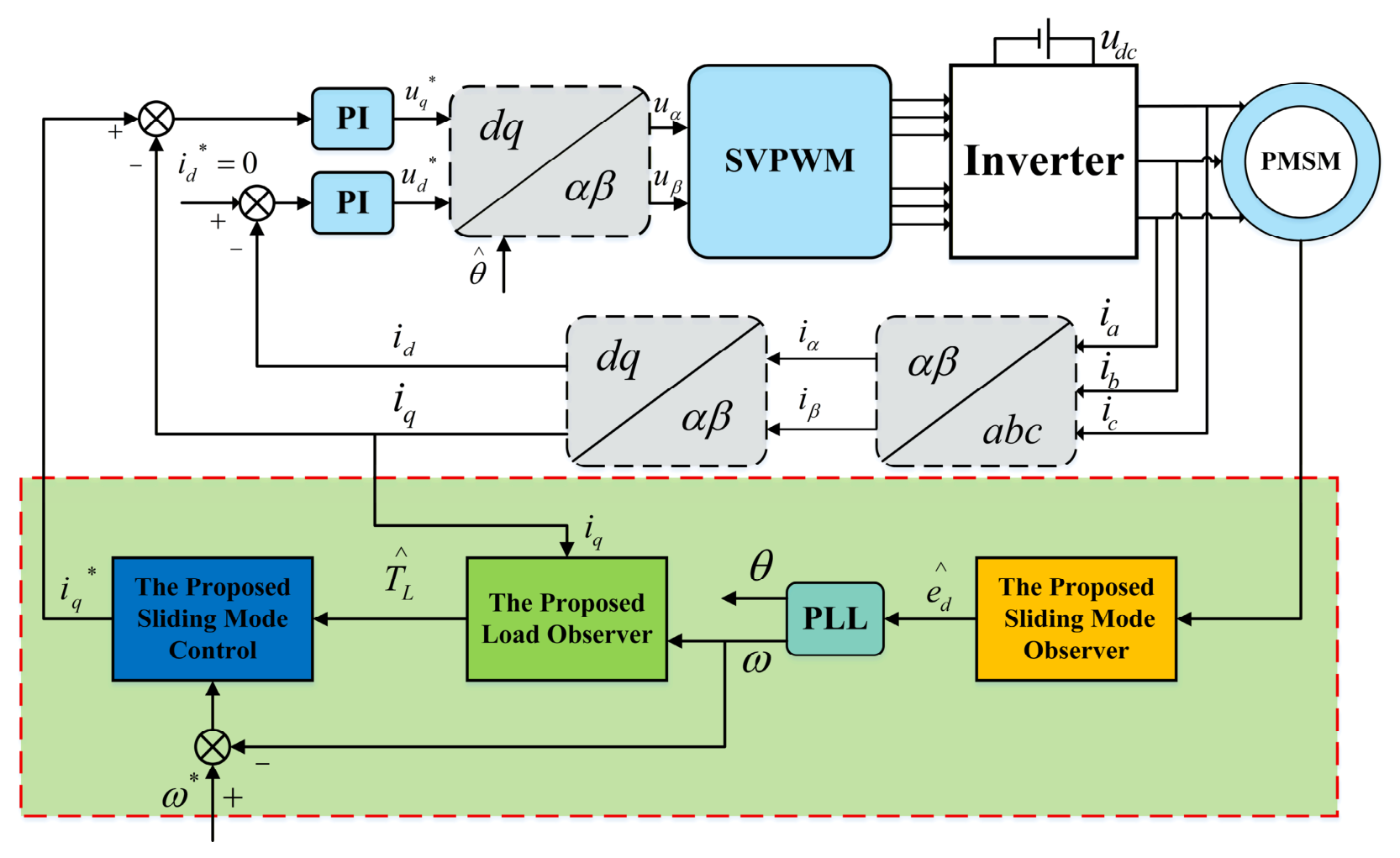
In the proposed sensorless vector control system, the speed controller generates the -axis reference current , the load torque observer provides the estimated load torque for feed-forward disturbance compensation, and the STA-based sliding-mode observer supplies the estimated rotor position and speed for coordinate transformation and speed feedback. Thus, these three modules are coordinated within a unified PMSM vector control framework.
5.1. Simulation Verification of Speed Regulation and Sensorless Estimation
This section evaluates the proposed control strategy through simulations under speed-variation and load-disturbance conditions, including speed response, disturbance rejection, and sensorless estimation performance.
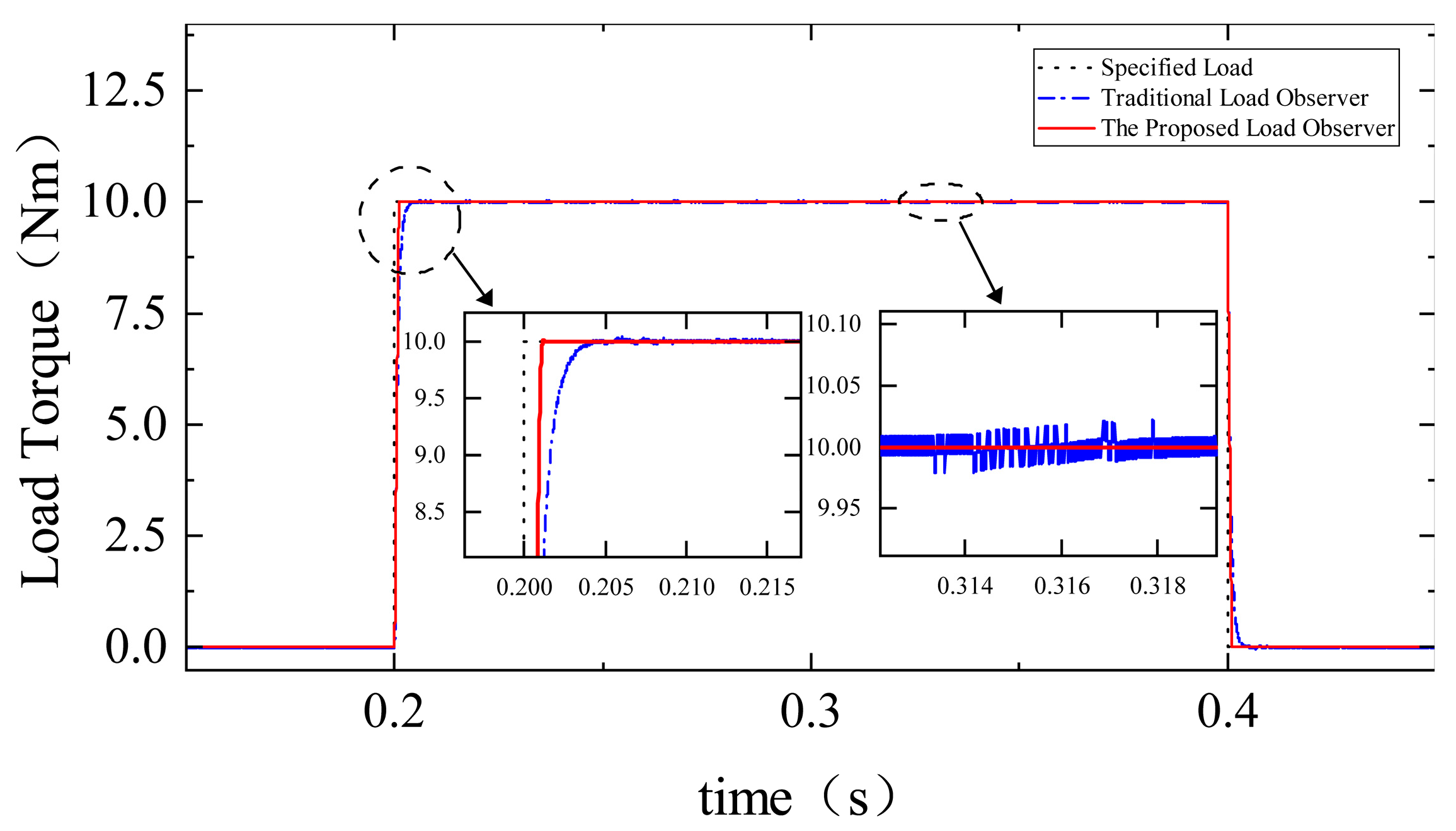
To evaluate the load observation performance of the conventional load torque observer and the proposed observer, a 10 Nm load disturbance was applied to the motor at 0.2 s and removed at 0.4 s in the Matlab/Simulink environment, as shown in
Figure 5.
As illustrated in
Figure 5, the conventional observer requires approximately 0.005 s to reach the reference value following the sudden load change, with a steady-state observation fluctuation of about 0.048 Nm. In contrast, the proposed observer converges within 0.001 s, and the steady-state fluctuation is reduced to approximately 0.000006 Nm. The proposed method improves the load observation response by about 80% and significantly suppresses steady-state fluctuation.
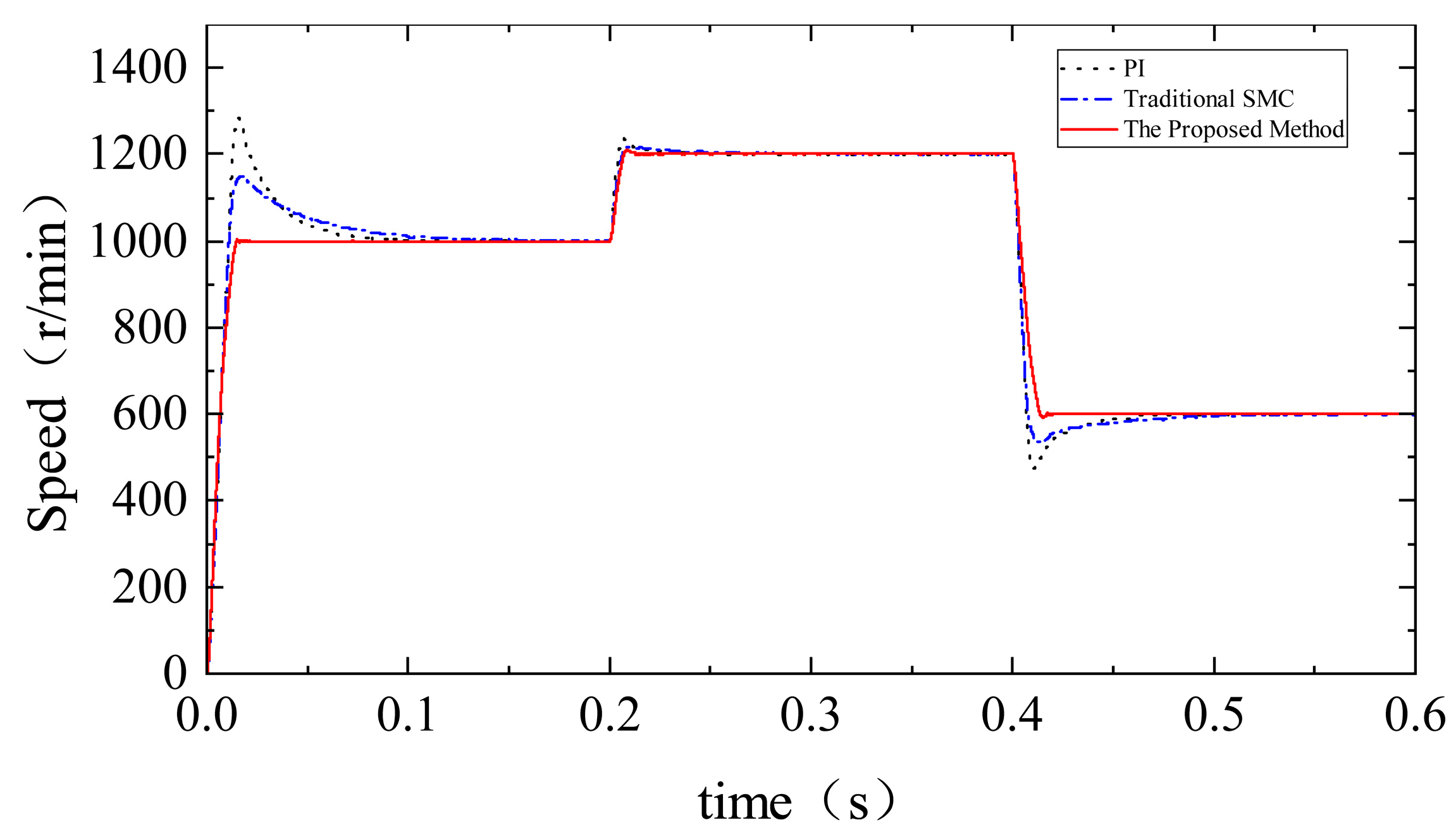
To evaluate the optimization performance of the proposed controller in PMSM speed regulation, simulations were conducted under identical parameter settings. The reference speed was set to 1000 r/min. The motor was started, and the speed was increased to 1200 r/min at 0.2 s and decreased to 800 r/min at 0.4 s, as shown in
Figure 6.
As illustrated in
Figure 6, compared with the conventional double closed-loop PI control, the proposed controller significantly reduces the overshoot from 28.5% to 0.4%, corresponding to a reduction of 98.60%. Moreover, the acceleration and deceleration response time is shortened from 2 s to 0.5 s, representing a 75% improvement.
In comparison with the traditional sliding-mode controller, the proposed method decreases the overshoot from 14.8% to 0.4%, achieving a reduction of 97.30%. The acceleration and deceleration response time is reduced from 0.18 s to 0.015 s, which corresponds to a 91.67% decrease.
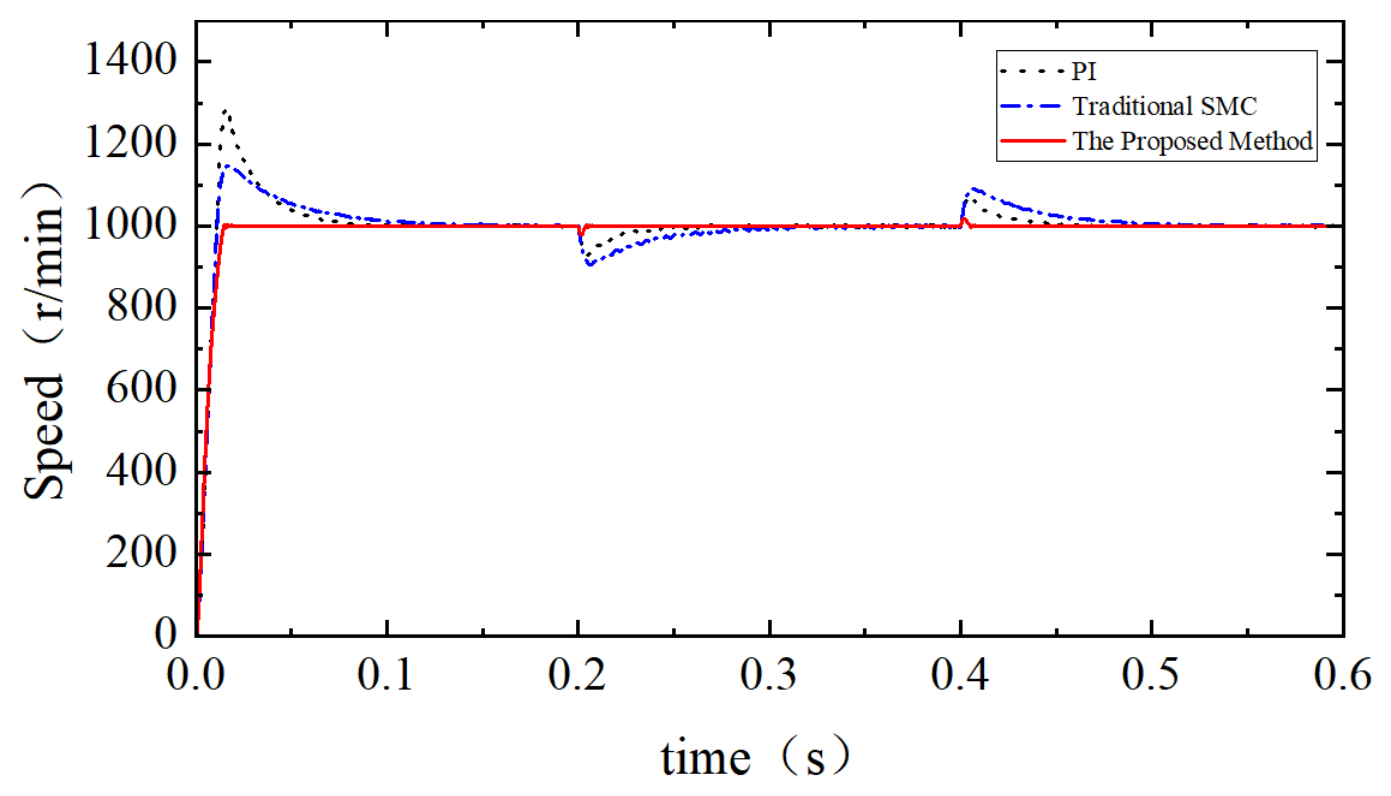
To evaluate the disturbance rejection capability and steady-state performance of the PMSM under different control strategies, the reference speed was set to 1000 r/min. The motor was started, and a load of 10 Nm was applied at 0.2 s and removed at 0.4 s, as shown in
Figure 7.
As illustrated in
Figure 7, compared with the conventional double closed-loop PI control, the proposed controller significantly reduces the speed deviation caused by the sudden load disturbance from 70.20 r/min to 21.11 r/min, corresponding to a reduction of 69.93%. In addition, the steady-state speed fluctuation is reduced from approximately 8 r/min to about 1 r/min, representing an 87.5% decrease.
Compared with the traditional sliding-mode controller, the proposed method reduces the speed variation induced by the load disturbance from 93.12 r/min to 21.11 r/min, achieving a 77.33% improvement. Furthermore, the steady-state speed fluctuation is decreased from about 7 r/min to approximately 1 r/min, corresponding to a reduction of 85.71%.
Based on the above simulation results, the proposed method also shows improved performance over conventional control strategies in three key aspects of PMSM speed regulation: dynamic speed response, load-disturbance rejection, and steady-state fluctuation. The dynamic performance of the PMSM is therefore significantly improved.
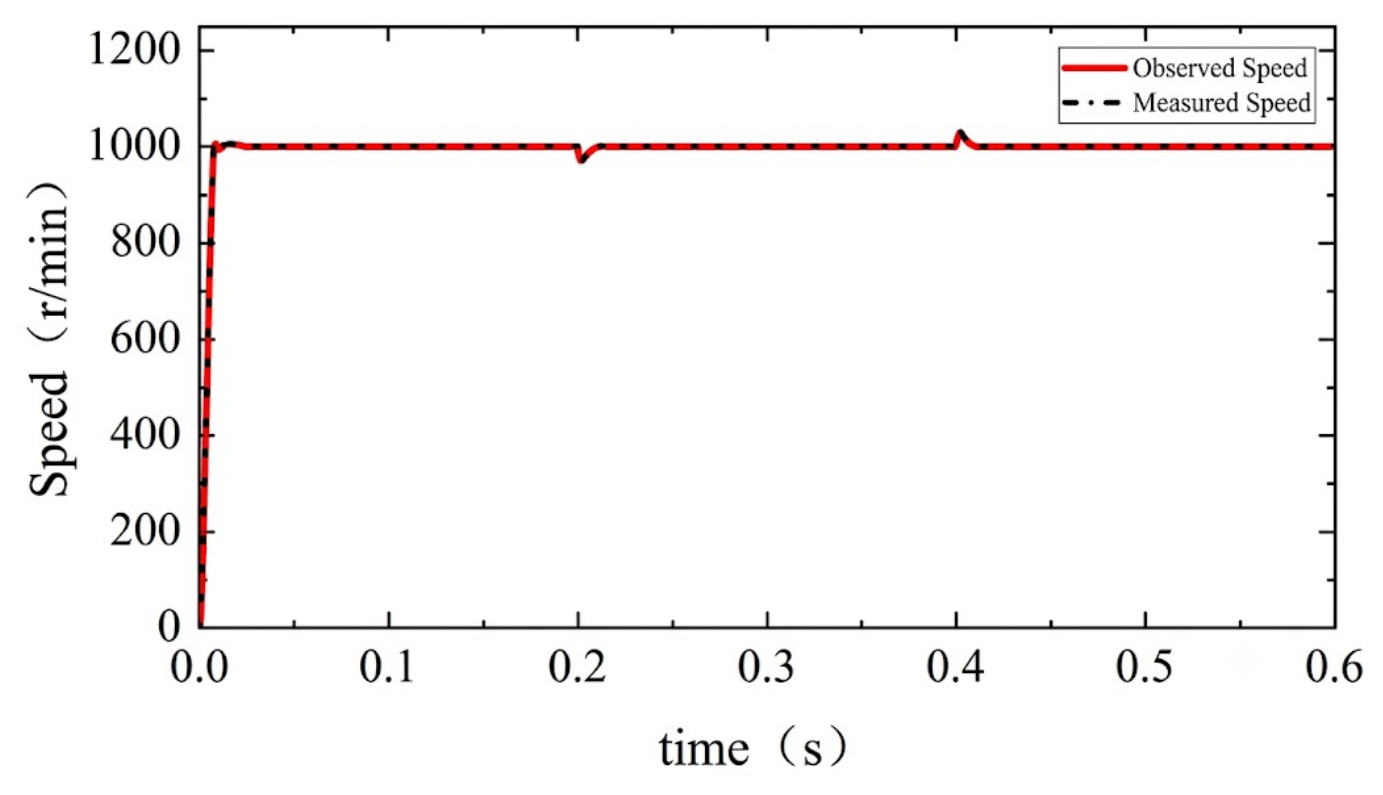
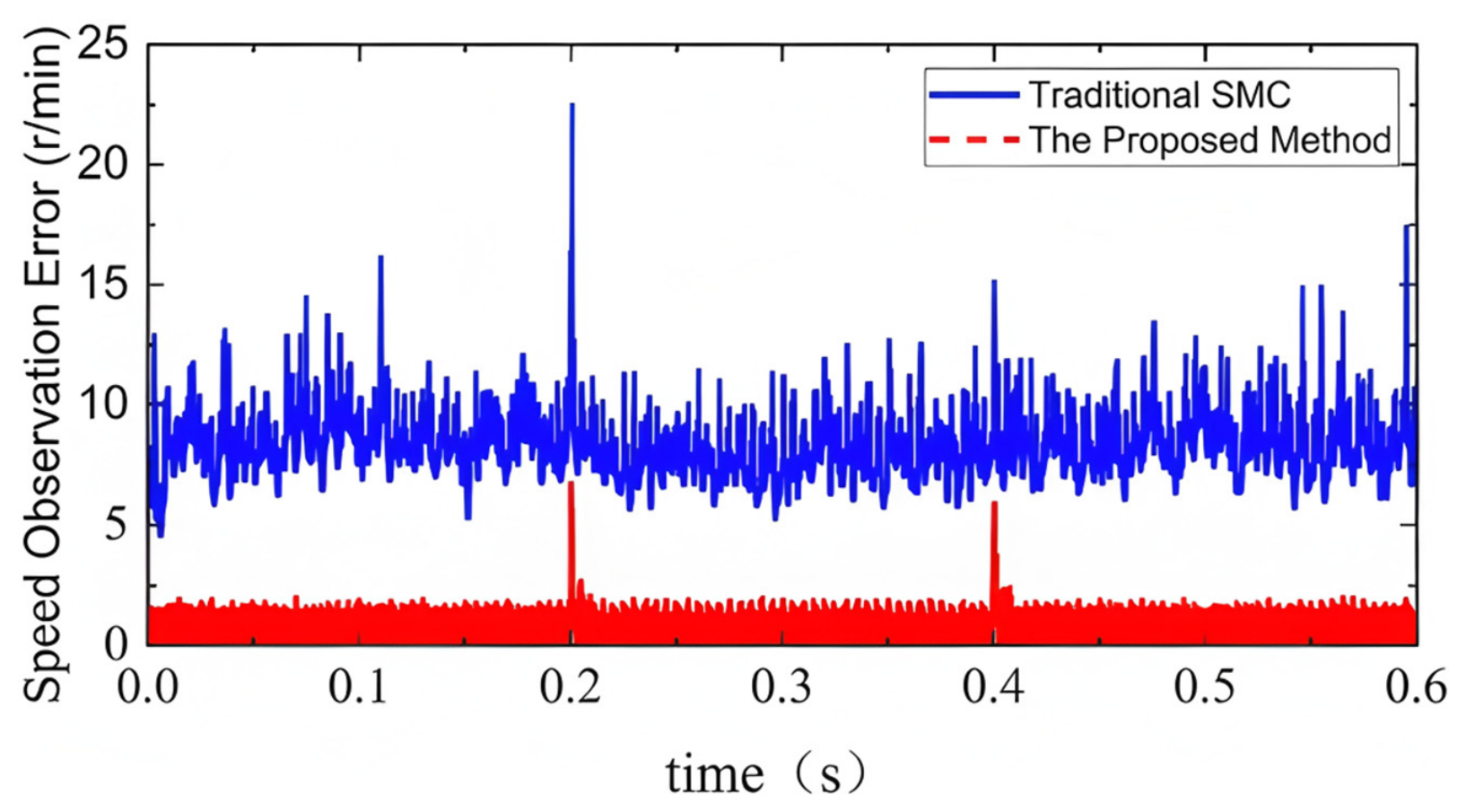
To further evaluate the position and speed estimation accuracy of the proposed STA-based sliding-mode observer, simulations were conducted in Simulink. The speed estimation and tracking error curves are shown in
Figure 8 and
Figure 9.
Under the proposed sensorless control strategy, the PMSM rapidly reaches the reference speed, and the estimated speed closely tracks the actual value. Compared with the conventional sliding-mode observer, the steady-state speed estimation error is reduced from approximately 15 r/min to about 2 r/min, corresponding to an improvement of 86.67%.
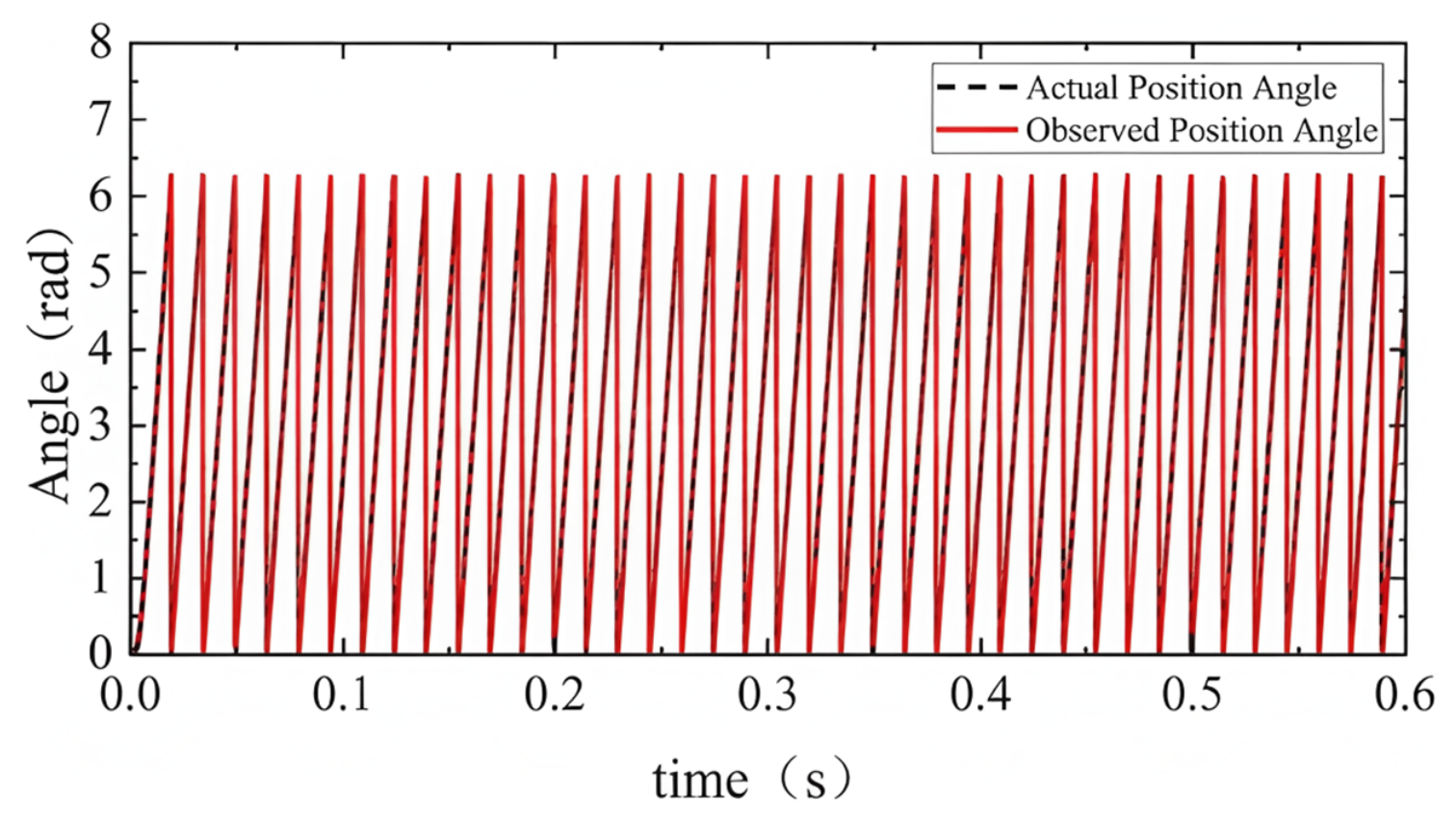
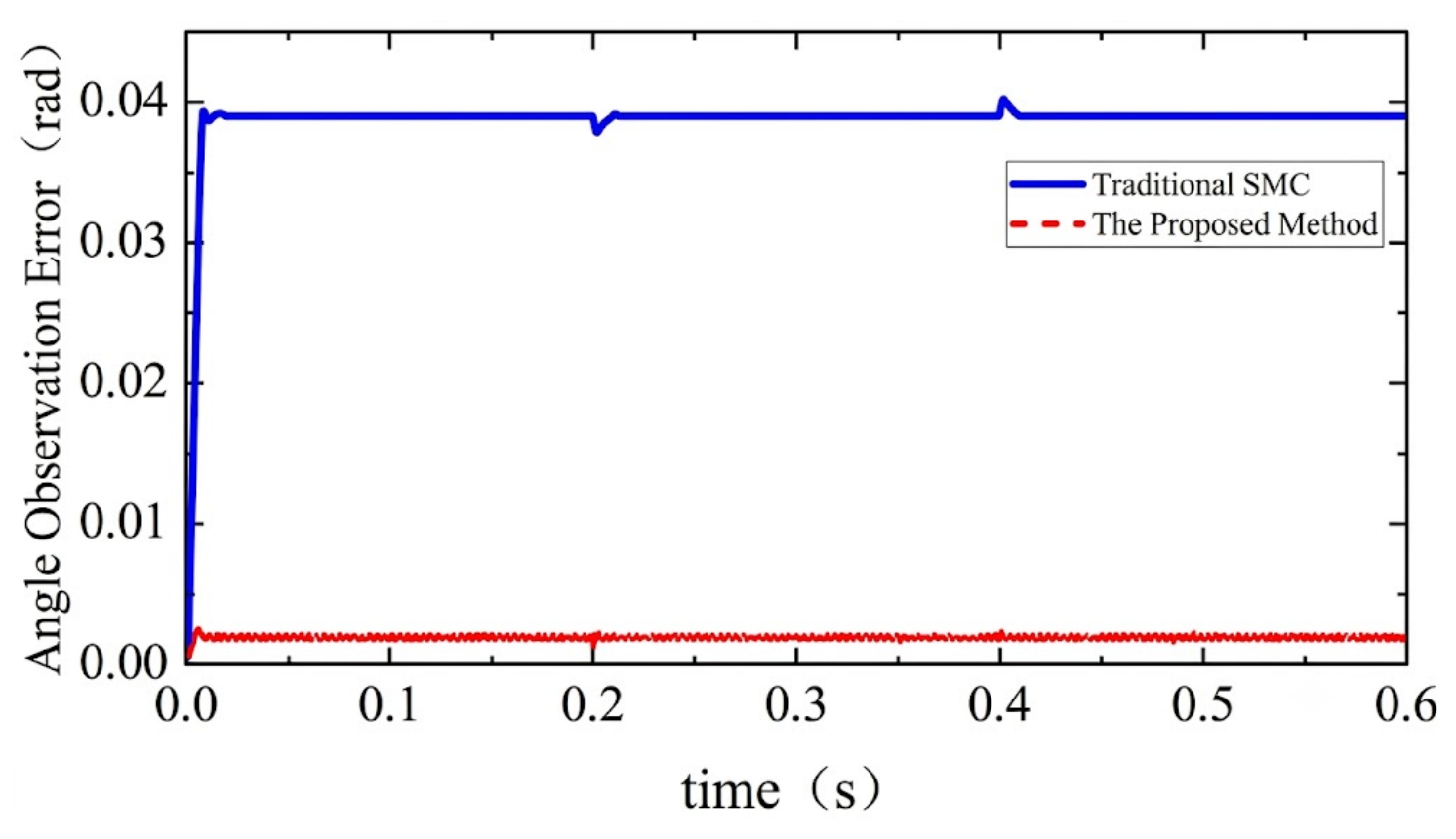
The rotor position estimation and tracking error curves are shown in
Figure 10 and
Figure 11. The proposed STA-based sliding-mode observer enables the estimated rotor position angle to rapidly track the actual value. By employing the STA, chattering is significantly reduced, and the reliance on a low-pass filter is minimized, thereby alleviating the phase-delay issue.
Compared with the conventional sliding-mode observer, the position estimation error is reduced from 0.039 rad (~2.24°) to approximately 0.002 rad (~0.11°), corresponding to a 94.87% reduction. These results demonstrate that the optimized sliding-mode observer substantially improves estimation accuracy and enhances the performance of the sensorless control system.
In summary, the above simulation results preliminarily verify that the proposed sensorless control strategy for the PMSM vector control system effectively reduces the estimation errors of rotor speed and position, thereby improving overall sensorless control accuracy.
5.2. Analysis of Experimental Results
To further validate the effectiveness of the proposed sensorless speed optimization strategy, experimental verification was conducted to compare theoretical and simulation results with practical performance.
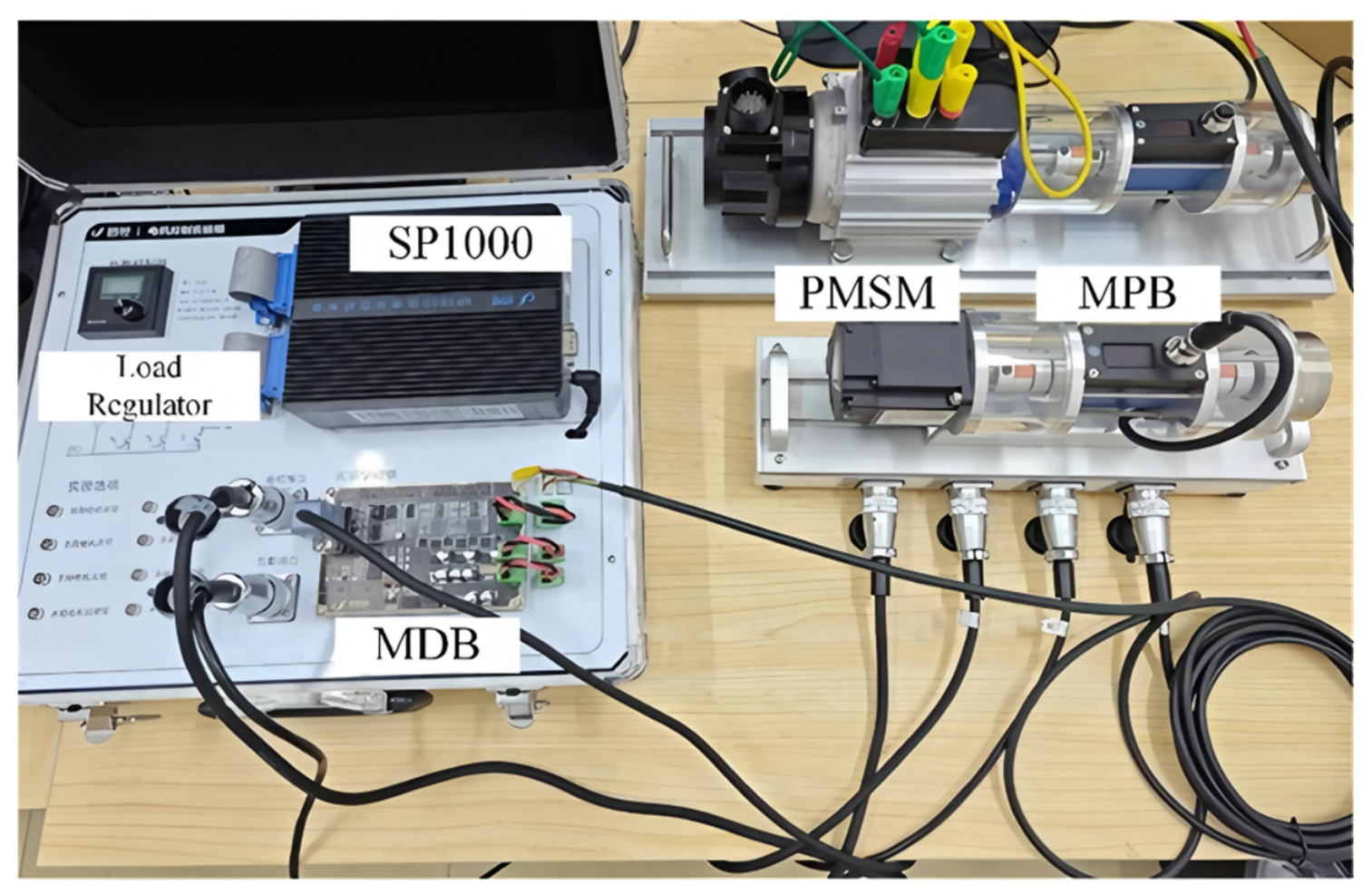
The motor control experimental platform, constructed according to the configuration shown in
Figure 4, is presented in
Figure 12. The platform is based on the SP1000 controller (Nanjing Yanxu Company, China) and the TMS320F28335 processor (Nanjing Yanxu Company, China), and includes a torque sensor, speed sensor, magnetic powder brake, and host computer. Experimental data are recorded, stored, and analyzed via the host computer.
The experimental motor is a surface-mounted permanent magnet synchronous motor (PMSM). The motor parameters are listed in
Table 2, and the specifications of the magnetic powder brake are provided in
Table 3. Experimental tests were performed under sensorless operation to evaluate start-up, acceleration, deceleration, and sudden load disturbances. The results were compared with those obtained using the conventional control method for validation.
5.3. Experiments on Speed Control for Variable-Speed Conditions
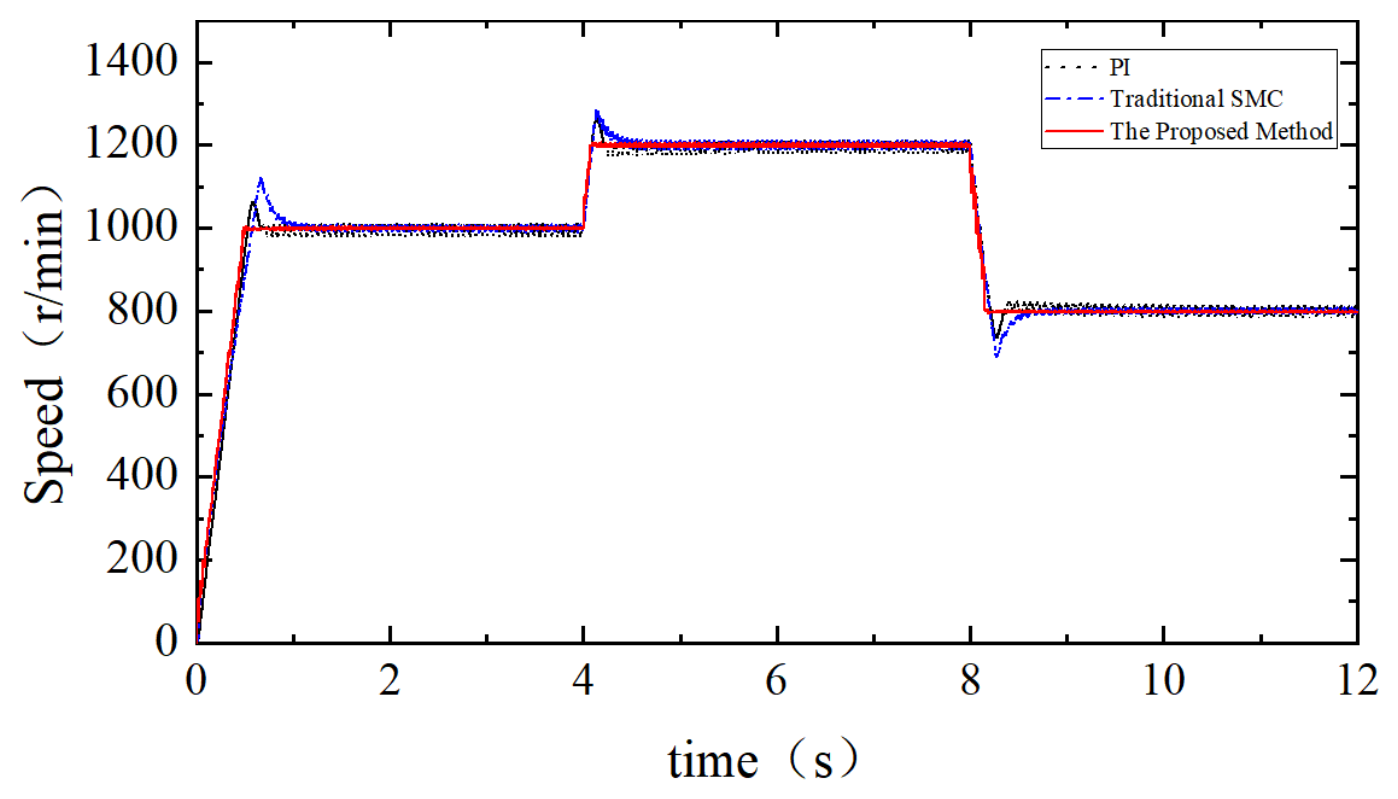
The reference speed was set to 1000 r/min via the host computer. The motor was started, and the speed was increased to 1200 r/min at 4 s and decreased to 800 r/min at 8 s, as shown in
Figure 13.
As illustrated in
Figure 13, compared with the conventional double closed-loop PI control, the proposed controller reduces the overshoot from 6.5% to 0.55%, corresponding to a 91.54% reduction. Moreover, the acceleration and deceleration response time is shortened from 0.67 s to 0.5 s, representing a 25.37% reduction.
Compared with the traditional sliding-mode controller, the proposed method decreases the overshoot from 12.10% to 0.55%. Furthermore, the acceleration and deceleration response time is reduced from 1.2 s to 0.5 s, indicating a significant enhancement in system responsiveness.
5.4. Experiments on Speed Control Under Variable-Load Conditions
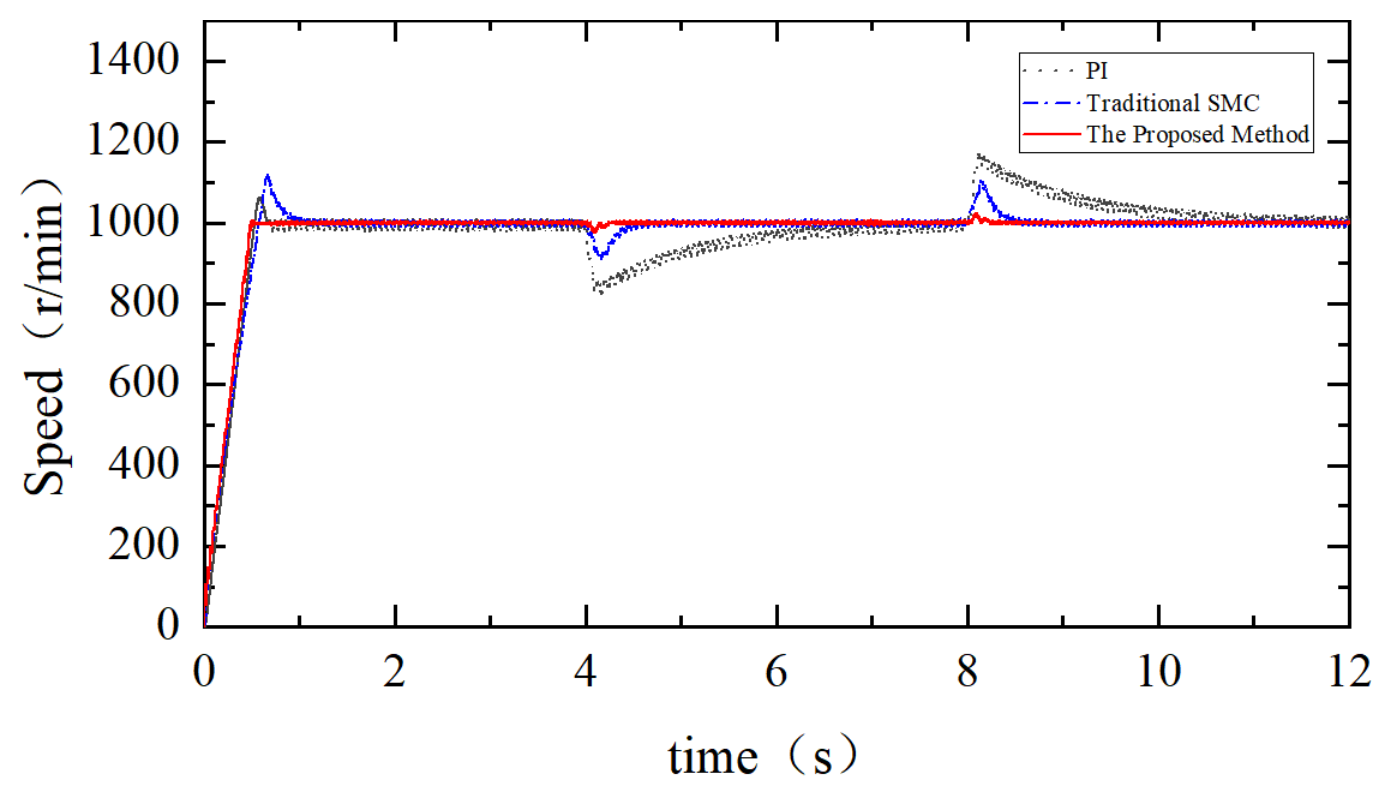
The reference speed was set to 1000 r/min via the host computer. After the motor was started, a load of 0.2 Nm was applied at 4 s and removed at 8 s, as shown in
Figure 14.
As illustrated in
Figure 14, compared with the conventional double closed-loop PI control, the proposed controller significantly improves disturbance rejection performance. During sudden load changes, the speed deviation is reduced from 176 r/min to 25 r/min, corresponding to an 85.80% reduction. Meanwhile, the speed recovery time is shortened from 3 s to 0.24 s, representing a 92% improvement. In steady-state operation, the speed fluctuation decreases from 31 r/min to 12 r/min, a reduction of 61.29%.
Compared with the traditional sliding-mode controller, the proposed method also shows improved performance. During load disturbances, the speed deviation is reduced from 88.5 r/min to 25 r/min, corresponding to a 71.75% decrease, and the recovery time is shortened from 0.6 s to 0.24 s, achieving a 60.00% improvement. In steady state, the speed fluctuation is reduced from 18 r/min to 12 r/min, representing a 33.33% decrease.
To ensure a consistent quantitative comparison, the performance indices are defined as follows. The overshoot is the maximum speed exceeding the reference value after a speed command change. The response time is the time required for the speed to enter and remain within a ±2% band of the reference speed. Under load-disturbance conditions, the speed deviation is defined as the maximum absolute speed error caused by the load step, and the recovery time is the time required for the speed to return to the ±2% band after the disturbance. The steady-state fluctuation is calculated as the peak-to-peak speed variation after the transient process. The same definitions are used for PI control, traditional SMC, and the proposed method.
To provide a clearer quantitative comparison, the main performance indices of PI control, traditional SMC, and the proposed method are summarized in
Table 4.
The experimental results show that the proposed sensorless sliding-mode speed control strategy achieves improved dynamic response, load-disturbance rejection, and steady-state performance compared with the conventional control methods.




 ,
,