Article

Single-Ended Fault Detection and Fault Location in Transmission Lines Using Approximate Derivative


1
Department of Electrical and Electronics Engineering, Bitlis Eren University, Bitlis 13100, Türkiye
2
Department of Electrical and Electronics Engineering, Inonu University, Malatya 44280, Türkiye
3
Department of Electrical and Electronics Engineering, Munzur University, Tunceli 62000, Türkiye
*
Author to whom correspondence should be addressed.
Electronics 2026, 15(12), 2591; https://doi.org/10.3390/electronics15122591

Submission received: 3 May 2026 / Revised: 31 May 2026 / Accepted: 2 June 2026 / Published: 12 June 2026
(This article belongs to the Special Issue Energy Saving Management Systems: Challenges and Applications)

Abstract

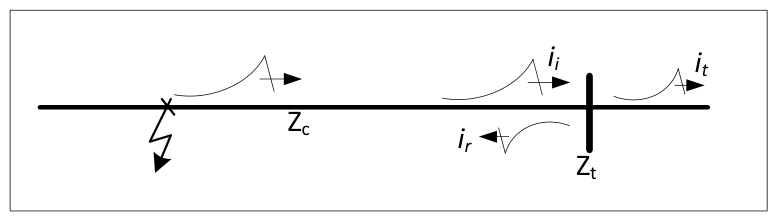
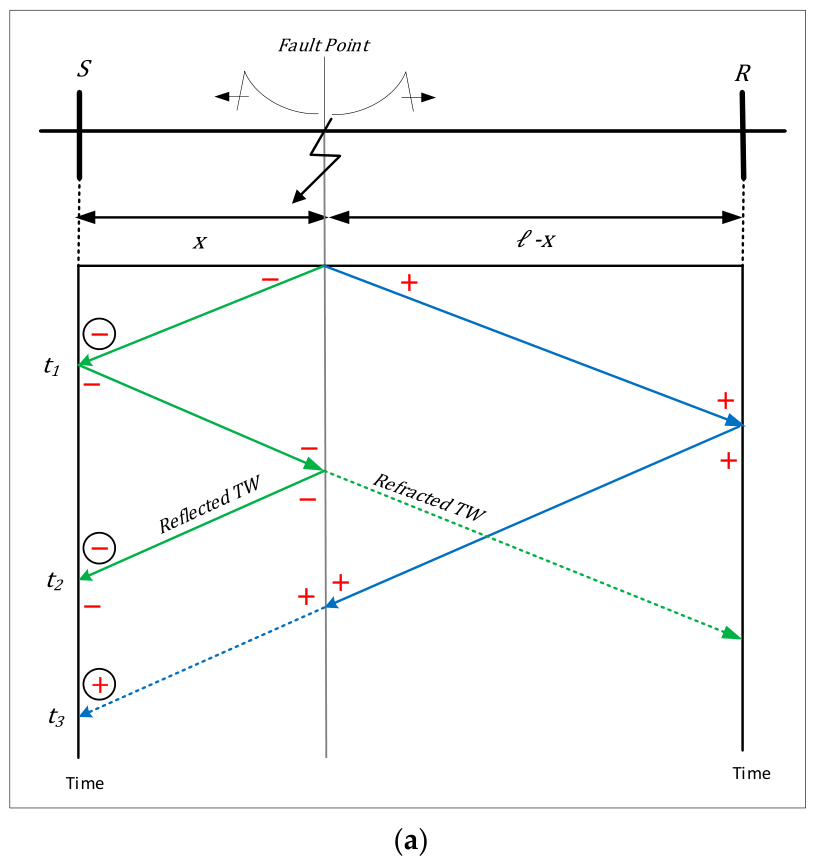
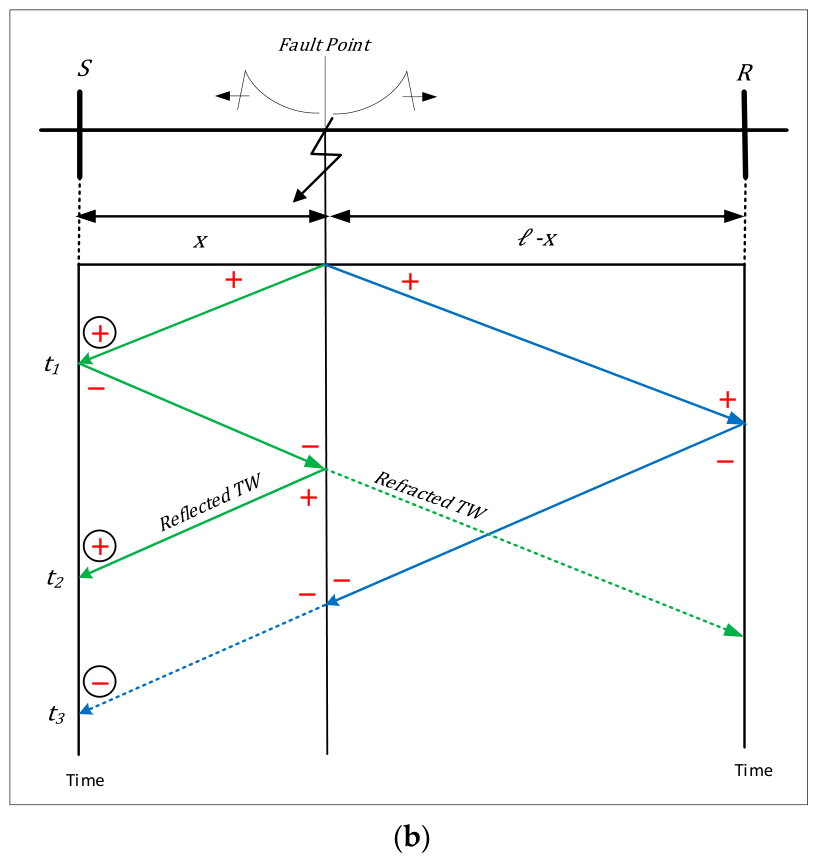
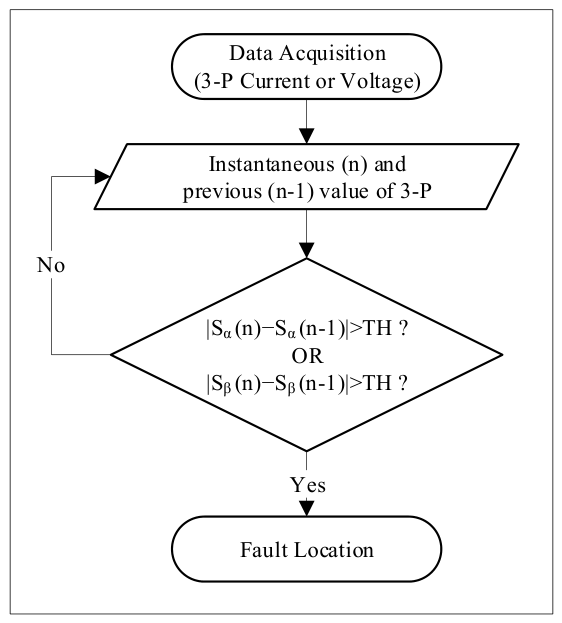
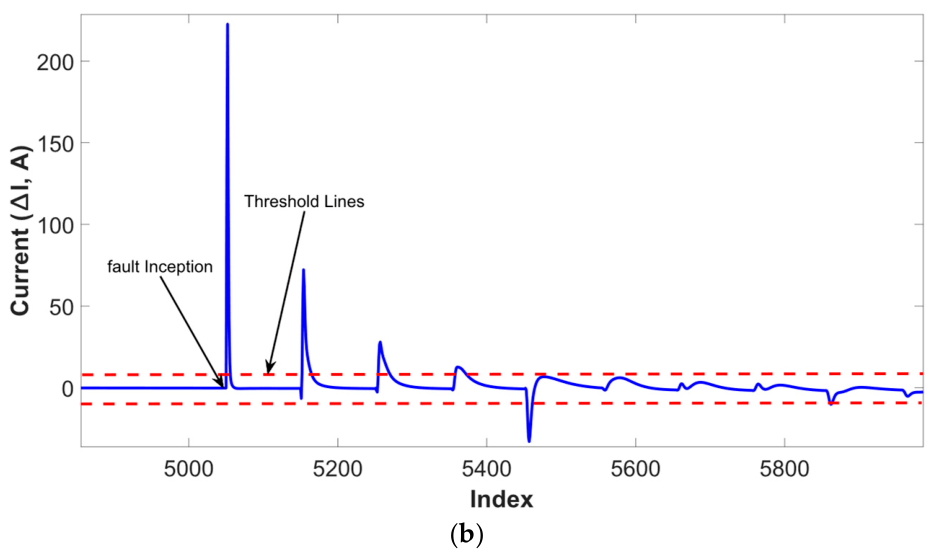
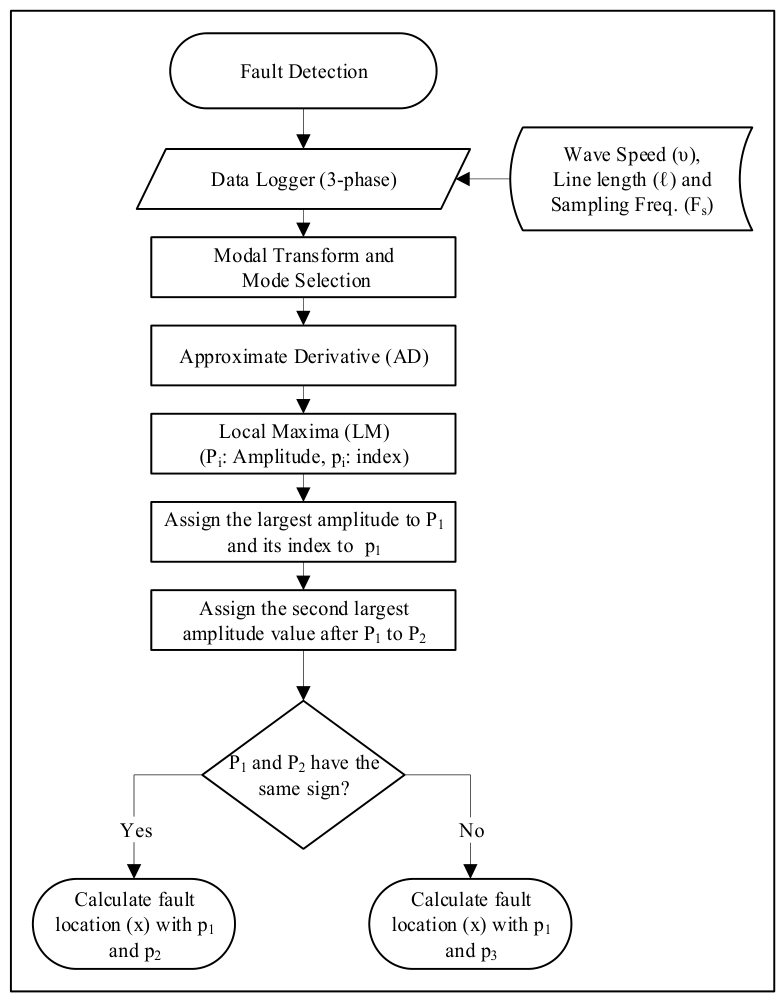
Fault location in power transmission lines (PTLs) relies on impedance or traveling wave (TW) principles. TW approaches offer superior accuracy and high robustness against fault resistance. While multi-ended methods require precise terminal synchronization, single-ended TW (SETW) methods utilize measurements from one terminal, requiring accurate distinction of reflected waves. This study employs the computationally efficient approximate derivative (AD)—the difference between consecutive samples—for SETW fault detection and location. Normally near zero, the AD of modal signals produces sharp transitions during faults. Comparing AD output to a threshold achieves fault detection. The AD then identifies arrival times of the incident and reflected TWs. When using TW theory to distinguish reflections from the fault point and remote end, the fault distance is calculated from their arrival time difference. Validated through 293 diverse ATP simulated fault scenarios, the approach delivered highly accurate results despite using a lower sampling rate than established methods, utilizing an exceptionally short data window—only 2.03 ms for a 300 km line. Finally, operational boundaries for the signal-to-noise ratio (SNR) in noisy conditions are established.
Keywords: transmission line faults; fault detection; fault location; traveling waves (TWs); approximate derivative (AD) transmission line faults; fault detection; fault location; traveling waves (TWs); approximate derivative (AD)