Optimization of Gate Current Profiles for SiC Power MOSFETs with Respect to Switching Loss, Overshoot, and Slew Rate




Abstract
1. Introduction
2. Problem Definition
3. Turn-On Phase
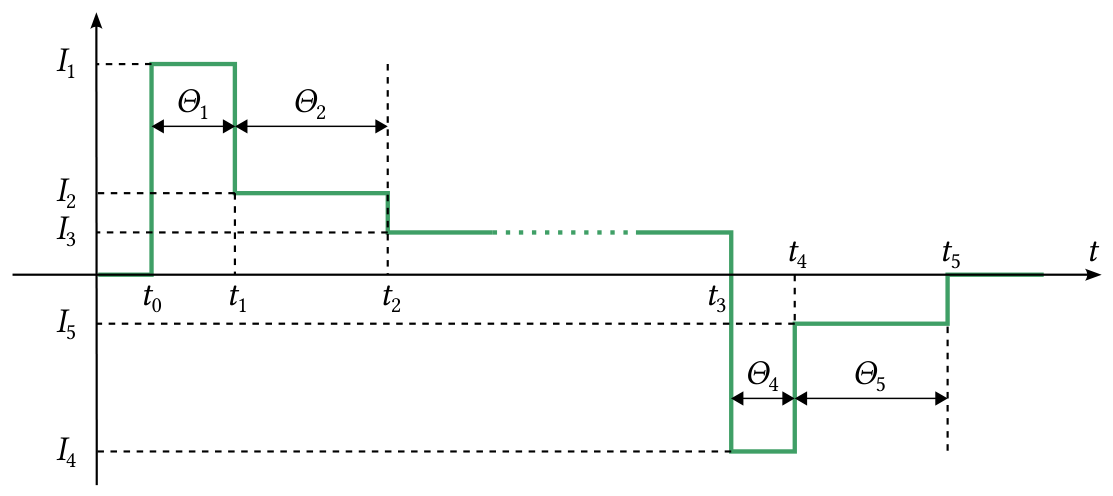
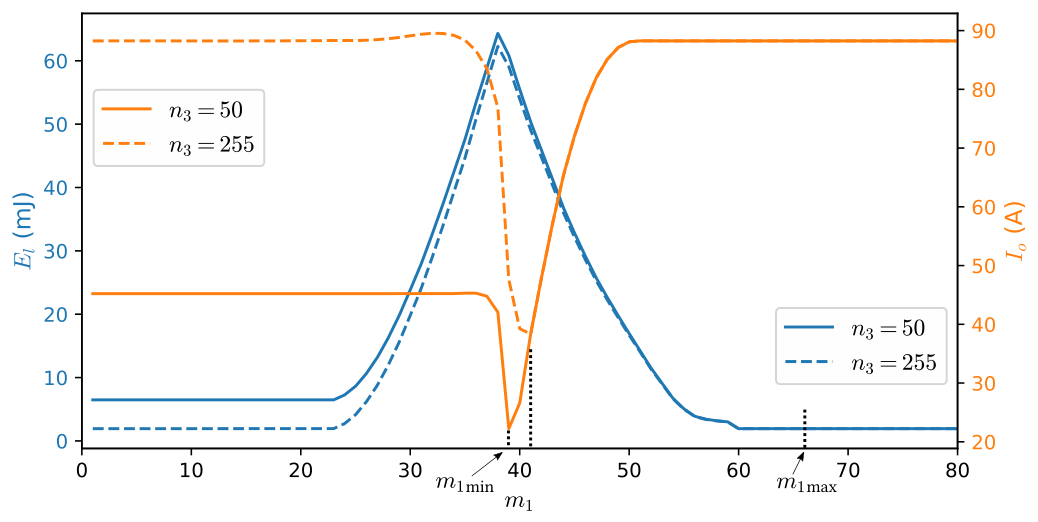
3.1. Constraining the Search Space
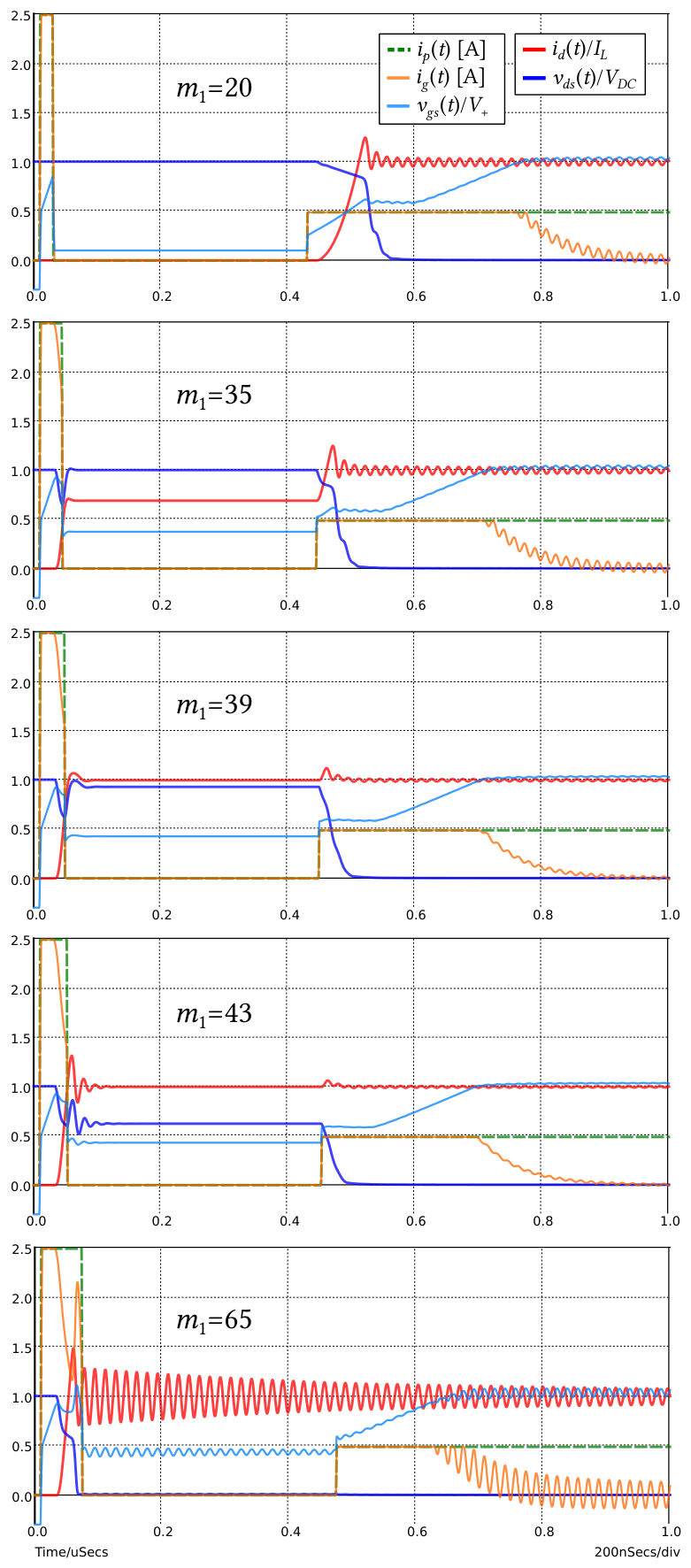
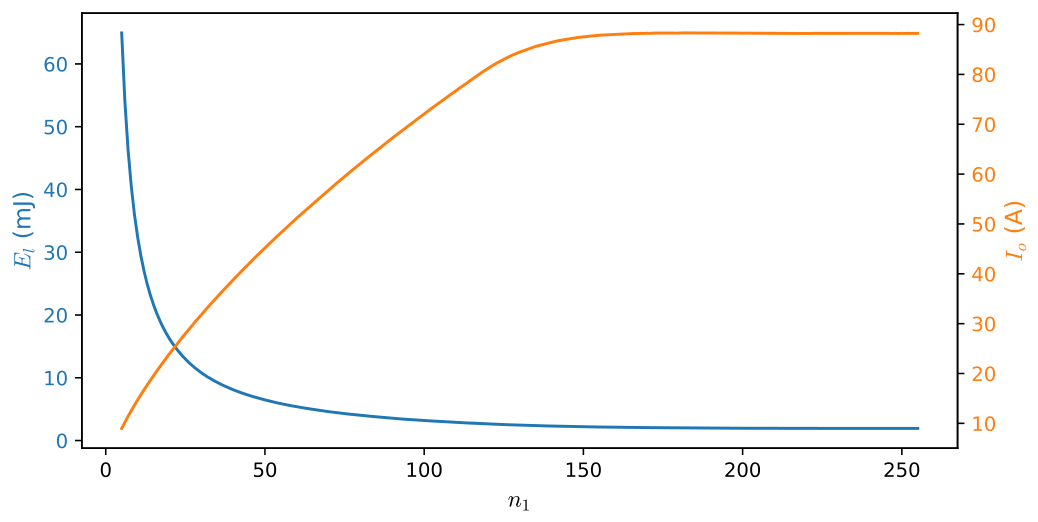
3.2. Simulation Results
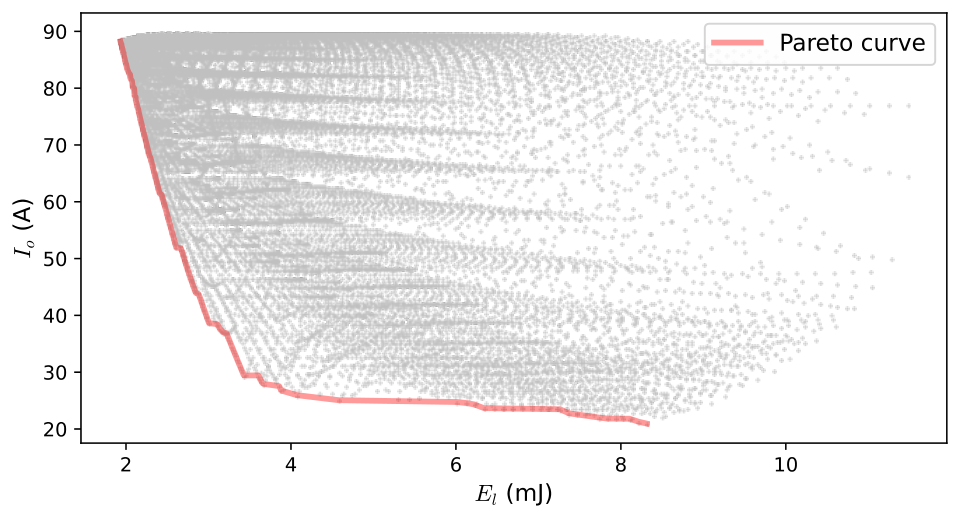
3.3. Finding the Optimal Trade-Off Curve
3.3.1. Hooke–Jeeves Method
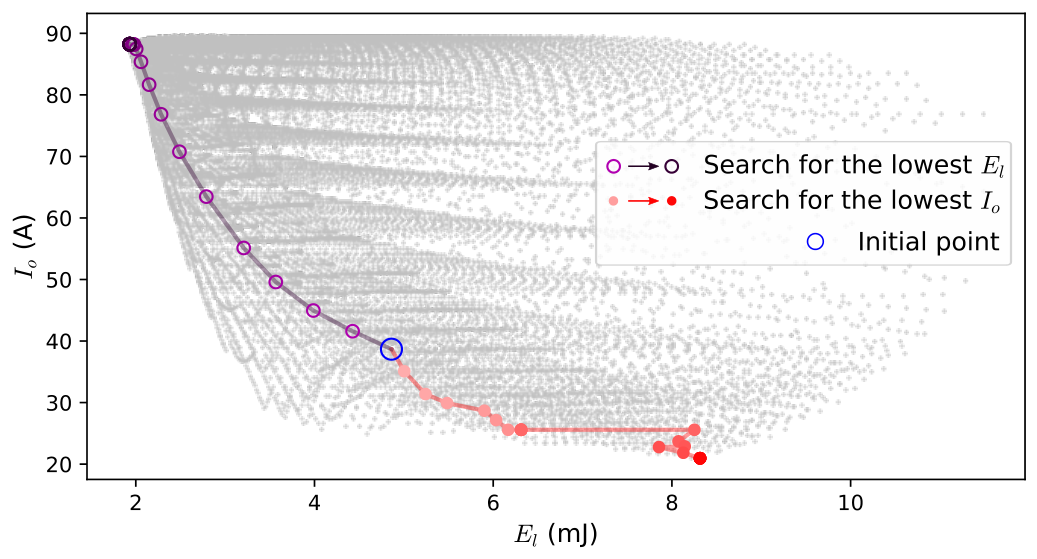
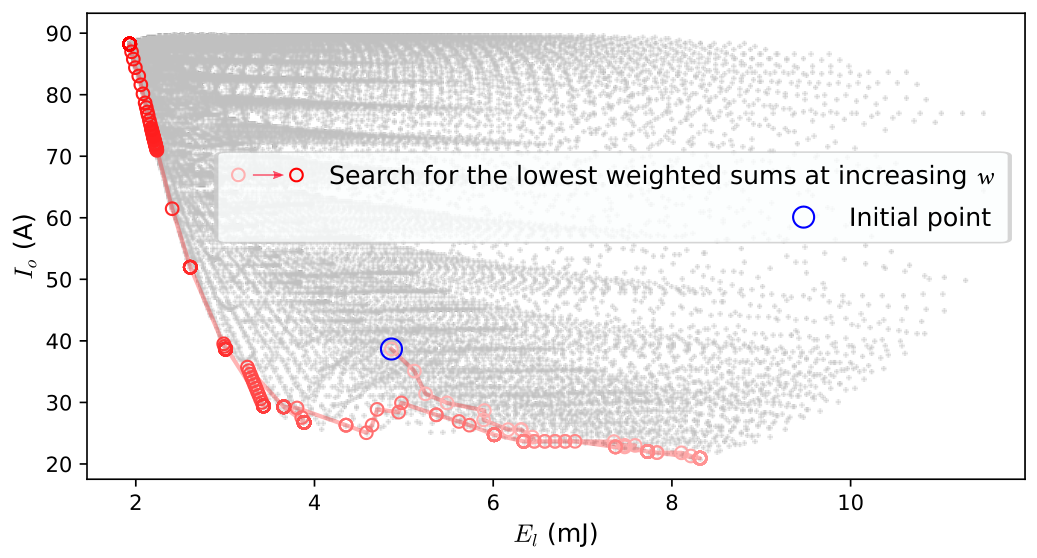
3.3.2. Proposed SLSE Method
- 1.
- The parameters are set to their maximum values: (, 1020, , 256, ), , and the simulation is run to determine the energy loss and drain current overshoot, denoted as and , respectively, as the selected gate current profile yields the smallest and the largest .
- 2.
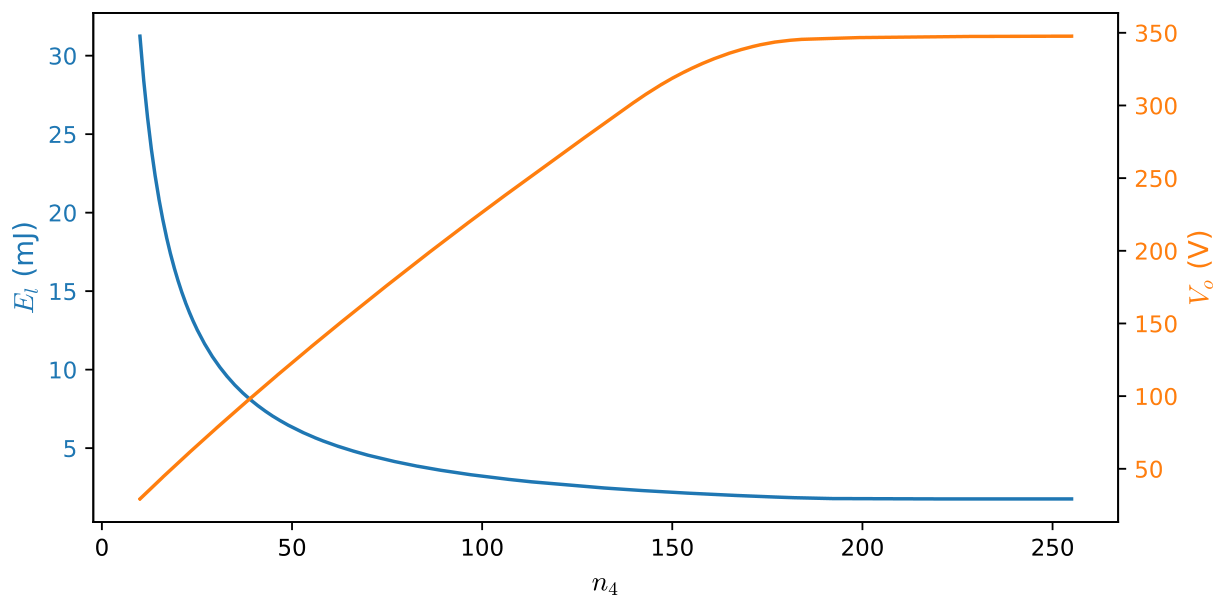
- Keep ; set , , and run the simulations by increasing until the difference is less than a certain threshold (e.g., 100 mA). Record the final value, denoted as , and define a pair as .
- 3.
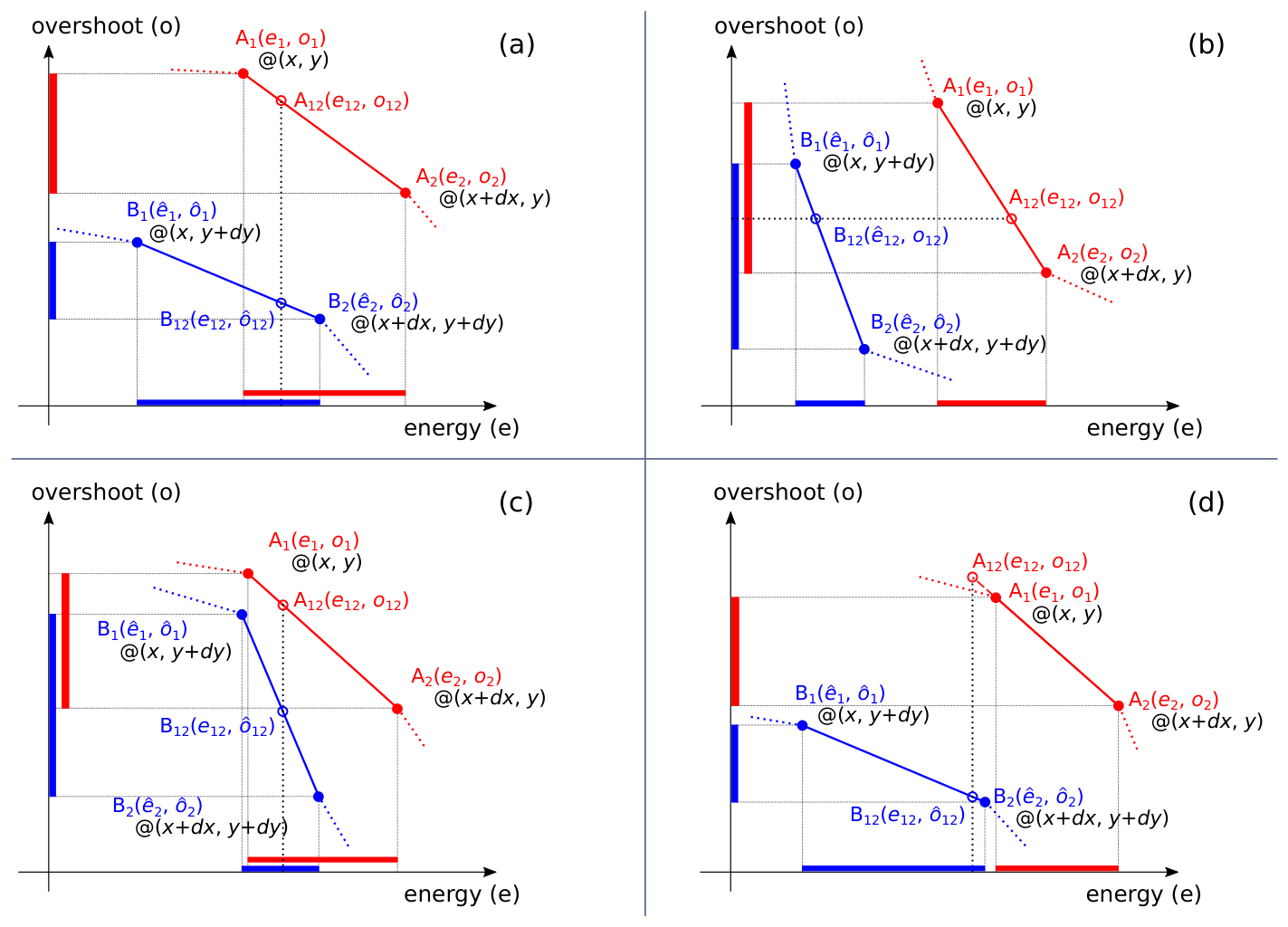
- Keep , ; set to , , , , and run the simulations to find the points , , , , respectively, which represent and values in the -plane, as illustrated in Figure 10, where x, , y, conform to , , , 1, respectively. Subsequently, compare the obtained segments and (as detailed in the next subsection), and update the values of accordingly: decrease by 1 or increase by 1 based on the comparison result.
- 4.
- Repeat Step 3 until reduces no more.
3.3.3. Comparison of the Segments of the Traces
- (a)
- Only the horizontal (e) projections overlap (Figure 10a). In this case, if , then y is updated by : , whereas x remains unchanged. Otherwise, x is updated by : , whereas y remains the same. Here, and are the ordinates of points and , respectively, which lie on segments and . These points share equal abscissas conforming to the midpoint of the overlapping segment on the e-axis.
- (b)
- Only vertical projections (o) overlap (Figure 10b). In this case, if , then only y is updated as: . Otherwise, only x is updated to . Here, and are the abscissas of points and , respectively, which lie on segments and , and whose equal ordinates correspond to the midpoint of the overlapping segment on the o-axis.
- (c)
- Both the horizontal (e) and vertical (o) projections overlap (Figure 10c). In this scenario, if and do not intersect and , then only y is updated to . Otherwise, only x is updated to . Here, and are the ordinates of and , respectively, which lie on segments and and share equal abscissas conforming to the midpoint of the overlapping segment on the e-axis.
- (d)
- No overlaps occur (Figure 10d). In this last scenario, two points, and , are found, which lie either on and , respectively, or on their extensions and share the same abscissa . If their ordinates satisfy , only y is updated as , otherwise, only x is updated as .
3.3.4. Increasing the Amplitude of the Second Pulse
3.3.5. Decreasing the Amplitude of the Third Pulse
3.3.6. Decreasing the Amplitude of the First Pulse
3.3.7. Extended SLSE Method
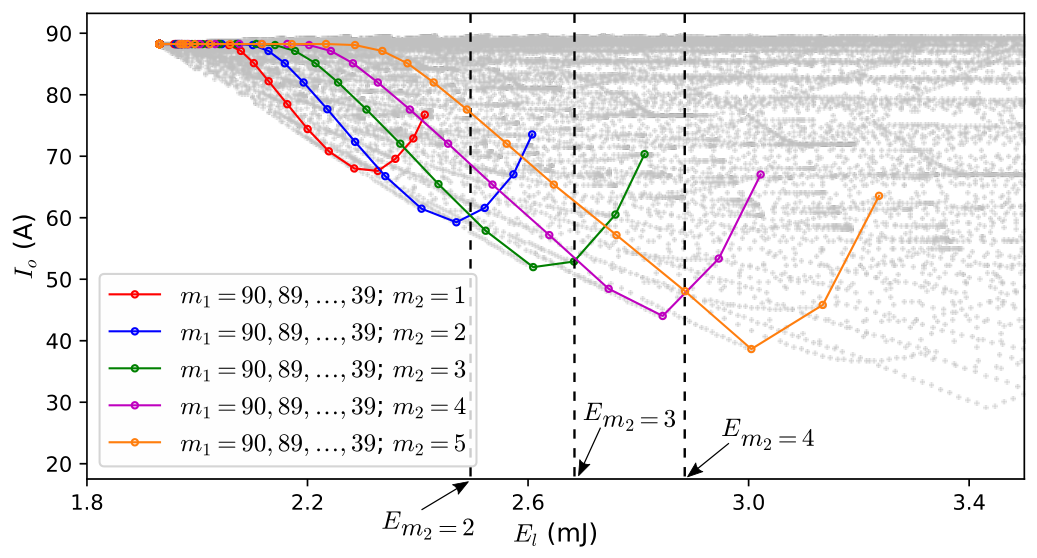
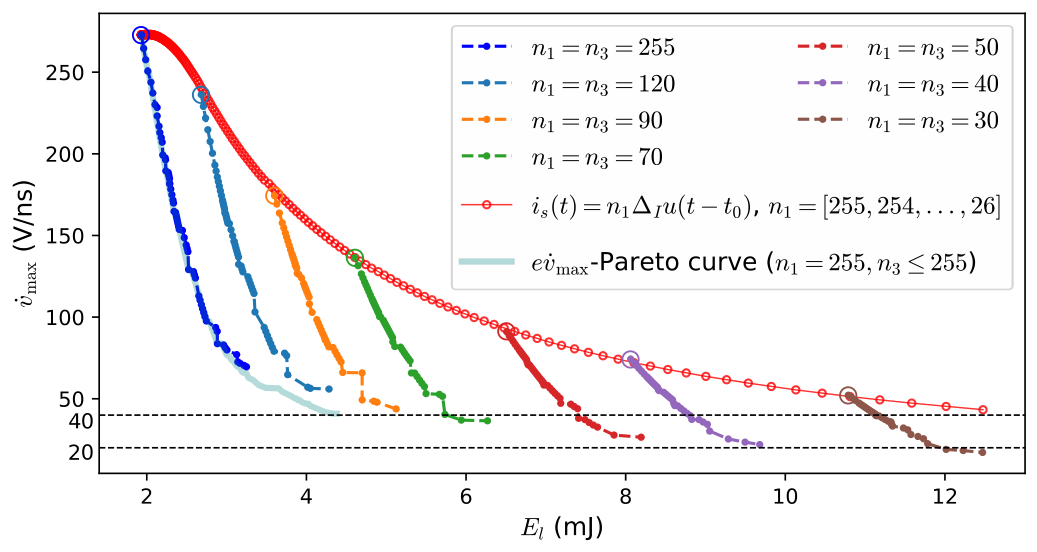
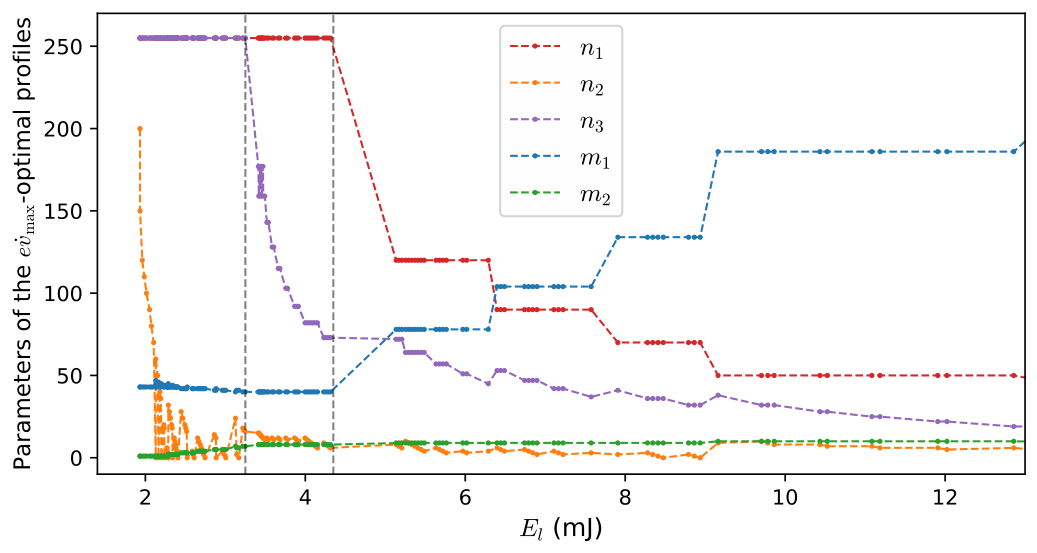
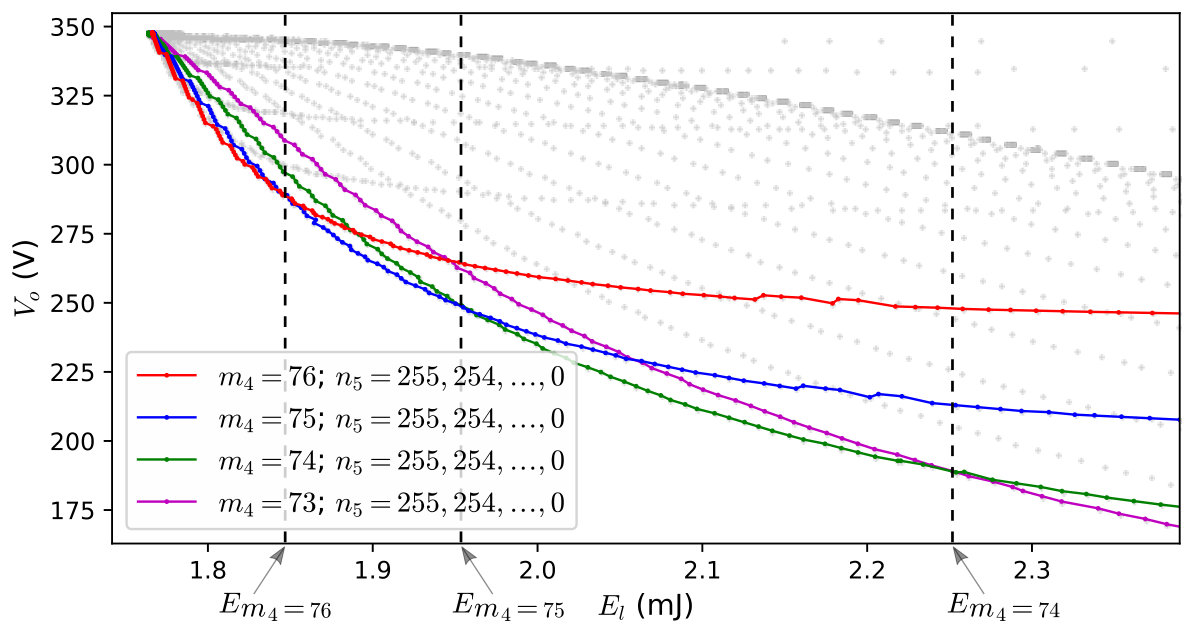
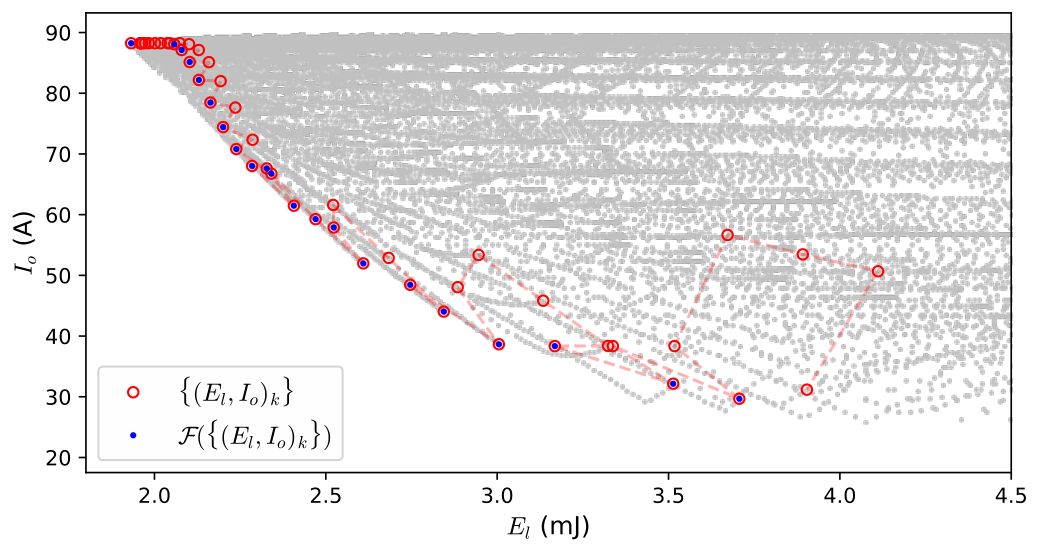
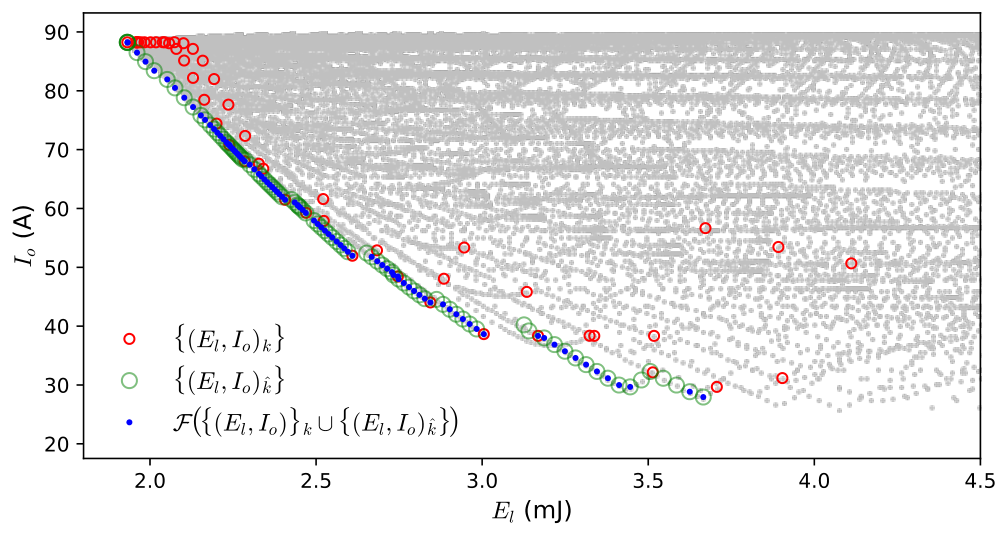
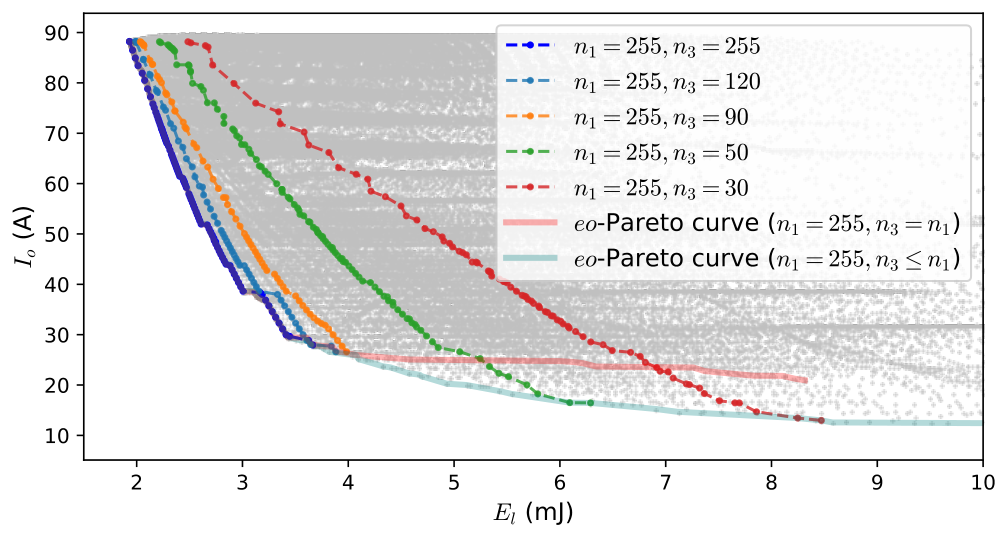
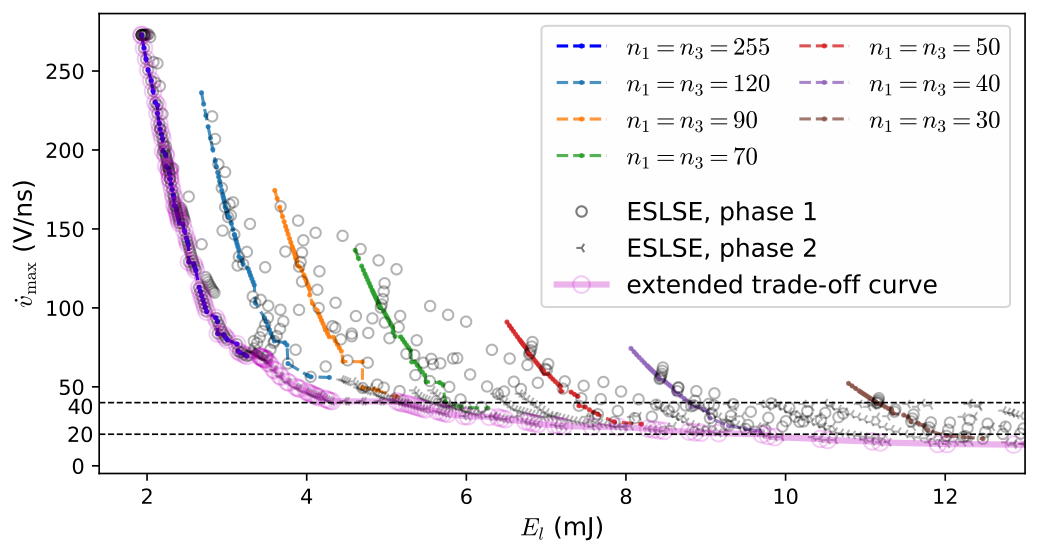
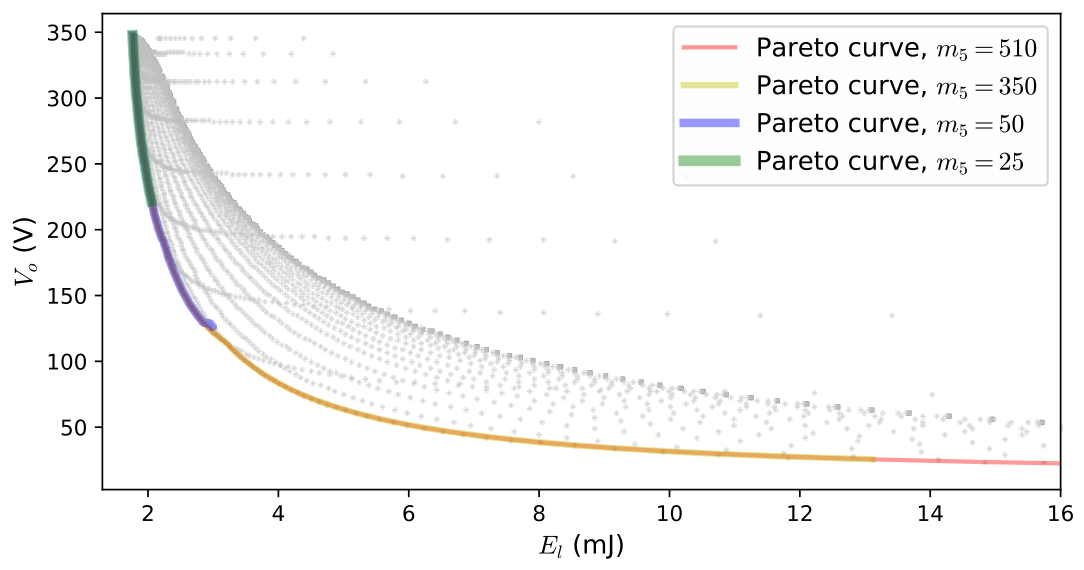
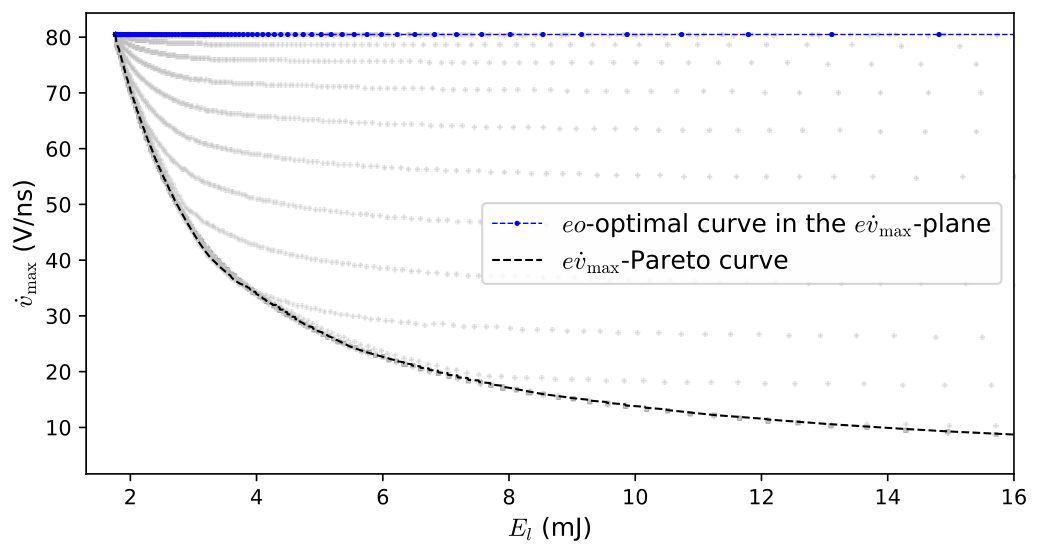
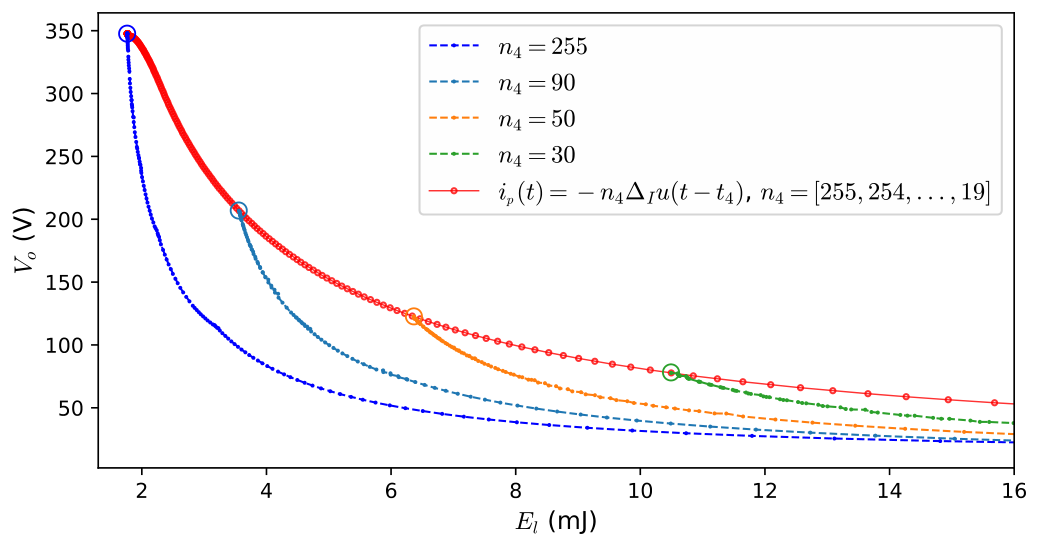
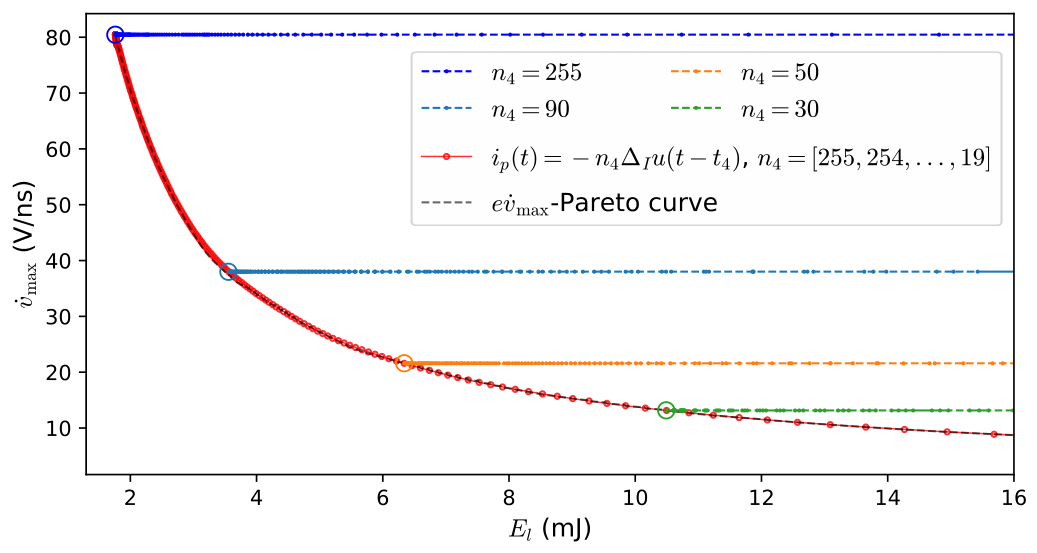
- Since consecutive curves for shift downward and to the right as decreases (Figure 15), it is more efficient to focus only on determining the lower segments of each curve, where values are smaller. This can be justified by noting that the final points of adjacent trade-off curves correspond to the gate current profiles, which have and yielding almost identical products . This indicates that the amount of electric charge transferred to the transistor gate remains approximately constant.
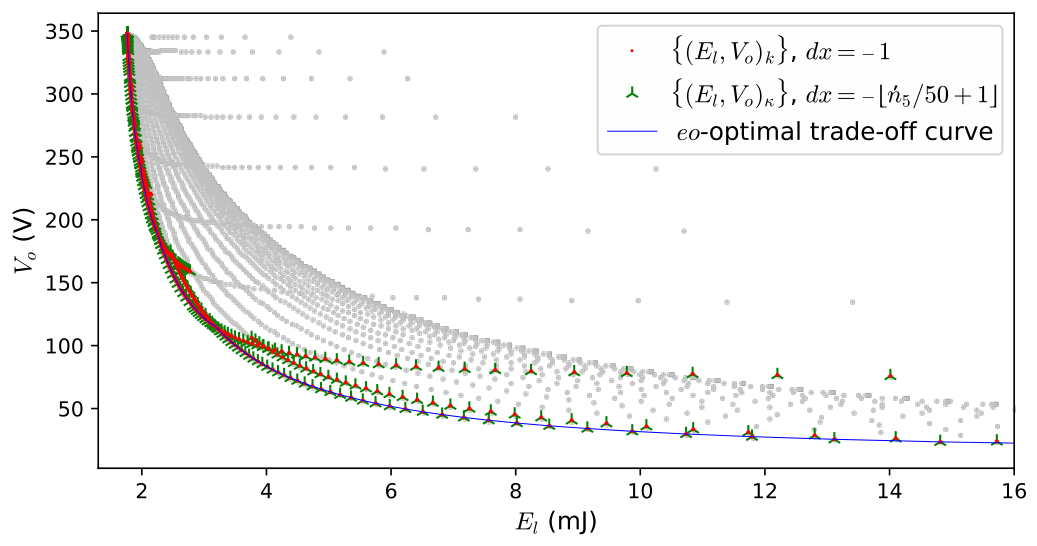
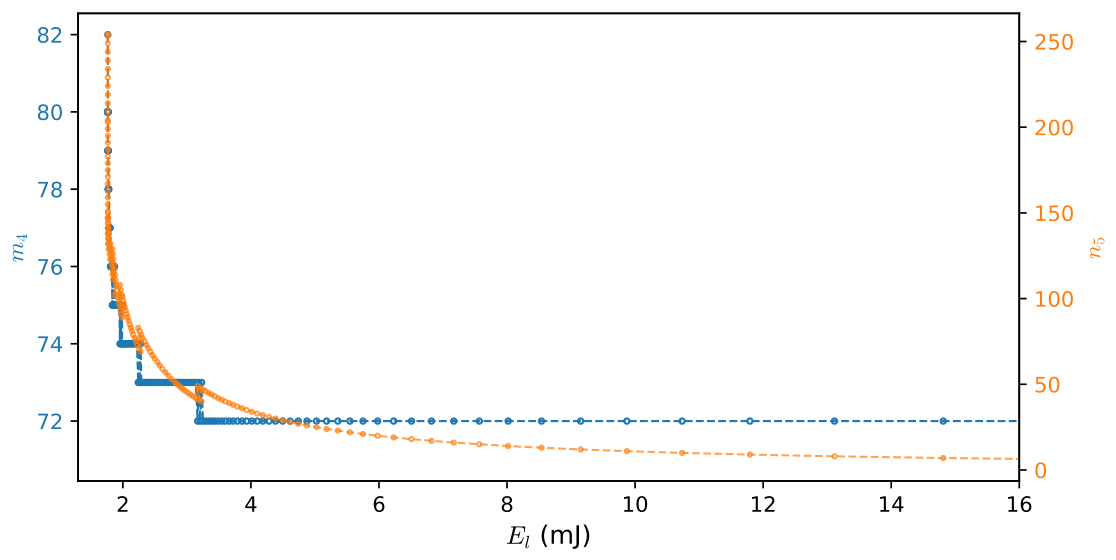
- After determining the -optimal curve for the case (as described in Section 3.3.2), its final gate current profile yielding the lowest can be used to identify the optimal profiles for reduced values . For this purpose, the SLSE algorithm is applied as , resulting in profiles corresponding to lower values. Accordingly, instead of varying and , the parameters and are decreased.
- (1a)
- Choose some integer values , where , and initialize .
- (1b)
- Set and run the SLSE algorithm as described in Section 3.3.2.
- (1c)
- After completion, apply to the obtained points and record the gate current profile corresponding to the lowest value. Calculate the new parameter .
- (1d)
- Increase ; set , keep , set , and run the simulations for increasing until begins to rise; record the final value as , and define a pair as .
- (1e)
- Restart the SLSE algorithm from Step 3, by keeping .
- (1f)
- Repeat Steps (1c)–(1e) until the final has been processed.
- (2a)
- Set .
- (2b)
- Increase and select the profile .
- (2c)
- Run simulations for increasing and decreasing values of until the profile yielding the lowest is identified; record the corresponding value of as .
- (2d)
- Keep , , , and define a pair as , where the step size is chosen to adapt to the values to reduce the number of simulations while increasing the density of points as decreases.
- (2e)
- Set to , , , , and run the simulations to find the points , , , , respectively, which represent and values in the -plane. Then, compare the obtained segments and , and update the values of accordingly: decrease by 1 or decrease by based on the comparison result.
- (2f)
- Repeat Step (2e) until reduces no more.
- (2g)
- Repeat Steps (2b)–(2f) until l exceeds L.
4. Turn-Off Phase
4.1. Constraining the Search Space
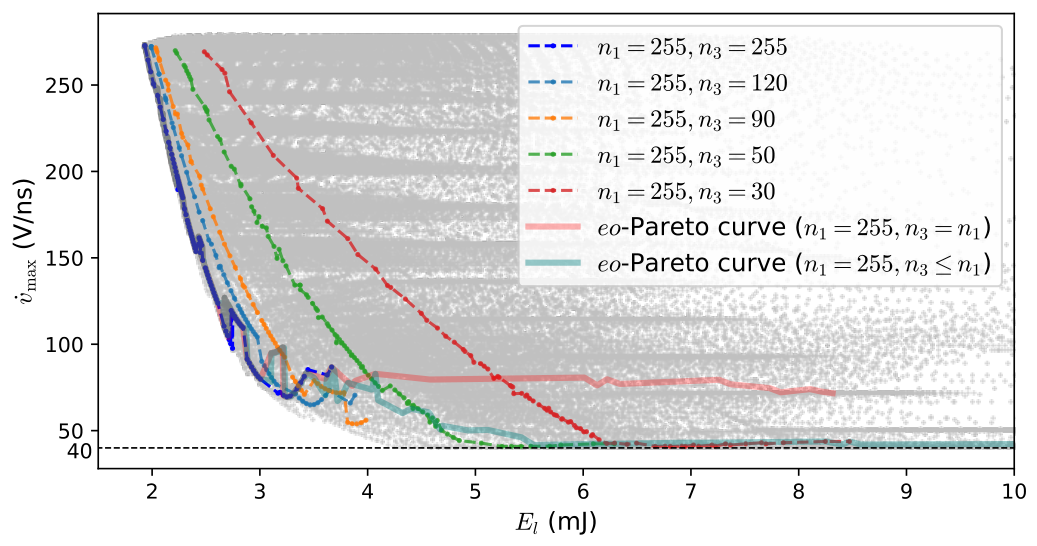
4.2. Simulation Results
4.3. Finding the Optimal Trade-Off Curve
4.3.1. SLSE Method for the Turn-Off Case
- 1.
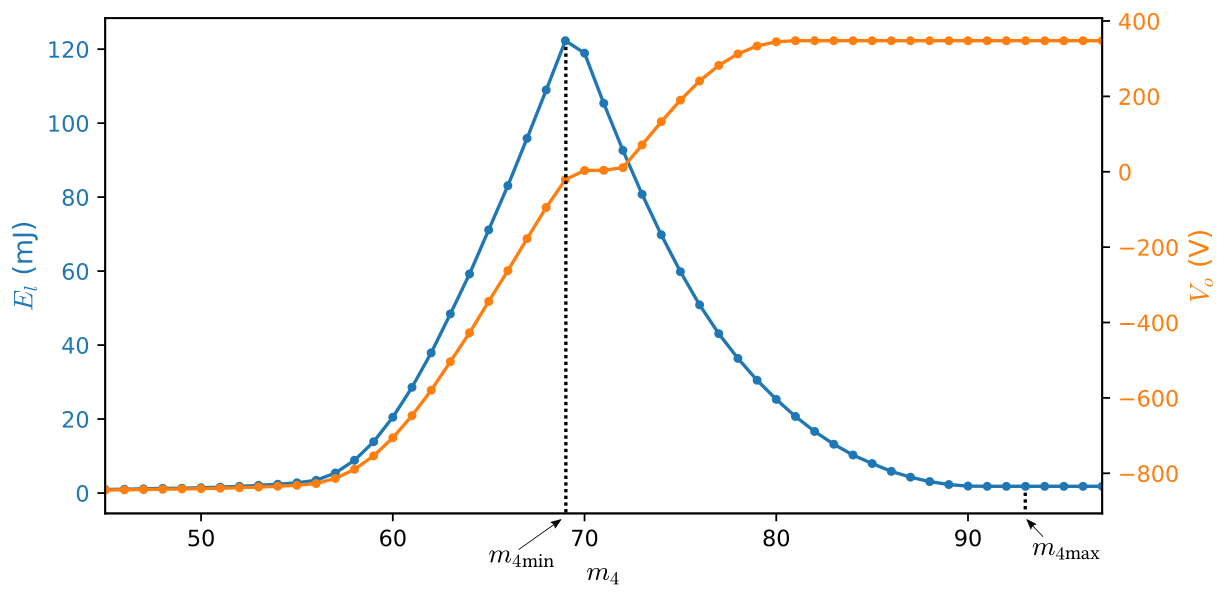
- The parameters are set to their maximum values: (255, 2040, 255, 510), and the simulation is run to find the energy loss and the drain-source voltage overshoot, denoted as and .
- 2.
- Keep , ; set , , and run the simulations by increasing until the difference is less than a certain threshold (e.g., 1 V), record the final value, denoted as , and define a pair as .
- 3.
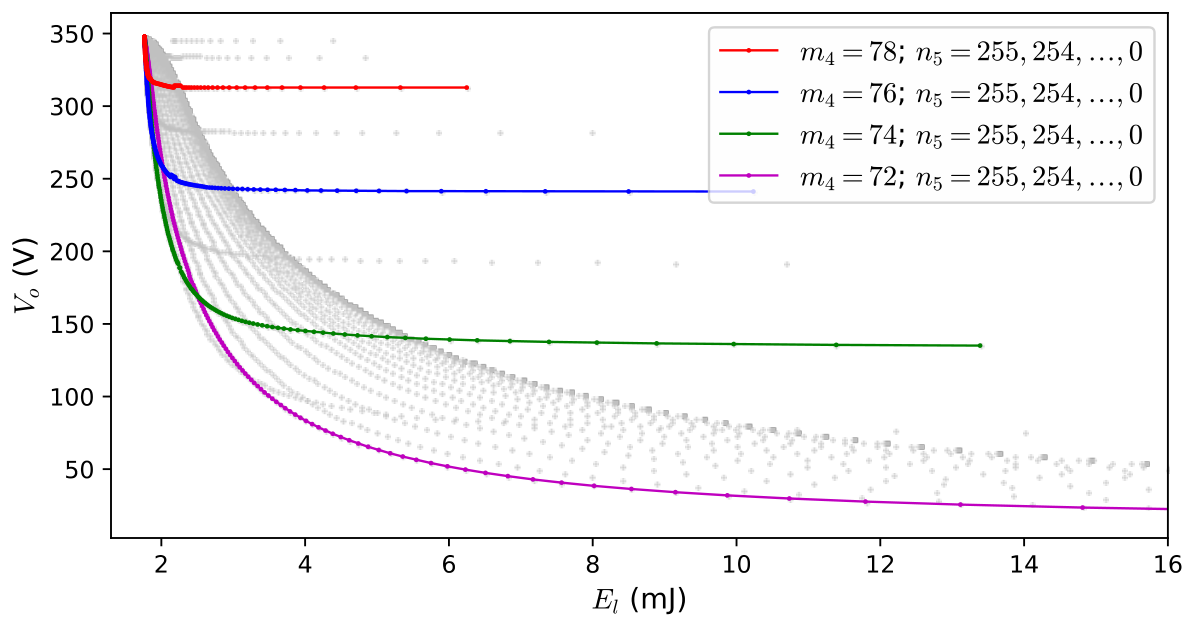
- Keep , ; set to , , , , and run the simulations to find points , , , , respectively, which represent and values in the -plane, as illustrated in Figure 10, where x, , y, conform to , , , , respectively. Subsequently, compare the obtained segments and (as detailed in Section 3.3.3) and update the values of accordingly: decrease either or by 1 based on the comparison result.
- 4.
- Repeat Step 3 until the transistor fails to turn off.
4.3.2. Decreasing the Amplitude of the First Negative Pulse
5. Comparison of the Results with the Classical Gate Driver
6. Conclusions
Author Contributions
Funding
Data Availability Statement
Conflicts of Interest
References
- Batarseh, I.; Harb, A. Review of switching concepts and power semiconductor devices. In Power Electronics, 2nd ed.; Springer: Cham, Switzerland, 2018; pp. 25–91. [Google Scholar]
- Trzynadlowski, A.M. Supplementary components and systems. In Introduction to Modern Power Electronics, 3rd ed.; Wiley: Hoboken, NJ, USA, 2016; pp. 88–115. [Google Scholar]
- Lobsiger, Y.; Kolar, J.W. Closed-loop di/dt and dv/dt IGBT gate driver. IEEE Trans. Power Electron. 2015, 30, 3402–3417. [Google Scholar] [CrossRef]
- Chokhawala, R.S.; Catt, J.; Pelly, B.R. Gate drive considerations for IGBT modules. IEEE Trans. Ind. Appl. 2015, 31, 603–611. [Google Scholar] [CrossRef]
- Takamiya, M.; Miyazaki, K.; Obara, H.; Sai, T.; Wada, K.; Sakurai, T. Power electronics 2.0: IoT-connected and AI-controlled power electronics operating optimally for each user. In Proceedings of the ISPSD, Sapporo, Japan, 28 May–1 June 2017; pp. 29–32. [Google Scholar]
- Meng, Z.; Yang, Y.; Gao, Y.; Ai, S.; Zhang, Y.; Lv, Y. Prediction method of driving strategy of high-power IGBT module based on MEA-BP neural network. IEEE Access 2020, 8, 94731–94747. [Google Scholar] [CrossRef]
- Wang, Z.; Shi, X.; Tolbert, L.M.; Wang, F.; Blalock, B.J. A di/dt feedback-based active gate driver for smart switching and fast overcurrent protection of IGBT modules. IEEE Trans. Power Electron. 2014, 29, 3720–3732. [Google Scholar] [CrossRef]
- Frank, W.; Levett, D.; Zheng, Z.Q. Two-level slew-rate control driver to optimize IGBT performance. In Proceedings of the PCIM Europe Digital Days 2020; International Exhibition and Conference for Power Electronics, Intelligent Motion, Renewable Energy and Energy Management, Nuremburg, Germany, 7–8 July 2020; pp. 1–6. [Google Scholar]
- Ling, Y.; Zhao, Z.; Zhu, Y. A novel digital active gate driver for high-power IGBT to reduce switching losses and stresses. In Proceedings of the ECCE, Baltimore, MD, USA, 29 September–3 October 2019; pp. 4189–4194. [Google Scholar]
- Idir, N.; Bausiere, R.; Franchaud, J.J. Active gate voltage control of turn-on di/dt and turn-off dv/dt in insulated gate transistors. IEEE Trans. Power Electron. 2006, 21, 849–855. [Google Scholar] [CrossRef]
- Consoli, A.; Musumeci, S.; Oriti, G.; Testa, A. An innovative EMI reduction design technique in power converters. IEEE Trans. Electromagn. Compat. 1996, 38, 567–575. [Google Scholar] [CrossRef]
- Schmitt, G.; Kennel, R.; Holtz, J. Voltage gradient limitation of IGBTS by optimised gate-current profiles. In Proceedings of the PESC, Rhodes, Greece, 15–19 June 2008; pp. 3592–3596. [Google Scholar]
- Baraia, I.; Barrena, J.A.; Abad, G.; Canales Segade, J.M.; Iraola, U. An experimentally verified active gate control method for the series connection of IGBT/diodes. IEEE Trans. Power Electron. 2012, 27, 1025–1038. [Google Scholar] [CrossRef]
- Rose, M.; Krupar, J.; Hauswald, H. Adaptive dv/dt and di/dt control for isolated gate power devices. In Proceedings of the ECCE, Atlanta, GA, USA, 12–16 September 2010; pp. 927–934. [Google Scholar]
- Takizawa, S.; Igarashi, S.; Kuroki, K. A new di/dt control gate drive circuit for IGBTs to reduce EMI noise and switching losses. In Proceedings of the PESC, Fukuoka, Japan, 22–22 May 1998; pp. 1443–1449. [Google Scholar]
- Wittig, B.; Fuchs, F.W. Analysis and comparison of turn-off active gate control methods for low-voltage power MOSFETs with high current ratings. IEEE Trans. Power Electron. 2012, 27, 1632–1640. [Google Scholar] [CrossRef]
- Luniewski, P.; Jansen, U.; Hornkamp, M. Dynamic voltage rise control, the most efficient way to control turn-off switching behaviour of IGBT transistors. In Proceedings of the PELINCEC, Warsaw, Poland, 16–19 October 2005; pp. 80–86. [Google Scholar]
- Wang, Y.; Palmer, P.R.; Lim, T.C.; Finney, S.J.; Bryant, A.T. Real-time optimization of IGBT/diode cell switching under active voltage control. In Proceedings of the IAS, Tampa, FL, USA, 8–12 October 2006; pp. 2262–2268. [Google Scholar]
- Lim, T.C.; Williams, B.W.; Finney, S.J.; Palmer, P.R. Series-connected IGBTs using active voltage control technique. IEEE Trans. Power Electron. 2013, 28, 4083–4103. [Google Scholar] [CrossRef]
- Kuhn, H.; Koneke, T.; Mertens, A. Considerations for a Digital Gate Unit in high power applications. In Proceedings of the PESC, Rhodes, Greece, 15–19 June 2008; pp. 2784–2790. [Google Scholar]
- Dang, L.; Kuhn, H.; Mertens, A. Digital Adaptive Driving Strategies for High-Voltage IGBTs. IEEE Trans. Ind. Appl. 2013, 49, 1628–1636. [Google Scholar] [CrossRef]
- Blank, M.; Glück, T.; Kugi, A.; Kreuter, H.-P. Slew rate control strategies for smart power ICs based on iterative learning control. In Proceedings of the APEC, Fort Worth, TX, USA, 16–20 March 2014; pp. 2860–2866. [Google Scholar]
- Liangdeng, H.; Yulin, C.; Sheng, A. A new two feed-back control method integrated in digital gate driver for large power IGBT. In Proceedings of the IEEE Information Technology, Networking, Electronic and Automation Control Conference, Chongqing, China, 20–22 May 2016; pp. 1153–1156. [Google Scholar]
- Shu, L.; Zhang, J.; Shao, S. Crosstalk Analysis and Suppression for a Closed-Loop Active IGBT Gate Driver. IEEE J. Emerg. Sel. Top. Power Electron. 2019, 7, 1931–1940. [Google Scholar] [CrossRef]
- Zhang, L.; Yuan, X.; Wu, X.; Shi, C.; Zhang, J.; Zhang, Y. Performance Evaluation of High-Power SiC MOSFET Modules in Comparison to Si IGBT Modules. IEEE Trans. Power Electron. 2019, 34, 1181–1196. [Google Scholar] [CrossRef]
- Liu, T.; Ning, R.; Wong, T.T.Y.; Shen, Z.J. Modeling and Analysis of SiC MOSFET Switching Oscillations. IEEE J. Emerg. Sel. Top. Power Electron. 2016, 4, 747–756. [Google Scholar] [CrossRef]
- Zhang, Z.; Dix, J.; Wang, F.F.; Blalock, B.J.; Costinett, D.; Tolbert, L.M. Intelligent Gate Drive for Fast Switching and Crosstalk Suppression of SiC Devices. IEEE Trans. Power Electron. 2017, 32, 9319–9332. [Google Scholar] [CrossRef]
- Li, X.; Lu, Y.; Ni, X.; Wang, S.; Zhang, Y.; Tang, X. Novel driver circuit for switching performance improvements in SiC MOSFETs. J. Power Electron. 2020, 20, 1583–1591. [Google Scholar] [CrossRef]
- Sukhatme, Y.; Miryala, V.K.; Ganesan, P.; Hatua, K. Digitally Controlled Gate Current Source-Based Active Gate Driver for Silicon Carbide MOSFETs. IEEE Trans. Ind. Electron. 2020, 67, 10121–10133. [Google Scholar] [CrossRef]
- Yuan, D.; Zhang, Y.; Wang, X.; Zhang, B. Improved Analysis Model of SiC Power MOSFET with Staged Critical Parameters. J. Phys. Conf. Ser. 2021, 1754, 012134. [Google Scholar] [CrossRef]
- Yang, X.; Wang, X.; Li, Q.; Liu, Y.; Sun, Y.; Liu, G. An Accurate Datasheet-Driven Analytical Model of SiC MOSFET Incorporating Stage-Dominant Cgs(Vgs,Vds) and Cgd(Vgs,Vds). IEEE Trans. Power Electron. 2026. Early Access. [Google Scholar] [CrossRef]
- Tan, J.; Zhou, Z. An Optimized Switching Strategy Based on Gate Drivers with Variable Voltage to Improve the Switching Performance of SiC MOSFET Modules. Energies 2023, 16, 5984. [Google Scholar] [CrossRef]
- Tan, J.; Zhou, Z.; Zou, G. A Programmable Gate Driver Module-Based Multistage Voltage Regulation SiC MOSFET Switching Strategy. Electronics 2024, 13, 4379. [Google Scholar] [CrossRef]
- Lu, Y.; Yu, Y.; Huang, C.; Yan, J.; Wu, H. Optimization Method of SiC MOSFET Switching Trajectory Based on Variable Current Drive. Electronics 2024, 13, 3020. [Google Scholar] [CrossRef]
- Hsiao, Y.S.; Yu, W.C.; Sung, C.; Lin, W.C.; Hsiao, Y.K.; Hung, C.L.; Huang, Z.H.; Kuo, H.C.; Tu, C.C.; Wu, T.L. A Novel Gate Driver with Charge Sharing Technique to Optimize Gate Turn-On/Turn-Off Overshoot and Switching Loss Trade-Off in SiC Power MOSFETs. In Proceedings of the ISPSD, Bremen, Germany, 2–6 June 2024; pp. 184–187. [Google Scholar]
- Choo, V.L.; Pfost, M. A Self-Driving 3-Level Active Gate Driver Network to Control the Switching Slew Rate for SiC MOSFETs. In Proceedings of the IPCIM Europe, Nürnberg, Germany, 11–13 June 2024; pp. 1770–1775. [Google Scholar]
- Chen, B.R.; Sung, C.; Hsiao, Y.S.; Yu, W.C.; Lin, W.C.; Elangovan, S.; Hsiao, Y.K.; Kuo, H.C.; Tu, C.C.; Wu, T.L. Driving Waveform Modification for Investigating Trade-Off between Switching Loss and Gate Overshoot in SiC MOSFETs. Microelectron. Reliab. 2025, 167, 115653. [Google Scholar] [CrossRef]
- Zhang, D.; Horii, K.; Hata, K.; Takamiya, M. Digital Gate Driver IC with Fully Integrated Automatic Timing Control Function in Stop-and-Go Gate Drive for IGBTs. In Proceedings of the APEC, Orlando, FL, USA, 19–23 March 2023; pp. 1225–1231. [Google Scholar]
- Masoud, M.I.; Issa, W.; Yates, W. A Tutorial on Double Pulse Test of Silicon and Silicon Carbide MOSFETs. In Proceedings of the WEMDCD, Newcastle upon Tyne, UK, 13–14 April 2023; pp. 1–6. [Google Scholar]
- Double Pulse Testing for Power Semiconductor Devices with an Oscilloscope and Arbitrary Function Generator. Available online: https://www.tek.com/en/documents/application-note/double-pulse-test-tektronix-afg31000-arbitrary-function-generator (accessed on 25 November 2025).
- IEC 60747-8:2010/AMD1:2021; Semiconductor Devices—Discrete Devices—Part 8: Field-Effect Transistors. IEC: Geneva, Switzerland, 2021.
- Kochenderfer, M.J.; Wheeler, T.A. Multiobjective Optimization. In Algorithms for Optimization; The MIT Press: Cambridge, MA, USA, 2019; pp. 211–233. [Google Scholar]
- Sai, T.; Miyazaki, K.; Obara, H.; Mannen, T.; Wada, K.; Omura, I.; Sakurai, T.; Takamiya, M. Stop-and-go gate drive minimizing test cost to find optimum gate driving vectors in digital gate drivers. In Proceedings of the APEC, New Orleans, LA, USA, 15–19 March 2020; pp. 3096–3101. [Google Scholar]
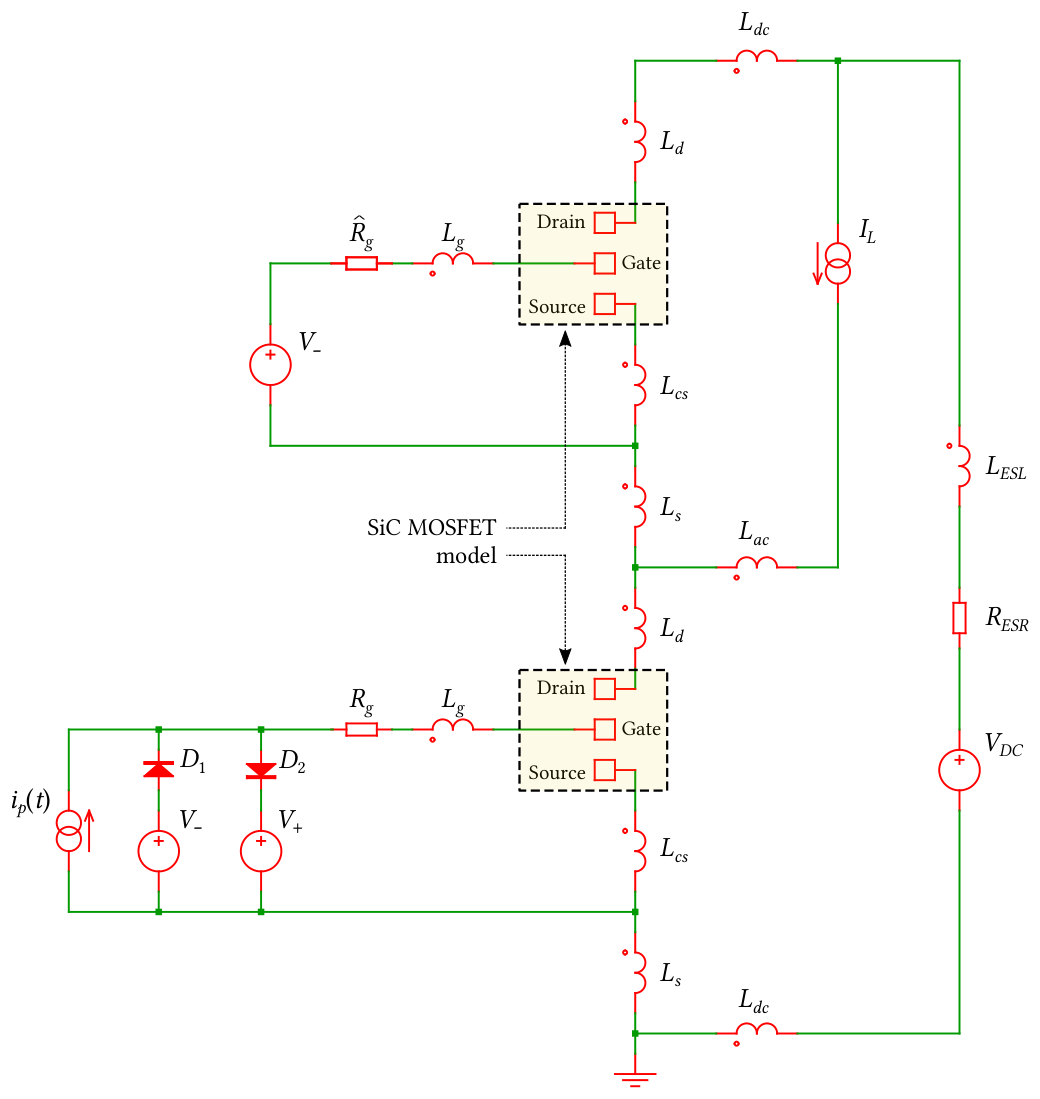




















| Element | Value |
|---|---|
| Positive voltage source () | |
| Negative voltage source () | |
| Passive switch gate resistance () | |
| Active switch gate resistance () | |
| Gate-side parasitic inductance () | |
| Drain-side parasitic inductance () | |
| Source-side parasitic inductance () | |
| Common source parasitic inductance () | |
| Load current loop parasitic inductance () | |
| DC bus parasitic inductance () | |
| DC-link capacitor ESL () | |
| DC-link capacitor ESR () |
Disclaimer/Publisher’s Note: The statements, opinions and data contained in all publications are solely those of the individual author(s) and contributor(s) and not of MDPI and/or the editor(s). MDPI and/or the editor(s) disclaim responsibility for any injury to people or property resulting from any ideas, methods, instructions or products referred to in the content. |
© 2026 by the authors. Licensee MDPI, Basel, Switzerland. This article is an open access article distributed under the terms and conditions of the Creative Commons Attribution (CC BY) license.
Share and Cite
Shavelis, R.; Ozols, K.; Ebli, M.; Ohms, C. Optimization of Gate Current Profiles for SiC Power MOSFETs with Respect to Switching Loss, Overshoot, and Slew Rate. Electronics 2026, 15, 2387. https://doi.org/10.3390/electronics15112387
Shavelis R, Ozols K, Ebli M, Ohms C. Optimization of Gate Current Profiles for SiC Power MOSFETs with Respect to Switching Loss, Overshoot, and Slew Rate. Electronics. 2026; 15(11):2387. https://doi.org/10.3390/electronics15112387
Chicago/Turabian StyleShavelis, Rolands, Kaspars Ozols, Michael Ebli, and Christian Ohms. 2026. "Optimization of Gate Current Profiles for SiC Power MOSFETs with Respect to Switching Loss, Overshoot, and Slew Rate" Electronics 15, no. 11: 2387. https://doi.org/10.3390/electronics15112387
APA StyleShavelis, R., Ozols, K., Ebli, M., & Ohms, C. (2026). Optimization of Gate Current Profiles for SiC Power MOSFETs with Respect to Switching Loss, Overshoot, and Slew Rate. Electronics, 15(11), 2387. https://doi.org/10.3390/electronics15112387