Galloping Target Tracking and Parameter Measurement Method for Overhead Transmission Lines Based on SAM2 Video Segmentation

Abstract
1. Introduction
2. Related Work
2.1. Evolution of Galloping Monitoring Methods
2.2. Visual Perception for Transmission Targets
2.3. Video Object Tracking Technology
3. Method
3.1. Overall Technical Framework
3.2. Overall Algorithm
| Algorithm 1 SAM2-Based Galloping Parameter Measurement Pipeline |
| Input: Video stream ; user point ; laser range Z; PTZ angles ; camera intrinsics K Output: Galloping amplitude A, frequency F, minimum inter-phase spacing // Stage 1: Detection Initialization 1. 2. ; write to Memory Bank as global anchor // Stage 2: SAM2 Segmentation and Tracking 3. for to T do 4. 5. ; update MemoryBank (retain ) 6. if OcclusionDetected: 7. end for // Stage 3: Refined Contour Extraction 8. for each do 9. 10. ; 11. 12. end for // Stage 4: Multi-Parameter Fusion 13. 14. for each : 15. 16. ; ; 17. return |
3.3. Prompt Generation Based on Point Selection and Line-Center Adsorption
- A circular search area with radius pixels is set centered on . Within this area, threshold segmentation or SAM2 image encoder features are used to mark the conductor area as foreground pixels. This local constraint avoids interference from distant ground objects.
- The Euclidean distance from to all foreground pixels in the search area is calculated, and the closest foreground point is selected as the initial anchor point .
- Taking as the center, the local conductor trend is analyzed. The tangent direction is obtained through principal component analysis (PCA) or Hough line detection, and the normal direction perpendicular to the tangent is calculated. Foreground pixel segments are scanned bidirectionally along the normal, and the geometric midpoint of the cross-section is taken as the final center point .
3.4. Segmentation and Tracking of Transmission Line Galloping Based on SAM2
3.4.1. SAM2 Architecture Adaptation Analysis
3.4.2. Tracking Strategy for Galloping Scenes
3.4.3. Special Processing for Galloping Scenes
3.5. Refined Contour Extraction
3.6. Multi-Parameter Fusion for Galloping Measurement
3.6.1. Robust Inverse Perspective Mapping Based on Vanishing Point
3.6.2. Equidistant Linear Transformation
3.6.3. Three-Way Information Fusion Parameter Calculation
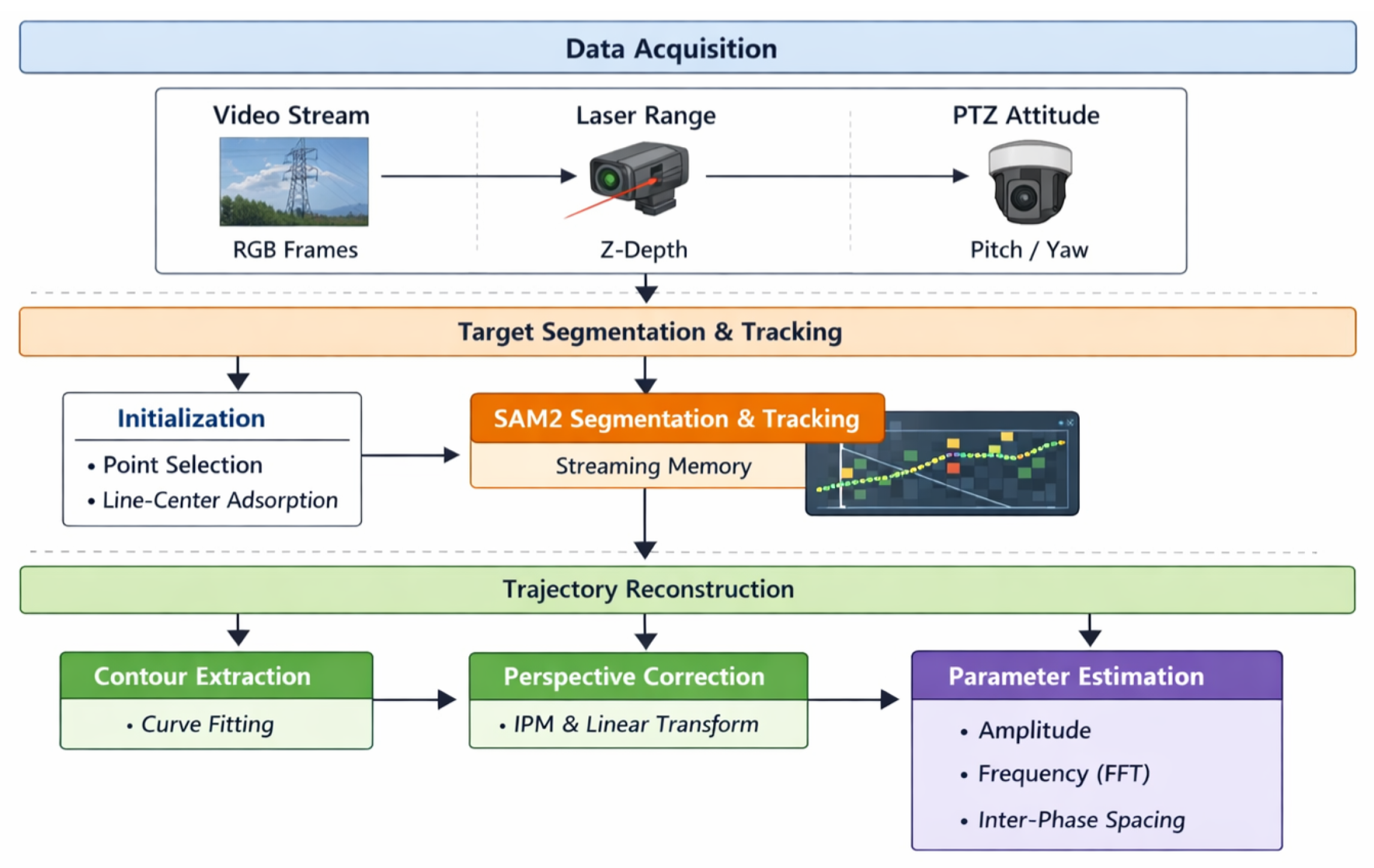
- Laser ranging: A high-frequency laser rangefinder provides the absolute distance Z to the target conductor (accuracy m), establishing a global scale benchmark.
- Gimbal attitude: A high-precision low-backlash PTZ with internal photoelectric encoders provides absolute azimuth and pitch angles (step arcsecond) for real-time correction of camera optical axis offset.
- Image processing: The frame-by-frame smooth contour coordinate sequence output after SAM2 segmentation, polynomial fitting, and perspective distortion correction.
4. Experiments and Analysis
4.1. Experimental Setup
4.1.1. Hardware Specifications
4.1.2. Simulation Experiment Platform
4.1.3. Field Measurement Data
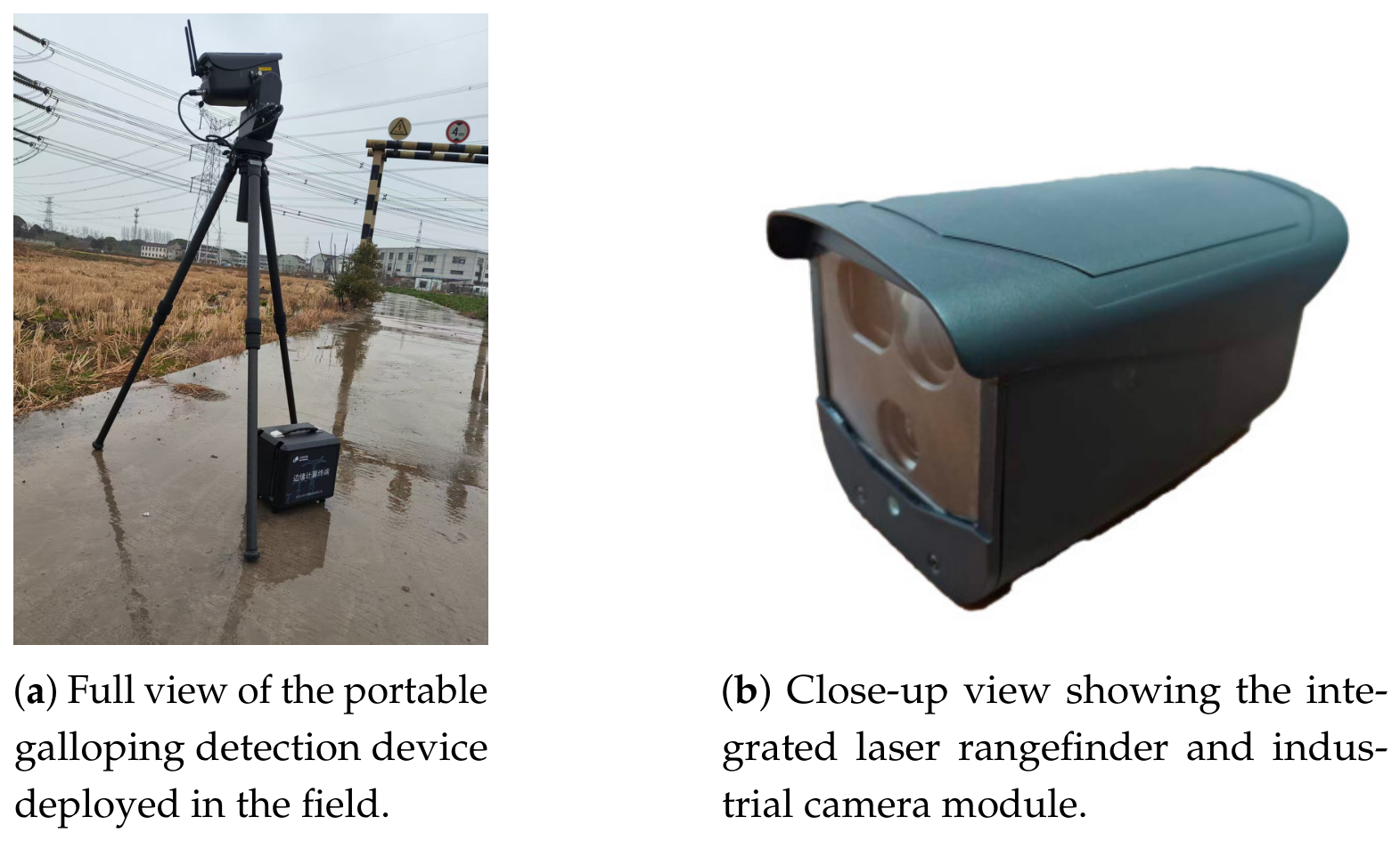
- Observation module: An industrial camera (recording at 1280 × 720 resolution, 25 fps) integrated with a high-frequency laser rangefinder (accuracy m) for capturing continuous video streams and obtaining absolute target depth.
- Attitude control module: A customized low-backlash harmonic PTZ (effective load kg) with built-in high-precision photoelectric absolute encoders (step ).
- Edge computing terminal: A high-performance AI computing unit for local real-time inference of SAM2 segmentation and multi-parameter calculation.
- Human-computer interaction terminal: An industrial-grade reinforced PAD for wireless touch line selection, parameter configuration, and visualization.
4.2. Segmentation and Tracking Performance
Robustness Under Occlusion, Crossing, and Rapid Deformation
4.3. Galloping Parameter Measurement Accuracy
4.3.1. Quantitative Verification in Simulation Environment
4.3.2. Field Application Results
4.4. Ablation Study
Parameter Sensitivity Analysis
4.5. Key Algorithm Parameters
5. Discussion
5.1. Comparison with Existing Monitoring Approaches
5.2. Uncertainty Analysis
5.3. Potential Integration with Digital Twin Frameworks
5.4. Advantages of SAM2 for Galloping Tracking
5.5. Limitations and Future Work
6. Conclusions
Author Contributions
Funding
Institutional Review Board Statement
Informed Consent Statement
Data Availability Statement
Conflicts of Interest
Nomenclature
| Symbol/ Abbreviation | Definition |
| A | Galloping amplitude (m) |
| F | Galloping frequency (Hz) |
| Minimum inter-phase spacing (m) | |
| Conductor center displacement time series (m) | |
| Z | Absolute distance from laser rangefinder to target conductor (m) |
| PTZ gimbal pitch angle (rad) | |
| PTZ gimbal yaw angle (rad) | |
| Camera intrinsic matrix | |
| Camera focal lengths in x and y directions (px) | |
| Camera principal point coordinates (px) | |
| Vanishing point coordinates in image plane (px) | |
| Camera elevation (pitch) angle estimated from vanishing point (rad) | |
| Camera yaw angle estimated from vanishing point (rad) | |
| Inverse perspective mapping homography matrix | |
| Joint spatial correction matrix combining IPM, ELT, ranging and PTZ data | |
| Horizontal dynamic scale coefficient for equidistant linear transformation | |
| Operator-selected touch point on the first frame (px) | |
| Center-adsorption-refined conductor prompt point (px) | |
| R | Search radius for center adsorption algorithm (px) |
| S | Conductor skeleton feature point set |
| K | Number of spatial sub-intervals for grouped polynomial fitting |
| N | SAM2 streaming memory bank size (frames) |
| Estimated galloping amplitude (m) | |
| Standard uncertainty of amplitude estimate (m) | |
| Standard uncertainties of laser range, PTZ angle, and pixel displacement | |
| ADF | Augmented Dickey–Fuller stationarity test |
| ELT | Equidistant Linear Transformation |
| FFT | Fast Fourier Transform |
| IMU | Inertial Measurement Unit |
| IoU | Intersection over Union (segmentation accuracy metric) |
| IPM | Inverse Perspective Mapping |
| PCA | Principal Component Analysis |
| PTZ | Pan–Tilt–Zoom gimbal unit |
| SAM2 | Segment Anything Model 2 |
References
- Den Hartog, J.P. Transmission line vibration due to sleet. Trans. Am. Inst. Electr. Eng. 1932, 51, 1074–1076. [Google Scholar] [CrossRef]
- Nigol, O.; Buchan, P.G. Conductor galloping—Part II: Torsional mechanism. IEEE Trans. Power Appar. Syst. 1981, PAS-100, 708–720. [Google Scholar] [CrossRef]
- Yu, P.; Desai, Y.M.; Shah, A.H.; Popplewell, N. Three-degree-of-freedom model for galloping. Part I: Formulation. J. Eng. Mech. 2000, 119, 2404–2425. [Google Scholar] [CrossRef]
- Lu, J.; Wang, Q.; Wang, L.; Tu, D.; Gao, Z.; Zhang, L. Study on wind-induced conductor galloping and its prevention measures. High Volt. Eng. 2022, 48, 3573–3583. [Google Scholar]
- China Meteorological Administration. China Climate Change Blue Book 2023; Science Press: Beijing, China, 2023. [Google Scholar]
- State Grid Jiangsu Electric Power Co., Ltd. Report on Icing Galloping Events in Jiangsu Province (2023–2024); Internal Report; State Grid Jiangsu Electric Power Co., Ltd.: Nanjing, China, 2024. [Google Scholar]
- Yin, S.; Li, L.; Yang, F. Study on visual inspection methods for overhead transmission line galloping. Electr. Power 2020, 53, 158–165. [Google Scholar]
- Hung, P.C.; Voce, H.; Cheung, S.D. Galloping monitoring of overhead transmission lines using GPS. In Proceedings of the IEEE PES General Meeting, National Harbor, MD, USA, 27–31 July 2014; IEEE: Piscataway, NJ, USA, 2014; pp. 1–5. [Google Scholar]
- Liu, X.; Yang, S.; Jiang, X.; Hu, J. Research on on-line monitoring system for transmission line galloping based on acceleration sensors. Power Syst. Technol. 2020, 44, 3918–3924. [Google Scholar]
- Zhang, M.; Zhao, M.; Li, T.; Li, H. Application and analysis of video monitoring in transmission line galloping. Electr. Power Inf. Commun. Technol. 2019, 17, 78–83. [Google Scholar]
- Li, H.; Liu, L.; Du, J.; Jiang, F.; Guo, F.; Hu, Q. An Improved YOLOv3 for Foreign Objects Detection of Transmission Lines. IEEE Access 2022, 10, 45620–45628. [Google Scholar] [CrossRef]
- Liu, J.; Liu, C. Review of Deep Learning-Based Intelligent Inspection Research for Transmission Lines. CMC-Comput. Mater. Contin. 2026, 87, 155–198. [Google Scholar] [CrossRef]
- Zhao, W.; Xu, M.; Cheng, X. Transmission line extraction using semantic segmentation based on U-Net. J. Phys. Conf. Ser. 2020, 1651, 012167. [Google Scholar] [CrossRef]
- Ravi, N.; Gabeur, V.; Hu, Y.-T.; Hu, R.; Ryali, C.; Ma, T.; Khedr, H.; Rädle, R.; Rolber, C.; Gustafson, L.; et al. SAM 2: Segment Anything in Images and Videos. arXiv 2024, arXiv:2408.00714. [Google Scholar]
- Gurung, C.B.; Yamaguchi, H.; Yukino, T. Identification of large amplitude wind-induced vibration of ice-accreted transmission lines based on field observed data. Eng. Struct. 2002, 24, 179–188. [Google Scholar] [CrossRef]
- Luo, B.; Xu, X.; Chen, C.; Cao, M. Field measurement and analysis of transmission line galloping based on inertial measurement unit. Proc. CSEE 2018, 38, 5864–5872. [Google Scholar]
- Li, X.; Zhang, J.; Niu, H. Galloping monitoring using fiber Bragg grating sensors on overhead transmission lines. Opt. Fiber Technol. 2019, 50, 62–69. [Google Scholar] [CrossRef]
- Zhang, J.; Wang, B.; Ma, H.; Wang, L.; Wang, H.; Ma, F.; Luo, P. A Review of Intelligent Depth Distance Perception Research for Power Transmission Line Corridor Scenarios. Processes 2024, 12, 2392. [Google Scholar] [CrossRef]
- Zhu, K.; Wang, Y.; Liu, H.; Li, R. Monocular vision-based monitoring method for transmission line galloping amplitude. High Volt. Eng. 2021, 47, 3048–3056. [Google Scholar]
- Li, X.; Wang, S.; Zhang, D. Image-based galloping monitoring of overhead transmission lines using Canny-Hough algorithm. Electr. Power Autom. Equip. 2014, 34, 53–58. [Google Scholar]
- Nguyen, V.N.; Jenssen, R.; Roverso, D. Automatic autonomous vision-based power line inspection: A review of current status and the potential role of deep learning. Int. J. Electr. Power Energy Syst. 2018, 99, 107–120. [Google Scholar] [CrossRef]
- Zhao, C.; Li, B.; Xu, Z.; Huang, Z. Improved YOLO-based detection method for insulators in power transmission lines. Electronics 2023, 12, 1295. [Google Scholar] [CrossRef]
- Kirillov, A.; Mintun, E.; Ravi, N.; Mao, H.; Rolber, C.; Gustafson, L.; Xiao, T.; Whitehead, S.; Berg, A.C.; Lo, W.-Y.; et al. Segment Anything. In Proceedings of the IEEE/CVF International Conference on Computer Vision (ICCV), Paris, France, 2–6 October 2023; IEEE: Piscataway, NJ, USA, 2023; pp. 4015–4026. [Google Scholar]
- You, Z.; Shi, J.; Guo, X. SAM2MOT: Extending SAM 2 for Multi-Object Tracking in Videos. arXiv 2024, arXiv:2411.05457. [Google Scholar]
- Cheng, H.-K.; Schwing, A.G. XMem: Long-Term Video Object Segmentation with an Atkinson-Shiffrin Memory Model. In Proceedings of the European Conference on Computer Vision (ECCV), Tel Aviv, Israel, 23–27 October 2022; Springer: Cham, Switzerland, 2022; pp. 640–658. [Google Scholar]
- Yang, Z.; Wei, Y.; Yang, Y. Decoupling Features in Hierarchical Propagation for Video Object Segmentation. In Proceedings of the Advances in Neural Information Processing Systems (NeurIPS), New Orleans, LA, USA, 28 November–9 December 2022; Volume 35, pp. 36324–36336. [Google Scholar]
- Moghadam, P.; Starzyk, J.A.; Wijesoma, W.S. Fast vanishing-point detection in unstructured environments. IEEE Trans. Image Process. 2012, 21, 425–430. [Google Scholar] [CrossRef]
- Fathollahi, A.; Andresen, B. Power quality analysis and improvement of power-to-x plants using digital twins: A practical application in Denmark. IEEE Trans. Energy Convers. 2025, 40, 1909–1921. [Google Scholar] [CrossRef]
- Ahmad, I.; Zhang, Y.; Liu, W.; Huang, K. Digital twin of wireless network: Concepts, architectures, use cases, and future directions. IEEE Commun. Surv. Tutor. 2022, 24, 2421–2455. [Google Scholar] [CrossRef]






| Module | Component | Key Specifications |
|---|---|---|
| Industrial camera | Sony IMX290 sensor | 1280 × 720 px, 25 fps, 12 mm lens, pixel size 5.86 m |
| Laser rangefinder | Pulsed laser unit | Range: 20–500 m, Accuracy: <1 m, Rate: 10 Hz |
| PTZ unit | Harmonic drive gimbal | Load: ≥3 kg, Angular step: ≤0.3″, Absolute encoder |
| Edge computing | NVIDIA Jetson AGX Orin | 64 GB RAM, 275 TOPS AI, TensorRT inference |
| HCI terminal | Industrial-grade tablet | 10.1 in., IP65, 802.11ax Wi-Fi, touch point selection |
| Total system | Tripod-mounted | Weight: ≤15 kg, Setup time: <5 min |
| Site | Date | Voltage | Temp. | Weather | Visibility |
|---|---|---|---|---|---|
| Lianyungang, Xianfeng Rd. | 19 January 2026 | 110 kV | °C | Snow, Level 5 wind | Poor |
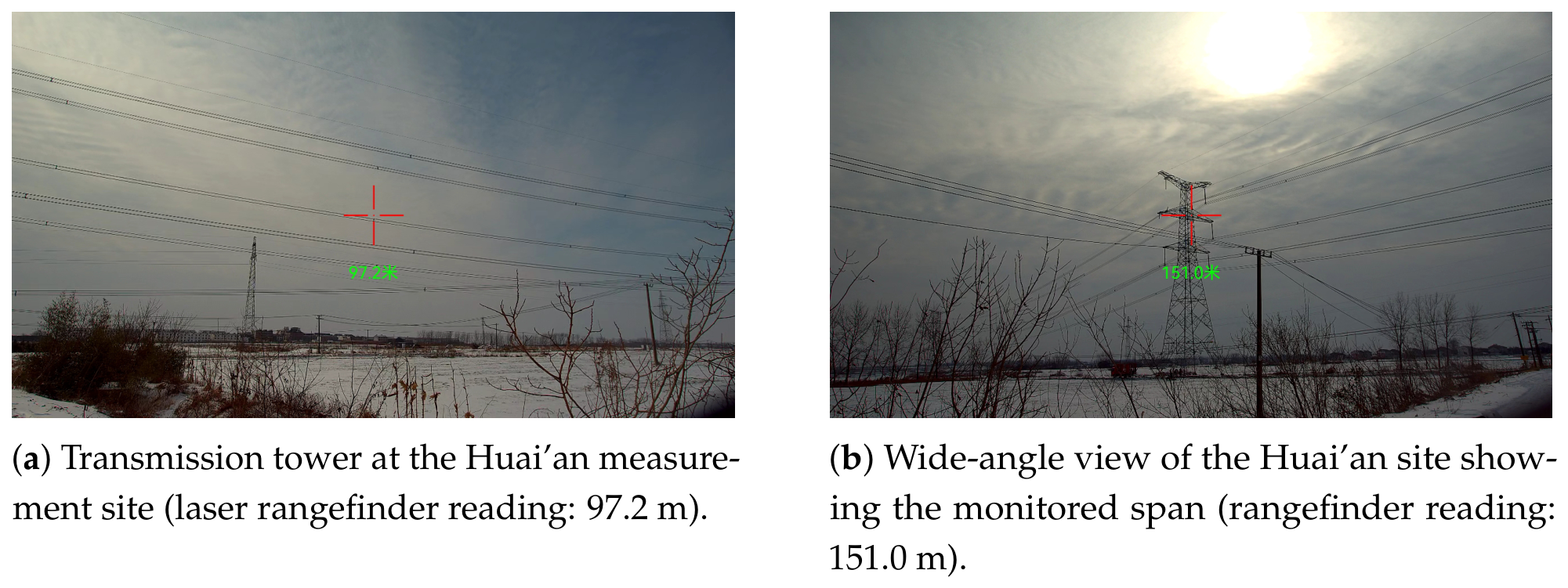
| Huai’an, Baojitown | 19 January 2026 | 110 kV | °C | Snow, Level 5 wind | Poor |
| Suqian, Shuanggou | 19 January 2026 | 500 kV | Low | Snow + Strong wind | Poor |
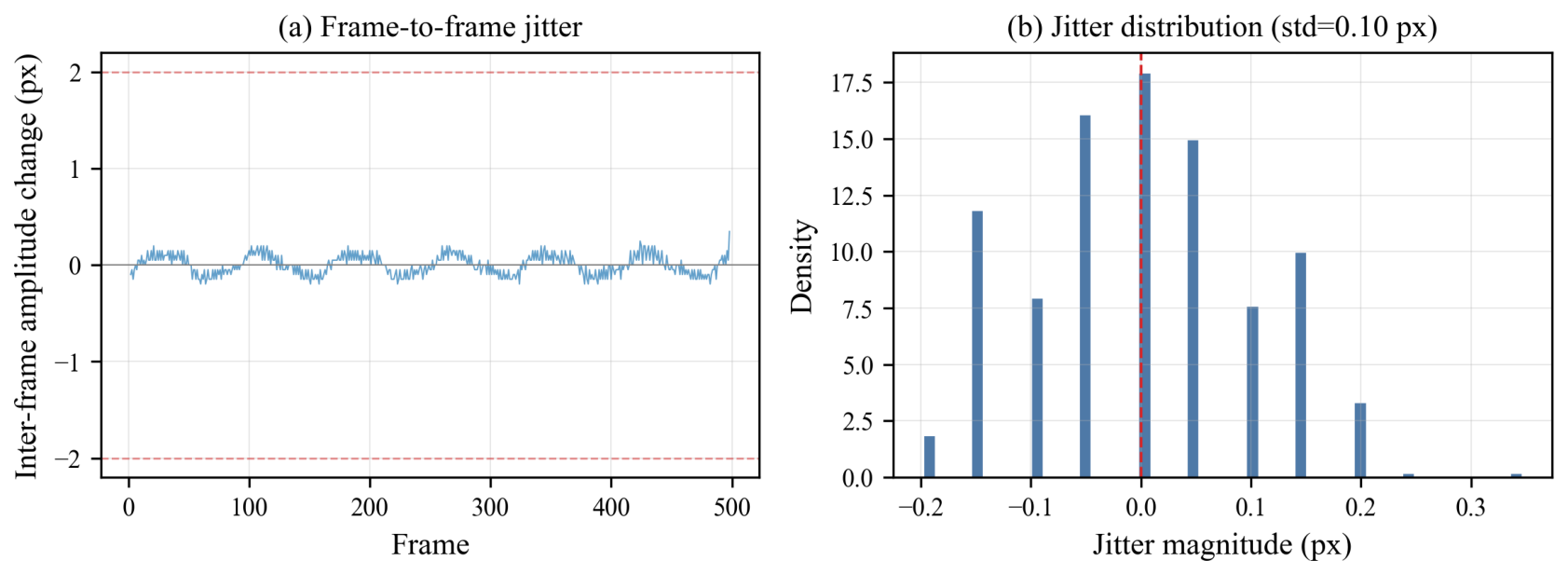
| Method | IoU (%) | Precision (%) | Recall (%) | ID Switches | Jitter (px) |
|---|---|---|---|---|---|
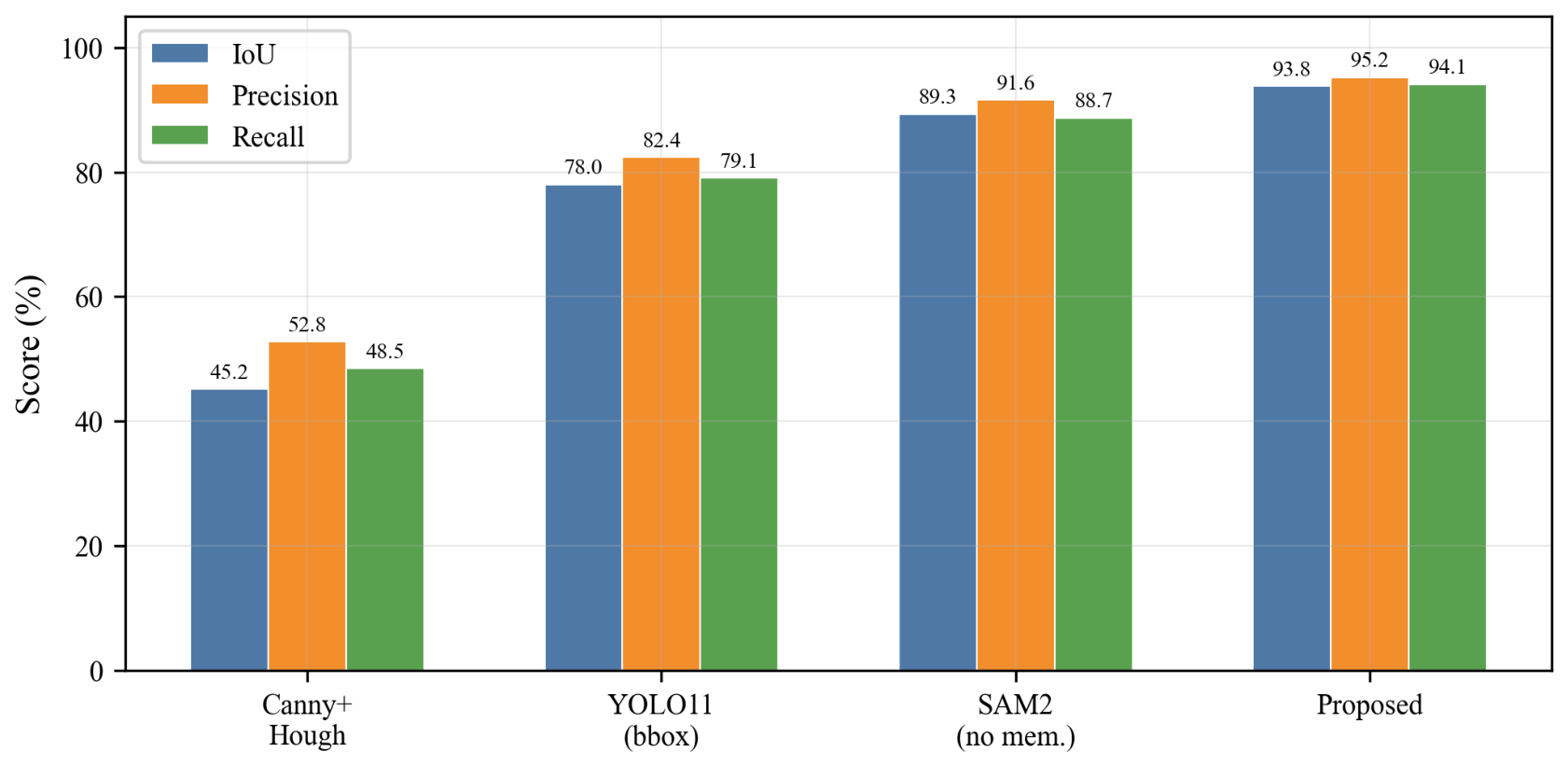
| Canny + Hough (Baseline) | 45.2 | 52.8 | 48.5 | – | >10 |
| YOLO11 (frame-by-frame) | <80.0 a | 82.4 | 79.1 | 8 | >5 |
| Mask R-CNN + SORT | 83.6 | 86.1 | 82.9 | 5 | 4.1 |
| XMem [25] | 87.4 | 89.3 | 86.8 | 3 | 3.2 |
| DeAOT [26] | 88.9 | 90.7 | 88.2 | 2 | 2.9 |
| SAM2 (single-frame, no memory) | 89.3 | 91.6 | 88.7 | 12 | 3.8 |
| Proposed method | 93.8 | 95.2 | 94.1 | 0 | <2 |
| Condition | IoU (%) | Track. Succ. (%) | ID Switches | Recovery (Frames) |
|---|---|---|---|---|
| No occlusion (baseline) | 93.8 | 100 | 0 | – |
| Partial occlusion (≤10%) | 92.1 | 100 | 0 | – |
| Moderate occlusion (10–20%) | 89.6 | 98 | 0 | – |
| Severe occlusion (20–30%) | 85.3 | 94 | 1 | <5 |
| Conductor crossing event | 83.7 | 91 | 2 | <8 |
| Rapid deformation (>50% shape change) | 87.2 | 96 | 0 | – |
| Elevation Angle | Without IPM | With IPM + ELT | Freq. Error (Hz) | ||
|---|---|---|---|---|---|
| Amp. Err. (m) | Rel. (%) | Amp. Err. (m) | Rel. (%) | ||
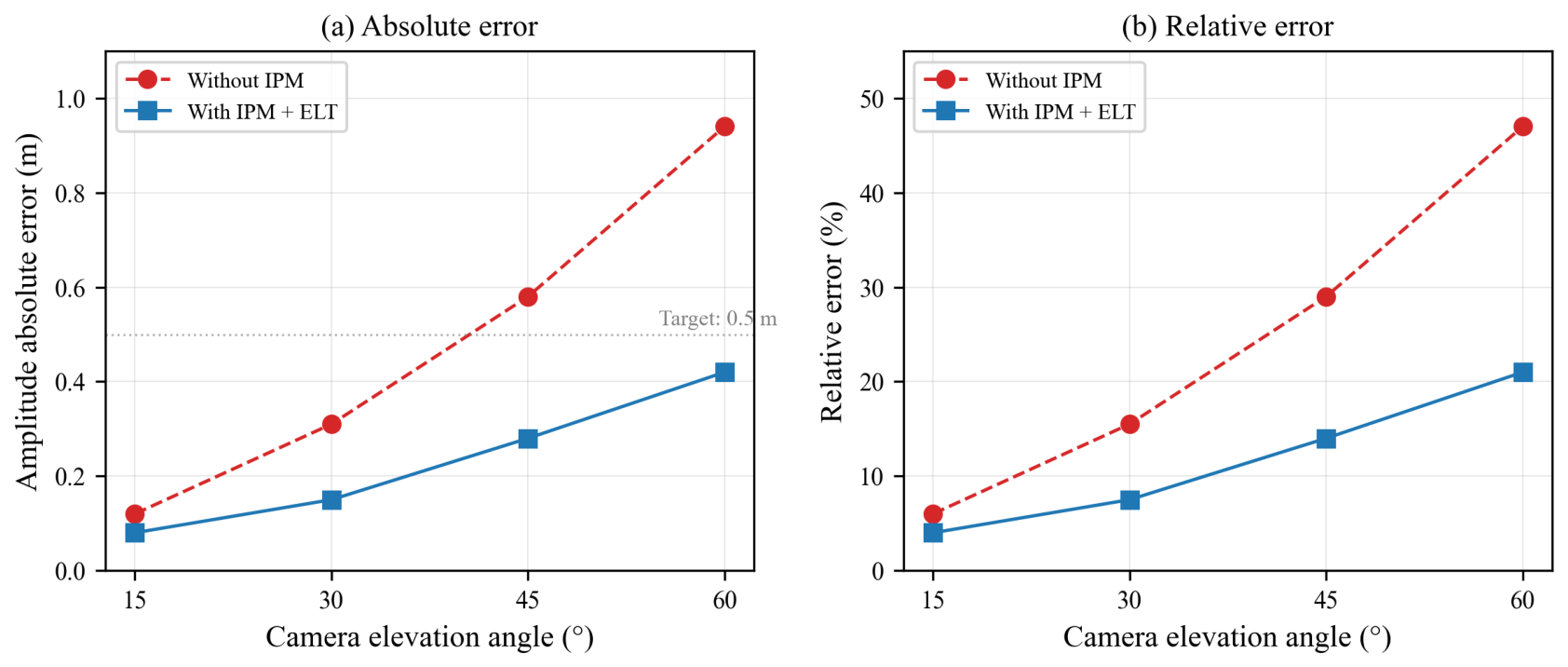
| 15° | 0.12 | 6.0 | 0.08 | 4.0 | <0.05 |
| 30° | 0.31 | 15.5 | 0.15 | 7.5 | <0.05 |
| 45° | 0.58 | 29.0 | 0.28 | 14.0 | <0.08 |
| 60° | 0.94 | 47.0 | 0.42 | 21.0 | <0.10 |
| Site | Max Amp. (m) | Main Freq. (Hz) | Min Phase Sp. (m) | Lines Tracked |
|---|---|---|---|---|
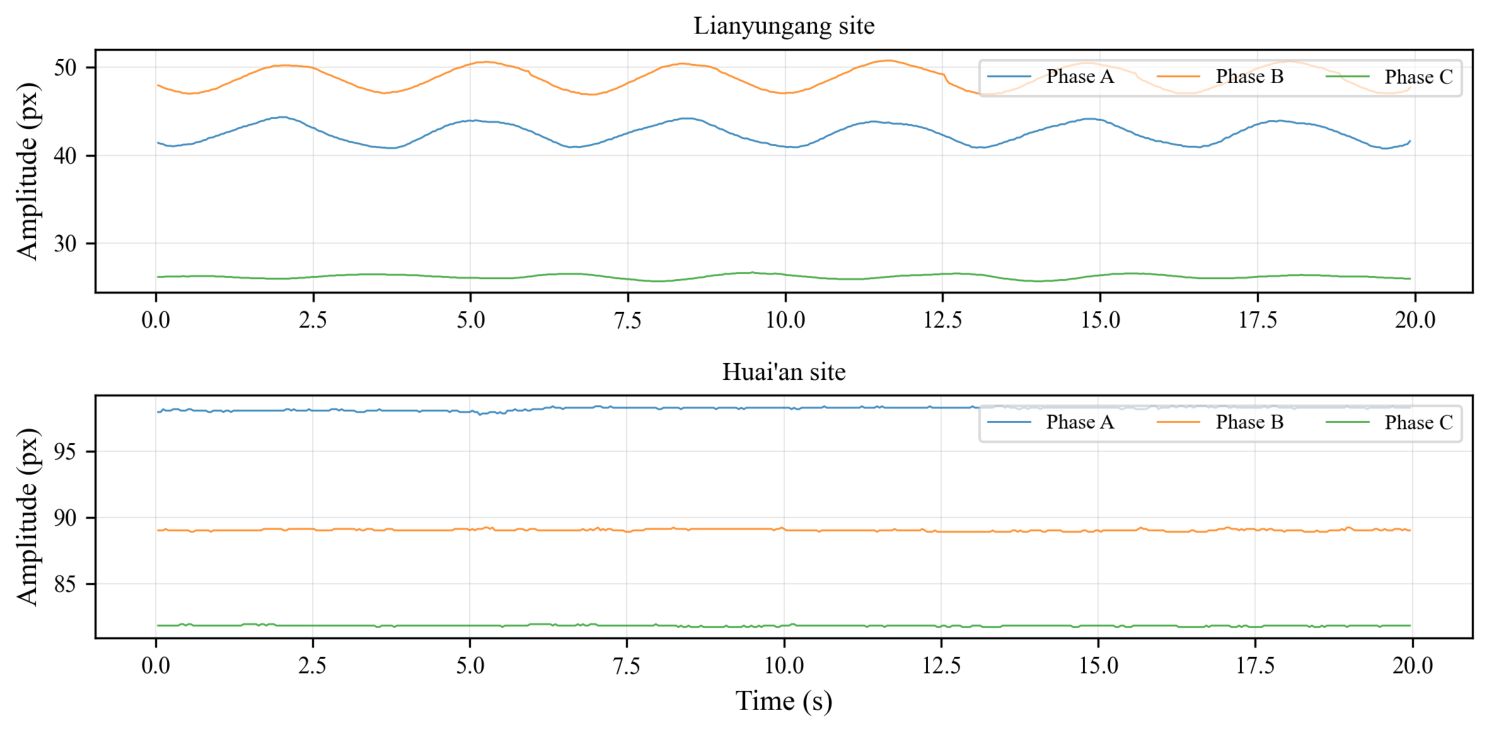
| Huai’an, Baojitown | 4.315 | 0.37 | 7.99 | 3 |
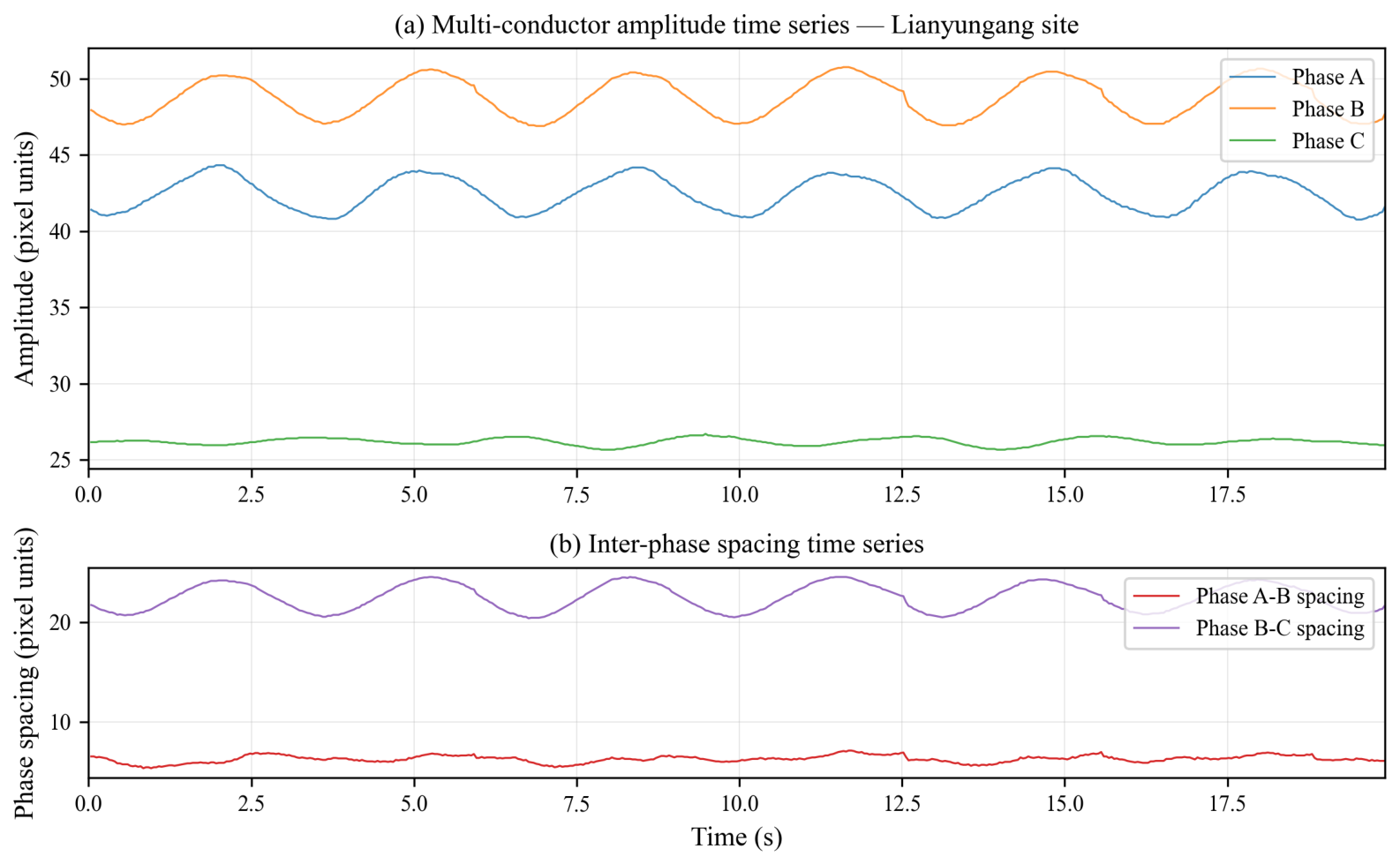
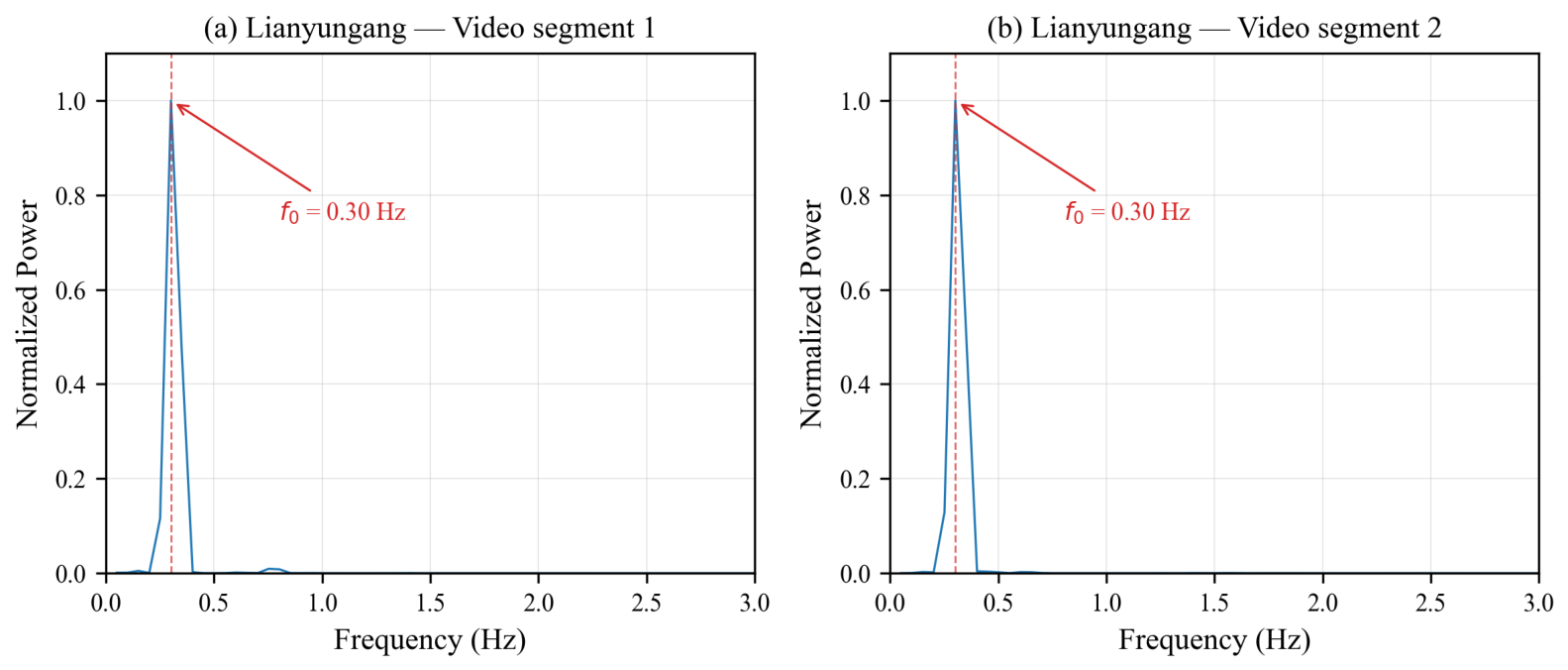
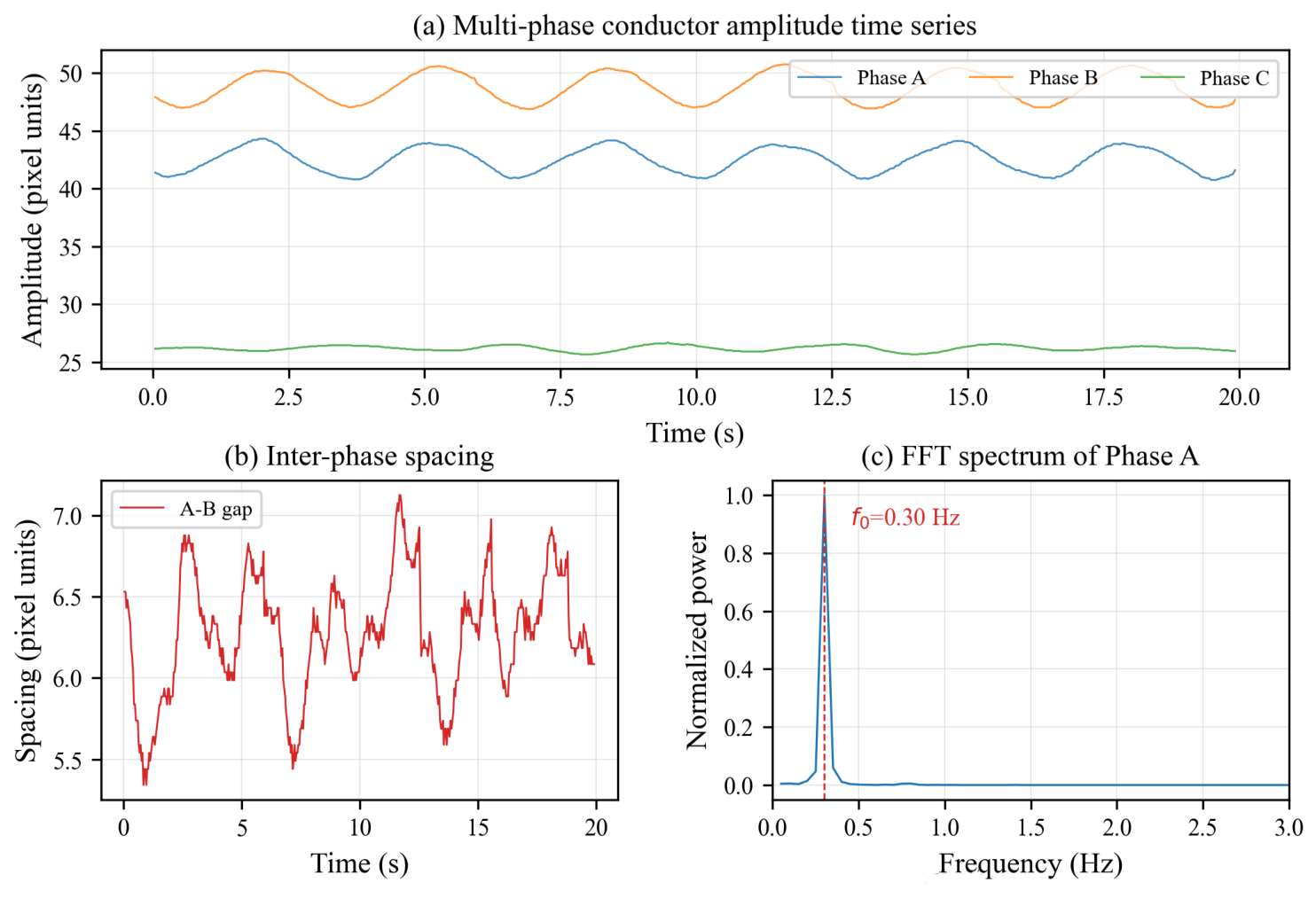
| Lianyungang, Xianfeng Rd. | 2.333 | 0.30 | 9.559 | 3 |
| Suqian, Shuanggou (500 kV) | 1.600 | 0.74 | – | 2 |
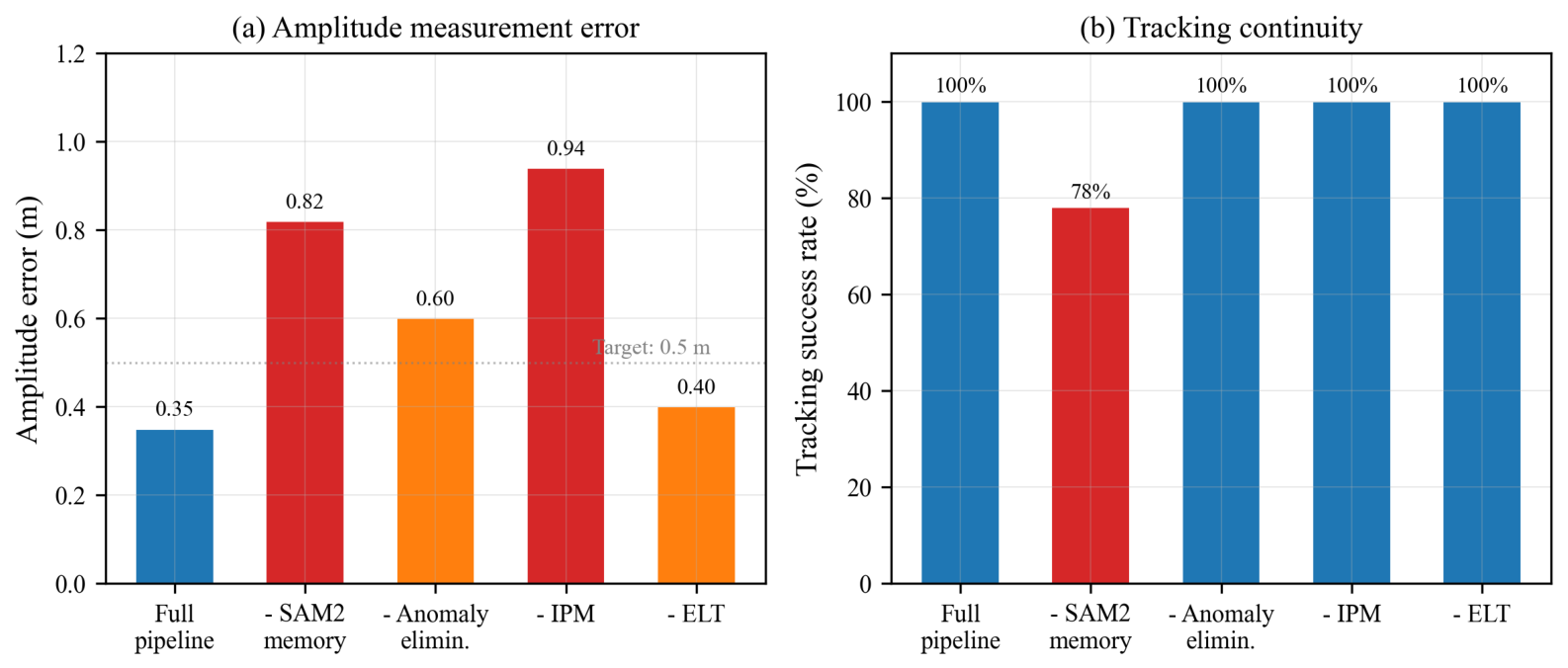
| Configuration | Amp. Error (m) | Tracking Success (%) |
|---|---|---|
| Full pipeline (proposed) | <0.50 | 100 |
| – SAM2 tracking (single-frame only) | 0.82 | 78 |
| – Anomaly group elimination | +0.25 (random jump) | 100 |
| – IPM | 0.94 | 100 |
| – Equidistant linear transform | <0.50 (amp. OK) a | 100 |
| Parameter | Test Range | Amp. Error Variation | Track. Succ. (%) | Recommended |
|---|---|---|---|---|
| Memory bank size N | 2, 4, 6, 8, 10 frames | ±0.12 m at ; stable | 94%→100% | 6 |
| Z-score threshold | 2.0, 3.0, 4.0, 5.0 | +0.20 m (random jump) at >4.0 | 100% | 3.0 |
| Fitting intervals K | 5, 10, 15, 20, 30 | +0.18 m at ; stable | 100% | 10–20 |
| Prompt placement error | 0, 5, 10, 15, 20 px | <0.05 m for ≤10 px error | 100% | ≤10 px |
| Parameter | Value | Description |
|---|---|---|
| Point adsorption search radius R | 40 px | Local search constraint |
| SAM2 memory bank size N | 6 frames | Short-term memory window |
| Processing frame rate | 10–15 fps | Dynamic downsampling |
| Grouped fitting sub-intervals K | 10–20 | Depends on conductor span |
| Local fitting max iterations | 10,000 | Convergence guarantee |
| Z-score anomaly threshold | Outlier detection sensitivity | |
| Resampling contour points | 200 | Standard output resolution |
| Laser rangefinder accuracy | <1 m | Global scale benchmark |
| PTZ angular step | ≤0.3″ | Attitude feedback precision |
| Method | Contact | Portable | Quantitative | Cost | Real-Time |
|---|---|---|---|---|---|
| Manual inspection | No | Yes | Low | Low | No |
| IMU/GPS sensors | Yes | No | High | High | Yes |
| Fixed camera (qualitative) | No | No | Low | Medium | Yes |
| Binocular stereo vision | No | Low | High | High | Medium |
| Proposed method | No | Yes | High | Medium | Yes |
Disclaimer/Publisher’s Note: The statements, opinions and data contained in all publications are solely those of the individual author(s) and contributor(s) and not of MDPI and/or the editor(s). MDPI and/or the editor(s) disclaim responsibility for any injury to people or property resulting from any ideas, methods, instructions or products referred to in the content. |
© 2026 by the authors. Licensee MDPI, Basel, Switzerland. This article is an open access article distributed under the terms and conditions of the Creative Commons Attribution (CC BY) license.
Share and Cite
Li, C.; Tan, X.; Huang, X.; Sa, L.; Zhang, N.; Qiu, G. Galloping Target Tracking and Parameter Measurement Method for Overhead Transmission Lines Based on SAM2 Video Segmentation. Electronics 2026, 15, 2305. https://doi.org/10.3390/electronics15112305
Li C, Tan X, Huang X, Sa L, Zhang N, Qiu G. Galloping Target Tracking and Parameter Measurement Method for Overhead Transmission Lines Based on SAM2 Video Segmentation. Electronics. 2026; 15(11):2305. https://doi.org/10.3390/electronics15112305
Chicago/Turabian StyleLi, Chenying, Xiao Tan, Xinyu Huang, Ling Sa, Nailong Zhang, and Gang Qiu. 2026. "Galloping Target Tracking and Parameter Measurement Method for Overhead Transmission Lines Based on SAM2 Video Segmentation" Electronics 15, no. 11: 2305. https://doi.org/10.3390/electronics15112305
APA StyleLi, C., Tan, X., Huang, X., Sa, L., Zhang, N., & Qiu, G. (2026). Galloping Target Tracking and Parameter Measurement Method for Overhead Transmission Lines Based on SAM2 Video Segmentation. Electronics, 15(11), 2305. https://doi.org/10.3390/electronics15112305