Article

Coupling Reduction and Bandwidth Enhancement of a MIMO Antenna with a Parasitic Element

by
Ahmad H. Abdelgwad
1 and
Mohammed A. Hassan
2,*
1
Electrical Engineering Department, Fayoum University, Fayoum 63514, Egypt
2
Electrical Engineering Department, College of Engineering, King Faisal University, Al Ahsa 31982, Saudi Arabia
*
Author to whom correspondence should be addressed.
Electronics 2026, 15(1), 158; https://doi.org/10.3390/electronics15010158
Submission received: 26 November 2025 / Revised: 23 December 2025 / Accepted: 27 December 2025 / Published: 29 December 2025

Abstract

This work presents a compact printed MIMO antenna specifically designed for portable wireless applications, offering strong isolation between its elements. The antenna consists of two ultra-low-profile inverted-F antenna (IFA) elements placed back to back with a close spacing of just 0.05λ at the resonance frequency (2.4 GHz). To improve isolation, a parasitic structure is strategically positioned between the two IFAs. Additionally, a slot is introduced into the ground plane, which excites an extra resonance, effectively broadening the antenna’s operational bandwidth. The proposed design was successfully fabricated and tested, with measurement results closely matching the simulations. The antenna demonstrates a good impedance bandwidth ranging from 2.28 to 2.85 GHz, maintaining a return loss better than 10 dB, and achieving excellent isolation levels exceeding 40 dB. It also delivers a high peak efficiency of 90% and a realized gain pattern of around 2 dBi over the band of interest. In addition, the inclusion of the parasitic element further enhances the antenna’s performance by promoting pattern diversity and reducing the correlation between radiation patterns, ensuring robust MIMO and diversity characteristics.

1. Introduction

In today’s fast-evolving wireless communication landscape, delivering high data rates and maintaining a robust channel capacity are constant priorities [1]. To meet these growing demands, Multiple-Input Multiple-Output (MIMO) systems [2] have become increasingly popular thanks to their ability to enhance signal reliability using diversity techniques that counteract the effects of multipath fading [3]. However, implementing MIMO technology in compact devices brings about its own challenges—most notably, maintaining sufficient isolation between antenna elements [4]. When these elements are closely spaced, mutual coupling becomes a serious concern [5]. It can induce unwanted currents, cause impedance mismatches, and distort radiation patterns, especially when the antenna elements become highly correlated. This, in turn, significantly degrades the overall capacity and performance of the MIMO system [6].
A conventional way to reduce such coupling is to separate the antenna elements by at least half a wavelength. Unfortunately, this solution is not feasible in the context of modern handheld devices, where space is extremely limited [7]. To tackle this issue without sacrificing compactness, various design strategies have been proposed in recent years [8,9]. These include the use of diversity techniques [10], decoupling networks [11], metamaterials [12], defected ground structures (DGSs) [13], electromagnetic bandgap (EBG) materials [14], and reconfigurable antennas [15,16]. While many of these methods have proven effective in reducing mutual coupling, they often rely on multilayer designs and complex fabrication steps, making them less ideal for applications where minimal thickness is a requirement.
Improving the impedance bandwidth of compact MIMO antennas is another critical design goal. Several creative solutions have been introduced to achieve this [17,18,19,20]. For instance, incorporating fractal-shaped slots within the main slot area has enabled multi-resonant behavior, greatly expanding bandwidth [18]. Other methods involve modifying patch geometries—such as cutting asymmetric bevels [19]—or embedding additional radiating elements to improve coupling and resonance [20]. While these strategies can yield substantial bandwidth improvements, some still fall short of covering all the frequency bands needed for today’s versatile wireless services.
In this paper, we introduce a compact, low-profile MIMO antenna based on the inverted-F antenna (IFA) structure, designed for high isolation and a wide bandwidth. The antenna system employs two closely spaced IFA elements together with a strategically positioned parasitic strip and a ground-plane slot. Measurements demonstrate that the combined use of these features yields a more than 40 dB reduction in mutual coupling relative to a configuration without the parasitic strip and slot. These modifications also substantially extend the operational bandwidth, offering nearly a 200% improvement over the conventional design.
The remainder of this paper is structured as follows: Section 2 details the antenna design; Section 3 presents simulation results and a discussion of findings; Section 4 describes the fabrication and measurement results to validate the simulation predictions; Section 5 provides a comparison of the antenna performance relative to related studies in the literature; and Section 6 concludes this study.

2. Decoupled Antenna Design and Analysis

The configuration of the proposed antenna with the optimized dimensions is depicted in Figure 1. It is designed on an FR4 substrate with a thickness of 0.8 mm and a relative dielectric constant of 4.3, covering a total area of 53 × 80 mm2. To achieve resonance at 2.4 GHz, the current path length was fine-tuned through parametric analysis. Structurally, the antenna comprises two planar IFA elements placed back to back with a separation of approximately 0.05λ (3.4 mm at 2.4 GHz), enabling a compact form factor. To mitigate the mutual coupling between the radiating elements, a metallic parasitic strip is introduced. This element acts as a half-wavelength resonator, effectively reducing coupling by introducing capacitive loading that suppresses the mutual interaction. Additionally, a narrow slot is etched into the ground plane between the two IFAs, exciting a secondary resonance that contributes to bandwidth enhancement.

3. Simulated Results and Discussion

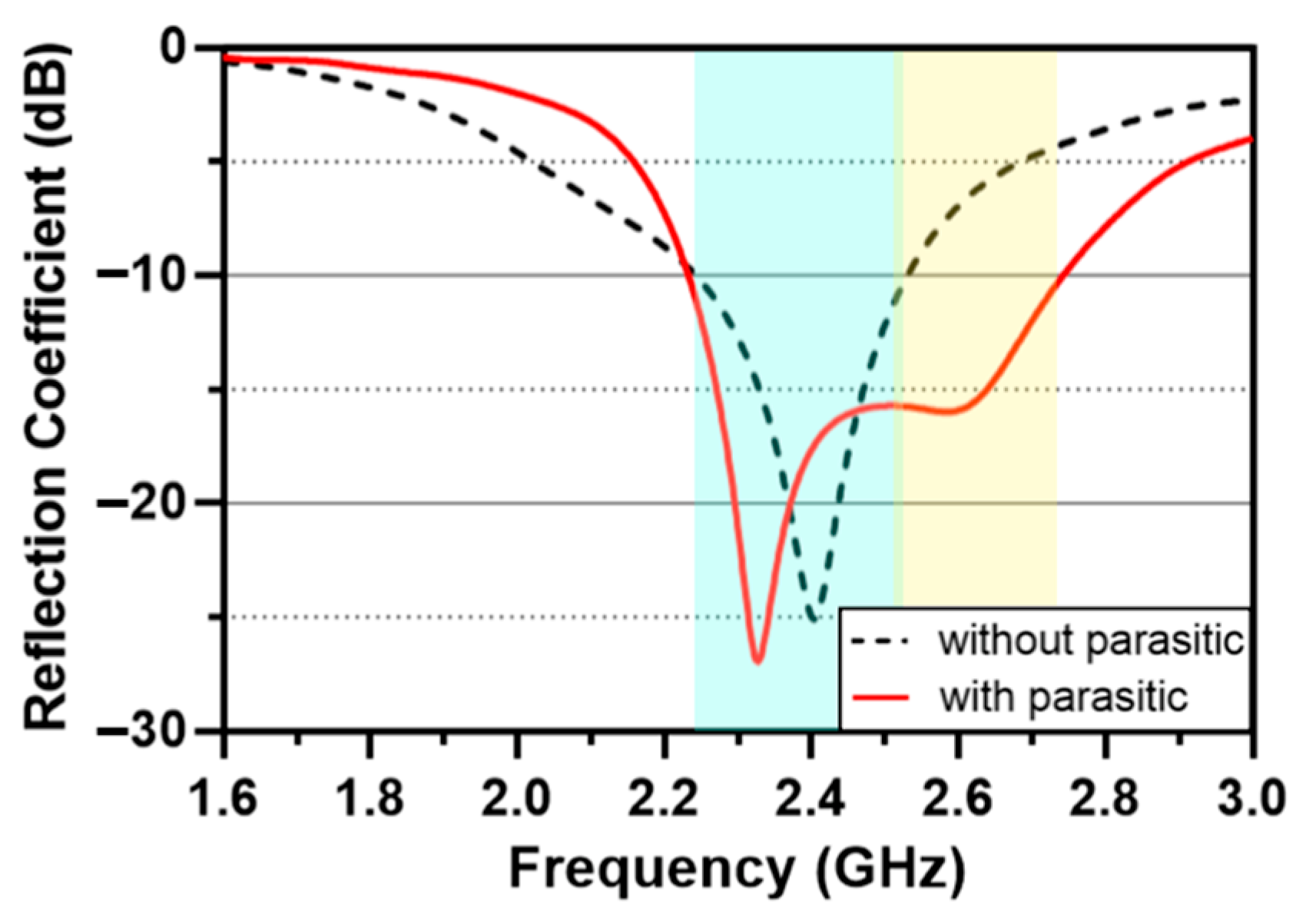
The antenna system was modeled and analyzed using CST Microwave Studio. Figure 2 presents a comparison of the reflection coefficients between two configurations: one incorporating both the parasitic element and ground slot, and the other representing a conventional layout without these features. The results indicate that the inclusion of the parasitic element and slot significantly enhances the impedance bandwidth—from 200 MHz (2.25–2.45 GHz) to around 500 MHz (2.2–2.75 GHz) for a return loss below −10 dB. This improvement is primarily due to the excitation of an additional resonance introduced by the parasitic structure and the slot.
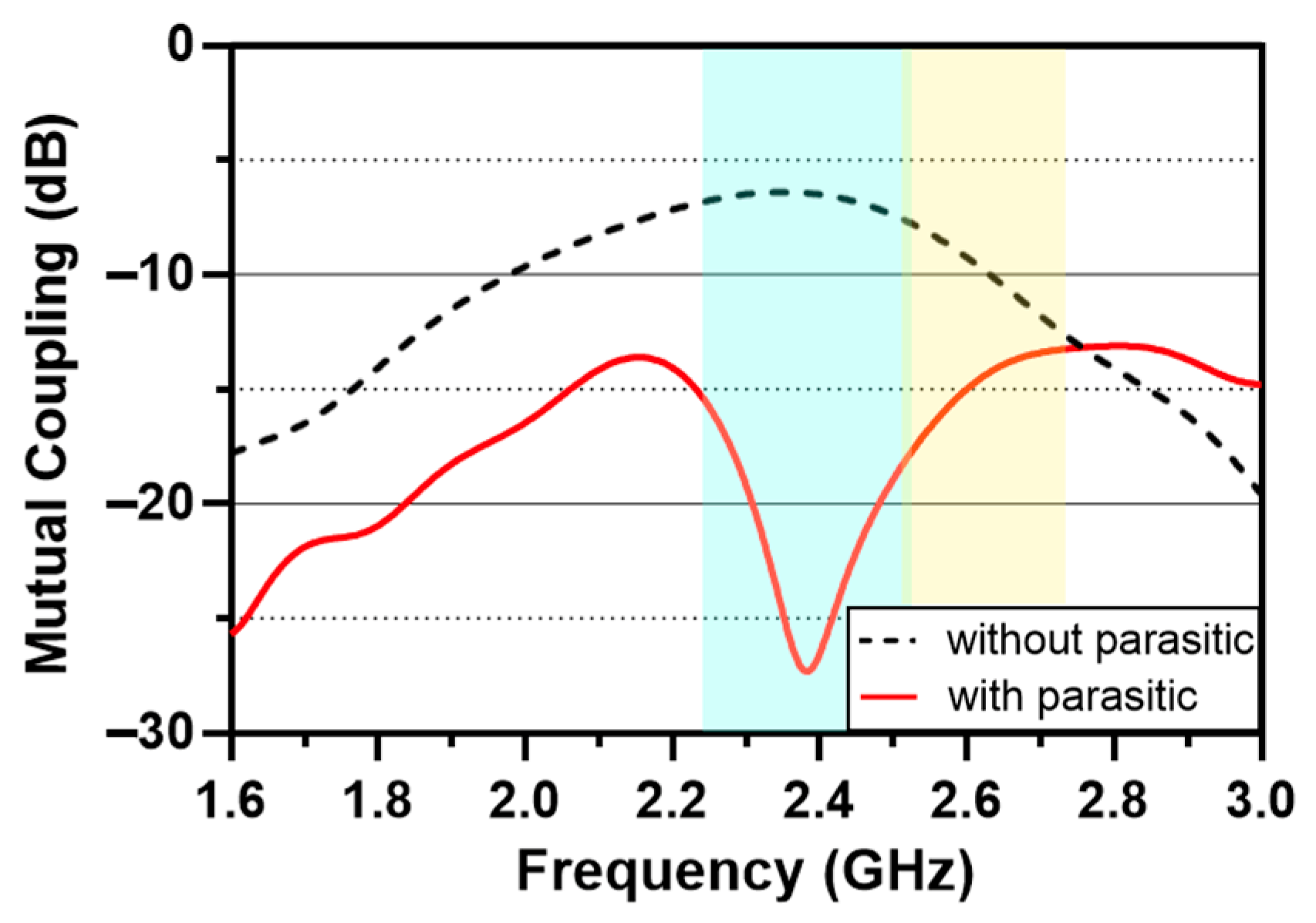
Figure 3 illustrates the mutual coupling performance for both designs. It is evident that the parasitic element plays a crucial role in reducing coupling between the antenna elements, achieving an isolation enhancement of nearly 20 dB at the target frequency of 2.4 GHz. This substantial reduction is credited to the parasitic element’s function as a decoupling mechanism, which alters the surface current distribution and introduces radiation pattern diversity. As a result, it suppresses surface wave propagation and minimizes far-field correlation between the antenna elements.
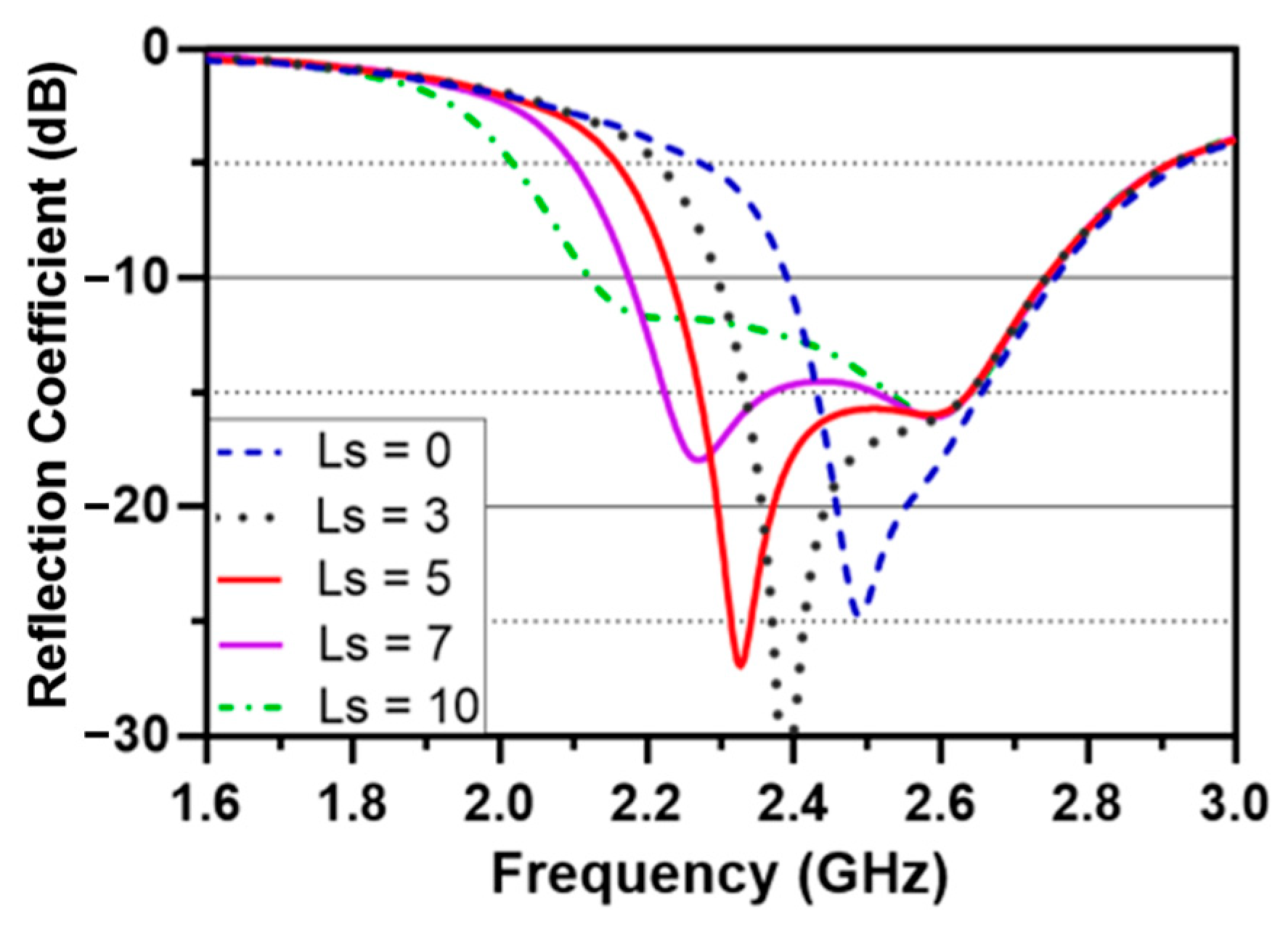
Understanding the influence of various design parameters is essential for enhancing antenna performance. To achieve an optimal design, several key parameters and their effects are systematically examined. In this study, the slot length and the length of the parasitic element are varied independently, while all other design variables remain constant, as detailed in Figure 1. The impact of the slot length on the reflection coefficient (S11) is illustrated in Figure 4. It can be observed that extending the slot length shifts the secondary resonance—generated by the slot—toward lower frequencies, thereby contributing to a broader impedance bandwidth.
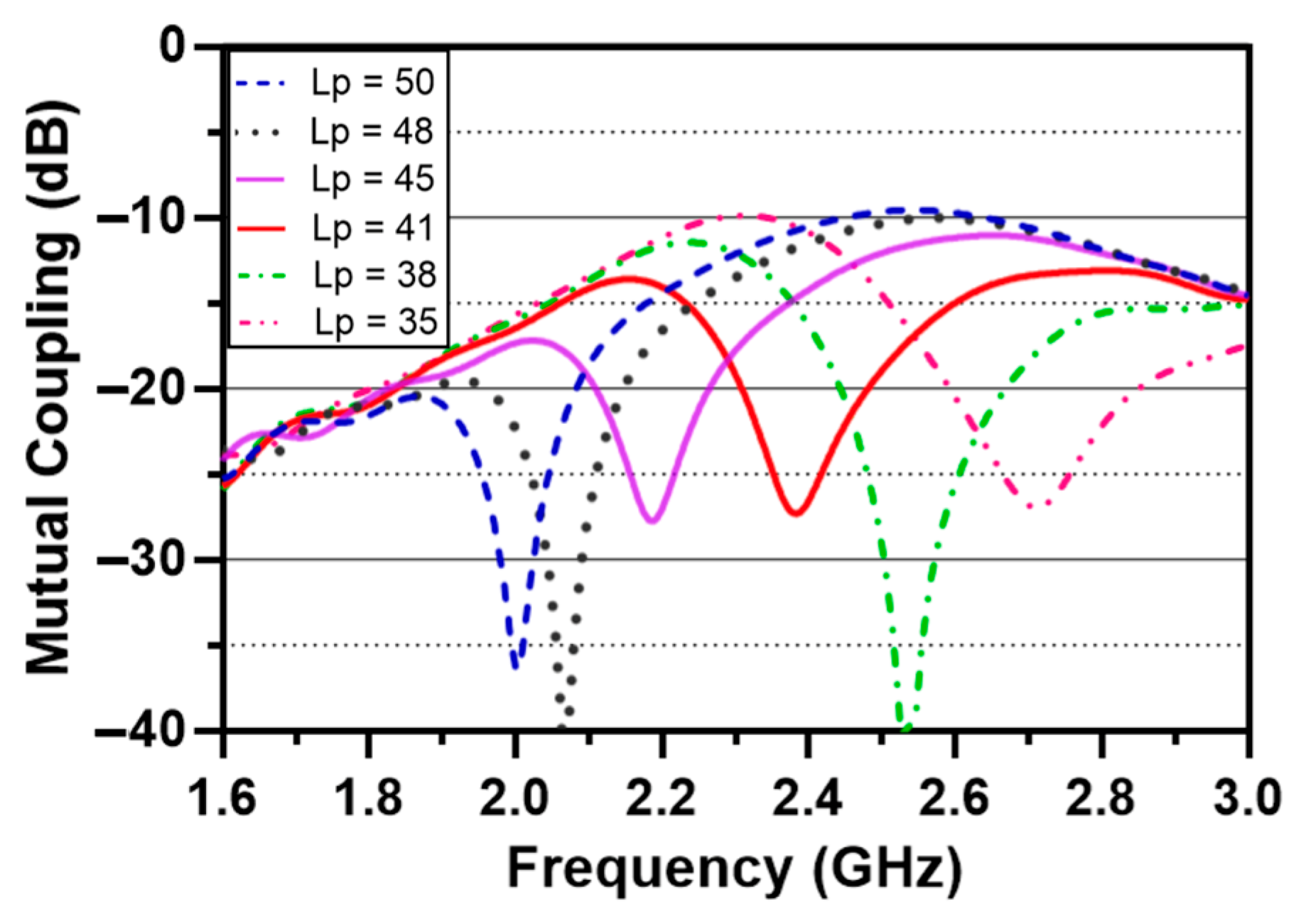
As previously noted, a metallic parasitic element is incorporated into the design to reduce mutual coupling between the antenna elements. The effectiveness of this approach largely depends on the length of the parasitic structure, which determines the frequency at which coupling suppression occurs. Figure 5 demonstrates how varying the parasitic element length (Lp) influences mutual coupling. Specifically, as the length increases, the frequency at which mutual coupling is minimized shifts lower. This behavior is consistent with the parasitic element acting as a half-wavelength resonator. For instance, to minimize coupling at 2.4 GHz, the optimal parasitic element length is approximately 41 mm, which corresponds to half the guided wavelength (λg/2) at that frequency.
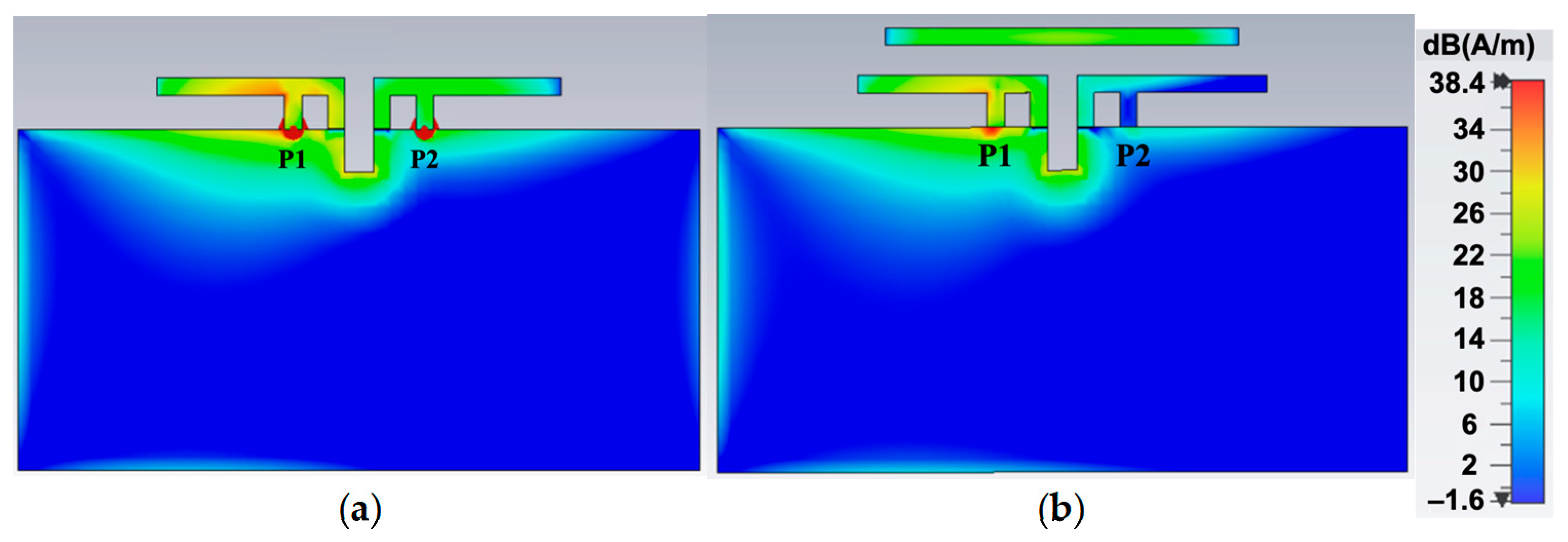
Figure 6 compares the surface current distributions at 2.4 GHz for two configurations—one incorporating a parasitic element and one without. In both cases, Port 1 is excited while Port 2 is terminated with a matched 50-ohm load. In the absence of the parasitic structure, significant surface current can be observed to transfer from the driven port to the adjacent port, indicating strong mutual coupling due to the close proximity of the antenna elements. When the metallic parasitic element is introduced, it effectively interrupts or attenuates this current flow, thereby reducing coupling and enhancing the isolation between the IFAs.
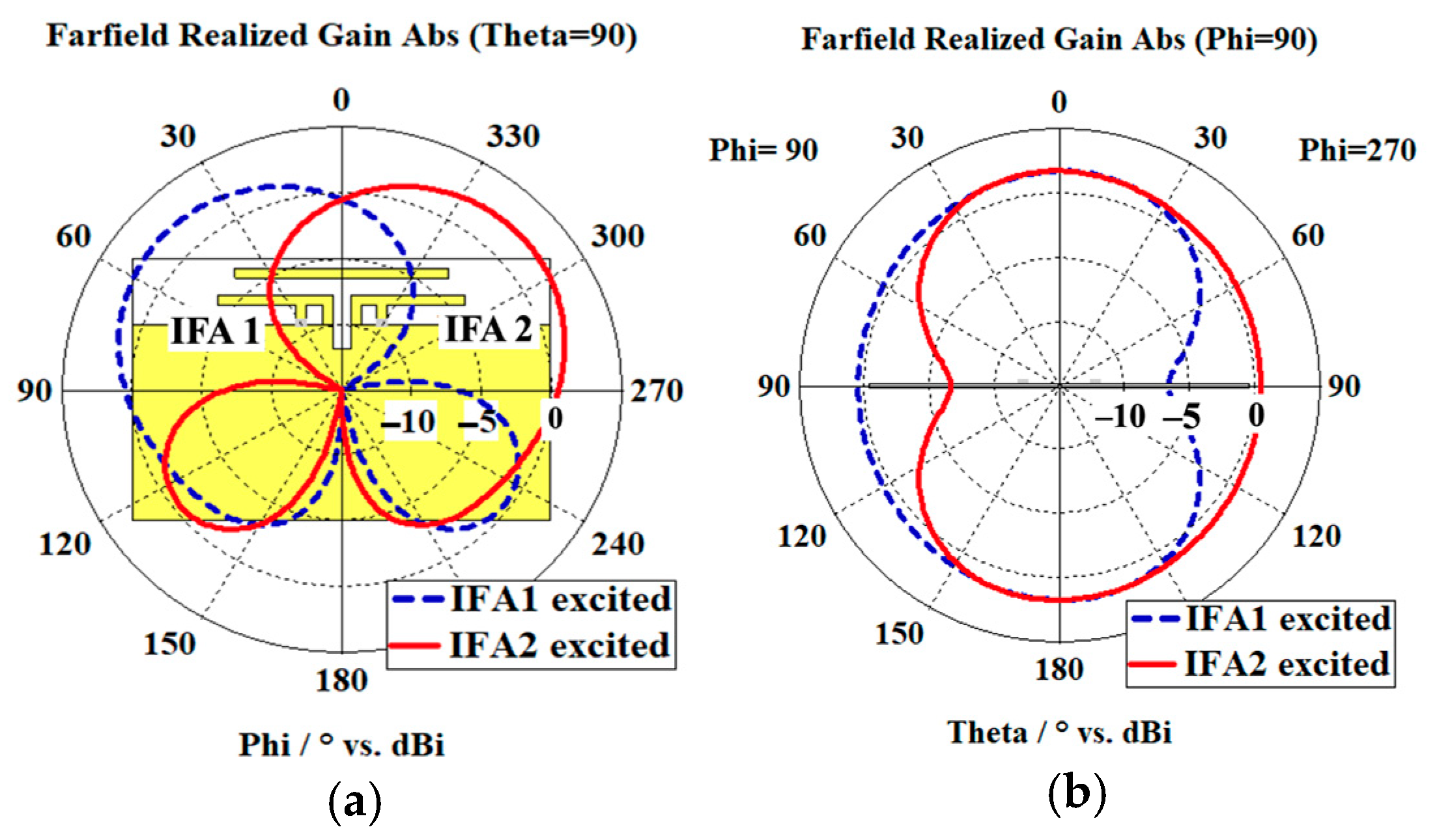
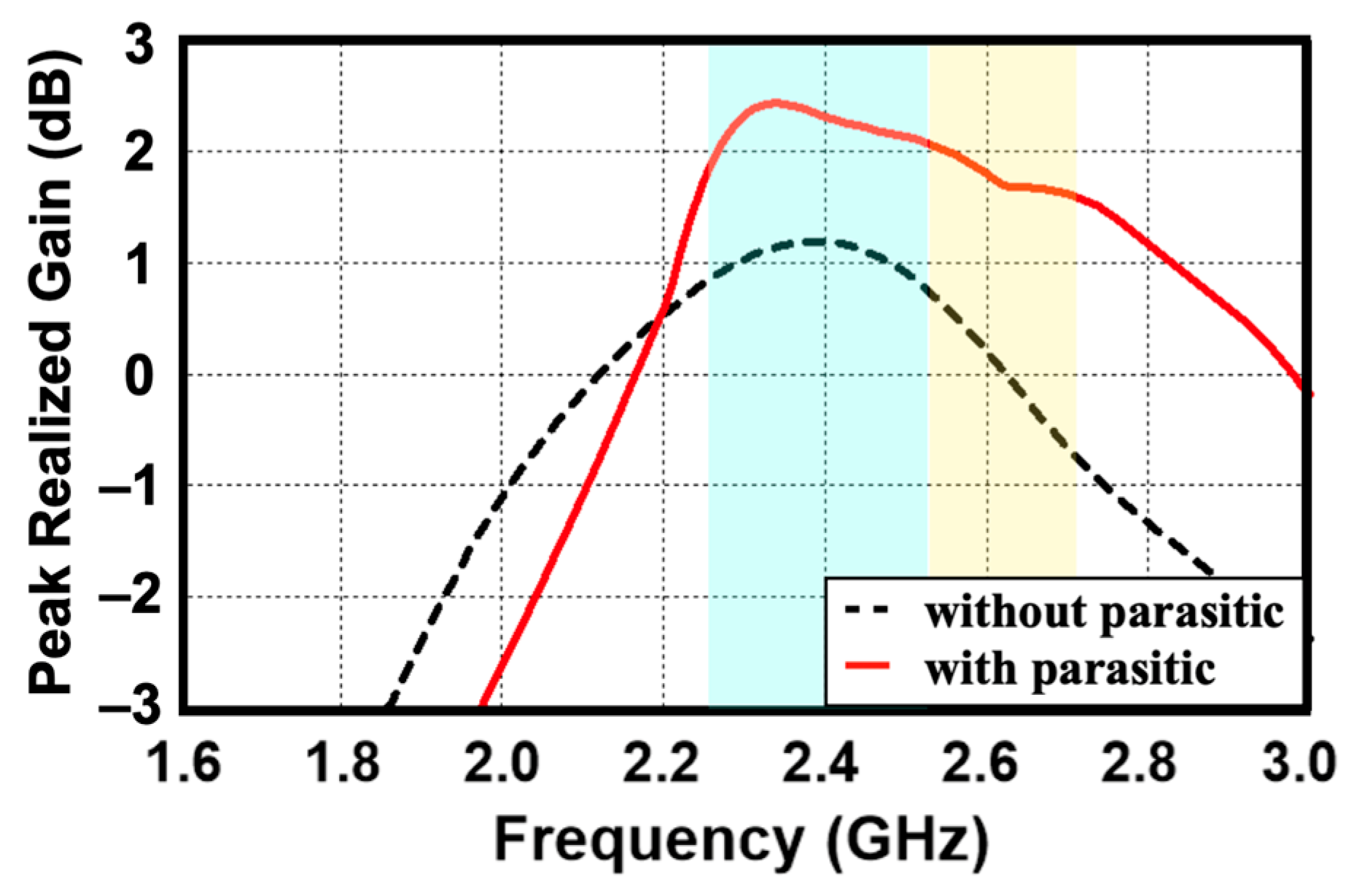
The realized gain patterns for each IFA in the decoupled configuration (with parasitic element) are illustrated in Figure 7. At 2.4 GHz, the parasitic structure functions similarly to a director element, redirecting the main beams of the two antennas in opposite directions. This off-center beam tilting reduces the far-field correlation between ports, which not only suppresses mutual coupling but also significantly enhances MIMO system performance by improving spatial diversity. Figure 8 compares the peak realized gain (in dB) as a function of frequency for the two configurations, with and without the parasitic element. It can be observed that the inclusion of the parasitic element enhances the peak gain by approximately 1 dB near the 2.4 GHz band of interest, which is primarily attributed to the mitigation of mutual coupling effects.
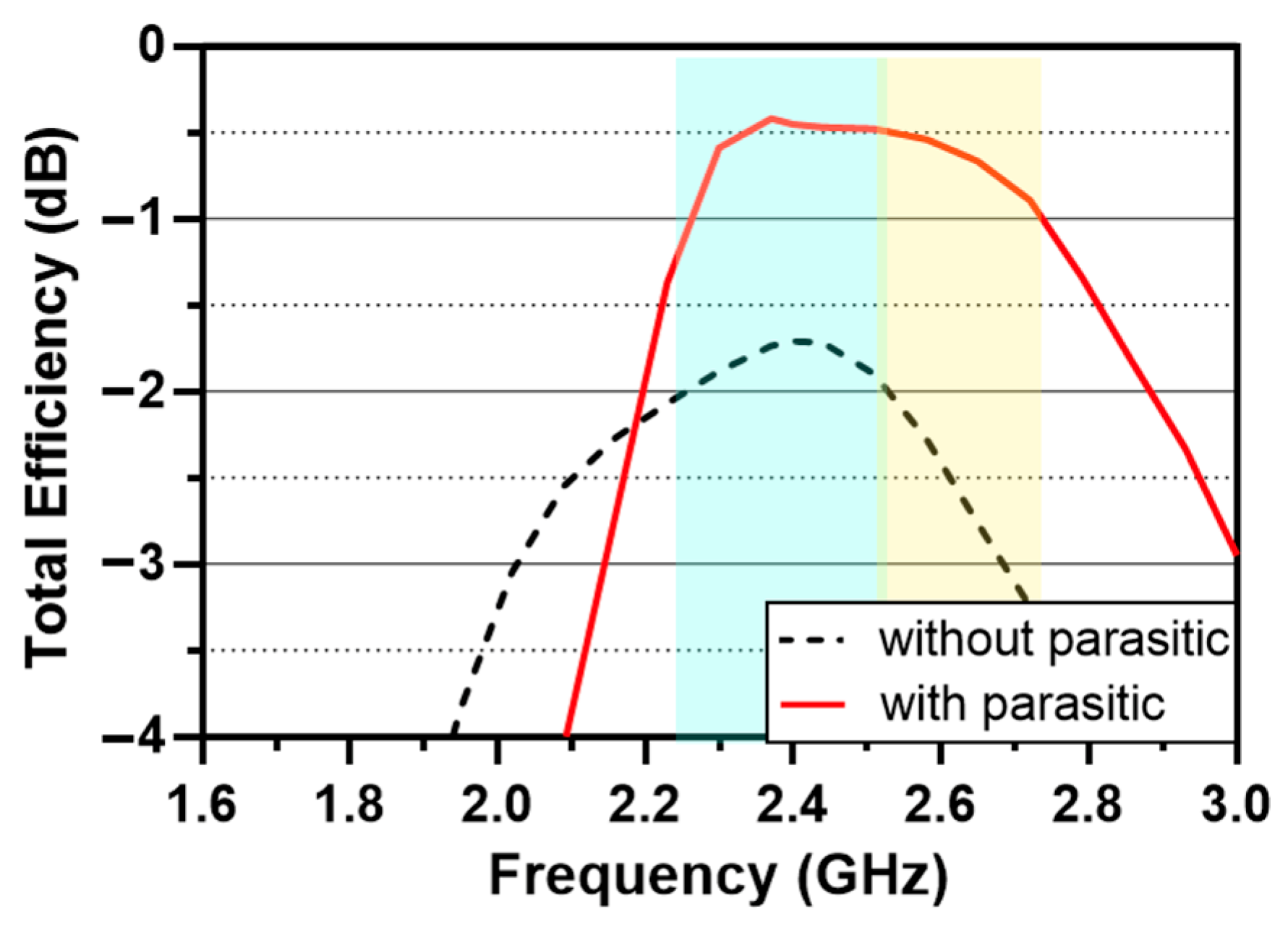
Figure 9 clearly demonstrates that incorporating the parasitic element leads to a notable enhancement in the antenna’s overall efficiency, which reflects the combined effects of radiation efficiency and mismatch performance. When comparing the two configurations, the introduction of the parasitic structure yields an efficiency improvement of nearly 1 dB. Specifically, the optimized design achieves a total efficiency of about −0.5 dB, corresponding to roughly 90% on a linear scale, whereas the reference antenna without the parasitic element attains only about −2 dB, or approximately 63%. This enhancement is primarily the result of the improved port isolation and the consequent reduction in power diverted from the excited element to the adjacent port, thereby minimizing undesired signal leakage and associated losses.
The MIMO and diversity characteristics of an antenna system are largely governed by the envelope correlation coefficient (ECC) between its radiating elements. The ECC and the cross-correlation coefficient,   ρ c   i j , can be calculated as follows [2]:
E C C i j = ~ | ρ c   i j | 2
where
ρ c   i j = A i j ( Ω ) d Ω A i i ( Ω ) d Ω . A j j ( Ω ) d Ω
The term A i j ( Ω ) is expressed as
A i j = X P R   E θ , i ( Ω ) E θ , j ( Ω ) P θ ( Ω ) + E Φ , i ( Ω ) E Φ , j ( Ω ) P ϕ ( Ω )
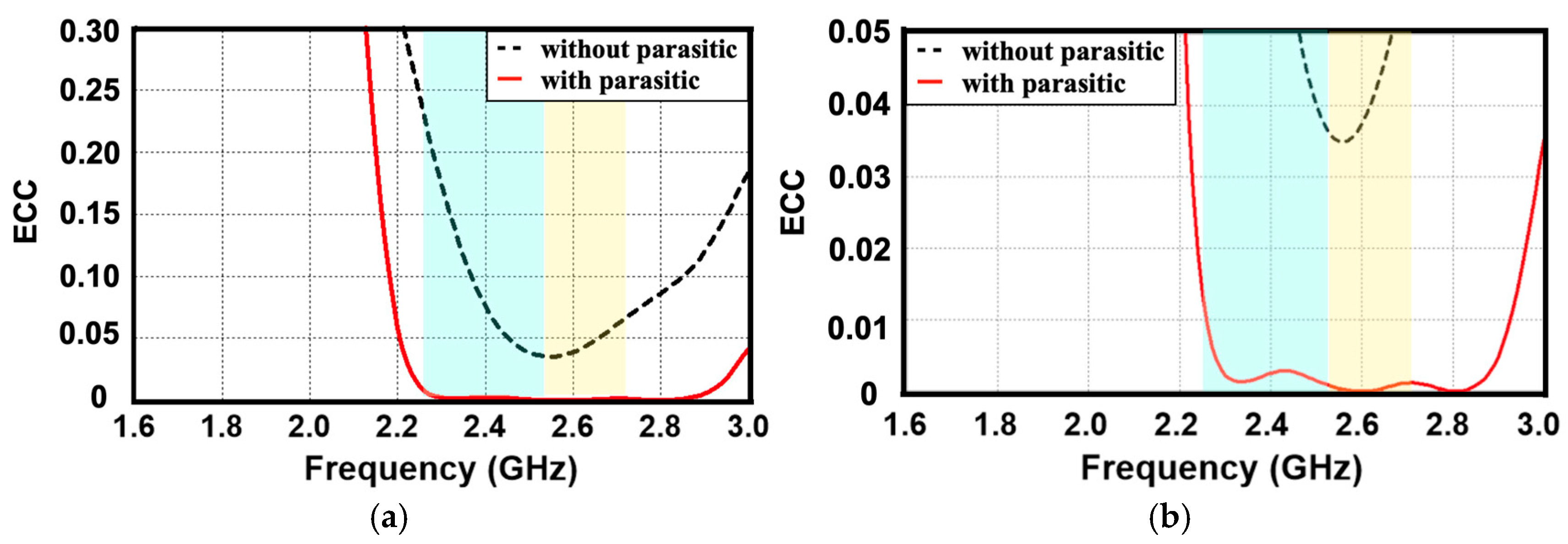
where E θ ( Ω ) and E ϕ ( Ω ) are the θ and ϕ polarized far-field components of the antenna gain pattern, respectively, and XPR is the cross-polarization power ratio. P θ ( Ω ) and P ϕ ( Ω ) correspond to the angular power distributions for the respective polarizations. In the proposed configuration, the ECC is derived from the radiation patterns under the assumption of a uniform propagation environment, which serves as a reasonable approximation for many practical scenarios. Figure 10 compares the ECC values for designs with and without the parasitic element. The results demonstrate that incorporating the parasitic structure yields an exceptionally low ECC, approaching zero, in the vicinity of the 2.4 GHz operating band. This improvement is attributed to the considerable suppression of mutual coupling between the two antenna ports, thereby confirming the enhanced diversity and MIMO performance of the proposed design.
The fundamental MIMO and diversity performance metrics [2] of the proposed antenna at 2.4 GHz were evaluated, and the corresponding results are presented in Table 1. These metrics were derived under the assumption of a statistically uniform propagation environment, an approximation that reliably represents a wide range of practical wireless scenarios. As can be observed from the comparative analysis, the optimized configuration incorporating parasitic elements demonstrates markedly enhanced MIMO and diversity behavior relative to the baseline design. It achieves a higher mean effective gain, improved diversity gain, and increased multiplexing efficiency, while simultaneously exhibiting a lower envelope correlation coefficient, collectively indicating a more robust and efficient multi-antenna performance.

4. Fabricated Prototype and Measurements

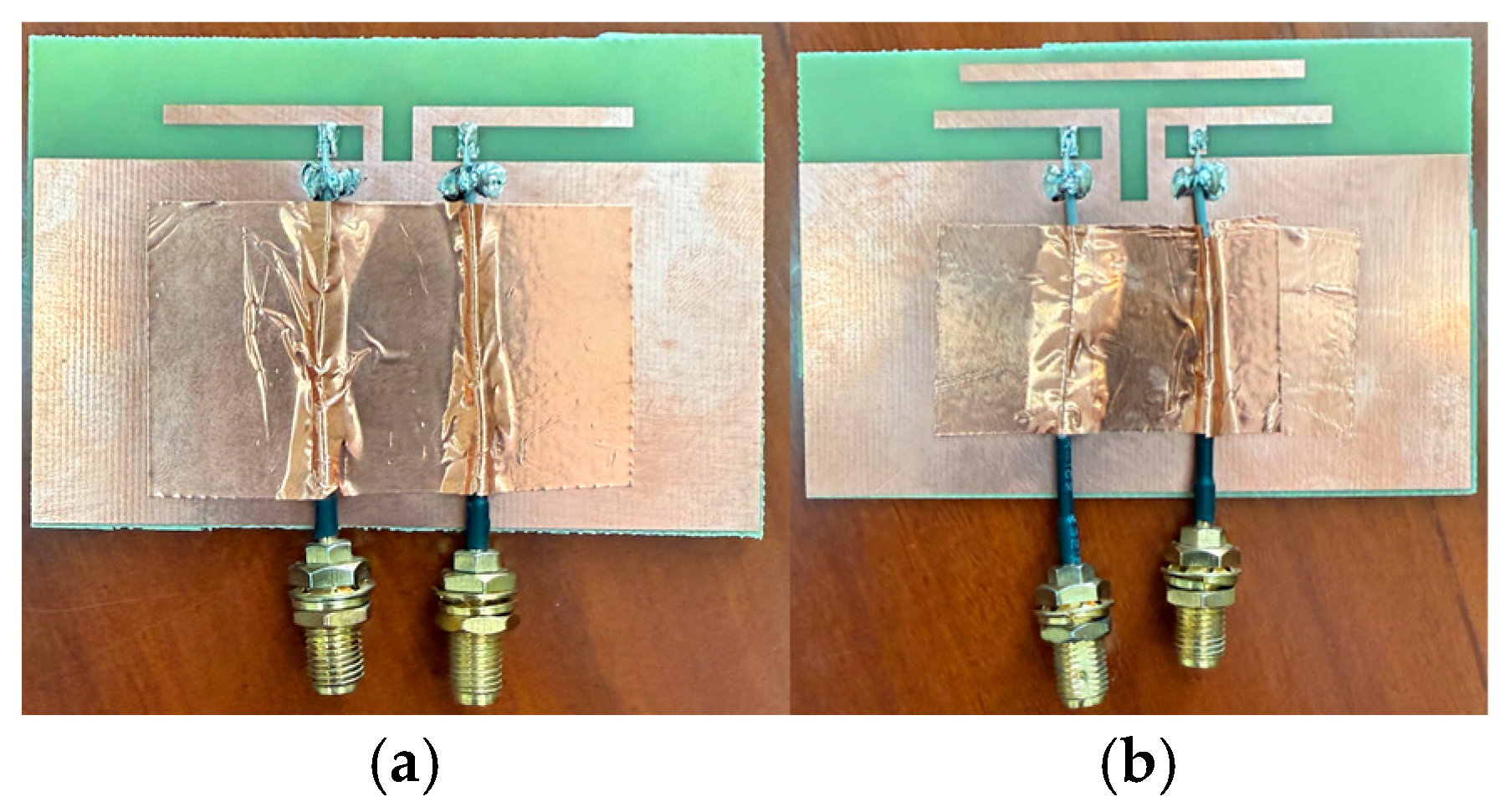
The proposed antennas, both with and without the parasitic element, were fabricated and experimentally evaluated to verify the simulation outcomes. Photographs of the fabricated prototypes are presented in Figure 11. The antennas were implemented on an FR4 substrate with a thickness of 0.8 mm, and 50 Ω pigtails were employed to feed the IFAs. To minimize undesired cable radiation, the pigtails were grounded to the antenna ground using copper tape.
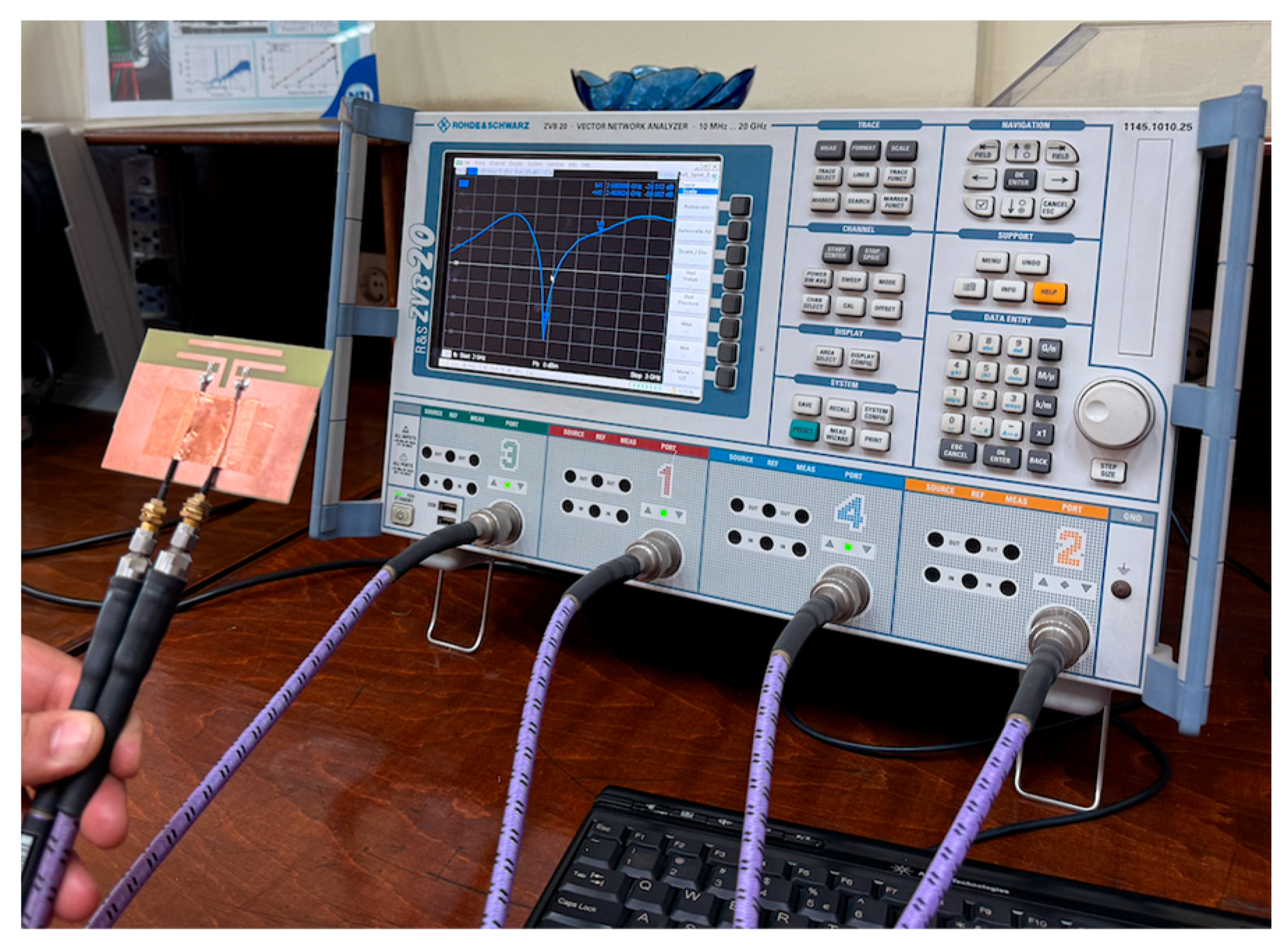
The S-parameters of the fabricated prototype were measured using a calibrated vector network analyzer (VNA). The measurement arrangement, which includes the evaluation of both reflection and mutual coupling characteristics, is illustrated in Figure 12. The antenna was connected to the VNA through coaxial pigtails, and the instrument calibration was performed using the standard open, short, load, and through procedures. To reduce external perturbations and approximate free-space behavior, the antenna was suspended in the air throughout the measurement process, as depicted in Figure 12.
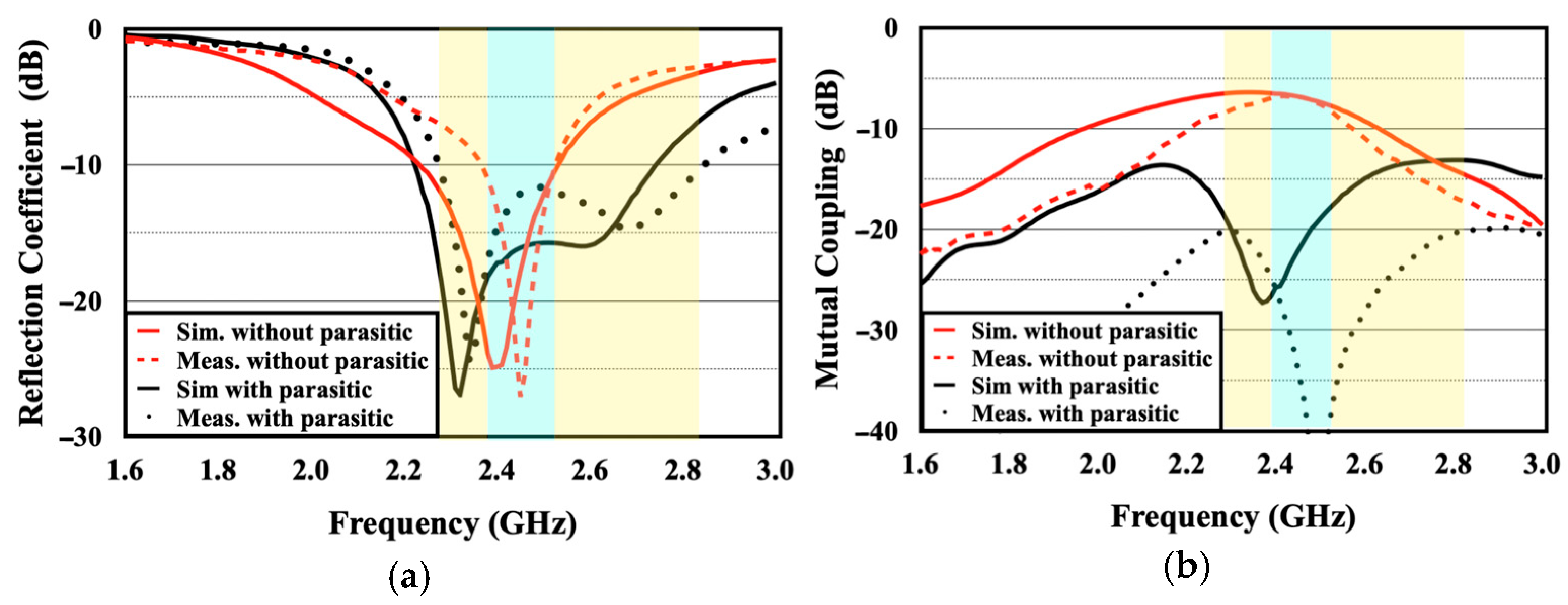
The measured S-parameters are depicted in Figure 13. Figure 13a presents a comparison between the simulated and measured reflection coefficients for the antenna configurations with and without the parasitic element. The measurements confirm that incorporating the parasitic strip introduces an additional resonance, thereby expanding the impedance bandwidth of the antenna. In particular, the 10 dB return-loss bandwidth increases from approximately 2.37–2.50 GHz for the conventional configuration to around 2.28–2.85 GHz when the parasitic element is included, showing strong consistency with the simulated results. Figure 13b compares the simulated and measured mutual coupling between the two IFAs for both configurations. The measurements clearly demonstrate that the parasitic element markedly reduces the coupling around 2.45 GHz, achieving an isolation improvement exceeding 40 dB—surpassing even the simulated predictions. As previously noted, this coupling-reduction frequency can be controlled by modifying the length of the parasitic element. Overall, the experimental observations confirm the effectiveness of the parasitic structure in enhancing isolation, in agreement with the simulated performance. The observed discrepancies between the simulated and measured responses primarily manifest as a slight shift in the frequency and overall impedance bandwidth. Such deviations are commonly encountered in practical measurements, as the experimental setup inherently incorporates factors that are not fully captured in simulation models. These include unavoidable losses, electromagnetic coupling with the surrounding environment, the influence of nearby materials, and the effects introduced by the feed connector and VNA cable routing. In addition, minor fabrication tolerances and the inherent non-ideal behavior of the FR4 substrate can further contribute to the measured response differing from the simulated predictions.
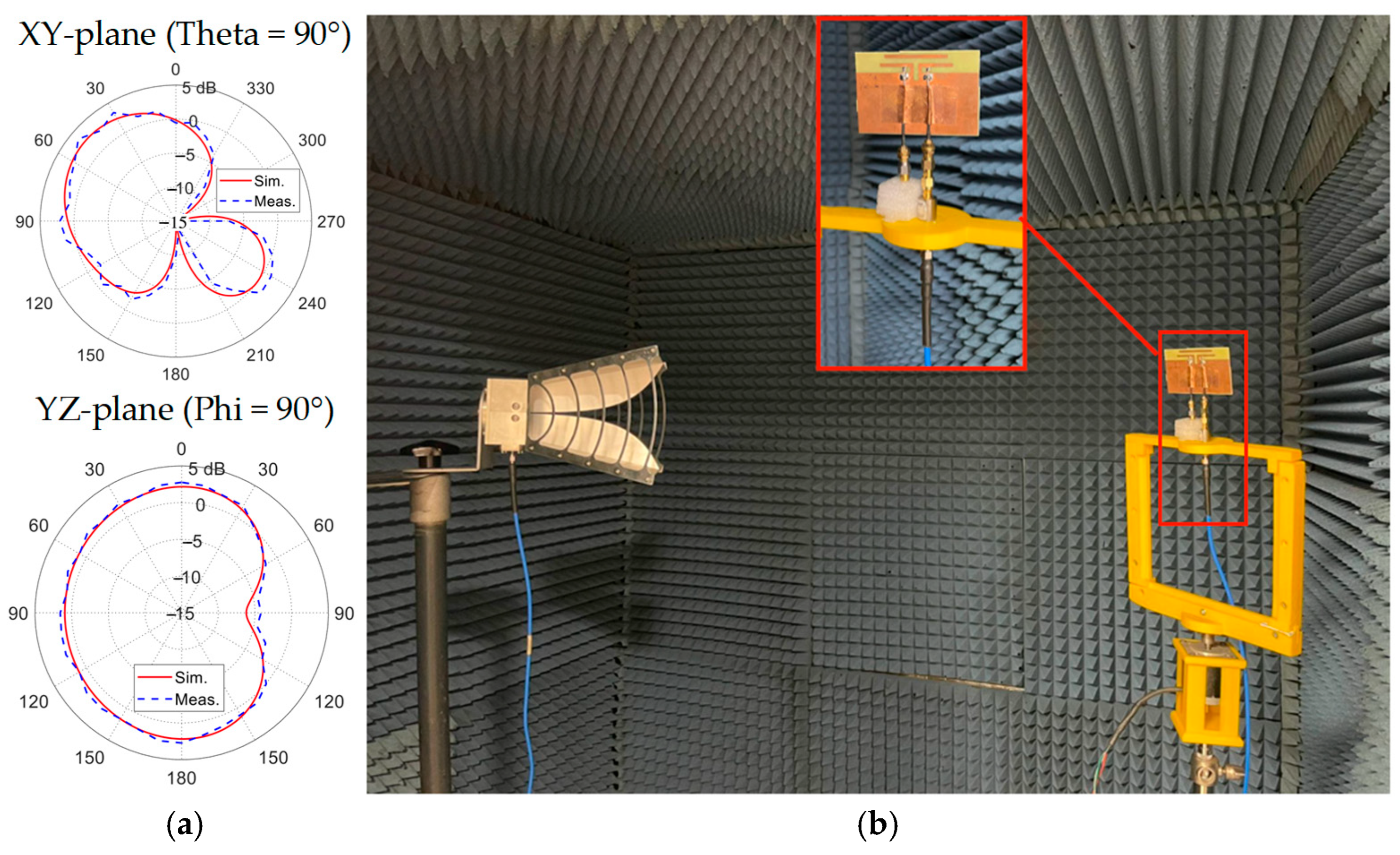
The over-the-air (OTA) measurement of the proposed antenna was performed within an anechoic chamber to provide a well-controlled, reflection-free measurement environment. Figure 14 illustrates the measurement setup along with the obtained radiation pattern measurements. The antenna under test was installed on a nonconductive positioner inside the chamber and precisely oriented toward a standard linearly polarized reference antenna. A VNA, using a fully calibrated measurement path, was employed to capture the antenna’s radiation properties. This arrangement allowed a reliable assessment of the antenna’s free-space far-field behavior. As noted, the measured radiation patterns exhibit close agreement with the simulated results, thereby confirming the robustness and accuracy of the proposed antenna design.

5. State-of-the-Art Comparison

To substantiate the performance enhancements achieved by the proposed antenna, a detailed benchmark against representative decoupling solutions reported in the literature is summarized in Table 2 for designs operating in the 2.4 GHz WLAN band. The comparison encompasses key performance indicators, including the electrical size expressed in wavelengths, substrate type and thickness, attained isolation levels, applied decoupling mechanisms, radiation efficiency, realized gain, envelope correlation coefficient (ECC), and the corresponding diversity gain.
Across these metrics, the proposed configuration demonstrates several notable advantages. Despite its compact footprint and uncomplicated geometry, the antenna attains an isolation level exceeding 40 dB—substantially higher than most reported structures employing resonators, defected grounds, patterned grounds, neutralization lines, or decoupling networks. In addition, both the ECC and diversity gain values indicate superior diversity characteristics, highlighting significantly reduced mutual coupling and improved MIMO channel decorrelation. The radiation efficiency and gain values are also competitive with, and in some cases surpass, those of larger or structurally more complex solutions.
Taken together, these observations confirm that the proposed antenna achieves an effective trade-off between miniaturization, ease of fabrication, and high electromagnetic performance. Its combination of strong isolation, low correlation, high efficiency, and simplified implementation underscores its suitability for practical MIMO systems and positions it as a compelling alternative to more intricate decoupling techniques reported in the recent literature.

6. Conclusions

This work introduces a compact, two-element, printed MIMO antenna system based on low-profile IFAs. Despite the close spacing of just 0.05λg between the elements, the design achieves excellent isolation, with mutual coupling reduced to more than −40 dB at the operating frequency of 2.45 GHz. This high isolation is primarily attributed to the inclusion of a strategically placed parasitic element that effectively suppresses surface current interaction and promotes pattern diversity. Additionally, a ground slot is incorporated into the structure, resulting in a substantial enhancement of the impedance bandwidth—by nearly 200%. Prototypes were fabricated and tested, with measured results closely aligning with simulation data, confirming the validity of the design. Owing to its small footprint and low profile, the proposed antenna system is a promising candidate for integration into space-constrained MIMO-enabled portable devices such as smartphones and other handheld wireless platforms.
Future extensions of this work may explore tunable or reconfigurable versions of the parasitic element to support multi-band or adaptive operation across various wireless standards. Additionally, integrating advanced materials or meta-surface concepts could further enhance the isolation and bandwidth while maintaining a compact footprint. Expanding the design to larger MIMO arrays and studying its performance in realistic device environments—such as within the handset chassis or alongside other RF components—or studying the SAR performance would also provide valuable insights for next-generation portable wireless systems.

Author Contributions

Conceptualization, A.H.A.; methodology, A.H.A.; software, A.H.A.; validation, A.H.A. and M.A.H.; formal analysis, A.H.A.; investigation, A.H.A. and M.A.H.; resources, A.H.A. and M.A.H.; data curation, A.H.A. and M.A.H.; writing—original draft preparation, A.H.A.; writing—review and editing, A.H.A. and M.A.H.; visualization, A.H.A. and M.A.H.; supervision, M.A.H.; project administration, M.A.H.; funding acquisition M.A.H. All authors have read and agreed to the published version of the manuscript.

Funding

This work was supported by the Deanship of Scientific Research, Vice Presidency for Graduate Studies and Scientific Research, King Faisal University, Saudi Arabia [Grant No. KFU253756].

Data Availability Statement

The datasets used and/or analyzed during the current study are available from the corresponding author on reasonable request.

Conflicts of Interest

The authors declare no conflicts of interest.

References

  1. Ma, W.; Zhu, L.; Zhang, R. MIMO capacity characterization for movable antenna systems. IEEE Trans. Wireless Commun. 2024, 23, 3392–3407. [Google Scholar] [CrossRef]
  2. Abdelgwad, A.H.; Ali, M. Capacity and efficiency improvement of MIMO antenna systems for 5G handheld terminals. Prog. Electromagn. Res. C 2020, 104, 269–283. [Google Scholar] [CrossRef]
  3. Psychogios, K.; Moraitis, N.; Panagopoulos, A.D. Dual-polarized MIMO UAV-to-ground tree shadowed channel: Capacity, multiplexing, stationarity, and statistical modeling assessment. IEEE Trans. Antennas Propag. 2025, 73, 3892–3903. [Google Scholar] [CrossRef]
  4. Abdelgwad, A.H.; Ali, M. Isolation improvement between closely spaced antennas using EBG. In Proceedings of the International Applied Computational Electromagnetics Society (ACES) Symposium, Monterey, CA, USA, 22–26 March 2020; pp. 1–2. [Google Scholar]
  5. Wen, L.; Zhang, M.; Hu, W.; Yang, Q.; Xiao, W. Coupling cancellation using coupling stubs for MIMO array applications. IEEE Antennas Wirel. Propag. Lett. 2024, 23, 204–208. [Google Scholar] [CrossRef]
  6. Tang, X.; Chen, H.; Yu, B.; Chen, H.; Che, W.; Xue, Q. A compact multifrequency broadband dual-antenna system with mutual coupling reduction for Wi-Fi 6E application. IEEE Antennas Wirel. Propag. Lett. 2024, 23, 296–1300. [Google Scholar] [CrossRef]
  7. Kumar, P.; Pathan, S.; Vincent, S.; Kumar, O.P.; Kumar, P.; Shetty, P.R.; Ali, T. A compact quad-port UWB MIMO antenna with improved isolation using a novel mesh-like decoupling structure and unique DGS. IEEE Trans. Circuits Syst. II Express Briefs 2023, 70, 949–953. [Google Scholar] [CrossRef]
  8. Nadeem, I.; Choi, D.-Y. Study on mutual coupling reduction technique for MIMO antennas. IEEE Access 2019, 7, 563–586. [Google Scholar] [CrossRef]
  9. Liu, N.-W.; Fan, J.-L.; Zhu, L.; Wu, Q.; Liu, Y.; Sun, S. Mutual-coupling reduction of a quad-port cross-slot antenna with simultaneously co-polarized and dual-polarized patterns. IEEE Trans. Antennas Propag. 2024, 72, 1140–1149. [Google Scholar] [CrossRef]
  10. Ullah, S.; He, Y.; Huang, Y. A triband circular-polarized four-port MIMO antenna with compact size and low mutual coupling. IEEE Antennas Wirel. Propag. Lett. 2025, 24, 621–625. [Google Scholar] [CrossRef]
  11. Zhao, G.; Zhao, L.; Xi, M.; Guo, Y.; Huang, G.-L.; Li, Y.; Wang, X.; Lin, W. A three-port coupled resonator decoupling network for mutual coupling reduction of three-element antenna arrays. IEEE Trans. Microw. Theory Tech. 2024, 72, 6585–6600. [Google Scholar] [CrossRef]
  12. Kedze, K.E.; Zhou, W.; Javanbakht, N.; Xiao, G.; Almajali, E.; Wight, J.S.; Shaker, J.; Amaya, R.E. Application of metamaterial wall for mutual coupling mitigation of a dual differential fed 2 × 2 patch array antenna. IEEE Access 2024, 12, 151251–151260. [Google Scholar] [CrossRef]
  13. Abdelgwad, A.H.; Ali, M. Isolation improvement of a two-port PIFA for MIMO using a planar EBG ground. Microw. Opt. Technol. Lett. 2020, 62, 737–742. [Google Scholar] [CrossRef]
  14. Gebesoglu, D.; Ertay, A.O.; Simsek, S. Investigation of AFGSM methods for some electromagnetic bandgap structures: From analysis to applied antenna design. IEEE Access 2023, 11, 42234–42247. [Google Scholar] [CrossRef]
  15. Wei, C.Y.; Zhang, H.C.; Xiao, L.; Cui, T.J. Adaptive reduction of mutual coupling between compact frequency-reconfigurable antennas using tunable slow-wave structures. IEEE Antennas Wirel. Propag. Lett. 2025, 24, 1699–1703. [Google Scholar] [CrossRef]
  16. Abdelgwad, A.H.; Ali, M. Smartphone metal-casing integrated frequency-reconfigurable MIMO slot antenna. Int. J. RF Microw. Comput. Aided Eng. 2022, 32, e23389. [Google Scholar] [CrossRef]
  17. Yu, Y.; Shamim, A. Simultaneous gain and bandwidth enhancement of an AMC-backed antenna-on-chip through magnetic coupling structures. IEEE Trans. Antennas Propag. 2025, 73, 3328–3333. [Google Scholar] [CrossRef]
  18. Eskandari, H.; Booket, M.R.; Kamyab, M.; Veysi, M. Investigation on a class of wideband printed slot antenna. IEEE Antennas Wirel. Propag. Lett. 2010, 9, 1221–1224. [Google Scholar] [CrossRef]
  19. Liu, W.-X.; Yin, Y.-Z.; Xu, W.-L.; Zuo, S.-L. Compact open-slot antenna with bandwidth enhancement. IEEE Antennas Wirel. Propag. Lett. 2011, 10, 850–854. [Google Scholar] [CrossRef]
  20. Sung, Y. Bandwidth enhancement of a microstrip line-fed printed wide-slot antenna with a parasitic center patch. IEEE Trans. Antennas Propag. 2012, 60, 1712–1716. [Google Scholar] [CrossRef]
  21. Anitha, R.; Sarin, V.P.; Mohanan, P.; Vasudevan, K. Enhanced isolation with defected ground structure in MIMO antenna. Electron. Lett. 2014, 50, 1784–1786. [Google Scholar] [CrossRef]
  22. Sharawi, M.S.; Podilchak, S.K.; Khan, M.U.; Antar, Y.M. Dual-frequency DRA-based MIMO antenna system for wireless access points. IET Microw. Antennas Propag. 2017, 11, 1174–1182. [Google Scholar] [CrossRef]
  23. Sharawi, M.S.; Khan, M.U.; Numan, A.B.; Aloi, D.N. A CSRR loaded MIMO antenna system for ISM band operation. IEEE Trans. Antennas Propag. 2013, 61, 4265–4274. [Google Scholar] [CrossRef]
  24. Yang, D.-G.; Kim, D.-O.; Kim, C.-Y. Design of dual-band MIMO monopole antenna with high isolation using slotted CSRR for WLAN. Microw. Opt. Technol. Lett. 2014, 56, 2252–2257. [Google Scholar] [CrossRef]
  25. Wang, S.; Du, Z. Decoupled dual-antenna system using crossed neutralization lines for LTE/WWAN smartphone applications. IEEE Antennas Wirel. Propag. Lett. 2015, 14, 523–526. [Google Scholar] [CrossRef]
  26. Soltani, S.; Lotfi, P.; Murch, R.D. A port and frequency reconfigurable MIMO slot antenna for WLAN applications. IEEE Trans. Antennas Propag. 2016, 64, 1209–1216. [Google Scholar] [CrossRef]
  27. Ghosh, S.; Tran, T.-N.; Le-Ngoc, T. Dual-layer EBG-based miniaturized multi-element antenna for MIMO systems. IEEE Trans. Antennas Propag. 2014, 62, 3985–3997. [Google Scholar] [CrossRef]
  28. Zhao, L.; Wu, K.-L. A dual-band coupled resonator decoupling network for two coupled antennas. IEEE Trans. Antennas Propag. 2015, 63, 2843–2850. [Google Scholar] [CrossRef]
  29. Wu, D.; Cheung, S.-W.; Li, Q.-L.; Yuk, T.-I. Decoupling using diamond-shaped patterned ground resonator for small MIMO antennas. IET Microw. Antennas Propag. 2017, 11, 177–183. [Google Scholar] [CrossRef]
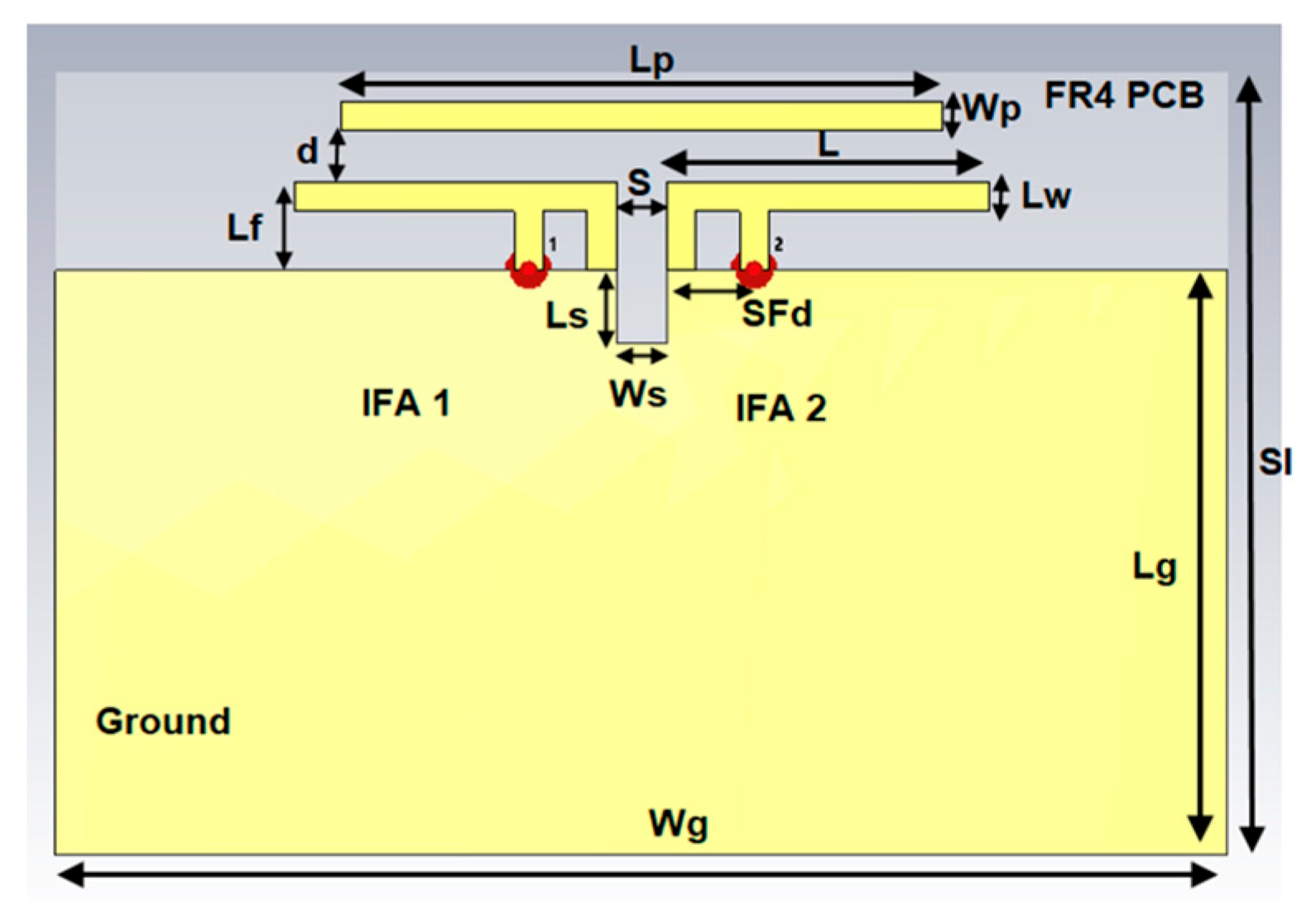
Figure 1. Proposed MIMO antenna with neutralization line. Dimensions (in mm): Lg = 40, Wg = 80, Lf = 6, Lw = 2, SFd = 5, L = 22, S = 3.4, Wp = 2, d = 3.5, Lp = 41, Sl = 53.5, Ws = 3.4, Ls = 5.
Electronics 15 00158 g001
Figure 2. Reflection coefficient of the proposed antennas with and without the parasitic element.
Electronics 15 00158 g002
Figure 3. Mutual coupling between MIMO elements for the two configurations, with and without parasitic element.
Electronics 15 00158 g003
Figure 4. Reflection coefficient of the proposed antenna with parasitic element at different slot lengths, Ls.
Electronics 15 00158 g004
Figure 5. Coupling coefficient of the proposed antenna with parasitic element at different parasitic element lengths, Lp.
Electronics 15 00158 g005
Figure 6. Surface current distribution of proposed antennas at 2.4 GHz when IFA1 is excited: (a) without parasitic element, (b) with parasitic element.
Electronics 15 00158 g006
Figure 7. Realized gain pattern of the proposed antenna at 2.4 GHz: (a) XY-plane (Theta = 90°), (b) YZ-plane (Phi = 90°).
Electronics 15 00158 g007
Figure 8. Peak realized gain (in dB) comparison for the designs with and without parasitic element.
Electronics 15 00158 g008
Figure 9. Simulated antenna efficiency comparison for the two designs with and without the parasitic element.
Electronics 15 00158 g009
Figure 10. ECC comparison for the designs with and without parasitic elements: (a) normal scale, (b) magnified view.
Electronics 15 00158 g010
Figure 11. Fabricated designs: (a) prototype without parasite, (b) prototype without parasite.
Electronics 15 00158 g011
Figure 12. S-parameter measurement setup using VNA.
Electronics 15 00158 g012
Figure 13. Measured S-parameters of the proposed antennas with and without the parasitic element: (a) reflection coefficient, (b) mutual coupling.
Electronics 15 00158 g013
Figure 14. (a) Measured radiation pattern of the proposed antenna at 2.4 GHz; (b) anechoic chamber measurement setup.
Electronics 15 00158 g014
Table 1. MIMO antenna parameters at 2.4 GHz for the design with and without parasitic element.
MIMO ParameterBaseline Design
Without Parasite
Optimized Design
with Parasite
Mean Effective Gain (MEG)0.340.45
Envelope Correlation Coefficient (ECC)0.08250.0025
Diversity Gain (DG)9.8139.995
Multiplexing efficiency−1.813 dB−0.436 dB
Table 2. Comparison of proposed antenna performance with relative decoupling studies in the literature operating at 2.4 GHz WLAN band.
Ref. Dimensions   ( λ 0 )/
Material (Height mm)
Isolation Level (dB)Decoupling TechniqueGain (dBi)/Efficiency (%)ECC (Calc. Method)/
Diversity Gain (dB)
No. of Ports/
Remarks
[21]0.48 λ 0 × 0.48 λ 0 × 0.01 λ 0 /FR4 (1.6)>25 dBSquare ring DGS2.1 dBi/
81%
<0.1 (S-param.)/
9.94 dB
4 ports/Compact structure and simple fabrication
[22]1.28 λ 0 × 1.28 λ 0 × 0.12 λ 0 /RO3003 (0.762)>15 dBDielectric resonator6.5 dBi/
97%
<0.037 (S-param.)/
9.99 dB
8 ports/
Complex geometry
[23]0.8 λ 0 × 0.4 λ 0 × 0.006 λ 0 /FR4 (0.8)>18 dBRing resonator−0.8 dBi/
29%
<0.3 (S-param.)/
9.53 dB
4 ports/Low thickness, large dimensions
[24]0.56 λ 0 × 0.8 λ 0 × 0.01 λ 0 /FR4 (1.6)>20 dBSlotted resonator4 dBi/
86.6%
<0.016 (Rad. Pattern)/9.99 dB2 ports/Simple geometry, dual band
[25] 1.08 λ 0 × 0.64 λ 0 × 0.006 λ 0 /FR4 (0.8)>23 dBNeutralization line3.7 dBi/
62%
<0.081 (S-param.)/
9.97 dB
2 ports/Complex structure
[26]0.37 λ 0 × 0.16 λ 0 × 0.01 λ 0 /FR4 (1.6)>18 dBRF MEMS switches2.9 dBi/
83%
<0.2 (Rad. Pattern)/9.89 dB4 ports/Complex geometry
[27]0.28 λ 0 × 0.32 λ 0 × 0.01 λ 0 /FR4 (1.6)>28 dBEBG structure4.6 dBi/
67%
0.01 (S-param.)/
9.9 dB
2 ports/Extremely complex Structure
[28]0.9 λ 0 × 0.44 λ 0 × 0.01 λ 0 /FR4 (1.6)>15 dBDecoupling networkNA/
75%
<0.23 (Rad. Pattern)/9.73 dB2 ports/Large dimensions, dual band
[29]0.58 λ 0 × 0.16 λ 0 × 0.006 λ 0 /RO4350B (0.8)>28 dBPatterned ground1.4 dBi/
70.5%
<0.09 (Rad. Pattern)/9.95 dB2 ports/Medium size, complex geometry
This Work0.42 λ 0 × 0.64 λ 0 × 0.006 λ 0 /FR4 (0.8)>40 dBParasitic element2.4 dBi/
90%
<0.001 (Rad. Pattern)
/9.99 dB
2 ports/Compact, simple structure and highest isolation and efficiency
Disclaimer/Publisher’s Note: The statements, opinions and data contained in all publications are solely those of the individual author(s) and contributor(s) and not of MDPI and/or the editor(s). MDPI and/or the editor(s) disclaim responsibility for any injury to people or property resulting from any ideas, methods, instructions or products referred to in the content.