Exploring the Educational Applications of Large Language Models: A Systematic Review and Topic Analysis



Abstract
1. Introduction
- SQ1: What are the current publication trends, collaboration patterns, and disciplinary intersections in research on large language models (LLMs) in education during 2023–2024?
- SQ2: How do technological, pedagogical, and ethical dimensions interact within the main research themes related to the use of LLMs in education?
- SQ3: What emerging paradigms and methodological directions (e.g., agentic AI, multimodal LLMs, and RLHF-based feedback systems) can inform a future roadmap for responsible and effective integration of LLMs in education?
2. Method of Review
2.1. Choosing the Database
- Book Citation Index—Science (BKCI-S)—2010–present;
- Book Citation Index—Social Sciences and Humanities (BKCI-SSH)—2010–present;
- Index Chemicus (IC)—2010–present;
- Current Chemical Reactions (CCR-Expanded)—2010–present;
- Emerging Sources Citations Index (ESCI)—2005–present;
- Arts and Humanities Citation Index (A&HCI)—1975–present;
- Social Sciences Citation Index (SSCI)—1975–present;
- Conference Proceedings Citation Index—Social Sciences and Humanities (CPCI-SSH)—1990–present;
- Conference Proceedings Citation Index—Science (CPCI-S)—1990–present;
- Science Citation Index Expanded (SCIE)—1900–present.
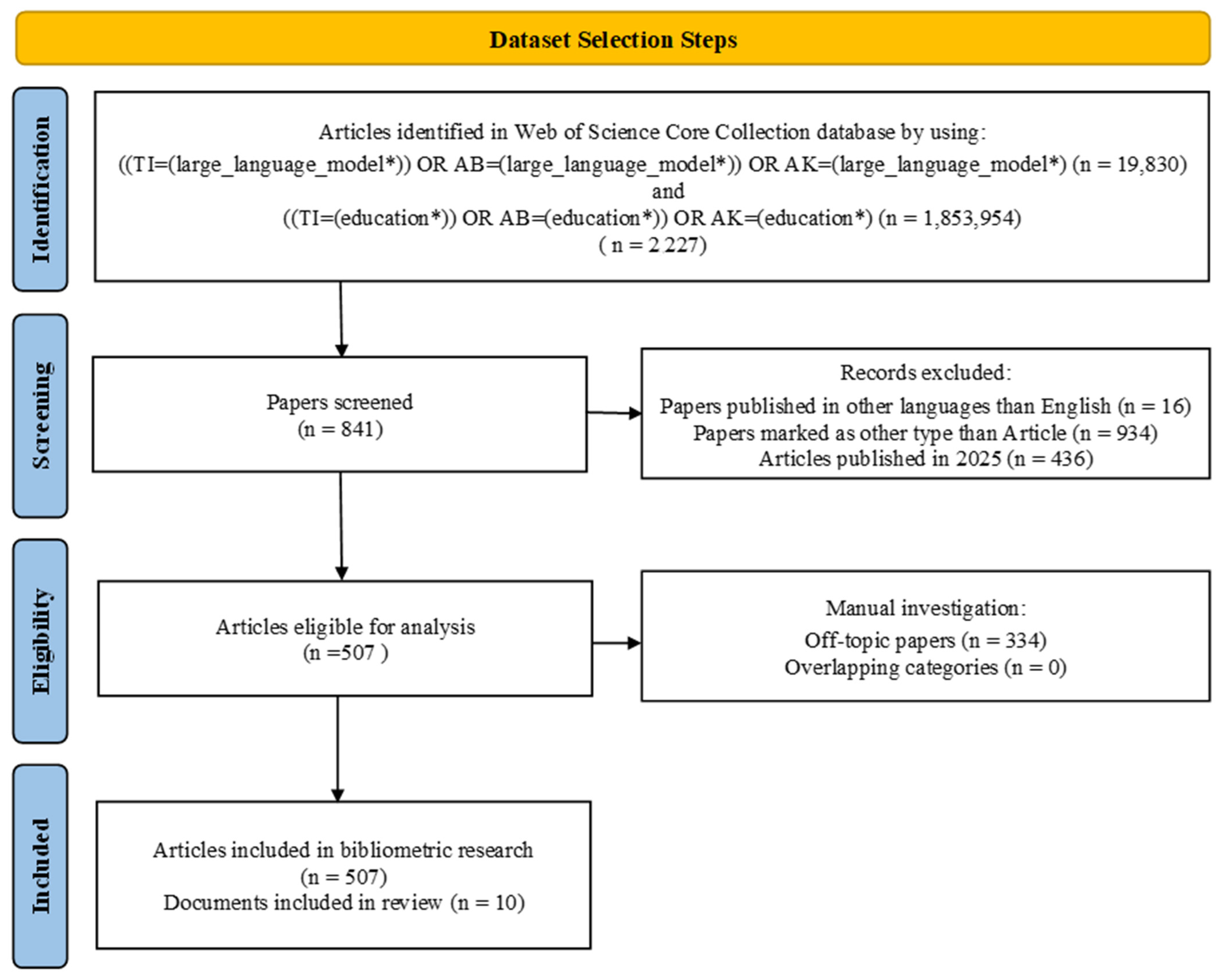
2.2. Application of the PRISMA 2020 Guideline
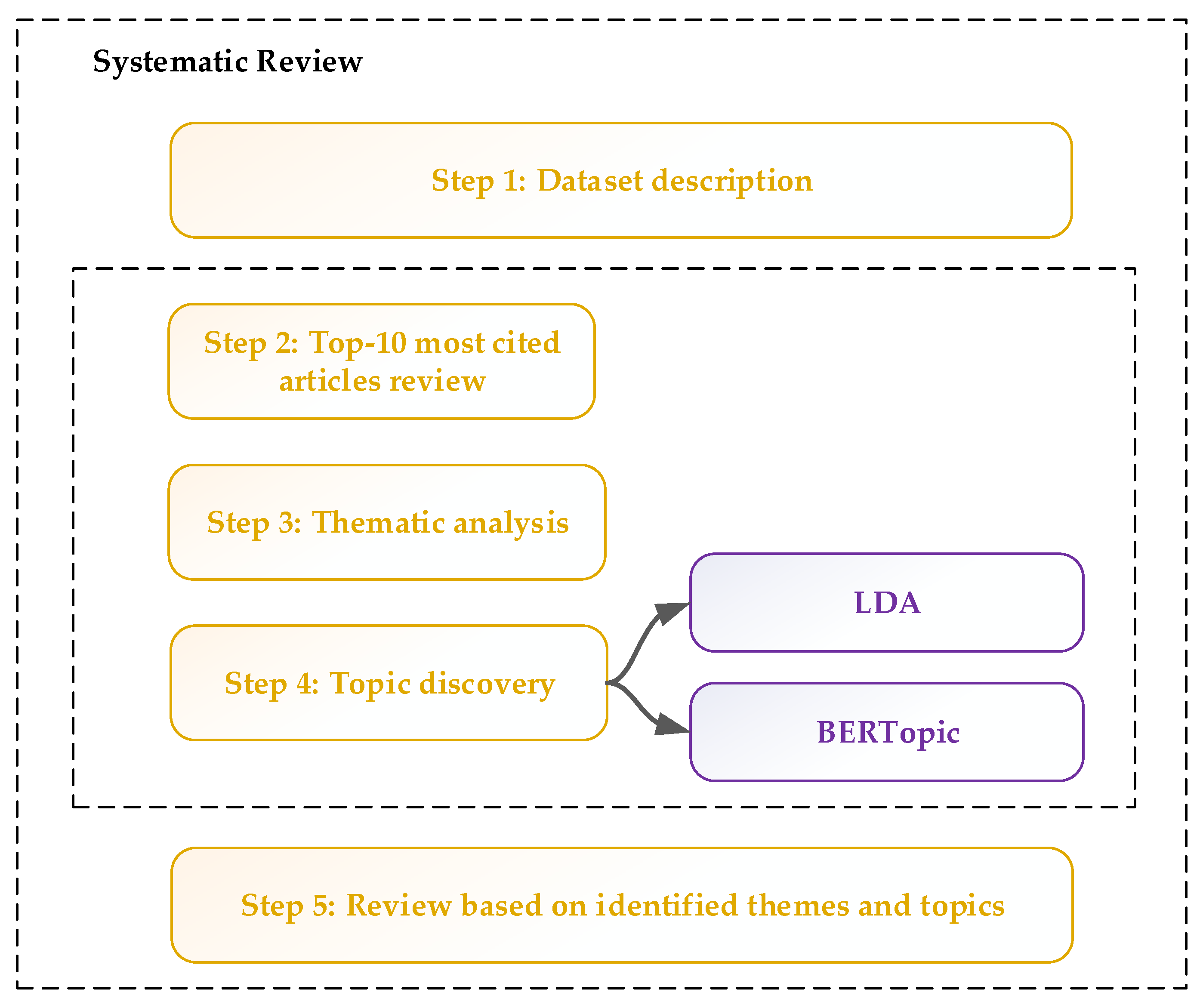
2.3. Steps Followed in the Analysis
2.4. Rationale for Selecting the 10 Most Frequently Cited Articles
3. Results
3.1. Dataset Description
3.2. Top-10 Most Cited Articles Review
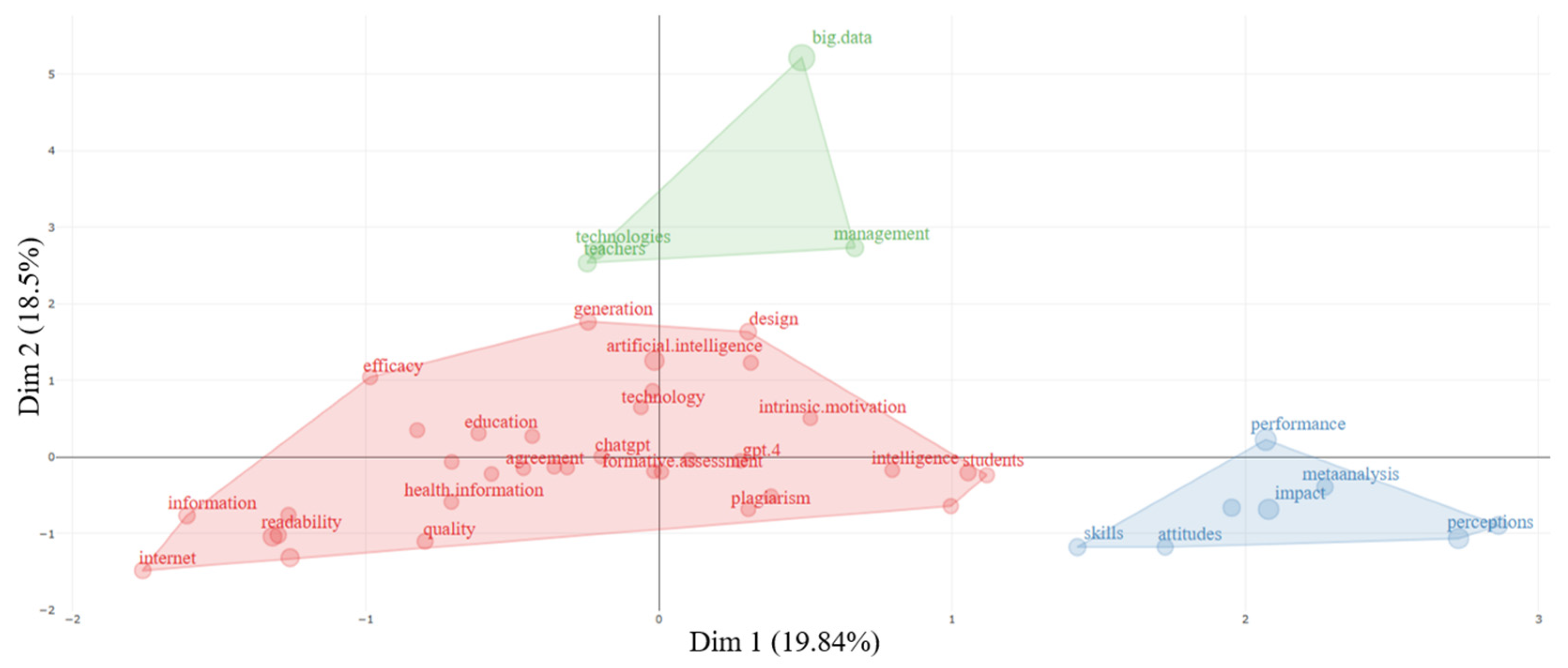
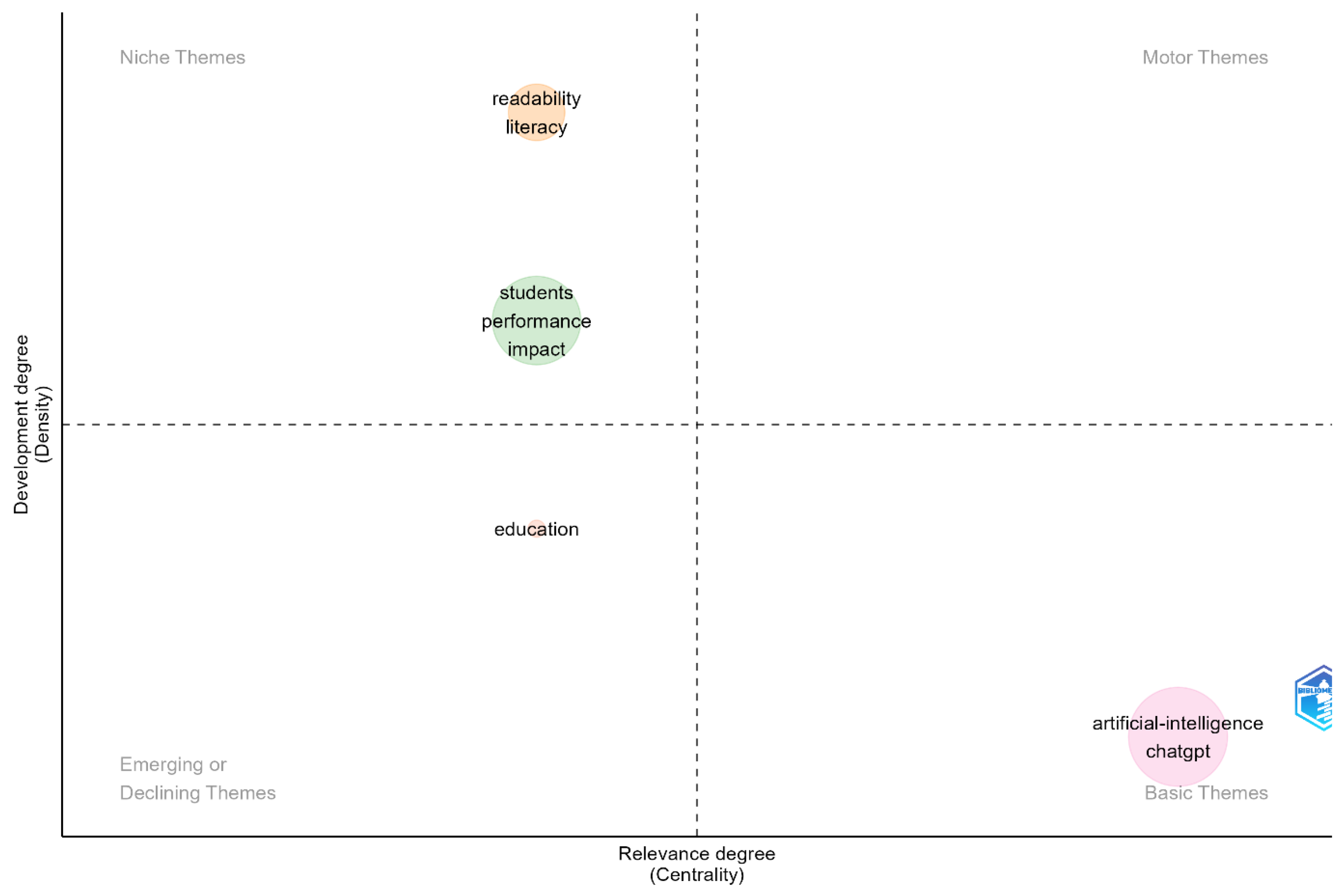
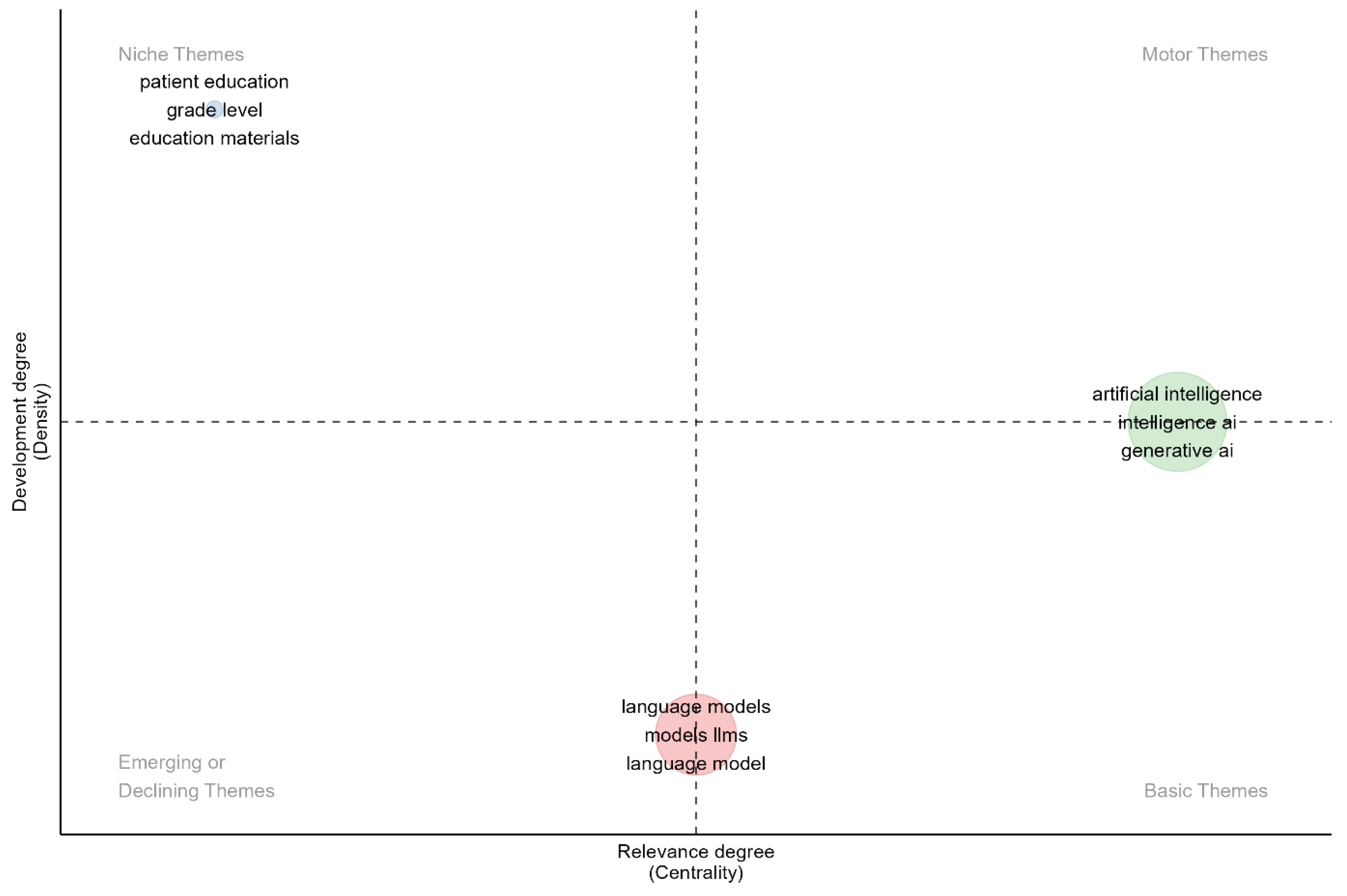
3.3. Thematic Analysis
- Theme 1—Technological Foundations of LLMs in education—pointing towards the technical aspects of LLMs in education, highlighting how AI and LLMs are positioned as transformative tools;
- Theme 2—Educational Impact for Students, Performance, and Learning Outcomes—focusing on how AI influences learners and their achievements;
- Theme 3—Content Quality, Readability, and Literacy—including works that focus on the concerns raised regarding the accessibility and appropriateness of AI-generated content;
- Theme 4—Ethics, Personalization, and Responsible Use of AI in Education—advocating for the responsible use and adoption of LLMs in education, touching on themes related to fairness, personalization, and potential risks.
3.4. Topic Discovery
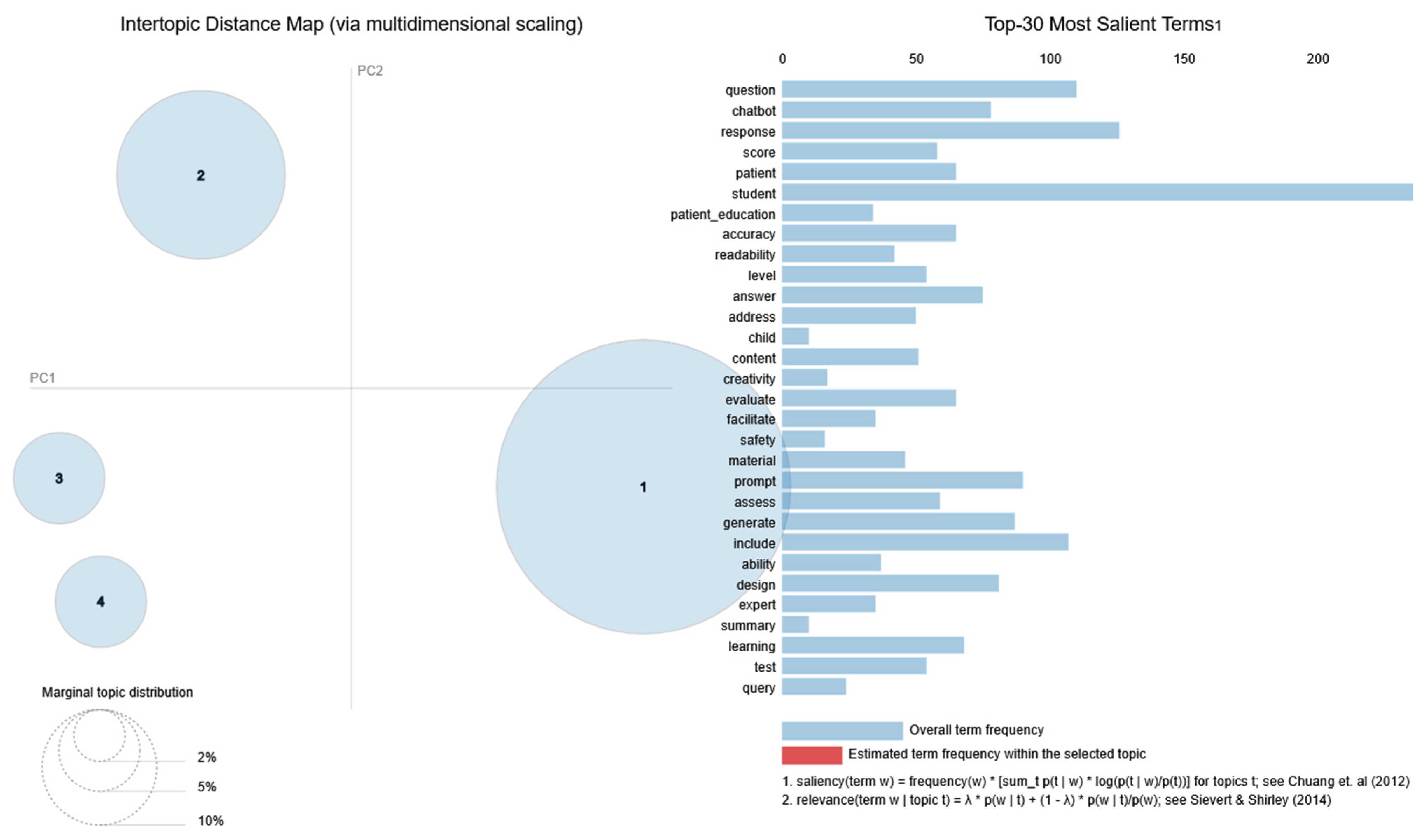
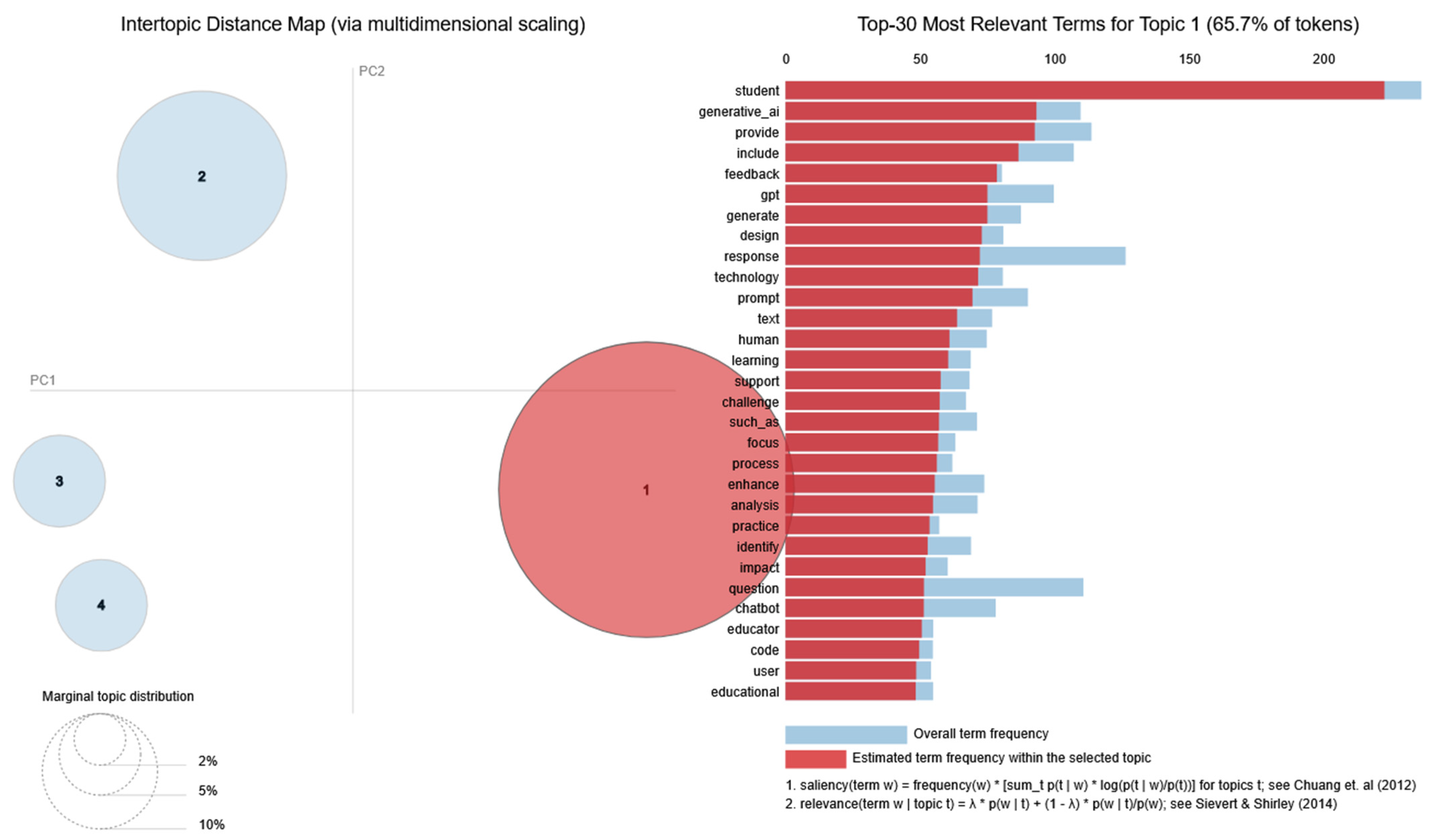
3.4.1. Topic Discovery Through LDA
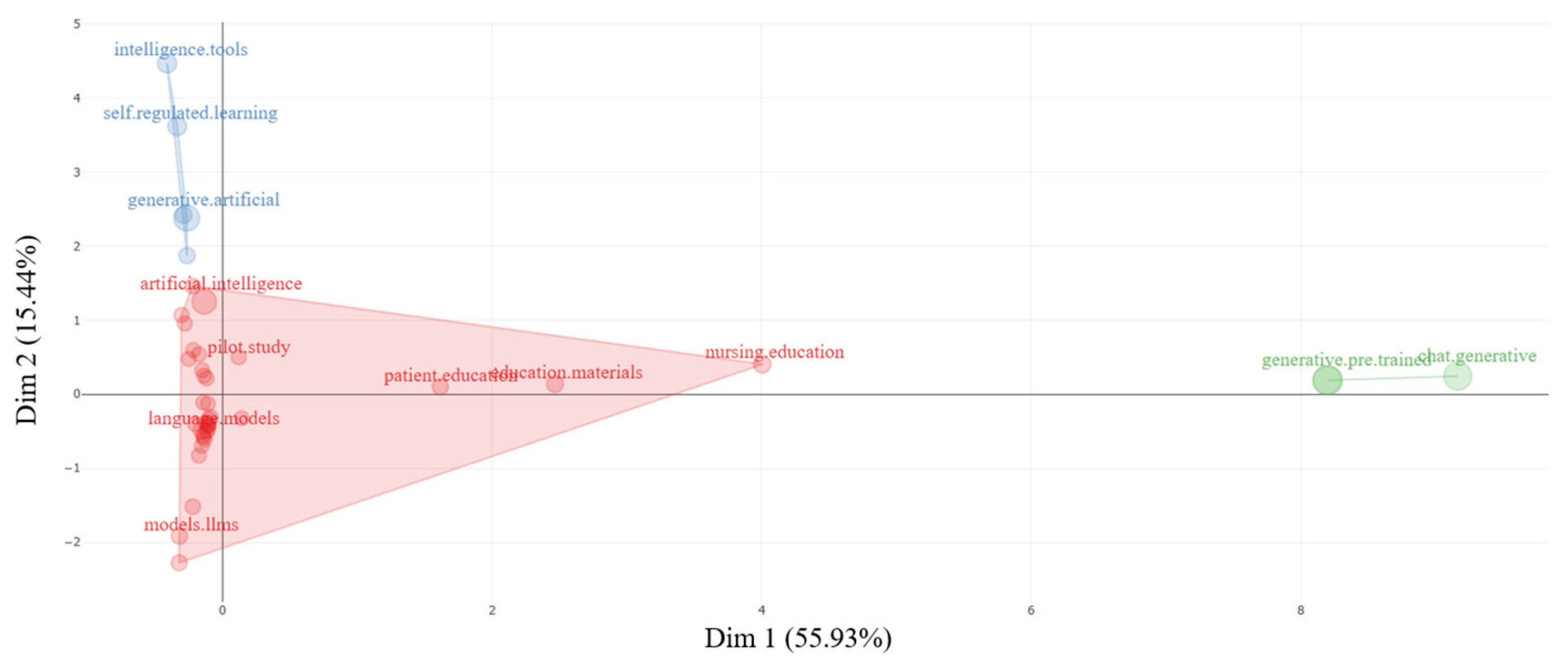
3.4.2. Topic Discovery Through BERTopic
3.5. Review Based on Identified Themes and Topics
3.5.1. Technological Foundations of LLMs in Education
3.5.2. Impact on Students, Performance, and Learning Outcomes
3.5.3. Content Quality, Readability, and Literacy in AI Outputs
3.5.4. Ethics, Personalization, and Responsible Use of LLMs
4. Discussion and Limitations
4.1. Results Obtained
4.2. Specific LLMs
4.3. Student Engagement and AI Impact

| First Author | Article Title | Research Focus |
|---|---|---|
| Lang Q. [110] | Exploring the Answering Capability of large language models in Addressing Complex Knowledge in Entrepreneurship Education | Analyzing how large language models (LLMs) can be used to improve the efficiency of the learning process in entrepreneurial education. |
| Wang X.C. [111] | Beyond the Books: Exploring Factors Shaping Chinese English Learners’ Engagement with large language models for Vocabulary Learning | Identifying the psychological and technological factors that influence students’ intention and behavior to use LLMs in the process of learning English vocabulary |
| Morris W. [114] | Automated Scoring of Constructed Response Items in Math Assessment Using large language models | Developing and testing an LLM-based approach for automatically scoring extended-response math items on the National Assessment of Educational Progress (NAEP). |
| Kieser F. [115] | David vs. Goliath: comparing conventional machine learning and a large language model for assessing students’ concept use in a physics problem | Comparing the performance of LLMs with that of conventional machine learning algorithms in assessing students’ use of concepts in a physics problem-solving task |
| Kurian N. [116] | ‘No, Alexa, no!’: designing child-safe AI and protecting children from the risks of the ‘empathy gap’ in large language models | Proposing design and policy recommendations for the development of safe and ethical LLMs for children |
| Morris W. [117] | Formative Feedback on Student-Authored Summaries in Intelligent Textbooks Using large language models | Studying the impact of AI-generated feedback on students’ self-regulation, writing skills, and motivation to engage with revision tasks |
| Kirwan A. [106] | ChatGPT and university teaching, learning and assessment: some initial reflections on teaching academic integrity in the age of large language models | Exploring the impact of LLM emergence, particularly that of ChatGPT, on assessment in higher education |
| Hershcovits H. [112] | Modeling Engagement in Self-Directed Learning Systems Using Principal Component Analysis | A new method for analyzing students’ engagement in e-learning, which tracks how their behavior evolves over time within the system and groups students according to these trajectories in order to understand who persists, who drops out, and why |
| Li H. [113] | Impact of information literacy, self-directed learning skills, and academic emotions on high school students’ online learning engagement: A structural equation modeling analysis | Investigating how information literacy, self-directed learning, and academic emotions influence high school students’ engagement in online learning. |
4.4. Complement and Validation of the Results via AI-Based Tools
4.5. Limitations
5. Conclusions
Supplementary Materials
Author Contributions
Funding
Institutional Review Board Statement
Informed Consent Statement
Data Availability Statement
Conflicts of Interest
References
- Blázquez-Jiménez, C.; Sanchis, J.R. La coopetencia interempresarial. Descripción teórica y aplicación a sectores tecnológicos. RETOS. Rev. Cienc. Adm. Econ. 2023, 13, 325–340. [Google Scholar] [CrossRef]
- Torres-Cruz, F.; Yucra-Mamani, Y.J. Técnicas de inteligencia artificial en la valoración de la enseñanza virtual por estudiantes de nivel universitario. Hum. Rev. Int. Humanit. Rev./Rev. Int. Humanidades 2022, 11, 1–11. [Google Scholar] [CrossRef]
- Nguyen, A.; Ngo, H.N.; Hong, Y.; Dang, B.; Nguyen, B.-P.T. Ethical Principles for Artificial Intelligence in Education. Educ. Inf. Technol. 2023, 28, 4221–4241. [Google Scholar] [CrossRef]
- López-Chila, R.; Llerena-Izquierdo, J.; Sumba-Nacipucha, N.; Cueva-Estrada, J. Artificial Intelligence in Higher Education: An Analysis of Existing Bibliometrics. Educ. Sci. 2024, 14, 47. [Google Scholar] [CrossRef]
- Rubinger, L.; Gazendam, A.; Ekhtiari, S.; Bhandari, M. Machine Learning and Artificial Intelligence in Research and Healthcare. Injury 2023, 54, S69–S73. [Google Scholar] [CrossRef] [PubMed]
- Xu, Y.; Liu, X.; Cao, X.; Huang, C.; Liu, E.; Qian, S.; Liu, X.; Wu, Y.; Dong, F.; Qiu, C.-W.; et al. Artificial Intelligence: A Powerful Paradigm for Scientific Research. Innovation 2021, 2, 100179. [Google Scholar] [CrossRef] [PubMed]
- Kuleto, V.; Ilić, M.; Dumangiu, M.; Ranković, M.; Martins, O.M.D.; Păun, D.; Mihoreanu, L. Exploring Opportunities and Challenges of Artificial Intelligence and Machine Learning in Higher Education Institutions. Sustainability 2021, 13, 10424. [Google Scholar] [CrossRef]
- Richard, C. Artificial Intelligence to Grow 47.5% in Education over Next 4 Years. The Journal, 24 March 2017. Available online: https://thejournal.com/articles/2017/03/24/ai-market-to-grow-47,-d-,5-percent-over-next-four-years.aspx (accessed on 22 June 2025).
- Zara, A. Classrooms Are Adapting to the Use of Artificial Intelligence. Available online: https://www.apa.org/monitor/2025/01/trends-classrooms-artificial-intelligence (accessed on 22 June 2025).
- Common Sense Media the Dawn of the AI Era: Teens, Parents, and the Adoption of Generative AI at Home and School. Available online: https://www.commonsensemedia.org/research/the-dawn-of-the-ai-era-teens-parents-and-the-adoption-of-generative-ai-at-home-and-school (accessed on 22 June 2025).
- Al-Khafaji, M.; Eryilmaz, M. Using Artificial Intelligence Methods to Predict Student Academic Achievement. In Proceedings of the Future Technologies Conference (FTC) 2021, Virtual, 28–29 October 2021; Arai, K., Ed.; Springer International Publishing: Cham, Switzerland, 2022; Volume 2, pp. 403–414. [Google Scholar]
- Huang, A.Y.Q.; Lu, O.H.T.; Yang, S.J.H. Effects of Artificial Intelligence–Enabled Personalized Recommendations on Learners’ Learning Engagement, Motivation, and Outcomes in a Flipped Classroom. Comput. Educ. 2023, 194, 104684. [Google Scholar] [CrossRef]
- Rahman, A. Mapping the Efficacy of Artificial Intelligence-Based Online Proctored Examination (OPE) in Higher Education during COVID-19: Evidence from Assam, India. Int. J. Learn. Teach. Educ. Res. 2022, 21, 76–94. [Google Scholar] [CrossRef]
- UNESCO 272 Million Children, Adolescents and Youth Are Out-of-School|Global Education Monitoring Report. Available online: https://www.unesco.org/gem-report/en (accessed on 22 June 2025).
- Brants, T.; Popat, A.C.; Xu, P.; Och, F.J.; Dean, J. Large Language Models in Machine Translation. In Proceedings of the 2007 Joint Conference on Empirical Methods in Natural Language Processing and Computational Natural Language Learning (EMNLP-CoNLL), Prague, Czech Republic, 28–30 June 2007; Eisner, J., Ed.; Association for Computational Linguistics: Prague, Czech Republic, 2007; pp. 858–867. [Google Scholar]
- Li, J.; Dada, A.; Puladi, B.; Kleesiek, J.; Egger, J. ChatGPT in Healthcare: A Taxonomy and Systematic Review. Comput. Methods Programs Biomed. 2024, 245, 108013. [Google Scholar] [CrossRef]
- Brown, T.; Mann, B.; Ryder, N.; Subbiah, M.; Kaplan, J.D.; Dhariwal, P.; Neelakantan, A.; Shyam, P.; Sastry, G.; Askell, A.; et al. Language Models Are Few-Shot Learners. Adv. Neural Inf. Process. Syst. 2020, 33, 1877–1901. [Google Scholar]
- Touvron, H.; Lavril, T.; Izacard, G.; Martinet, X.; Lachaux, M.-A.; Lacroix, T.; Rozière, B.; Goyal, N.; Hambro, E.; Azhar, F.; et al. LLaMA: Open and Efficient Foundation Language Models. arXiv 2023, arXiv:2302.13971. [Google Scholar] [CrossRef]
- Devlin, J.; Chang, M.-W.; Lee, K.; Toutanova, K. BERT: Pre-Training of Deep Bidirectional Transformers for Language Understanding. In Proceedings of the 2019 Conference of the North American Chapter of the Association for Computational Linguistics: Human Language Technologies, Minneapolis, MN, USA, 2–7 June 2019; Volume 1 (Long and Short Papers). Burstein, J., Doran, C., Solorio, T., Eds.; Association for Computational Linguistics: Minneapolis, MN, USA, 2019; pp. 4171–4186. [Google Scholar]
- Bates, T.; Cobo, C.; Mariño, O.; Wheeler, S. Can Artificial Intelligence Transform Higher Education? Int. J. Educ. Technol. High. Educ. 2020, 17, 42. [Google Scholar] [CrossRef]
- Chatterjee, S.; Bhattacharjee, K.K. Adoption of Artificial Intelligence in Higher Education: A Quantitative Analysis Using Structural Equation Modelling. Educ. Inf. Technol. 2020, 25, 3443–3463. [Google Scholar] [CrossRef]
- Song, P.; Wang, X. A Bibliometric Analysis of Worldwide Educational Artificial Intelligence Research Development in Recent Twenty Years. Asia Pac. Educ. Rev. 2020, 21, 473–486. [Google Scholar] [CrossRef]
- Li, K.C.; Wong, B.T.-M. Artificial Intelligence in Personalised Learning: A Bibliometric Analysis. Interact. Technol. Smart Educ. 2023, 20, 422–445. [Google Scholar] [CrossRef]
- Sekwatlakwatla, S.P.; Malele, V. Evaluations of Large Language Models a Bibliometric Analysis. Indones. J. Comput. Sci. 2024, 13. [Google Scholar] [CrossRef]
- Mohammed, E.A.H.; Kovács, B.; Kuunya, R.; Mustafa, E.O.A.; Abbo, A.S.H.; Pál, K. Antibiotic Resistance in Aquaculture: Challenges, Trends Analysis, and Alternative Approaches. Antibiotics 2025, 14, 598. [Google Scholar] [CrossRef] [PubMed]
- Sun, B.; Liu, J.; Zhang, X. A Bibliometric Analysis of the Three-North Shelter Forest Program. Forests 2025, 16, 977. [Google Scholar] [CrossRef]
- Weng, M.; Qu, W.; Ma, E.; Wu, M.; Dong, Y.; Xi, X. Bibliometric Analysis of Digital Watermarking Based on CiteSpace. Symmetry 2025, 17, 871. [Google Scholar] [CrossRef]
- Manchanda, N.; Chhabra, D.; Malik, M.; Kumar, K. WoS Bibliometric-Based Review on IoT in Healthcare Sector. In Proceedings of the 2023 International Conference on Communication, Security and Artificial Intelligence (ICCSAI), Greater Noida, India, 23–25 November 2023; IEEE: Piscataway, NJ, USA, 2023; pp. 107–112. [Google Scholar]
- Günek, B.; Yurttakal, A.H. Bibliometric Analysis of Research Papers on Blockchain Technologies. In Proceedings of the 2022 Innovations in Intelligent Systems and Applications Conference (ASYU), Antalya, Turkey, 7–9 September 2022; IEEE: Piscataway, NJ, USA, 2022; pp. 1–5. [Google Scholar]
- Pop, M.-D.; Micea, M.V. Visual Analysis of the Bibliometric Data Associated with the Calibration of Car-Following Models. In Proceedings of the 2024 20th International Conference on Distributed Computing in Smart Systems and the Internet of Things (DCOSS-IoT), Abu Dhabi, United Arab Emirates, 29 April–1 May 2024; IEEE: Piscataway, NJ, USA, 2024; pp. 647–652. [Google Scholar]
- Vijayalekshmi, S.; Twetwa-Dube, S.; Vinoth-Kumar, D.; Gumbo, S. The Role of Higher Education Institutions in Enabling the Fourth Industrial Revolution: A Bibliometric Analysis. In Proceedings of the 2023 IEEE AFRICON, Nairobi, Kenya, 20–22 September 2023; IEEE: Piscataway, NJ, USA, 2023; pp. 1–3. [Google Scholar]
- Hinojo-Lucena, F.-J.; Aznar-Díaz, I.; Cáceres-Reche, M.-P.; Romero-Rodríguez, J.-M. Artificial Intelligence in Higher Education: A Bibliometric Study on Its Impact in the Scientific Literature. Educ. Sci. 2019, 9, 51. [Google Scholar] [CrossRef]
- Urzúa, C.A.C.; Ranjan, R.; Saavedra, E.E.M.; Badilla-Quintana, M.G.; Lepe-Martínez, N.; Philominraj, A. Effects of AI-Assisted Feedback via Generative Chat on Academic Writing in Higher Education Students: A Systematic Review of the Literature. Educ. Sci. 2025, 15, 1396. [Google Scholar] [CrossRef]
- Osorio Vanegas, H.D.; Segovia Cifuentes, Y. de M.; Sobrino Morrás, A. Educational Technology in Teacher Training: A Systematic Review of Competencies, Skills, Models, and Methods. Educ. Sci. 2025, 15, 1036. [Google Scholar] [CrossRef]
- Pranckutė, R. Web of Science (WoS) and Scopus: The Titans of Bibliographic Information in Today’s Academic World. Publications 2021, 9, 12. [Google Scholar] [CrossRef]
- Singh, V.K.; Singh, P.; Karmakar, M.; Leta, J.; Mayr, P. The Journal Coverage of Web of Science, Scopus and Dimensions: A Comparative Analysis. Scientometrics 2021, 126, 5113–5142. [Google Scholar] [CrossRef]
- ISI, W. KeyWords Plus Generation, Creation, and Changes. Available online: https://support.clarivate.com/ScientificandAcademicResearch/s/article/KeyWords-Plus-generation-creation-and-changes?language=en_US (accessed on 2 March 2024).
- Sandu, A.; Diaconu, P.; Delcea, C.; Domenteanu, A. Emphasizing Grey Systems Contribution to Decision-Making Field Under Uncertainty: A Global Bibliometric Exploration. Mathematics 2025, 13, 1278. [Google Scholar] [CrossRef]
- Cotfas, L.-A.; Sandu, A.; Delcea, C.; Diaconu, P.; Frăsineanu, C.; Stănescu, A. From Transformers to ChatGPT: An Analysis of Large Language Models Research. IEEE Access 2025, 13, 146889–146931. [Google Scholar] [CrossRef]
- Panait, M.; Cibu, B.R.; Teodorescu, D.M.; Delcea, C. European Fund Absorption and Contribution to Business Environment Development: Research Output Analysis Through Bibliometric and Topic Modeling Analysis. Businesses 2025, 5, 45. [Google Scholar] [CrossRef]
- Profiroiu, C.M.; Cibu, B.; Delcea, C.; Cotfas, L.-A. Charting the Course of School Dropout Research: A Bibliometric Exploration. IEEE Access 2024, 12, 71453–71478. [Google Scholar] [CrossRef]
- Liu, W. The Data Source of This Study Is Web of Science Core Collection? Not Enough. Scientometrics 2019, 121, 1815–1824. [Google Scholar] [CrossRef]
- Liu, F. Retrieval Strategy and Possible Explanations for the Abnormal Growth of Research Publications: Re-Evaluating a Bibliometric Analysis of Climate Change. Scientometrics 2023, 128, 853–859. [Google Scholar] [CrossRef] [PubMed]
- Domenteanu, A.; Cibu, B.; Delcea, C.; Cotfas, L.-A. The World of Agent-Based Modeling: A Bibliometric and Analytical Exploration. Complexity 2025, 2025, 2636704. [Google Scholar] [CrossRef]
- Domenteanu, A.; Cotfas, L.-A.; Diaconu, P.; Tudor, G.-A.; Delcea, C. AI on Wheels: Bibliometric Approach to Mapping of Research on Machine Learning and Deep Learning in Electric Vehicles. Electronics 2025, 14, 378. [Google Scholar] [CrossRef]
- Domenteanu, A.; Delcea, C.; Florescu, M.-S.; Gherai, D.S.; Bugnar, N.; Cotfas, L.-A. United in Green: A Bibliometric Exploration of Renewable Energy Communities. Electronics 2024, 13, 3312. [Google Scholar] [CrossRef]
- Sandu, A.; Cotfas, L.-A.; Stănescu, A.; Delcea, C. Guiding Urban Decision-Making: A Study on Recommender Systems in Smart Cities. Electronics 2024, 13, 2151. [Google Scholar] [CrossRef]
- Sandu, A.; Cotfas, L.-A.; Delcea, C.; Ioanăș, C.; Florescu, M.-S.; Orzan, M. Machine Learning and Deep Learning Applications in Disinformation Detection: A Bibliometric Assessment. Electronics 2024, 13, 4352. [Google Scholar] [CrossRef]
- Dobre, F.; Sandu, A.; Tătaru, G.-C.; Cotfas, L.-A. A Decade of Studies in Smart Cities and Urban Planning Through Big Data Analytics. Systems 2025, 13, 780. [Google Scholar] [CrossRef]
- Mongeon, P.; Paul-Hus, A. The Journal Coverage of Web of Science and Scopus: A Comparative Analysis. Scientometrics 2016, 106, 213–228. [Google Scholar] [CrossRef]
- Donthu, N.; Kumar, S.; Mukherjee, D.; Pandey, N.; Lim, W.M. How to Conduct a Bibliometric Analysis: An Overview and Guidelines. J. Bus. Res. 2021, 133, 285–296. [Google Scholar] [CrossRef]
- Page, M.J.; McKenzie, J.E.; Bossuyt, P.M.; Boutron, I.; Hoffmann, T.C.; Mulrow, C.D.; Shamseer, L.; Tetzlaff, J.M.; Akl, E.A.; Brennan, S.E.; et al. The PRISMA 2020 Statement: An Updated Guideline for Reporting Systematic Reviews. PLOS Med. 2021, 18, e1003583. [Google Scholar] [CrossRef]
- Page, M.J.; Altman, D.G.; Shamseer, L.; McKenzie, J.E.; Ahmadzai, N.; Wolfe, D.; Yazdi, F.; Catalá-López, F.; Tricco, A.C.; Moher, D. Reproducible Research Practices Are Underused in Systematic Reviews of Biomedical Interventions. J. Clin. Epidemiol. 2018, 94, 8–18. [Google Scholar] [CrossRef]
- Harzing, A.-W.; Alakangas, S. Google Scholar, Scopus and the Web of Science: A Longitudinal and Cross-Disciplinary Comparison. Scientometrics 2016, 106, 787–804. [Google Scholar] [CrossRef]
- Martín-Martín, A.; Orduna-Malea, E.; Thelwall, M.; Delgado López-Cózar, E. Google Scholar, Web of Science, and Scopus: A Systematic Comparison of Citations in 252 Subject Categories. J. Informetr. 2018, 12, 1160–1177. [Google Scholar] [CrossRef]
- Sugimoto, C.; Work, S.; Larivière, V.; Haustein, S. Scholarly Use of Social Media and Altmetrics: A Review of the Literature. J. Assoc. Inf. Sci. Technol. 2017, 68, 2037–2062. [Google Scholar] [CrossRef]
- Moed, H. Citation Analysis in Research Evaluation; Springer: Dordrecht, The Netherlands, 2005; ISBN 978-1-4020-3713-9. [Google Scholar]
- de Cerqueira, J.S.; Kemell, K.-K.; Rousi, R.; Xi, N.; Hamari, J.; Abrahamsson, P. Mapping Trustworthiness in Large Language Models: A Bibliometric Analysis Bridging Theory to Practice. arXiv 2025, arXiv:2503.04785. [Google Scholar]
- Fan, L.; Li, L.; Ma, Z.; Lee, S.; Yu, H.; Hemphill, L. A Bibliometric Review of Large Language Models Research from 2017 to 2023. ACM Trans. Intell. Syst. Technol. 2024, 15, 91. [Google Scholar] [CrossRef]
- Gencer, G.; Gencer, K. Large Language Models in Healthcare: A Bibliometric Analysis and Examination of Research Trends. J. Multidiscip. Healthc. 2025, 18, 223–238. [Google Scholar] [CrossRef]
- Aria, M.; Cuccurullo, C. Bibliometrix: An R-Tool for Comprehensive Science Mapping Analysis. J. Informetr. 2017, 11, 959–975. [Google Scholar] [CrossRef]
- Řehůřek, R.; Sojka, P. Software Framework for Topic Modelling with Large Corpora. In Proceedings of the LREC 2010 Workshop on New Challenges for NLP Frameworks, Valletta, Malta, 22 May 2010. [Google Scholar] [CrossRef]
- Wu, J.; Wang, Q.; Guo, Z.; Peng, C. AI-Driven Green Building Technology Innovation: Knowledge Structure, Evolution Trends, Research Paradigms and Future Prospects. Buildings 2025, 15, 1754. [Google Scholar] [CrossRef]
- Dwivedi, Y.K.; Kshetri, N.; Hughes, L.; Slade, E.L.; Jeyaraj, A.; Kar, A.K.; Baabdullah, A.M.; Koohang, A.; Raghavan, V.; Ahuja, M.; et al. Opinion Paper: “So What If ChatGPT Wrote It?” Multidisciplinary Perspectives on Opportunities, Challenges and Implications of Generative Conversational AI for Research, Practice and Policy. Int. J. Inf. Manag. 2023, 71, 102642. [Google Scholar] [CrossRef]
- Cooper, G. Examining Science Education in ChatGPT: An Exploratory Study of Generative Artificial Intelligence. J. Sci. Educ. Technol. 2023, 32, 444–452. [Google Scholar] [CrossRef]
- Yeo, Y.H.; Samaan, J.S.; Ng, W.H.; Ting, P.-S.; Trivedi, H.; Vipani, A.; Ayoub, W.; Yang, J.D.; Liran, O.; Spiegel, B.; et al. Assessing the Performance of ChatGPT in Answering Questions Regarding Cirrhosis and Hepatocellular Carcinoma. Clin. Mol. Hepatol. 2023, 29, 721–732. [Google Scholar] [CrossRef]
- Rahman, M.M.; Watanobe, Y. ChatGPT for Education and Research: Opportunities, Threats, and Strategies. Appl. Sci. 2023, 13, 5783. [Google Scholar] [CrossRef]
- Perkins, M. Academic Integrity Considerations of AI Large Language Models in the Post-Pandemic Era: ChatGPT and Beyond. J. Univ. Teach. Learn. Pract. 2023, 20, 1–24. [Google Scholar] [CrossRef]
- Jeon, J.; Lee, S. Large Language Models in Education: A Focus on the Complementary Relationship between Human Teachers and ChatGPT. Educ. Inf. Technol. 2023, 28, 15873–15892. [Google Scholar] [CrossRef]
- Lyu, Q.; Tan, J.; Zapadka, M.E.; Ponnatapura, J.; Niu, C.; Myers, K.J.; Wang, G.; Whitlow, C.T. Translating Radiology Reports into Plain Language Using ChatGPT and GPT-4 with Prompt Learning: Results, Limitations, and Potential. Vis. Comput. Ind. Biomed. Art. 2023, 6, 9. [Google Scholar] [CrossRef] [PubMed]
- Alqahtani, T.; Badreldin, H.A.; Alrashed, M.; Alshaya, A.I.; Alghamdi, S.S.; bin Saleh, K.; Alowais, S.A.; Alshaya, O.A.; Rahman, I.; Al Yami, M.S.; et al. The Emergent Role of Artificial Intelligence, Natural Learning Processing, and Large Language Models in Higher Education and Research. Res. Soc. Adm. Pharm. 2023, 19, 1236–1242. [Google Scholar] [CrossRef]
- García-Peñalvo, F.J. La percepción de la Inteligencia Artificial en contextos educativos tras el lanzamiento de ChatGPT: Disrupción o pánico. Educ. Knowl. Soc. (EKS) 2023, 24, e31279. [Google Scholar] [CrossRef]
- Oh, N.; Choi, G.-S.; Lee, W.Y. ChatGPT Goes to the Operating Room: Evaluating GPT-4 Performance and Its Potential in Surgical Education and Training in the Era of Large Language Models. Ann. Surg. Treat. Res. 2023, 104, 269–273. [Google Scholar] [CrossRef]
- Nettleton, D. Chapter 6—Selection of Variables and Factor Derivation. In Commercial Data Mining; Nettleton, D., Ed.; Morgan Kaufmann: Boston, MA, USA, 2014; pp. 79–104. ISBN 978-0-12-416602-8. [Google Scholar]
- Wilczewski, M.; Alon, I. Language and Communication in International Students’ Adaptation: A Bibliometric and Content Analysis Review. High. Educ. 2023, 85, 1235–1256. [Google Scholar] [CrossRef]
- Lampropoulos, G. Augmented Reality, Virtual Reality, and Intelligent Tutoring Systems in Education and Training: A Systematic Literature Review. Appl. Sci. 2025, 15, 3223. [Google Scholar] [CrossRef]
- Chuang, J.; Manning, C.D.; Heer, J. Termite: Visualization techniques for assessing textual topic models. In Proceedings of the AVI’12: Proceedings of the International Working Conference on Advanced Visual Interfaces, Capri Island, Italy, 21–25 May 2012; pp. 74–77. [Google Scholar]
- Sievert, C.; Shirley, K. LDAvis: A method for visualizing and interpreting topics. In Proceedings of the Workshop on Interactive Language Learning, Visualization, and Interfaces, Baltimore, MA, USA, 27 June 2014; pp. 63–70. [Google Scholar]
- Uribe, S.E.; Maldupa, I.; Kavadella, A.; El Tantawi, M.; Chaurasia, A.; Fontana, M.; Marino, R.; Innes, N.; Schwendicke, F. Artificial Intelligence Chatbots and Large Language Models in Dental Education: Worldwide Survey of Educators. Eur. J. Dent. Educ. 2024, 28, 865–876. [Google Scholar] [CrossRef]
- Tsai, M.-L.; Ong, C.W.; Chen, C.-L. Exploring the Use of Large Language Models (LLMs) in Chemical Engineering Education: Building Core Course Problem Models with Chat-GPT. Educ. Chem. Eng. 2023, 44, 71–95. [Google Scholar] [CrossRef]
- Smith, A.; Hachen, S.; Schleifer, R.; Bhugra, D.; Buadze, A.; Liebrenz, M. Old Dog, New Tricks? Exploring the Potential Functionalities of ChatGPT in Supporting Educational Methods in Social Psychiatry. Int. J. Soc. Psychiatry 2023, 69, 1882–1889. [Google Scholar] [CrossRef]
- Satpute, P.; Tiwari, S.; Gupta, M.; Ghosh, S. Exploring Large Language Models for Microstructure Evolution in Materials. Mater. Today Commun. 2024, 40, 109583. [Google Scholar] [CrossRef]
- Azaiz, I.; Deckarm, O.; Strickroth, S. AI-Enhanced Auto-Correction of Programming Exercises: How Effective Is GPT-3.5? Int. J. Eng. Pedagog. (Ijep) 2023, 13, 67–83. [Google Scholar] [CrossRef]
- Zhang, Z.; Huang, X. The Impact of Chatbots Based on Large Language Models on Second Language Vocabulary Acquisition. Heliyon 2024, 10, e25370. [Google Scholar] [CrossRef] [PubMed]
- Liu, Z.-M.; Hwang, G.-J.; Chen, C.-Q.; Chen, X.-D.; Ye, X.-D. Integrating Large Language Models into EFL Writing Instruction: Effects on Performance, Self-Regulated Learning Strategies, and Motivation. Comput. Assist. Lang. Learn. 2024, 1–25. [Google Scholar] [CrossRef]
- Mannekote, A.; Davies, A.; Pinto, J.D.; Zhang, S.; Olds, D.; Schroeder, N.L.; Lehman, B.; Zapata-Rivera, D.; Zhai, C.X. Large language models for whole-learner support: Opportunities and challenges. Front. Artif. Intell. 2024, 7, 1460364. [Google Scholar] [CrossRef] [PubMed]
- Alfirević, N.; Rendulić, D.; Fošner, M.; Fošner, A. An Ethnographic Research Study of Artificial Intelligence. Informatics 2024, 11, 78. [Google Scholar] [CrossRef]
- Zhang, L.; Zhang, W. Integrating large language models into project-based learning based on self-determination theory. Interact. Learn. Environ. 2024, 33, 3580–3592. [Google Scholar] [CrossRef]
- Şekerci, Y.; Kahraman, M.U.; Develier, M. Enhancing interior design education with artificial intelligence: A multisensory hotel design. Interiors 2023, 13, 195–229. [Google Scholar] [CrossRef]
- Zhang, D.-W.; Boey, M.; Tan, Y.Y.; Jia, A.H.S. Evaluating Large Language Models for Criterion-Based Grading from Agreement to Consistency. Npj Sci. Learn. 2024, 9, 79. [Google Scholar] [CrossRef]
- Hackl, V.; Müller, A.E.; Granitzer, M.; Sailer, M. Is GPT-4 a Reliable Rater? Evaluating Consistency in GPT-4′s Text Ratings. Front. Educ. 2023, 8, 1272229. [Google Scholar] [CrossRef]
- Arun, G.; Perumal, V.; Urias, F.P.J.B.; Ler, Y.E.; Tan, B.W.T.; Vallabhajosyula, R.; Tan, E.; Ng, O.; Ng, K.B.; Mogali, S.R. ChatGPT versus a Customized AI Chatbot (Anatbuddy) for Anatomy Education: A Comparative Pilot Study. Anat. Sci. Educ. 2024, 17, 1396–1405. [Google Scholar] [CrossRef]
- Ehlert, A.; Ehlert, B.; Cao, B.; Morbitzer, K. Large Language Models and the North American Pharmacist Licensure Examination (NAPLEX) Practice Questions. Am. J. Pharm. Educ. 2024, 88, 101294. [Google Scholar] [CrossRef]
- Jeong, H.; Han, S.-S.; Yu, Y.; Kim, S.; Jeon, K.J. How well do large language model-based chatbots perform in oral and maxillofacial radiology? Dentomaxillofac Radiol. 2024, 53, 390–395. [Google Scholar] [CrossRef] [PubMed]
- Tan, T.F.; Thirunavukarasu, A.J.; Campbell, J.P.; Keane, P.A.; Pasquale, L.R.; Abramoff, M.D.; Kalpathy-Cramer, J.; Lum, F.; Kim, J.E.; Baxter, S.L.; et al. Generative Artificial Intelligence Through ChatGPT and Other Large Language Models in Ophthalmology: Clinical Applications and Challenges. Ophthalmol. Sci. 2023, 3, 100394. [Google Scholar] [CrossRef]
- Wu, G.; Zhao, W.; Wong, A.; Lee, D.A. Patients with Floaters: Answers from Virtual Assistants and Large Language Models. Digit. Health 2024, 10, 20552076241229933. [Google Scholar] [CrossRef]
- Kooraki, S.; Hosseiny, M.; Jalili, M.H.; Rahsepar, A.A.; Imanzadeh, A.; Kim, G.H.; Hassani, C.; Abtin, F.; Moriarty, J.M.; Bedayat, A. Evaluation of ChatGPT-Generated Educational Patient Pamphlets for Common Interventional Radiology Procedures. Acad. Radiol. 2024, 31, 4548–4553. [Google Scholar] [CrossRef]
- Cohen, S.A.; Brant, A.; Fisher, A.C.; Pershing, S.; Do, D.; Pan, C. Dr. Google vs. Dr. ChatGPT: Exploring the Use of Artificial Intelligence in Ophthalmology by Comparing the Accuracy, Safety, and Readability of Responses to Frequently Asked Patient Questions Regarding Cataracts and Cataract Surgery. Semin. Ophthalmol. 2024, 39, 472–479. [Google Scholar] [CrossRef]
- Warr, M.; Oster, N.J.; Isaac, R. Implicit Bias in Large Language Models: Experimental Proof and Implications for Education. J. Res. Technol. Educ. 2024, 1–24. [Google Scholar] [CrossRef]
- Wachter, S.; Mittelstadt, B.; Russell, C. Do Large Language Models Have a Legal Duty to Tell the Truth? R. Soc. Open Sci. 2024, 11, 240197. [Google Scholar] [CrossRef]
- Kieser, F. Educational Data Augmentation in Physics Education Research Using ChatGPT. Phys. Rev. Phys. Educ. Res. 2023, 19, 020150. [Google Scholar] [CrossRef]
- Nguyen, H.; Nguyen, V.; Ludovise, S.; Santagata, R. Misrepresentation or Inclusion: Promises of Generative Artificial Intelligence in Climate Change Education. Learn. Media Technol. 2025, 50, 393–409. [Google Scholar] [CrossRef]
- Naqvi, W.M.; Shaikh, S.Z.; Mishra, G.V. Large Language Models in Physical Therapy: Time to Adapt and Adept. Front. Public Health 2024, 12, 1364660. [Google Scholar] [CrossRef] [PubMed]
- Rahimzadeh, V.; Kostick-Quenet, K.; Blumenthal Barby, J.; McGuire, A.L. Ethics Education for Healthcare Professionals in the Era of ChatGPT and Other Large Language Models: Do We Still Need It? Am. J. Bioeth. 2023, 23, 17–27. [Google Scholar] [CrossRef] [PubMed]
- Hobensack, M.; von Gerich, H.; Vyas, P.; Withall, J.; Peltonen, L.-M.; Block, L.J.; Davies, S.; Chan, R.; Van Bulck, L.; Cho, H.; et al. A Rapid Review on Current and Potential Uses of Large Language Models in Nursing. Int. J. Nurs. Stud. 2024, 154, 104753. [Google Scholar] [CrossRef]
- Kirwan, A. ChatGPT and University Teaching, Learning and Assessment: Some Initial Reflections on Teaching Academic Integrity in the Age of Large Language Models. Ir. Educ. Stud. 2024, 43, 1389–1406. [Google Scholar] [CrossRef]
- Jablonka, K.M.; Ai, Q.; Al-Feghali, A.; Badhwar, S.; Bocarsly, J.D.; Bran, A.M.; Bringuier, S.; Brinson, L.C.; Choudhary, K.; Circi, D.; et al. 14 Examples of How LLMs Can Transform Materials Science and Chemistry: A Reflection on a Large Language Model Hackathon. Digit. Discov. 2023, 2, 1233–1250. [Google Scholar] [CrossRef]
- Wang, S.; Ni, L.; Zhang, Z.; Li, X.; Zheng, X.; Liu, J. Multimodal Prediction of Student Performance: A Fusion of Signed Graph Neural Networks and Large Language Models. Pattern Recognit. Lett. 2024, 181, 1–8. [Google Scholar] [CrossRef]
- Teckwani, S.H.; Wong, A.H.-P.; Luke, N.V.; Low, I.C.C. Accuracy and Reliability of Large Language Models in Assessing Learning Outcomes Achievement across Cognitive Domains. Adv. Physiol. Educ. 2024, 48, 904–914. [Google Scholar] [CrossRef] [PubMed]
- Lang, Q.; Tian, S.; Wang, M.; Wang, J. Exploring the Answering Capability of Large Language Models in Addressing Complex Knowledge in Entrepreneurship Education. IEEE Trans. Learn. Technol. 2024, 17, 2053–2062. [Google Scholar] [CrossRef]
- Wang, X.; Reynolds, B.L. Beyond the Books: Exploring Factors Shaping Chinese English Learners’ Engagement with Large Language Models for Vocabulary Learning. Educ. Sci. 2024, 14, 496. [Google Scholar] [CrossRef]
- Hershcovits, H.; Vilenchik, D.; Gal, K. Modeling Engagement in Self-Directed Learning Systems Using Principal Component Analysis. IEEE Trans. Learn. Technol. 2020, 13, 164–171. [Google Scholar] [CrossRef]
- Li, H.; Zhu, S.; Wu, D.; Yang, H.H.; Guo, Q. Impact of Information Literacy, Self-Directed Learning Skills, and Academic Emotions on High School Students’ Online Learning Engagement: A Structural Equation Modeling Analysis. Educ. Inf. Technol. 2023, 28, 13485–13504. [Google Scholar] [CrossRef]
- Morris, W.; Holmes, L.; Choi, J.S.; Crossley, S. Automated Scoring of Constructed Response Items in Math Assessment Using Large Language Models. Int. J. Artif. Intell. Educ. 2025, 35, 559–586. [Google Scholar] [CrossRef]
- Kieser, F.; Tschisgale, P.; Rauh, S.; Bai, X.; Maus, H.; Petersen, S.; Stede, M.; Neumann, K.; Wulff, P. David vs. Goliath: Comparing Conventional Machine Learning and a Large Language Model for Assessing Students’ Concept Use in a Physics Problem. Front. Artif. Intell. 2024, 7, 1408817. [Google Scholar] [CrossRef]
- Kurian, N. ‘No, Alexa, No!’: Designing Child-Safe AI and Protecting Children from the Risks of the ‘Empathy Gap’ in Large Language Models. Learn. Media Technol. 2024, 1–14. [Google Scholar] [CrossRef]
- Morris, W.; Crossley, S.; Holmes, L.; Ou, C.; Dascalu, M.; McNamara, D. Formative Feedback on Student-Authored Summaries in Intelligent Textbooks Using Large Language Models. Int. J. Artif. Intell. Educ. 2025, 35, 1022–1043. [Google Scholar] [CrossRef]
- Nica, I. Bibliometric Mapping in the Landscape of Cybernetics: Insights into Global Research Networks. Kybernetes 2024, 54, 3322–3357. [Google Scholar] [CrossRef]
- Nica, I.; Georgescu, I.; Chiriță, N. Simulation and Modelling as Catalysts for Renewable Energy: A Bibliometric Analysis of Global Research Trends. Energies 2024, 17, 3090. [Google Scholar] [CrossRef]
- Domenteanu, A.; Diaconu, P.; Florescu, M.-S.; Delcea, C. The Road to Autonomy: A Systematic Review Through AI in Autonomous Vehicles. Electronics 2025, 14, 4174. [Google Scholar] [CrossRef]


| Indicator | Value |
|---|---|
| Timespan | 2023:2024 |
| Sources (Journals, Books, etc.) | 322 |
| Documents | 507 |
| Annual Growth Rate % | 369.66 |
| Document Average Age | 1.18 |
| Average citations per document | 15.03 |
| References | 19,016 |
| Keywords Plus | 413 |
| Indicator | Value |
|---|---|
| Single-authored docs | 52 |
| Co-authors per document | 4.48 |
| International co-authorships % | 26.04 |
| Authors’ Keywords | 1451 |
| No. | Paper (First Author, Year, Journal, Reference) | Number of Authors | Total Citations (TCs) | Total Citations per Year (TCY) | Normalized TCs (NTCs) |
|---|---|---|---|---|---|
| 1 | Dwivedi YK, 2023, International Journal of Information Management [64] | 73 | 1336 | 445.33 | 23.08 |
| 2 | Cooper G, 2023, Journal of Science Education and Technology [65] | 1 | 415 | 138.33 | 7.17 |
| 3 | Yeo YH, 2023, Clinical and Molecular Hepatology [66] | 11 | 320 | 106.67 | 5.53 |
| 4 | Rahman MM, 2023, Applied Sciences—Basel [67] | 2 | 304 | 101.33 | 5.25 |
| 5 | Perkins M, 2023, Journal of University Teaching and Learning Practice [68] | 1 | 222 | 74.00 | 3.84 |
| 6 | Jeon J, 2023, Education and Information Technologies [69] | 2 | 188 | 62.67 | 3.25 |
| 7 | Lyu Q, 2023, Visual Computing for Industry, Biomedicine, and Art [70] | 8 | 136 | 45.33 | 2.35 |
| 8 | Alqahtani T, 2023, Research in Social and Administrative Pharmacy [71] | 11 | 104 | 34.67 | 1.80 |
| 9 | Garcia-Penalvo FJ, 2023, Education in the Knowledge Society (EKS) [72] | 1 | 103 | 34.33 | 1.78 |
| 10 | Oh N, 2023, Annals of Surgical Treatment and Research [73] | 3 | 98 | 32.67 | 1.69 |
| No. | Paper (Primary Author, Year, Journal, Reference) | Title | Purpose |
|---|---|---|---|
| 1 | Dwivedi YK, 2023, International Journal of Information Management [64] | Opinion Paper: “So what if ChatGPT wrote it?” Multidisciplinary perspectives on opportunities, challenges and implications of generative conversational AI for research, practice and policy | Exploring the impact of generative AI technologies, such as ChatGPT, on organizations, society, and individuals in an interdisciplinary manner. |
| 2 | Cooper G, 2023, Journal of Science Education and Technology [65] | Examining Science Education in ChatGPT: An Exploratory Study of Generative Artificial Intelligence | The article aims to stimulate a broader discussion around the place of generative AI in science education. |
| 3 | Yeo YH, 2023, Clinical and Molecular Hepatology [66] | Assessing the performance of ChatGPT in answering questions regarding cirrhosis and hepatocellular carcinoma | Assessment of the accuracy, comprehensiveness, and emotional support capabilities of ChatGPT in answering related questions regarding management, knowledge, and support for patients suffering from cirrhosis or hepatocellular carcinoma. |
| 4 | Rahman MM, 2023, Applied Sciences—Basel [67] | ChatGPT for Education and Research: Opportunities, Threats, and Strategies | Investigating both the opportunities and risks associated with using ChatGPT in research and education, with a particular focus on supporting programming education. |
| 5 | Perkins M, 2023, Journal of University Teaching and Learning Practice [68] | Academic Integrity considerations of AI large language models in the post-pandemic era: ChatGPT and beyond | Exploring the implications of using generative AI, such as ChatGPT, for academic integrity. |
| 6 | Jeon J, 2023, Education and Information Technologies [69] | Large language models in education: A focus on the complementary relationship between human teachers and ChatGPT | Exploring the ChatGPT/teacher relationship, focusing on identifying the complementary roles each can play in the educational process. |
| 7 | Lyu Q, 2023, Visual Computing for Industry, Biomedicine, and Art [70] | Translating radiology reports into plain language using ChatGPT and GPT-4 with prompt learning: results, limitations, and potential | Assessing the feasibility of using ChatGPT for translating radiology reports into clear language that is accessible to patients and healthcare professionals. |
| 8 | Alqahtani T, 2023, Research in Social and Administrative Pharmacy [71] | The emergent role of artificial intelligence, natural learning processing, and large language models in higher education and research | Detailed overview of AI, natural language processing, and LLMs, highlighting their potential impact on education and research. |
| 9 | Garcia-Penalvo FJ, 2023, Education in the Knowledge Society (EKS) [72] | The perception of artificial intelligence in educational contexts after the launch of ChatGPT: disruption or panic | Understanding and analyzing the impact of ChatGPT technology, particularly in the field of education, in order to capitalize on its benefits and prevent any negative effects, adapting existing processes to new technological realities. |
| 10 | Oh N, 2023, Annals of Surgical Treatment and Research [73] | ChatGPT goes to the operating room: evaluating GPT-4’s performance and its potential in surgical education and training in the era of large language models | Evaluating the performance of ChatGPT models (GPT-4 and GPT-3.5) for understanding complex information in the field of general surgery. |
| Topic (Percentage of Tokens Retained) | Most Salient Words | LDA Topic Focus | Matching Theme |
|---|---|---|---|
| Topic 1 (65.7% of tokens) | student, generative_ai, gpt, feedback, design, technology, learning, support, educator | LDA Topic 1—Student-Centered Applications of Generative AI in Learning | Theme 1—Technological Foundations of LLMs in education Theme 2—Educational Impact for Students, Performance, and Learning Outcomes |
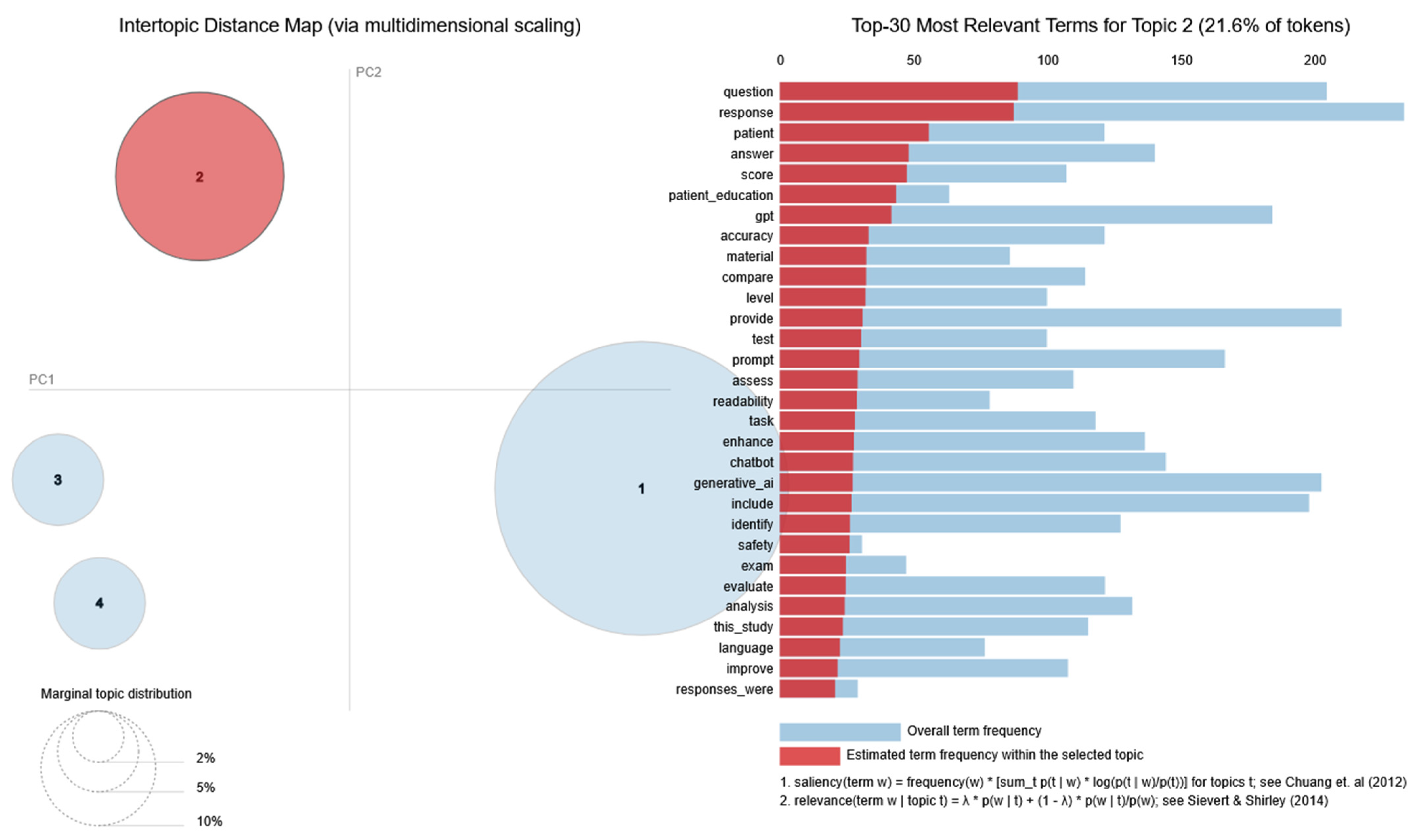
| Topic 2 (21.6% of tokens) | question, response, patient, patient_education, accuracy, readability, safety, exam, evaluate, test | LDA Topic 2—Evaluation, Readability, and Safety in AI-Generated Educational Content | Theme 2—Educational Impact for Students, Performance, and Learning Outcomes Theme 3—Content Quality, Readability, and Literacy |
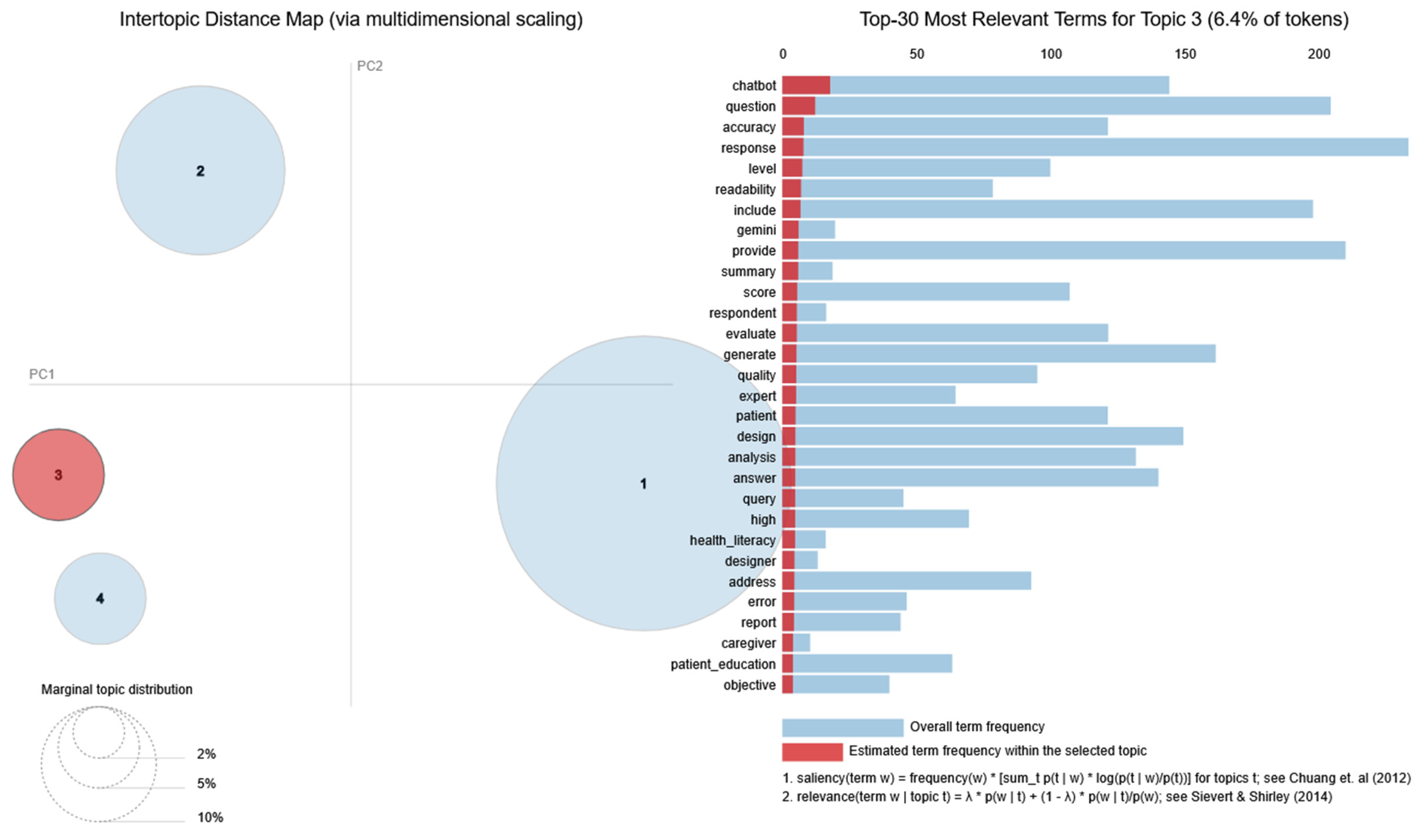
| Topic 3 (6.4% of tokens) | chatbot, accuracy, readability, health_literacy, evaluate, quality, summary, caregiver, expert | LDA Topic 3—Chatbots, Health Literacy, and Content Quality | Theme 3—Content Quality, Readability, and Literacy |
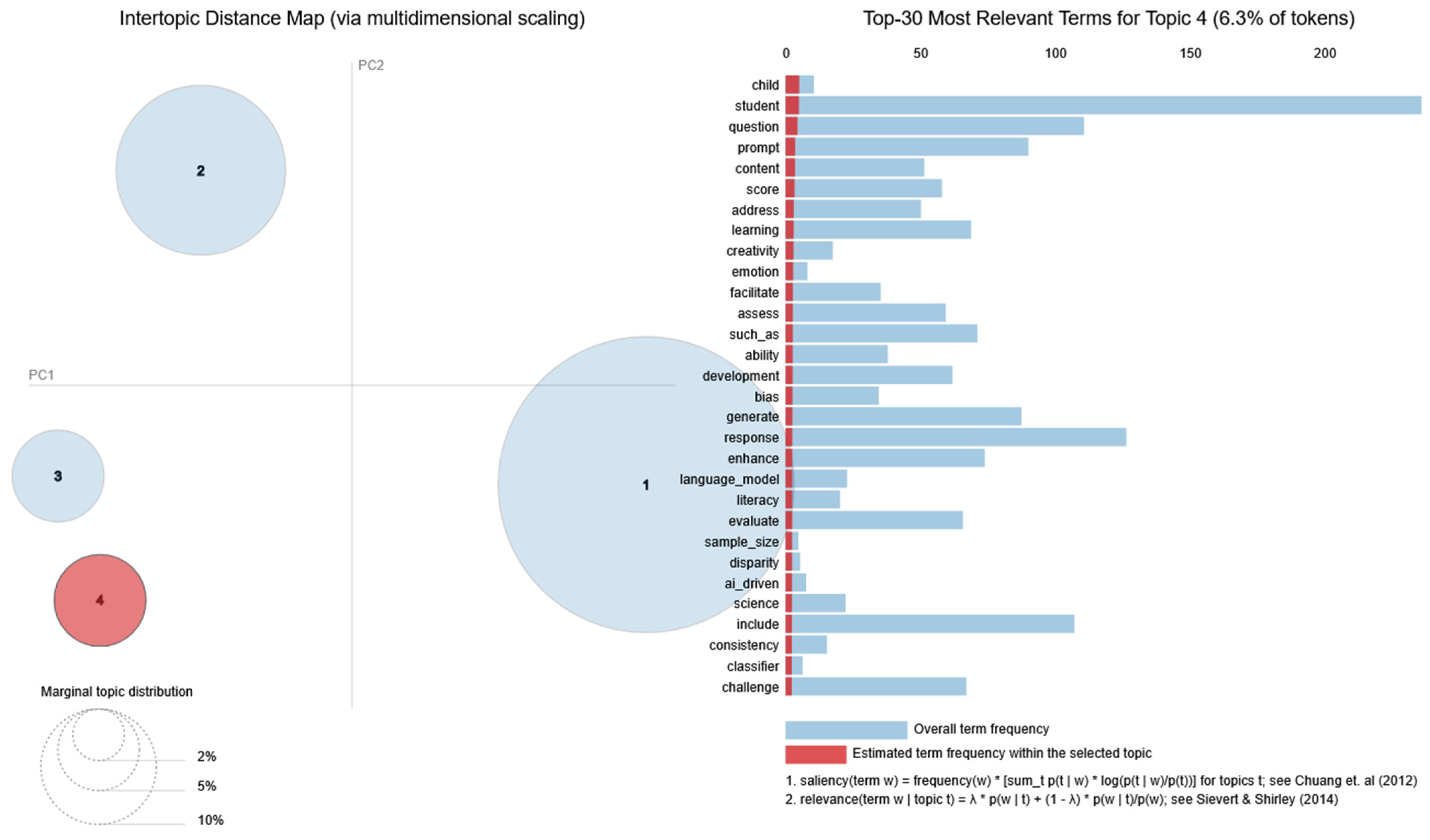
| Topic 4 (6.3% of tokens) | child, student, creativity, emotion, development, bias, disparity, literacy, ai_driven, science | LDA Topic 4—Ethics, Bias, and Fairness in AI-Driven Education | Theme 4—Ethics, Personalization, and Responsible Use of AI in Education Theme 2—Educational Impact for Students, Performance, and Learning Outcomes |
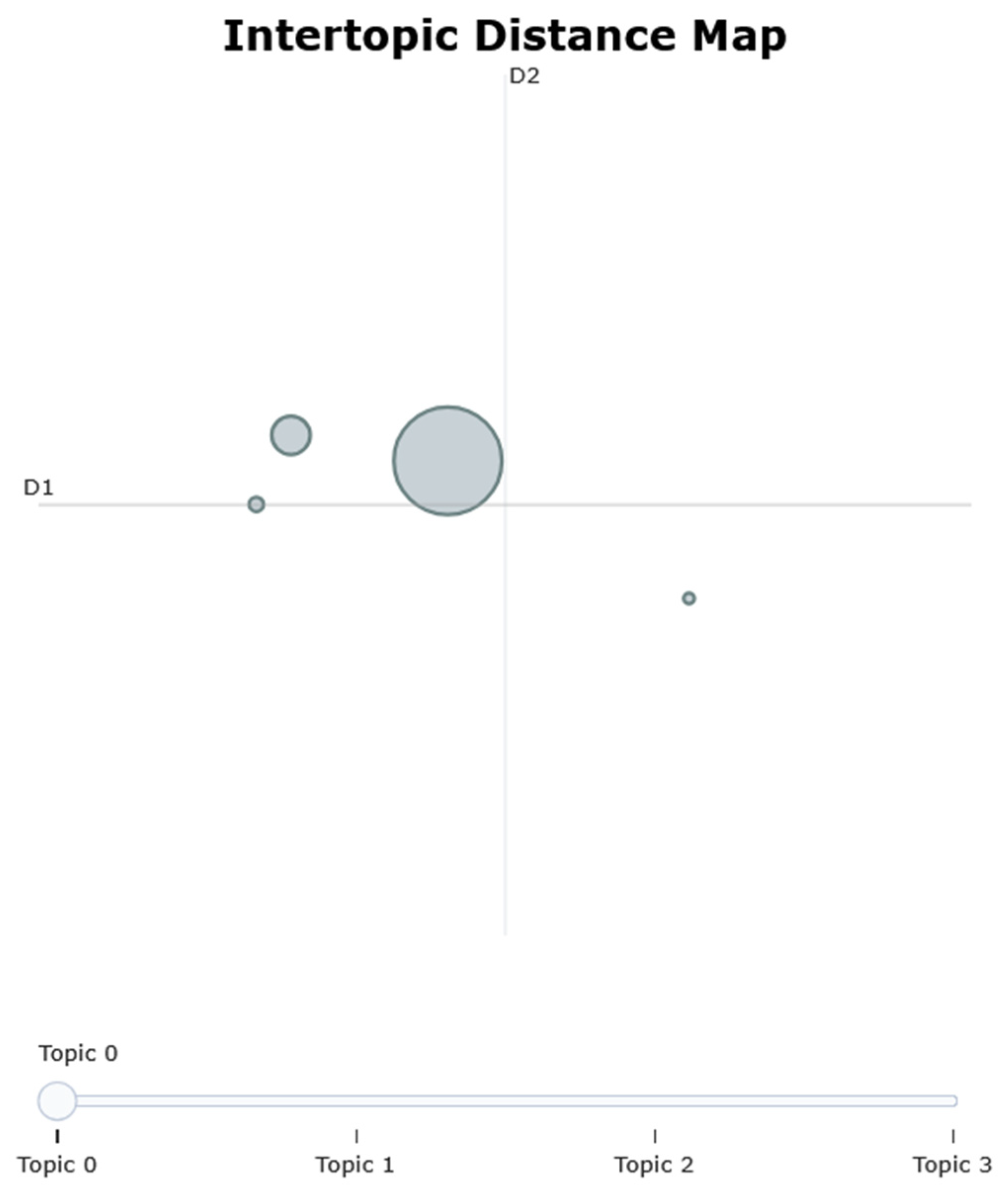
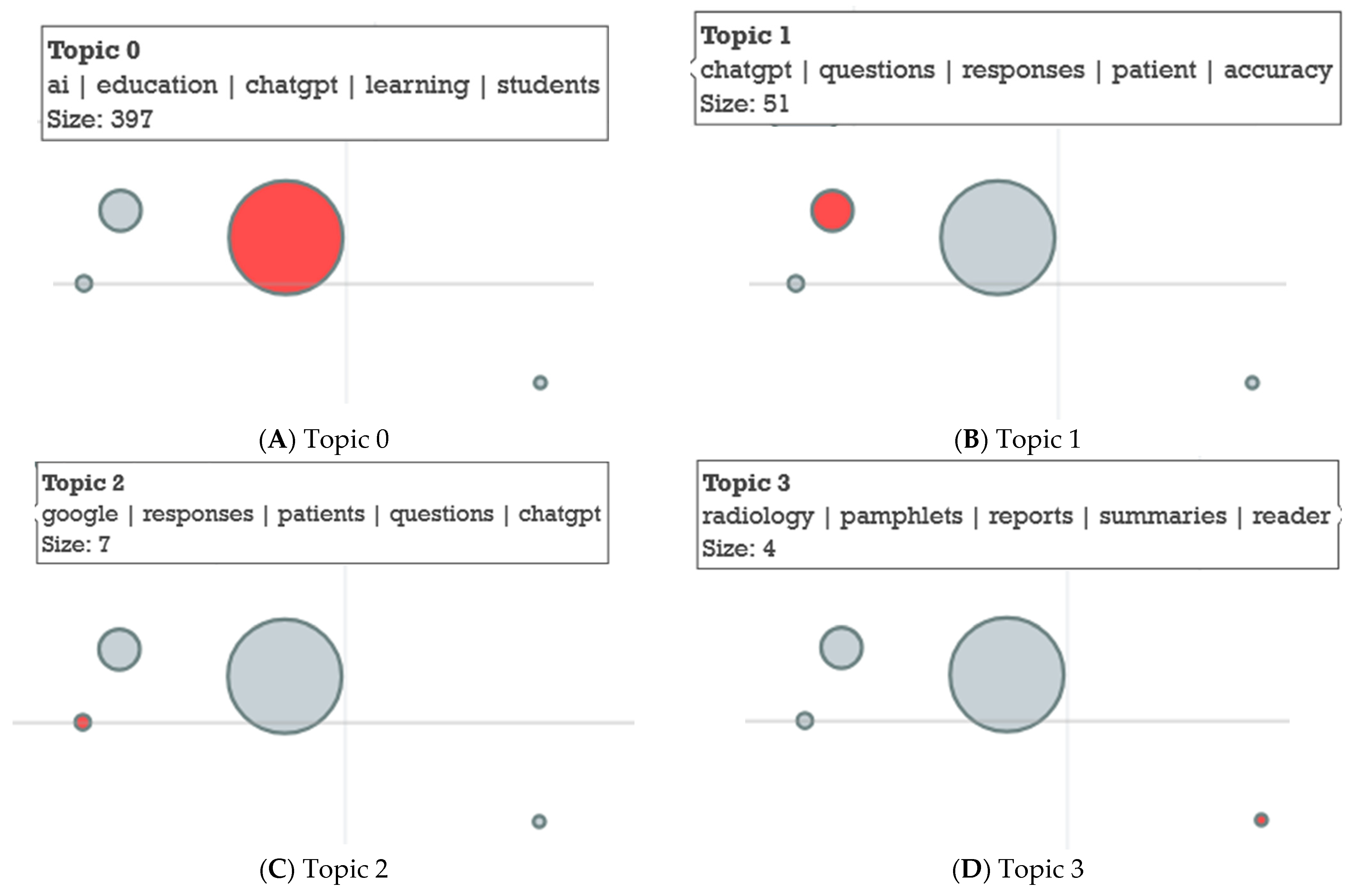
| BERTopic (Size) | Most Salient Words | BERTopic Focus | Matching Theme |
|---|---|---|---|
| BERTopic 0 (size 397) | ai, education, chatgpt, learning, students, research, study, use, educational, using | BERTopic 0—General Applications of AI/ChatGPT in Education with Focus on Student and Learning | Theme 1—Technological Foundations of LLMs in education Theme 2—Educational Impact for Students, Performance, and Learning Outcomes |
| BERTopic 1 (size 51) | chatgpt, questions, responses, patient, accuracy, ai, surgery, education, dental, information | BERTopic 1—Accuracy and Evaluation of ChatGPT in Medical or Dental Education | Theme 2—Educational Impact for Students, Performance, and Learning Outcomes Theme 3—Content Quality, Readability, and Literacy |
| BERTopic 2 (size 7) | google, responses, patients, questions, chatgpt, readability, floaters, ophthalmologists, patient, gemini | BERTopic 2—Comparisons of ChatGPT vs. Gemini in Patient Education with a Focus on Ophthalmology | Theme 3—Content Quality, Readability, and Literacy |
| BERTopic 3 (size 4) | radiology, pamphlets, reports, summaries, reader, 99, radiology reports, gpt4, radiologists, accuracy | BERTopic 3—GPT-4 in Radiology for Patient Education | Theme 3—Content Quality, Readability, and Literacy |
| Journal | 2024 JIF | JIF Quartile |
|---|---|---|
| International Journal of Information Management | 27.0 | Q1 |
| Clinical and Molecular Hepatology | 16.9 | Q1 |
| Visual Computing for Industry Biomedicine and Art | 6.0 | Q1 |
| Journal of Science Education and Technology | 5.5 | Q1 |
| Education and Information Technologies | 5.4 | Q1 |
| Journal of University Teaching and Learning Practice | 4.4 | Q1 |
| Education in the Knowledge Society | 2.8 | Q1 |
| Research in Social & Administrative Pharmacy | 2.8 | Q2 |
| Applied Sciences—Basel | 2.5 | Q2 |
| Annals of Surgical Treatment and Research | 1.6 | Q3 |
Disclaimer/Publisher’s Note: The statements, opinions and data contained in all publications are solely those of the individual author(s) and contributor(s) and not of MDPI and/or the editor(s). MDPI and/or the editor(s) disclaim responsibility for any injury to people or property resulting from any ideas, methods, instructions or products referred to in the content. |
© 2025 by the authors. Licensee MDPI, Basel, Switzerland. This article is an open access article distributed under the terms and conditions of the Creative Commons Attribution (CC BY) license (https://creativecommons.org/licenses/by/4.0/).
Share and Cite
Cibu, B.-R.; Crăciun, L.; Molănescu, A.G.; Cotfas, L.-A. Exploring the Educational Applications of Large Language Models: A Systematic Review and Topic Analysis. Electronics 2025, 14, 4683. https://doi.org/10.3390/electronics14234683
Cibu B-R, Crăciun L, Molănescu AG, Cotfas L-A. Exploring the Educational Applications of Large Language Models: A Systematic Review and Topic Analysis. Electronics. 2025; 14(23):4683. https://doi.org/10.3390/electronics14234683
Chicago/Turabian StyleCibu, Bianca-Raluca, Liliana Crăciun, Anca Gabriela Molănescu, and Liviu-Adrian Cotfas. 2025. "Exploring the Educational Applications of Large Language Models: A Systematic Review and Topic Analysis" Electronics 14, no. 23: 4683. https://doi.org/10.3390/electronics14234683
APA StyleCibu, B.-R., Crăciun, L., Molănescu, A. G., & Cotfas, L.-A. (2025). Exploring the Educational Applications of Large Language Models: A Systematic Review and Topic Analysis. Electronics, 14(23), 4683. https://doi.org/10.3390/electronics14234683