Enhanced Control of Shunt Active Power Filter for Non-Active Current Compensation and Power Management in DC-Powered Systems

Abstract
1. Introduction
DC Power Source Degradation: Causes and Consequences
- -
- heat problem: rapid or frequent changes in current generate more heat, which can degrade the internal materials of the battery. High temperatures affect the chemical reactions that occur in the cells, which can shorten their life;
- -
- charge/discharge cycle: batteries have a certain number of charge and discharge cycles. Rapid changes in current can lead to faster wear of the electrodes and electrolyte, which in turn shortens their lifespan;
- -
- the “ripple” phenomenon: in the case of lithium-ion batteries, rapid changes in current can lead to a phenomenon called “ripple,” which can result in an uneven distribution of active materials within the cell, which also affects its performance;
- -
- cyclic degradation: rapid charging and discharging can lead to cyclic degradation, which means that the battery loses its capacity faster than when charged and discharged under stable conditions;
- -
- lithium plating: rapid charging, especially at low temperatures, can cause lithium plating to occur on the anode, leading to reduced capacity and an increased risk of failure.
- -
- thermal load: rapid changes in load cause rapid increases and decreases in temperature, which can accelerate degradation of materials in the cell;
- -
- mechanical stress: cyclic changes can cause mechanical stress in the cell structure, leading to micro-cracks and damage;
- -
- catalyst and electrode degradation: changes in load can affect the uniformity of chemical reactions, which in turn can accelerate catalyst and electrode wear;
- -
- changes in operating conditions: rapid changes can cause adverse operating conditions, such as incomplete reactions or deposit formation, which reduce cell efficiency and lifespan.
2. SAPF Control with the Use of Equivalent Conductance Signal
2.1. SAPF Basic Configuration: Block Structure and Signals
2.2. Reference Signal for SAPF Action
3. Reference Signal for the SAPF Action
3.1. Basic Formula Based on Energy Flow Balance
- (1)
- Any variation in the load active power PL, and/or the power losses PAF in the SAPF, results in a corresponding change in the equivalent conductance signal value.
- (2)
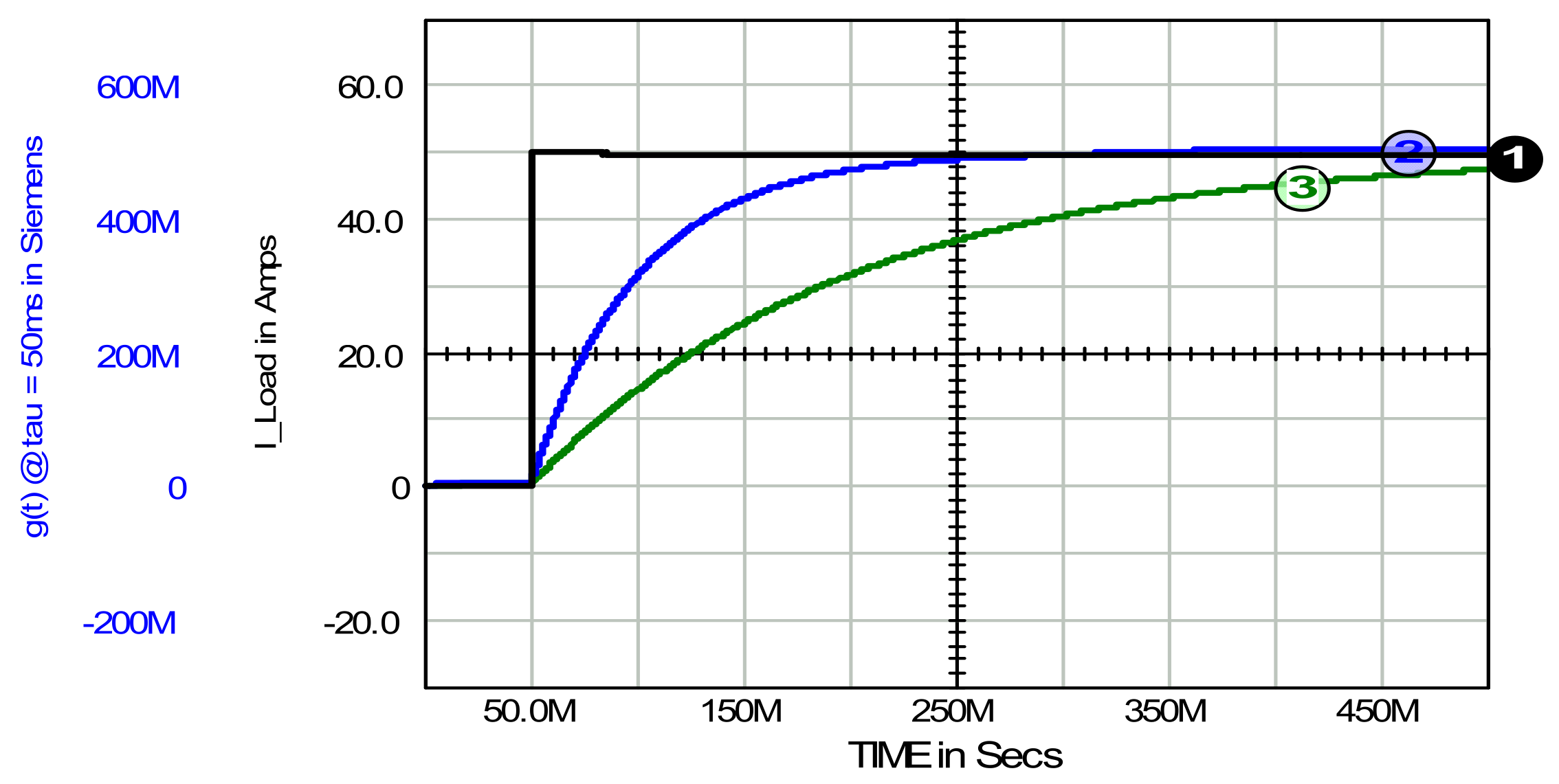
- Following any such variation, the conductance signal transitions exponentially towards its new steady-state value, characterized by a user-defined time constant τ.
3.2. Energy Flow Balancing in the Source-Active Filter-Load System
- (1)
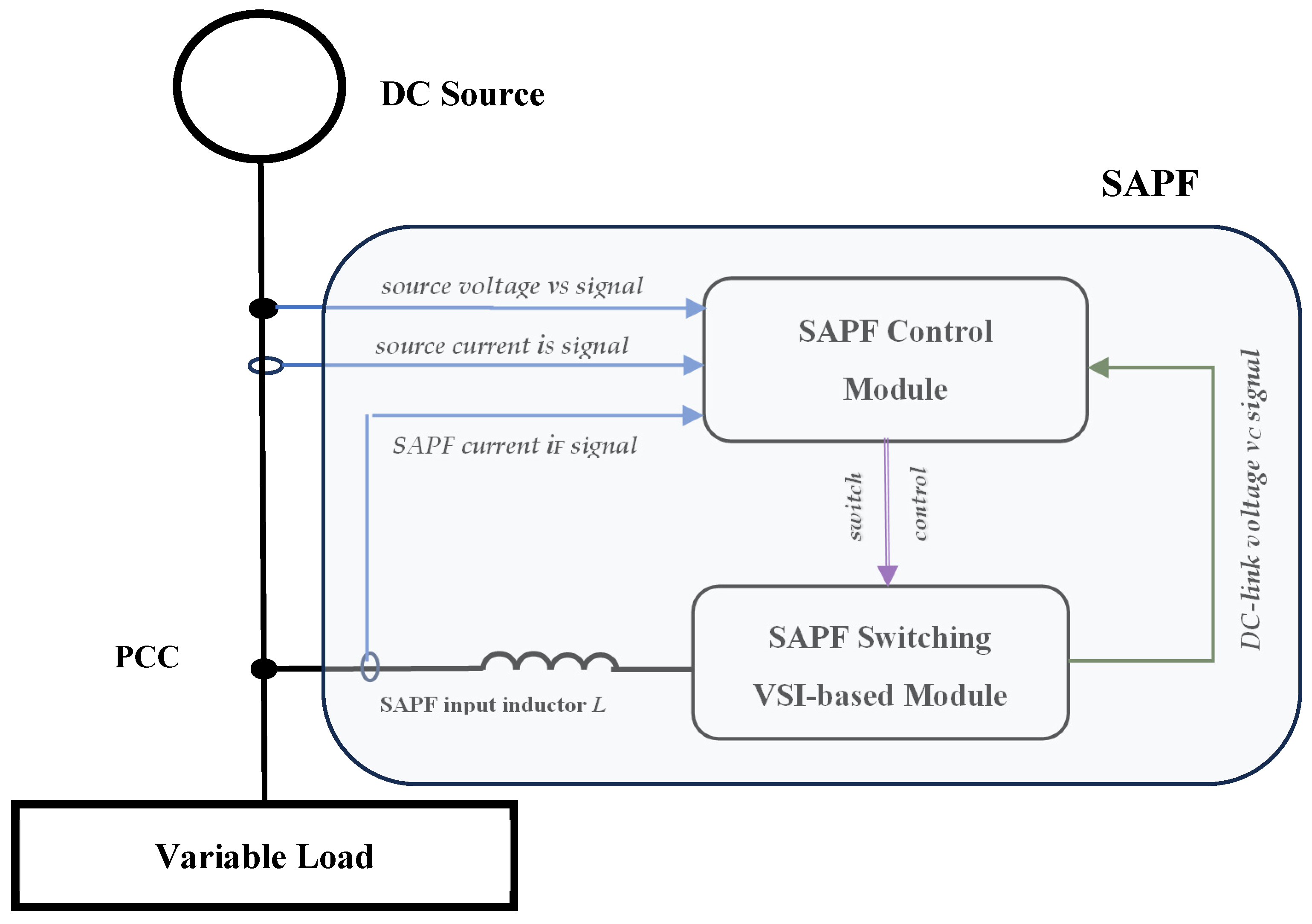
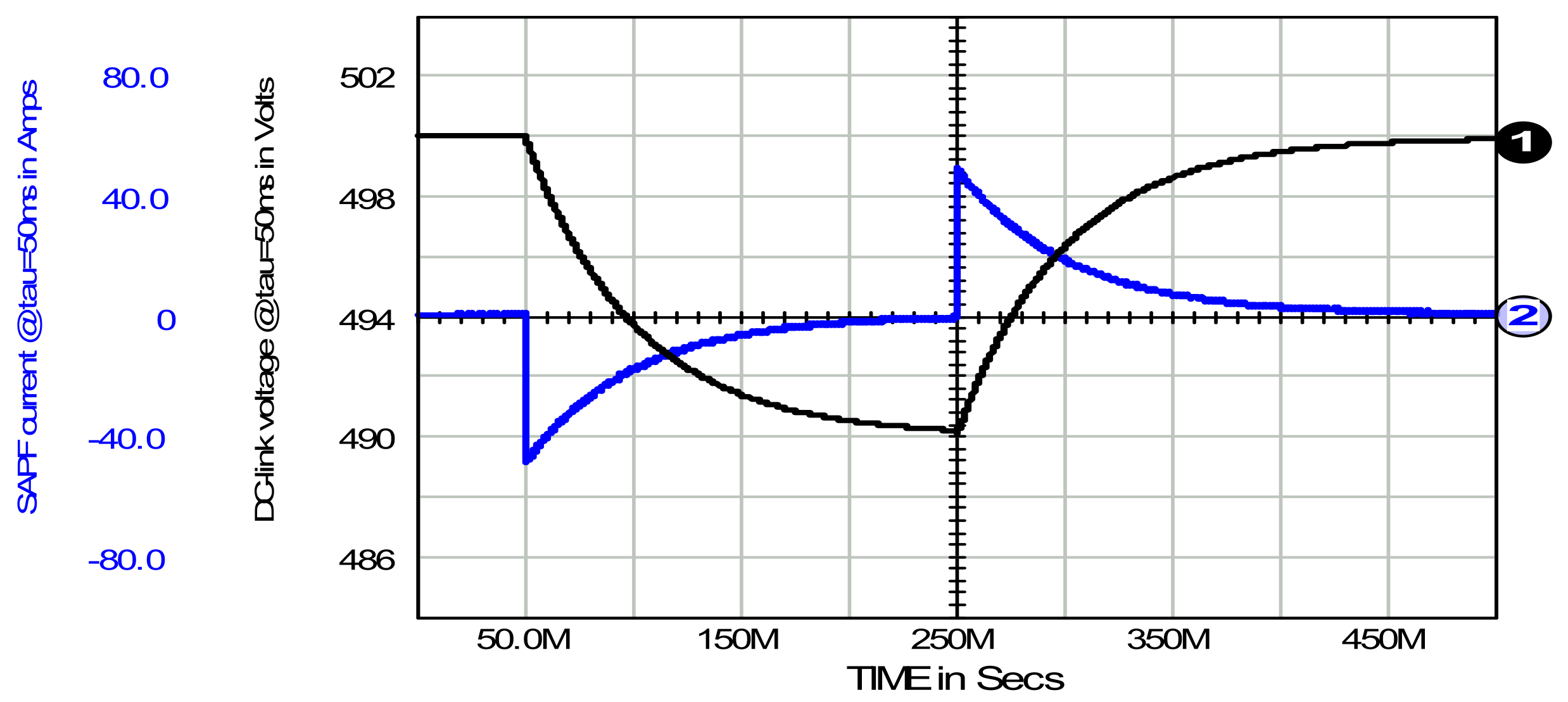
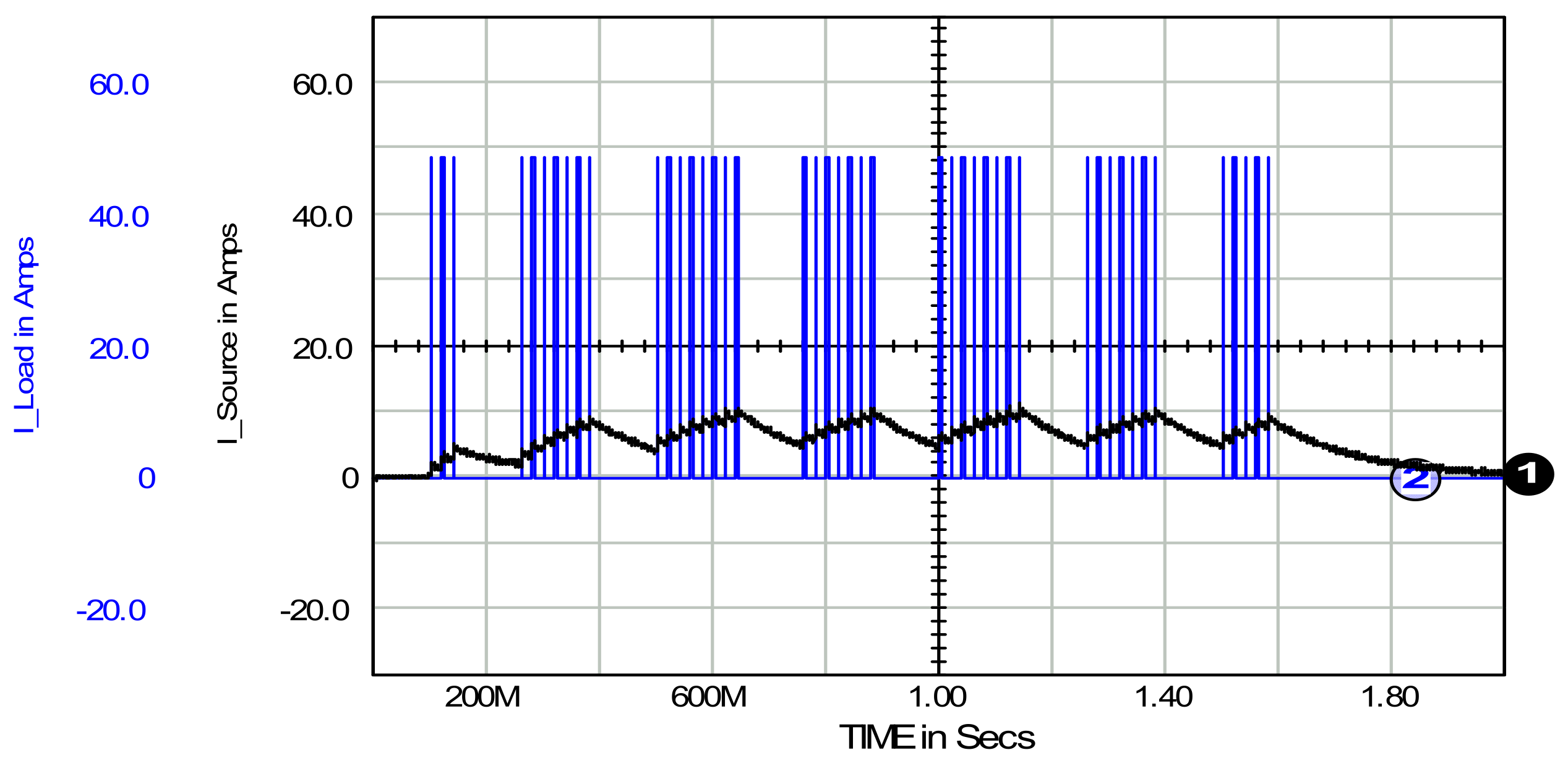
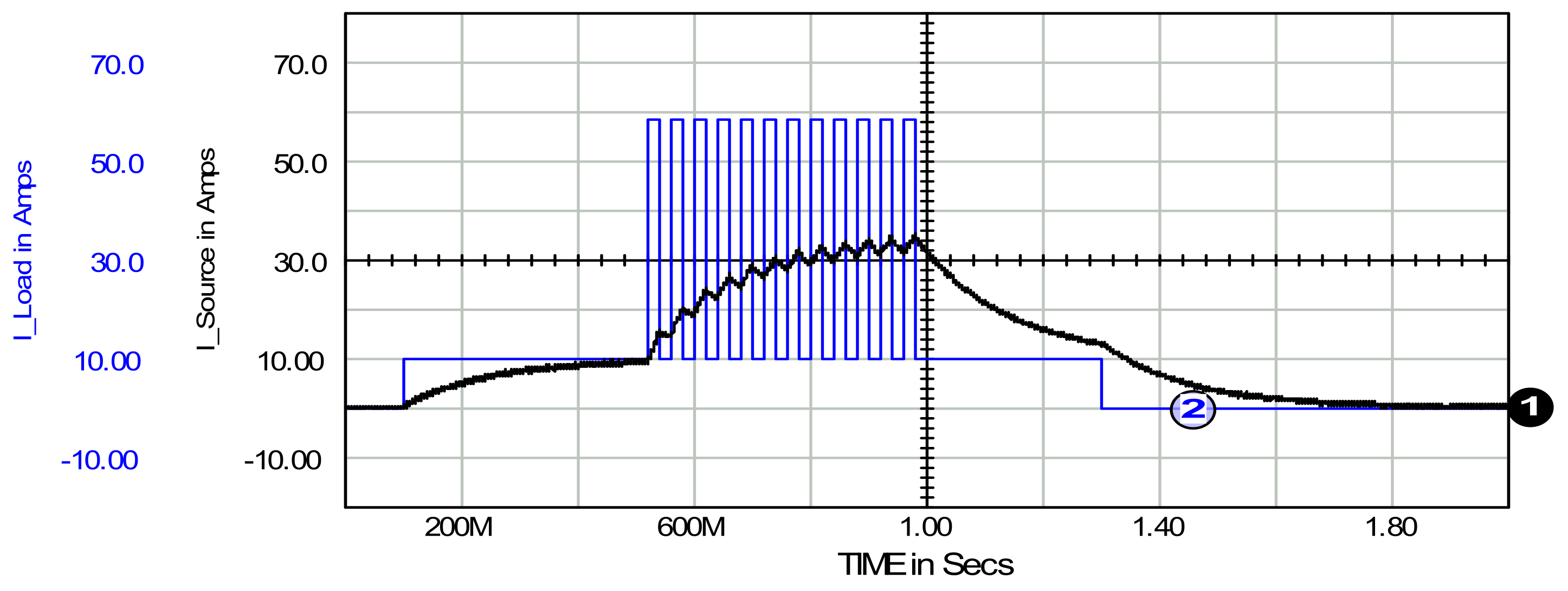
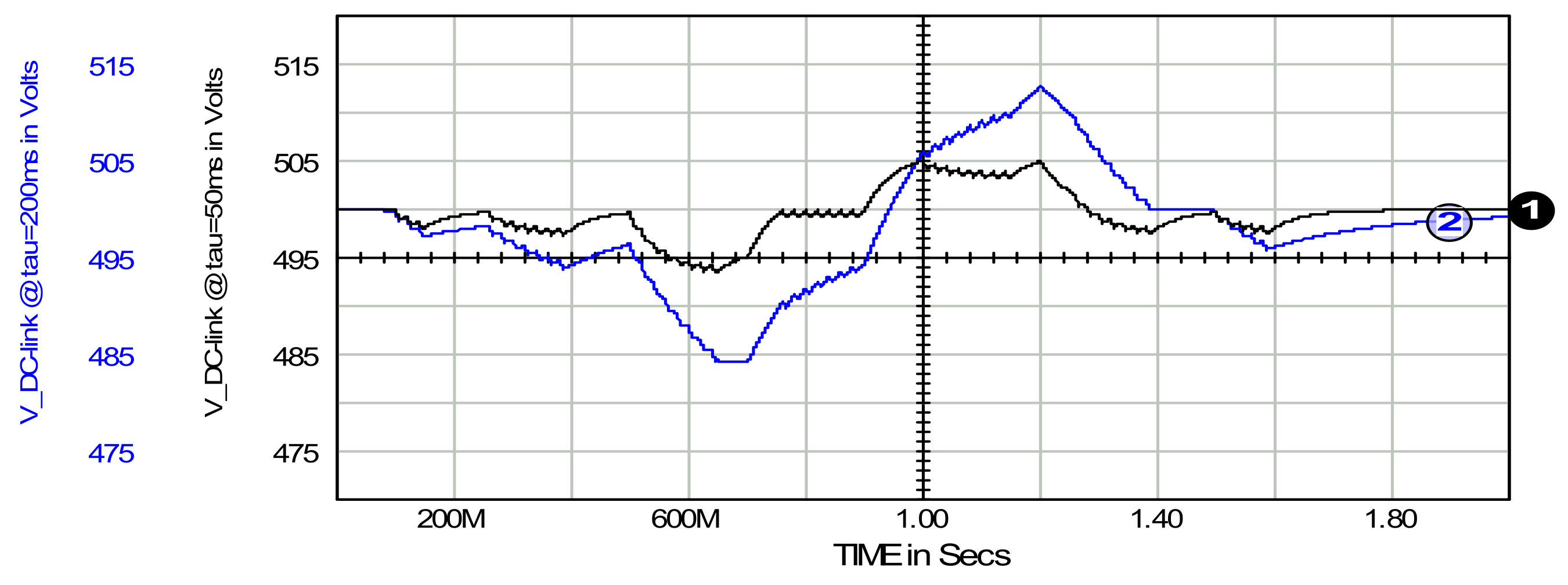
- Due to the “implemented inertia” in the operation of the active filter, any change in the load active power is perceived by the source with a certain delay. By appropriately selecting the time constant τ, it is possible to control the level of this inertia, which is directly related to the distribution of energy drawn from the source and from the active filter. The longer the time constant τ, and, therefore, the time required to reach a steady state in the circuit, the greater the level of energy flow buffering by SAPF reactance elements: the DC-link capacitor C and the input smoothing inductor L, as shown later in Equations (15)–(17), Figure 1, and the related commentary. This effect is crucial. It may constitute a beneficial feature of the proposed method: energy flow buffering enables the averaging of the power drawn from the source, thereby reducing source degradation and energy losses in the supply line under variable load conditions.
- (2)
- The conductance defined by Equation (14) may assume negative values if the instantaneous energy wAF(t), stored in the active filter, exceeds the initial energy WAFini, accumulated during the SAPF’s startup phase. Such a situation may occur when the load becomes generative, i.e., it delivers power back to the system. In general, the sign transitions of the conductance—from positive to negative and vice versa—are indicative of energy consumption or generation by the devices interfaced with the active filter. This behavior is independent of whether these devices are connected on the source-load line side or the DC-link side of the SAPF. The exchange of energy among these components can be averaged or buffered by appropriately selecting the value of the parameter τ, which governs the system’s dynamic response.
3.3. Implementation Formula of the Conductance Signal for a VSI-Based SAPF
4. Verification of the SAPF Control Method Using Conductance Signal
Basic SAPF Properties
5. Tuning of the SAPF Functionality
5.1. Considered Load Current
5.2. Selection of the Time Constant
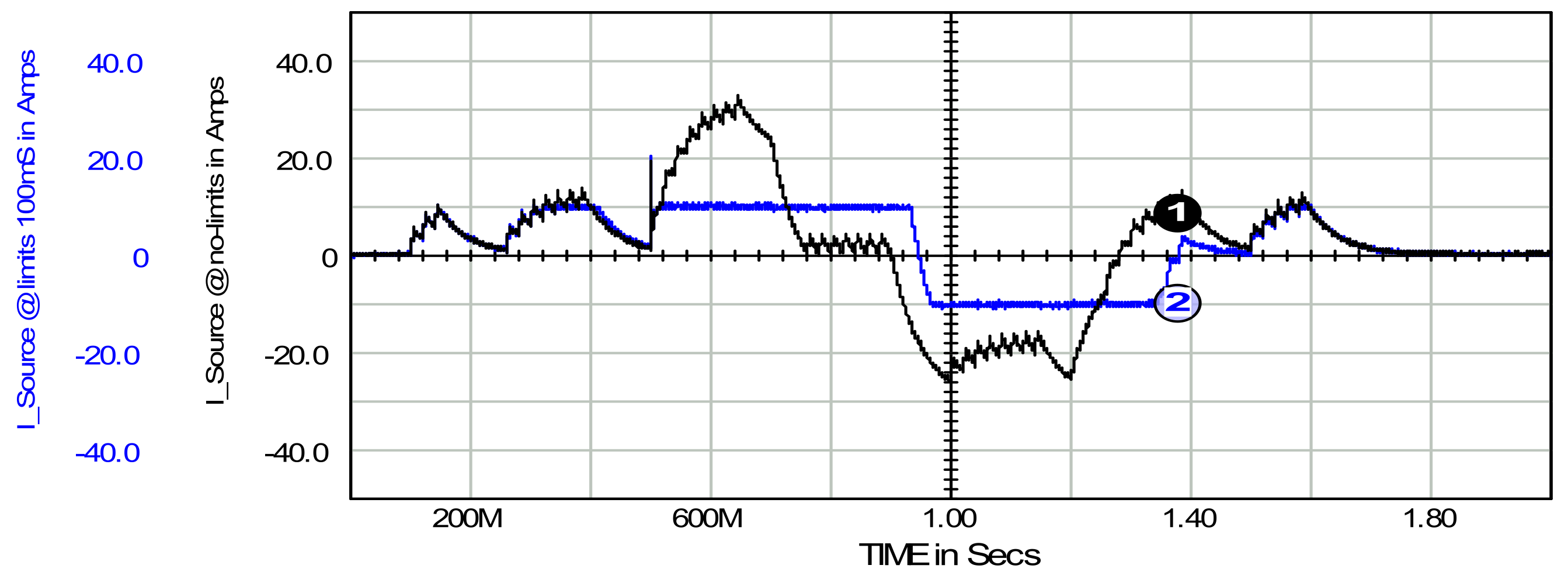
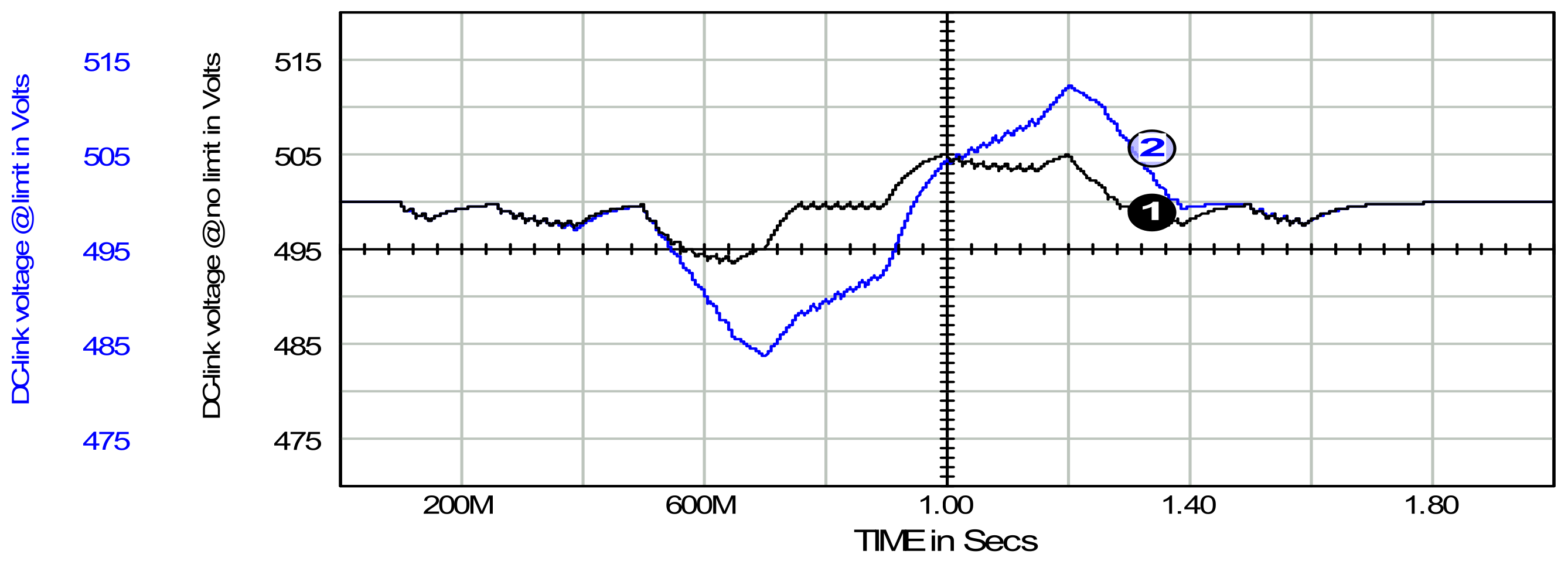
5.3. Limitation of the Conductance Signal Variation Range
6. Power/Load Connection to the DC-Link Capacitor Terminals
7. Conclusions
- Sensorless Control: By deriving the conductance signal primarily from the DC-link capacitor voltage, the method eliminates the necessity for additional current or power sensors, leading to a simplified and more efficient control design.
- Effective Non-Active Current Compensation: The SAPF demonstrably reduces non-active current components, leading to a substantial decrease in the root mean square (RMS) and standard deviation (std-dev) of the source current, thus improving overall power quality.
- Enhanced Source Protection: By averaging the power drawn from the source and stabilizing current changes, the method significantly mitigates the detrimental effects of rapid load variations on batteries and fuel cells, thereby extending their operational lifespan and improving reliability.
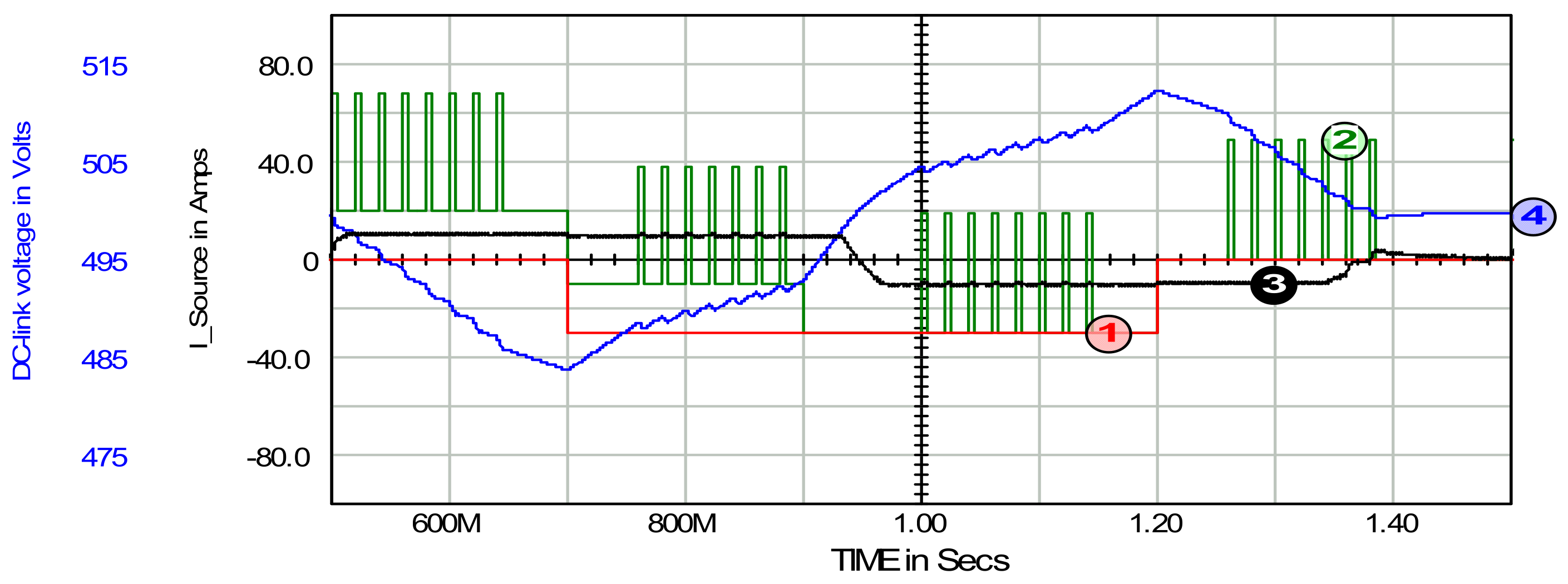
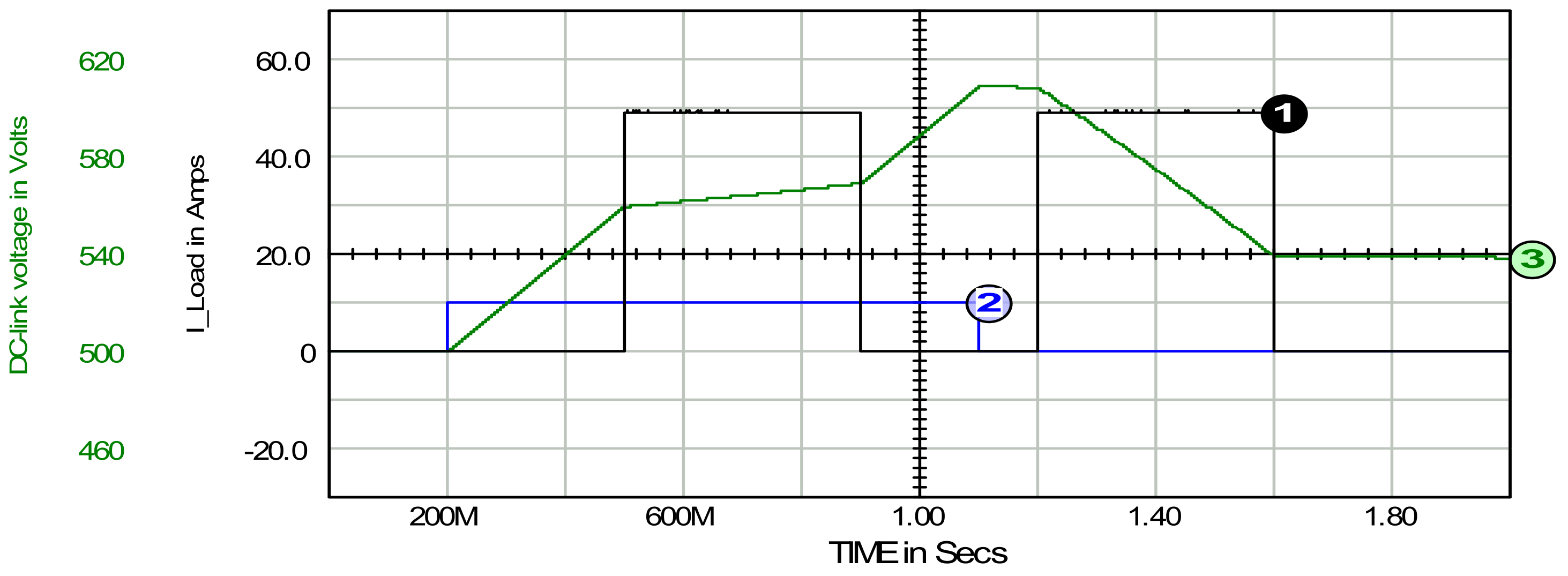
- Flexible Power Management: The ability to tune the system’s dynamic response through a user-defined time constant (τ) and to impose limits on the conductance signal’s variation range provides unprecedented control over energy flow buffering and management of generative loads. This includes the unique capability to redirect generated power to local loads or store it in the DC-link capacitor without returning it to the main source.
- Universal Applicability: The underlying energy-based formulation of the conductance signal ensures its applicability across various DC and AC system configurations, including those employing different inverter types.
Funding
Data Availability Statement
Conflicts of Interest
References
- Barros, J.; Apraiz, M.; Diego, R.I. Definition and measurement of power quality indices in low voltage DC networks. In Proceedings of the IEEE 9th International Workshop on Applied Measurements for Power Systems (AMPS), Bologna, Italy, 26–28 September 2018. [Google Scholar]
- Barros, J.; Apraiz, M.; Diego, R.I. Power Quality in DC Distribution Networks. Energies 2019, 12, 848. [Google Scholar] [CrossRef]
- Liao, J.; Liu, Y.; Guo, C.; Zhou, N.; Wang, Q.; Kang, W.; Vasquez, J.C.; Guerrero, J.M. Power quality of DC microgrid: Index classification, definition, correlation analysis and cases study. Int. J. Electr. Power Energy Syst. 2024, 156, 109782. [Google Scholar] [CrossRef]
- Bahloul, M.; Khadem, S. Impact of Power Sharing Method on Battery Life Extension in HESS for Grid Ancillary Services. IEEE Trans. Energy Convers. 2019, 34, 1317–1327. [Google Scholar] [CrossRef]
- Carter, R.; Cruden, A.; Hall, P.J. Optimizing for Efficiency or Battery Life in a Battery/Supercapacitor Electric Vehicle. IEEE Trans. Veh. Technol. 2012, 61, 1526–1533. [Google Scholar] [CrossRef]
- Timilsina, L.; Badr, P.R.; Hoang, P.H.; Ozkan, G.; Papari, B.; Edrington, C.S. Battery Degradation in Electric and Hybrid Electric Vehicles: A Survey Study. IEEE Access 2023, 11, 42431–42462. [Google Scholar] [CrossRef]
- Elmahallawy, M.; Elfouly, T.; Alouani, A.; Massoud, A.M. A Comprehensive Review of Lithium-Ion Batteries Modeling, and State of Health and Remaining Useful Lifetime Prediction. IEEE Access 2022, 10, 119040–119070. [Google Scholar] [CrossRef]
- Menye, J.S.; Camara, M.-B.; Dakyo, B. Lithium Battery Degradation and Failure Mechanisms: A State-of-the-Art Review. Energies 2025, 18, 342. [Google Scholar] [CrossRef]
- Rahman, T.; Alharbi, T. Exploring Lithium-Ion Battery Degradation: A Concise Review of Critical Factors, Impacts, Data-Driven Degradation Estimation Techniques, and Sustainable Directions for Energy Storage Systems. Batteries 2024, 10, 220. [Google Scholar]
- Lipu, M.S.H.; Al Mamun, A.; Ansari, S.; Miah, M.S.; Hasan, K.; Meraj, S.T.; Abdolrasol, M.G.M.; Rahman, T.; Maruf, M.H.; Sarker, M.R.; et al. Battery Management, Key Technologies, Methods, Issues, and Future Trends of Electric Vehicles: A Pathway toward Achieving Sustainable Development Goals. Batteries 2022, 8, 119. [Google Scholar] [CrossRef]
- Jin, S.; Huang, X.; Sui, X.; Wang, S.; Teodorescu, R.; Stroe, D.-I. Overview of Methods for Battery Lifetime Extension. In Proceedings of the EPE’21 ECCE Europe, Ghent, Belgium, 6–10 September 2021. [Google Scholar]
- Cai, F.; Cai, S.; Tu, Z. Proton exchange membrane fuel cell (PEMFC) operation in high current density (HCD): Problem, progress and perspective. Energy Convers. Manag. 2024, 307, 118348. [Google Scholar] [CrossRef]
- Shi, Y.; Janssen, H.; Lehnert, W.A. Transient Behavior Study of Polymer Electrolyte Fuel Cells with Cyclic Current Profiles. Energies 2019, 12, 2370. [Google Scholar] [CrossRef]
- Wu, Q.; Li, S.; Hou, Z.; Lu, L.; Gu, X.; Chen, H.; Luan, W. Review of control strategies for onboard fuel cells: Insights from degradation mechanisms under variable load conditions. Int. J. Hydrogen Energy 2024, 110, 628–645. [Google Scholar] [CrossRef]
- Saidouini, W.H.; Marchand, M.; Gerard, D.; Jemei, S.; Bouquain, D. Impact of start-stop and load cycling on the lifetime of PEMFC-powered vehicles. In Proceedings of the IEEE Vehicle Power and Propulsion Conference (VPPC), 2024, Washington, DC, USA, 7–10 October 2024. [Google Scholar]
- Luca, R.; Whiteley, M.; Neville, T.; Shearing, P.; Brett, D.J.L. Comparative study of energy management systems for a hybrid fuel cell electric vehicle—A novel mutative fuzzy logic controller to prolong fuel cell lifetime. Int. J. Hydrogen Energy 2022, 47, 24042–24058. [Google Scholar] [CrossRef]
- Zhao, X.; Wang, L.; Zhou, Y.; Pan, B.; Wang, R.; Wang, L.; Yan, X. Energy management strategies for fuel cell hybrid electric vehicles: Classification, comparison, and outlook. Energy Convers. Manag. 2022, 270, 116179. [Google Scholar] [CrossRef]
- Ahmadi, S.; Bathaee, S.M.T.; Hosseinpour, A.H. Improving fuel economy and performance of a fuel-cell hybrid electric vehicle (fuel-cell, battery, and ultra-capacitor) using optimized energy management strategy. Energy Convers. Manag. 2018, 160, 74–84. [Google Scholar] [CrossRef]
- Marzougui, H.; Amari, M.; Kadri, A.; Bacha, F.; Ghouili, J. Energy management of fuel cell/battery/ultracapacitor in electrical hybrid vehicle. Int. J. Hydrogen Energy 2017, 42, 8857–8869. [Google Scholar] [CrossRef]
- Fryze, S. Wirk-, Blind-, und Scheinleistung in Elektrischen Stromkreisen mit nichtsinusformigem Verlauf von Strom und Spannung. Elektrotech. Z. 1932, 25, 33. [Google Scholar]
- Depenbrock, M.; Staudt, V. The FBD-method as tool for compensating non-active currents. In Proceedings of the 8th International Conference on Harmonics and Quality of Power, Athens, Greece, 14–16 October 1998; pp. 320–324. [Google Scholar]
- Asiminoaei, L.; Blaabjerg, F.; Hansen, S. Detection is key. Harmonic detection methods for active power filter applications. IEEE Ind. Appl. Mag. 2007, 13, 22–33. [Google Scholar] [CrossRef]
- Boopathi, R.; Indragandhi, V. Comparative analysis of control techniques using a PV-based SAPF integrated grid system to enhance power quality. Adv. Electr. Eng. Electron. Energy 2023, 5, 100222. [Google Scholar] [CrossRef]
- Babu, N. Adaptive grid-connected inverter control schemes for power quality enrichment in microgrid systems: Past, present, and future perspectives. Electr. Power Syst. Res. 2024, 230, 110288. [Google Scholar] [CrossRef]
- Duc, M.L.; Hlavaty, L.; Bilik, P.; Martinek, R. Harmonic Mitigation Using Meta-Heuristic Optimization for Shunt Active Power Filters: A Review. Energies 2023, 16, 3998. [Google Scholar] [CrossRef]
- Hoon, Y.; Radzi, M.A.M.; Hassan, M.K.; Mailah, N.F. Control Algorithms of Shunt Active Power Filter for Harmonics Mitigation: A Review. Energies 2017, 10, 2038. [Google Scholar] [CrossRef]
- Moreno, V.; Pigazo, A. Modified FBD method in active power filters to minimize the line current harmonics. IEEE Trans. Power Del. 2006, 22, 735–736. [Google Scholar] [CrossRef]
- Strzelecki, R.; Benysek, G.; Jarnut, M. Power quality conditioners with minimum number of current sensor requirement. Przegląd Elektrotech. (Electrotech. Rev.) 2008, 84, 295–298. [Google Scholar]
- Sharma, S.; Verma, V. Modified control strategy for shunt active power filter with MRAS-based DC voltage estimation and load current sensor reduction. IEEE Trans. Ind. Appl. 2021, 57, 1652–1663. [Google Scholar] [CrossRef]
- Szromba, A.; Mysinski, W. Voltage-source-based conductance-signal controlled shunt active power filter. In Proceedings of the 2017 European Conference on Power Electronics and Applications, Warsaw, Poland, 11–14 September 2017. [Google Scholar]
- Szromba, A. The Unified Power Quality Conditioner Control Method Based on the Equivalent Conductance Signals of the Compensated Load. Energies 2020, 13, 6298. [Google Scholar] [CrossRef]
- Nunez-Zuninga, T.; Pomilio, J. Shunt active power filter synthesizing resistive loads. IEEE Trans. Power Electron. 2002, 17, 273–278. [Google Scholar] [CrossRef]
- Fukuda, S.; Kanayama, T.; Muraoka, K. A current control method for active filters without detecting current harmonics. In Proceedings of the Fifth International Conference on Power Electronics and Drive Systems, 2003, PEDS 2003, Singapore, 17–20 November 2003; Volume 1, pp. 519–524. [Google Scholar]
- Ozdemir, E.; Ucar, M.; Kesler, M.; Kale, M. A simplified control algorithm for shunt active power filter without load and filter current measurement. In Proceedings of the IECON 2006-32nd Annual Conference on IEEE Industrial Electronics, Paris, France, 7–10 November 2006; pp. 2599–2604. [Google Scholar]
- Nedeljkovic, D.; Nemec, M.; Drobnic, K.; Ambrozic, V. Direct current control of active power filter without filter current measurement. In Proceedings of the 2008 International Symposium on Power Electronics, Electrical Drives, Automation and Motion, Ischia, Italy, 11–13 June 2008; pp. 72–76. [Google Scholar]
- Ketzer, M.B.; Jacobina, C.B. Multivariable load current sensorless controller for universal active power filter. IET Power Electron. 2014, 7, 1777–1786. [Google Scholar] [CrossRef]



| Circuit Description | Section/ Figure | RMS [A] | Std-Dev [A] | RMS Reduction vs. Reference [%] | Std-Dev Reduction vs. Reference [%] |
|---|---|---|---|---|---|
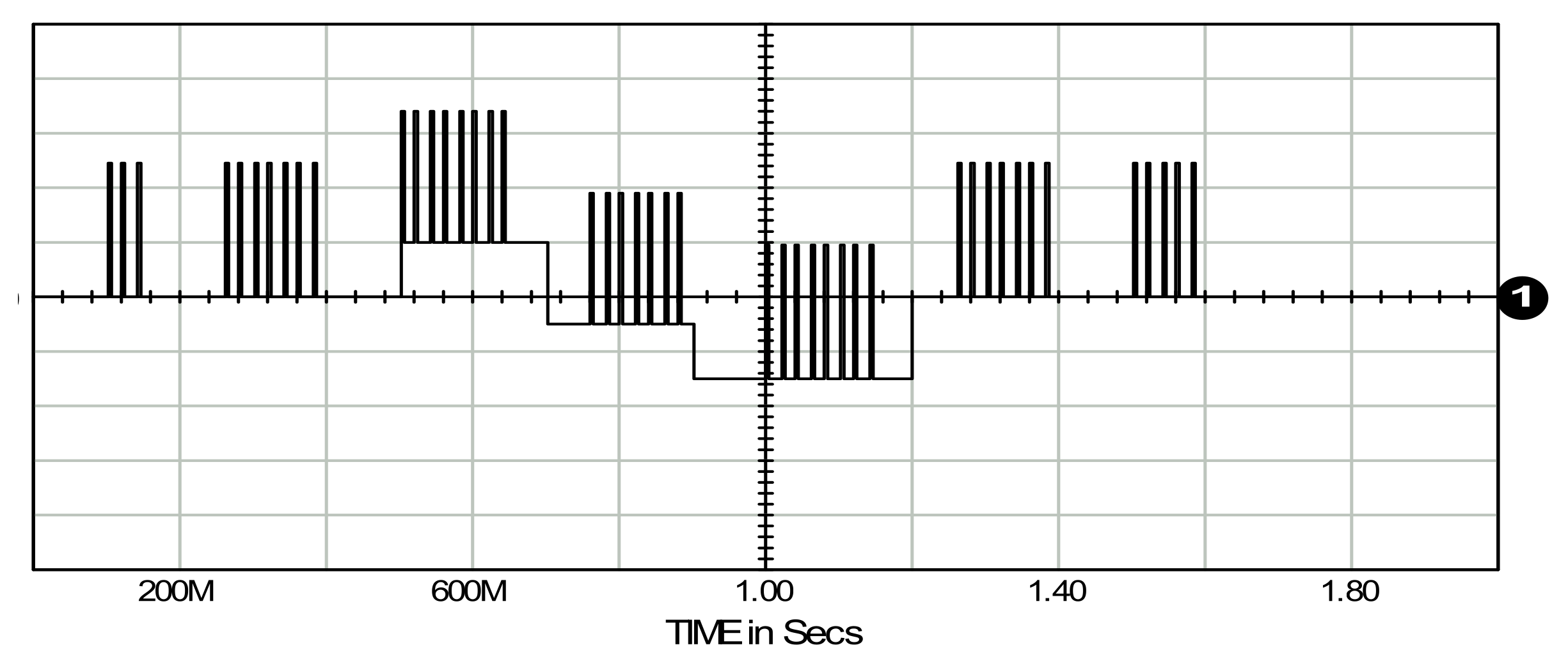
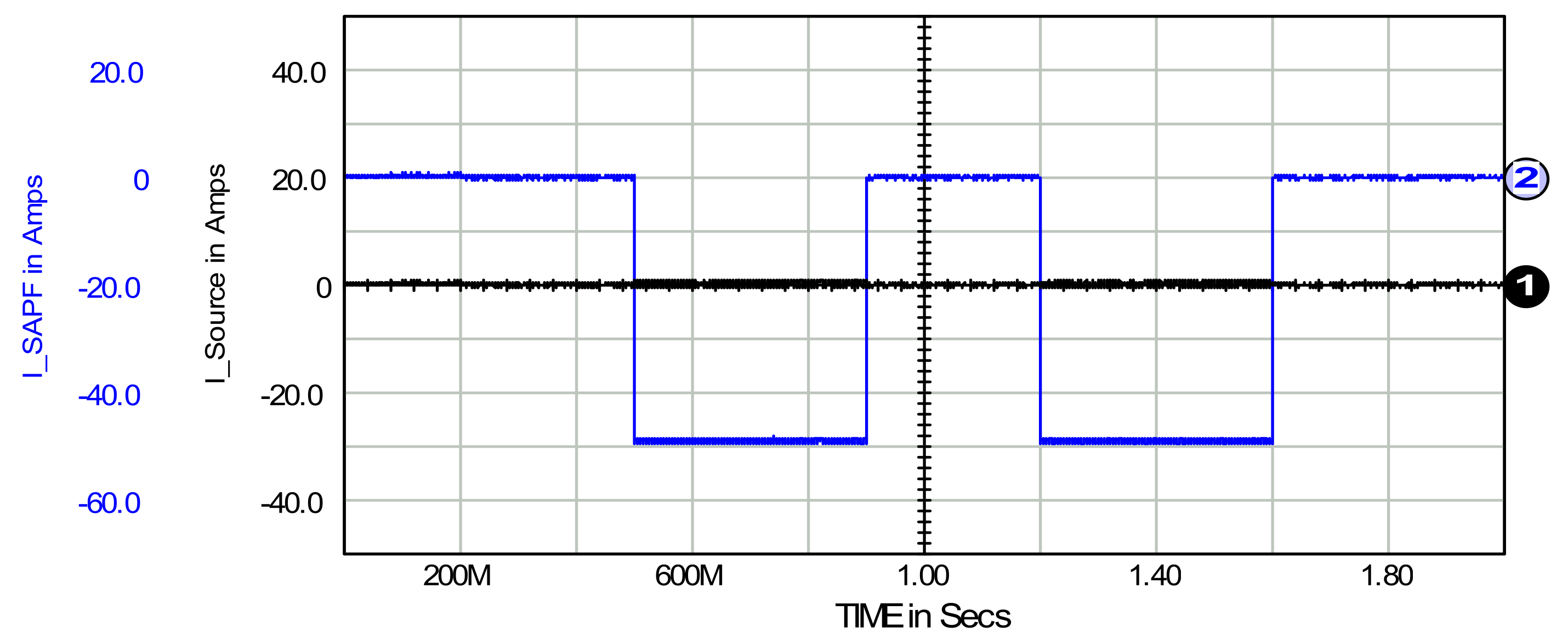
| Load reference current | 5.1/6 | 23.5 | 23.3 | - | - |
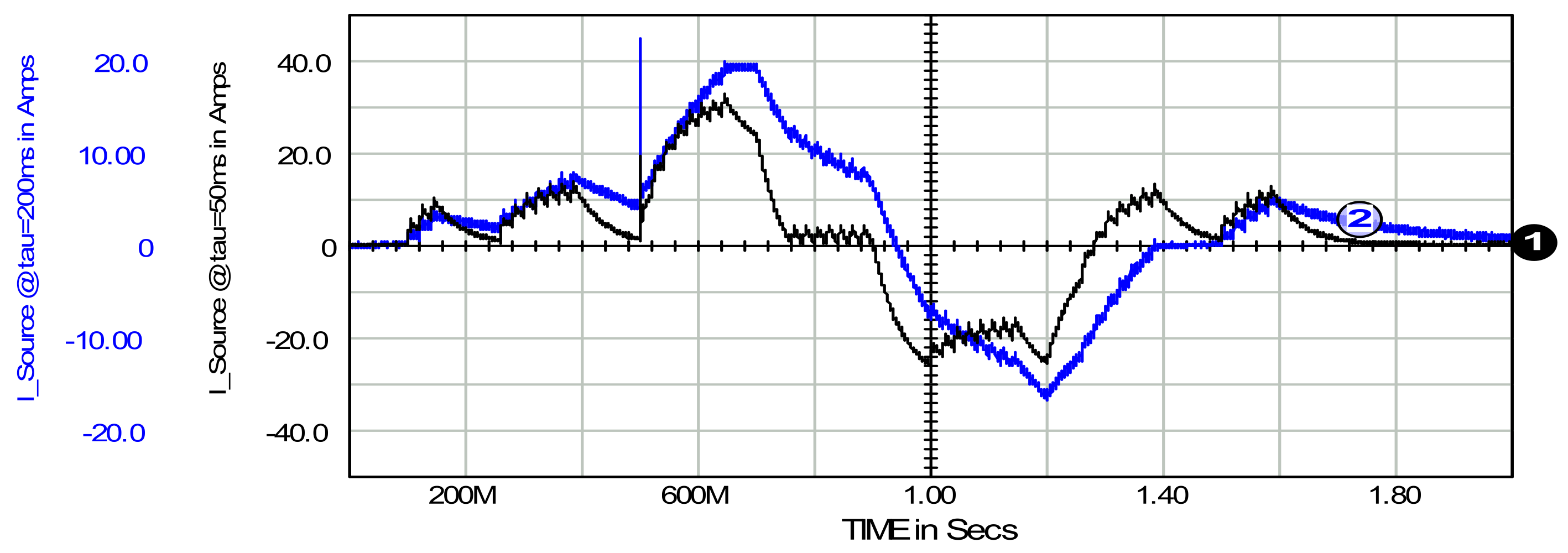
| Source current at τ = 50 ms | 5.2/7 | 13.8 | 13.5 | 59 | 58 |
| Source current at τ = 200 ms | 5.2/7 | 8.7 | 8.4 | 37 | 36 |
| Source current at τ = 50 ms and conductance signal limited to ±100 mS | 5.3/9 | 8.3 | 7.9 | 35 | 34 |
Disclaimer/Publisher’s Note: The statements, opinions and data contained in all publications are solely those of the individual author(s) and contributor(s) and not of MDPI and/or the editor(s). MDPI and/or the editor(s) disclaim responsibility for any injury to people or property resulting from any ideas, methods, instructions or products referred to in the content. |
© 2025 by the author. Licensee MDPI, Basel, Switzerland. This article is an open access article distributed under the terms and conditions of the Creative Commons Attribution (CC BY) license (https://creativecommons.org/licenses/by/4.0/).
Share and Cite
Szromba, A. Enhanced Control of Shunt Active Power Filter for Non-Active Current Compensation and Power Management in DC-Powered Systems. Electronics 2025, 14, 4616. https://doi.org/10.3390/electronics14234616
Szromba A. Enhanced Control of Shunt Active Power Filter for Non-Active Current Compensation and Power Management in DC-Powered Systems. Electronics. 2025; 14(23):4616. https://doi.org/10.3390/electronics14234616
Chicago/Turabian StyleSzromba, Andrzej. 2025. "Enhanced Control of Shunt Active Power Filter for Non-Active Current Compensation and Power Management in DC-Powered Systems" Electronics 14, no. 23: 4616. https://doi.org/10.3390/electronics14234616
APA StyleSzromba, A. (2025). Enhanced Control of Shunt Active Power Filter for Non-Active Current Compensation and Power Management in DC-Powered Systems. Electronics, 14(23), 4616. https://doi.org/10.3390/electronics14234616