Article

Batch Cyclic Posterior Selection Particle Filter and Its Application in TRN

1
School of Internet, Anhui University, Hefei 230039, China
2
IKD New Energy Automotive Parts Company Limited, Ma’anshan 243121, China
3
Aerospace Information Research Institute, Chinese Academy of Sciences, Beijing 100094, China
4
College of Intelligent Manufacturing, Anhui Science and Technology University, Chuzhou 233199, China
*
Authors to whom correspondence should be addressed.
Electronics 2025, 14(21), 4257; https://doi.org/10.3390/electronics14214257

Submission received: 26 September 2025 / Revised: 25 October 2025 / Accepted: 28 October 2025 / Published: 30 October 2025
(This article belongs to the Special Issue Recent Advance of Auto Navigation in Indoor Scenarios)

Abstract

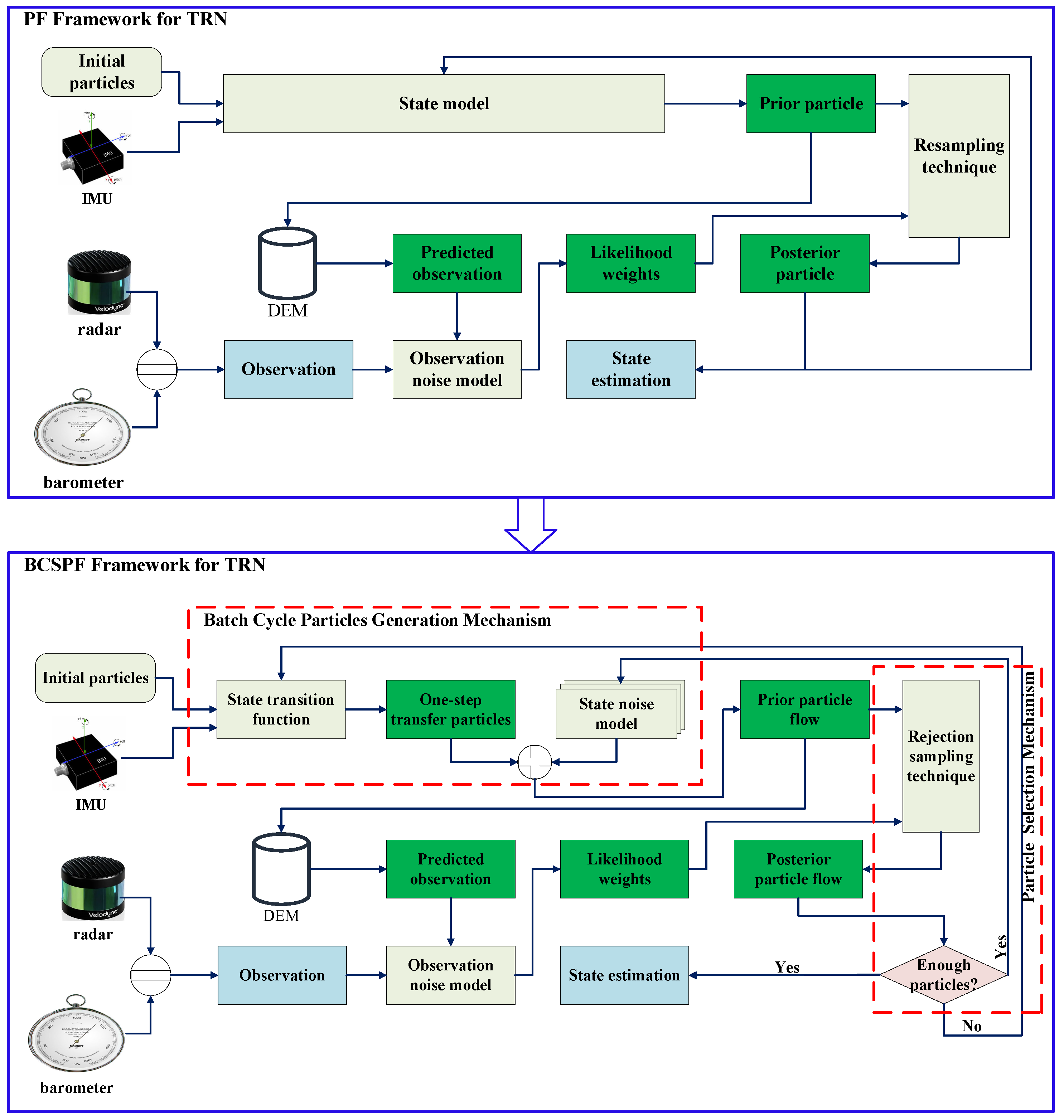
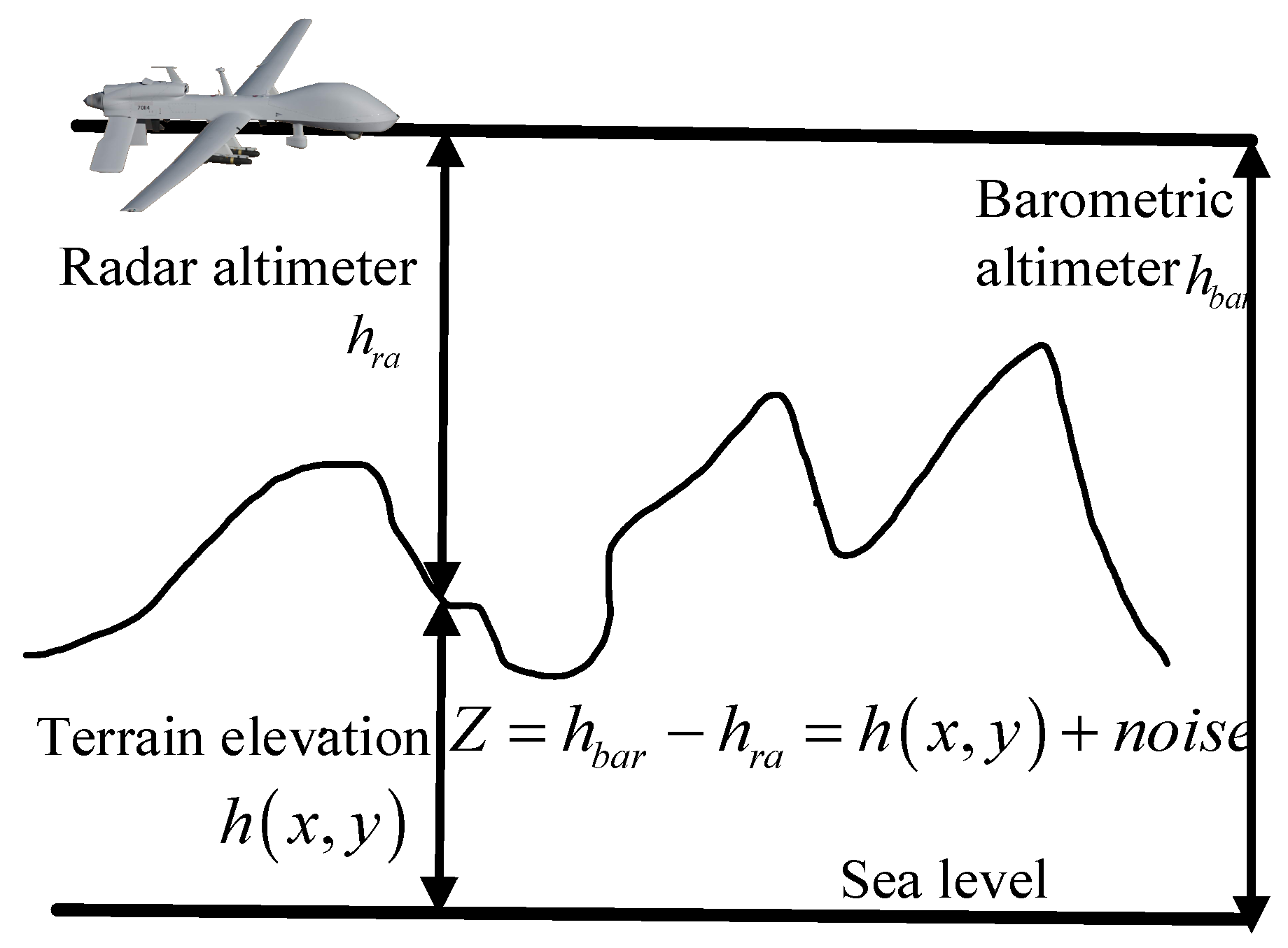
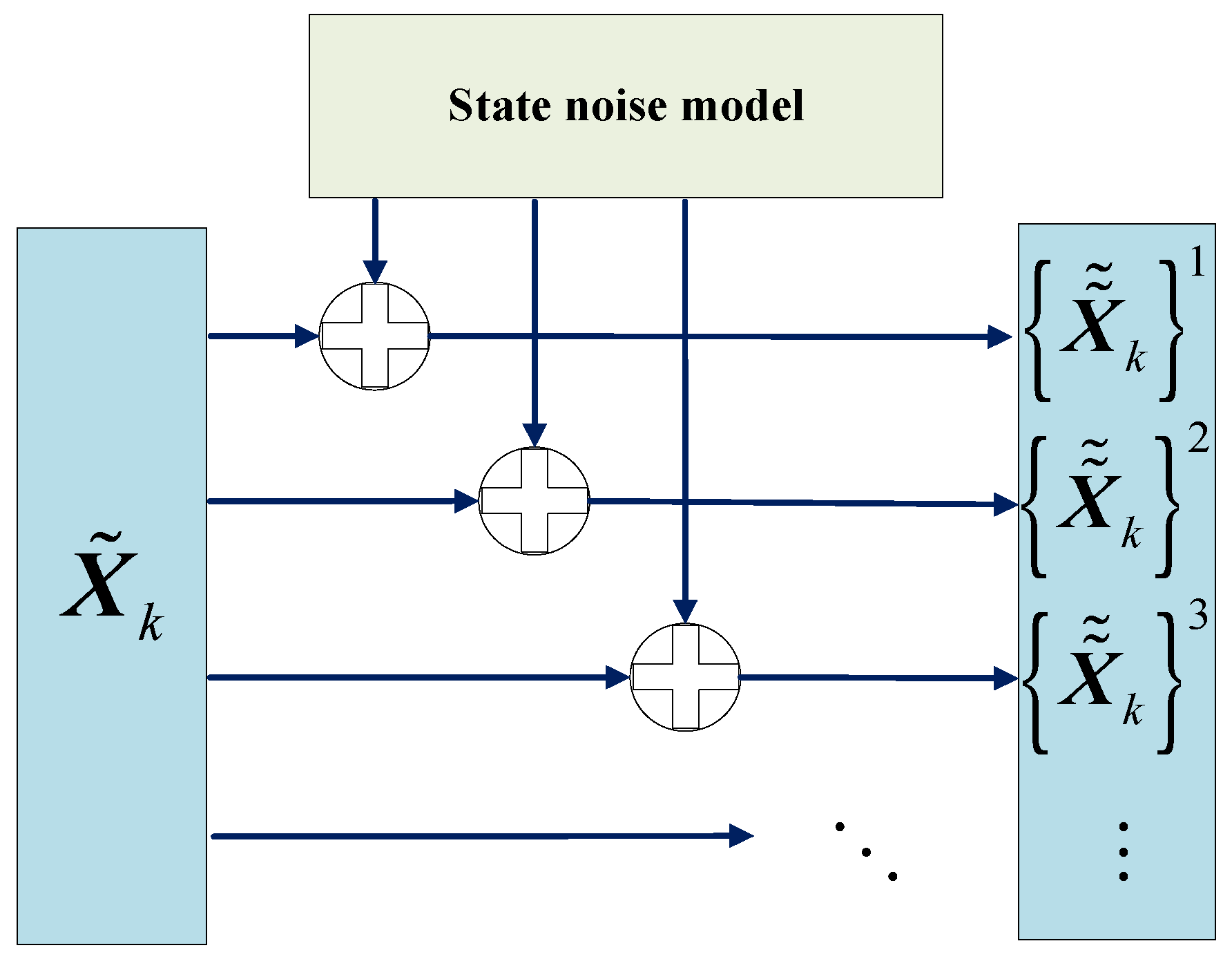
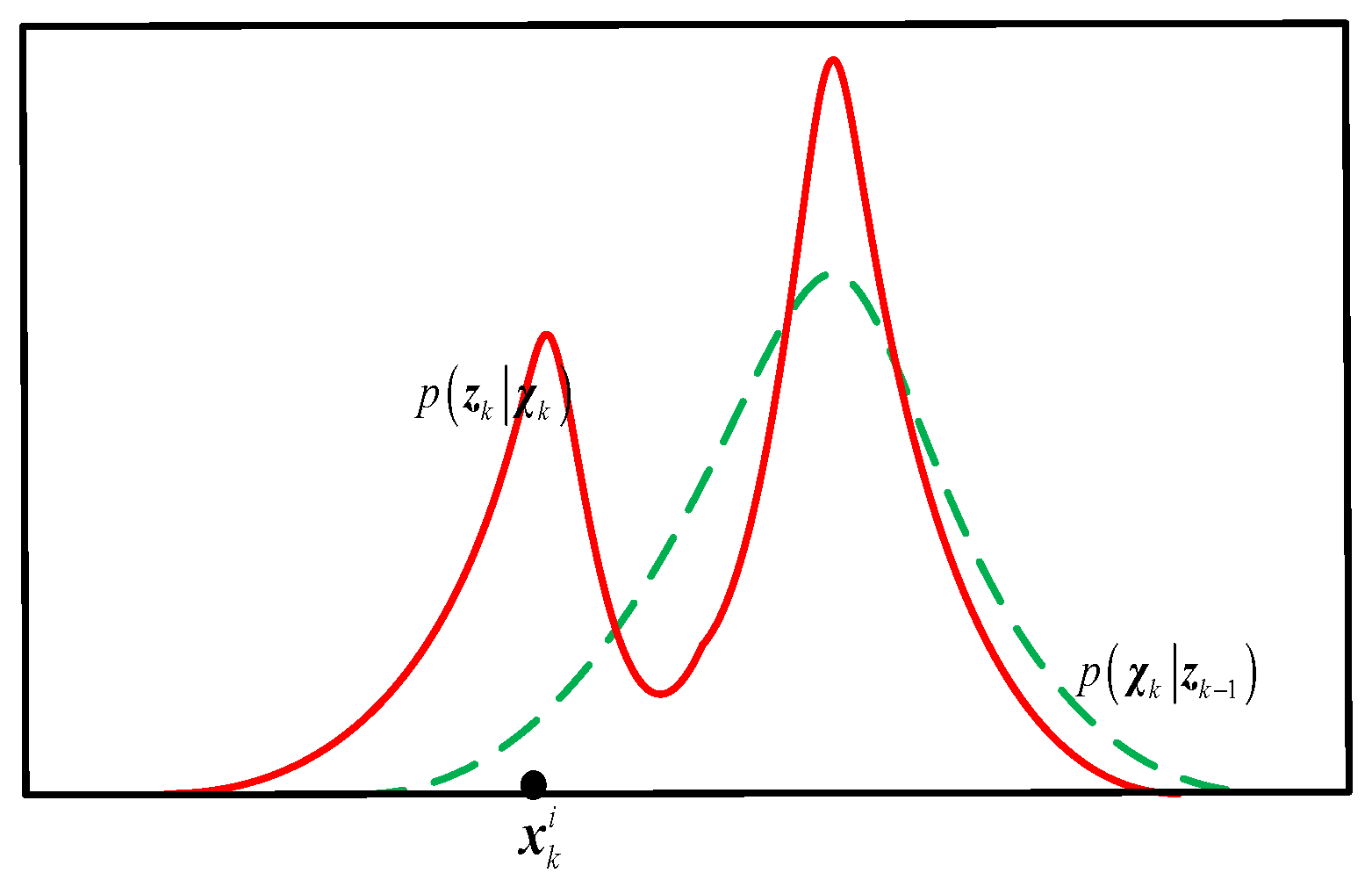
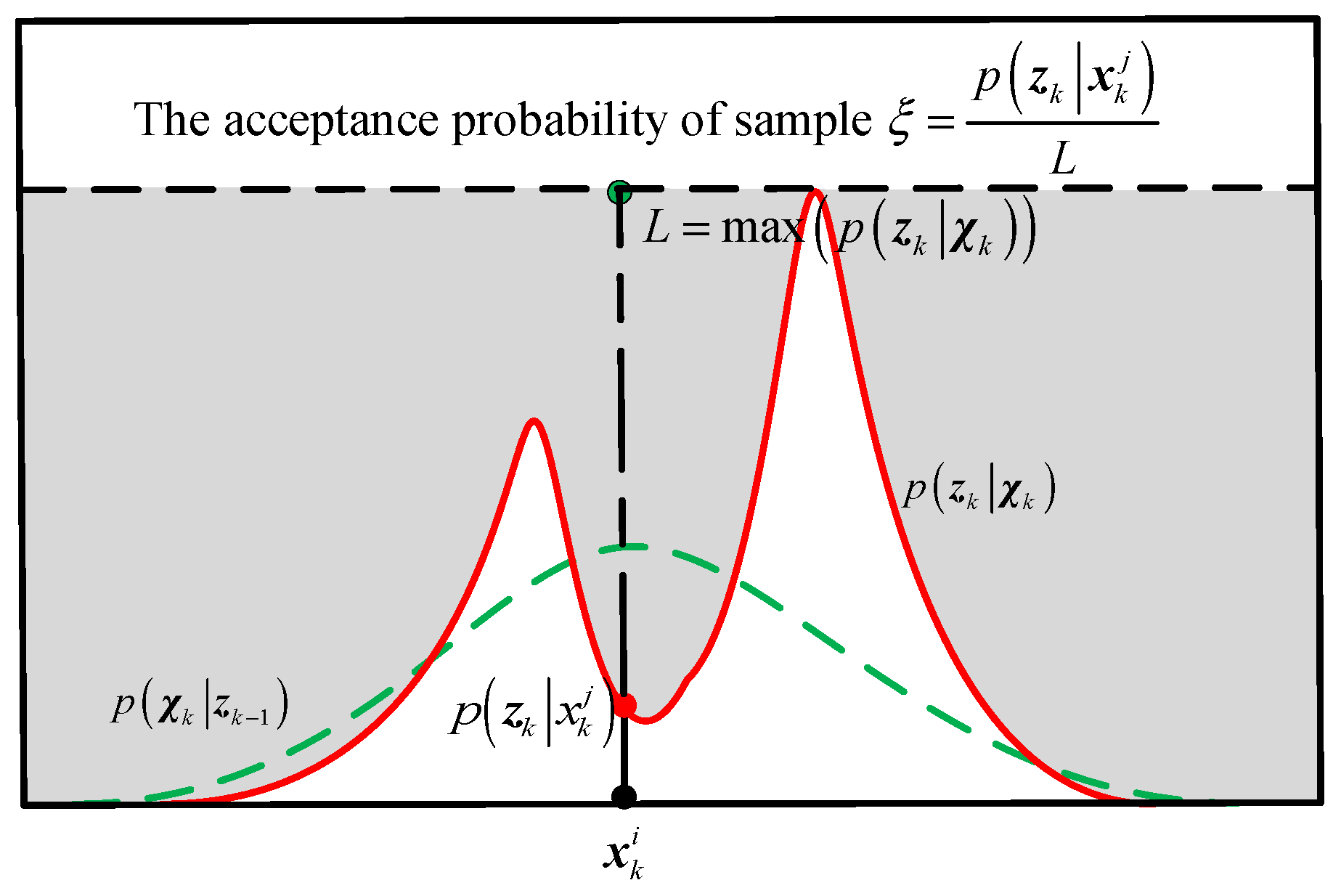
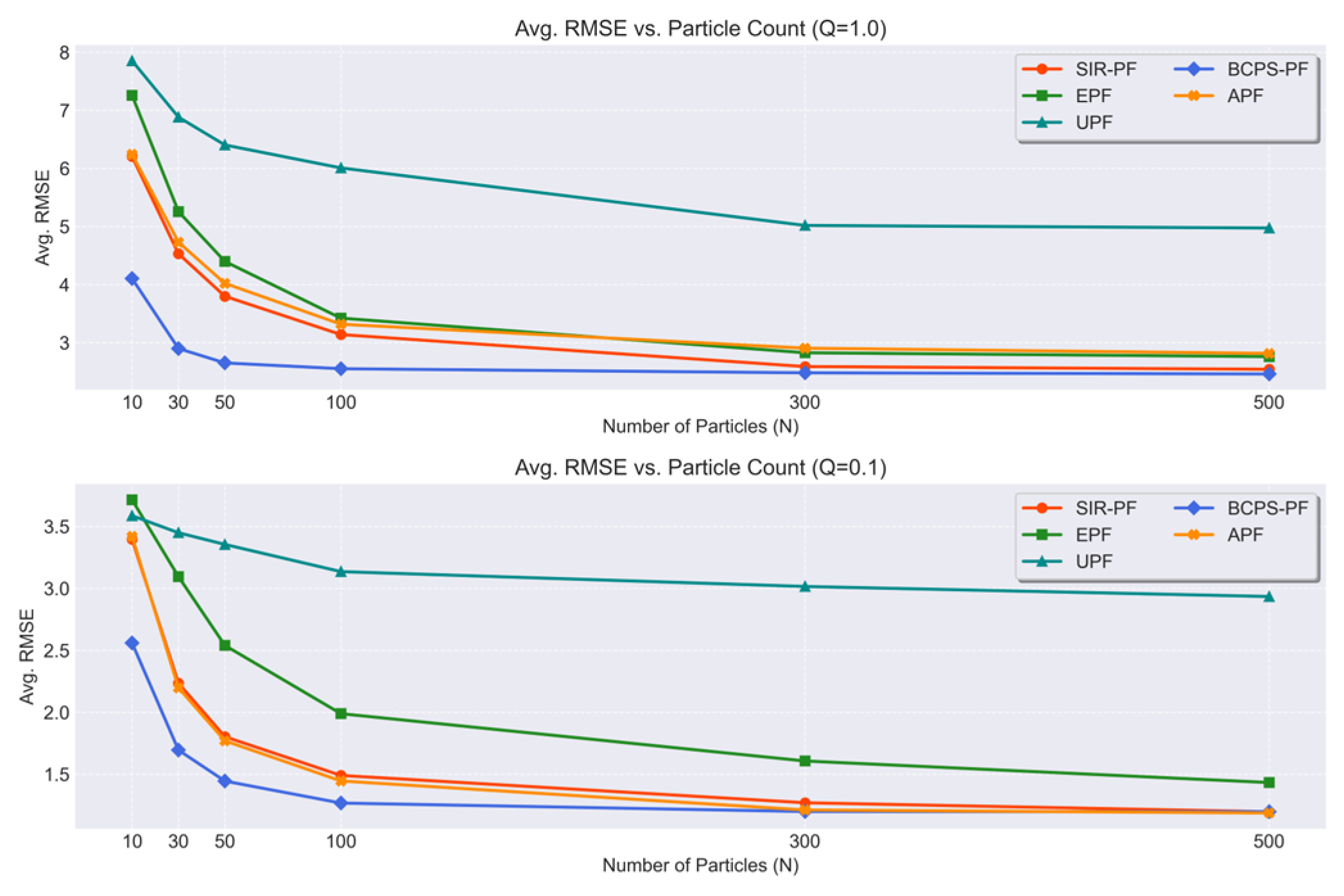
Terrain referenced navigation (TRN) determines position by comparing terrain height measurements with digital elevation maps (DEMs). However, terrain fluctuations create multimodal observation distributions, introducing significant nonlinearity that challenges fusion positioning algorithms. To address this, we propose a novel data fusion approach: batch cyclic posterior selection particle filter (BCPS-PF), applied to TRN. Our algorithm consists of two primary mechanisms. First, the batch cycle particle generation mechanism continuously generates particles conforming to the prior distribution. This is achieved by decomposing the state transition function and the state noise model during the prediction step. Particles from the previous time step are transformed via the state transition function, and noise sequences generated by the state noise model are added, forming batch cycle particles. Second, a particle selection mechanism filters particles to match the posterior distribution. This involves an update step in the fusion process, utilizing a rejection sampling technique. The batch cycle mechanism can be terminated by limiting the number of particles, and state estimation is derived by calculating the mean of these particles. Simulations demonstrate that our method improves positioning accuracy by over 10% compared with existing methods.
Keywords: multimodal distribution; nonlinear filter; particle filter; rejection sampling; terrain referenced navigation multimodal distribution; nonlinear filter; particle filter; rejection sampling; terrain referenced navigation