Article

Intruder Detection in VANET Data Streams Using Federated Learning for Smart City Environments

by
Monika Arya
1,
Hanumat Sastry
2,
Bhupesh Kumar Dewangan
3,
Mohammad Khalid Imam Rahmani
4,*,
Surbhi Bhatia
5,
Abdul Wahab Muzaffar
4,* and
Mariyam Aysha Bivi
6
1
Department of Computer Science and Engineering, Bhilai Institute of Technology, Durg 496001, India
2
School of Computer Science, University of Petroleum and Energy Studies, Dehradun 248007, India
3
Department of Computer Science and Engineering, OP Jindal University, Raigarh 469109, India
4
College of Computing and Informatics, Saudi Electronic University, Riyadh 11673, Saudi Arabia
5
Department of Information Systems, College of Computer Science and Information Technology, King Faisal University, Al-Ahsa 31982, Saudi Arabia
6
Department of Computer Science, College of Computer Science, King Khalid University, Gregar, Abha 62529, Saudi Arabia
*
Authors to whom correspondence should be addressed.
Electronics 2023, 12(4), 894; https://doi.org/10.3390/electronics12040894

Submission received: 9 January 2023 / Revised: 30 January 2023 / Accepted: 1 February 2023 / Published: 9 February 2023
(This article belongs to the Section Artificial Intelligence)

Abstract

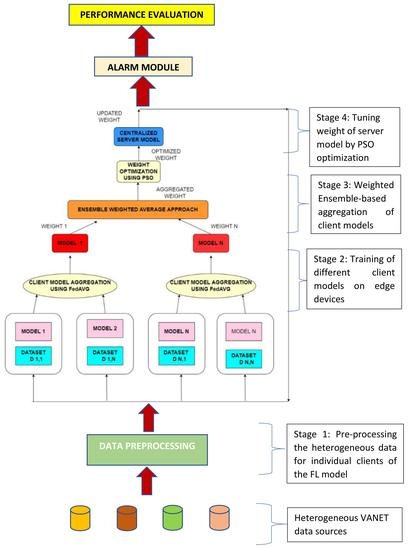
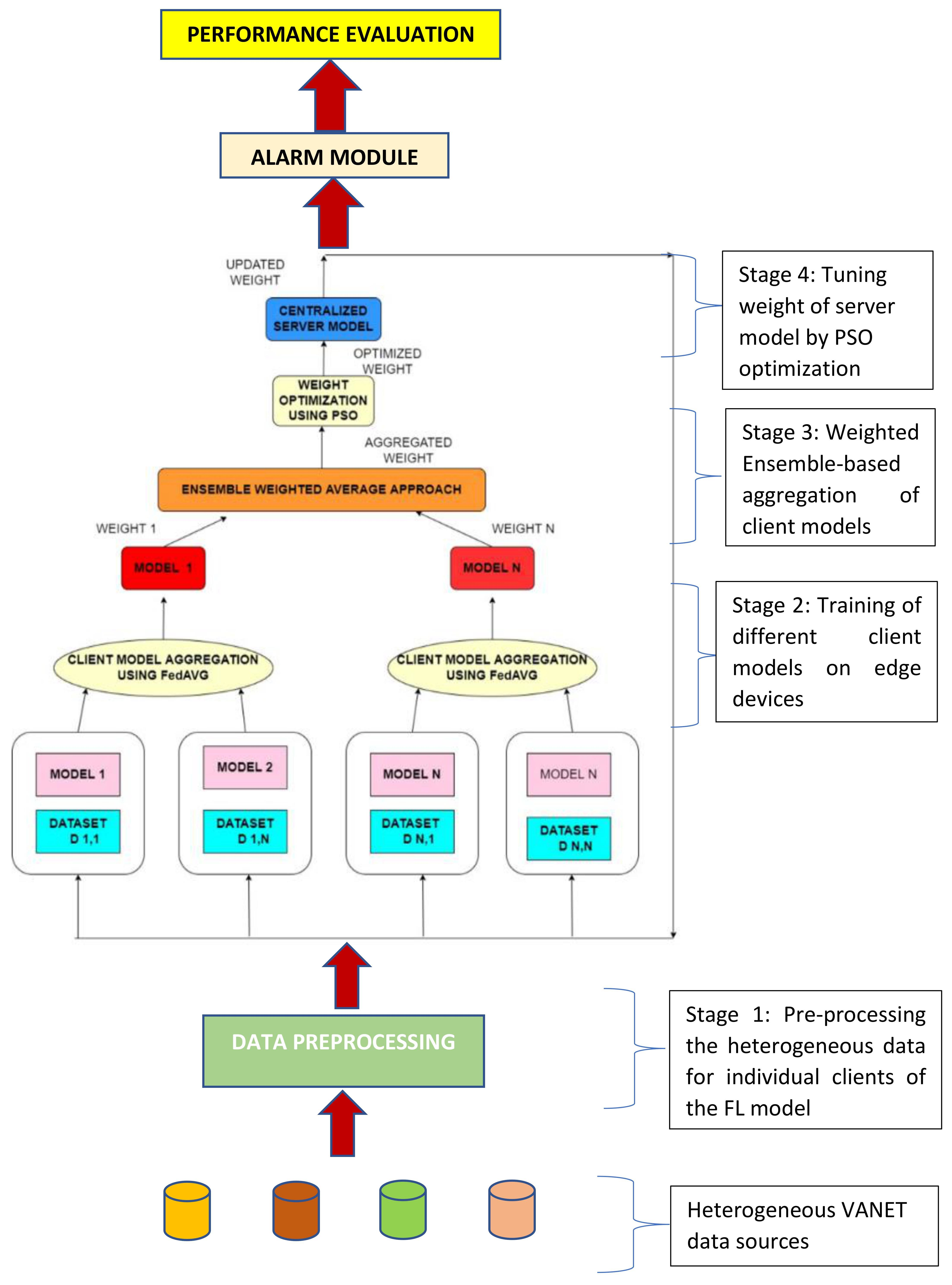
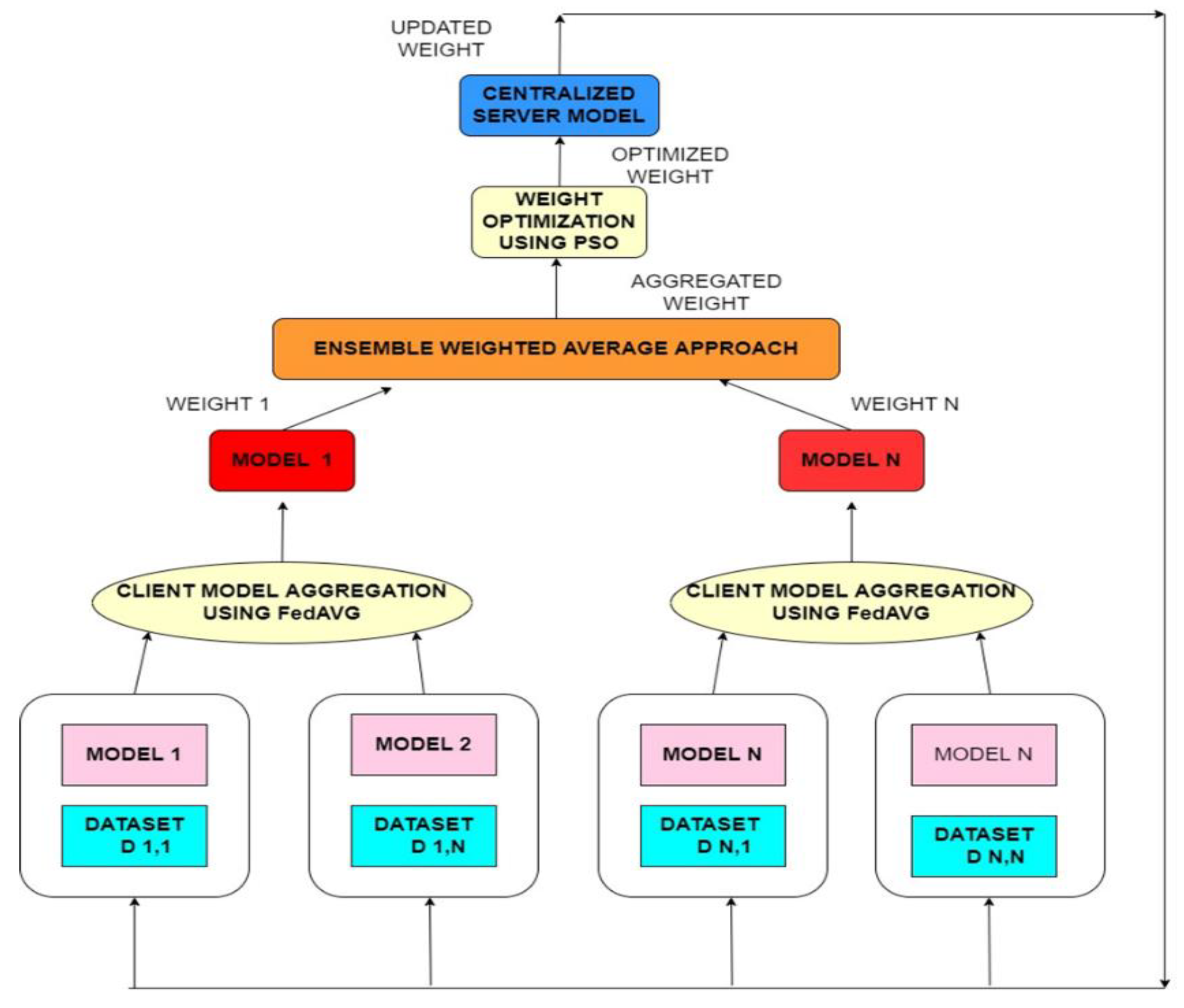
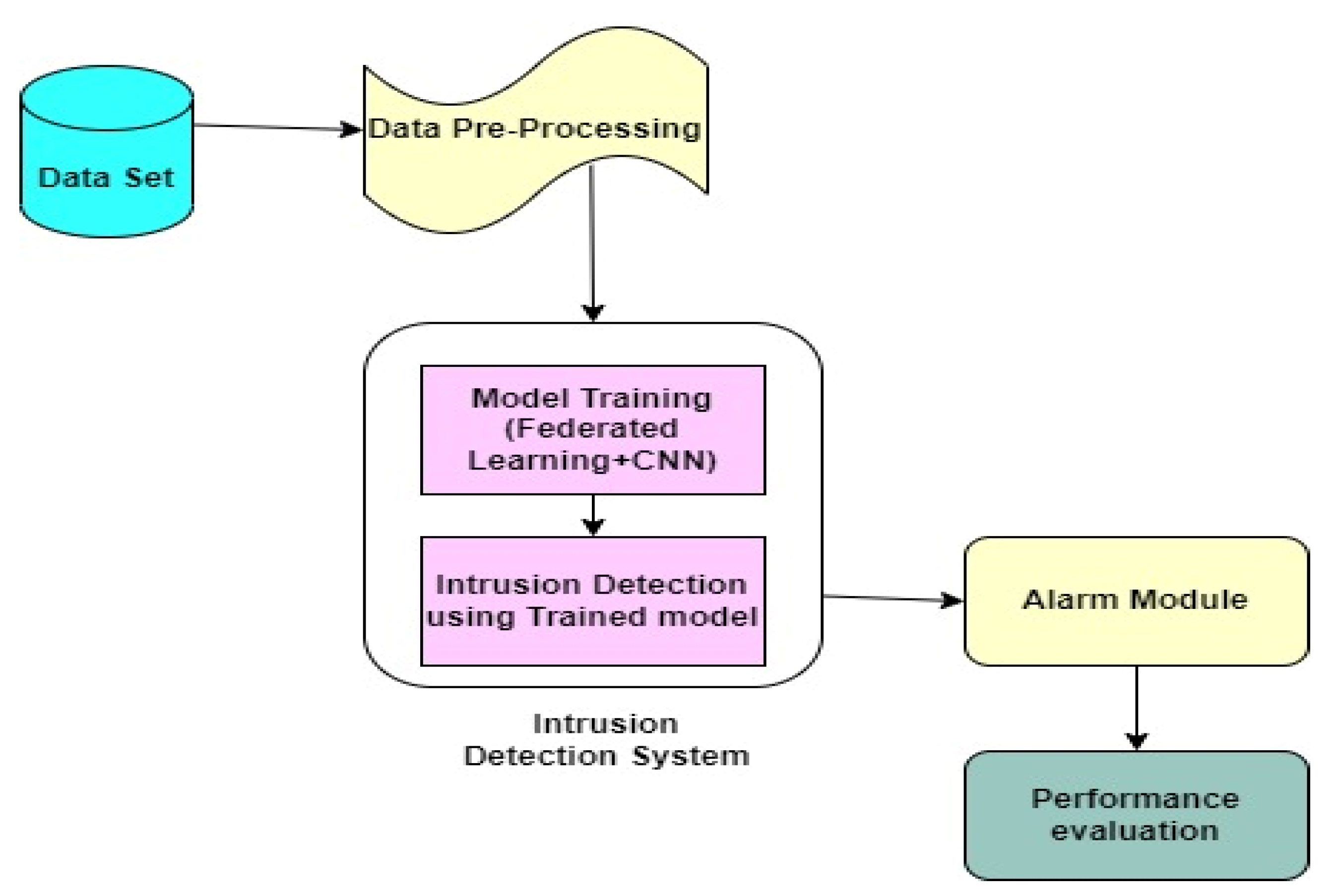
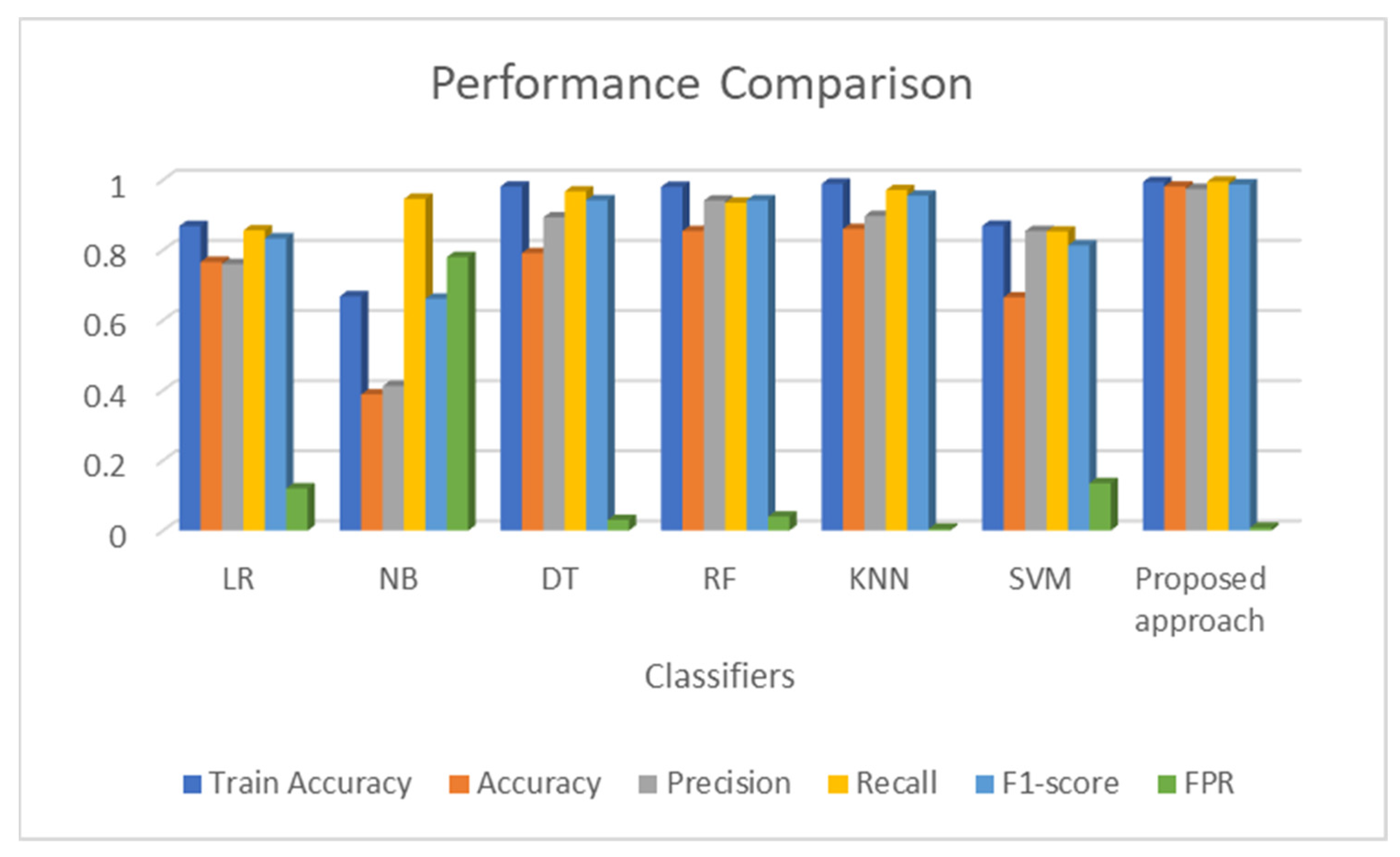
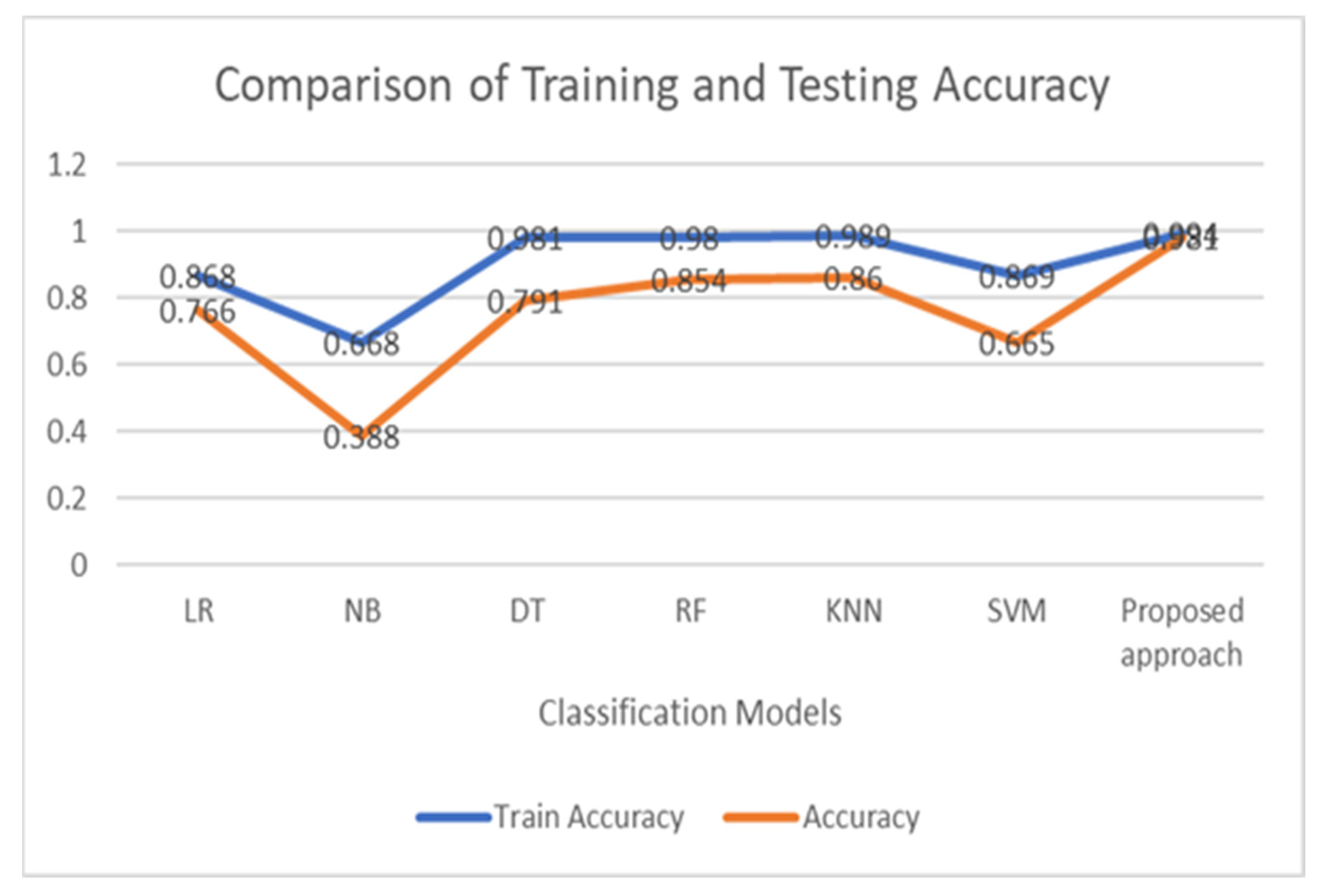
Vehicular networks improve quality of life, security, and safety, making them crucial to smart city development. With the rapid advancement of intelligent vehicles, the confidentiality and security concerns surrounding vehicular ad hoc networks (VANETs) have garnered considerable attention. VANETs are intrinsically more vulnerable to attacks than wired networks due to high mobility, common network medium, and lack of centrally managed security services. Intrusion detection (ID) servers are the first protection layer against cyberattacks in this digital age. The most frequently used mechanism in a VANET is intrusion detection systems (IDSs), which rely on vehicle collaboration to identify attackers. Regrettably, existing cooperative IDSs get corrupted and cause the IDSs to operate abnormally. This article presents an approach to intrusion detection based on the distributed federated learning (FL) of heterogeneous neural networks for smart cities. It saves time and resources by using the most efficient intruder detection approach. First, vehicles use a federated learning technique to develop local, deep learning-based IDS classifiers for VANET data streams. They then share their locally learned classifiers upon request, significantly reducing communication overhead with neighboring vehicles. Then, an ensemble of federated heterogeneous neural networks is constructed for each vehicle, including locally and remotely trained classifiers. Finally, the global ensemble model is again shared with local devices for their updating. The effectiveness of the suggested method for intrusion detection in VANETs is evaluated using performance indicators such as attack detection rates, classification accuracy, precision, recall, and F1 scores over a ToN-IoT data stream. The ID model shows 0.994 training and 0.981 testing accuracy.
Keywords: smart city; deep learning; machine learning; VANETs; intrusion detection system; data streams; federated learning; classification smart city; deep learning; machine learning; VANETs; intrusion detection system; data streams; federated learning; classification
Graphical Abstract