Article

The Rescuer’s Navigation in Metro Stations Based on Inertial Sensors and WiFi

1
School of Mechanical, Electronic and Control Engineering, Beijing Jiaotong University, Beijing 100091, China
2
Shanghai StreamRail Transportation Equipment Co., Ltd., Shanghai 200126, China
3
School of Electrical and Information Engineering, Tianjian University, Tianjin 300072, China
4
Zhejiang StreamRail Intelligent Control Technology Co., Ltd., Jiaxing 314001, China
5
School of Electronic Information and Electrical Engineering, Shanghai Jiaotong University, Shanghai 200030, China
*
Author to whom correspondence should be addressed.
Electronics 2023, 12(1), 108; https://doi.org/10.3390/electronics12010108

Submission received: 1 November 2022 / Revised: 19 December 2022 / Accepted: 21 December 2022 / Published: 27 December 2022
(This article belongs to the Special Issue Recent Advances in Wireless Ad Hoc and Sensor Networks)

Abstract

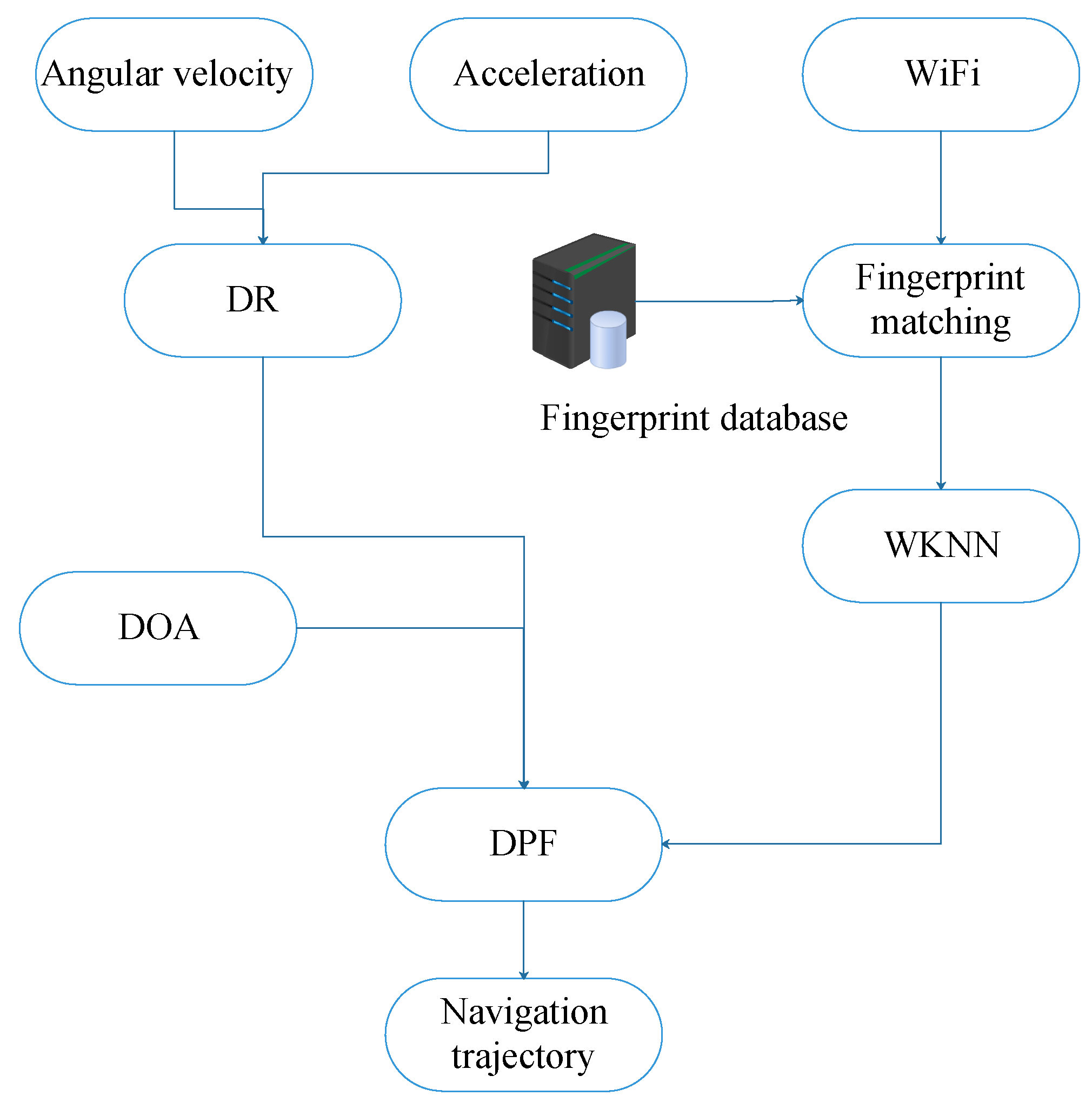
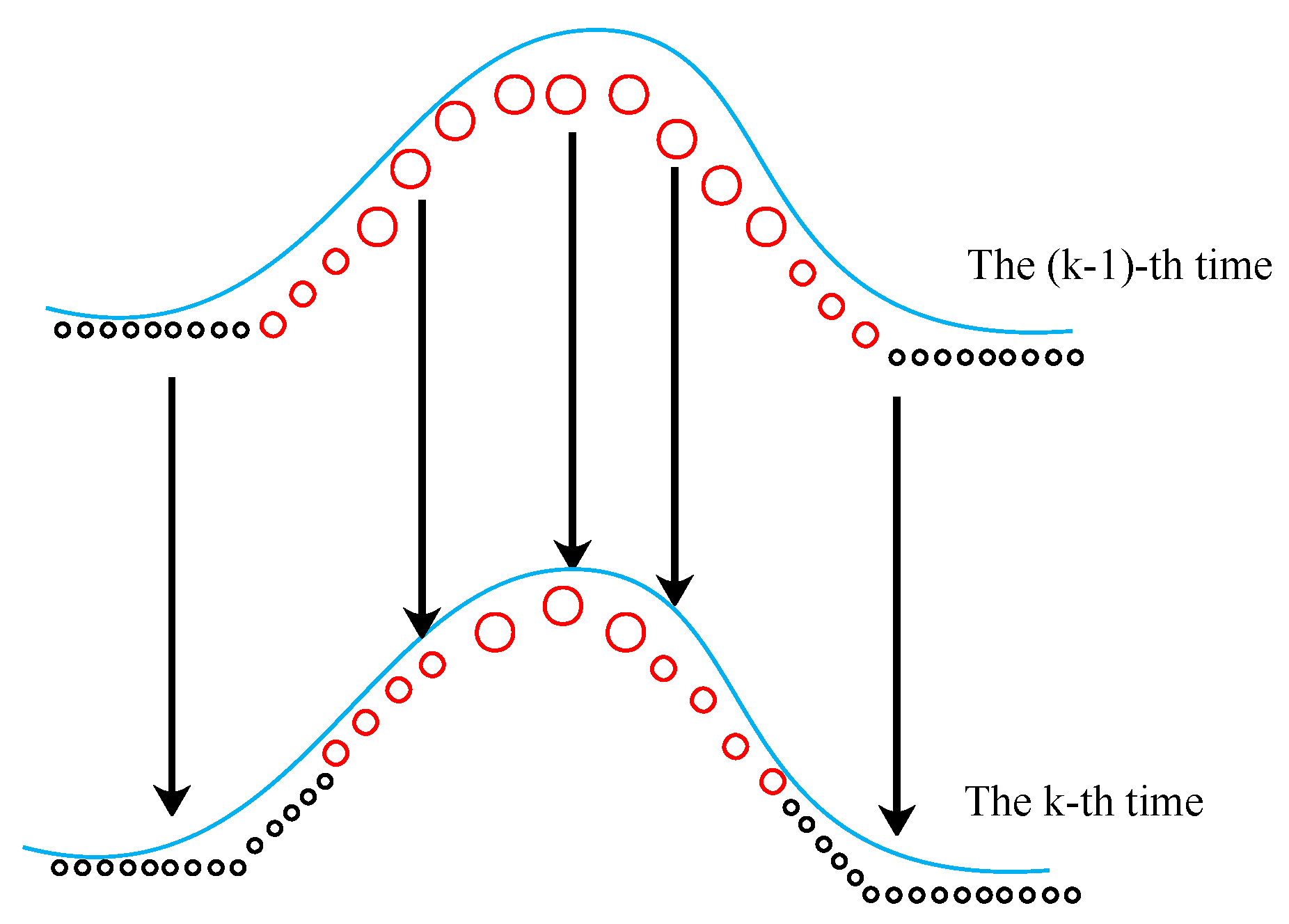
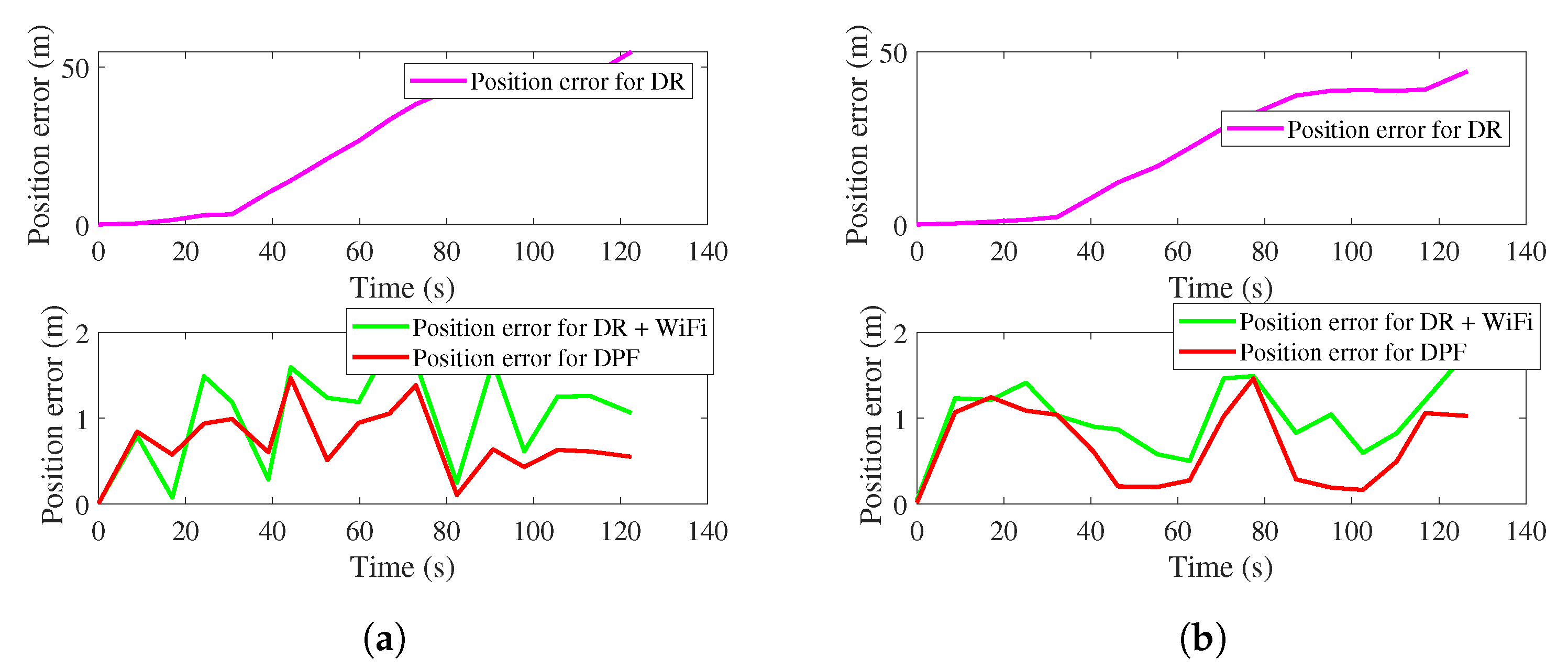
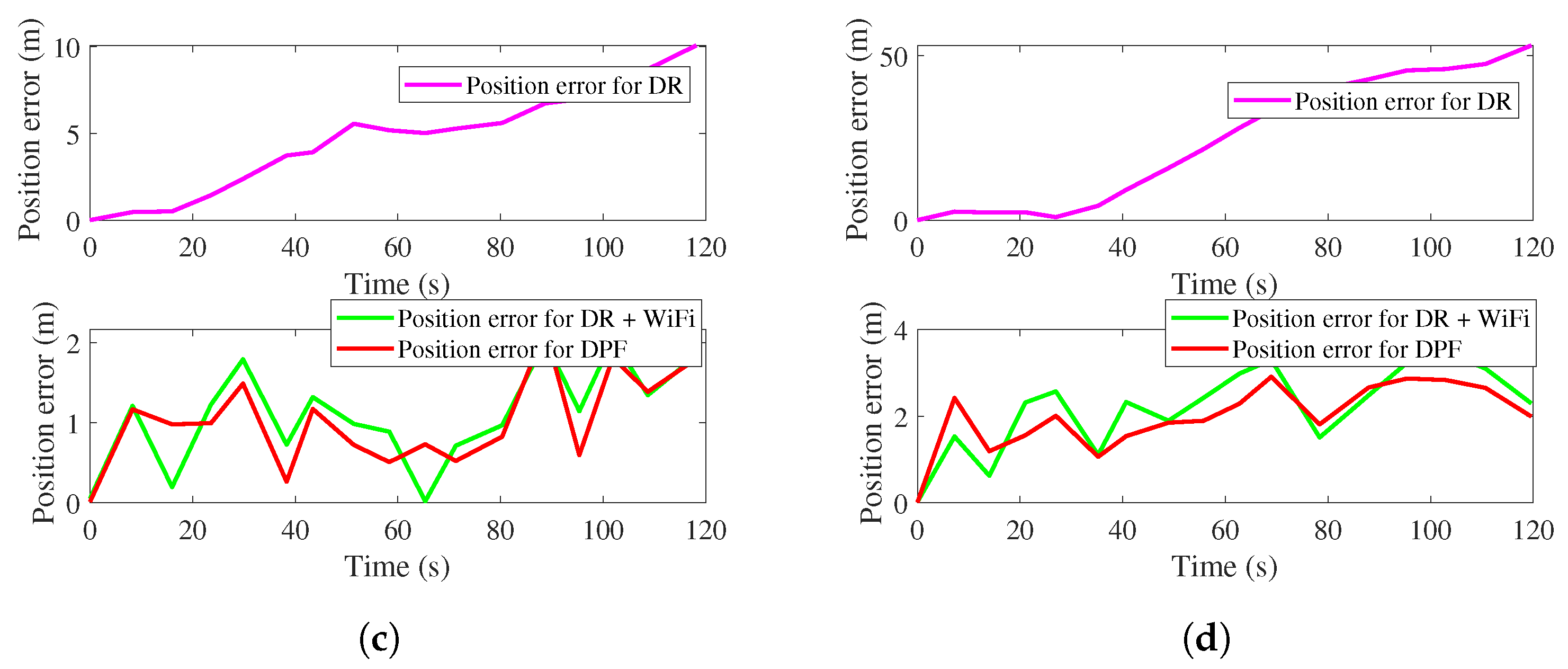
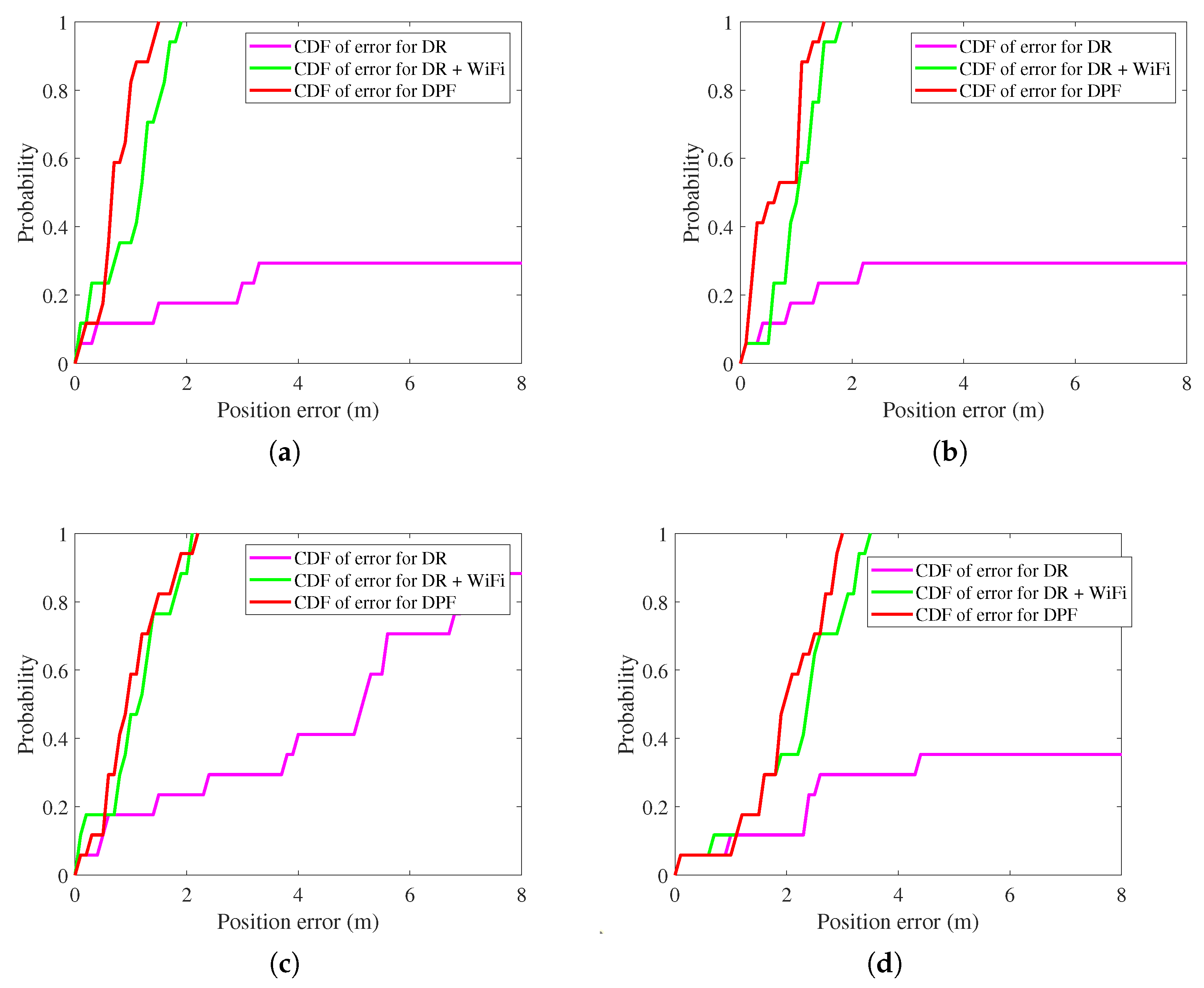
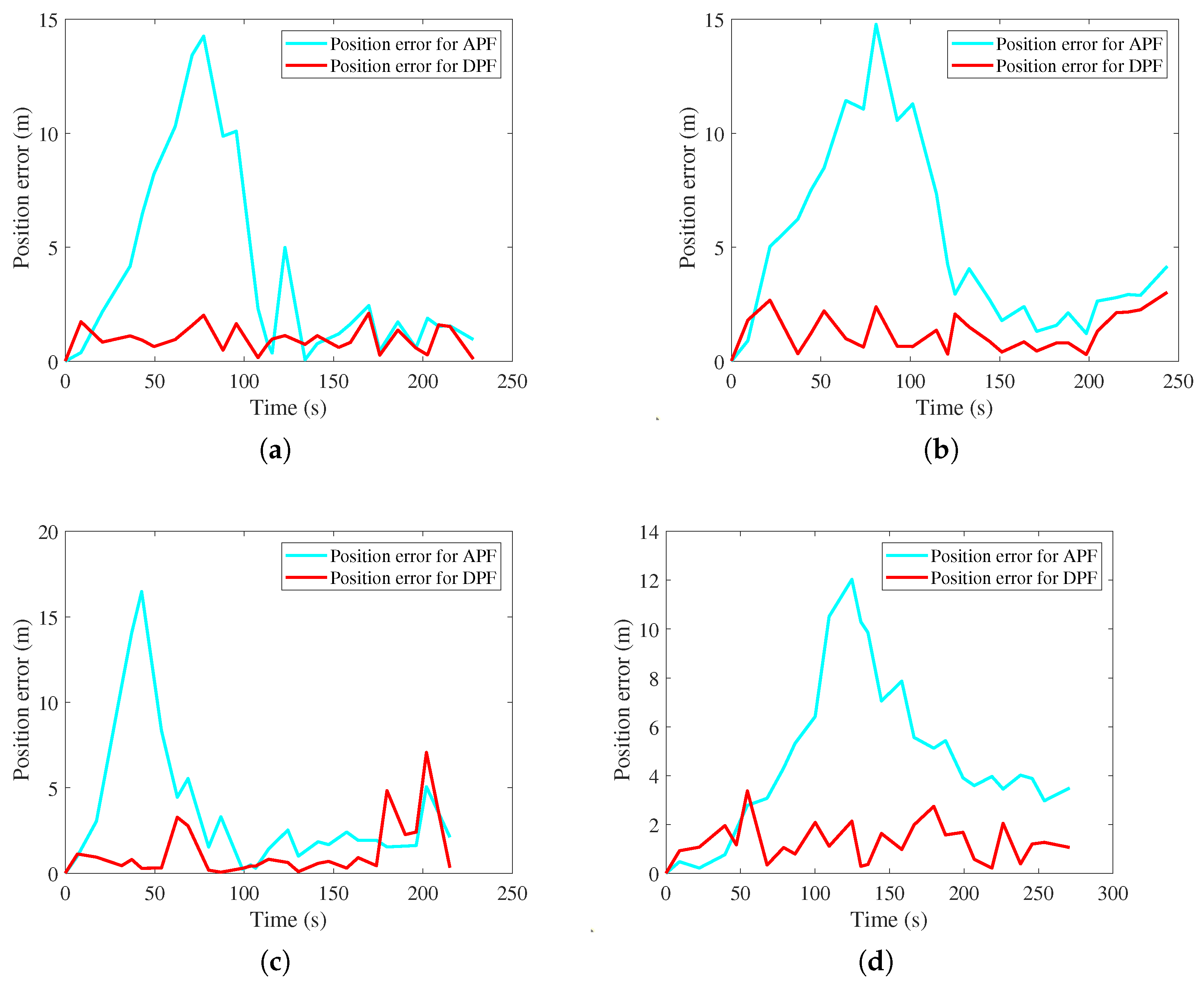
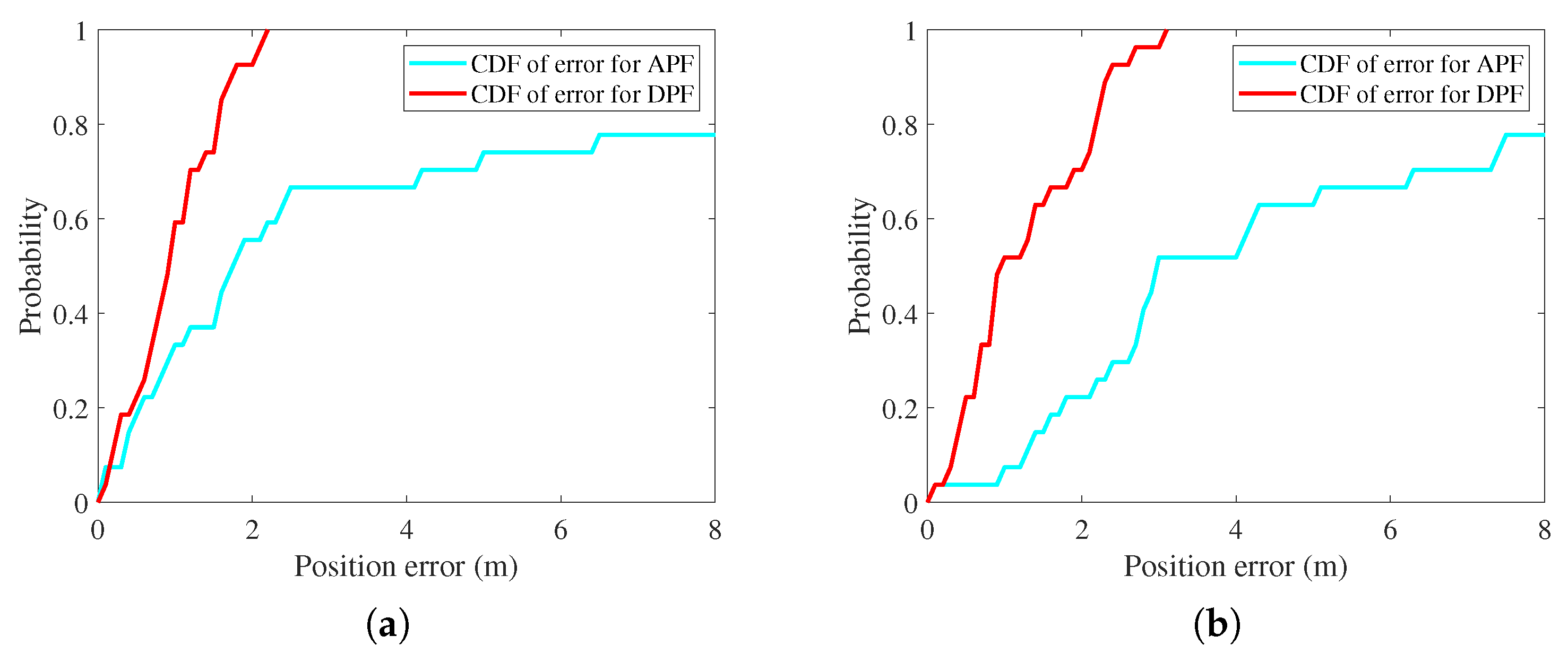
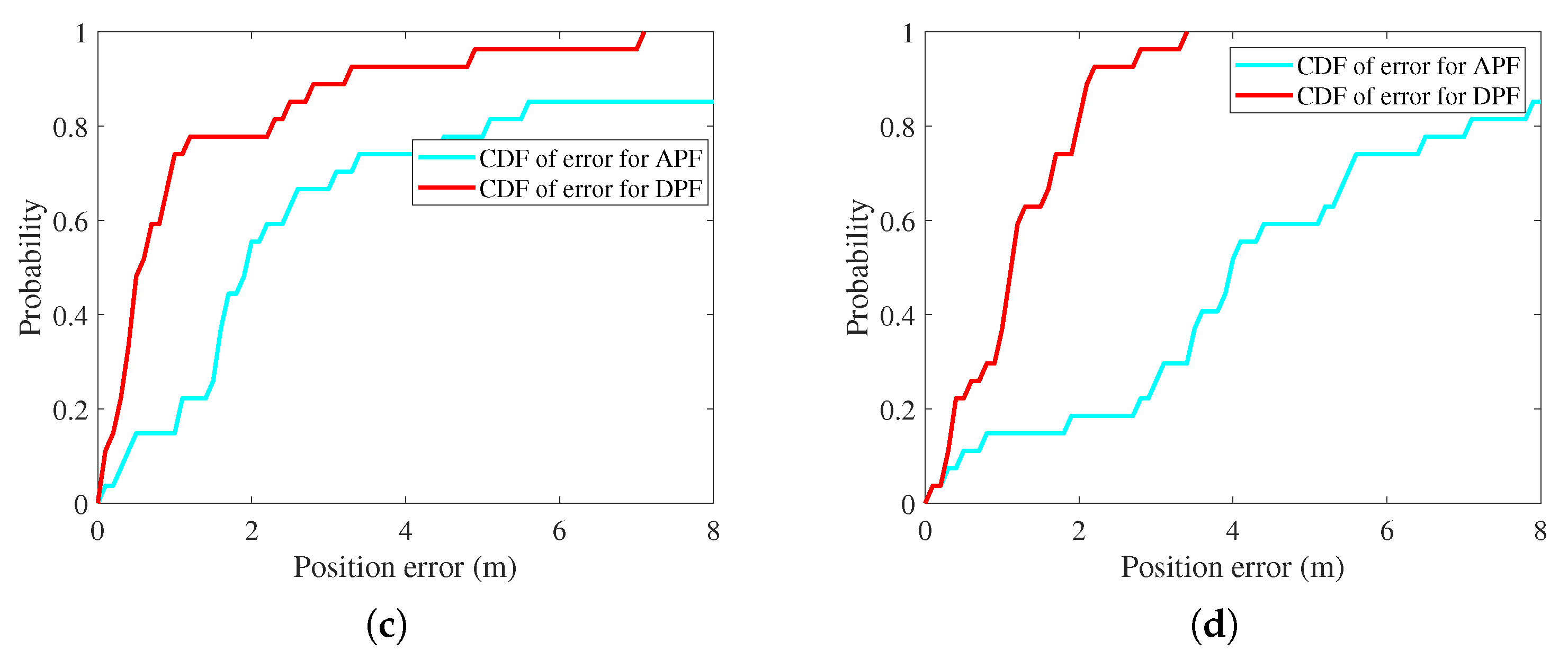
The demand for metro station rescue navigation is increasing. This paper presents an improved particle filter to challenge the navigation problem in metro stations. A particle filter is often used to estimate the position of pedestrians. However, the particle-impoverishment problem is inevitable. To solve this problem, a dingo optimization algorithm (DOA) with global search ability is introduced, and an improved particle filter called a dingo particle filter (DPF) is proposed. Dead reckoning (DR) is taken as the system equation, and WiFi matching results are used as the observation equation. The improved particle filter algorithm introduces a dingo optimization algorithm to improve the diversity of particles and effectively reduce the particle-impoverishment problem. The experimental results show that the average positioning accuracy is 1.1 m and 1.2 m.
Keywords: dead reckoning; WiFi; dingo optimization algorithm; dingo particle filter dead reckoning; WiFi; dingo optimization algorithm; dingo particle filter