Article

Development and Physicochemical Characterization of an Argan–Castor Oil O/W Emulsion for Cosmetic Applications


by
Carmen-Elisabeta Manea
1,2,
Carmen-Marinela Mihăilescu
1,3,4,
Mirela Antonela Mihăilă
1,5,*,
Roxana Colette Sandulovici
1,
Daniel Cord
1,
Mirela Claudia Rîmbu
1,
Florin Adrian Marin
6,
Adina Boldeiu
3,
Vasilica Țucureanu
3,
Adina Turcu-Știolică
7,
Manuel Ovidiu Amzoiu
8,
Elena Truță
1,* and
Mona Luciana Gălățanu
1
1
Faculty of Pharmacy, Titu Maiorescu University, 040314 Bucharest, Romania
2
Horia Hulubei National Institute for R&D in Physics and Nuclear Engineering (IFIN-HH), Reactorului 30 St., 077125 Magurele, Romania
3
National Institute for Research and Development in Microtechnologies (IMT), 077190 Bucharest, Romania
4
Doctoral School, University of Medicine and Pharmacy of Craiova, 200349 Craiova, Romania
5
Stefan S. Nicolau Institute of Virology, Mihai Bravu St., 030304 Bucharest, Romania
6
Eminvest Pharmaceuticals SRL, Stefan Stoica St., 012243 Bucharest, Romania
7
Pharmacoeconomics Department, University of Medicine and Pharmacy of Craiova, 200349 Craiova, Romania
8
Faculty of Pharmacy, University of Medicine and Pharmacy of Craiova, 200349 Craiova, Romania
*
Authors to whom correspondence should be addressed.
Cosmetics 2026, 13(2), 78; https://doi.org/10.3390/cosmetics13020078
Submission received: 16 January 2026 / Revised: 12 March 2026 / Accepted: 17 March 2026 / Published: 20 March 2026
(This article belongs to the Special Issue Lipids in Cosmetics)

Abstract

The incorporation of plant-derived oils into cosmetic formulations has attracted increasing interest due to their natural origin, skin compatibility, and multifunctional formulation roles. Argan and castor oils are widely used in cosmetic products as emollient lipid components with intrinsic antioxidant properties. However, limited studies have systematically evaluated the physicochemical stability and antioxidant performance of emulsions combining these two oils. The aim of this study was to develop and comprehensively characterize a stable oil-in-water (O/W) cosmetic emulsion based on argan and castor oils using a natural non-ionic emulsifier (C14–22 Alcohol (and) C12–20 Alkyl Glucoside). Particular emphasis was placed on formulation stability, as it represents a critical prerequisite for further product evaluation. Stability was investigated through thermal stress testing (4–37 °C), centrifugation assays, droplet size analysis, and zeta potential measurements. Complementary physicochemical and structural characterization was performed using rheological analysis and Fourier transform infrared (FT-IR) spectroscopy. The formulated emulsion exhibited good physical stability with no phase separation under the tested conditions, a skin-compatible pH, a uniform droplet size distribution (4.15 ± 0.68 µm), and pseudoplastic, moderately thixotropic rheological behavior. Antioxidant capacity was assessed using the 2,2-diphenyl-1-picrylhydrazyl (DPPH) radical scavenging assay, yielding an IC50 value of 19.21 ± 1.02 mg/mL. Overall, this study provides a formulation-oriented framework for the development and evaluation of stable natural oil-based O/W emulsions intended for cosmetic applications, supporting future optimization and biological validation.

1. Introduction

Vegetable oils are increasingly incorporated into cosmetic formulations due to their natural origin, excellent skin compatibility, and multifunctional formulation roles, including emollience, antioxidant activity, and contribution to skin barrier support [1,2,3]. Among these, argan oil, obtained from the seeds of Argania spinosa L., is particularly appreciated for its high content of unsaturated fatty acids, tocopherols, and polyphenols, which have been associated with antioxidant and skin-conditioning properties [4]. Likewise, castor oil, derived from the seeds of Ricinus communis L., is rich in ricinoleic acid, a unique hydroxylated fatty acid that confers increased viscosity and pronounced film-forming and occlusive properties [5]. In dermato-cosmetics, such characteristics are particularly important in barrier support in dry or mature skin type formulations. The combined use of these two oils enables the investigation of complementary lipid functionalities, integrating conditioning, barrier support, emollience, and antioxidant contributions within a single formulation framework.
In recent years, increasing interest has been shown in the incorporation of plant-derived bio-based ingredients in cosmetic formulations due to their multifunctional properties and sustainability profile. Several recent studies have shown that vegetal oils, plant extracts, and other natural ingredients can significantly contribute to the antioxidant capacity and functional performance of cosmetic emulsions and dermato-cosmetic systems [6,7,8]. In this context, the DPPH radical scavenging assay is widely employed as a rapid and reliable method to evaluate the redox potential of natural materials and formulations containing plant-derived components. Such analytical approaches provide valuable insight into the capacity of bio-based cosmetic ingredients to mitigate oxidative processes and improve the stability and protective properties of topical products.
In addition to their lipidic and sensory properties, the comedogenic potential of the selected vegetable oils was considered in the formulation rationale. Argan oil is categorized as non-comedogenic or low-comedogenic with minimal likelihood of pore occlusion, whereas castor oil is associated with a low comedogenic index, reflecting its heavier, occlusive nature [9,10]. These comedogenicity ratings, while not definitive clinical predictors, help contextualize the dermato-cosmetic suitability of the developed emulsion particularly for mature or dry skin types that benefit from richer emollients.
In modern dermato-cosmetic formulations, plant-derived lipids have evolved from simple excipients to functionally relevant components contributing to hydration, texture, and barrier-support functions. Despite their widespread use, formulating thermodynamically stable oil-in-water (O/W) emulsions with vegetable oils remains challenging due to inherent risks of phase separation, creaming, and coalescence, particularly under thermal stress or prolonged storage [11]. While various biological activities have been reported for individual oils, the present study focuses on formulation design and physicochemical characterization rather than biological validation.
Recent studies [12,13] have shown that argan oil can form stable O/W emulsions at specific hydrophilic–lipophilic balance (HLB) values, whereas castor oil contributes to increased viscosity and interfacial film stabilization due to its high ricinoleic acid content [14,15,16]. The stability of such emulsions is influenced by oil polarity, interfacial tension, emulsifier selection, and physicochemical interactions between the aqueous and oily phases [17,18]. Advanced analytical techniques, including dynamic light scattering (DLS), scanning electron microscopy (SEM), Fourier transform infrared spectroscopy (FT-IR), and thermal stress testing, are commonly employed to evaluate droplet size distribution, thermodynamic stability, and interfacial molecular interactions in complex emulsion systems [19,20,21].
In this context, non-ionic emulsifiers such as cetearyl alcohol and cetearyl glucoside [22], as well as lightweight sugarcane-derived emollients such as hemisqualane, are increasingly used to enhance emulsion stability and sensorial performance. However, despite extensive research on the stabilization of individual oils [23,24,25], there is limited information regarding the combined use of argan and castor oils in topical emulsions, particularly in terms of formulation stability, interfacial behavior, and cosmetic functionality. Moreover, the inclusion of lipid-phase antioxidants and preservatives introduces additional formulation challenges related to oxidative stability and degradation kinetics during storage [26,27]. An innovative aspect of the present study is the inclusion of diethylhexyl syringylidenemalonate as a lipid-phase stabilizer, intended to enhance oxidative stability within the oil matrix and improve formulation robustness.
Although numerous studies have investigated dermato-cosmetic formulations based on plant oils and the biological activity of individual plant lipids [28,29], comparatively limited attention has been given to the formulation-level challenges and functional performance of emulsions combining different vegetable oils within a single system. In particular, the combined use of argan and castor oils in stable oil-in-water cosmetic emulsions remains insufficiently explored, especially in terms of integrated physicochemical, rheological, and antioxidant characterization.
Therefore, the aim of this study was to develop a stable argan–castor oil O/W emulsion for cosmetic applications and to assess its formulation robustness through a comprehensive physicochemical, rheological, stability-oriented, and antioxidant characterization, including the evaluation of free radical scavenging capacity. The novelty of the present study lies in the integrated approach applied to this dual-oil system, focusing on formulation behavior and interfacial properties.

2. Materials and Methods

2.1. Chemicals and Reagents

Argan and castor oils were procured from internal commercial sources (Ellemental: Oradea, Bihor, Romania and TIS Pharmaceutic: Bucharest, Romania, respectively) and stored at 4 °C prior to use to minimize the risk of oxidative degradation. The natural emulsifier Montanov L (INCI: C14-22 Alcohols and C12–20 Alkyl Glucoside) used in this study was produced by SEPPIC (La Garenne Colombes, France), is ECOCERT certified, and was supplied by Interallis Chemicals (Gramont St., 040182 Bucharest, Romania). Neossance Hemisqualane (INCI: C13–15 Alkane), produced by Givaudan (Vernier, Switzerland) and supplied by Salic Alcan Romania (Regina Maria St., 040125 Bucharest, Romania), is an innovative, light emollient characterized by high spreadability. All solvents (ethanol, diethyl ether and chloroform) were of analytical grade and purchased from local commercial suppliers. Folin–Ciocalteu reagent, potassium hydroxide, phenolphthalein, sodium hydroxide, hydrochloric acid, iodine monochloride, acetic acid, sodium thiosulfate, potassium iodide, (2,2-diphenyl-1-picrylhydrazyl (DPPH), were obtained from Merck (Darmstadt, Germany) and Sigma-Aldrich (St. Louis, MO, USA). Purified and deionized water (Milli-Q system, Merck Millipore: Darmstadt, Germany) was used as the aqueous phase in all formulations.

2.2. The Organoleptic Characterization of Argan and Castor Oils

The organoleptic properties of the two plant oils were evaluated, including color, odor, taste, texture, and overall appearance. Samples were assessed visually and by smell at room temperature, and texture was evaluated by gentle tactile examination. The organoleptic properties of the oils (color, odor, taste, texture, and appearance) were evaluated using descriptive sensory assessment approaches commonly applied in cosmetic formulation studies, according to Barel et al. [30].

2.3. The Characterization of the Physicochemical Parameters of Argan and Castor Oils

Physicochemical characterization of argan and castor oils was performed to evaluate their quality and chemical properties [31,32].
Parameters assessed included: refractive index, relative density, acid value, saponification value, iodine value, and peroxide value, following standard protocols (AOAC and ISO methods) [33]. All measurements were conducted in triplicate at room temperature using calibrated instruments.

2.3.1. Refractive Index

The refractive index of the two vegetal oils was determined using an Abbe refractometer, which was previously calibrated with distilled water (n = 1.3330 at 20 °C). A few drops of the oil samples were placed on the prism surface of the refractometer, and the refractive index was measured at 20 ± 0.1 °C [34,35].

2.3.2. Relative Density

The relative density of the argan and castor oils was determined using the pycnometer method. A clean, dry pycnometer (25 mL, calibrated) was weighed empty, then filled with distilled water at 20 ± 0.1 °C, and reweighed to determine the reference mass. Then, the procedure was repeated using the oil samples under the same temperature conditions. The relative density was calculated as the ratio between the mass of the sample oil and the mass of an equal volume of water at 20 °C [36].

2.3.3. Acid Value

The acid value was determined by titration according to standard methods. Briefly, 2.0 g of oil sample was weighed into a 250 mL conical flask and dissolved in 50 mL of a neutralized mixture of ethanol and diethyl ether (1:1, v/v). The solution was titrated with 0.1 N KOH in ethanol, using phenolphthalein as an indicator. The endpoint was reached when a stable, faint pink coloration persisted for at least 30 s. The acid value was calculated using the following formula:
A c i d   v a l u e = V · N · 56.1 W  
where V is the volume of KOH used (mL);
  • N is the normality of KOH;
  • 56.1 is the molar mass of KOH;
  • W is the weight of the oil sample (g).
The acid value of the two oils was expressed as milligrams of KOH required to neutralize the free fatty acids present in 1 g of oil sample [37].

2.3.4. Saponification Value

The saponification value of the argan and castor oils was determined by reflux titration according to standard procedures. For this, 2.0 g of vegetal oil sample was accurately weighed into a 250 mL round-bottom flask, and then 25 mL of 0.5 N ethanolic potassium hydroxide solution was added. The flask was heated in a water bath for 60 min, using a reflux condenser and a stirrer. After cooling, the excess alkali was titrated with 0.5 N HCl, using phenolphthalein as an indicator. A blank determination was carried out in parallel under the same conditions, but without oil. The saponification value was calculated using the following formula:
S a p o n i f i c a t i o n   v a l u e = B S · N · 56.1 W  
where B is the volume of HCl used for the blank (mL);
  • S is the volume used for the sample (mL);
  • N is the normality of HCl;
  • 56.1 is the molar mass of KOH;
  • W is the weight of the oil sample (g).
The saponification value was expressed as milligrams of potassium hydroxide (mg KOH) required to saponify 1 g of vegetal oil.

2.3.5. Iodine Value

The iodine value of the vegetal oils was determined according to the Wijs method. In a 250 mL iodine flask, 0.3 g of oil samples was added, as well as 10 mL of Wijs solution (iodine monochloride in glacial acetic acid). The mixture was kept for 30 min at room temperature, in the dark, and occasionally shaken. After that, 15 mL of 10% potassium iodide solution and 100 mL of distilled water were added. The liberated iodine was titrated with 0.1 N sodium thiosulfate solution using starch as an indicator until the blue color disappeared. A blank determination was realized under the same conditions, but without the oil samples. The iodine value was calculated using the formula:
I o d i n e   v a l u e = B S · N · 12.69 W  
where B is the volume of Na2S2O3 used for the blank (mL);
  • S is the volume of Na2S2O3 used for the sample (mL);
  • N is the normality of Na2S2O3 solution;
  • 12.69 conversion factor to grams of iodine;
  • W is the weight of the oil sample (g).
The results (iodine value) were expressed as grams of iodine absorbed per 100 g of vegetal oil.

2.3.6. Peroxide Value

The peroxide value of the two vegetal oils was determined according to the iodometric titration method. Briefly, approximately 5 g of the oil sample was accurately weighed and added to a 250 mL conical flask, where it dissolved in a mixture of 30 mL of acetic acid and 20 mL of chloroform (3:2 v/v). Saturated potassium iodide (1 mL) was added, and the flask was kept for 1 min in the dark, with gentle shaking. Then 30 mL of distilled water was added, and the liberated iodine was titrated with 0.01 N sodium thiosulfate solution using starch as an indicator until the blue color disappeared. A blank determination was performed simultaneously under the same conditions but without using the oil samples. Peroxide value was calculated using the formula:
P e r o x i d e   v a l u e = S B · N · 1000 W  
where S is the volume of Na2S2O3 used for the sample (mL);
  • B is the volume of Na2S2O3 used for the blank (mL);
  • N is the normality of Na2S2O3 solution;
  • 1000 is the conversion factor that converts grams of oil to kilograms;
  • W is the weight of the oil sample (g).
The peroxide value of the two oils is expressed in milliequivalents of active oxygen per kilogram of oil.

2.4. Antioxidant Activity of Argan and Castor Oils

The antioxidant activity of the two plant-derived oils was evaluated using the widely employed DPPH assay [38,39,40], which is based on the reduction in the stable, violet-colored DPPH radical by antioxidants capable of donating electrons or hydrogen atoms. This reaction results in a color change from deep purple to pale yellow as the radical is neutralized.
A fresh 0.1 mM DPPH solution was prepared in absolute ethanol and protected from light throughout the experiment. Stock solutions of each oil were prepared by mixing 2 g of oil in 10 mL of absolute ethanol, for 30 min on an ultrasonic water bath (Witeg Labortechnik, Wertheim, Germany), obtaining a concentration of 200 mg/mL. Following centrifugation, appropriate volumes of the supernatant were collected and serially diluted in ethanol to achieve final concentrations in the reaction mixture of 5, 10, 20, 40, and 80 mg/mL. For each assay 1 mL of the diluted oil solution was mixed with 2 mL of 0.1 mM DPPH solution in 10 mL volumetric flasks, brought to the final volume with ethanol, and incubated in the dark at room temperature for 30 min. A control solution consisting of 2 mL DPPH solution diluted to 10 mL with ethanol (without sample) was prepared for reference.
Absorbance was measured using a VWR UV-6300 PC spectrophotometer (VWR International, Vienna, Austria), at 517 nm, using methanol as a blank. The control comprised the reaction mixture in the absence of the samples, and radical scavenging activity was calculated according to the following equation:
D P P H s c a v e n g i n g   a c t i v i t y % = ( A b s c o n t r o l A b s s a m p l e ) / A b s c o n t r o l × 100  
where here Abs control is the absorbance of control, and Abs sample is the absorbance of the oil samples.
IC50 values were determined by linear regression analysis of the concentration–response curves constructed in Microsoft Excel, using the linear equation obtained by plotting percentage inhibition against concentration. All experiments were performed in triplicate, and results were expressed as mean ± standard deviation (SD). The coefficient of determination (R2) was used to assess the goodness of fit of the linear model. Statistical differences between samples were evaluated by one-way ANOVA followed by Tukey’s post hoc test, with significance accepted at p < 0.05. A freshly prepared stock solution of vitamin C (0.1 mg/mL in ethanol) was used as a positive control and evaluated under identical experimental conditions.

2.5. Formulation Composition of the O/W Emulsion (100 g)

The O/W emulsion was prepared with a total mass of 100 g. Its detailed formulation [41], including the percentages of each component, is shown in Table 1.

2.6. Preparation Method of Emulsion

The oil phase A (containing the two oils and emulsifiers) and the aqueous phase B were prepared separately and heated simultaneously to 70 °C, for approximately 1 min, under continuous magnetic stirring. After reaching the target temperature and thermal equilibrium, corresponding to the complete homogenization, emulsification was initiated immediately, to avoid prolonged thermal exposure [42], using an Ultra-Turrax T 25 homogenizer (IKA, Staufen, Germany) at 700 rpm, for 3 min. Ingredients of phase C (when the mixture reached the 40 °C temperature) were added under gentle stirring to avoid destabilization. After emulsification, the mixture was cooled to room temperature under moderate stirring, and pH was measured [43,44]. If it was necessary, the pH was adjusted (to 5.5 ± 0.2 using citric acid). The final product was a homogeneous O/W emulsion designed for cosmetic topical application, with formulation characteristics targeted toward stability and favorable sensory performance.

2.7. Quality Control of Emulsion

Quality control in cosmetic formulations involves a systematic evaluation of the product’s physicochemical, microbiological and functional properties to ensure safety, stability and efficacy [45,46].

2.7.1. Organoleptic Evaluation

The organoleptic properties of the O/W emulsion, including appearance, color, odor, texture, and homogeneity, were evaluated by a panel of trained observers. Assessments were performed at room temperature under consistent lighting conditions. Each property was scored qualitatively using descriptive terms (e.g., smooth, homogeneous, pleasant odor) and recorded systematically. The evaluation aimed to provide insight into the sensory acceptability and overall quality of the formulation [47].

2.7.2. The pH of Emulsion

The pH of O/W emulsion was determined by direct immersion with the calibrated pH meter electrode (Consort pH-meter) into the sample. A 10% (w/v) dispersion was prepared by weighing 1.0 g of emulsion and dispersing it in 10 mL of purified water. The mixture was gently stirred until uniform dispersion of emulsion and pH was measured. All the determinations were carried out at 25 ± 1 °C, after allowing the electrode to equilibrate, and values were recorded once stable. Thus, the determinations were performed in triplicate (n = 3) and reported as mean ± SD [48]. Additional determinations were made after stress testing (centrifugation, thermal stress).

2.7.3. Thermal Stress Test

The thermal stress conditions are presented in Table 2. To assess the thermodynamic stability of the O/W emulsion, all samples were stored under three different conditions: refrigerated (4 ± 2 °C), room temperature (25 ± 2 °C) and accelerated thermal stress (37 ± 2 °C). An initial evaluation was performed after 14 days; however, the samples were continuously monitored for a total period of three months. Visual inspection and photographic documentation were conducted at predefined intervals throughout the storage period.
The emulsion was dispensed into 9 identical vials (with the same quantity). All vials were labeled as follows: 3 vials for 37 °C (thermal stress sample); 3 vials for 4 °C (refrigeration sample); 3 vials for 25 °C (ambient sample, for control). Stability parameters were evaluated at 14 days and periodically up to three months of storage under selected thermal conditions.

2.7.4. Centrifugation Test

The emulsion (5 mL) was subjected to centrifugal force at 3.000 rpm for 30 min using a benchtop centrifuge (Hettich EBA 200, Hettich, Germany), in order to simulate gravitational stress. This approach is commonly employed as a predictive assay for emulsion destabilization phenomena, including phase sedimentation, creaming, separation, or coalescence.

2.7.5. Droplet Size

The droplet size of the O/W emulsion was determined using a Motic digital imaging system (Motic Microscopes, Kowloon, Hong Kong) equipped with 10× eyepieces and objective lenses of 4×, 10×, 40×, and 100×. A small aliquot of the emulsion was placed on a clean glass slide and carefully covered with a coverslip to avoid air bubbles. The diameters of 100 droplets were manually measured using the microscope’s calibrated eyepiece scale. The mean droplet size and size distribution were calculated to assess the microstructural characteristics and uniformity of the emulsion. Homogeneity and dispersion were evaluated to verify the efficiency of emulsification and the stability of the oil-in-water system. Representative micrographs were captured and analyzed to support the quantitative measurements. Although this manual approach involves inherent limitations regarding operator bias and optical resolution, this method was specifically chosen to provide a direct visual assessment of the emulsion’s morphology. Unlike ensemble techniques, microscopy allowed for the real-time identification of droplet shape, potential flocculation, and microstructural uniformity, ensuring that the quantitative measurements were supported by direct physical observation of the O/W system.

2.7.6. Spreadability

The spreading capacity was evaluated using the Ojeda Arbussa method [49] on samples measured 30 h after preparation and after 30 days. Briefly, 1 g of each sample of emulsion was placed between two glass plates (20 × 20 cm) for 1 min, and the initial spreading diameter was recorded. The mass of the upper plate was standardized at 125 g, after which additional weights were gradually added (10, 20, 30, 50, 100, 150, 200, 250, 500, and 750 g) at 1 min intervals. The diameter of the spreading zone for each sample under each applied weight was then measured. The results were expressed as the surface area of the spread, calculated as a function of the applied mass according to the following equation [50]:
Si = di2 (π/4)
where Si (mm2) is the spreading area obtained under the applied mass i (g), and di is the mean diameter (mm) reached by the sample.
To quantitatively describe the spreadability behavior as a function of applied mass, the experimental data were fitted using a saturation-type Michaelis–Menten model (Equation (7)):
S ( m ) = S m a x × m K m + m
where S(m) represents the spreadability at mass m, S m a x is the maximum spreadability (plateau value), and K m is the characteristic mass at which 50% of Smax is reached.
Model fitting was performed by nonlinear regression, and the goodness-of-fit was evaluated using the coefficient of determination (R2).

2.7.7. Zeta (ζ) Potential and DLS

Zeta potential was determined by electrophoretic light scattering (ELS) using a Delsa™ Nano C instrument (Beckman Coulter, Brea, CA, USA) at room temperature (scattering angle 15° for diluted samples), with measurements performed in triplicate and processed using the Delsa™ Nano 3.73 software. The emulsion samples were diluted (1:100–1:1000 v/v) in a low-ionic-strength electrolyte solution (1–10 mM KCl) to minimize multiple scattering while preserving the original droplet characteristics. The dispersion was gently mixed by slow inversion or brief bath sonication (≤30 s) to ensure homogenization without affecting droplet size. The pH was adjusted, when necessary, using dilute HCl or NaOH, and the samples were allowed to equilibrate for approximately 10 min prior to measurement. The electrophoretic cell was rinsed with the same electrolyte, carefully filled to avoid air bubbles, and the zeta potential was recorded at 25 °C. All measurements were performed under controlled ionic strength and pH conditions to ensure reproducibility and accuracy of the electrokinetic data [51,52,53]. DLS-based droplet sizing was attempted; however, reproducible correlation functions and size distributions could not be obtained, likely due to the high viscosity/structured nature of the continuous phase and the micrometer droplet size. ζ-potential was successfully measured by electrophoretic light scattering (ELS) on diluted sample.

2.7.8. FTIR Spectroscopy

FTIR was performed on a representative model composite system consisting of argan oil, castor oil, and glycerin, selected to mimic the main lipid/humectant constituents relevant for the emulsion matrix and interfacial environment [54]. It should be noted that FTIR spectroscopy provides information on molecular functional groups and chemical interactions but does not directly resolve droplet-level interfacial organization within the final emulsion.
Measurements were performed using a Tensor 27 spectrometer (Bruker Optics, Germany) equipped with a Platinum ATR accessory (single-reflection diamond crystal). Spectra were recorded in the 4000–370 cm−1 wavenumber range, with 64 scans per sample and a spectral resolution of 4 cm−1. The obtained spectra were processed using the OPUS 6.0 software package.

2.7.9. Rheological Properties

The rheological behavior of the O/W emulsion was evaluated using a FungiLab Smart Rotational Viscometer (Barcelona, Spain), equipped with spindle set (spindle no. 7 was used). The viscosity was recorded at different spindle rotation speeds corresponding to shear rates in the range of approximately 10–100 s−1. The sample was carefully loaded to avoid air bubbles, equilibrated for 5 min. The measurements were taken at different rotational speeds (10, 20, 40, 80, 100, 150 and 200 rpm) corresponding to different shear rates.
All the measurements were recorded in triplicate, at 25 ± 1 °C, and reported in mPa·s ensuring reproducibility and demonstrated consistency [55].

2.7.10. Antioxidant Activity of Emulsion

The antioxidant activity of the emulsions was evaluated using the DPPH radical scavenging assay, in the same conditions as described in Section 2.4. This assay is widely recognized in cosmetic and personal care research as a reliable screening tool for assessing the antioxidant functionality of natural materials in both lipophilic and emulsion-based systems [56].
A 2 g aliquot of the emulsion was first diluted in 10 mL ethanol and subjected to ultrasonic bath for 30 min to ensure complete dispersion. The mixture was then centrifuged, and the clear supernatant was collected. Appropriate volumes of the supernatant were serially diluted in ethanol to obtain final concentrations in the reaction mixture of 5, 10, 20, 40, and 80 mg/mL. Then 1 mL from each diluted solution was combined with 2 mL of a 0.1 mM DPPH solution, and ethanol in a 10 mL volumetric flask, and left in a dark place for 30 min. The mixture absorbance was measured using a VWR UV-6300 PC spectrophotometer, at 517 nm, using ethanol as a blank.
The percentage of DPPH radical scavenging activity was calculated relative to the control (the reaction mixture in the absence of the samples), and IC50 values were determined by linear regression analysis of the concentration–response curves constructed in Microsoft Excel, using the linear equation. All experiments were performed in triplicate, and results were expressed as mean ± standard deviation (SD). The coefficient of determination (R2) was used to assess the goodness of fit of the linear model. Statistical differences between samples were evaluated by one-way ANOVA followed by Tukey’s post hoc test, with significance accepted at p < 0.05.

2.7.11. Statistical Analysis

All measurements were performed in triplicate (n = 3 independent determinations), and results are expressed as mean ± standard deviation (SD). For the physicochemical parameters of argan oil and castor oil, statistical comparisons between the two groups were performed using Student’s t-test. For antioxidant activity data involving more than two samples, statistical differences were evaluated using one-way ANOVA followed by Tukey’s post hoc test. Differences were considered statistically significant at p < 0.05.

3. Results

3.1. The Organoleptic Characterization of Argan and Castor Oils

Argan oil and castor oil present distinct organoleptic profiles that define their applications in cosmetic and therapeutic formulations. Argan oil is a light, rapidly absorbed oil with a pleasant nutty scent, making it suitable for daily skin care routines due to its non-greasy, moisturizing properties.
In contrast, castor oil is denser, sticky, and forms a protective barrier on the skin, which is beneficial for targeted treatments requiring prolonged skin contact and hydration retention (Table 3). The complementary properties of these oils suggest their complementary formulation roles in cosmetic emulsions.

3.2. The Characterization of the Physicochemical Parameters of Argan and Castor Oils

All measurements were performed in triplicate (n = 3 independent determinations), and the results are expressed as mean ± standard deviation (Table 4).
All physicochemical parameters for both oils were consistent with the literature data and within the acceptable limits according to Romanian and European Pharmacopoeia [57,58] confirming their suitability for cosmetic use.

3.3. Antioxidant Activity of Argan and Castor Oils

The antioxidant activity of the two oils, assessed by determining their IC50 values in the DPPH assay is presented in Table 5. All measurements were performed in triplicate (n = 3), and results are expressed as mean ± standard deviation.
Castor oil exhibited a significantly lower IC50 value (21.0 ± 0.192 mg/mL) compared to argan oil (65.0 ± 1.183 mg/mL), suggesting a higher free radical scavenging capacity under the experimental conditions. Statistical analysis using one-way ANOVA followed by Tukey’s post hoc test confirmed that this difference was significant (p < 0.05). Since lower IC50 values correspond to stronger antioxidant activity, these results demonstrate that castor oil possesses a greater ability to neutralize DPPH radicals than argan oil.
In contrast, vitamin C used as a reference standard displayed an IC50 value of 2.1 ± 0.138 µg/mL, which was markedly lower than those obtained for the tested vegetable oils. Statistical analysis using one-way ANOVA followed by Tukey’s post hoc test confirmed that vitamin C differed significantly from all tested lipid-based samples (p < 0.05). This pronounced difference is expected, as vitamin C is a pure, low-molecular-weight antioxidant, with high electron-donating capacity, whereas vegetable oils contain mostly triglycerides, with antioxidant activity mainly attributed to minor constituents such as phenolic compounds, tocopherols, and unsaturated fatty acids. The substantially lower IC50 of vitamin C confirms the sensitivity and validity of the DPPH assay under the applied experimental conditions.

3.4. Quality Control of Emulsion

Quality control in cosmetic formulations involves a systematic evaluation of the product’s physicochemical, microbiological and functional properties to ensure safety, stability and efficacy.

3.4.1. Organoleptic Evaluation

The organoleptic assessment followed descriptive sensory evaluation approaches commonly applied in cosmetic formulation studies [23]. The organoleptic evaluations of the O/W emulsion are summarized in Table 6, while representative images are shown in Figure S1 (Supplementary Material). It exhibited a smooth, homogeneous texture with a white color and no phase separation. The emulsion was easily spreadable, non-greasy, and quickly absorbed, with a mild characteristic aroma of the two oils.

3.4.2. The pH of Emulsion

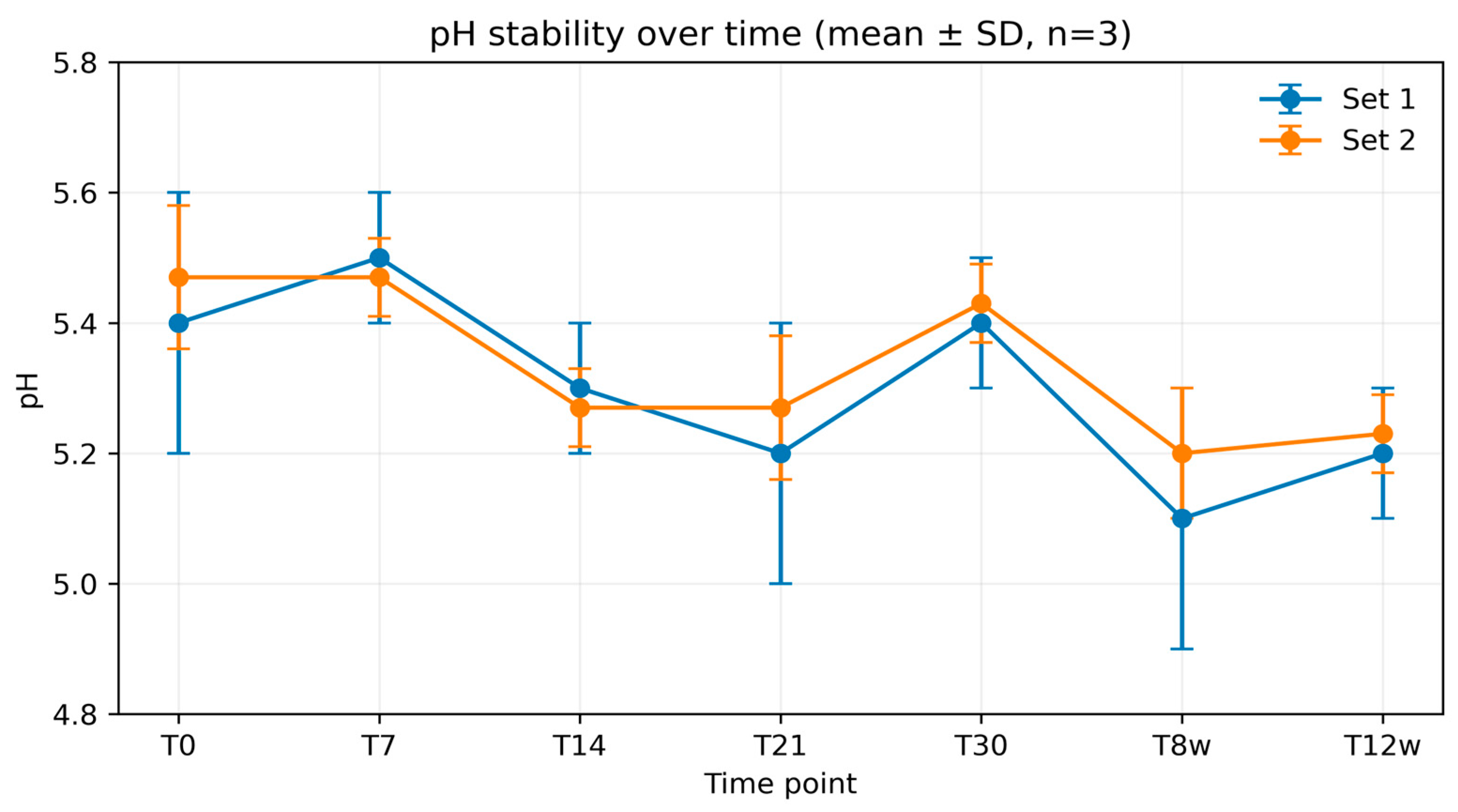
The pH of the emulsion, measured initially and at various time intervals, as presented in Figure 1 and Table S1 from Supplementary Material, shows the evolution of pH over time. Initially, the emulsion exhibited a pH of 5.4. During stability testing, pH drift remained minimal, with all values between 5.1 and 5.5.
Minor fluctuations in pH were observed between sampling points, particularly in the T14-T30 interval. These variations remained within a narrow range (approximately 5.1–5.5) and are considered typical for emulsion systems during the early stages of storage. Such oscillations may arise from progressive equilibration processes within the formulation, including redistribution of ionic species between the aqueous and lipid phases, hydration of the thickening agent, and slight variations associated with replicate measurements (n = 3). Importantly, the pH values remained within the physiologically acceptable range for topical cosmetic formulations, indicating that no significant chemical degradation or destabilization occurred during the stage period.

3.4.3. Thermal Stress Test

Throughout the three-month monitoring period, the emulsion maintained its physical integrity under all tested temperature conditions.
At 4 °C, the emulsion retained a uniform appearance with no signs of phase separation, separation or coalescence. The low temperature did not affect the emulsion’s consistency or organoleptic properties, which suggests that the emulsifying system is resilient even under cold storage.
At 25 °C, the emulsion showed excellent physical stability throughout the entire storage period. No creaming or oil release was observed, and the formulation remained consistent in texture, opacity and homogeneity. This indicates a strong balance between oil phase viscosity and the aqueous continuous phase, optimized through appropriate HLB and stabilizers.
At 37 °C, no significant physical changes were detected during the three-month evaluation period. The emulsion remained a uniform dispersion with no oil separation or droplet coalescence.

3.4.4. Centrifugation Test

After centrifugation, no visible phase separation, creaming, or sedimentation was observed, indicating good physical stability of the emulsion under simulated gravitational stress.

3.4.5. Droplet Size

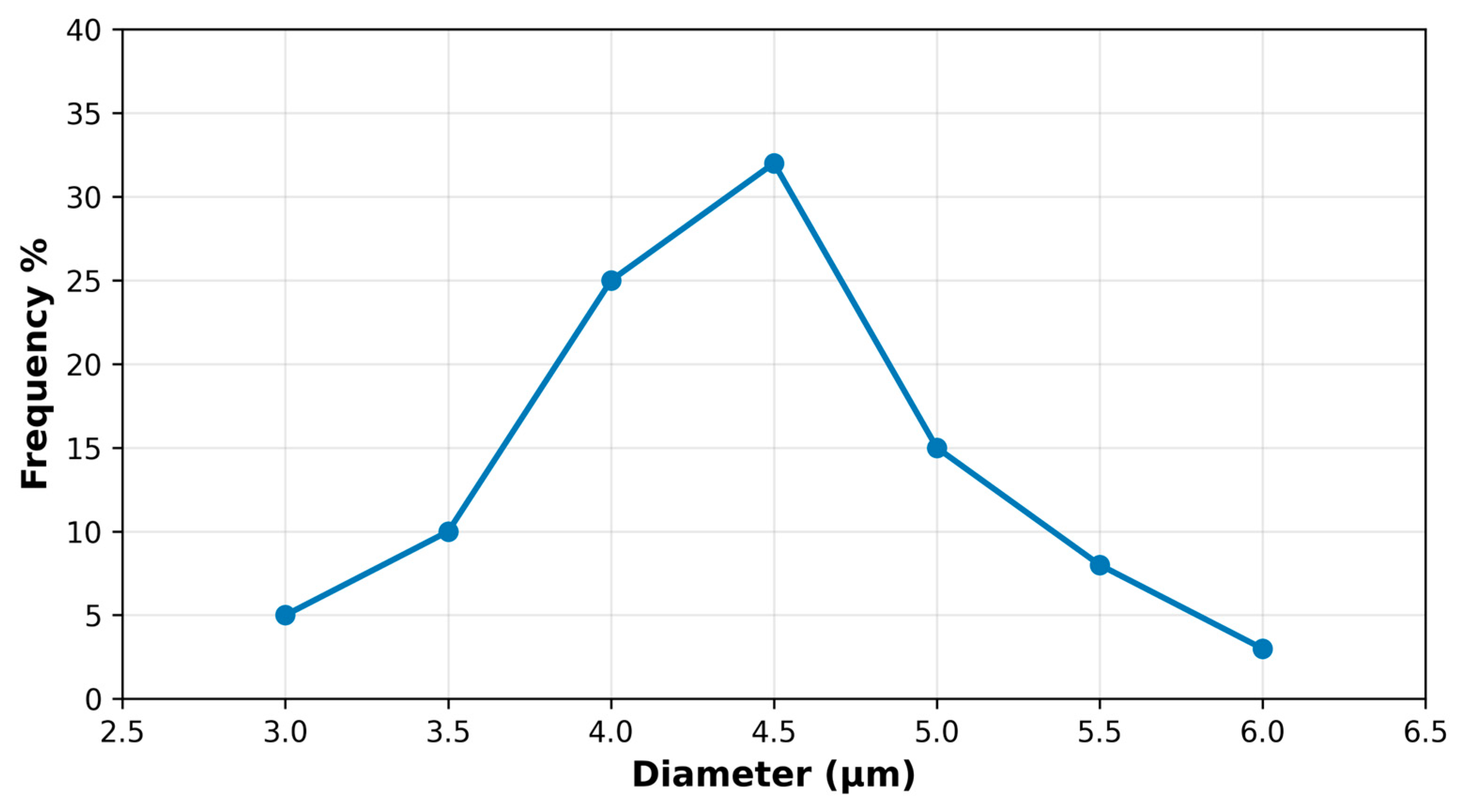
Microscopic observations showed that the droplets were predominantly spherical with smooth contours, forming a uniform microstructure with no visible aggregation or coalescence (Figure S2 from Supplementary Material). The mean droplet diameter was 4.15 ± 0.68 μm (n = 100), and the size distribution, as presented in Figure 2, was relatively narrow, indicating a homogeneous emulsion. The small and uniform droplet size is likely due to the combined effects of the emulsifier Montanov L and the incorporated plant oils (argan and castor), which contribute to the overall stability of the formulation. These findings are in agreement with the absence of phase separation or creaming during storage, confirming the physical stability and suitability of the emulsion for cosmetic applications.

3.4.6. Spreadability

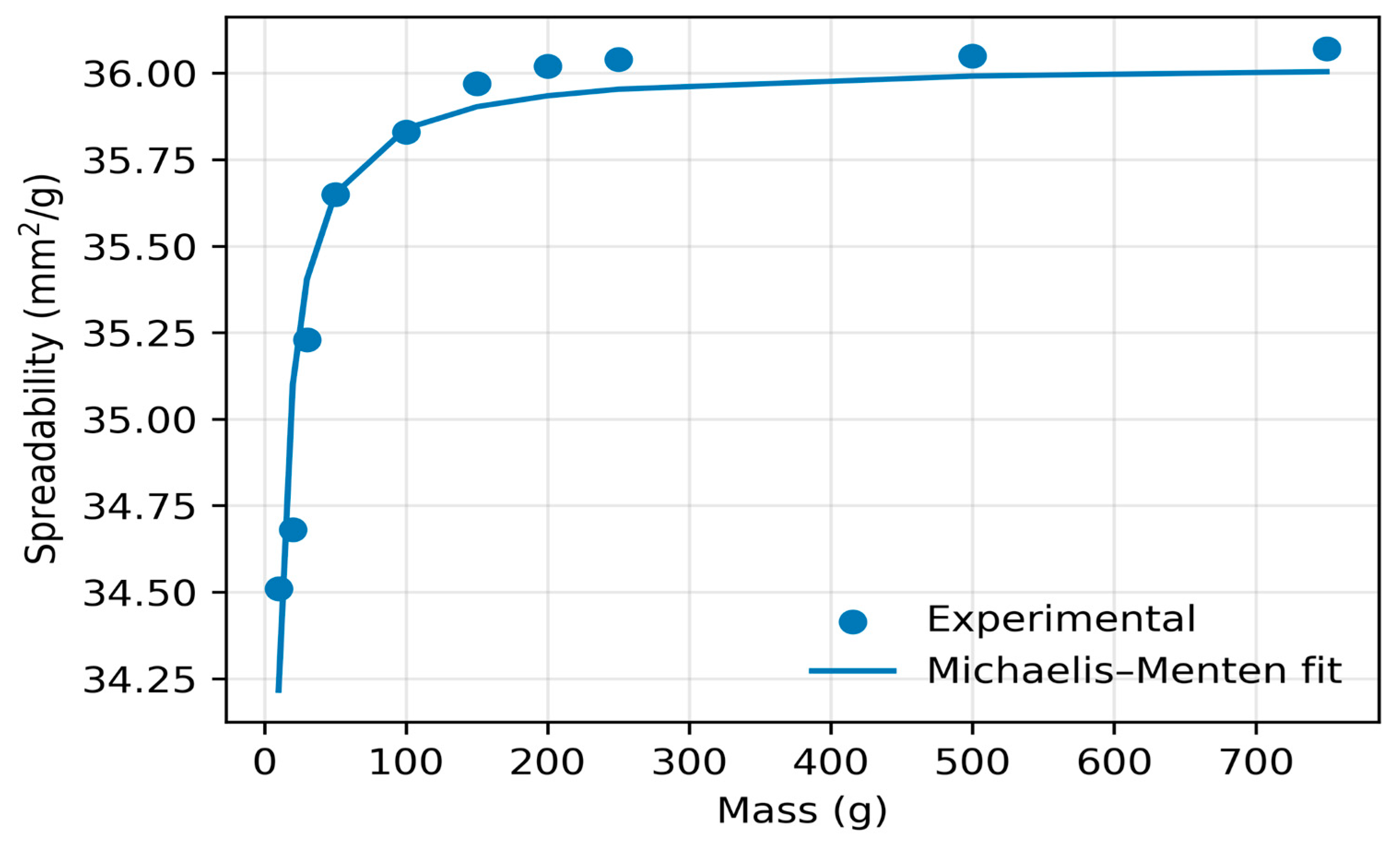
The results of spreadability test are presented in Figure 3 and Table S2 from Supplementary Material. The spreadability increased slightly with applied mass, approaching a plateau beyond 200 g. This indicates a homogenous semi-solid structure with stable theological properties. The spreadability increased sharply at low applied masses, followed by a progressive stabilization at higher loads. This trend indicates a saturation-type behavior rather than a linear dependence. The experimental data were fitted using a Michaelis–Menten–type model, which provided an excellent description of the experimental results (R2 = 0.90). The maximum spreadability value ( S m a x ) was determined to be approximately 36 mm2/g.

3.4.7. Zeta (ζ) Potential

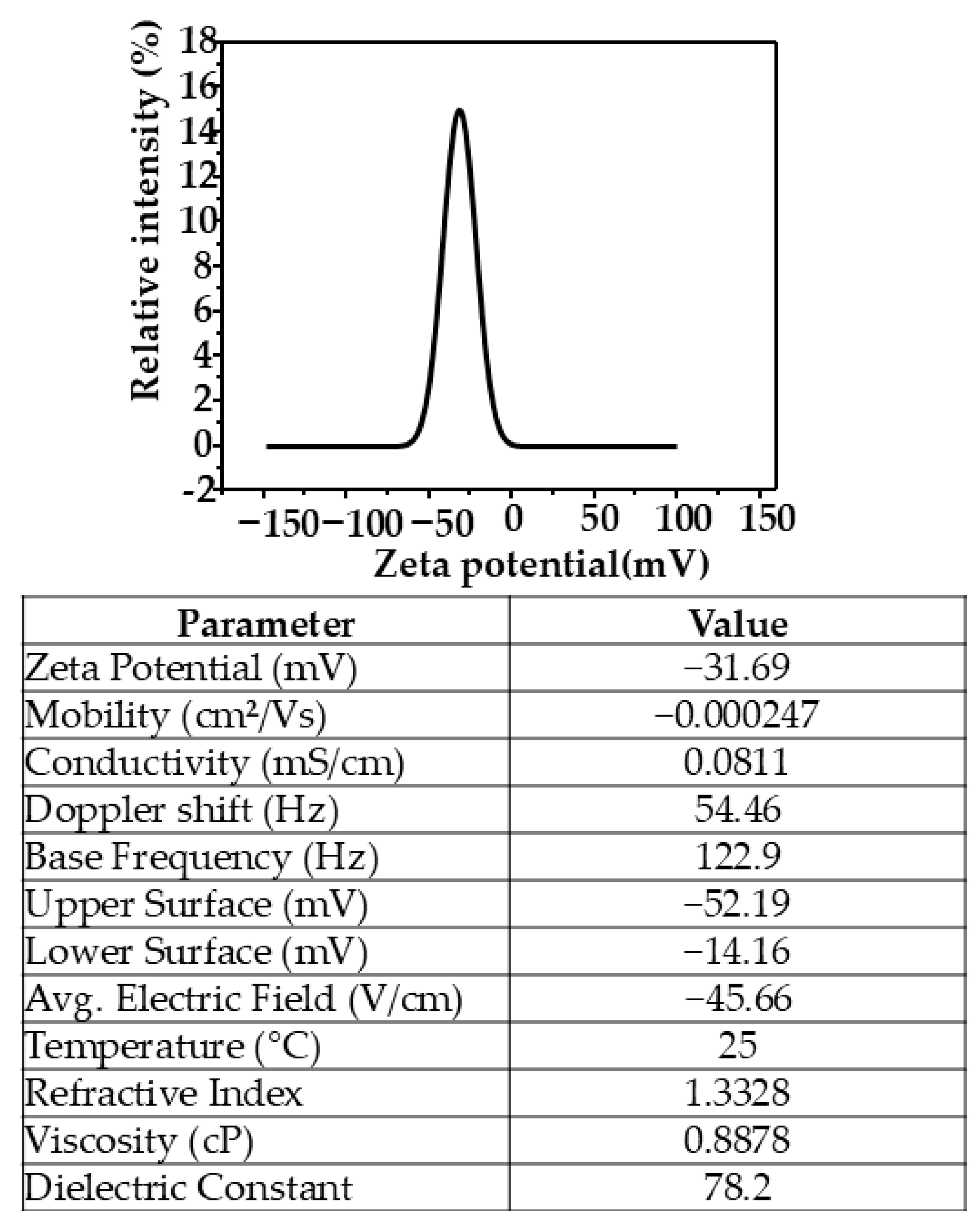
The zeta potential value (mV) of the argan–castor–glycerine emulsion was found to be −31.7 mV (Figure 4), indicating a moderately high surface charge that suggests electrostatic stabilization of the dispersed droplets. Negative surface potential is commonly associated with the presence of deprotonated carboxyl and hydroxyl groups from fatty acids and glycerol at the oil–water interface, which confer repulsive interactions preventing coalescence.
According to the general stability criteria, emulsions with absolute zeta potential values higher than 30 mV are considered electrostatically stable. The observed value therefore confirms that the formulation possesses good colloidal stability without the need for additional surfactants. Similar zeta potential ranges (−25 to −40 mV) have been reported for emulsions containing natural oils and glycerol derivatives, where the surface charge arises primarily from ionized fatty acid residues [59]. The low conductivity (0.081 mS cm−1) also supports the existence of a stable dispersion with limited ionic exchange between the aqueous and oil phases.

3.4.8. FTIR

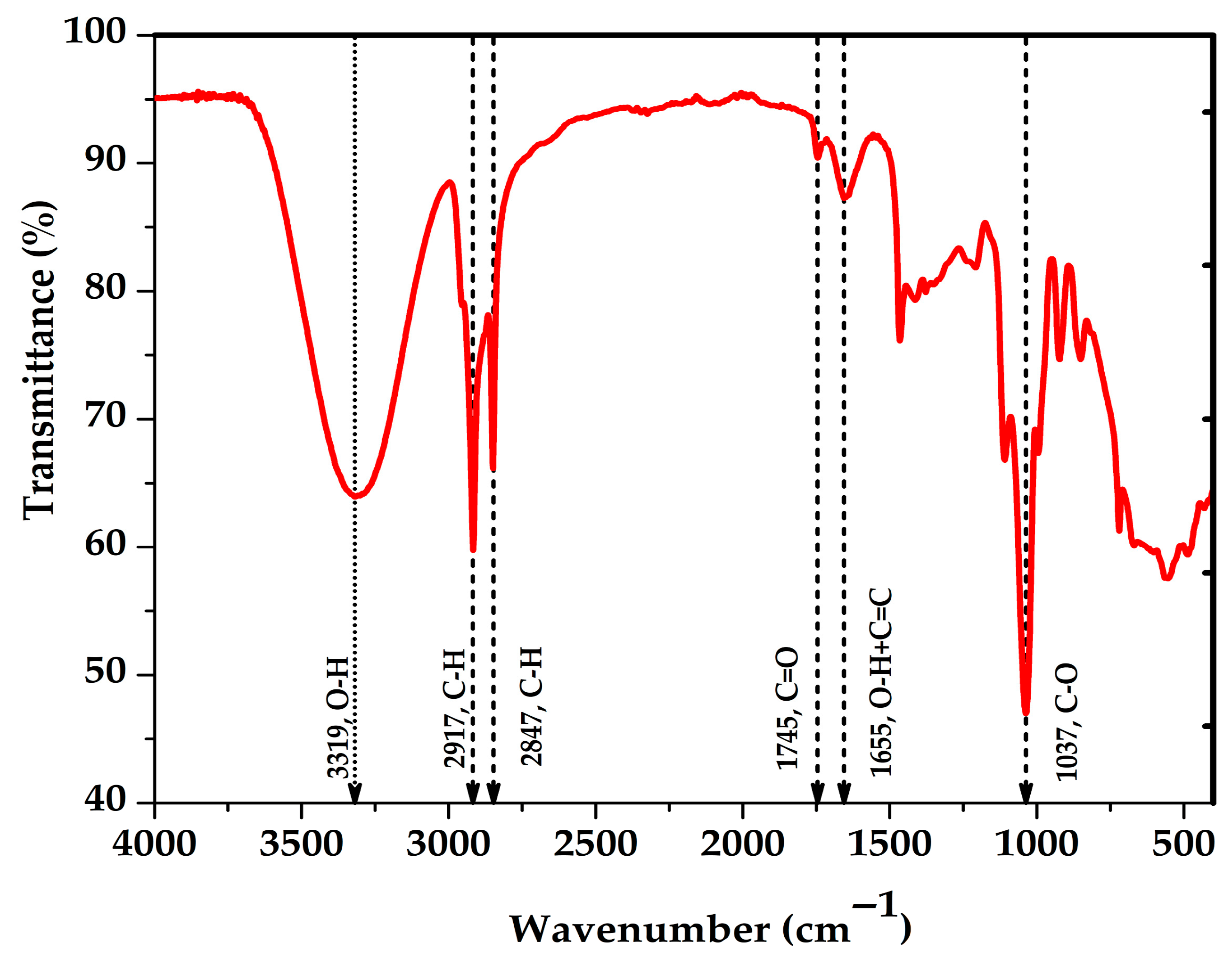
The FTIR spectrum of the argan oil–castor oil–glycerin model composite (Figure 5) revealed characteristic absorption bands associated with the main functional groups of the constituent components. The broad band centered around 3300 cm−1 corresponds to O–H stretching vibrations from hydroxyl groups present in glycerin and fatty acids. Intense bands in the 3000–2800 cm−1 region are attributed to aliphatic C–H stretching vibrations originating from long-chain fatty acids. The deformation modes of aliphatic C–H bonds appear in the 1500–1300 cm−1 region.
The strong absorption at 1745 cm−1 is associated with the C=O stretching of ester groups from triglycerides (castor oil) and/or carboxylic acid groups present in argan oil. The band observed near 1655 cm−1 may be associated with C=C stretching vibrations from unsaturated fatty acids, although contributions from bending vibrations of absorbed water cannot be excluded.
Absorption bands in the 1250–1000 cm−1 region correspond to C–O stretching vibrations from glycerol and triglyceride structures, while the band near 720 cm−1 corresponds to CH2 rocking vibrations typical of long aliphatic chains in lipid systems. The features observed between 1000 and 900 cm−1 may arise from overlapping C–C and C–H vibrations associated with glycerin together with =C–H vibrations from unsaturated lipid components [60].
Overall, the FTIR findings indicate that no major chemical changes or degradation occurred in the key lipid/humectant constituents.

3.4.9. Rheological Measurements

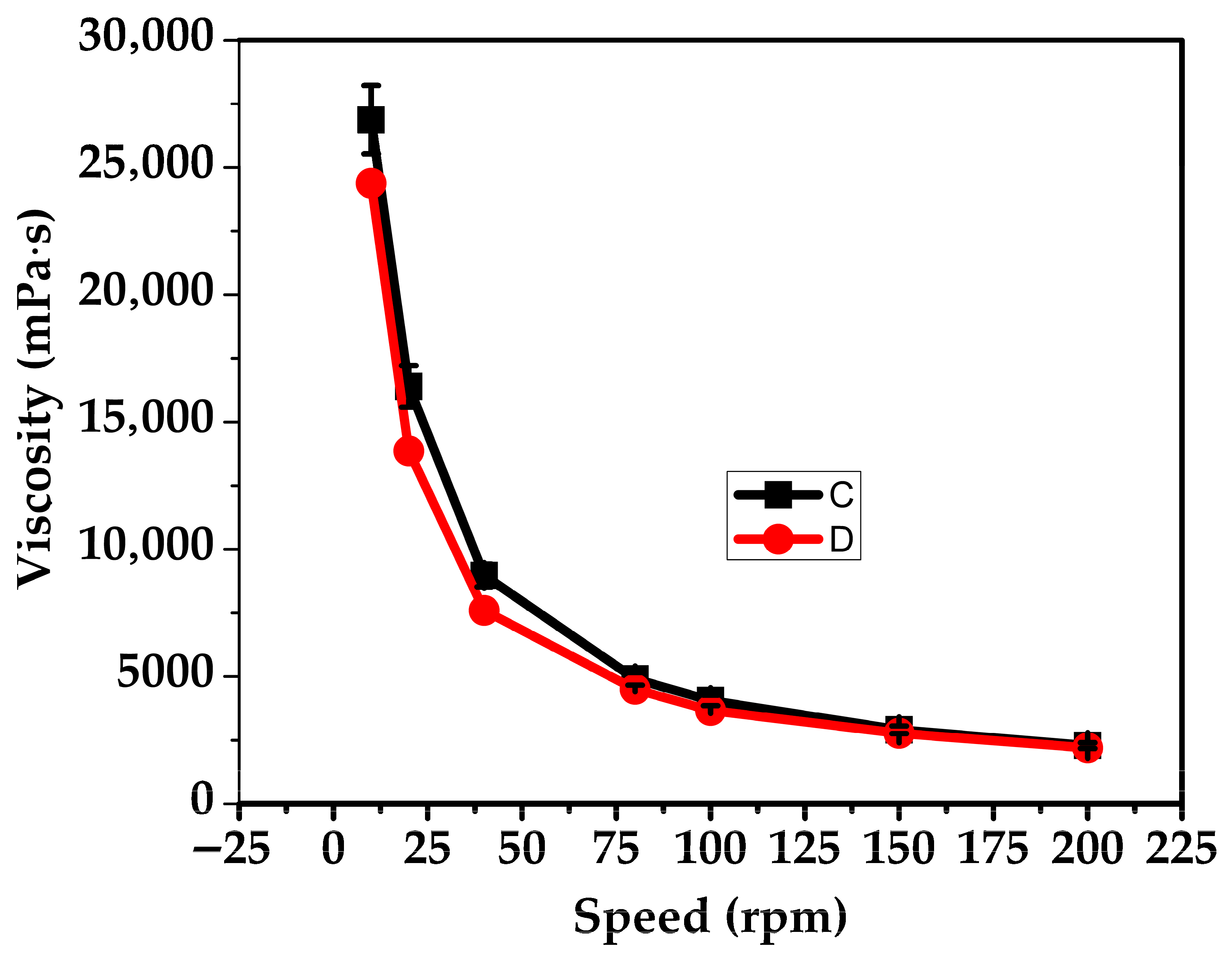
The apparent viscosity of the O/W emulsion was measured at rotational speeds of 10, 20, 40, 80, 100, 150, and 200 rpm at 25 ± 1 °C. As shown in Figure 6 and summarized in Tables S3 and S4 (Supplementary Material), the viscosity decreased progressively with increasing rotational speed, indicating a clear non-Newtonian shear-thinning (pseudoplastic) behavior, which is typical of semisolid topical O/W cosmetic emulsions [61]. This rheological profile reflects a structured system that maintains relatively high viscosity at low shear rates, while undergoing pronounced fluidization under applied shear. Such behavior is typical for structured O/W emulsions in which droplet–droplet interactions and the weak network formed by the continuous phase contribute to the high viscosity at rest, while progressive structural rearrangement under shear leads to the observed shear-thinning response.
At each rotational speed, repeated measurements revealed a gradual decrease in apparent viscosity between the first and last readings of the measurement sequence. The relative viscosity change (Δ%) ranged from approximately −15% to −4% depending on rotational speed. The more pronounced viscosity decrease observed at lower rotational speeds suggests progressive disruption of the internal emulsion structure under constant shear. In contrast, at higher rotational speeds, most of the structural elements are already disrupted, resulting in smaller relative viscosity variations. This time-dependent viscosity decrease is characteristic of thixotropic systems, in which the internal structure is partially broken down under shear and recovers gradually once the shear stress is reduced or removed [62]. Overall, the rheological behavior confirms that the developed emulsion exhibits good structural integrity at rest combined with favorable flow properties under shear, supporting its suitability as a stable and easily applicable cosmetic formulation.

3.4.10. Antioxidant Activity of Emulsion

The emulsion exhibited an IC50 value of 19.21 ± 1.021 mg/mL b using the DPPH assay (R2 0.992), which is slightly lower than that of castor oil and markedly lower than that of argan oil. Statistical analysis using one-way ANOVA followed by Tukey’s post hoc test indicated that the difference between the emulsion and castor oil was not statistically significant (p > 0.05), whereas both samples differed significantly from argan oil (p < 0.05). These results suggest that the antioxidant capacity of the oil phase is maintained after incorporation into the emulsion, indicating that antioxidant capacity is maintained and effectively expressed at the formulation level. This effect may be attributed to improved dispersion of antioxidant constituents within the emulsified system and the combined contribution of the oily components. In contrast, vitamin C exhibited an IC50 value of 2.1 ± 0.138 µg/mL, which was significantly lower than those obtained for the tested lipid-based samples (p < 0.05), reflecting its substantially higher radical scavenging efficiency compared to the lipid-based samples.

4. Discussion

The physicochemical and bioactive characterization of argan and castor oils confirmed their compliance with pharmaceutical standards and the literature data, supporting their suitability for cosmetic and dermatological formulations. The refractive index, density, and saponification values were within the typical ranges for high-quality vegetable oils, indicating their authenticity and purity [63]. The low peroxide and acid values reflect good oxidative stability and minimal degradation, which are essential parameters for maintaining the safety and efficacy of oil-based cosmetic formulations [64,65].
Organoleptic analysis further highlighted the complementary characteristics of the two oils. Argan oil, being lighter and rapidly absorbed, contributes to the emulsion’s pleasant sensory profile, while castor oil enhances occlusivity and moisture retention due to its higher viscosity and film-forming capacity. The combination of these oils in the O/W emulsion supports complementary lipid functionality, conditioning, barrier support, emollience, occlusivity, and antioxidant contributions, which together contribute to a smooth texture, a non-greasy skin feel, and easy spreadability.
These functional and sensory properties are further supported by the emulsion’s physicochemical stability, as evidenced by uniform droplet morphology, pH compatibility with skin, zeta potential values, and robust thermal and centrifugation resistance, which together confirm the effectiveness of the formulation design and interfacial stabilization strategy. The O/W emulsion demonstrated notable physicochemical stability, as evidenced by the absence of phase separation, a skin-compatible pH (5.1–5.5), indicating good dermal compatibility, and uniform droplet morphology.
The droplet size analysis (diameter 4.15 ± 0.68 µm) revealed a homogeneous and well-dispersed microstructure, suggesting an efficient emulsification process facilitated by Montanov L. O/W emulsions containing vegetable oils and stabilized with non-ionic emulsifiers have been reported to exhibit droplet diameters in the range of 3–10 µm, depending on formulation composition and homogenization conditions [23]. The droplet size obtained in the present study therefore falls within the typical range reported for stable cosmetic emulsions. Similarly, argan–oil O/W emulsions described in the literature present average droplet diameters in the micrometer range (≈10–15 µm) depending on formulation composition and emulsification conditions, indicating comparable microstructural organization of the dispersed phase [66].
The zeta potential value (−31.7 mV) confirmed good electrostatic stabilization, preventing droplet coalescence through surface charge repulsion. The negative surface charge is likely associated with partially ionized fatty acid residues and polar groups present at the oil–water interface, which contribute to electrostatic repulsion between droplets and help prevent aggregation. This finding aligns with the results of the centrifugation and thermal stress tests, which further verified the robustness of the interfacial film and the overall thermodynamic stability of the system. Similar zeta potential ranges (−25 to −40 mV) have been reported for emulsions containing natural oils and stabilized with non-ionic or natural surfactants, where the surface charge contributes to electrostatic stabilization of the dispersed droplets [67,68]. The observed stability of the emulsion can be further interpreted considering the formulation architecture. The non-ionic emulsifier system (C14–22 alcohols and C12–20 alkyl glucoside) is known to form structured interfacial films and, in some cases, lamellar liquid-crystalline arrangements at the oil–water interface. Such interfacial structures can enhance droplet stabilization by reducing interfacial tension and limiting coalescence phenomena [69,70]. In addition, hydrocolloids such as xanthan gum can increase the viscosity of the continuous phase and restrict droplet mobility, thereby improving emulsion stability by reducing droplet collisions and limiting creaming phenomena [71,72]. This combined stabilization mechanism-interfacial film formation together with increased continuous-phase viscosity-is widely reported as a key factor in the physical stability of cosmetic O/W emulsions.
The detected O–H, C=O, and aliphatic C–H stretching bands correspond to hydroxyl, ester, and lipid-chain structures typical of fatty acid–based systems, consistent with the literature data for emulsions containing natural triglycerides [73]. These spectral features indicate that no detectable chemical degradation occurred for the representative lipid and humectant constituents during the formulation process. However, it should be emphasized that the FTIR analysis was performed on a simplified model composite system composed of argan oil, castor oil, and glycerin, selected as key lipid and humectant components relevant for the emulsion matrix. As the complete formulation contains eleven ingredients, the FTIR spectra provide information only on the molecular compatibility of these three representative components rather than a full spectroscopic characterization of the entire emulsion system. Consequently, the FTIR results should be interpreted as supportive evidence of chemical compatibility within the lipid–humectant framework of the formulation. The behavior of the complete emulsion system is therefore interpreted in conjunction with complementary physicochemical analyses, including droplet size distribution, zeta potential measurements, rheological characterization, and stability testing.
The combined use of zeta potential measurements and FT-IR analysis provided complementary information on the physicochemical characteristics of the developed emulsion system. While FT-IR provided insight into the molecular compatibility of representative lipid and humectant components, the colloidal and rheological analyses characterized the behavior of the complete emulsion formulation.
Rheological analysis indicated pseudoplastic, shear-thinning behavior with moderate thixotropic characteristics, typical of non-Newtonian cosmetic emulsions. These properties are associated with structural stability at rest and reduced viscosity under shear. The relatively high apparent viscosity at low shear rates, corresponding to storage conditions, limits droplet mobility and may reduce the risk of creaming or phase separation during shelf life. As the shear rate increases, simulating product spreading, viscosity decreases progressively, facilitating easier application and improved spreadability. The gradual decrease in viscosity observed during consecutive measurements suggests time-dependent structural rearrangement under shear. However, the moderate Δ% values support a predominantly reversible thixotropic behavior. This balance between structural integrity at rest and flowability under stress is desirable for both product performance and processing operations. Such rheological behavior is advantageous for cosmetic emulsions because high viscosity at low shear rates reduces droplet mobility and limits creaming during storage, while shear-thinning facilitates product spreading during application.
The spreadability measurements further supported this behavior, showing an initial increase followed by a plateau, consistent with a homogeneous semisolid formulation.
The rapid increase in spreadability observed at low applied masses can be attributed to structural rearrangements within the formulation under minimal stress [19,54]. Beyond approximately 100 g, no significant increase in spreadability was observed, confirming the attainment of a stable spreading plateau. Such behavior is characteristic of pseudoplastic topical formulations, where spreading efficiency increases rapidly under low applied loads, followed by stabilization once the maximum spreading capacity is reached.
Regarding antioxidant capacity by DPPH assay, the IC50 values provided a quantitative measure of the radical scavenging efficiency of the two plant oils and of the final product (O/W emulsion). The results showed that castor oil exhibited a higher antioxidant potency (IC50 21.0 ± 0.192 mg/mL) compared to argan oil (IC50 65.0 ± 1.183 mg/mL), while the final O/W emulsion reached an IC50 of 19.21 ± 1.021 mg/mL. The IC50 values obtained for the two vegetable oils are consistent with the literature reports, which indicate considerable variability depending on the geographical origin of the plant, extraction method, and chemical composition [74,75]. Notably, the final O/W emulsion exhibited the highest antioxidant potency among the tested systems, with an amount of 19.21 ± 1.021 mg/mL. This slight improvement in radical scavenging efficiency compared to the vegetal oils suggests that the emulsification process-by dispersing the lipid phase into fine droplets—may have increased the interfacial surface area, thereby enhancing the accessibility of the lipophilic antioxidants to the DPPH radicals in the reaction medium. Although these values are higher than that of the reference antioxidant, Vitamin C (2.1 ± 0.138 µg/mL), they reflect the typical behavior of complex lipid matrices where bioactive molecules are embedded within a large triglyceride fraction [76,77,78].
The observed radical scavenging capacity of the emulsion can be firmly attributed to the presence of unsaturated fatty acids, together with minor constituents such as phenolic compounds and tocopherols derived from the argan and castor oil matrix. These components are widely reported to act as efficient electron or hydrogen donors in chemical antioxidant assays, including DPPH, thereby contributing to the protective potential of lipid-based cosmetic formulations.
This observation aligns with recent studies by Kucuk et al., who highlighted that plant-derived bio-based materials and natural extracts significantly contribute to the overall antioxidant capacity and functional performance of applied cosmetic systems [56]. The preservation of this activity in the present formulation confirms that the bioactive integrity of these natural lipids remains intact and functional within the O/W delivery system [61,62,79,80,81,82].
Importantly, the DPPH assay was employed as a chemical indicator of antioxidant capacity and formulation stability, rather than as a measure of biological antioxidant efficacy. Therefore, the results indicate that emulsification does not compromise and may help maintain, the antioxidant capacity of the lipid components within the formulation [64,65].
The dual-oil O/W emulsion developed in this study provides a promising foundation for future dermato-cosmetic applications. Further work should include long-term stability testing under real-life storage conditions, optimization for large-scale manufacturing, and alignment with regulatory standards for cosmetic and therapeutic use. Future studies should focus on the incorporation of additional active ingredients tailored for specific skin conditions, as well as biological compatibility and functional validation using appropriate in vitro and in vivo models.
Overall, the combined data indicate that the developed argan–castor O/W emulsion is a stable, biocompatible, and bioactive cosmetic system. Its physicochemical robustness, structural uniformity, favorable rheology, and enhanced antioxidant potential highlight its potential for dermato-cosmetic formulations aimed at skin hydration, barrier support, and protection against oxidative stress.

Comparison with Existing Cosmetic Emulsion Architectures and Market Relevance

From a formulation and technological perspective, the association of argan oil (Argania spinosa kernel oil) and castor oil (Ricinus communis seed oil) is consistent with strategies commonly reported in cosmetic formulations designed to combine emollient, barrier-supporting, and conditioning properties of vegetable oils [83,84]. Plant-derived oils rich in unsaturated fatty acids and antioxidant compounds are increasingly incorporated into modern cosmetic products due to their moisturizing, protective, and skin-conditioning effects [71,72]. Such products typically rely on oil-in-water (O/W) emulsion architectures combining vegetable oils with humectants such as glycerin and structuring/emulsifying agents including fatty alcohols and non-ionic surfactants, which represent widely adopted formulation strategies in contemporary skin care products [55,85]. Within this context, the formulation developed in the present study aligns with established cosmetic design principles while providing a systematic physicochemical and stability-oriented evaluation that is rarely reported for commercial products.
Compared with conventional cosmetic formulations, the present emulsion emphasizes the use of a natural-origin non-ionic emulsifier (Montanov™ L), belonging to the family of alkyl polyglucoside-based emulsifiers widely recognized for their mildness, biodegradability, and compatibility with skin-friendly formulations [73]. Such emulsifier systems are known to promote the formation of lamellar liquid-crystalline structures within O/W emulsions, which contribute to improved physical stability, enhanced hydration properties, and favorable sensorial attributes [16,86]. These lamellar structures mimic certain aspects of the lipid organization of the stratum corneum and are therefore frequently employed in modern dermocosmetic formulations. In addition the lamellar structures can act as interfacial barriers around dispersed oil droplets, contributing to improved resistance against coalescence and enhanced physical stability of the emulsion.
A key formulation strategy involved the inclusion of a lightweight, sugarcane-derived emollient (hemisqualane, INCI: C13–15 alkane), representative of a class of modern bio-based emollients that enhance spreadability and sensorial performance in cosmetic emulsions while mitigating the heavy or greasy skin feel typically associated with more viscous oils such as castor oil [74,87]. The incorporation of fast-spreading emollients reflects current formulation trends favoring lightweight, rapidly absorbing emulsions while maintaining adequate emollient and barrier-supporting properties. The spreadability and rheological behavior observed in this study reflect this balance between structural stability and sensorial performance.
In addition, contemporary cosmetic emulsions frequently incorporate lipid-phase antioxidants or photostabilizers to enhance oxidative stability and protect unsaturated fatty acids present in vegetable oils during storage [72]. In this regard, the inclusion of diethylhexyl syringylidenemalonate as a lipid-phase antioxidant is consistent with its reported use in skin care and sun care formulations, where it contributes to the stabilization of sensitive oil components and improves the photostability of cosmetic systems [88]. Although biological efficacy was not evaluated in vitro, the antioxidant capacity assessed by the DPPH assay provides an initial indication of the formulation’s ability to preserve redox-active constituents within the emulsion matrix.
While many commercial cosmetic products do not disclose detailed physicochemical or interfacial characterization, the present study provides a comprehensive evaluation including droplet size distribution, zeta potential, rheological behavior, and thermal and centrifugal stress testing. Such analytical approaches are widely recommended for the characterization of emulsion stability and colloidal performance in modern cosmetic formulations [89].

5. Conclusions

This study demonstrates a formulation-centered approach to the development and evaluation of a stable argan–castor oil oil-in-water (O/W) emulsion intended for cosmetic applications. Rather than focusing on biological performance, the work emphasizes an integrated physicochemical, interfacial, and rheological characterization strategy to assess formulation robustness and stability.
The developed emulsion exhibited good physical stability over a temperature range of 4–37 °C, a skin-compatible pH, uniform droplet size distribution, and pseudoplastic, moderately thixotropic rheological behavior, all of which are desirable attributes for topical cosmetic formulations. The absence of phase separation under thermal and centrifugal stress conditions further supports the structural integrity of the system.
One relevant aspect of this work is the combined application of zeta potential and FT-IR spectroscopy, together with rheological and stability analyses, as complementary tools for the physicochemical assessment of cosmetic emulsions. FTIR analysis was performed on a representative model composite system of key lipid and humectant constituents, providing supportive molecular-level information on their chemical integrity within the formulation context.
This integrated methodology provides insight into the physicochemical stability of the emulsion system and supportive evidence regarding the chemical compatibility of representative formulation components. Antioxidant capacity, evaluated using the DPPH assay, was used as a formulation-level indicator of the preservation of redox-active constituents within the lipid matrix, rather than as a measure of biological efficacy. In addition, the formulation was discussed in relation to commercially relevant cosmetic emulsion architectures, highlighting its technological relevance and alignment with current formulation practices.
The dual-oil O/W emulsion developed in this study represents a stable and physicochemically robust formulation platform that may support further development of dermato-cosmetic products. While biological compatibility and functional performance were not assessed, the comprehensive physicochemical and interfacial characterization presented here offers a solid basis for future optimization and subsequent biological validation using appropriate in vitro or in vivo models.

Supplementary Materials

The following supporting information can be downloaded at: https://www.mdpi.com/article/10.3390/cosmetics13020078/s1. Figure S1. Aspect of the O/W emulsion; Figure S2. Microstructure of emulsion droplets observed under an optical microscope at 40×; Table S1. The pH values of O/W emulsion; Table S2. The results of spreadability for the O/W emulsion; Table S3. Rheological tests of the O/W emulsion; Table S4. Rheological tests of the O/W emulsion.

Author Contributions

Conceptualization, C.-E.M., M.L.G. and C.-M.M.; methodology, C.-E.M., C.-M.M. and M.A.M.; software, F.A.M., M.O.A. and R.C.S.; validation, D.C., M.C.R. and A.B.; formal analysis, A.B., V.Ț., R.C.S. and D.C.; investigation, V.Ț., E.T. and F.A.M.; resources, M.A.M., C.-M.M. and M.L.G.; data curation, M.O.A., A.T.-Ș. and M.C.R.; writing—original draft preparation, C.-E.M., M.L.G. and C.-M.M.; writing—review and editing, C.-E.M., M.L.G. and C.-M.M.; supervision, C.-E.M., M.L.G.; C.-M.M. and A.T.-Ș. All authors have read and agreed to the published version of the manuscript.

Funding

This research was supported by Titu Maiorescu University through the internal research project CI-181 (BIONANOPHARM-AI): Pharmaceutical preparations with nanoparticles optimized by artificial intelligence. The project focuses on the development of green-synthesized nanoparticles and their integration into pharmaceutical and dermato-cosmetic formulations, including emulsion-based delivery systems.

Institutional Review Board Statement

This research did not involve or use human subjects; therefore, the Institutional Review Board is not applicable.

Informed Consent Statement

This research did not involve or use human subjects; therefore, the Informed Consent is not applicable.

Data Availability Statement

The raw data supporting the conclusions of this article will be made available by the authors upon request.

Acknowledgments

During the preparation of this manuscript, the authors used ChatGPT (OpenAI, GPT-5.2 version) for language editing purposes only. The authors reviewed and edited the output and take full responsibility for the content of this publication.

Conflicts of Interest

Author Florin Adrian Marin is employed by the company Eminvest Pharmaceuticals SRL and declares that the research was conducted in the absence of any commercial or financial relationships that could be construed as a potential conflict of interest. The remaining authors declare that the research was conducted in the absence of any commercial or financial relationships that could be construed as a potential conflict of interest.

References

  1. Lin, T.K.; Zhong, L.; Santiago, J.L. Anti-Inflammatory and Skin Barrier Repair Effects of Topical Application of Some Plant Oils. Int. J. Mol. Sci. 2018, 19, 70. [Google Scholar] [CrossRef] [PubMed]
  2. Gharby, S. Refining Vegetable Oils: Chemical and Physical Refining. Sci. World J. 2022, 2022, 6627013. [Google Scholar] [CrossRef]
  3. Goyal, A.; Sharma, A.; Kaur, J.; Kumari, S.; Garg, M.; Sindhu, R.K.; Rahman, M.H.; Akhtar, M.F.; Tagde, P.; Najda, A.; et al. Bioactive-Based Cosmeceuticals: An Update on Emerging Trends. Molecules 2022, 27, 828. [Google Scholar] [CrossRef]
  4. Gharby, S.; Charrouf, Z. Argan Oil: Chemical Composition, Extraction Process, and Quality Control. Front. Nutr. 2022, 8, 804587. [Google Scholar] [CrossRef]
  5. Nisbett, K.E.; Vendruscolo, L.F.; Koob, G.F. Indulging Curiosity: Preliminary Evidence of an Anxiolytic-like Effect of Castor Oil and Ricinoleic Acid. Nutrients 2024, 16, 1527. [Google Scholar] [CrossRef]
  6. Bikiaris, N.D.; Balla, E.; Varitimidou, D.; Koronaiou, L.A.; Nikolaidis, N. From Plant to Skin: Exploring Alnus glutinosa Extracts for Cosmeceutical Applications. Antioxidants 2025, 14, 1275. [Google Scholar] [CrossRef]
  7. Grzeszczak, J.; Wróblewska, A.; Klimowicz, A.; Gajewska, S.; Kucharski, Ł.; Koren, Z.C.; Janda-Milczarek, K. Antioxidant Activities of Ethanolic Extracts Obtained from α-Pinene-Containing Plants and Their Use in Cosmetic Emulsions. Antioxidants 2024, 13, 811. [Google Scholar] [CrossRef]
  8. Barna, A.S.; Maxim, C.; Trifan, A.; Blaga, A.C.; Cimpoesu, R.; Turcov, D.; Suteu, D. Preliminary Approaches to Cosmeceuticals Emulsions Based on N-Prolyl Palmitoyl Tripeptide-56 Acetate-Bakuchiol Complex Intended to Combat Skin Oxidative Stress. Int. J. Mol. Sci. 2023, 24, 7004. [Google Scholar] [CrossRef]
  9. Vaughn, A.R.; Clark, A.K.; Sivamani, R.K.; Shi, V.Y. Natural Oils for Skin-Barrier Repair: Ancient Compounds now Backed by Modern Science. Am. J. Clin. Dermatol. 2018, 19, 103–117. [Google Scholar] [CrossRef] [PubMed]
  10. Fulton, J.E., Jr. Comedogenicity and irritancy of commonly used ingredients in skin care products. J. Soc. Cosmet. Chem. 1989, 40, 321–333. [Google Scholar]
  11. Bakour, M.; Soulo, N.; Hammas, N.; Fatemi, H.E.; Aboulghazi, A.; Taroq, A.; Abdellaoui, A.; Al-Waili, N.; Lyoussi, B. The Antioxidant Content and Protective Effect of Argan Oil and Syzygium aromaticum Essential Oil in Hydrogen Peroxide-Induced Biochemical and Histological Changes. Int. J. Mol. Sci. 2018, 19, 610. [Google Scholar] [CrossRef]
  12. Yaghmur, A.; Aserin, A.; Mizrahi, Y.; Nerd, A.; Garti, N. Argan oil-in-water emulsions: Preparation and stabilization. J. Am. Oil. Chem. Soc. 1999, 76, 15–18. [Google Scholar] [CrossRef]
  13. Carandang, R.R. Preformulation studies of an emulsion containing commercially available argan oil. SciEnggJ 2024, 17, 374–378. [Google Scholar]
  14. Smejkal, G.; Gross, V.; Lazarev, A. Theoretical and Experimental Determinations of the Hydrophilic–Lipophilic Balance (HLB) of Representative Oils and Lecithins. Colloids Interfaces 2024, 8, 21. [Google Scholar] [CrossRef]
  15. Wang, Q.; Zhang, H.; Han, Y.; Cui, Y.; Han, X. Study on the relationships between the oil HLB value and emulsion stabilization. RSC Adv. 2023, 13, 24692–24698. [Google Scholar] [CrossRef]
  16. Kolawole, O.M.; Akinlabi, K.Q.; Silva, B.O. Physicochemical and stability profile of castor oil emulsions stabilized using natural and synthetic emulsifiers. World J. Biol. Pharm. Health Sci. 2022, 9, 60–73. [Google Scholar] [CrossRef]
  17. Dapčević Hadnađev, T.; Dokić, P.; Krstonošić, V.; Hadnađev, M. Influence of oil phase concentration on droplet size distribution and stability of oil-in-water emulsions. Eur. J. Lipid Sci. Technol. 2013, 115, 313–321. [Google Scholar] [CrossRef]
  18. Bogdan, C.; Moldovan, M.L.; Man, I.M.; Crișan, M. Preliminary study on the development of an antistretch marks water-in-oil cream: Ultrasound assessment, texture analysis, and sensory analysis. Clin. Cosmet. Investig. Dermatol. 2016, 9, 249–255. [Google Scholar] [PubMed]
  19. Panhwar, T.; Mahesar, S.A.; Kandhro, A.A.; Sheerazi, S.T.H.; Kori, A.H.; Laghari, Z.H.; Memon, J.U.R. Physicochemical composition and FTIR characterization of castor seed oil. Ukr. Food J. 2019, 8, 778–787. [Google Scholar] [CrossRef]
  20. Azizi, S.E.; Dalli, M.; Mzabri, I.; Berrichi, A.; Gseyra, N. Chemical characterization of oils produced by some native and introduced genotypes of argan tree in eastern Morocco using HPLC-DAD/GC-MS, and the evaluation of their physicochemical parameters. OCL 2022, 29, 14. [Google Scholar] [CrossRef]
  21. Kharbach, M.; Yu, H.; Kamal, R.; Barra, I.; Marmouzi, I.; Cherrah, Y.; Alaoui, K.; Bouklouze, A.; Heyden, Y.V. New insights into the Argan oil categories characterization: Chemical descriptors, FTIR fingerprints, and chemometric approaches. Talanta 2021, 225, 122073. [Google Scholar] [CrossRef]
  22. Available online: https://www.seppic.com (accessed on 11 November 2025).
  23. Tamilvanan, S.; Kumar, B.A.; Senthilkumar, S.R.; Baskar, R.; Sekharan, T.R. Stability assessment of injectable castor oil-based nano-sized emulsion containing cationic droplets stabilized by poloxamer-chitosan emulsifier films. AAPS PharmSciTech 2010, 11, 904–909. [Google Scholar] [CrossRef] [PubMed]
  24. Rahali, Y. Influence of the span 80/Gelatin B combination on the formulation and stabilization of Argan oil-in-water emulsions. Int. J. Res. Pharm. Sci. 2020, 11, 7182–7191. [Google Scholar]
  25. Udomrati, S.; Cheetangdee, N.; Gohtani, S.; Surojanametakul, V.; Klongdee, S. Emulsion stabilization mechanism of combination of esterified maltodextrin and Tween 80 in oil-in-water emulsions. Food Sci. Biotechnol. 2020, 29, 387–392. [Google Scholar] [CrossRef] [PubMed]
  26. Jeong, S.J.; Kim, S.; Echeverria-Jaramillo, E.; Shin, W.S. Effect of the emulsifier type on the physicochemical stability and in vitro digestibility of a lutein/zeaxanthin-enriched emulsion. Food Sci. Biotechnol. 2021, 30, 1509–1518. [Google Scholar] [CrossRef]
  27. El-Abbassi, A.; Neves, M.A.; Kobayashi, I.; Hafidi, A.; Nakajima, M. Preparation and characterization of highly stable monodisperse argan oil-in-water emulsions using microchannel emulsification. Eur. J. Lipid Sci. Technol. 2013, 115, 224–231. [Google Scholar] [CrossRef]
  28. Malinowska, P.; Gliszczyńska-Świgło, A.; Szymusiak, H. Commercial plant extracts may act as antioxidants or pro-oxidants in cosmetic emulsions based on argan oil. J. Cosmet. Sci. 2017, 68, 147–158. [Google Scholar]
  29. Xavier-Junior, F.H.; Vauthier, C.; Morais, A.R.; Alencar, E.N.; Egito, E.S. Microemulsion systems containing bioactive natural oils: An overview on the state of the art. Drug Dev. Ind. Pharm. 2017, 43, 700–714. [Google Scholar] [CrossRef]
  30. Barel, A.O.; Paye, M.; Maibach, H.I. (Eds.) Handbook of Cosmetic Science and Technology, 4th ed.; CRC Press: Boca Raton, FL, USA, 2014. [Google Scholar]
  31. Gharby, S.; Guillaume, D.; Elibrahimi, M.; Charrouf, Z. Physico-chemical properties and sensory analysis of deodorized argan oil. ACS Food Sci. Technol. 2021, 1, 275–281. [Google Scholar] [CrossRef]
  32. Yeboah, A.; Ying, S.; Lu, J.; Xie, Y.; Amoanimaa-Dede, H.; Boateng, K.G.A.; Yin, X. Castor oil (Ricinus communis): A review on the chemical composition and physicochemical properties. Food Sci. Technol. 2020, 41, 399–413. [Google Scholar] [CrossRef]
  33. AOAC Official Method 921.08, Index of Refraction of Oils and Fats. Available online: https://www.mt.com/sg/en/home/library/applications/lab-analytical-instruments/refractive-index-of-oils-and-fats-aoac-92108.html (accessed on 20 November 2025).
  34. Bahaciu, G.V.; Dragomir, N.; Tudorache, M.; Şuler, A.; Nicolae, C.G.; Custură, I. Comparative Study on Some Vegetable Oils Production Technologies and the Impact on Their Physico-Chemical Indices. Anim. Sci. Biotechnol. 2021, LXIV, 429–434. [Google Scholar]
  35. Mandal, Š. Physical and Chemical Properties of Selected Sample of Castor Oil, Ricinus communis L. Kem. U Ind. Časopis Kemičara I Kem. Inženjera Hrvat. 2023, 72, 187–192. [Google Scholar]
  36. Negash, Y.A.; Amare, D.E.; Bitew, B.D.; Dagne, H. Assessment of quality of edible vegetable oils accessed in Gondar City, Northwest Ethiopia. BMC Res. Notes 2019, 12, 793. [Google Scholar] [CrossRef]
  37. Kouidri, M.; Saadi, A.K.; Noui, A. Physicochemical study and composition of Argania spinosa oil from two regions of Algeria. Chem. Nat. Compd. 2014, 50, 346–348. [Google Scholar] [CrossRef]
  38. Rîmbu, M.C.; Cord, D.; Savin, M.; Grigoroiu, A.; Mihăilă, M.A.; Gălățanu, M.L.; Ordeanu, V.; Panțuroiu, M.; Tucureanu, V.; Mihalache, I.; et al. Harnessing Plant-Based Nanoparticles for Targeted Therapy: A Green Approach to Cancer and Bacterial Infections. Int. J. Mol. Sci. 2025, 26, 7022. [Google Scholar] [CrossRef]
  39. Gassim, H.B.M.; Hassan, A.M.; Abadi, R.S.M.; Mustafa, Y.A. Phytochemical constituents and antioxidant activity of Ricinus communis Linn leaf and seeds extracts. Sci. Radices 2024, 3, 74–88. [Google Scholar] [CrossRef]
  40. Gălăţanu, M.L.; Panţuroiu, M.; Cima, L.M.; Neculai, A.M.; Pănuş, E.; Bleotu, C.; Enescu, C.M.; Mircioiu, I.; Gavriloaia, R.M.; Aurică, S.N.; et al. Polyphenolic Composition, Antioxidant Activity, and Cytotoxic Effect of Male Floral Buds from Three Populus Species Growing in the South of Romania. Molecules 2025, 30, 913. [Google Scholar] [CrossRef]
  41. Hu, Y.T.; Ting, Y.; Hu, J.Y.; Hsieh, S.C. Techniques and methods to study functional characteristics of emulsion systems. J. Food Drug Anal. 2017, 25, 16–26. [Google Scholar] [CrossRef] [PubMed]
  42. Ćirin, D.; Pavlović, N.; Nikolić, I.; Krstonošić, V. Assessment of Soy Protein Acid Hydrolysate-Xanthan Gum Mixtures on the Stability, Disperse and Rheological Properties of Oil-in-Water Emulsions. Polymers 2023, 15, 2195. [Google Scholar] [CrossRef] [PubMed]
  43. Lukić, M.; Pantelić, I.; Savić, S.D. Towards Optimal pH of the Skin and Topical Formulations: From the Current State of the Art to Tailored Products. Cosmetics 2021, 8, 69. [Google Scholar] [CrossRef]
  44. Kuevi, D.N.O.; Kuntworbe, N.; Ayertey, E. Effects of pH and Electrolytes on Castor Oil Emulsions with Various Stabilisers Using Khaya senegalensis Gum as an Emulsifier. Adv. Pharmacol. Pharm. Sci. 2021, 2021, 7049332. [Google Scholar] [CrossRef]
  45. Kupikowska-Stobba, B.; Domagała, J.; Kasprzak, M.M. Critical Review of Techniques for Food Emulsion Characterization. Appl. Sci. 2024, 14, 1069. [Google Scholar] [CrossRef]
  46. Kowalska, M.; Woźniak, M.; Ludwiński, P. Emulsions, their quality and importance in food, cosmetic, and pharmaceutical industries. Acta Pol. Pharm. 2023, 80, 863–877. [Google Scholar]
  47. Sarfraz, M.; Shabbir, K.; Adnan, Q.; Khan, H.M.S.; Shirazi, J.H.; Sabir, H.; Basit, A. Fabrication, organoleptic evaluation and in vitro characterization of cream loaded with Carica papaya seed extract. J. Cosmet. Dermatol. 2024, 23, 1045–1054. [Google Scholar] [CrossRef] [PubMed]
  48. Cima, L.M.; Stanciu, G.; Sandulovici, R.C.; Neacșu, S.M.; Mititelu, M. Harnessing the bioactive potential of coffee extracts: Comparative analysis of green and roasted coffee-based semisolid formulations for antioxidant and antimicrobial skin care applications. Ovidius Univ. Ann. Chem. 2025, 36, 29–41. [Google Scholar] [CrossRef]
  49. Popovici, I.; Lupuleasa, D.; Stănescu, V. Tehnologie Farmaceutică; Polirom: Iaşi, Romania, 2017; Volume 2. [Google Scholar]
  50. Neculai, A.M.; Stanciu, G.; Lepădatu, A.C.; Cima, L.M.; Mititelu, M.; Neacșu, S.M. Development of new dermato-cosmetic therapeutic formulas with extracts of Vinca minor L. plants from the Dobrogea region. Int. J. Mol. Sci. 2023, 24, 16234. [Google Scholar] [CrossRef]
  51. Lowry, G.V.; Hill, R.J.; Harper, S.; Rawle, A.F.; Hendren, C.O.; Klaessig, F.; Rumble, J. Guidance to improve the scientific value of zeta-potential measurements in nanoEHS. Environ. Sci. Nano 2016, 3, 953–965. [Google Scholar] [CrossRef]
  52. Clogston, J.D.; Patri, A.K. Zeta potential measurement. In Characterization of Nanoparticles Intended for Drug Delivery; Humana Press: Totowa, NJ, USA, 2010; pp. 63–70. [Google Scholar]
  53. Bhattacharjee, S. DLS and zeta potential-what they are and what they are not? J. Control. Release 2016, 235, 337–351. [Google Scholar] [CrossRef]
  54. Bobroff, V.; Rubio, C.; Vigier, V.; Petibois, C. FTIR spectroscopy characterization of fatty-acyl-chain conjugates. Anal. Bioanal. Chem. 2016, 408, 319–326. [Google Scholar] [CrossRef]
  55. Wojciechowska, K.; Walczak, A.; Rostowska, E.; Poleszak, E. Comparison of sensory and rheological properties of green cosmetic creams prepared on different natural, ECOCERT and BDIH certificated self-emulsifying bases. Curr. Issues Pharm. Med. Sci. 2021, 34, 218–223. [Google Scholar] [CrossRef]
  56. Kucuk, S.D.; Groso, A.; Collet, G.; Daniellou, R.; Caliskan, U.K. Effect of bacterial nanocellulose and plant-containing facial serum on hyperpigmentation in in-vitro conditions. BioResources 2024, 19, 3208–3233. [Google Scholar] [CrossRef]
  57. Agentia Natională a Medicamentului. Farmacopeea Română, X-th ed.; Editura Medicala: București, Romania, 2018. [Google Scholar]
  58. Available online: https://www.edqm.eu/en/european-pharmacopoeia (accessed on 3 November 2025).
  59. Denada, E.V.; Hudiyono, S.H.S.; Setiasih, S. Synthesis of Glycerol-Castor Oil Fatty Acid and Glycerol-Oleic Acid Esters, as Emulsifier and Antibacterial Agent, Using Candida rugosa Lipase. In Proceedings of the BROMO Conference (BROMO 2018); SCITEPRESS: Setúbal, Portugal, 2021; pp. 62–68. [Google Scholar]
  60. Patil, H.; Kumawat, R.; Waghmare, J. Formulation and Characterization of Microemulsions containing Argan Oil: A Promising Delivery System for Cosmeceutical Applications. Res. J. Pharm. Technol. 2025, 18, 2132–2136. [Google Scholar] [CrossRef]
  61. Reolon, J.B.; Hammerschmitt, B.K.; Sari, M.H.M.; Lazo, R.E.L.; Cobre, A.D.F.; Capeletti, M.B.; Ferreira, L.M. Predictive Modeling of Rheological Behavior in Semisolid Pharmaceutical Formulations Using Computational Tools. Braz. Arch. Biol. Technol. 2024, 67, e24240050. [Google Scholar] [CrossRef]
  62. Lee, C.H.; Moturi, V.; Lee, Y. Thixotropic property in pharmaceutical formulations. J. Control. Release 2009, 136, 88–98. [Google Scholar] [CrossRef]
  63. Panţuroiu, M.; Gălăţanu, M.L.; Manea, C.E.; Popescu, M.; Sandulovici, R.C.; Pănuş, E. From Chemical Composition to Biological Activity: Phytochemical, Antioxidant, and Antimicrobial Comparison of Matricaria chamomilla and Tripleurospermum inodorum. Compounds 2025, 5, 50. [Google Scholar] [CrossRef]
  64. Zhang, Q.; Liu, C.; Sun, Z.; Hu, X.; Shen, X.; Wu, J. Authentication of edible vegetable oils adulterated with used frying oil by Fourier Transform Infrared Spectroscopy. Food Chem. 2012, 132, 1607–1613. [Google Scholar] [CrossRef]
  65. Halvorsen, B.L.; Blomhoff, R. Determination of lipid oxidation products in vegetable oils and marine omega-3 supplements. Food Nutr. Res. 2011, 55, 5792. [Google Scholar] [CrossRef]
  66. El Bouchikhi, S.; Pagès, P.; Ibrahimi, A.; Bensouda, Y. Creaming behavior prediction of argan oil in water emulsion stabilized by lacto-fermentation: Creaming index. BMC Biotechnol. 2021, 21, 53. [Google Scholar] [CrossRef] [PubMed]
  67. Silva, H.D.; Cerqueira, M.Â.; Vicente, A.A. Nanoemulsions for food applications: Development and characterization. Food Bioprocess Technol. 2012, 5, 854–867. [Google Scholar] [CrossRef]
  68. Uluata, S.; McClements, D.J.; Decker, E.A. Physical stability, autoxidation, and photosensitized oxidation of ω-3 oils in nanoemulsions prepared with natural and synthetic surfactants. J. Agric. Food Chem. 2015, 63, 9333–9340. [Google Scholar] [CrossRef]
  69. Savic, S.; Lukic, M.; Jaksic, I.; Reichl, S.; Tamburic, S.; Müller-Goymann, C. An alkyl polyglucoside-mixed emulsifier as stabilizer of emulsion systems: The influence of colloidal structure on emulsions skin hydration potential. J. Colloid Interface Sci. 2011, 358, 182–191. [Google Scholar] [CrossRef] [PubMed]
  70. Barjaktarević, A.; Coneac, G.; Cupara, S.; Kostić, O.; Kostić, M.; Olariu, I.; Vlaia, L. Novel Alkyl-Polyglucoside-Based Topical Creams Containing Basil Essential Oil (Ocimum basilicum L. Lamiaceae): Assessment of Physical, Mechanical, and Sensory Characteristics. Pharmaceutics 2025, 17, 934. [Google Scholar] [CrossRef]
  71. Krstonošić, V.; Dokić, L.; Nikolić, I.; Milanović, M. Influence of xanthan gum on oil-in-water emulsion characteristics stabilized by OSA starch. Food Hydrocoll. 2015, 45, 9–17. [Google Scholar] [CrossRef]
  72. Xiao, T.; Ma, X.; Hu, H.; Xiang, F.; Zhang, X.; Zheng, Y.; Shi, A. Advances in emulsion stability: A review on mechanisms, role of emulsifiers, and applications in food. Food Chem. X 2025, 29, 102792. [Google Scholar] [CrossRef]
  73. Chung, C.; Sher, A.; Rousset, P.; McClements, D.J. Influence of homogenization on physical properties of model coffee creamers stabilized by quillaja saponin. Food Res. Int. 2017, 99, 770–777. [Google Scholar] [CrossRef]
  74. El Yamani, M.; Ijjouk, R.; Kahime, K.; Rharrabti, Y. Ethnopharmacological Knowledge and Antioxidant Propensities of Argania spinosa L. from Morocco. Adv. Pharmacol. Pharm. Sci. 2024, 2024, 6795451. [Google Scholar] [CrossRef]
  75. Makbal, R.; Idrissi, F.E.J.; Ouchbani, T.; Tastift, M.A.; Kiai, H.; Hafidi, A.; Gadhi, C. Anti-Inflammatory, Antioxidant, Chemical Characterization, and Safety Assessment of Argania spinosa Fruit Shell Extract from South-Western Morocco. BioMed Res. Int. 2021, 2021, 5536030. [Google Scholar] [CrossRef] [PubMed]
  76. Charrouf, Z.; Guillaume, D. Argan oil: Occurrence, composition and impact on human health. Eur. J. Lipid Sci. Technol. 2008, 110, 632–636. [Google Scholar] [CrossRef]
  77. Hilali, M.; Charrouf, Z.; Soulhi, A.; Hachimi, L.; Guillaume, D. Influence of origin and extraction method on argan oil physico-chemical characteristics and composition. J. Agric. Food Chem. 2005, 53, 208–213. [Google Scholar] [CrossRef]
  78. Salimon, J.; Abdullah, B.M.; Salih, N. Chemical composition and physicochemical properties of castor oil. Int. J. Food Prop. 2012, 15, 792–801. [Google Scholar]
  79. Okoh, S.O.; Asekun, O.T.; Familoni, O.B.; Afolayan, A.J. Antioxidant properties of extracts and chemical constituents of castor oil. J. Med. Plants Res. 2014, 8, 128–134. [Google Scholar]
  80. McClements, D.J. Food Emulsions: Principles, Practices, and Techniques, 2nd ed.; CRC Press: Boca Raton, FL, USA, 2005. [Google Scholar]
  81. Garti, N.; Leser, M.E. Emulsification properties of food lipids. Adv. Colloid Interface Sci. 2001, 91, 151–188. [Google Scholar]
  82. Ribeiro, A.; Estanqueiro, M.; Oliveira, M.; Sousa Lobo, J.M. Main benefits and applicability of plant extracts in skin care products. Cosmetics 2015, 2, 48–65. [Google Scholar] [CrossRef]
  83. Abdalla, S.; Aroua, M.K.; Gew, L.T. A comprehensive review of plant-based cosmetic oils (virgin coconut oil, olive oil, argan oil, and jojoba oil): Chemical and biological properties and their cosmeceutical applications. ACS Omega 2024, 9, 44019–44032. [Google Scholar] [CrossRef]
  84. Serrafi, A.; Chegdani, F.; Bennis, F.; Kepinska, M. The importance of argan oil in medicine and cosmetology. Nutrients 2024, 16, 3573. [Google Scholar] [CrossRef]
  85. Franco-Gil, M.E.; Graça, A.; Martins, A.; Marto, J.; Ribeiro, H.M. Emollients in dermatological creams: Early evaluation for tailoring formulation and therapeutic performance. Int. J. Pharm. 2024, 653, 123825. [Google Scholar] [CrossRef] [PubMed]
  86. U.S. Food and Drug Administration. Cosmetic Labeling Guide; U.S. Food and Drug Administration: Silver Spring, MD, USA, 2018.
  87. Kryczyk-Poprawa, A.; Kwiecień, A.; Opoka, W. Photostability of topical agents applied to the skin: A review. Pharmaceutics 2019, 12, 10. [Google Scholar] [CrossRef] [PubMed]
  88. Gholap, A.D.; Sayyad, S.F.; Hatvate, N.T.; Dhumal, V.V.; Pardeshi, S.R.; Chavda, V.P.; Vora, L.K. Drug delivery strategies for avobenzone: A case study of photostabilization. Pharmaceutics 2023, 15, 1008. [Google Scholar] [CrossRef] [PubMed]
  89. Shi, X.; Qi, D.; Lin, C.; Li, J. A technical review on characterization methods for structures and properties of emulsion. APL Mater. 2024, 12, 110602. [Google Scholar] [CrossRef]
Figure 1. pH stability profile of the emulsion during storage. The pH was monitored at T0 (0 days), T7 (7 days), T14 (14 days), T21 (21 days), T30 (30 days), T8w (56 days), and T12w (84 days) for two independent sets (Set 1 and Set 2). Data are expressed as mean ± standard deviation (SD) of three measurements (n = 3) at each time point.
Cosmetics 13 00078 g001
Figure 2. Droplet size distribution of the O/W emulsion determined by optical microscopy. The droplet diameters were measured and reported as frequency (%), showing a mean droplet diameter of 4.15 ± 0.68 µm (mean ± SD).
Cosmetics 13 00078 g002
Figure 3. Spreadability as a function of applied mass. Data are expressed as mean ± SD (n = 3). Experimental data (symbols) are fitted using a Michaelis–Menten–type model (solid line), revealing a rapid increase in spreadability at low applied masses followed by the attainment of a plateau at higher loads, characteristic of saturation-type behavior.
Cosmetics 13 00078 g003
Figure 4. Zeta potential distribution of the argan–castor–glycerin emulsion measured in water at 25 °C. The distribution exhibits a single dominant peak centered at −31.69 mV, indicating good electrostatic stability of the system. The inset summarizes key electrokinetic parameters, including electrophoretic mobility (−2.47 × 10⁻⁴ cm2 V−1 s−1), conductivity (0.0811 mS cm−1), and measurement conditions.
Cosmetics 13 00078 g004
Figure 5. FTIR spectrum of the argan oil–castor oil–glycerin model composite system (representative formulation components). The red line represents the FTIR spectrum, while dashed lines and arrows indicate the characteristic absorption bands.
Cosmetics 13 00078 g005
Figure 6. Apparent viscosity of the O/W emulsion as a function of rotational speed (rpm) measured at 25 ± 1 °C. Two independent measurement series (C and D) are shown. Data are expressed as mean ± standard deviation (SD) from triplicate measurements (n = 3) at each rotational speed. The decrease in viscosity with increasing rotational speed indicates shear-thinning (pseudoplastic) behavior, characteristic of structured cosmetic O/W emulsions.
Cosmetics 13 00078 g006
Table 1. O/W emulsion composition.
PhaseIngredient% (w/w)Function
Phase A (oil phase)Argan oil8.0Emollient; lipid-phase component
Castor oil5.0Emollient; viscosity contributor
C13–15 Alkane *3.0Light emollient
sensorial modifier
Light texture
C14–22 Alcohol (and) C12–20 Alkyl Glucoside **5.0(non-ionic O/W emulsifier)
Stable structure
Cetearyl alcohol2.0Co-emulsifier
Texture stabilizer
Phase B (aqueous phase)Purified water71.0Solvent, Ph. Eur.
Glycerin4.0Humectant
Hydration support
Xanthan gum0.3Prevents coalescence
Phase C (actives and preservatives)Diethylhexyl syringylidenemalonate ***0.5Lipid-phase antioxidant (formulation stabilizer)
Tocopherol Acetate ****1.0Antioxidant
Benzyl Alcohol (and)
Dehydroacetic Acid *****
0.2Preservative
* Neossance hemisqualane. ** Montanov L. *** Oxynex ® ST. **** Vitamin E. ***** Cosgard.
Table 2. The O/W thermal stress.
ConditionTime of TestPurpose
37 ± 2 °C (incubator)14 daysSimulate thermal stress and accelerated aging
4 ± 2 °C (refrigerator)14 daysCold storage behavior assessment
25 ± 2 °C (room temperature)14 daysReference sample/control
Table 3. Organoleptic characteristics of argan and castor oil.
CharacteristicArgan OilCastor Oil
AspectClear liquidViscous, dense liquid
ColorYellowishPale yellow
OdorPleasant, discreet, nuttyFaint, slightly sweet
TasteFine, nutty, non-bitterNeutral
TextureSlightly greasySticky, viscous
Skin sensationEmollient, moisturizing, slightly greasyGreasy, forms a protective layer
Table 4. Physicochemical parameters of argan and castor oil.
Parameter Acceptable LimitsArgan Oil (Mean ± SD)Castor Oil
(Mean ± SD)
p-Value
(Student t-Test)
Significance
Refractive index1.463 ÷ 1.472 (argan)
1.477 ÷ 1.481 (castor)
1.469 ± 0.021.479 ± 0.0100.48ns
Relative density0.906 ÷ 0.919 (argan)
0.954 ÷ 0.969 (castor)
0.915 ± 0.0270.955 ± 0.0280.15ns
Acid value
(mg KOH/g oil)
≤4.00.81 ± 0.281.12 ± 0.210.20ns
Saponification value
(mg KOH/g oil)
170–200 (vegetable oils)190 ± 3.61 a176 ± 2.00 b0.004significant
Iodine value
(g I2/100 g oil)
80–100 (vegetable oils)98 ± 1.00 a86 ± 1.00 b0.0001significant
Peroxide value
(meq O2/kg oil)
Max. 10012.41 ± 2.8314.68 ± 1.410.28ns
Legend: ns = not significant (p > 0.05); data are expressed as mean ± standard deviation (n = 3). Statistical comparisons between argan oil and castor oil are performed using Student’s t-test. Different superscript letters (a,b) indicate statistically significant differences between the oils for the same parameter (p < 0.05).
Table 5. IC50 of argan and castor oil, compared to Vitamin C.
SampleIC50 *R2
Castor oil21.0 ± 0.192 mg/mL b0.973
Argan oil65.0 ± 1.183 mg/mL a0.982
Vitamin C2.1 ± 0.138 µg/mL c0.980
* Values are expressed as mean ± SD (n = 3). Different superscript letters indicate significant differences between samples according to one-way ANOVA followed by Tukey’s post hoc test (p < 0.05).
Table 6. The organoleptic characteristics of the O/W emulsion.
CharacteristicEmulsion
InitialAfter 30 Days
AspectHomogenousHomogenous
ColorWhiteWhite
OdorCharacteristicCharacteristic
AbsorptionQuickQuick
TextureDense, lightDense, light
Skin sensationNon-greasy, moisturizing, hydratingNon-greasy, moisturizing, hydrating
Disclaimer/Publisher’s Note: The statements, opinions and data contained in all publications are solely those of the individual author(s) and contributor(s) and not of MDPI and/or the editor(s). MDPI and/or the editor(s) disclaim responsibility for any injury to people or property resulting from any ideas, methods, instructions or products referred to in the content.