1. Introduction
Acne vulgaris is a highly prevalent, chronic inflammatory disease of the pilosebaceous unit, affecting approximately 9.38% of the global population, with the highest incidence in adolescents and young adults, among whom up to 85% are affected [
1,
2]. It manifests as a combination of non-inflammatory lesions (open and closed comedones) and inflammatory lesions (papules, pustules, and nodules), often leading to scarring, persistent erythema, and post-inflammatory hyperpigmentation [
1,
3,
4]. Lesions predominantly appear on the face, neck, upper back, and chest [
4]. Beyond its physical manifestations, acne imposes a substantial psychosocial burden, negatively impacting self-esteem, body image, social functioning, and overall quality of life (QoL), and is frequently associated with anxiety and depression [
1,
3,
5,
6]. Patients with both facial and truncal acne experience a greater reduction in health-related QoL compared to those with facial acne alone [
7].
The pathophysiology of acne is multifactorial, involving four interrelated mechanisms: excessive sebum production, abnormal follicular keratinization, colonization by
Cutibacterium acnes (
C. acnes), and inflammation [
4]. However, hyperseborrhea appears to play a lesser role in truncal acne, as sebum secretion on the trunk is lower than on the face [
8]. Facial acne is the most prevalent manifestation, reflecting the higher density and larger size of sebaceous glands in the facial region [
9]. Importantly, approximately 48–52% of patients with facial acne also present with truncal involvement. Despite its high prevalence, truncal acne remains underrecognized and undertreated in clinical practice, often overlooked by both clinicians and patients [
10].
Topical therapies, including antibiotics, benzoyl peroxide, and retinoids, are the mainstay for managing mild-to-moderate acne vulgaris [
4,
11,
12]. However, antimicrobial resistance affects over 50% of
C. acnes strains, limiting the efficacy of topical antibiotics [
11]. Benzoyl peroxide, although effective, is often associated with local side effects such as dryness, irritation, erythema, and pruritus [
13]. These effects may result from its rapid degradation into hydrogen peroxide (H
2O
2) and benzoic acid, with the latter being primarily responsible for skin irritation and erythema [
14,
15] (
Figure 1). Truncal acne presents additional challenges: the absence of specific evidence-based guidelines, differences in skin physiology (pH, microbiota, thickness), and the larger surface area involved [
10,
16,
17]. Practical barriers, including difficulty applying treatments to hard-to-reach areas, clothing discoloration from benzoyl peroxide, and treatment costs, further hinder adherence and outcomes [
17,
18]. These limitations underscore the need for safer, better tolerated options that support skin health and improve QoL [
11].
In this context, H
2O
2 has emerged as a promising topical agent for improving acne symptoms while maintaining a favorable tolerability profile [
14,
19,
20,
21,
22,
23,
24]. As a reactive oxygen species (ROS), H
2O
2 contributes to oxidative damage of cellular components and can diffuse freely across membranes, exerting effects in different cellular compartments. In the skin, it plays roles in innate immune defense, apoptosis, wound repair, and modulation of vascular tone. Beyond these physiological functions, H
2O
2 exhibits antibacterial activity and acts as a debriding agent when applied topically at concentrations of 1–6%, supporting its long-standing use in wound care [
24]. At lower concentrations (around 1%), H
2O
2 has demonstrated efficacy in acne management comparable to benzoyl peroxide, but with a more favorable side effect profile [
20,
21,
22,
24]. Building on this rationale, the present study aimed to evaluate the anti-acne efficacy and tolerability of two novel 1% H
2O
2 formulations: a cream-gel for facial acne and a sprayable lotion for truncal acne.
2. Materials and Methods
2.1. Study and Design
This work comprised two separate open-label, prospective clinical studies evaluating topical formulations with 1% H2O2 for mild-to-moderate acne.
The study was conducted at the experimental facility under dermatological oversight. All enrolled volunteers served as their own intra-subject controls
The facial acne study involved 42 participants who applied a cream-gel formulation twice daily for eight consecutive weeks (56 days). The study was conducted between April and August 2022 and included four assessment visits: baseline (D0), day 14 (D14), day 28 (D28), and day 56 (D56).
The truncal acne study included 41 participants who applied a sprayable body lotion twice daily for eight consecutive weeks (56 days). This study was conducted between April 2022 and May 2023 and followed the same assessment schedule: D0, D14, D28, and D56.
Male and female subjects aged 12 to 33 years with oily skin and toward mild-to-moderate acne tendency, either facial or truncal (back or chest). All participants had to be in good physical and mental health, available for scheduled visits to the research centers, provide written informed consent. A washout period was required before study initiation: at least 7 days for topical anti-acne or sebum-regulating products, and at least 15 days for oral anti-acne treatments.
History of allergy to cosmetic products, skin hyperreactivity, active oncological conditions, recent surgery or treatment in the study area, pregnancy or breastfeeding, participation in another clinical trial that could interfere with the protocol, any health condition likely to compromise adherence, volunteers under treatment with antibiotics, antihistamines, corticosteroids, beta-blockers, retinoids, azelaic acid, anti-acne therapies or whose treatment has concluded within the 15 days preceding the start of the study, exposure of the experimental area to sunlight or UVA radiation during the study, use of any topical products other than the usual cleansing agents on the experimental area during the study and refusal to provide written informed consent.
The investigational product in both studies was Redoxcutane® (Laboratorio Reig Jofre S.A., Barcelona, Spain), a commercial cosmetic topical formulation containing stabilized 1% H2O2. Stabilization kept pH below 4.40, preventing decomposition and precipitation of the active compound. Two presentations were evaluated: a facial cream-gel and a sprayable body lotion.
Participants were instructed to apply the assigned product to the affected areas twice daily, morning and evening, after routine cleansing, and to massage until fully absorbed for a total duration of 8 weeks.
2.2. Study Procedures
2.2.1. Acne Assessment by Investigators
A comprehensive dermatological evaluation of skin condition and existing acne lesions was performed by the study dermatologists using the Investigator’s Global Assessment (IGA) scale and the Spanish Acne Severity Scale (Escala de Gravedad del Acné Española, EGAE) at baseline, Day 28, and Day 56 of product use. In addition, acne severity was assessed through a detailed lesion count by lesion type at each scheduled assessment timepoint.
The IGA scale consists of five categories that describe acne severity based on clinical presentation: 0: Clear skin, with no evidence of acne, 1: Almost clear; a few non-inflammatory lesions may be present, with early non-inflamed papules (papules may be developing but are not yet red or pink), 2: Mild; non-inflammatory lesions present with a few inflammatory lesions (papules and/or pustules only; no nodulocystic lesions), 3: Moderate; predominance of non-inflammatory lesions with evident inflammatory lesions; several to many comedones and papules/pustules; nodulocystic lesions may or may not be present, 4: Severe; more visible inflammatory and non-inflammatory lesions, including comedones and papules/pustules; nodulocystic lesions may or may not be present and 5: Very severe; predominance of severe inflammatory acne with a variable number of comedones, papules/pustules, and nodulocystic lesions.
The EGAE scale assesses acne lesions based on their severity, assigning scores from 1 to 4, where 1 corresponds to mild acne, and 4 corresponds to very severe acne.
2.2.2. Biometric Measurements
At each visit, biometric evaluations were conducted at Dr. Goya experimental centre under dermatological control to monitor treatment effects (
Table 1). All measurements were assessed on acne-affected areas on facial areas (forehead, cheek or chin) and truncal areas (back or chest) at baseline (D0), after 14 days (D14), after 28 days (D28), and after 56 days (D56) of product use. No samples were taken.
Efficacy regulating skin pH after repeated applications, reflecting the integrity of the hydrolipidic film (acid mantle), was measured using the Skin-pH-Meter PH 905 (Courage & Khazaka electronic). Measurements were taken on the cheek, back or chest. The treatment was considered effective if skin pH increased to the normal levels of healthy skin, around 5.5.
C. acnes virulence, after repeated applications, was assessed via porphyrin fluorescence using Visiopor® PP 34 probe (Courage & Khazaka electronic, Köln, Germany). The treatment was considered effective if there was a decrease in porphyrin size, porphyrin count, or porphyrin intensity.
Sebum production on the face or trunk, after repeated use, was quantified using the Sebufix® F16 (Courage & Khazaka electronic, Köln, Germany). Two parameters were measured: the number of spots, assessed using Visioscan VC 98 combined with Sebufix® F16, and the percentage of area covered by sebum, measured solely with Sebufix® F16.
Erythema was evaluated after repeated use. Measurements were taken on the acne area, chest or back by measuring skin haemoglobin through light absorption/reflection using the VisioFace® 1000D system (for facial acne) and the Mexameter® MX18 (Courage & Khazaka electronic) (for truncal acne) detecting changes in skin pigmentation.
Cell renewal after a single and repeated applications, was assessed, by measuring the number and size of corneocytes using Visioscan® VC 20 plus and Corneofix® F20 plus (Courage & Khazaka electronic). Measurements were taken on the cheek. The treatment was considered effective when the amount of corneocytes was lower and size was smaller.
Facial photographs (frontal, right profile, and left profile) of the participants were taken using the VisioFace® 1000D (Courage + Khazaka electronic GmbH) at baseline, after 14 days, after 28 days, and after 56 days of product use.
Truncal photographs of the test area were taken using a Canon EOS M200 camera at baseline, after 14 days, after 28 days, and after 56 days of product use
2.2.3. QoL Survey
At D0 and D56, volunteers completed a QoL survey, the Cardiff Acne Disability Index (CADI), to assess their perception of the impact of acne on their daily lives. A subjective survey was administered to assess volunteer satisfaction. The survey measured the percentage of participants who felt the product was effective and if it met their expectations.
2.2.4. Tolerance
Dermal tolerance and product safety were evaluated at each visit by rating changes in erythema, dryness, edema, oozing, comedogenicity, pigmentation alterations, and sensations of itching or stinging, using a three-point severity scale (mild, moderate, severe). Additionally, any adverse events reported since the previous visit were documented. The causality of these events was classified as unrelated, unlikely, possible, probable, definite, or not assessable.
2.3. Statistical Analysis
The statistical analysis was conducted in accordance with the exploratory, non-interventional, and observational nature of the study. The primary objective was to evaluate within-subject changes in clinical acne severity and skin physiological parameters over time in response to the tested products. All analyses focused on repeated measurements obtained from the same individuals at baseline and at follow-up visits.
Continuous variables, including acne lesion counts and biometric measurements, were analyzed using paired comparisons versus baseline and summarized as mean ± standard deviation (SD) to describe their temporal evolution. Categorical variables, such as the proportion of participants achieving at least a one-grade improvement in the Investigator’s Global Assessment (IGA), were expressed as percentages along with their descriptive statistics.
A significance threshold of α = 0.05 was adopted, consistent with conventional practice in clinical and dermatological research and appropriate for evaluating statistically meaningful changes in both clinical and physiological outcomes.
Because biometric variables consisted of multiple correlated measurements collected over time (D0, D14, D28, and D56), longitudinal modeling was performed using linear mixed-effects models (LMMs). These models incorporated random effects at the participant level, allowing the intercept to vary across individuals and appropriately accounting for within-subject correlations across time points. LMMs were used to evaluate the evolution of clinical and physiological variables throughout the 56-day study period.
Assumptions of normality, homogeneity of variances, and homoscedasticity were examined for all continuous variables. When data satisfied the assumptions for parametric analysis, analysis of variance (ANOVA) was used. When variables deviated from normality, the non-parametric Kruskal–Wallis test was applied. All inferential tests were conducted using a significance level of α = 0.05, and 95% confidence intervals were reported where relevant.
This analytical strategy ensured a rigorous assessment of treatment-related changes while appropriately addressing the longitudinal and correlated structure of the dataset.
2.4. Ethical Considerations
The study was conducted in accordance with the ethical principles outlined in the Declaration of Helsinki and complied with the International Conference on Harmonisation (ICH) guidelines for Good Clinical Practice (GCP), along with all applicable local regulatory requirements. The study procedures involved only non- invasive application consistent with normal cosmetic use, without any medical intervention or collection of biological samples. In accordance with established guidance on cosmetic product testing in the EU, studies assessing safety, tolerability, and cosmetic performance under minimal risk conditions are not classified as clinical research and therefore do not fall under the scope of ethics committee review.
Written informed consent was obtained from all participants prior to the initiation of any study-related procedures.
3. Results
3.1. Patient Characteristics
In the facial acne study, 42 patients were enrolled, with a mean age of 17.71 years and 57.14% females. One participant withdrew for reasons unrelated to the study, resulting in a final analysis of 41 subjects. In the truncal acne study, 41 patients were included, with a mean age of 19.59 years and 56.10% females, and all participants completed the study without dropouts.
3.2. Clinical Results
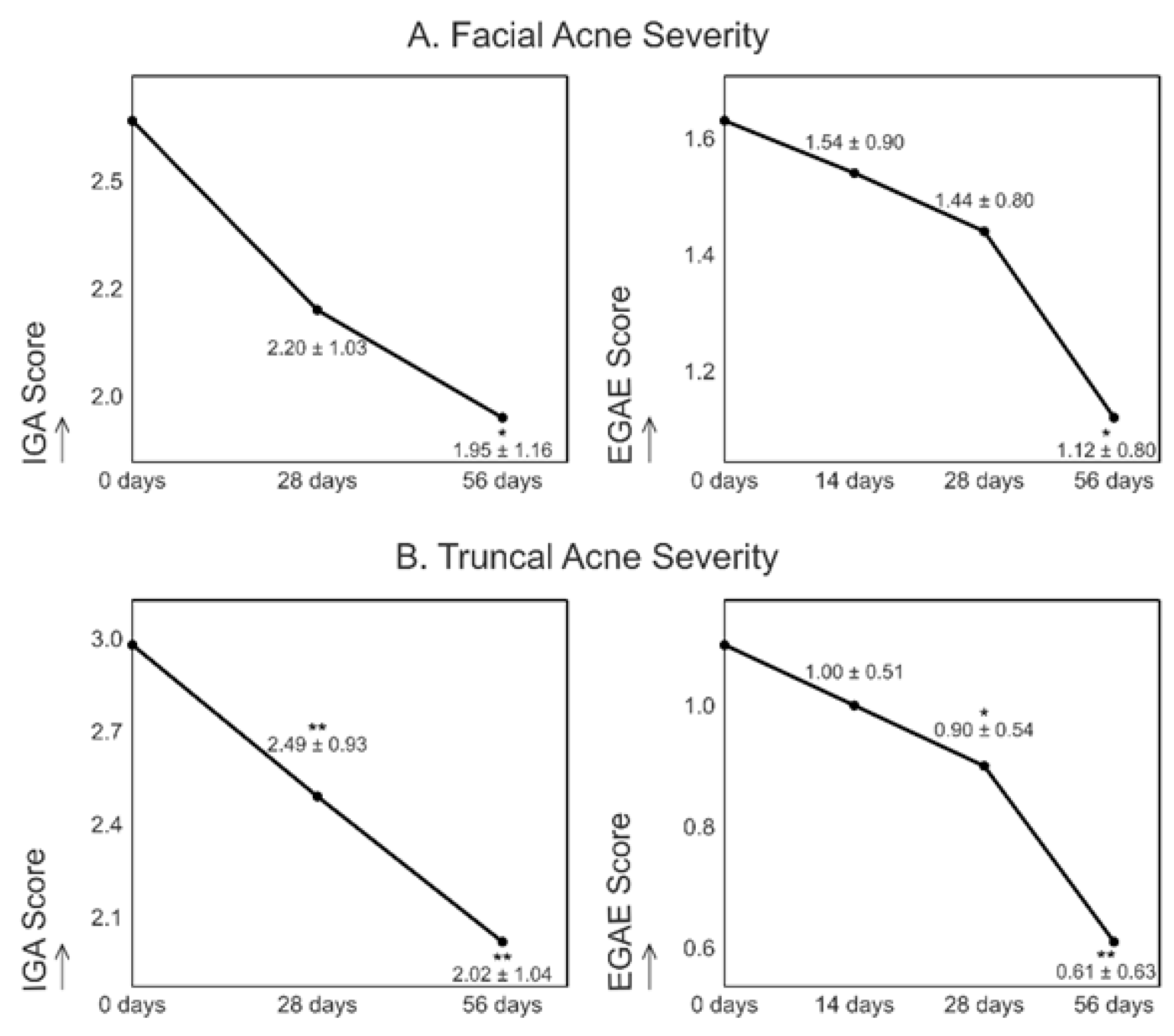
The IGA scale showed progressive reductions in acne severity, reaching statistical significance at day 56, with decreases of 26% in facial acne (
p = 0.01) and 32% in truncal acne (
p = 0.001). Additionally, a clinically meaningful improvement of ≥1 point in IGA score was observed in 63.16% of facial acne patients and 65.85% of truncal acne patients by the end of the study. The EGAE visual scale demonstrated similar improvements, with significant reductions of 31% for facial acne (
p = 0.01) and 45% for truncal acne (
p = 0.001) at day 56 (
Figure 2).
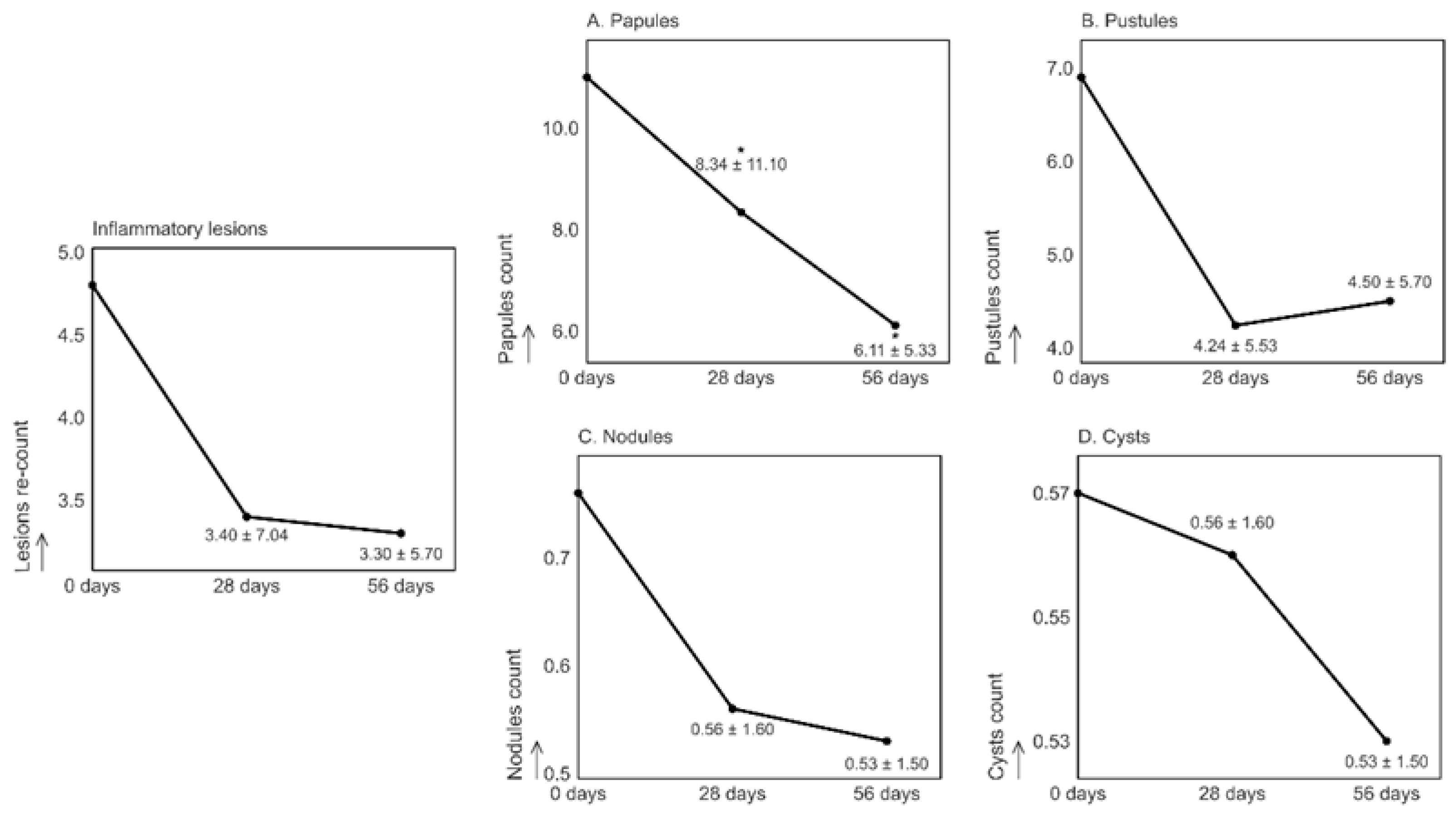
Inflammatory lesions decreased over time in both studies. In facial acne, papules were significantly reduced by 24% at day 28 (
p = 0.04) and 45% at day 56 (
p = 0.017), while reductions in pustules, nodules, and cysts were observed but did not reach statistical significance (
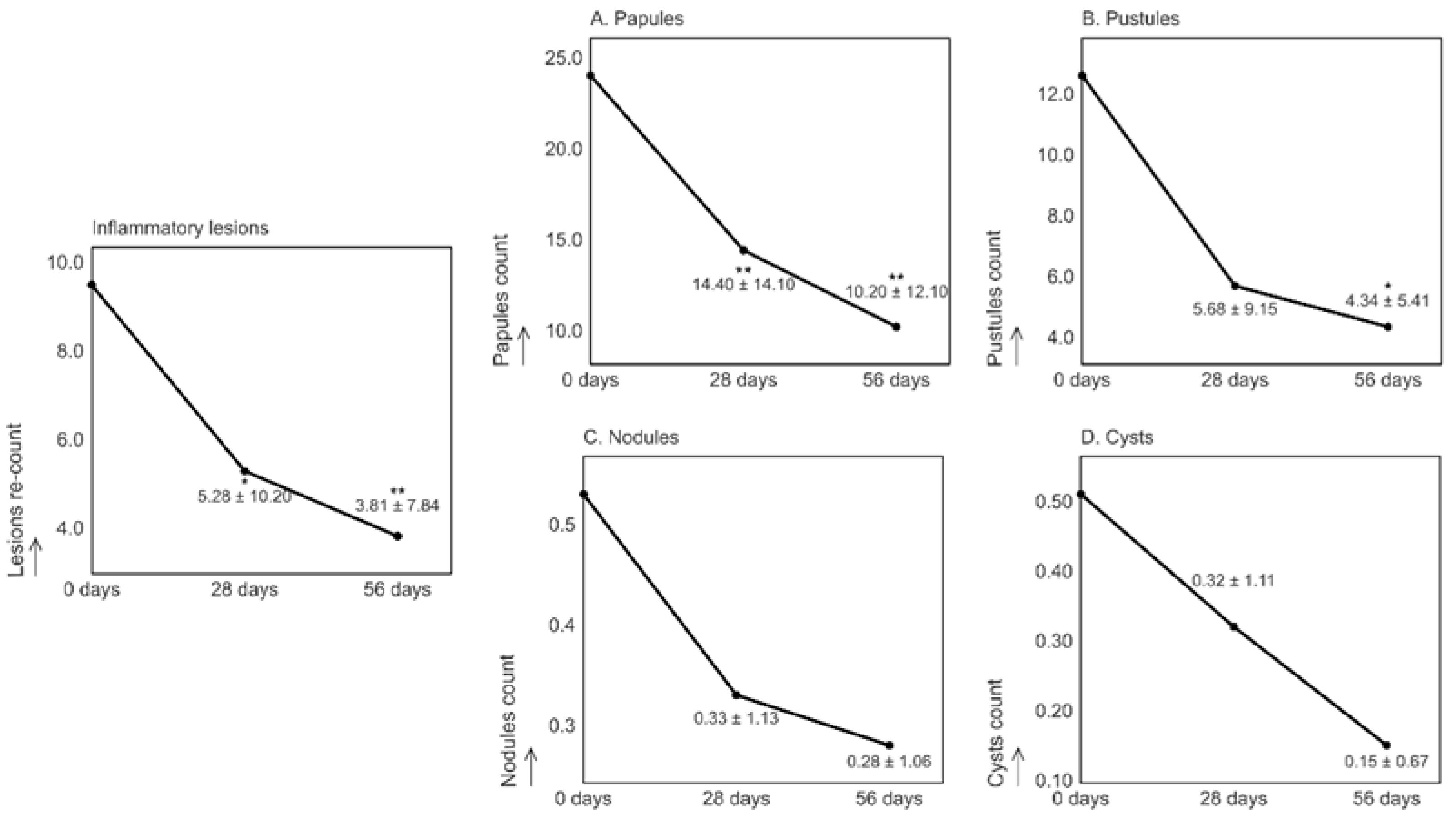
Figure 3). In truncal acne, inflammatory lesions showed a significant overall reduction of 44% at day 28 (
p = 0.03) and 60% at day 56 (
p = 0.001). Papules decreased significantly by 40% at day 28 (
p = 0.005) and 58% at day 56 (
p = 0.001), while pustules decreased by 66% at day 56 (
p = 0.03). Nodules and cysts also declined, although not significantly (
Figure 4).
3.3. Biometric Measurements
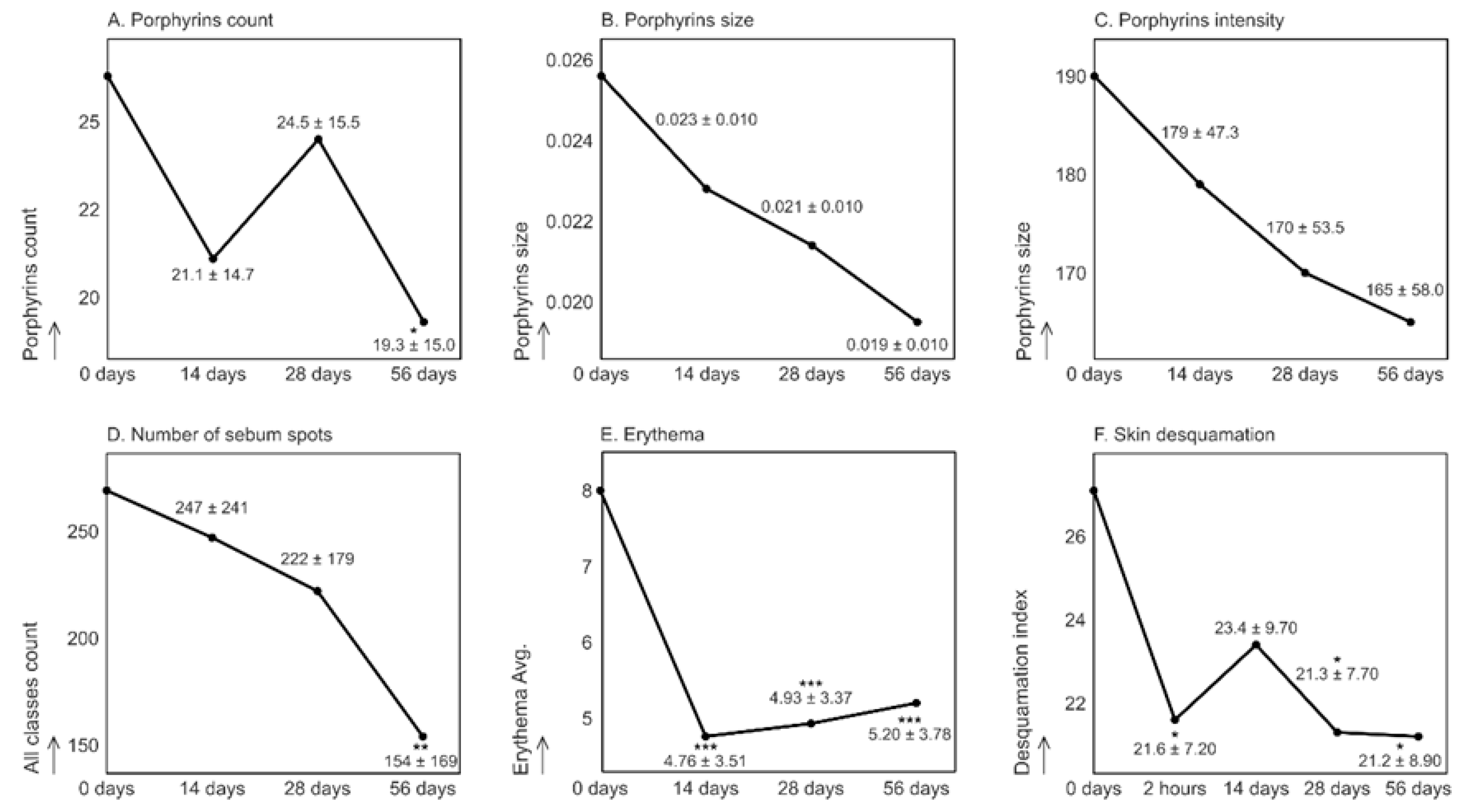
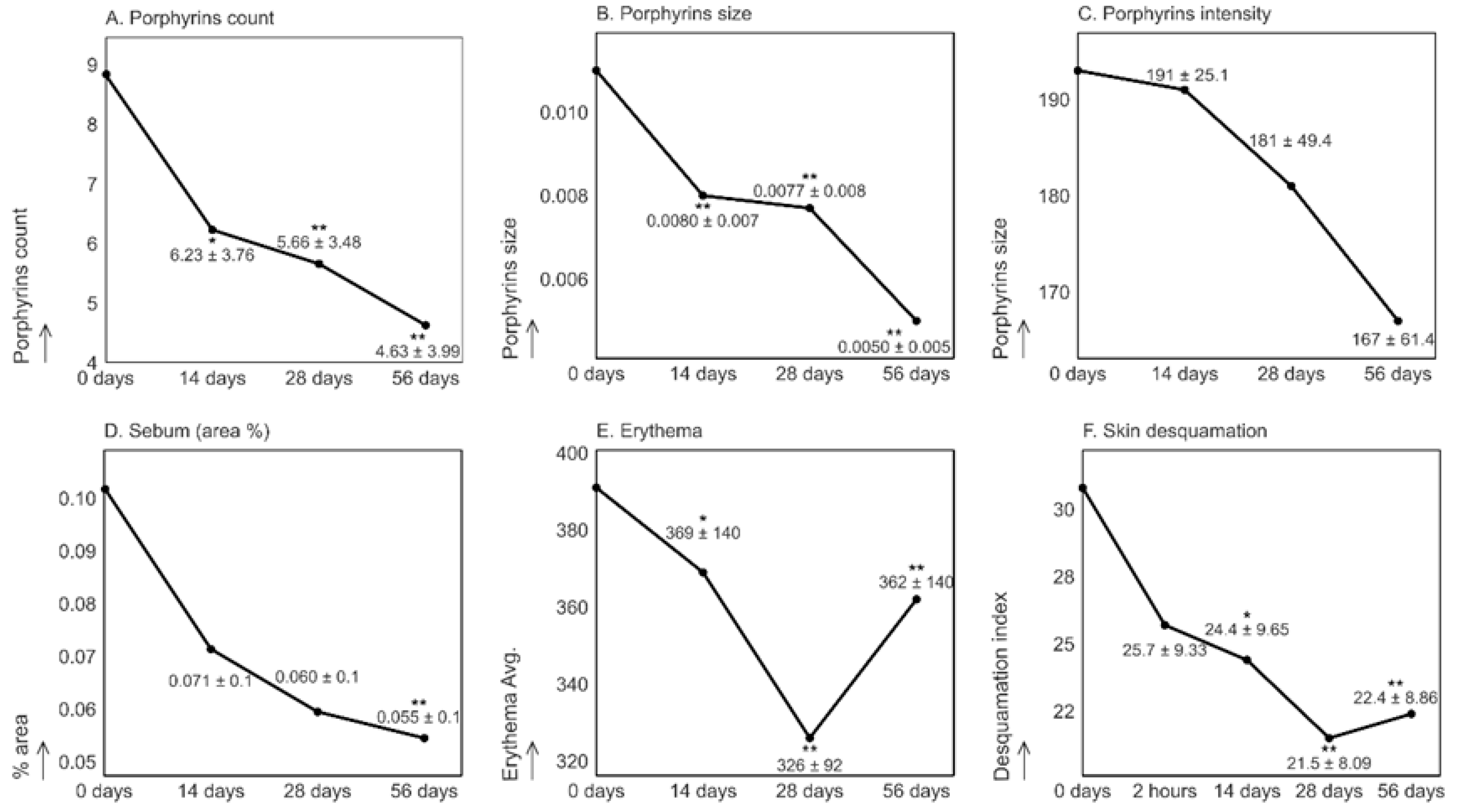
The different biometric measurements are shown in
Figure 5 and
Figure 6. The effect of treatment on
C. acnes virulence was assessed by porphyrin fluorescence. In facial acne, porphyrin count showed a significant reduction of 27% at day 56 (
p = 0.04), while porphyrin size and intensity decreased progressively without reaching statistical significance. In truncal acne, significant reductions were observed across all parameters. Porphyrin size decreased by 27% (
p = 0.003), 30% (
p = 0.002), and 55% (
p = 0.001) at days 14, 28, and 56, respectively, while porphyrin count decreased by 29% (
p = 0.02), 36% (
p = 0.006), and 48% (
p = 0.001) at the same timepoints. Porphyrin intensity showed a significant reduction of 14% at day 56 (
p = 0.05).
Sebum-regulating efficacy was also analyzed. In facial acne, sebum levels, measured as the number of sebum spots, decreased progressively, with a significant 75% reduction at day 56 (p = 0.005). In truncal acne, sebum, evaluated as the percentage of area covered by sebum, decreased by 30%, 42%, and 47% at days 14, 28, and 56, respectively, although these changes were not statistically significant.
Erythema showed improvement throughout the treatment period in both facial and truncal acne. In facial acne, reductions were significant from day 14 (41%, p = 0.0001) and remained stable at day 28 (38%, p = 0.0001) and day 56 (35%, p = 0.0001). In truncal acne, significant decreases were also observed, with 6% at day 14 (p = 0.03), 17% at day 28 (p = 0.001), and 7% at day 56 (p = 0.005).
Cellular renewal, assessed through desquamation, showed early and sustained improvements. In facial acne, a significant reduction of 20% was observed two hours after application (p = 0.03), followed by significant decreases of 21% at day 28 (p = 0.02) and 22% at day 56 (p = 0.02). In truncal acne, reductions were progressive, with a non-significant 17% at two hours, followed by significant decreases of 21% (p = 0.03), 30% (p = 0.001), and 27% (p = 0.001) at days 14, 28, and 56, respectively.
After 56 days of product use, facial acne showed a 7% increase in pH, which was not statistically significant. In contrast, truncal acne exhibited a 5% decrease in pH over the same period, also not statistically significant.
3.4. QoL Survey
After 56 days of product use, participants with facial acne experienced a significant 14% reduction in negative feelings about having acne-prone skin (p = 0.03) and a 14% decrease in negative perceptions of their acne condition (p = 0.02). Non-significant reductions were observed in feelings of aggressiveness, frustration, or embarrassment (20%), as well as in the perceived impact of acne on daily life (11%) and social situations (6%). In participants with truncal acne, significant improvements were also observed, including reductions in negative emotions associated with acne such as aggressiveness, frustration, or embarrassment (21%, p = 0.02), negative perceptions of having acne-prone skin (19%, p = 0.01), and negative feelings about the overall acne condition (21%, p = 0.001).
3.5. Subjective Evaluation
In the subjective questionnaire, participants reported high levels of satisfaction with the product in both studies. In the facial acne study, 83% of patients felt that the product met their expectations, 85% noticed fewer skin imperfections, and 100% reported no unwanted symptoms or damage to clothing. In the truncal acne study, overall satisfaction reached 95%, with 85% of participants observing an improvement in the overall appearance of their skin, 90% perceiving a reduction in blemishes, 98% describing a non-greasy sensation, and 98% reporting no changes to their clothing or bed linens after product use, with no discoloration or damage observed.
3.6. Safety
Products demonstrated a high level of dermatological tolerance. In the facial acne study, four participants (9.76%) reported mild adverse events, including two cases of itching, one case of erythema, and two cases of increased lesions (papulo-pustular or papular). Of these, two events (itching and erythema with itching) were considered probably related to product use, while the remaining were considered possibly related. In the truncal acne study, 5% of participants reported undesirable effects, experiencing mild, self-limited reactions, including transient itching and slight erythema, particularly after application post-shower or on recent lesions. These reactions resolved within minutes and did not lead to treatment discontinuation. Only two mild adverse events were reported: one case of dryness and itching, and one case of isolated itching.
4. Discussion
The results obtained from these two prospective clinical studies provide supportive evidence regarding the therapeutic efficacy and favorable tolerability of 1% stabilized hydrogen peroxide (H2O2) formulations in the management of mild-to-moderate facial and truncal acne. The consistent patterns observed across clinical, inflammatory, and biometric endpoints suggest that these formulations merit further evaluation in controlled comparative studies.
The cream-gel formulation was associated with significant reductions in facial acne severity after 56 days, along with improvements in inflammatory lesion counts, porphyrin-related activity, sebum levels, erythema, and desquamation. Similarly, the lotion produced significant reductions in truncal acne severity, inflammatory lesions, porphyrin parameters, erythema, and desquamation, and showed a modest trend toward sebum reduction. Overall, these findings indicate that stabilized 1% H2O2 may represent a useful therapeutic approach for acne management across different anatomical sites.
The data also suggest that 1% stabilized H
2O
2 exerts multifactorial effects on acne pathophysiology by targeting several key mechanisms, including inflammation, bacterial virulence, excessive sebum production, and impaired barrier function. Significant reductions in acne severity were observed in both trials, as measured by the widely used IGA and EGAE scales [
25]. The anti-inflammatory effect was confirmed, notably through reductions in papules and other inflammatory lesions, consistent with previous reports [
19,
21,
22,
23,
26]. Agrawal et al. found that H
2O
2 reduced inflammatory lesions by weeks 4 and 8 [
19]. Kisiel et al. demonstrated a marked decrease in total acne lesions (
p = 0.0003), particularly pustules (
p = 0.002) [
23]. Likewise, Muizzuddin et al. reported rapid improvements, with a 68% reduction in acne-related inflammation and 61% reduction in lesion size within just 4 days of treatment, and sustained efficacy over 6 weeks, with a 56% decrease in inflamed lesions [
26].
Modulation of porphyrins, which serve as biomarkers of
Cutibacterium acnes activity and virulence, was also observed. Reductions in porphyrin levels are consistent with decreased bacterial virulence, an important factor in acne development in sebum-rich regions [
27,
28]. Significant improvements in erythema were noted in both facial and truncal acne, likely reflecting attenuation of cytokine-mediated inflammation, vascular dilation, or epidermal thinning [
29].
Desquamation decreased rapidly—within 2 h of application—and remained improved throughout the study period. This early change may indicate a prompt effect on epidermal turnover and barrier normalization, which could contribute to improved clinical appearance. The rapid onset may be related to the antimicrobial and anti-inflammatory properties of stabilized H
2O
2 and its potential regulatory effects on keratinocyte differentiation. Sebum levels showed a downward trend, particularly in facial skin, while truncal measurements were less pronounced, consistent with lower baseline sebum in the trunk [
10].
Both studies also showed improvements in patient-reported outcomes, complementing the objective clinical findings. Acne is known to significantly affect quality of life and may contribute to psychosocial distress [
5], particularly when lesions are visible on the face [
9]. Participants with facial acne reported reductions in negative feelings and negative perceptions associated with having acne-prone skin. In truncal acne, decreases in frustration, embarrassment, and negative emotions were also reported. High satisfaction was observed across both studies, and nearly all participants reported absence of skin discomfort or fabric staining, which is relevant when comparing with other topical therapies such as benzoyl peroxide [
18].
These findings underscore that 1% stabilized H2O2 formulations not only provide robust clinical efficacy but also offer excellent tolerability and positive patient experience, factors that are essential to enhancing adherence and optimizing long-term outcomes in routine clinical practice.
Management of acne vulgaris, whether facial or truncal, is guided by disease severity. Mild cases are typically managed with topical agents, while moderate cases often require combination therapies, including systemic antibiotics [
30]. Topical benzoyl peroxide is widely recommended across clinical guidelines, either as monotherapy or as an adjuvant. However, its use is frequently associated with local adverse effects such as dryness, irritation, erythema, eczema, application-site pain, and pruritus. This is thought to result from the rapid degradation of benzoyl peroxide into H
2O
2 and benzoic acid, the latter being primarily responsible for irritation [
14,
15]. A recent Cochrane review reported that 11% of patients treated with benzoyl peroxide experienced adverse events [
13]. In contrast, H
2O
2 formulations have demonstrated lower rates of adverse events (approximately 2%) in previous studies [
19,
21,
22,
24] making them a well-tolerated alternative. Different H
2O
2 formulations are currently available for the treatment of acne vulgaris [
14,
31] and our findings reinforce this profile, showing that both the facial cream-gel and the sprayable truncal lotion significantly reduce acne severity, while maintaining excellent dermatological tolerability.
Furthermore, the sprayable format facilitates application to large or hard-to-reach areas, including hairy regions of the trunk, addressing practical challenges in truncal acne management [
32]. These results support the consideration of 1% stabilized H
2O
2 as a potentially useful, well-tolerated therapeutic alternative for mild-to-moderate acne.
Limitations of the Study
The study presents some limitations that should be acknowledged. A relatively small sample size and short follow-up period, the absence of a comparator group and the open-label design. Nevertheless, the clinical and subjective improvements observed in the study were consistent, statistically significant, and aligned with the expected mechanism of action of the ingredient tested and compatible with a beneficial effect of the tested product.
5. Conclusions
This investigation demonstrates that the two novel 1% H2O2 topical formulations—a cream-gel for facial acne and a sprayable lotion for truncal acne—are safe, well tolerated, and effective for the management of mild-to-moderate acne. By simultaneously targeting multiple pathogenic mechanisms, including inflammation, bacterial virulence, erythema, and alterations in epidermal turnover, these formulations produced rapid and clinically meaningful improvements in skin parameters and patient-reported quality of life.
Although the strength of the evidence is limited by the modest sample sizes and relatively short follow-up period, the results support the potential use of these formulations as therapeutic alternatives for mild-to-moderate acne, comparable to established topical treatments such as benzoyl peroxide, but with fewer associated adverse effects.
Taken together, these findings indicate that 1% stabilized H2O2 formulations may be feasibly integrated into routine clinical practice as effective and patient-friendly options, to complement existing therapies. In alignment with these observations, future randomized, controlled studies with larger populations and longer follow-up periods are warranted to confirm these preliminary outcomes and further delineate the role of stabilized H2O2 in contemporary acne management.



 ,
,