
Article

Protective Mechanisms of Black Ginseng Extract on Collagen Synthesis in Chronic Photoaging

Syoung Cosmetics Manufacturing Co., Ltd., Changsha 410000, China
*
Author to whom correspondence should be addressed.
These authors contributed equally to this work.
Cosmetics 2026, 13(1), 33; https://doi.org/10.3390/cosmetics13010033
Submission received: 28 October 2025 / Revised: 2 February 2026 / Accepted: 4 February 2026 / Published: 6 February 2026
(This article belongs to the Section Cosmetic Formulations)

Abstract

Chronic ultraviolet (UV) exposure disrupts dermal collagen homeostasis and accelerates skin aging. This study evaluated the protective effects of black ginseng extract (BGE) against UV-induced photoaging in human dermal fibroblasts. BGE restored collagen-related markers, including COL5A1 and COL7A1, improved fibroblast proliferative capacity, and reduced senescence-associated changes under UV stress. Data-independent acquisition (DIA) proteomics identified broad pathway modulation by BGE, involving extracellular matrix remodeling, chromatin organization, and stress-response processes. To validate genome maintenance-related signals highlighted by proteomics, qPCR showed that BGE increased telomere/replication-associated genes compared with the UV group, including POT1 (2.29-fold) and ORC1 (6.70-fold). In addition, comet assay imaging indicated reduced UV-associated DNA damage features following BGE treatment. Overall, these findings indicate that BGE mitigates UV-induced photoaging phenotypes in fibroblasts, with collagen-related recovery and multi-level protective responses, supporting its potential as a natural bioactive ingredient for anti-photoaging skincare applications.

1. Introduction

Chronic photoaging, primarily induced by prolonged exposure to ultraviolet (UV) radiation, is one of the leading contributors to skin aging [1]. UV radiation, especially UV-A and UV-B, triggers a series of complex molecular and cellular responses, including oxidative stress, DNA damage, and inflammation, which collectively disrupt the structural integrity of the skin [2,3,4]. One of the most critical consequences of chronic UV exposure is the degradation of collagen, the major structural protein in the dermis [5,6,7]. Collagen provides mechanical strength, elasticity, and resilience to the skin. The breakdown of collagen fibers, mainly through the upregulation of matrix metalloproteinases (MMPs), leads to a loss of skin elasticity, wrinkle formation, and skin sagging [8,9,10]. Collagen synthesis in the skin is a tightly regulated process, involving the activity of fibroblasts in the dermal layer [11,12,13]. Under normal physiological conditions, the synthesis and degradation of collagen are balanced, maintaining skin homeostasis [14]. However, in photoaged skin, this balance is disrupted, with collagen degradation surpassing synthesis, resulting in the hallmark signs of aging [15,16,17].
In the quest for effective strategies to combat the effects of photoaging, natural compounds have gained significant attention due to their potential to modulate skin biology with minimal side effects. Among these, Panax ginseng [18,19,20], particularly its black variant, has been recognized for its potent pharmacological properties, including antioxidant, anti-inflammatory, and anti-aging effects [21,22,23,24,25,26]. Black ginseng (Panax ginseng C.A. Meyer.), which undergoes a unique steaming and drying process, is believed to possess enhanced bioactive components such as ginsenosides, flavonoids, and polyphenols [27,28,29,30]. These compounds have been shown to promote cellular regeneration, protect against oxidative stress, and modulate inflammatory pathways [21]. Previous studies have indicated that ginseng extracts can stimulate collagen production and protect dermal fibroblasts from oxidative damage [31,32,33,34,35,36]. However, the specific molecular mechanisms by which black ginseng influences collagen synthesis, especially in the context of chronic photoaging, remain poorly understood.
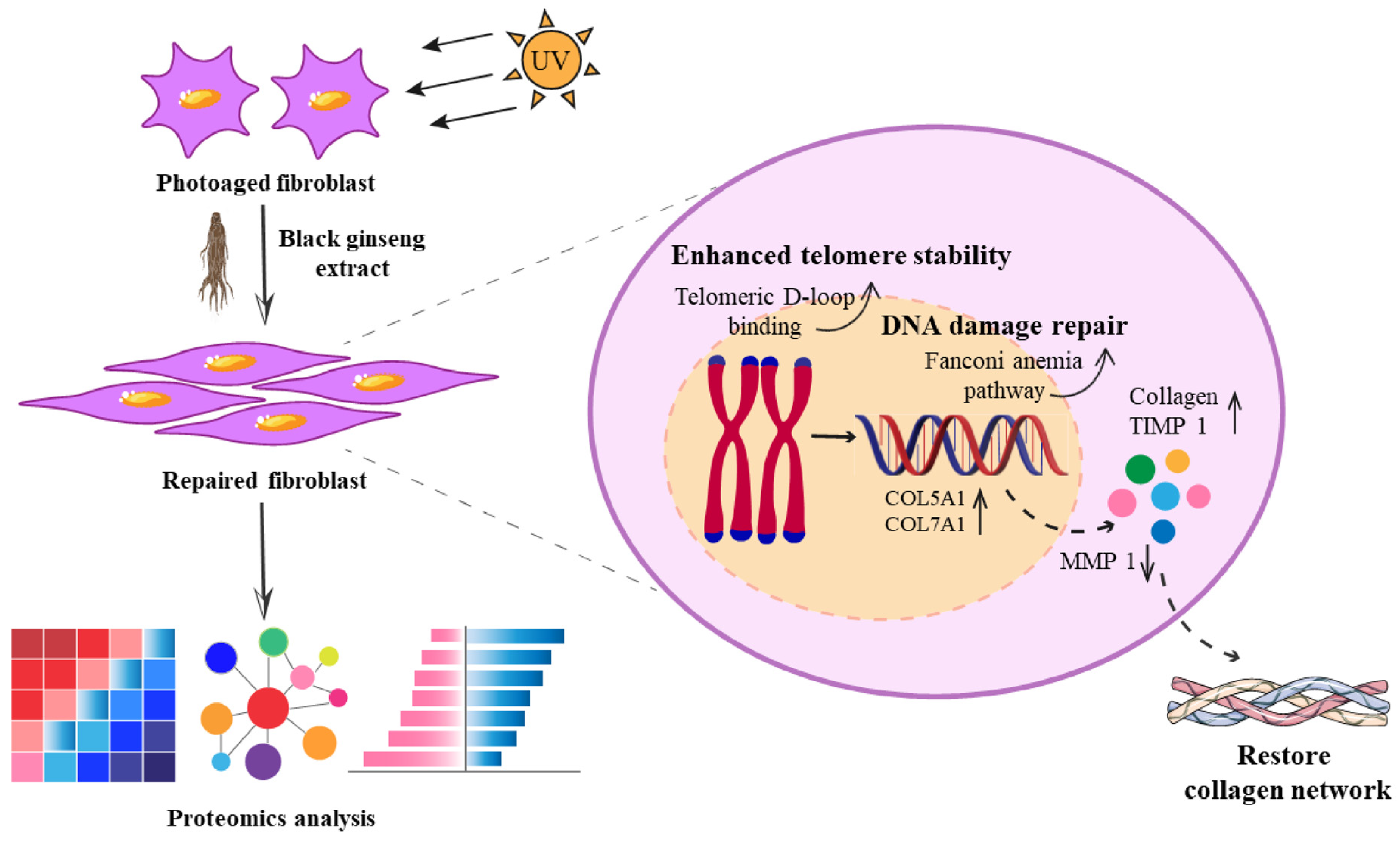
The primary objective of this study is to investigate the effects of black ginseng extract on collagen synthesis in human dermal fibroblasts under chronic ultraviolet (UV) radiation. By exploring the underlying molecular pathways, this research aims to elucidate how black ginseng promotes collagen production and counteracts the effects of chronic photoaging, providing valuable insights into its potential application as a natural anti-aging agent in skin care (Figure 1).

2. Materials and Methods

2.1. Materials

SA-β-Gal detection was performed using the Senescence-Associated β-Galactosidase (SA-β-Gal) Staining Kit (Solarbio, Beijing, China; Cat. No. G1580). Thiazolyl blue tetrazolium bromide (Solarbio, Beijing, China; Cat. No. G8180) was used to assess cell viability. qPCR experiments were conducted using ChamQ Universal SYBR qPCR Master Mix (Vazyme, Nanjing, China; Cat. No. Q711-03). RNA extraction and reverse transcription were performed using the FlysisAmp Cells-to-cDNA Kit (Vazyme, Nanjing, China; Cat. No. CL111-01).

2.2. Cell Lines and Culture

The fibroblasts (HFF-1) were purchased from Hunan Fenghui Biotechnology Co., Ltd. (Changsha, China). Cells were cultured in DMEM (Gibco, Grand Island, NY, USA; Lot: C11995500BT) supplemented with 15% fetal bovine serum (FBS) (Gibco, Grand Island, NY, USA; Lot: A5669701) and 1% penicillin–streptomycin (Gibco, Grand Island, NY, USA; Cat. No. 15140122). Cells were maintained at 37 °C in a humidified incubator with 5% CO2. HFF-1 was cultured in DMEM medium supplemented with 15% fetal bovine serum and 1% penicillin/streptomycin, and maintained at 37 °C with 5% CO2.

2.3. Preparation of Black Ginseng Extract

The black ginseng used in this paper was obtained from Botong ginseng factory (Fusong county, Baishan city, Jilin province, China). After drying in the oven (DHG-9240(A), Shanghai Yiheng Scientific Instrument Co., Ltd., Shanghai, China) at 50 °C for 12 h, black ginseng was crushed and passed through an 80-mesh sieve to obtain black ginseng powder. 100 g of black ginseng powder was weighed and added to 70% aqueous ethanol solution according to the solid–liquid ratio of 1:10, extracted in an oil bath at 80 °C for 60 min, and filtered to obtain the filtrate for use. The black ginseng residue after filtration was repeatedly extracted once according to the above conditions, and then the two filtrates were combined and concentrated at 60 °C and −0.095 MPa. Finally, black ginseng concentrate was spray-dried and vacuum-dried to obtain black ginseng extract (BGE) powder. The active constituents of the BGE powder were analyzed by Shanghai Fuda Group Analytical Technology Co., Ltd. (Shanghai, China) using an UltiMate 3000 UHPLC (Thermo Fisher Scientific, Waltham, MA, USA) system coupled to a Thermo QE Plus (Thermo Fisher Scientific, Waltham, MA, USA) high-resolution tandem mass spectrometer (UHPLC-MS/MS), with data processed using Compound Discoverer 3.2 software. Detailed information on the identified active components is provided in Table S1.

2.4. Construction of UV-Induced Photoaging Model

To establish a UV-induced photoaging model, HFF-1 cells were exposed to ultraviolet (UV) irradiation using a broad-spectrum UV phototherapy device with mixed UVA/UVB output (KN-4006B; Xuzhou Kenuo Medical Instrument Equipment Co., Ltd., Xuzhou, China). The UV lamp was positioned 3 cm above the cell monolayers, and irradiation was performed for 1 min per day for four consecutive days. During irradiation, culture plates were kept uncovered (lid removed) to avoid attenuation by plastic. Based on the device specification, the nominal irradiance was 0.55 W/cm2, corresponding to an estimated energy dose of 33 J/cm2 per exposure (energy (J/cm2) = irradiance (W/cm2) × time (s)). After each daily exposure, cells were immediately returned to standard culture conditions and maintained for subsequent treatments and endpoint analyses as specified in the experimental design. All experimental groups within each assay were handled in parallel under identical irradiation conditions. Although chronic photoaging in humans is characterized by long-term and complex environmental exposure, the present study uses a simplified in vitro approach. Here, the protocol is designed as repeated short-term UV challenges to deliver a cumulative UV dose over multiple days, thereby inducing reproducible photoaging-related cellular responses within an experimentally feasible timeframe. Therefore, this model should be interpreted as a controlled cumulative photodamage paradigm in vitro.

2.5. Cell Viability Assay

Cell viability was assessed using the Cell Counting Kit-8 (CCK-8, Sangon, Shang, China, Cat. No. E606335). Briefly, fibroblasts were seeded into 96-well plates at a density of 1.5 × 10⁴ cells per well and allowed to adhere overnight. The culture medium was then replaced with fresh medium containing various concentrations of black ginseng extract. After incubation for 24 h at 37 °C in a 5% CO2 atmosphere, 10 μL of CCK-8 solution was added to each well, followed by incubation for 2 h. The absorbance was measured at 450 nm using a microplate reader.

2.6. EdU Proliferation Assay

Cells were seeded in 24-well plates (5 × 10⁴ cells/well) and incubated with 10 μM EdU for 2 h. After fixation with 4% PF and permeabilization with 0.5% Triton X-100, EdU incorporation was detected using Click-iT™ EdU Alexa Fluor™ 488 kit (Thermo Fisher Scientific, Waltham, MA, USA; Cat. No. C10337) following manufacturer’s protocol. Nuclei were counterstained with Hoechst 33342. Images were acquired by fluorescence microscope and analyzed using ImageJ (version 1.53k; n = 6 random fields/group) [37].

2.7. Cell Senescence Assessment

To assess the effect of black ginseng on cell senescence, Senescence-Associated β-Galactosidase (SA-β-Gal) staining was performed [38]. Cells were first seeded in 6-well plates and cultured until they reached approximately 80% confluence. The cells were then treated with varying concentrations of black ginseng extract for 24 h. After treatment, the cells were fixed with 4% paraformaldehyde for 15 min at room temperature. Following fixation, the cells were incubated with SA-β-Gal staining solution (X-gal) overnight at 37 °C, in the absence of CO2, to allow the detection of β-galactosidase activity. The blue-colored cells, which indicate positive SA-β-Gal staining, were observed under a light microscope.

2.8. Quantitative Real-Time PCR Analysis

Fibroblasts and UV-induced photoaged fibroblasts were treated with black ginseng extract for 24 h, and total RNA was extracted using a commercially available RNA extraction kit according to the manufacturer’s instructions. RNA quality and concentration were assessed using a NanoDrop spectrophotometer. cDNA synthesis was performed using the FlysisAmp Cells-to-cDNA Kit (Vazyme, Nanjing, China; Cat. No. CL111-01) following the manufacturer’s protocol. Quantitative PCR (qPCR) was conducted using ChamQ Universal SYBR qPCR Master Mix (Vazyme, Nanjing, China; Cat. No. Q711-03) to analyze the expression levels of selected genes. The primers for the target genes were designed based on their gene sequences, and GAPDH was used as the internal control. The qPCR cycling conditions were optimized, and relative gene expression levels were calculated using the 2−ΔΔCt method. The results were compared to untreated control cells to assess the regulatory effects of black ginseng extract on gene expression [39]. The sequences of primers used for qPCR are listed in Table S2.

2.9. Immunofluorescence Staining

Fixed with 4% paraformaldehyde for 15 min, permeabilized with 0.1% Triton X-100 for 10 min, and blocked with 5% fetal bovine serum for 1 h, then incubated overnight at 4 °C with primary antibodies against target protein (1:100) of COL5A1 (proteintech, Wuhan, China; Cat. No. 67604-1-Ig), COL7A1 (proteintech, Wuhan, China; Cat. No. 19799-1-AP), TIMP1 (proteintech, Wuhan, China; Cat. No. 16644-1-AP), MMP1 (proteintech, Wuhan, China; Cat. No. 10371-2-AP). After PBS washes, cells were stained with Alexa Fluor 594-conjugated secondary antibodies (1:200, Thermo Fisher Scientific, Waltham, MA, USA; Cat. No. A-11012) for 1 h. Fluorescence intensity was quantified using fluorescence microscope with background subtraction. Quantification was performed using ImageJ. Data are presented as mean ± SD; n represents the number of quantified microscopic fields per group.

2.10. Proteomic Analysis

Proteomic analysis was performed by Shanghai Meiji Bio-technology Co., Ltd. (Shanghai, China) using a data-independent acquisition (DIA) workflow. Fibroblasts, UV-induced photoaged fibroblasts, and UV-induced photoaged fibroblasts treated with black ginseng extract (BGE) were analyzed, with three independent biological replicates per group (n = 3). Total proteins were extracted from each sample following standardized procedures. Protein quality control was conducted prior to LC–MS analysis, including protein quantification and SDS–PAGE assessment. For each sample, 100 μg of total protein was used for enzymatic digestion. Proteins were diluted in 100 mM TEAB, reduced with 10 mM TCEP at 37 °C for 60 min, and alkylated with 40 mM iodoacetamide (IAA) in the dark for 40 min. After centrifugation (10,000× g, 20 min), proteins were digested with trypsin at a protein:enzyme ratio of 1:50 (w/w) at 37 °C overnight. The resulting peptides were desalted using an HLB cartridge, vacuum-dried, reconstituted, and quantified prior to MS analysis.
Peptides were analyzed on a Vanquish Neo UHPLC system (Thermo Fisher Scientific, Waltham, MA, USA) coupled to an Astral mass spectrometer (Thermo Fisher Scientific, Waltham, MA, USA). The separation was performed on a uPAC High Throughput column (75 μm × 5.5 cm, Thermo Fisher Scientific, Waltham, MA, USA). The mobile phases were A: 2% acetonitrile (ACN) with 0.1% formic acid (FA) and B: 80% ACN with 0.1% FA. The LC gradient was set to 8 min as follows (B%): 0 min, 4%; 0.1 min, 8%; 1.0 min, 12.5%; 1.1 min, 12.6%; 3.6 min, 22.5%; 5.8 min, 45%; 6.4 min, 99%; 8.0 min, 99%. The electrospray ionization voltage was set to 1.5 kV. Data were acquired in DIA mode, and the MS scan range was set to m/z 100–1700. Data acquisition was performed using Thermo Xcalibur 4.7 (Thermo Fisher Scientific, Waltham, MA, USA). Differentially expressed proteins were identified by comparative analysis across groups, followed by functional enrichment analysis (GO and KEGG) to interpret the biological relevance of altered proteins.

2.11. Enzyme-Linked Immunosorbent Assay (ELISA)

ELISA was performed according to the manufacturers’ instructions. Briefly, the required number of wells was prepared and the microplate was incubated at 37 °C for 30 min. After removing the liquid, the plate was air-dried at room temperature. Then, 100 μL of working standard solution or sample was added to each well and incubated at 37 °C for 90 min. After aspiration and drying, 100 μL of biotinylated detection antibody working solution (COL7A1, Sangon Biotech, Shanghai, China; Cat. No. D711674; COL5A1, CUSABIO, Wuhan, China; Cat. No.CSB-E13447h) was added to each well and incubated at 37 °C for 60 min. The wells were washed, followed by addition of 100 μL streptavidin–HRP working solution and incubation at 37 °C for 30 min. After another washing step, 100 μL of substrate solution was added and incubated at 37 °C for 15 min in the dark. The reaction was stopped by adding 50 μL stop solution to each well. Finally, absorbance was measured at 450 nm using a microplate reader.

2.12. The Alkaline Comet Assay

The alkaline comet assay [40] was performed to evaluate DNA strand breaks in HFF-1 cells (Beyotime, Shanghai, China; C2041S). Briefly, HFF-1 cells were harvested and resuspended at a concentration of 1 × 10⁵ cells/mL in phosphate-buffered saline (PBS). Subsequently, 50 μL of the cell suspension was mixed with 150 μL of 0.7% low-melting-point agarose and immediately spread onto microscope slides pre-coated with 1% normal-melting-point agarose. After solidification at 4 °C for 10 min, the slides were immersed in lysis solution (2.5 M NaCl, 100 mM EDTA, 10 mM Tris, 1% Triton X-100, pH 10) at 4 °C for 2 h in the dark. The slides were then placed in alkaline electrophoresis buffer (300 mM NaOH, 1 mM EDTA, pH > 13) for 30 min to allow DNA unwinding. Electrophoresis was conducted at 25 V and 300 mA for 30 min at 4 °C. After electrophoresis, the slides were neutralized with 0.4 M Tris buffer (pH 7.5), stained with SYBR Green, and visualized using a fluorescence microscope.

3. Results

3.1. Improve Cellular Function in a Chronic Photoaging Model

3.1.1. Restoration of Cellular Proliferative Capacity Under Photoaging Stress

A chronic UV-induced photoaging model in human dermal fibroblasts was established to investigate the protective effects of black ginseng extract (BGE) against photoaging. Successful model induction was confirmed via immunofluorescence staining of type VII collagen (COL7A1), a structural protein essential for dermal–epidermal junction integrity. As expected, UV irradiation markedly reduced COL7A1 expression compared to the control group (Figure S1), indicating collagen damage and impaired skin structure under photoaging conditions.
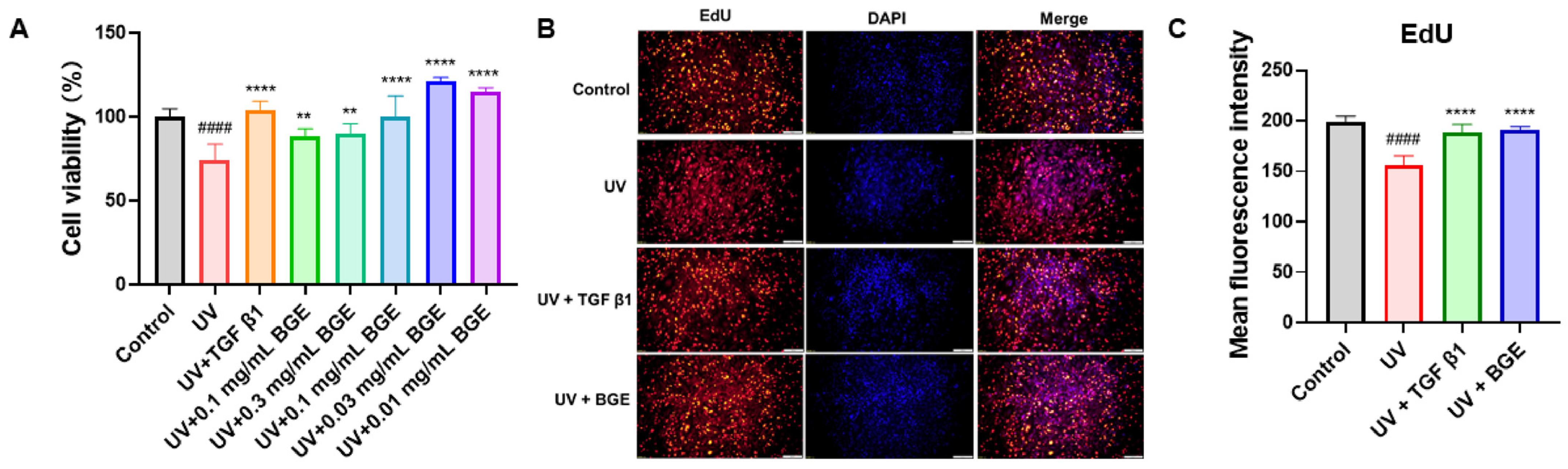
With the aim of evaluating whether BGE could reverse this damage, we assessed fibroblast viability using the CCK-8 assay. As shown in Figure 2A, UV exposure significantly reduced cell viability, while treatment with BGE at 0.01 mg/mL and 0.03 mg/mL significantly improved survival rates (p < 0.001 vs. UV group), comparable to the positive control (TGF-β1), also indicating a dose-dependent protective range.
EdU incorporation assays were conducted to assess DNA synthesis and cell proliferation to further examine the regenerative effects of BGE. UV irradiation resulted in a pronounced decline in EdU-positive nuclei, indicative of impaired DNA replication and proliferative arrest. BGE treatment significantly enhanced EdU incorporation under UV-induced stress conditions (Figure 2B,C), indicating a restoration of proliferative capacity and potential for cellular renewal.

3.1.2. Attenuation of Cellular Senescence Phenotype

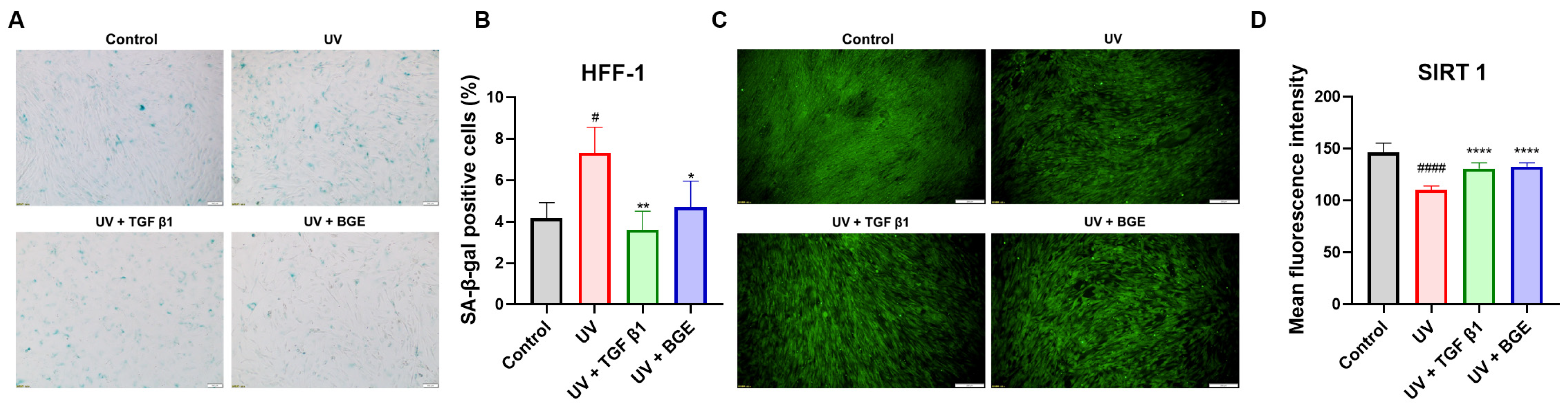
SA-β-gal staining was performed to determine whether BGE could mitigate UV-induced cellular senescence. As shown in Figure 3A, UV-irradiated fibroblasts displayed widespread blue-stained senescent cells. In contrast, BGE treatment markedly reduced SA-β-gal positivity, comparable to the TGF-β1 group, suggesting that BGE effectively inhibits photoaging-induced senescence and preserves fibroblast functionality. Consistently, quantitative analysis (Figure 3B) showed that UV irradiation significantly increased the percentage of SA-β-gal-positive cells compared with the control group. Both TGF-β1 and BGE treatments markedly decreased SA-β-gal positivity relative to the UV group, with the BGE group showing a reduction comparable to that observed in the TGF-β1 group, indicating that BGE effectively attenuates UV-induced cellular senescence in fibroblasts.

3.1.3. Upregulation of SIRT1 Expression

As a preliminary step toward exploring the molecular mechanisms potentially involved in the anti-photoaging activity of BGE, we examined the expression of SIRT1, a well-known regulator associated with cellular senescence and oxidative stress responses. Immunofluorescence analysis showed that chronic UV exposure decreased SIRT1 expression in fibroblasts, whereas BGE treatment appeared to partially restore SIRT1 levels (Figure 3C,D).
These results demonstrate that BGE mitigates UV-induced cellular damage by enhancing fibroblast viability, promoting proliferation, and attenuating senescence.

3.2. Enhance the Expression and Remodeling of the Dermal Collagen Network

3.2.1. Enhanced Transcription of Key Collagens

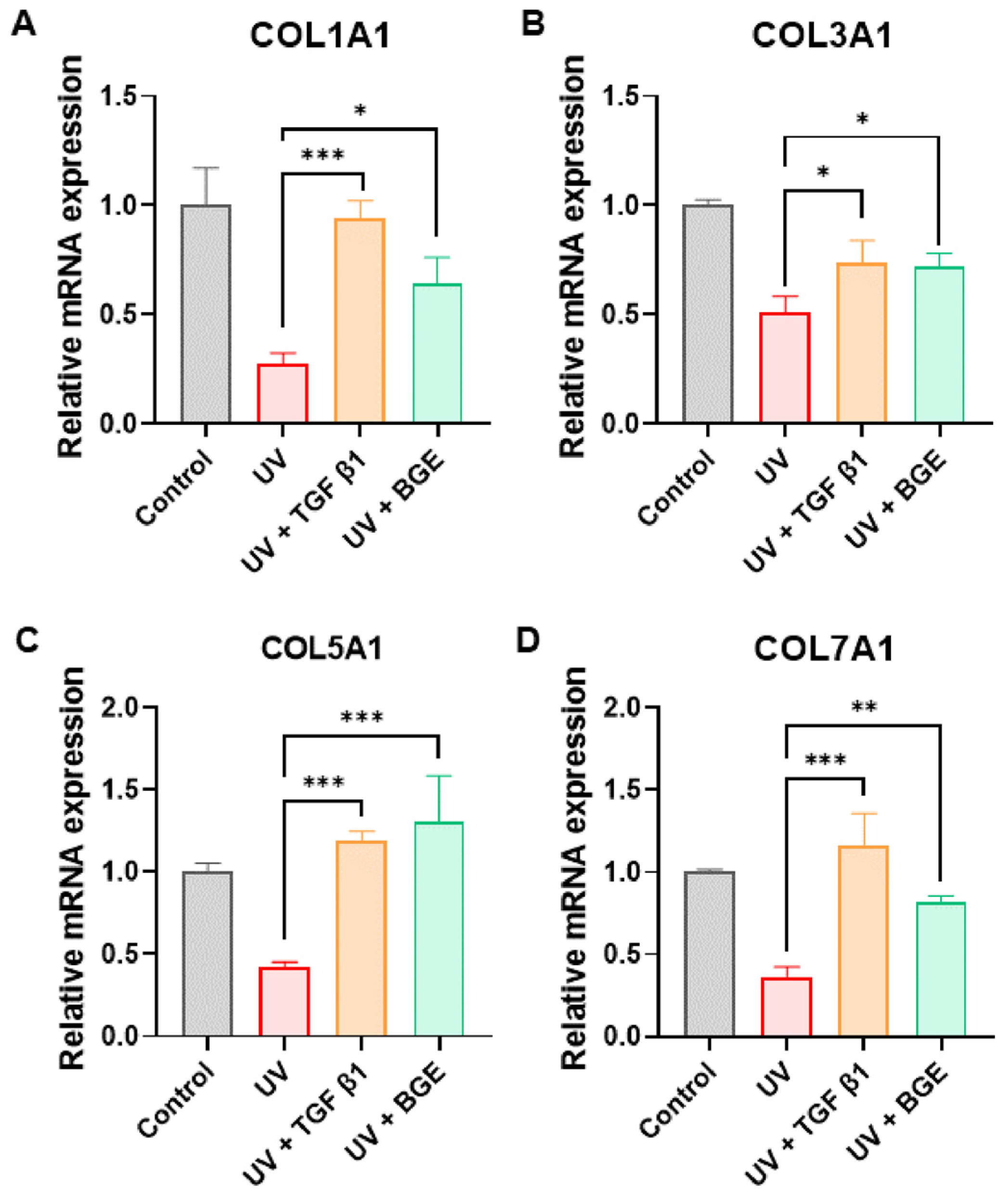
To further elucidate the impact of BGE on extracellular matrix (ECM) remodeling under chronic photoaging stress, we evaluated both transcriptional and protein-level expression of key dermal collagen subtypes. Quantitative real-time PCR analysis demonstrated that prolonged UV exposure significantly suppressed the mRNA expression of COL1A1, COL3A1, COL5A1, and COL7A1 compared to the untreated control group (Figure 4), reflecting impaired collagen biosynthesis and matrix destabilization. Treatment with BGE at 0.03 mg/mL significantly restored the expression of all four collagen genes, achieving levels comparable to or exceeding those observed in the TGF-β1-treated group, a known matrix-enhancing positive control.

3.2.2. Co-Activation of Key Collagens and ECM Regulators

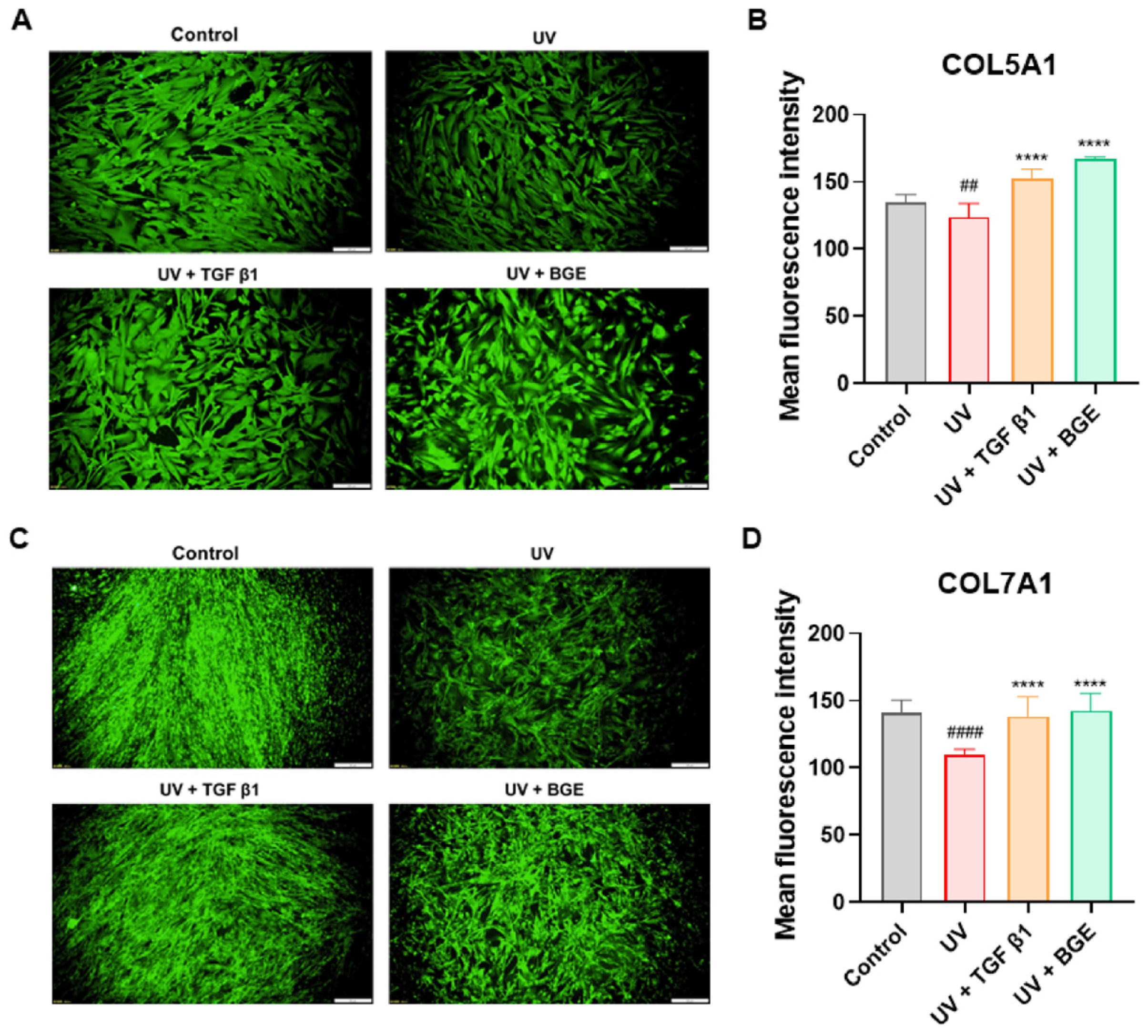
At the protein level, immunofluorescence staining revealed a marked reduction in COL5A1 and COL7A1 expression following UV irradiation, consistent with transcriptional changes. Notably, BGE treatment significantly reversed this decline, resulting in enhanced fluorescence intensity of both markers (Figure 5). These observations were further supported by ELISA quantification (Figure S2), which confirmed that BGE significantly restored COL5A1 and COL7A1 protein levels compared with the UV model group, indicating recovery of collagen-related protein expression under UV-induced photoaging conditions.
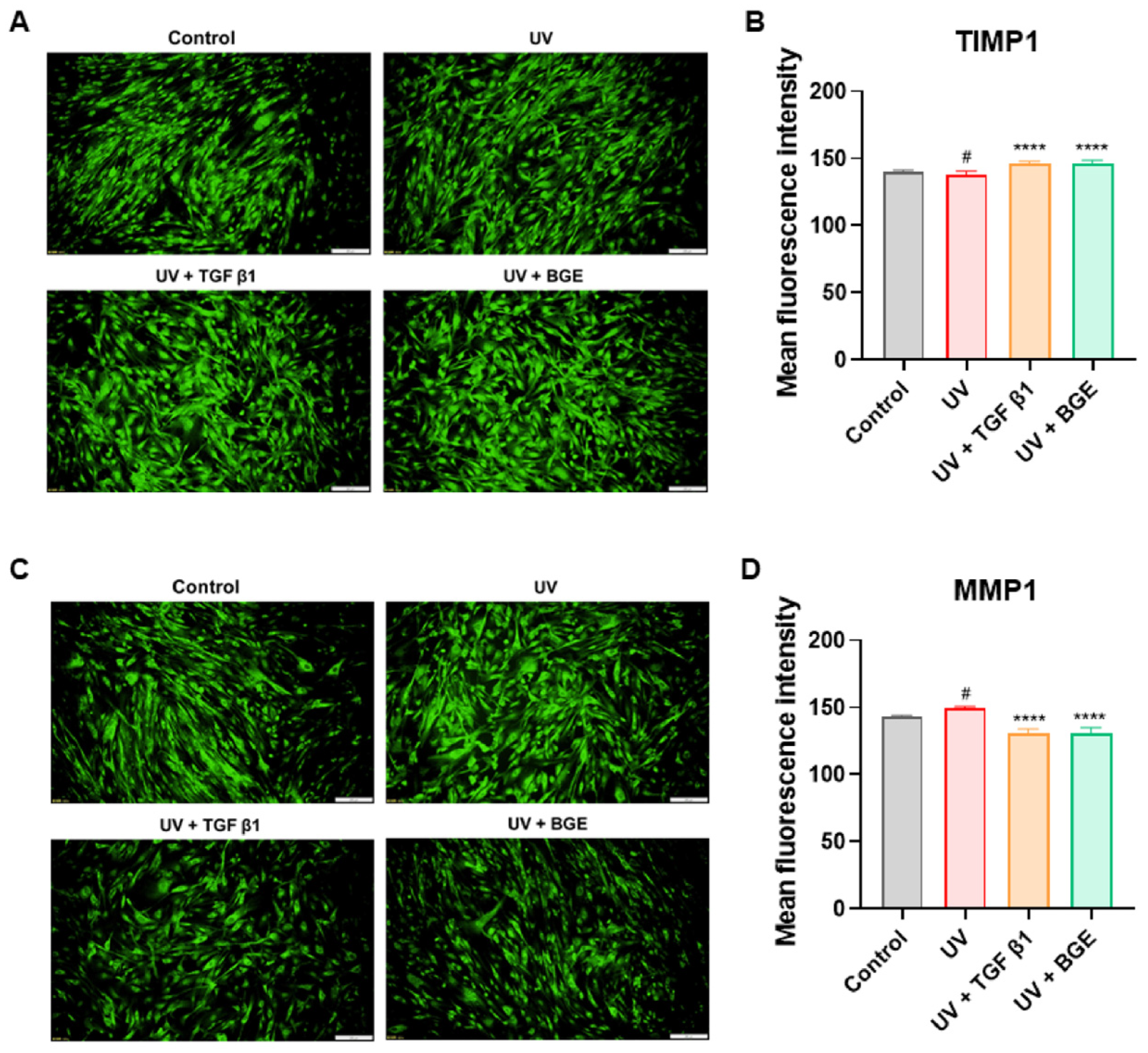
In addition, BGE modulated the expression of ECM remodeling enzymes: it upregulated TIMP1, a physiological inhibitor of matrix degradation, and concurrently downregulated MMP1, a major collagenase implicated in UV-induced matrix breakdown (Figure 6). This coordinated regulation suggests that BGE not only promotes collagen synthesis but also restrains ECM degradation, thereby contributing to matrix preservation and dermal integrity.

3.3. Proteomic Profiling Reveals a Multi-Target Mechanism of BGE in Photoaging Protection

3.3.1. Differential Protein Expression Analysis

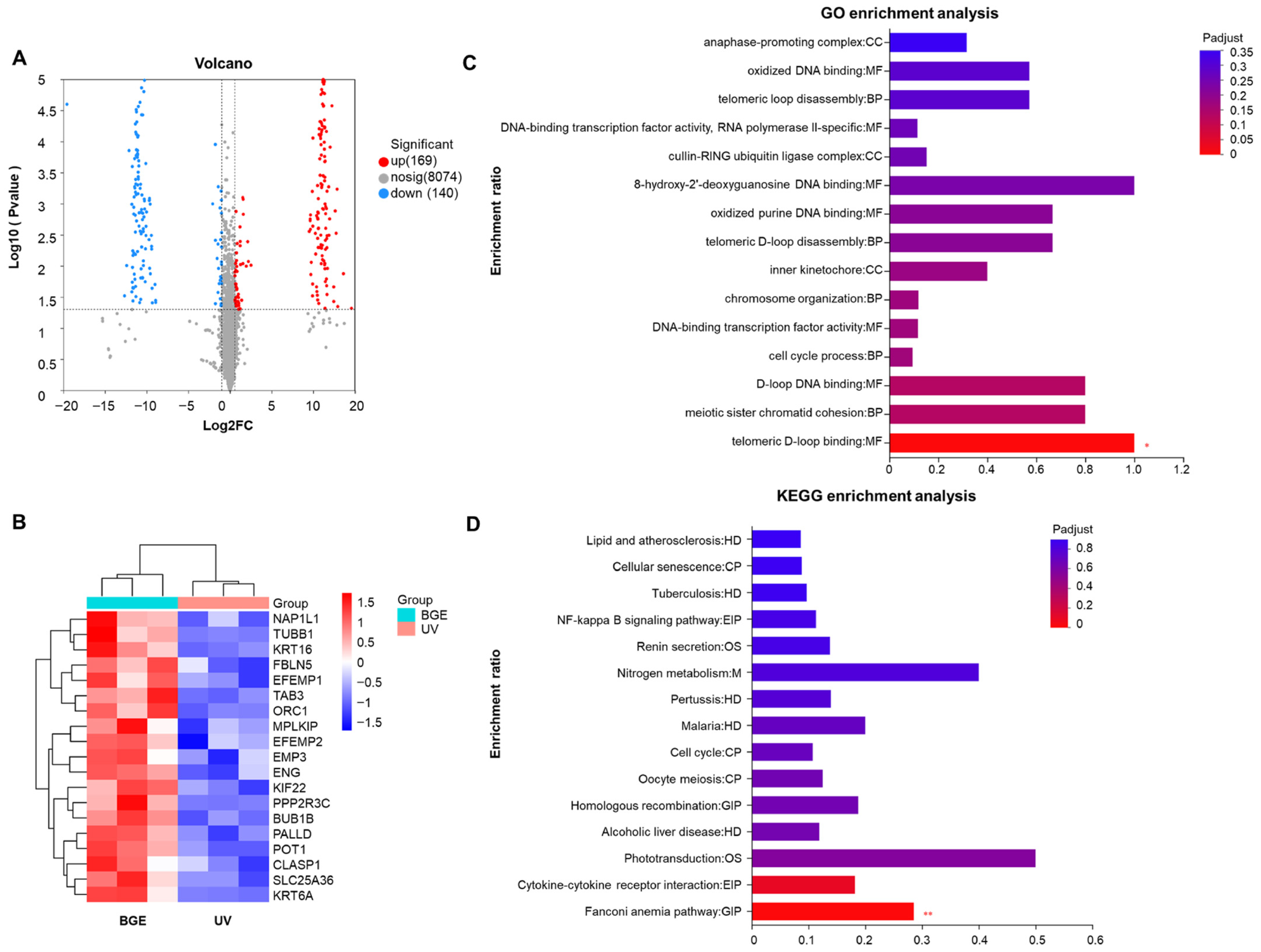
A DIA-based quantitative proteomic analysis was conducted to systematically elucidate the molecular mechanisms by which black ginseng extract (BGE) mitigates UV-induced photoaging. Using LC-MS/MS, a total of 8383 proteins were identified (Figure 7A). Among them, 169 proteins were significantly upregulated and 140 downregulated in the BGE-treated group relative to the UV group. Correlation heatmap and hierarchical clustering (Figure S3) confirmed high intra-group consistency and clear separation between UV and BGE-treated samples, indicating robust experimental reproducibility and treatment-specific proteomic signatures.
Hierarchical clustering revealed a distinct separation between BGE and UV groups (Figure 7B). Notably, several extracellular matrix (ECM) and cytoskeletal-associated proteins, including FBLN5, KRT16, and EFEMP1, were significantly upregulated in the BGE group, indicating matrix reinforcement and potential enhancement of structural integrity. Furthermore, genes involved in chromatin regulation and mitotic activity, such as TUBB1 and BUB1B, were also enriched, reflecting increased cellular turnover and reduced senescence.

3.3.2. Gene Ontology (GO) Enrichment Analysis

GO enrichment analysis revealed that black BGE treatment significantly upregulated biological processes and molecular functions associated with genomic stability and anti-senescence activity. Notably, “telomeric D-loop binding” was the most significantly enriched GO term at the molecular function level (Figure 7C), suggesting enhanced telomere maintenance, a key feature of delayed cellular aging. Additional enriched terms included DNA replication, chromosomal organization, and mitotic cell cycle regulation, reflecting restoration of proliferative and genomic fidelity in UV-damaged fibroblasts. Circular GO chord analysis (Figure S4) further highlighted that BGE treatment broadly activated networks related to cell cycle progression, chromatin remodeling, and chromosome segregation. Key hub proteins such as POT1, WRN, BUB1B, and ORC1 were involved in multiple GO terms, suggesting their central roles in coordinating telomere protection, mitotic spindle checkpoint control, and DNA repair. Together, these results underscore the potential of BGE to counteract photoaging not only by preserving extracellular structure but also by reprogramming nuclear regulatory circuits to sustain genomic integrity.

3.3.3. KEGG Enrichment Analysis

KEGG pathway analysis further identified the Fanconi anemia pathway as significantly activated in the BGE-treated group (Figure 7D), implicating enhanced DNA damage repair capacity under photoaging stress. This pathway is central to interstrand crosslink repair and genome surveillance, and its enrichment underscores BGE’s role in preserving genome integrity. Other pathways related to cell cycle progression, cytokine signaling, and chromatin remodeling were also modulated, supporting a broad reprogramming of stress and regeneration networks. Together, these results highlight BGE’s capacity to counteract UV-induced damage through telomere stabilization and activation of DNA repair systems. KEGG metabolic pathway analysis revealed that BGE treatment broadly modulated multiple cellular metabolic circuits (Figure S5). Notably, enriched pathways included nucleotide metabolism, amino acid metabolism, and energy production, suggesting enhanced biosynthetic and reparative activity in fibroblasts under UV-induced stress.
Protein–protein interaction (PPI) network analysis further revealed central hubs among the upregulated proteins (Figure S6), such as BUB1B, ORC1, KIF2C, and POT1, which are involved in DNA repair, spindle formation, and telomere maintenance—indicative of anti-senescence properties.

3.4. Proteomics-Guided Validation of DNA Damage/Repair-Related Signatures

To strengthen the functional interpretation of the DIA proteomics dataset, we performed targeted validation of selected differentially expressed candidates involved in genome maintenance and telomere-associated regulation, and further assessed UV-induced DNA damage using a comet assay. As shown in Figure S7, UV irradiation significantly suppressed the expression of POT1 [41], a key component essential for telomere end protection, and ORC1 [42], a core replication licensing factor associated with genome replication fidelity. Notably, BGE treatment significantly restored POT1 and ORC1 mRNA levels compared with the UV model group, with POT1 increased by 2.29-fold and ORC1 increased by 6.70-fold relative to UV alone.
Consistent with these molecular changes, DNA comet assay imaging (Figure S8) showed prominent comet tail formation in UV-exposed fibroblasts, indicative of increased DNA strand breaks, whereas the UV + BGE group exhibited visibly reduced DNA tailing, suggesting alleviation of UV-associated DNA damage. Together, the qPCR validation (POT1/ORC1) and the comet assay results provide orthogonal evidence supporting improved genome integrity and telomere-associated maintenance signals in the presence of BGE under photoaging stress.
In addition to POT1 and ORC1, BGE also significantly upregulated MPLKIP (2.42-fold vs. UV), a cell-cycle regulation-related gene linked to proliferative homeostasis, as well as FBLN5 (2.09-fold vs. UV) and EFEMP2 (3.20-fold vs. UV), two extracellular matrix-associated genes implicated in elastic fiber/ECM organization. KRT16, a stress-adaptive keratin often associated with repair-related responses, was also increased following BGE treatment (1.86-fold vs. UV) (Figure S7). These changes suggest that, alongside genome maintenance-related signals, BGE may support broader adaptive responses involving cell-cycle regulation and matrix homeostasis in UV-challenged fibroblasts.

4. Discussion and Conclusions

In this study, we demonstrated that black ginseng extract (BGE) alleviates UV-induced photoaging-related alterations in human dermal fibroblasts and provided multi-layer evidence supporting its protective effects at both functional and molecular levels. BGE significantly improved cell viability and proliferative capacity under UV stress, and restored the expression of collagen-related markers. At the protein level, COL5A1 and COL7A1 were markedly reduced after UV irradiation, while BGE treatment reversed this reduction. Importantly, in addition to immunofluorescence observations, we further confirmed this protein-level recovery by ELISA quantification of COL5A1 and COL7A1 (Figure S2), providing independent and quantitative support for the collagen-related changes induced by BGE [43,44].
Beyond structural markers, DIA proteomics revealed that BGE treatment was associated with broad regulation of aging-related biological processes. Notably, enriched signatures were observed in genome maintenance-related pathways, including telomere-associated functions (e.g., telomere D-loop binding) and DNA repair processes involving the Fanconi anemia pathway, together with changes linked to chromatin organization and mitotic regulation [45,46]. To strengthen the interpretation of these proteomics-derived signals, we performed targeted validation. qPCR analysis showed that UV exposure reduced representative genes related to telomere stability and replication competence, whereas BGE increased their expression relative to the UV group, including POT1 (2.29-fold) and ORC1 (6.70-fold). In parallel, comet assay imaging showed pronounced DNA damage features after UV irradiation, while reduced tailing was observed in the UV + BGE group (Figure S7). These additional readouts support the view that BGE treatment is accompanied by changes consistent with improved genome stability-associated responses under UV-induced stress. In addition to POT1 and ORC1, BGE increased the expression of MPLKIP (2.42-fold), as well as ECM-related genes FBLN5 (2.09-fold) and EFEMP2 (3.20-fold), and the stress/adaptive marker KRT16 (1.86-fold) compared with UV alone. These results suggest that the protective profile of BGE may involve multiple coordinated cellular programs, including genome maintenance-related regulation and extracellular matrix homeostasis, which together align with the observed improvement in UV-induced cellular injury phenotypes.
This study has several limitations. First, while our UV-induced fibroblast model provides a controlled platform to evaluate cellular responses, the findings have not yet been verified in higher-level models, such as animal studies or clinical settings, which would further strengthen the translational relevance. Second, BGE is a complex extract, and the specific active constituents responsible for the observed effects and potential synergistic interactions require further investigation through fractionation and component-level validation. Third, although our omics-guided analysis and targeted validation support genome maintenance-associated changes, further in-depth mechanistic investigations are warranted to establish causality and refine the proposed pathways.
In conclusion, our results show that BGE provides measurable protection against UV-induced fibroblast photoaging phenotypes, supported by collagen-related protein recovery and omics-guided signals with targeted validation for genome maintenance-associated responses. These findings provide experimental support for the potential application of BGE as a bioactive ingredient in anti-photoaging and skin-care development, while further studies are warranted to establish active components, validate mechanisms in vivo, and assess long-term safety.

Supplementary Materials

The following supporting information can be downloaded at: https://www.mdpi.com/article/10.3390/cosmetics13010033/s1, Figure S1: Validation of the chronic photoaging fibroblast cell model; Figure S2: ELISA measurement of COL5A1 and COL7 protein levels in BGE-treated HFF-1 cells; Figure S3: Correlation heatmap of proteomic profiles; Figure S4: GO chord plot; Figure S5: Overview of enriched metabolic pathways affected by BGE treatment based on proteomic; Figure S6: Protein–Protein Interaction (PPI) Network.; Figure S7: qPCR validation of selected genes; Figure S8: Comet assay images of DNA damage in UV-exposed HFF-1 cells with/without BGE treatment. Table S1: Quantitative analysis results of chemical components in black ginseng extract; Table S2: Primer sequences.

Author Contributions

Conceptualization, Y.L. and X.R.; methodology, Y.L. and X.R.; validation, Y.L. and X.R.; formal analysis, Y.L. and X.R.; investigation, Y.L. and X.R.; resources, S.Y., T.Z. and C.G.; data curation, Y.L. and X.R.; writing—original draft preparation, Y.L. and X.R.; writing—review and editing, S.Y.; visualization, Y.L. and X.R.; supervision, S.Y.; funding acquisition, S.Y. and T.Z. All authors have read and agreed to the published version of the manuscript.

Funding

Funding was provided by Syoung Cosmetics Manufacturing Co., Ltd. There was no external funding and no grant/funding number associated with this work.

Institutional Review Board Statement

No ethical approval was required as it did not involve the collection or analysis of data involving human or animal subjects.

Data Availability Statement

The raw data supporting the conclusions of this article will be made available by the authors on request.

Acknowledgments

During the preparation of this work the author(s) used ChatGPT 5.2 in order to improve readability. After using this tool/service, the author(s) take(s) full responsibility for the content of the publication.

Conflicts of Interest

All the authors are employees of Syoung Cosmetics Manufacturing Co., Ltd. The authors declare that the research was conducted in the absence of any commercial or financial relationships that could be construed as a potential conflict of interest.

Abbreviations

The following abbreviations are used in this manuscript:
UVUltraviolet
COL7A1Collagen type VII alpha 1 chain
COL5A1Collagen type V alpha 1 chain
COL1A1Collagen type I alpha 1 chain
COL3A1Collagen type III alpha 1 chain
BGEBlack ginseng extract
ECMExtracellular matrix
UVAUltraviolet A
UVBUltraviolet B
MMPsMatrix metalloproteinases
SA-β-GalSenescence-associated β-galactosidase
qPCRQuantitative PCR
HFF-1Human Foreskin Fibroblast-1
CCK-8Cell Counting Kit-8
EdU5-ethynyl-2′-deoxyuridine
TIMP1Metallopeptidase inhibitor 1
GOGene Ontology
KEGGKyoto Encyclopedia of Genes and Genomes
FBLN5Fibulin 5
KRT16Keratin 16
EFEMP1EGF containing fibulin-like extracellular matrix protein 1
TUBB1Tubulin Beta 1 Class VI
BUB1BBUB1 Mitotic Checkpoint Serine/Threonine Kinase B
POT1Protection of Telomeres 1
WRNWRN RecQ Like Helicase
ORC1Origin Recognition Complex Subunit 1
KIF2CKinesin Family Member 2C
SIRT1Silent information regulator 1
TGF-β1Transforming growth factor-β1

References

  1. Gupta, A.; Kaur, C.D.; Jangdey, M.; Saraf, S. Matrix metalloproteinase enzymes and their naturally derived inhibitors: Novel targets in photocarcinoma therapy. Ageing Res. Rev. 2014, 13, 65–74. [Google Scholar] [CrossRef] [PubMed]
  2. Marasini, S.; Zhang, A.C.; Dean, S.J.; Swift, S.; Craig, J.P. Safety and efficacy of UV application for superficial infections in humans: A systematic review and meta-analysis. Ocul. Surf. 2021, 21, 331–344. [Google Scholar] [CrossRef] [PubMed]
  3. Rigel, D.S.; Taylor, S.C.; Lim, H.W.; Alexis, A.F.; Armstrong, A.W.; Fuxench, Z.C.C.; Draelos, Z.D.; Hamzavi, I.H. Photoprotection for skin of all color: Consensus and clinical guidance from an expert panel. J. Am. Acad. Dermatol. 2022, 86, S1–S8. [Google Scholar] [CrossRef]
  4. Bernard, J.J.; Gallo, R.L.; Krutmann, J. Photoimmunology: How ultraviolet radiation affects the immune system. Nat. Rev. Immunol. 2019, 19, 688–701. [Google Scholar] [CrossRef] [PubMed]
  5. Budden, T.; Gaudy-Marqueste, C.; Porter, A.; Kay, E.; Gurung, S.; Earnshaw, C.H.; Roeck, K.; Craig, S.; Traves, V.; Krutmann, J.; et al. Ultraviolet light-induced collagen degradation inhibits melanoma invasion. Nat. Commun. 2021, 12, 2742. [Google Scholar] [CrossRef]
  6. Amano, S. Characterization and mechanisms of photoageing-related changes in skin. Damages of basement membrane and dermal structures. Exp. Dermatol. 2016, 25, 14–19. [Google Scholar] [CrossRef]
  7. Fonseca, B.L.; dos Santos, B.C.; Martins, P.; Bonorino, C.; Corte, T.W.F.; da Silva, V.D.; Bauer, M.E. Neuroprotective effects of a new skin care formulation following ultraviolet exposure. Cell Prolif. 2012, 45, 48–52. [Google Scholar] [CrossRef]
  8. Rigel, D.S.; Lim, H.W.; Draelos, Z.D.; Weber, T.M.; Taylor, S.C. Photoprotection for all: Current gaps and opportunities. J. Am. Acad. Dermatol. 2022, 86, S18–S26. [Google Scholar] [CrossRef]
  9. Kammeyer, A.; Luiten, R.M. Oxidation events and skin aging. Ageing Res. Rev. 2015, 21, 16–29. [Google Scholar] [CrossRef]
  10. Kim, Y.E.; Im, P.; Choi, S.W.; Kim, J. Autocatalytic Ceria Nanoparticle-Embedded Tilapia Collagen Hydrogels as Enhanced Antioxidative and Long-Lasting Dermal Fillers for Photoaged Skin. Nano Lett. 2024, 25, 212–221. [Google Scholar] [CrossRef]
  11. Zou, Y.; Cao, M.; Tai, M.; Zhou, H.; Tao, L.; Wu, S.; Yang, K.; Zhang, Y.; Ge, Y.; Wang, H. A Feedback Loop Driven by H4K12 Lactylation and HDAC3 in Macrophages Regulates Lactate-Induced Collagen Synthesis in Fibroblasts Via the TGF-β Signaling. Adv. Sci. 2025, 12, 2411408. [Google Scholar] [CrossRef] [PubMed]
  12. Li, X.; Xie, R.; Luo, Y.; Shi, R.; Ling, Y.; Zhao, X.; Xu, X.; Chu, W.; Wang, X. Cooperation of TGF-β and FGF signalling pathways in skin development. Cell Prolif. 2023, 56, e13489. [Google Scholar] [CrossRef] [PubMed]
  13. Ohashi, A.; Sakamoto, H.; Kuroda, J.; Kondo, Y.; Kamei, Y.; Nonaka, S.; Furukawa, S.; Yamamoto, S.; Satoh, A. Keratinocyte-driven dermal collagen formation in the axolotl skin. Nat. Commun. 2025, 16, 1757. [Google Scholar] [CrossRef] [PubMed]
  14. Sirois, J.P.; Heinz, A. Matrikines in the skin: Origin, effects, and therapeutic potential. Pharmacol. Ther. 2024, 260, 108682. [Google Scholar] [CrossRef]
  15. Kroemer, G.; Maier, A.B.; Cuervo, A.M.; Gladyshev, V.N.; Ferrucci, L.; Gorbunova, V.; Kennedy, B.K.; Rando, T.A.; Seluanov, A.; Sierra, F. From geroscience to precision geromedicine: Understanding and managing aging. Cell 2025, 188, 2043–2062. [Google Scholar] [CrossRef]
  16. Choi, J.S.; Cho, W.L.; Choi, Y.J.; Kim, J.D.; Park, H.A.; Kim, S.Y.; Park, J.H.; Jo, D.G.; Cho, Y.W. Functional recovery in photo-damaged human dermal fibroblasts by human adipose-derived stem cell extracellular vesicles. J. Extracell. Vesicles 2019, 8, 1565885. [Google Scholar] [CrossRef]
  17. Fisher, G.J.; Wang, Z.; Datta, S.C.; Varani, J.; Kang, S.; Voorhees, J.J. Pathophysiology of premature skin aging induced by ultraviolet light. N. Engl. J. Med. 1997, 337, 1419–1429. [Google Scholar] [CrossRef]
  18. Li, X.; Liu, J.; Zuo, T.; Hu, Y.; Li, Z.; Wang, H.; Xu, X.; Yang, W.; Guo, D. Advances and challenges in ginseng research from 2011 to 2020: The phytochemistry, quality control, metabolism, and biosynthesis. Nat. Prod. Rep. 2022, 39, 875–909. [Google Scholar] [CrossRef]
  19. Liu, Z. Chemical insights into ginseng as a resource for natural antioxidants. Chem. Rev. 2012, 112, 3329–3355. [Google Scholar] [CrossRef]
  20. Zheng, Q.; Wang, T.; Wang, S.; Chen, Z.; Jia, X.; Yang, H.; Chen, H.; Sun, X.; Wang, K.; Zhang, L. The anti-inflammatory effects of saponins from natural herbs. Pharmacol. Ther. 2025, 269, 108827. [Google Scholar] [CrossRef]
  21. Ha, Y.; Jo, H.; Kwon, T.W.; Jeon, S.H.; Moon, S.; Jung, J.H.; Kim, M.S.; Nah, S.; Lee, J.K.; Cho, I. Korean black ginseng extract alleviates Alzheimer’s disease-related cognitive impairment by activating the Nrf2/HO-1 pathway and suppressing the p38 MAPK/NF-κB/STAT3 pathways and NLRP3 inflammasome via TLR2 and TLR4 modulation. J. Ginseng Res. 2025, 49, 294–305. [Google Scholar] [CrossRef] [PubMed]
  22. Choi, W.; Kim, H.S.; Kim, D.; Hong, Y.D.; Kim, H.; Kim, J.H.; Kim, J.; Cho, J.Y. Ethanol extract of lymphanax with gypenoside 17 and ginsenoside Re exerts anti-inflammatory properties by targeting the AKT/NF-κB pathway. J. Ginseng Res. 2025, 49, 22–33. [Google Scholar] [CrossRef] [PubMed]
  23. Kim, M.; Lee, J.; Lee, J.K.; Song, Y.N.; Oh, E.S.; Ro, H.; Yoon, D.; Jeong, Y.; Park, J.; Hong, S. Black ginseng extract suppresses airway inflammation induced by cigarette smoke and lipopolysaccharides in vivo. Antioxidants 2022, 11, 679. [Google Scholar] [CrossRef] [PubMed]
  24. An, M.; Lee, S.R.; Hwang, H.; Yoon, J.; Lee, H.; Cho, J.A. Antioxidant and anti-inflammatory effects of Korean black ginseng extract through ER stress pathway. Antioxidants 2021, 10, 62. [Google Scholar] [CrossRef]
  25. Song, J.; Kim, K.; Chei, S.; Seo, Y.; Lee, K.; Lee, B. Korean red ginseng and Korean black ginseng extracts, JP5 and BG1, prevent hepatic oxidative stress and inflammation induced by environmental heat stress. J. Ginseng Res. 2020, 44, 267–273. [Google Scholar] [CrossRef]
  26. Choudhry, Q.N.; Kim, J.H.; Cho, H.T.; Heo, W.; Lee, J.; Lee, J.H.; Kim, Y.J. Ameliorative effect of black ginseng extract against oxidative stress-induced cellular damages in mouse hepatocytes. J. Ginseng Res. 2019, 43, 179–185. [Google Scholar] [CrossRef]
  27. Park, J.Y.; Lee, D.; Kim, C.; Shin, M.; Seo, C.; Shin, H.; Hwang, G.S.; An, J.M.; Kim, S.N.; Kang, K.S. Effects of fermented black ginseng on wound healing mediated by angiogenesis through the mitogen-activated protein kinase pathway in human umbilical vein endothelial cells. J. Ginseng Res. 2018, 42, 524–531. [Google Scholar] [CrossRef]
  28. Lee, M.R.; Yun, B.S.; Sung, C.K. Comparative study of white steamed black Panax ginseng, P. quinquefolium, and P. notoginseng on cholinesterase inhibitory and antioxidative activity. J. Ginseng Res. 2012, 36, 93. [Google Scholar] [CrossRef]
  29. Qiu, Y.; Wang, N.; Yu, Z.; Guo, X.; Yang, M. Changes in the chemical composition and medicinal effects of black ginseng during processing. Front. Pharmacol. 2024, 15, 1425794. [Google Scholar] [CrossRef]
  30. Oh, H.B.; Jeong, D.E.; Lee, D.E.; Yoo, J.H.; Kim, Y.S.; Kim, T.Y. Structural Identification of Ginsenoside Based on UPLC-QTOF-MS of Black Ginseng (Panax Ginseng CA Mayer). Metabolites 2024, 14, 62. [Google Scholar] [CrossRef]
  31. Lee, Y.Y.; Saba, E.; Irfan, M.; Kim, M.; Yi Chan, J.; Jeon, B.S.; Choi, S.K.; Rhee, M.H. The anti-inflammatory and anti-nociceptive effects of Korean black ginseng. Phytomedicine 2019, 54, 169–181. [Google Scholar] [CrossRef] [PubMed]
  32. Huang, L.; Li, H.J.; Wu, Y.C. Processing technologies, phytochemistry, bioactivities and applications of black ginseng-a novel manufactured ginseng product: A comprehensive review. Food Chem. 2023, 407, 134714. [Google Scholar] [CrossRef] [PubMed]
  33. Kim, Y.S.; Cho, I.H.; Jeong, M.J.; Jeong, S.J.; Nah, S.Y.; Cho, Y.; Kim, S.H.; Go, A.; Kim, S.E.; Kang, S.S. Therapeutic effect of total ginseng saponin on skin wound healing. J. Ginseng Res. 2011, 35, 360. [Google Scholar] [CrossRef] [PubMed]
  34. Ahn, J.Y.; Kim, M.H.; Lim, M.J.; Park, S.; Lee, S.; Yun, Y.S.; Song, J.Y. The inhibitory effect of ginsan on TGF-β mediated fibrotic process. J. Cell. Physiol. 2011, 226, 1241–1247. [Google Scholar] [CrossRef]
  35. Xu, H.; Pang, M.; Hu, C.; Xu, T.; Chen, G.; Zhang, G.; Han, X.; Hua, Y.; Wu, Y.; Zhang, J. Panax ginseng exerts cardioprotective effect post myocardial infarction by attenuating myocardial fibrosis and inflammation through SIRT1 signaling pathways. J. Ginseng Res. 2025, 49, 197–207. [Google Scholar] [CrossRef]
  36. Cong, L.; Ma, J.; Zhang, Y.; Zhou, Y.; Cong, X.; Hao, M. Effect of anti-skin disorders of ginsenosides-A Systematic Review. J. Ginseng Res. 2023, 47, 605–614. [Google Scholar] [CrossRef]
  37. Salic, A.; Mitchison, T.J. A chemical method for fast and sensitive detection of DNA synthesis in vivo. Proc. Natl. Acad. Sci. USA 2008, 105, 2415–2420. [Google Scholar] [CrossRef]
  38. Dimri, G.P.; Lee, X.; Basile, G. A biomarker that identifies senescent human cells in culture and in aging skin in vivo. Proc. Natl. Acad. Sci. USA 1995, 92, 9363–9367. [Google Scholar] [CrossRef]
  39. Livak, K.J.; Schmittgen, T.D. Analysis of relative gene expression data using real-time quantitative PCR and the 2−ΔΔCT method. Methods 2001, 25, 402–408. [Google Scholar] [CrossRef]
  40. Møller, P. The alkaline comet assay: Towards validation in biomonitoring of DNA damaging exposures. Basic Clin. Pharmacol. Toxicol. 2006, 98, 336–345. [Google Scholar] [CrossRef]
  41. Pinzaru, A.M.; Kareh, M.; Lamm, N. Replication stress conferred by POT1 dysfunction promotes telomere relocalization to the nuclear pore. Genes Dev. 2020, 34, 1619–1636. [Google Scholar] [CrossRef]
  42. Tatsumi, Y.; Ohta, S.; Kimura, H.; Tsurimoto, T.; Obuse, C. The ORC1 cycle in human cells: I. cell cycle-regulated oscillation of human ORC1. J. Biol. Chem. 2003, 278, 41528–41534. [Google Scholar] [CrossRef]
  43. Potekaev, N.N. Genetic and epigenetic aspects of skin collagen fiber turnover and functioning. Cosmetics 2021, 8, 92. [Google Scholar] [CrossRef]
  44. Luangpraditkun, K. Anti-Senescence and Anti-Photoaging Activities of Mangosteen Pericarp Extract on UVA-Induced Fibroblasts. Cosmetics 2025, 12, 108. [Google Scholar] [CrossRef]
  45. Musielak, E.; Violetta, K.K. Enzymes DNA Repair in Skin Photoprotection: Strategies Counteracting Skin Cancer Development and Photoaging Strategies. Cosmetics 2025, 12, 172. [Google Scholar] [CrossRef]
  46. Bar, O.; Skaidra, V. Skin Aging and Type I Collagen: A Systematic Review of Interventions with Potential Collagen-Related Effects. Cosmetics 2025, 12, 129. [Google Scholar] [CrossRef]
Figure 1. Schematic illustration of protective mechanisms of BGE on collagen synthesis in chronic photoaging.
Cosmetics 13 00033 g001
Figure 2. (A) Effect of Black Ginseng at Different Concentrations (0.3, 0.1, 0.03, 0.01 mg/mL) on HFF-1 Cell Viability Detected by CCK8 Assay; (B) Effect of 0.03 mg/mL Black Ginseng on HFF-1 Cell Proliferation Detected by EDU Assay; (C) Quantitative Statistical Analysis of Figure B (n ≥ 5). Scale bar: 200 μm; ** p < 0.01, **** p < 0.0001 vs. UV; #### p < 0.0001 vs. control.
Cosmetics 13 00033 g002
Figure 3. (A) Effect of 0.03 mg/mL Black Ginseng on Senescence in HFF-1 Cells Detected by β-Galactosidase Staining Assay; (B) Quantitative Statistical Analysis of Figure A (n ≥ 5); (C) Regulation of SIRT1 Expression Level by 0.03 mg/mL Black Ginseng Detected by Immunofluorescence Staining; (D) Quantitative Statistical Analysis of (C) (n ≥ 5). Scale bar: 200 μm; * p < 0.05, ** p < 0.01, **** p < 0.0001 vs. UV; # p < 0.05, #### p < 0.0001 vs. control.
Cosmetics 13 00033 g003
Figure 4. (A) Transcriptional expression of COL1A1 in HFF-1 cells treated with black ginseng was detected by qPCR; (B) Transcriptional expression of COL3A1 in HFF-1 cells treated with black ginseng was detected by qPCR; (C) Transcriptional expression of COL5A1 in HFF-1 cells treated with black ginseng was detected by qPCR; (D) Transcriptional expression of COL7A1 in HFF-1 cells treated with black ginseng was detected by qPCR. HFF-1 cells were exposed to black ginseng at a concentration of 0.03 mg/mL under a UV-induced model, with TGF-β1 serving as the positive control. * p < 0.05, ** p < 0.01, *** p < 0.001.
Cosmetics 13 00033 g004
Figure 5. (A) Expression of COL5A1 protein in HFF-1 cells treated with Black Ginseng (BG) was detected by immunofluorescence staining; (B) Quantitative analysis of panel (A) (n ≥ 5); (C) Expression of COL7A1 protein in BG-treated HFF-1 cells was detected by immunofluorescence staining; (D) Quantitative analysis of panel (C) (n ≥ 5); Scale bar: 200 μm; **** p < 0.0001 vs. UV; ## p < 0.01; #### p < 0.0001 vs. control.
Cosmetics 13 00033 g005
Figure 6. (A) Expression of TIMP1 protein in BG-treated HFF-1 cells was detected by immunofluorescence staining; (B) Quantitative analysis of panel (A) (n ≥ 5); (C) Expression of MMP1 protein in BG-treated HFF-1 cells was detected by immunofluorescence staining; (D) Quantitative analysis of panel (C) (n ≥ 5); HFF-1 cells were exposed to black ginseng at a concentration of 0.03 mg/mL under a UV-induced model, with TGF-β1 serving as the positive control. Scale bar: 200 μm; **** p < 0.0001 vs. UV; # p < 0.05 vs. control.
Cosmetics 13 00033 g006
Figure 7. (A) Volcano Plot: The x-axis represents the fold change value of protein expression between the two samples, while the y-axis represents the statistical test value of the difference in protein expression levels. Both the values on the x-axis and y-axis have undergone logarithmic transformation. Each point represents a specific protein. Down-regulated proteins are depicted in blue, and up-regulated proteins are depicted in red. The points closer to the left, right and top edges express more significant differences; (B) Heatmap: The x-axis represents sample groups or conditions, and the y-axis represents differentially expressed proteins. Down-regulated proteins are color-coded in blue, and up-regulated proteins are color-coded in red; (C) Gene Ontology (GO) Enrichment Analysis: The x-axis represents specific GO terms. The y-axis represents the enrichment ratio (a higher value indicates greater enrichment). The color gradient of the bars corresponds to the enrichment significance level (−log10(p-value) or similar), with darker colors typically indicating greater statistical significance; (D) Kyoto Encyclopedia of Genes and Genomes (KEGG) Pathway Enrichment Analysis: The x-axis represents KEGG pathway names. The y-axis represents the enrichment ratio (a higher value indicates greater enrichment). The color gradient of the bars corresponds to the enrichment significance level, with darker colors typically indicating greater statistical significance. * p < 0.05, ** p < 0.01.
Cosmetics 13 00033 g007
Disclaimer/Publisher’s Note: The statements, opinions and data contained in all publications are solely those of the individual author(s) and contributor(s) and not of MDPI and/or the editor(s). MDPI and/or the editor(s) disclaim responsibility for any injury to people or property resulting from any ideas, methods, instructions or products referred to in the content.