
Article

Real-World Evaluation of an Injectable Treatment Containing Polynucleotides Purified with High Purification Technology (PN HPT) and Hyaluronic Acid for Skin Quality Improvement in Facial and Body Areas

1
Ospedale Madonna del Buon Consiglio Fatebenefratelli, Via Alessandro Manzoni 220, 80123 Napoli, Italy
2
SP Clinic, Via delle Camelie 35, 80017 Melito di Napoli, Italy
3
Clinica Hera, Via Santa Caterina da Siena 36, 80014 Giugliano in Campania Napoli, Italy
4
Vascular Surgery Unit, Villa dei Fiori Private Hospital, Corso Italia 159, 80011 Acerra, Italy
5
Centro Medico Fabiano SRL STP, Via Nazario Sauro 102, 80026 Casoria, Italy
6
Luisa Cerutti Medical Practice, Via Giovanni Maria Lancisi 31, 00161 Roma, Italy
7
Villa Alba, Via Vittorio Emanuele Orlando 75, 00185 Roma, Italy
8
Medical Beauty Clinic, Via Roma 105, 23900 Lecco, Italy
9
Forni Medical Center, Largo Guido Camussi, 1, 21013 Gallarate, Italy
10
Roberta Perna Medical Practice, Via Chiaia 123, 80121 Napoli, Italy
11
Dermatology Unit Daniele Innocenzi, Alfredo Fiorini Hospital, Via Firenze 1, 04019 Terracina, Italy
12
Medical Statistics Consultant, Via Giovan Antonio Orelli 2B, 6600 Locarno, Switzerland
*
Author to whom correspondence should be addressed.
Cosmetics 2026, 13(1), 32; https://doi.org/10.3390/cosmetics13010032
Submission received: 15 October 2025 / Revised: 11 December 2025 / Accepted: 29 January 2026 / Published: 6 February 2026
(This article belongs to the Section Cosmetic Technology)

Abstract

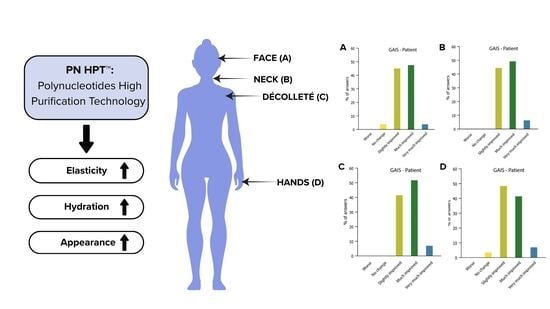
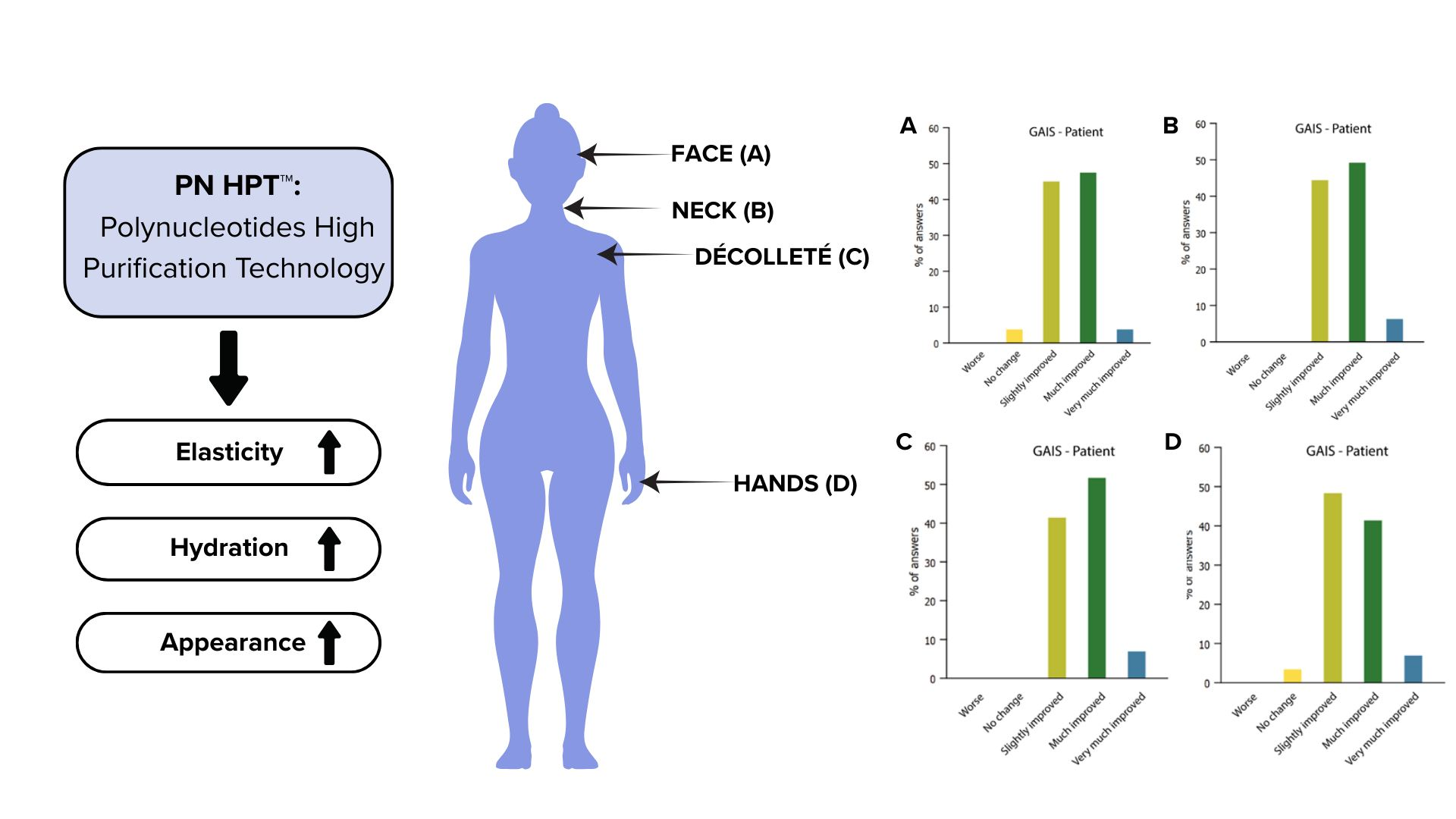
Polynucleotides purified through High Purification Technology (PN HPT), combined with hyaluronic acid (HA), represent a novel injectable strategy to improve skin quality in aesthetic medicine. This real-world data collection aimed to evaluate the safety and performance of PN HPT-based treatments across multiple facial and body areas. Data were collected through a post-market clinical follow-up survey, analysing 218 questionnaires completed after 654 intradermal infiltrations performed on the face (e.g., forehead, perioral lines, crow’s feet), neck, hands, and décolleté. Aesthetic outcomes were assessed using clinician- and patient-reported Global Aesthetic Improvement Scale and Global Clinical Improvement Scale scores. Safety and satisfaction were evaluated through adverse event reporting and a patient-completed Likert scale. Across all treated areas, consistent improvement was observed. For the face, 39% of cases achieved “marked improvement” or “excellent result” on the GCI-S, with 48% rated as “much improved” or “very much improved” on the GAIS. Similar outcomes were reported for the neck (41% and 57%), hands (31% and 41%), and décolleté (43% and 55%). Patient satisfaction was high, with over 90% expressing general satisfaction and willingness to repeat the treatment. No serious or unexpected adverse events occurred. These findings suggest that PN HPT and HA injectables may offer a high level of patient satisfaction, observable improvements in skin quality, and a favorable safety profile in the modern aesthetic practice.

Graphical Abstract

1. Introduction

In recent years, aesthetic medicine has increasingly shifted toward skin rejuvenation strategies that emphasise hydration, tone, and natural appearance. The growing demand for minimally invasive procedures that enhance skin luminosity, elasticity, and surface texture reflects a broader aesthetic preference for subtle, natural-looking improvements without distorting facial expressions or anatomy [1,2,3]. These trends have highlighted the importance of bringing the evolution of injectable aesthetic treatments into focus, emphasizing approaches that restore skin quality rather than altering facial expressions, volume, or contour, which often result in a ‘frozen’ look [1].
Among the emerging solutions in this domain, Polynucleotides High Purification Technology (PN HPT) has gained traction for its dual functionality in enhancing both hydration and skin quality. These DNA-derived macromolecules, which are sourced from the gonads of freshwater-bred trout (Oncorhynchus mykiss) and raised for human consumption, were extracted and purified using a proprietary process developed by Mastelli S.r.l. (High Purification Technology).
Due to their hydrophilic polyanionic structure, PN HPT molecules can bind water molecules in aqueous solutions, forming hydrogels that provide a biocompatible support matrix suitable for use in CE-marked medical-aesthetic devices [2,4]. In addition, their excellent biocompatibility, together with intrinsic moisturizing and viscoelastic properties, makes PN-HPT-based injectables particularly suitable for improving dermal texture and radiance, while delivering a natural aesthetic filling effect [5,6].
When injected intradermally, these hydrogels offer immediate viscoelastic support, contributing to tissue firmness and lift, while also promoting progressive improvements in hydration, turgor, and smoothness—ultimately enhancing overall skin quality [5,6]. These effects are especially valued in anatomically delicate and technically challenging areas—such as the neck, hands, and décolleté—where traditional volumizing treatments are often less suitable and skin quality remains a key aesthetic concern [2,4].
Clinical data support the use of PN HPT formulations as safe and effective tools to enhance skin quality. Improvements have been reported in dermal hydration, elasticity, pore visibility, and fine lines across various patient populations, with high satisfaction rates and an excellent safety profile devoid of serious adverse events [2,3,7,8].
Building on these findings an injectable formulation combining PN HPT (10 mg/mL) and hyaluronic acid (HA) (10 mg/mL) has demonstrated measurable efficacy in skin moisturization. In a clinical evaluation using corneometry, a single injection of PN HPT (10 mg/mL) and HA (10 mg/mL) at these concentrations led to a statistically significant increase in cheek skin hydration seven days post-treatment [9]. In addition, in vitro and real-life studies suggest that PN HPT and HA, whose natural properties are exploited to achieve a filling effect, guaranteed by the viscoelastic characteristics of the products in which they are employed, synergistically promote visible turgor and overall appearance [2,9,10,11].
Taken together, PN HPT injectables, thanks to their own characteristics, represent a new generation of biocompatible treatments aimed at enhancing skin quality in a natural and lasting manner, particularly well-suited for delicate and chronically photo-exposed areas, such as the face, neck, hands, and décolleté.
The objective of this study was to evaluate the safety and aesthetic performance of the PN HPT and HA-based injectable medical device in real-life settings across four body areas. Particular attention was paid to monitoring known adverse events and identifying previously unreported adverse reactions or risks.

2. Materials and Methods

2.1. Study Design and Setting

This study was conducted as a post-market clinical follow-up (PMCF) in real-world clinical settings to evaluate the safety and performance of Newest® (Mastelli S.r.l., Sanremo, Italy), a CE-marked Class III injectable medical device that combines polynucleotides and hyaluronic acid. Participating physicians were selected from twelve private dermatologic and aesthetic clinics located across Italy and had established experience with the use of the product, ensuring a correct use of the device and thus avoiding mishandling biases. Although no formal standardization criteria were applied, physicians’ training and consistent use of predefined assessment tools helped maintain comparability of results across participating centers. Data were collected between January and December 2024. All procedures were performed in accordance with the ethical principles of the Declaration of Helsinki and Regulation (EU) 2017/745 on medical devices. Written informed consent was obtained from all participants prior to the first treatment.

2.2. Inclusion and Exclusion Criteria

Eligible patients were adults aged 18 years or older, regardless of sex, who sought intradermal aesthetic treatment for skin quality improvement in the face, neck, hands, or décolleté. Patients were excluded if they had known hypersensitivity to any component of the product; were pregnant or breastfeeding; had a diagnosis of autoimmune disease; or presented with infections, dermatitis, or inflammatory processes at the treatment site. The final eligibility was determined based on the clinical judgment of the treating physician.

2.3. Treatment Protocol

The medical device under investigation was supplied as a sterile, single-use, prefilled 2-mL syringe containing a viscoelastic gel composed of polynucleotides (10 mg/mL) and hyaluronic acid (10 mg/mL). The treatment consisted of three intradermal injection sessions administered at baseline (T0) and at intervals of 2–3 weeks (T1 and T2). Each treatment was performed in one of the four body areas of interest according to patient needs and physician expertise. No adjunctive aesthetic procedure was permitted during the observation period. Follow-up for treatment outcomes evaluation was performed three months after the final injection, while adverse event monitoring occurred throughout the entire study period.

2.4. Aesthetic Outcome Assessment

Aesthetic outcomes were evaluated using validated scales that are commonly employed in cosmetic dermatology. The treating physician completed the Clinical Global Impression–Improvement Scale (CGI-I) at the three-month follow-up visit to assess visible improvement in the treated area. This scale, originally developed for psychometric evaluation and adapted for aesthetic practice, employs a five-point categorical rating of overall change: “excellent result” (more than 75% improvement), “marked improvement” (51–75%), “moderate improvement” (26–50%), “no change or slight improvement” (0–25%), and “worsening” [12]. Both clinicians and patients independently completed the Global Aesthetic Improvement Scale (GAIS), a five-point subjective scale categorizing perceived treatment effect as “very much improved”, “much improved”, “slightly improved”, “no change”, or “worse” [13]. Patient satisfaction was further assessed using a five-point Likert-type scale that included questions on willingness to repeat the procedure [14].

2.5. Safety Assessment

The safety and tolerability of the treatment were monitored using standardized post-treatment questionnaires administered after each injection session. Patients were instructed to report any adverse events, including those known and expected as swelling, erythema, bruising, pain, induration, pruritus, heat sensation, or appearance of papules or wheals. The severity, duration, and resolution of each reported event were recorded by a physician. Physicians also monitored for any previously unreported adverse effects or risks throughout the study.

2.6. Statistical Analysis

Descriptive statistics were used to summarize the data. Continuous variables, such as patient age, are reported as means and standard deviations, while categorical variables, including sex, Fitzpatrick skin phototype, and smoking status, are presented as absolute numbers and percentages. Clinical outcomes were analyzed by calculating the proportion of patients demonstrating at least a one-level improvement on the GAIS or CGI-I scales at three months post-treatment. Given the exploratory and observational nature of this study, formal hypothesis testing was not conducted.

3. Results

3.1. Demographic and Baseline Characteristics

A total of 218 questionnaires were collected from individuals who underwent intradermal treatment to improve skin turgor, elasticity, or surface quality. Data were obtained through standardized forms completed after the administration of three full treatment cycles for each anatomical site, yielding a cumulative total of 654 intradermal infiltrations (one per patient for each session). The distribution of treated areas is presented in Table 1. The face was the most frequently treated area, accounting for 31% of all procedures, followed by the neck (29%), décolleté (26.5%), and hands (13.5%).
Demographic data and Fitzpatrick skin type classifications were collected separately for each treated area and are summarized in Table 2. The population was predominantly female, with ages ranging from the late twenties to early eighties, depending on the anatomical site. One entry was missing for patient sex in both face and neck categories. The smoking rate across all groups was notably high, ranging from 37% to 41%. Fitzpatrick types II and III were the most represented across all the anatomical regions.
To better understand patients’ motivations for undergoing treatment, participants were invited to indicate the primary reasons behind their decisions. In total, 116 patients responded to the questionnaire. As shown in Table 3, the most frequently reported concern was perceived skin roughness N = 54), followed by skin laxity (N= 17), photoaging or photodamage (N = 11), and elastosis (N = 9). Additional motivations include skin dryness, discoloration, general signs of aging, and loss of tone or atony.

3.2. Performance Results

3.2.1. Face

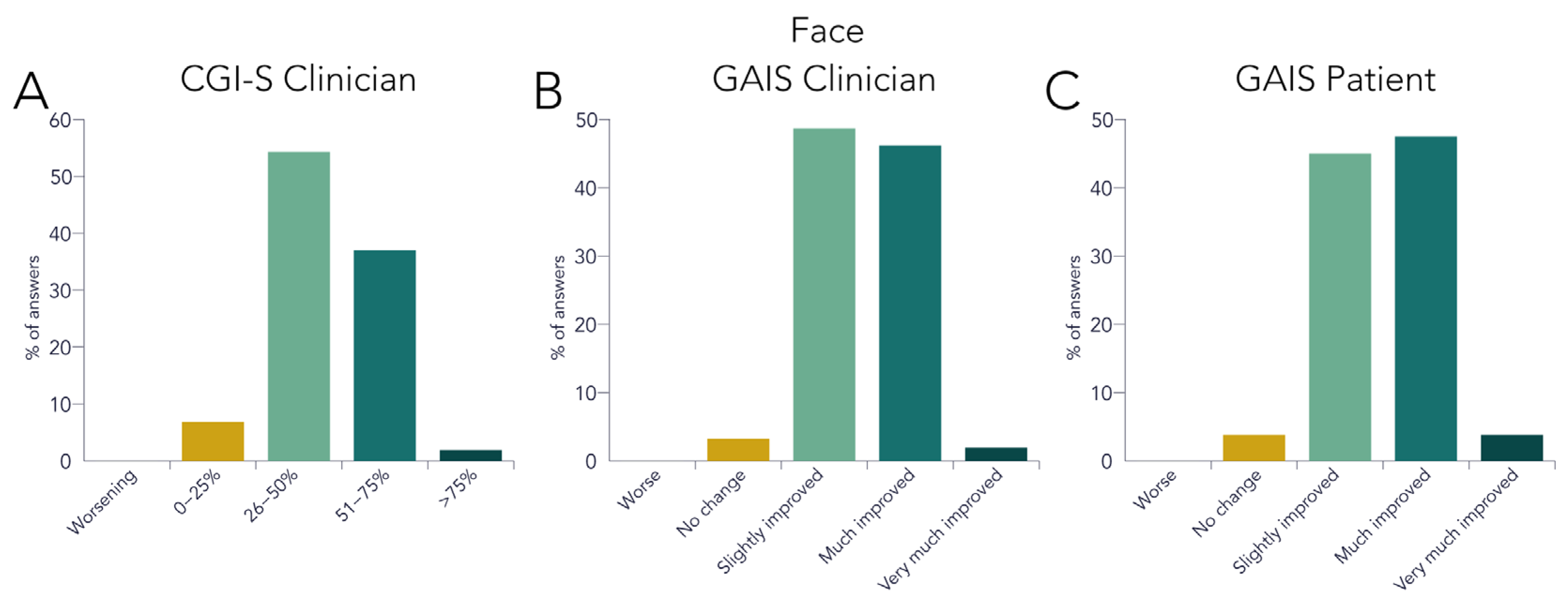
At the three-month follow-up, 39% of the facial treatments were rated by clinicians as showing a “marked improvement” or “excellent result” on the CGI-I. Moderate improvement (26–50%) was observed in 54% of cases, while less than 7% of cases showed minimal improvement (0–25%). No worsening of symptoms was observed in this subgroup (Figure 1A).
Clinician-reported outcomes using the GAIS indicated that 48% of facial treatments were categorized as “much improved” or “very much improved.” Slight improvement was reported in 48.7% of cases, and 3.2% showed no change (Figure 1B).
The patients completed the same GAIS at the same time points. In 51.3% of cases, the treated facial area was rated by patients as “much improved” or “very much improved.” A slight improvement was reported in 44.9% of the responses, whereas 3.8% indicated no change (Figure 1C).

3.2.2. Neck

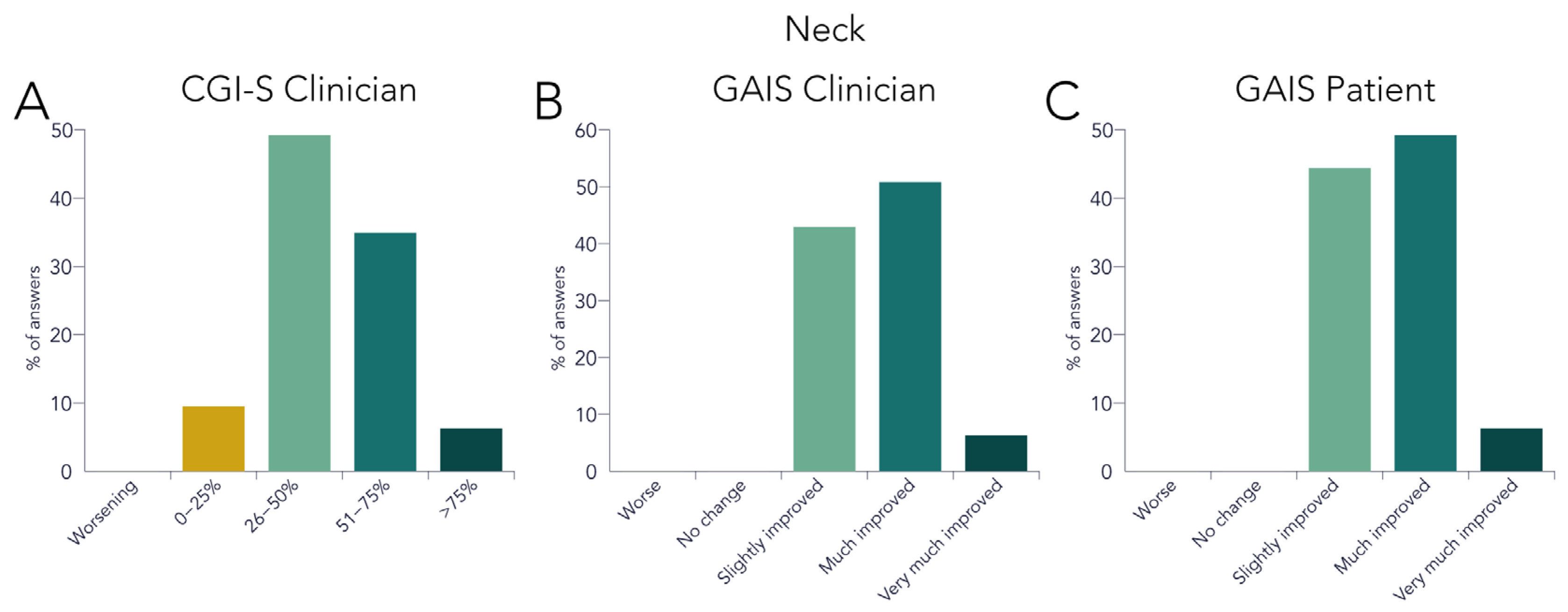
At the three-month follow-up, 41% of neck treatments were rated by clinicians as showing marked improvement” or “excellent results” on the CGI-I. Moderate improvement was observed in 49% of the cases, while 9.5% of the treatments showed minimal improvement (0–25%). No cases of worsening of symptoms were reported in this group (Figure 2A).
Clinicians GAIS scores indicated that more than 57% of treatments were evaluated as “much improved” or “very much improved.” The remaining 43% of treatments were rated as “slightly improved.” No cases were reported showing “no change” or “worse” (Figure 2B).
Patient-reported GAIS results showed that 6.3% of individuals rated the treated area as “very much improved,” 49.2% as “much improved,” and 44.4% as “slightly improved.” None of the patients reported “no change” or “worsening” (Figure 2C).

3.2.3. Hands

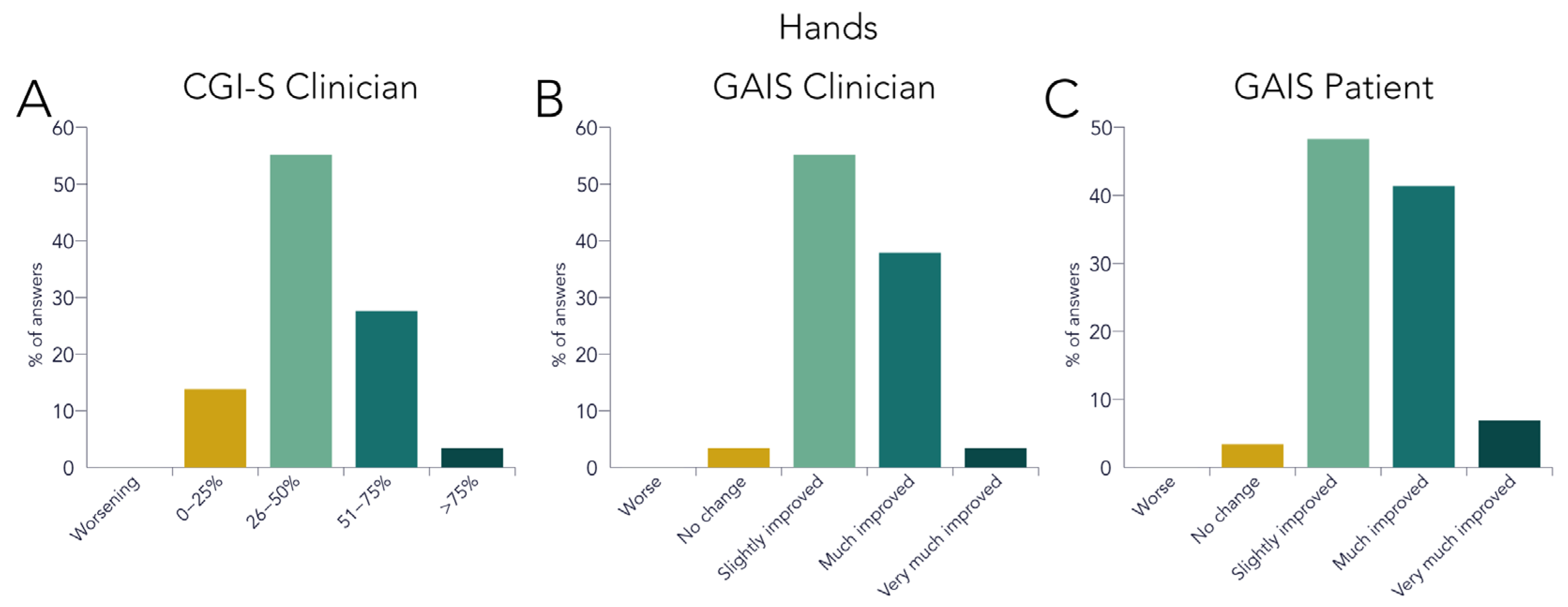
According to the CGI-I completed by clinicians, 31% of hand treatments were rated as achieving a “marked improvement” or “excellent result.” Moderate improvement was reported in 55% of the cases, while 14% of the treatments showed minimal improvement (0–25%). No worsening of symptoms was observed (Figure 3A).
Based on the GAIS filled by clinicians, 41.4% of treatments were rated as “much improved” or “very much improved.” A total of 55.2% of cases were categorised as “slightly improved”, and in 3.4% of cases, the treatment was evaluated as showing no change (Figure 3B).
Patient-reported GAIS scores indicated that 6.9% of cases were rated as “very much improved,” 41.4% as “much improved,” and 48.3% as “slightly improved.” In 3.4% of cases, the patients reported no change in the treated area. No worsening of symptoms was reported by the patients (Figure 3C).

3.2.4. Décolleté

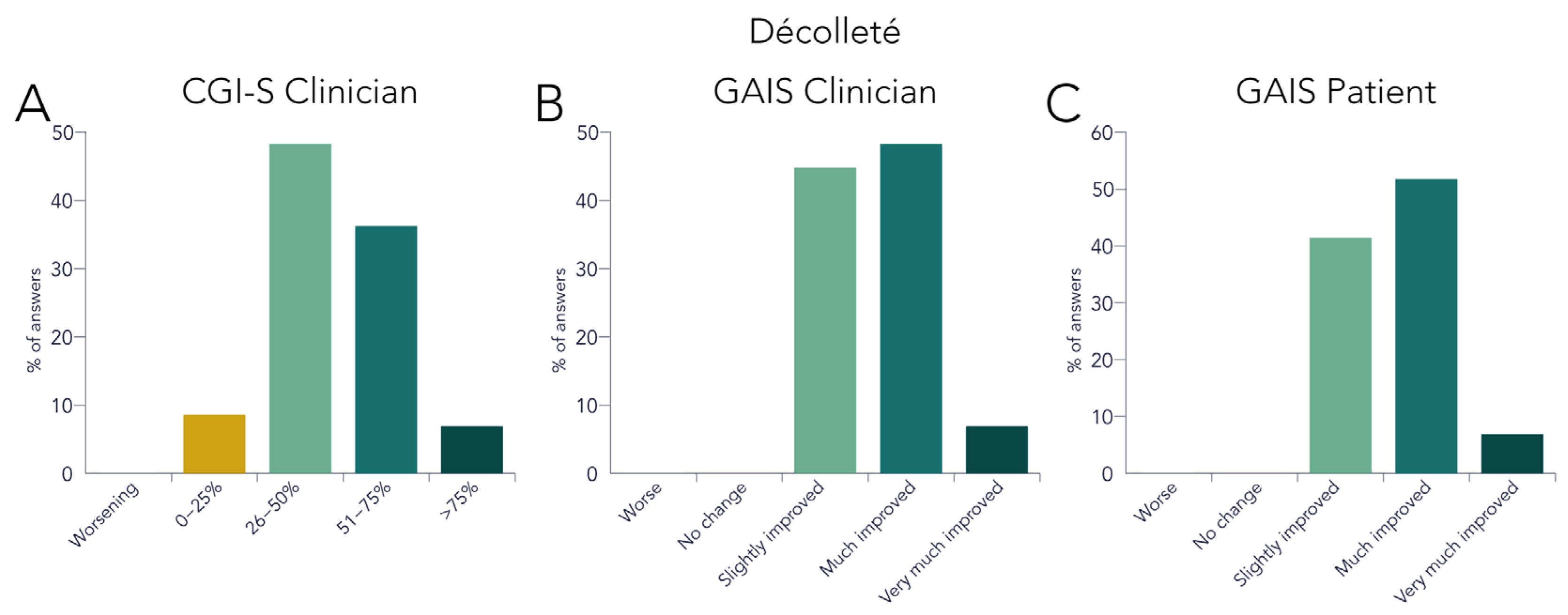
At the three-month follow-up, 43% of the décolleté treatments were rated by clinicians as showing a “marked improvement” or “excellent result” on the CGI-I. Moderate improvement was reported in 48% of the cases, while 8.6% of the treatments showed minimal improvement (0–25%). No worsening was observed (Figure 4A).
According to the GAIS completed by clinicians, more than 55% of treatments were categorized as “much improved” or “very much improved.” Approximately 45% of treatments were rated as “slightly improved,” and no treatments were assessed as “no change” or “worse” (Figure 4B).
Patient-reported GAIS scores indicated that 59% of treatments were judged as “very much improved” or “much improved,” while 41% were rated as “slightly improved.” None of the patients reported “no change” or “worsening” in the treated area (Figure 4C).

3.3. Customer Satisfaction

Satisfaction with the treatment outcomes was recorded using a Likert-type scale. The proportion of patients willing to repeat the procedure was 92% for the face, 92% for the neck, 93% for the hands, and 91% for the décolleté. Overall, satisfaction was reported in 92% of patients for the face, 95% for the neck, 96% for the hands, and 92% for the décolleté (Table 4).

3.4. Safety Results

The treatment was generally well tolerated by patients, with most adverse events (AEs) being transient and of mild to moderate intensity. Nearly all participants experienced AEs typically associated with intradermal infiltration procedures, including edema, erythema, pain at the injection site, ecchymosis, discoloration, induration, and heat sensation at the treated area.
All reported AEs resolved spontaneously within a few minutes (e.g., pain or heat sensation) or within a maximum of 8 days following the procedure (e.g., swelling). A small subset of patients reported moderate to severe symptoms, specifically pain (6/116; 5.2%) and swelling (5/116; 4.3%). In six patients, a light adjunctive therapy—such as topical soothing creams or lactoferrin—was prescribed to alleviate symptoms and facilitate recovery.

4. Discussion

PN HPT-based injectables have been shown to be safe and associated with visible improvements in aesthetic parameters, particularly for enhancing skin turgor, elasticity, and overall appearance. Their viscoelastic and hydrating properties contribute to visible improvements in skin smoothness and suppleness, supporting their use in non-surgical skin rejuvenation [2,3,5]. The injectable formulation evaluated in this study, combining PN HPT (10 mg/mL) and hyaluronic acid (HA) (10 mg/mL), has been applied across several anatomical areas, including the face, neck, hands, and décolleté, yielding visible and consistent improvements in skin tone and texture.
This real-world data collection was designed to evaluate the safety and performance of this formulation across these clinically diverse and aesthetically challenging areas. The findings highlight the versatility and satisfaction from the use of PN HPT-based injectables treatments across multiple body areas. The face, neck, hands, and décolleté all exhibited marked improvement in skin elasticity and overall appearance. Clinicians and patients largely agreed in their evaluations, with GAIS and GCI-S scores consistently showing high percentages of “marked improvement” or “excellent results.” For facial treatments, approximately 39% of the cases were rated as “marked improvement” or “excellent result” by clinicians using the GCI-S, with no reported worsening in any case. Patient assessments further reinforced these outcomes, with slightly higher percentages in the “very much improved” category compared to clinicians, underscoring subjective satisfaction with the treatment results.
Similar trends were observed in other areas, such as the neck and décolleté, where over 40% of the treatments achieved “marked improvement” or “excellent result”. A noteworthy observation is that patient satisfaction ratings slightly exceeded clinician evaluations in most cases, particularly for hands and décolleté, emphasising the aesthetic value and tangible benefits perceived by individuals undergoing treatment.
The treatment suggested a favorable safety profile, with AEs limited to transient and mild-to-moderate reactions, primarily associated with the intradermal infiltration procedure itself. All AEs resolved spontaneously within a short period of time, and no unknown or unexpected side effects were reported. These findings align with the existing literature on PN HPT-based treatments, further supporting their use as safe options for aesthetic enhancement [2,3,5]. The need for adjunctive therapy was minimal, with only six patients requiring topical soothing creams or lactoferrin to alleviate symptoms. Importantly, the absence of serious adverse events supports the feasibility of these treatments for routine clinical use, particularly for patients seeking minimally invasive treatment options.
The high satisfaction rates among patients further underscore the potential of PN HPT-based injectable treatments as a cornerstone in skin rejuvenation. Over 90% of the respondents expressed a willingness to repeat the procedure, reflecting both the observed outcomes and tolerability of the treatments. This consistency in satisfaction across all treated areas highlights the broad applicability of this technology, enabling individualized treatment tailored to diverse patient needs.
Compared to traditional aesthetic injectables treatments, such as non-cross-linked hyaluronic acid, amino acid-based formulations, or vitamin cocktails, PN HPT offers additional functional benefits by combining mechanical viscoelastic support with sustained hydration, leading to progressive extracellular matrix reinforcement [6,8,11]. Several comparative studies suggest that PN HPT preparations can provide equal or superior improvements in skin elasticity and hydration versus hyaluronic acid alone, particularly in measures of roughness and pore volume, although volumetric and durability advantages seem to remain greater for cross-linked HA fillers [15]. When contrasted with established biostimulators such as poly-L-lactic acid (PLLA) and calcium hydroxyapatite (CaHA), PN-based products appear to deliver improvements in skin quality through hydration and progressive extracellular matrix modulation, whereas PLLA and CaHA typically produce longer-lasting neocollagenesis with more pronounced volumizing and scaffold effects. This difference in mechanism and duration should be considered when selecting a treatment strategy and when designing comparative trials [16]. Recent work has further outlined the role of PN HPT in skin priming strategies, especially in delicate or volume-sensitive areas [3,4]. A recent systematic review also confirmed the superior ability of polynucleotide-based devices to improve skin quality parameters such as texture, tone, and hydration, with excellent safety and tolerability [2,8].
Despite the positive outcomes observed in this real-world analysis, the absence of a control group, use of subjective assessment tools, and lack of standardised photographic documentation or instrumental measurements represent methodological limitations. These factors may have introduced bias in the evaluation of treatment efficacy and limited the reproducibility and generalisability of the results. However, it was beyond the scope of this real-world clinical data collection study to obtain instrumental data, standardized pictures or to have a control group, because we wanted to reflect the use of the device in the routine aesthetic practice. Further controlled clinical studies integrating objective endpoints and quantitative instrumental measurements, along with adherence to internationally recognized standards such as STROBE (STrengthening the Reporting of OBservational studies in Epidemiology), are required to validate and strengthen the present findings, providing a more comprehensive assessment of treatment satisfaction.

5. Conclusions

In summary, injectable treatments combining PN HPT and hyaluronic acid consistently demonstrated high patient satisfaction, perceived improvements in skin tone and turgor across multiple body areas, and a favorable safety profile with no serious or unexpected adverse events reported. These findings contribute to the growing evidence for minimally invasive skin revitalisation strategies and highlight the potential of PN HPT-based injectables technology as a safe and satisfactory option for broader aesthetic applications (formulation evaluated: Newest, Mastelli S.r.l., Italy).

Author Contributions

A.S., S.P., M.R., U.D.R., A.D., L.C., S.B., N.T., A.F., R.P., I.P. and C.P. equally contributed to the conception and design of the study, data collection, analysis and interpretation, as well as drafting and revising the manuscript. All authors have read and agreed to the published version of the manuscript.

Funding

The authors declare that this study received funding from Mastelli S.r.l., Italy, as unconditional support limited to the coverage of Article Processing Charges (APC). The funder did not affect the experimental process and results in the study. The funding relationship does not affect the scientific quality of the manuscript.

Institutional Review Board Statement

Ethical review and approval were waived for this study because it was a post-market clinical follow-up (PMCF) of a CE-marked medical device, conducted in routine clinical practice without any additional procedures or interventions beyond standard care. The study was conducted in accordance with the Declaration of Helsinki.

Informed Consent Statement

Informed consent was obtained from all subjects involved in the study.

Data Availability Statement

The data presented in this study are available on request from the corresponding author. The data are not publicly available due to privacy and ethical restrictions.

Conflicts of Interest

Antonella Savoia is employed by Ospedale Madonna del Buon Consiglio Fatebenefratelli. Simona Piscopo is employed by SP Clinic. Mario Rasulo is employed by Clinica Hera. Umberto De Rosa is employed by the Vascular Surgery Unit, Villa dei Fiori Private Hospital. Annamaria D’Ardis is employed by Centro Medico Fabiano SRL STP. Luisa Cerutti is employed by Luisa Cerutti Medical Practice. Stefania Bizzarri is employed by Villa Alba. Nicolle Tascon is employed by Medical Beauty Clinic. Annalisa Forni is employed by Forni Medical Center. Roberta Perna is employed by Roberta Perna Medical Practice. Ilaria Proietti is employed by the Dermatology Unit, Daniele Innocenzi Alfredo Fiorini Hospital. Carolina Prussia is employed as a Medical Statistics Consultant. All authors declare no conflicts of interest.

Abbreviations

The following abbreviations are used in this manuscript:
PN HPTPolynucleotides High Purification Technology
HAHyaluronic Acid
PMCFPost-market clinical follow-up
GAISGlobal Aesthetic Improvement Scale
GCI-SGlobal Clinical Improvement Scale

References

  1. Klassen, A.F.; Cano, S.; Mansouri, J.; Poulsen, L.; Rae, C.; Kaur, M.; Dayan, S.; Tsangaris, E.; Armstrong, K.; Klok, J.; et al. “I Want It to Look Natural”: Development and Validation of the FACE-Q Aesthetics Natural Module. Aesthetic Surg. J. 2024, 44, 733–743. [Google Scholar] [CrossRef] [PubMed]
  2. Lim, T.S.; Liew, S.; Tee, X.J.; Chong, I.; Lo, F.J.; Ho, M.J.; Ong, K.; Cavallini, M. Polynucleotides HPT for Asian Skin Regeneration and Rejuvenation. Clin. Cosmet. Investig. Dermatol. 2024, 17, 417–431. [Google Scholar] [CrossRef] [PubMed]
  3. Cavallini, M.; Bartoletti, E.; Maioli, L.; Palmieri, I.P.; Papagni, M.; Priori, M.; Trocchi, G. Value and Benefits of the Polynucleotides HPT™ Dermal Priming Paradigm: A Consensus on Practice Guidance for Aesthetic Medicine Practitioners and Future Research. Clin. Exp. Dermatol. Ther. 2024, 9, 224. [Google Scholar] [CrossRef]
  4. Cavallini, M.; Bartoletti, E.; Maioli, L.; Massirone, A.; Pia Palmieri, I.; Papagni, M.; Priori, M.; Trocchi, G. As Members of The Polynucleotides HPT™ Priming Board, Collegio Italiano delle Società Scientifiche di Medicina Estetica (Italian College of the Aesthetic Medicine Scientific Societies)—SIME, AGORÀ, SIES. Consensus report on the use of PN-HPT™ (polynucleotides highly purified technology) in aesthetic medicine. J. Cosmet. Dermatol. 2021, 20, 922–928. [Google Scholar] [PubMed]
  5. Colangelo, M.T.; Govoni, P.; Belletti, S.; Squadrito, F.; Guizzardi, S.; Galli, C. Polynucleotide biogel enhances tissue repair, matrix deposition and organization. J. Biol. Regul. Homeost. Agents 2021, 35, 355–362. [Google Scholar] [CrossRef] [PubMed]
  6. Colangelo, M.T.; Belletti, S.; Govoni, P.; Guizzardi, S.; Galli, C. A Biomimetic Polynucleotides—Hyaluronic Acid Hydrogel Promotes Wound Healing in a Primary Gingival Fibroblast Model. Appl. Sci. 2021, 11, 4405. [Google Scholar] [CrossRef]
  7. Cavallini, M.; Papagni, M. Long Chain Polynucleotides Gel and Skin Biorevitalization. Int. J. Plast. Dermatol. 2007, 3, 27–32. [Google Scholar]
  8. Lim, T.S.; Liew, S.R.; Tee, X.T.; Chong, I.; Lo, F.J.; Ho, M.J.; Ong, K.T.; Cavallini, M. Polynucleotides HPT™ for Asian Skin Regeneration and Rejuvenation—The Tridimensional Perspective. Surg. Res. 2024, 6, 1–4. [Google Scholar]
  9. Mastelli, S. Instrumental evaluation of the skin hydration efficacy of three products. 2022; Data on File. [Google Scholar]
  10. Colangelo, M.T.; Guizzardi, S.; Laschera, L.; Meleti, M.; Galli, C. The effects of Polynucleotides-based biomimetic hydrogels in tissue repair: A 2D and 3D in vitro study. Regen. Med. 2025, 20, 365–373. [Google Scholar] [CrossRef] [PubMed]
  11. Ghatge, A.S.; Ghatge, S.B. The Effectiveness of Injectable Hyaluronic Acid in the Improvement of the Facial Skin Quality: A Systematic Review. Clin. Cosmet. Investig. Dermatol. 2023, 16, 891–899. [Google Scholar] [CrossRef] [PubMed]
  12. Busner, J.; Targum, S.D. The clinical global impressions scale: Applying a research tool in clinical practice. Psychiatry 2007, 4, 28–37. [Google Scholar] [PubMed]
  13. Narins, R.S.; Brandt, F.; Leyden, J.; Lorenc, Z.P.; Rubin, M.; Smith, S. A randomized, double-blind, multicenter comparison of the efficacy and tolerability of Restylane versus Zyplast for the correction of nasolabial folds. Dermatol. Surg. 2003, 29, 588–595. [Google Scholar] [PubMed]
  14. Likert, R. A Technique for the Measurement of Attitudes. Arch. Psychol. 1932, 140, 55. [Google Scholar]
  15. Lee, Y.J.; Kim, H.T.; Lee, Y.J.; Paik, S.H.; Moon, Y.S.; Lee, W.J.; Chang, S.E.; Lee, M.W.; Choi, J.H.; Jung, J.M.; et al. Comparison of the effects of polynucleotide and hyaluronic acid fillers on periocular rejuvenation: A randomized, double-blind, split-face trial. J. Dermatol. Treat. 2022, 33, 254–260. [Google Scholar] [CrossRef] [PubMed]
  16. Signori, R.; de Paula Barbosa, A.; Cezar-dos-Santos, F.; Carbone, A.C.; Ventura, S.; de Souza Nobre, B.B.; Neves, M.L.B.B.; Câmara-Souza, M.B.; Poluha, R.L.; De la Torre Canales, G. Efficacy and Safety of Poly-l-Lactic Acid in Facial Aesthetics: A Systematic Review. Polymers 2024, 16, 2564. [Google Scholar] [CrossRef] [PubMed]
Figure 1. Evaluation of treatment at the 3 months follow-up for the facial area. CGI-S score provided by the clinician (A) and GAIS score provided by clinicians (B) and patients (C).
Cosmetics 13 00032 g001
Figure 2. Evaluation of the treatment at the 3 months follow-up for the neck area. CGI-S score provided by the clinician (A) and GAIS score provided by clinicians (B) and patients (C).
Cosmetics 13 00032 g002
Figure 3. Evaluation of the treatment at the 3 months follow-up for the hand area. CGI-S score provided by the clinician (A) and GAIS score provided by clinicians (B) and patients (C).
Cosmetics 13 00032 g003
Figure 4. Evaluation of the treatment at the 3 months follow-up for the décolleté area. CGI-S score provided by the clinician (A) and GAIS score provided by clinicians (B) and patients (C).
Cosmetics 13 00032 g004
Table 1. Distribution of treatments.
Body AreaN. of Treated Areas % of Cumulative Treated Cases
Face
(forehead, barcode, and crow’s feet)
6831%
Neck6329%
Hands2913.5%
Décolleté5826.5%
Table 2. Demographic data of the participants and Fitzpatrick scale.
Face
AgeMean (SD) whole population52 ± 12
Range (years)29–84
Sex (N.)Female65
Male2
SmokerNumber (%)37
FitzpatrickNumber (%)
18
243.5
345.5
43
Neck
AgeMean (SD) whole population53.6 ± 10.9
Range (years)30–73
Sex (N.)Female61
Male1
SmokerNumber (%)41
FitzpatrickNumber (%)
19
240
340
411
Hands
AgeMean (SD) whole population55.6 ± 8.9
Range (years)31–73
Sex (N.)Female29
Male-
SmokerNumber (%)41
FitzpatrickNumber (%)
18
250
332
410
Décolleté
AgeMean (SD) whole population53 ± 9.4
Range (years)31–70
Sex (N.)Female57
Male1
SmokerNumber (%)38
FitzpatrickNumber (%)
16
243
343
47
Table 3. Reported reasons to perform the treatment.
ReasonN. of Patients (%)
Roughness54 (46.6%)
Skin laxity17 (14.7%)
Photodamage and chrono/photoaging11 (9.5%)
Elastosis9 (7.8%)
Aging7 (6.0%)
Dryness and roughness6 (5.2%)
Discoloration5 (4.3%)
Rubin 2/3/44 (3.4%)
Atony 3 (2.6%)
Table 4. Likert scale of patients’ satisfaction about the treatment.
Treated AreaPatients Open to Repeat the Procedure (%)Patients Reporting Overall General Satisfaction (%)
Face
(forehead, barcode, and crow’s feet)
92%92%
Neck92%95%
Hands93%96%
Décolleté91%92%
Disclaimer/Publisher’s Note: The statements, opinions and data contained in all publications are solely those of the individual author(s) and contributor(s) and not of MDPI and/or the editor(s). MDPI and/or the editor(s) disclaim responsibility for any injury to people or property resulting from any ideas, methods, instructions or products referred to in the content.