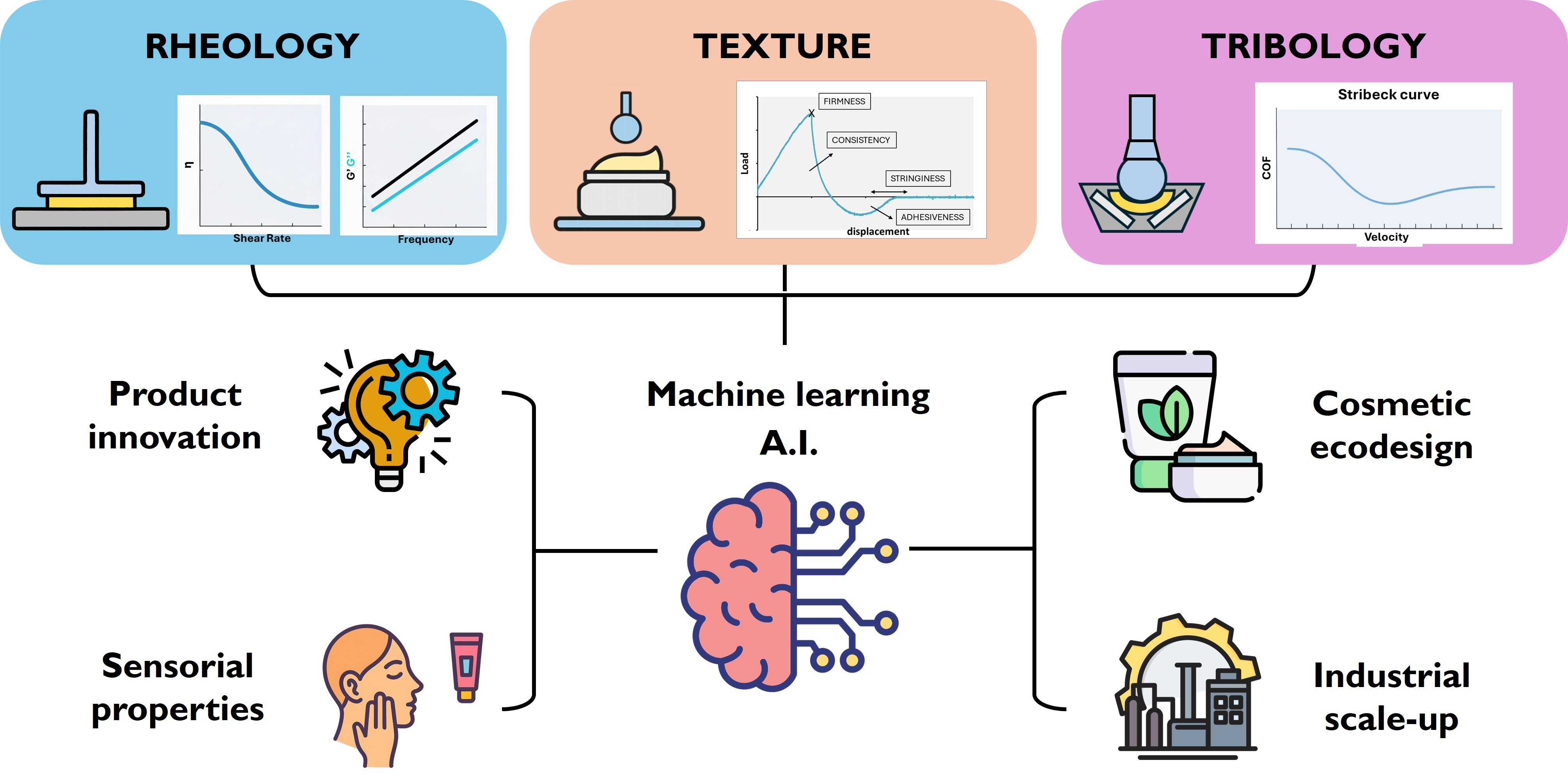

Rheology, Texture Analysis and Tribology for Sensory Prediction and Sustainable Cosmetic Design



Abstract
1. Introduction
2. Rheology: Structure and Flow Behavior
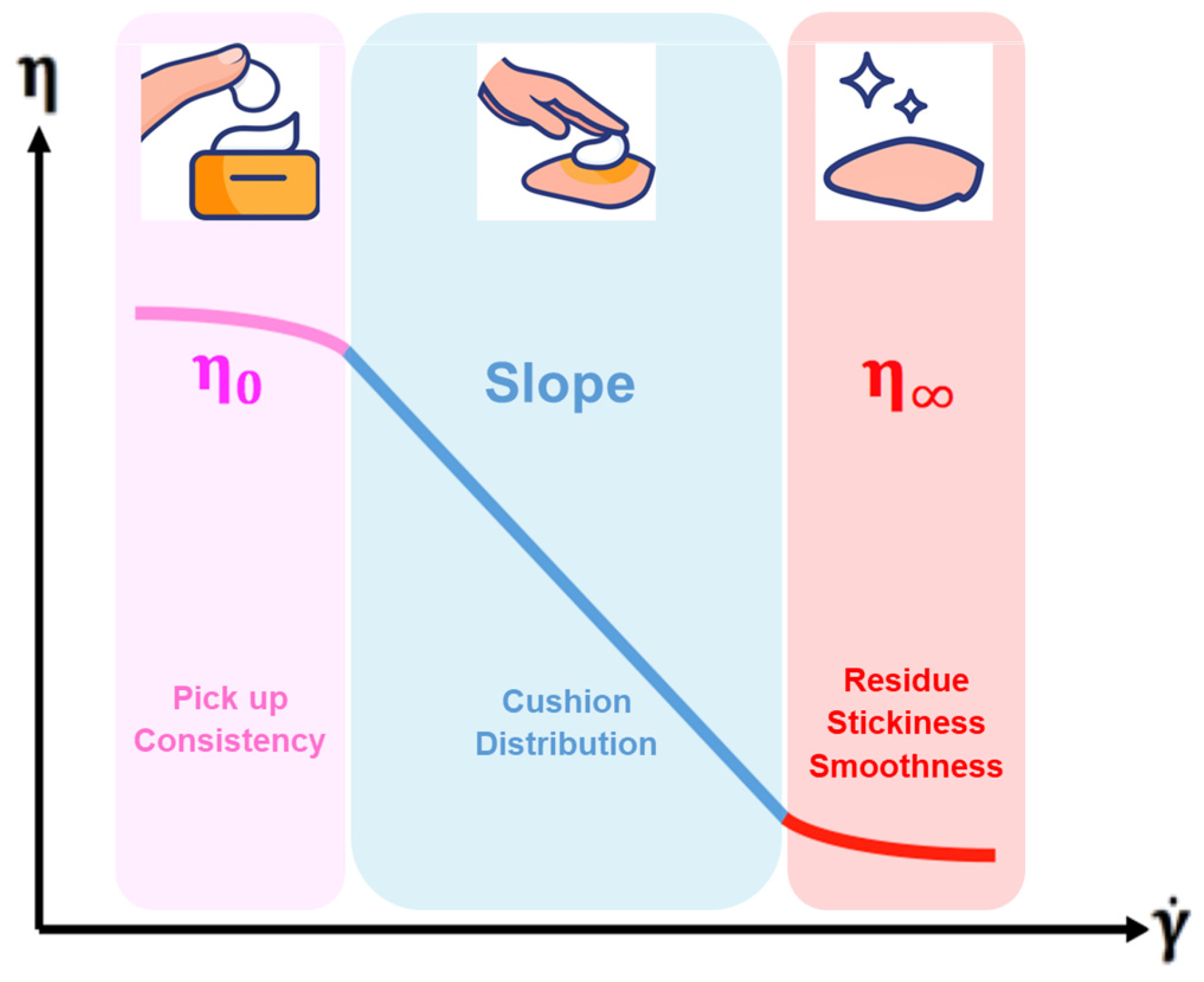
2.1. Continuous Shear Rheology
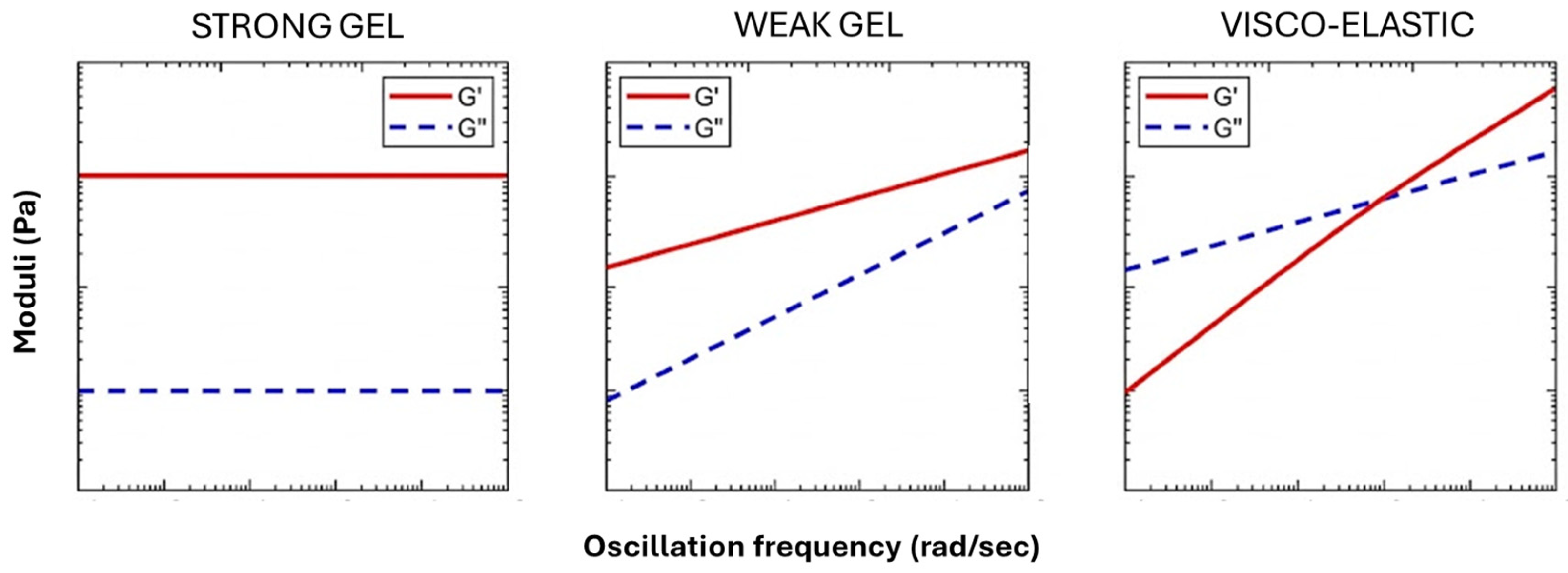
2.2. Oscillatory Rheology
2.3. Evaluation of the Application Properties
3. Texture Analysis: Linking Mechanical Properties to Cosmetic Performance
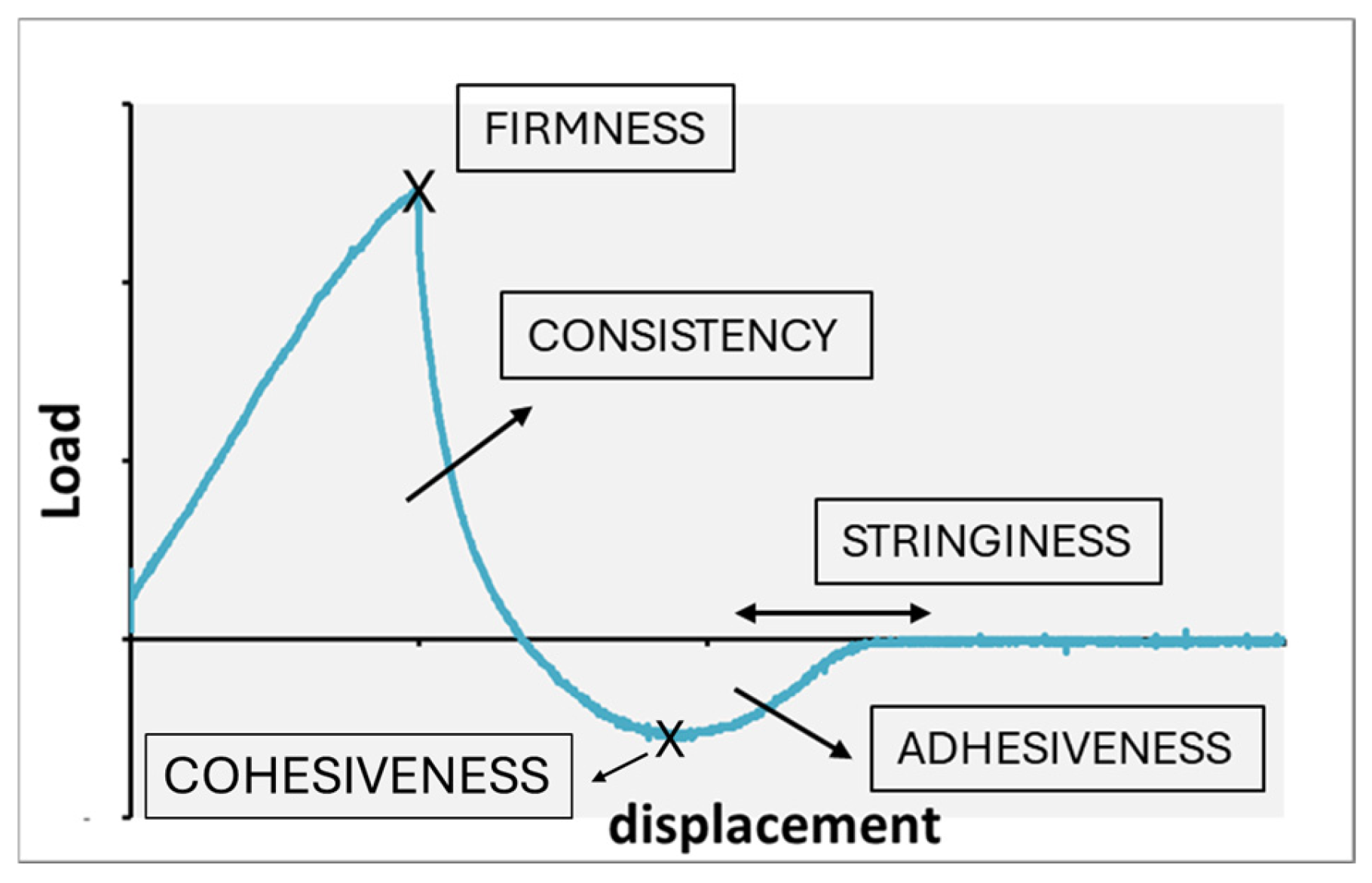
3.1. Texture Parameters
3.2. Influence of Composition on Product Physico-Mechanical Properties
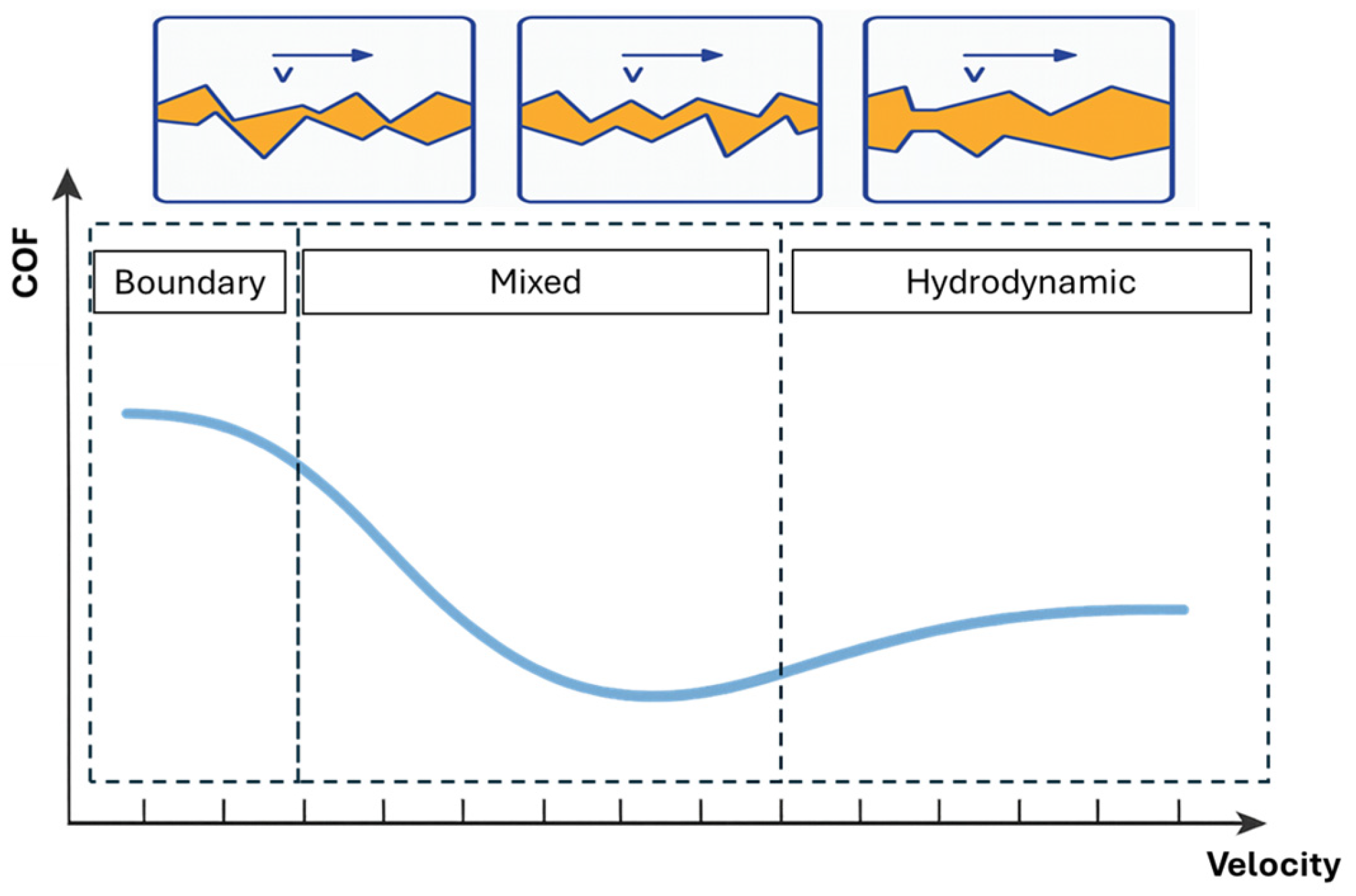
4. Tribology for the Assessment of Spreading Behavior
5. Instrumental Prediction of Sensory Performance

| Sample Type | Application Phase | Sensory Attributes | Instrumental Parameters | Ref. |
|---|---|---|---|---|
| Lab-prepared and commercial O/W emulsions | Pick-up | Penetration force | Positive area under texture curve (+) | [79] |
| Stringiness | Breaking length of the filament (+) | |||
| Integrity of shape | G′ LVER, τ end LVER (+) | |||
| Commercial O/W emulsions | After-feel | Residue | Firmness (+), Cohesiveness (−) | [80] |
| Softness | Cohesiveness (+), Firmness, G′ (−) | |||
| Greasiness | tan δ, Cohesiveness (+), Viscosity (−) | |||
| O/W emulsions structured with waxes and polymer | Pick-up | Cohesiveness | Viscosity, Cohesiveness, Consistency (+) | [81,82] |
| Rub-out | Consistency | Viscosity, Cohesiveness, Consistency (+) | ||
| Spreadability | Viscosity, Firmness, Consistency (−) | |||
| Creams thickened with different hydrophilic polymers | Rub-out | Spreadability | Firmness, Adhesiveness, Viscosity (−) | [83] |
| Commercial sunscreens | Rub-out | Spreadability | Viscosity, Consistency, Cohesiveness (−) | [84] |
| After-feel | Stickiness | Firmness, Consistency, Cohesiveness (+) | ||
| Residue | Firmness, Cohesiveness (+) | |||
| Raw cosmetic ingredients | Rub-out | Fluidity | Consistency, Cohesiveness, Viscosity index (−) | [85] |
| O/W emulsions with different oily phase | Rub-out | Spreadability | Area under the friction curve (−) | [90] |
| Commercial topical products | Pick-up | Firmness | Positive area from the texture curve (+) | [91] |
| After-feel | Stickiness | Negative area from the texture curve (+) | ||
| Residue | Area under the friction curve (−) | |||
| Commercial face moisturizers | Pick-up | Thickness | Viscosity, Friction coefficient at low speed (+) | [92] |
| Rub-out | Spreadability | Viscosity, Friction coefficient at low speed (−) | ||
| After-feel | Stickiness | Negative area from the texture curve (+) | ||
| Greasiness | Friction coefficient at low speed (+) | |||
| Silicone-like feel | Friction coefficient at low speed (−) |
6. Instrumental Approaches for Eco-Design Formulation
7. Process Optimization and Scale-Up of Cosmetic Emulsions
8. Future Perspectives and AI
9. Conclusions
Author Contributions
Funding
Institutional Review Board Statement
Informed Consent Statement
Data Availability Statement
Acknowledgments
Conflicts of Interest
References
- Cortes, N.; Almeida, I.; Diana, A.; Aragón, M. Innovative Emulsifiers in Cosmetic Products: A Patent Review (2013–2023). ACS Omega 2024, 9, 48884−48898. [Google Scholar] [CrossRef]
- Suphasomboon, T.; Vassanadumrongdee, S. Toward Sustainable Consumption of Green Cosmetics and Personal Care Products: The Role of Perceived Value and Ethical Concern. Sustain. Prod. Consum. 2022, 33, 230–243. [Google Scholar] [CrossRef]
- Amberg, N.; Fogarassy, C. Green Consumer Behavior in the Cosmetics Market. Resources 2019, 8, 137. [Google Scholar] [CrossRef]
- Roso, A.; Aubert, A.; Cambos, S.; Vial, F.; Schäfer, J.; Belin, M.; Gabriel, D.; Bize, C. Contribution of cosmetic ingredients and skin care textures to emotions. Int. J. Cosmet. Sci. 2024, 46, 262–283. [Google Scholar] [CrossRef] [PubMed]
- Boinbaser, L.; Parente, M.E.; Castura, J.C.; Ares, G. Dynamic sensory characterization of cosmetic creams during application using temporal check all-that-apply (TCATA) questions. Food Qual. Pref. 2015, 45, 33–40. [Google Scholar] [CrossRef]
- Gilbert, L.; Picard, C.; Savary, G.; Grisel, M. Impact of polymers on texture properties of cosmetic emulsions: A methodological approach. J. Sens. Stud. 2012, 27, 392–402. [Google Scholar] [CrossRef]
- Sahar, A.M.; Hadiseh, B. Advantages and Disadvantages of Conventional and Objective-Based Sensory Techniques. In Engineering Innovations in Sensory Science; Mahendran, R., Anbarasan, R., Eds.; CRC Press: Boca Raton, FL, USA, 2025; pp. 60–89. [Google Scholar]
- Moravkova, T.; Filip, P. Relation between Sensory Analysis and Rheology of Body Lotions. Int. J. Cosmet. Sci. 2016, 38, 558–566. [Google Scholar] [CrossRef]
- Ramli, H.; Zainal, N.F.A.; Hess, M.; Chan, C.H. Basic principle and good practices of rheology for polymers for teachers and beginners. Chem. Teach. Int. 2022, 4, 307–326. [Google Scholar] [CrossRef]
- Infante, V.H.P.; Maia Campos, P.M.B.G.; Calixto, L.S.; Darvin, M.E.; Kroger, M.; Schanzer, S.; Lohan, S.B.; Lademann, J.; Meinke, M.C. Influence of physical–mechanical properties on SPF in sunscreen formulations on ex vivo and in vivo skin. Int. J. Pharm. 2021, 598, 120262. [Google Scholar] [CrossRef] [PubMed]
- Goudoulas, T.B.; Didonaki, A.; Pan, S.; Fattahi, E.; Becker, T. Comparative Large Amplitude Oscillatory Shear (LAOS) Study of Ionically and Physically Crosslinked Hydrogels. Polymers 2023, 15, 1558. [Google Scholar] [CrossRef]
- Tai, A.; Bianchini, R.; Jachowicz, J. Texture analysis of cosmetic/pharmaceutical raw materials and formulations. Int. J. Cosmet. Sci. 2014, 36, 291–304. [Google Scholar] [CrossRef] [PubMed]
- Jovanović, A.S.; Martinović, M.; Nešić, I. The Influence of Selected Thickeners on the Textural Properties of Oil-In-Water Emulsions. Acta Fac. Medicae Naissensis 2022, 39, 57–65. [Google Scholar]
- Baptista, S.; Pereira, J.R.; Gil, C.V.; Torres, C.A.V.; Reis, M.A.M.; Freitas, F. Development of Olive Oil and-Tocopherol Containing Emulsions Stabilized by FucoPol: Rheological and Textural Analyses. Polymers 2022, 14, 2349. [Google Scholar] [CrossRef]
- Gómez, I.; Calvo, F.; Gómez, J.M.; Ricardez-Sandoval, L.; Alvarez, O. A multiscale approach for the integrated design of emulsified cosmetic products. Chem. Eng. Sci. 2022, 251, 117493. [Google Scholar] [CrossRef]
- Randhawa, K. Tribology in Cosmetics Including Advanced Materials and Emerging Trends. J. Bio Tribo-Corr. 2025, 11, 65. [Google Scholar] [CrossRef]
- Nakano, K.; Kobayashi, K.; Nakao, K.; Tsuchiya, R.; Nagai, Y. Tribological method to objectify similarity of vague tactile sensations experienced during application of liquid cosmetic foundations. Trib. Int. 2013, 63, 8–13. [Google Scholar] [CrossRef]
- Cyriac, F.; Yi, T.X.; Chow, P.S. Predicting textural attributes and frictional characteristics of topical formulations based on non-linear rheology. Biotribology 2023, 35–36, 100249. [Google Scholar] [CrossRef]
- Kim, J.; Jeong, E.H.; Baik, J.H.; Park, J.D. The role of rheology in cosmetics research: A review. Korea-Aust. Rheol. J. 2024, 36, 271–282. [Google Scholar] [CrossRef]
- Chiarentin, L.; Cardoso, C.; Miranda, M.; Vitorino, C. Rheology of Complex Topical Formulations: An Analytical Quality by Design Approach to Method Optimization and Validation. Pharmaceutics 2023, 15, 1810. [Google Scholar] [CrossRef]
- Wortel, V.A.L.; Verboom, C.; Wiechers, J.W.; Taelman, M.C.; Leonard, S.; Tadros, T. Linking Sensory and Rheology Characteristics. Cosmet. Toil 2005, 120, 57–66. [Google Scholar]
- Akanny, E.; Kohlmann, C. Predicting tactile sensory attributes of personal care emulsions based on instrumental characterizations: A review. Int. J. Cosmet. Sci. 2024, 46, 1035–1063. [Google Scholar] [CrossRef]
- Ibanescu, C.; Danu, M.; Nanu, A.; Lungu, M.; Simionescu, B.C. Stability of disperse systems estimated using rheological oscillatory shear tests. Rev. Roum. Chim. 2010, 55, 933–940. [Google Scholar]
- Barnes, H.A. Rheology of emulsions—A review. Colloids Surf. A Physiochem. Eng. Asp. 1994, 91, 89–95. [Google Scholar]
- Franceschini, M.; Pizzetti, F.; Rossi, F. On the Key Role of Polymeric Rheology Modifiers in Emulsion-Based Cosmetics. Cosmetics 2021, 12, 76. [Google Scholar] [CrossRef]
- Pinto, D.; Lameirão, F.; Delerue-Matos, C.; Rodrigues, F.; Costa, P. Characterization and Stability of a Formulation Containing Antioxidants-Enriched Castanea sativa Shells Extract. Cosmetics 2021, 8, 49. [Google Scholar] [CrossRef]
- Islam, M.T.; Rodrıguez-Hornedo, N.; Ciotti, S.; Ackermann, C. Rheological Characterization of Topical Carbomer Gels Neutralized to Different Ph. Pharm. Res. 2004, 21, 1192–1199. [Google Scholar] [CrossRef] [PubMed]
- Franzol, A.; Banin, T.M.; Brazil, T.R.; Rezende, M.C. Assessment of kinetic stability of cosmetic emulsions formulated with different emulsifiers using rheological and sensory analyses. J. Sol-Gel Sci. Technol. 2021, 99, 469–481. [Google Scholar] [CrossRef]
- Karsheva, M.; Georgieva, S. Flow properties of phytocosmetic formulations. Effect of plant extracts and thickeners. C. R. Acad. Bulg. Sci. 2010, 63, 1725–1732. [Google Scholar]
- Brummer, R.; Godersky, S. Rheological studies to objectify sensations occurring when cosmetic emulsions are applied to the skin. Colloids Surf. A Physicochem. Eng. Asp. 1999, 152, 89–94. [Google Scholar]
- Martínez-Padilla, L.P. Rheology of liquid foods under shear flow conditions: Recently used models. J. Tex. Stud. 2023, 55, 12802. [Google Scholar]
- Semenzato, A.; Costantini, A.; Meloni, M.; Maramaldi, G.; Meneghin, M.; Baratto, G. Formulating O/W Emulsions with Plant-Based Actives: A Stability Challenge for an Effective Product. Cosmetics 2018, 5, 59. [Google Scholar] [CrossRef]
- Bais, A.D.; Trevisan, R.; Lapasin, P.; Partal, C. Gallegos, Rheological characterization of polysaccharide-surfactant matrices for cosmetic O/W emulsions. J.Colloid. Interface Sci. 2005, 290, 546–556. [Google Scholar] [CrossRef]
- Hong, G.W.; Hyoung, J.M.; Hun, M.L.; Do, K.K.; Keyong, H.L. Deformation characteristics of hydrogel products based on cross-linked hyaluronic acid. J. Cosmet. Dermatol. 2023, 22, 3118–3124. [Google Scholar] [CrossRef] [PubMed]
- Varges, P.R.; Costa, C.M.; Fonseca, B.S.; Naccache, M.F.; de Souza Mendes, P.R. Rheological Characterization of Carbopol® Dispersions in Water and in Water/Glycerol Solutions. Fluids 2019, 4, 3. [Google Scholar] [CrossRef]
- Lapasin, R.; Pricl, S. Rheology of Industrial Polysaccarides, Theory and Application; Blackie Academic & Professional: London, UK, 1995; pp. 91–94. [Google Scholar]
- Pressi, G.; Barbieri, E.; Rizzi, R.; Tafuro, G.; Costantini, A.; Di Domenico, E.; Semenzato, A. Formulation and Physical Characterization of a Polysaccharidic Gel for the Vehiculation of an Insoluble Phytoextract for Mucosal Application. Polysaccharides 2022, 3, 728–744. [Google Scholar] [CrossRef]
- Ahmed, J. Effect of pressure, concentration and temperature on the oscillatory rheology of guar gum dispersions: Response surface methodology approach. Food Hydrocoll. 2021, 113, 106554. [Google Scholar] [CrossRef]
- Falcone, S.J.; Palmeri, D.M.; Berg, R.A. Rheological and cohesive properties of hyaluronic acid. J. Biomed. Mater. Res. 2006, 76, 721–728. [Google Scholar] [CrossRef]
- Tadros, T. Application of rheology for assessment and prediction of the long-term physical stability of emulsions. Adv. Colloid Interf. Sci. 2004, 108–109, 227–258. [Google Scholar] [CrossRef]
- Masmoudi, H.; Piccerelle, P.; Le Dréau, Y.; Kister, J. A Rheological Method to Evaluate the Physical Stability of Highly Viscous Pharmaceutical Oil-in-Water Emulsions. Pharmac. Res. 2006, 23, 1937–1947. [Google Scholar] [CrossRef]
- Adefunke Adejokun, D.; Dodou, K. Quantitative Sensory Interpretation of Rheological Parameters of a Cream Formulation. Cosmetics 2020, 7, 2. [Google Scholar] [CrossRef]
- Ali, A.; Skedung, L.; Burleigh, S.; Lavant, E.; Ringstad, L.; Anderson, C.D.; Wahlgren, M.; Engblom, J. Relationship between sensorial and physical characteristics of topical creams: A comparative study on effects of excipients. Int. J. Pharm. 2022, 613, 121370. [Google Scholar] [CrossRef]
- Speer, S.; Amin, S. Sustainable thermoresponsive whey protein- and chitosanbased oil-in-water emulsions for cosmetic applications. Int. J. Cosmet. Sci. 2022, 44, 30–41. [Google Scholar] [CrossRef]
- Vergilio, M.M.; Fonseca, J.H.L.; d’Avila, M.A.; Ricci Leonardi, G. Evaluation of the influence of niacinamide and saccharide isomerate on the rheological behavior of a hydrogel for topical use. Biotribology 2023, 35–36, 100243. [Google Scholar] [CrossRef]
- Yilmaz, M.T.; Ceyda, V. Three interval thixotropy test to determine structural regeneration of a glucomannan based hydrocolloid film at air/water interface: Interfacial, molecular, thermal and surface characterization. Food Hydrocoll. 2016, 61, 458–468. [Google Scholar] [CrossRef]
- Stadler, F.J.; Cui, S.; Hashmi, S.; Handschuh-Wang, S.; Li, W.; Wang, S.; Yan, Z.C.; Zhu, G. Multiple interval thixotropic test (miTT)—An advanced tool for the rheological characterization of emulsions and other colloidal systems. Rheol. Acta 2022, 61, 229–242. [Google Scholar] [CrossRef]
- Jayabal, H.; Dingari, N.N.; Rai, B. A linear viscoelastic model to understand skin mechanical behaviour and for cosmetic formulation design. Int. J. Cosmet. Sci. 2019, 41, 292–299. [Google Scholar] [CrossRef] [PubMed]
- He, J.; Qian, X.; Huang, H.; Lin, B.; Zhang, J.; Zhang, C.; Chen, Y. Construction of a model for predicting sensory attributes of cosmetic creams using instrumental parameters based on machine learning. Appl. Rheol. 2025, 35, 20250044. [Google Scholar] [CrossRef]
- Baudoin, N.A.; Chirdon, W.M. Nanocomposite formulations of titanium dioxide and algal biomass: A rheological characterization for topical cosmetics and dermal applications. Coll. Surf. A Physicochem. Eng. Asp. 2024, 703, 135401. [Google Scholar] [CrossRef]
- Bourne, M.C. Texture profile analysis. Food Technol. 1978, 32, 62–66. [Google Scholar]
- Szczesniak, A.S. Texture is a sensory property. Food Qual. Pref. 2002, 13, 215–225. [Google Scholar] [CrossRef]
- Pons, M.; Fiszman, S.M. Instrumental texture profile analysis with particular reference to gelled systems. J. Texture Stud. 1996, 27, 597624. [Google Scholar] [CrossRef]
- Nashinari, K.; Funami, T.; Kohyama, K. Parameters of texture analysis. Food Sci. Technol. Res. 2013, 19, 519–521. [Google Scholar] [CrossRef]
- Estanqueiro, M.; Amarak, M.H.; Sousa Lobo, J.M. Comparison between sensory and instrumental characterization of topical formulations: Impact of thickening agent. Int. J. Cosmet. Sci. 2016, 38, 389−398. [Google Scholar] [CrossRef]
- Gilbert, L.; Loisel, V.; Savary, G.; Grisel, M.; Picard, C. Stretching properties of xanthan, carob, modified guar and celluloses in cosmetic emulsions. Carbohydr. Polym. 2013, 93, 644–650. [Google Scholar] [CrossRef]
- Tafuro, G.; Costantini, A.; Baratto, G.; Francescato, S.; Semenzato, A. Evaluating Natural Alternatives to Synthetic Acrylic Polymers: Rheological and Texture Analyses of Polymeric Water Dispersions. ACS Omega 2020, 5, 15280−15289. [Google Scholar] [CrossRef]
- Jones, D.S.; Woolfson, A.D.; Djokic, J. Texture Profile Analysis of Bioadhesive Polymeric Semisolids: Mechanical Characterization and Investigation of Interactions Between Formulation Components. J. Appl. Pol. Sci. 1996, 61, 2229–2234. [Google Scholar] [CrossRef]
- Hurler, J.; Engesland, A.; Kermany, B.P.; Skalko-Basnet, N. Improved Texture Analysis for Hydrogel Characterization: Gel Cohesiveness, Adhesiveness, and Hardness. J. Appl. Pol. Sci. 2012, 125, 180–188. [Google Scholar] [CrossRef]
- Tamburic, S.; Sisson, H.; Cunningham, N.; Stevic, M.C. Rheological and Texture Analysis Methods for Quantifying Yield Value and Level of Thixotropy. Sofwjournal 2017, 143, 24–30. [Google Scholar]
- Rehman, T.U.; Shah, L.A. Rheological investigation of polymer hydrogels for industrial application: A review. Int. J. Pol. Anal. Charact. 2022, 27, 430–445. [Google Scholar] [CrossRef]
- Gilbert, L.; Picard, C.; Savary, G.; Grisel, M. Rheological and textural characterization of cosmetic emulsions containing natural and synthetic polymers: Relationships between both data. Coll. Surf. A Physicochem. Eng. Asp. 2013, 421, 150–163. [Google Scholar] [CrossRef]
- Dănilă, E.; Kaya, D.A.; Anut, V.; Popa, L.; Coman, A.L.; Chelaru, C.; Constantinescu, R.R.; Dinu-Pîrvu, C.; Kaya, M.G.A.; Ghica, M.V. Formulation and Characterization of Niacinamide and Collagen Emulsion and Its Investigation as a Potential Cosmeceutical Product. Cosmetics 2024, 11, 40. [Google Scholar] [CrossRef]
- Filipovic, M.; Lukic, M.; Djordjevic, S.; Krstonosic, V.; Pantelic, I.; Vuleta, G.; Savic, S. Towards satisfying performance of an O/W cosmetic emulsion: Screening of reformulation factors on textural and rheological properties using general experimental design. Int. J. Cosmet. Sci. 2017, 39, 486–499. [Google Scholar] [CrossRef] [PubMed]
- Martins, D.; Rocha, C.; Dourado, F.; Gama, M. Bacterial Cellulose-Carboxymethyl Cellulose (BC:CMC) dry formulation as stabilizer and texturizing agent for surfactant-free cosmetic formulations. Coll. Surf. A Physicochem. Eng. Asp. 2021, 617, 126380. [Google Scholar] [CrossRef]
- Shirata, M.M.M.; Maia Campos, P.M.B.G. Influence of UV filters on the texture profile and efficacy of a cosmetic formulation. Int. J. Cosmet. Sci. 2017, 39, 622–628. [Google Scholar] [CrossRef]
- Andonova, A.; Gugleva, V.; Sotirova, Y.; Nikolova, K.; Marcheva, M.; Petkova, Z.; Andonova, V. Influence of natural oils on the textural and rheological properties of cosmetic creams. Pharmacia 2024, 71, 1–10. [Google Scholar] [CrossRef]
- Kakuda, L.; Maia Campos, P.M.B.G.; Oliveira, W.P. Development and Efficacy Evaluation of Innovative Cosmetic Formulations with Caryocar brasiliense Fruit Pulp Oil Encapsulated in Freeze-Dried Liposomes. Pharmaceutics 2024, 16, 595. [Google Scholar] [CrossRef]
- Bogdan, C.; Safta, D.A.; Iurian, S.; Petrus, D.R.; Moldovan, M.L. QbD Approach in Cosmetic Cleansers Research: The Development of a Moisturizing Cleansing Foam Focusing on Thickener, Surfactants, and Polyols Content. Gels 2024, 10, 484. [Google Scholar] [CrossRef]
- Da Costa Sanches, S.C.; Ré, M.I.; Silva-Júnior, J.O.C.; Ribeiro-Costa, R.M. Organogel of Acai Oil in Cosmetics: Microstructure, Stability, Rheology and Mechanical Properties. Gels 2023, 9, 150. [Google Scholar] [CrossRef]
- Rios, A.M.; Teuta, J.P.; Palomeque, L.A.; Vera, R.E.; Marquez, R.; García, J. Statistical simplex centroid experimental design and formulation maps to predict the stability in cosmetic emulsions containing commercial emulsifiers. J. Surfact. Deterg. 2025, 28, 1031–1045. [Google Scholar] [CrossRef]
- Stachowiak, G.W.; Batchelor, A.W. Engineering Tribology, 5th ed.; Elsevier Science & Technology: London, UK, 2025. [Google Scholar]
- Derler, S.; Gerhardt, L.C. Tribology of Skin: Review and Analysis of Experimental Results for the Friction Coefficient of Human Skin. Tribol. Lett. 2012, 45, 1–27. [Google Scholar] [CrossRef]
- Hong, J.S.; Kim, M.R.; Choi, Y.J.; Lee, I.J.; Chun, Y.J.; Jang, H.W.; Kim, B.K. Tribological properties of real foods using extended Stribeck curves and their relationship with nutritional and rheological parameters. J. Texture Stud. 2024, 55, e12857. [Google Scholar] [CrossRef]
- Tošić, A.; Stanković, T.; Ilić, T.; Savić, S.; Pantelić, I. Current role of tribological tests: Striving for full characterization of medicinal and cosmetic products. Arh. Farm 2023, 73, 126–145. [Google Scholar] [CrossRef]
- Ajayi, O.; Davies, A.; Amin, S. Impact of Processing Conditions on Rheology, Tribology and Wet Lubrication Performance of a Novel Amino Lipid Hair Conditioner. Cosmetics 2021, 8, 77. [Google Scholar] [CrossRef]
- Timm, K.; Myant, C.; Nuguid, H.; Spikes, H.A.; Grunze, M. Investigation of friction and perceived skin feel after applicationof suspensions of various cosmetic powders. Int. J. Cosmet. Sci. 2012, 34, 458–465. [Google Scholar] [CrossRef] [PubMed]
- de Farias, B.V.; Hsiao, L.C.; Khan, S.A. Rheological and tribological behavior of gels and emulsions containing polymer and phospholipid. ACS Appl. Polym. Mat. 2020, 2, 1623–1633. [Google Scholar] [CrossRef]
- Gilbert, L.; Savary, G.; Grisel, M.; Picard, C. Predicting sensory texture properties of cosmetic emulsions by physical measurements. Chemom. Intell. Lab. Syst. 2013, 124, 21–31. [Google Scholar] [CrossRef]
- Imbart, S.; Laplanche, A.; Ruzic, C.; Lavarde, M.; Marull-Tufeu, S.; Bernard, C.; Pensé-Lhéritier, A.M.; Aoussat, A. Design of a Sensorial-Instrumental Correlation Methodology for a Category of Cosmetic Products: O/W Emulsions. Cosmetics 2022, 9, 84. [Google Scholar] [CrossRef]
- Calixto, L.S.; Maia Campos, P.M.B.G. Physical–Mechanical characterization of cosmetic formulations and correlation between instrumental measurements and sensorial properties. Int. J. Cosmet. Sci. 2017, 39, 527–534. [Google Scholar] [CrossRef]
- Calixto, L.S.; Infante, V.H.P.; Maia Campos, P.M.B.G. Design and Characterization of Topical Formulations: Correlations Between Instrumental and Sensorial Measurements. AAPS PharmSciTech 2018, 19, 1512–1519. [Google Scholar] [CrossRef]
- Kulawik-Pióro, A.; Ptaszek, A.; Kruk, J. Effective tool for assessment of the quality of barrier creams- relationships between rheological, textural and sensory properties. Reg. Toxicol. Pharmacol. 2019, 103, 113–123. [Google Scholar] [CrossRef]
- Vergilio, M.M.; Pinheiro de Fretas, A.C.; da Rocha-Filho, P.A. Comparative sensory and instrumental analyses and principal components of commercial sunscreens. J. Cosmet. Dermatol. 2022, 21, 729–739. [Google Scholar] [CrossRef] [PubMed]
- Vieira, G.S.; Lavarde, M.; Freville, V.; Rocha-Filho, P.A.; Pense-Lheritier, A.M. Combining sensory and texturometer parameters to characterize different type of cosmetic ingredients. Int. J. Cosmet. Sci. 2020, 42, 156–166. [Google Scholar] [CrossRef]
- César, F.C.S.; Maia Campos, P.M.B.G. Influence of vegetable oils in the rheology, texture profile and sensory properties of cosmetic formulations based on organogel. Int. J. Cosmet. Sci. 2020, 42, 494–500. [Google Scholar] [CrossRef] [PubMed]
- Dubuisson, P.; Picard, C.; Grisel, M.; Savary, G. How does composition influence the texture of cosmetic emulsions? Coll. Surf. A 2018, 536, 38–46. [Google Scholar] [CrossRef]
- de Araujo Silva, R.; Ruela, A.L.M.; de Oliveira Mamede, M.E.; de Paula Pereira, N. Preparation and sensory evaluation of gels based on silicone copolymers/acrylic copolymers incorporating different vegetable oils. Ind. Crops Prod. 2023, 193, 116147. [Google Scholar] [CrossRef]
- Špaglová, M.; Cermáková, P.; Jackuliaková, P.; Piešt’anský, J. Role of Emulsifiers and SPF Booster in Sunscreen Performance: Assessing SPF, Rheological Behavior, Texture, and Stability. Cosmetics 2025, 12, 118. [Google Scholar] [CrossRef]
- Savary, G.; Grisel, M.; Picard, C. Impact of emollients on the spreading properties of cosmetic products: A combined sensory and instrumental characterization. Coll. Surf. B Biointerf. 2013, 102, 371–378. [Google Scholar] [CrossRef]
- Savary, G.; Glibert, L.; Grisel, M.; Picard, C. Instrumental and sensory methodologies to characterize the residual film of topical products applied to skin. Skin Res. Technol. 2019, 25, 415–423. [Google Scholar] [CrossRef]
- Lee, J.; Lu, J.; Potanin, A.; Boyke, C. Prediction of Tactile Sensory Attributes of Facial Moisturizers by Rheology and Tribology. Biotribology 2021, 28, 10020. [Google Scholar] [CrossRef]
- L’Haridon, J.L.; Martz, P.; Chenéble, J.C.; Campion, J.F.; Colombe, L. Ecodesign of cosmetic formulae: Methodology and application. Int. J. Cosmet. Sci. 2018, 40, 165–177. [Google Scholar] [CrossRef] [PubMed]
- Fresneda, M.; Trujillo-Cayado, L.A.; García, M.C.; Alfaro-Rodriguez, M.C.; Muñoz, J. Production of more sustainable emulsions formulated with eco-friendly materials. J. Clean. Prod. 2020, 243, 118661. [Google Scholar] [CrossRef]
- Bom, S.; Fitas, M.; Martins, A.M.; Pinto, P.; Ribeiro, H.M.; Marto, J. Replacing Synthetic Ingredients by Sustainable Natural Alternatives: A Case Study Using Topical O/W Emulsions. Molecules 2020, 25, 4887. [Google Scholar] [CrossRef]
- Wojciechowska, K.; Walczak, A.; Rostowska, E.; Poleszak, E. Comparison of sensory and rheological properties of green cosmetic creams prepared on different natural, ECOCERT and BDIH certificated self-emulsifying bases. Curr. Issues Pharm. Med. Sci. 2021, 34, 218–223. [Google Scholar] [CrossRef]
- Infante, V.H.P.; Calixto, L.S.; Maia Campos, P.M.B.G. Application of tapioca and corn starches as an alternative for synthetic polymers in cosmetic products. Braz. J. Pharm. Sci. 2024, 60, e20124. [Google Scholar] [CrossRef]
- Terescenco, D.; Benali, L.H.; Canivet, F.; le Gelebart, M.B.; Hucher, N.; Gore, E.; Picard, C. Bio-sourced polymers in cosmetic emulsions: A hidden potential of the alginates as thickeners and gelling agents. Int. J. Cosmet. Sci. 2021, 43, 573–587. [Google Scholar] [CrossRef]
- Tafuro, G.; Di Domenico, E.; Costantini, A.; Francescato, S.; Busata, L.; Baratto, G. Semenzato Characterization of Polysaccharidic Associations for Cosmetic Use: Rheology and Texture Analysis. Cosmetics 2021, 8, 62. [Google Scholar] [CrossRef]
- Tamburic, S.; Peh, X.Y.; Baltazar, D. Can Natural Polymers Replace Synthetic Carbomers? Cosmet. Toil 2022, 13, 17. [Google Scholar]
- Wang, C.S.; Virgilio, N.; Carreau, P.J.; Heuzey, M.C. Understanding the Effect of Conformational Rigidity on Rheological Behavior and Formation of Polysaccharide-Based Hybrid Hydrogels. Biomacromol 2021, 22, 4016−4026. [Google Scholar] [CrossRef]
- Bouyer, E.; Mekhloufi, G.; Rosilio, V.; Grossiord, J.L.; Agnely, F. Proteins, polysaccharides, and their complexes used as stabilizers for emulsions: Alternatives to synthetic surfactants in the pharmaceutical field? Int. J. Pharm. 2012, 436, 359–378. [Google Scholar] [CrossRef]
- Tafuro, G.; Costantini, A.; Piatto, M.; Lucchetti, S.; Francescato, S.; Busata, L.; Baratto, G.; Semenzato, A. Eco-Designing Cosmetic Products while Preserving the Sensorial-Application Properties: An Instrumental Approach toward Sustainable Formulations. Cosmetics 2024, 11, 60. [Google Scholar] [CrossRef]
- Huynh, A.; Garcia, A.G.; Young, L.K.; Szoboszlai, M.; Liberatore, M.W.; Baki, G. Measurements meet perceptions: Rheology–texture–sensory relations when using green, bio-derived emollients in cosmetic emulsions. Int. J. Cosmet. Sci. 2021, 43, 11–19. [Google Scholar] [CrossRef]
- De Castro, M.; Roque, C.S.; Loureiro, A.; Guimaraes, D.; Silva, C.; Ribeiro, A.; Cavaco-Paulo, A.; Noro, J. Exploring bio-based alternatives to cyclopentasiloxane: Paving the way to promising silicone substitutes. Coll. Surf. A Physicochem. Eng. Asp. 2025, 707, 135915. [Google Scholar] [CrossRef]
- Vukasinovic, M.; Pantelic, I.; Savic, S.; Cekic, N.; Sekulic, M.V.; Stankovic, J.A.; Božic, D.D.; Tosic, A.; Tamburic, S.; Savic, S.D. Development of a “Green” Emulsion with a Milk Protein Hydrolysate: An Evaluation of Rheology, Texture, In Vitro Bioactivity, and Safety. Cosmetics 2023, 10, 162. [Google Scholar] [CrossRef]
- Verger, A.; Kichou, H.; Huang, N.; Perse, X.; Ardeza, L.M.; Pradel, C.; Goncalves, R.; Da Conceicao, M.; Atanasova, B.; Legrand, F.X.; et al. Effects of Hydrophilic Natural Deep Eutectic Solvents on the Rheological, Textural, and Sensory Properties of Carboxymethylcellulose-Based Cosmetic Hydrogels. ACS Sustain. Chem. Eng. 2024, 12, 7187−7199. [Google Scholar] [CrossRef]
- Martinovic, M.; Nešic, I.; Bojovic, D.; Žugic, A.; Blagojevic, S.; Blagojevic, S.; Tadic, V.T. Plant-Based Sunscreen Emulgel: UV Boosting Effect of Bilberry and Green Tea NaDES Extracts. Gels 2024, 10, 825. [Google Scholar] [CrossRef]
- Lukic, M.; Ciric, A.; Božic, D.D.; Stankovic, J.A.; Maksimovic, D.M.; Maksimovic, Z. Extracts from Wheat, Maize, and Sunflower Waste as Natural Raw Materials for Cosmetics: Value-Added Products Reaching Sustainability Goals. Pharmaceutics 2024, 16, 1182. [Google Scholar] [CrossRef] [PubMed]
- Luengo, G.S.; Leonforte, F.; Greaves, A.; Rubio, R.G.; Guzman, E. Physico-chemical challenges on the self-assembly of natural and bio-based ingredients on hair surfaces: Towards sustainable haircare formulations. Green. Chem. 2023, 25, 7863. [Google Scholar] [CrossRef]
- Rischard, F.; Flourat, A.; Gore, E.; Savary, G. Instrumental prediction of in vivo sensory properties of emollients to allow the development of new biobased ingredients. Chemom. Intell. Lab. Syst. 2026, 268, 105559. [Google Scholar] [CrossRef]
- Martins, A.M.; Marto, J.M. A sustainable life cycle for cosmetics: From design and development to post-use phase. Sust. Chemt. Pharm. 2023, 35, 101178. [Google Scholar] [CrossRef]
- Tamburic, S.; Fröhlich, J.; Mistry, S.; Fischer, L.J.; Barbary, T.; Bunyan, S.; Dufton, E. Sustainability by Reduced Energy Consumption during Manufacturing: The Case of Cosmetic Emulsions. Cosmetics 2023, 10, 132. [Google Scholar] [CrossRef]
- Calvo, F.; Gómez, J.M.; Alvarez, O.; Ricardez-Sandoval, L. Effect of emulsification parameters on the rheology, texture, and physical stability of cosmetic emulsions: A multiscale approach. Chem. Eng. Res. Des. 2022, 186, 407–415. [Google Scholar] [CrossRef]
- Calvo, F.; Gómez, J.M.; Alvarez, O.; Ricardez-Sandoval, L. A population balance model for cosmetic emulsion design: A multiscale approach. Chem. Eng. Sci. 2024, 287, 119737. [Google Scholar] [CrossRef]
- Di Guardo, A.; Trovato, F.; Pellacani, G.; Paganelli, A.; Cantisani, C.; Dattola, A.; Nisticò, S.P. Artificial Intelligence in Cosmetic Formulation: Predictive Modeling for Safety, Tolerability, and Regulatory Perspectives. Cosmetics 2025, 12, 157. [Google Scholar] [CrossRef]
- Solarte, S.; Porras, A.; Pradilla, D.; Solano, O.A.A. Current Perspectives on Emulsified Cosmetics: Integration of Artificial Intelligence into Product Design. ACS Omega 2025, 10, 36788−36803. [Google Scholar] [CrossRef] [PubMed]
- Andrei, F. Sensory Science in Cosmetics. In Cosmetic Industry–Trends, Products and Quality Control; Kartal, S.P., Ed.; IntechOpen: London, UK, 2025; pp. 1–29. [Google Scholar]
- Lee, H.J.; Kim, S.R.; Kim, B.S.; Lee, S.; Yi, Y.J.; Jeon, H.B.; Son, M.; Park, K.; Park, C.H.; Oh, H.; et al. Prediction of sensory textures of cosmetics using large amplitude oscillatory shear and extensional rheology. Appl. Rheol. 2024, 34, 20240016. [Google Scholar] [CrossRef]
- Franzol, A.; Banin, T.M.; Brazil, T.R.; Rezende, M.C. Rheological analyses and artificial neural network as optimization tools to predict the sensory perception of cosmetic emulsions. Mater. Res. 2021, 24, e20210252. [Google Scholar] [CrossRef]


Disclaimer/Publisher’s Note: The statements, opinions and data contained in all publications are solely those of the individual author(s) and contributor(s) and not of MDPI and/or the editor(s). MDPI and/or the editor(s) disclaim responsibility for any injury to people or property resulting from any ideas, methods, instructions or products referred to in the content. |
© 2026 by the authors. Licensee MDPI, Basel, Switzerland. This article is an open access article distributed under the terms and conditions of the Creative Commons Attribution (CC BY) license.
Share and Cite
Tafuro, G.; Costantini, A.; Semenzato, A. Rheology, Texture Analysis and Tribology for Sensory Prediction and Sustainable Cosmetic Design. Cosmetics 2026, 13, 25. https://doi.org/10.3390/cosmetics13010025
Tafuro G, Costantini A, Semenzato A. Rheology, Texture Analysis and Tribology for Sensory Prediction and Sustainable Cosmetic Design. Cosmetics. 2026; 13(1):25. https://doi.org/10.3390/cosmetics13010025
Chicago/Turabian StyleTafuro, Giovanni, Alessia Costantini, and Alessandra Semenzato. 2026. "Rheology, Texture Analysis and Tribology for Sensory Prediction and Sustainable Cosmetic Design" Cosmetics 13, no. 1: 25. https://doi.org/10.3390/cosmetics13010025
APA StyleTafuro, G., Costantini, A., & Semenzato, A. (2026). Rheology, Texture Analysis and Tribology for Sensory Prediction and Sustainable Cosmetic Design. Cosmetics, 13(1), 25. https://doi.org/10.3390/cosmetics13010025