
Photoprotective Effects of Oral Coriander (Coriandrum sativum L.) Seed Oil Supplementation Against UV-Induced Skin Damage: Evidence from Two Randomized, Double-Blind, Placebo-Controlled Clinical Trials

 ,
,  , ,
, ,
Abstract
1. Introduction
2. Materials and Methods
2.1. Trials Design
2.2. Interventions and Randomization
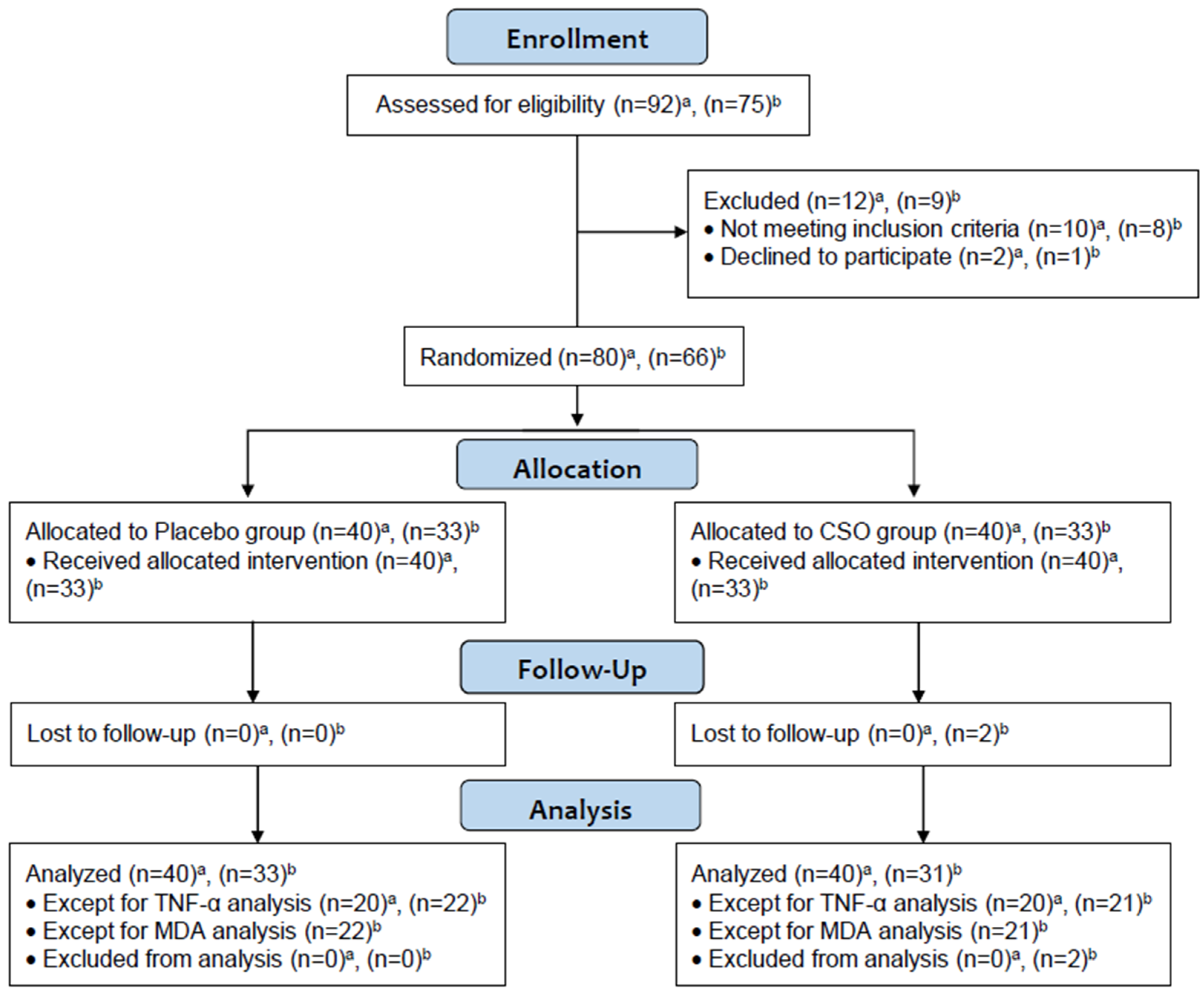
2.3. Sample Size, Participants and Compliance with Treatment
2.4. Outcomes Assessment
2.4.1. UVA+B Exposure and Measurement of Erythema Index
2.4.2. Quantification of TNF-α After UVA+B Exposure
2.4.3. UVA Exposure and Measurement of Lipoperoxidation
2.4.4. Self-Assessment Questionnaire
2.5. Statistical Analysis
3. Results
3.1. Participants Characteristics, Tolerability and Compliance with Treatment
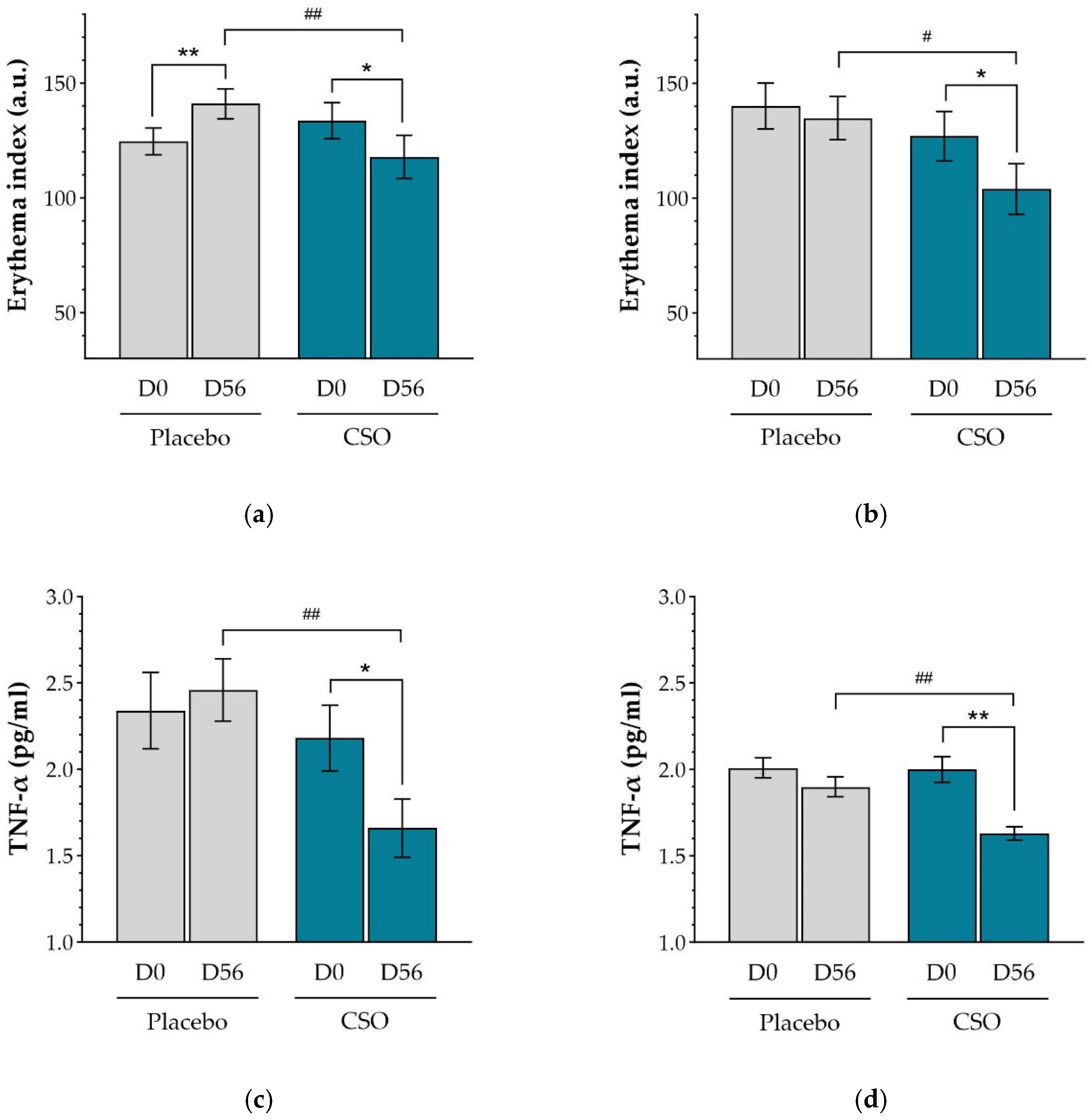
3.2. Skin Response to UVA+B-Induced Stress
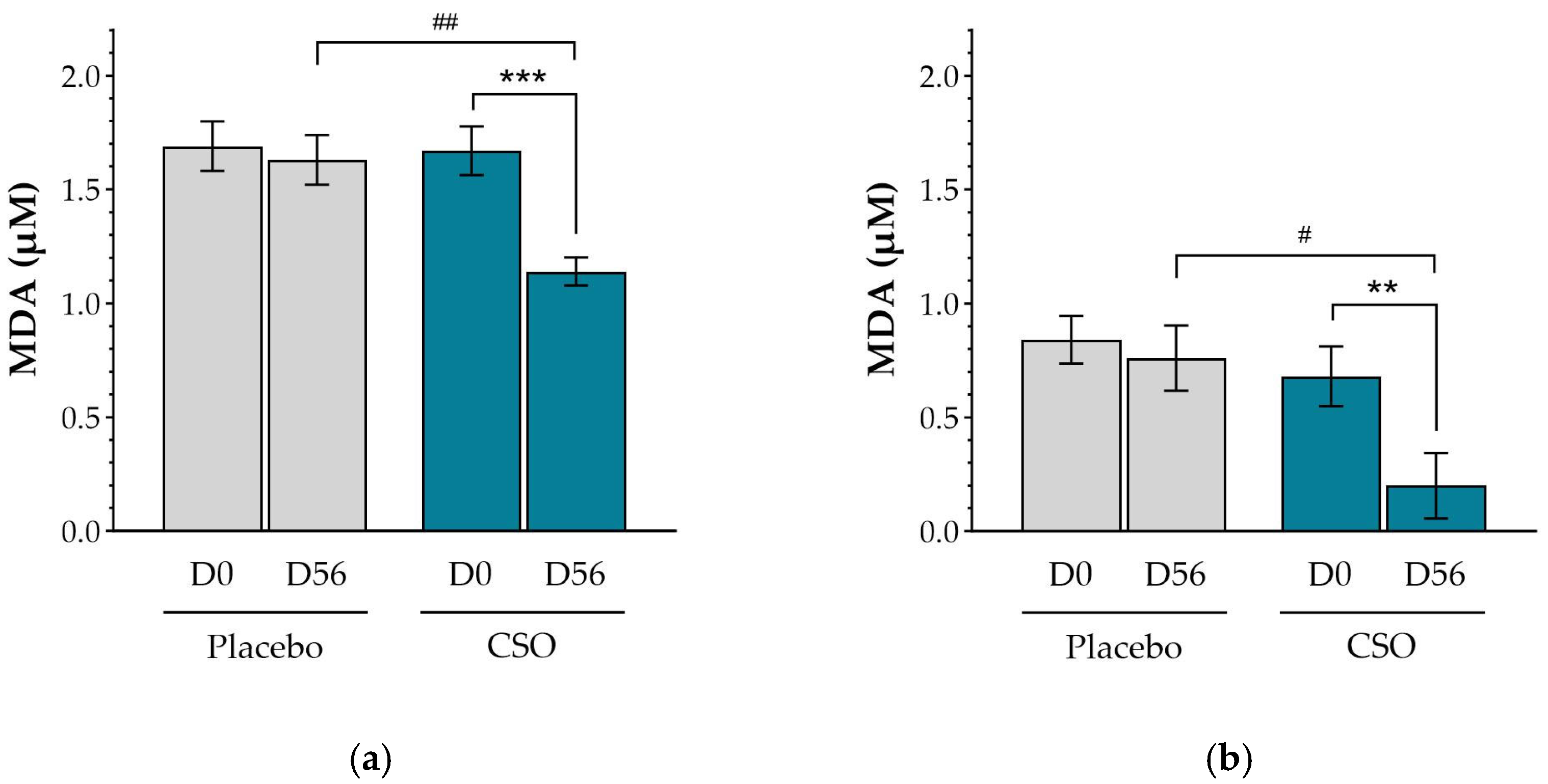
3.3. Skin Antioxidant Capacity (Cohort with All Skin Types)
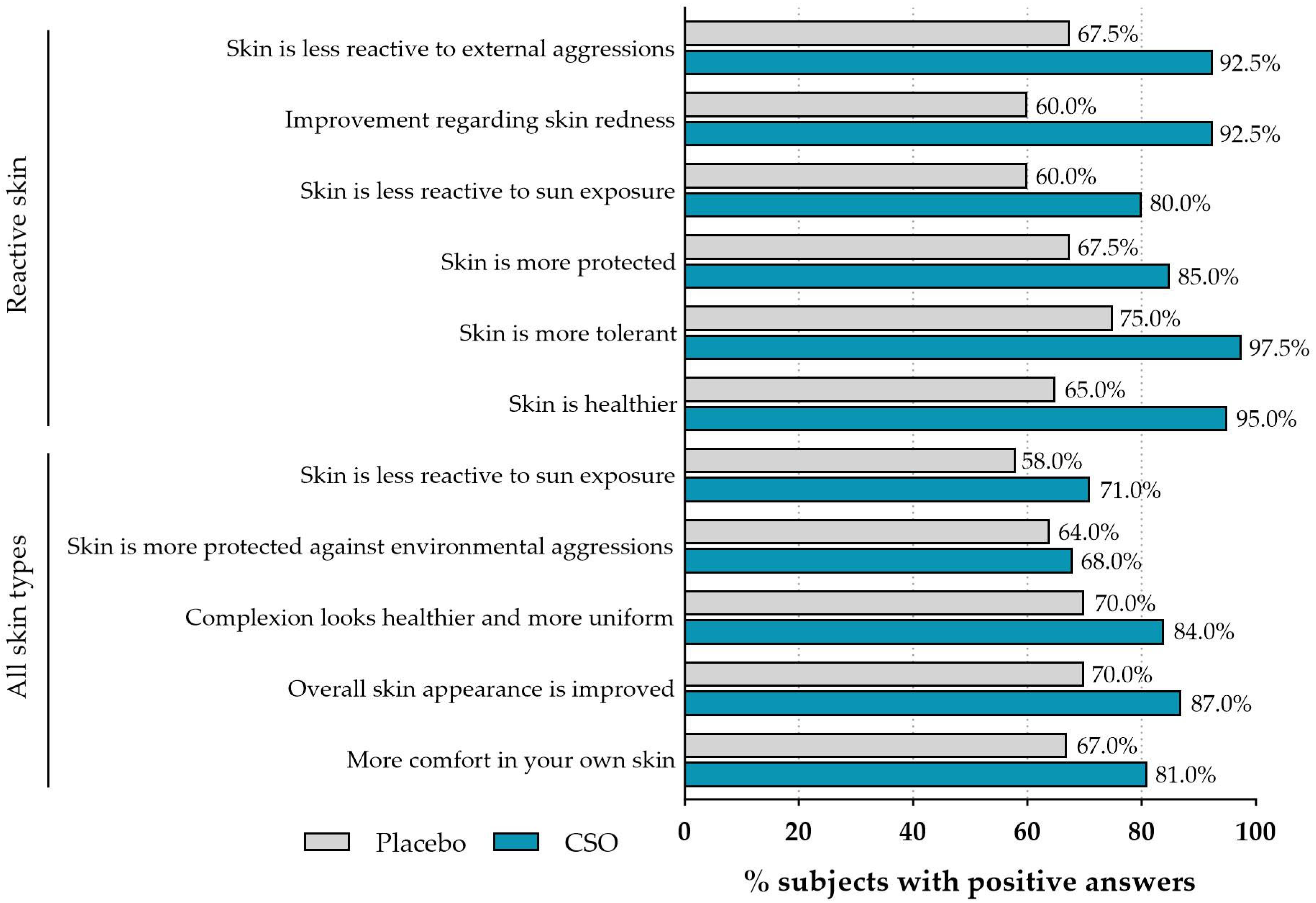
3.4. Self-Assessment Questionnaire
4. Discussion
5. Conclusions
Supplementary Materials
Author Contributions
Funding
Institutional Review Board Statement
Informed Consent Statement
Data Availability Statement
Acknowledgments
Conflicts of Interest
Abbreviations
| CSO | Coriander seed oil |
| PL | Placebo |
| TNF-α | tumor necrosis factor-alpha |
| UVR | Ultraviolet radiation |
| UVA | Ultraviolet A |
| UVB | Ultraviolet B |
| UVC | Ultraviolet C |
| MDA | Malondialdehyde |
References
- Krutmann, J.; Bouloc, A.; Sore, G.; Bernard, B.A.; Passeron, T. The Skin Aging Exposome. J. Dermatol. Sci. 2017, 85, 152–161. [Google Scholar] [CrossRef] [PubMed]
- Molina-García, M.; Granger, C.; Trullàs, C.; Puig, S. Exposome and Skin: Part 1. Bibliometric Analysis and Review of the Impact of Exposome Approaches on Dermatology. Dermatol. Ther. 2022, 12, 345–359. [Google Scholar] [CrossRef] [PubMed]
- Molina-García, M.; Malvehy, J.; Granger, C.; Garre, A.; Trullàs, C.; Puig, S. Exposome and Skin. Part 2. The Influential Role of the Exposome, Beyond UVR, in Actinic Keratosis, Bowen’s Disease and Squamous Cell Carcinoma: A Proposal. Dermatol. Ther. 2022, 12, 361–380. [Google Scholar] [CrossRef]
- Tang, X.; Yang, T.; Yu, D.; Xiong, H.; Zhang, S. Current Insights and Future Perspectives of Ultraviolet Radiation (UV) Exposure: Friends and Foes to the Skin and beyond the Skin. Environ. Int. 2024, 185, 108535. [Google Scholar] [CrossRef] [PubMed]
- Passeron, T.; Zouboulis, C.C.; Tan, J.; Andersen, M.L.; Katta, R.; Lyu, X.; Aguilar, L.; Kerob, D.; Morita, A.; Krutmann, J.; et al. Adult Skin Acute Stress Responses to Short-Term Environmental and Internal Aggression from Exposome Factors. J. Eur. Acad. Dermatol. Venereol. 2021, 35, 1963–1975. [Google Scholar] [CrossRef]
- Syed, D.N.; Afaq, F.; Mukhtar, H. Differential Activation of Signaling Pathways by UVA and UVB Radiation in Normal Human Epidermal Keratinocytes. Photochem. Photobiol. 2012, 88, 1184–1190. [Google Scholar] [CrossRef]
- D’Orazio, J.; Jarrett, S.; Amaro-Ortiz, A.; Scott, T. UV radiation and the skin. Int. J. Mol. Sci. 2013, 14, 12222–12248. [Google Scholar] [CrossRef]
- Dupont, E.; Gomez, J.; Bilodeau, D. Beyond UV radiation: A skin under challenge. Int. J. Cosmet. Sci. 2013, 35, 224–232. [Google Scholar] [CrossRef]
- Ansary, T.M.; Hossain, M.R.; Kamiya, K.; Komine, M.; Ohtsuki, M. Inflammatory Molecules Associated with Ultraviolet Radiation-Mediated Skin Aging. Int. J. Mol. Sci. 2021, 22, 3974. [Google Scholar] [CrossRef]
- Clydesdale, G.J.; Dandie, G.W.; Muller, H.K. Ultraviolet light induced injury: Immunological and inflammatory effects. Immunol. Cell Biol. 2001, 79, 547–568. [Google Scholar] [CrossRef]
- Guan, L.L.; Lim, H.W.; Mohammad, T.F. Sunscreens and Photoaging: A Review of Current Literature. Am. J. Clin. Dermatol. 2021, 22, 819–828. [Google Scholar] [CrossRef]
- McDonald, K.A.; Lytvyn, Y.; Mufti, A.; Chan, A.-W.; Rosen, C.F. Review on Photoprotection: A Clinician’s Guide to the Ingredients, Characteristics, Adverse Effects, and Disease-Specific Benefits of Chemical and Physical Sunscreen Compounds. Arch. Dermatol. Res. 2023, 315, 735–749. [Google Scholar] [CrossRef]
- Reis-Mansur, M.C.P.P.; da Luz, B.G.; dos Santos, E.P. Consumer Behavior, Skin Phototype, Sunscreens, and Tools for Photoprotection: A Review. Cosmetics 2023, 10, 39. [Google Scholar] [CrossRef]
- Krutmann, J.; Passeron, T.; Gilaberte, Y.; Granger, C.; Leone, G.; Narda, M.; Schalka, S.; Trullas, C.; Masson, P.; Lim, H.W. Photoprotection of the Future: Challenges and Opportunities. J. Eur. Acad. Dermatol. Venereol. 2020, 34, 447–454. [Google Scholar] [CrossRef] [PubMed]
- Gabros, S.; Patel, P.; Zito, P.M. Sunscreens and Photoprotection. In StatPearls; StatPearls Publishing: Treasure Island, FL, USA, 2025. [Google Scholar]
- Lapides, R.; Saravi, B.; Mueller, A.; Wang-Evers, M.; Maul, L.V.; Németh, I.; Navarini, A.; Manstein, D.; Roider, E. Possible Explanations for Rising Melanoma Rates Despite Increased Sunscreen Use over the Past Several Decades. Cancers 2023, 15, 5868. [Google Scholar] [CrossRef] [PubMed]
- Andersen, P.A.; Buller, D.B.; Walkosz, B.J.; Scott, M.D.; Maloy, J.A.; Cutter, G.R.; Dignan, M.D. Environmental Cues to Ultraviolet Radiation and Personal Sun Protection in Outdoor Winter Recreation. Arch. Dermatol. 2010, 146, 1241–1247. [Google Scholar] [CrossRef]
- Parrado, C.; Philips, N.; Gilaberte, Y.; Juarranz, A.; González, S. Oral Photoprotection: Effective Agents and Potential Candidates. Front. Med. 2018, 5, 188. [Google Scholar] [CrossRef]
- Hartmann, D.; Valenzuela, F. Sunproofing from within: A Deep Dive into Oral Photoprotection Strategies in Dermatology. Photodermatol. Photoimmunol. Photomed. 2024, 40, e12985. [Google Scholar] [CrossRef]
- Nobile, V.; Michelotti, A.; Cestone, E.; Caturla, N.; Castillo, J.; Benavente-García, O.; Pérez-Sánchez, A.; Micol, V. Skin Photoprotective and Antiageing Effects of a Combination of Rosemary (Rosmarinus officinalis) and Grapefruit (Citrus paradisi) Polyphenols. Food Nutr. Res. 2016, 60, 31871. [Google Scholar] [CrossRef]
- Parrado, C.; Mascaraque, M.; Gilaberte, Y.; Juarranz, A.; Gonzalez, S. Fernblock (Polypodium leucotomos Extract): Molecular Mechanisms and Pleiotropic Effects in Light-Related Skin Conditions, Photoaging and Skin Cancers, a Review. Int. J. Mol. Sci. 2016, 17, 1026. [Google Scholar] [CrossRef]
- Keršmanc, P.; Pogačnik, T.; Žmitek, J.; Hristov, H.; Točkova, O.; Žmitek, K. Effects of Eight-Week Supplementation Containing Red Orange and Polypodium Leucotomos Extracts on UVB-Induced Skin Responses: A Randomized Double-Blind Placebo-Controlled Trial. Nutrients 2025, 17, 1240. [Google Scholar] [CrossRef] [PubMed]
- Parke, M.A.; Perez-Sanchez, A.; Zamil, D.H.; Katta, R. Diet and Skin Barrier: The Role of Dietary Interventions on Skin Barrier Function. Dermatol. Pr. Concept. 2021, 11, e2021132. [Google Scholar] [CrossRef] [PubMed]
- Michalak, M.; Pierzak, M.; Kręcisz, B.; Suliga, E. Bioactive Compounds for Skin Health: A Review. Nutrients 2021, 13, 203. [Google Scholar] [CrossRef] [PubMed]
- Prachayasittikul, V.; Prachayasittikul, S.; Ruchirawat, S.; Prachayasittikul, V. Coriander (Coriandrum sativum): A promising functional food toward the well-being. Food Res. Int. 2018, 105, 305–323. [Google Scholar] [CrossRef]
- Weber, N.; Richter, K.D.; Schulte, E.; Mukherjee, K.D. Petroselinic acid from dietary triacylglycerols reduces the concentration of arachidonic acid in tissue lipids of rats. J. Nutr. 1995, 125, 1563–1568. [Google Scholar] [CrossRef]
- Hajib, A.; El Harkaoui, S.; Choukri, H.; Khouchlaa, A.; Aourabi, S.; El Menyiy, N.; Bouyahya, A.; Matthaeus, B. Apiaceae Family an Important Source of Petroselinic Fatty Acid: Abundance, Biosynthesis, Chemistry, and Biological Proprieties. Biomolecules 2023, 13, 1675. [Google Scholar] [CrossRef]
- Kern, C.; Gombert, C.; Roso, A.; Garcia, C. Effect of the supplementation of virgin coriander seed oil on reducing reactivity in healthy women with sensitive skin: A randomized double-blind placebo-controlled pilot clinical study. Food Nutr. Res. 2022, 66, 10-29219. [Google Scholar] [CrossRef]
- Frosch, P.J.; Kligman, A.M.; Frosch, P.J.; Kligman, A.M. A Method for Appraising the Stinging Capacity of Topically Applied Substances. J. Soc. Cosmet. Chem. 1977, 28, 197–209. [Google Scholar]
- ISO 24444:2019; Cosmetics—Sun Protection Test Methods—In Vivo Determination of the Sun Protection Factor (SPF). ISO: Geneva, Switzerland, 2019. Available online: https://www.iso.org/standard/72250.html (accessed on 1 July 2025).
- ISO 24442:2022; Cosmetics—Sun Protection Test Methods—In Vivo Determination of Sunscreen UVA Protection. ISO: Geneva, Switzerland, 2022. Available online: https://www.iso.org/standard/75496.html (accessed on 1 July 2025).
- Erdelmeier, I.; Gérard-Monnier, D.; Yadan, J.C.; Chaudière, J. Reactions of N-methyl-2-phenylindole with malondialdehyde and 4-hydroxyalkenals. Mechanistic aspects of the colorimetric assay of lipid peroxidation. Chem. Res. Toxicol. 1998, 11, 1184–1194. [Google Scholar] [CrossRef]
- Biniek, K.; Levi, K.; Dauskardt, R.H. Solar UV radiation reduces the barrier function of human skin. Proc. Natl. Acad. Sci. USA 2012, 109, 17111–17116. [Google Scholar] [CrossRef]
- Loesch, H.; Kaplan, D.L. Pitfalls in Sunscreen Application. Arch. Dermatol. 1994, 130, 665–666. [Google Scholar] [CrossRef]
- Petersen, B.; Wulf, H.C. Application of Sunscreen--Theory and Reality. Photodermatol. Photoimmunol. Photomed. 2014, 30, 96–101. [Google Scholar] [CrossRef] [PubMed]
- Natarelli, N.; Aflatooni, S.; Stankiewicz, K.; Correa-Selm, L.; Sivamani, R.K. Oral Supplements and Photoprotection: A Systematic Review. J. Med. Food 2025, 28, 519–541. [Google Scholar] [PubMed]
- Gilaberte, Y.; González, S. Update on Photoprotection. Actas Dermo-Sifiliográficas (Engl. Ed.) 2010, 101, 659–672. [Google Scholar] [CrossRef]
- Pilkington, S.M.; Watson, R.E.; Nicolaou, A.; Rhodes, L.E. Omega-3 polyunsaturated fatty acids: Photoprotective macronutrients. Exp. Dermatol. 2011, 20, 537–543. [Google Scholar] [CrossRef]
- Li Pomi, F.; Gammeri, L.; Borgia, F.; Di Gioacchino, M.; Gangemi, S. Oxidative Stress and Skin Diseases: The Role of Lipid Peroxidation. Antioxidants 2025, 14, 555. [Google Scholar] [CrossRef]
- Swindells, K.; Rhodes, L.E. Influence of Oral Antioxidants on Ultraviolet Radiation-Induced Skin Damage in Humans. Photodermatol. Photoimmunol. Photomed. 2005, 20, 297–304. [Google Scholar] [CrossRef]
- Kern, C.; Gombert, C.; Roso, A.; Garcia, C. Soothing effect of virgin coriander seed oil on sensitive skin. Oilseeds Fats Crop. Lipids 2020, 27, 49. [Google Scholar] [CrossRef]
- Camponogara, C.; Oliveira, S.M. Are TRPA1 and TRPV1 channel-mediated signalling cascades involved in UVB radiation-induced sunburn? Environ. Toxicol. Pharmacol. 2022, 92, 103836. [Google Scholar] [CrossRef]
- Vilahur, G.; Ben-Aicha, S.; Diaz-Riera, E.; Badimon, L.; Padró, T. Phytosterols and Inflammation. Curr. Med. Chem. 2019, 26, 6724–6734. [Google Scholar] [CrossRef]
- Ahsan, H.; Ahad, A.; Iqbal, J.; Siddiqui, W.A. Pharmacological potential of tocotrienols: A review. Nutr. Metab. 2014, 11, 52. [Google Scholar] [CrossRef]



| Reactive Skin | All Skin Types | |||
|---|---|---|---|---|
| PL | CSO | PL | CSO | |
| Age [years] | 42.9 ± 2.2 | 41.0 ± 2.3 | 51.4 ± 1.2 | 53.3 ± 1.3 |
| Phototype [% (no.)] | ||||
| I | - | - | 3.0% (1) | - |
| II | 27.5% (11) | 32.5% (13) | 6.0% (2) | 25.8% (8) |
| III | 40.0% (16) | 60.0% (24) | 91.0% (30) | 74.2% (23) |
| IV | 32.5% (13) | 7.5% (3) | - | - |
| Skin erythema index [a.u.] | 124.6 ± 5.8 | 133.6 ± 7.8 | 140.2 ± 10.0 | 127.0 ± 10.8 |
| TNF-α concentration [pg/mL] | 2.34 ± 0.22 | 2.18 ± 0.19 | 2.01 ± 0.07 | 2.00 ± 0.09 |
| MDA concentration [µM] | ||||
| Basal | n.d. | n.d. | 2.46 ± 0.07 | 2.47 ± 0.07 |
| 4 h post UV stress | n.d. | n.d. | 4.15 ± 0.16 | 4.13 ± 0.14 |
| 24 h post UV stress | n.d. | n.d. | 3.29 ± 0.11 | 3.15 ± 0.12 |
| D0 | D56 (Δ% vs. D0) p vs. D0 | p vs. PL | |||
|---|---|---|---|---|---|
| Erythema index (a.u.) | Reactive skin | PL (n = 40) | 124.6 ± 5.8 | 141.0 ± 6.6 (+13.2%) p = 0.004 | |
| CSO (n = 40) | 133.6 ± 7.8 | 117.8 ± 9.4 (−11.8%) p = 0.021 | p = 0.006 | ||
| All skin types | PL (n = 33) | 140.2 ± 10.0 | 134.9 ± 9.4 (−3.8%) ns | ||
| CSO (n = 31) | 127.0 ± 10.8 | 104.0 ± 11.1 (−18.1%) p = 0.033 | p = 0.013 | ||
| TNF-α (pg/mL) | Reactive skin | PL (n = 20) | 2.34 ± 0.22 | 2.46 ± 0.18 (+5.2%) ns | |
| CSO (n = 20) | 2.18 ± 0.19 | 1.66 ± 0.17 (−24.1%) p = 0.037 | p = 0.003 | ||
| All skin types | PL (n = 22) | 2.01 ± 0.07 | 1.90 ± 0.07 (−5.5%) ns | ||
| CSO (n = 21) | 2.00 ± 0.09 | 1.63 ± 0.05 (−18.7%) p = 0.003 | p = 0.002 |
| D0 | D56 | |||||
|---|---|---|---|---|---|---|
| 4 h | 24 h | 4 h (Δ% vs. D0) p vs. D0 | p vs. PL | 24 h (Δ% vs. D0) p vs. D0 | p vs. PL | |
| PL (n = 22) | 1.69 ± 0.11 | 0.84 ± 0.10 | 1.63 ± 0.11 (−3.7%) ns | 0.76 ± 0.14 (−8.8%) ns | ||
| CSO (n = 21) | 1.67 ± 0.11 | 0.68 ± 0.13 | 1.14 ± 0.06 (−31.9%) p < 0.001 | p = 0.002 | 0.20 ± 0.14 (−69.9%) p = 0.001 | p = 0.011 |
Disclaimer/Publisher’s Note: The statements, opinions and data contained in all publications are solely those of the individual author(s) and contributor(s) and not of MDPI and/or the editor(s). MDPI and/or the editor(s) disclaim responsibility for any injury to people or property resulting from any ideas, methods, instructions or products referred to in the content. |
© 2025 by the authors. Licensee MDPI, Basel, Switzerland. This article is an open access article distributed under the terms and conditions of the Creative Commons Attribution (CC BY) license (https://creativecommons.org/licenses/by/4.0/).
Share and Cite
Nobile, V.; Dudonné, S.; Kern, C.; Roveda, G.; Giardina, S.; Garcia, C. Photoprotective Effects of Oral Coriander (Coriandrum sativum L.) Seed Oil Supplementation Against UV-Induced Skin Damage: Evidence from Two Randomized, Double-Blind, Placebo-Controlled Clinical Trials. Cosmetics 2025, 12, 285. https://doi.org/10.3390/cosmetics12060285
Nobile V, Dudonné S, Kern C, Roveda G, Giardina S, Garcia C. Photoprotective Effects of Oral Coriander (Coriandrum sativum L.) Seed Oil Supplementation Against UV-Induced Skin Damage: Evidence from Two Randomized, Double-Blind, Placebo-Controlled Clinical Trials. Cosmetics. 2025; 12(6):285. https://doi.org/10.3390/cosmetics12060285
Chicago/Turabian StyleNobile, Vincenzo, Stéphanie Dudonné, Catherine Kern, Gloria Roveda, Silvana Giardina, and Christine Garcia. 2025. "Photoprotective Effects of Oral Coriander (Coriandrum sativum L.) Seed Oil Supplementation Against UV-Induced Skin Damage: Evidence from Two Randomized, Double-Blind, Placebo-Controlled Clinical Trials" Cosmetics 12, no. 6: 285. https://doi.org/10.3390/cosmetics12060285
APA StyleNobile, V., Dudonné, S., Kern, C., Roveda, G., Giardina, S., & Garcia, C. (2025). Photoprotective Effects of Oral Coriander (Coriandrum sativum L.) Seed Oil Supplementation Against UV-Induced Skin Damage: Evidence from Two Randomized, Double-Blind, Placebo-Controlled Clinical Trials. Cosmetics, 12(6), 285. https://doi.org/10.3390/cosmetics12060285