Article

Micronized Prinsepia utilis Royle Seed Powder as a Natural, Antioxidant-Enriched Pickering Stabilizer for Green Cosmetic Emulsions


1
Yunnan Characteristic Plant Extraction Laboratory Co., Ltd., Kunming 650106, China
2
Shanghai Jiyan Bio-Pharmaceutical Development Co., Ltd., Shanghai 201702, China
3
School of Chemistry & Molecular Engineering, East China University of Science and Technology, Shanghai 200237, China
4
Yunnan Botanee Bio-Technology Group Co., Ltd., Kunming 650106, China
*
Author to whom correspondence should be addressed.
Cosmetics 2025, 12(6), 281; https://doi.org/10.3390/cosmetics12060281
Submission received: 9 October 2025 / Revised: 16 November 2025 / Accepted: 6 December 2025 / Published: 11 December 2025
(This article belongs to the Section Cosmetic Formulations)

Abstract

The valorization of agricultural byproducts into functional cosmetic ingredients is a promising strategy for sustainable formulation development. In this work, raw Prinsepia utilis Royle seed residue powder (RPURSRP) which was discarded after oil pressing was upcycled and micronized Prinsepia utilis Royle seed powder (MPURSRP) was obtained by micronization as an eco-friendly Pickering stabilizer. The physicochemical properties of MPURSRP have been studied comprehensively. The results have shown that the MPURSRP (20.28 ± 0.00 μm) exhibited a spherical shape, which is significantly smaller than the RPURSRP (61.49 ± 2.28 μm). The MPURSRP particles tend to reside at the interface between oil and water, allowing them to function as emulsifiers that promote the formation of Pickering emulsions. The emulsifying properties of MPURSRP were investigated systematically. The results revealed that the MPURSRP displayed a better emulsifying performance for non-polar oils. Meanwhile, the existence of polyphenols—an endogenous substance of the Prinsepia utilis Royle seed, endows the prepared Pickering emulsion with good antioxidant activity. As the MPURSRP concentration increased from 0% to 3.0 wt%, more MPURSRP adsorbed at the oil–water interface, and the DPPH radical scavenging rate of the emulsion increased from 9.99 ± 0.63% to 91.71 ± 4.22% (p < 0.001). By upcycling agricultural waste into amphiphilic particles with interfacial properties, we establish a green strategy for stabilizing Pickering emulsions with endogenous antioxidant functionality, offering meaningful guidance toward sustainable colloid systems. This work aligns with the growing demand for natural, bioactive ingredients in green cosmetic formulations.

1. Introduction

Pickering emulsion can be formed by utilizing solid particles as stabilizers, which are located at the interface between the water and oil phases to stabilize droplets against coalescence [1]. Up to now, Pickering emulsions have attracted significant research interests in many fields due to the following advantages: (i) solid particles can reduce the possibility of coalescence, contributing to excellent emulsion stability [2,3]; (ii) many solid particles can endow the emulsions with useful characteristics such as responsiveness, porosity, and so on [4,5]. Generally, particles for stabilizing Pickering emulsions can be mainly divided into inorganic solid particles, such as hydroxyapatite, silica, clay, and organic solid particles including chitosan, cyclodextrin and starch [3]. Considering their good biocompatibility and environmental friendliness, some researchers have developed more suitable cosmetic-grade solid particles based on organic materials [6]. However, their relatively complicated synthesis process limits their practical application in the cosmetics field. The development of natural raw materials for stabilizing emulsions is still necessary.
Natural raw materials are rich in sources and have good biocompatibility, but the extensive use of natural materials leads to an increase in solid waste. The processing of fruits and vegetables alone results in a substantial amount of waste, constituting 25–30% of total solid waste [7]. The studies focusing on the secondary utilization of solid waste are necessary. Numerous studies have highlighted the presence of essential nutrients and phytochemicals in fruit and vegetable biowaste [8]. Common types of waste include seed residue, peels, and seeds, which are abundant in valuable bioactive compounds like carotenoids, enzymes, polyphenols, vitamins, and other beneficial substances [7]. Maestre-Hernández et al. [9] extracted flavonoid and phenol components from saffron bio-residues and demonstrated the excellent antioxidant activity of extraction of saffron bio-residue. Brasil et al. [10] prepared a “pequi” pulp residue extract with antioxidant and photoprotective activities and incorporated the extract in a cosmetic formulation. So far, various plant residues have been fully reused in the pharmaceutical, food, and cosmetics industries.
Prinsepia utilis Royle is a deciduous shrub primarily found in the Himalayan region at altitudes ranging from 1000 to 3000 m. This species is known for being an oil-bearing plant, with the oil extracted from its seeds being edible and comparable to Mediterranean olive oil in terms of its composition, containing oleic acid, linoleic acid, palmitic acid, and linolenic acid [11,12]. The oil derived from Prinsepia utilis Royle is utilized for the treatment of skin problems like infantile eczema, myogenic toxicity, skin burns, and scalds [13,14]. Additionally, it has been found that the seed residue of Prinsepia utilis Royle, after oil pressing, contains water-soluble active substances like polyphenols and gamma-hydroxynitrile glucosides in addition to oil-soluble active substances [14,15,16]. This plant-derived powder shows potential to replace synthetic solid particles in personal care and make-up formulations. Nevertheless, there is little information available on its properties and studies on its practical application are scarce.
Building on these natural advantages, micronization technology—employing only physical grinding without chemical modification—effectively reduces particle size and adjusts surface topography to optimize interfacial activity at the oil–water interface. This purely mechanical approach distinguishes itself from conventional solid particulate emulsifiers that require synthetic fabrication or covalent surface engineering [6]. And natural plant powders treated by micronization rather than chemical methods usually retain their natural antioxidant capacity.
In this study, the discarded raw Prinsepia utilis Royle seed residue powder (RPURSRP) obtained after oil pressing was upcycled and micronized to obtain micronized Prinsepia utilis Royle seed powder (MPURSRP). The physicochemical properties of MPURSRP have been studied comprehensively by image analysis-based particle size measurement, scanning electron microscopy (SEM), contact angle measurements, and interfacial tension assessments. Its potential as a Pickering emulsifier and the antioxidant capacity of MPURSRP were systematically investigated. The study has shown that MPURSRP not only has the potential to stabilize emulsion but also has antioxidant performance, which enables it to have broad application prospects in the cosmetics field. Obviously, the application of MPURSRP also aligns with the growing emphasis on environmental sustainability.

2. Materials and Methods

2.1. Materials

Prinsepia utilis Royle seed residue, a byproduct of Prinsepia utilis Royle oil, was provided by Yunnan Botanee Bio-technology Group Co., Ltd. (Kunming, China). Mineral oil (MO) was purchased from Dow Corning Co., Ltd. (Midland, TX, USA). Squalane (SQU) was acquired from Caroi’line Cosmetica, S.L. (Barcelona, Spain). Caprylic/Capric Triglyceride (GTCC), Octyldodecanol (OLO), and PPG-15 Stearyl Ether (PSE) were sourced from Evonik Industries (Essen, Germany). Nile red was purchased from Sigma Aldrich (St. Louis, MO, USA). Congo Red was purchased from Sinopharm Chemical Reagent Co., Ltd. (Shanghai, China). DPPH (2,2-diphenyl-1-picrylhydrazyl) was purchased from Aladdin Reagent (Shanghai) Co., Ltd. (Shanghai, China). Modified titanium dioxide (OLP-6120, D50 ≈ 270 nm) was acquired from Shanghai Oli Enterprises Co., Ltd. (Shanghai, China). All chemicals were utilized without further purification unless specified. Ultrapure water with a resistivity of 18.2 MΩ·cm from the Millipore Simplicity water purification system was used for all experiments.

2.2. Treatment of Prinsepia utilis Royle Seed Residue Powder

The raw Prinsepia utilis Royle seed residue powder was washed three times with ultrapure water and dried for 4 h in an oven at 80 °C. Subsequently, the RPURSRP was ground at 960 rpm for 20 min at −15 ± 0.5 °C with a ball mill (Ji’nan Billion Powder Engineering Technology Co., Ltd., Jinan, China). Finally, the MPURSRP was obtained by sifting the power through a 150-mesh sieve (<100 microns).

2.3. Characterization of RPURSRP and MPURSRP

2.3.1. Image Analysis-Based Particle Size Measurement

The particle sizes of RPURSRP and MPURSRP were measured using a QPi027 device from Sympatec GmbH, Clausthal-Zellerfeld, Germany. The measurements were taken directly using the distance line over a 60 s test period [17]. Each sample was tested in triplicate.

2.3.2. Scanning Electron Microscopy (SEM)

MPURSRP was loaded on circular aluminum stubs through double-sided conductive carbon tabs. After being coated with a 20 nm layer of gold, the sample was viewed and photographed by SEM (FEIQ45, Thermo Fisher Scientific, Waltham, MA, USA).

2.3.3. Measurement of Three-Phase Contact Angle

The three-phase contact angle (oil–water–solid) was determined at 25 ± 0.5 °C by a Drop Shape Analyzer (DSA25, Krüss GmbH, Hamburg, Germany). The measurement was conducted following previous reports with some modifications [18]. MPURSRP was ground into thin slices with a diameter of 15 mm and a thickness of 2 mm through a hydraulic press at 3 MPa. Subsequently, the slice was placed in a rectangular optical glass cell containing the oil phase, and a 2 μL drop of water was dispensed onto the slice surface with a syringe. Simultaneously, a high-speed camera captured the process. The Advance software (Krüss GmbH, Germany) was employed to calculate the three-phase contact angle.

2.3.4. Determination of Interfacial Tension

Interfacial tension was measured using a Drop Shape Analyzer (DSA25, Krüss GmbH, Germany) equipped with a hanging drop module. During the experiments, a pendant drop of appropriate size was created at the tip of a stainless-steel holder attached to a 10 mL syringe with a blunt needle. The pure water drop was formed inside a sealed quartz cuvette containing the oil phase. All measurements were taken at a temperature of 25 ± 0.5 °C over a period of 1800 s. The interfacial tension was calculated using the Advance software (Krüss GmbH, Germany), taking into account the needle diameter and the densities of both the oil and water phases.

2.3.5. Preparation of Emulsions and the Determination of Emulsifying Ability of MPURSRP

According to previous work, the emulsions in this study were consistently prepared by combining equal weights of water and oil (the oil–water ratio was 1:1). Five oils (Mineral oil—MO, Squalane—SQU, Caprylic/Capric Triglyceride—GTCC, Octyldodecanol—OLO and PPG15 Stearyl Ether—PSE) were chosen to investigate the emulsifying ability of MPURSRP, respectively. Initially, 1.0 wt% of MPURSRP (0.5 g) was dispersed in water (24.75 g) at 500 rpm for 10 min by a mixer (Eurostar 20 Digital, IKA, Staufen, Germany), followed by the introduction of oil. The mixture was then homogenized at 7000 rpm for 5 min at 25 ± 0.5 °C using a homogenizer to obtain the sample (Model 2.5, Primix, Tokyo, Japan). The appearance of the prepared sample was then compared correspondingly to initially explore the emulsifying ability of MPURSRP.

2.3.6. Determination of Type for the Prepared Emulsions

The type of emulsion was determined by measuring the emulsion’s conductivity. Generally, the oil-in-water (O/W) emulsion should exhibit higher conductivity due to the high conductivity of the continuous phase (water phase) and the water-in-oil (W/O) emulsion has minimal conductivity as the continuous oil phase exhibits very weak conductivity. The conductivity of the emulsions was detected by a digital conductivity meter (FE38, METTLER TOLEDO, Giessen, Germany).

2.3.7. Microscope Observations

Microscopy analysis was performed to examine the microstructures of the emulsions. An optical microscope (DM2700, Leica GmbH, Nussloch, Germany) with accessories (LC30, Olympus Corporation, Tokyo, Japan) and measurement software was utilized in this study. The analysis followed established protocols as reported in previous studies [19]. A small amount of the emulsion was placed on a microscope slide and gently covered with a cover slip. During this process, no pressure was applied to the glass cover to prevent any influence on the oil droplets within the emulsions. All samples were observed at room temperature, and representative pictures were captured.
In order to observe the arrangement of MPURSRP at the oil–water interface and the distribution in the continuous phase, the emulsion containing 3% MPURSRP and utilizing squalene as the oil phase was specified for fluorescence observation. The oil phase was stained with Nile red, and the MPURSRP was stained with Congo red at 500 rpm for 10 min. The sample was observed and photographed using a fluorescence microscope (Zeiss Axioscope 5, Carl Zeiss AG, Jena, Germany).

2.3.8. The Stability Test

The stability of emulsions against creaming and coalescence was investigated by analyzing the changes in emulsion index (EI) during storage at 25 ± 0.5 °C. Emulsification index (EI) quantifies the volume of the emulsion layer in relation to the total volume [20]. It can be calculated by the following equation:
EI   =   V cream V total ×   100 =   H cream H total   ×   100
Vcream and Vtotal represent the creaming volume and the total volume in the emulsion system, respectively. In the case of a 50 mL cylindrical glass tube, the volume is directly proportional to the observed height.
Furthermore, the stability of emulsion systems was also investigated through centrifugal testing. Approximately 9 g of emulsion was added into a 15 mL centrifuge tube and centrifuged for 30 min at 2200 rpm using an ST16 centrifuge (Thermo Fisher Scientific, Waltham, MA, USA).

2.3.9. Determination of Antioxidant Activity

The antioxidant activity of the emulsion stabilized by MPURSRP was evaluated through the scavenging of the free radical 2,2-diphenyl-1-picrylhydrazyl (DPPH). The DPPH radical scavenging assay was carried out using a Multiskan Sky High instrument from Thermo Fisher Scientific (Waltham, MA, USA), following the method described in a previous study with minor adjustments [21]. A DPPH ethanol solution without emulsion served as a positive control. Each sample was diluted 10 times for examination, and each experiment was repeated three times.

2.3.10. Statistical Analysis

All measurements were performed on at least three freshly prepared samples. Data were analyzed by analysis of variance (ANOVA) using GraphPad Prism (Version 9.0, Insightful Science LLC, Waltham, MA, USA). The reported results are the number-averaged data and standard deviation (SD). Asterisks indicating significant difference, n = 3; ****: p ≤ 0.001; indicating a very significant statistical difference; **: p ≤ 0.01, indicating a significant statistical difference; *: p ≤ 0.05, indicating a statistical difference; ns: p > 0.05, indicating no statistical difference.

3. Results and Discussion

3.1. Characterization of RPURSRP and MPURARP

Pickering emulsion is formed by solid particles; the droplet size of solid particles should be smaller than the size of emulsion droplets [22]. Generally, smaller solid particles disperse faster to the oil–water interface, thus providing higher packing density on the interface, forming a stable emulsion [23]. Particles are not only located at the interface between oil and water but also distributed in the continuous phase. The solid particles can even form network structures in the continuous phase of emulsions and thus ultimately affect the stability of the emulsion [24,25]. Therefore, the shape and the size of the solid particles in emulsion systems influence both the sensory experience during application and the structure of the continuous phase for the prepared emulsions.
In this study, the Prinsepia utilis Royle seed residue powder was first treated by micronized treatment. The particle size and sphericity of RPURSRP and MPURSRP were analyzed. The results are shown in Figure 1. It can be seen that the average size (D50) of the RPURSRP is approximately 61.49 ± 2.28 μm. Meanwhile, MPURSRP has a smaller average size of approximately 20.28 ± 0.00 μm. Obviously, more solid particles would lie on the interface between oil and water phase once the size of solid particles was reduced [26]. Correspondingly, the solid interface film wrapped around the emulsion drop becomes stronger and thus improves the stability of the emulsion [27].
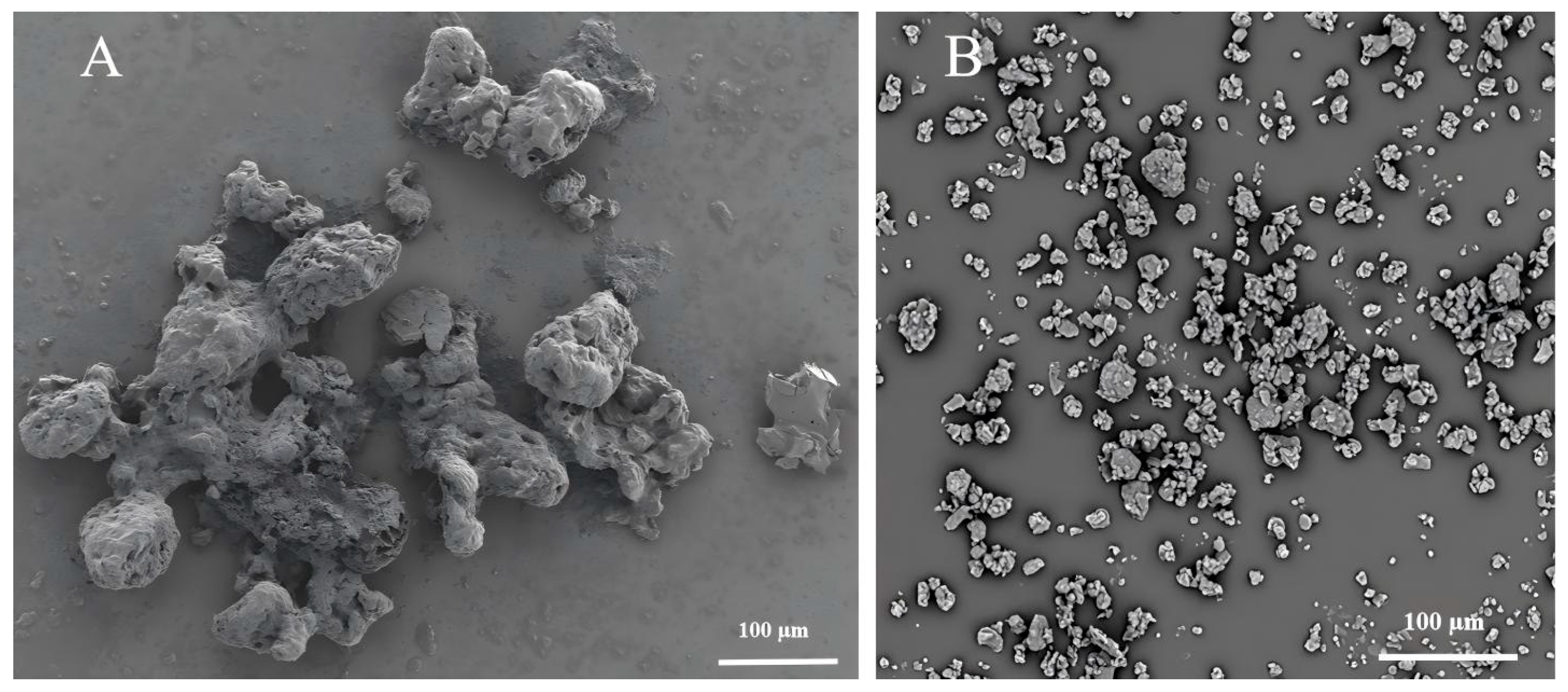
It has been proved that emulsions containing spherical solid particles have great ductility and slippery feeling [28]. Generally, they can be considered spherical when their sphericity is larger than 0.812 [29]. It was found that their sphericity has no obvious changes before and after ball milling by comparing the average sphericity (S50) of RPURSRP and MPURSRP, which may be related to the nature of Prinsepia utilis Royle fiber itself. In addition, the size and microstructure of RPURSRP and MPURSRP was further characterized by SEM. As shown in Figure 2, it was evident that the particle size of MPURSRP is significantly smaller than that of RPURSRP after micronization treatment.

3.2. The Emulsifying Property of MPURSRP

For Pickering emulsions to be stabilized, solid particles meet the general rules as follows: (i) the particles must partially penetrate both the continuous phase and dispersed phase but not dissolve; and (ii) the solid particles have suitable interface adsorption properties [30]. The interfacial tension between the water phase and oils of different polarities is different, which affects the three-phase contact angle of solid particles and consequently affects the type and stability of the emulsion formed [31]. Generally speaking, non-polar oils tend to form O/W emulsions; oils of neutral polarity form O/W emulsions or W/O emulsions; high-polarity oils are more likely to form W/O emulsions [32]. The polarity index is generally used to reflect the polarity of the oil. As shown in Table 1, five oils with different polarities were chosen to investigate the emulsifying performances of MPURSRP (1.0 wt% MPURSRP concentrations, MOil:MWater = 1:1). The conductivity test results (Table S1) indicate that the emulsions prepared with different oils, except PSE, are all O/W emulsions. When PSE was selected as the oil phase, no obvious emulsion droplets were observed.
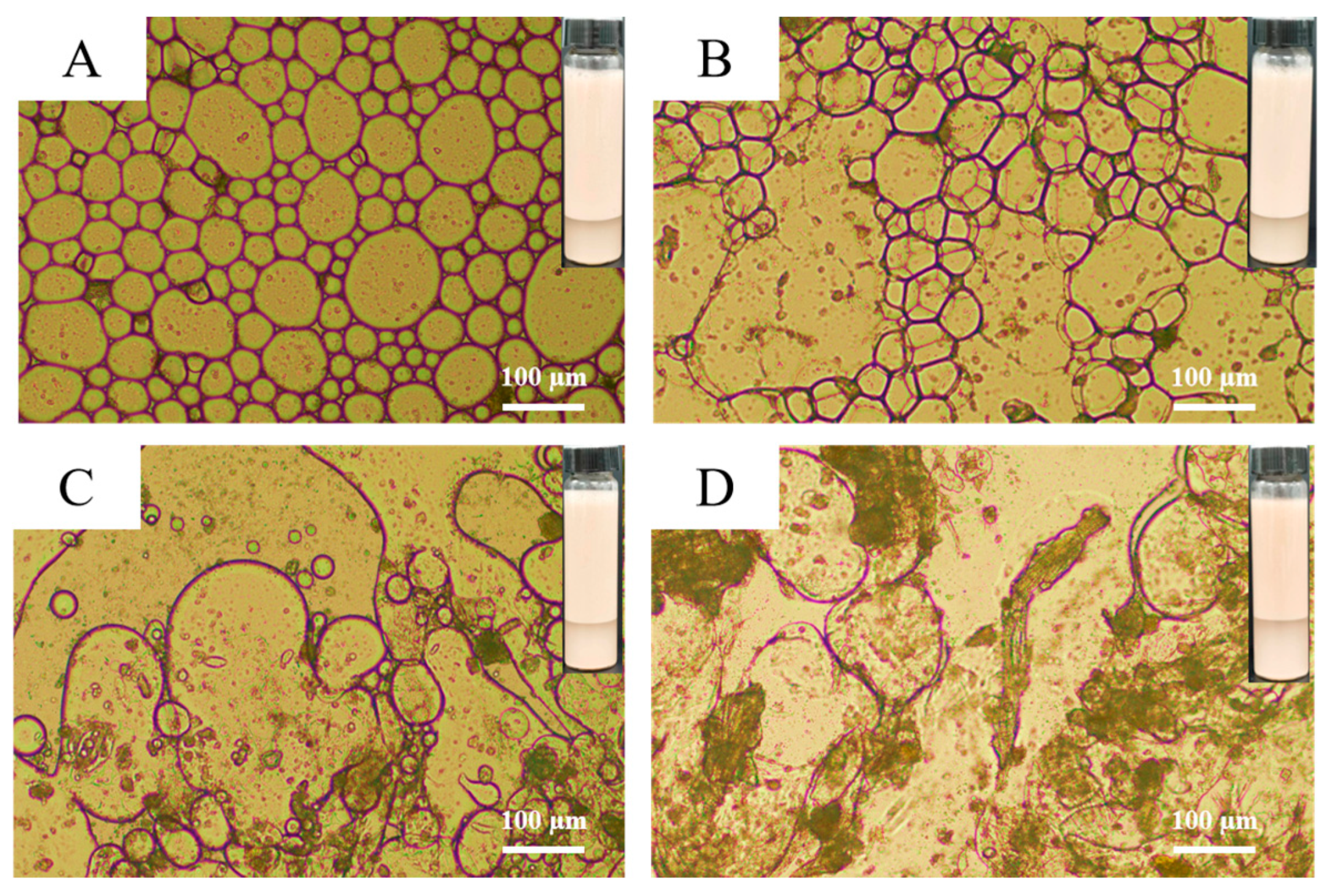
In order to visually display the microstructure of the emulsions and the size of the emulsion droplets, the emulsions prepared with different oils were observed through an optical microscope. The photographs of the emulsions are shown in Figure 3. It can be observed that all emulsions are separated into emulsion phase and water phase due to the difference in density between the water phase and emulsion phase, which can be improved by changing the particle concentration and oil–water ratio [33]. When the emulsion is composed of SQU and MO, emulsion droplets can be obviously observed. However, the uniformity of emulsions decreased significantly when the oil phase was GTCC and OLO. Clearly, the emulsification effect of MPURSRP is improved with the decrease in the polarity. This may be related to the dispersion of the MPURSRP in different liquid solvents (Figure S1) and the ability to reduce the interfacial tension. To further demonstrate the emulsifying capability of MPURSRP (MSQUl:MWater = 1:1), two control groups (only SQU and ultrapure water without solid powder; containing 1% modified titanium dioxide) and a comparison group (containing 1% RPURSRP, Figure S2C) were established. As shown in Figure S2, the control group showed no emulsified particles and rapid oil–water separation without MPURSRP (Figure S2A). The addition of 1% RPURSRP (Figure S2C) enabled emulsification but resulted in larger emulsion particles and rapid phase separation. Compared with 1% modified titanium dioxide (Figure S2B), both groups exhibited similar emulsification effects. However, MPURSRP’s natural origin makes it more environmentally friendly.

3.3. The Wettability of MPURSRP

Up till the present moment, researchers have realized that the wettability of the particle surface is an important factor affecting the formation and stability of Pickering emulsions [34]. The wettability of particles reflects their hydrophilicity or hydrophobicity and can be evaluated by their contact angle [35]. The three-phase contact angle (θ) is formed between the water–oil interface and the particles [36]. When θ is less than 90°, O/W emulsions will form due to the more hydrophilic character of particles; when θ > 90°, W/O emulsions tend to form; a stable O/W or W/O emulsion can be obtained by adjusting the oil–water ratio or modifying the surface of the particles when θ ≈ 90° [37]. However, when θ approaches 0° or 180°, no stable emulsifiers can be formed [38].
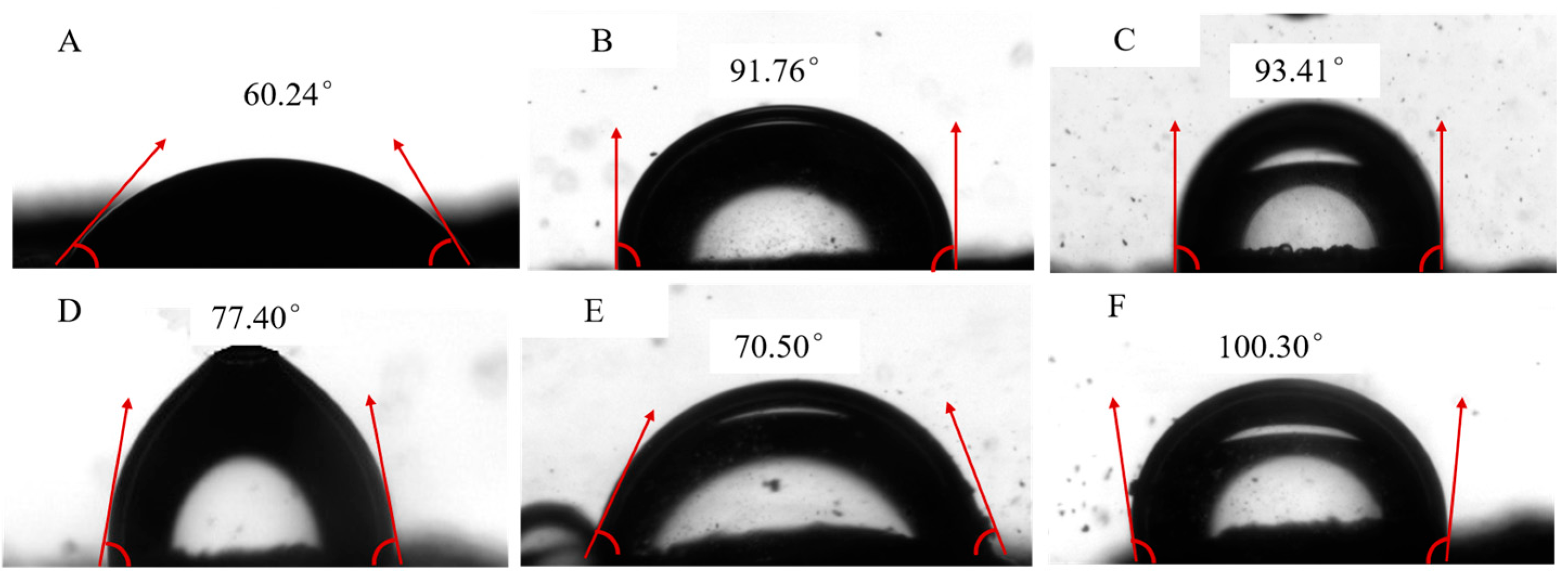
The results of contact angle measurements for MPURSRP are shown in Figure 4. The three-phase angle of MPURSRP adsorbed at the air/water interface of 60.24° indicates that MPURSRP is relatively hydrophilic. A comparison between the three-phase contact angle of MPURSRP–water–oil for different oils was further performed. The three-phase contact angle increases from 70.5° (GTCC) to 77.40° (OLO), and further to 91.76° (SQU) and 93.41° (MO). This suggests that MPURSRP may have a better emulsifying effect on non-polar oils. This result is also consistent with the results presented in Figure 3. In addition, the three-phase contact angle of MPURSRP adsorbed at the PSE/water interface is 100.30°, which is moderate, but emulsion droplets cannot be observed in the emulsion. The reason may be related to the lower interfacial tension reduction between PSE and water (Figure 5) [39].

3.4. The Interfacial Activity of MPURSRP

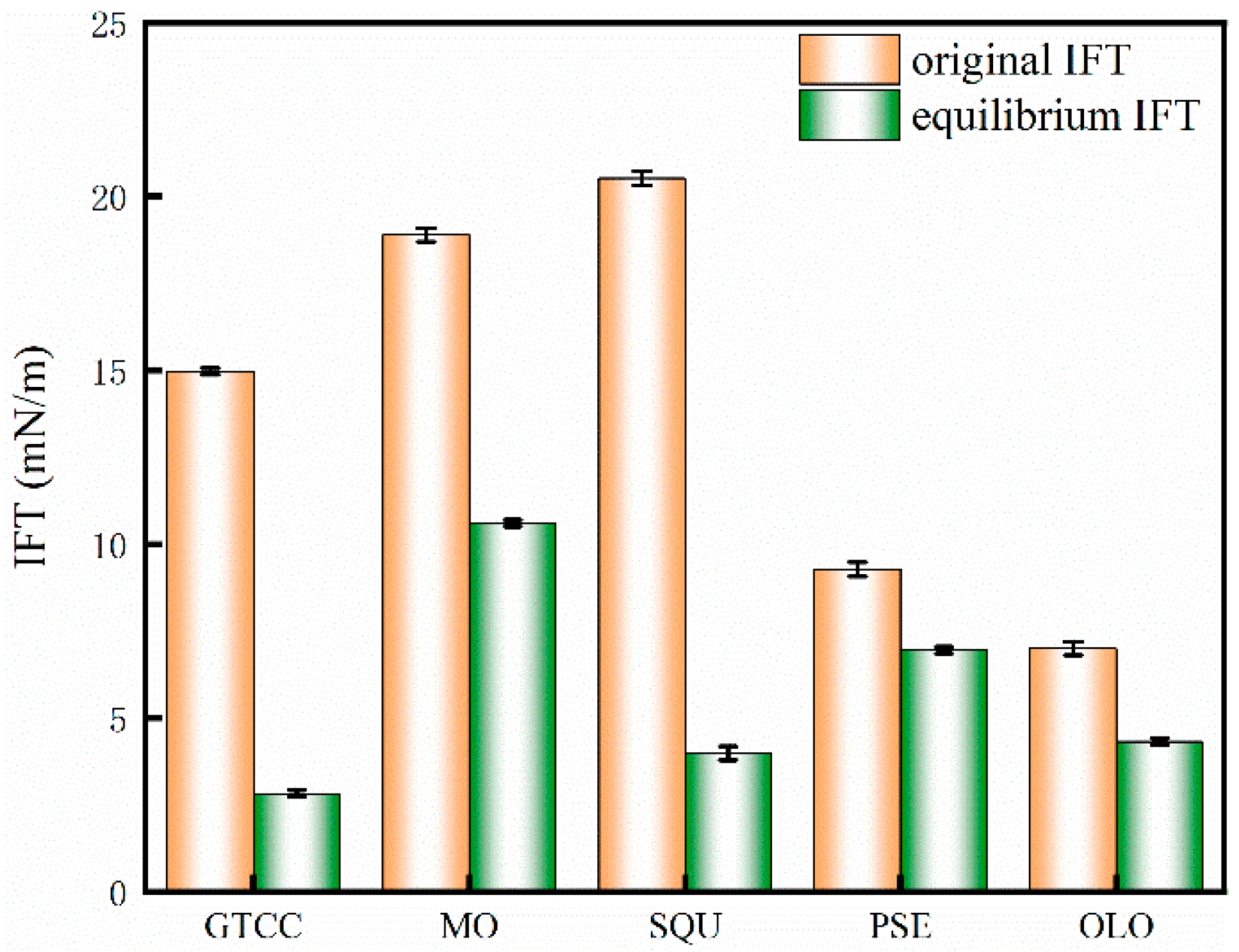
Due to the varying polarity and composition of different oils, the interfacial tension between different oil phases and water phases stabilized by MPURSRP also varies. Consequently, this affects the adsorption behavior of solid particles at the water–oil interface [40]. The original and equilibrium interfacial tension of different oil phases and water phases stabilized by MPURSRP (1.0 wt% MPURSRP concentrations, MOil:MWater = 1:1) is depicted in Figure 5. MPURSRP is originally dispersed in the water phase, and as it diffused into the oil–water interface, the oil–water interfacial tension decreases, and the decrease value (the deviation between original and equilibrium interfacial tension) of the oil–water interfacial tension was related to the interfacial activity of MPURSRP.
It can be seen that the interfacial tension between SQU and MPURSRP dispersion decreased the most after the interfacial tension was balanced, followed by GTCC, MO, and OLO. The least decrease in interfacial tension was contributed to by PSE due to the high polarity of PSE. The more reduction in interfacial tension indicates the higher interface activity of MPURSRP at the water–oil interface, thus the higher possibility of forming a stable emulsion. This result is mostly consistent with the microscopic results of Figure 3 and the three-phase contact angle results of Figure 4. However, for the emulsion composed by GTCC, the uniformity of emulsion droplets is poor, which should be related to the lower three-phase contact angle. Obviously, the emulsifying properties of the solid particles are related to the wettability and interface activity of the solid particles. Manga [41] believes that inorganic synthetic particles or organic particles with larger sizes (greater than 300 nm) essentially lack the ability to reduce the water–oil interface tension. In contrast, MPURSRP is a micron-sized powder and can effectively reduce the interfacial tension between water and oil, indicating its excellent interfacial activity and broad application potential. This effect may be attributed to other active components present in the Prinsepia utilis Royle seed residue.

3.5. Influence of MPURSRP Concentrations on Emulsions

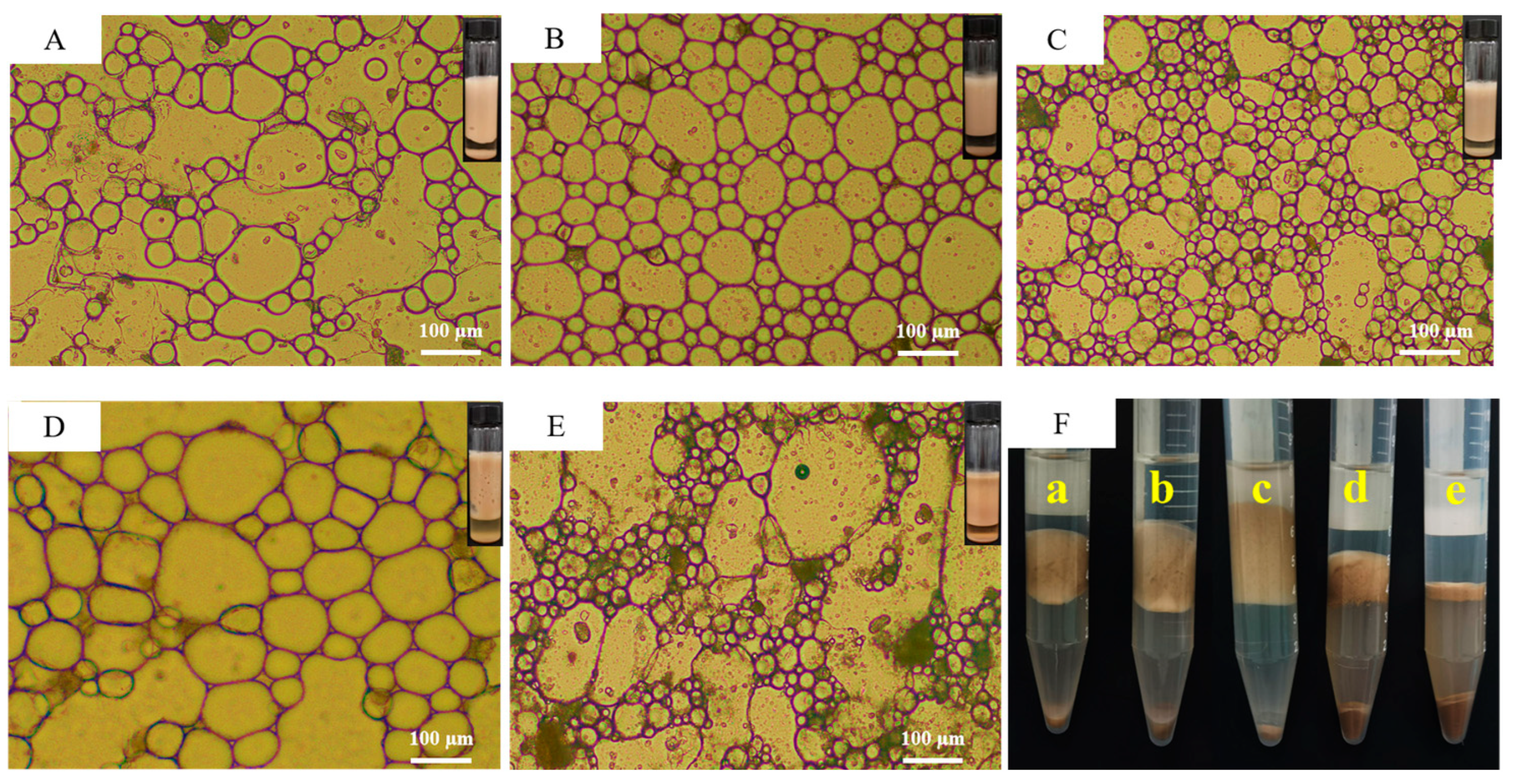
After solid particle is adsorbed at the water–oil interface, it can not only reduce the free energy of the system but also provide steric hindrance between the emulsion droplets. Consequently, the solid particle concentration is closely related to the stability of the emulsion [42]. Experiments with SQU–water mass ratio (1:1, w/w) and different MPURSRP concentrations (0.5%, 1.0%, 1.5%, 2.0%, and 3.0%, w/w) were conducted to investigate the effect of MPURSRP concentration on the morphology and centrifugal stability of the emulsions. The appearance of emulsions prepared with different MPURSRP additions is shown in Figure 6.
As can be seen from the photos in Figure 6A–E, the emulsions form distinct layers, with the upper layer being the emulsion and the lower layer being water. When the concentration of MPURSRP increases from 0.5% to 1.5% in the formulation, the appearance of the emulsion exhibits a clear trend: the volume of the emulsion layer gradually increases, while the volume of the water layer decreases. Microscopic observations reveal that the particle size of the emulsion droplets decreases and the number of emulsion droplets increases significantly, which is related to the fact that the increase in MPURSRP concentration can enhance the contact area between the solid powder and the oil phase (or water phase), resulting in a stronger adsorption capacity at the oil–water interface. However, it is observed that the stability of emulsions decreases when the concentrations of MPURSRP are 2.0% and 3.0% due to the properties of solid particles, as depicted in microphotographs of Figure 6D,E.
According to the centrifugal stability test results shown in Figure 6F, the centrifugal emulsion exhibits four distinct layers successively from top to bottom: oil layer, emulsion layer, water layer and the precipitated MPURSRP. When the concentration of MPURSRP changes from 0.5% to 1.5%, the volume of the upper oil layer decreases and the emulsion layer increases after centrifugation. In general, the emulsification effect will improve with the concentration of solid powder particles [43]. However, there is a noticeable increase in the amount of liquid oil and the amount of MPURSRP precipitated after centrifugation with MPURSRP concentrations of 2% and 3%. This phenomenon is consistent with Figure 6D,E, which may be related to the intrinsic properties of MPURSRP.
As photos of emulsions showed in Figure 6A–E, the water layer that emerged during the storage at room temperature does not contain solid particles, indicating that it is a water phase. It can be inferred that almost all the powder-precipitated layers participate in the formation of a three-dimensional network structure in the pre-centrifugation system. The emulsion layer that remains after centrifugation contains a portion of MPURSRP adsorbed on the oil–water interface, which plays a true emulsifying role and is tightly adsorbed.
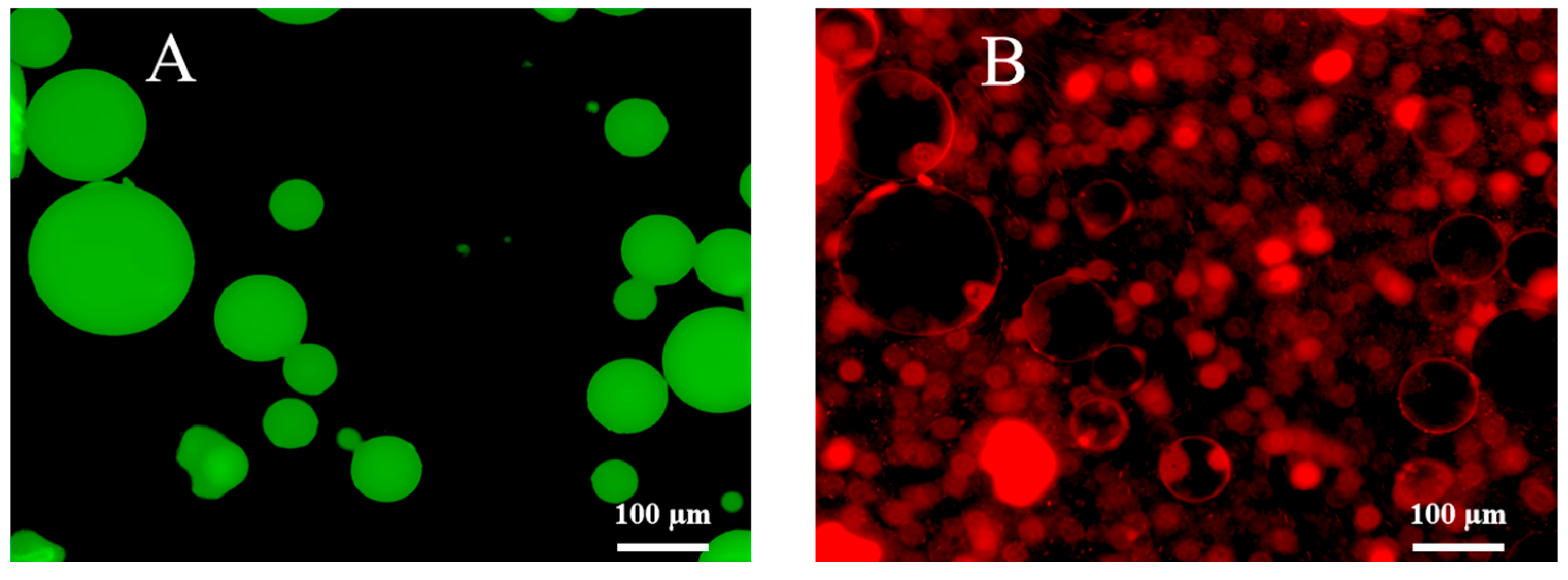
To verify that MPURSRP is adsorbed on the water–oil interface of the emulsion, we performed fluorescence staining on the emulsion with a 3.0% MPURSRP concentration, as shown in Figure 7.
In Figure 7A, the fluorescence colors of the internal phase of the emulsion are observed as green, indicating that the internal phase is oil phase (as the green dye is oil-soluble), which reconfirmed that the emulsion is an oil-in-water (O/W) emulsion. In addition, MPURSRP particles were adsorbed at the oil–water interface, as shown in Figure 7B, suggesting that MPURSRP is adsorbed at the water–oil interface. Meanwhile, there are a significant number of spherical MPURSRP crosslinks together in the continuous phase of the emulsion. It is inferred that the stabilization mechanism of the emulsion by MPURSRP involves a combination of mechanical barrier mechanisms and three-dimensional viscoelastic particle network structure mechanisms.

3.6. The Emulsion Index of Emulsions

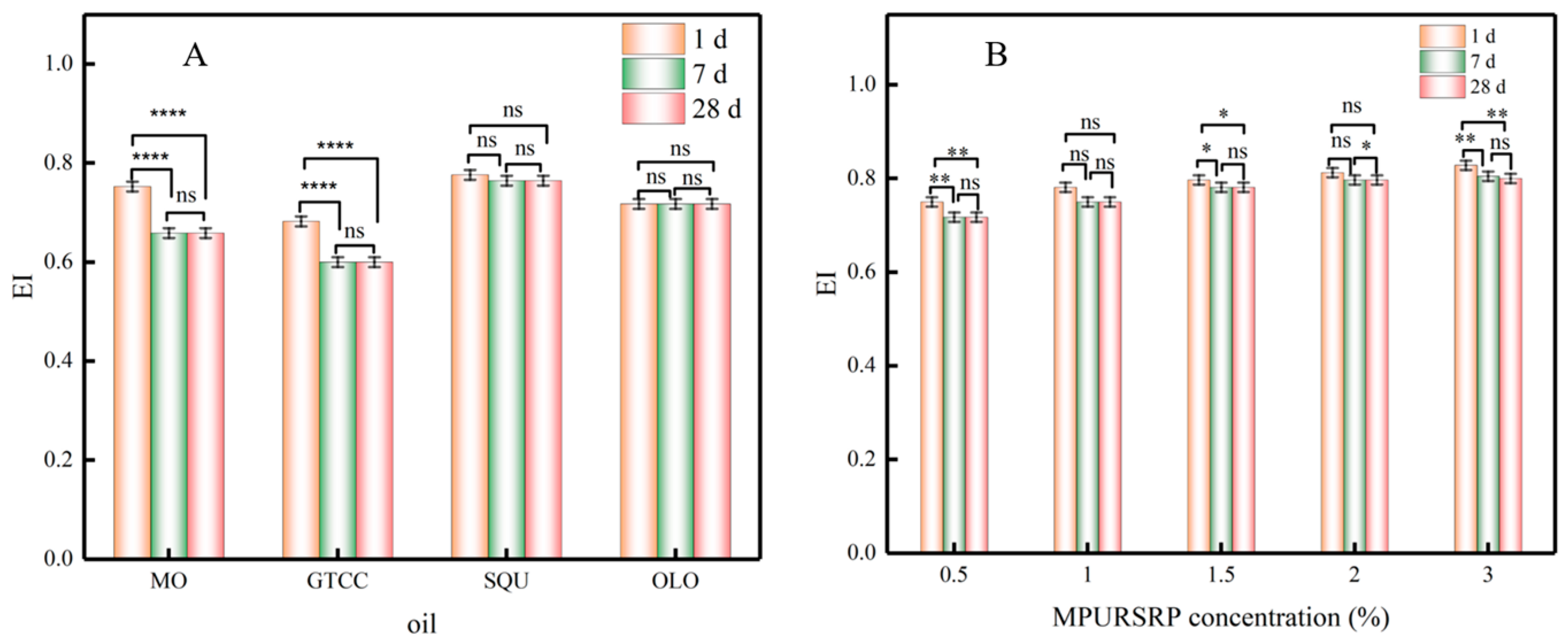
Considering that the polarity of oils and the MPURSRP concentrations affect the formation and stability of the emulsion, the EI of emulsions with different compositions during storage was studied. EI value represents the macroscopic stability of the emulsion. The change in EI value can be used to directly evaluate the volume reduction in emulsions prepared under different formulations, thereby characterizing the macroscopic stability of the emulsion. The influence of different oils on the stability of emulsions (keeping the concentration of MPURSRP constant at 1.0 wt% and oil-to-water ratio of 1:1 (w/w)) were investigated.
The results are shown in Figure 8A. It can be observed that at 1d, the low-polarity oil has a positive effect on the stability of emulsions due to the higher interface activity of MPURSRP at the water–oil interface in emulsions. In the following test process (7d to 28d), the EI values of the four oils did not change much (p > 0.05) and were relatively stable; it showed that the emulsion stratification was mainly concentrated in the first 7d.
The stability of emulsions with different MPURSRP concentrations were investigated using SQU as the oil phase (keeping the oil-to-water ratio constant at 1:1 (w/w)). As can be seen from Figure 8B, with the increasing MPURSRP concentration, the EI values of the samples increased significantly during the storage period at room temperature. The increase in MPURSRP concentration not only improves the density of particles located at the interface but also strengthens the three-dimensional viscoelastic particle network structure formed by solid particles in the emulsion system. Correspondingly, the interfacial film becomes more compact and the migration rate and collision probability of droplets are simultaneously greatly reduced, which should be the reason for the higher stability of emulsions [44].

3.7. Antioxidant Efficacy of Emulsions Prepared by MPURSRP

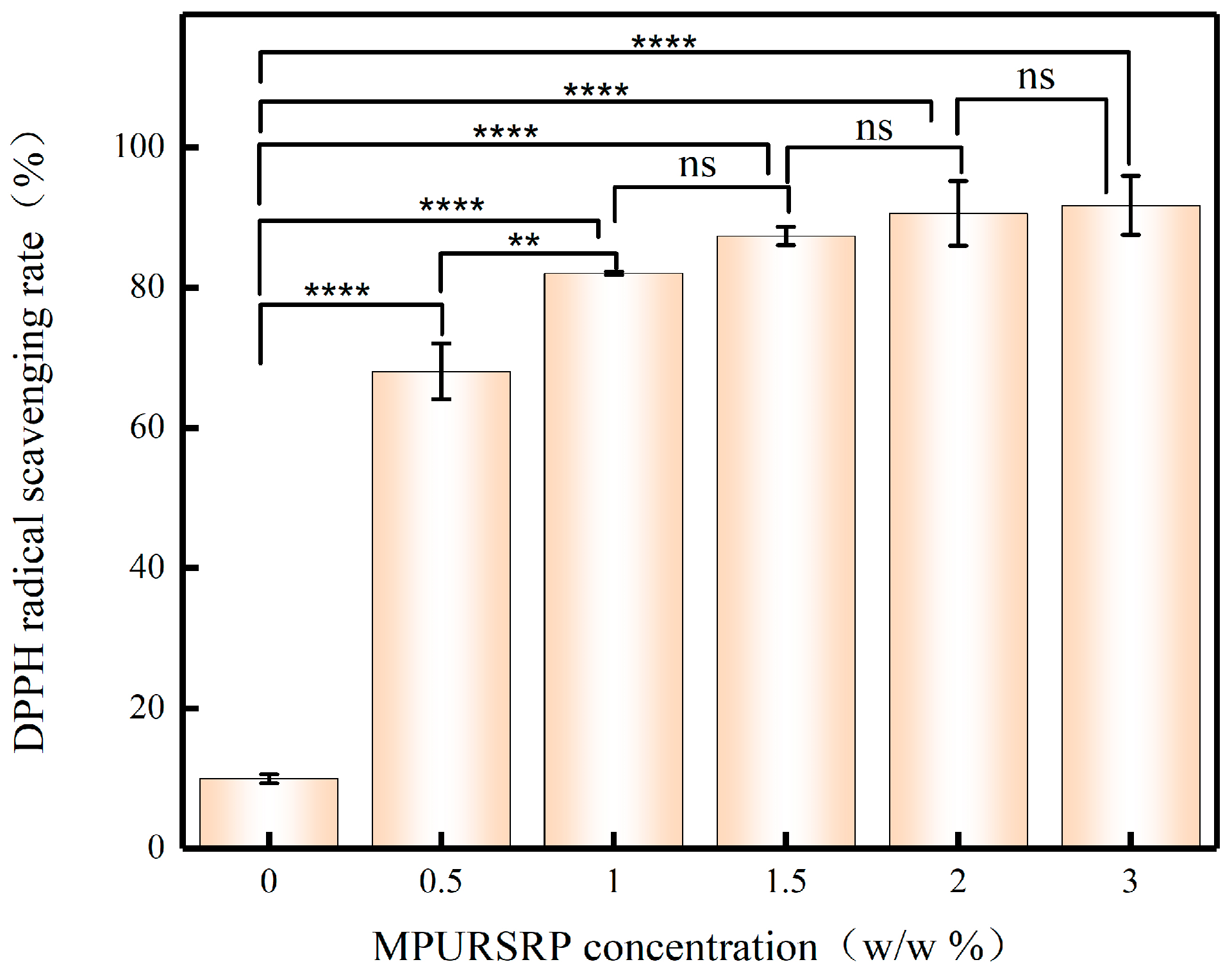
Different from synthetic solid particles, MPURSRP can not only stabilize the emulsion system and provide a pleasant skin-feel for cosmetic products but also contain active ingredients such as polyphenols and polysaccharide [16]. Consequently, emulsions prepared with plant powder generally exhibit good antioxidant activity, which has been reported [21]. The antioxidant activity of the emulsion stabilized by MPURSRP was evaluated by the DPPH radical scavenging rate. The experiment with fixed SQU-to-water ratio at 1:1 (w/w) and different MPURSRP concentrations (0%, 0.5%, 1.0%,1.5%, 2.0%, and 3.0%, w/w) were performed to investigate the effect of MPURSRP concentrations on the antioxidant capacity. The results are shown in Figure 9.
The free radical scavenging rate increases from 9.99 ± 0.63% to 90.58 ± 4.63% (p < 0.001) as the MPURSRP concentrations change from 0% to 2.0%. The improvement in antioxidant activity should be attributed to the existence of polyphenols—an endogenous substance in the MPURSRP [45]. The enhancement of antioxidant activity with increasing MPURSRP concentration aligns with findings from Zhiqiang Lu et al. [21], who observed that micronization of apple pomace (from 12.90 ± 0.553 µm to 0.55 ± 0.016 µm) significantly increased DPPH scavenging (from 0.93 ± 0.11 mmol/100 g to 1.50 ± 0.03 mmol Trolox/100 g, p < 0.05) due to cell wall disruption and higher surface area. Despite differences in assay protocol (such as the Trolox equivalent used in the literature vs. the inhibition rate in this study), the shared trend indicates that reducing physical size can effectively enhance the bio-oxidative stability of plant-based Pickering stabilizers. However, when the concentration of MPURSRP is 3.0%, the free radical scavenging rate is 91.71 ± 4.22%, which has no significant change (p > 0.05) compared to the MPURSRP concentration of 2.0% (90.58 ± 4.63%). This result may be attributed to interface saturation in the system, where excess MPURSRP is distributed in the continuous phase. During the DPPH radical scavenging test, this condition affects the absorbance measurement values. Obviously, the MPURSRP not only stabilizes the oil droplets in emulsion but also endows the system with good antioxidant capacity, which may help to protect the easily oxidized active ingredients and increase the efficacy of the cosmetic product.

4. Conclusions

In this study, we demonstrate the successful upcycling of post-oil-extraction Prinsepia utilis Royle seed residue into a micronized, bio-based functional ingredient MPURSRP, with dual capabilities as a Pickering emulsifier and a natural antioxidant. Comprehensive characterization reveals that MPURSRP possesses a spherical morphology (20.28 ± 0.00 μm) and amphiphilic surface properties, enabling effective adsorption at oil–water interfaces and forming a robust physical barrier that stabilizes emulsions for over 28 days, particularly with non-polar oils. Notably, the emulsions stabilized by MPURSRP exhibit dose-dependent antioxidant activity, with DPPH radical scavenging efficiency reaching up to 91.71 ± 4.22% at 3.0 wt%, attributable to the presence of endogenous polyphenols and other bioactive constituents. These findings highlight MPURSRP as a multifunctional, antioxidant-enriched bioparticle derived from an underutilized agricultural byproduct. By combining emulsification functionality with inherent bioactivity, MPURSRP represents a promising and sustainable ingredient for next-generation cosmetic formulations. This work provides proof for transforming plant residues into value-added functional ingredient in green and bioactive cosmetics. In the future, we will continue to study the impact of MPURSRP on formulation stability and efficacy in complete product formulations (including polyols, various types of oils, preservatives, etc.) to further improve its application in cosmetics. And we will also explore the application of MPURSRP in sensitive-skin product development in combination with chemically synthesized emulsifiers, aiming to reduce the usage of synthetic emulsifiers.

Supplementary Materials

The following supporting information can be downloaded at: https://www.mdpi.com/article/10.3390/cosmetics12060281/s1, Figure S1: Appearance photographs of 1% MPURSRP dispersions in different liquid solvents: A (H2O); B (MO); C (GTCC); D (SQU); E (OLO); F (PSE) after mixing 24 h.; Figure S2: Photographs and microphotographs of samples (A) SQU/water without any solid particles; (B) SQU/water containing 1% modified titanium dioxide; (C) SQU/water containing 1% RPURSRP; respectively.; Table S1: Different oils and conductivity of emulsions stabilized by MPURSRP.; Table S2: Droplet size distribution data of RPURSRP and MPURSRP.; Table S3: The sphericity factor data of RPURSRP and MPURSRP.; Table S4: The emulsions DPPH values raw numerical data with different MPURSRP concentrations.; Table S5: The interfacial tension raw numerical data between different oil phase and water phase stabilized by MPURSRP.

Author Contributions

C.Y.: investigation, methodology, formal analysis, writing, reviewing. K.Z.: review and editing. Z.Y.: investigation and funding acquisition. Y.S.: project administration and supervision. F.W.: conceptualization, project administration, supervision and funding acquisition. All authors have read and agreed to the published version of the manuscript.

Funding

This work was supported by the Independent Research Fund of Yunnan Characteristic Plant Extraction Laboratory (2024YKZY001), the Independent Research Fund of Yunnan Characteristic Plant Extraction Laboratory (2023YKZY001) and the National Natural Science Foundation of China (22308094).

Institutional Review Board Statement

This study involves in vitro physicochemical characterization and emulsion stability testing using plant-derived materials and standard laboratory reagents. No human or animal subjects were involved. Therefore, ethical approval is not applicable.

Informed Consent Statement

This study involves in vitro physicochemical characterization and emulsion stability testing using plant-derived materials and standard laboratory reagents. No human or animal subjects were involved. Therefore, informed consent is not applicable.

Data Availability Statement

The original contributions presented in this study are included in the article. Further inquiries can be directed to the corresponding author.

Acknowledgments

During the preparation of this manuscript, the authors used chatBTN V2.0 (Botanee, Kunming) for the purposes of polish the language of the manuscrip. The authors have reviewed and edited the output and take full responsibility for the content of this publication.

Conflicts of Interest

The authors Chuanjun Ye and Kangfu Zhou are employees of Yunnan Characteristic Plant Extraction Laboratory Co., Ltd. and Shanghai Jiyan Bio-Pharmaceutical Development Co., Ltd. Kangfu Zhou and Feifei Wang are employees of Yunnan Botanee Bio-technology Group Co., Ltd. The authors declare that the research was conducted in the absence of any commercial or financial relationships that could be construed as a potential conflict of interest. The remaining authors declare that the research was conducted in the absence of any commercial or financial relationships that could be construed as a potential conflict of interest.

References

  1. Pickering, S.U. CXCVI.—Emulsions. J. Chem. Soc. Trans. 1907, 91, 2001–2021. [Google Scholar] [CrossRef]
  2. Wei, Y.; Niu, Z.; Wang, F.; Feng, K.; Zong, M.; Wu, H. A novel Pickering emulsion system as the carrier of tocopheryl acetate for its application in cosmetics. Mater. Sci. Eng. C 2020, 109, 110503. [Google Scholar] [CrossRef]
  3. Sun, Z.; Yan, X.; Xiao, Y.; Hu, L.; Weitz, D. Pickering emulsions stabilized by colloidal surfactants: Role of solid particles. Particuology 2021, 64, 153–163. [Google Scholar] [CrossRef]
  4. Yang, Y.; Fang, Z.; Xuan, C.; Zhang, W.; Xie, Y.; Chen, Y.; Liu, Z.; Yuan, W. An Overview of Pickering Emulsions: Solid-Particle Materials, Classification, Morphology, and Applications. Front. Pharmacol. 2017, 8, 287. [Google Scholar] [CrossRef] [PubMed]
  5. Tong, Q.; Yi, Z.; Ma, L.; Tan, Y.; Liu, D.; Cao, X.; Ma, X.; Li, X. Microenvironment-Responsive Antibacterial, Anti-Inflammatory, and Antioxidant Pickering Emulsion Stabilized by Curcumin-Loaded Tea Polyphenol Particles for Accelerating Infected Wound Healing. ACS Appl. Mater. Interfaces 2024, 16, 44467–44484. [Google Scholar] [CrossRef]
  6. Zhao, T.; Chen, L.; Lin, R.; Zhang, P.; Lan, K.; Zhang, W.; Li, X.; Zhao, D. Interfacial Assembly Directed Unique Mesoporous Architectures: From Symmetric to Asymmetric. Acc. Mater. Res. 2020, 1, 100–114. [Google Scholar] [CrossRef]
  7. Kumar, H.; Bhardwaj, K.; Sharma, R.; Nepovimova, E.; Kuča, K.; Dhanjal, D.S.; Verma, R.; Bhardwaj, P.; Sharma, S.; Kumar, D. Fruit and Vegetable Peels: Utilization of High Value Horticultural Waste in Novel Industrial Applications. Molecules 2020, 25, 2812. [Google Scholar] [CrossRef]
  8. Brito, T.B.N.; Ferreira, M.S.L.; Fai, A.E.C. Utilization of Agricultural By-products: Bioactive Properties and Technological Applications. Food Rev. Int. 2022, 38, 1305–1329. [Google Scholar] [CrossRef]
  9. Maestre-Hernández, A.-B.; Vicente-López, J.-J.; Pérez-Llamas, F.; Candela-Castillo, M.-E.; García-Conesa, M.-T.; Frutos, M.-J.; Cano, A.; Hernández-Ruiz, J.; Arnao, M.B.; Maestre-Hernández, A.-B.; et al. Antioxidant Activity, Total Phenolic and Flavonoid Contents in Floral Saffron Bio-Residues. Processes 2023, 11, 1400. [Google Scholar] [CrossRef]
  10. Pegorin Brasil, G.S.A.; Borges, F.A.; Machado, A.d.A.; Mayer, C.R.M.; Udulutsch, R.G.; Herculano, R.D.; Funari, C.S.; dos Santos, A.G.; Santos, L.; Pegorin Brasil, G.S.A.; et al. A Sustainable Raw Material for Phytocosmetics: The Pulp Residue from the Caryocar brasiliense Oil Extraction. Rev. Bras. Farmacogn. 2022, 32, 827–833. [Google Scholar] [CrossRef]
  11. Wang, S.; Shi, C.; Gao, L.-Z. Plastid genome sequence of a wild woody oil species, Prinsepia utilis, provides insights into evolutionary and mutational patterns of Rosaceae chloroplast genomes. PLoS ONE 2013, 8, e73946. [Google Scholar] [CrossRef] [PubMed]
  12. Zhao, Y.; Yang, Z.; Lang, B.; Wu Meng, M.S.; Xue, D.; Gao, L.; Yang, L. Skincare plants of the Naxi of NW Yunnan, China. Plant Divers. 2020, 42, 473–478. [Google Scholar] [CrossRef]
  13. Maikhuri, R.K.; Parshwan, D.S.; Kewlani, P.; Negi, V.S.; Rawat, S.; Rawat, L.S. Nutritional Composition of Seed Kernel and Oil of Wild Edible Plant Species from Western Himalaya, India. Int. J. Fruit Sci. 2021, 21, 609–618. [Google Scholar] [CrossRef]
  14. Wang, B.; Wang, F.; Gao, H. Prinsepia Utilis Royle Oil Extract Improve Skin Barrier on Reconstructed Skin Model. Int. J. Nurs. Health Care Res. 2022, 5, 1363. [Google Scholar] [CrossRef]
  15. Guan, B.; Li, T.; Xu, X.-K.; Zhang, X.-F.; Wei, P.-L.; Peng, C.-C.; Fu, J.-J.; Zeng, Q.; Cheng, X.-R.; Zhang, S.-D.; et al. γ-Hydroxynitrile glucosides from the seeds of Prinsepia utilis. Phytochemistry 2014, 105, 135–140. [Google Scholar] [CrossRef]
  16. Bagale, R.; Acharya, S.; Gupta, A.; Chaudhary, P.; Chaudhary, G.P.; Pandey, J.; Borquaye, L.S. Antibacterial and Antioxidant Activities of Prinsepia utilis Royle Leaf and Seed Extracts. J. Trop. Med. 2022, 2022, 1–12. [Google Scholar] [CrossRef]
  17. Pinto, J.T.; Cachola, I.; Pinto, J.F.; Paudel, A. Understanding Carrier Performance in Low-Dose Dry Powder Inhalation: An In Vitro–In Silico Approach. Pharmaceutics 2021, 13, 297. [Google Scholar] [CrossRef] [PubMed]
  18. Staehlke, S.; Rebl, H.; Finke, B.; Mueller, P.; Gruening, M.; Nebe, J.B. Enhanced calcium ion mobilization in osteoblasts on amino group containing plasma polymer nanolayer. Cell Biosci. 2018, 8, 22. [Google Scholar] [CrossRef] [PubMed]
  19. Wu, N.; Ye, Z.; Zhou, K.; Wang, F.; Lian, C.; Shang, Y. Construction and Properties of O/W Liquid Crystal Nanoemulsion. Langmuir 2024, 40, 7723–7732. [Google Scholar] [CrossRef]
  20. Marefati, A.; Matos, M.; Wiege, B.; Haase, N.U.; Rayner, M. Pickering emulsifiers based on hydrophobically modified small granular starches Part II—Effects of modification on emulsifying capacity. Carbohydr. Polym. 2018, 201, 416–424. [Google Scholar] [CrossRef]
  21. Lu, Z.; Ye, F.; Zhou, G.; Gao, R.; Qin, D.; Zhao, G. Micronized apple pomace as a novel emulsifier for food O/W Pickering emulsion. Food Chem. 2020, 330, 127325. [Google Scholar] [CrossRef] [PubMed]
  22. Ossa, J.S.H.; Wagner, J.R.; Palazolo, G.G. Impact of environmental stresses on the stability of acidic oil-in-water emulsions prepared with tofu whey concentrates. Curr. Res. Food Sci. 2022, 5, 498–505. [Google Scholar] [CrossRef] [PubMed]
  23. Chen, L.; Ao, F.; Ge, X.; Shen, W.; Chen, L.; Ao, F.; Ge, X.; Shen, W. Food-Grade Pickering Emulsions: Preparation, Stabilization and Applications. Molecules 2020, 25, 3202. [Google Scholar] [CrossRef]
  24. Zhang, R.; Yang, L.; Tu, R.; Huo, J.; Wang, J.; Zhou, J.; Chen, D. Emulsion phase inversion from oil-in-water (1) to water-in-oil to oil-in-water (2) induced by in situ surface activation of CaCO3 nanoparticles via adsorption of sodium stearate. Colloids Surfaces A Physicochem. Eng. Asp. 2015, 477, 55–62. [Google Scholar] [CrossRef]
  25. Ortiz, D.G.; Pochat-Bohatier, C.; Cambedouzou, J.; Bechelany, M.; Miele, P. Current Trends in Pickering Emulsions: Particle Morphology and Applications. Engineering 2020, 6, 468–482. [Google Scholar] [CrossRef]
  26. Shi, X.; Hou, W.; Zhao, H. Silica particles with dynamic Janus surfaces in Pickering emulsion. Polymer 2022, 240, 124487. [Google Scholar] [CrossRef]
  27. Lin, F.; Zhao, X.; Yang, S.; He, F.; Qin, W.; Gong, H.; Yu, G.; Feng, Y.; Li, J. Interfacial regulation and visualization of Pickering emulsion stabilized by Ca2+-triggered amphiphilic alginate-based fluorescent aggregates. Food Hydrocoll. 2021, 119, 106843. [Google Scholar] [CrossRef]
  28. Timm, K.; Myant, C.; Spikes, H.A.; Grunze, M. Particulate lubricants in cosmetic applications. Tribol. Int. 2011, 44, 1695–1703. [Google Scholar] [CrossRef]
  29. Xiao, Y.; Chen, H.; Bian, Z.; Sun, T.; Ding, H.; Yang, Q.; Wu, Y.; Lian, Q.; Chen, Z.; Wang, H. Enhancing strength and ductility of AlSi10Mg fabricated by selective laser melting by TiB2 nanoparticles. J. Mater. Sci. Technol. 2022, 109, 254–266. [Google Scholar] [CrossRef]
  30. Ito, M.; Takano, K.; Hanochi, H.; Asaumi, Y.; Yusa, S.-i.; Nakamura, Y.; Fujii, S. pH-Responsive Aqueous Bubbles Stabilized With Polymer Particles Carrying Poly(4-vinylpyridine) Colloidal Stabilizer. Front. Chem. 2018, 6, 269. [Google Scholar] [CrossRef]
  31. Meng, Y.; Nicolai, T. The effect of the contact angle on particle stabilization and bridging in water-in-water emulsions. J. Colloid Interface Sci. 2023, 638, 506–512. [Google Scholar] [CrossRef]
  32. Chanamaia, R.; Horna, G.; McClements, D.J. Influence of oil polarity on droplet growth in oil-in-water emulsions stabilized by a weakly adsorbing biopolymer or a nonionic surfactant. J. Colloid Interface Sci. 2002, 247, 167–176. [Google Scholar] [CrossRef] [PubMed]
  33. Ou, W.; Ye, C.; Zhang, Q.; Zhu, H.; Zhang, W. Pickering emulsions stabilized by hydrophobically modified hemp powders: The effect of formula compositions on emulsifying capability and stability. J. Dispers. Sci. Technol. 2019, 41, 2143–2151. [Google Scholar] [CrossRef]
  34. Szumała, P.; Luty, N. Effect of different crystalline structures on W/O and O/W/O wax emulsion stability. Colloids Surf. A Physicochem. Eng. Asp. 2016, 499, 131–140. [Google Scholar] [CrossRef]
  35. Witecka, A.; Yamamoto, A.; Dybiec, H.; Swieszkowski, W. Surface characterization and cytocompatibility evaluation of silanized magnesium alloy AZ91 for biomedical applications. Sci. Technol. Adv. Mater. 2012, 13, 064214. [Google Scholar] [CrossRef]
  36. Hunter, S.J.; Armes, S.P. Pickering Emulsifiers Based on Block Copolymer Nanoparticles Prepared by Polymerization-Induced Self-Assembly. Langmuir 2020, 36, 15463–15484. [Google Scholar] [CrossRef]
  37. Huang, X.; Meng, X.; Wu, L.; Gao, C.; Lv, K.; Sun, B. Improvement of Emulsion Stability and Plugging Performance of Nanopores Using Modified Polystyrene Nanoparticles in Invert Emulsion Drilling Fluids. Front. Chem. 2022, 10, 890478. [Google Scholar] [CrossRef]
  38. Frelichowska, J.; Bolzinger, M.-A.; Chevalier, Y. Pickering emulsions with bare silica. Colloids Surf. A Physicochem. Eng. Asp. 2009, 343, 70–74. [Google Scholar] [CrossRef]
  39. Zhang, Q.; Shen, X.; Chang, S.; Ou, W.; Zhang, W. Effect of oil properties on the formation and stability of Pickering emulsions stabilized by ultrafine pearl powder. J. Mol. Liq. 2021, 338, 116645. [Google Scholar] [CrossRef]
  40. Soleimani, E.; Zamani, N.; Soleimani, E.; Zamani, N. Surface modification of alumina nanoparticles: A dispersion study in organic media. Acta Chim. Slov. 2017, 64, 644–653. [Google Scholar] [CrossRef] [PubMed]
  41. Manga, M.S.; Hunter, T.N.; Cayre, O.J.; York, D.W.; Reichert, M.D.; Anna, S.L.; Walker, L.M.; Williams, R.A.; Biggs, S.R. Measurements of Submicron Particle Adsorption and Particle Film Elasticity at Oil–Water Interfaces. Langmuir 2016, 32, 4125–4133. [Google Scholar] [CrossRef] [PubMed]
  42. Lu, J.; Tian, X.; Jin, Y.; Chen, J.; Walters, K.B.; Ding, S. A pH responsive Pickering emulsion stabilized by fibrous palygorskite particles. Appl. Clay Sci. 2014, 102, 113–120. [Google Scholar] [CrossRef]
  43. Liang, L.; Zhu, J.; Zhang, Z.; Liu, Y.; Wen, C.; Liu, X.; Zhang, J.; Li, Y.; Liu, R.; Ren, J.; et al. Pickering Emulsion Stabilized by Tea Seed Cake Protein Nanoparticles as Lutein Carrier. Foods 2022, 11, 1712. [Google Scholar] [CrossRef]
  44. Lei, J.; Gao, Y.; Ma, Y.; Zhao, K.; Du, F. Improving the emulsion stability by regulation of dilational rheology properties. Colloids Surf. A Physicochem. Eng. Asp. 2019, 583, 123906. [Google Scholar] [CrossRef]
  45. Liu, J.; Qu, L.; Wang, F.; Mei, Z.; Wu, X.; Wang, B.; Liu, H.; He, L. A study on the anti-senescent effects of flavones derived from Prinsepia utilis Royle seed residue. J. Ethnopharmacol. 2024, 328, 118021. [Google Scholar] [CrossRef] [PubMed]
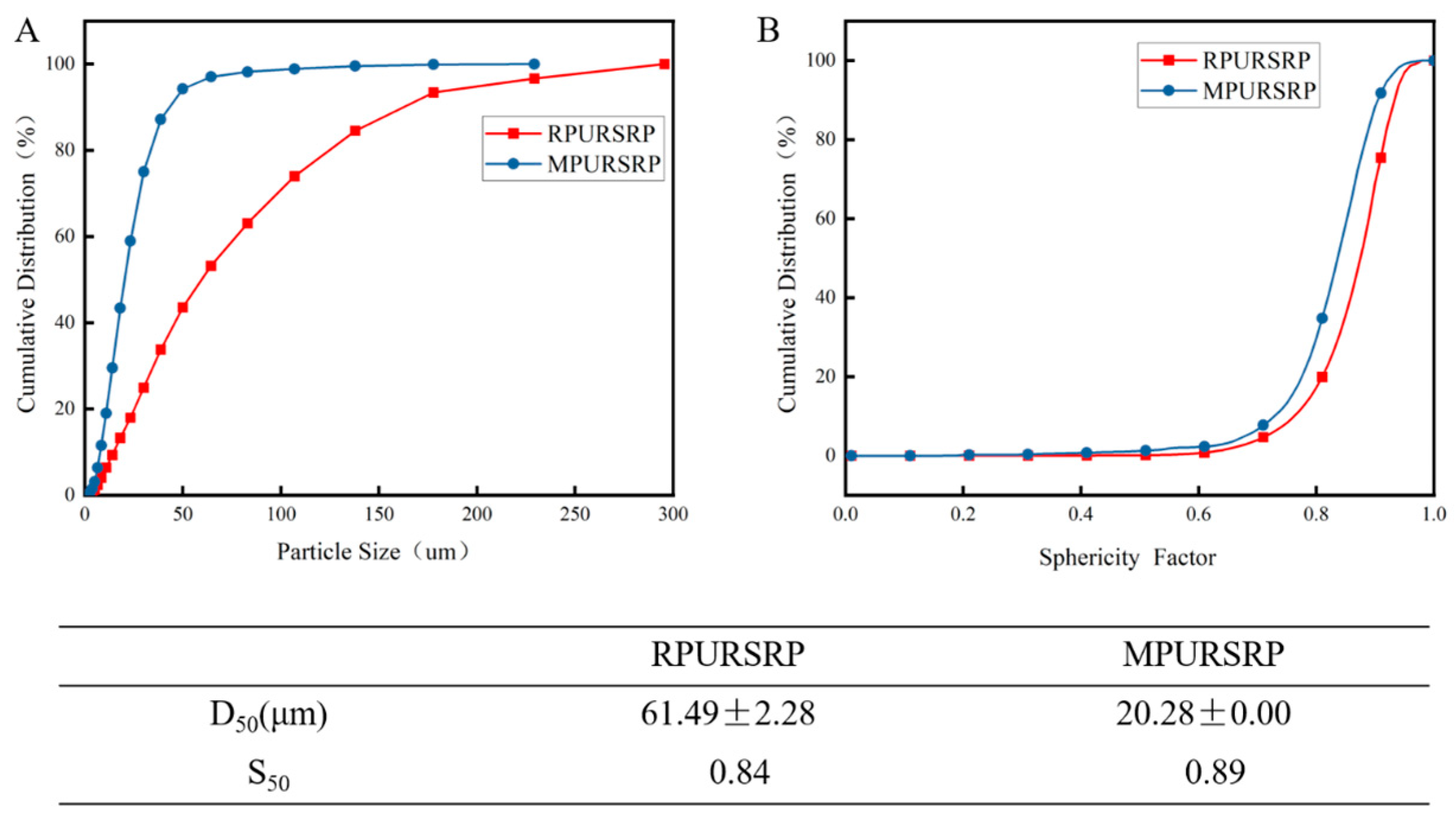
Figure 1. Particle size (A) and sphericity factor (B) of RPURSRP and MPURSRP.
Cosmetics 12 00281 g001
Figure 2. Scanning electron microscopy image of RPURSRP (A) and MPURSRP (B).
Cosmetics 12 00281 g002
Figure 3. Photographs and microphotographs of MPURSRP stabilized emulsions prepared with different oils with (A) SQU, (B) MO, (C) OLO and (D) GTCC, respectively.
Cosmetics 12 00281 g003
Figure 4. The three-phase contact angle of MPURSRP adsorbed at the oil/water interface with different oils (A) H2O, (B) SQU, (C) MO, (D) OLO, (E) PSE and (F) GTCC, respectively.
Cosmetics 12 00281 g004
Figure 5. The original and equilibrium interfacial tension between different oil phases and water phases stabilized by MPURSRP.
Cosmetics 12 00281 g005
Figure 6. Photographs and microphotographs of emulsions stabilized by MPURSRP with different concentrations ((A) 0.5%, (B) 1.0%, (C) 1.5%, (D) 2.0%, and (E) 3.0%). Representation of emulsions after centrifugal stability test (F) with different MPURSRP concentrations (a) 0.5%, (b) 1.0%, (c) 1.5%, (d) 2.0% and (e) 3.0%, respectively.
Cosmetics 12 00281 g006
Figure 7. Fluorescence microscopy of emulsion prepared by MPURSRP (3.0%) within which SQU was dyed with Nile red ((A), green) and MPURSRP was dyed with Congo Red ((B), red).
Cosmetics 12 00281 g007
Figure 8. (A) The EI of emulsions prepared with different oils (MO, GTCC, SQU, OLO) within a 28-day period (1d, 7d and 28d); (B) the EI of emulsions prepared with different concentrations of MPURSRP (0.5%, 1.0%, 1.5%, 2.0%, 3.0%) within a 28-day period (1d, 7d and 28d). ****: p ≤ 0.001; indicating a very significant statistical difference; **: p ≤ 0.01, indicating a significant statistical difference; *: p ≤ 0.05, indicating a statistical difference; ns: p > 0.05, indicating no statistical difference.
Cosmetics 12 00281 g008
Figure 9. DPPH radical scavenging activity of emulsions with different MPURSRP concentrations. ****: p ≤ 0.001; indicating a very significant statistical difference; **: p ≤ 0.01, indicating a significant statistical difference; ns: p > 0.05, indicating no statistical difference.
Cosmetics 12 00281 g009
Table 1. The polarity of different oils and emulsion types.
OilPolarity Index (mN/m)Emulsion Type
SQU46.20 (non-polar)O/W
MO43.79 (non-polar)O/W
OLO24.80 (neutral)O/W
GTCC21.30 (neutral)O/W
PSE4.60 (polar)-
Disclaimer/Publisher’s Note: The statements, opinions and data contained in all publications are solely those of the individual author(s) and contributor(s) and not of MDPI and/or the editor(s). MDPI and/or the editor(s) disclaim responsibility for any injury to people or property resulting from any ideas, methods, instructions or products referred to in the content.