Article

Non-Invasive Imaging to Detect the Effects of Topical N-Butanoyl Glutathione (GSH-C4) and Hyaluronic Acid in Inflammatory Eczematous Dermatitis


1
Unit of Dermatology, Department of Medical and Cardiovascular Sciences, “Sapienza” University of Rome, 00185 Rome, Italy
2
Dermatology Unit, Department of Surgical, Medical, Dental and Morphological Sciences Related to Transplant, Oncology and Regenerative Medicine, University of Modena and Reggio Emilia, 41121 Modena, Italy
3
Dermatology Clinic, University of Rome Tor Vergata, 00133 Rome, Italy
4
San Raffaele Research Center, 67039 Sulmona, Italy
5
Laboratori Farmaceutici Krymi Spa, 00015 Monterotondo, Italy
*
Author to whom correspondence should be addressed.
Cosmetics 2025, 12(6), 280; https://doi.org/10.3390/cosmetics12060280
Submission received: 29 October 2025 / Revised: 2 December 2025 / Accepted: 9 December 2025 / Published: 11 December 2025
(This article belongs to the Special Issue Feature Papers in Cosmetics in 2025)

Abstract

Background: Eczematous dermatitis refers to a group of inflammatory skin disorders—including seborrheic, atopic, and contact dermatitis—characterized by epidermal barrier dysfunction and chronic inflammation. Disrupting the itch–scratch cycle and reversing microscopic skin changes are key to improving patient outcomes and quality of life. Aims: This study aimed to assess the clinical and microscopic effects of a topical medical device containing N-butanoyl glutathione (GSH-C4) and hyaluronic acid in patients with inflammatory eczematous dermatitis, combining clinical scores with in vivo confocal and OCT imaging. Methods: A prospective clinical trial enrolled 30 patients with active eczematous lesions. Participants applied a GSH-C4/hyaluronic acid-based product (GSEBA®) for 28 days. Clinical improvement was evaluated at baseline, day 14, and day 28 using the Investigator’s Global Assessment (IGA), a Visual Analog Scale (VAS) for itching, and a self-reported index of disease impact on quality of life (IDL). Microscopic changes were assessed using optical coherence tomography (OCT) and reflectance confocal microscopy (RCM). Results: After 28 days, the mean IGA score improved from 2.48 to 0.18 (p < 0.001), VAS itching score decreased from 4.52 to 0.32 (p < 0.001), and IDL dropped from 4.86 to 0.79 (p < 0.001). RCM analysis showed significant reductions in key inflammatory features such as spongiosis, vesiculation, and inflammatory infiltrate. OCT revealed a significant decrease in vascularization at 150 μm depth, with no change in collagen density. Conclusions: The GSH-C4/hyaluronic acid-based mousse (GSEBA®) demonstrated strong clinical efficacy and excellent tolerability in managing eczematous dermatitis. It effectively reduced both symptoms and microscopic markers of inflammation without compromising dermal structure.

1. Introduction

The skin serves as a primary defense mechanism against environmental factors such as physical trauma, chemical agents, and microbial invasion [1]. This protective role is largely facilitated by the epithelial tissues, which form the outermost layer of the skin. Beyond acting as a mere physical barrier, epithelial tissues are integral to the immune system, actively responding to foreign agents through complex transcriptional cascades that initiate specific immune responses [2]. The epithelial immune microenvironment plays a critical role in these processes, but disruptions in this microenvironment can lead to inflammatory skin diseases. Inflammatory skin diseases, such as seborrheic dermatitis (SD), atopic dermatitis (AD), and contact dermatitis (CD), are marked by the infiltration of inflammatory cells and a surge in inflammatory cytokines [3]. These conditions, although varied in their clinical manifestations, share common underlying pathways of immune system dysfunction and epithelial barrier disruption. Prominent roles in inflammatory skin diseases are also played by alterations in the microbiota and oxidative stress [4,5]. This underscores the complexity and multifactorial nature of inflammatory cutaneous diseases, necessitating a deeper understanding of their molecular basis to develop more effective therapeutic strategies.
Seborrheic dermatitis (SD), a common inflammatory skin disease affecting 1–3% of the population, presents with erythematous, yellowish, and desquamating patches primarily in sebaceous gland-rich areas such as the scalp, eyebrows, ears, and nasolabial folds [6]. The etiology of SD remains poorly understood, although hormonal imbalances, particularly androgens, and alterations in microbiota composition are recognized as significant contributing factors [7]. The presence of Malassezia species and bacteria like Cutibacterium acnes has been implicated in the pathogenesis of SD [8,9]. Immunosuppressed individuals, particularly those with HIV, exhibit a higher prevalence of SD, suggesting a crucial role for immune mechanisms in the disease’s development [10].
Atopic dermatitis (AD) is a cutaneous disorder with a typical relapsing remitting pattern characterized by disruptions in the skin barrier and impaired immune response [11]. Clinically, AD manifests as eczema accompanied by pruritus and commonly affects individuals across all age groups, with a higher prevalence observed in children. Within the pathophysiology of atopic dermatitis, aberrant activation of the Th2 pathway results in the overexpression of specific inflammatory cytokines, notably interleukin-4 (IL-4) and IL-13 [12].
Contact dermatitis (CD) occurs when the skin reacts to irritants or allergens, resulting in symptoms like redness, blistering, and scaling [13]. Allergic contact dermatitis (ACD) is a cell-mediated inflammatory response to cutaneous exposure to allergens mediated by adaptive cells, while irritative contact dermatitis (ICD) is mediated by innate cells of the immune system. Both result in the same clinical manifestation: acute eczema. The management of inflammatory skin diseases often involves topical moisturizers that enhance barrier function and hydration, as solo treatment (in case of mild disease), or in combination with topical and/or systemic drugs. Recent advancements in dermatological science have significantly evolved the formulation of topical moisturizers, shifting from traditional methods to incorporating innovative ingredients that address the underlying pathophysiological mechanisms of inflammatory and degenerative skin diseases [14,15,16]. Classic moisturizers primarily use occlusive and humectant ingredients to form a physical barrier on the skin, enhancing hydration and supporting barrier regeneration [17]. However, emerging research has underscored the pivotal role of oxidative stress in inflammatory skin disorders, necessitating the inclusion of antioxidants in modern emollients to enhance their therapeutic efficacy. Oxidative stress contributes to lipid peroxidation and cellular damage, which compromises the skin barrier and exacerbates conditions such as eczematous dermatitis [15,18].
By enriching emollients with antioxidants, these advanced formulations not only improve skin hydration but also mitigate the effects of reactive oxygen species (ROS) on skin cells. This dual approach supports the hypothesis that oxidative stress, immune dysregulation, and altered skin permeability are interconnected in the pathogenesis of eczema [15]. Moreover, scientific reports stressed the role of oxidative stress and mitochondrial dysfunction in inflammatory skin diseases, especially in SD [5]. Conditions like Parkinson’s disease, Down’s syndrome, and cancer, which are frequently associated with SD, exhibit increased lipid peroxidation and oxidative states, highlighting the relevance of oxidative stress in SD [15,18]. The tripeptide glutathione (GSH) emerges as a critical molecule in combating oxidative stress. It acts as a cofactor for detoxification enzymes, facilitates amino acid transport, and scavenges ROS [19,20]. Studies have shown that GSH and its derivatives, such as N-butanoyl glutathione (GSH-C4), have therapeutic potential in reducing oxidative stress and modulating pro-inflammatory responses via NF-kB pathways [21]. This understanding has led to the development of topical treatments incorporating both hyaluronic acid and antioxidant molecules. Indeed, GSEBA® (Laboratori Farmaceutici Krymi, 00015 Monterotondo (RM), Italy), a medical device that combines hyaluronic acid and GSH-C4, may demonstrate effectiveness in treating eczematous dermatitis. By enhancing skin hydration and counteracting oxidative damage, this dual-action treatment addresses both symptoms and underlying mechanisms, offering a comprehensive strategy for managing inflammatory skin conditions. Despite the central role of oxidative stress and NF-κB–mediated inflammation in eczematous dermatitis, evidence on steroid-sparing topical treatments specifically targeting these pathways remains limited. In particular, there is a lack of clinical data on GSH-based formulations in eczema, and almost no studies have correlated their use with high-resolution, in vivo imaging endpoints such as reflectance confocal microscopy and optical coherence tomography. Against this background, the present study was designed to investigate the clinical efficacy, safety, and microscopic effects of a topical medical device containing N-butanoyl glutathione (GSH-C4) and hyaluronic acid in patients with inflammatory eczematous dermatitis.
The purpose of this study is to evaluate the efficacy and safety of GSEBA® cream/mousse, assess the acceptability of its risk–benefit ratio, and identify any residual or emerging risks in its use for treating inflammatory skin conditions (such as seborrheic dermatitis, atopic dermatitis, irritative dermatitis, and contact dermatitis). Additionally, the study explored microscopic changes of dermatitis by means of non-invasive methods, such as in vivo reflectance confocal microscopy (RCM) and Dynamic Optical Coherence Tomography (D-OCT) [22,23].

2. Materials and Methods

2.1. Study Design

This was a prospective, single-center, controlled clinical study enrolling 30 adult participants. Inclusion criteria encompassed immunocompetent adults with a clinical diagnosis of very mild to moderate eczematous dermatitis, corresponding to an Investigator’s Global Assessment (IGA) score of 1–3. Lesions were required to involve at least one of the following sites: body (trunk or limbs), face (including periocular and perioral regions), or scalp. For each participant, the anatomical distribution of dermatitis was documented at baseline through standardized clinical photography and site-specific scoring. Exclusion criteria included use of topical corticosteroids or topical immunomodulators for dermatitis within 30 days; use of systemic corticosteroids or immunosuppressants within 90 days; active dermatologic conditions potentially interfering with clinical or imaging assessments (e.g., photosensitivity disorders, connective tissue diseases); any known intolerance to the study product components; concurrent systemic or topical treatment for chronic inflammatory conditions; and inability to consent to or adhere to study procedures. Enrolled subjects received topical medical device (GSEBA® cream 1% and GSEBA® mousse 0.4%) with standardized usage instructions for the entire study period. GSEBA® cream 1% and GSEBA® mousse 0.4% are non-steroidal topical medical devices formulated as an oil-in-water cream and a foaming mousse, respectively. Both products include humectants and soothing components (such as glycerin and Aloe barbadensis leaf juice), emollient esters and vegetable oils, and rheology-modifying/conditioning polymers. The formulations also contain a complex that includes hyaluronic acid, tocopheryl acetate (vitamin E), and N-butanoyl glutathione (GSH-C4) in combination with commonly used cosmetic excipients and propellants. Participants were instructed to apply once daily 1 puff (2.5 g), calibrated by the dispenser, per target area up to 4.5% of total body surface area (e.g., face, scalp, or half-chest). GSEBA® cream was allocated to face and body lesions, whereas GSEBA® mousse was used for scalp involvement.
At baseline (T0), all participants provided written informed consent, and eligibility was verified using a dedicated checklist. Clinical assessments were performed at T0, day 14 (T1), and day 28 (T2). IGA was assessed according to a 5-point validated scale (0 = clear; 1 = almost clear; 2 = mild; 3 = moderate; 4 = severe), with grading based on the combined evaluation of erythema, papulation/infiltration, excoriations, and lichenification. All investigators were trained in the use of this scale prior to enrolment to ensure consistency. Pruritus intensity was recorded on a 0–10 Visual Analog Scale (VAS). Patients also rated the disease impact on quality of life using a 0–10 VAS (Impact on Daily Life, IDL). Medical history and concomitant therapies were collected as potential confounders. Instrumental assessments were carried out at T0, T1, and T2, including standardized image acquisition of the target area using in vivo reflectance confocal microscopy (RCM; VivaScope 1500®, VivaScope, Munich, Germany) and Dynamic Optical Coherence Tomography (D-OCT; VivoSight®, Michelson Diagnostics, London, UK). A representative lesion area was selected at baseline, and its position was traced on a transparent film template to enable repeated measurements in approximately the same site at follow-up. D-OCT scans covered a 1.6 × 1.6 mm field of view. RCM mosaics covered 3 × 3 mm at three depth levels: epidermis, dermal–epidermal junction, and superficial dermis. For RCM, the primary features of eczematous dermatitis, based on the literature [24], included (i) exocytosis, visualized as bright inflammatory cells between keratinocytes; (ii) spongiosis within the spinous and granular layers, observed as reduced intercellular brightness with blurred cell borders; (iii) intraepidermal vesiculation, appearing as large, round hyporefractile (dark) spaces; and (iv) superficial dermal inflammation, identified as perivascular inflammatory infiltrates within dermal papillae. Each feature was semi-quantitatively scored from 0 to 3 on RCM mosaics. To estimate the extent, the 3 × 3 mm mosaic was partitioned into 36 equal segments. The number of segments exhibiting the feature was counted and converted to an extent score: 0 = absent; 1 = limited (<9 segments; 1–25% of area); 2 = diffuse (9–17 segments; 25–50%); 3 = extensive (>18 segments; >50%). For D-OCT, quantitative metrics were extracted using the dedicated VivoSight® software (version 1.0), including epidermal thickness, collagen density, collagen intensity attenuation, and vascular density at depths of 150, 300, and 500 μm. At each visit, adverse events and local skin reactions were recorded, with documentation of frequency and severity.
All data were stored in de-identified form with no direct identifiers and recorded in a secure electronic database without personal information, ensuring anonymity of participants.

2.2. Statistical Analysis

The study was conceived as an exploratory, single-arm evaluation; therefore, a formal a priori sample size calculation was not performed. A target sample of 30 immunocompetent adults was considered appropriate and consistent with previous dermocosmetic studies in eczematous dermatitis, allowing us to obtain preliminary estimates of variability for clinical and instrumental outcomes and to detect at least moderate within-subject changes over time. Categorical variables were summarized as frequencies and percentages; continuous variables were summarized as means with standard deviations. For within-subject comparisons across T0, T1, and T2, non-parametric data were analyzed with Wilcoxon signed-rank tests, while parametric comparisons between time points used paired-sample t-tests. A two-sided p-value < 0.05 was considered statistically significant.

2.3. Endpoints

The primary endpoint was the clinical efficacy of GSEBA® at day 28, defined as an improvement of ≥1 IGA grade from baseline [24]. This threshold was selected because a one-grade decrease on the IGA scale is generally regarded as a clinically meaningful change in patients with very mild to moderate eczematous dermatitis, and day 28 represents a conventional time point to evaluate short-term response to topical dermocosmetic interventions in relation to epidermal turnover [25].
Secondary endpoints were chosen to capture the multidimensional impact of treatment on symptoms, quality of life, and skin microstructure. They included changes from baseline at T1 and T2 in all clinical parameters (IGA, pruritus VAS, IDL) and instrumental parameters (RCM and D-OCT). Pruritus VAS and IDL were used to quantify itch intensity and itch-related functional impairment, respectively, while RCM and D-OCT were employed to document subclinical modifications in epidermal architecture and dermal vascular/inflammatory patterns that may parallel or precede visible clinical improvement [23,26,27].

2.4. Compliance with Ethical Standards

The protocol received approval from the Ethics Committee of Policlinico Umberto I, Rome (approval No. 6837; 20 July 2022). Recruitment was carried out at the Dermatology Clinic between January 2023 and December 2023. The study adhered to Good Clinical Practice (GCP), the ethical principles of the Declaration of Helsinki, and applicable regulations for non-interventional/observational research. Participants received comprehensive written information regarding study objectives and procedures and signed a detailed informed consent prior to any study-related activity.

3. Results

Of the 30 patients enrolled in the study, 22 were men and 8 were women. The average age of the participants was 45.7 years (range: 22–73 years). All individuals were of Caucasian ethnicity, with 37% classified as Fitzpatrick skin type II and 63% as type III. Of the 30 patients enrolled in the study, 4 dropped out due to discontinuity of product application. In total, 25 of the 30 evaluated target areas were treated with the cream and 5 with the mousse, reflecting the predominance of non-scalp eczematous sites in this cohort. At the conclusion, there was completion of 31 body areas examined, as five subjects had two body areas of interest for the study. A total of 15 patients suffered from SD, while the remaining enrolled patients suffered from atopic dermatitis (8) and allergic contact dermatitis (8). The disease severity at baseline was moderate (IGA 3) in 17 (54.8) subjects, mild in 12 (38.7%), and very mild in the remaining 2 (6.5%). The results are summarized in Table 1 (clinical results) and Table 2 (imaging results). The primary endpoint was the following: a decrease of at least one point in IGA from baseline was observed in 28 of 31 evaluated sites (90%). It was found to have a decrease of an average of 2.36 points (ds. 0.73), having a mean value of 2.48 (sd. 0.63) at baseline and 0.18 (sd. 0.39) at T2, corresponding to a p < 0.001 value in Wilcoxon’s ranks test (Table 1 and Figure 1).
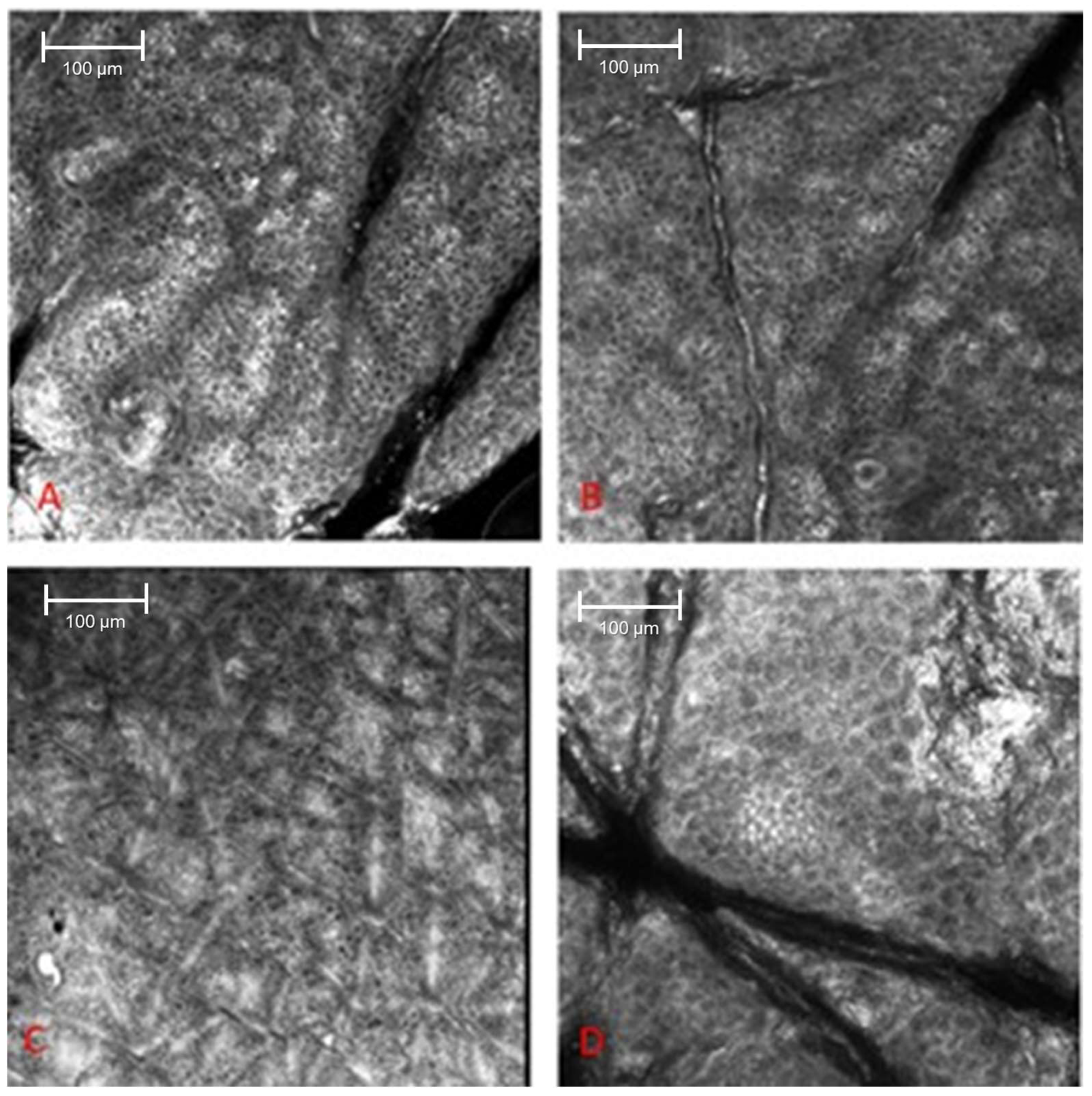
The secondary endpoints of the study included the assessment of the improvement of the IGA score at T1, the improvement at T1 and T2 of itching (VAS score), the impact of the disease on quality of life (IDL), and the modifications of microscopic features of dermatitis in terms of variation in inflammation and vascularization phenomena evaluated with RCM and OCT. The IGA score improved at T1 by 1.26 points (sd. 0.77), p < 0.001. Itching at baseline had a mean value of 4.52 (sd. 2.34) on the VAS scale. At T1, the mean value decreased to 2.10 (sd. 2.18) (p < 0.0019) and further decreased at T2 to 0.32 (sd. 1.33) (p < 0.001), resulting in an overall average decrease of 3.75 points. The impact on quality of life showed at baseline a mean value of 4.86 points (sd. 3.13) out of a 10-point scale. The score decreased at both T1 (mean 3.10 sd. 2.66) and T2 (mean 0.79 sd. 1.45) in both cases with statistically significant values (p < 0.001). RCM evaluation showed at baseline a mean score of exocytosis of 1.5 (sd0.68), spongiosis of 1.4 (sd. 0.67), vesiculation of 0.27 (sd. 0.58), and inflammatory infiltrate of 1.70 (sd. 0.47) (Table 2 and Figure 2). All parameters significantly decreased both at T1 and at T2.
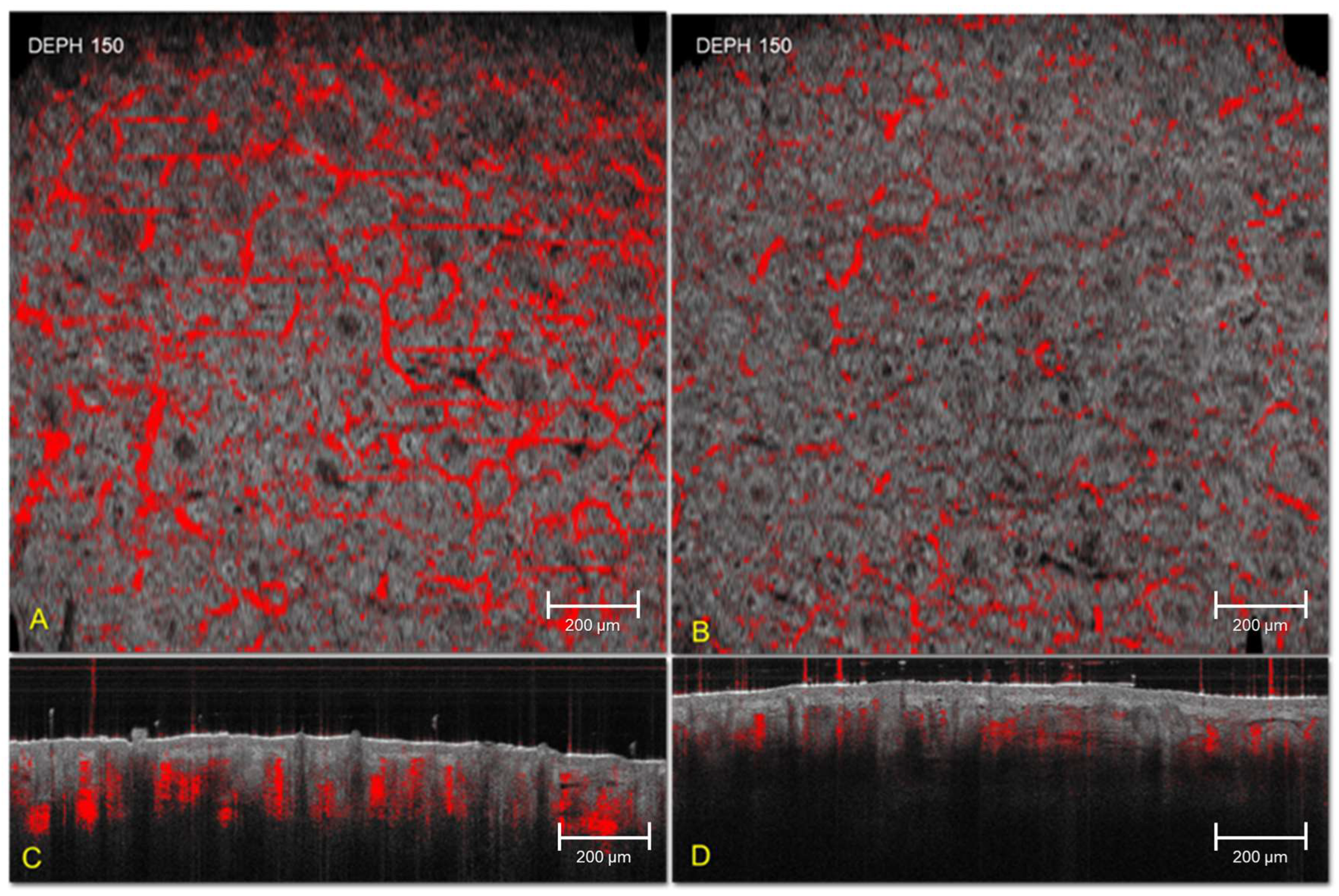
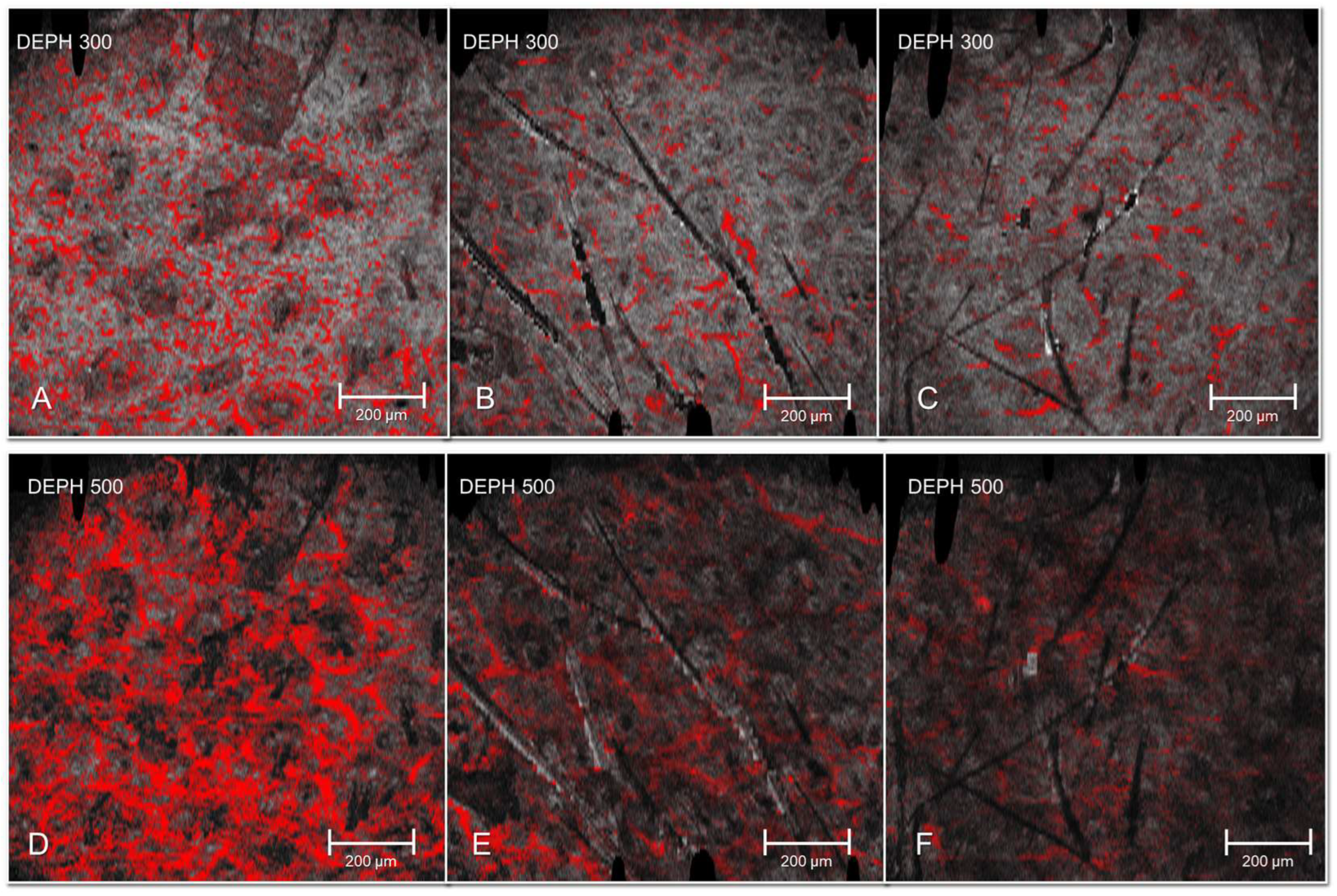
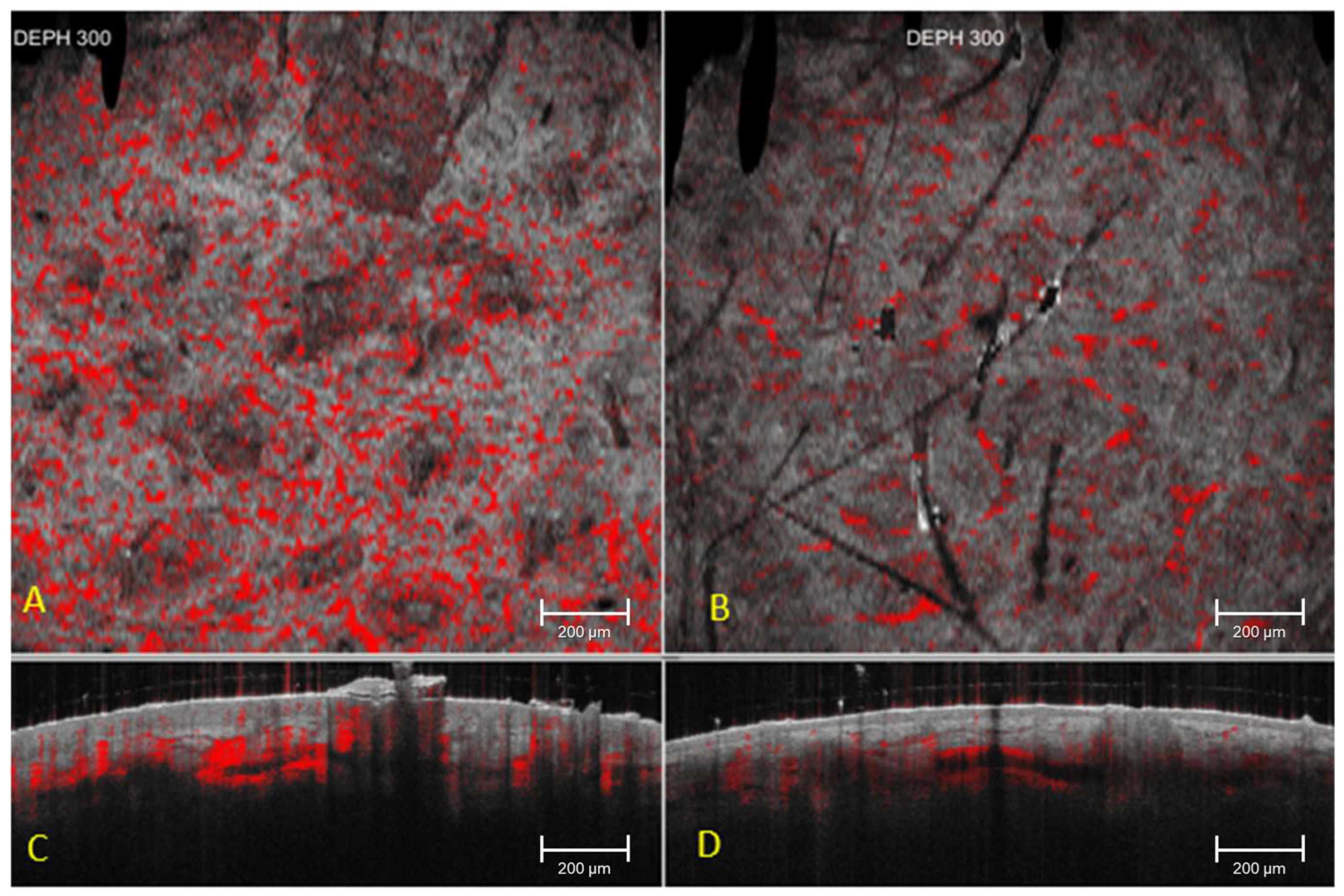
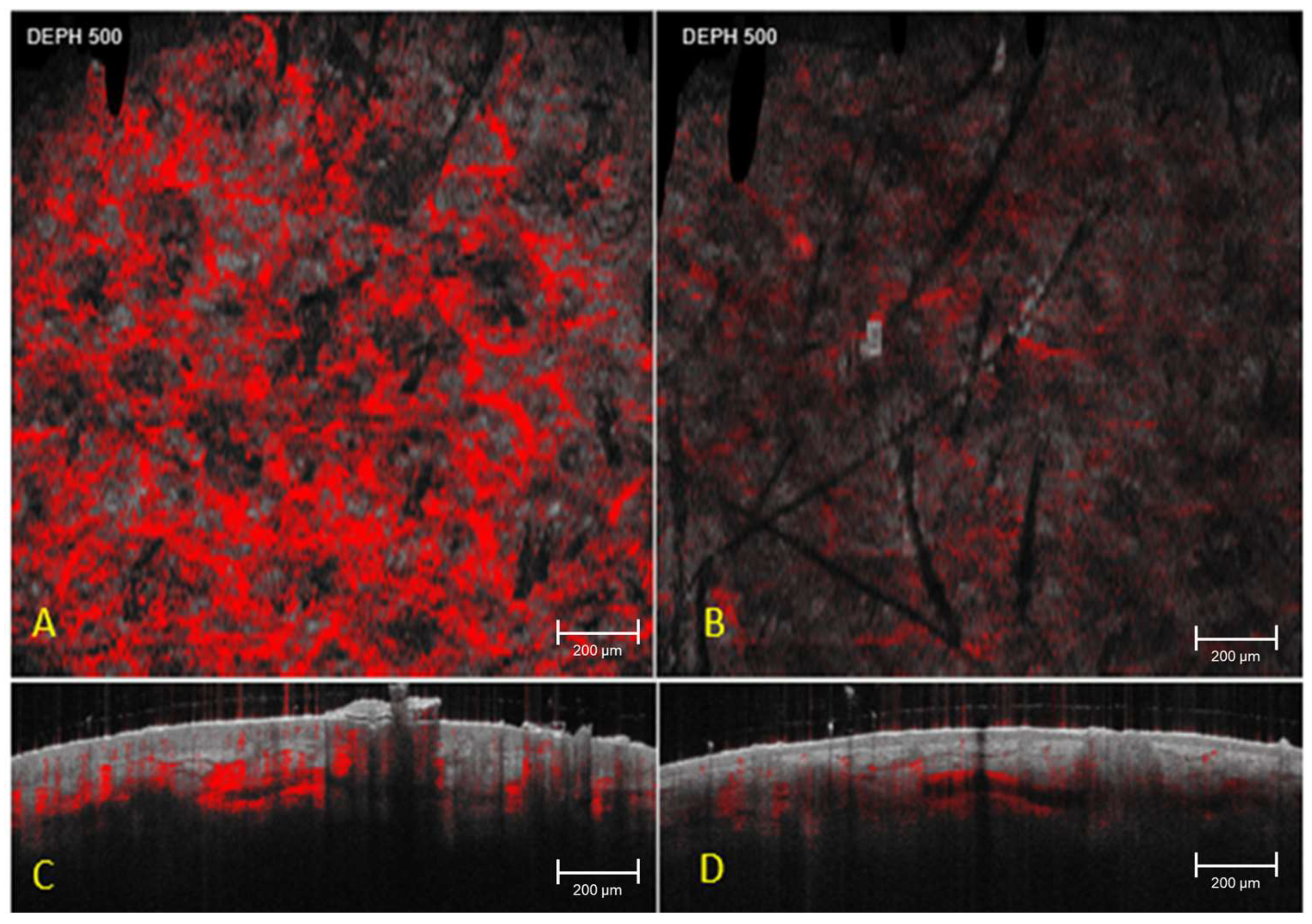
D-OCT allowed assessment of vascular patterns by quantitative image analysis to measure the extent of the vascular network. In addition, the density and attenuation of the stroma was measured to interpret possible treatment effects on the dermis. Vascular assessment at 150 μm depth, compared to the baseline value (mean 3237 pixels sd. 4419), showed no significant variations at T1 but a significant decrease at T2 of more than 50% of the baseline value (mean 1630 pixels sd. 2500) with statistical significance (p = 0.003) (Figure 3). No significant changes were observed in vascular assessment at T1 and T2 for vascularization values measured at 300 and 500 μm depth (Figure 4, Figure 5 and Figure 6). No statistical variations in collagen density and attenuation parameters were observed throughout the study. The main cohort-level quantitative D-OCT parameters, including vascular network area at different depths and stromal indices across the 31 target areas, are summarized in Table 3.
No report of any general or local side effect was reported. The product application, both formulated as cream and mousse, was well tolerated, with only mild itching reported by one patient at T1.

4. Discussion

Inflammatory eczematous skin diseases, such as seborrheic dermatitis (SD), atopic dermatitis (AD), and contact dermatitis (CD), have multifactorial etiologies encompassing immune dysregulation, barrier dysfunction, microbiota alterations, and oxidative stress. The study aimed to evaluate the performance, safety, and efficacy of GSEBA® cream/mousse, a medical topical device enriched with hyaluronic acid and N-butanoyl glutathione (GSH-C4), in treating these conditions. Other studies have already demonstrated the potential therapeutic effects of topical products that reduce oxidative stress or enhance glutathione activity in treating inflammatory dermatoses, such as atopic dermatitis [14,17], psoriasis [28,29], seborrheic dermatitis [30], and rosacea [31]. The study results underscore the significant therapeutic potential of GSEBA, supporting the growing body of evidence that oxidative stress and immune dysregulation play critical roles in the pathogenesis of eczematous inflammatory skin diseases [32]. The primary endpoint, the reduction in IGA score, demonstrated a significant decrease in clinical inflammation indices across the study population. Specifically, the mean IGA score decreased from 2.48 at baseline to 0.18 at the end of the 28-day treatment period, with 90% of treated areas reaching the goal of −1 point. Overall, at the beginning of the study, most subjects showed moderate dermatitis (55%), whereas at the end, 74% of areas were clear of dermatitis. A substantial improvement was observed as early as 14 days into the treatment, emphasizing the rapid efficacy of GSEBA in alleviating symptoms. Similarly, the VAS for itching showed a marked decrease, reflecting significant relief from pruritus, which is a major symptom in eczema. The index on life quality also showed a notable reduction, indicating an overall improvement in the participants, specifically related with itch improvement. These findings are consistent with the central role of pruritus in driving disease burden in eczematous dermatoses. Several studies have shown that the itch intensity measured by VAS or NRS closely correlates with dermatology-specific quality of life indices such as the DLQI, confirming that reductions in pruritus translate into meaningful improvements in daily functioning and psychosocial well-being [33].
RCM and D-OCT provided valuable insights into the microscopic changes associated with the treatment. RCM revealed a significant decrease in intraepidermal and dermal inflammatory infiltrates, with reductions in exocytosis, spongiosis, and vesiculation after 14 days of treatment, becoming more pronounced after 28 days. D-OCT measurements supported these findings, showing a significant reduction in vascular intensity at 150 μm in depth after 28 days. Additionally, the lack of changes in stromal density and signal attenuation confirmed that the product did not induce collagen and dermal atrophy, ensuring that the structural integrity of the skin remained intact. Our confocal and OCT data also mirror previous work in inflammatory dermatoses, in which effective topical therapy was associated with progressive resolution of spongiosis, vesiculation, and superficial inflammatory infiltrate, as well as with a normalization of epidermal architecture and vascular signal on RCM and OCT [34].
The dual-action mechanism of GSEBA, combining the hydrating properties of hyaluronic acid with the antioxidant capacity of GSH-C4, is pivotal in acting on both the symptoms and underlying pathophysiological mechanisms of inflammatory skin diseases [35]. Hyaluronic acid enhances skin hydration and forms a protective barrier, mitigating transepidermal water loss and promoting skin barrier repair. GSH-C4, with its superior bioavailability and longer half-life compared to native glutathione, effectively combats oxidative stress by neutralizing reactive oxygen species (ROS) and reducing lipid peroxidation [31]. This antioxidant action is complemented by the inhibition of NF-κB, a key transcription factor involved in pro-inflammatory cytokine production [21]. By downregulating NF-κB, GSH-C4 helps modulate the inflammatory response, reducing cytokine-induced skin inflammation and oxidative damage. This mechanism aligns with the observed clinical improvements, as well as with the microscopic resolution of inflammatory features.
The study confirms an excellent safety and tolerability profile for GSEBA, with no treatment-related serious or clinically relevant adverse events observed. Only one patient reported mild, transient itching at the application site, which did not require treatment discontinuation or dose adjustment. The virtual absence of local irritation or hypersensitivity reactions supports the suitability of GSEBA for repeated and potentially long-term use in chronic inflammatory skin diseases. In addition, the ability of GSEBA to control mild-to-moderate eczematous forms without resorting to prolonged courses of topical corticosteroids or other immunosuppressive agents may help to limit the cumulative burden of steroid-related adverse effects, such as cutaneous atrophy, telangiectasia, and systemic absorption, as well as the infection risk associated with immunosuppressive regimens [36]. From a microbiological perspective, N-butanoyl glutathione (GSH-C4) has also shown promising antiviral and antimicrobial activity in the literature [37], which is particularly relevant in eczematous dermatitis, where barrier disruption and immune dysregulation predispose individuals to bacterial and viral superinfection [38]. These combined anti-inflammatory and anti-infective properties make GSEBA a promising steroid-sparing alternative or adjunctive option, especially for patients with mild to moderate disease who require prolonged or maintenance treatment.
However, the study has some limitations. It is a single-center, exploratory trial with a relatively small sample size and no control group, which limits the generalizability of the findings and does not allow for causal inferences. Moreover, lesions were treated with two different vehicles (cream for face/body and mousse for scalp), which were analyzed together. Although both formulations share the same active ingredients and are designed to target similar oxidative and inflammatory pathways, the study was not powered or specifically designed to detect potential differences between vehicles.
Future studies should include larger and more heterogeneous populations with extended follow-up to confirm these safety and efficacy signals, better characterize recurrence rates after treatment withdrawal, and further define the role of GSEBA in real-world therapeutic algorithms for eczematous dermatitis.

5. Conclusions

In summary, the primary endpoint, reduction in IGA score, demonstrated a significant decrease in clinical inflammation indices in the study population. Specifically, the mean IGA score decreased from 2.48 at baseline to 0.18 at the end of the 28-day treatment period, with 90% of treated areas achieving the target of −1 point.
The study highlights the efficacy and safety of GSEBA® cream/mousse in the treatment of eczematous inflammatory skin diseases such as seborrheic dermatitis, atopic dermatitis, and contact dermatitis. The significant reduction in clinical indices of inflammation, itching, and quality of life, together with the microscopic resolution of inflammatory signs, underscores the potential of GSEBA as a comprehensive therapeutic option. Its dual mechanism of action, combining hydration and powerful antioxidant effects, addresses both the symptoms and root causes of inflammation, offering a promising therapeutic strategy in the management of these chronic skin conditions. However, this study should be considered a pilot study, and in future clinical evaluations, a larger population with eczematous diseases is needed.

Author Contributions

Conceptualization: M.E.G., A.D.G. and G.P.; Study Design: M.E.G., A.D.G., G.P. and C.C. (Carmen Cantisani); Data Collection: A.D.G., A.D., S.C., C.C. (Camilla Chello) and S.M.; Formal Analysis: A.D.G., M.E.G. and S.C.; Investigation and Methodology: A.D.G., M.E.G., E.C., D.M., C.C. (Carmen Cantisani), E.G. and S.P.N.; Writing—Original Draft Preparation: M.E.G. and A.D.G.; Writing—Review and Editing: A.D., S.C., C.C. (Camilla Chello), S.M., T.C., S.A., C.C. (Carmen Cantisani), D.M., E.C., S.P.N. and G.P.; Visualization: M.E.G., A.D.G. and A.D.; Funding: R.C. and G.P., Supervision: S.P.N. and G.P. All authors have read and agreed to the published version of the manuscript.

Funding

This research was supported by a grant from Laboratori Farmaceutici Krymi Spa, Monterotondo (RM), Italy. Grant number: 3986097.

Institutional Review Board Statement

The study was conducted in accordance with the Declaration of Helsinki. The study was approved by the Ethical Committee of Policlinico Umberto I of Rome (n. 6837, 20 July 2022).

Informed Consent Statement

Informed consent was obtained from all subjects involved in the study. Written informed consent has been obtained from the patients to publish this paper.

Data Availability Statement

All data reported in the present manuscript will be made available upon request from the authors.

Conflicts of Interest

Raimondo Crimi is the employee of Laboratori Farmaceutici Krymi Spa. The authors declare that the research was conducted in the absence of any commercial or financial relationships that could be construed as a potential conflict of interest. The funders had no role in the design of the study; in the collection, analyses or interpretation of data; in the writing of the manuscript; or in the decision to publish the results.

References

  1. Lee, H.-J.; Kim, M. Skin Barrier Function and the Microbiome. Int. J. Mol. Sci. 2022, 23, 13071. [Google Scholar] [CrossRef]
  2. Nguyen, A.V.; Soulika, A.M. The Dynamics of the Skin’s Immune System. Int. J. Mol. Sci. 2019, 20, 1811. [Google Scholar] [CrossRef]
  3. Garzorz-Stark, N.; Weidinger, S.; Sticherling, M.; Ghoreschi, K.; Enk, A.; Eyerich, K. Inflammatory Skin Diseases: The Importance of Immunological Signatures. Dtsch. Ärzteblatt Int. 2025, 122, 277–282. [Google Scholar] [CrossRef] [PubMed] [PubMed Central]
  4. Ferček, I.; Lugović-Mihić, L.; Tambić-Andrašević, A.; Ćesić, D.; Grginić, A.G.; Bešlić, I.; Mravak-Stipetić, M.; Mihatov-Štefanović, I.; Buntić, A.M.; Čivljak, R. Features of the Skin Microbiota in Common Inflammatory Skin Diseases. Life 2021, 11, 962. [Google Scholar] [CrossRef]
  5. Sun, N.; Ogulur, I.; Mitamura, Y.; Yazici, D.; Pat, Y.; Bu, X.; Li, M.; Zhu, X.; Babayev, H.; Ardicli, S.; et al. The epithelial barrier theory and its associated diseases. Allergy 2024, 79, 3192–3237. [Google Scholar] [CrossRef]
  6. Navarro Triviño, F.J.; Velasco Amador, J.P.; Rivera Ruiz, I. Seborrheic Dermatitis Revisited: Pathophysiology, Diagnosis, and Emerging Therapies—A Narrative Review. Biomedicines 2025, 13, 2458. [Google Scholar] [CrossRef]
  7. Qi, X.; Yun, C.; Pang, Y.; Qiao, J. The impact of the gut microbiota on the reproductive and metabolic endocrine system. Gut Microbes 2021, 13, 1894070. [Google Scholar] [CrossRef] [PubMed] [PubMed Central]
  8. Li, J.; Feng, Y.; Liu, C.; Yang, Z.; de Hoog, S.; Qu, Y.; Chen, B.; Li, D.; Xiong, H.; Shi, D. Presence of Malassezia Hyphae Is Correlated with Pathogenesis of Seborrheic Dermatitis. Microbiol Spectr. 2022, 10, e0116921. [Google Scholar] [CrossRef] [PubMed] [PubMed Central]
  9. Wikramanayake, T.C.; Borda, L.J.; Miteva, M.; Paus, R. Seborrheic dermatitis-Looking beyond Malassezia. Exp. Dermatol. 2019, 28, 991–1001. [Google Scholar] [CrossRef] [PubMed]
  10. Martin-Loeches, I.; David, S.; Pène, F.; Kreitmann, L.; Russel, L.; Puxty, K.; Silva, J.S.; Mata, A.V.; Creagh-Brown, B.; Castro, P.; et al. Advocating for the Recognition of Underlying Immunosuppression in Critical Illness. EClinicalMedicine 2025, 85, 103300. [Google Scholar] [CrossRef]
  11. Bieber, T. Atopic dermatitis. N. Engl. J. Med. 2008, 358, 1483–1494. [Google Scholar] [CrossRef]
  12. Spergel, J.M. Immunology and treatment of atopic dermatitis. Am. J. Clin. Dermatol. 2008, 9, 233–244. [Google Scholar] [CrossRef]
  13. Li, Y.; Li, L. Contact Dermatitis: Classifications and Management. Clin. Rev. Allergy Immunol. 2021, 61, 245–281. [Google Scholar] [CrossRef]
  14. Abramovits, W.; Hebert, A.A.; Boguniewicz, M.; Kempers, S.E.; Tschen, E.; Jarratt, M.T.; Lucky, A.W.; Cornelison, R.L.; Swinyer, L.J.; Jones, T.M. Patient-reported outcomes from a multicenter, randomized, vehicle-controlled clinical study of MAS063DP (Atopiclair) in the management of mild-to-moderate atopic dermatitis in adults. J. Dermatolog. Treat. 2008, 19, 327–332. [Google Scholar] [CrossRef]
  15. Hebert, A.A. Oxidative stress as a treatment target in atopic dermatitis: The role of furfuryl palmitate in mild-to-moderate atopic dermatitis. Int. J. Womens Dermatol. 2020, 6, 331–333. [Google Scholar] [CrossRef]
  16. Di Guardo, A.; Solito, C.; Cantisani, V.; Rega, F.; Gargano, L.; Rossi, G.; Musolff, N.; Azzella, G.; Paolino, G.; Losco, L.; et al. Clinical and Ultrasound Efficacy of Topical Hypertonic Cream (Jovita Osmocell®) in the Treatment of Cellulite: A Prospective, Monocentric, Double-Blind, Placebo-Controlled Study. Medicina 2024, 60, 781. [Google Scholar] [CrossRef]
  17. Pigatto, P.D.; Diani, M. Beneficial Effects of Antioxidant Furfuryl Palmitate in Non-pharmacologic Treatments (Prescription Emollient Devices, PEDs) for Atopic Dermatitis and Related Skin Disorders. Dermatol. Ther. 2018, 8, 339–347. [Google Scholar] [CrossRef] [PubMed]
  18. Ji, H.; Li, X.K. Oxidative Stress in Atopic Dermatitis. Oxid. Med. Cell Longev. 2016, 2016, 2721469. [Google Scholar] [CrossRef] [PubMed]
  19. Forman, H.J.; Zhang, H.; Rinna, A. Glutathione: Overview of its protective roles, measurement, and biosynthesis. Mol. Aspects Med. 2009, 30, 1–12. [Google Scholar] [CrossRef] [PubMed]
  20. Chang, L.; Qin, C.; Wu, J.; Jiang, H.; Xu, Q.; Chen, J.; Xu, X.; Zhang, X.; Guan, M.; Deng, X. The crosstalk between glutathione metabolism and non-coding RNAs in cancer progression and treatment resistance. Redox Biol. 2025, 84, 103689. [Google Scholar] [CrossRef]
  21. Limongi, D.; Baldelli, S.; Checconi, P.; Marcocci, M.E.; De Chiara, G.; Fraternale, A.; Magnani, M.; Ciriolo, M.R.; Palamara, A.T. GSH-C4 Acts as Anti-inflammatory Drug in Different Models of Canonical and Cell Autonomous Inflammation Through NFκB Inhibition. Front. Immunol. 2019, 10, 155. [Google Scholar]
  22. Agozzino, M.; Gonzalez, S.; Ardigò, M. Reflectance Confocal Microscopy for Inflammatory Skin Diseases. Actas Dermo-Sifiliográficas 2016, 107, 631–639. [Google Scholar] [CrossRef]
  23. Schuh, S.; Holmes, J.; Ulrich, M.; Themstrup, L.; Jemec, G.B.E.; De Carvalho, N.; Pellacani, G.; Welzel, J. Imaging Blood Vessel Morphology in Skin: Dynamic Optical Coherence Tomography as a Novel Potential Diagnostic Tool in Dermatology. Dermatol. Ther. 2017, 7, 187–202. [Google Scholar] [CrossRef] [PubMed]
  24. Simpson, E.L.; Bissonnette, R.; Paller, A.S.; King, B.; Silverberg, J.I.; Reich, K.; Thyssen, J.P.; Doll, H.; Sun, L.; DeLozier, A.M.; et al. The Validated Investigator Global Assessment for Atopic Dermatitis (vIGA-AD™): A clinical outcome measure for the severity of atopic dermatitis. Br. J. Dermatol. 2022, 187, 531–538. [Google Scholar] [CrossRef] [PubMed]
  25. Dall’Oglio, F.; Nasca, M.R.; Gerbino, C.; Micali, G. An Overview of the Diagnosis and Management of Seborrheic Dermatitis. Clin. Cosmet. Investig. Dermatol. 2022, 15, 1537–1548. [Google Scholar] [CrossRef] [PubMed]
  26. Jang, Y.H.; Kim, S.M.; Eun, D.H.; Park, K.D.; Park, G.H.; Kim, B.S.; Li, K.; Park, C.O.; Kim, H.O.; Kim, H.S.; et al. Validity and reliability of itch assessment scales for chronic pruritus in adults: A prospective multicenter study. J. Am. Acad. Dermatol. 2020, 82, 80–86. [Google Scholar] [CrossRef]
  27. Zolotas, M.; Schleusener, J.; Lademann, J.; Meinke, M.C.; Kokolakis, G.; Darvin, M.E. Atopic Dermatitis: Molecular Alterations between Lesional and Non-Lesional Skin Determined Noninvasively by In Vivo Confocal Raman Microspectroscopy. Int. J. Mol. Sci. 2023, 24, 14636. [Google Scholar] [CrossRef]
  28. Maarouf, M.; Costello, C.M.; Gonzalez, S.; Angulo, I.; Curiel-Lewandrowski, C.N.; Shi, Y.V. In Vivo Reflectance Confocal Microscopy: Emerging Role in Noninvasive Diagnosis and Monitoring of Eczematous Dermatoses. Actas. Dermo.-Sifiliográficas 2019, 110, 626–636. [Google Scholar] [CrossRef]
  29. Campione, E.; Mazzilli, S.; Di Prete, M.; Dattola, A.; Cosio, T.; Lettieri Barbato, D.; Costanza, G.; Lanna, C.; Manfreda, V.; Gaeta Schumak, R.; et al. The Role of Glutathione-S Transferase in Psoriasis and Associated Comorbidities and the Effect of Dimethyl Fumarate in This Pathway. Front. Med. 2022, 9, 9760852. [Google Scholar] [CrossRef]
  30. Campione, E.; Mazzilli, S.; Lanna, C.; Cosio, T.; Palumbo, V.; Cesaroni, G.; Lozzi, F.; Diluvio, L.; Bianchi, L. The Effectiveness of a New Topical Formulation Containing GSH-C4 and Hyaluronic Acid in Seborrheic Dermatitis: Preliminary Results of an Exploratory Pilot Study. Clin. Cosmet. Investig. Dermatol. 2019, 12, 881–885. [Google Scholar] [CrossRef]
  31. Dall’Oglio, F.; Puviani, M.; Milani, M.; Micali, G. Efficacy and tolerability of a cream containing modified glutathione (GSH-C4), beta-Glycyrrhetic, and azelaic acids in mild-to-moderate rosacea: A pilot, assessor-blinded, VISIA and ANTERA 3-D analysis, two-center study (The “Rosazel” Trial). J. Cosmet. Dermatol. 2021, 20, 1197–1203. [Google Scholar] [CrossRef]
  32. Gur, T.F.; Erdemir, A.V.; Gurel, M.S.; Kocyigit, A.; Guler, E.M.; Erdil, D. The investigation of the relationships of demodex density with inflammatory response and oxidative stress in rosacea. Arch. Dermatol. Res. 2018, 310, 759–767. [Google Scholar] [CrossRef] [PubMed]
  33. Rams, A.; Baldasaro, J.; Bunod, L.; Delbecque, L.; Strzok, S.; Meunier, J.; ElMaraghy, H.; Sun, L.; Pierce, E. Assessing Itch Severity: Content Validity and Psychometric Properties of a Patient-Reported Pruritus Numeric Rating Scale in Atopic Dermatitis. Adv. Ther. 2024, 41, 1512–1525. [Google Scholar] [CrossRef] [PubMed]
  34. Bratu, D.; Boda, D.; Caruntu, C. Reflectance Confocal Microscopy in Monitoring Atopic Dermatitis Treated with Topical Calcineurin Inhibitors. Healthcare 2023, 11, 152. [Google Scholar] [CrossRef]
  35. Alessandrello, C.; Sanfilippo, S.; Minciullo, P.L.; Gangemi, S. An Overview on Atopic Dermatitis, Oxidative Stress, and Psychological Stress: Possible Role of Nutraceuticals as an Additional Therapeutic Strategy. Int. J. Mol. Sci. 2024, 25, 5020. [Google Scholar] [CrossRef] [PubMed]
  36. Harvey, J.; Lax, S.J.; Lowe, A.; Santer, M.; Lawton, S.; Langan, S.M.; Roberts, A.; Stuart, B.; Williams, H.C.; Thomas, K.S. The long-term safety of topical corticosteroids in atopic dermatitis: A systematic review. Skin Health Dis. 2023, 3, e268. [Google Scholar] [CrossRef]
  37. Fraternale, A.; Brundu, S.; Magnani, M. Glutathione and glutathione derivatives in immunotherapy. Biol. Chem. 2017, 398, 261–275. [Google Scholar] [CrossRef]
  38. Ong, P.Y.; Leung, D.Y. Bacterial and Viral Infections in Atopic Dermatitis: A Comprehensive Review. Clin. Rev. Allergy Immunol. 2016, 51, 329–337. [Google Scholar] [CrossRef]
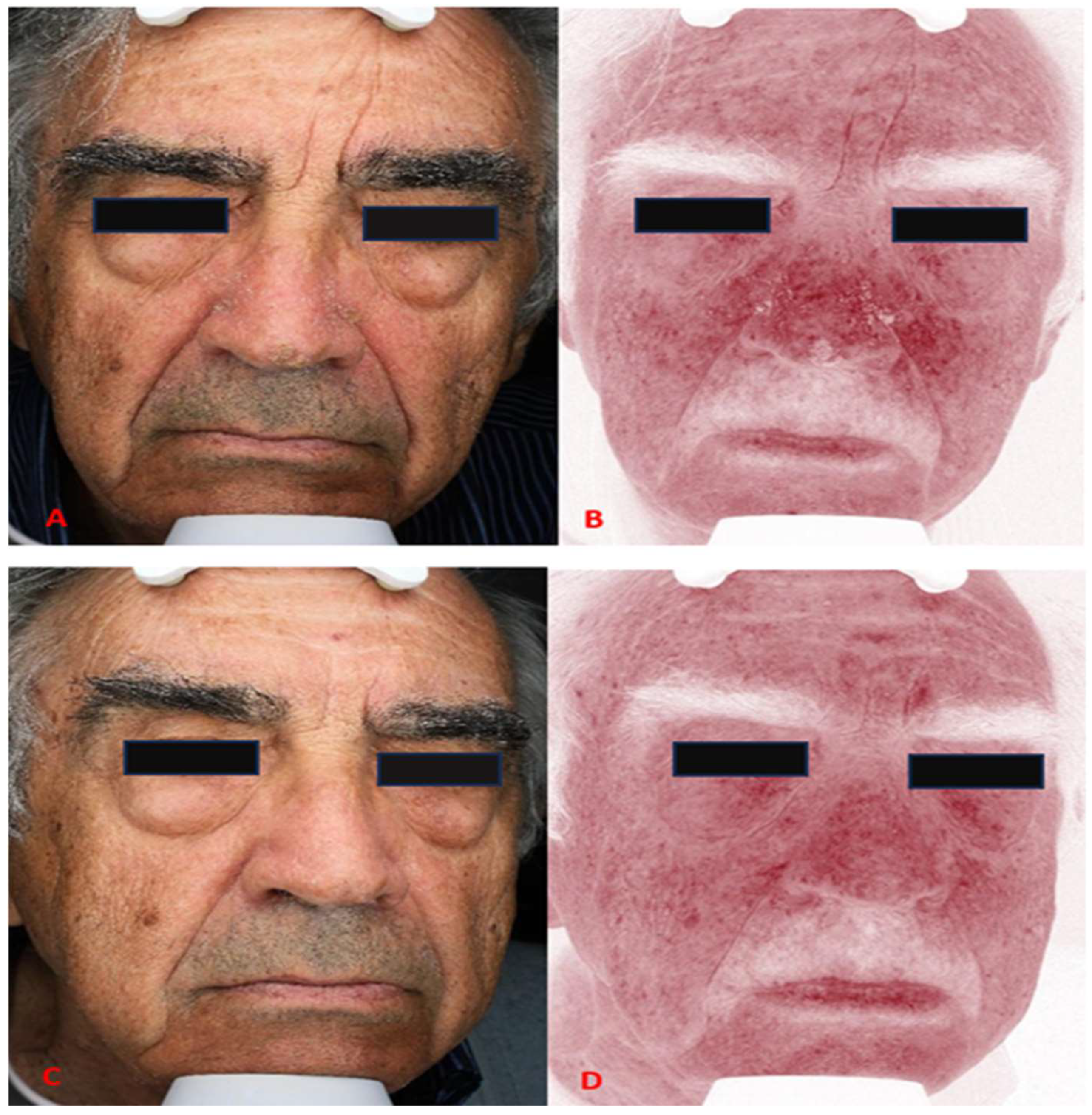
Figure 1. Patient with seborrheic dermatitis: (A) Baseline clinical image (IGA 3). (B) Baseline red filter highlights the erythema in the central face. (C) After 4 weeks of treatment (T2) clinical image showing disease improvement (IGA 0). (D) After 4 weeks of treatment (T2) red filter showing the decrease in erythema compared with the image at baseline. (Imaging obtained using VISIA Generation 7 model, Canfield Scientific, Parsippany, NJ, USA).
Cosmetics 12 00280 g001
Figure 2. Reflectance confocal microscopy (RCM) features of seborrheic dermatitis before and after treatment. Panels (A,C) (baseline) show widened intercellular spaces with prominent exocytosis and spongiosis, focal microvesiculation, and clusters of bright inflammatory cells at the dermal–epidermal junction, consistent with higher inflammatory RCM scores (field of view 500 × 500 µm). Panels (B,D) (follow-up) display a more compact epidermal architecture with reduced inflammatory cells and absence of microvesiculation (field of view 1000 × 1000 µm).
Cosmetics 12 00280 g002
Figure 3. Vascular pattern of patient n. 20, affected by seborrheic dermatitis, observed by D-OCT at 150 μm depth. (A) On face at baseline (T0), showing increased vascular signal and focal superficial dilation. (B) Vertical scan at baseline (T0), highlighting a dense superficial vascular network consistent with active inflammation. (C) On face after 4 weeks of treatment (T2), demonstrating reduced vascular signal intensity and a more regular superficial plexus. (D) Vertical scan after 4 weeks of treatment (T2), showing attenuation of vessel density and a more homogeneous architecture. (Imaging obtained using Dynamic Optical Coherence Tomography, D-OCT, Vivosight®, Michelson Diagnostics, London, UK).
Cosmetics 12 00280 g003
Figure 4. Vascular pattern of patient n. 12, affected by SD, observed by D-OCT. (A) Observation at 300 μm depth at baseline (T0). (B) Observation at 300 μm depth after 2 weeks of treatment (T1). (C) Observation at 300 μm depth after 4 weeks of treatment (T2). (D) Observation at 500 μm depth at baseline (T0). (E) Observation at 500 μm depth after 2 weeks of treatment (T1). (F) Observation at 500 μm depth after 4 weeks of treatment (T2). (Imaging obtained using Dynamic Optical Coherence Tomography, D-OCT, Vivosight®, Michelson Diagnostics, London, UK).
Cosmetics 12 00280 g004
Figure 5. Vascular pattern of patient n. 12, observed by D-OCT. (A,C) On face and vertical image at 300 μm depth at baseline (T0). (B,D) On face and vertical image at 300 μm depth after 4 weeks of treatment (T2). (Imaging obtained using Dynamic Optical Coherence Tomography, D-OCT, Vivosight®, Michelson Diagnostics, London, UK).
Cosmetics 12 00280 g005
Figure 6. Vascular pattern of patient n. 12, observed by D-OCT. (A,C) On face and vertical image at 500 μm depth at baseline (T0). (B,D) On face and vertical image at 500 μm depth after 4 weeks of treatment (T2). (Imaging obtained using Dynamic-Optical Coherence Tomography, D-OCT, Vivosight®, Michelson Diagnostics, London, UK).
Cosmetics 12 00280 g006
Table 1. Graphical representation of the variation in clinical parameters considered in the study. The IGA, VAS, and IDL were considered at baseline, after 14 days of treatment (T1), and after 28 days of treatment (T2). The mean and standard deviation are reported for each parameter.
T0T1T2Delta
T1-T0
Delta
T2-T0
ParametersMean (St. dev.)Mean (St. dev.)Mean (St. dev.)Mean (St. dev.)Delta St. Dev
IGA (0–4)2.48
(0.63)
1.23 *
(0.62)
0.18 *
(0.39)
−1.26 *
(0.77)
−2.36 *
(0.73)
VAS (0–10)4.52
(2.34)
2.10 *
(2.18)
0.32 *
(1.33)
−2.42 *
(2.06)
−4.25 *
(2.15)
IDL (0–10)4.86
(3.13)
3.10 *
(2.66)
0.79 *
(1.45)
−1.45 *
(2.00)
−3.75 *
(3.04)
* p < 0.05.
Table 2. Graphical representation of the variation in parameters considered in skin imaging devices (RCM and OCT) at baseline, after 14 days of treatment (T1), and after 28 days of treatment (T2). The variation in exocytosis, spongiosis, vesiculation, and inflammation that characterize eczematous conditions was reported. The mean and standard deviation are reported for each parameter.
T0T1T2Delta
T1-T0
Delta
T2-T0
ParameterMean
(St. dev)
Mean
(St. dev)
Mean
(St. dev)
Mean
(St. dev.)
Mean
(St. dev.)
RCM
exocytosis (0–3)
1.50
(0.68)
1.10 *
(0.62)
0.50 **
(0.51)
−0.43 *
(0.63)
−1.04 **
(0.71)
RCM
Spongiosis
(0–3)
1.40
(0.67)
0.90 **
(0.77)
0.32 **
(0.48)
−0.46 **
(0.58)
−1.04 **
(0.65)
RCM
vesiculation
(0–3)
0.27
(0.58)
0.10 *
(0.31)
0.04 *
(0.19)
−0.21 *
(0.50)
−0.15 *
(0.36)
RCM
inflammation
(0–3)
1.70
(0.47)
1.10 **
(0.49)
0.46 **
(0.51)
−0.57 **
(0.57)
−1.22 **
(0.70)
* p < 0.05; ** p < 0.001.
Table 3. Quantitative D-OCT parameters at baseline (T0), week 2 (T1), and week 4 (T2) in the 31 target areas examined.
ParameterDepth (µm)T0 Mean ± SDT1 Mean ± SDT2 Mean ± SDp Value T0 vs. T2
Vascular network area (pixels)1503237 ± 44193105 ± 42801630 ± 2500 *0.003 *
Vascular network area (pixels)3002780 ± 36502710 ± 35202640 ± 34800.24
Vascular network area (pixels)5002050 ± 30502020 ± 30101990 ± 29800.31
Stromal density index (a.u., 0–100)30058.4 ± 12.158.9 ± 12.059.2 ± 11.80.27
Stromal attenuation index (a.u., 0–100)30061.2 ± 11.560.8 ± 11.360.5 ± 11.10.33
* p < 0.05 vs. baseline (T0) at 150 µm depth (paired comparison). No other comparisons reached statistical significance.
Disclaimer/Publisher’s Note: The statements, opinions and data contained in all publications are solely those of the individual author(s) and contributor(s) and not of MDPI and/or the editor(s). MDPI and/or the editor(s) disclaim responsibility for any injury to people or property resulting from any ideas, methods, instructions or products referred to in the content.