1. Introduction
1.1. Smart Mattresses in Hospital Care
Beds are the fundamental unit of patient and resident management in hospitals and long-term care institutions, and many healthcare information systems are structured around bed assignments (Ghersi et al., 2018 [
1]; Hong, 2018 [
2]). As a result, smart mattresses have become an important component of modern care environments, providing functions such as bed exit detection, fall prevention, pressure injury management, sleep and daily life pattern monitoring, and vital sign assessment (Sangeetha et al., 2022 [
3]; Wen et al., 2024 [
4]; Ibrahim et al., 2021 [
5]; Jähne-Raden et al., 2019 [
6]; Recmanik et al., 2024 [
7]; Sivanantham, 2015 [
8]). Equipped with pressure sensor arrays, fiber-optic sensing, and biosignal monitoring modules, smart mattress systems provide continuous measurements of posture, movement, pressure distribution, and respiration (Recmanik et al., 2024 [
7]; Nukaya et al., 2012 [
9]; Nunes et al., 2024 [
10]).
To enable such sensing functions while minimizing maintenance effort, Bluetooth Low Energy (BLE) has emerged as a key communication technology that supports low-power operation and seamless wireless data transmission to gateways connected to hospital information systems. BLE also enables smart mattresses to operate on battery power rather than requiring a fixed wired connection, increasing flexibility for hospital deployment and reducing installation constraints (Nunes et al., 2024 [
10]; Wang et al., 2025 [
11]).
1.2. Core Functions of Our Smart Mattress System
The authors have developed a smart mattress system that integrates sensing technologies with BLE-based data transmission to enhance patient safety and support long-term care management. The system is designed to address three core care needs: pressure injury prevention, fall prevention, and long-term lifestyle monitoring (Elsokah et al., 2019 [
12]).
For pressure injury prevention, smart mattresses can combine pressure redistributing surface materials with continuous monitoring of pressure distribution at the body-bed interface. Pressure-relieving support surfaces, when implemented together with regular repositioning, are effective in reducing pressure injury incidence in clinical settings (Ajami et al., 2015 [
13]; Costello et al., 2021 [
14]). In our smart mattress system, we incorporated a temperature-sensitive, pressure-relieving foam mattress that is both comfortable and effective at redistributing pressure. In a prospective cohort study involving 254 intensive care unit patients, the use of this mattress was associated with an 88 percent reduction in pressure injury risk compared with standard hospital mattresses (
p = 0.007) (Bai et al., 2020 [
15]; Dall’Ora et al., 2021 [
16]). The mattress surface is divided into 30 sensing areas that leverage the on–off pressure-sensing properties of foam to detect body-bed contact. Unlike conventional sensor-embedded designs, the mattress contains no electronic components, preserving comfort and facilitating routine cleaning and disinfection. The system provides color-coded indicators and reminder functions that display pressure duration and prompt regular repositioning to reduce the risk of localized tissue damage.
For fall prevention, smart mattresses can address the limitations of conventional bed exit mats, which often generate frequent false alarms that contribute to alarm fatigue and delayed caregiver response (Cvach, 2012 [
17]; Paine et al., 2016 [
18]). In our smart mattress system, posture and movement information detected from the 30 sensing areas is processed by a machine learning-based multi stage detection algorithm that identifies user postures and detects bed leaving intention by distinguishing between the “in bed,” “sit up,” “at bed edge,” and “off bed” states. This enables early alerts when patients at high fall risk attempt to get out of bed, allowing timely intervention. In a hospital evaluation, the system achieved a 0% false alarm rate across 110 tested cases and reduced the average caregiver response time to 59 s, compared with 146 s for conventional mats that exhibited a 35% false alarm rate (Wen et al., 2022 [
19]; Dunne et al., 2014 [
20]). In a larger quasi-experimental study involving 1300 patients, adoption of the smart mattress system was associated with an 88 percent reduction in bedside fall incidence compared with traditional mats (0.1 percent versus 1.2 percent; odds ratio = 0.12;
p = 0.047) (Wen et al., 2024 [
4]).
For long-term lifestyle monitoring, smart mattresses can record sleep duration, body movement patterns, and daily rest activity cycles that reflect changes in health status (Liu et al., 2024 [
21]; Mathunjwa et al., 2024 [
22]). Our smart mattress system derives multiple layers of lifestyle information from the 30 sensing areas to support precision care, including sleep duration, turning frequency, and in-bed activity patterns (Bai et al., 2023 [
23]). These data can be integrated into digital platforms to enable continuous monitoring in hospital or home-based settings and facilitate early detection of functional decline (Wen et al., 2024 [
4]).
The low-power requirement is fundamental to our system’s design. The smart mattress control box (BLE transmitter) features an optimized power profile to maximize battery life, enabling untethered operation crucial for flexibility in hospital deployment. The system’s power consumption for continuous operation (including sensing, data processing, and BLE transmission) has been measured to be 20 mA at 3.7 V. This highly efficient design allows the mattress control box to operate continuously for over 12 months on a single standard battery charge, significantly reducing maintenance workload for nursing staff. This low-power performance is a key factor enabling the large-scale, sustainable deployment of nearly 5000 assets.
1.3. Need for Mattress Localization
Our smart mattress system has been deployed in more than 40 hospitals and care institutions, with nearly 5000 beds in operation, and its effectiveness has been demonstrated through multiple clinical studies. In daily hospital practice, however, mattresses are frequently relocated between rooms to meet changing care needs. Without an automatic localization mechanism, such movement can cause mismatches between mattress identifiers and bed assignments, leading to reporting errors and potential risks to patient safety.
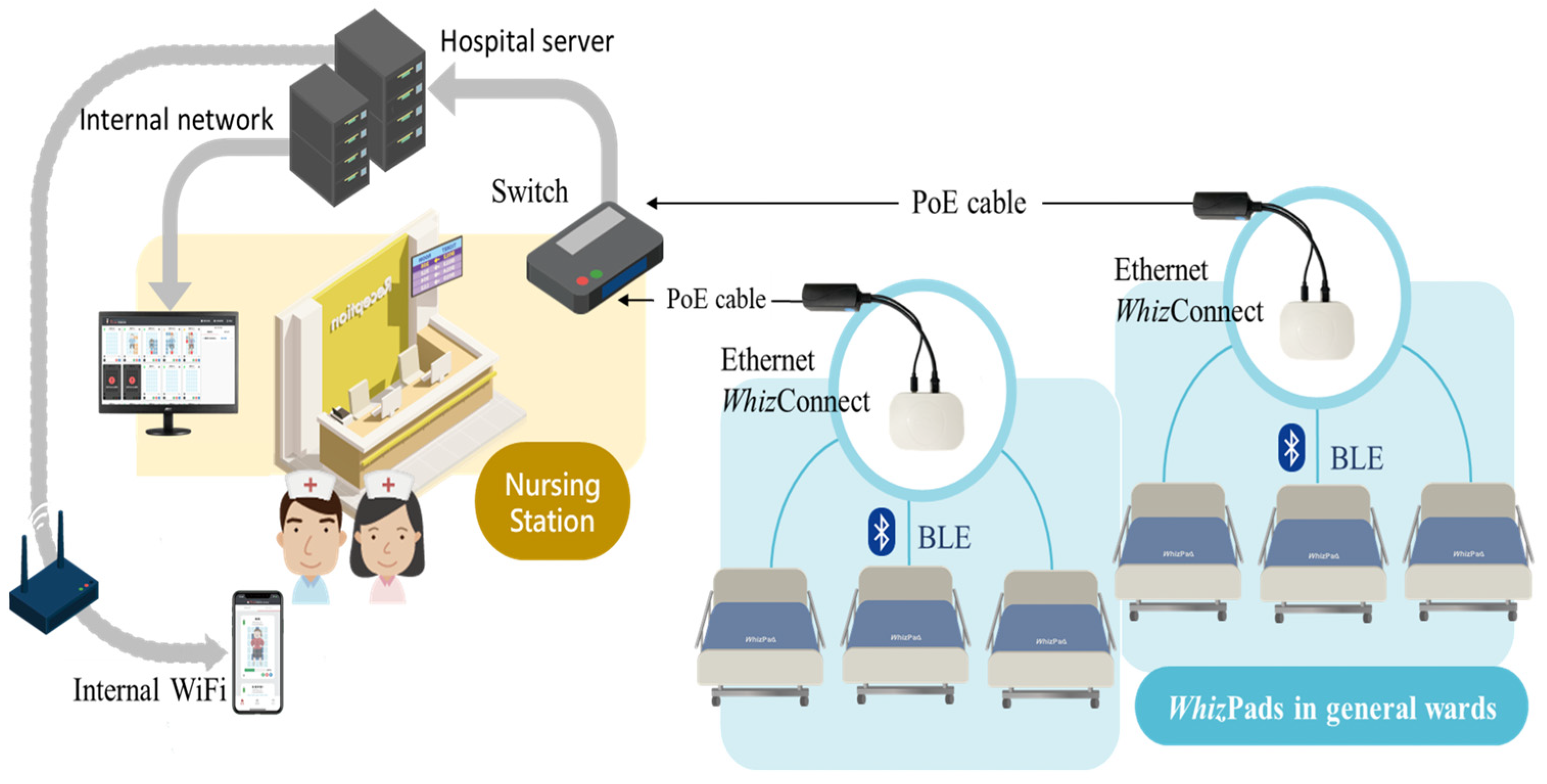
Figure 1 shows the overall information architecture of our smart mattress system (Bai et al., 2023 [
23]). Each hospital ward is equipped with a BLE gateway (
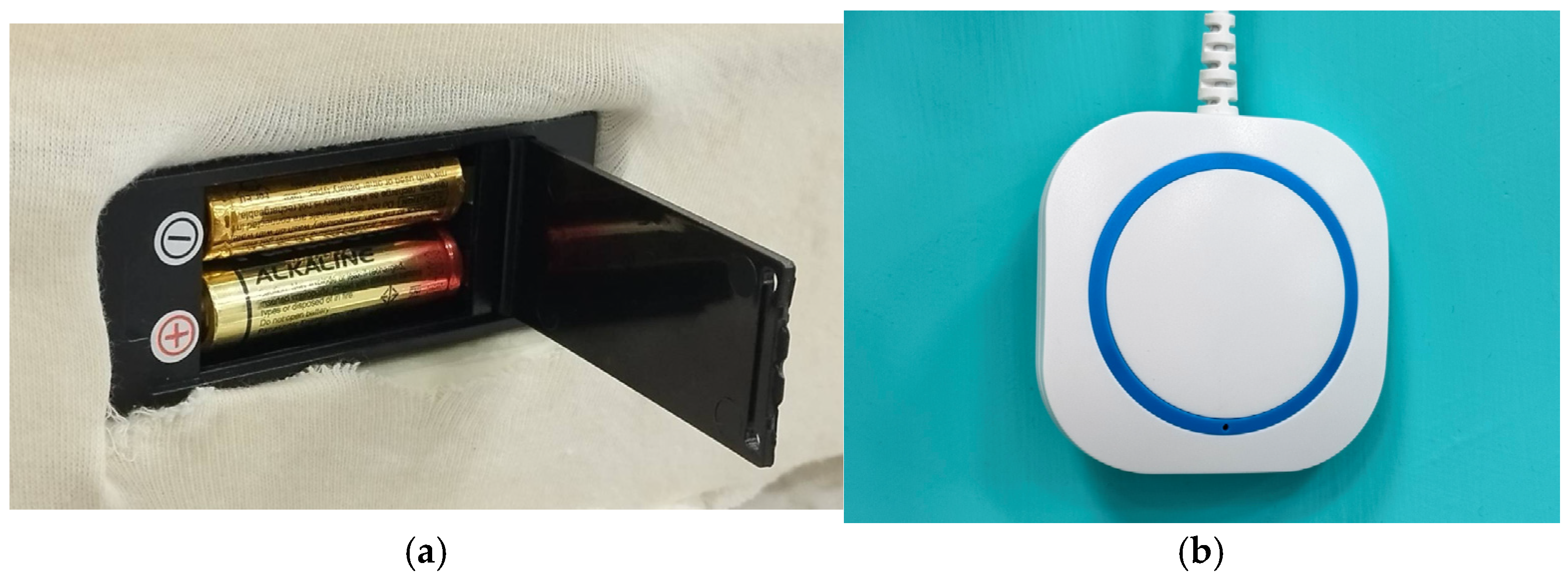
WhizConnect in the figure) that receives signals from the mattress control box and transmits data through the hospital network to the central server and nursing stations. The physical appearance of the mattress control box (BLE transmitter) is shown in
Figure 2a, while the receiving gateway is detailed in
Figure 2b. This architecture ensures that patient data remains within the hospital’s internal network and operates in accordance with existing cybersecurity frameworks, while still allowing integration with hospital information systems and customized applications. Since every ward already has BLE gateways for transmitting smart mattress data, the system provides a natural opportunity to utilize BLE RSSI for mattress localization, ensuring accurate matching between mattresses and bed assignments (Wen et al., 2022 [
19]).
Indoor localization technologies such as Ultra-Wideband (UWB), Radio Frequency Identification (RFID), Wi-Fi, and Bluetooth Low Energy (BLE) have been widely explored for tracking and positioning applications in hospital environments (Sherif et al., 2024 [
24]; Aziz et al., 2025 [
25]; Karimpour et al., 2021 [
26]; Zafari et al., 2019 [
27]). However, the selection of a suitable technology for non-critical, large-scale asset tracking, such as smart mattresses, must be guided by practical constraints in a real hospital environment, particularly cost, infrastructure complexity, and low-power operation.
Among these technologies:
Ultra-Wideband (UWB) offers the highest precision (sub-meter accuracy), but its high cost and the requirement for an entirely new, dedicated infrastructure across a large hospital facility make it economically prohibitive for the room-level tracking required for mattresses. Furthermore, sub-meter accuracy is considered an unnecessary premium for this clinical need.
Radio Frequency Identification (RFID) is low-cost and simple, but it generally provides only static identification or requires checkpoint readers at doorways. This approach often necessitates active participation (manual scanning) from nursing staff or only provides location updates after an object passes a gate, failing to provide the continuous, automatic location status needed for seamless inventory management.
Wi-Fi localization leverages existing Access Points, but the signal variability in busy hospital corridors is high, and the computation required for robust fingerprinting is often resource intensive.
In contrast, RSSI-based BLE localization has emerged as a practical solution due to its low cost, minimal infrastructure requirements, and sufficient room-level accuracy in clinical spaces (Mouhammad et al., 2019 [
28]; Hadian et al., 2023 [
29]; Zafari et al., 2019 [
27]; Ahmad, 2024 [
30]). Although RSSI is affected by environmental factors such as multipath reflections and signal obstruction, appropriate filtering, calibration, and signal processing can improve robustness, making BLE RSSI suitable for indoor healthcare localization (Zafari et al., 2019 [
27]; Hadian et al., 2023 [
29]).
Crucially, the novelty of this study lies not in the core technology, but in the large-scale, pragmatic application under real-world constraints. Our smart mattress system requires localizing nearly 5000 assets distributed across numerous hospital wards. To achieve this at scale, the core premise of this study is to develop a highly sustainable and cost-effective solution by fully leveraging the existing BLE gateway infrastructure that is already deployed in hospital wards for the smart mattresses’ primary function. This approach eliminates the need for any additional hardware deployment, dramatically lowering both the capital investment and long-term maintenance costs. The technical challenge, therefore, is not to find the most accurate technology, but to optimize a simple, low-computational RSSI-based algorithm to ensure robust room-level identification using only the inherently limited and fluctuating data from the existing gateways. This pragmatic approach offers the best balance between cost, ease of deployment, and clinical utility.
1.4. Purpose of This Study
This study aims to develop and validate an RSSI-based BLE localization system for smart mattresses to address the challenge of mattress relocation in hospitals. The proposed system overcomes cost and scalability barriers by leveraging existing BLE gateways installed in each ward. By using signal strength to determine mattress location, we ensure accurate matching between mattresses and bed assignments without requiring expensive new infrastructure. To enhance reliability, the approach incorporates filtering, wall attenuation compensation, and caregiver confirmation. Field validation was conducted in a hospital setting to assess the system’s accuracy and feasibility for clinical deployment.
This study was conducted in three stages. First, laboratory experiments were performed to examine the relationship between RSSI values received by the BLE gateway and distance, including the effects of different partition materials that simulate hospital ward layouts. Second, existing localization algorithms were adapted and optimized for hospital scenarios, with an emphasis on multi-bed ward configurations that are more complex than single-bed setups. Third, field validation was conducted in a hospital setting to assess real-world accuracy and to collect feedback from nursing staff on usability and workflow integration.
2. Laboratory Validation of RSSI–Distance Relationship
To validate the relationship between RSSI and distance for smart mattress control boxes and BLE gateways, controlled laboratory experiments were conducted. Three BLE gateways were placed at fixed reference points to account for potential hardware-related variations in RSSI readings. A smart mattress control box served as the BLE transmitter and was positioned at distances of 0 m, 1 m, 6 m, and 12 m from each gateway, while the BLE gateways recorded the corresponding RSSI values. Additional measurements were performed with solid walls and light partitions placed between the transmitter and the gateways to simulate common indoor obstructions found in hospital wards. Each condition was recorded continuously for several minutes to capture signal fluctuations arising from multipath reflection and environmental noise.
The raw RSSI data were processed to smooth temporal variations (Hadian et al., 2023 [
29]), and the median RSSI value was then extracted for each measurement condition.
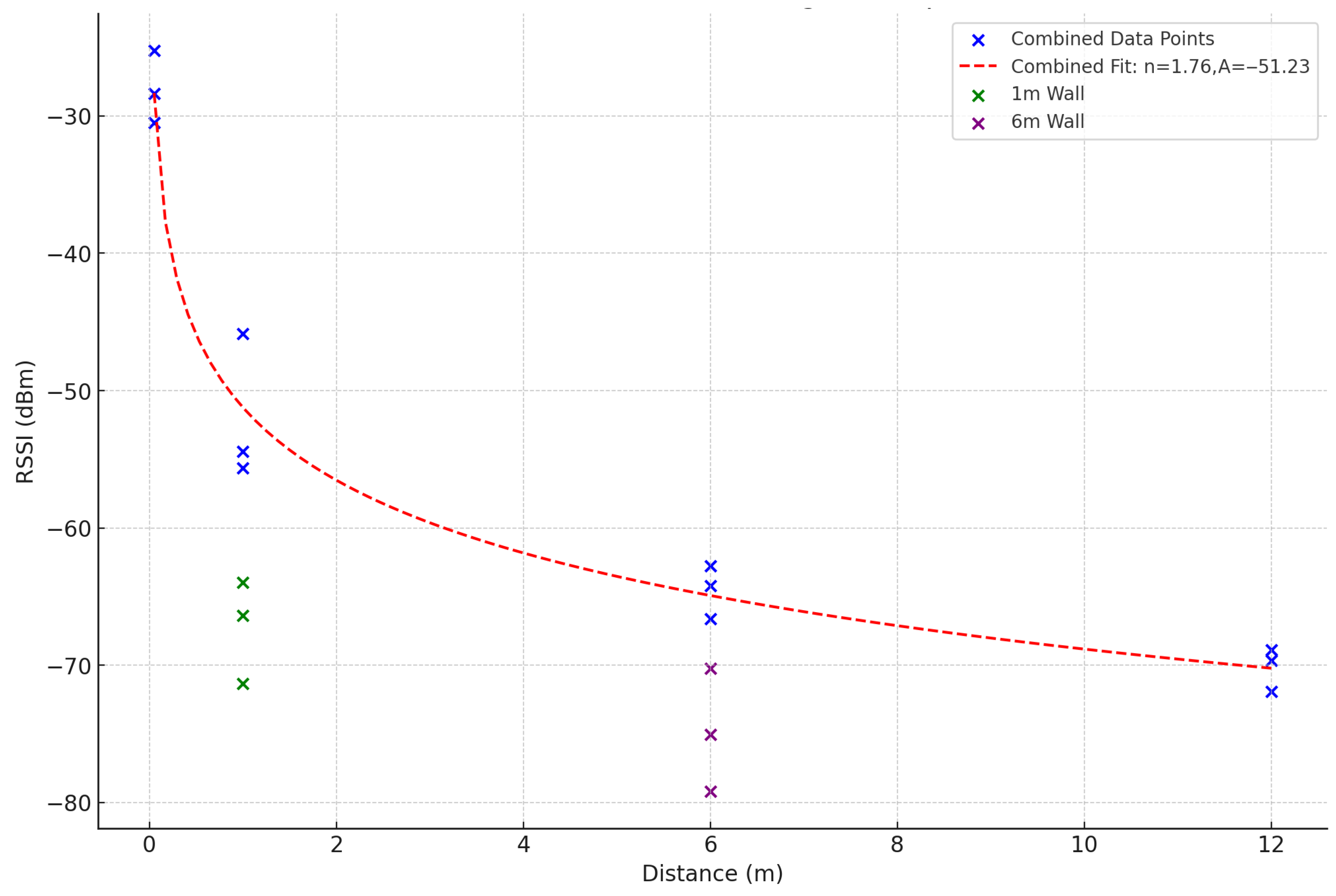
Table 1 summarizes the median RSSI values for all gateway-distance-obstacle combinations. The RSSI-distance relationship was modeled using the Log Distance Path Loss Model, a widely accepted empirical model in wireless communication (Zafari et al., 2019 [
27]), expressed as:
where
A is the reference RSSI (dBm) at distance d
0 = 1 m, and
n is the path loss exponent. Based on the combined dataset from the three gateways, the fitted model yielded
n = 1.76 and
A = −51.23 dBm.
To ensure the validity of our model parameters, the experiment utilized actual, fixed architectural elements of the laboratory facility to simulate realistic hospital construction. The Solid Walls were non-removable, load bearing reinforced concrete structures, and the Light Partitions were non-removable calcium silicate boards. The laboratory environment itself was intentionally configured as an extended, corridor-like space with side rooms, rather than a large open room. This specific architecture contributed to a waveguiding effect, concentrating signal energy along the path. This physical phenomenon is the reason for the calculated path loss exponent of n = 1.76 (which is below the theoretical free-space value of n = 2.0), as it results in a slower rate of signal attenuation over distance characteristic of confined indoor spaces.
Figure 3 shows the curve fitting results. Individual data points from each gateway are plotted to illustrate inter-device variation, and the combined dataset is used to derive the overall path-loss trend.
Model Calibration and Parameters
The laboratory validation results, particularly the fitted Log Distance Path Loss Model, provide the empirical and theoretical basis for defining the RSSI viability threshold required for robust room-level differentiation in real-world deployment. The signal separation demonstrated by the measured data (
Table 1 and
Figure 3) forms the foundation for the subsequent localization algorithm.
3. Algorithm Development for Hospital Scenarios
The localization algorithm was developed by adapting the laboratory-derived parameters to real-world hospital conditions. The design followed a user-centered approach to ensure that the system aligns with real nursing practices, integrates smoothly into existing clinical workflows, and supports patient safety and accountability. The goal was to achieve reliable room-level identification while minimizing disruption to daily routines. To avoid additional workload for nursing staff, caregiver involvement is minimized and required only when a potential location discrepancy is detected.
3.1. Hospital Context and Practical Considerations
Three key contextual factors guided the design. First, the hospital environment includes both single-room and multi-bed room configurations. Given the proximity of beds within the same room and the inherent BLE signal spillover, bed-level differentiation is unreliable, so only room-level identification is attempted. When a mattress is moved between rooms and the detected room does not match the registered one, a verification step by nursing staff is required. This human confirmation ensures that location updates do not introduce confusion in the care workflow or responsibility assignment.
Second, there are special scenarios in which a mattress may be temporarily placed outside monitored rooms, such as in a corridor, treatment room, or storage space. In such cases, although the nearest detectable signal may still associate the mattress with a room, the RSSI value is significantly weaker. To avoid misleading automated updates, the system presents the detected room together with an RSSI-based strength level (Ideal, Strong, Weak, or Unstable), allowing caregivers to judge whether the suggested location is sufficiently reliable to warrant an update.
Third, continuous real-time location tracking is not necessary for clinical workflows. Mattress movement events in hospitals are relatively infrequent and typically associated with scheduled activities such as cleaning, admission, discharge, or patient transfer. To avoid unnecessary workload for nurses and better align with clinical relevance, the system processes location data at hourly intervals rather than in real time. This frequency provides adequate responsiveness for care operations while minimizing unnecessary alerts and maintaining system efficiency.
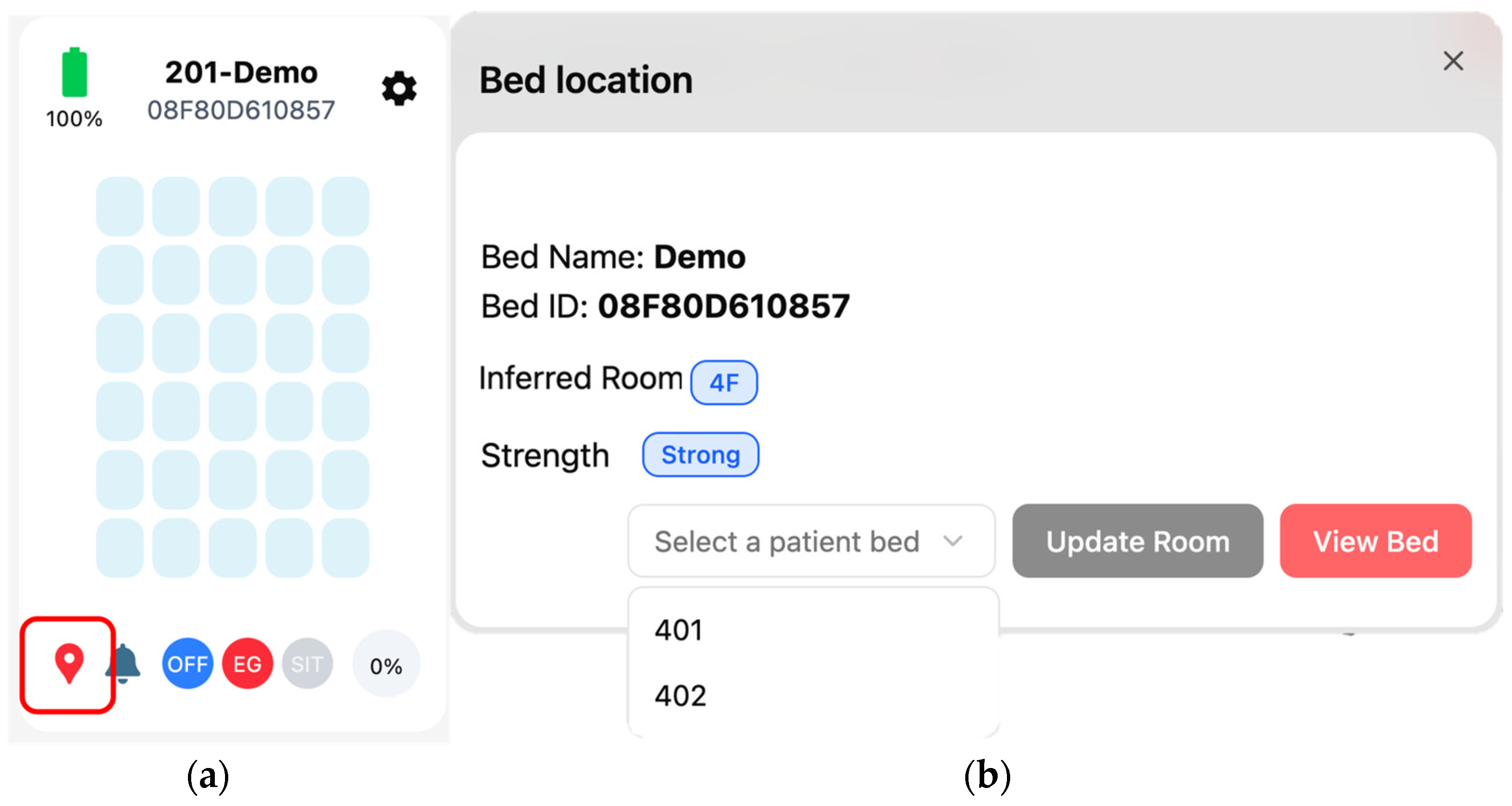
By incorporating these considerations, the system engages caregivers only when essential. When a potential location mismatch is detected, a visual alert appears on the nursing station interface to draw attention (
Figure 4a). The caregiver is then prompted to verify the mattress’s actual room and confirm or reject the suggested update through a simple one-click action (
Figure 4b).
3.2. The RSSI-Based Room Localization Algorithm for Hospital Smart Mattresses
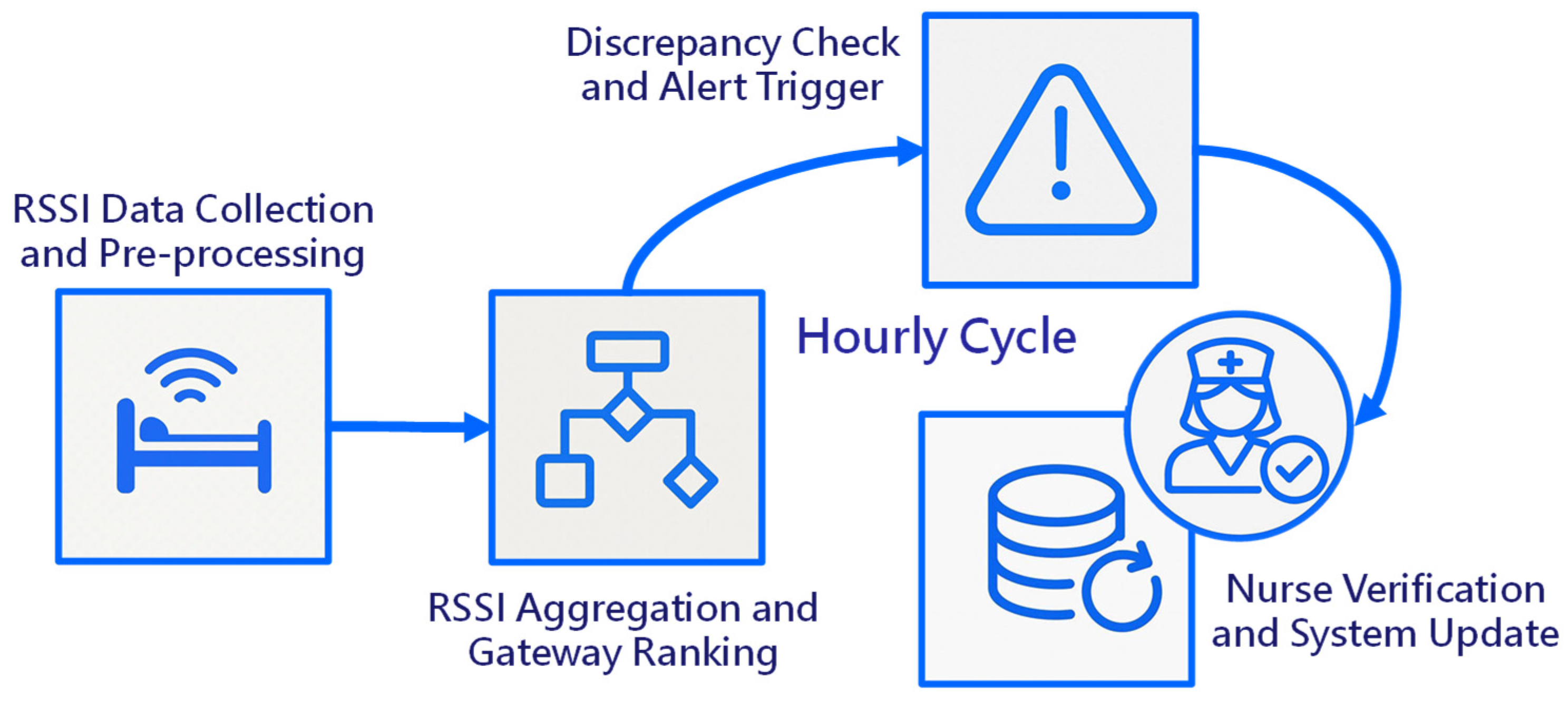
Building on the user-centered design approach and considering the practical constraints of hospital environments and nursing workflows, the RSSI-based room localization algorithm for hospital smart mattresses was designed to balance technical performance with real-world usability. As illustrated in
Figure 5, the algorithm operates as an hourly cycle consisting of four main components. First, RSSI Data Collection and Pre-processing consolidates sensing data within a one-hour window and applies filtering to obtain stable RSSI values for each mattress-gateway pair. Second, RSSI Aggregation and Gateway Ranking analyzes the processed RSSI values and ranks the gateways to infer the most probable room location. Third, Discrepancy Check and Alert Trigger compare the inferred room with the registered room in the system and issues an alert when a mismatch is detected. Fourth, Nurse Verification and System Update involve a nurse confirming the actual mattress location and updating the backend system to ensure consistency between system records and the clinical environment.
3.2.1. RSSI Collection and Pre-Processing
Each smart mattress transmits sensing data at least once per minute, and any nearby BLE gateway may receive it along with an RSSI reading. The backend consolidates all received RSSI values into a two-dimensional matrix, with mattresses as rows and BLE gateways as columns. For each batch run, only readings from the past 60 min are retained, and the average RSSI for each mattress-gateway pair is calculated as the input for localization.
3.2.2. RSSI Aggregation and Gateway Ranking
To identify the most likely location of each mattress, the system aggregates RSSI data collected over the past 60 min and ranks BLE gateways by signal strength. For each mattress, the average RSSI value received from each gateway is calculated and used to create a sorted list of gateways in descending order of average RSSI. This ranked list provides the foundation for subsequent room determination. The process is summarized in Algorithm 1.
Process overview for each mattress:
Retrieve all RSSI readings from the past 60 min for each BLE gateway;
Compute the average RSSI value for each mattress–gateway pair;
Exclude gateways with no valid RSSI readings;
Sort all valid gateways in descending order of average RSSI;
Store the sorted gateway list for the current batch run.
| Algorithm 1. RSSI Aggregation and Gateway Ranking |
| | Input: RSSI values collected within the past 60 min
Output: Sorted gateway list for each mattress for the current batch run |
| 1 | procedure RSSI_Aggregation_and_Gateway_Ranking |
| 2 | Output_Data ← {} |
| 3 | Epoch_Time ← Current_Hour_Timestamp |
| 4 | |
| 5 | for each Mattress_i in All_Mattresses: |
| 6 | Gateway_List_i ← [] |
| 7 | |
| 8 | for each Gateway_j in All_Gateways: |
| 9 | // Retrieve all RSSI values for Mattress_i received by Gateway_j |
| 10 | R_ij_raw ← FilterData(Matrix_60min, Mattress_i, Gateway_j) |
| 11 | |
| 12 | if R_ij_raw is not empty: |
| 13 | Avg_RSSI_ij ← CalculateMean(R_ij_raw) |
| 14 | Gateway_List_i.add({ "GatewayID": Gateway_j, "AvgRSSI":
|
| 15 | Avg_RSSI_ij }) |
| 16 | end if |
| 17 | end for |
| 18 | |
| 19 | // Sort gateways in descending order of average RSSI |
| 20 | Sorted_Gateway_List_i ← SortByValue(Gateway_List_i, "AvgRSSI", |
| 21 | Descending) |
| 22 | |
| 23 | Output_Data[Mattress_i, Epoch_Time] ← Sorted_Gateway_List_i |
| 24 | end for |
| 25 | |
| 26 | return Output_Data |
| 27 | end procedure |
3.2.3. Discrepancy Check and Alert Trigger
This component uses the ranked gateway list generated in Algorithm 1 to compare the inferred room with the currently registered room in the database. If a mismatch is detected, the system logs the discrepancy and triggers a visual alert in the nursing station interface to request caregiver verification. Transient discrepancies that self-resolve in a later batch are cleared automatically, whereas sustained discrepancies that indicate a probable room change remain active and require caregiver confirmation to clear. The process is summarized in Algorithm 2.
Process overview for each mattress:
Infer the most probable room from the top-ranked gateway;
Retrieve the registered room from the database;
Compare inferred versus registered rooms;
If different, log the discrepancy and trigger the visual alert;
If later batches show no discrepancy, automatically clear the alert;
If the discrepancy persists across consecutive batches, keep the alert active until caregiver confirmation.
| Algorithm 2. Discrepancy Check and Alert Trigger |
| | Input: Sorted gateway list for the current batch run; registered room from database
Output: Discrepancy status and alert state |
| 1 |
Procedure Discrepancy_Check & Alert_Trigger(Mattress_i, |
| 2 | Sorted_Gateway_List_i) |
| 3 |
// Infer the most probable room |
| 4 |
Top_Gateway ← Sorted_Gateway_List_i[0] |
| 5 |
Inferred_Room ← GetRoomID(Top_Gateway) |
| 6 | |
| 7 |
// Retrieve the currently registered room |
| 8 |
Registered_Room ← Get_Registered_Room_From_DB(Mattress_i) |
| 9 | |
| 10 |
if Inferred_Room ≠ Registered_Room then |
| 11 |
// Discrepancy detected |
| 12 |
Log_Discrepancy(Mattress_i, Inferred_Room, Registered_Room, True) |
| 13 |
Trigger_Visual_Alert(Mattress_i) |
| 14 |
else |
| 15 |
// No discrepancy detected |
| 16 |
Log_Discrepancy(Mattress_i, Inferred_Room, Registered_Room, False) |
| 17 |
Clear_Visual_Alert(Mattress_i) |
| 18 |
end if |
| 19 |
end procedure |
3.2.4. Nurse Verification and System Update
When a discrepancy alert is raised, the nursing station interface displays an actionable notification showing the inferred room, along with the RSSI-based strength level (Ideal, Strong, Weak, or Unstable). The nurse evaluates the suggested location, physically verifies the mattress position if needed, selects the correct bed number, and confirms the update. If the nurse rejects the suggestion due to low strength or situational judgment, the rejection is logged, and the alert is cleared. Upon approval, the backend synchronizes the new room and bed assignment to the database to keep records consistent with clinical practice. The process is summarized in Algorithm 3.
Process overview for each mattress:
Display the inferred room and strength level to the nurse;
The nurse chooses to approve or reject based on strength and on-site verification;
If approving, the nurse enters the room and the required bed number;
Approved changes are written to the database; the alert is clear;
If rejected, the decision is logged and the alert is cleared;
Subsequent batches continue normal monitoring and may raise new alerts if discrepancies reappear.
| Algorithm 3. Nurse Verification and System Update |
| | Input: Mattress ID; inferred room and strength level; current registered room and bed from database
Output: Updated registered room and bed upon approval; logged rejection upon refusal; UI alert state cleared |
| 1 | procedure Nurse_Verification_and_System_Update(Mattress_i, Inferred_Room, |
| 2 | Strength_Level) |
| 3 |
// Present suggested room and strength level to the nurse |
| 4 |
Prompt_Nurse_Verification(Mattress_i, Inferred_Room, Strength_Level) |
| 5 | |
| 6 |
// Wait for nurse decision and required inputs |
| 7 |
Nurse_Action ← Wait_For_Nurse_Action(Mattress_i) |
| 8 | |
| 9 |
if Nurse_Action.Type = “APPROVE” then |
| 10 |
// Bed number is always required |
| 11 |
Approved_Room ← Nurse_Action.Room |
| 12 |
Approved_Bed ← Nurse_Action.Bed |
| 13 | |
| 14 |
Update_Registered_Location_In_DB(Mattress_i, Approved_Room, |
| 15 | Approved_Bed) |
| 16 |
Clear_Visual_Alert(Mattress_i) |
| 17 |
Log_Approval(Mattress_i, Approved_Room, Approved_Bed, |
| 18 | Strength_Level) |
| 19 | |
| 20 |
else if Nurse_Action.Type = “REJECT” then |
| 21 |
Log_Rejection(Mattress_i, Inferred_Room, Strength_Level, |
| 22 | Nurse_Action.Reason) |
| 23 |
Clear_Visual_Alert(Mattress_i) |
| 24 |
end if |
| 25 |
end procedure |
4. Field Validation in Hospital Settings
To establish the practical precision and clinical feasibility of the RSSI-based localization system, a mixed-methods field evaluation was conducted in a hospital equipped with 266 smart mattresses across 101 rooms. The rooms included various configurations, such as single, double, and four-person wards. To ensure the robust room-level identification required by the system, the BLE infrastructure was deployed following a one-to-one strategy: one dedicated BLE receiver (gateway) was installed in each room (totaling approximately 101 receivers). All receivers were mounted on the ceiling. This high-density deployment was crucial for maximizing the signal distinction between rooms, which is necessary for the localization algorithm.
The assessment aimed to validate the system’s performance under real operating conditions, with a focus on two core dimensions: localization precision and process efficiency within routine nursing workflows. This section presents the quantitative validation results, beginning with an overall assessment of signal stability and room-level distinguishability across multiple devices, followed by a detailed single-mattress case study that illustrates how the system detects relocation events and initiates the semi-automated discrepancy resolution mechanism. Additionally, nurses who routinely used the smart mattress system were interviewed to gain firsthand insights into its usability and integration within daily clinical workflows
4.1. Overall Data Stability Assessment Across Multiple Devices
Table 2 summarizes the RSSI data collected from 10 smart mattresses located in 8 different rooms over a continuous 42-hour period. For each mattress, the table presents the mean and standard deviation of the RSSI from the registered room (the strongest signal), as well as the mean RSSI gap, defined as the difference between the strongest and second-strongest RSSI values. All mattresses remained in their original rooms throughout the measurement period.
This analysis examined two key aspects required for reliable room-level localization: the stability of the strongest RSSI signal when the mattress remained stationary, and the degree of separation between the strongest and second-strongest RSSI signals. Across all 10 mattresses, the mean standard deviation of the strongest RSSI was 2.32 dBm. This metric represents the arithmetic average of the individual standard deviations calculated for each of the 10 monitored devices. The low value confirms stable signal behavior with hourly batch processing. The mean RSSI gap was 12.04 dBm, which is approximately 5.19 times greater than the mean standard deviation of the strongest RSSI. This ratio is well above the commonly accepted threshold of three times the standard deviation for confident separation. Although the mean RSSI values differ across rooms due to variations in room size, layout, and hardware characteristics of BLE gateways, the low coefficient of variation (1.5 percent to 7.1 percent) and large RSSI gap both indicate that the system can distinguish the correct room with high confidence under normal conditions.
4.2. Single-Mattress Case Study: Localization Tracking and Relocation Detection
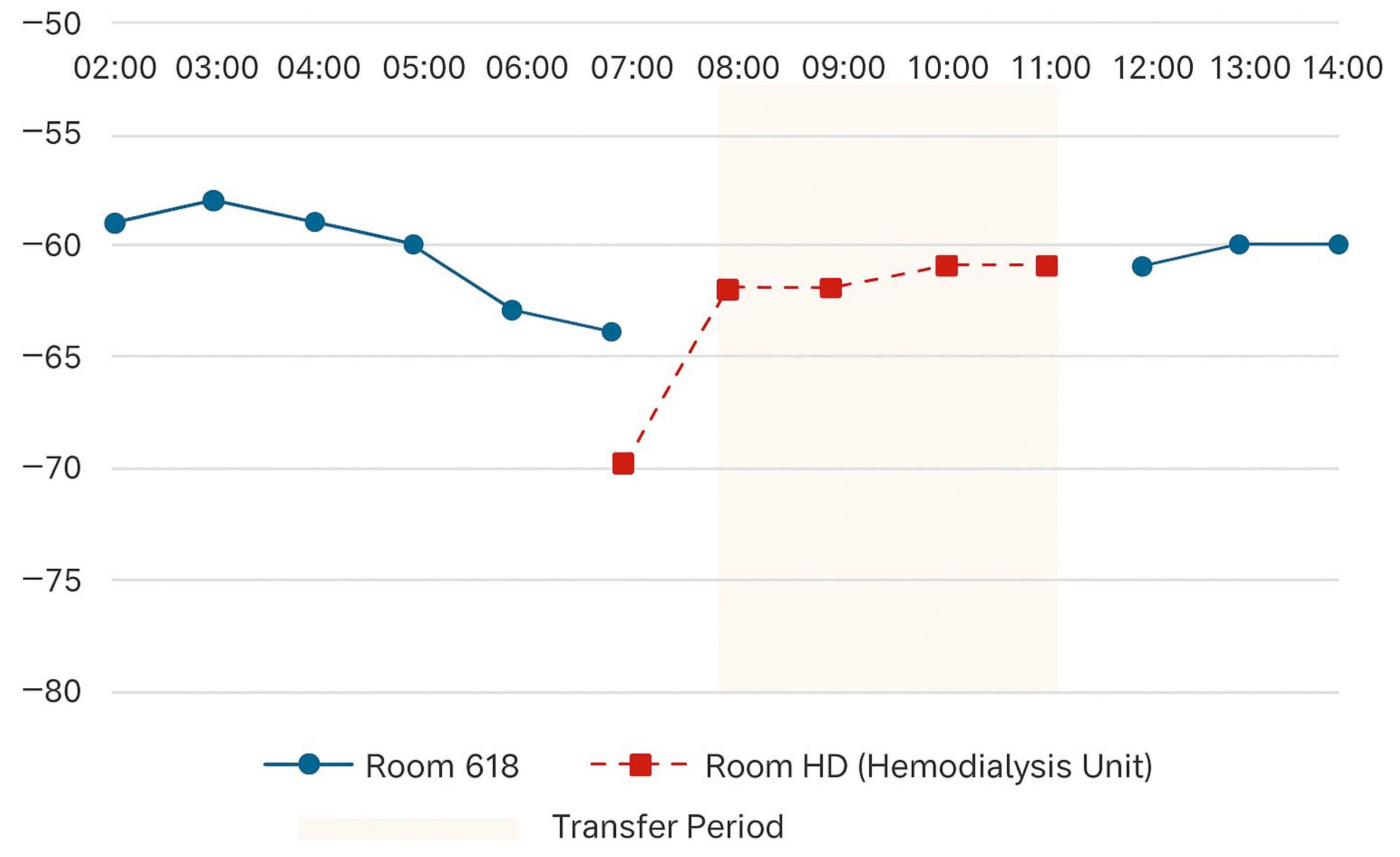
To assess system performance during actual mattress movement, a single-mattress case study was conducted. One smart mattress originally registered in Room 618 was transferred to the Hemodialysis Unit (HD Unit) and later returned between approximately 08:00 and 11:00.
Before relocation, the mattress remained in Room 618, and the strongest RSSI consistently came from that room, with stable readings of approximately −58 to −60 dBm between 02:00 and 06:00. At the 03:00 batch, a difference of about 10 dB was observed between Room 618 and the second-strongest room (Room 617), confirming a reliable baseline for static localization.
As the relocation took place, the RSSI pattern shifted. Around 07:00, the signal from Room 618 began to decline, and from 08:00 to 11:00 the HD Unit registered the highest RSSI values, indicating the mattress’s presence there. At the 08:00 batch, the HD Unit’s RSSI reached −63 dBm, which would trigger the system’s discrepancy check for nurse verification.
Once the mattress was returned, the RSSI values shifted back, with Room 618 again becoming the strongest signal at around −62 dBm from 12:00 onward. This confirmed that the system successfully detected the full relocation cycle and restored location confidence without manual adjustment.
Figure 6 visualizes this transition, showing a distinct crossover in the dominant signal between Room 618 and the HD Unit then back to Room 617, accurately reflecting the physical transfer of the mattress. This case demonstrates that the system can accurately track dynamic mattress movements, detect location changes, and initiate appropriate verification within clinical workflows.
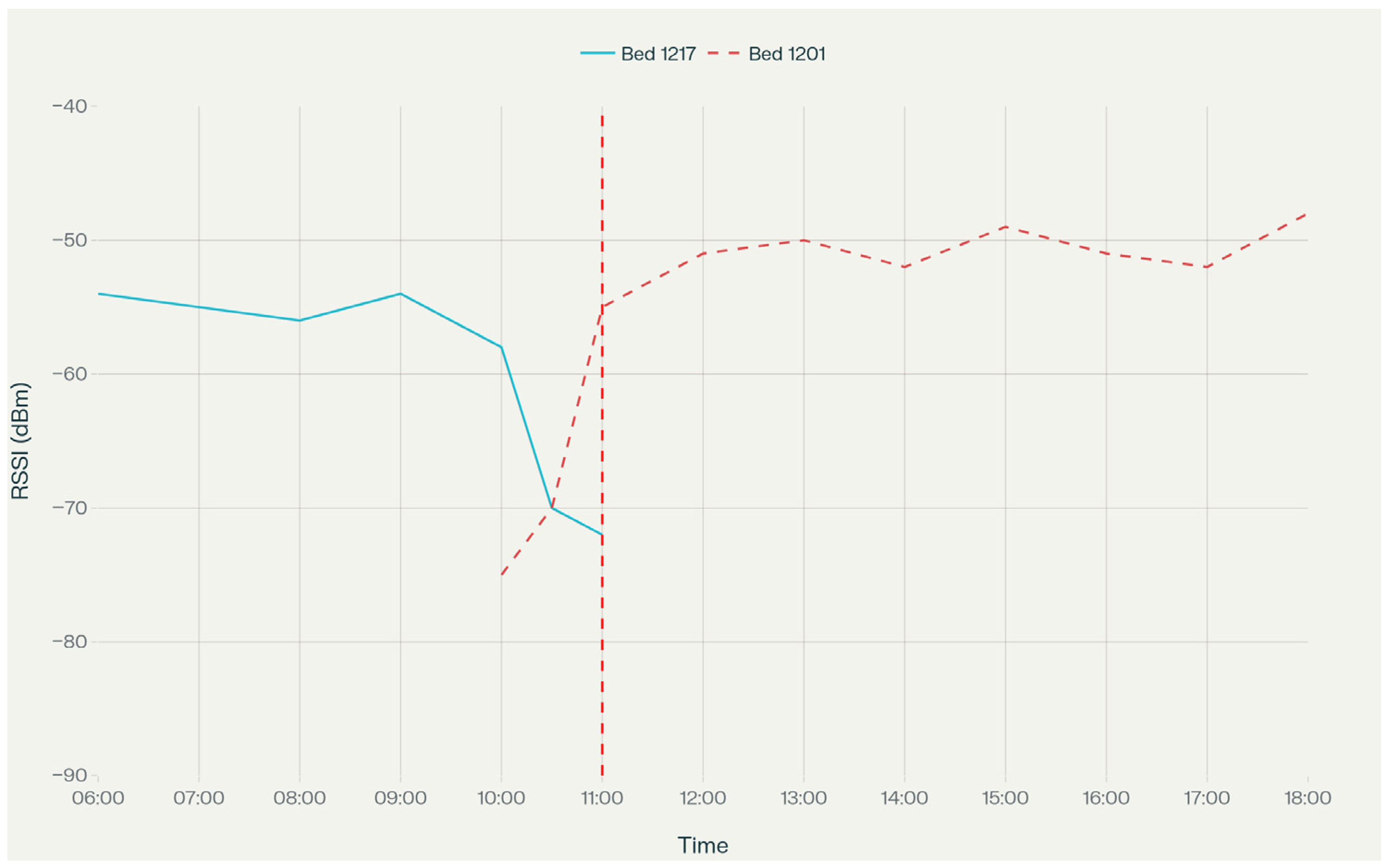
To further validate the system’s robustness in non-routine clinical scenarios, a second distinct case study was performed focusing on an emergency isolation transfer. A single smart mattress originally registered in Room 1217 was transferred to the more distant Room 1201 (Isolation Ward) between approximately 10:00 and 12:00 due to an urgent need to designate the original area for influenza isolation. The mattress remained in Room 1201 thereafter. Before the transfer, the mattress remained static in Room 1217, with its RSSI readings consistently stable at −61 to −63 dBm from 06:00 to 10:00, confirming the reliable baseline for static localization. During this period, the signal from the nearest sensor (Room 1217) was dominant.
The RSSI pattern shifted distinctly as the relocation began around 10:00. The signal from the original location’s nearest sensor (Room 1217) began a sharp decline. By the 11:00 batch, the transitional movement resulted in a complex pattern where the signal from the new location’s nearest sensor (Room 1201) was competing with others, leading to a period of data instability.
A clear and successful localization was established by the 12:00 batch. The signal from Room 1201 consistently became the strongest (approximately −64 dBm) and remained dominant through 18:00, confirming the successful placement and static state of the mattress in the Room 1201 Isolation Ward. This significant crossover in the strongest signal immediately triggered the system’s discrepancy check, requiring verification of the isolation bed’s new location.
Figure 7 visualizes this non-routine transfer, showing a distinct crossover in the dominant signal from Room 1217 to Room 1201, accurately reflecting the urgent physical transfer of the mattress. This case demonstrates the system’s ability to quickly capture and accurately distinguish changes in the dominant signal even during non-routine, cross-zone transfers, ensuring the reliability of asset location information for critical infection control and clinical workflow support.
4.3. Nurse Feedback on System Use
To complement the quantitative field validation, qualitative feedback was collected through a semi-structured group interview with six nurses who had used the smart mattress localization system during their daily work for more than three months. Their responses provided insight into how the system performed in actual clinical practice, including its usability, reliability, and influence on workload.
The system interface was generally regarded as straightforward. Four of the five respondents described it as intuitive, easy, or problem-free, while one found it “not easy to use.” A few mentioned that localization errors sometimes occurred but still appreciated that the operation itself was simple.
Most nurses agreed that the system improved efficiency compared with the previous manual recording process. They said that automatic identification of mattress locations “reduced the time spent searching” and “avoided the need to lift mattresses to check numbers.” One nurse remarked that the system “decreased the frequency of manual checking,” and another said it “helped by showing the possible location directly on the screen.” However, two respondents pointed out that bed transfers still required manual confirmation, and one felt this “did not simplify” the work compared with before.
Most nurses reported receiving few or no discrepancy alerts in the past week. When asked to rate their trust in the automatic localization, the nurses gave scores between 2 and 4 out of 5. The main concerns were interference from nearby rooms or floors, but several emphasized that the signal was “usually correct” and that errors were “rare.” One nurse summarized that “any technology is an auxiliary tool but never one hundred percent accurate,” expressing balanced professional realism.
Several participants recalled encountering alerts where the displayed room did not match the real one. These cases were generally minor, such as confusion between neighboring rooms. One nurse gave a typical example: “The mattress was in Room 7201, but the system showed 7191, two adjacent rooms.” Another said, “When the system showed the wrong floor, I checked the actual mattress and ignored it once confirmed.” Such remarks suggest that the system’s occasional mismatches were understandable in complex hospital environments and that nurses were able to manage these cases effectively.
When alerts did appear, they usually verified the mattress position to confirm accuracy. One nurse explained that when a discrepancy occurred, they “checked whether the displayed location matched the actual room” and “ignored it if the difference was only between adjacent rooms.” This shows that nurses used their judgment rather than relying blindly on the system, integrating it pragmatically into their workflow.
When the system indicated low signal confidence, the nurses adopted a cautious approach. Some accepted the suggestion after verifying the cause, while others rejected or manually verified it before confirming. One noted that “in the beginning I accepted changes automatically, but after confusion happened, now I always check whether there was a bed transfer first.” Another said, “If I am sure the mattress has not moved, I reject the suggestion; otherwise, I go to confirm.” These statements show that the staff applied professional reasoning and did not depend solely on automated outputs.
Opinions on the one-hour update cycle were diverse but generally moderate. One nurse considered it “too frequent” and suggested updating every four to eight hours, another recommended “once per shift,” and several said the current frequency was “just right.” Others pointed out that “mattresses are not moved often,” and therefore hourly updates were acceptable. The overall view was that the existing timing struck a balance between responsiveness and practicality.
Suggestions for improvement included automatic bed-number synchronization after transfers, movement history or exportable reports, signal optimization in complex layouts, and even automatic notification of mattress sensor damage. These ideas reflected thoughtful engagement with the system’s design rather than simple criticism.
Overall, five of the six nurses gave positive evaluations, describing the system as useful, efficient, and beneficial for maintaining data accuracy and reducing human error. One nurse regarded it as “not yet practical” because manual confirmation was still required. Taken together, these authentic responses confirm that the RSSI-based localization system is viewed as a helpful and credible support tool that assists but does not replace human decision-making.
4.4. System Learning and Improvement
The field validation provided both quantitative and qualitative evidence that the RSSI-based localization system achieved stable performance and was feasible for clinical integration. Across 42 h of operation, the system maintained a consistent signal baseline with clear room separation, confirming reliable room-level differentiation in real hospital conditions. The single-mattress relocation study further verified that the algorithm accurately detected movement events and automatically restored location confidence once the mattress returned to its designated room. Together, these findings demonstrate that the system can effectively manage hospital environments with minimal user intervention.
Feedback from nursing staff provided practical directions for system refinement. Training was identified as essential. When nurses understood the principles of RSSI localization and the meaning of confidence indicators, they responded to alerts more accurately and avoided unnecessary verification. Future deployments will include concise, scenario-based training modules that emphasize how to interpret signal strength and when manual confirmation is necessary.
The requirement for human confirmation was an intentional design decision. Allowing the system to update bed assignments automatically could blur responsibility for record accuracy. In addition, the system only provides room-level localization; therefore, nurses must manually verify the bed number when discrepancy alerts occur.
Most localization mismatches were traced to offline BLE gateways. When a gateway temporarily disconnects, a receiver in an adjacent room or on another floor can register as the strongest signal, leading to incorrect inference. This issue is quantitatively supported by our system stability data: the overall connectivity coverage was measured at 91.6%, indicating nearly one-tenth of expected records were missing due to communication failures. More specifically, the average hourly disconnection rate was 6.5% (corresponding to approximately 6.7 devices out of 103 being offline at any given hour). This rate of hourly receiver instability directly correlates with the occurrence of false room inferences.
To address this confirmed root cause of error, the system will incorporate an automatic Receiver Health Monitoring function that analyzes incoming data to detect offline or unstable gateways. When a gateway is detected as offline, localization processing for that specific room will be immediately suspended to prevent misleading updates and minimize false discrepancy alerts. A watchdog function will also be added to each gateway to enable immediate restart upon link loss, reducing downtime and improving reliability.
Nurses also expressed a clear wish for movement history and exportable reports to support administrative tracking and quality audits. This function can be included in the system plan and illustrated in
Figure 6. The upcoming update will allow staff to view mattress movement history, check verification records, and generate customizable reports directly from the nursing station interface. By combining traceable data with clinical documentation, this addition extends the system’s value beyond real-time monitoring to long-term operational analysis.
Overall, findings from both quantitative validation and user feedback confirm that technical accuracy alone is insufficient for clinical adoption. Collaboration with caregivers, accountability, and continuous usability improvement are equally important. The next generation of the RSSI-based localization system will therefore include stronger gateway monitoring, real-time status tools, and the new history and reporting functions, evolving from a passive safety mechanism into an active decision-support tool for hospital operations.
5. Conclusions and Discussion
This study developed and validated an RSSI-based BLE localization system for smart mattresses to ensure accurate room-level identification of mattress locations in hospital settings. The system was designed to operate through existing BLE gateways used for mattress communication, requiring no new infrastructure and minimizing interference with daily hospital activities.
Laboratory experiments established the RSSI–distance relationship and quantified the effects of walls and partitions, allowing accurate parameter calibration for room-level differentiation. Field validation further confirmed that the algorithm maintained stable and distinguishable RSSI patterns across 42 h of operation and correctly detected mattress relocations. The relocation test demonstrated that the system automatically restored localization confidence after the mattress was returned, confirming its robustness for practical use.
User evaluation provided critical insight into real-world usability. Nurses appreciated the automation and efficiency gains but emphasized the importance of accurate alerts, clear signal confidence indicators, and simple verification workflows. Their feedback directly guided system refinements, including improved BLE receiver monitoring, automatic detection and recovery of offline gateways, and streamlined manual confirmation procedures. These modifications address the technical sources of occasional mismatches and enhance the long-term reliability of the system.
Training also emerged as a key factor for successful adoption. When caregivers clearly understood the localization principles and confidence levels, they responded to alerts more effectively and avoided unnecessary rechecks. The system update will therefore include concise, scenario-based training materials integrated into deployment guidelines.
The next phase of work will focus on implementing these improvements in larger hospital networks and monitoring long-term stability under varying architectural conditions. Field data from expanded deployments will be used to optimize receiver placement and fine-tune signal thresholds. The development of historical movement tracking and reporting, although a lower priority than the core corrections, will continue in parallel as an optional administrative tool to support documentation and auditing.
In conclusion, the RSSI-based localization system has proven both technically feasible and operationally practical as a cost-effective solution for large-scale asset tracking. Its integration with existing hospital infrastructure, overcoming the typical barriers of high cost and deployment complexity, forms a solid foundation for a scalable, trustworthy, and clinically sustainable localization solution. Together with planned refinements in receiver management and workflow compatibility, this approach provides a valuable blueprint for implementing real-world localization for smart mattresses in healthcare environments.