1. Introduction
Since the escalation of U.S.-China trade tensions in 2018, the underlying logic of globalization has undergone a profound paradigm shift, transitioning from an “efficiency-first” ethos to a “security-oriented” imperative. The U.S. administration has increasingly leveraged a “de-risking” narrative to reconfigure global production networks, aiming to mitigate excessive dependencies on specific supply chains. This policy orientation has materialized through two primary strategic trajectories: first, “friend-shoring,” which utilizes mechanisms such as the Indo-Pacific Economic Framework (IPEF) to pivot industrial chains toward political allies in ASEAN and South Asia (the so-called “Altasia” economies); and second, “near-shoring,” which capitalizes on geographic proximity to fortify North American supply chain networks centered on Mexico. Amid the persistent implementation of unilateral protectionist policies, Washington’s strategy toward China has evolved from the imposition of tariff barriers to deep-seated structural adjustments. Notably, restrictive measures targeting third-country entrepôt trade have disrupted indirect trade routes between the two nations, thereby exacerbating the potential risk of industrial chain relocation away from China.
1.1. Research on the Related Impacts of the US Friend-Shoring and Near-Shoring Strategies
Under the “friend-shoring” strategy, the United States promotes the relocation of industrial chains towards political and security allies, attempting to construct a supply system that excludes competitors. Academia has proposed conceptual frameworks such as “Altasia” to identify fourteen economies, including ASEAN and South Asia, with potential for substitution. Research indicates that this strategy has exerted a significant “crowding-out effect” on China’s strategic industries, exacerbating the risk of partial “decoupling” and marginalization of China within global value chains. For instance, He et al. empirically found that US export controls significantly reduced the risk resilience of Chinese manufacturing firms [
1]. Furthermore, Boeckelmann et al. analyzed the structural conditions for the rise of this strategy and the limitations of its consistent implementation [
2]; Banaszyk demonstrated its role as a driver for reshaping the geographical landscape of international supply chains [
3]; and Vivoda and Matthews pointed out that friend-shoring is an effective approach to address critical mineral supply chains in the West [
4]. Although regions like ASEAN have enhanced their competitiveness by undertaking industrial transfers, existing research also warns that such politically driven reorganization may pose long-term challenges to sustainable global economic development.
Regarding the “near-shoring” strategy, the United States leverages geographical proximity to primarily strengthen the North American supply chain network centered on Mexico. The signing of the United States-Mexico-Canada Agreement (USMCA) in 2020 and the proposed Americas Act in 2024 signify a strategic shift by the US from globalized division of labor towards a regionalized configuration. Bondi et al. demonstrate that GVC trade increases the probability of forming deep PTAs that include stringent regulatory provisions, highlighting such arrangements as crucial institutional infrastructure for near-shoring and production network restructuring [
5]. Trade data show that Mexico surpassed China in 2023 to become the largest source of US imports. In response to this trend, some multinational corporations in China and Chinese-funded enterprises have begun transferring production capacity to the Americas, but due to increasingly stringent local regulations and policy uncertainties, the pace of investment significantly slowed in 2024. Academic evaluation of near-shoring effects remains divided. Stringer et al. empirically supported the role of geographical proximity in building resilient supply chains [
6]; conversely, Shi and Ouyang et al. noted that such trade diversion does not support Mexico in reducing US reliance on China’s supply chains [
7].
1.2. Research on Practical Applications of Global Production Network Models in Industrial Chains
In terms of methodological evolution, complex network analysis and Multi-Regional Input-Output (MRIO) models have emerged as the core instruments for dissecting the intricacies of global production networks. Leveraging its advantages in characterizing the topological structures of large-scale economic agents, complex network analysis provides a holistic perspective for identifying the overall features of trade networks. Recent studies have employed complex network analysis and the Global Industrial Value Chain Network (GIVCN) framework to examine structural resilience and substitution effects in global production networks. Xing et al. quantified the substitution effects of Asian economies on China’s industrial and supply chains using the X-index Filtering Algorithm (XIFA), revealing significant restructuring risks under diversification strategies [
8]. Jiang and Xing developed a quantitative framework to assess whether China is decoupling from global value chains, employing counterfactual topological simulations and backbone network extraction methods [
9]. Furthermore, Xu et al. analyzed the transnational long industrial chains from the Belt and Road perspective [
10]. Furthermore, Shen et al. explored the evolutionary mechanisms of industrial networks from the perspective of link prediction [
11]. Regarding the dynamic identification of community structures, Kireyev et al. systematically assessed the robustness of community detection in global input-output networks and proposed the Average Assignment Variation Index (AAVI), which possesses “leading indicator” characteristics [
12]. Concurrently, value-added accounting methods based on MRIO databases have made significant strides in industrial relocation research. Recent advancements in value-added accounting have moved towards incorporating multinational enterprises into inter-country input-output models to capture foreign-affiliated capacity relocation more accurately. Bai et al. developed a framework measuring employment in global value chains based on an inter-country input-output model that explicitly distinguishes multinational enterprises from domestic firms, providing nuanced accounting of MNE-led industrial relocation [
13]. Borin and Mancini proposed a comprehensive toolkit for value-added accounting of trade flows, addressing double-counting issues in traditional gross trade statistics and establishing authoritative standards for GVC participation measurement [
14]. Nevertheless, the deep integration of network-based topological analysis with the structural value flows of GVCs remains a critical frontier for methodological breakthroughs.
Regarding research subjects and accounting principles, empirical studies are shifting from macroeconomic aggregate analysis to the micro-level examination of Multinational Enterprises (MNEs). Conventional research predominantly adheres to the “territorial principle” of national economic accounting, conflating foreign-invested affiliates with domestic enterprises. This approach makes it difficult to accurately identify the substantive impact of foreign-funded capacity relocation on China’s industrial structure. To overcome this limitation, Liu and Xing developed a dual-extended MRIO framework that distinguishes between domestic and foreign-invested enterprises, overcoming the territorial principle limitation of conventional models [
15]. However, constrained by the time lag of MRIO data and the limited accessibility of micro-level data at a global scale, systematically evaluating MNE-led industrial relocation and its global linkage effects continues to pose significant challenges.
1.3. Research on the Identification of Sources, Transmission Mechanisms, and Measurement of Industrial Chain Risks
Extant literature systematically examines industrial chain risks across three primary dimensions: identification of risk sources, transmission mechanisms, and measurement methodologies. Regarding the identification of risk sources, there is a prevailing consensus that industrial chain risks possess both endogenous structural characteristics and exogenous shock-driven attributes. Endogenous risks are rooted in the “scale-free” and “small-world” topological features of global production networks [
16]. Under this “core-periphery” structure, fluctuations in a few pivotal hub nodes can rapidly propagate through network “shortcuts” [
17], thereby highlighting the inherent systemic vulnerability. Conversely, exogenous risks encompass external shocks such as supply disruptions, demand contractions, and logistical bottlenecks [
18].
In terms of transmission and evolutionary mechanisms, scholars conceptualize risk as a “risk flow”—operating in parallel with product, information, and financial flows—and focus on the dual effects of Global Value Chains in shock diffusion. On one hand, through input-output linkages, localized micro-shocks can be significantly amplified into macro-economic fluctuations, triggering systemic crises [
19,
20,
21,
22]. For instance, Verschuur et al. developed a systemic risk framework to improve the resilience of port and supply-chain networks to natural hazards, empirically demonstrating that production network fragmentation markedly amplifies systemic risks, where indirect losses from cascading disruptions significantly exceed direct losses [
23]. On the other hand, Li et al. demonstrate that vertical linkages in multilayer supply chains can buffer cascading disruptions [
24].
Regarding measurement and evaluation tools, the academic field has transitioned from simple trade network analysis to complex production network analysis, establishing a research paradigm centered on Multi-Regional Input-Output (MRIO) models. By constructing sophisticated GVC accounting frameworks, researchers can transcend traditional value-flow tracking to rigorously quantify risk exposure, allocation efficiency, and production interdependencies within global production networks. This provides a precise empirical and theoretical foundation for identifying critical vulnerabilities in industrial chains and assessing systemic resilience [
25,
26,
27,
28,
29,
30].
This study advances the literature on global value chain (GVC) restructuring by introducing an innovative methodological framework that overcomes the limitations of traditional, static network analyses. While complex network analysis is widely applied, existing studies often struggle to filter network “noise” and isolate the net structural effects of policy interventions. To address this, we first construct a Global Industrial Value Chain Backbone Network (GIVCBN) using the X-index Filtering Algorithm (XIFA) to accurately extract core trade relationships. Our primary methodological contribution, however, lies in employing a novel “merge-then-prune” counterfactual topological simulation. Unlike descriptive approaches, this simulation effectively isolates and quantifies the net impact of the U.S. “dual-shoring” strategy on China’s industrial position and cross-sectoral risk cascades. Utilizing revised ADB-MRIO data (2007–2024), our counterfactual scenarios reveal a structural transition from short-term “hub substitution” to long-term “topological fragmentation,” providing a robust quantitative tool for assessing industrial chain resilience.
2. Materials and Methods
2.1. Data Description
Multi-Regional Input-Output tables quantitatively delineate (international) trade across multiple regions and the respective flows of intermediate and final goods, reflecting production-technology linkages and the integrated supply-demand equilibrium among industrial sectors both intra-regionally and inter-regionally. MRIO tables are highly extensible according to specific research objectives. Furthermore, as MRIO tables present the convoluted production-consumption relationships between economies and their industrial sectors in a matrix-based balance sheet format, they lend themselves to the application of network science models and algorithms for GVC modeling and analysis. Consequently, they have emerged as a robust tool for investigating vertical specialization, international trade, and the optimization of industrial structures.
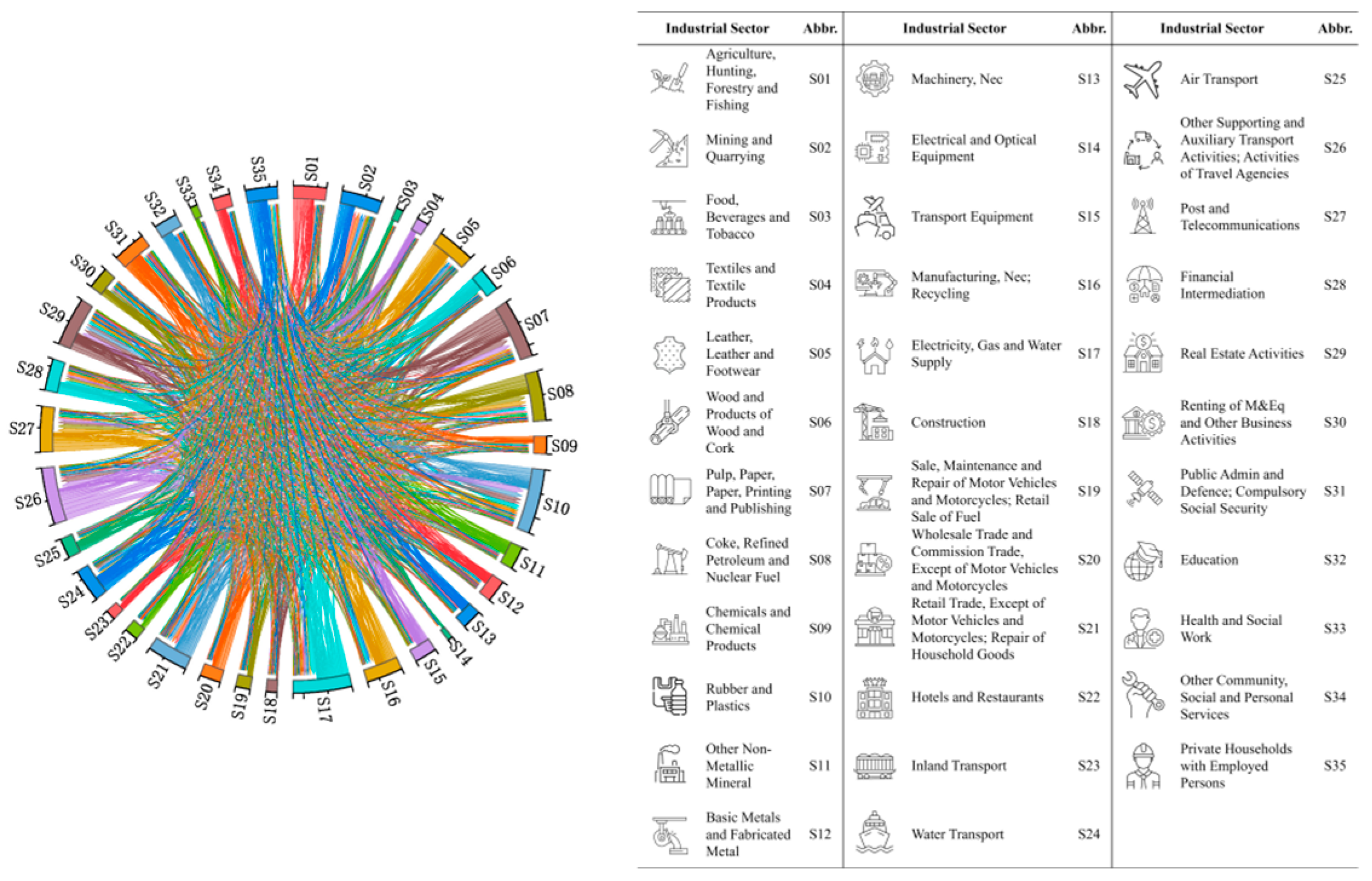
This research primarily utilizes the Asian Development Bank Multi-Regional Input-Output (ADB-MRIO) database. The E62 version encompasses 62 economies and 35 industries (as detailed in
Figure 1), providing granular intermediate trade data essential for modeling global industrial value chains. According to the latest technical report released by the ADB, the 2025 iteration of the ADB-MRIO panel data covers continuous benchmark years for 2000 and from 2007 to 2024, ensuring both the timeliness and the breadth of the data coverage.
To ensure the rigor and reproducibility of the empirical analysis, this paper draws upon the standard industrial classification frameworks of the United Nations (UN) and the Organisation for Economic Co-operation and Development (OECD). Based on the characteristics of core factor inputs, we clearly define and categorize the 35 industrial sectors in the Asian Development Bank Multi-Regional Input-Output (ADB-MRIO) tables. Specifically, resource-intensive industries, which primarily rely on natural resource endowments and primary processing, encompass agriculture, hunting, forestry and fishing (S01), mining and quarrying (S02), and food, beverages and tobacco (S03). Capital-intensive industries, characterized by a high organic composition of capital and heavy assets, include basic metals and fabricated metal products (S12). Technology-intensive industries, distinguished by high R&D intensity and complex manufacturing processes, mainly consist of electrical and optical equipment (S14) and chemicals and chemical products (S09). Furthermore, to capture the transmission effects within the value chain, this paper categorizes key supporting sectors, such as business services (S22), as producer services.
The primary assessment period for this study is restricted to 2007–2023. This decision stems from the fact that the 2023 data have undergone comprehensive revision and integration by the ADB, thereby offering the high degree of reliability necessary for constructing backbone networks and conducting robust quantitative analyses of policy shocks. While the 2024 data are critical for capturing the most recent policy impacts, they may not yet have been subjected to the same level of exhaustive calibration and revision due to their recent release. Consequently, the 2024 data are primarily employed in the subsequent scenario simulation section for exploratory assessments of contemporary policy dynamics and potential future trajectories, rather than serving as a baseline year for the core empirical evaluation.
2.2. Network Modeling
Within a regional economic system, industrial sectors and the value, material, and information flows among them constitute relatively independent production networks. These production networks, in turn, establish interconnections through inter-regional and even international/cross-regional industrial and supply chains, jointly forming a complex system characterized by complexity, structure, hierarchy, heterogeneity, and synergy—the Global Industrial Value Chain Network Model (hereinafter referred to as the “GIVCN model”). Based on the intermediate product usage regions from ADB2024 (E62), this paper constructed 16 GIVCN models for the period 2007–2023, specifically . Here, all upstream industrial sectors form the object node set O, and all downstream industrial sectors form the participant node set P. Edges point from upstream industrial sectors to downstream industrial sectors, representing the flow direction of intermediate product trade, and constitute the edge set E (self-loops of nodes, reflecting an industrial sector consuming a portion of its own output as input, are also included in set E). When acting as a consuming sector and competing with N − 1 other sectors, the intermediate product input obtained by downstream industrial sector i from its upstream industrial sector j is denoted as indicates that the upstream and downstream industrial sectors are the same sector), which constitutes the weight set W. Negative elements in MRIO tables, representing returns between industrial sectors, are uniformly treated as 0 in network modeling.
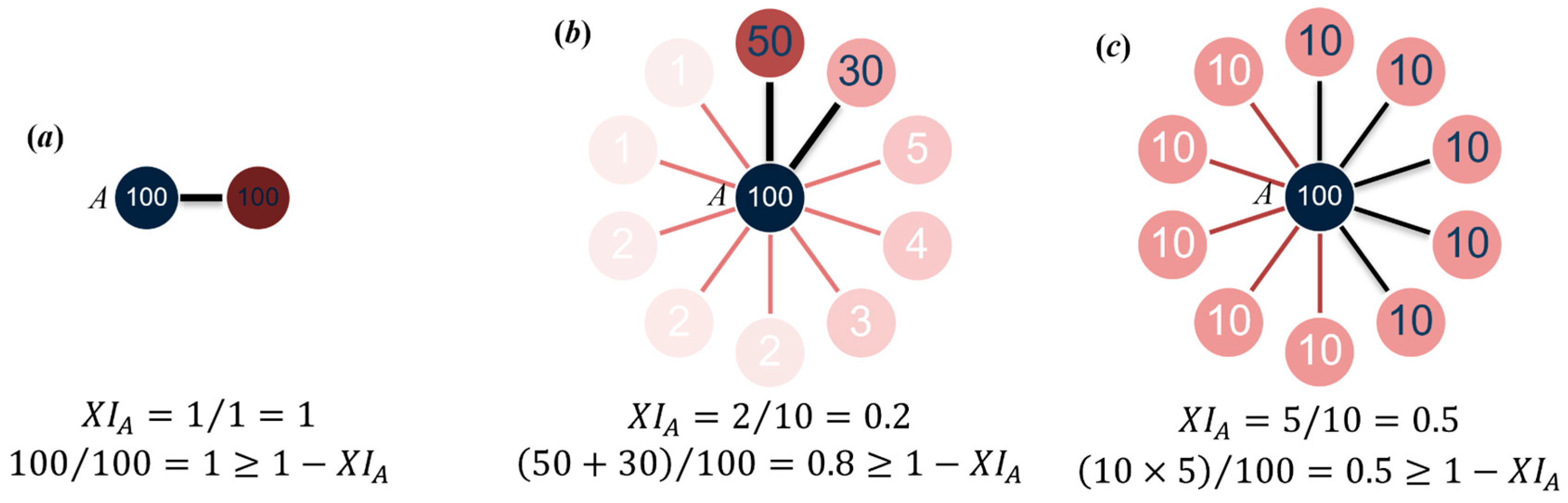
The GIVCN model characterizes the topological structure of global production networks. It is a type of very dense (approximately fully connected) weighted directed network, thus requiring dimensionality reduction to reveal the characteristics of changes in its network topology. Considering the highly heterogeneous value or material flows between upstream and downstream sectors within the network model, this paper employs the X-Index Filtering Algorithm (XIFA) to extract sub-networks formed by important intermediate product trade relationships from the GIVCN model [
17,
31,
32], naming them the Global Industrial Value Chain Backbone Network Model (hereinafter referred to as the “GIVCBN model”). The specific steps are illustrated in
Figure 2.
To simulate the restructuring of industrial chains, this study constructs two virtual economy scenarios. The term “AltasiaUSA” represents a virtual economic entity composed of the 14 Altasia (Alternative Asian Supply Chain) economies and the United States, which is used to analyze the extent to which the U.S. “friend-shoring” strategy influences China’s industrial transfer. Similarly, “USMCA” denotes the regional economic cooperation organization consisting of the United States, Mexico, and Canada, utilized here to evaluate the impact of the “near-shoring” strategy. In response to these scenarios, this paper designs two evolutionary models to characterize varying degrees of economic integration.
Taking the first scenario as an example (i.e., AltasiaUSA), the specific modeling steps are as follows:
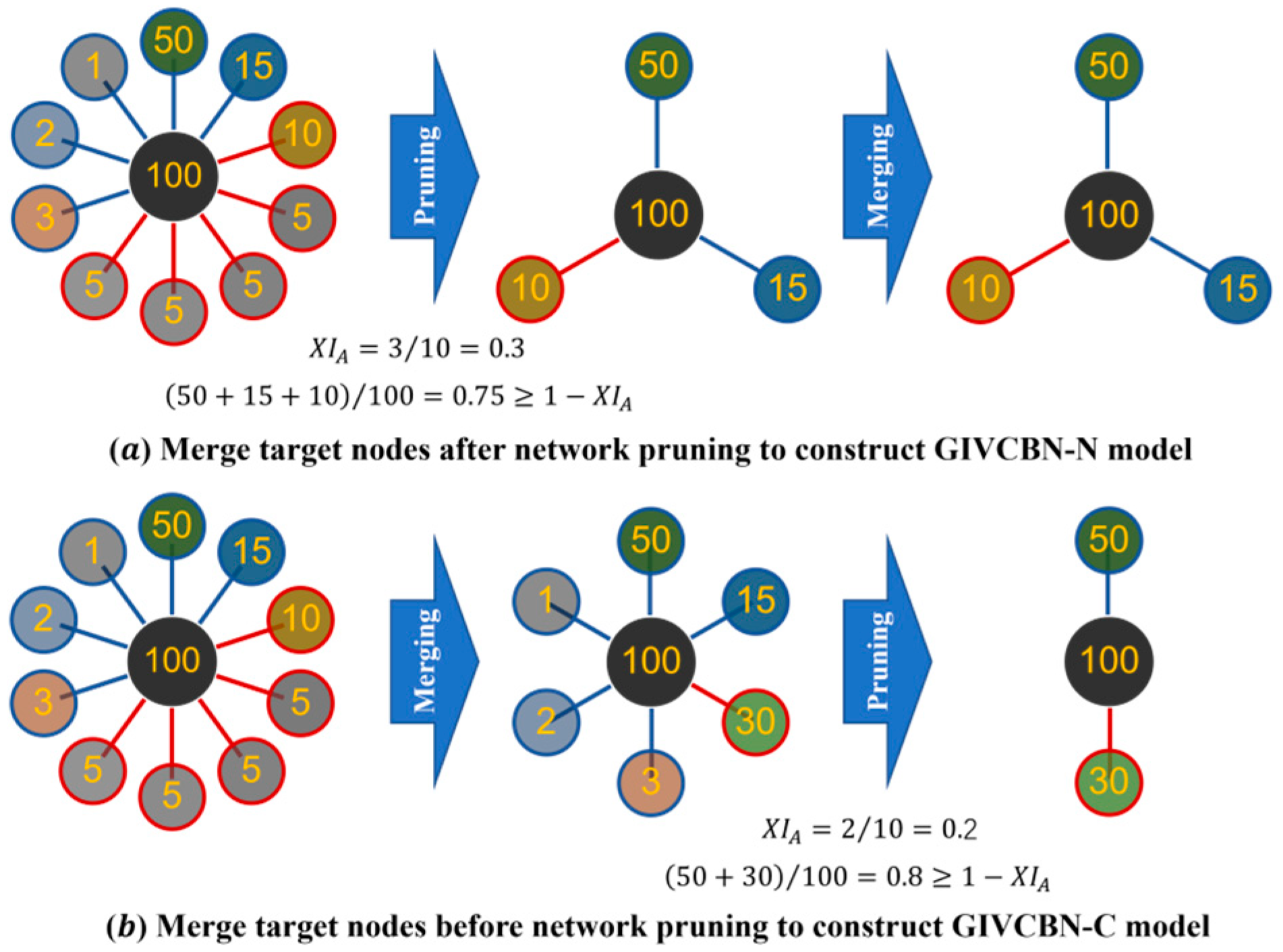
GIVCBN-AltasiaUSA-I Model: This model assumes that the Altasia-related economies and the United States are not integrated into a closely interconnected economic bloc. First, the GIVCN model is pruned using the XIFA to extract its network backbone. Subsequently, the industrial sectors of Altasia and the United States are merged. This step aims to identify the persistence of individual sectors within the network backbone, driven solely by their inherent market competitiveness and in the absence of robust policy intervention.
GIVCBN-AltasiaUSA-II Model: This model assumes that the Altasia-related economies and the United States are integrated into a closely interconnected economic bloc. The modeling procedure is reversed compared to Model I. Initially, the industrial sectors of Altasia and the United States are merged to form “virtual supernodes.” Subsequently, the XIFA is applied to prune the restructured network. Under this configuration, the aggregation of trade flows from multiple sectors prior to pruning grants this consolidated entity a significant topological weight advantage. This, in turn, facilitates a shift of sectors originally situated at the “periphery” of the network within this integrated bloc towards a more “central” position.
The modeling processes for the GIVCBN-USMCA-I and GIVCBN-USMCA-II models follow the same methodology, with the distinction that they respectively treat the United States, Mexico, and Canada as “loosely integrated” and “tightly integrated” economic entities.
Through comparison, the GIVCBN-I model delineates the core industrial and supply chain topological structure of the global production network within the context of accelerating global value chain restructuring. Conversely, the GIVCBN-II model initially treats specific countries/regions and their industrial sectors as a cohesive, integrated entity. This approach enables them to secure a greater share of intermediate product resources during the pruning process, consequently drawing industrial sectors originally situated at the “periphery” of the global production network within this entity closer to its “core.” Therefore, compared to the GIVCBN-I model, the GIVCBN-II model reveals simultaneous phenomena of network agglomeration in certain localized areas and network disintegration in others. This intrinsically reflects both the destination and origin points of outward industrial transfer (and indeed, industrial chain relocation) (For a detailed supplement to this method, see
Appendix B).
2.3. Characteristic Indicators
This study employs a sophisticated network analysis framework to quantify the effects of policy shocks by comparing two distinct modeling scenarios: the null model and the counterfactual model. For each industrial sector, three types of centrality indicators are computed using complex network algorithms. The core metric for evaluating policy-induced disruptions is the ratio of the indicator value derived from the counterfactual model to that from the null model. A ratio significantly deviating from 1 (particularly approaching 0) indicates a stronger adverse impact.
2.3.1. Degree Centrality
Degree Centrality (DC) measures the number of direct industrial linkages an industrial sector possesses within the global production network, intuitively reflecting the scope of its influence within the industrial and supply chain. The degree of a node is the number of edges directly connecting it to other nodes. A higher degree implies greater importance and higher degree centrality. In a network containing N nodes, the maximum possible degree is
. For comparability, centrality indicators are normalized. The expression for the degree centrality of a node with degree
is:
In the global production network, a higher degree of centrality for an industrial sector indicates that more sectors have established industrial linkages with it, thus granting it a relatively higher status within the network. Since the GIVCBN model is a directed network, In-Degree Centrality and Out-Degree Centrality are used to reflect the number of upstream and downstream sectors an industrial sector has direct linkages with, respectively.
2.3.2. Betweenness Centrality
Betweenness Centrality (BC) measures an industrial sector’s capacity to act as a hub for value-added intermediation of intermediate products within the global production network. Drawing on Burt’s Structural Holes theory, it reflects the sector’s potential benefit capture capability within the industrial chain. If there are
shortest paths between a pair of nodes (j, k), and
of these paths pass through node
, then node
’s contribution to the betweenness of this node pair is
. Summing node
’s contributions to the betweenness of all node pairs and dividing by the total number of node pairs (normalized) yields the betweenness centrality:
In the global production network, this indicator quantifies an industrial sector’s potential control over value flow. A higher betweenness centrality signifies stronger control capability and informational advantages. Removing or restricting a sector with high betweenness centrality would significantly impact the network’s topology and transmission efficiency.
2.3.3. Closeness Centrality
Closeness Centrality (CC) measures the industrial agglomeration relationships an industrial sector forms with all its upstream and downstream sectors within the global production network. A higher value indicates greater stability of the sector’s industrial and supply chain, i.e., stronger resilience. Closeness centrality is inversely proportional to the sum of the shortest distances from a node to all other nodes. Let
denote the shortest distance from node
to node
. Summing over all other nodes and normalizing gives:
The node i with the smallest sum of shortest distances to all other nodes has the maximum CC(i) value. While the node with the highest betweenness centrality has the greatest control over value flow, the node with the highest closeness centrality has the optimal overview of value flow. In the global production network, if an industrial sector is very close to others, value flow transmission becomes efficient, significantly enhancing the resilience of its related industrial and supply chains. Thus, closeness centrality provides a measure of a specific sector’s resilience and can be further decomposed into In-Closeness Centrality and Out-Closeness Centrality to assess agglomeration with upstream and downstream sectors, respectively.
3. Empirical Analysis
This chapter employs a counterfactual analysis approach to empirically assess the outward relocation risks for China’s various factor-intensive industries. The GIVCBN-I model, which represents the baseline real-world scenario, is designated as the Null Model. Conversely, the GIVCBN-II model, an artificial network simulating the disruptive effects of the U.S. “dual-shore outsourcing” (encompassing friend-shoring and near-shoring) strategy, is designated as the Counterfactual Model. By quantifying the non-trivial differences in their topological structures, this study aims to precisely measure the intensity of policy intervention’s disturbance on the backbone of the global production network.
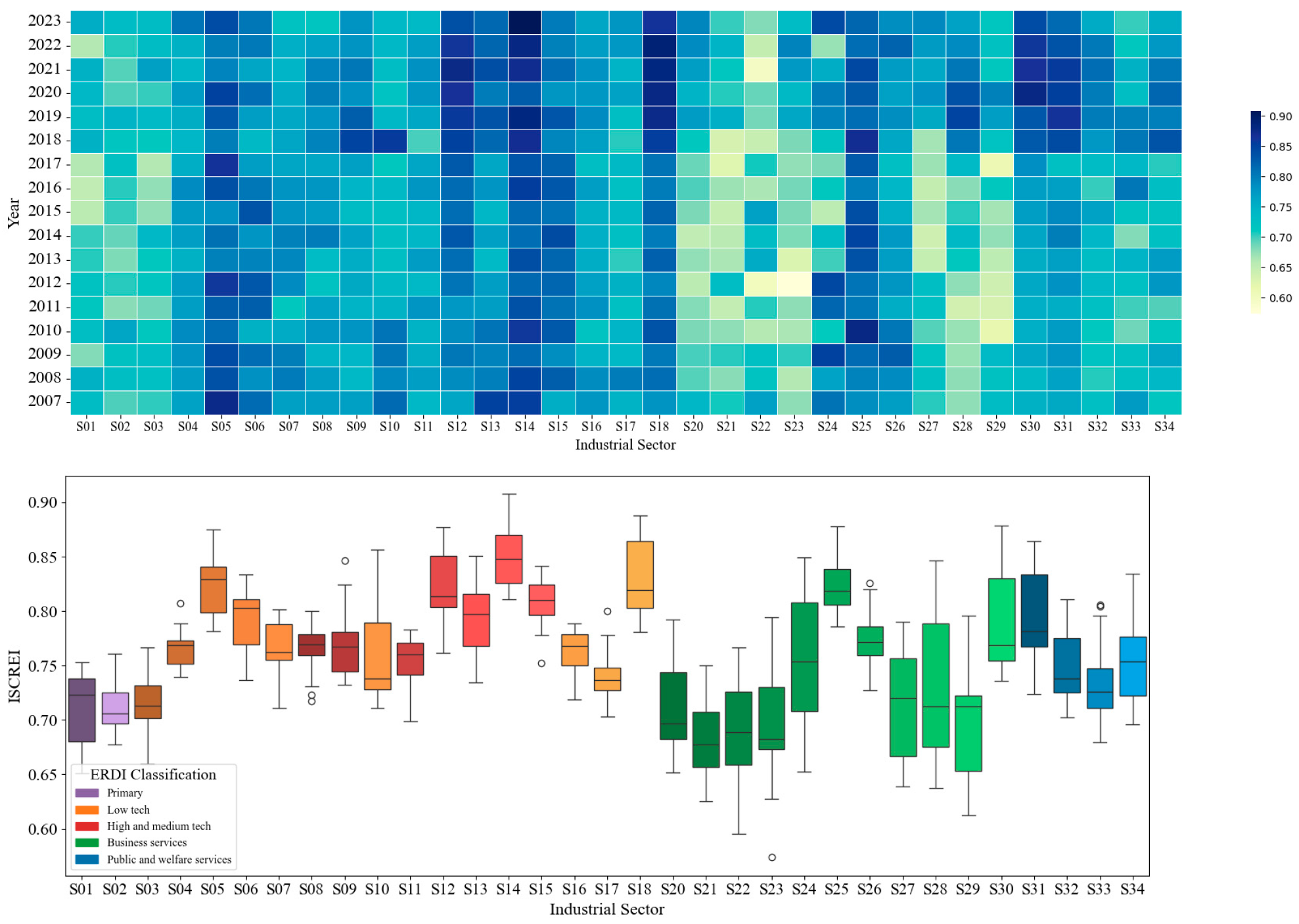
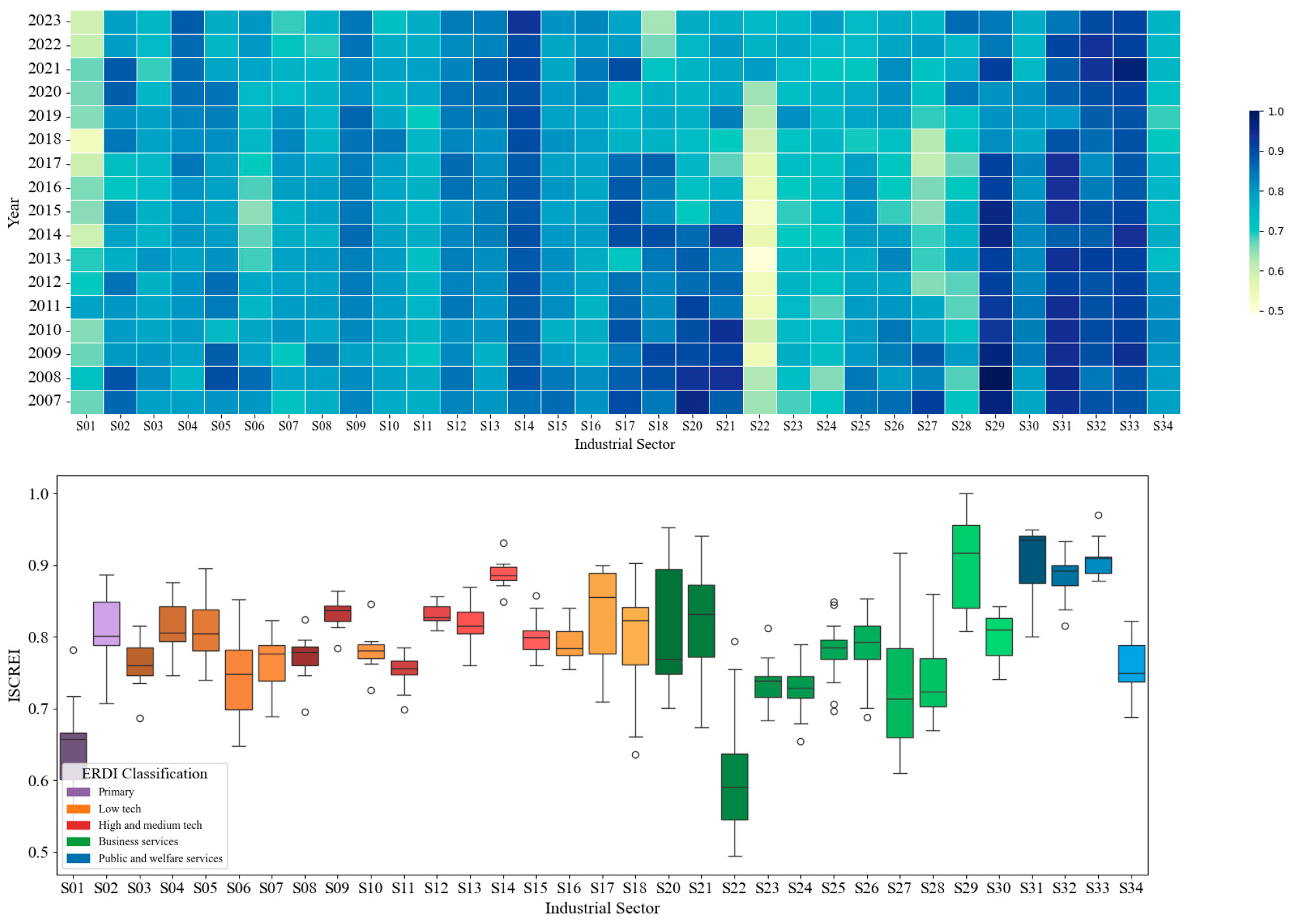
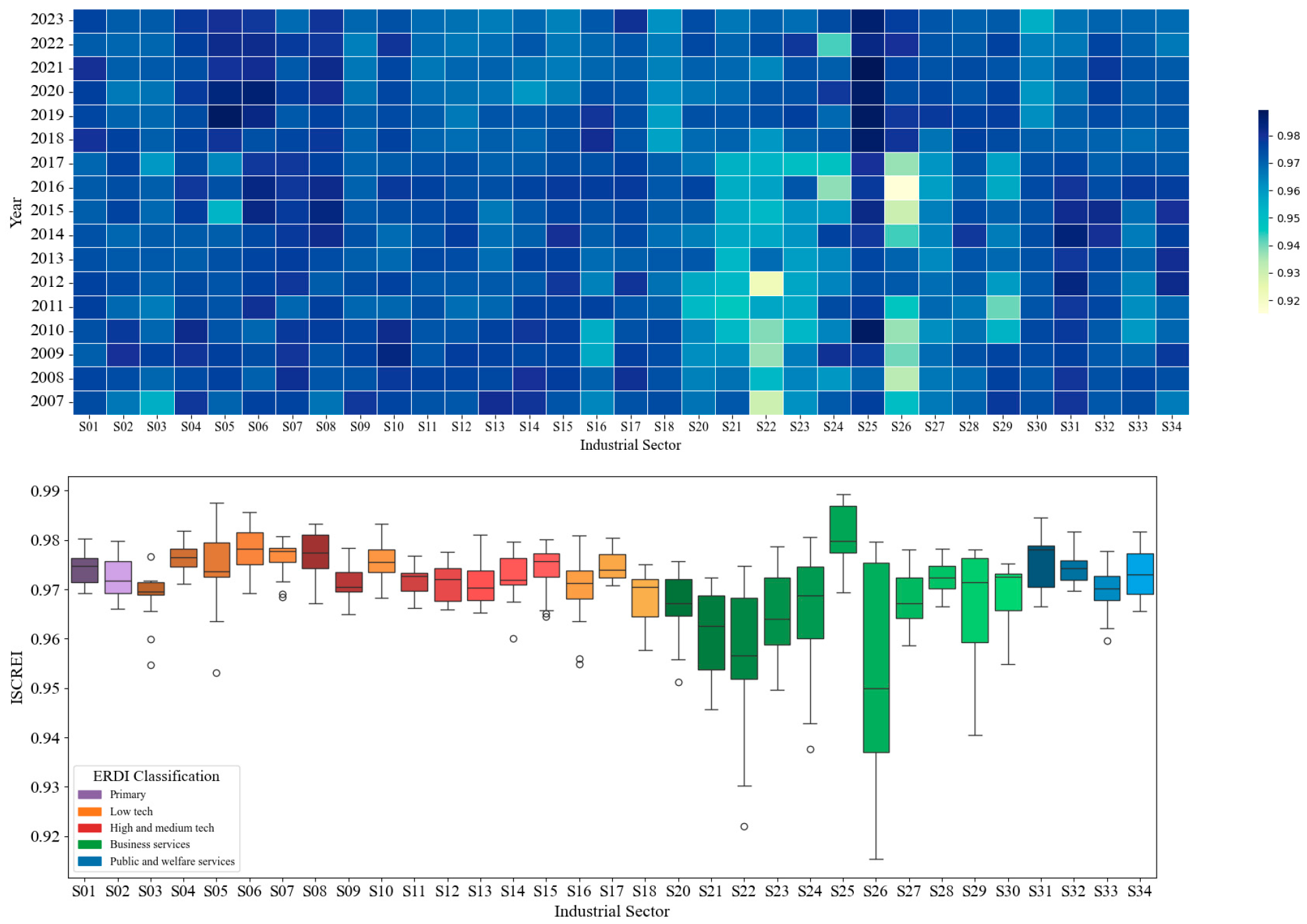
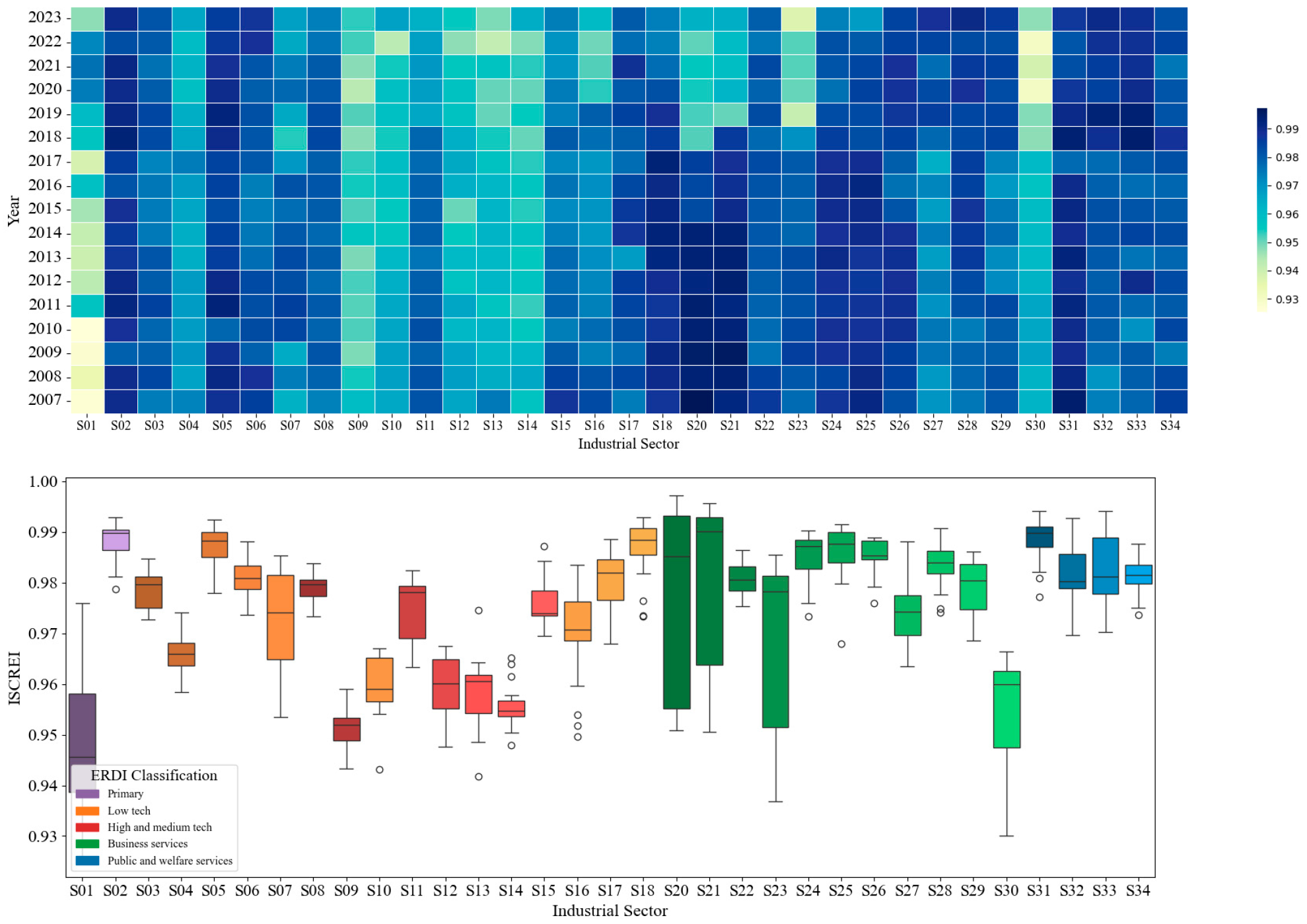
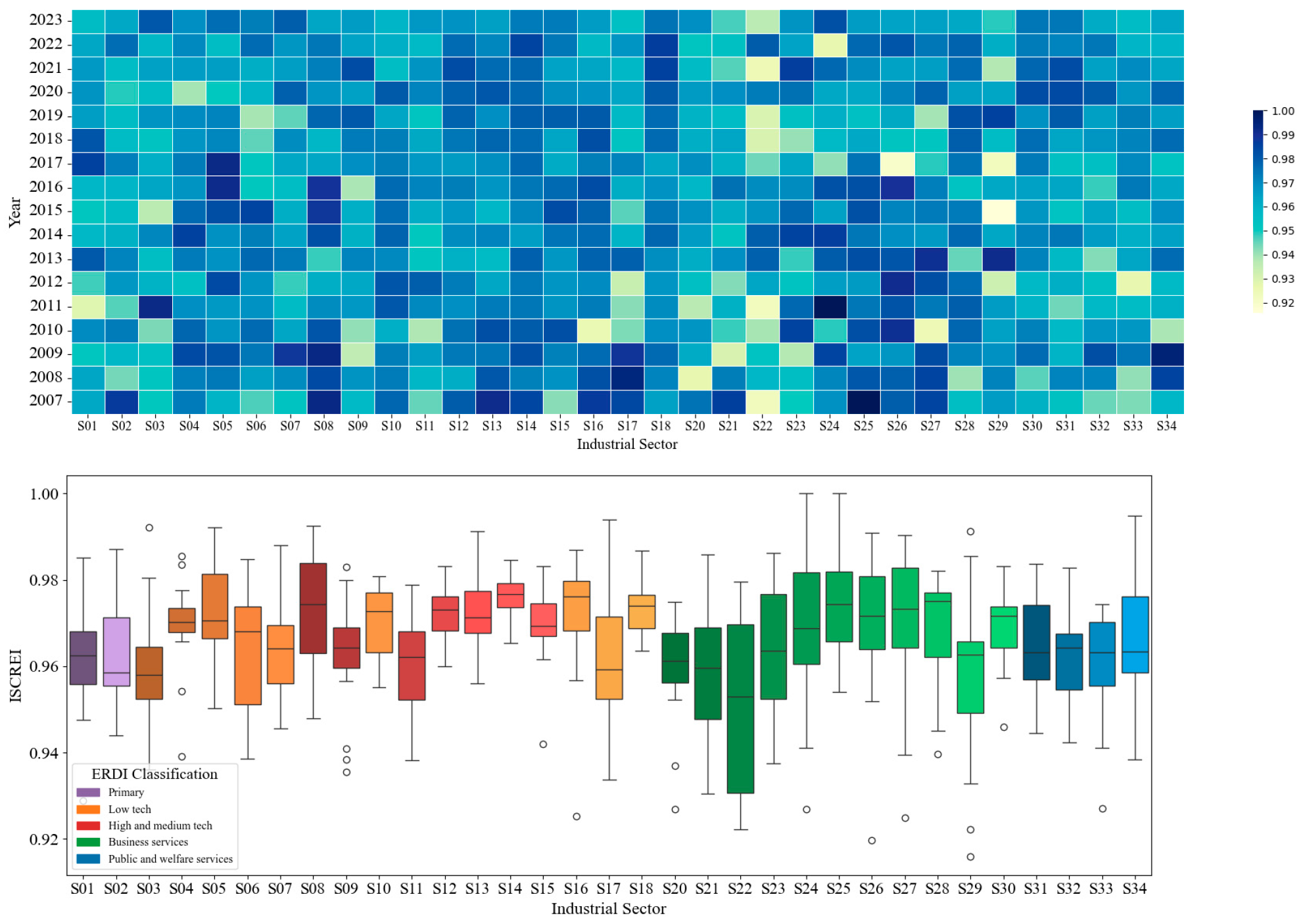
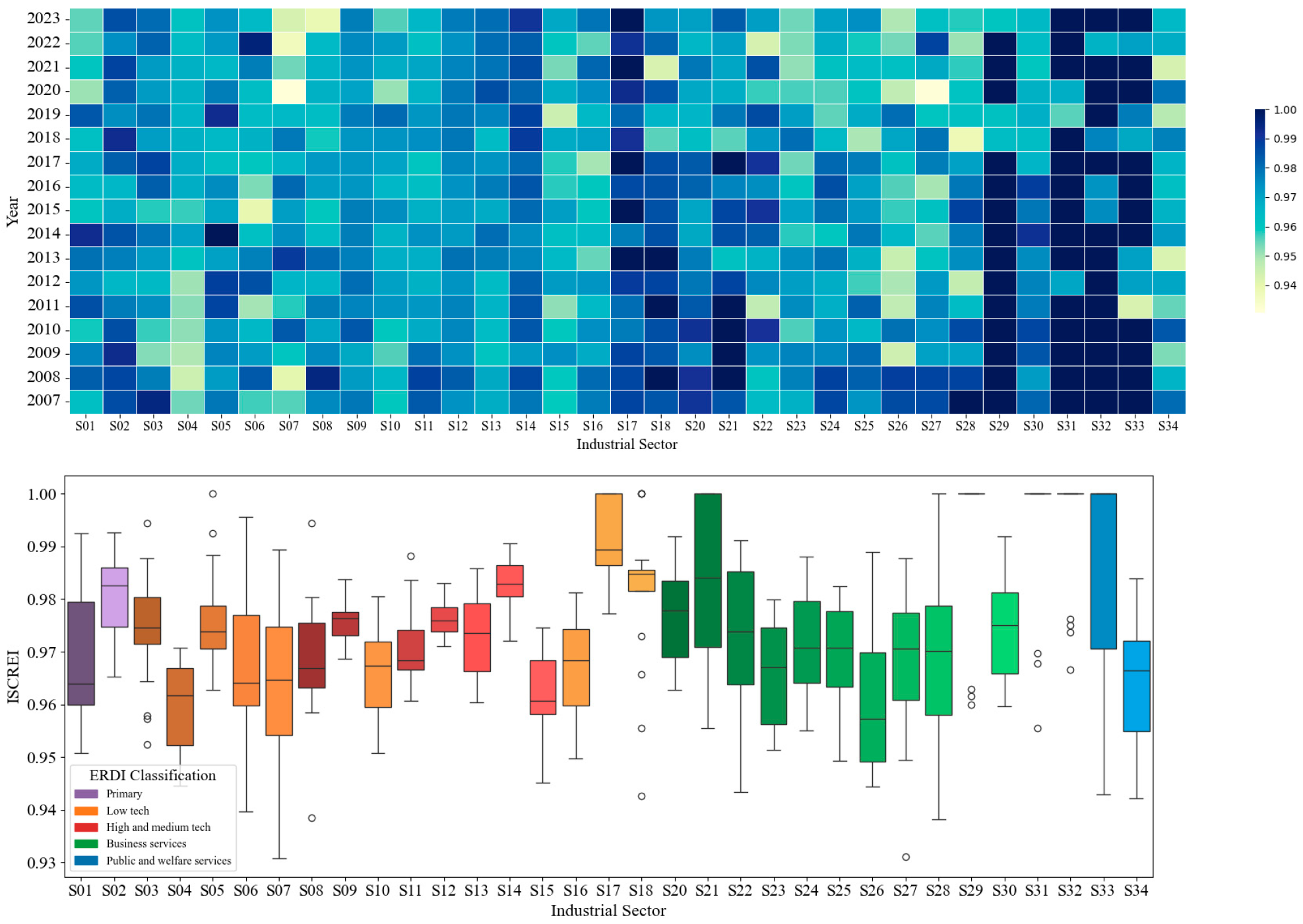
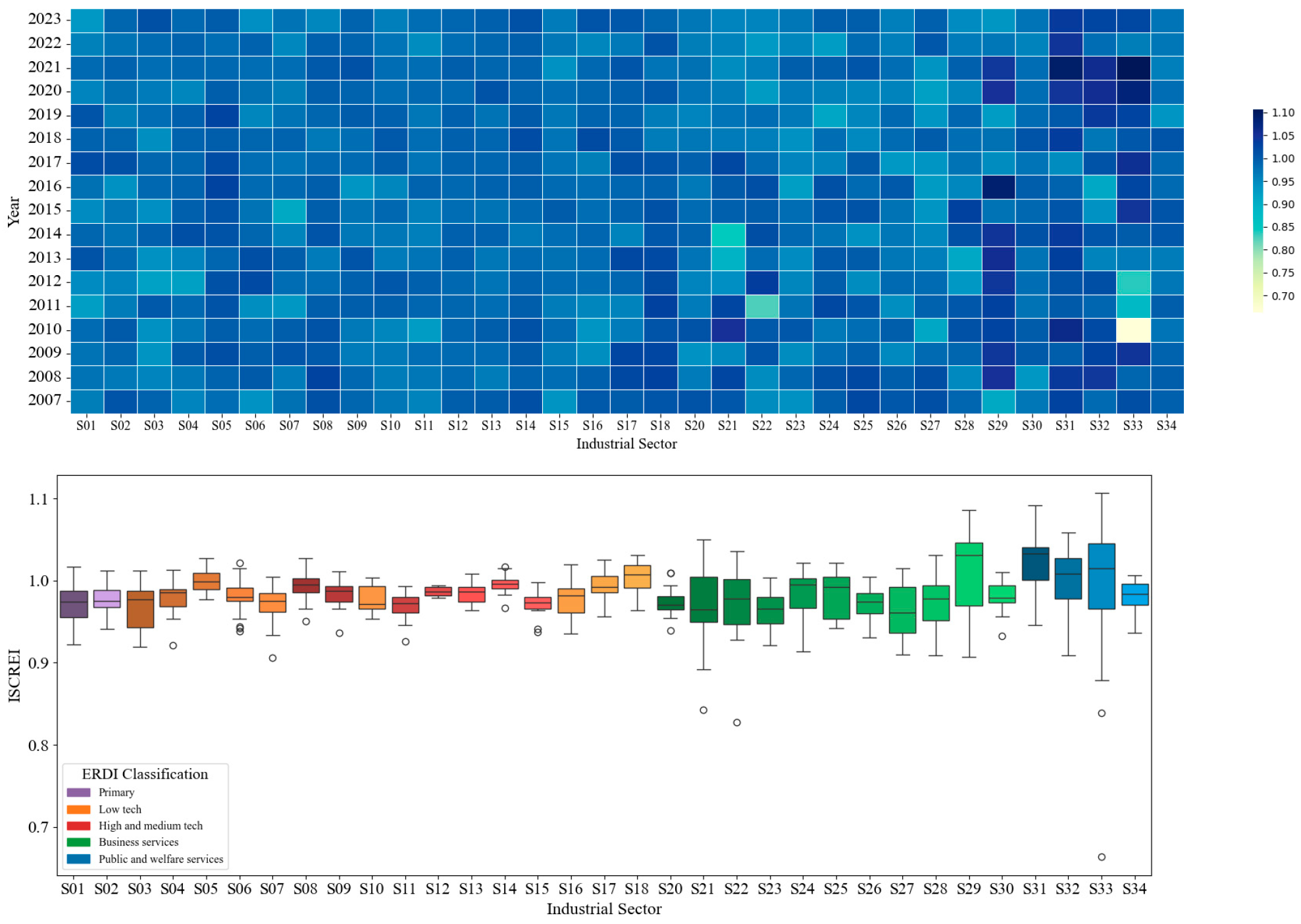
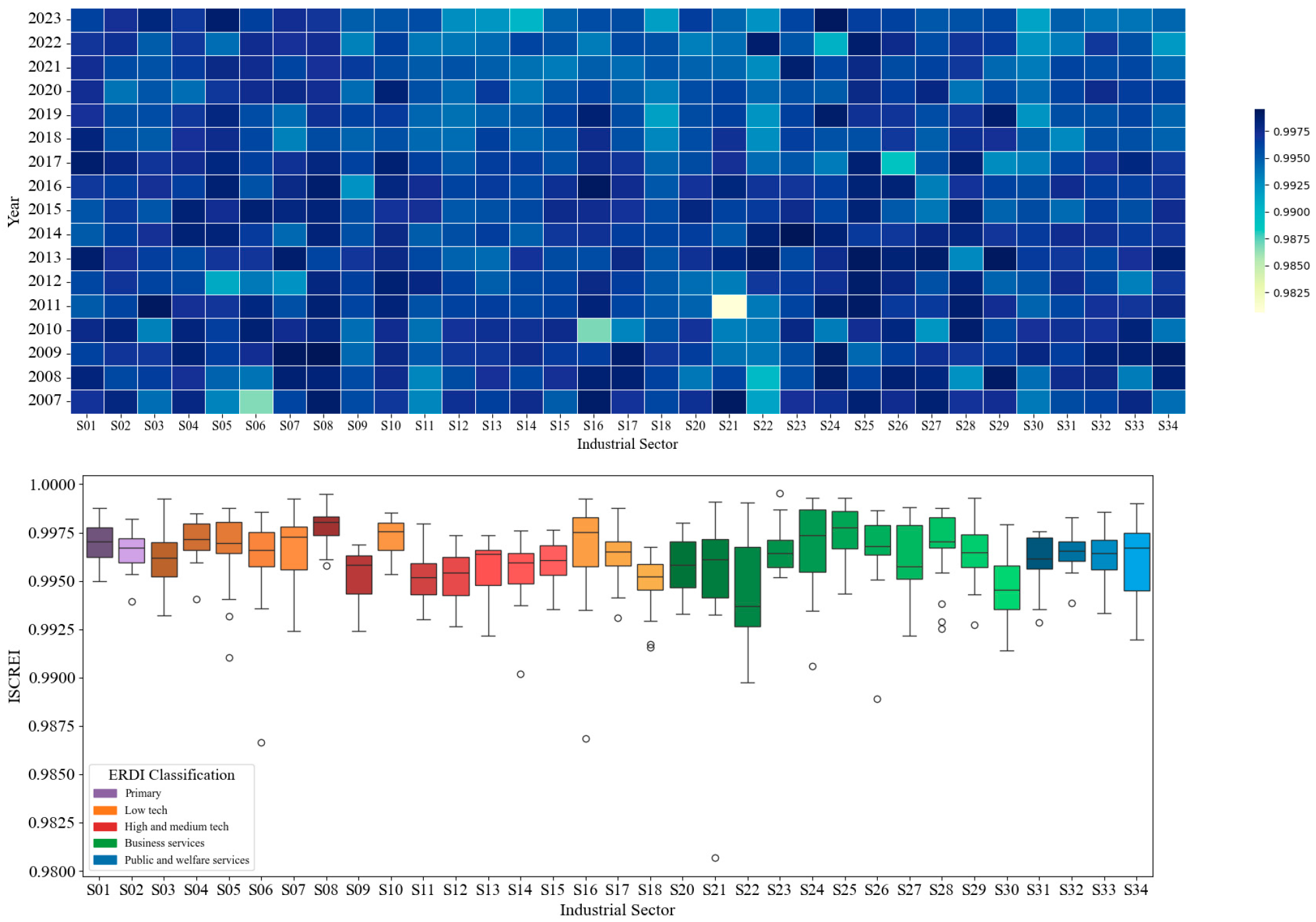
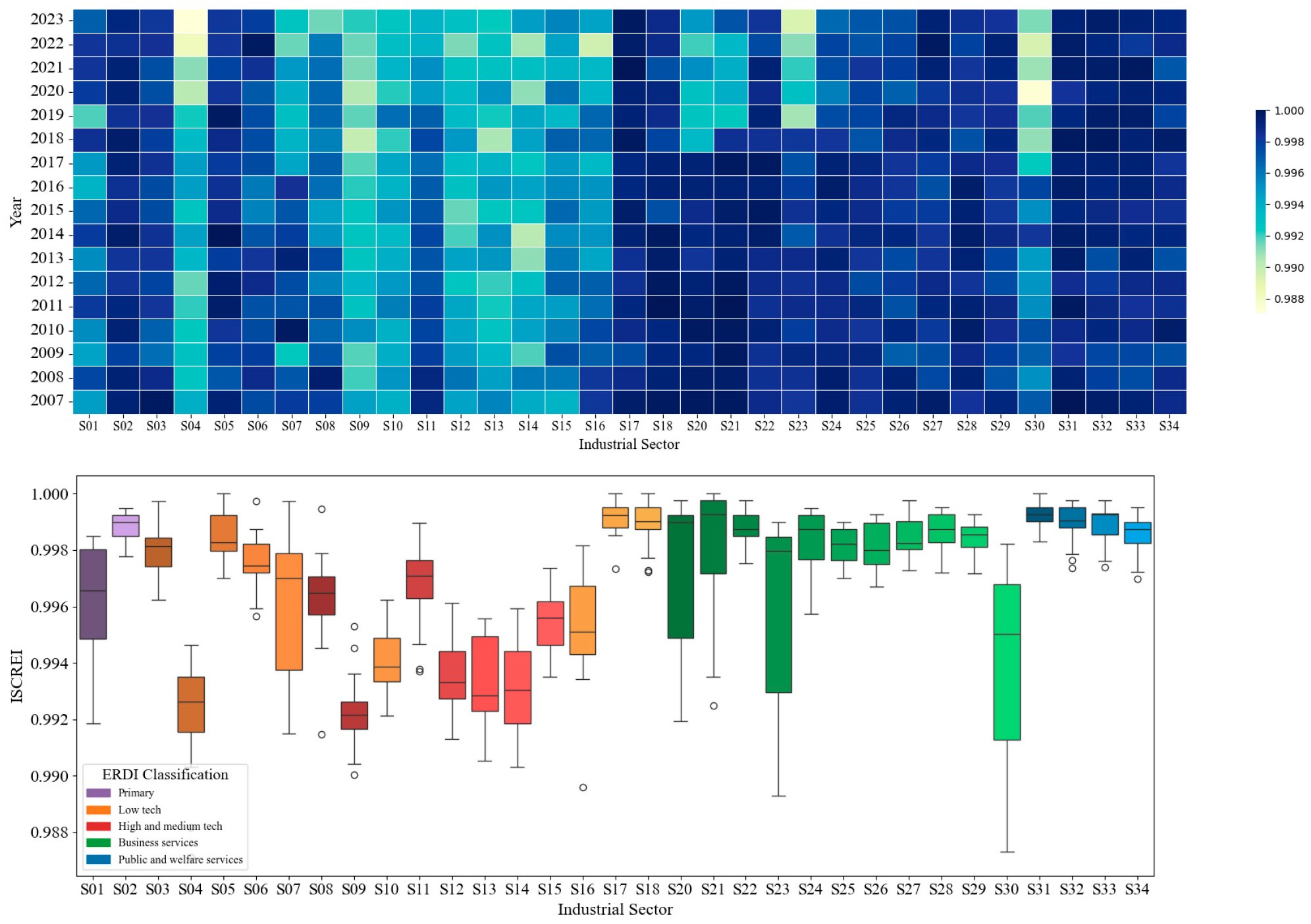
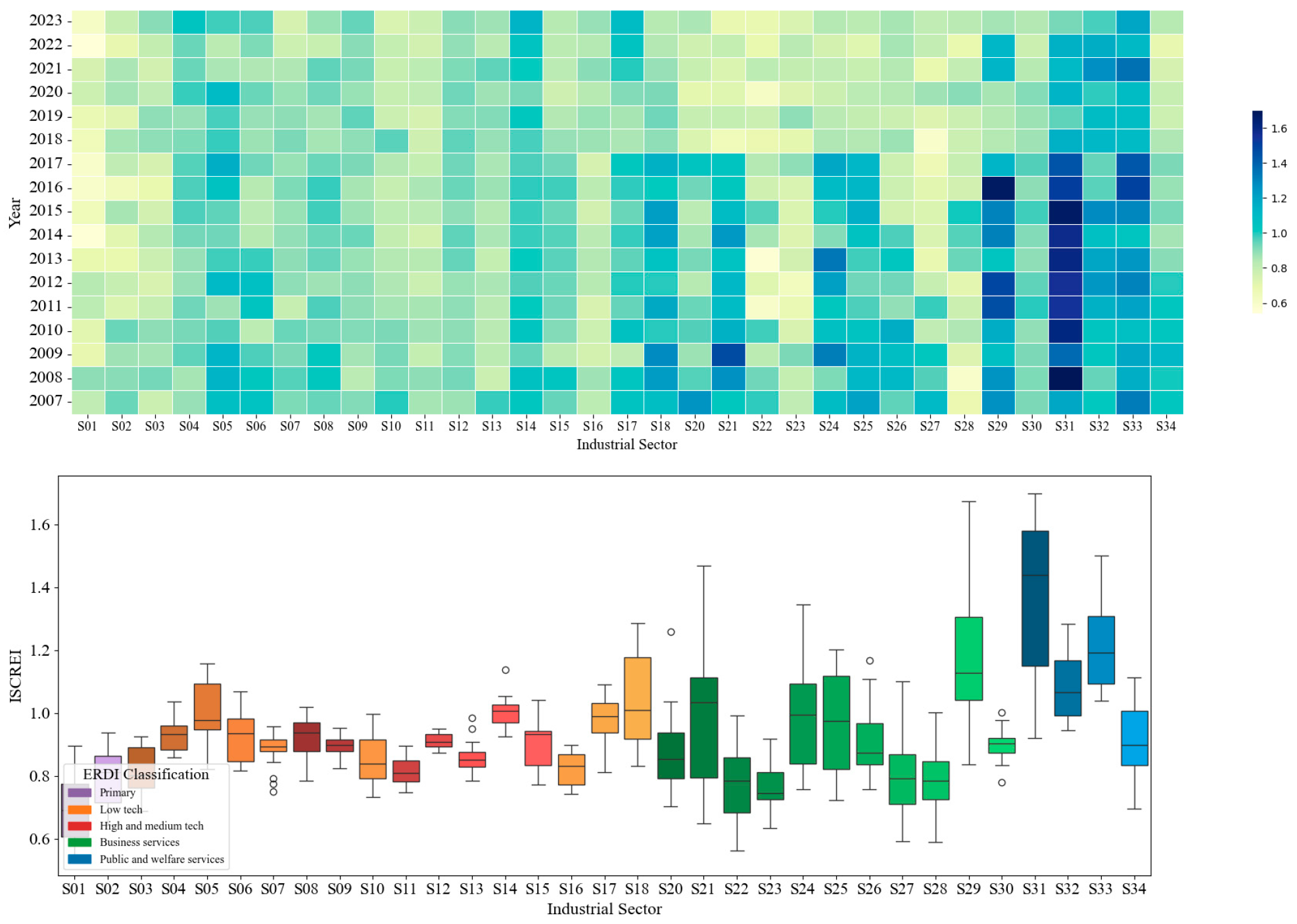
To thoroughly analyze the extent to which the U.S. friend-shoring and near-shoring strategies weaken China’s scope of influence, benefit-generating capacity, and risk resilience within the global industrial chain, this paper systematically calculates five types of network centrality metrics for the period 2007–2023. These are presented multi-dimensionally using heatmaps and box plots. Specifically, heatmaps are utilized to characterize the overall distributional features and evolutionary trends of the network’s topological structure, while box plots focus on the fluctuation range and heterogeneous responses of different factor-intensive industries under policy shocks. The observation points in the figures are defined as the calculated ratio of centrality metrics between the Counterfactual Model and the Null Model. Logically, this ratio represents the change in status of China’s industrial sectors under policy intervention scenarios relative to the baseline (real-world) scenario: a ratio deviating further from 1 (especially approaching 0) indicates a more severe compression of the core position of the relevant Chinese industries within the global network under that policy scenario, thereby implying a greater risk of industrial chain outward relocation and a higher degree of negative impact (Detailed industry risk exposure is provided in
Appendix A).
3.1. Impact of U.S. Friend-Shoring Strategy on China’s Factor-Intensive Industries
First, from the dual dimensions of in-degree and out-degree centrality (see
Figure 3 and
Figure 4), the U.S. “friend-shoring” strategy exerts a significant structural squeeze on China’s hub status within global production networks. Empirical ratio distributions reveal that observations across most industrial sectors are significantly below unity (concentrated within the 0.6 to 0.9 range). This quantitatively confirms that, under path reconfiguration driven by exogenous policy constraints, China’s industrial capacity for resource aggregation and global supply influence has undergone a systemic contraction relative to the baseline scenario.
Notably, risk exposure exhibits pronounced heterogeneity across different factor-intensive industries, driven primarily by disparities in relocation barriers and structural stickiness. The findings indicate that the direct impact of the friend-shoring strategy on resource-intensive industries (e.g., S01–S03) is markedly more intense than on capital-intensive (e.g., S12) or technology-intensive sectors (e.g., S09, S14). Specifically, the centrality ratios for resource-intensive industries remain persistently low. With lower technological thresholds and heavy reliance on proximate raw materials and low-cost labor, these sectors face a high risk of being supplanted by ‘Altasia’ member states leveraging their abundant natural resources and demographic dividends; consequently, their resistance to policy-driven capacity relocation is low.
Conversely, capital- and technology-intensive industries demand massive sunk costs, skilled labor, and synergistic supply chains. China’s comprehensive industrial clusters forge a ‘structural stickiness’ that renders short-term decoupling prohibitively expensive and operationally arduous for multinational corporations. As a result, despite immense geopolitical pressures, technology-intensive industries—represented by Electrical and Optical Equipment (S14)—demonstrate a degree of structural resilience against exogenous policy shocks. This resilience is particularly evident in in-degree metrics owing to their indispensability in high-end intermediate integration, although the underlying threat to their core status remains severe.
Crucially, this study identifies a cascade effect diffusing from manufacturing to supporting producer services. Empirical data show that centrality indicators for business services (e.g., S22) exhibit sharp fluctuations, with ratios falling below the 0.6 threshold in certain years. Based on a topological analysis of the input-output system, this phenomenon reveals a profound industrial logic: the relocation of capacity in technology-intensive sectors like S14 inevitably leads to a significant decline in demand for upstream business services (S22) as intermediate inputs. Since business services often function as “hubs” connecting multiple manufacturing sectors within production networks, a reduction in their in-degree demand—triggered by manufacturing contraction—will lead to a decay in their betweenness functionality for maintaining network connectivity. This cross-sectoral network unraveling is a direct manifestation of the inherent vulnerability of input-output systems when subjected to asymmetric exogenous shocks, resulting in a systemic decline in China’s embedding depth and value-capture capabilities within Global Value Chains.
Secondly, from the perspective of betweenness centrality (see
Figure 5), the betweenness centrality ratios of manufacturing sectors generally fall below 1.0, with heat maps exhibiting widespread lightening after 2018.
This quantitatively confirms that global production paths are undergoing an exogenous policy-driven restructuring, leading to a noticeable “China bypass” phenomenon and a systemic weakening of China’s coordination and control capabilities as a value chain hub. The ratios for resource-intensive and low-tech manufacturing (S07–S11) consistently remain in the low range of 0.6–0.8, signaling a regression of their global production intermediary role from a “hub” towards the “periphery.” These sectors face the challenge of being “path bypassed” within the global division of labor system. While high-tech sectors still exhibit a degree of “path resilience,” a polarization phenomenon in the service sector reveals a deeper layer of risk: on one hand, the intermediary function of supporting business services (S22) rapidly attenuates with manufacturing relocation; on the other hand, the ratios for public and social service sectors (S29, S31, S33) anomalously increase above 1.0 (some approaching 1.6). This indicates that against the backdrop of a structural degradation in topological connectivity, China’s economic connections with the world are being forced to consolidate into a limited number of fundamental channels, thereby increasing systemic risks of external dependence.
Finally, the closeness centrality ratios for both models approach unity (see
Figure 6 and
Figure 7), suggesting that China’s status as a global production hub has not encountered a significant challenge from Altasia. China possesses the world’s largest manufacturing base and the most comprehensive industrial and supply chains, enabling it to independently facilitate the entire lifecycle—from raw material procurement and manufacturing to sales and services. This systemic integration makes it exceedingly difficult for multinational corporations to fully decouple from China’s supply of intermediate products. Given that China’s ascent to the center of global production was the result of more than three decades of development, it is implausible for Altasia to supplant this position in the short term.
Nonetheless, from the perspective of aggregate metrics, the fact that closeness centrality ratios in both models remain below 1.0 indicates that Altasia does exert a discernible substitution effect on Chinese industries. At the sectoral level, the “Food, Beverages, and Tobacco” industry (S03) exhibits a relatively lower in-degree closeness centrality ratio, reflecting a looser degree of integration with the upstream segments of the global industrial chain. Meanwhile, the “Agriculture, Forestry, and Fishing” sector shows a relatively lower out-degree closeness centrality ratio, suggesting that Altasia has had a more pronounced adverse impact on its connectivity with downstream global production networks.
3.2. Impact of U.S. Near-Shoring Strategy on China’s Factor-Intensive Industries
To quantify the impact of the U.S. near-shoring strategy on China’s industrial structure, this section utilizes the two GIVCBN models to conduct a comparative analysis of five categories of network characteristic indicators across multiple factor-intensive industries (
Figure 8,
Figure 9,
Figure 10,
Figure 11 and
Figure 12).
Across all five centrality metrics, the ratios of characteristic indicators are predominantly below 1, yet extremely close to unity. This suggests that the U.S. nearshoring strategy, implemented in conjunction with Mexico and Canada, does not exert a highly significant impact on China’s industrial structure. From the perspectives of degree centrality and betweenness centrality, the U.S. nearshoring strategy primarily affects China’s resource-intensive industrial sectors. Conversely, from the standpoint of closeness centrality, China’s status as a global production center has not been substantially diminished.
Superficially, U.S. decoupling efforts—evidenced by declining imports and FDI from China, alongside the relocation of manufacturing to Mexico—appear to be taking effect. However, China’s surging exports to Mexico reveal a different underlying reality driven by an “investment-driven complementary relationship.” Under the USMCA framework, Chinese enterprises have actively adapted to the U.S. near-shoring strategy by shifting from direct exports to “capacity offshoring.” By establishing facilities in Mexico, they export core intermediate goods for local assembly, securing duty-free access to the U.S. market. This creates a symbiotic relationship of “Chinese intermediate inputs and Mexican assembly,” where the increase in China’s out-degree centrality toward Mexico effectively offsets the topological disruptions caused by declining direct exports to the U.S. Consequently, the U.S. “trade diversion” strategy fails to genuinely reduce its reliance on Chinese supply chains, underscoring the necessity for the U.S. to establish a sustainable and cooperative trade framework with China.
4. Scenario Analysis
While existing literature has extensively explored the differential welfare effects and macroeconomic impacts of U.S.-China trade frictions, the analytical perspectives are often confined to linear changes within the bilateral framework. Such approaches fail to adequately uncover the “cascading effects” triggered within complex global economic systems, nor do they systematically investigate how risk spillovers transcend geographical and industrial boundaries to affect third-party supply chains.
In practice, to mitigate cost pressures from tariff shocks, Chinese producers have adopted a path restructuring strategy. By utilizing strategic hub nodes in Latin America (e.g., Mexico), Southeast Asia (e.g., Vietnam, Malaysia), and Eastern Europe as transshipment points, they seek to maintain network connectivity to end markets. However, it is imperative to note that the efficacy of this strategy varies significantly depending on the geopolitical context. Under the “friend-shoring” scenario, this transshipment strategy fails to yield the same offsetting effect as seen in near-shoring regions like Mexico. The fundamental disparity stems from geopolitical exclusivity. Unlike Mexico, which primarily serves as a geographical transit corridor, the U.S. strategically positions the “Altasia” economies as comprehensive alternatives aimed at entirely bypassing Chinese supply chains.
To prevent Chinese enterprises from utilizing these regions as backdoor channels, the U.S. regulatory framework has significantly intensified its penetrative oversight over intermediate goods flows. By frequently deploying emerging regulatory instruments—such as strict “anti-circumvention” investigations, “particular market situation” determinations, and rigorous traceability rules of origin—the U.S. explicitly targets and severs these indirect trade routes. This shift signifies an escalation in U.S. strategy from reactive trade barriers to proactive network containment. Currently, this intervention transcends the singular realm of tariffs, evolving into a comprehensive governance framework composed of multi-dimensional trade controls and institutional barriers.
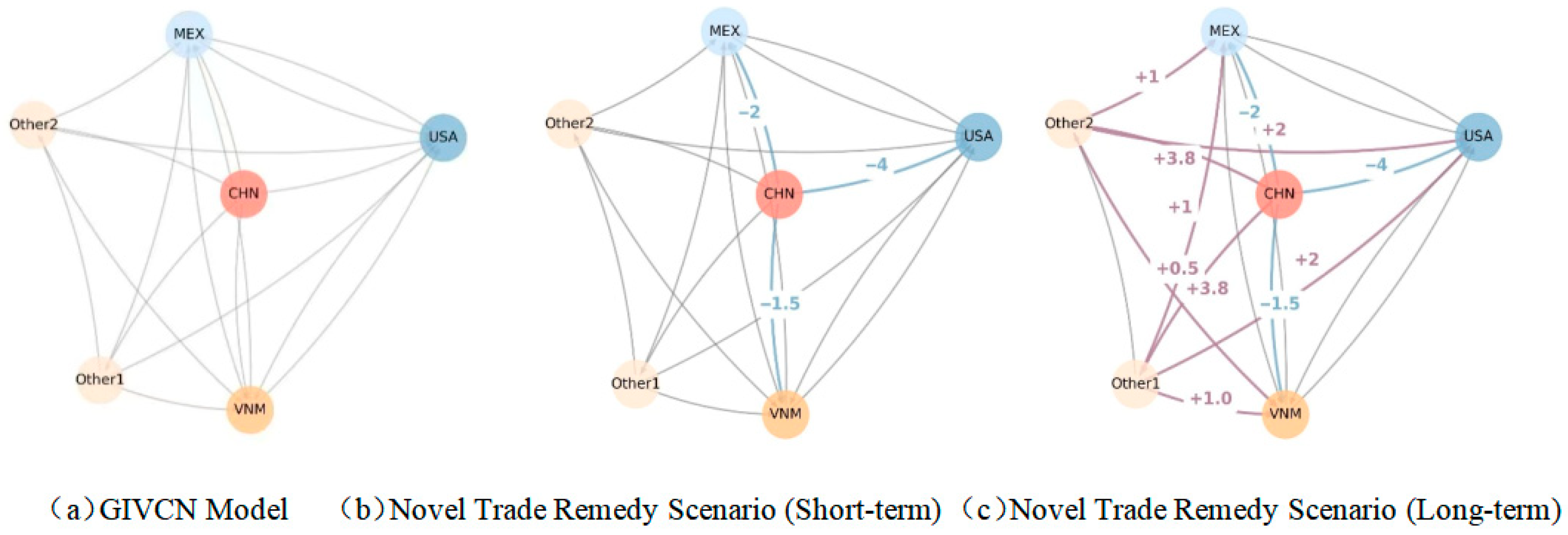
Such asymmetric geopolitical constraints create severe bottlenecks for the transshipment strategy in Altasia. Furthermore, from a systemic perspective, the core characteristic of supply chain vulnerability lies in its significant cascading effects. Trade shocks and penetrative regulations propagate across sectors via the topological structure of intermediate goods networks, leading to indirect systemic losses for industries and micro-enterprises not directly exposed to the initial risk. Therefore, to systematically evaluate the overall impact and ultimate structural damage inflicted by these complex U.S. trade policies on China’s industrial chain security, this paper designs two simulation scenarios. The specific experimental setup is detailed in
Figure 13.
4.1. Short-Term Impact of US Adoption of Novel Trade Remedy Tools on China
The scenario design of this study employs an extreme policy shock simulation, postulating a 100% reduction in China’s intermediate export volumes across all sectors. It is imperative to emphasize that this “100% reduction” is not intended as a forecast of the absolute cessation of trade in reality; rather, it functions as a systemic stress test designed to probe the “ultimate fragmentation threshold” of the global production network’s topological structure. Such an extreme assumption facilitates the identification of critical nodes and vulnerable links under the most severe shocks, thereby exposing underlying structural weaknesses. Constrained by space, this paper presents only the extreme scenario of a 100% export reduction which is intended to expose structural vulnerabilities rather than serve as an absolute prediction of reality; in subsequent research, we will further implement a stepwise parametric sensitivity analysis, simulating multiple dynamic evolution curves as export volumes decrease by 25%, 50%, 75%, and 100% via a decay factor. By observing whether indicators such as system efficiency and closeness centrality exhibit linear, gradual decay or undergo an abrupt phase transition upon crossing a specific threshold, we can more profoundly elucidate the equilibrium mechanism between the robustness and vulnerability of the Global Value Chain.
Building upon the aforementioned extreme stress-testing framework,
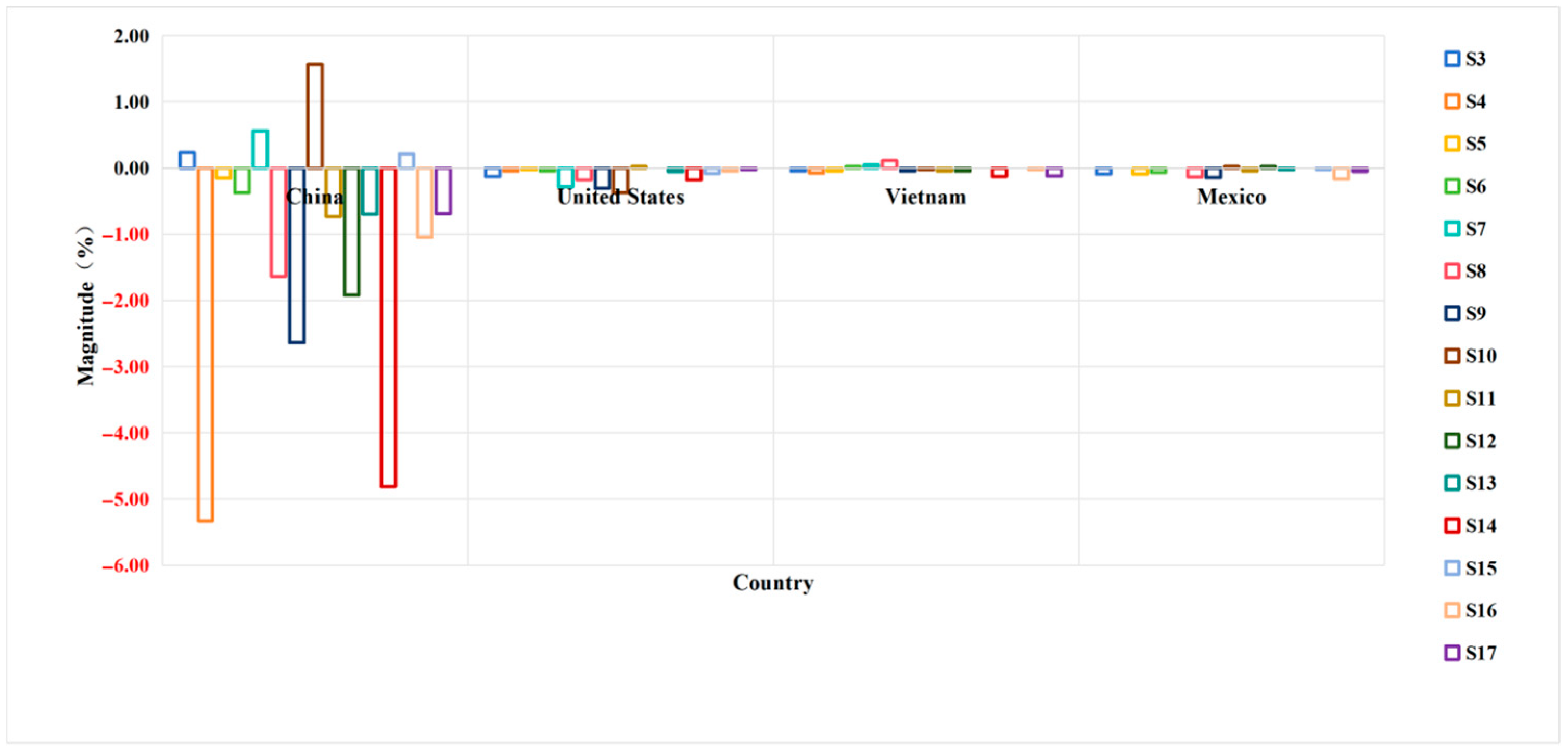
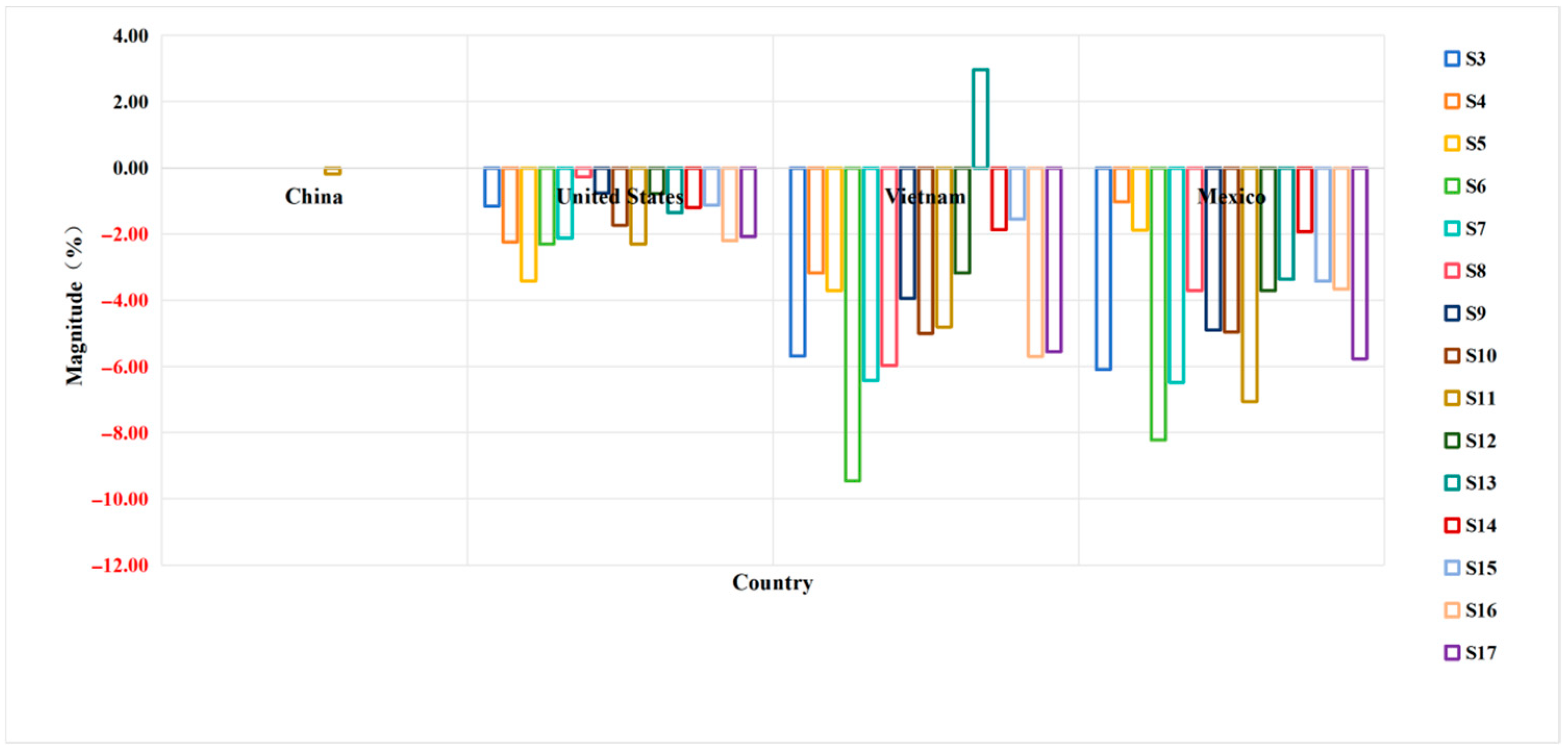
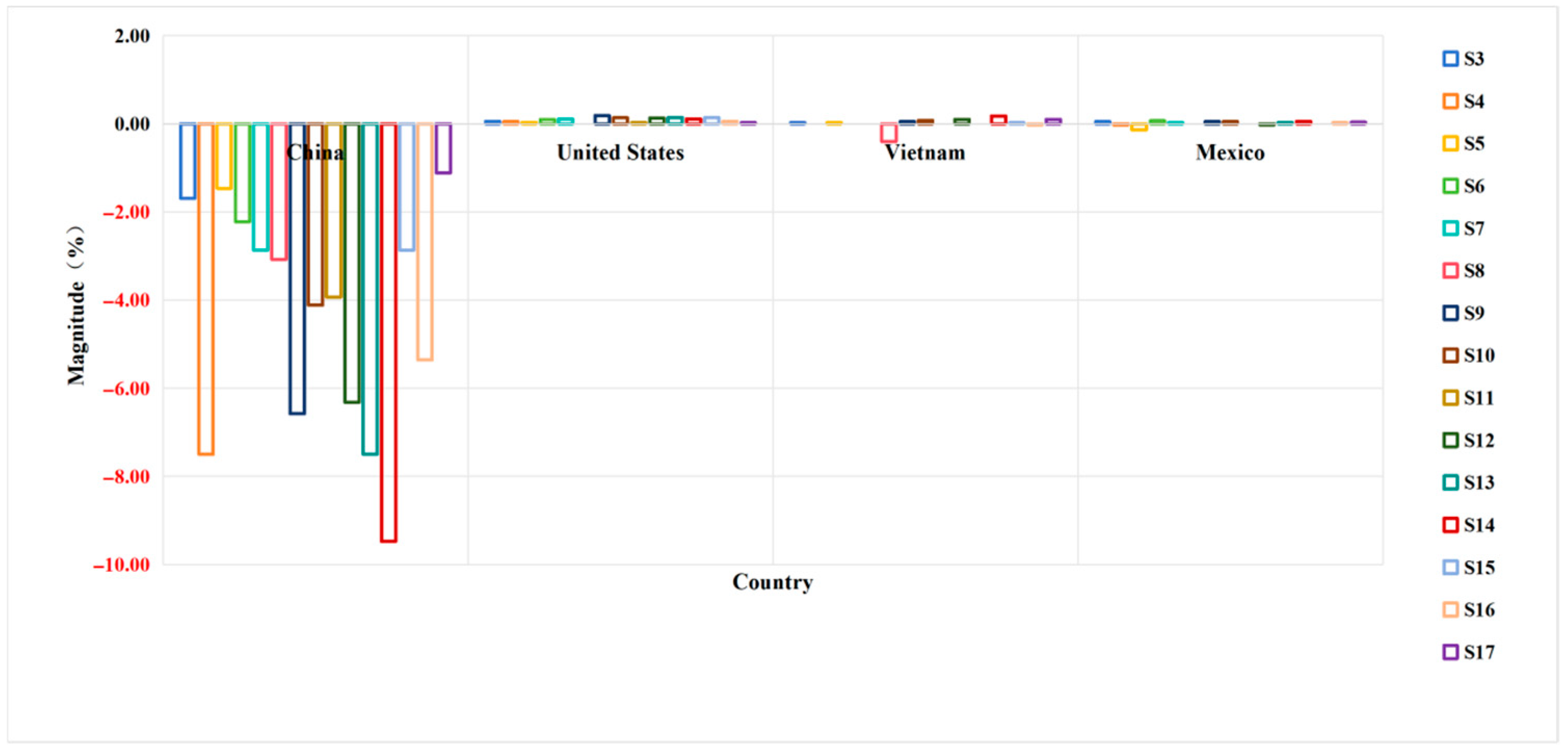
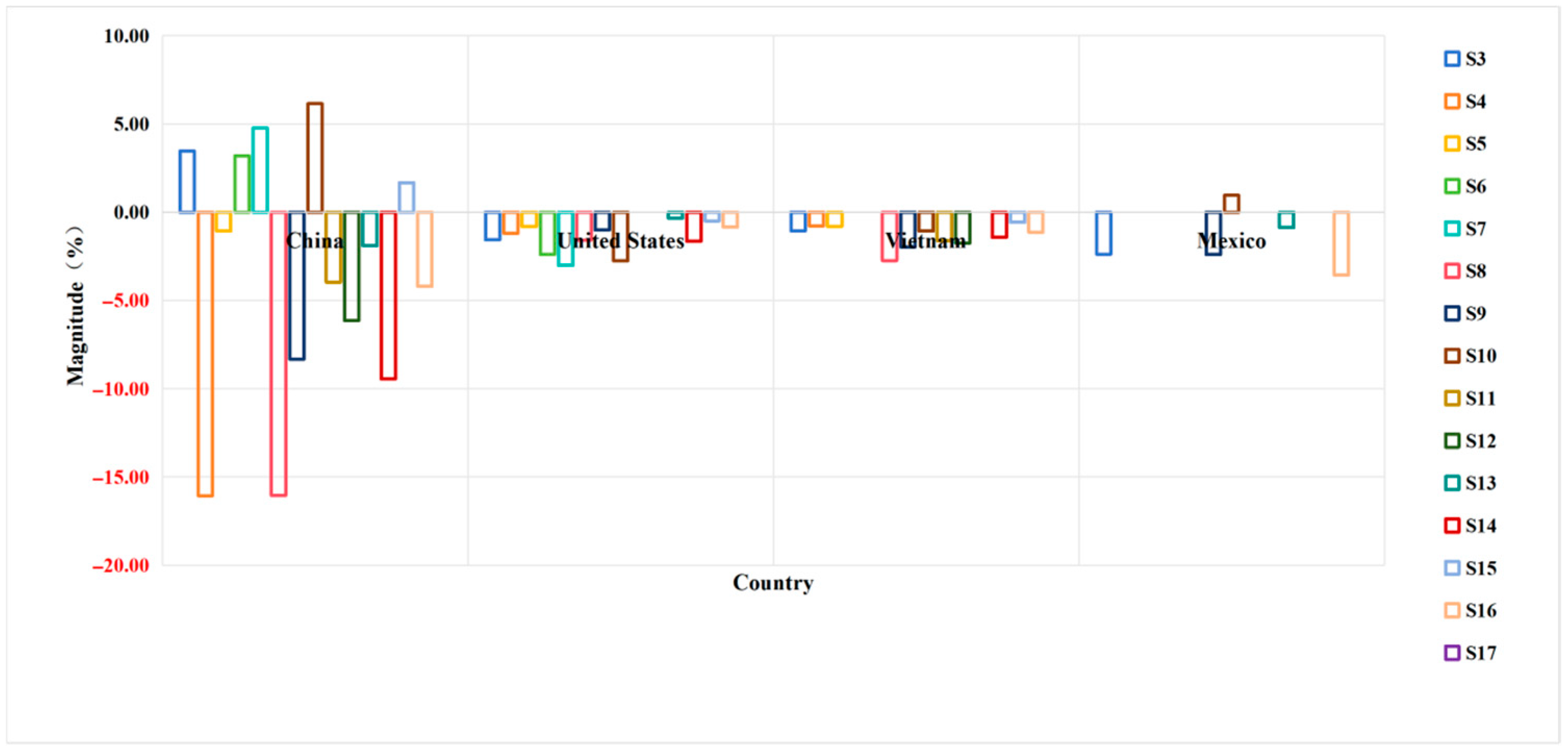
Figure 14,
Figure 15,
Figure 16,
Figure 17 and
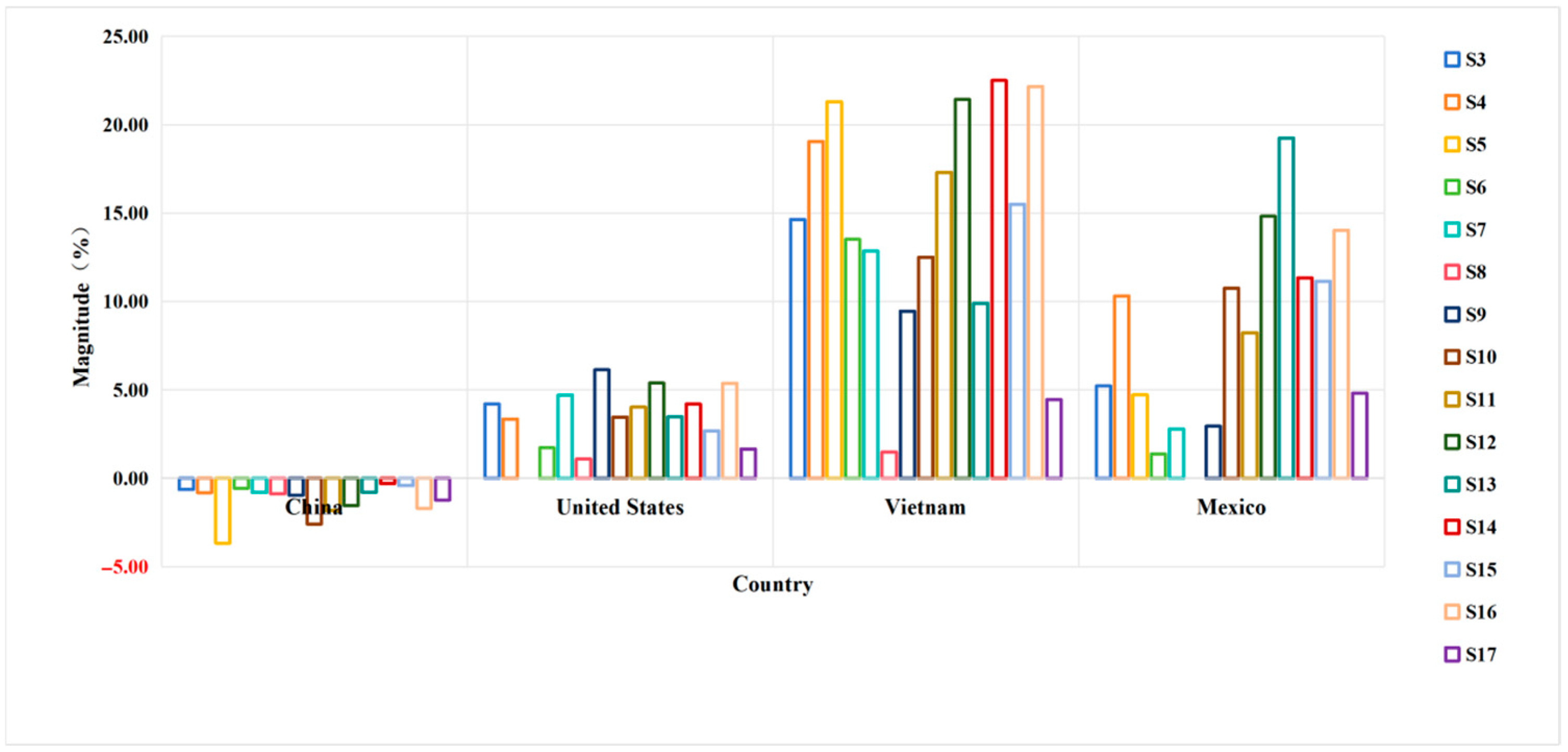
Figure 18 illustrate the simulated policy shocks induced by the U.S. implementation of novel trade remedy tools under a short-term decoupling scenario. The empirical foundation is derived from the Asian Development Bank Multi-Regional Input-Output database, focusing on four pivotal nodes—China, the United States, Vietnam, and Mexico—alongside various factor-intensive industrial sectors. The figures sequentially delineate the dynamic evolution of resource agglomeration capacity, intermediary control, and systemic resilience across national industrial sectors using five core metrics: in-degree, out-degree, betweenness, in-closeness, and out-closeness centrality. The percentage magnitudes depicted represent the rate of change in centrality metrics of the short-term counterfactual model relative to the null model. By comparing the extreme policy shock scenario (100% reduction in China’s intermediate exports) with the real-world baseline, we quantitatively reflect the extent of structural transformations in the global production network precipitated by policy interventions.
The implementation of novel trade remedy tools by the United States has exerted significant structural pressure and “de-centralization” strain on China’s industrial chains. Concurrently, the U.S. has leveraged these same instruments to further consolidate its hegemonic position within Global Value Chains. However, this strategy of relying on the intensified supply from “friend-shoring” and “near-shoring” nations has inadvertently amplified systemic risks, exacerbating the volatility of global production networks in the short term.
Empirical measurements indicate a widespread negative fluctuation in both the in-degree and out-degree centralities of China’s industrial sectors. Notably, the precipitous decline in out-degree centrality quantitatively confirms the forced disruption of China’s status as a pivotal hub for intermediate goods supply. More critically, the collapse in betweenness centrality signals a large-scale “bypassing China” phenomenon in global production pathways, suggesting a systemic erosion of China’s coordination and control capabilities as a value chain nexus. This impact is particularly pronounced in key sectors such as textiles, chemicals, and electrical and optical equipment. Furthermore, the decline in out-closeness centrality has extended the topological distance between China and downstream markets, portending a genuine risk of marginalization within the global division of labor.
In stark contrast to China’s diminished standing, Vietnam and Mexico have exhibited explosive positive growth across all core indicators, manifesting a robust “substitution effect” and the emergence of “new hubs.” As an all-encompassing “super-substitute,” Vietnam’s in-degree and betweenness centralities have surged by 15% to 22%, indicating its rapid occupation of the transshipment vacuum vacated by China and its ascent as a critical intermediary node in GVCs. Leveraging its geographical proximity, Mexico has demonstrated precise “near-shoring” absorption characteristics in capital-intensive industries such as basic metals and machinery, reflected in a significant increase in its in-degree centrality. This dramatic surge in data validates the logic of trade route diversion from “direct-to-US” to “via-transshipment,” while simultaneously reflecting that Vietnam and Mexico are rapidly converging toward the “core” of the global production network’s topological structure by absorbing relocated industrial capacity.
Viewed from the systemic perspective of global production networks, novel trade remedy tools have triggered a pronounced “cascading effect,” whereby the direct impact of policy on export trade is exponentially amplified through complex input-output linkages. Through such policy steering, the slight increases in the United States’ in-degree centrality and in-degree closeness centrality reflect its strategic intent to drive industrial re-shoring and shorten supply distances. However, this “forced rerouting” of industrial chains—driven by high-pressure policy mandates rather than market efficiency—has resulted in severe fluctuations in the topological structure of the global network. Although high-tech sectors, exemplified by electrical and optical equipment, have demonstrated a degree of structural resilience due to their existing scale, the disproportionate decline in China’s betweenness centrality reveals the exorbitant costs associated with global supply chain reconfiguration. The anomalous surge in indicators for Vietnam and Mexico also portends a geographical migration of risk. Because these nations have yet to establish autonomous production capacities for critical intermediate goods and find it difficult to secure alternative suppliers in a timely manner, the responsiveness of market demand to supply disruptions is significantly delayed. This, in turn, further escalates the risk of supply chain fractures and the inherent instability of the production network. Consequently, while the United States has utilized these novel trade remedy tools to further consolidate its dominant position within global value chains, this strategy—predicated on the intensive supply from “friend-shoring” nations—inadvertently amplifies systemic risks, ultimately exacerbating the volatility of the global production network in the short term.
4.2. Long-Term Impact of US Adoption of Novel Trade Remedy Tools on China
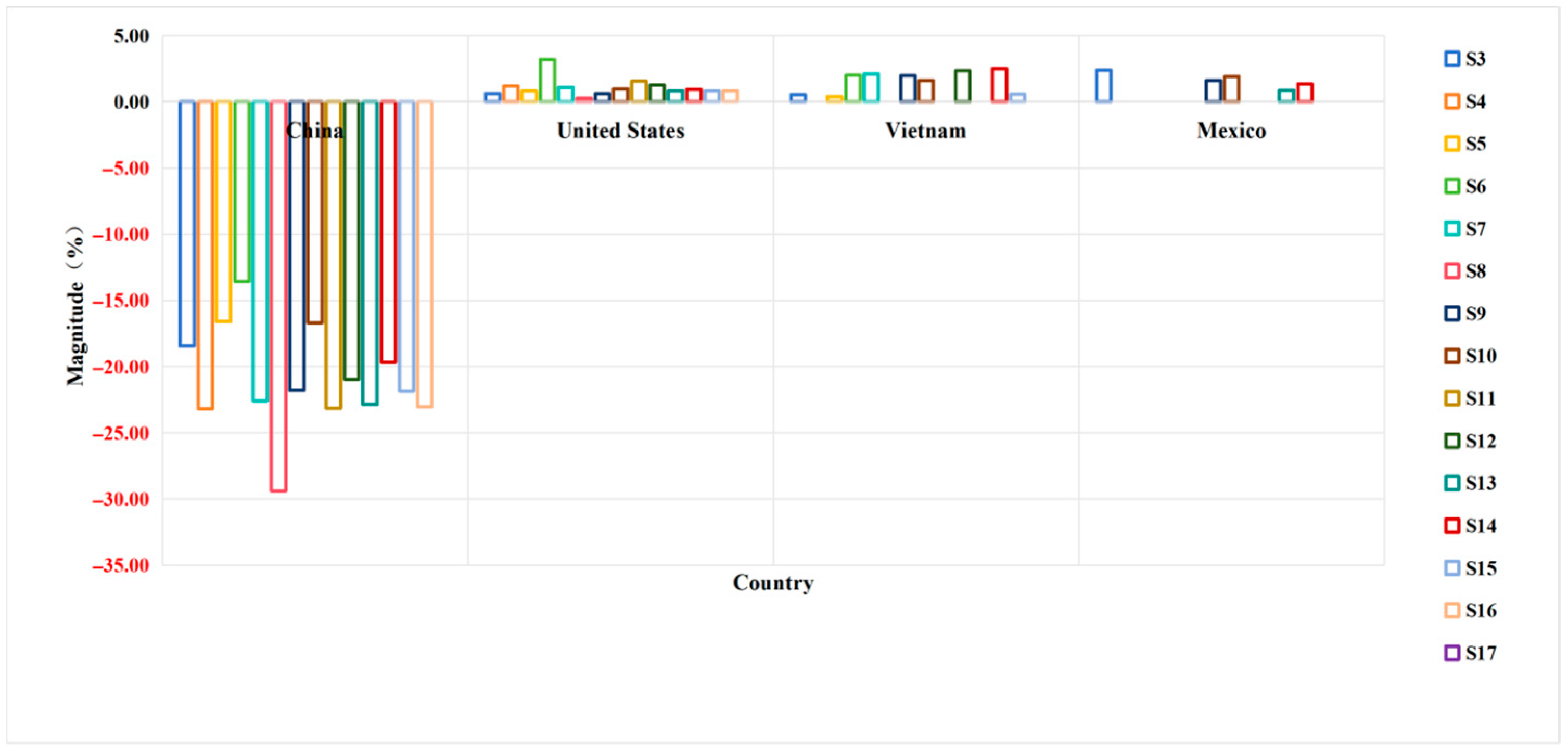
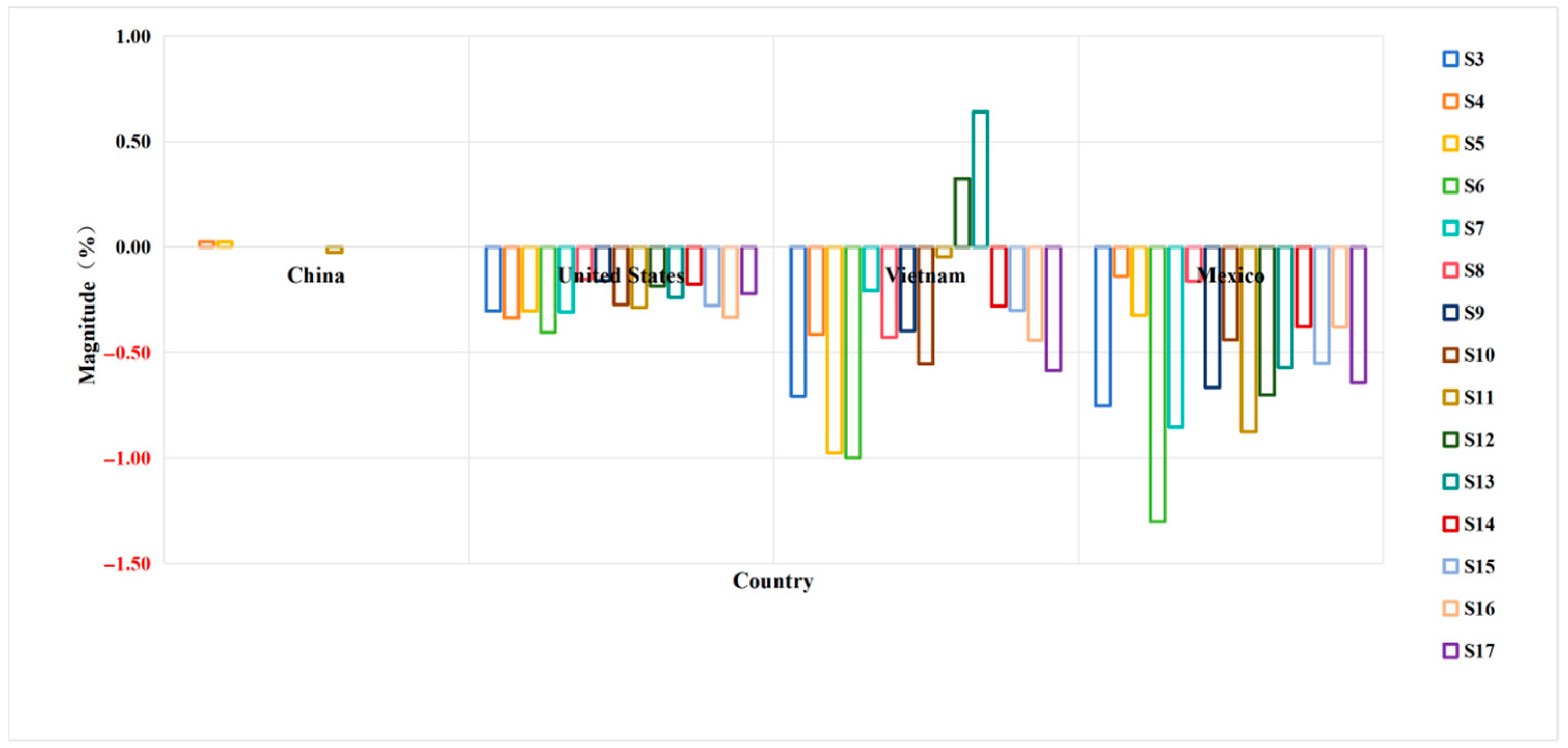
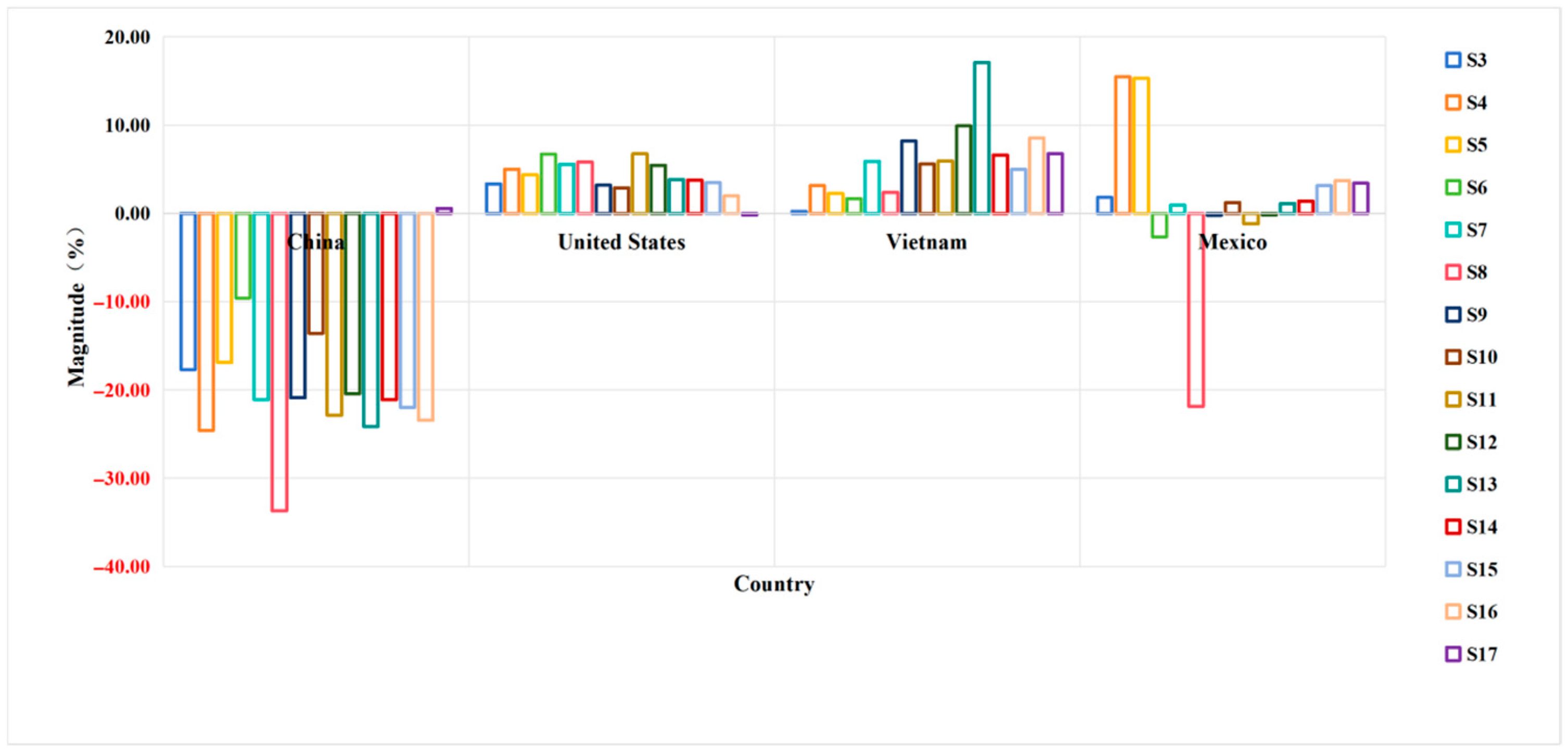
Figure 19,
Figure 20,
Figure 21,
Figure 22 and
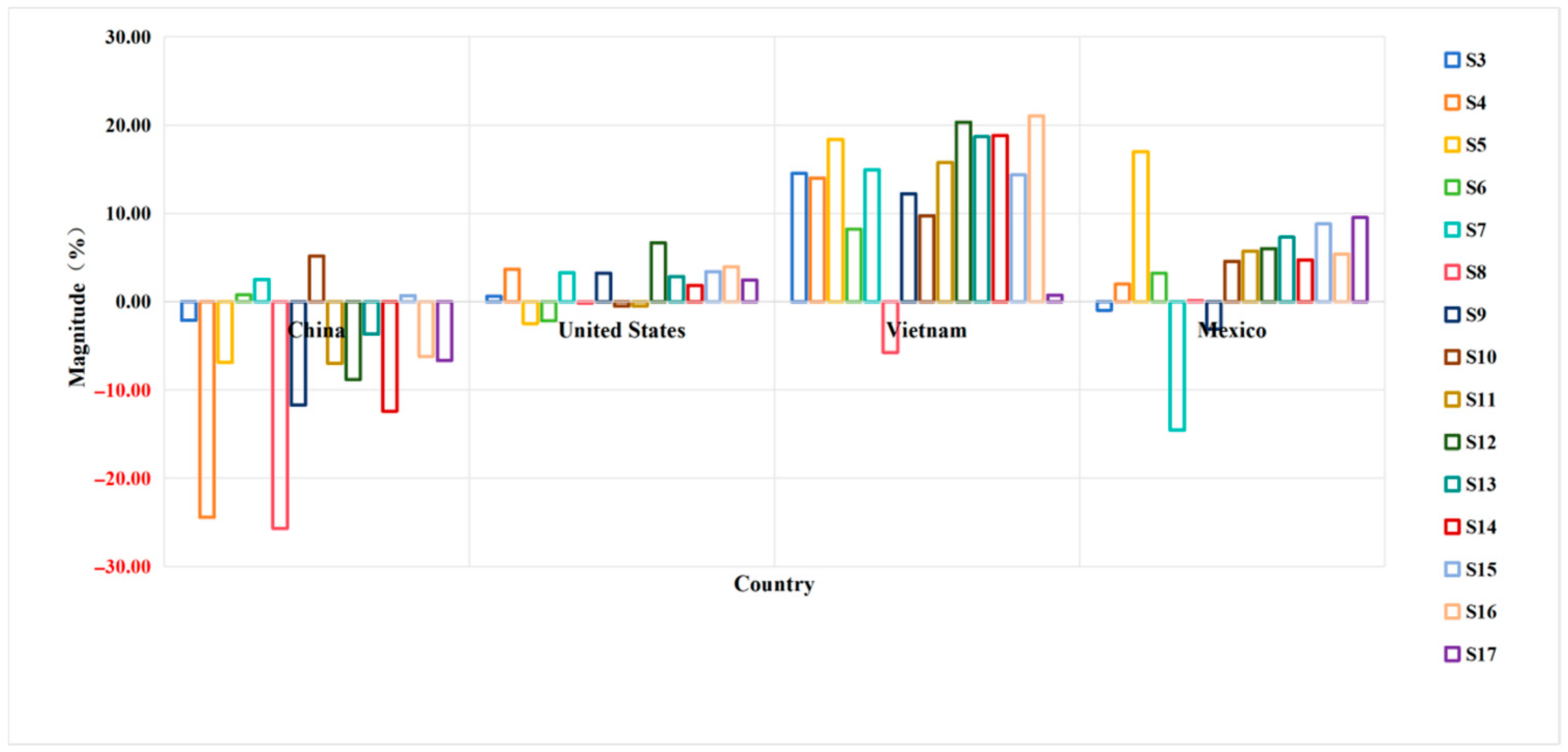
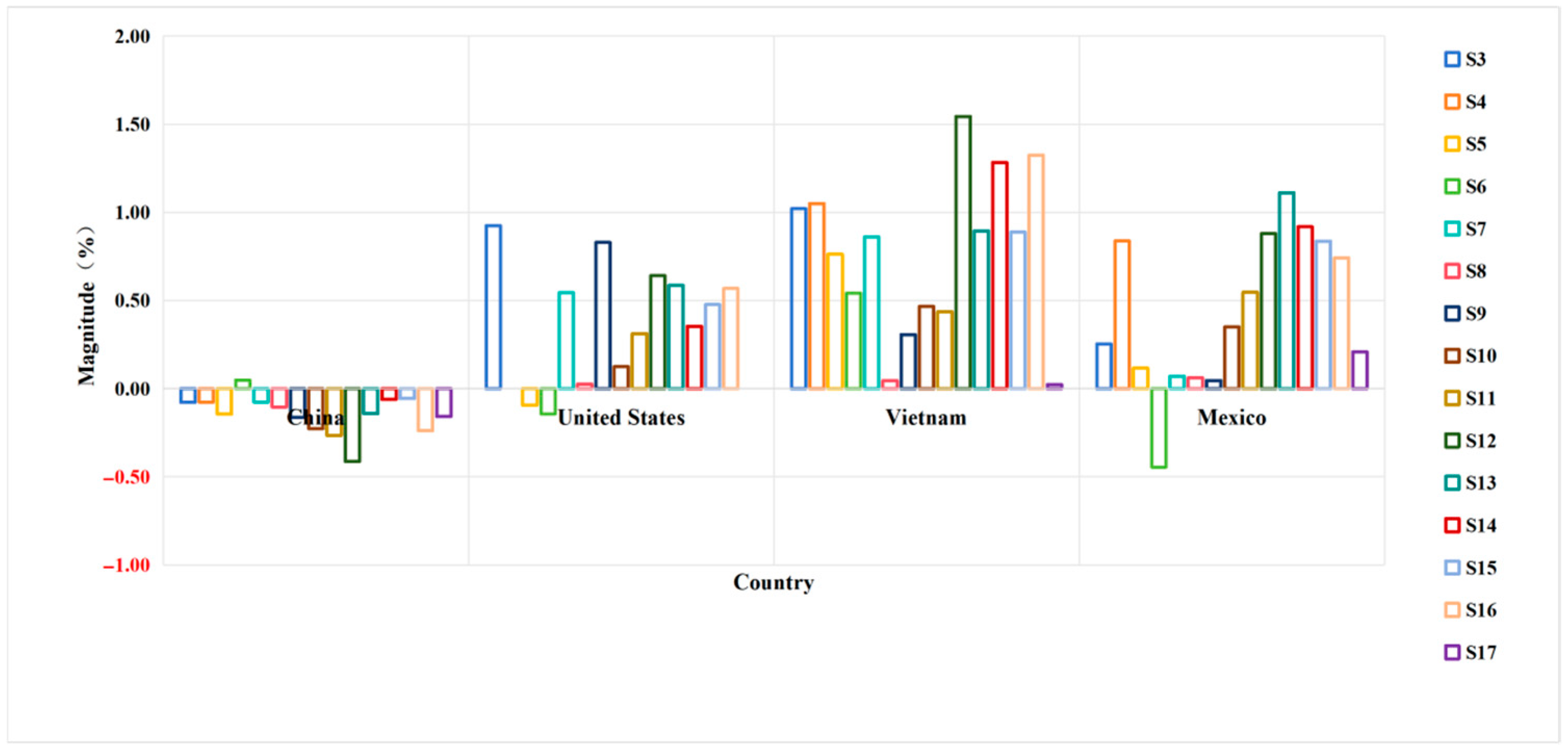
Figure 23 present the simulation results of policy shocks precipitated by the U.S. implementation of novel trade remedy tools under a long-term decoupling scenario, based on the Global Industrial Value Chain Backbone Network model. In these figures, the “Magnitude” percentage denotes the rate of change across various centrality metrics of the long-term counterfactual model relative to the null model. This quantitative assessment compares the extreme policy shock scenario—defined by a 100% reduction in China’s intermediate product export volumes across all sectors—against the real-world baseline scenario.
Comparing
Figure 19,
Figure 20,
Figure 21,
Figure 22 and
Figure 23 with
Figure 14,
Figure 15,
Figure 16,
Figure 17 and
Figure 18 reveals that the impact of novel US trade remedy tools on China’s industrial chains has evolved from acute, localized disruptions to profound structural erosion. In the long-term counterfactual scenario, the degradation of China’s industrial sectors’ positions is drastically amplified compared to the short term. The Magnitude decline in out-degree centrality commonly surpasses −20% and even plunges to −30%, while the drop in betweenness centrality in
Figure 21 extends even deeper into the −35% range. If the short-term impact primarily manifested as a disruption of trade flows, the long-term impact has led to the devastating collapse of China’s bridging role in global value chains. China has been decisively pushed from its former position as the core of the supply network to its periphery. This “de-centralization” risk has escalated from partial bypassing of pathways to a systematic stripping of the extant industrial chain structure.
The stark contrast in long-term versus short-term indicators for Vietnam and Mexico profoundly exposes the unsustainability of transshipment-driven gains and their deep reliance on Chinese intermediate products. In the short term, both Vietnam and Mexico experienced a surge in indicators due to the “substitution effect.” However, in the long-term scenario, their in-degree centrality Magnitude has shifted from significantly positive values in the short term to predominantly negative ones, and the increase in betweenness centrality has also substantially narrowed compared to the short term. This “initial surge followed by a decline” trajectory quantitatively confirms the reality that, due to Vietnam’s and Mexico’s production being highly dependent on intermediate inputs from China, when Chinese supply sources are cut off for an extended period, these “new hubs” suffer a contraction in their capacity for resource aggregation and network control due to a lack of foundational industrial support. This indicates that the “transit” model, lacking comprehensive industrial chain support, struggles to maintain its pivotal position in the global production network over the long run.
From the perspective of the overall efficiency of the global production network, long-term decoupling policies ultimately induce a systemic deterioration and fragmentation of the network’s topological structure. The United States, as the policy initiator, sees its in-degree centrality shift from a slight short-term increase to a negative deviation in the long term. This suggests that long-term decoupling not only failed to achieve the anticipated perfect re-shoring of industrial chains but also undermined the US’s own capacity to integrate global resources. Particularly alarming is the finding in
Figure 22 that the in-closeness centrality for most countries exhibits negative values in the long term. This implies that the “topological distances” between nodes in the global production network are generally extended, and the responsiveness and resilience of supply chains suffer a systemic decline. This long-term Magnitude deviation further confirms that while novel trade remedy tools achieved precise containment of China in the short term, they ultimately led to an overall contraction of the global production network and a surge in restructuring costs in the long term, pushing global value chains into a perilous state of low efficiency and high fragmentation.
5. Conclusions
Based on the Asian Development Bank Multi-Regional Input-Output (ADB-MRIO) database, this study constructs a Global Industrial Value Chain Backbone Network model. Utilizing complex network analysis, it empirically evaluates the structural shocks of U.S. “friend-shoring” and “near-shoring” strategies on China’s industrial chains and provides scenario simulations for the short- and long-term impacts of novel trade remedy tools potentially deployed by the United States. The primary research conclusions are as follows:
First, the U.S. “friend-shoring” strategy exerts a systemic squeezing effect on China’s industrial chains, whereas the impact of the “near-shoring” strategy remains relatively limited. Empirical results indicate that under friend-shoring scenarios, the degree centrality and betweenness centrality of most Chinese industries decline significantly, quantitatively confirming a systemic contraction of China’s role as a core hub in global supply networks. In contrast, the shock from the near-shoring strategy (facilitated by USMCA) is not yet prominent. This is primarily attributed to Chinese enterprises’ high-level “going global” strategy, which utilizes Mexico as a transit node to optimize global distribution, thereby offsetting trade diversion pressures to a certain extent.
Second, the risks of industrial relocation exhibit significant factor-intensity heterogeneity and cascading amplification effects. Resource-intensive industries (e.g., agriculture, forestry, fishing, food, and tobacco) show the largest declines in centrality indicators, facing severe decoupling and substitution risks. Conversely, high-tech sectors, such as electrical and optical equipment, demonstrate robust “structural resilience” due to their irreplaceability in the integration of high-end intermediate goods. Of particular concern is that the relocation of manufacturing capacity triggers a network disintegration of supporting business services (S22). This cross-sectoral cascading effect leads to a systemic decline in China’s overall capacity to capture gains within Global Value Chains.
Third, the “transshipment trade” model offers short-term substitution dividends but faces “structural depletion” risks in the long run. Scenario simulations suggest that if the U.S. implements novel trade remedies targeting indirect trade, countries like Vietnam and Mexico will rapidly emerge as “new hubs” in the short term. However, as these nations rely heavily on Chinese intermediate inputs for foundational industrial support, their resource aggregation capabilities will swiftly shrink once Chinese supply sources are blocked over the long term. Such “forced rerouting” ultimately results in extended topological distances in global production networks and reduced response speeds, pushing the system into a fragmentation trap characterized by high costs and low efficiency.
These findings yield several important policy and managerial implications. Enterprises expanding overseas should move beyond simple transshipment models and pursue deeper localized integration within host economies. Rather than treating transit nodes solely as assembly locations, multinational firms are encouraged to embed themselves in local production ecosystems through technology transfer, workforce development, and infrastructure collaboration. Such approaches can transform fragile routing channels into more resilient and mutually dependent supply networks.
In addition, differentiated sectoral strategies are necessary to address heterogeneous vulnerability levels across industries. High-technology sectors should continue strengthening research and development capacity to preserve their irreplaceable advantages in core components and intermediate goods. Meanwhile, highly vulnerable resource-intensive sectors may benefit from diversifying export markets and strengthening regional partnerships to mitigate substitution risks. Furthermore, promoting manufacturing servitization by integrating producer services, such as design, logistics, and digital solutions, into overseas operations may help retain high-value-added activities and counteract cascading service losses.
Finally, upgrading compliance and regulatory response capabilities is increasingly important in the context of emerging penetrative trade regulations. Enterprises should establish digitalized origin-tracing and supply chain transparency systems to ensure compliance with evolving international trade rules. At the same time, the development of agile multi-sourcing networks with appropriate redundancy may help reduce dependence on single nodes and improve resilience against policy-induced disruptions.
Due to the focus on extreme stress testing, this study adopts a 100% export reduction scenario to identify the upper bound of structural vulnerability in global production networks. While this design effectively reveals critical topological weaknesses, it may overstate the magnitude of shocks under realistic policy conditions.
Future research could extend this framework by introducing stepwise sensitivity simulations (e.g., 25%, 50%, 75%, and 100% reductions) to examine whether global value chain indicators respond in a linear or threshold-dependent manner.



 ,
,