1. Introduction
The digital economy has become a major driver of ongoing economic restructuring, reshaping the organization of production, the patterns of consumption, and the interactions among industries. [
1,
2,
3]. Tourism is especially exposed to these changes because the sector depends heavily on information exchange, platform coordination, service encounters, and co-created experiences [
4,
5,
6,
7]. In China, where both digitalization and tourism have expanded rapidly, digital tools are no longer peripheral aids. They are increasingly embedded in product design, destination governance, service delivery, and market matching. Progress in information and communication technologies, e-commerce, big data, and intelligent platforms has accelerated new business models, reshaped value chains, and opened new possibilities for tourism upgrading and regional development [
8,
9,
10,
11].
Meanwhile, the tourism economy is shifting away from extensive expansion toward a more quality-oriented path marked by innovation, sustainability, diversification, and service enhancement [
12,
13,
14,
15]. Digital technologies have been integral to this shift. Online travel agencies, smart destination platforms, immersive applications, and data-driven service design have improved efficiency, broadened market access, and enriched visitor experiences [
16,
17,
18,
19,
20]. More importantly, the relationship is reciprocal rather than one-directional. Tourism supplies demand, scenarios, and testing grounds for digital innovation, while the digital economy offers the foundational support, platform resources, and analytical capabilities required for tourism upgrading [
21].
Previous studies have provided useful insights into the interaction between the tourism economy and the digital economy. Prior studies have mainly followed three perspectives. One perspective examines tourism in relation to regional growth, resource development, destination marketing, and sustainable management [
22,
23,
24,
25]. A second perspective emphasizes the enabling role of digitalization, highlighting how digital technologies enhance tourism productivity, agglomeration, innovation, and governance [
12,
26,
27,
28,
29,
30]. More recent studies, particularly in China, have begun to examine the integration or coupling of the digital economy and tourism at the regional level, yet most still focus on broad territorial units or on the one-way impact of digitalization on tourism performance rather than on the spatiotemporal evolution of digital–tourism coordination within a highly integrated urban agglomeration [
31,
32,
33,
34]. Three issues therefore remain salient. First, city-level evidence from major urban agglomerations is still limited. Second, the spatiotemporal evolution of coordination is insufficiently explained. Third, the diffusion of integrated development between core and peripheral cities has not been adequately verified.
The Yangtze River Delta (YRD) offers an appropriate setting for addressing these issues. As a highly developed and outward-oriented region in China, it is characterized by strong digital infrastructure, close inter-city connections, active innovation activity, and a substantial tourism market. These features make it a representative case for examining how digitalization and tourism development interact within a region undergoing deep economic integration. At the same time, marked differences among cities in Shanghai, Jiangsu, Zhejiang, and Anhui create a useful context for studying spatial heterogeneity. Against this backdrop, this study draws on panel data from 27 cities in the Yangtze River Delta over the period 2013 to 2022. Composite indices are constructed through the entropy method, while a coupling coordination model is employed to assess the linkage between the two subsystems, and Moran’s I is incorporated to explore spatial dependence and local clustering. This study makes three main contributions. First, it extends coupling coordination analysis to the digital economy and the tourism economy, treating their linkage as an evolving process of mutual reinforcement in regional development rather than a simple one-way technological effect. Second, it enriches tourism economics research by integrating coupling analysis with spatiotemporal and spatial autocorrelation perspectives, thereby revealing how inter-system coordination evolves unevenly across cities. Third, by focusing on the YRD urban agglomeration, it provides empirical evidence on the core-periphery dynamics of digital–tourism integration, offering a stronger theoretical basis for understanding regionally differentiated pathways toward high-quality development.
3. Research Methods
3.1. Study Context and Data Sources
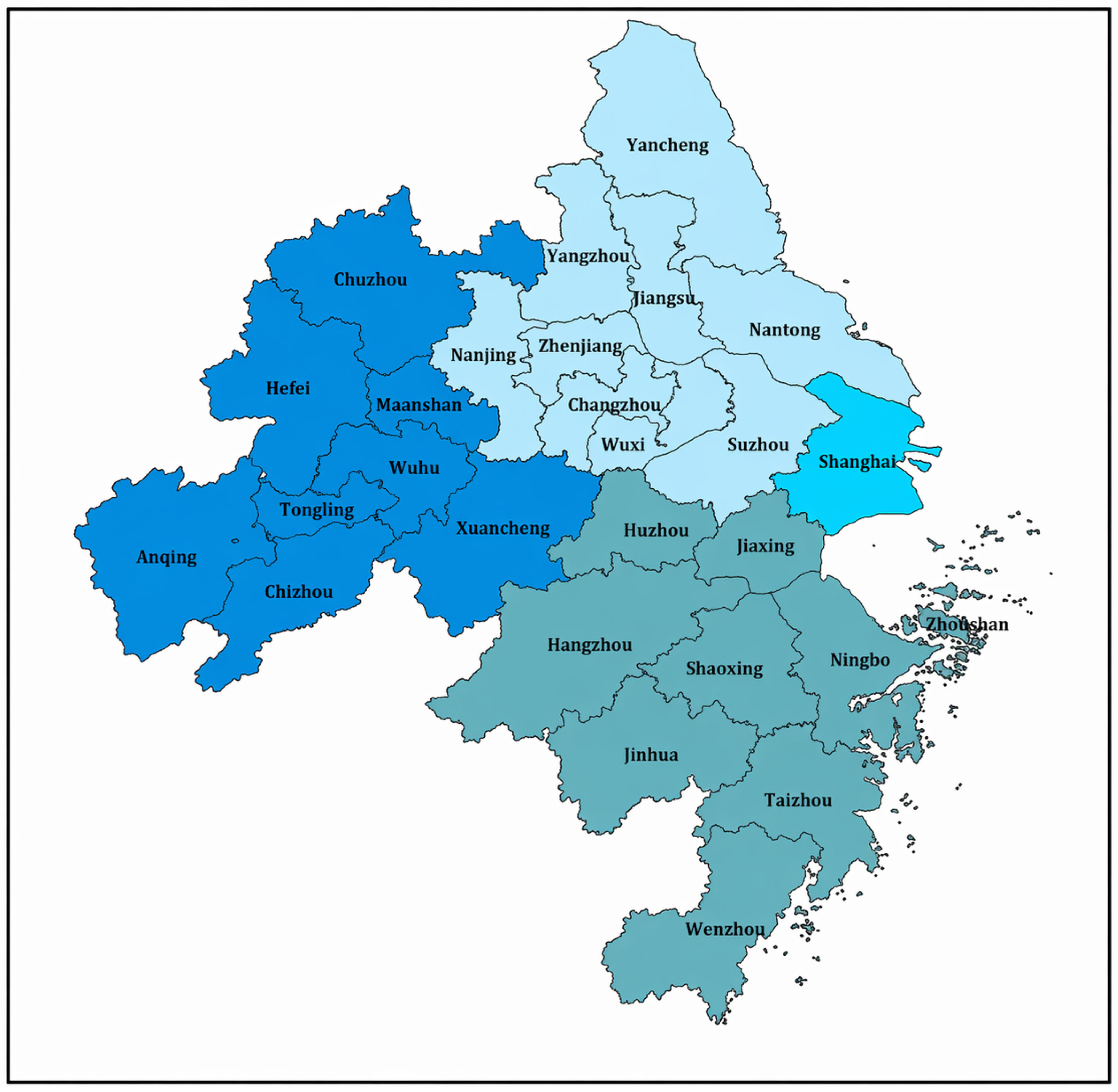
The study focuses on the Yangtze River Delta urban agglomeration, which covers 27 cities across Shanghai, Jiangsu, Zhejiang, and Anhui, as illustrated in
Figure 1. The YRD is among the most dynamic and highly integrated regions in China and also serves as an important center of tourism and service activities. Its well-developed transport system, frequent inter-city mobility, rich tourism resources, and strong market demand make it an appropriate setting for exploring the interaction between the digital economy and the tourism economy. Meanwhile, the region shows considerable internal variation in economic development, digital infrastructure, tourism resource endowment, and innovation capability, providing a useful basis for spatial analysis of coupling coordination. The empirical study draws on data for the period from 2013 to 2022. Relevant information was compiled from provincial and municipal statistical yearbooks, tourism yearbooks, statistical bulletins on economic and social development, and official releases issued by government authorities. Missing values were estimated through linear interpolation to maintain the continuity and comparability of the dataset across cities and years.
3.2. Entropy Weighting Method
To generate more objective composite indices for the digital economy and the tourism economy, this study applies the entropy weighting method. Compared with subjective weighting approaches, the entropy method assigns weights according to the amount of information or variation contained in each indicator, thereby reducing researcher discretion and enhancing the objectivity of the composite indices. First, the original data were standardized to remove the effects of differences in units and magnitude. Because all indicators in this study are positive, positive standardization was adopted as follows: , where denotes the original value of indicator j for city i, is the standardized value, and and are the minimum and maximum values of the j-th indicator.
Second, we calculate the entropy value for each indicator: , where n is the number of cities, and represents the proportion of the j-th indicator value for the i-th city. The calculation formula is: Finally, the weight of each indicator was calculated based on its entropy value: , where m is the number of indicators. Using this procedure, the weights of the digital economy and tourism economy indicators were determined, providing the basis for the subsequent calculation of the composite development indices.
3.3. Model of Coupling Coordination
This study uses a coupling-based framework to evaluate the interaction between the digital economy and the tourism economy across the Yangtze River Delta region. This model is useful because it captures not only the extent of linkage between the two systems, but also whether their development is relatively balanced and coordinated [
32].
First, the composite development indices of the digital economy system (
) and the tourism economy system (
) were calculated as follows:
, where
and
are the weights of each indicator for the digital and the tourism economy systems, respectively, and
and
are the standardized indicator values. Next, we calculate the coupling degree C and coupling coordination degree D:
. Here,
represents the overall coordination index of the two subsystems, while
and
denote the coefficients assigned to their relative importance. Following earlier studies, both coefficients were fixed at 0.5, which means that the two subsystems were given equal weight.
ranges from 0 to 1, and a larger value corresponds to a higher degree of coordinated development between the two subsystems. In line with earlier research [
35,
40], the resulting coordination levels were grouped into several categories, as shown in
Table 3.
3.4. Exploratory Spatial Data Analysis
Because the interaction between the digital economy and the tourism economy may generate spatial dependence across cities, this study further incorporates exploratory spatial data analysis. This approach is used to identify the spatial pattern, clustering tendency, and regional variation in coupling coordination [
50]. Specifically, Global Moran’s I is employed to assess whether coupling coordination among cities in the Yangtze River Delta urban agglomeration exhibits overall spatial autocorrelation. A significantly positive Moran’s I indicates that cities with similar coordination levels tend to cluster geographically, whereas a negative value points to a more dispersed spatial arrangement. In addition, Local Moran’s I is used to detect city-level clustering patterns, making it possible to distinguish local cluster types such as high–high and low–low areas and to trace spatial variation in coordinated development. By combining these two statistics, the study examines both the overall spatial dependence and the local clustering pattern of coordination between the digital and tourism economies in the Yangtze River Delta urban agglomeration.
4. Results
4.1. Spatiotemporal Patterns of the Digital Economy and Tourism Economy
4.1.1. Development Level of the Digital Economy
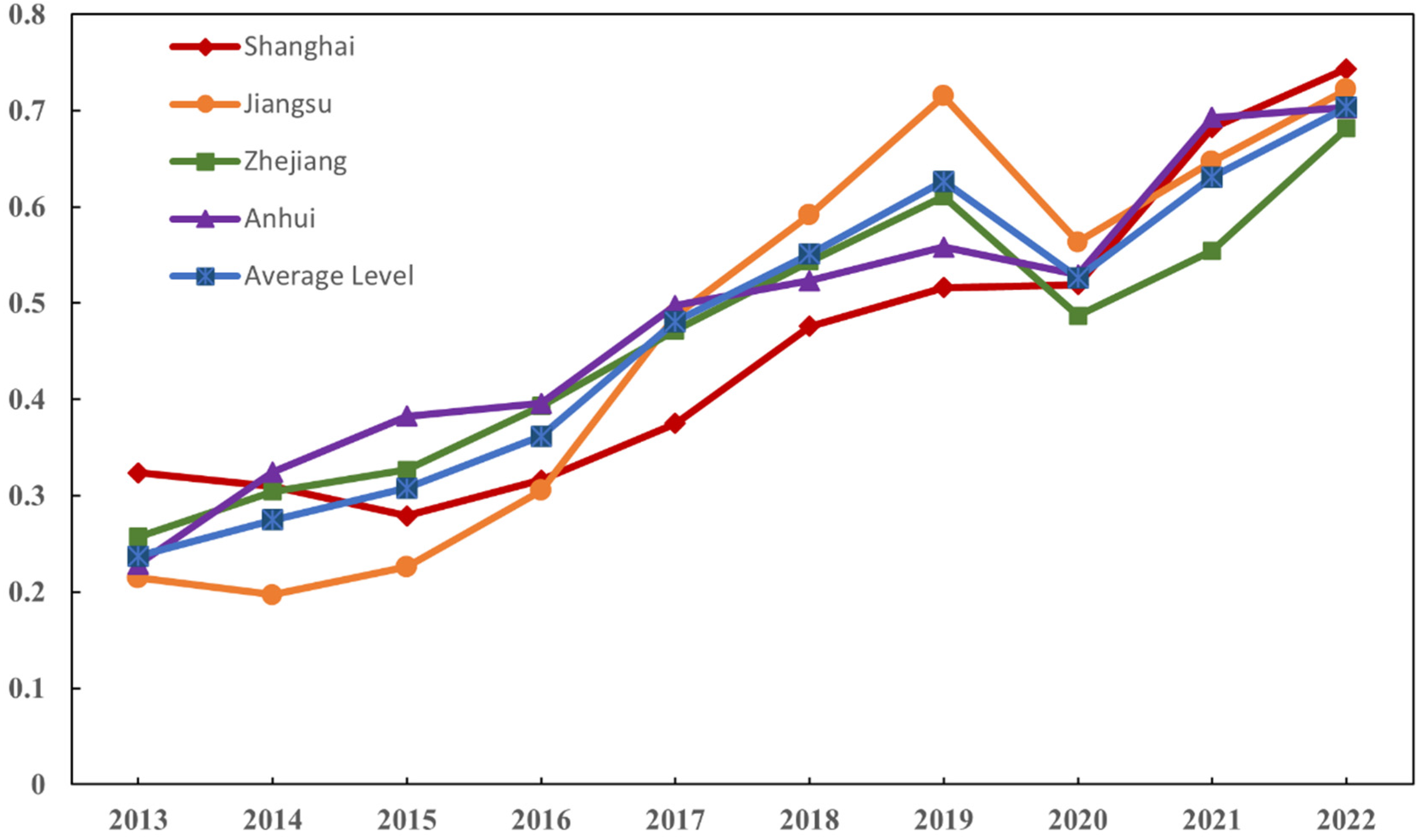
Figure 2 indicates that the digital economy in the YRD urban agglomeration expanded markedly between 2013 and 2022. All four provincial-level regions experienced clear upward trends, although their development trajectories differed. Shanghai maintained a relatively high starting point and continued to grow steadily, while Jiangsu and Anhui recorded faster growth during the study period. Zhejiang also showed sustained improvement, although at a more moderate pace. Overall, the composite digital economy index for the YRD urban agglomeration rose markedly, indicating that digital infrastructure, industrial scale, and development potential improved across the region. At the provincial level, however, the growth paths of the four regions did not fully converge. The slight decline observed in 2020 likely reflects short-term disruptions associated with the COVID-19 pandemic, including interruptions to economic activity, investment, and innovation-related inputs in some cities. However, this decline was limited and was followed by a clear rebound in 2021 and 2022. Overall, the pattern is best characterized as sustained long-run expansion accompanied by differentiated regional development paths.
4.1.2. Development Level of the Tourism Economy
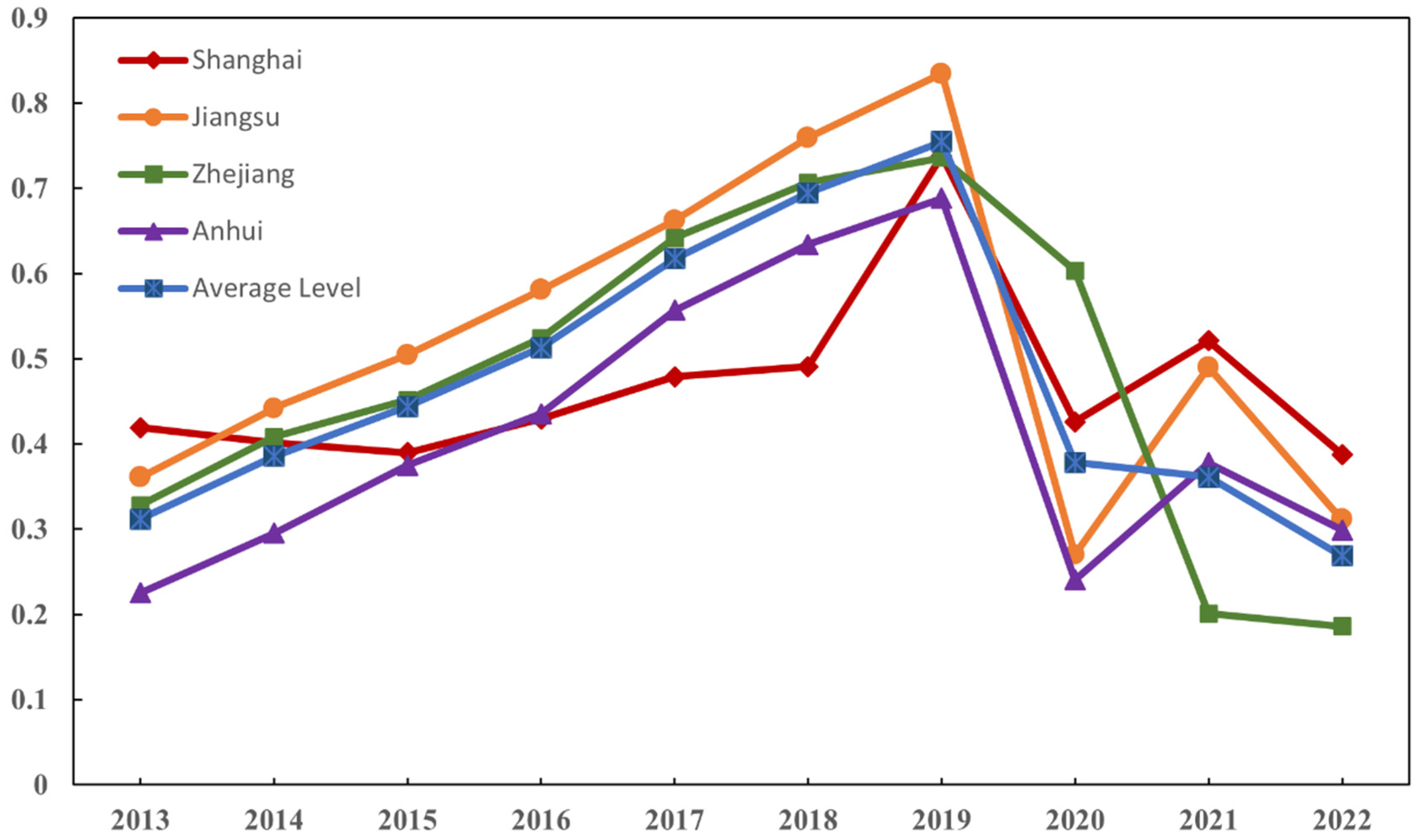
Figure 3 shows a trajectory for the tourism economy that differs noticeably from that of the digital economy. From 2013 to 2019, all four provincial-level regions generally experienced upward trends, indicating expanding tourism demand and improving industrial performance. However, their development paths were not identical. Shanghai maintained a relatively high initial level throughout the early years, but its index changed only modestly during 2013–2018. This pattern may reflect the fact that Shanghai already had a comparatively mature tourism market and a higher starting base, leaving less room for rapid growth than in the other regions. By contrast, Jiangsu, Zhejiang, and especially Anhui recorded faster increases during this period, suggesting a clearer catch-up process from lower initial levels. Another noteworthy feature is the changing relationship between Zhejiang and Anhui. Zhejiang generally remained above Anhui before the pandemic, but Anhui surpassed Zhejiang in the later years of the study period. This shift appears to be associated less with a continuous long-term overtaking process than with their different post-pandemic trajectories. After 2020, Zhejiang experienced a much sharper decline and a weaker recovery, whereas Anhui, despite also being affected, showed a relatively milder rebound pattern from a lower pre-pandemic base. As a result, Anhui’s tourism economy index exceeded that of Zhejiang in the final years.
More generally, the upward trend in tourism was broken in 2020, when the COVID-19 pandemic produced a substantial shock across the entire region. Although some recovery was observed after 2020, tourism development had not fully returned to its pre-pandemic level by 2022. This pattern indicates that the tourism economy was more vulnerable to external shocks than the digital economy. It also helps explain why the interaction between the two systems did not evolve uniformly over time. In short, the digital economy rose steadily, whereas the tourism economy followed a far more shock-sensitive path. This difference highlights a structural feature of regional development in the YRD: the two systems are closely connected, but they do not expand at the same speed or display the same resilience.
4.2. Coupling Coordination Between the Digital Economy and Tourism Economy
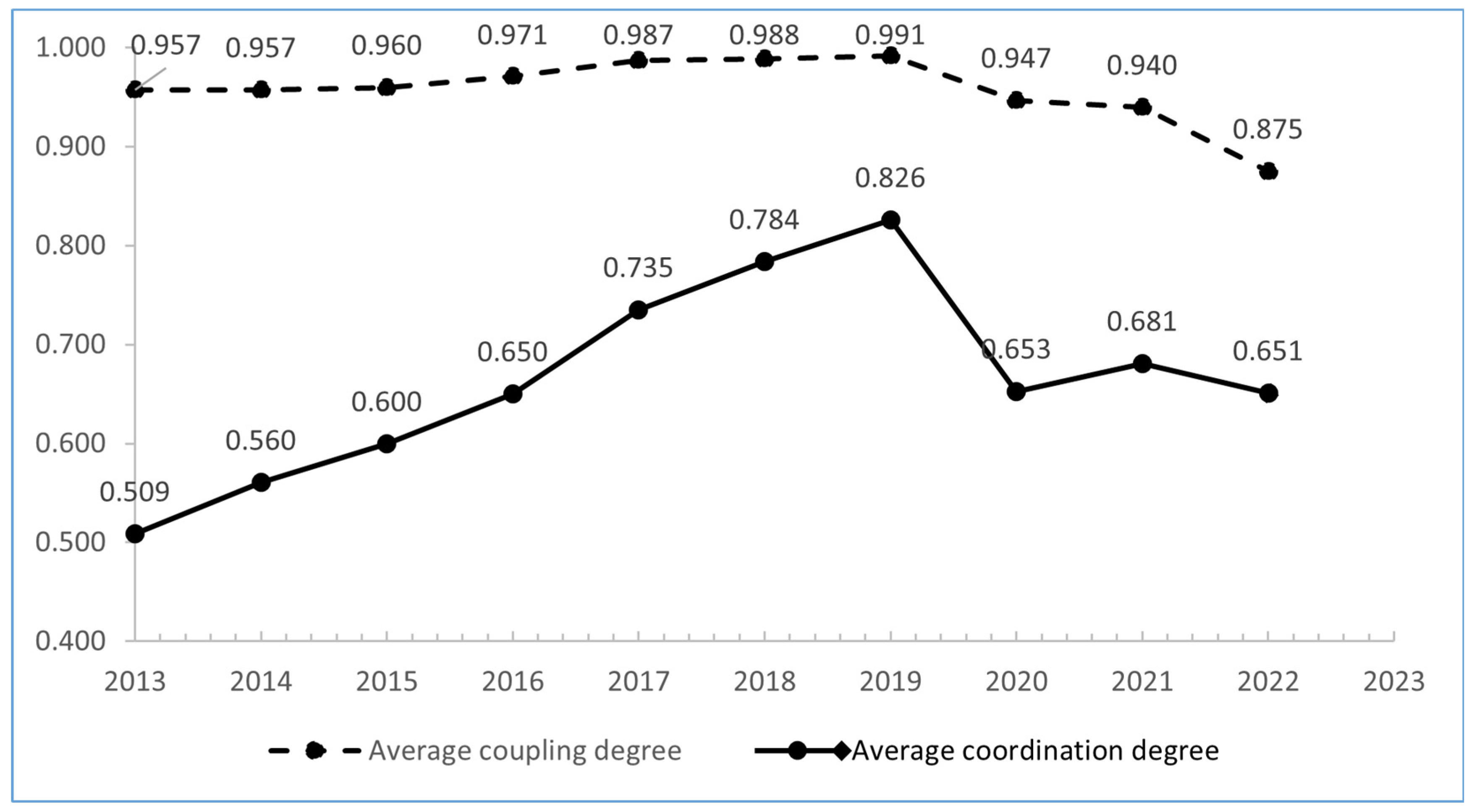
The results indicate an overall improvement in coordination between the digital economy and the tourism economy in the Yangtze River Delta during 2013 to 2022. As shown in
Figure 4, the coupling degree remained at a relatively high level throughout the study period, indicating strong interdependence between the two systems. At the same time, the coupling coordination degree increased overall, suggesting that the relationship between them became more balanced and synergistic over time. This result implies that the two subsystems in the YRD urban agglomeration did not merely coexist; rather, they increasingly developed in a mutually reinforcing manner. The diffusion of digital technologies into tourism services, destination governance, and market intermediation likely enhanced this process, while tourism demand also created new scenarios for digital application. Nevertheless, a high coupling degree does not necessarily mean a high level of coordination. Although the two systems were strongly linked, there was still room to improve the quality and balance of their integration, particularly in cities where one system developed faster than the other.
The four provincial-level regions all experienced rising coupling coordination, but the pace and level of improvement differed. Notably, the coupling and coordination level of Anhui Province in 2022 was below average for the YRD urban agglomeration. Therefore, through policy guidance and optimizing resource allocation, Anhui’s coupling and coordination degree should be improved to achieve the high-quality coordinated development of the digital and tourism economies in the YRD urban agglomeration. This conclusion aligns with the previous research findings of scholars on regional economic coordinated development [
28,
32].
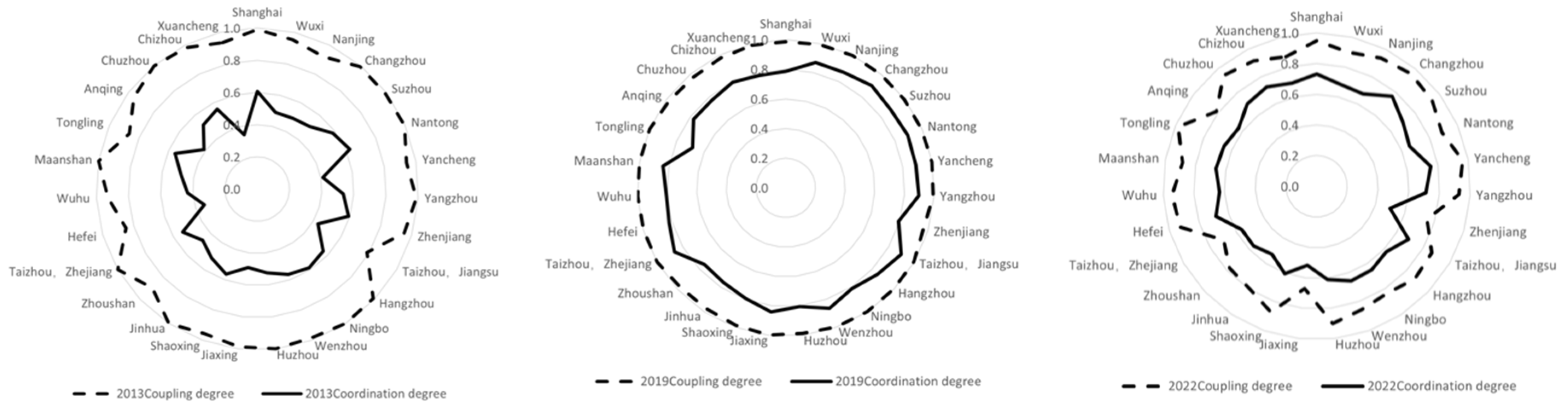
Figure 5 presents the coupling and coordination degree results of digital and tourism economy development in the YRD urban agglomeration cluster for 2013, 2019, and 2020. The figure shows a substantial overall improvement across the study period. Most cities have transitioned from a state of imbalance to coordination, indicating an overall positive trend toward high-quality development. However, regional development imbalance issues persist. In terms of coupling degree types, in 2013, 24 cities were at the high-intensity coupling stage. By 2019, all cities had reached a high coupling level, suggesting that the digital and tourism economy systems in most cities in the region were in an orderly development stage. By 2022, the degree of coupling in some cities had decreased slightly. This suggests that the progress of integration was not strictly monotonic. Instead, it was shaped by both long-term structural upgrading and short-term disruptions, especially those affecting tourism after the pandemic.
Taken together, these results show that the YRD urban agglomeration experienced a transition from simple system linkage toward more substantive coordinated development. However, this transition was uneven across places, indicating that the integration of digital and tourism economies remained spatially differentiated rather than regionally uniform.
4.3. Spatial Evolution Characteristics of Coupling and Coordination
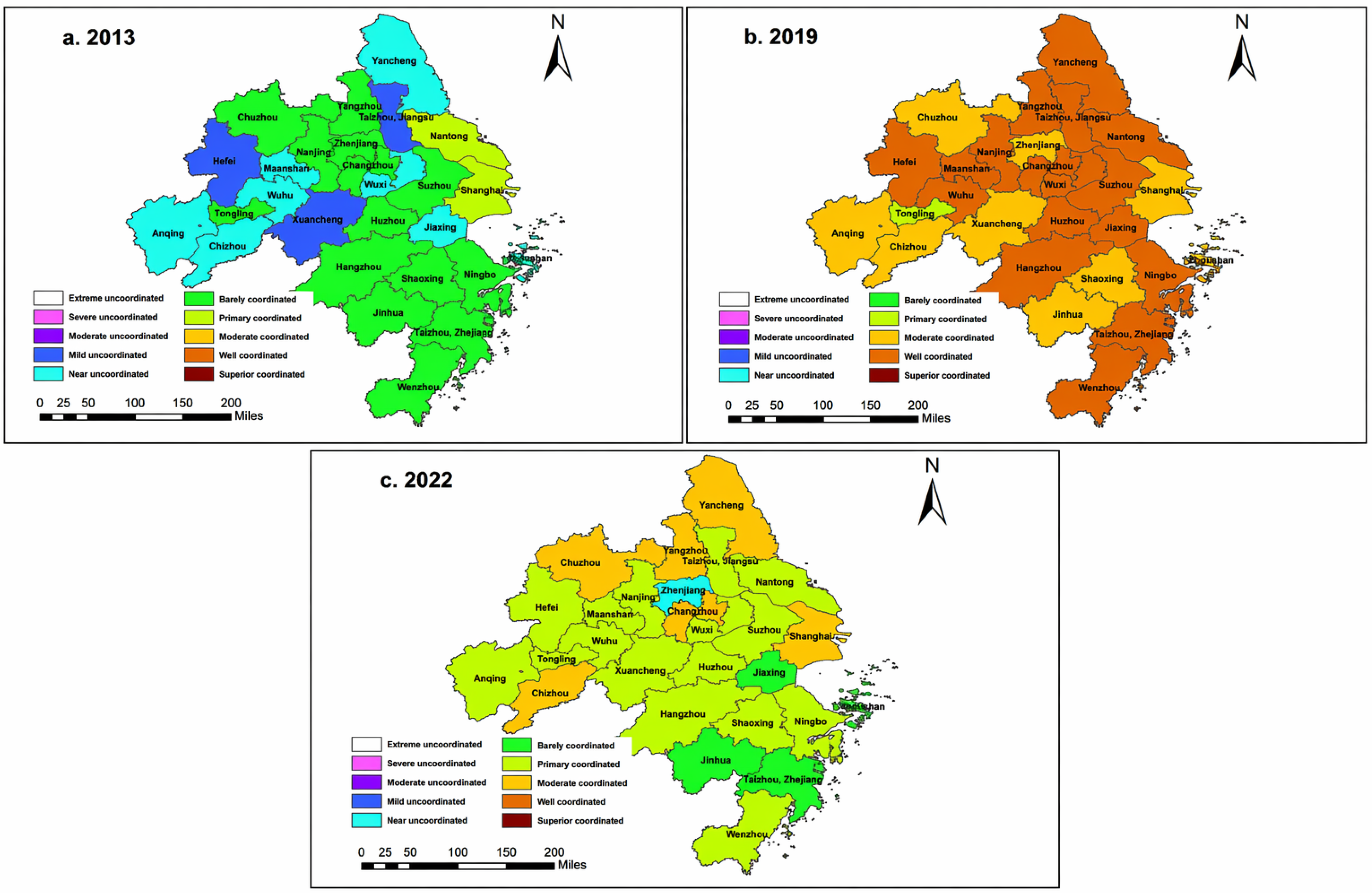
Using ArcGIS 10.8 and GeoDa 1.2, this study mapped the coupling coordination levels of the digital economy and tourism economy across the YRD urban agglomeration for 2013, 2019, and 2022, as shown in
Figure 6. The map reveals a clear spatial gradient, with higher coordination concentrated in the eastern part of the region and lower levels found in the west. Shanghai, together with nearby cities such as Nantong and Suzhou, consistently recorded relatively high coordination levels, suggesting that these cities remain at the forefront of digital–tourism integration. By contrast, several cities in Anhui Province, including Bengbu and Fuyang, showed comparatively weaker coordination, indicating greater need for improvement in linking the two systems. Such variation may also be associated with differences in local tourism profiles. Metropolitan destinations such as Shanghai and Suzhou are more likely to attract tourism activities that align well with digital platforms and service-based consumption, whereas some cities in Anhui may rely more heavily on tourism forms with weaker digital embeddedness.
From a dynamic evolution perspective, the YRD urban agglomeration cluster’s overall coupling and coordination degree has significantly improved over the past decade, and the characteristic of core–periphery coordinated development evolution has gradually formed. High-coordination areas expanded outward from core cities, while some previously lagging cities improved gradually. This suggests that coordinated development was not confined to a handful of isolated core cities; instead, a broader diffusion effect became increasingly visible across the urban agglomeration. Shanghai and its neighboring cities continue to maintain high coordination, and cities such as Jiaxing, Wuxi, and Yancheng have also significantly improved, reflecting the diffusion effect of regional coordinated development. This evolution characteristic indicates that core cities play a leading role in the integrated development of the digital and tourism economies in the YRD urban agglomeration cluster.
Although the coupling and coordination between the digital and tourism economies in the YRD urban agglomeration improved overall, substantial regional disparities still persisted. As first-movers, Shanghai and its neighboring cities have consistently maintained high degrees of coordination. Although the coordination degrees of some cities in Anhui Province have improved, internal differences still exist, and cities such as Zhenjiang, Tongling, and Anqing still have relatively low coordination degrees. This imbalance may be related to differences in digital infrastructure, tourism resource endowment, absorptive capacity, and the strength of regional innovation support in each city. Accordingly, stronger place-based policy intervention and deeper regional cooperation are still needed to enhance digital–tourism integration and further raise the overall level of coordinated development.
4.4. Spatial Correlation Analysis
Moran’s I is commonly applied to identify spatial dependence and characterize agglomeration patterns. To determine whether the coupling coordination between the digital economy and the tourism economy in the Yangtze River Delta urban agglomeration exhibited spatial association during 2013 to 2022, this study employed both global and local Moran’s I measures.
4.4.1. Global Autocorrelation Analysis
Table 4 presents the Global Moran’s I results for the coupling coordination degree over the study period. In most years, the index is positive, suggesting that cities with comparable coordination levels were geographically clustered rather than randomly distributed. In other words, high-coordination cities were more likely to be located near other high-coordination cities, while low-coordination cities also showed a tendency to be spatially concentrated. More specifically, the Moran’s I values generally increased from the early stage of the study period to 2021, suggesting that the spatial clustering of coupling coordination became stronger over time. This trend is consistent with the formation of a more evident regional structure in which coordinated development concentrated in certain city groups. However, the sharp decline in Moran’s I in 2022 indicates that this spatial dependence weakened considerably in the final year. This may reflect renewed divergence in local development trajectories, especially as cities differed in the speed with which they converted digital development into tourism recovery.
4.4.2. Analysis of Local Spatial Autocorrelation
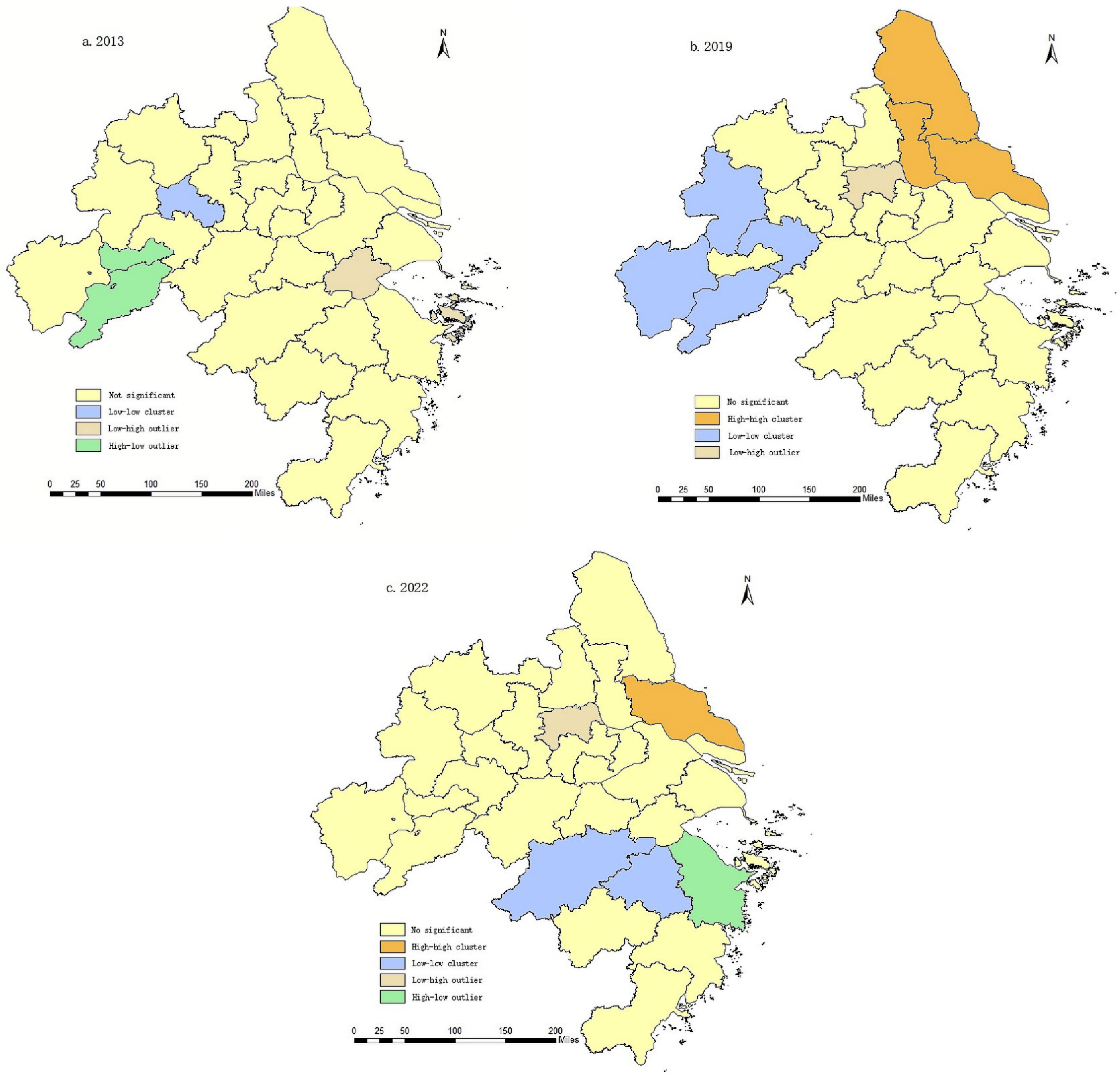
Figure 7 shows that local spatial clustering in the Yangtze River Delta urban agglomeration changed across 2013, 2019, and 2022. In 2013, high–high clusters were located mainly in Shanghai and nearby areas, suggesting stronger coordination between the two subsystems in these cities. By contrast, low–low clusters were largely distributed in Anhui, where the two systems remained at a comparatively weaker stage of development. In 2019, the spatial extent of high–high clusters expanded markedly, especially toward the northern part of the region, suggesting that the coordinated development of the two economies was diffusing geographically. During the same period, although low–low clusters remained broadly stable in distribution, their intensity declined, pointing to a gradual improvement. By 2022, high–high clusters had expanded further, reflecting the continued strengthening of digital–tourism coordination across the region. Meanwhile, the spatial range of low–low clusters narrowed further, indicating that more areas were gradually moving away from persistently weak coordination.
These local clustering patterns imply that digital–tourism coordination in the Yangtze River Delta urban agglomeration gradually diffused from core cities toward surrounding areas. High-coordination zones continued to expand, and spatial association became more evident over time, indicating stronger support for regional coordinated development. Nevertheless, disparities and imbalances in the interactive development of the two systems still remained across cities within the region.
5. Discussion
5.1. Key Findings
The findings offer several important insights into the interaction between the digital economy and the tourism economy in the Yangtze River Delta (YRD) urban agglomeration. First, although both systems improved during 2013–2022, their development trajectories were clearly different. The digital economy maintained a relatively steady upward trend and expanded more rapidly across the region, whereas the tourism economy showed stronger sensitivity to external shocks, especially the COVID-19 pandemic. This suggests that digital development has become a relatively stable force in regional transformation, while tourism remains more dependent on mobility, offline service interaction, and demand recovery. This finding is broadly consistent with existing research showing that digitalization can provide a sustained impetus for tourism upgrading through technological empowerment, information efficiency, and service innovation, whereas tourism performance remains more vulnerable to shocks and local development constraints [
34,
51]. At the same time, prior studies also indicate that the benefits of digitization are not always uniform across places and scales [
52], which helps explain why the two systems in the YRD, although closely linked, did not evolve synchronously.
Second, the findings indicate that the digital economy and the tourism economy remained strongly interconnected over the study period, while their coordination level improved progressively. This distinction is meaningful because a high degree of coupling reflects strong interaction between the two systems, but does not necessarily mean that they have achieved balanced or mutually optimized development. This interpretation is broadly in line with recent studies on digital–tourism coupling, which argue that close linkage may coexist with uneven coordination quality across regions and over time. Our results further extend this line of research by showing that, within a highly integrated urban agglomeration, coordination improvement was accompanied by a gradual outward diffusion from core cities to surrounding areas. This pattern is also compatible with Liu et al. (2025), who emphasized the spatial spillover effect of the digital economy on tourism development [
53]. At the same time, the uneven improvement across cities indicates that local differences in digital foundations, tourism resource endowment, and policy support continue to shape the quality of integrated development.
Furthermore, the coordination between the digital economy and the tourism economy in the YRD urban agglomeration significantly improved from 2013 to 2022, exhibiting a spatial distribution pattern of “high in the east and low in the west.” Over time, regions with high coupling coordination gradually expanded, forming a spatial evolution characteristic of core–periphery coordinated development. This finding suggests that regional integration does not automatically eliminate disparity. On the contrary, diffusion and imbalance may coexist during the same development process. This interpretation is in line with studies emphasizing that the digital economy often produces significant spatial effects in tourism development, but that such effects are conditioned by regional heterogeneity [
52,
54]. In other words, digital resources, infrastructure, and innovation capacity tend to accumulate first in more advantaged areas and then diffuse outward unevenly. Therefore, cities with stronger innovation resources, better connectivity, and more mature tourism markets are more capable of capturing the benefits of digital–tourism integration, whereas relatively lagging cities, especially some in Anhui, remain constrained by weaker development foundations.
Last, the spatial distribution of coupling coordination showed positive clustering in most years. Exploratory spatial analysis results show that the digital and tourism economies in the YRD urban agglomeration exhibit significant positive agglomeration characteristics in spatial distribution, indicating an improvement in inter-regional coordinated development. However, by 2022, spatial correlation had weakened somewhat, suggesting an expanding trend of regional development differences. Local spatial analysis reveals that “high-high” clustering areas are mainly located in Shanghai and its surrounding cities, and regions with high coordination increasingly exert a radiating effect on neighboring cities. In contrast, “low-low” clustering areas are concentrated in some parts of Anhui. Although the scope of “low-low” clustering areas has shrunk, regional imbalances persist. This pattern can be better understood in light of previous studies showing that tourism flows and rural tourism structures often display clear spatial concentration and diffusion characteristics when examined through digital footprints and related spatial evidence [
55,
56]. Taken together, these findings suggest that the interaction between the digital economy and the tourism economy is not only a matter of interaction strength, but also a question of how coordinated development is shaped by uneven regional conditions, spatial spillovers, and differentiated local development capacities.
5.2. Theoretical Contributions
This research adds to the existing literature in several important ways. First, it extends coupling coordination theory by treating the digital economy and the tourism economy as an integrated regional system rather than two separate fields of inquiry [
57,
58]. In doing so, it offers a more integrated perspective on how digital transformation and tourism development shape one another within an urban agglomeration.
Second, the study adds nuance to existing coupling-based research by showing that close interdependence does not automatically translate into balanced development. A strong connection between the two systems may coexist with uneven progress, indicating that interaction intensity and developmental quality should not be treated as equivalent in regional analysis.
Third, this study advances research on digital transformation and tourism development by drawing attention to the spatially uneven character of digital–tourism integration. By examining the YRD at the city level, it demonstrates that coordinated development is conditioned by local differences rather than emerging evenly across the region. This provides a more fine-grained understanding of how digital change and tourism upgrading interact within a highly integrated urban agglomeration.
5.3. Managerial Implications
This study’s empirical insights provide actionable strategies for policymakers, industry stakeholders, and regional planners. First, our research identifies significant spatial imbalances in coupling coordination levels, particularly between core cities (e.g., Shanghai and Suzhou) and peripheral areas (e.g., parts of Anhui). To address this, policymakers should adopt tailored strategies. For core regions, the focus should be on sustaining leadership through advanced digital–tourism integration. Investments in cutting-edge technologies—such as AI-driven tourism platforms, blockchain for secure transactions, and augmented reality (AR) for immersive cultural experiences—can enhance service quality and global competitiveness. Conversely, peripheral regions require targeted interventions to bridge infrastructure gaps. For example, digital adoption and resource accessibility can be accelerated by expanding broadband coverage, subsidizing information and communication technology (ICTs) training programs for tourism workers, and upgrading transportation networks (e.g., high-speed rail links to core cities). Fiscal incentives, such as tax breaks for tourism tech startups, could further stimulate growth in lagging areas.
Second, the spatial autocorrelation analysis reveals that high-coordination regions exert a radiating influence on neighboring cities. To amplify this effect, a YRD-wide governance mechanism should be established to facilitate inter-city collaboration. For instance, this could include a unified digital tourism platform aggregating real-time data on visitor flows, accommodation availability, and cultural events across the region. Such a platform would enable dynamic resource allocation, joint marketing campaigns (e.g., promoting multi-city itineraries), and policy harmonization (e.g., standardized data-sharing protocols). Additionally, intergovernmental task forces could coordinate infrastructure projects, such as smart city initiatives, to ensure alignment with regional development goals.
Third, as shown in the inverted V-shaped trend of tourism economic indices, digital solutions should be prioritized to mitigate future disruptions. For example, hybrid tourism models combining virtual experiences (e.g., VR monument tours) with live events can diversify revenue streams and attract tech-savvy travelers. Governments could subsidize small and medium-sized tourism enterprises to adopt digital tools like cloud-based booking systems or AI-powered customer service chatbots. Furthermore, big data analytics can be employed to monitor and predict tourism demand, enabling proactive adjustments to marketing strategies and resource allocation during crises.
Finally, the ‘core-periphery’ spatial evolution pattern highlights the need for strategic resource distribution. Areas identified as ‘low-low’ agglomeration (e.g., Bengbu and Fuyang) require focused investments in digital infrastructure and human capital. For instance, partnerships with tech giants (e.g., Alibaba or Tencent) could promote the establishment of regional innovation hubs offering training in digital skills for tourism professionals. Simultaneously, enhancing connectivity between peripheral regions and core hubs through improved logistics networks (e.g., smart highways or drone delivery systems for rural tourism sites) can integrate these areas into the broader YRD economic ecosystem.
5.4. Research Limitations and Future Directions
Several limitations of the present research warrant attention. First, the indicator system relies on city-level aggregate data, which makes it difficult to capture micro-level dynamics such as firms’ digital transformation, platform operations, and tourists’ behavioral responses. Future studies may incorporate data from firms, platforms, or consumers to better explain the interaction between the digital economy and the tourism economy. Meanwhile, although the coupling coordination framework, together with spatial analysis, can capture development patterns effectively, these approaches do not directly establish causal links. Future studies could apply spatial econometric methods, mediation models, threshold models, or quasi-natural experiments to further examine the channels through which the two systems influence each other. Third, since this paper focuses on the Yangtze River Delta urban agglomeration, the generalizability of the findings remains limited. Comparative research across different urban agglomerations would help assess the broader applicability of the conclusions. Future work could also pay greater attention to the resilience and long-term sustainability of digital–tourism integration under changing regional conditions and external shocks.