1. Introduction
In recent years, cultural and creative industries (CCIs) have moved from a peripheral position to become key players in economic development, social innovation and urban transformation [
1,
2], strengthening their role in cultural tourism and consolidating their position as key assets for attracting visitors and enhancing the international profile of the cities in which they are based [
3,
4]. This highly diverse field encompasses aspects such as heritage, visual arts, design, music and audiovisual production, not only contributing symbolic and cultural value but also revitalising the territory [
5,
6]. However, the CCIs face significant structural challenges, such as limited access to financing, inadequate training for businesses, and governance models that are not adapted to new forms of entrepreneurship [
7,
8,
9].
In response to these challenges, innovative organisational structures such as cultural startups have emerged, characterised by their agile structure, collaborative approach and strong digital component [
10,
11]. In this same context, startup centres have emerged—incubators, accelerators and coworking spaces—becoming infrastructures that provide strategic assistance, guidance, cooperation networks and access to both physical and digital resources [
12]. These places are being researched as areas of social and cultural innovation, in which inclusion and sustainability must play a crucial role [
13,
14].
Despite growing interest in cultural and creative industries, the existing literature has focused mainly on creative hubs in relation to their economic role, clustering processes and innovation performance [
15,
16,
17], without considering their internal governance and communication processes. Although the literature on innovation has conceptualised the role of intermediaries as important actors in facilitating knowledge flows and coordination in innovation systems [
18,
19], its application to cultural startup hubs remains very limited and scattered.
The recent literature has begun to move towards a reconceptualisation of entrepreneurial and creative ecosystems, focusing on their social, institutional and relational aspects, such as sustainability, inclusiveness and legitimacy [
7,
20,
21]. However, there is still a lack of empirical studies that combine these aspects in the context of cultural startup hubs. The gender perspective has mainly focused on individual entrepreneurs or companies [
22,
23] without considering the role of intermediary organisations, such as cultural startup centres, which influence access to resources, power and visibility within the CCIs. Recent studies have pointed to the need for inclusive gender perspectives at the ecosystem and organisational levels [
24], but there is still a lack of evidence in the cultural context.
Furthermore, although cultural tourism and research on creative cities have increasingly emphasised the symbolic and experiential role of culture in urban development [
25], the strategic role of digital communication in mediating visibility, community engagement and the external positioning of cultural startup hubs has yet to be explored. Research on digital platforms and communication in the CCIs has highlighted their growing importance for value creation and legitimacy [
26,
27,
28], but their incorporation into research on cultural centres remains an underdeveloped area.
1.1. Innovation and Cultural and Creative Industries
In the last few years, cultural innovation has gained relevance, especially in the context of the cultural and creative industries (CCIs), considered a strategic sector for economic growth, urban revitalisation and social consolidation [
1,
2,
5]. These industries have played a highly valued role in European policies due to their ability to promote sectors such as cultural tourism, the economy and education [
29]. In fact, the interrelationship among CCIs, tourism and creative cities has become a strategic focus of urban policies [
3].
Beyond their economic importance, cultural and creative industries are recognised as complex innovation systems influenced by symbolic, social and institutional factors specific to a particular urban context [
16,
17]. Rather than adhering to a linear and technological approach, cultural innovation is often conceptualised as a hybrid approach that integrates creativity, experimentation, collaboration and place-based knowledge [
10,
25]. From this perspective, the innovation process within CCIs is deeply intertwined with urban creative ecosystems, which facilitate interactions among cultural producers, the public sector and intermediary organisations, and exert an influence on production and value creation processes [
15,
18]. Recent research has emphasised the importance of urban creative ecosystems in fostering resilience, legitimacy and adaptability within CCIs, particularly in cities undergoing post-industrial transformation and striving to enhance their urban visibility, resources and cultural prestige [
15,
25].
CCIs include areas such as art, design, fashion and audiovisuals [
6], highlighting how these sectors symbolically modify the urban environment, while Bertasini [
28] emphasised their increasing digitalisation. In this context, George [
10] proposed that cultural innovation should encompass models of administration, participation and communication.
Current research on cultural innovation in urban development has focused mainly on general policy frameworks, sectoral overviews and place-specific approaches. In contrast, less attention has been paid to the organisational frameworks that enable the successful creation, management and maintenance of cultural innovation [
15,
16,
17]. Little empirical research has been conducted to study the impact of support frameworks and intermediary organisations on the day-to-day functioning of cultural innovation in the cultural and creative sectors, despite their widely recognised importance in managing resources, networks and credibility within innovation systems [
18,
19].
Instead, recent studies suggest that a deeper understanding at the organisational level is needed to link cultural innovation processes with gender equality, business practices and digital presence in the cultural and creative sectors [
24].
1.2. Startups and Cultural Innovation
Cultural startups have emerged as hybrid business models that integrate creativity, innovation and technology, operating at the intersection of cultural creation and market-driven progress [
10,
17,
30]. These enterprises are often characterised by high levels of uncertainty, project-based work and reliance on intangible assets, which sets them apart from traditional startups in other sectors [
9,
16].
Despite their potential contribution to innovation and urban cultural vitality, cultural startups face persistent barriers, such as limited access to funding, mentoring and professional networks, especially in European entrepreneurial ecosystems [
7,
8]. Studies on entrepreneurial ecosystems have shown that limitations go beyond financial factors and extend to institutional and social aspects that delay the ability of cultural startups to expand, professionalise and gain credibility [
18].
Klamer [
9] has argued that many cultural startups operate according to a value-based logic, prioritising symbolic, social or community impact over financial profit; this tension between cultural value creation and business viability has been widely recognised as a defining challenge of cultural entrepreneurship [
17,
30]. To address this tension, support and incubation models sensitive to the specific logic of cultural production are needed, rather than purely market-oriented approaches. In this regard, recent studies have emphasised the importance of promoting entrepreneurial, management and strategic skills through holistic and context-sensitive frameworks [
11]. Cultural entrepreneurship is also deeply marked by urban dynamics, cultural policies and gender structures, which influence access to resources, visibility and opportunities within creative ecosystems [
3,
15,
22].
The influence of cultural startups extends beyond the creative industry itself, as it intersects with urban development and cultural tourism by creating new experiences, stories and products that contribute to a city’s appeal and uniqueness [
15,
25].
In this context, incubation and support spaces have emerged as essential infrastructures for cultural startups, as they provide access to networks, knowledge and symbolic legitimacy. Despite their growing importance, these spaces still need further analysis from an organisational point of view, especially concerning their inclusion, strategic communication and long-term viability [
18,
24].
1.3. Startup Centres and Their Role in Cultural Innovation
The key infrastructures for linking CCIs with innovation, participation and entrepreneurship networks are coworking spaces, incubators and creative laboratories [
12,
13] which, in addition to their value for entrepreneurship, help to attract tourists by positioning cities as creative and culturally innovative spaces [
3,
4]. Murphy [
31] defined them as innovative models of museum practice, in which the interrelation among creativity, technology and the community enables a change in the role of cultural institutions.
Nogare and Murzyn-Kupisz [
32] examined how museums and cultural centres are establishing connections with CCIs to drive innovation processes. Through cooperation with startups, these venues have the capacity to provide spaces that promote co-creation and entrepreneurship. Keane and Chen [
33] highlighted how government policies have encouraged this type of fusion among culture, business and technology.
Beyond their role as innovation infrastructures, startup centres also function as organisational gatekeepers that shape access to resources, networks and visibility within cultural and creative ecosystems [
21,
34]. These intermediary groups can perpetuate or reduce existing gender disparities, depending on their governance frameworks, leadership systems and support methods [
22,
35]. Critics have argued that entrepreneurial environments often disadvantage women and underrepresented groups due to their informal norms, selective processes and network dynamics, rather than neutrality or openness [
24].
The progress of these hubs varies depending on the urban environment, institutional leadership and availability of resources, which affects the ability of the cities in which they are located to promote themselves internationally as cultural tourism destinations [
2]. The current literature shows that these structures do not yet adequately incorporate gender equality or strategic communication policies, which limits their capacity for inclusion and transformation [
13,
14]. In this sense, startup hubs can also be understood as hybrid organisational forms, operating at the intersection of public, private and community logics, because their ability to bring together different actors, resources and institutional frameworks positions them as key nodes within cultural and creative ecosystems [
18,
19,
36]. This hybrid nature enables them not only to support entrepreneurial activity but also to mediate among cultural production, political environments and social demands. As a result, their role extends beyond incubation functions, contributing to the shaping of innovation processes, the circulation of cultural value and the construction of collective meanings in urban contexts [
17].
1.4. Digital Communication, Visibility and Instagram
Within the cultural and creative industries (CCIs), value creation is closely linked not only to production and innovation but also to symbolic positioning, narrative construction and audience engagement. In this sense, digital platforms are taking on a more central role in defining how cultural actors convey their identity, legitimacy and relevance within urban creative environments [
26,
27].
Research has highlighted that social media platforms contribute to the construction of organisational legitimacy by enabling cultural organisations to articulate narratives, showcase creative processes and foster community interaction [
26,
27] concerning the city’s brand image and the attractiveness of the destination, as stated by Richards [
25].
Among digital platforms, Instagram has gained prominence as a visual and narrative medium which is particularly suited to CCIs. The focus on images, short videos and storytelling in cultural production reflects its symbolic and experiential aspects, enabling organisations to convey creativity, authenticity and community values more effectively than text-based platforms [
3,
28]. Studies on visual communication emphasise that Instagram facilitates affective engagement and identity construction, reinforcing the social and cultural dimensions of innovation [
27]. However, despite its growing relevance, the strategic use of Instagram by cultural startup hubs remains underexplored in the literature. Most existing research has focused on individual cultural institutions or tourist attractions while paying less attention to intermediary organisations, such as hubs that collect, enhance and contextualise stories of cultural entrepreneurship on a broader ecosystem scale. Furthermore, little attention has been paid to how digital communication strategies intersect with issues of inclusion, representation and governance within these spaces [
24].
Using a comparative mixed-methods approach across three European cities, this research provides a rich understanding of how different models of hubs affect sustainability, inclusion and communication practices, contributing insights for both theoretical development and management practice in creative ecosystems. Three European cultural startup hubs—namely, 104factory (Paris, France), Makerversity (London, UK) and A Lab (Amsterdam, The Netherlands)—are analysed to understand how these structures function as promoters of cultural innovation.
Therefore, the objectives of this study are as follows:
To analyse and compare the organisational and structural characteristics of cultural startup hubs in different European cities, paying particular attention to sustainability models and institutional configurations;
To examine patterns of gender representation and leadership within cultural startup hubs, identifying similarities and differences between organisational contexts;
To explore how cultural startup centres use digital communication strategies on Instagram to improve visibility, community engagement and positioning.
2. Materials and Methods
2.1. Research Design and Case Selection
This study adopted a mixed-methods research design to comparatively analyse three European cultural startup centres: 104factory (Paris, France), Makerversity (London, UK) and A Lab (Amsterdam, The Netherlands). This design addressed recent suggestions in research on cultural entrepreneurship and innovation, which recommend more comprehensive and multifaceted examinations that can capture both organisational features and symbolic processes. The cases were selected through purposive sampling [
37]. These three centres were chosen because they represent established models of cultural incubation in different institutional and urban contexts while sharing key characteristics that allow for comparison. They are in European cities with well-established cultural and creative industry (CCI) environments and a strong international reputation for cultural tourism, despite differences in their governance frameworks, levels of institutionalisation and organisational trajectories. The number of similarities and differences supports the comparative logic of this study.
A methodological strategy based on the three following dimensions was applied:
Structural variables of the centre (funding, sustainability, and internationalisation);
Social variables (female participation and sectors of incubated startups);
Communication variables (presence and strategy on Instagram).
These three dimensions were integrated to reflect different analytical levels. First, the structural characteristics of each hub were examined to understand their organisational model orientation. For analysing the social variables, it was necessary to select incubated startups within these centres, allowing the analysis of their social composition. Finally, the strategic communication practices were analysed through their Instagram account.
A clear relationship is established between the various dimensions, whereby the structural configuration of the centres determines the type of ecosystem they constitute, which in turn influences the profile of the startups they incubate and, lastly, the way in which these centres develop their communication strategies and engage with the public via social media.
2.2. Variables and Analytical Dimensions
The structural and social dimensions were examined through a comparative analysis based on public data available on each incubator’s official website. In addition, information on the founding teams, leadership and sectors of activity was collected from institutional and LinkedIn profiles. In total, 91 startups incubated in the three selected cultural hubs were analysed; these were identified through the public repositories of their websites.
Gender representation was identified through manual content analysis based on the names, images and biographies publicly available in the founding team profiles. In cases where individuals of different genders were identified within the founding team, the team was classified as mixed. This classification method is frequently used in digital media and on social media platforms [
38]. However, it may have certain limitations as it is based on a binary categorisation derived from observable indicators.
The structural variables focused on the three following key elements:
Sustainability—the longevity index of incubated startups;
Financial support and mentoring—the existence of programmes, calls for proposals or grants;
Internationalisation—global links, events or strategic alliances.
2.3. Digital Communication Analysis
The communication dimension focused on a study of the selected incubators’ official Instagram accounts. This platform was chosen for its importance in promoting the identity of cultural institutions, as well as for its visual, narrative and community format, which is particularly suited to the creative sector. The analysis period covered May 2024 to April 2025.
Data collection was carried out using the professional tool Fanpage Karma (Gold plan; Fanpage Karma GmbH, Berlin, Germany), which allowed for the systematic extraction of activity and interaction metrics, including both quantitative and qualitative variables. Some studies have used this tool to perform content analysis in cultural centres such as museums; consequently, the selection of these variables was based on previous studies that analysed other cultural institutions or venues [
39,
40,
41].
The following information was obtained:
Number of followers;
Frequency of posts;
Interaction rate (average engagement per post, calculated by Fanpage Karma as interactions relative to the number of followers);
Type of content (image, video, or carousel);
Communicative category of each post following the typology of Hussain and Barman [
42], which includes brand identity, cause, current affairs, customer relations, educational, for employees, functional and sales promotion;
Use of hashtags and international reach of discourse.
This integrated methodology allowed us to evaluate not only the structure and internal functioning of the hubs but also their public narrative, their inclusive orientation and their capacity for symbolic projection.
3. Results
3.1. Comparison of Cultural Centres
This section presents a comparative analysis of three European cultural startup centres—104factory (Paris, France), Makerversity (London, UK) and A Lab (Amsterdam, The Netherlands)—focusing on their organisational characteristics and their positioning within urban creative ecosystems (
Table 1).
104factory is closely linked to public cultural institutions and operates within a more formalised and institutionalised framework, where its model is characterised by structured incubation programmes with stable organisational support and a clear alignment with public cultural policies. In comparative terms, 104factory shows a greater degree of institutionalisation than the other cases, with more formal support structures and greater integration into public governance frameworks. This configuration sets it apart from the more flexible and community-oriented models seen in other centres.
Makerversity, for its part, takes a more practical and experimental approach to cultural innovation. It is situated in a creative production environment, emphasising creation, collaboration and peer learning and fostering close interactions among creators, designers and entrepreneurs. Compared to 104factory, Makerversity operates with lower levels of formal institutionalisation and places greater emphasis on community dynamics and practical experimentation, highlighting the differences in the way cultural innovation is carried out in different centres, ranging from policy-oriented incubation to practice-driven creative production.
Finally, A Lab represents a third organisational model, functioning as an open cultural laboratory integrated into the urban fabric of Amsterdam; it combines cultural production, social experimentation and interdisciplinary collaboration, positioning itself as a living laboratory rather than a traditional incubator. A Lab contrasts even more sharply with the other cases by prioritising openness, accessibility and social interaction over structured incubation processes, positioning itself as a model that illustrates an alternative configuration of cultural innovation centres, in which experimentation and interdisciplinarity play a more prominent role than formalised mechanisms for supporting entrepreneurship.
Therefore, from a comparative perspective, these three models illustrate distinct organisational logics within cultural startup hubs; whilst 104factory reflects a more institutional and policy-oriented structure, Makerversity emphasises production-oriented and practice-based dynamics, and A lab prioritises openness and experimentation. These differences highlight the diversity of organisational approaches within the European cultural ecosystem and reveal how varying degrees of institutionalisation and community orientation determine the operational characteristics of each hub.
3.2. Gender Representation
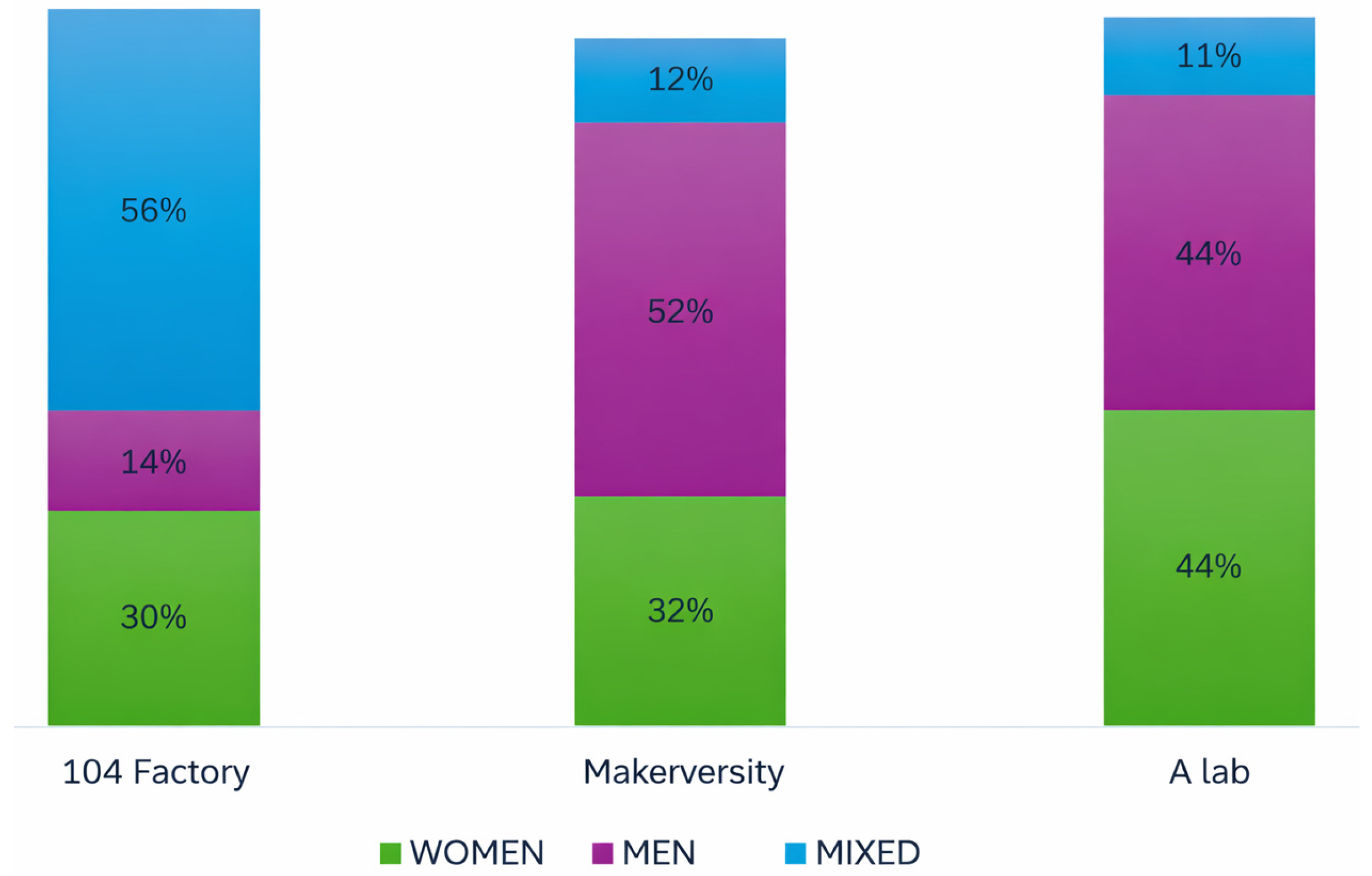
The results reveal notable differences in gender representation across the three centres: 104factory shows a predominance of male-led startups, accounting for 56% of the initiatives analysed, while female-led startups account for 30% and mixed teams for 14%. In contrast, Makerversity has a more diverse composition of leadership teams: male-led startups account for 52%, female-led initiatives for 32% and mixed teams for 12%. Finally, A Lab presents the most balanced distribution of the three cases: female- and male-led startups each account for 44% of the total, while mixed teams account for 11%. This configuration reflects a comparatively more balanced representation of genders in leadership positions within this centre (
Figure 1).
3.3. Communication Strategies
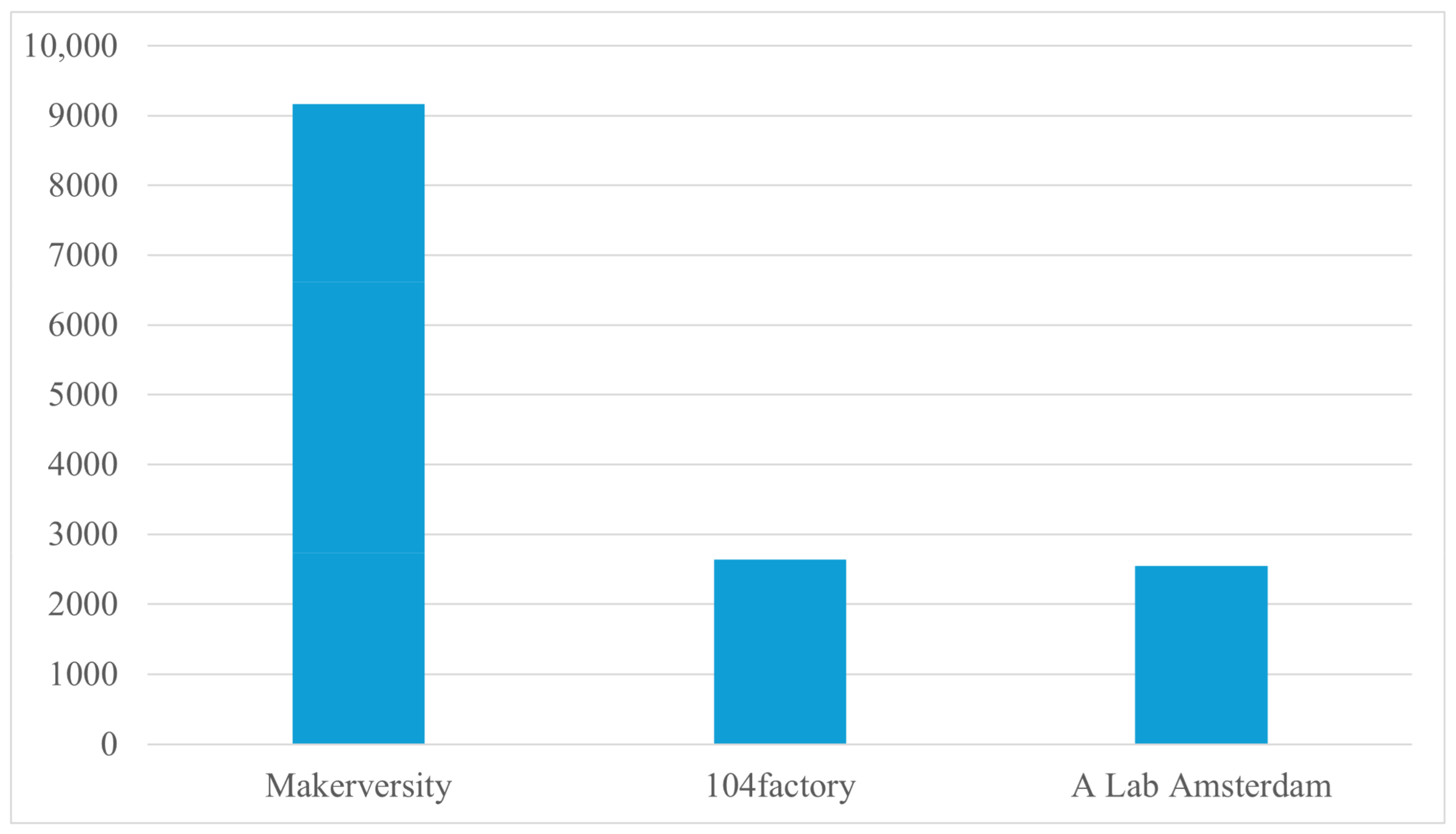
In terms of digital presence (
Figure 2), Makerversity leads in its number of followers (9166), followed by 104factory (2636) and A Lab (2551). This difference may be related to its more technical positioning and connection to the world of design and manufacturing, which could attract a broader and more digitally active community.
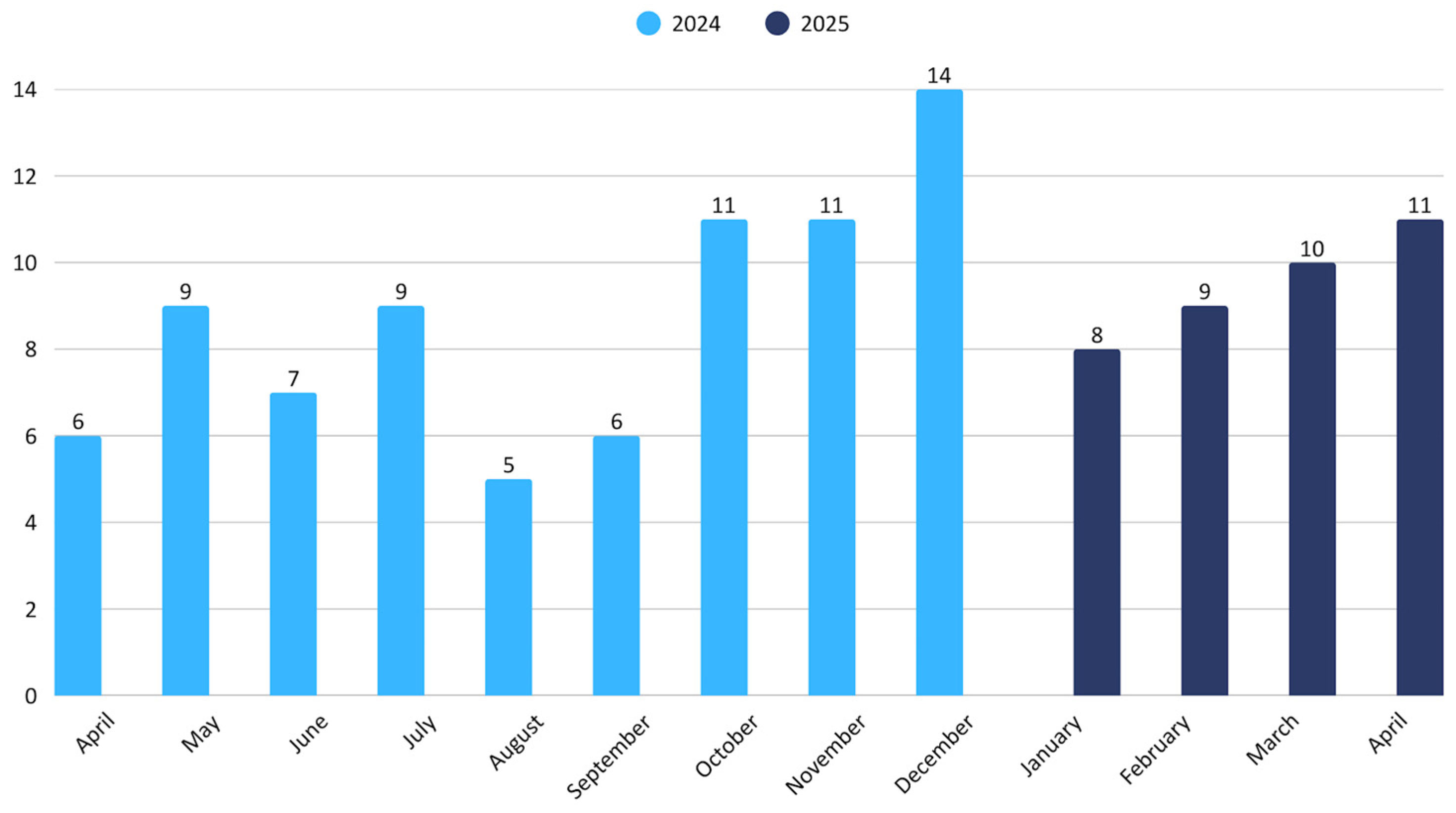
The frequency of publication also varies depending on the case, with Makerversity showing the highest level of activity during the analysed period, while the other two centres adopted more moderate publication rates. The data patterns reveal different degrees of strategic involvement in digital communication among the centres (
Figure 3).
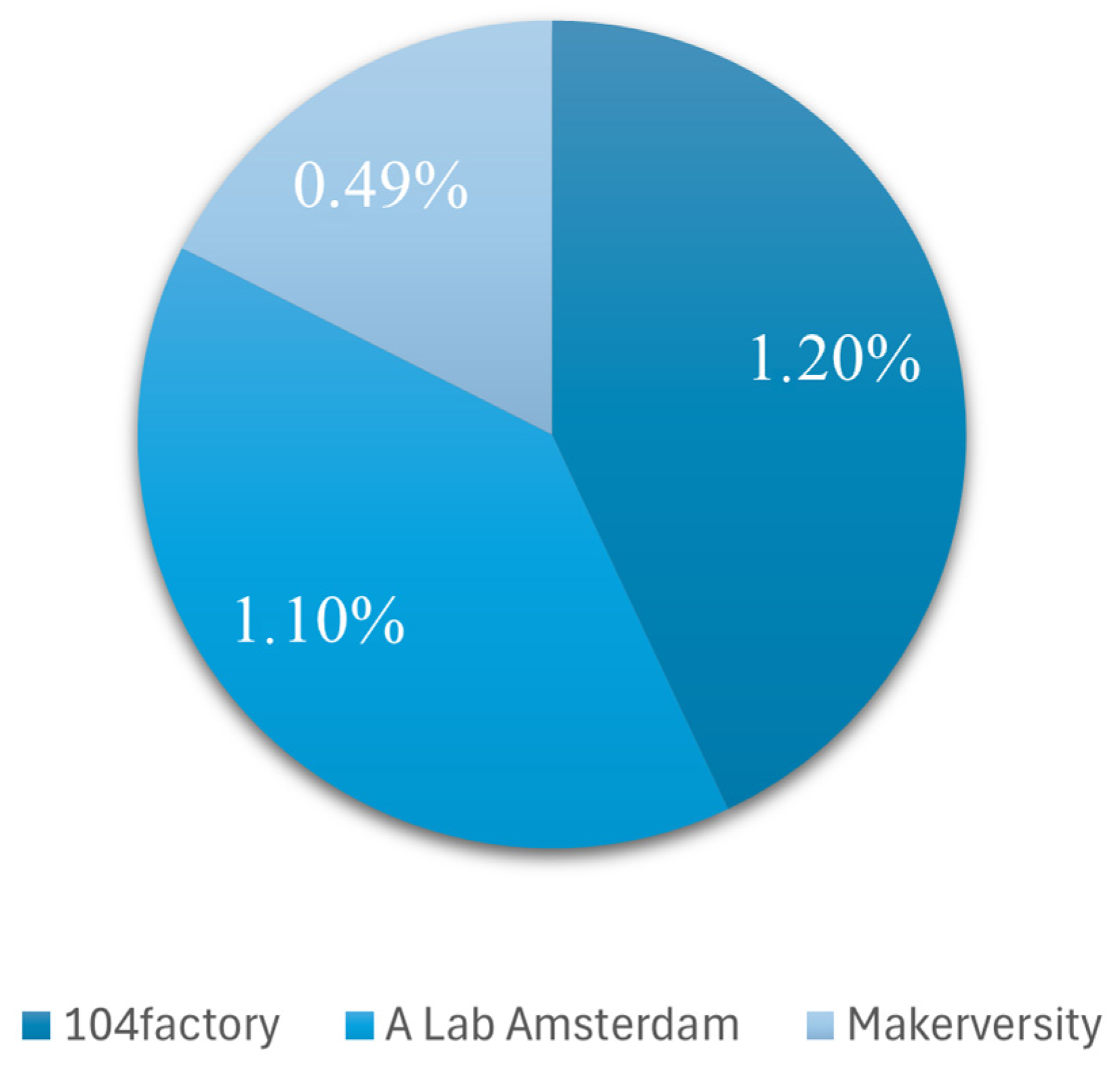
However, higher levels of activity do not necessarily correspond to higher interaction rates; the analysis revealed that centres with a lower publication frequency can achieve comparable or, in some cases, higher average interaction levels per publication. These results show that interaction is influenced not only by the volume of content shared but also by its relevance and greater alignment with the communicative message (
Figure 4).
A comparative reading of participation patterns showed that posts related to collective creativity, sustainability and community interaction consistently outperformed purely promotional content, reinforcing the idea that the digital visibility of cultural startup hubs seems to be built through narratives that focus on relationships and values rather than purely transactional communication. Although the volume of followers varied significantly among the different cases, the qualitative orientation of the content seemed to play a more decisive role in shaping the dynamics of interaction.
A more detailed analysis of the content, summarised in
Table 2, highlights different communicative orientations; while some centres prioritised posts related to brand identity and community building, others placed greater emphasis on educational, functional or event-related content. However, given the limited number of cases in some categories, these patterns should be understood as exploratory patterns. This variation points to different narrative strategies through which centres position themselves and the startups they incubate within urban creative contexts.
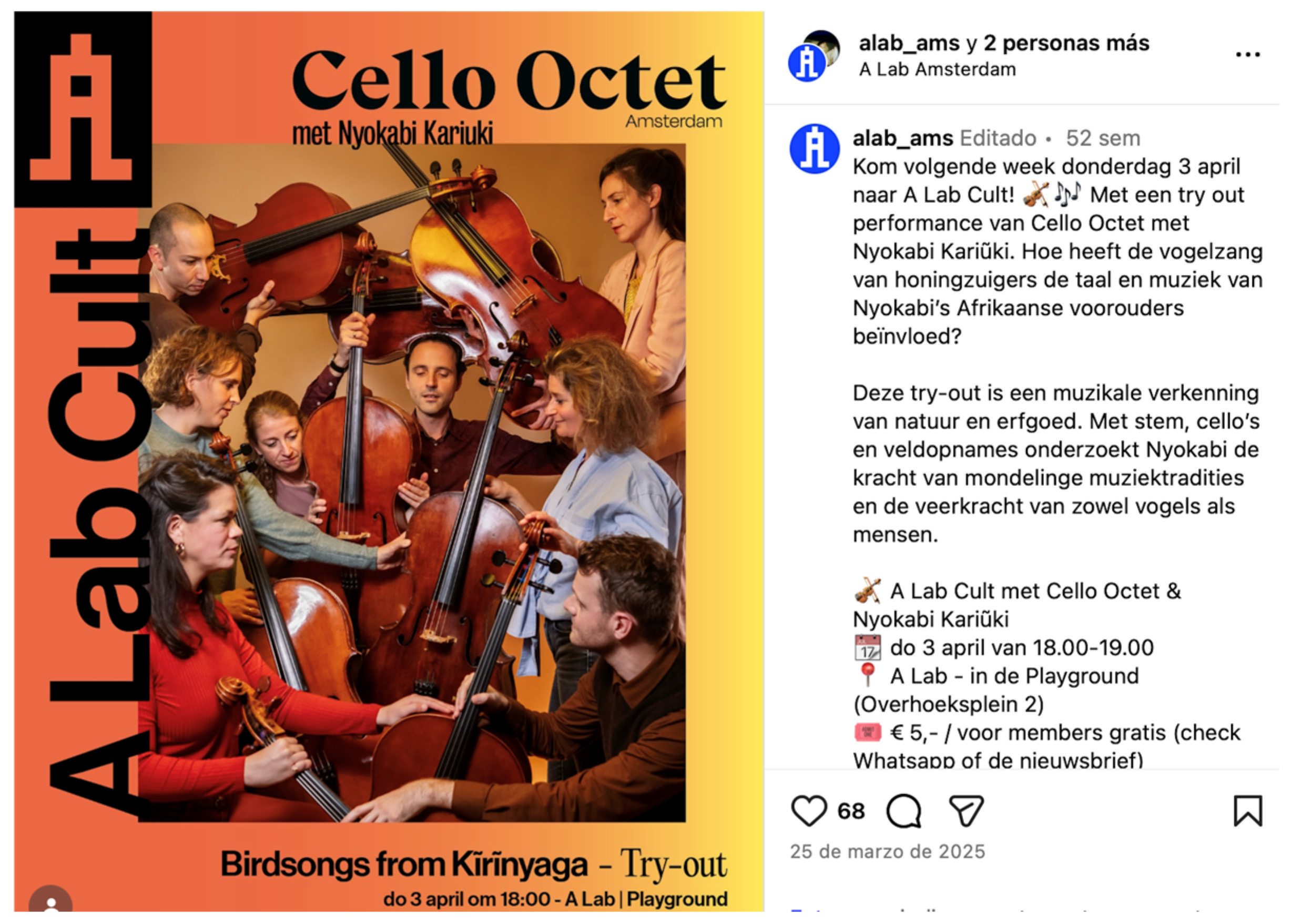
The following two figures (
Figure 5 and
Figure 6) illustrate the main activity, engagement and content patterns observed on Instagram for the three centres analysed.
Figure 5.
Example of brand identity.
Figure 5.
Example of brand identity.
Translation into english: “Come along to A Lab Cult next Thursday, 3 April! 🎻🎶 Featuring a preview performance by Cello Octet with Nyokabi Kariũki. How has the song of the honeyguide bird influenced the language and music of Nyokabi’s African ancestors? // This try-out is a musical exploration of nature and heritage. Using voice, cellos and field recordings, Nyokabi explores the power of oral musical traditions and the resilience of both birds and people. // A Lab Cult with Cello Octet & Nyokabi Kariũki. Thu 3 April from 6.00 p.m.–7.00 p.m. A Lab—in the Playground (Overhoeksplein 2). €5/free for members (check WhatsApp or the newsletter). more info & tickets via link in bio // About A Lab Cult. A Lab Cult is the place to be for cultural and artistic creators who dare to experiment. Here, unexpected collaborations and groundbreaking ideas are brought to life. A Lab Cult is not a standard stage, but a breeding ground for the future of art and culture”.
Figure 6.
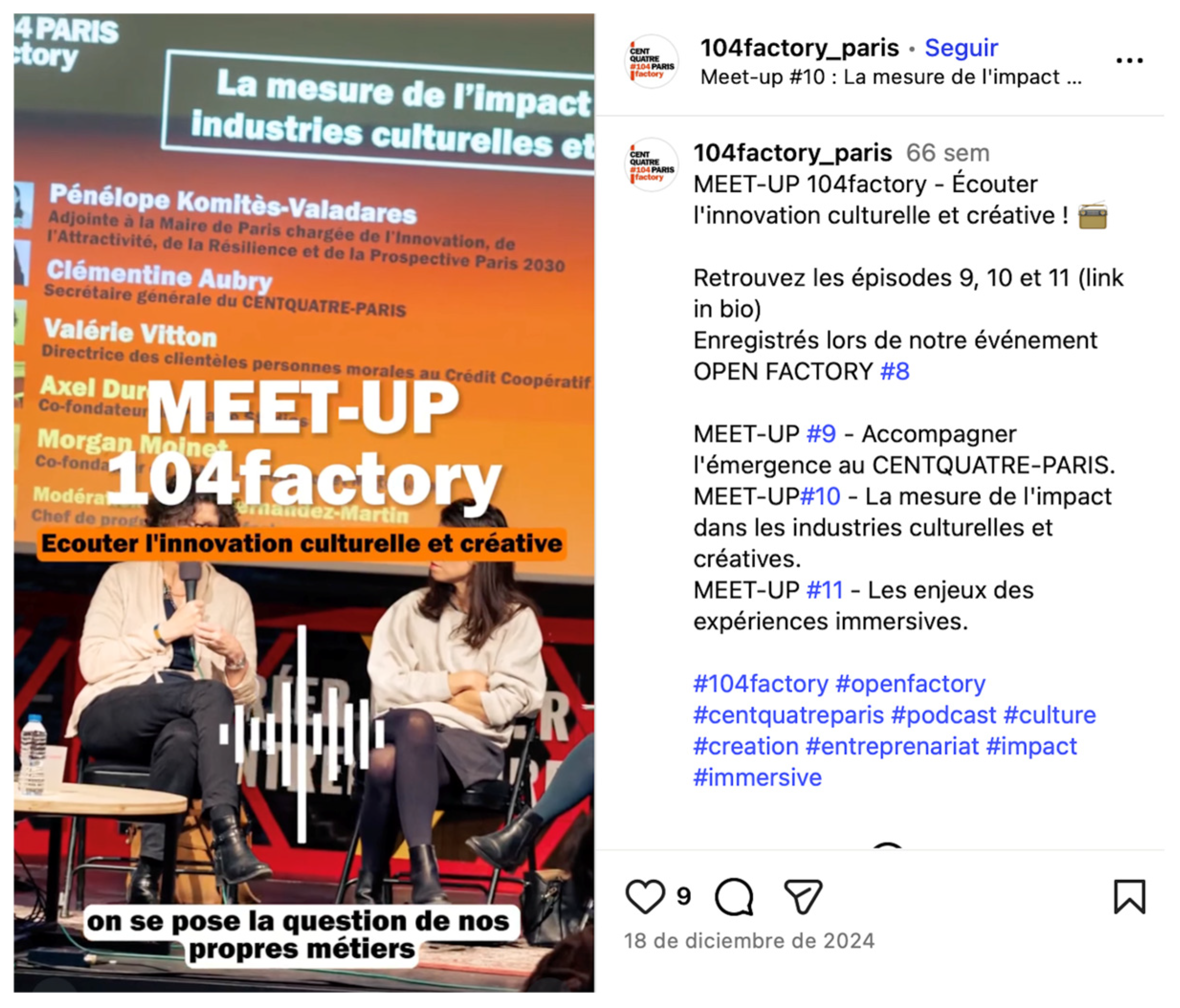
Example of customer relationship.
Figure 6.
Example of customer relationship.
Translation into english: “MEET-UP 104factory—Listen to cultural and creative innovation! // Check out episodes 9, 10 and 11 (link in bio). Recorded during our OPEN FACTORY #8 event. MEET-UP #9—Supporting emerging talent at CENTQUATRE-PARIS. MEET-UP #10—Measuring impact in the cultural and creative industries. MEET-UP #11—The challenges of immersive experiences”.
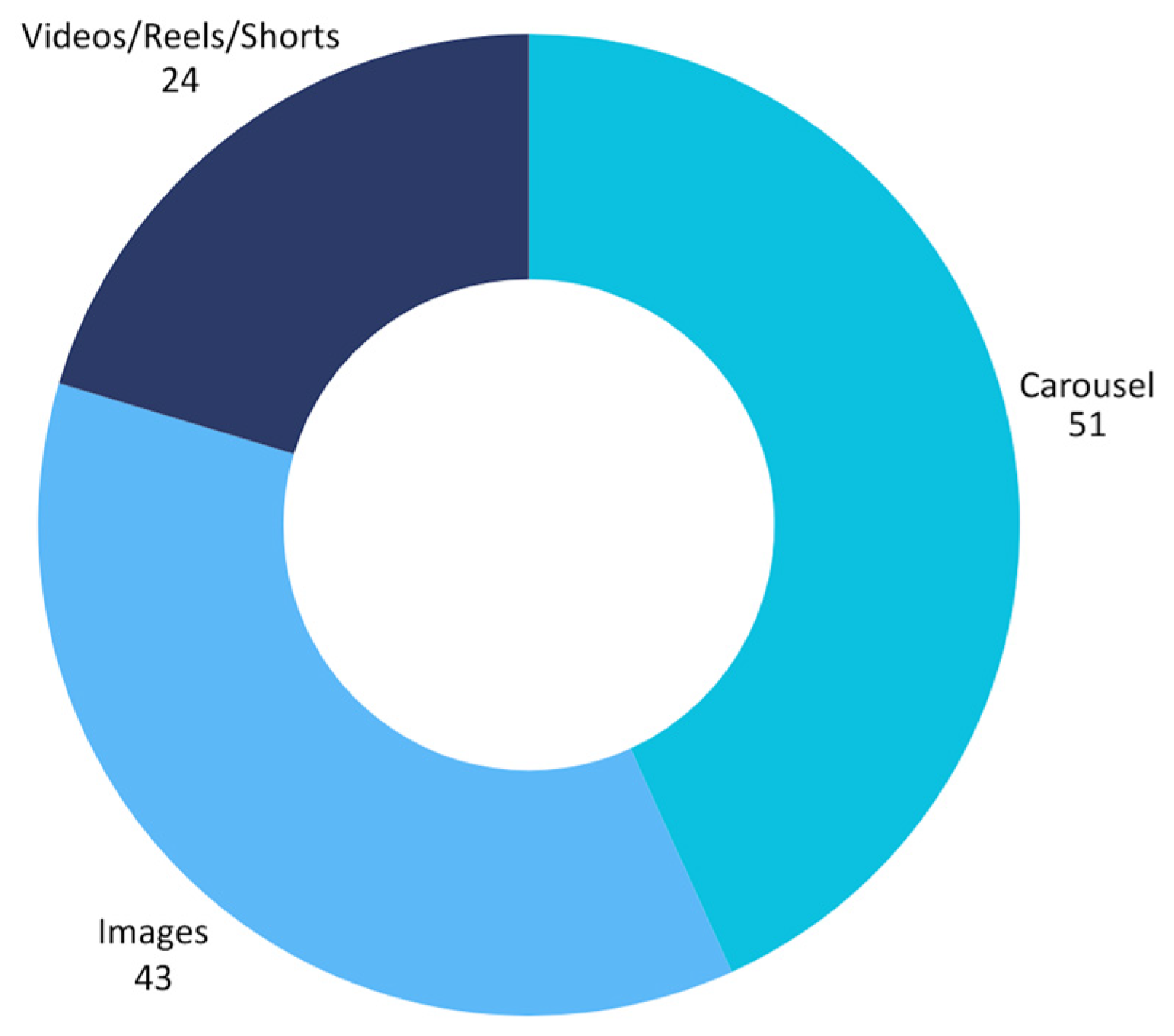
In terms of content formats, the three centres displayed different strategies; image-based posts remained predominant in all cases, although the use of videos and carousels varied significantly among the centres. Some accounts prioritised visually curated content aimed at reinforcing brand identity, while others incorporated more functional or informative posts related to events, workshops or calls for participation, reflecting alternative approaches to visual storytelling within cultural startup ecosystems (
Figure 7).
In terms of hashtag use, different discursive strategies were detected (
Table 3). 104factory used French and English tags related to cultural innovation (#candidature, #culturelle, and #artysquad), in line with its international reach. In contrast, A Lab used hashtags linked to social and environmental issues, reflecting its positioning as a space for community experimentation (#beterewereld, #aanpoten, and #systeemverandering). These differences in the use of hashtags reflect distinct discursive orientations across the various institutions, highlighting how each constructs its digital identity through specific thematic and linguistic choices. The variation observed suggests that there are differing approaches to positioning and audience targeting within digital environments.
4. Discussion
The results show that startup centres play an important role in CCI innovation ecosystems, although with different perspectives. 104factory presents an institutional model with clear sustainability and inclusion policies, as evidenced by its high continuity rate (83%) and gender equity in leadership [
10,
14]. On the other hand, Makerversity maintains more masculinised leadership models, while A Lab has opted for a collaborative model in which diversity arises from community practice [
9]. Previous studies have already considered intermediaries to enable resource coordination and knowledge transfer [
18,
19], and have also been linked to legitimacy, processes of inclusion and communicative positioning within cultural ecosystems.
Building on previous research that has already conceptualised hubs as actors beyond economic incubation and positioning them as institutional actors integrated into broader urban and cultural policy frameworks [
15,
34,
36], this analysis provides further empirical evidence of how these roles are articulated within the cultural and creative industries through the interaction between organisational models, gender dynamics and communication practices.
The above arguments are reinforced by diversity, indicating that cultural innovation ecosystems are influenced not only by market dynamics but also by institutional logic, public policy frameworks and urban governance arrangements [
15,
16,
17,
20]. In this sense, startup centres can be understood as intermediary actors integrated into broader creative city strategies, mediating among cultural production, entrepreneurship and urban positioning [
3,
4,
18]. The design of an organisation affects not only the sustainability of its business but also its patterns of inclusion and symbolic legitimacy, which, according to research, are key components of modern cultural environments [
22,
35]. This perspective reinforces the need to analyse centres not only as technical support infrastructures, but also as institutional actors that shape the relational and cultural architecture of urban innovation systems.
In terms of communication, an analysis of Instagram posts revealed a limited use of social media as a strategic communication tool, consistent with the identity of each centre; the posts that generated the most interactions were related to brand identity, connection with the community and current affairs, which underlines the relevance of symbolic storytelling over direct promotion [
28]. There were also notable discrepancies in the use of hashtags: 104factory promoted its cultural and international reach, while A Lab focused on issues such as sustainability and social transformation.
These findings also contribute to current debates on the role of intermediary organisations in the innovation ecosystem by highlighting their ability to influence not only economic outcomes but also the social and symbolic dimensions of value creation. In the context of the cultural and creative industries, where legitimacy and visibility are key resources, startup hubs act as mediators among cultural production, institutional frameworks and the public [
21], reinforcing the argument that innovation in the cultural ecosystem cannot be fully understood without taking into account the relational and communicative infrastructures that underpin it [
18,
19].
These results confirm that centres act not only as support platforms for businesses, but also as symbolic and social actors within the CCIs. By sharing narratives that define their identity on social media and promoting values of sustainability and inclusion, these structures also contribute to the tourist and cultural appeal of the cities in which they are located, reinforcing their positioning as creative destinations on the international scene. Furthermore, considering factors such as gender inclusion and strategic communication enriches our understanding of the role these structures can play in urban environments [
11,
13] beyond a purely economic or technological perspective. Thus, beyond empirical analysis, this study also contributes to cultural innovation by conceptualising startup hubs as hybrid nodes that integrate economic, social and tourism dimensions in the construction of creative cities [
2,
3]. This approach advances international debates on urban innovation and culture, positioning centres not only as instruments of business support but also as key actors in the symbolic and experiential configuration of urban destinations [
13,
28].
5. Conclusions
This research suggests that cultural startup centres play a crucial role in boosting cultural and creative industries (CCIs) by functioning as places that combine structural support, creative cooperation and territorial integration, despite their different organisational and institutional models. 104factory symbolises an institutional model with established public policies, Makerversity a more corporate and less organised approach in terms of equity, and A Lab a community-based and open approach, where diversity arises from collaborative practices rather than explicit regulations. These findings reinforce existing perspectives that conceptualise cultural intermediaries as actors operating beyond purely economic functions, particularly in shaping symbolic value and communicative positioning within creative ecosystems.
In relation to the research objectives, the findings highlight the organisational diversity of cultural centres, emphasising the diversity of their sustainability and governance structures. Furthermore, it is observed that gender representation and leadership within cultural entrepreneurship ecosystems are influenced by the organisations and institutions that host them, whilst the strategic use of digital communication—particularly Instagram—emerges as a factor that can help position these centres and raise their profile.
Likewise, the results offer relevant implications at different levels. First, in the field of research, it is necessary to more deeply investigate the intersection among startup centres, strategic communication and cultural tourism, in order to explore how these structures contribute to city branding and attracting visitors. Second, on a practical level, the value of hubs as allies is highlighted, not only for entrepreneurship but also for the tourism sector, where their ability to generate digital narratives, promote sustainability and give visibility to cultural diversity will reinforce the offering of cities as creative destinations. Finally, from a social perspective, this study provides evidence that the centres promote inclusion, gender equality and community cohesion while reinforcing the cultural appeal of cities and contributing to more diverse and sustainable urban environments.
Finally, there are a few limitations to consider. Firstly, the analysis is based on public domain data, which may limit the ability to fully understand the internal dynamics of organisations. Secondly, gender classification was carried out using names, images or biographies, which may fail to reflect the full diversity of gender identities. Thirdly, the analysis of Instagram content is exploratory and descriptive in nature and may therefore have limitations from a statistical perspective.
Overall, cultural startup hubs emerge as key actors not only in fostering innovation within cultural and creative industries, but also in shaping the cultural and tourism positioning of contemporary cities.




 ,
,