Article

Turning Knowledge into Innovation: The Systemic Role of Knowledge Management Capability, Intellectual Capital, and Knowledge Utilization


by
Ahmed Mohamed Hasanein
1,* and
Bassam Samir Al-Romeedy
2
1
Management Department, College of Business Administration, King Faisal University, Al-Ahsaa 380, Saudi Arabia
2
Tourism Studies Department, Faculty of Tourism and Hotels, University of Sadat City, Sadat City 32897, Egypt
*
Author to whom correspondence should be addressed.
Systems 2026, 14(2), 179; https://doi.org/10.3390/systems14020179
Submission received: 8 January 2026 / Revised: 30 January 2026 / Accepted: 4 February 2026 / Published: 5 February 2026

Abstract

In the dynamic and service-intensive context of the tourism and hospitality industry, organizational innovation performance (OIP) is a critical determinant of competitiveness. This study investigates the systemic role of knowledge management capability (KMC) in driving OIP, with a focus on the mediating effects of intellectual capital (IC) and knowledge utilization (KU). Drawing on Dynamic Capabilities Theory and the Knowledge-Based View, KMC is conceptualized as a higher-order capability that facilitates the accumulation, coordination, and application of knowledge resources, thereby shaping both organizational knowledge assets and their practical enactment. Data were collected from senior managers across five-star hotels in Greater Cairo, Egypt, and analyzed using Partial Least Squares Structural Equation Modeling (PLS-SEM). Results indicate that KMC positively influences OIP directly and indirectly through the development of IC and the effective utilization of knowledge. Both IC and KU are found to mediate the relationship between KMC and innovation performance, highlighting the importance of transforming knowledge resources into actionable and value-creating organizational capabilities. The study advances theoretical understanding by elucidating the systemic mechanisms linking knowledge management, intellectual capital, and knowledge utilization to innovation outcomes, and provides practical insights for hospitality managers seeking to leverage knowledge-driven strategies to enhance competitiveness and service excellence.

1. Introduction

Organizational innovation performance has become a critical determinant of long-term competitiveness in tourism and hospitality organizations, particularly in an industry characterized by intense competition, rapid shifts in customer expectations, and heightened vulnerability to environmental disruptions [1]. Unlike manufacturing or technology-driven sectors, innovation in tourism and hospitality is deeply embedded in service encounters, experiential design, and organizational processes that rely heavily on human interaction and knowledge exchange [2]. As destinations and service providers increasingly compete on differentiation rather than cost alone, the ability to consistently generate, refine, and implement novel ideas has emerged as a strategic necessity rather than an optional capability [3]. Innovation performance, therefore, is not merely reflected in new products or services, but in the organization’s capacity to adapt service models, redesign processes, and continuously enhance value creation in response to evolving market conditions [1].
Existing research has identified a wide range of organizational factors that influence innovation performance in tourism and hospitality settings, including leadership styles, organizational culture, technological infrastructure, and external collaboration networks. While these factors offer valuable insights, they often treat innovation outcomes as the result of discrete antecedents rather than as the product of an interconnected organizational system [4]. Moreover, many studies emphasize structural or behavioral enablers without sufficiently addressing the underlying mechanisms through which organizations mobilize and transform internal resources into innovative outcomes [5]. In service-intensive contexts such as tourism and hospitality, where knowledge is dispersed across individuals, routines, and relationships, overlooking the role of knowledge-related capabilities risks producing fragmented explanations of how innovation actually unfolds within organizations [6,7].
Within this broader landscape, knowledge management capability, intellectual capital, and knowledge utilization represent interdependent yet conceptually distinct elements that together shape an organization’s innovation trajectory [8]. Treating knowledge as a static asset or as a singular organizational factor obscures the complexity through which knowledge is created, embedded, and activated [9]. Knowledge management capability reflects the organization’s ability to systematically acquire, integrate, and coordinate knowledge resources [10], while intellectual capital captures the accumulated stock of human expertise, organizational routines, and relational networks that store and stabilize that knowledge [11]. Knowledge utilization, in contrast, represents the point at which knowledge is translated into action, influencing decision-making, problem-solving, and the implementation of innovative ideas [12]. In this sense, knowledge is conceptualized in the present study not merely as an accumulated resource, but as an action-oriented capability whose value emerges through its active deployment in organizational practices and innovation-related decisions [4]. Examining these elements in isolation fails to capture their systemic interaction, particularly in tourism and hospitality organizations where value creation depends on the seamless alignment between what employees know and how that knowledge is enacted in service delivery [13].
From this perspective, knowledge management capability can be understood as the primary driver that shapes both the development of intellectual capital and the effectiveness of knowledge utilization [8,14]. Organizations with strong knowledge management capabilities are better positioned to convert individual expertise into shared organizational assets and to ensure that accumulated knowledge does not remain dormant within databases or routines [12]. At the same time, such capabilities influence whether knowledge is actively applied in operational and strategic contexts, determining its contribution to innovation outcomes [15]. This dual influence suggests that the relationship between knowledge management capability and organizational innovation performance is not purely direct, but is channeled through distinct yet complementary pathways associated with intellectual capital formation and knowledge utilization processes.
Dynamic Capabilities Theory offers a particularly suitable framework for explaining these relationships, as it emphasizes the organization’s capacity to sense opportunities, seize valuable knowledge, and reconfigure internal resources in response to environmental change [16]. Within this theoretical lens, knowledge management capability constitutes a higher-order capability that enables organizations to continually renew their knowledge base and reorient it toward innovation [17]. Intellectual capital represents the accumulated outcome of these dynamic processes, while knowledge utilization reflects the practical enactment of reconfiguration through which knowledge is transformed into innovative actions [18]. This emphasis reinforces the view of knowledge as a resource that generates value only when enacted through managerial and operational actions, rather than when retained as a passive organizational stock [12,18]. The Knowledge-Based View complements this perspective by positioning knowledge as the most strategically significant resource of the firm, thereby justifying the centrality of knowledge-related constructs in explaining innovation performance [19]. Together, these perspectives provide a coherent theoretical foundation that explains both why knowledge matters and how organizations leverage it to sustain innovation.
Despite the expanding body of research on knowledge and innovation, the tourism and hospitality literature still lacks a clear understanding of how knowledge-related capabilities are translated into innovation outcomes at the organizational level. Much of the existing work adopts a fragmented perspective, examining knowledge management capability, intellectual capital, or knowledge utilization as isolated predictors of innovation performance (e.g., refs. [20,21,22]). This approach overlooks the systemic nature of knowledge-driven innovation, where capabilities, knowledge assets, and their application interact simultaneously rather than operate independently.
Moreover, although prior studies acknowledge the strategic importance of knowledge management capability, they tend to treat its effect on organizational innovation performance as largely direct (e.g., refs. [4,23]). This assumption masks the internal organizational processes through which such capability exerts its influence. In particular, the roles of intellectual capital and knowledge utilization as explanatory mechanisms remain insufficiently theorized and empirically tested, especially in service-based industries where innovation emerges through routines, interactions, and experiential learning rather than through technological outputs.
In addition, the tourism and hospitality literature has paid limited attention to the dual nature of knowledge as both an organizational asset and an action-oriented resource. While some studies focus on knowledge accumulation through intellectual capital, others emphasize knowledge application, yet few attempt to integrate these perspectives within a single explanatory framework (e.g., refs. [18,19]). As a result, it remains unclear whether innovation performance is driven primarily by the stock of organizational knowledge, the extent of its utilization, or the interaction between the two. Accordingly, this study explicitly addresses this gap by integrating both the accumulation of knowledge (intellectual capital) and its enactment (knowledge utilization) within a unified explanatory framework linking knowledge management capability to innovation performance.
Finally, existing empirical research in tourism and hospitality has largely emphasized linear relationships, providing limited insight into how internal knowledge dynamics convert managerial capabilities into observable innovation performance. This leaves an important gap in understanding how organizations move from managing knowledge to achieving sustained innovation outcomes in contexts characterized by high service intensity, human interaction, and environmental volatility.
In response to these gaps, the present study aims to examine the role of knowledge management capability as a systemic driver of organizational innovation performance in tourism and hospitality organizations, with particular attention to the mediating roles of intellectual capital and knowledge utilization. Specifically, the study seeks to analyze how knowledge management capability influences innovation outcomes both directly and indirectly by shaping the organization’s knowledge assets and their application in practice. By unpacking these mechanisms, the study advances a more nuanced understanding of innovation as a dynamic and knowledge-driven process rather than a static organizational outcome.
This research makes several contributions. Theoretically, it integrates Dynamic Capabilities Theory and the Knowledge-Based View to develop a coherent explanation of how knowledge-related capabilities operate through distinct mediating mechanisms to influence innovation performance. Empirically, it enriches the tourism and hospitality literature by providing evidence from a context where innovation is heavily reliant on intangible resources and human interaction. Practically, the findings offer actionable insights for managers by highlighting the importance of not only investing in knowledge systems, but also cultivating capabilities that transform knowledge into intellectual capital and ensure its effective utilization in driving innovation.

2. Literature Review and Hypotheses Development

2.1. Dynamic Capabilities Theory and Knowledge-Based View

The theoretical logic of this study is anchored in the premise that innovation performance in tourism and hospitality organizations cannot be explained by the mere possession of knowledge, but rather by the organization’s ability to continuously organize, mobilize, and transform knowledge in response to changing conditions [4]. Accordingly, knowledge is approached in this study as an action-oriented resource whose strategic value lies in its continuous mobilization and transformation, rather than in its passive possession [12]. From this standpoint, Dynamic Capabilities Theory provides a powerful explanatory lens, as it shifts attention away from static resources toward the organizational processes that enable renewal and adaptation [24]. In knowledge-intensive service contexts, such as tourism and hospitality, these capabilities are manifested not in physical assets but in the way organizations manage, combine, and reconfigure knowledge across individuals, routines, and service encounters [25].
Within this framework, knowledge management capability represents a higher-order dynamic capability that governs how knowledge is sensed, captured, integrated, and redeployed over time [26]. It reflects the organization’s capacity to systematically coordinate dispersed expertise, align learning processes with strategic objectives, and respond flexibly to emerging opportunities and challenges [27]. Innovation performance, therefore, is not treated as an isolated outcome, but as the cumulative result of repeated cycles of knowledge reconfiguration [18]. This perspective allows the relationship between knowledge management capability and organizational innovation performance to be interpreted as a dynamic process through which organizations continually reshape their knowledge base to sustain innovative activity rather than relying on sporadic or ad hoc initiatives [23,28].
The mediating role of intellectual capital becomes theoretically meaningful when viewed through this dynamic lens. Intellectual capital does not emerge automatically from knowledge availability; it is built through deliberate organizational efforts to codify expertise, institutionalize routines, and strengthen relational ties that facilitate knowledge exchange [29]. Dynamic Capabilities Theory explains this process as one of accumulation and orchestration, where knowledge management capability determines whether individual knowledge is transformed into collective organizational assets [30]. In this sense, intellectual capital captures the stabilized outcomes of dynamic knowledge processes, acting as a reservoir of innovation potential that enhances the organization’s capacity to generate and implement novel ideas [31].
At the same time, the theory emphasizes that accumulated knowledge assets alone are insufficient to drive innovation unless they are actively reconfigured and applied. This is where knowledge utilization assumes a critical role in the model [9]. Knowledge utilization reflects the organization’s ability to translate stored and shared knowledge into concrete actions, decisions, and service innovations [32]. From a dynamic capabilities perspective, utilization represents the execution phase of reconfiguration, where knowledge is tested, adapted, and embedded in operational practices [33]. By positioning knowledge utilization as a mediator, the study acknowledges that innovation performance depends not only on what organizations know, but on how effectively that knowledge is enacted in practice. This distinction explicitly positions knowledge utilization as the mechanism through which knowledge shifts from an abstract organizational asset to an action-oriented driver of innovation performance [19].
While Dynamic Capabilities Theory explains the processual and adaptive nature of these relationships, the Knowledge-Based View provides the ontological foundation that legitimizes knowledge as the central strategic resource of the firm. The Knowledge-Based View argues that organizations exist primarily to integrate specialized knowledge and that competitive advantage arises from superior knowledge coordination rather than from market transactions alone [34]. This perspective reinforces the centrality of knowledge management capability in the model by framing it as a strategic function responsible for organizing the firm’s most critical resource. Intellectual capital, within this view, represents the embodiment of organizational knowledge, while knowledge utilization reflects the mechanism through which that knowledge generates economic and innovative value [18].
The integration of these two perspectives allows the study to move beyond simplistic cause-and-effect explanations. The Knowledge-Based View clarifies why knowledge-related constructs are essential for understanding innovation in tourism and hospitality organizations, whereas Dynamic Capabilities Theory explains how these constructs interact over time to shape innovation performance. Together, they support a systemic interpretation of the proposed model, in which knowledge management capability operates as the driving force that builds intellectual capital and activates knowledge utilization, ultimately enhancing organizational innovation performance through interconnected and reinforcing pathways.

2.2. Knowledge Management Capability and Organizational Innovation Performance

The relationship between knowledge management capability and organizational innovation performance can be understood as a foundational linkage in knowledge-intensive service organizations, where innovation emerges from the continuous recombination of expertise, experience, and organizational learning [18,35]. Knowledge management capability reflects the organization’s ability to systematically acquire relevant knowledge, integrate it across functional boundaries, and align it with strategic and operational objectives [36]. Such capability is not viewed as a mechanism for accumulating knowledge per se, but as an action-oriented organizational capacity that enables knowledge to be actively mobilized, recombined, and applied in innovation-related activities [12]. In tourism and hospitality organizations, where service innovation relies heavily on employee judgment, customer interaction, and process flexibility, such capability enables firms to move beyond isolated creative efforts toward sustained innovation outcomes [4]. By structuring how knowledge is captured, shared, and coordinated, knowledge management capability enhances the organization’s capacity to identify new opportunities, redesign service processes, and introduce novel solutions that respond to evolving market demands [9]. From this perspective, innovation performance is not a spontaneous outcome, but the result of an underlying capability that allows organizations to continuously transform dispersed knowledge into innovative practices and offerings [37]. This perspective underscores that innovation performance is driven not merely by what organizations know, but by how effectively knowledge is enacted through coordinated actions, decisions, and process transformations [19]. Accordingly, organizations with stronger knowledge management capability are expected to exhibit higher levels of organizational innovation performance [28]. Previous studies have shown that organizations possessing well-developed capabilities for acquiring, sharing, and integrating knowledge are more likely to translate dispersed expertise into innovative outcomes, as demonstrated in different organizational settings by [20,38]. These studies emphasize that knowledge management capability strengthens innovation by enabling continuous learning and systematic knowledge recombination. Similarly, research by [39] provides evidence that firms with mature knowledge management practices achieve higher levels of innovation performance by embedding knowledge processes into strategic and operational activities. More recent empirical work has extended these findings to service-oriented and tourism-related contexts, where innovation is closely tied to employee interaction and service design. For instance, ref. [23] highlights the role of knowledge management capability in fostering service innovation through enhanced internal knowledge coordination, while [28] demonstrates that knowledge-based capabilities significantly improve innovation outcomes by facilitating adaptive responses to environmental change. In the tourism and hospitality domain specifically, ref. [4] confirms that effective knowledge management capability serves as a key organizational driver of innovation performance by supporting idea generation, service improvement, and process innovation. So, the following hypothesis is proposed:
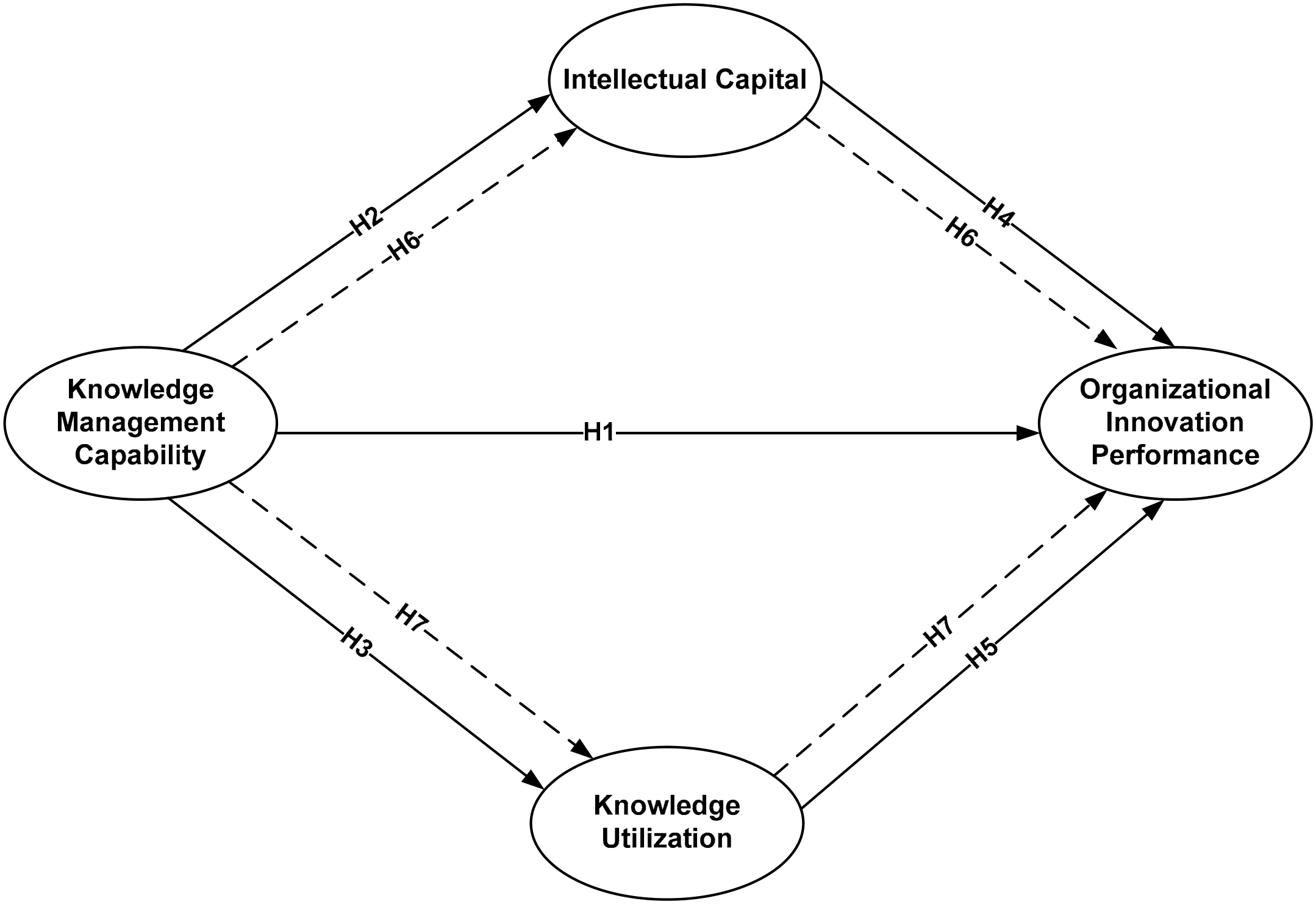
H1: 
Knowledge management capability positively influences organizational innovation performance.

2.3. Knowledge Management Capability and Intellectual Capital

Intellectual capital represents the cumulative outcome of how organizations nurture, structure, and retain knowledge over time rather than a resource that exists independently of managerial action. This perspective reinforces the treatment of knowledge as an action-oriented resource, whose conversion into intellectual capital depends on deliberate managerial interventions rather than passive accumulation [4]. In tourism and hospitality organizations, knowledge is inherently embedded in people, service routines, and relational networks, making its transformation into a durable organizational asset highly contingent on the presence of effective managerial capabilities [18]. Knowledge management capability plays a central role in this transformation by shaping the processes through which individual expertise is articulated, shared, and institutionalized within the organization [40,41]. Through systematic practices that encourage learning, codification, and cross-functional knowledge exchange, organizations are able to convert fragmented and tacit knowledge into human, structural, and relational forms of intellectual capital [42]. Without such capability, knowledge remains localized and vulnerable to loss, limiting its contribution to organizational development [9]. Accordingly, intellectual capital is viewed not as a static stock of knowledge, but as a dynamically constructed outcome shaped by the continuous enactment and orchestration of knowledge through managerial action [19]. Consequently, stronger knowledge management capability is expected to enhance the depth, coherence, and sustainability of intellectual capital within tourism and hospitality organizations [8,43]. The literature increasingly recognizes that knowledge attains strategic value only when organizations deliberately transform it from individual-level expertise into an organized and enduring collective resource. Rather than existing as an inherent asset, intellectual capital is shaped through managerial processes that enable knowledge to be captured, stabilized, and embedded within the organization, a view originally advanced by [44]. Subsequent empirical studies have provided strong support for this argument by demonstrating that the effectiveness of intellectual capital development depends largely on the organization’s knowledge management capability. Research evidence indicates that when organizations actively manage knowledge processes, they are more successful in strengthening human competencies, formalizing organizational knowledge structures, and cultivating relational ties. For example, ref. [45] shows that systematic knowledge management practices enhance intellectual capital by encouraging continuous learning and coordinated knowledge sharing. Similarly, ref. [46] emphasizes that managerial capability in orchestrating knowledge activities is essential for consolidating fragmented expertise into innovation-supportive intellectual assets. More recent contributions further underline that intellectual capital development is not a one-time outcome but an ongoing process sustained by effective knowledge management capability. In this regard, refs. [8,43] demonstrate that organizations that actively regulate knowledge flows are better positioned to institutionalize expertise, embed knowledge within routines, and reinforce relational networks over time. Hence, the following hypothesis is suggested:
H2: 
Knowledge management capability positively influences intellectual capital.

2.4. Knowledge Management Capability and Knowledge Utilization

In organizational settings, the value of knowledge is ultimately realized through its use rather than its existence. Knowledge utilization captures this idea by focusing on how knowledge informs organizational behavior, influences decisions, and shapes operational and strategic actions [9]. This framing explicitly positions knowledge as an action-oriented resource, whose organizational relevance emerges through enactment in behavior, decisions, and operational practices rather than through passive possession [26]. Within tourism and hospitality organizations, where service outcomes depend on immediate judgment and contextual awareness, knowledge often risks remaining unused unless supported by appropriate organizational capabilities. Knowledge management capability addresses this challenge by shaping the conditions under which knowledge is mobilized and applied at the point of action [4]. Through the establishment of shared norms, feedback-driven processes, and learning-centered routines, organizations reduce the distance between knowing and doing, allowing employees to incorporate relevant knowledge when managing service interactions or operational disruptions [47]. This process gradually embeds knowledge into routine practice, preventing it from becoming detached from day-to-day activities [26]. Knowledge utilization represents the critical mechanism through which knowledge shifts from a stored organizational asset to an action-oriented driver of innovation and operational effectiveness [4]. As a consequence, organizations with stronger knowledge management capability are more effective in converting accumulated knowledge into applied solutions that support innovation and continuous operational improvement [48]. Rather than focusing solely on knowledge availability, prior studies emphasize that managerial capability determines whether knowledge is activated, contextualized, and embedded in organizational action. Empirical evidence suggests that organizations with structured knowledge management processes are more successful in encouraging employees to apply existing knowledge in problem-solving and decision-making contexts. For example, ref. [49] demonstrates that knowledge management capability facilitates the practical use of knowledge by aligning learning processes with operational needs. This argument is further supported by [32,50], who show that organizations with mature knowledge management systems experience higher levels of knowledge application due to clearer knowledge flows and stronger integration between knowledge sources and organizational practices. Recent studies conducted in tourism and service-oriented settings reinforce this perspective by highlighting the role of knowledge management capability in translating stored knowledge into actionable insights. In particular, ref. [4] provides evidence that effective knowledge management capability enhances frontline employees’ ability to utilize knowledge in service innovation and operational improvement, while [14,51] illustrate that structured knowledge practices reduce the gap between knowledge creation and execution. Therefore, the following hypothesis is assumed:
H3: 
Knowledge management capability positively influences knowledge utilization.

2.5. Intellectual Capital and Organizational Innovation Performance

Organizational innovation performance in tourism and hospitality organizations is largely shaped by the depth and quality of intellectual capital rather than by reliance on technological advancement alone. In service-based environments, innovation emerges through the interaction of employees’ competencies, institutionalized knowledge embedded in routines, and relationships with external stakeholders, making intellectual capital a central driver of innovation outcomes [52]. The integration of human expertise, organizational systems, and relational resources enables organizations to identify new possibilities, reinterpret existing knowledge, and translate insights into service innovations. When these intellectual resources are effectively developed, organizations are more capable of sustaining innovation through continuous adaptation and refinement of service offerings [18]. Conversely, insufficient intellectual capital weakens innovation performance by restricting the organization’s capacity to absorb new knowledge and limiting coordination across operational and experiential domains, thereby constraining its ability to convert ideas into innovative practices [19]. Evidence from earlier studies indicates that intellectual capital improves innovation performance by facilitating coordination and knowledge integration across organizational boundaries, as shown by [53,54]. Subsequent research conducted in knowledge-intensive and service-based environments further strengthens this argument by demonstrating that intellectual capital allows organizations to mobilize collective expertise and convert it into innovation-oriented capabilities [18,46]. This relationship is reinforced by findings from [21], who emphasize that intellectual capital supports innovation by strengthening organizational learning and knowledge recombination processes. Within the tourism and hospitality context, these dynamics become particularly salient, as illustrated by [19], who show that intellectual capital plays a pivotal role in driving service innovation and process enhancement. Together, these studies underscore the importance of intellectual capital as a dynamic enabler of sustained innovation rather than a passive organizational attribute. Accordingly, the following hypothesis is highlighted:
H4: 
Intellectual capital positively influences organizational innovation performance.

2.6. Knowledge Utilization and Organizational Innovation Performance

The capacity of organizations to achieve sustained innovation performance depends less on what they know and more on how effectively that knowledge is put to use. Knowledge utilization represents the point at which organizational learning becomes operationalized, allowing insights to shape concrete actions and outcomes [12]. In tourism and hospitality organizations, where service encounters are dynamic and outcomes are often determined at the frontline, innovation is closely linked to employees’ ability to apply knowledge in situational and time-sensitive contexts [55]. Effective knowledge utilization enables organizations to test ideas, adjust service processes, and respond creatively to evolving customer demands and operational constraints [32,56]. When this utilization is weak, knowledge remains detached from practice, limiting innovation outcomes even in organizations with sophisticated knowledge infrastructures [19]. Embedding knowledge into routine operations and strategic initiatives therefore enhances the organization’s ability to convert ideas into implemented innovations and sustain innovation performance over time. As a result, higher levels of knowledge utilization play a decisive role in strengthening organizational innovation performance [56]. Research on innovation has increasingly emphasized that the contribution of knowledge to organizational performance materializes through its application in practice. Early empirical evidence highlights that when knowledge is actively used, organizations are able to improve operational processes, strengthen problem-solving capabilities, and sustain innovation by integrating learning into routine activities [22]. Subsequent studies extend this argument by demonstrating that organizations characterized by higher levels of knowledge utilization are more capable of transforming ideas into implemented innovations and responding effectively to evolving market demands. For example, ref. [20] shows that innovation performance improves when employees apply acquired knowledge to decision-making and service enhancement rather than merely retaining it. This interpretation is further supported by [14], who argue that innovation outcomes depend on the extent to which organizational learning is enacted through concrete actions. In tourism and hospitality settings, these dynamics are particularly evident, as [57] illustrates that effective knowledge utilization strengthens innovation performance by enabling frontline employees to deliver adaptive and innovative service solutions. consequently, the following hypothesis is developed:
H5: 
Knowledge utilization positively influences organizational innovation performance.

2.7. The Mediating Role of Intellectual Capital

The influence of knowledge management capability on organizational innovation performance is unlikely to operate as a simple, direct linkage, particularly in tourism and hospitality organizations where innovation outcomes depend on the quality and maturity of underlying knowledge assets [20,58,59]. While knowledge management capability enables organizations to coordinate and structure knowledge-related activities, its impact on innovation becomes more substantive when it contributes to the development of intellectual capital [43,60]. Intellectual capital functions as an intermediate layer that consolidates dispersed knowledge into enduring organizational assets, including skilled human resources, embedded processes, and relational networks that support innovation [8,61]. This mediating role reflects the action-oriented nature of knowledge, as intellectual capital emerges through deliberate organizational actions that transform dispersed expertise into structured and innovation-supportive resources [19]. Through this accumulation process, knowledge management capability strengthens the organization’s capacity to sustain innovation beyond isolated initiatives, allowing innovative ideas to be generated, refined, and implemented more effectively [12]. In this sense, intellectual capital translates managerial capability into innovation-relevant resources, explaining how and why knowledge management capability enhances innovation performance [18,62]. Intellectual capital captures the mechanism through which knowledge shifts from a managerial capability into an action-enabled organizational resource that can effectively support sustained innovation performance [19]. Therefore, intellectual capital is expected to mediate the relationship between knowledge management capability and organizational innovation performance, which is formally tested through the following hypothesis:
H6: 
Intellectual capital mediates the relationship between knowledge management capability and organizational innovation performance.

2.8. The Mediating Role of Knowledge Utilization

Innovation performance is shaped not only by the presence of knowledge-related capabilities, but also by the extent to which organizational knowledge is effectively enacted in practice [20,63]. This perspective explicitly frames knowledge as an action-oriented resource, whose contribution to innovation depends on its enactment in organizational behavior, decisions, and operational practices rather than on its mere availability [12]. While knowledge management capability provides the organizational infrastructure that enables knowledge to be created, shared, and accessed, its contribution to innovation remains limited unless knowledge is actively incorporated into everyday organizational activities [4,14]. Knowledge utilization captures this action-oriented dimension by explaining how accumulated insights are transformed into experimentation, adaptive behavior, and the implementation of new service solutions [20,22]. This process is particularly salient in tourism and hospitality organizations, where innovation often depends on real-time judgment and flexible service responses, requiring knowledge to directly inform action rather than remain dormant [56,58]. By facilitating the integration of available knowledge into operational and strategic decision-making, knowledge management capability exerts an indirect influence on innovation performance through its effect on knowledge utilization [12,64]. Knowledge utilization captures the core action-oriented mechanism through which accumulated knowledge is transformed into innovative actions and performance outcomes [12]. Accordingly, knowledge utilization represents a key mediating mechanism through which knowledge management capability translates into sustained innovation outcomes; therefore, the following hypothesis is advanced:
H7: 
Knowledge utilization mediates the relationship between knowledge management capability and organizational innovation performance.
To illustrate the proposed relationships and clarify the underlying mechanisms, the conceptual framework of this study is presented in the following model. This figure visually demonstrates how knowledge management capability (KMC) serves as a systemic driver of organizational innovation performance (OIP), both directly and indirectly, through the mediating roles of intellectual capital (IC) and knowledge utilization (KU) (see Figure 1). The model reflects the dynamic and integrative nature of these constructs, emphasizing how the development and effective use of organizational knowledge resources contribute to enhanced innovation outcomes.

3. Method

3.1. Sampling and Data Collection

This study investigates how knowledge management capability (KMC) drives organizational innovation performance (OIP) within the hospitality sector, with particular emphasis on the mediating roles of intellectual capital (IC) and knowledge utilization (KU). The conceptual model was developed following an extensive review of the literature on knowledge management systems, organizational learning, innovation capability, and intellectual capital. The model was empirically tested through a structured online survey distributed to senior managers and department heads in hotel enterprises located in Greater Cairo, Egypt.
A pilot study involving 30 senior managers was conducted prior to the main data collection to evaluate the clarity, contextual relevance, and comprehensibility of the instrument, following the recommendations of [65]. Based on the pilot feedback, minor wording refinements were made to ensure conceptual precision and contextual appropriateness for the hospitality management setting.
A convenience sampling approach was adopted to target respondents with adequate managerial experience and decision-making authority in knowledge management and innovation processes. The cross-sectional online survey was administered between October and December 2025 to collect data at a single point in time, offering a contemporary snapshot of how hotels leverage knowledge resources to enhance innovation outcomes [66]. Survey links were distributed via professional networks such as LinkedIn and industry-specific communication channels to maximize reach among qualified participants. Prior to participation, respondents were informed of the study’s academic purpose, voluntary nature, and confidentiality of responses. Informed consent and researcher contact information were provided in line with ethical research standards.
The instrument was originally developed in English and subsequently translated into Arabic using the back-translation method to ensure linguistic accuracy and conceptual equivalence. Initially, the English version was translated into Arabic by a bilingual expert proficient in both languages. A second independent bilingual professional then translated the Arabic version back into English. The original and back-translated English versions were carefully compared to assess consistency, and no discrepancies were identified. Accordingly, the finalized Arabic version of the questionnaire was administered to enhance clarity and optimize participant response rates.
Partial Least Squares Structural Equation Modeling (PLS-SEM) was employed to examine the proposed direct and mediating relationships among KMC, IC, KU, and OIP. To mitigate potential common method bias (CMB), both procedural and statistical remedies were applied. Harman’s single-factor test indicated that no single factor accounted for the majority of the variance, while [67] full collinearity test confirmed that all variance inflation factor (VIF) values were below 3.3, suggesting the absence of multicollinearity and CMB concerns.

3.2. Measures

The study questionnaire was organized into five main sections. The first section captured the demographic information of the respondents. The second section measured knowledge management capability (KMC) using a seven-item scale adapted from [68]. The third section assessed innovation capability (IC) through a thirteen-item scale developed by [18]. The fourth section examined knowledge utilization (KU) using a four-item scale adapted from [32]. The fifth section evaluated organizational innovation performance (OIP) through a thirteen-item scale developed by [69]. To ensure the content validity of the measurement instrument, a panel of academic experts in management, innovation, and organizational studies reviewed all items for clarity, contextual relevance, and alignment with the study’s objectives. Based on their feedback, the instrument was refined accordingly. Furthermore, Cronbach’s alpha (α) coefficients were computed to assess the internal consistency and reliability of each construct. All constructs were measured using a seven-point Likert scale ranging from 1 (“strongly disagree”) to 7 (“strongly agree”).

3.3. Data Analysis

The questionnaires were distributed to 400 senior managers and department heads working in five-star hotel enterprises located in Greater Cairo, Egypt. The selection targeted respondents with sufficient managerial experience and cognitive ability to interpret and evaluate their organizations’ knowledge management practices and innovation-related processes. Of these, 289 responses were deemed valid, yielding a response rate of 72.3%, with no missing data. The sample size exceeded the minimum threshold of 10 respondents per survey item recommended by [70], ensuring the adequacy of the data for structural equation modeling (SEM).
Among the valid responses, 208 participants (71.9%) were male and 81 (28.1%) were female, with the majority (84.1%) aged between 35 and 45 years. Preliminary data screening and descriptive analyses were conducted using Microsoft Excel. Structural equation modeling (SEM) was then performed using SmartPLS version 4, following the two-step procedure of measurement and structural model estimation outlined by [71]. Partial Least Squares Structural Equation Modeling (PLS-SEM) was employed due to its suitability for exploratory and predictive research, robustness with moderate sample sizes, and minimal assumptions regarding data normality [72,73,74]. To address potential common method variance, Harman’s single-factor test was applied following [75], and results confirmed the absence of significant bias.
Partial Least Squares Structural Equation Modeling (PLS-SEM) was adopted as the primary analytical technique due to its appropriateness for exploratory and prediction-oriented research designs, particularly when employing cross-sectional survey data and non-probability sampling methods such as convenience sampling [72,74]. This approach is especially suitable for examining complex research models that involve multiple latent constructs and interdependent relationships. In the present study, the proposed model investigates the linkages between knowledge management practices and innovation-related processes within five-star hotel enterprises, which aligns well with PLS-SEM’s capacity to estimate complex structural models with high path complexity.
Furthermore, the final sample comprised 289 valid responses obtained from senior managers and department heads in five-star hotels located in Greater Cairo, Egypt. This sample size exceeds the recommended minimum threshold of ten observations per measurement item, thereby ensuring adequate statistical power and model estimation reliability in PLS-SEM analyses [70,72]. Preliminary data screening revealed moderate deviations from multivariate normality, as indicated by skewness and kurtosis values. Given that PLS-SEM does not impose strict distributional assumptions, it is particularly robust under such conditions [73].
Finally, considering the cross-sectional nature of the data and the study’s primary objective of identifying predictive relationships and generating theoretical insights into how knowledge resources are leveraged to enhance innovation outcomes—rather than testing a fully established theory—PLS-SEM represents an appropriate and effective methodological choice [72,74].

4. Results

4.1. Measurement Model

To assess the potential impact of common method variance (CMV), an exploratory factor analysis (EFA) was conducted on the 37 survey items representing knowledge management capability (KMC), intellectual capital (IC), knowledge utilization (KU), and organizational innovation performance (OIP). The initial unrotated factor accounted for only 29.1% of the total variance, which is well below the 50% threshold, suggesting that CMV is unlikely to have a significant effect on the study’s findings [75].
Convergent validity and internal consistency reliability of the constructs were evaluated using average variance extracted (AVE), composite reliability (CR), and Cronbach’s alpha. Following the recommended thresholds [73], AVE values ≥0.50, CR ≥0.70, and standardized outer loadings ≥0.70 indicate adequate convergent validity and reliability. All constructs met or exceeded these benchmarks, demonstrating that each construct explained more than half of the variance of its observed indicators and exhibited excellent internal consistency.
As shown in Table 1, all item loadings were above 0.70, confirming strong indicator reliability. Moreover, variance inflation factor (VIF) values were below 5, indicating the absence of multicollinearity issues. Collectively, these results confirm that the measurement model demonstrated strong psychometric properties, supporting both the reliability and validity of the constructs in line with established PLS-SEM standards [72,73].
The results presented in Table 2 demonstrate satisfactory discriminant validity across all constructs of the proposed model—knowledge management capability (KMC), intellectual capital (IC), knowledge utilization (KU), and organizational innovation performance (OIP). Each construct exhibited stronger correlations with its own indicators than with those of other constructs, confirming conceptual distinctiveness and measurement adequacy. Following the criterion established by [76], the square roots of the Average Variance Extracted (AVE) values—displayed in bold along the diagonal—were greater than the corresponding inter-construct correlations. This finding indicates that each latent construct shared more variance with its respective indicators than with any other construct in the model. Additionally, the Heterotrait–Monotrait (HTMT) ratios—presented in brackets—remained below the recommended threshold value of 0.90, providing further evidence of discriminant validity. Collectively, these results affirm that the measurement model achieved acceptable levels of discriminant validity, thereby enhancing the credibility, robustness, and validity of the subsequent structural model analysis [73,77].

4.2. Testing Research Hypotheses

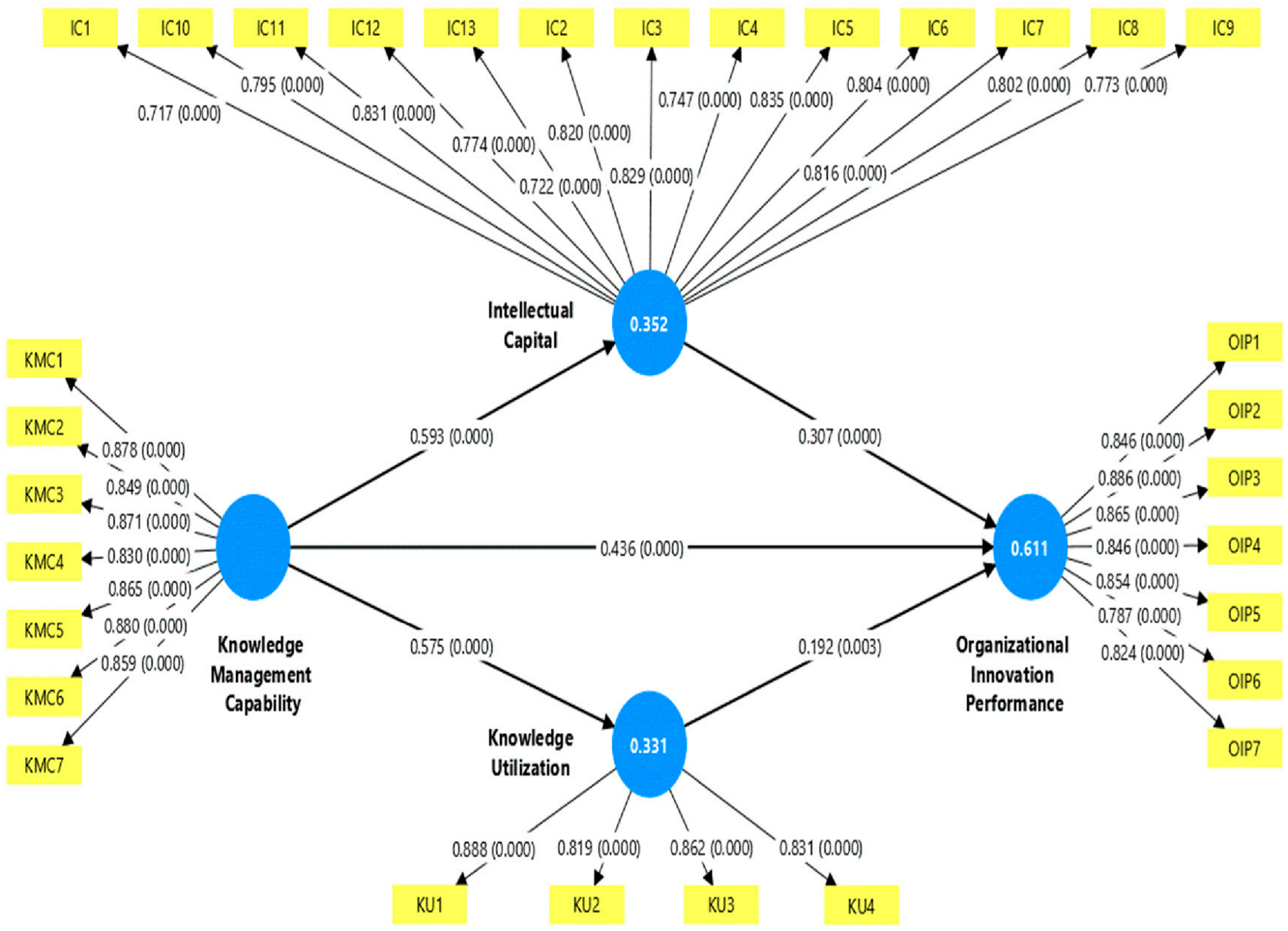
As depicted in Table 3 and Figure 2, all hypothesized relationships in the proposed model were positive and statistically significant, providing robust empirical support for the conceptual framework. The results indicate that Knowledge Management Capability (KMC) serves as a critical driver of both Organizational Innovation Performance (OIP) and Intellectual Capital (IC), while Knowledge Utilization (KU) acts as an essential mechanism that translates knowledge resources into tangible innovative outcomes.
The first hypothesis proposed a direct effect of KMC on OIP, which was strongly supported (β = 0.436, T = 5.212, p < 0.001). This suggests that organizations with effective knowledge management practices—such as systematic knowledge acquisition, sharing, and retention—demonstrate higher innovation performance, reflecting the instrumental role of knowledge processes in shaping creative and operational outcomes. Similarly, the second hypothesis confirmed that KMC positively influences IC (β = 0.593, T = 9.622, p < 0.001), indicating that knowledge management mechanisms significantly enhance an organization’s stock of intellectual assets, including human, structural, and relational capital. The third hypothesis also found strong support, showing that KMC positively impacts KU (β = 0.575, T = 8.714, p < 0.001). This result highlights that well-developed knowledge capabilities facilitate the effective application of knowledge in organizational routines, thereby improving decision-making and problem-solving processes.
Regarding the fourth hypothesis which demonstrated that IC positively affects OIP (β = 0.307, T = 3.742, p < 0.001), implying that organizations leveraging their intellectual capital resources are better positioned to generate innovative outcomes. Similarly, the fifth hypothesis confirmed a significant positive effect of KU on OIP (β = 0.192, T = 2.925, p = 0.003), showing that the effective utilization of knowledge translates into measurable innovation performance.
The mediation hypotheses further reveal the mechanisms through which knowledge resources influence innovation. The sixth hypothesis indicated that IC partially mediates the relationship between KMC and OIP (β = 0.111, T = 2.674, p = 0.008), suggesting that the accumulation and deployment of intellectual capital strengthen the impact of knowledge management on innovation outcomes. Likewise, the seventh hypothesis demonstrated that KU mediates the effect of KMC on OIP (β = 0.182, T = 4.043, p < 0.001), emphasizing that the translation of managed knowledge into actionable practices is a key pathway through which knowledge management drives organizational innovation.
Collectively, these findings underscore that KMC exerts both direct and indirect influences on OIP, with IC and KU serving as critical mediators. This confirms that organizations seeking superior innovation performance must not only invest in knowledge management systems but also focus on leveraging intellectual capital and promoting effective knowledge utilization. By integrating these knowledge-driven mechanisms, organizations can transform knowledge resources into strategic capabilities that enhance innovation and competitive advantage in dynamic business environments.

5. Discussion

This section discusses the study’s empirical findings by linking each result to existing research and highlighting how the relationships among knowledge management capability, intellectual capital, knowledge utilization, and organizational innovation performance are supported and reinforced within the tourism and hospitality context. The results showed that knowledge management capability positively influences organizational innovation performance. This result is consistent with previous empirical studies, yet its importance lies in reinforcing the role of knowledge management capability as a core organizational driver rather than a supportive function. Prior research by [38,39] indicates that organizations with stronger knowledge management capability achieve higher levels of organizational innovation performance because knowledge processes are deliberately structured and aligned with innovation objectives. In service-intensive contexts, ref. [23] further demonstrates that knowledge management capability enhances organizational innovation performance by enabling coordination and knowledge integration across organizational units. More recent evidence provided by [20,28] emphasizes that the influence of knowledge management capability on organizational innovation performance is sustained through continuous knowledge recombination and adaptive learning. Within tourism and hospitality organizations, ref. [4] confirms that knowledge management capability directly strengthens organizational innovation performance by supporting service innovation and process improvement.
Similarly, the results depicted the positive effect of knowledge management capability on intellectual capital. This outcome supports the view that intellectual capital does not accumulate passively within organizations, but is shaped through structured managerial capability. Rather than emerging solely from individual expertise, intellectual capital reflects the organization’s capacity to organize, stabilize, and retain knowledge over time. Prior studies, beginning with [44], suggest that without deliberate mechanisms to manage knowledge, organizational know-how remains fragmented and vulnerable to loss. Empirical evidence from [45] indicates that knowledge management capability strengthens intellectual capital by enabling systematic knowledge sharing and learning across organizational levels. This interpretation is further refined by [46], who argue that managerial coordination of knowledge processes is essential for transforming dispersed expertise into enduring intellectual assets. More recent contributions by [8,43] reinforce this position by showing that intellectual capital development depends on continuous knowledge management efforts rather than on episodic or technology-driven initiatives.
Further, the results highlighted that knowledge management capability has a positive effect on knowledge utilization. This finding underscores that the application of knowledge within organizations is not a spontaneous behavior but is largely shaped by the presence of enabling managerial capabilities. Without structured knowledge management capability, knowledge often remains underexploited, even when it is widely available. Earlier empirical evidence by [49] suggests that organizations are more likely to utilize knowledge effectively when knowledge processes are aligned with operational needs and decision-making routines. This argument is reinforced by [32,50], who demonstrate that knowledge management capability enhances knowledge utilization by clarifying knowledge flows and reducing barriers between knowledge sources and organizational practice. More recent studies extend this logic by emphasizing the execution-oriented role of knowledge management capability. In particular, refs. [14,51] highlight that structured knowledge management capability enables organizations to convert stored knowledge into actionable insights, thereby strengthening knowledge utilization. Within the tourism and hospitality context, ref. [4] further confirms that knowledge management capability supports knowledge utilization by empowering employees to apply knowledge in service delivery and innovation-related activities.
In addition, intellectual capital positively affects organizational innovation performance. This result reinforces the argument that innovation performance in service-intensive organizations is strongly rooted in the quality of intangible knowledge assets rather than in structural or technological inputs alone. Prior studies by [53,54] suggest that intellectual capital enhances organizational innovation performance by enabling organizations to integrate diverse knowledge sources and sustain learning across functional boundaries. This interpretation is further developed by [46], who argue that intellectual capital strengthens innovation outcomes by facilitating the mobilization of collective expertise into innovation-relevant capabilities. More recent empirical evidence adds contextual depth to this relationship. For example, ref. [21] demonstrates that intellectual capital contributes to organizational innovation performance by reinforcing adaptive learning and knowledge recombination processes. Within tourism and hospitality settings, refs. [18,19] confirm that intellectual capital plays a decisive role in supporting service innovation and process improvement.
Moreover, the results clarified that knowledge utilization positively affects organizational innovation performance. This finding highlights that innovation outcomes are ultimately shaped by how effectively organizations translate available knowledge into concrete actions rather than by the volume of knowledge they possess. Earlier empirical work by [22] emphasizes that organizations achieve higher levels of organizational innovation performance when knowledge is embedded in operational routines and decision-making processes. This perspective is reinforced by [20], who demonstrates that knowledge utilization strengthens organizational innovation performance by enabling employees to apply learned insights in adaptive and innovation-oriented practices. Recent studies further extend this argument by stressing the execution-oriented nature of innovation. For instance, ref. [14] shows that innovation performance improves when knowledge utilization bridges the gap between organizational learning and implementation, ensuring that knowledge informs real-time problem-solving and service development. Within the tourism and hospitality context, refs. [57,78] confirm that knowledge utilization enhances organizational innovation performance by supporting frontline innovation and flexible service responses.
Finally, the results reported that intellectual capital and knowledge utilization mediate the relationship between knowledge management capability and organizational innovation performance. Finally, the results reported that intellectual capital and knowledge utilization mediate the relationship between knowledge management capability and organizational innovation performance. This indicates that knowledge management capability influences organizational innovation performance through its ability to build intellectual capital and enable the effective utilization of knowledge. Innovation outcomes therefore depend not only on managing knowledge, but on transforming knowledge into organizational assets and applying it in practice.

6. Research Implications

6.1. Theoretical Implications

The findings of this study offer several important theoretical implications that extend and refine both Dynamic Capabilities Theory and the Knowledge-Based View by providing a more granular explanation of how knowledge-driven capabilities translate into innovation outcomes within tourism and hospitality organizations. First, by demonstrating that knowledge management capability positively influences organizational innovation performance, intellectual capital, and knowledge utilization, the study advances dynamic capabilities thinking beyond its traditional emphasis on sensing, seizing, and reconfiguring resources at an abstract level. The results empirically substantiate knowledge management capability as a distinct, higher-order dynamic capability that governs not only organizational adaptation, but also the internal structuring and activation of knowledge as a strategic resource. This contributes to theory by clarifying that dynamic capabilities in service-based industries are enacted primarily through knowledge orchestration mechanisms rather than through technological or asset-intensive reconfigurations.
From a knowledge-based perspective, the study deepens understanding of the firm as a knowledge-integrating entity by empirically distinguishing between knowledge possession and knowledge deployment. The positive effects of intellectual capital and knowledge utilization on organizational innovation performance reinforce the argument that knowledge creates value only when it is both accumulated into organizational assets and actively applied in practice. Intellectual capital captures the embedded, relatively stable dimension of organizational knowledge, while knowledge utilization reflects its situational and action-oriented dimension. By modeling these constructs simultaneously, the study extends the Knowledge-Based View from a static conceptualization of knowledge as a strategic asset toward a more process-oriented interpretation that recognizes multiple pathways through which knowledge contributes to innovation.
Perhaps the most significant theoretical contribution lies in the demonstrated mediating roles of intellectual capital and knowledge utilization. The findings show that the impact of knowledge management capability on innovation performance is neither immediate nor automatic, but operates through complementary mechanisms of accumulation and enactment. This insight challenges simplified assumptions in both theoretical traditions that capabilities or resources directly yield performance outcomes. Instead, the results suggest that dynamic capabilities exert their influence by shaping intermediate organizational states—namely the quality of intellectual capital and the effectiveness of knowledge utilization—that condition innovation performance. In doing so, the study introduces a systemic view of knowledge-driven innovation in which capability, asset formation, and action are analytically distinct yet interdependent components.
Moreover, by situating this integrated model within the tourism and hospitality context, the study extends the boundary conditions of both theories. Much of the existing theoretical development in dynamic capabilities and knowledge-based research has been grounded in manufacturing or technology-intensive industries. The present findings demonstrate that in service-intensive environments characterized by intangibility, simultaneity of production and consumption, and high reliance on human interaction, knowledge-related capabilities operate through nuanced internal mechanisms rather than through overt structural transformations. This contextual extension enriches both theories by illustrating how their core assumptions manifest in industries where innovation is embedded in processes, experiences, and frontline practices.
Collectively, these theoretical implications position the study as a meaningful advancement in the literature by moving beyond linear capability–performance linkages and offering a multi-layered explanation of how knowledge management capability generates innovation outcomes. By empirically validating intellectual capital and knowledge utilization as dual mediating mechanisms, the study not only strengthens the explanatory power of Dynamic Capabilities Theory and the Knowledge-Based View, but also bridges them in a way that enables a more coherent and comprehensive understanding of knowledge-driven innovation in tourism and hospitality organizations.

6.2. Practical Implications

The findings of this study carry several practical implications for managers and decision-makers in tourism and hospitality organizations, particularly those seeking to enhance innovation performance through more effective use of knowledge-related capabilities. The demonstrated positive influence of knowledge management capability on organizational innovation performance indicates that innovation should not be treated as a standalone function or an isolated departmental responsibility. Instead, managers are encouraged to view knowledge management as an organizational capability that requires deliberate design, governance, and continuous reinforcement. This implies investing not only in technological systems for knowledge storage, but also in managerial practices that align learning activities with innovation objectives, such as cross-functional knowledge-sharing routines, structured reflection after service encounters, and mechanisms that capture experiential knowledge from frontline employees. For example, hotels and service providers can implement digital knowledge-sharing platforms tailored to frontline service encounters, enabling employees to document customer interactions, service challenges, and problem-solving experiences in real time, thereby transforming tacit experiential knowledge into actionable organizational inputs. In practical terms, such mechanisms can be embedded within daily front-office and guest-service routines, such as post-shift debriefs or service recovery logs, where employees record successful improvisations, recurring guest issues, and context-specific service solutions that can be reused across similar encounters.
The strong effect of knowledge management capability on intellectual capital suggests that managers should actively manage knowledge accumulation rather than assuming it will occur organically. Human capital development should move beyond generic training programs toward targeted capability-building initiatives that enhance employees’ problem-solving and service innovation skills. At the structural level, organizations should focus on embedding critical knowledge into standardized yet flexible processes, service scripts, and operational guidelines that can be adapted to different customer contexts. Relational capital can be strengthened by systematically leveraging partnerships with suppliers, destination stakeholders, and customers as sources of innovation-relevant knowledge, rather than treating external relationships purely as transactional arrangements. In customer-facing hospitality contexts, relational capital can be further leveraged by systematically engaging guests in feedback and co-creation initiatives, allowing customer insights and experiences to directly inform service design, refinement, and innovation efforts. For instance, hotels can align intellectual capital development with customer-centric innovation by integrating guest feedback from loyalty programs, online reviews, and repeat-guest interactions into internal innovation workshops, where frontline and managerial staff jointly translate relational knowledge into service enhancements and new experience concepts.
The findings related to knowledge utilization highlight a critical managerial priority: ensuring that available knowledge is actually applied in daily operations and strategic decision-making. Managers should reduce barriers that prevent employees from using knowledge, such as rigid hierarchies, excessive standardization, or lack of decision autonomy. Practical actions may include empowering frontline staff to make informed service adjustments, integrating knowledge-based insights into performance review systems, and creating feedback loops that allow employees to see how their applied knowledge contributes to service improvements and innovation outcomes. By doing so, organizations can shift from a culture of knowledge accumulation to one of knowledge activation. At the operational level, this may involve granting frontline supervisors in functions such as housekeeping or food and beverage limited discretion to adapt service procedures based on documented best practices and prior solutions, ensuring that stored knowledge directly informs real-time service decisions.
The mediating roles of intellectual capital and knowledge utilization further imply that improvements in innovation performance are unlikely to result from isolated interventions. Managers who focus solely on implementing knowledge management systems without strengthening intellectual capital or encouraging knowledge utilization may see limited returns. Instead, an integrated approach is required, where investments in knowledge infrastructure are accompanied by initiatives that develop organizational expertise and promote the practical application of knowledge. This integrated logic can guide managers in prioritizing resource allocation by emphasizing capability-building over short-term innovation projects that lack a sustainable knowledge foundation.
Finally, for tourism and hospitality organizations operating in dynamic and service-intensive environments, the results suggest that innovation performance can be enhanced by treating knowledge management capability as a strategic lever rather than an operational support function. Senior managers should embed knowledge-related objectives into innovation strategies, assign clear accountability for knowledge outcomes, and regularly assess how knowledge is being transformed into both intellectual capital and actionable insights. Such practices enable organizations to sustain innovation performance over time, even in the face of market volatility and changing customer expectations.

7. Limitations and Future Research

While this study provides meaningful insights into the role of knowledge management capability in enhancing organizational innovation performance, its findings should be interpreted in light of several limitations that also point to promising avenues for future research. One important limitation concerns the empirical focus on five-star hotels operating in Egypt. This segment of the hospitality industry is characterized by relatively high levels of formalization, resource intensity, and professionalized management practices, which may shape how knowledge-related capabilities are developed and deployed. As a result, the observed relationships may not fully reflect the dynamics present in less resource-rich or more informally structured tourism organizations. Future studies could apply the proposed framework to other hospitality segments or tourism-related businesses to assess whether knowledge management capability operates differently under varying organizational and market conditions.
Another limitation stems from the emphasis on intellectual capital and knowledge utilization as the sole mediating mechanisms linking knowledge management capability to innovation performance. Although these mediators capture critical pathways through which knowledge-driven value is created, they do not exhaust the range of internal processes that may influence innovation outcomes. Innovation in service organizations is often shaped by cognitive, behavioral, and cultural, and leadership-related factors that interact with knowledge systems. Future research could therefore extend the model by incorporating additional explanatory mechanisms, such as organizational learning processes, psychological empowerment, or innovation-supportive climates, in order to capture a more comprehensive picture of how knowledge management capability translates into innovation performance.
The focus on organizational innovation performance as the primary dependent variable also introduces certain constraints. Innovation performance represents a central but intermediate organizational outcome, and its effects may spill over into other performance dimensions over time. Subsequent research could examine how knowledge management capability indirectly influences outcomes such as service excellence, customer loyalty, financial sustainability, or crisis adaptability through innovation-related pathways. Such extensions would allow scholars to better understand the broader strategic implications of knowledge-driven innovation beyond its immediate organizational manifestations.
Although demographic variables were included as controls in the present study, their role was not explored in depth. Characteristics such as employees’ experience, educational background, and organizational position may condition how knowledge is interpreted, shared, and applied in practice. Rather than treating these variables as peripheral, future research could investigate their potential moderating or configurational effects. For instance, differences in generational perspectives or managerial authority may influence the effectiveness of knowledge utilization processes, thereby shaping innovation outcomes in more nuanced ways.
From a methodological standpoint, the reliance on cross-sectional data limits the ability to capture the temporal dynamics emphasized by both Dynamic Capabilities Theory and the Knowledge-Based View. Knowledge management capability, intellectual capital, and knowledge utilization are inherently evolving constructs whose effects may unfold gradually. Longitudinal research designs or mixed-method approaches could provide deeper insight into how these elements interact over time and how shifts in organizational strategy or environmental conditions alter their impact on innovation performance.
Finally, the study’s single-country context highlights the need for comparative research across different institutional and cultural environments. Tourism and hospitality organizations operate within diverse regulatory frameworks, labor markets, and cultural norms that may shape knowledge practices in distinct ways. Future studies could adopt cross-national or cross-regional designs to test the robustness of the proposed relationships and to identify contextual contingencies that influence the effectiveness of knowledge management capability in driving innovation.

Author Contributions

Conceptualization, B.S.A.-R. and A.M.H.; methodology, A.M.H.; software, A.M.H.; validation, A.M.H. and B.S.A.-R.; formal analysis, A.M.H.; investigation B.S.A.-R. and A.M.H.; resources, B.S.A.-R. and A.M.H.; data curation, B.S.A.-R. and A.M.H.; writing—original draft preparation, A.M.H. and B.S.A.-R.; writing—review and editing, A.M.H. and B.S.A.-R.; visualization, A.M.H. and B.S.A.-R.; supervision, A.M.H.; project administration, A.M.H.; funding acquisition, A.M.H. All authors have read and agreed to the published version of the manuscript.

Funding

This research was funded by the Deanship of Scientific Research, Vice Presidency for Graduate Studies and Scientific Research, King Faisal University, Saudi Arabia, grant number [KFU260029].

Institutional Review Board Statement

The study was conducted according to the guidelines of the Declaration of Helsinki and approved by the Deanship of Scientific Research Ethical Committee, King Faisal University (project number: KFU260029, date of approval: 1 November 2025).

Informed Consent Statement

Informed consent was obtained from all subjects involved in this study.

Data Availability Statement

Data are available upon request from researchers who meet the eligibility criteria. Kindly contact the first author privately through e-mail.

Acknowledgments

During the preparation of this manuscript, the authors used QuillBot version 4.56.0 and Grammarly version 14.1271.0 for the purposes of language proofreading and stylistic editing. The authors have reviewed and edited the output and take full responsibility for the content of this publication.

Conflicts of Interest

The authors declare no conflicts of interest.

References

  1. Nair, A.; Manohar, S.; Mittal, A. Reconfiguration and transformation for resilience: Building service organizations towards sustainability. J. Serv. Mark. 2024, 38, 404–425. [Google Scholar] [CrossRef]
  2. Kandampully, J.; Bilgihan, A.; Van Riel, A.; Sharma, A. Toward holistic experience-oriented service innovation: Co-creating sustainable value with customers and society. Cornell Hosp. Q. 2023, 64, 161–183. [Google Scholar] [CrossRef]
  3. Teece, D. Business models and dynamic capabilities. Long Range Plan. 2018, 51, 40–49. [Google Scholar] [CrossRef]
  4. Al-Romeedy, B. The relationships between leadership styles, entrepreneurial orientation, and knowledge sharing in the tourism and hospitality industry. In Shifts in Knowledge Sharing and Creativity for Business Tourism; IGI Global Scientific Publishing: Hershey, PA, USA, 2024; pp. 208–227. [Google Scholar]
  5. Hasanein, A.M. Ethical leadership and pro-social behavior in the hospitality industry: Does social norms matter? Edelweiss Appl. Sci. Technol. 2024, 8, 3161–3170. [Google Scholar] [CrossRef]
  6. Manoharan, A.; Hutchinson, C.; Treuren, G.; Madera, J. Disability employment in the hospitality industry: A systematic literature review. Cornell Hosp. Q. 2024, 65, 362–377. [Google Scholar] [CrossRef]
  7. Gama, F.; Magistretti, S. Artificial intelligence in innovation management: A review of innovation capabilities and a taxonomy of AI applications. J. Prod. Innov. Manag. 2025, 42, 76–111. [Google Scholar] [CrossRef]
  8. Paoloni, M.; Coluccia, D.; Fontana, S.; Solimene, S. Knowledge management, intellectual capital and entrepreneurship: A structured literature review. J. Knowl. Manag. 2020, 24, 1797–1818. [Google Scholar] [CrossRef]
  9. Johannessen, J. Knowledge Management as a Strategic Asset: An Integrated, Historical Approach; Emerald: Leeds, UK, 2018. [Google Scholar]
  10. Li, B.; Wang, L.; Fu, S.; Wan, J. How does artificial intelligence empower enterprise technological innovation: From the perspective of knowledge management capability. J. Knowl. Manag. 2025. ahead-of-print. [Google Scholar] [CrossRef]
  11. Ferreira, A.; Franco, M.; Haase, H. Strategic alliances and development of intellectual capital: A study of technology-based SMEs. Int. J. Organ. Anal. 2022, 30, 1644–1671. [Google Scholar] [CrossRef]
  12. Majumder, S.; Dey, N. AI-Empowered Knowledge Management; Springer: Berlin/Heidelberg, Germany, 2022. [Google Scholar]
  13. Ratna, S.; Saide, S.; Putri, A.; Indrajit, R.; Muwardi, D. Digital transformation in tourism and hospitality industry: A literature review of blockchain, financial technology, and knowledge management. EuroMed J. Bus. 2024, 19, 84–112. [Google Scholar] [CrossRef]
  14. Mohaghegh, F.; Zaim, H.; Dzenopoljac, V.; Dzenopoljac, A.; Bontis, N. Analyzing the effects of knowledge management on organizational performance through knowledge utilization and sustainability. Knowl. Process Manag. 2024, 31, 261–272. [Google Scholar] [CrossRef]
  15. Martinez-Conesa, I.; Soto-Acosta, P.; Carayannis, E. On the path towards open innovation: Assessing the role of knowledge management capability and environmental dynamism in SMEs. J. Knowl. Manag. 2017, 21, 553–570. [Google Scholar] [CrossRef]
  16. Jiang, Y.; Ritchie, B.; Verreynne, M. Building tourism organizational resilience to crises and disasters: A dynamic capabilities view. Int. J. Tour. Res. 2019, 21, 882–900. [Google Scholar] [CrossRef]
  17. Bhadra, K.; Kamalanabhan, T.; Singh, S. Evolution of dynamic capabilities for business sustainability performance: Evidence from the Indian manufacturing sector. Bus. Strategy Environ. 2024, 33, 5583–5605. [Google Scholar] [CrossRef]
  18. Alnasser, E.; Alkhozaim, S.; Alshiha, A.; Al-Romeedy, B.; Khairy, H. Intellectual capital and organisational resilience in tourism and hotel businesses: Do organisational agility and innovation matter. Curr. Issues Tour. 2025, 28, 2649–2669. [Google Scholar] [CrossRef]
  19. Al-Romeedy, B.; Adekoya, O. Knowledge Workers in Africa: Igniting the Flame of Intellectual Capital for Future Careers. In Careers in Africa: Trends, Opportunities and Challenges; Springer Nature Switzerland: Cham, Switzerland, 2025; pp. 235–255. [Google Scholar]
  20. Migdadi, M. Knowledge management processes, innovation capability and organizational performance. Int. J. Product. Perform. Manag. 2022, 71, 182–210. [Google Scholar] [CrossRef]
  21. Ur Rehman, S.; Elrehail, H.; Alsaad, A.; Bhatti, A. Intellectual capital and innovative performance: A mediation-moderation perspective. J. Intellect. Cap. 2022, 23, 998–1024. [Google Scholar] [CrossRef]
  22. Zhang, J.; Di Benedetto, C.; Hoenig, S. Product development strategy, product innovation performance, and the mediating role of knowledge utilization: Evidence from subsidiaries in China. J. Int. Mark. 2009, 17, 42–58. [Google Scholar] [CrossRef]
  23. Gürlek, M.; Çemberci, M. Understanding the relationships among knowledge-oriented leadership, knowledge management capacity, innovation performance and organizational performance: A serial mediation analysis. Kybernetes 2020, 49, 2819–2846. [Google Scholar] [CrossRef]
  24. Teece, D. Dynamic Capabilities: Foundational Concepts; Cambridge University Press: Cambridge, UK, 2025. [Google Scholar]
  25. Liu, C.; Williams, A.; Li, G. Knowledge management practices of tourism consultants: A project ecology perspective. Tour. Manag. 2022, 91, 104491. [Google Scholar] [CrossRef]
  26. Kaur, V. Knowledge-Based Dynamic Capabilities; Springer: Berlin/Heidelberg, Germany, 2019. [Google Scholar]
  27. Mata, M.; Moleiro, J.; Inácio, P. Collaborative innovation, strategic agility, & absorptive capacity adoption in SMEs: The moderating effects of customer knowledge management capability. J. Knowl. Manag. 2024, 28, 1116–1140. [Google Scholar] [CrossRef]
  28. Idrees, H.; Haider, S.; Xu, J.; Tehseen, S.; Jan, N. Impact of knowledge management capabilities on organisational performance in construction firms: The mediating role of innovation. Meas. Bus. Excell. 2023, 27, 322–340. [Google Scholar] [CrossRef]
  29. Snell, S.; Morris, S. Building dynamic capabilities around organizational learning challenges. J. Organ. Eff. People Perform. 2014, 1, 214–239. [Google Scholar] [CrossRef]
  30. Asiaei, K.; Rezaee, Z.; Bontis, N.; Barani, O.; Sapiei, N. Knowledge assets, capabilities and performance measurement systems: A resource orchestration theory approach. J. Knowl. Manag. 2021, 25, 1947–1976. [Google Scholar] [CrossRef]
  31. Zahedi, M.; Naghdi, S. The effect of knowledge management processes on organizational innovation through intellectual capital development in Iranian industrial organizations. J. Sci. Technol. Policy Manag. 2021, 12, 86–105. [Google Scholar] [CrossRef]
  32. Zaim, H.; Muhammed, S.; Tarim, M. Relationship between knowledge management processes and performance: Critical role of knowledge utilization in organizations. Knowl. Manag. Res. Pract. 2019, 17, 24–38. [Google Scholar] [CrossRef]
  33. Konlechner, S.; Müller, B.; Güttel, W. A dynamic capabilities perspective on managing technological change: A review, framework and research agenda. Int. J. Technol. Manag. 2018, 76, 188–213. [Google Scholar] [CrossRef]
  34. Grant, R.; Phene, A. The knowledge based view and global strategy: Past impact and future potential. Glob. Strategy J. 2022, 12, 3–30. [Google Scholar] [CrossRef]
  35. Soumyaja, D.; Sowmya, C. Knowledge management and innovation performance in knowledge intensive organisations-the role of HR practices. Int. J. Knowl. Manag. Stud. 2020, 11, 370–392. [Google Scholar] [CrossRef]
  36. Bharadwaj, S.; Chauhan, S.; Raman, A. Impact of knowledge management capabilities on knowledge management effectiveness in Indian organizations. Vikalpa 2015, 40, 421–434. [Google Scholar] [CrossRef]
  37. Hassan, S.; Meisner, K.; Krause, K.; Bzhalava, L.; Moog, P. Is digitalization a source of innovation? Exploring the role of digital diffusion in SME innovation performance. Small Bus. Econ. 2024, 62, 1469–1491. [Google Scholar] [CrossRef]
  38. Tseng, S.; Lee, P. The effect of knowledge management capability and dynamic capability on organizational performance. J. Enterp. Inf. Manag. 2014, 27, 158–179. [Google Scholar] [CrossRef]
  39. Aboelmaged, M. Linking operations performance to knowledge management capability: The mediating role of innovation performance. Prod. Plan. Control 2014, 25, 44–58. [Google Scholar] [CrossRef]
  40. Peng, M. Breaking down barriers: Exploring the impact of social capital on knowledge sharing and transfer in the workplace. Humanit. Soc. Sci. Commun. 2024, 11, 1007. [Google Scholar] [CrossRef]
  41. Thomas, A. Digitally transforming the organization through knowledge management: A socio-technical system (STS) perspective. Eur. J. Innov. Manag. 2024, 27, 437–460. [Google Scholar] [CrossRef]
  42. Dahiyat, S.; Khasawneh, S.; Bontis, N.; Al-Dahiyat, M. Intellectual capital stocks and flows: Examining the mediating roles of social capital and knowledge transfer. VINE J. Inf. Knowl. Manag. Syst. 2023, 53, 11–42. [Google Scholar] [CrossRef]
  43. Garcia-Perez, A.; Ghio, A.; Occhipinti, Z.; Verona, R. Knowledge management and intellectual capital in knowledge-based organisations: A review and theoretical perspectives. J. Knowl. Manag. 2020, 24, 1719–1754. [Google Scholar] [CrossRef]
  44. Rastogi, P. Knowledge management and intellectual capital as a paradigm of value creation. Hum. Syst. Manag. 2002, 21, 229–240. [Google Scholar] [CrossRef]
  45. Abualoush, S.; Masa’deh, R.; Bataineh, K.; Alrowwad, A. The role of knowledge management process and intellectual capital as intermediary variables between knowledge management infrastructure and organization performance. Interdiscip. J. Inf. Knowl. Manag. 2018, 13, 279–309. [Google Scholar] [CrossRef]
  46. Cabrilo, S.; Dahms, S. How strategic knowledge management drives intellectual capital to superior innovation and market performance. J. Knowl. Manag. 2018, 22, 621–648. [Google Scholar] [CrossRef]
  47. Whig, P.; Madavarapu, J.; Yathiraju, N.; Thatikonda, R. Managing knowledge in the era of Industry 4.0: Challenges and strategies. In Knowledge Management and Industry Revolution 4.0; Scrivener Publishing LLC: Beverly, MA, USA, 2024; pp. 239–273. [Google Scholar]
  48. Cui, T.; Tong, Y.; Teo, H.; Li, J. Managing knowledge distance: IT-enabled inter-firm knowledge capabilities in collaborative innovation. J. Manag. Inf. Syst. 2020, 37, 217–250. [Google Scholar] [CrossRef]
  49. Aujirapongpan, S.; Vadhanasindhu, P.; Chandrachai, A.; Cooparat, P. Indicators of knowledge management capability for KM effectiveness. Vine 2010, 40, 183–203. [Google Scholar] [CrossRef]
  50. Zaim, H.; Keceli, Y.; Jaradat, A.; Kastrati, S. The effects of knowledge management processes on human resource management: Mediating role of knowledge utilization. J. Sci. Technol. Policy Manag. 2018, 9, 310–328. [Google Scholar] [CrossRef]
  51. Seraj, A.; Hasanein, A.; Al-Romeedy, B.; Taha, E. How Talent Management Drives Sustainability in Hospitality Enterprises: The Mediating Role of Green Knowledge Sharing and Employee Voice. Tour. Hosp. 2025, 6, 176. [Google Scholar] [CrossRef]
  52. Dzenopoljac, V.; Senic, V.; Labben, T.; Arici, H.; Koseoglu, M. Intellectual capital in hospitality and tourism: A critical review and future research agenda. Int. Hosp. Rev. 2025, 39, 124–143. [Google Scholar] [CrossRef]
  53. Agostini, L.; Nosella, A. Enhancing radical innovation performance through intellectual capital components. J. Intellect. Cap. 2017, 18, 789–806. [Google Scholar] [CrossRef]
  54. Agostini, L.; Nosella, A.; Filippini, R. Does intellectual capital allow improving innovation performance? A quantitative analysis in the SME context. J. Intellect. Cap. 2017, 18, 400–418. [Google Scholar] [CrossRef]
  55. Elhadidy, I.; Gao, Y. How does humble leadership stimulate employees’ service improvisation in hospitality? A social information processing perspective. Kybernetes 2025, 54, 4483–4514. [Google Scholar] [CrossRef]
  56. Al-Husain, R.A.; Jasim, T.A.; Mathew, V.; Al-Romeedy, B.S.; Khairy, H.A.; Mahmoud, H.A.; Liu, S.; El-Meligy, M.A.; Alsetoohy, O. Optimizing sustainability performance through digital dynamic capabilities, green knowledge management, and green technology innovation. Sci. Rep. 2025, 15, 24217. [Google Scholar] [CrossRef]
  57. Al-Romeedy, B.; Alharethi, T. Reimagining Sustainability: The power of AI and intellectual capital in shaping the future of tourism and hospitality organizations. J. Open Innov. Technol. Mark. Complex. 2024, 10, 100417. [Google Scholar] [CrossRef]
  58. Patwary, A.; Alwi, M.; Rehman, S.; Rabiul, M.; Babatunde, A.; Alam, M. Knowledge management practices on innovation performance in the hotel industry: Mediated by organizational learning and organizational creativity. Glob. Knowl. Mem. Commun. 2024, 73, 662–681. [Google Scholar] [CrossRef]
  59. Nieves, J.; Quintana, A.; Osorio, J. Organizational knowledge, dynamic capabilities and innovation in the hotel industry. Tour. Hosp. Res. 2016, 16, 158–171. [Google Scholar] [CrossRef]
  60. Hayaeian, S.; Hesarzadeh, R.; Abbaszadeh, M. The impact of knowledge management strategies on the relationship between intellectual capital and innovation: Evidence from SMEs. J. Intellect. Cap. 2022, 23, 765–798. [Google Scholar] [CrossRef]
  61. Jordão, R.; Novas, J.; Gupta, V. The role of knowledge-based networks in the intellectual capital and organizational performance of small and medium-sized enterprises. Kybernetes 2020, 49, 116–140. [Google Scholar] [CrossRef]
  62. Tufail, M.; Shaheen, K.; Mehmood, S.; Syed, N.; Bashir, I.; Jamil, A. The orientation of knowledge sources and knowledge transfer towards innovation capabilities are moderated by absorptive capacity: An empirical study in perspective of manufacturing industries. Int. J. Knowl. Learn. 2024, 17, 427–441. [Google Scholar] [CrossRef]
  63. Khraishi, A.; Paulraj, A.; Huq, F.; Seepana, C. Knowledge management in offshoring innovation by SMEs: Role of internal knowledge creation capability, absorptive capacity and formal knowledge-sharing routines. Supply Chain Manag. Int. J. 2023, 28, 405–422. [Google Scholar] [CrossRef]
  64. Harsono, T.; Hidayat, K.; Iqbal, M.; Abdillah, Y. Exploring the effect of transformational leadership and knowledge management in enhancing innovative performance: A mediating role of innovation capability. J. Manuf. Technol. Manag. 2025, 36, 227–250. [Google Scholar] [CrossRef]
  65. Peytcheva, E.; Yan, T. A Practical Guide to Survey Questionnaire Design and Evaluation; Taylor & Francis: Abingdon, UK, 2025. [Google Scholar]
  66. Creswell, J.W.; Creswell, J.D. Research Design: Qualitative, Quantitative, and Mixed Methods Approaches; Sage Publications: Thousand Oaks, CA, USA, 2017. [Google Scholar]
  67. Kock, N. Common method bias in PLS-SEM: A full collinearity assessment approach. Int. J. E-Collab. (IJeC) 2015, 11, 1007. [Google Scholar] [CrossRef]
  68. Mao, H.; Liu, S.; Zhang, J.; Deng, Z. Information technology resource, knowledge management capability, and competitive advantage: The moderating role of resource commitment. Int. J. Inf. Manag. 2016, 36, 1062–1074. [Google Scholar] [CrossRef]
  69. Tang, J.; Pee, L.G.; Iijima, J. Investigating the effects of business process orientation on organizational innovation performance. Inf. Manag. 2013, 50, 650–660. [Google Scholar] [CrossRef]
  70. Nunnally, J.; Bernstein, I. Psychometric Theory, 3rd ed.; Psychology; McGraw-Hill: New York, NY, USA, 1994. [Google Scholar]
  71. Leguina, A. A primer on partial least squares structural equation modeling (PLS-SEM). Int. J. Res. Method Educ. 2015, 38, 220–221. [Google Scholar] [CrossRef]
  72. Hasanein, A.M. Responses to the AI Revolution in Hospitality and Tourism Higher Education: The Perception of Students Towards Accepting and Using Microsoft Copilot. Eur. J. Investig. Health Psychol. Educ. 2025, 15, 35. [Google Scholar] [CrossRef] [PubMed]
  73. Hair, J.; Matthews, L.M.; Matthews, R.L.; Sarstedt, M. PLS-SEM or CB-SEM: Updated guidelines on which method to use. Int. J. Multivar. Data Anal. 2017, 1, 107. [Google Scholar] [CrossRef]
  74. Do Valle, P.O.; Assaker, G. Using Partial Least Squares Structural Equation Modeling in Tourism Research: A Review of Past Research and Recommendations for Future Applications. J. Travel Res. 2016, 55, 695–708. [Google Scholar] [CrossRef]
  75. Podsakoff, P.M.; MacKenzie, S.B.; Lee, J.-Y.; Podsakoff, N.P. Common method biases in behavioral research: A critical review of the literature and recommended remedies. J. Appl. Psychol. 2003, 88, 879–903. [Google Scholar] [CrossRef]
  76. Fornell, C.; Larcker, D.F. Evaluating structural equation models with unobservable variables and measurement error. J. Mark. Res. 1981, 18, 39–50. [Google Scholar] [CrossRef]
  77. Chin, W. Commentary: Issues and opinion on structural equation modeling. MIS Q. 1998, 22, vii–xvi. Available online: https://www.jstor.org/stable/249674 (accessed on 25 December 2025).
  78. Hasanein, A.M.; Elrayah, M. Beyond the Workplace: How Psychological Empowerment Influences Employee Creativity in the Saudi Hotel Sector—The Mediating Role of Affective Commitment and the Moderating Role of Psychological Safety. Eur. J. Investig. Health Psychol. Educ. 2025, 15, 76. [Google Scholar] [CrossRef] [PubMed]
Figure 1. Research Conceptual Model.
Systems 14 00179 g001
Figure 2. Final research model.
Systems 14 00179 g002
Table 1. Measurements’ and Variables’ Parametric Attributes.
Scale VariablesLoadingsVIF
Knowledge Management Capability (KMC): (α = 0.942, CR = 0.953, AVE = 0.743)
KMC-10.8781.155
KMC-20.8492.837
KMC-30.8711.207
KMC-40.8302.695
KMC-50.8653.010
KMC-60.8802.427
KMC-70.8592.990
Intellectual Capital (IC): (α = 0.950, CR = 0.956, AVE = 0.765)
IC-10.7172.195
IC-20.8202.643
IC-30.8292.835
IC-40.7472.110
IC-50.8351.205
IC-60.8042.493
IC-70.8162.982
IC-80.8022.474
IC-90.7732.262
IC-100.7952.435
IC-110.8311.036
IC-120.7742.682
IC-130.7222.063
Knowledge Utilization (KU): (α = 0.873, CR = 0.913, AVE = 0.723)
GC-10.8882.538
GC-20.8191.946
GC-30.8622.114
GC-40.8312.126
Organizational Innovation Performance (OIP): (α = 0.933, CR = 0.946, AVE = 0.713)
OIP-10.8462.077
OIP-20.8862.564
OIP-30.8652.923
OIP-40.8462.787
OIP-50.8542.062
OIP-60.7872.366
OIP-70.8242.612
Table 2. Fornell and Larcker and HTMT Values.
ICKMCKUOIP
IC0.790
KMC0.593 [0.615]0.862
KU0.288 [0.305]0.575 [0.626]0.851
OIP0.621 [0.654]0.729 [0.770]0.532 [0.575]0.844
Table 3. Results of Hypotheses Testing.
βT-Valuep-Values
Direct Effect
(H1) KMC → OIP0.4365.2120.000 ***
(H2) KMC → IC0.5939.6220.000 ***
(H3) KMC → KU0.5758.7140.000 ***
(H4) IC → OIP0.3073.7420.000 ***
(H5) KU → OIP0.1922.9250.003 **
Indirect Effect
(H6) KMC → IC → OIP0.1112.6740.008 **
(H7) KMC → KU → OIP0.1824.0430.000 ***
Note: (p < 0.01 = **, p < 0.001 = ***).
Disclaimer/Publisher’s Note: The statements, opinions and data contained in all publications are solely those of the individual author(s) and contributor(s) and not of MDPI and/or the editor(s). MDPI and/or the editor(s) disclaim responsibility for any injury to people or property resulting from any ideas, methods, instructions or products referred to in the content.