Repairing the Urban Metabolism: A Dynamic Life-Cycle and HJB Optimization Model for Resolving Spatio-Temporal Conflicts in Shared Parking Systems

 , , and
Abstract
1. Introduction
- (1)
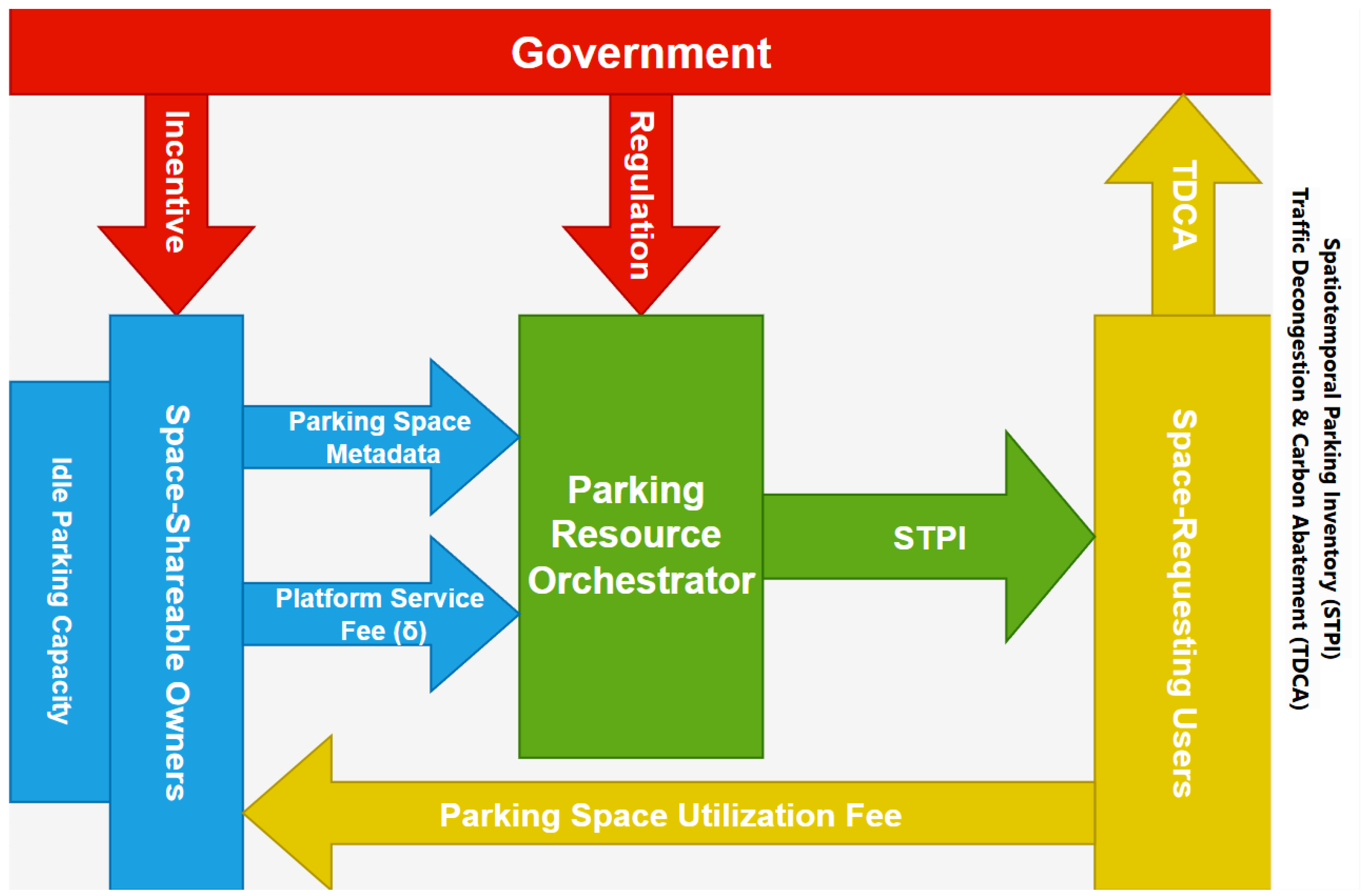
- Agent Scope (Private Individuals): This study exclusively models individual private parking owners in residential communities, distinct from corporate garage operators. These agents are characterized by high risk aversion and lack of professional market data.
- (2)
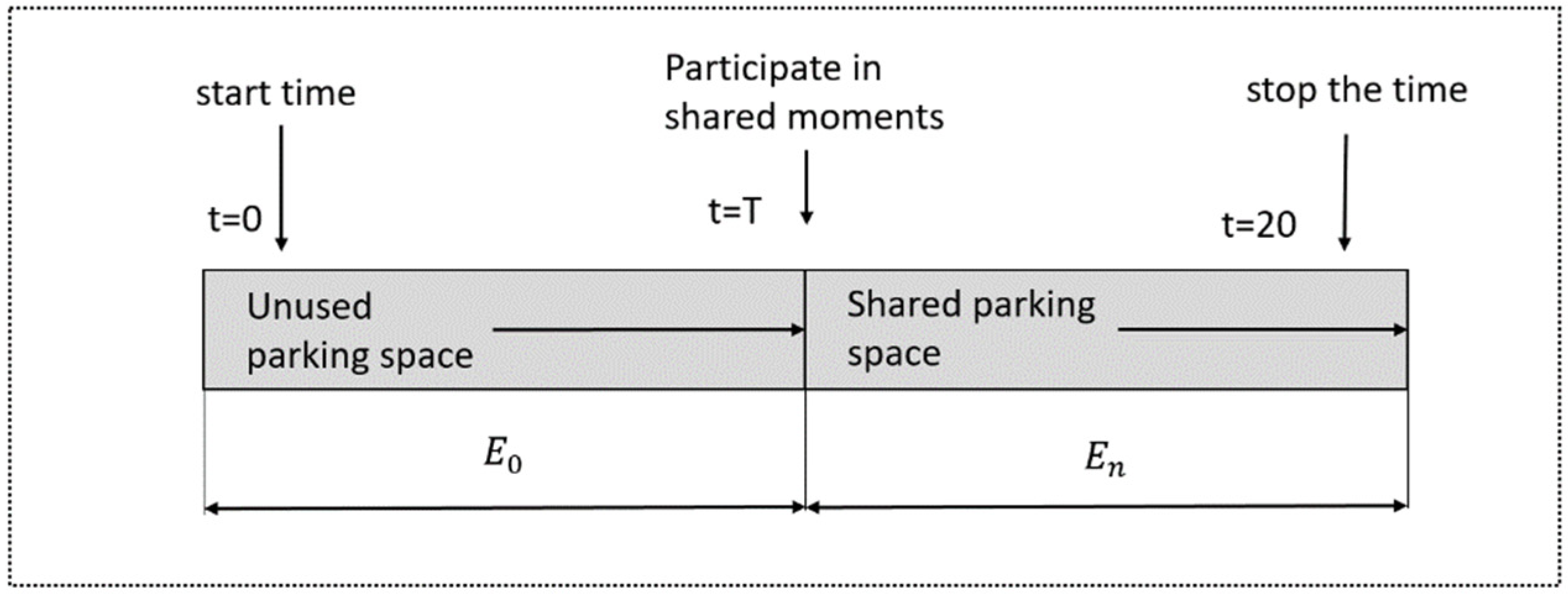
- Time Frame (Long-term Commitment): Unlike daily spot-market trading (e.g., Airbnb), shared parking in this context requires hardware installation (smart locks) and administrative approval. Therefore, we model the participation decision not as a daily switch, but as a long-term asset commitment (analyzed over a 20-year lifecycle) bonded by contract.
- (3)
- Concept Definitions: Rigid Spatial Boundaries: Refers to the physical immobility of the parking asset, which cannot move to chase demand, creating a spatial mismatch with mobile vehicles.
- (1)
- To model the shared parking ecosystem as a complex socio-technical system constrained by Spatio-Temporal Conflicts and driven by agent-based (owner) decisions under uncertainty.
- (2)
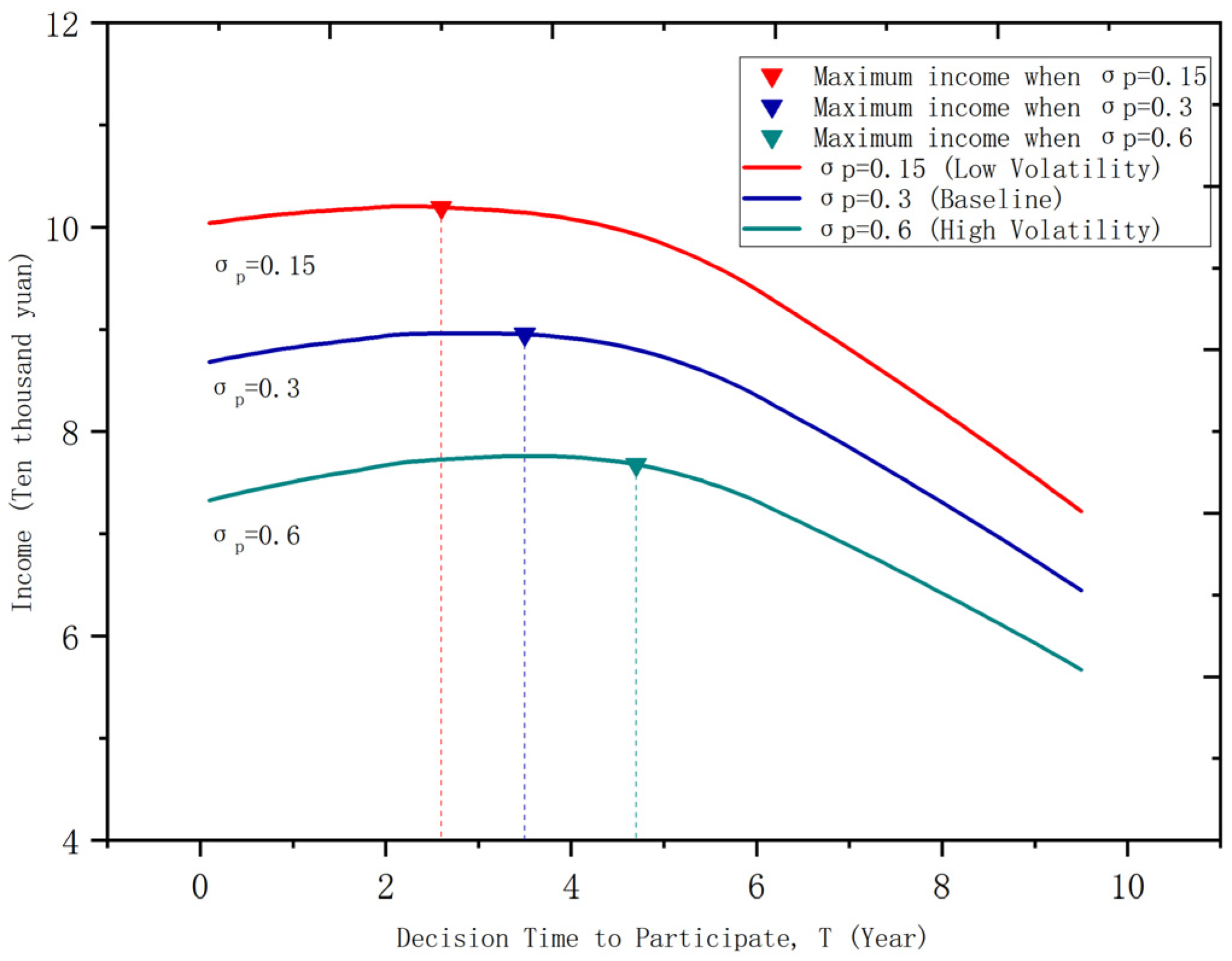
- To utilize the LCC-HJB framework to identify the non-linear dynamics and critical thresholds (tipping points) of key system parameters: specifically, Institutional Entropy (represented by price volatility, ) and Internal System Friction (represented by management costs, ).
- (3)
- To propose a synergistic ‘system calibration’ strategy—sequenced as stabilization, friction removal, and activation—to minimize entropy, reduce internal friction, and accelerate the optimal participation timing (T*).
2. System Framework and LCC Model
2.1. System Definition and Agent-Based LCC Framework
2.2. Derivation of System Components
2.2.1. Defining System Instability (Price Dynamics)
2.2.2. Defining System Friction and Revenue Streams
2.2.3. Participation Costs and Final Model Formulation
3. Methodology: HJB Optimization and Model Solution
4. Results and Discussion
4.1. Numerical Analysis Plan Design

| Parameter | Symbol | Value | Empirical Range/ Sensitivity Band | Source/Rationale |
|---|---|---|---|---|
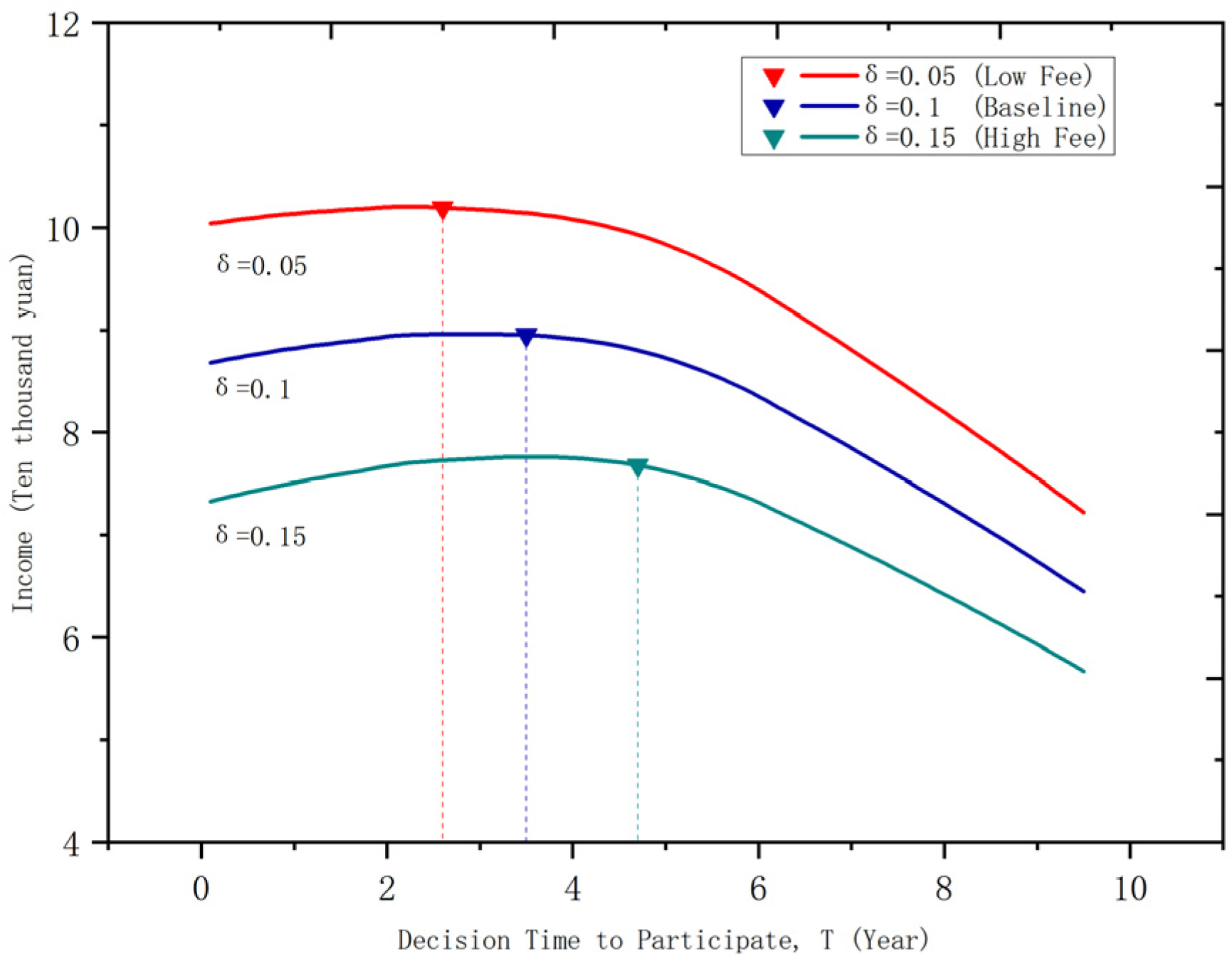
| Platform Fee | 0.10 | 0.05–0.25 | Commercial platforms (e.g., Didi/Uber) charge 20–25%; P2P models aim lower [16,20]. | |
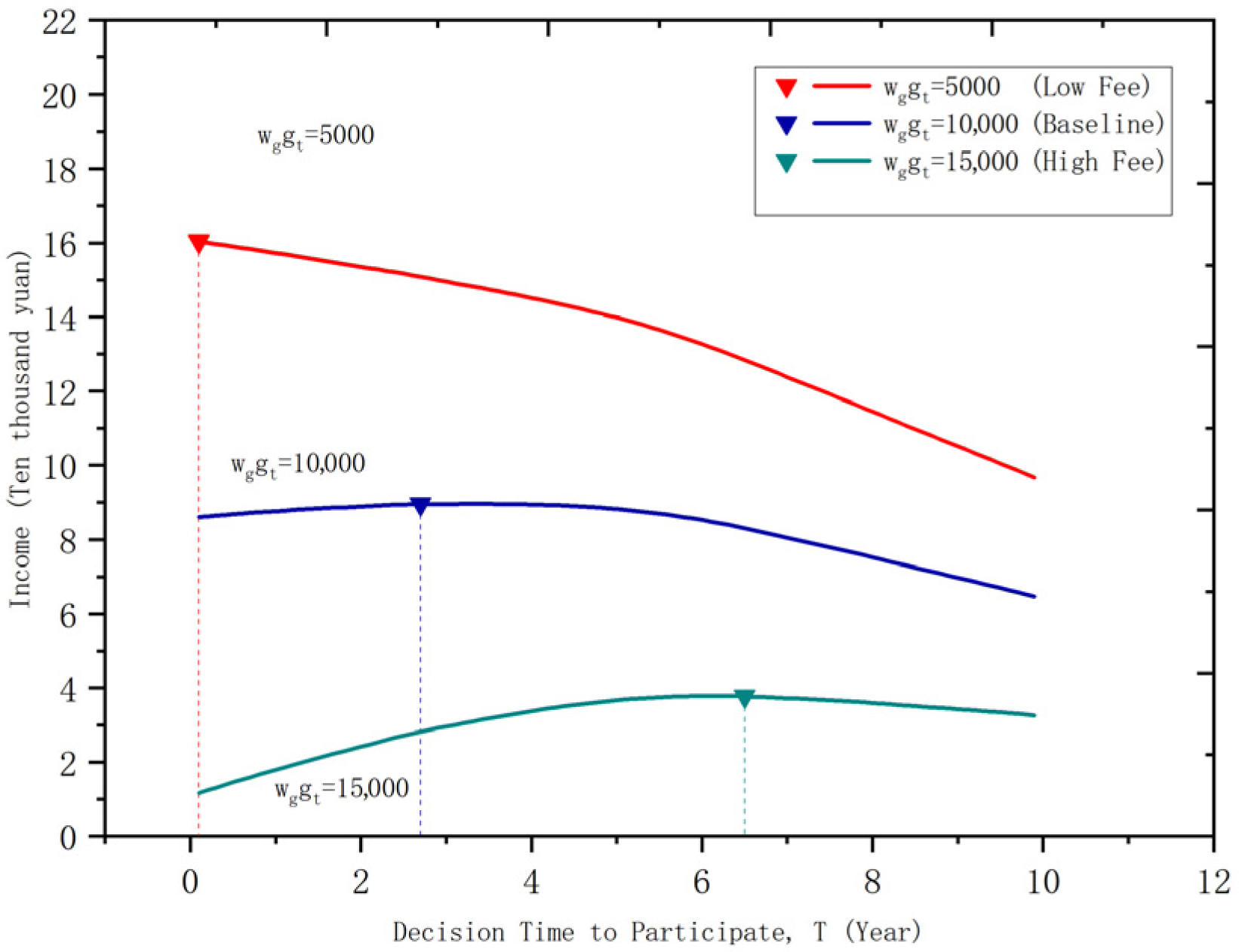
| Internal Friction | 10,000 CNY/year | 1500–15,000 CNY/year | Lower bound: pure physical maintenance. Upper bound: manual labor + privacy costs [30,31,33]. | |
| Price Volatility | 0.30 | 0.16–0.47 | Based on real option volatility surfaces for emerging infrastructure [32,34]. | |
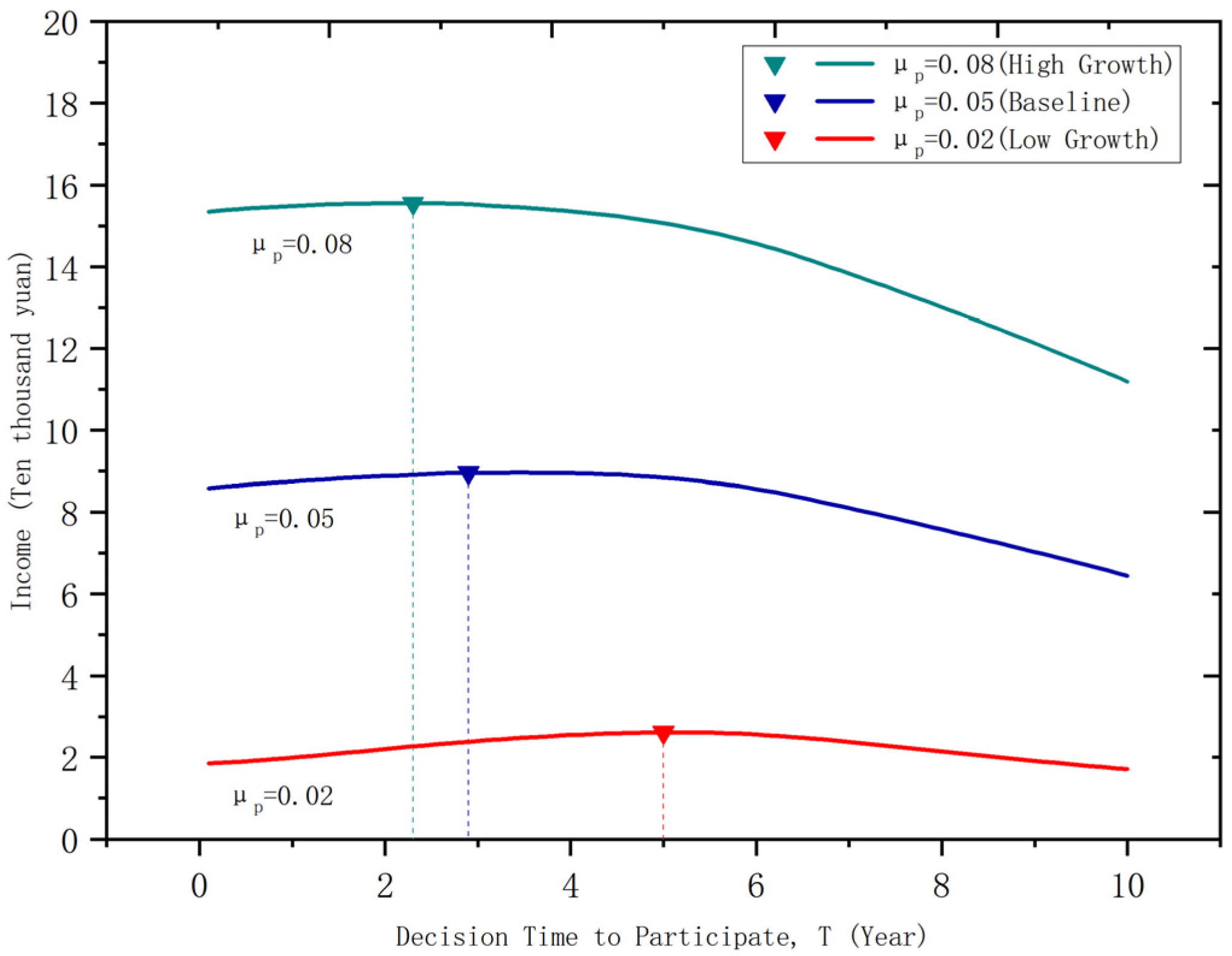
| Drift Rate | 0.05 | 0–0.08 | Tracks urbanization rate and CPI for services in Tier 1 cities [35]. | |
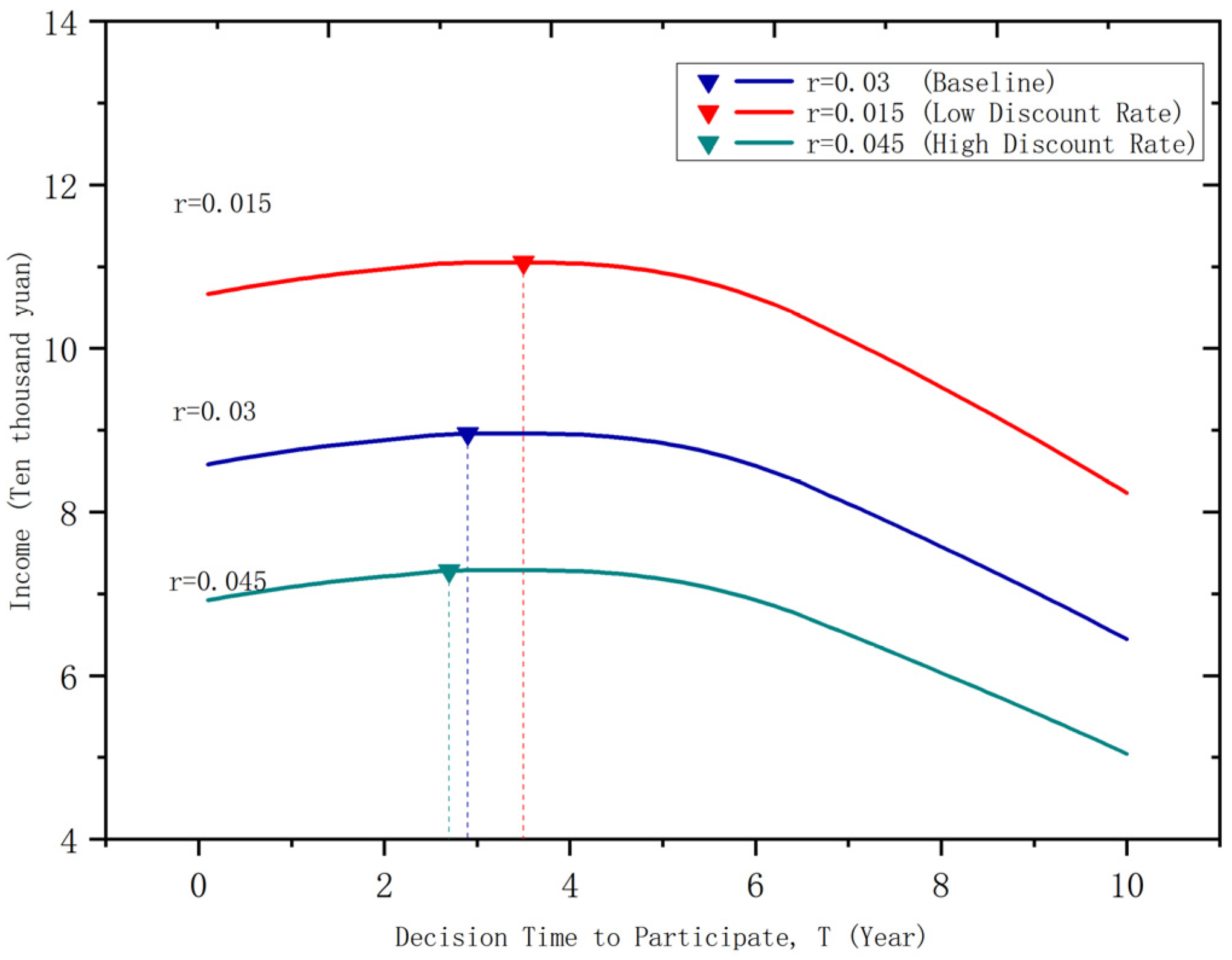
| Discount Rate | r | 0.03 | 0.03–0.12 | Lower bound: Risk-free social rate. Upper bound: Corporate hurdle rate [36]. |
- These are constants in the simulation, despite being functions in Equation (3).
- We set the baseline friction = 10,000 yuan/year to represent a high-friction manual scenario involving human gatekeeping and administration [33]. This accounts for approximately 85% of potential revenue, highlighting the necessity of automation to lower this cost curve.
4.2. Analysis of System Dynamics
4.2.1. System Instability and Participation Decision
4.2.2. Positive Expectation Feedback Loops and Participation Timing
- For Platforms: Actively communicating positive market trends and growth projections (e.g., rising demand, platform expansion plans) can leverage this sensitivity. Highlighting strong signals can be a powerful marketing tool to attract owners and encourage earlier commitments.
- For Regulators: Policymakers play a vital role in fostering positive market expectations. This can be achieved through:
- ▪
- Transparent Market Data: Regularly publishing data on parking demand growth, shared parking adoption rates, and price trends to substantiate positive
- ▪
- Supportive Infrastructure & Regulations: Investing in enabling technologies (e.g., seamless access systems) and establishing clear, supportive legal frameworks for shared parking operations, boosting owner confidence in sustained market growth.
- ▪
- Long-Term Planning Signals: Integrating shared parking into urban transportation master plans signals its permanence and growth potential.
4.2.3. System Thresholds (r) and Participation Timing
- For Platforms: Changes in T* induced by r fluctuations do not substantially alter total owner revenue potential, but they impact when supply comes online. Platforms can employ targeted marketing strategies (e.g., emphasizing immediate income stability, offering sign-up bonuses) to counteract potential waning enthusiasm r falls near the threshold region, maintaining participation momentum.
- For Regulators: The identified discount rate threshold (~0.027) offers a critical lever. When market interest rates drop below this threshold, policymakers should proactively deploy incentive mechanisms (e.g., accelerated depreciation for shared parking infrastructure, temporary tax credits for early participants) to counteract the natural tendency for participation delay revealed by this model. Such timely interventions can help sustain the growth trajectory of urban shared parking systems during low-interest-rate periods.
4.2.4. Internal System Friction () and Systemic Collapse
- Regulators should implement targeted management fee subsidies (e.g., covering 50–70% of baseline costs for early adopters) and standardize community access protocols to reduce coordination burdens.
- Platforms must develop automated management tools (e.g., AI-based reservation systems, conflict resolution modules) to minimize owner operational overhead.
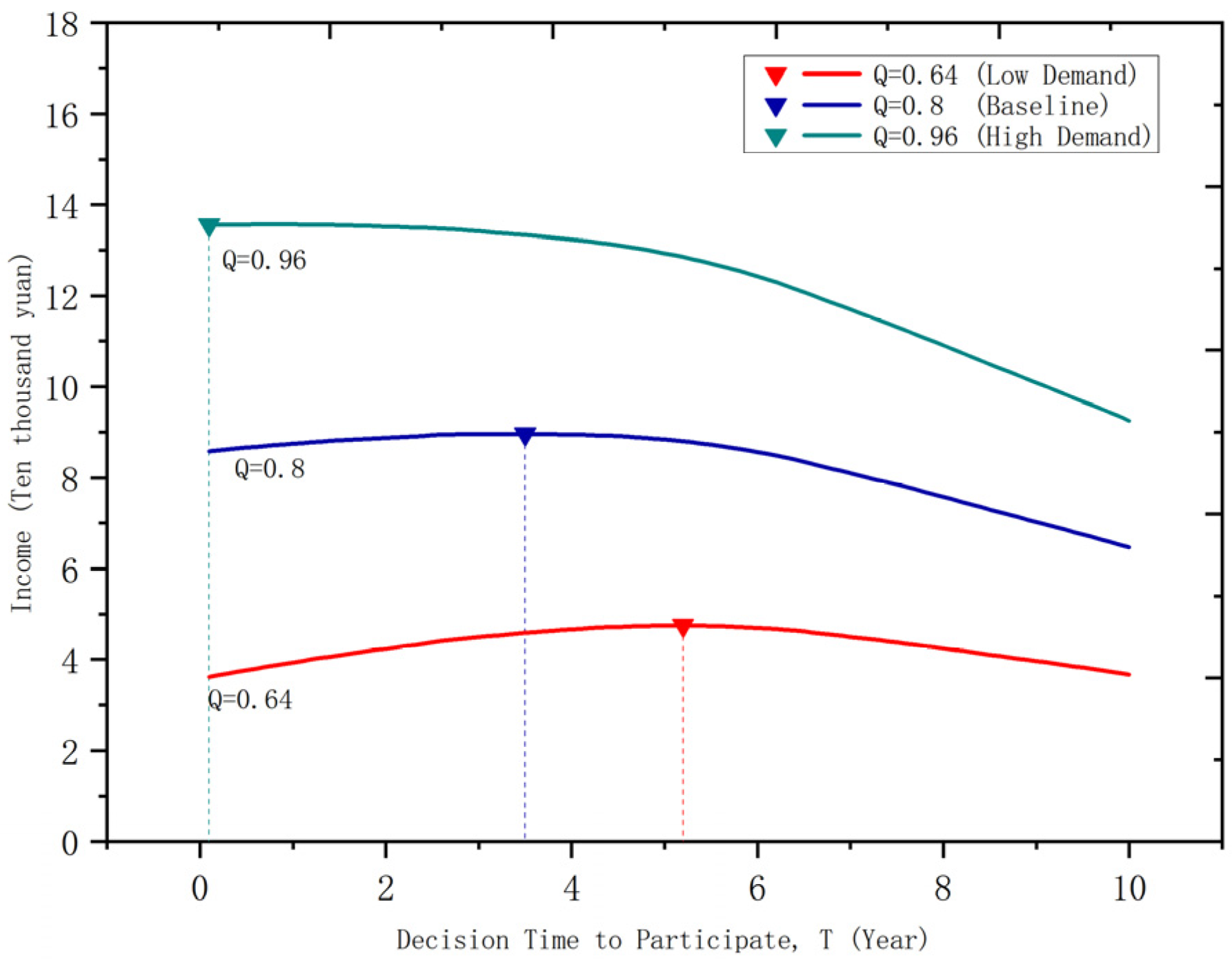
4.2.5. Positive Demand-Side Feedback (Q) and State-Shifts
- Platforms should deploy demand-stimulating incentives (e.g., user coupons, peak-hour pricing discounts) which indirectly accelerate supply-side participation.
- Municipalities must implement demand-shifting policies:
- ▪
- Increase on-street parking fees by 30–50%
- ♦
- Restrict CBD cruising through congestion pricing
- ♦
- These measures redirect demand to shared platforms, elevating transaction ratios.
4.2.6. Transactional Friction () and Asymmetric Response
- Platforms require tiered commission models (e.g., 5–15% scaled by usage volume) to balance profitability with participation incentives.
- Regulators should:
- ▪
- Mandate fee transparency and cap increases beyond 20%
- ▪
- Introduce tax rebates for platforms maintaining fees ≤ 10%
5. Discussion
5.1. Policy Implications: The Dynamic Calibration Protocol
- ▪
- Policy Instrument: We recommend establishing a Minimum Revenue Guarantee (MRG) fund for the first 24 months. By capping the downside risk, the regulator artificially reduces the effective perceived by owners.
- ▪
- Policy Instrument: Municipalities should introduce targeted regulatory waivers for shared parking pilots, skipping redundant administrative approval steps. Subsidies, on the other hand, must focus strictly on removing technological friction, such as funding smart locks that do away with manual checks, instead of covering general operational costs.
- ▪
- Policy Instrument: Implement Dynamic Congestion Pricing and reduce on-street parking supply in pilot zones.
5.2. Policy Coupling and Compensatory Dynamics
5.3. Geographic Heterogeneity and Model Scalability
5.4. Limitations & Future Work
6. Conclusions
6.1. Theoretical Contributions
6.2. Managerial Implications for Platform Operators
Author Contributions
Funding
Data Availability Statement
Acknowledgments
Conflicts of Interest
Abbreviations
| LCC | Life-Cycle Cost |
| HJB | Hamilton-Jacobi-Bellman |
| STS | Socio-Technical System |
| GBM | Geometric Brownian Motion |
| FDM | Finite Difference Method |
| DSS | Decision Support System |
| AD | Autonomous Driving |
| NPV | Net Present Value |
References
- Geroliminis, N. Cruising-for-Parking in Congested Cities with an MFD Representation. Econ. Transp. 2015, 4, 156–165. [Google Scholar] [CrossRef]
- Verma, P.; Perrotti, D.; Schiller, G. Metabolism of Interconnected Cities: A Review of the Literature and Analytical Framework. Resour. Conserv. Recycl. 2025, 217, 108194. [Google Scholar] [CrossRef]
- Zhang, Y. Urban Metabolism: A Review of Research Methodologies. Environ. Pollut. 2013, 178, 463–473. [Google Scholar] [CrossRef] [PubMed]
- Virág, D.; Wiedenhofer, D.; Haas, W.; Haberl, H.; Kalt, G.; Krausmann, F. The Stock-Flow-Service Nexus of Personal Mobility in an Urban Context: Vienna, Austria. Environ. Dev. 2022, 41, 100628. [Google Scholar] [CrossRef]
- Vespignani, A. Modelling Dynamical Processes in Complex Socio-Technical Systems. Nat. Phys. 2012, 8, 32–39. [Google Scholar] [CrossRef]
- Wang, A.; Guan, H.; Qin, Z.; Zhu, J. Study on the Intention of Private Parking Space Owners of Different Levels of Cities to Participate in Shared Parking in China. Discret. Dyn. Nat. Soc. 2021, 2021, 9955686. [Google Scholar] [CrossRef]
- Tscharaktschiew, S.; Reimann, F. The Economics of Speed Choice and Control in the Presence of Driverless Vehicle Cruising and Parking-as-a-Substitute-for-Cruising. Transp. Res. Part B Methodol. 2023, 178, 102834. [Google Scholar] [CrossRef]
- Shafiei, S.; Gu, Z.; Grzybowska, H.; Cai, C. Impact of Self-Parking Autonomous Vehicles on Urban Traffic Congestion. Transportation 2023, 50, 183–203. [Google Scholar] [CrossRef]
- Ardeshiri, A.; Safarighouzhdi, F.; Rashidi, T.H. Measuring Willingness to Pay for Shared Parking. Transp. Res. Part A Policy Pract. 2021, 152, 186–202. [Google Scholar] [CrossRef]
- Thi Kim, O.T.; Dang Tri, N.; Nguyen, V.D.; Tran, N.H.; Hong, C.S. A Shared Parking Model in Vehicular Network Using Fog and Cloud Environment. In Proceedings of the 2015 17th Asia-Pacific Network Operations and Management Symposium (APNOMS), Busan, Republic of Korea, 19–21 August 2015; pp. 321–326. [Google Scholar]
- Shao, C.; Yang, H.; Zhang, Y.; Ke, J. A Simple Reservation and Allocation Model of Shared Parking Lots. Transp. Res. Part C Emerg. Technol. 2016, 71, 303–312. [Google Scholar] [CrossRef]
- Ran, J.; Guo, X.; Tang, L.; Zhang, Y. Bi-Level Model for Shared Parking Decision-Making Based on Parking Lot Assignment Simulation. J. Southeast Univ. (Engl. Ed.) 2011, 27, 322–327. [Google Scholar]
- Li, Q.; Cheng, J.; Chen, L. Research on Shared Parking Allocation Considering the Heterogeneity of Parking Slot Providers’ Temporary Parking Demand. Transp. Lett. 2024, 16, 1305–1317. [Google Scholar] [CrossRef]
- Zhou, X.; Jiang, H.; Bai, M.; Chen, R. Online Pricing for Balancing Parking Demand and Supply in a Shared Parking Case. In Proceedings of the 2025 7th International Conference on Data-driven Optimization of Complex Systems (DOCS), Taiyuan, China, 19 August 2025; pp. 204–209. [Google Scholar]
- Jiang, B.; Fan, Z.-P. Optimal Allocation of Shared Parking Slots Considering Parking Unpunctuality under a Platform-Based Management Approach. Transp. Res. Part E Logist. Transp. Rev. 2020, 142, 102062. [Google Scholar] [CrossRef]
- Liu, Y.; Liu, C.; Luo, X. Spatiotemporal Deep-Learning Networks for Shared-Parking Demand Prediction. J. Transp. Eng. Part A Syst. 2021, 147, 04021026. [Google Scholar] [CrossRef]
- Wang, S.; Li, Z.; Xie, N. A Reservation and Allocation Model for Shared-Parking Addressing the Uncertainty in Drivers’ Arrival/Departure Time. Transp. Res. Part C Emerg. Technol. 2022, 135, 103484. [Google Scholar] [CrossRef]
- Yan, P.; Cai, X.; Ni, D.; Chu, F.; He, H. Two-Stage Matching-and-Scheduling Algorithm for Real-Time Private Parking-Sharing Programs. Comput. Oper. Res. 2021, 125, 105083. [Google Scholar] [CrossRef]
- Jiang, Y.-P.; Shao, X.-R.; Song, X.-C. Matching Model between Private Idle Parking Slots and Demanders for Parking Slot Sharing. J. Transp. Eng. Part A Syst. 2021, 147, 04021028. [Google Scholar] [CrossRef]
- Xiao, H.; Xu, M.; Gao, Z. Shared Parking Problem: A Novel Truthful Double Auction Mechanism Approach. Transp. Res. Part B Methodol. 2018, 109, 40–69. [Google Scholar] [CrossRef]
- Xiao, H.; Xu, M. How to Restrain Participants Opt out in Shared Parking Market? A Fair Recurrent Double Auction Approach. Transp. Res. Part C Emerg. Technol. 2018, 93, 36–61. [Google Scholar] [CrossRef]
- Haken, H. Synergetics. Phys. Bull. 1977, 28, 412. [Google Scholar] [CrossRef]
- Haken, H. An Introduction: Nonequilibrium Phase Transitions and Self-Organization in Physics, Chemistry and Biology. In Synergetics: Introduction and Advanced Topics; Springer: Berlin/Heidelberg, Germany, 2004; pp. 1–387. [Google Scholar]
- Portugali, J.; Haken, H. Synergetic Cities. In Handbook on Cities and Complexity; Edward Elgar Publishing: Cheltenham, UK; Northampton, MA, USA, 2021; pp. 108–135. ISBN 1-78990-012-3. [Google Scholar]
- Asiedu, Y.; Gu, P. Product Life Cycle Cost Analysis: State of the Art Review. Int. J. Prod. Res. 1998, 36, 883–908. [Google Scholar] [CrossRef]
- Farr, J.V. Systems Life Cycle Costing: Economic Analysis, Estimation, and Management; CRC Press: Boca Raton, FL, USA, 2011; ISBN 978-1-4398-2891-5. [Google Scholar]
- Yan, Q.; Feng, T.; Timmermans, H. Private Owners’ Propensity to Engage in Shared Parking Schemes under Uncertainty: Comparison of Alternate Hybrid Expected Utility-Regret-Rejoice Choice Models. Transp. Lett. 2023, 15, 754–764. [Google Scholar] [CrossRef]
- Weston, J.; Tolić, D.; Palunko, I. Application of Hamilton–Jacobi–Bellman Equation/Pontryagin’s Principle for Constrained Optimal Control. J. Optim. Theory Appl. 2024, 200, 437–462. [Google Scholar] [CrossRef]
- Dolgov, S.; Kalise, D.; Saluzzi, L. Data-Driven Tensor Train Gradient Cross Approximation for Hamilton–Jacobi–Bellman Equations. SIAM J. Sci. Comput. 2023, 45, A2153–A2184. [Google Scholar] [CrossRef]
- Litman, T. Parking Management Best Practices; Routledge: New York, NY, USA, 2020; ISBN 1-351-17954-3. [Google Scholar]
- Tyndall & Associates. Landscape B03: Coordinated Parking—Operational Cost Analysis. In Landscape Master Plan B.Framework; U.S. Air Force: Washington, DC, USA, 2019. [Google Scholar]
- González-Muñoz, R.-I.; Molina-Muñoz, J.; Mora-Valencia, A.; Perote, J. Real Options Volatility Surface for Valuing Renewable Energy Projects. Energies 2024, 17, 1225. [Google Scholar] [CrossRef]
- Litman, T. Autonomous Vehicle Implementation Predictions; VTPI: Victoria, BC, Canada, 2023. [Google Scholar]
- Martínez-Ceseña, E.A.; Mutale, J. Application of an Advanced Real Options Approach for Renewable Energy Generation Projects Planning. Renew. Sustain. Energy Rev. 2011, 15, 2087–2094. [Google Scholar] [CrossRef]
- Gao, G.L.; Wang, K. Operational situation and outlook of China’s urban economy (2023–2024). Bull. Chin. Acad. Sci. 2024, 39, 105–111. [Google Scholar]
- Gormsen, N.J.; Huber, K. Corporate Discount Rates. Am. Econ. Rev. 2025, 115, 2001–2049. [Google Scholar] [CrossRef]
- McDonald, R.; Siegel, D. The Value of Waiting to Invest. Q. J. Econ. 1986, 101, 707–727. [Google Scholar] [CrossRef]
- Wang, H.; Li, R.; Wang, X.; Shang, P. Effect of On-Street Parking Pricing Policies on Parking Characteristics: A Case Study of Nanning. Transp. Res. Part A Policy Pract. 2020, 137, 65–78. [Google Scholar] [CrossRef]
- Mo, B.; Kong, H.; Wang, H.; Wang, X.C.; Li, R. Impact of Pricing Policy Change on On-Street Parking Demand and User Satisfaction: A Case Study in Nanning, China. Transp. Res. Part A Policy Pract. 2021, 148, 445–469. [Google Scholar] [CrossRef]



| Evolution Stage | Focus | Limitation |
|---|---|---|
| Static Matching | Matching algorithms [10,11,12,13,14], Demand Forecasting [15,16] | Static assumption; ignores agent behavior. |
| Market Mechanisms | Revenue models [15,17,18], Static pricing [19,20], Dynamic matching-pricing [21] | Assumes immediate entry; ignores Institutional Entropy (volatility). |
| Parameter | Illustrate | Parameter | Illustrate |
|---|---|---|---|
| Full life cycle cost of parking space | Net present value of operation and maintenance costs before and after participating in parking space sharing | ||
| The decision-making moment for owners to share parking spaces | Expenditure function for owners to participate in shared parking spaces | ||
| The total operation and maintenance cost of holding and using the parking space before time T | discount rate | ||
| Indicates the total operation and maintenance cost caused by using the parking space and sharing the parking space after sharing the parking space. | the maintenance and security costs per unit time after participating in the shared parking space | ||
| Indicates T the price of the shared parking space franchise fee based on time | The maintenance cost of the parking space at time t | ||
| Represents the amount of government subsidy to owners (set to 0 if none) | Maintenance fees for parking spaces after participating in shared parking spaces | ||
| Indicates the benefits brought by parking space sharing | The cost of participating in sharing | ||
| Prices for using shared parking spaces | The labor price used to pay for the management of shared parking spaces, Internal Friction (Coasean transaction costs) | ||
| Price Volatility, Standard deviation of price returns in GBM, Institutional Entropy (System stability proxy) | Indicates the platform service fee for shared parking spaces | ||
| Drift rate using shared parking space prices | Indicates the sales volume of shared parking spaces per unit time, Social Proof (Positive feedback signal) | ||
| Standard Brownian motion process | T* | Optimal stopping time solution, Option Value of Waiting (Inertia threshold) |
| Rate of Change of Parameter () | Rate of Change at Decision Time *) | Total Revenue Change Rate |
|---|---|---|
| −100% | −100.00% | −15.00% |
| −50% | −65.70% | −8.20% |
| −25% | −38.20% | −4.50% |
| −10% | −15.50% | −1.80% |
| 0% | 0.00% | 0.00% |
| +10% | +30.10% | +2.10% |
| +25% | +85.40% | +5.50% |
| +50% | +180.20% | +10.80% |
| +100% | +325.50% | +20.50% |
| Rate of Change of Parameter () | Rate of Change at Decision Time (T*) | Total Revenue Change Rate |
|---|---|---|
| −100% | 546.15% | −109.02% |
| −50% | 88.46% | −58.73% |
| −25% | 76.92% | −29.62% |
| −10% | 53.85% | −11.96% |
| 0 | 0.00% | 0.00% |
| 10% | 0.12% | 12.27% |
| 25% | −3.85% | 30.68% |
| 50% | −7.69% | 61.43% |
| 100% | −30.77% | 123.34% |
| Rate of Change of Parameter () | Rate of Change at Decision Time (T*) | Total Revenue Change Rate |
|---|---|---|
| −100% | 30.77% | 52.62% |
| −50% | 30.77% | 23.33% |
| −25% | 30.77% | 11.01% |
| −10% | 0.00% | 4.25% |
| 0 | 0.00% | 0.00% |
| 10% | 0.00% | −4.07% |
| 25% | 0.00% | −9.84% |
| 50% | 0.00% | −18.64% |
| 100% | 0.00% | −33.59% |
| Rate of Change of Parameter () | Rate of Change at Decision Time (T*) | Total Revenue Change Rate |
|---|---|---|
| −100% | minimum value | 163.43% |
| −50% | minimum value | 79.94% |
| −25% | minimum value | 38.20% |
| −10% | −7.69% | 13.88% |
| 0 | 0.00% | 0.00% |
| 10% | 76.92% | −12.28% |
| 25% | 92.31% | −29.86% |
| 50% | 146.15% | −57.82% |
| 100% | 492.31% | −95.48% |
| Rate of Change of Parameter Q | Rate of Change at Decision Time T* | Total Revenue Change Rate |
|---|---|---|
| −20% | 92.31% | −46.59% |
| −15% | 88.46% | −35.15% |
| −10% | 80.77% | −23.60% |
| −5% | 57.69% | −1.95% |
| 0 | 0.00% | 0.00% |
| 5% | 0.00% | 12.61% |
| 10% | −7.69% | 25.29% |
| 15% | −23.08% | 38.09% |
| 20% | −100.00% | 51.93% |
| Rate of Change of Parameter | Rate of Change at Decision Time T* | Total Revenue Change Rate |
|---|---|---|
| −100% | −7.69% | 28.12% |
| −50% | −3.85% | 14.01% |
| −25% | 0.00% | 7.01% |
| −10% | 0.00% | 2.80% |
| 0 | 0.00% | 0.00% |
| 10% | 30.77% | 2.71% |
| 25% | 53.85% | 6.68% |
| 50% | 61.54% | 13.26% |
| 100% | 80.77% | 26.17% |
Disclaimer/Publisher’s Note: The statements, opinions and data contained in all publications are solely those of the individual author(s) and contributor(s) and not of MDPI and/or the editor(s). MDPI and/or the editor(s) disclaim responsibility for any injury to people or property resulting from any ideas, methods, instructions or products referred to in the content. |
© 2026 by the authors. Licensee MDPI, Basel, Switzerland. This article is an open access article distributed under the terms and conditions of the Creative Commons Attribution (CC BY) license.
Share and Cite
Li, J.; Xiang, J.; Chen, F.; Zeng, L.; Wang, H.; Li, Y.; Zhai, Z. Repairing the Urban Metabolism: A Dynamic Life-Cycle and HJB Optimization Model for Resolving Spatio-Temporal Conflicts in Shared Parking Systems. Systems 2026, 14, 91. https://doi.org/10.3390/systems14010091
Li J, Xiang J, Chen F, Zeng L, Wang H, Li Y, Zhai Z. Repairing the Urban Metabolism: A Dynamic Life-Cycle and HJB Optimization Model for Resolving Spatio-Temporal Conflicts in Shared Parking Systems. Systems. 2026; 14(1):91. https://doi.org/10.3390/systems14010091
Chicago/Turabian StyleLi, Jiangfeng, Jianlong Xiang, Fujian Chen, Longxin Zeng, Haiquan Wang, Yujie Li, and Zhongyi Zhai. 2026. "Repairing the Urban Metabolism: A Dynamic Life-Cycle and HJB Optimization Model for Resolving Spatio-Temporal Conflicts in Shared Parking Systems" Systems 14, no. 1: 91. https://doi.org/10.3390/systems14010091
APA StyleLi, J., Xiang, J., Chen, F., Zeng, L., Wang, H., Li, Y., & Zhai, Z. (2026). Repairing the Urban Metabolism: A Dynamic Life-Cycle and HJB Optimization Model for Resolving Spatio-Temporal Conflicts in Shared Parking Systems. Systems, 14(1), 91. https://doi.org/10.3390/systems14010091