
Integrating Complexity and Risk Analysis for Selection of Management Approaches in Complex Projects: Application to UN Peacekeeping Missions



Abstract
1. Introduction
2. Materials and Methods
3. Results
3.1. Foundations of Complexity Measurement in Projects
3.2. Proposed Methodology
3.2.1. Structure and Foundations of the Model
3.2.2. Calculation of the Parameters
3.2.3. Analytical Framework and Application
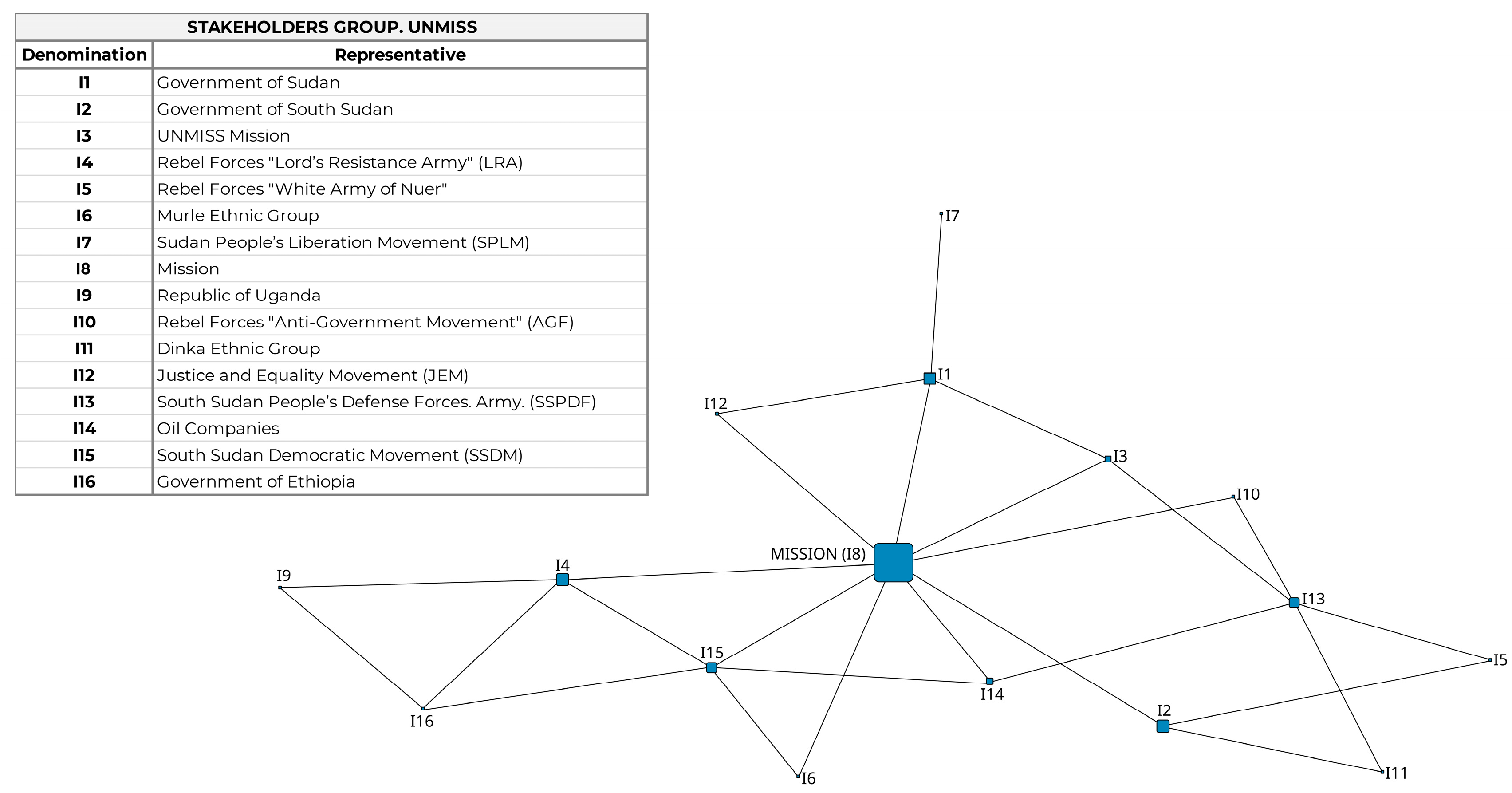
- Stakeholder network. Mapping stakeholders and their interactions makes it possible to calculate extended cyclomatic complexity and key parameters such as centrality and strongly connected components (SCC), thus offering an in-depth view of project structure.
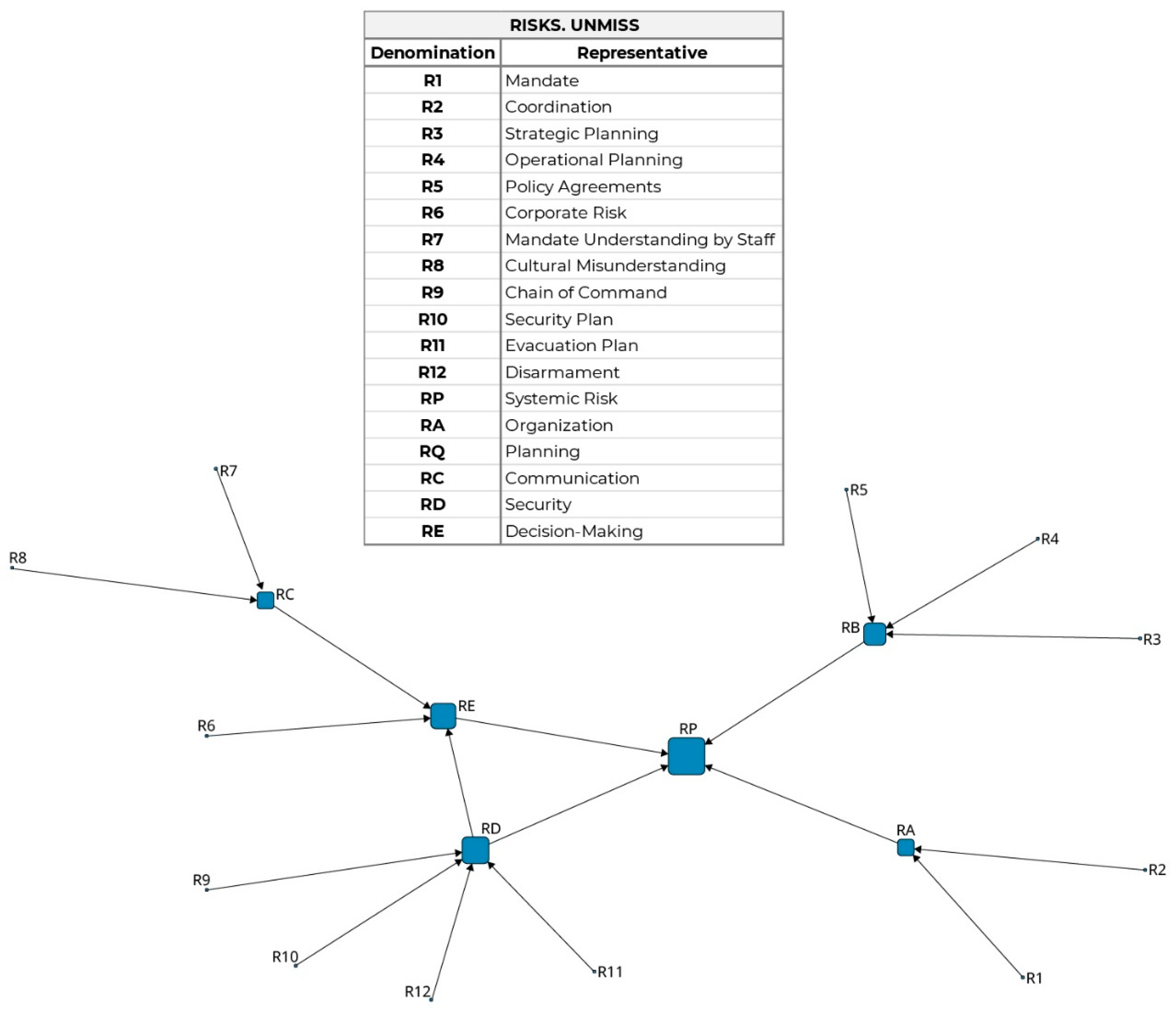
- Risk network. Risks are organized into a network structure, similar to a fault tree, in which each risk is connected according to its causality and influence. Analysis of this network helps to understand how risks interact and propagate.
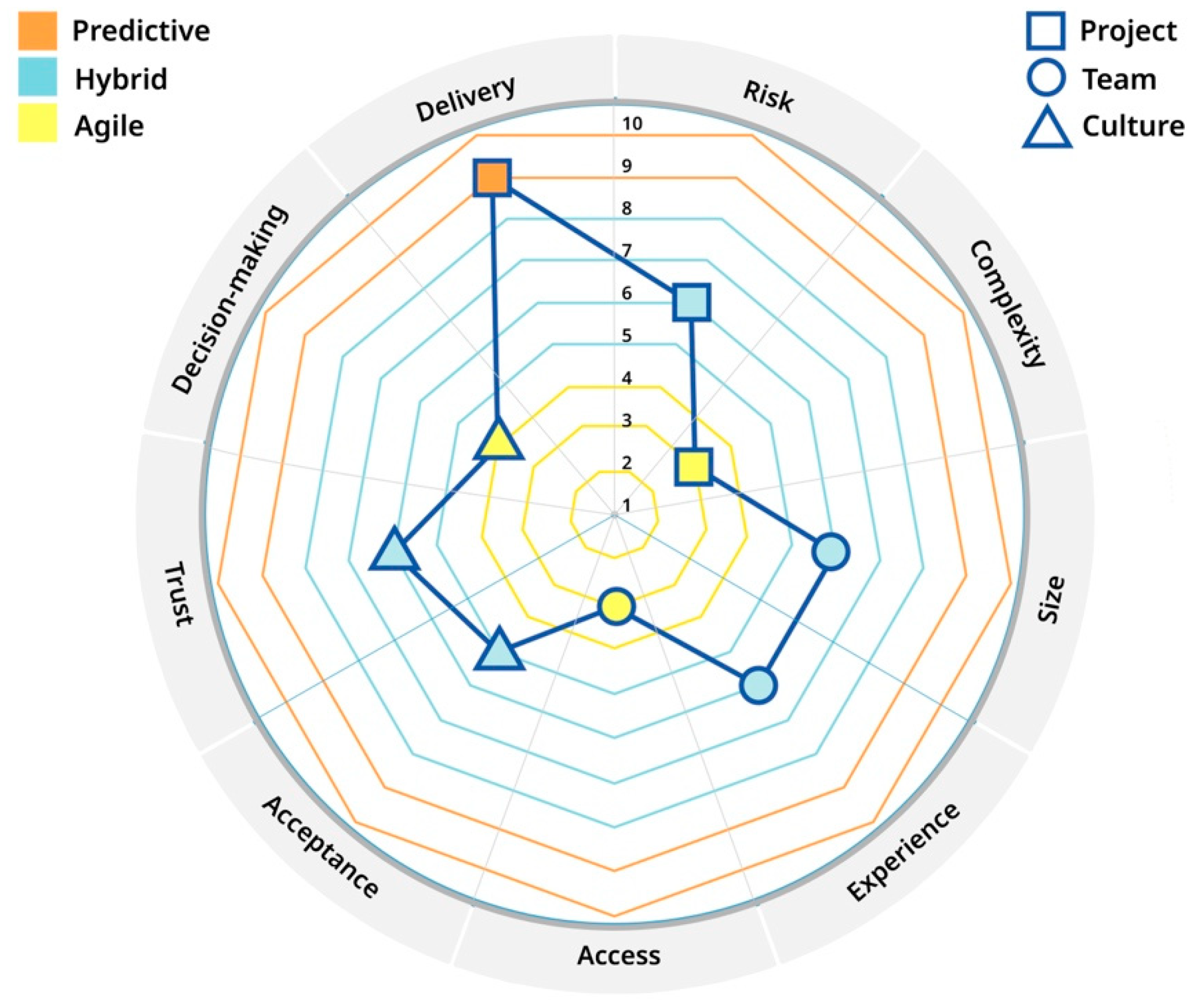
3.2.4. Integration of the Parameters into the PMI Tool
4. Validation
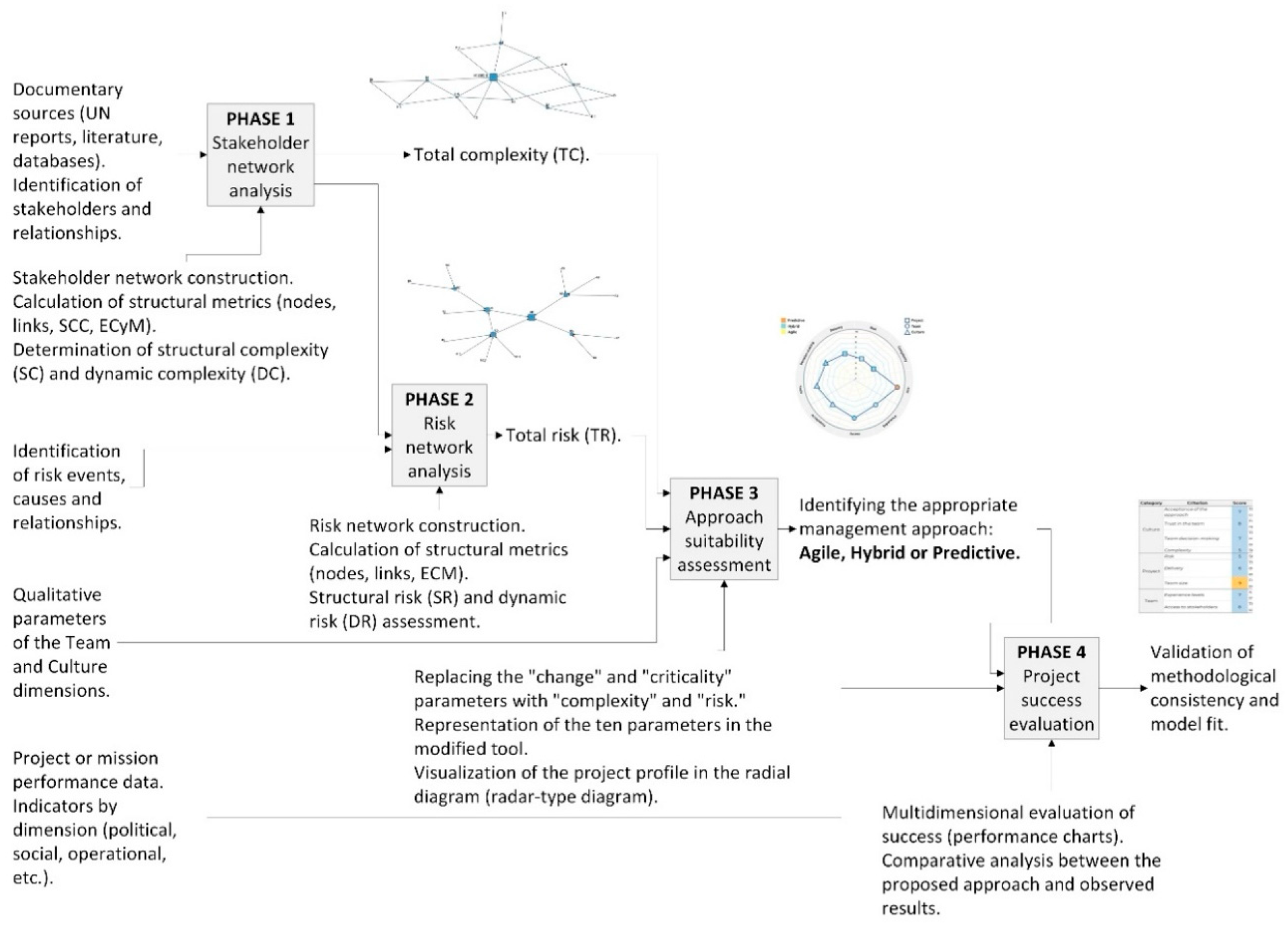
- Build the stakeholder and risk networks associated with each mission. This involves analyzing the management approach, identifying and mapping conflict stakeholders from the sources consulted in each case study, constructing the network of relationships among actors, and calculating betweenness centrality using UCINET software to determine structural complexity. The same procedure is then applied to the risk network to obtain structural and dynamic risk metrics.
- Calculate the total complexity (TC) and total risk (TR) parameters.
- Determine the most suitable management approach (predictive, agile, or hybrid).
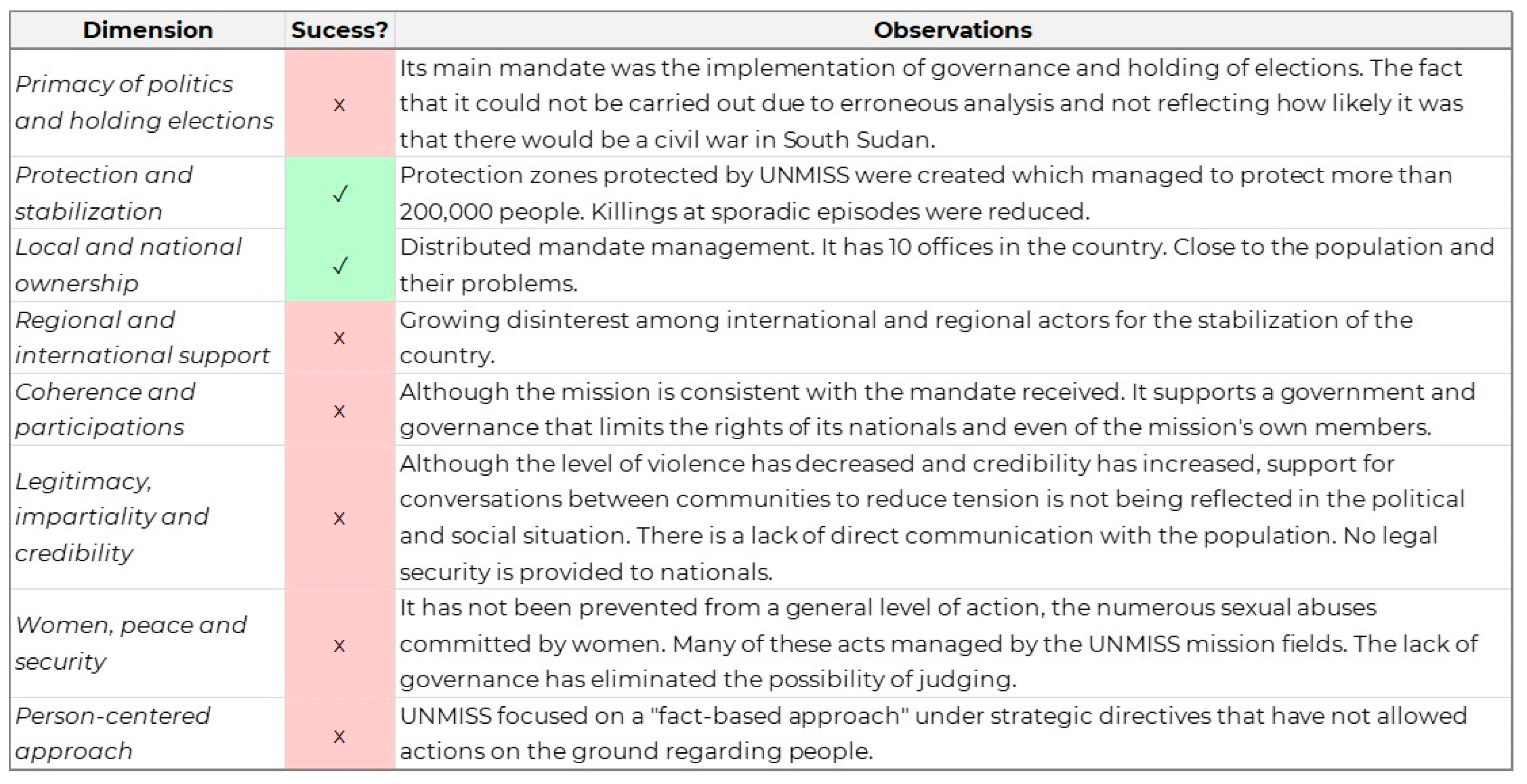
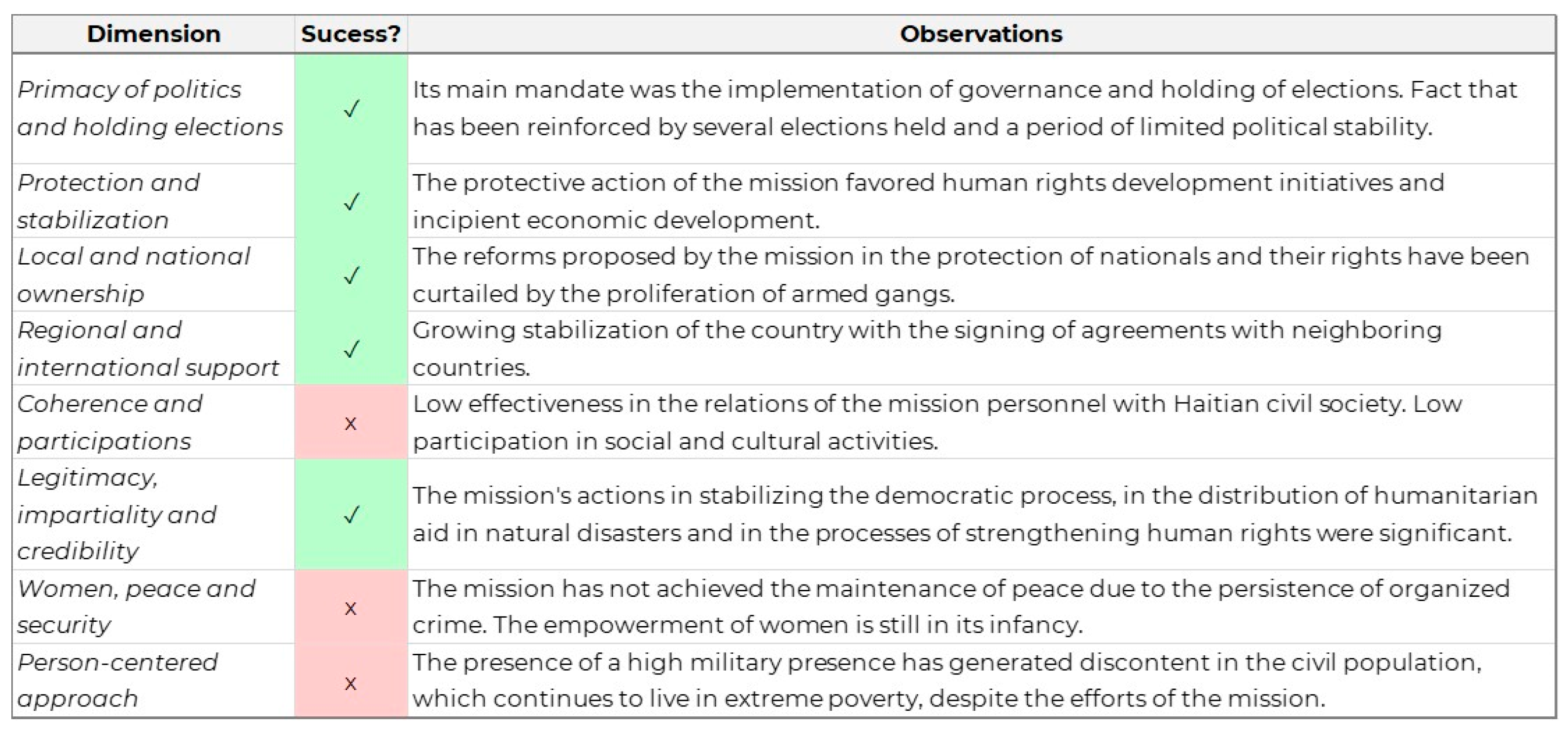
- Analyze mission success by assessing the performance of each peace operation according to eight dimensions derived from United Nations and NUPI studies [66,67,68,69]: political primacy and electoral organization, security and transition, national and international ownership, regional and international support, coherence and commitment, legitimacy and impartiality, women and children, and a people-centered approach.
- Compare the identified management approach with the mission’s actual performance, evaluated along those eight dimensions.
4.1. Contextualization of the Case Studies
- Political primacy and electoral organization: Establishing stable political structures and peaceful electoral processes.
- Security and transition: Protection of civilians and stabilization during crises.
- National and international ownership: Ensuring that the mission is perceived as belonging to the local population.
- Regional and international support: Backing from neighboring countries and international organizations.
- Coherence and commitment: A clear mandate and active societal participation.
- Legitimacy, impartiality, and credibility: The mission must be legitimate, impartial, and credible to all parties.
- Women and children: Protection and empowerment of the most vulnerable groups.
- People-centered approach: Prioritizing individual well-being and security.
4.2. Case Study 1: UNMISS, South Sudan
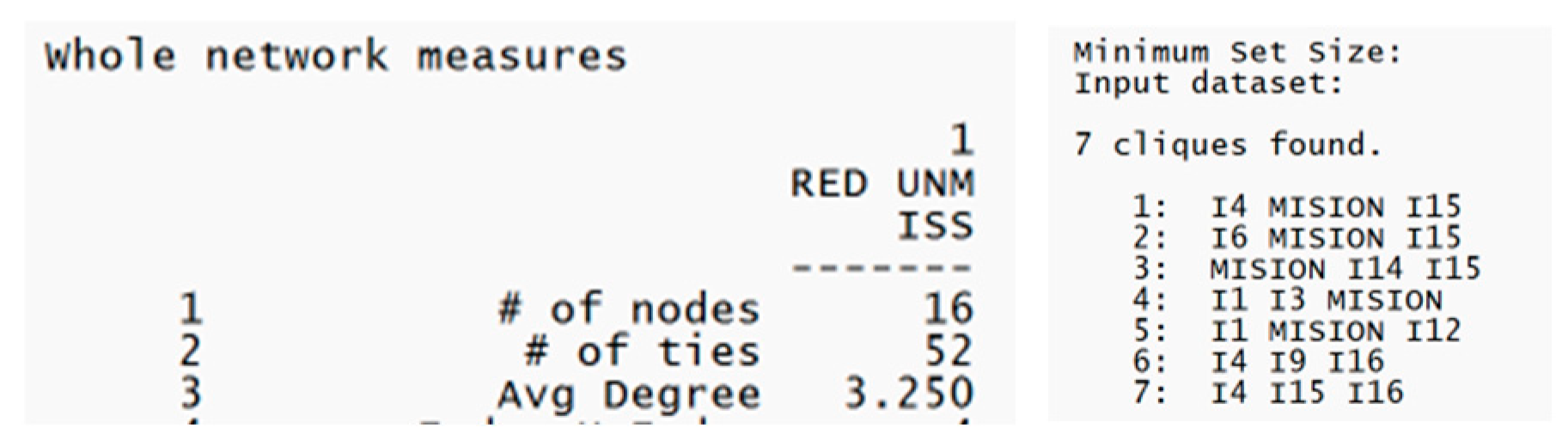
4.2.1. Phase 1: Stakeholder Network Analysis
4.2.2. Phase 2: Risk Network Analysis
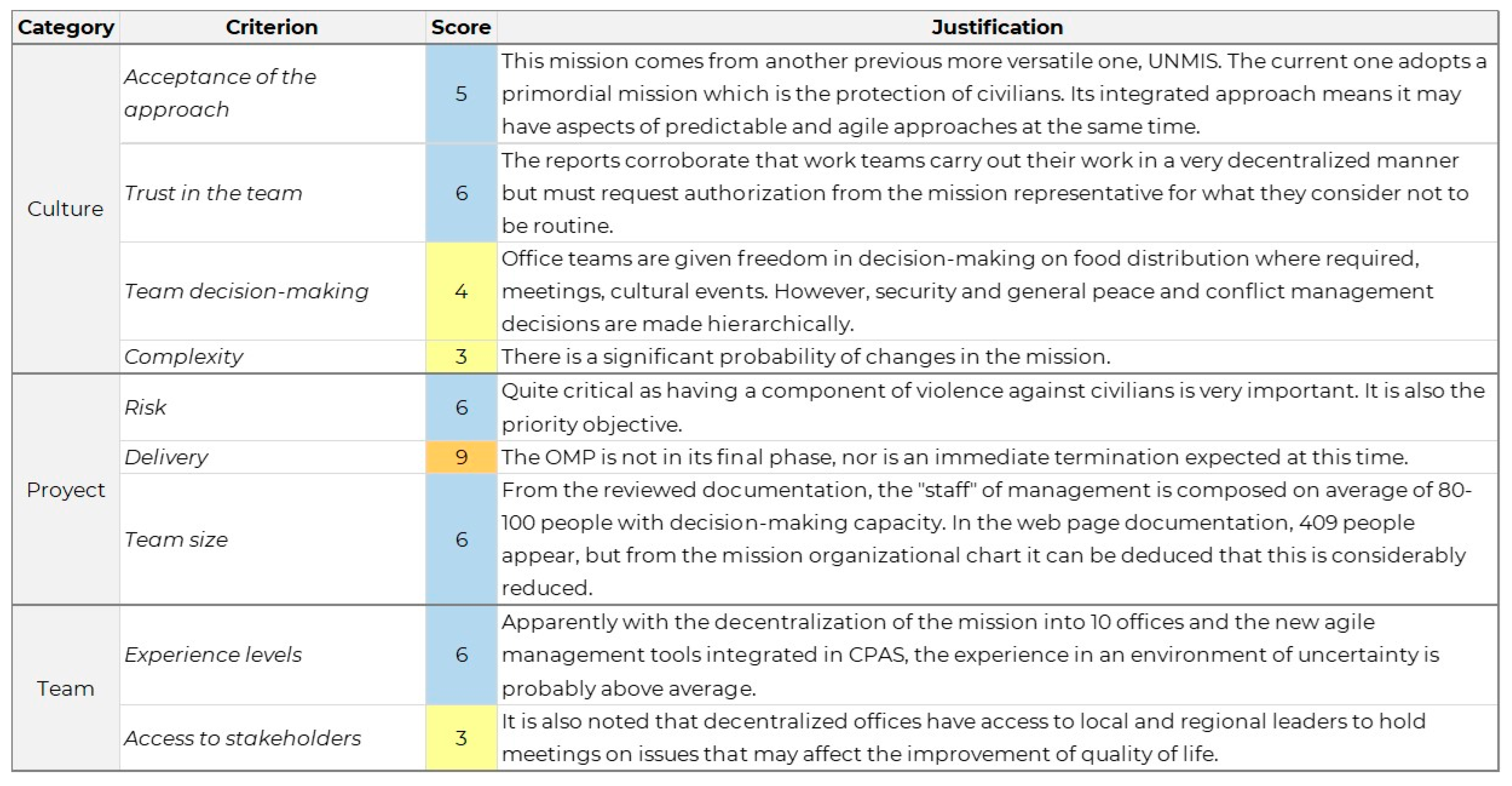
4.2.3. Phase 3: Evaluation of the Project Approach
4.2.4. Phase 4: Mission Success Analysis
4.3. Case Study 2: MONUSCO, Democratic Republic of the Congo
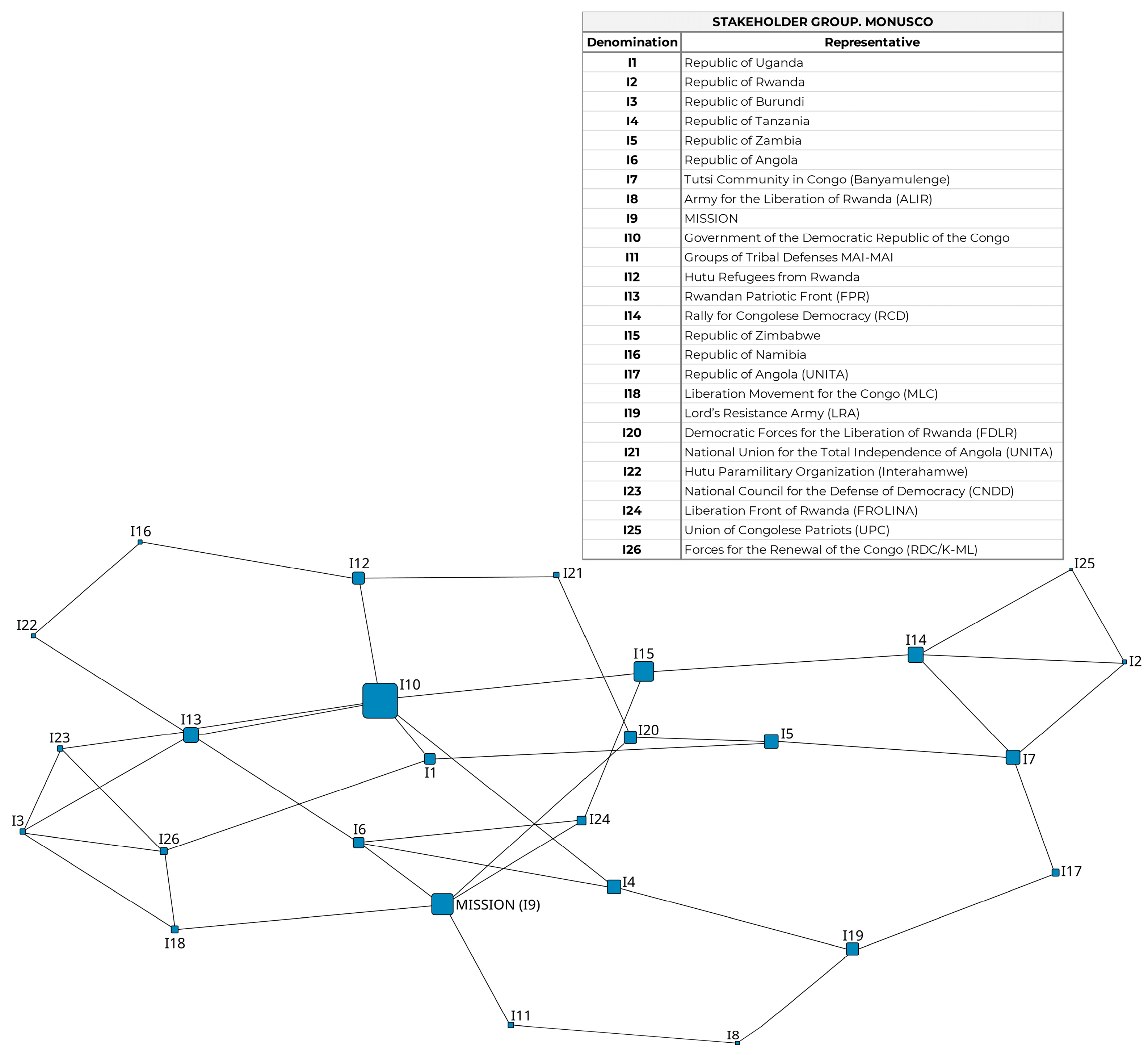
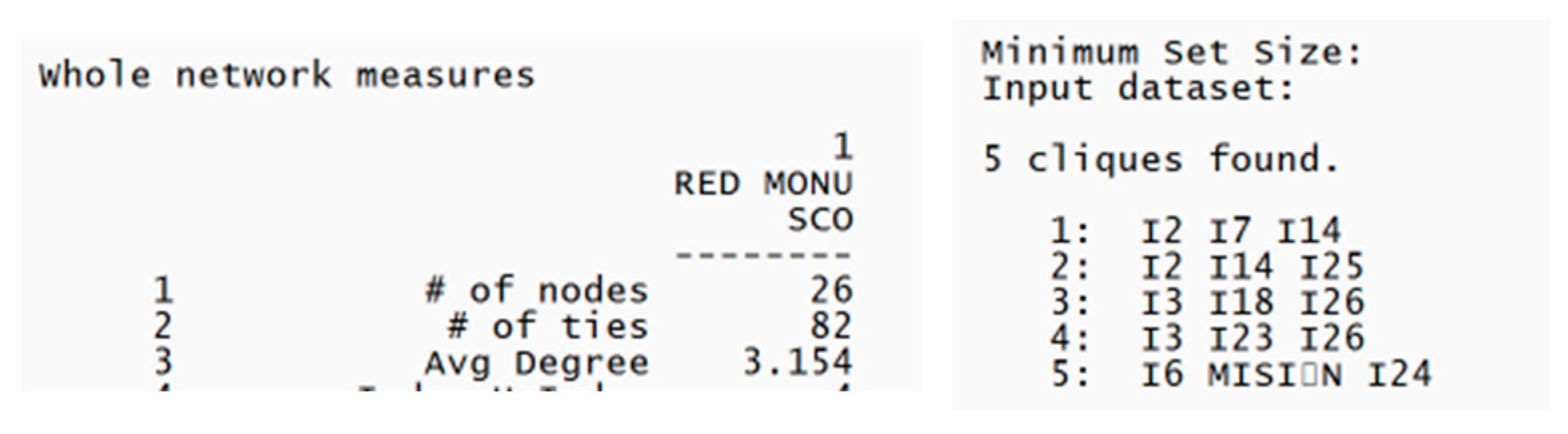
4.3.1. Phase 1: Stakeholder Network Analysis
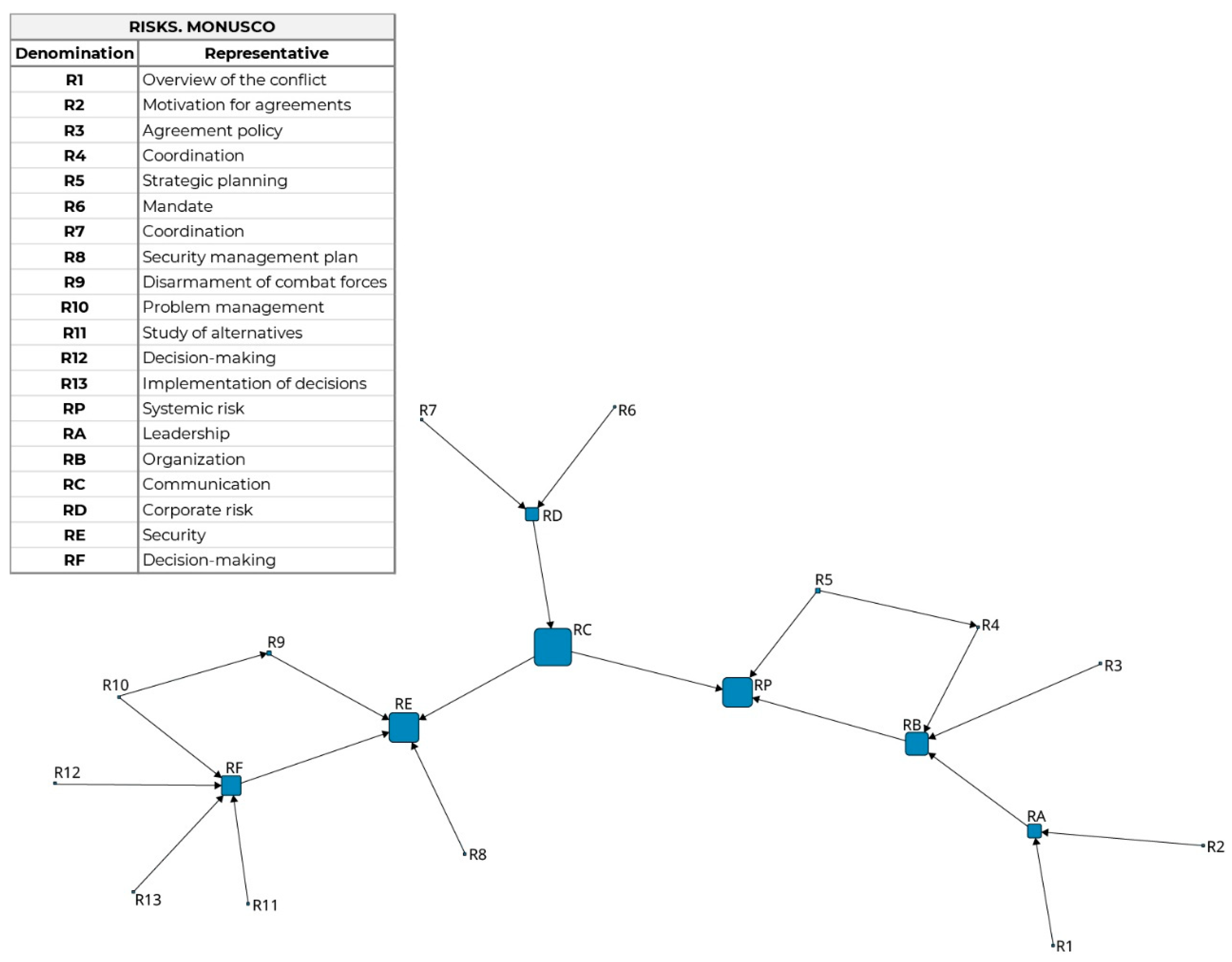
4.3.2. Phase 2: Risk Network Analysis
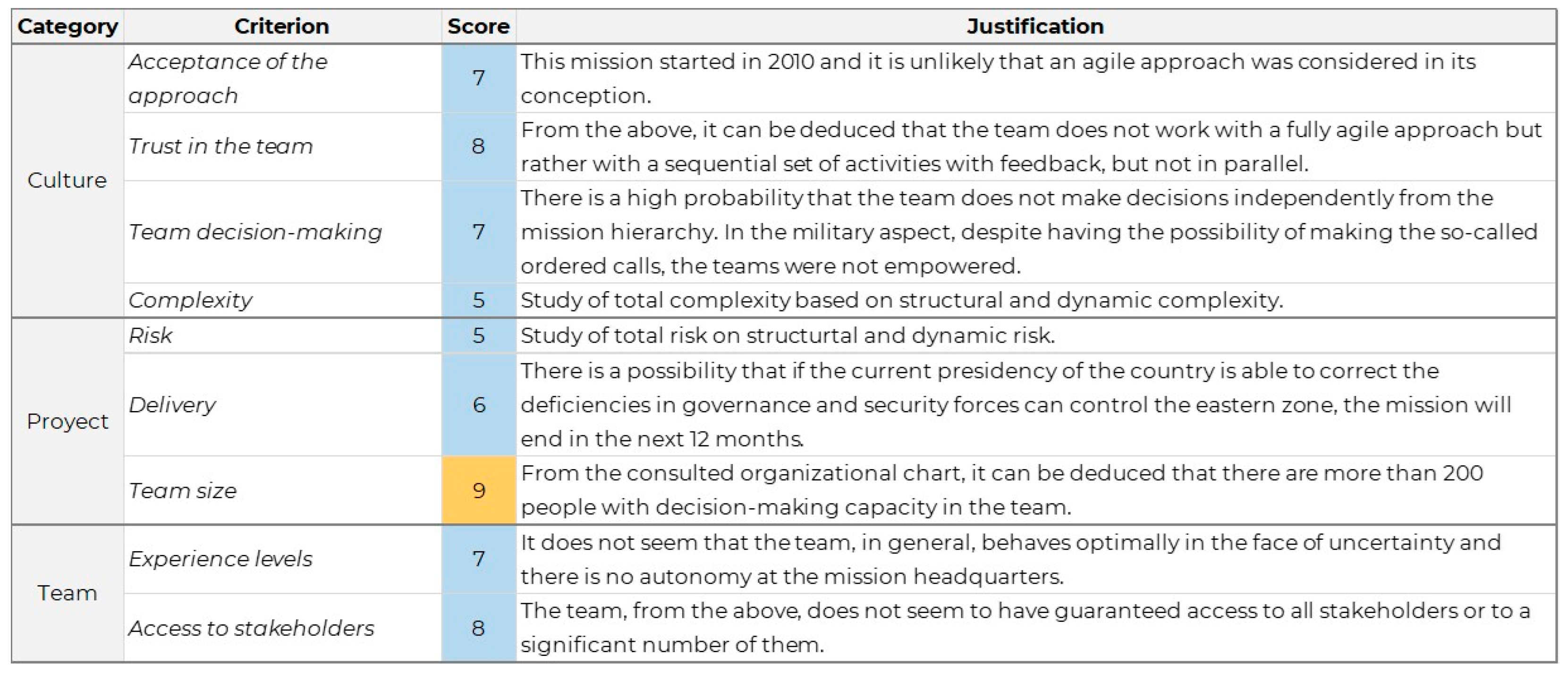
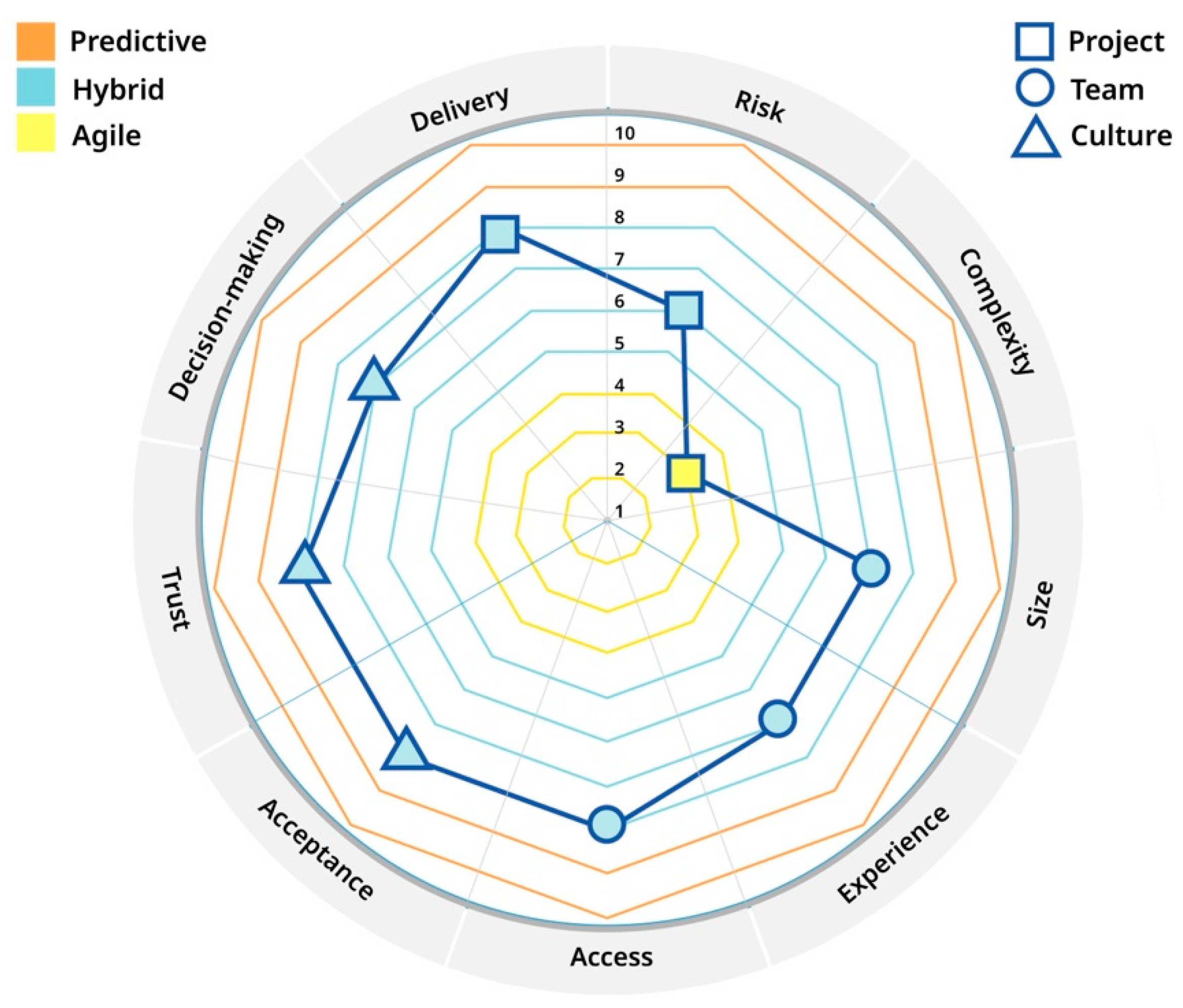
4.3.3. Phase 3: Evaluation of the Project Approach
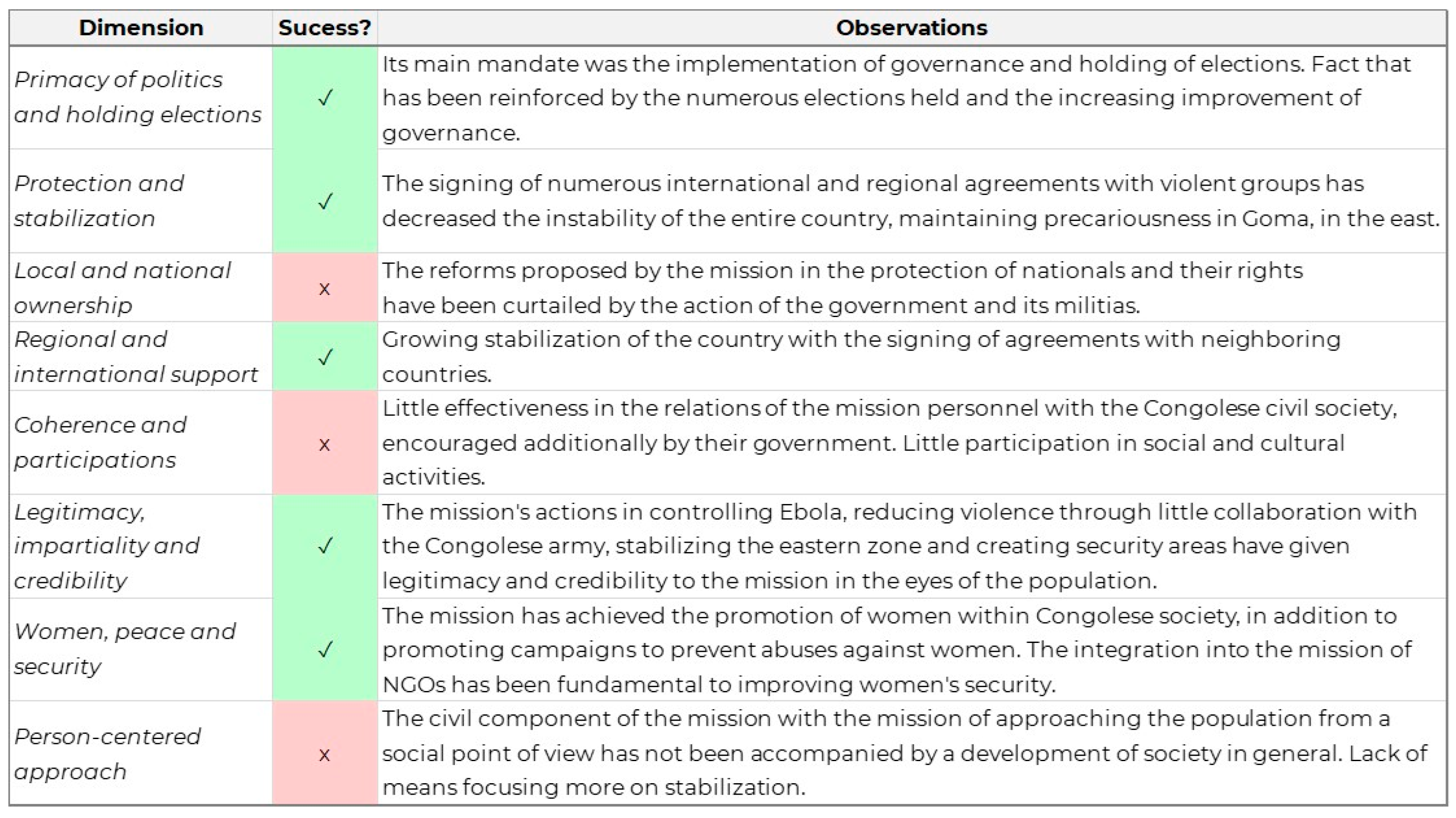
4.3.4. Phase 4: Mission Success Analysis
4.4. Case Study 3: MINUSTAH, Haiti
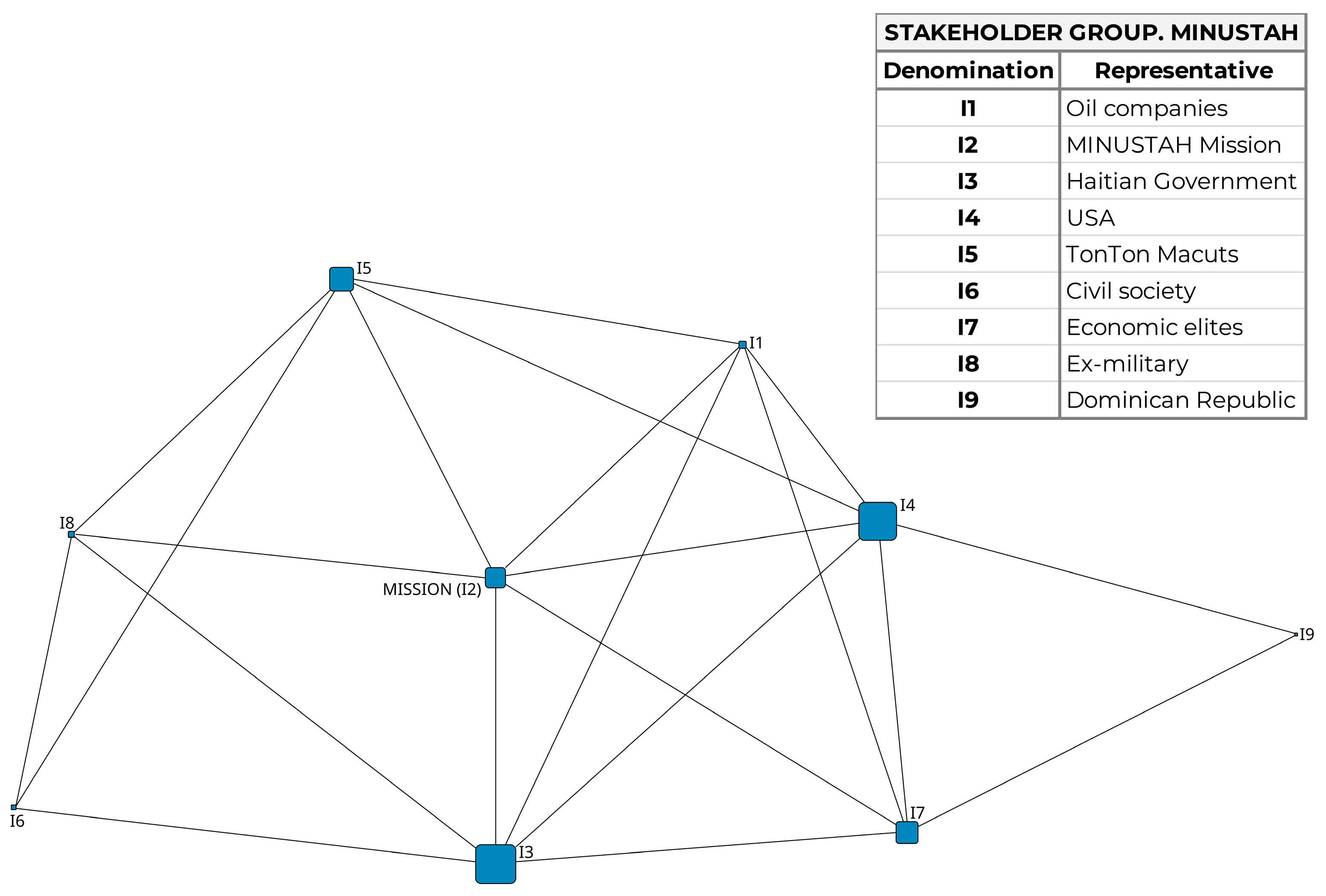
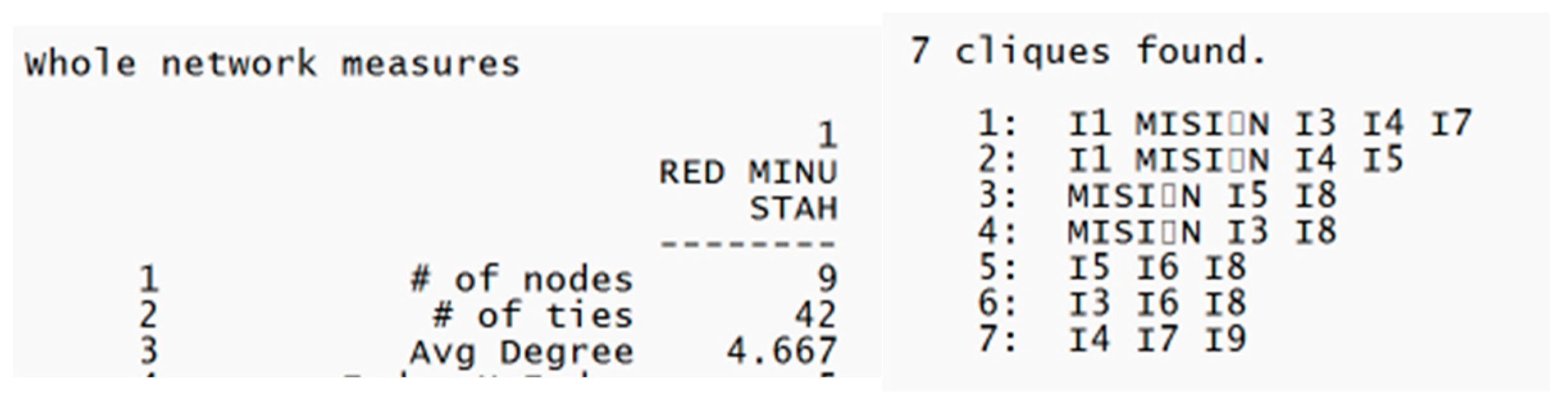
4.4.1. Phase 1: Stakeholder Network Analysis
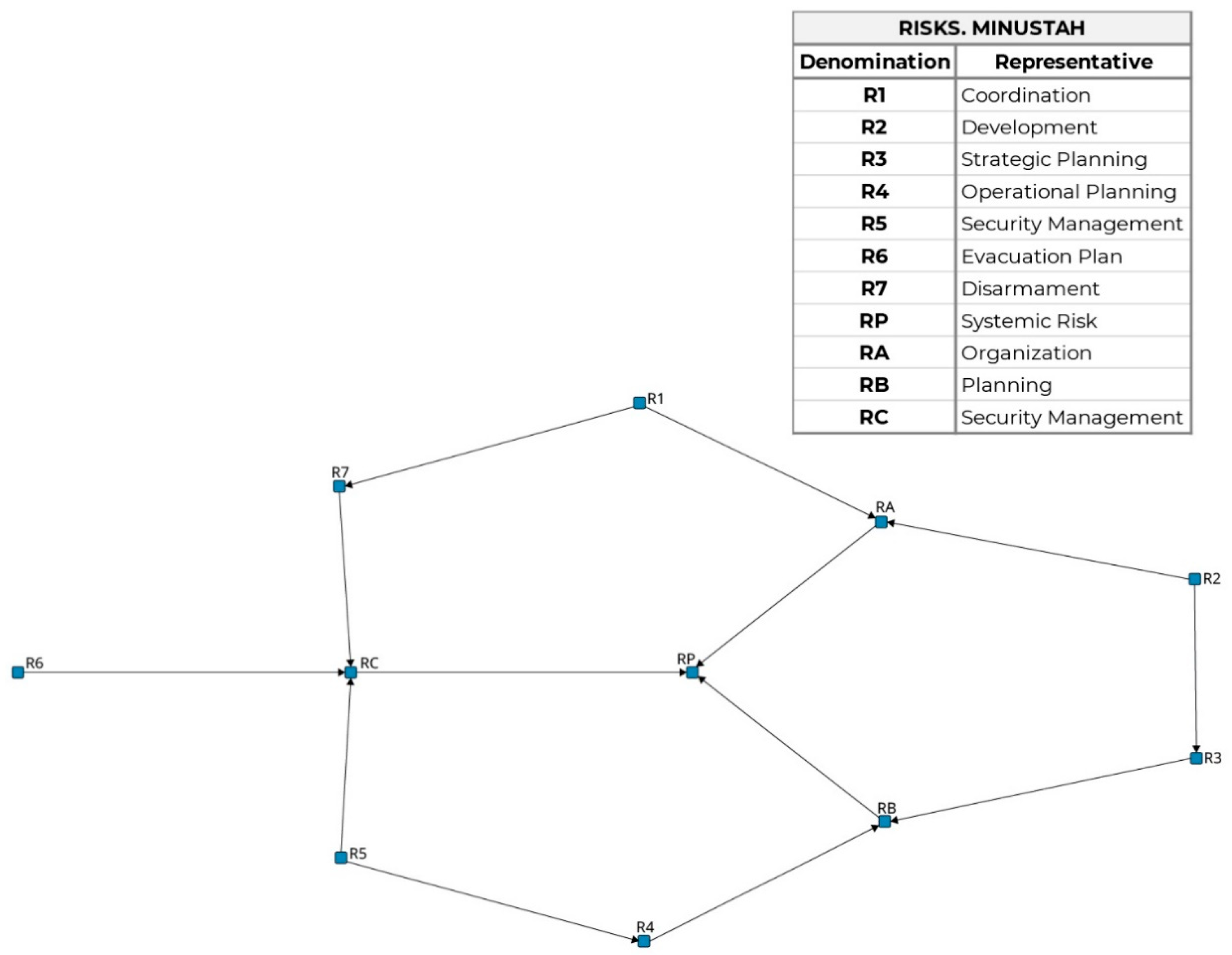
4.4.2. Phase 2: Risk Network Analysis
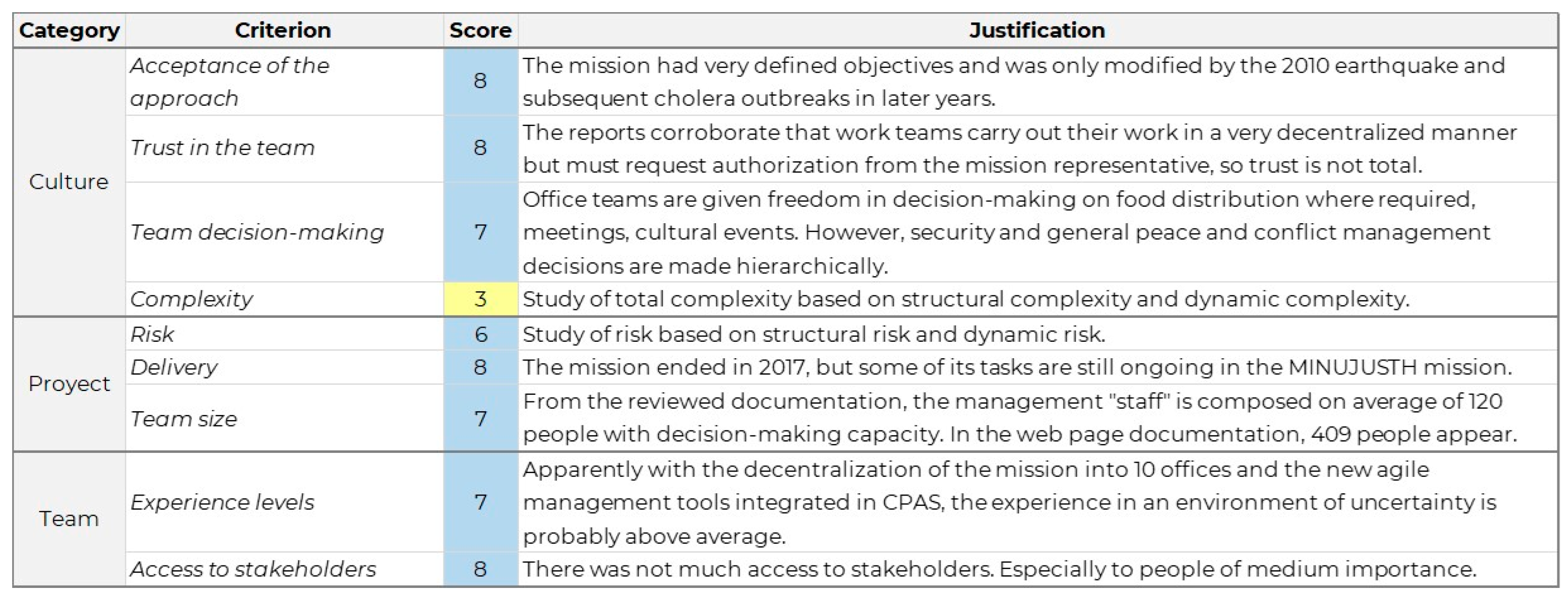
4.4.3. Phase 3: Evaluation of the Project Approach
4.4.4. Phase 4: Mission Success Analysis
5. Discussion
6. Conclusions
Author Contributions
Funding
Data Availability Statement
Conflicts of Interest
References
- San Cristóbal, J.R.; Carral, L.; Diaz, E.; Fraguela, J.A.; Iglesias, G. Complexity and project management: A general overview. Complexity 2018, 2018, 4891286. [Google Scholar] [CrossRef]
- Hopkin, P. Fundamentals of Risk Management: Understanding, Evaluating and Implementing Effective Risk Management; Kogan Page Publishers: London, UK, 2018. [Google Scholar]
- Gumz, J. Risk on Complex Projects; Project Management Institute: Newtown Square, PA, USA, 2012. Available online: https://www.pmi.org/learning/library/risk-complex-projects-case-study-6308 (accessed on 30 September 2025).
- Qazi, A.; Quigley, J.; Dickson, A. Supply Chain Risk Management: Systematic literature review and a conceptual framework for capturing interdependencies between risks. In Proceedings of the 2015 International Conference on Industrial Engineering and Operations Management (IEOM), Dubai, United Arab Emirates, 3–5 March 2015; IEEE: Piscataway, NJ, USA, 2015; pp. 1–13. [Google Scholar][Green Version]
- Pescaroli, G.; Alexander, D. Understanding compound, interconnected, interacting, and cascading risks: A holistic framework. Risk Anal. 2018, 38, 2245–2257. [Google Scholar] [CrossRef] [PubMed]
- Royce, W.W. Managing the development of large software systems. In Proceedings of the IEEE WESCON (Western Electronic Show and Convention), Los Angeles, CA, USA, 25–28 August 1970; pp. 328–388. [Google Scholar]
- Kelley, J.E., Jr.; Walker, M.R. Critical-path planning and scheduling. In Proceedings of the Eastern Joint IRE-AIEE-ACM Computer Conference, Philadelphia, PA, USA, 1–3 December 1959; pp. 160–173. [Google Scholar]
- Malcolm, D.G.; Roseboom, J.H.; Clark, C.E.; Fazar, W. Application of a technique for research and development program evaluation. Oper. Res. 1959, 7, 646–669. [Google Scholar] [CrossRef]
- Kerzner, H.; Belack, C. Managing Complex Projects; John Wiley & Sons: Hoboken, NJ, USA, 2010. [Google Scholar] [CrossRef]
- Hass, K. Managing Complex Projects, 1st ed.; Management Concepts: Vienna, VA, USA, 2009. [Google Scholar]
- Xia, B.; Chan, A.P.C. Measuring complexity for building projects: A Delphi study. Eng. Constr. Archit. Manag. 2012, 19, 7–27. [Google Scholar] [CrossRef]
- Frigo, M.L.; Anderson, R.J. Strategic risk management: A foundation for improving enterprise risk management and governance. J. Corp. Account. Financ. 2011, 22, 81–88. [Google Scholar]
- Highsmith, J. Adaptive Software Development: A Collaborative Approach to Managing Complex Systems; Addison-Wesley: Boston, MA, USA, 2013. [Google Scholar]
- Larman, C.; Basili, V.R. Iterative and incremental developments. A brief history. Computer 2003, 36, 47–56. [Google Scholar] [CrossRef]
- Gemino, A.; Reich, B.H.; Serrador, P.M. Agile, Traditional, and Hybrid Approaches to Project Success: Is Hybrid a Poor Second Choice? Proj. Manag. J. 2021, 52, 161–175. [Google Scholar] [CrossRef]
- Varajão, J.; Fernandes, G.; Amaral, A.; Gonçalves, A.M. Team resilience model: An empirical examination of information systems projects. Reliab. Eng. Syst. Saf. 2021, 206, 107303. [Google Scholar] [CrossRef]
- Atkinson, R.; Crawford, L.; Ward, S. Fundamental uncertainties in projects and the scope of project management. Int. J. Proj. Manag. 2006, 24, 687–698. [Google Scholar] [CrossRef]
- Sanchez, O.P.; Terlizzi, M.A. Cost and time project management success factors for information systems development projects. Int. J. Proj. Manag. 2017, 35, 1608–1626. [Google Scholar] [CrossRef]
- Hartman, F.; Ashrafi, R. Development of the SMARTTM Project Planning framework. Int. J. Proj. Manag. 2004, 22, 499–510. [Google Scholar] [CrossRef]
- Pellerin, R.; Perrier, N. A review of methods, techniques and tools for project planning and control. Int. J. Prod. Res. 2019, 57, 2160–2178. [Google Scholar]
- Sayed, A.H. Adaptive networks. Proc. IEEE 2014, 102, 460–497. [Google Scholar] [CrossRef]
- Bond-Barnard, T.J.; Fletcher, L.; Steyn, H. Linking trust and collaboration in project teams to project management success. Int. J. Manag. Proj. Bus. 2018, 11, 432–457. [Google Scholar] [CrossRef]
- Morton, L.W.; Eigenbrode, S.D.; Martin, T.A. Architectures of adaptive integration in large collaborative projects. Ecol. Soc. 2015, 20, 5. [Google Scholar] [CrossRef]
- Snowden, D. Liberating knowledge. In Liberating Knowledge CBI Business Guide; Caspian Publishing: London, UK, 1999; pp. 9–19. [Google Scholar]
- Stacey, R.D. Complexity and Creativity in Organizations; Berrett-Koehler Publishers: San Francisco, CA, USA, 1996. [Google Scholar]
- Boehm, B.; Turner, R.N. Balancing Agility and Discipline: A Guide for the Perplexed; Addison-Wesley Professional: Boston, MA, USA, 2003. [Google Scholar]
- Project Management Institute; Agile Alliance. Guía Práctica de Ágil; Project Management Institute, Inc.: Newtown Square, PA, USA, 2017.
- Poveda-Bautista, R.; Diego-Mas, J.-A.; Leon-Medina, D. Measuring the project management complexity: The case of information technology projects. Complexity 2018, 2018, 6058480. [Google Scholar] [CrossRef]
- Brady, T.; Davies, A. Managing structural and dynamic complexity: A tale of two projects. Proj. Manag. J. 2014, 45, 21–38. [Google Scholar] [CrossRef]
- Dao, B.; Kermanshachi, S.; Shane, J.; Anderson, S.; Hare, E. Exploring and assessing project complexity. J. Constr. Eng. Manag. 2017, 143, 04016126. [Google Scholar] [CrossRef]
- Boonstra, A.; Reezigt, C. A Complexity Framework for Project Management Strategies. Proj. Manag. J. 2023, 54, 253–267. [Google Scholar] [CrossRef]
- Thomé, A.M.T.; Scavarda, L.F.; Scavarda, A.; de Souza Thomé, F.E.S. Similarities and contrasts of complexity, uncertainty, risks, and resilience in supply chains and temporary multi-organization projects. Int. J. Proj. Manag. 2016, 34, 1328–1346. [Google Scholar] [CrossRef]
- Mazri, C. (Re) defining emerging risks. Risk Anal. 2017, 37, 2053–2065. [Google Scholar] [CrossRef]
- Thamhain, H.J. Managing Risks in Complex Projects. Proj. Manag. J. 2013, 44, 20–35. Available online: https://www.pmi.org/learning/library/managing-risks-complex-projects-5946 (accessed on 26 April 2020). [CrossRef]
- Hillson, D. Managing Risk in Projects; Routledge: Oxfordshire, UK, 2017. [Google Scholar]
- Diehl, P.F.; Druckman, D. Multiple Peacekeeping Missions: Analysing Interdependence. Int. Peacekeeping 2018, 25, 28–51. [Google Scholar] [CrossRef]
- Bañuls, V.A.; López, C.; Turoff, M.; Tejedor, F. Predicting the Impact of Multiple Risks on Project Performance. Proj. Manag. J. 2017, 48, 95–114. Available online: https://www.pmi.org/learning/library/predicting-multiple-risks-impact-on-project-performance-10923 (accessed on 3 January 2023). [CrossRef]
- Paltrinieri, N.; Wardman, M. Hazard Identification Review and Assessment of Unknown Risks; European Commission: Brussels, Belgium, 2010; pp. 213342–213345. [Google Scholar]
- Williams, T. The Nature of Risk in Complex Projects. Proj. Manag. J. 2017, 48, 55–66. [Google Scholar] [CrossRef]
- Christensen, K.; Moloney, N.R. Complexity and Criticality; World Scientific Publishing Company: Singapore, 2005; Volume 1. [Google Scholar]
- Watts, D.J.; Strogatz, S.H. Collective dynamics of ‘small-world’ networks. Nature 1998, 393, 440–442. [Google Scholar] [CrossRef] [PubMed]
- Borgatti, S.P.; Everett, M.G.; Johnson, J.C. Analyzing Social Networks; Sage Publications: Thousand Oaks, CA, USA, 2018. [Google Scholar]
- Lassen, K.B.; van der Aalst, W.M.P. Complexity metrics for Workflow nets. Inf. Softw. Technol. 2009, 51, 610–626. [Google Scholar] [CrossRef]
- McCabe, T.J. A complexity measure. IEEE Trans. Softw. Eng. 1976, SE-2, 308–320. [Google Scholar] [CrossRef]
- Iñiguez, G.; Barrio, R.A. Coevolución en redes sociales. Educ. Química 2009, 20, 272–279. [Google Scholar]
- Shenhar, A.J.; Dvir, D.; Levy, O.; Maltz, A.C. Project success: A multidimensional strategic concept. Long Range Plann. 2001, 34, 699–725. [Google Scholar] [CrossRef]
- Cobb, C.G. The Project Manager’s Guide to Mastering Agile: Principles and Practices for an Adaptive Approach; John Wiley & Sons: Hoboken, NJ, USA, 2023. [Google Scholar]
- Conforto, E.C.; Salum, F.; Amaral, D.C.; Da Silva, S.L.; De Almeida, L.F.M. Can agile project management be adopted by industries other than software development? Proj. Manag. J. 2014, 45, 21–34. [Google Scholar] [CrossRef]
- Pellegrinelli, S.; Partington, D.; Hemingway, C.; Mohdzain, Z.; Shah, M. The importance of context in programme management: An empirical review of programme practices. Int. J. Proj. Manag. 2007, 25, 41–55. [Google Scholar] [CrossRef]
- Mkoba, E.; Marnewick, C. Conceptual framework for auditing agile projects. IEEE Access 2020, 8, 126460–126476. [Google Scholar] [CrossRef]
- Fellman, P.V.; Bar-Yam, Y.; Minai, A.A. Conflict and Complexity: Countering Terrorism, Insurgency, Ethnic and Regional Violence; Springer: Berlin/Heidelberg, Germany, 2014. [Google Scholar]
- Snowden, D.J.; Boone, M.E. A leader’s framework for decision making. Harv. Bus. Rev. 2007, 85, 68. [Google Scholar] [PubMed]
- Aven, T. The concept of antifragility and its implications for the practice of risk analysis. Risk Anal. 2015, 35, 476–483. [Google Scholar] [CrossRef]
- Hillson, D. Managing Overall Project Risk; Project Management Institute, Inc.: Dubai, United Arab Emirates, 2014. [Google Scholar]
- Cardoso, J. Process control-flow complexity metric: An empirical validation. In Proceedings of the 2006 IEEE International Conference on Services Computing (SCC’06), Chicago, IL, USA, 18–22 September 2006; IEEE: Los Alamitos, CA, USA, 2006; pp. 167–173. [Google Scholar]
- Kauffman, S.A. The origins of order: Self-organization and selection in evolution. In Spin Glasses and Biology; World Scientific: Singapore, 1992; pp. 61–100. [Google Scholar] [CrossRef]
- Prigogine, I. El Fin de las Certidumbres; Andrés Bello: Santiago de Chile, Chile, 1996. [Google Scholar]
- Mitchell, M.; Newman, M. Complex systems theory and evolution. In Encyclopedia of Evolution; Oxford University Press: Oxford, UK, 2002; Volume 1, pp. 1–5. [Google Scholar]
- Pastor-Satorras, R.; Vespignani, A. Epidemic spreading in scale-free networks. Phys. Rev. Lett. 2001, 86, 3200. [Google Scholar] [CrossRef] [PubMed]
- Dunbar, R.I.M.; Shultz, S. Evolution in the social brain. Science 2007, 317, 1344–1347. [Google Scholar] [CrossRef]
- Adami, V.S.; Verschoore, J.R. Implications of Network Relations for the Governance of Complex Projects. Proj. Manag. J. 2018, 49, 71–88. [Google Scholar] [CrossRef]
- UCINET Software. Analytic Technologies. Available online: https://sites.google.com/site/ucinetsoftware/home (accessed on 7 November 2025).
- Gephi. The Open Graph Viz Platform. Available online: https://gephi.org/ (accessed on 7 November 2025).
- Pajek/PajekXXL/Pajek3XL. Available online: http://mrvar.fdv.uni-lj.si/pajek/ (accessed on 7 November 2025).
- NetworkX. NetworkX Documentation. Available online: https://networkx.org/ (accessed on 7 November 2025).
- NUPI. Home. Available online: https://www.nupi.no/en/ (accessed on 7 November 2025).
- Brahimi, L. Informe Brahimi (A/55/305-S); United Nations: New York, NY, USA, 2000. [Google Scholar]
- de Coning, C.; Brusset, E. Towards a Comprehensive Results-Based Reporting and Performance Assessment Framework: For UN Peacekeeping Operations; Norwegian Institute of International Affairs: Oslo, Norway, 2018. [Google Scholar]
- United Nations Department of Peace Operations. A4P: Nuestros Objetivos Principales para el Mantenimiento de la Paz; United Nations Department of Peace Operations: New York, NY, USA, 2018; Available online: https://www.un.org/es/A4P/ (accessed on 29 November 2020).
- Kauffman, S. At Home in the Universe: The Search for Laws of Self-Organization and Complexity; Oxford University Press: New York, NY, USA, 1995. [Google Scholar]
- Woodhouse, T.; Solá-Martín, A. The United Nations, armed conflict and Peacekeeping. In Handbook of Defence Politics; Routledge: London, UK, 2011; p. 66. Available online: https://openaccess.uoc.edu/server/api/core/bitstreams/f00ee1b5-e478-47f2-bfcc-625ba0531fcd/content (accessed on 5 September 2025).
- Cardona Llorens, J. El mantenimiento de la paz y la seguridad internacionales. In Las Organizaciones Internacionales, 14th ed.; de Velasco Vallejo, M.D., Ed.; Editorial Tecnos: Madrid, Spain, 2006; Chapter XII; p. 884. [Google Scholar]
- Díaz Barrado, C.M.; Manero Salvador, A.; Olmos Giupponi, M.B.; Vacas Fernández, F. Misiones Internacionales: Operaciones de Naciones Unidas y de la Unión Europea, 1st ed.; Repografía Doppel, S.L.: Madrid, Spain, 2006. [Google Scholar]
- de Coning, C. Adaptive peacebuilding. Int. Aff. 2018, 94, 301–317. [Google Scholar] [CrossRef]
- Ramsbotham, O.; Woodhouse, T.; Hugh, M. Resolución de Conflictos. La Prevención, Gestión y Transformación de Conflictos Letales, 1st ed.; Edicions Bellaterra: Barcelona, Spain, 2008. [Google Scholar]
- Russell, S.; Norvig, P. Incertidumbre. In Inteligencia Artificial. Un Enfoque Moderno, 2nd ed.; Pearson Educación, S.A.: Madrid, Spain, 2004; Chapter 13; pp. 527–554. [Google Scholar]
- de Coning, C.; McDonald-Colbert, L. Hybridity, Adaptive Peacebuilding and Complexity. In Operationalisation of Hybrid Peacebuilding in Asia; Palgrave Macmillan: Cham, Switzerland, 2021; pp. 37–58. [Google Scholar]
- Coleman, P.T.; Bui-Wrzosinska, L.; Vallacher, R.R.; Nowak, A. Protracted Conflicts as Dynamical Systems. In The Negotiator’s Fieldbook: The Desk Reference for the Experienced Negotiator; American Bar Association: Washington, DC, USA, 2006; pp. 61–74. [Google Scholar]
- Hendrick, D. Complexity Theory and Conflict Transformation: An Exploration of Potential and Implications; Working Paper 17; University of Bradford: Bradford, UK, 2009; p. 100. Available online: https://www.researchgate.net/publication/242533461_Complexity_Theory_and_Conflict_Transformation_An_Exploration_of_Potential_and_Implications/link/5b03c9164585154aeb076d0e/download (accessed on 5 September 2025).
- Walby, S. Complexity theory, globalisation and diversity. In Proceedings of the Conference of the British Sociological Association, York, UK, 11–13 April 2003; p. 22. [Google Scholar]
- De Waal, A. Mission without end? Peacekeeping in the African political marketplace. Int. Aff. 2009, 85, 99–113. [Google Scholar] [CrossRef]
- Global Centre for the Responsibility to Protect. Report of the High-Level Independent Panel on Peace Operations on Uniting our Strengths for Peace: Politics, Partnership and People. Available online: https://www.globalr2p.org/resources/report-of-the-high-level-independent-panel-on-peace-operations-on-uniting-our-strengths-for-peace-politics-partnership-and-people/ (accessed on 20 November 2025).
- Ramos-Horta, J. Informe del Grupo Independiente de Alto Nivel Sobre las Operaciones de Paz: Aunar Nuestras Ventajas en Pro de la Paz-Política, Alianzas y Personas; United Nations: New York, NY, USA, 2015. [Google Scholar]
- de Coning, C.; Romita, P. Monitoring and Evaluation of Peace Operations; International Peace Institute: Oslo, Norway, 2009; Available online: https://www.ipinst.org/wp-content/uploads/publications/ipi_rpt_m_and_e_of_peace_ops_epub.pdf (accessed on 8 August 2025).
- Ortega Villar, T. Marco general de las intervenciones de Naciones Unidas. Rev. Aequitas 2018, 11, 103–127. [Google Scholar]
- Bardalai, A.K. UN Peacekeeping operations: Causes for failure and continuing relevance. J. Def. Stud. 2018, 12, 5–34. [Google Scholar] [CrossRef]
- Howard, L.M. UN Peacekeeping in Civil Wars, 1st ed.; Cambridge University Press: New York, NY, USA, 2008. [Google Scholar]
- Menkhaus, K. Making Sense of Resilience in Peacebuilding Contexts: Approaches, Applications, Implications; The Geneva Peacebuilding Platform: Geneva, Switzerland, 2013; No. 6; pp. 1–10. Available online: http://repository.graduateinstitute.ch/record/288060/files/GPP_P_06_2013.pdf (accessed on 5 August 2024).
- Scheffran, J.; Link, P.M.; Schilling, J. Climate and Conflict in Africa. In Oxford Research Encyclopedia of Climate Science; Oxford University Press: Oxford, UK, 2019. [Google Scholar] [CrossRef]
- United Nations Peacekeeping. UNMISS. Available online: https://peacekeeping.un.org/en/mission/unmiss (accessed on 7 November 2025).
- Carroll, M.; Verma, P.; Valdmanis, V. Evaluation of the Contribution of the UNMISS Civil Affairs Division to the Reduction of Local Conflict in South Sudan; United Nations: New York, NY, USA, 2019. [Google Scholar]
- Day, A.; Hunt, C.T.; Yin, H.; Kumalo, L. Assessing the Effectiveness of the United Nations Mission in South Sudan (UNMISS); Norwegian Institute of International Affairs: Oslo, Norway, 2019. [Google Scholar]
- Johnson, H.F. South Sudan the Untold Story from Independence to Civil War, 1st ed.; I.B. Tauris & Co. Ltd.: London, UK, 2016. [Google Scholar]
- Mukundi, R. The Role of the United Nations Aid Agencies in the Reconstruction of South Sudan: The Case of the United Nations Development Program (UNDP): 2011–2018. Master’s Thesis, United States International University-Africa, Nairobi, Kenya, 2018. Available online: http://erepo.usiu.ac.ke/handle/11732/4912 (accessed on 5 September 2025).
- Stamnes, E. The United Nations Mission in the Republic of South Sudan (UNMISS): Protecting Civilians in a Volatile Environment; Policy Brief; Norwegian Institute of International Affairs: Oslo, Norway, 2015; Volume 24, pp. 1–4. Available online: https://www.files.ethz.ch/isn/193787/NUPI-Policy-Brief-24-15-Stamnes-3.pdf (accessed on 5 September 2025).
- Van der Lijn, J. Success and failure of un peacekeeping operations: UNMIS in Sudan. J. Int. Peacekeeping 2010, 14, 27–59. [Google Scholar] [CrossRef]
- Zambakari, C.; Kang, T.K.; Sanders, R.A. The role of the UN Mission in South Sudan (UNMISS) in protecting civilians. In The Challenge of Governance in South Sudan; Routledge: London, UK, 2018; pp. 95–130. [Google Scholar] [CrossRef]
- United Nations Peacekeeping. MONUSCO. Available online: https://peacekeeping.un.org/en/mission/monusco (accessed on 7 November 2025).
- Asiedu, C. Environmental Review of United Nations Peacekeeping Operations for Sustainability, Kivu, DR Congo. Master’s Thesis, University of Borås, Borås, Sweden, 2010. Available online: http://www.diva-portal.org/smash/get/diva2:1312150/FULLTEXT01.pdf (accessed on 5 September 2025).
- Badmus, I.A. The African Mission in Burundi (AMIB): A Study of the African Union’s Peacekeeping Success and ‘Triangular Area of Tension in African Peacekeeping’. India Q. 2017, 73, 1–20. [Google Scholar] [CrossRef]
- Bayo, O.A. The Factors Behind Successes and Failures of United Nations Peacekeeping Missions: A Case of the Democratic Republic of Congo. J. Altern. Perspect. Soc. Sci. 2012, 3, 914–932. [Google Scholar]
- Malan, M.; Boshoff, H. A 90-Day Plan to Bring Peace to the DRC? An Analysis of the Pretoria Agreement of Mark Malan and Henri Boshoff; Institute for Security Studies: Pretoria, South Africa, 2002; Paper 61; p. 16. [Google Scholar]
- Reynaert, J. MONUC/MONUSCO and Civilian Protection in the Kivus; International Peace Information Service: Antwerp, Belgium, 2011; pp. 1–47. [Google Scholar]
- Russo, J. Militarised peacekeeping: Lessons from the Democratic Republic of the Congo. Third World Q. 2021, 42, 3070–3086. [Google Scholar] [CrossRef]
- United Nations Peacekeeping. MINUSTAH. Available online: https://peacekeeping.un.org/en/mission/minustah (accessed on 7 November 2025).
- Corbet, A. Community after all? An inside perspective on encampment in Haiti. J. Refug. Stud. 2016, 29, 168–186. [Google Scholar] [CrossRef][Green Version]
- Dorn, A.W. Intelligence-led Peacekeeping: The United Nations Stabilization Mission in Haiti (MINUSTAH), 2006–07. Intell. Natl. Secur. 2009, 24, 805–835. [Google Scholar] [CrossRef]
- MINUSTAH. Report of the Secretary-General on United Mission for Justice Support in Haiti; United Nations: New York, NY, USA, 2019. [Google Scholar]
- Seitenfus, R. Haiti: International Dilemmas and Failures; Alameda Casa Editorial: São Paulo, Brazil, 2020. [Google Scholar]
- Serrano Caballero, E. Las operaciones para el mantenimiento de la paz en Haití (1991–2005). Desafíos 2007, 16, 180–215. [Google Scholar]
- Wooding, B. El Impacto del Terremoto en Haití Sobre la Inmigración Haitiana en República Dominicana; América Latina Hoy: Salamanca, Spain, 2011. [Google Scholar]



| ECyM Range | Classification | Assigned Value | Interpretation |
|---|---|---|---|
| ECyM < 10 | Low | 0 | Simple Network, low interdependence |
| 10 ≤ ECyM ≤ 20 | Medium | 3 | Moderately complex network |
| ECyM > 20 | High | 5 | Highly entangled network |
| Nº of Nodes | DC Value | Coevolution Level |
|---|---|---|
| N < 25 | 4 | High |
| 25 ≤ N < 100 | 2 | Medium |
| N ≥ 100 | 0 | Low |
| Nº of Nodes | DR Value | Coevolution Level |
|---|---|---|
| N < 25 | 4 | High |
| 25 ≤ N < 200 | 2 | Medium |
| N ≥ 200 | 0 | Low |
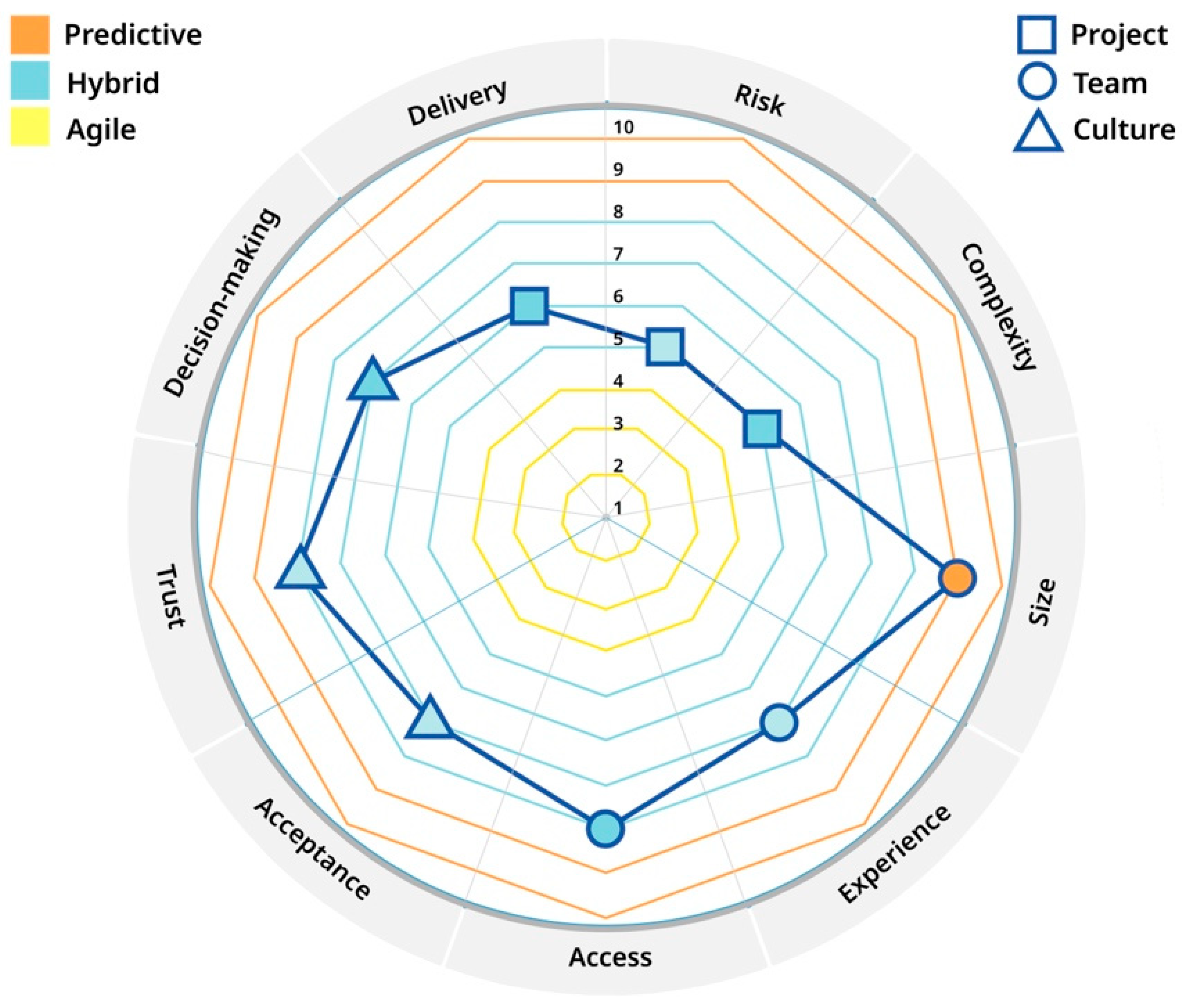
| Dimension | Parameters | Nature | Source |
|---|---|---|---|
| Project | Total Complexity (TC) | Quantitative | Stakeholder network analysis |
| Project | Total risk (TR) | Quantitative | Risk network analysis |
| Project | Delivery | Quantitative | Original PMI assessment |
Disclaimer/Publisher’s Note: The statements, opinions and data contained in all publications are solely those of the individual author(s) and contributor(s) and not of MDPI and/or the editor(s). MDPI and/or the editor(s) disclaim responsibility for any injury to people or property resulting from any ideas, methods, instructions or products referred to in the content. |
© 2026 by the authors. Licensee MDPI, Basel, Switzerland. This article is an open access article distributed under the terms and conditions of the Creative Commons Attribution (CC BY) license.
Share and Cite
Álvarez-Espada, J.-M.; Aguilar-Planet, T.; Peralta, E. Integrating Complexity and Risk Analysis for Selection of Management Approaches in Complex Projects: Application to UN Peacekeeping Missions. Systems 2026, 14, 100. https://doi.org/10.3390/systems14010100
Álvarez-Espada J-M, Aguilar-Planet T, Peralta E. Integrating Complexity and Risk Analysis for Selection of Management Approaches in Complex Projects: Application to UN Peacekeeping Missions. Systems. 2026; 14(1):100. https://doi.org/10.3390/systems14010100
Chicago/Turabian StyleÁlvarez-Espada, Juan-Manuel, Teresa Aguilar-Planet, and Estela Peralta. 2026. "Integrating Complexity and Risk Analysis for Selection of Management Approaches in Complex Projects: Application to UN Peacekeeping Missions" Systems 14, no. 1: 100. https://doi.org/10.3390/systems14010100
APA StyleÁlvarez-Espada, J.-M., Aguilar-Planet, T., & Peralta, E. (2026). Integrating Complexity and Risk Analysis for Selection of Management Approaches in Complex Projects: Application to UN Peacekeeping Missions. Systems, 14(1), 100. https://doi.org/10.3390/systems14010100