Integrated Biorefinery of Rotted Date Fruits: One-Pot Co-Production of Lipids and Pigments by Talaromyces atroroseus PZ091940 and Valorization of Residual Biomass Wastes for Fungal Chitosan

Simple Summary
Abstract
1. Introduction
2. Materials and Methods
2.1. Substrate Preparation and Characterization
2.2. Microorganism and Inoculum Preparation
2.3. Identification of Talaromyces sp. QA2602
2.4. Culture Medium and Cultivation Condition
2.5. Biomass Dry Weight Determination
2.6. Lipid Content Assay
2.7. Pretreatment Methods of Spoilage Date Fruits for Enhancement of Lipid and Pigment Productivity
2.8. Biodiesel Production and Characterization from Fungal Lipids
2.9. Assay and Characterization for Fungal Pigments
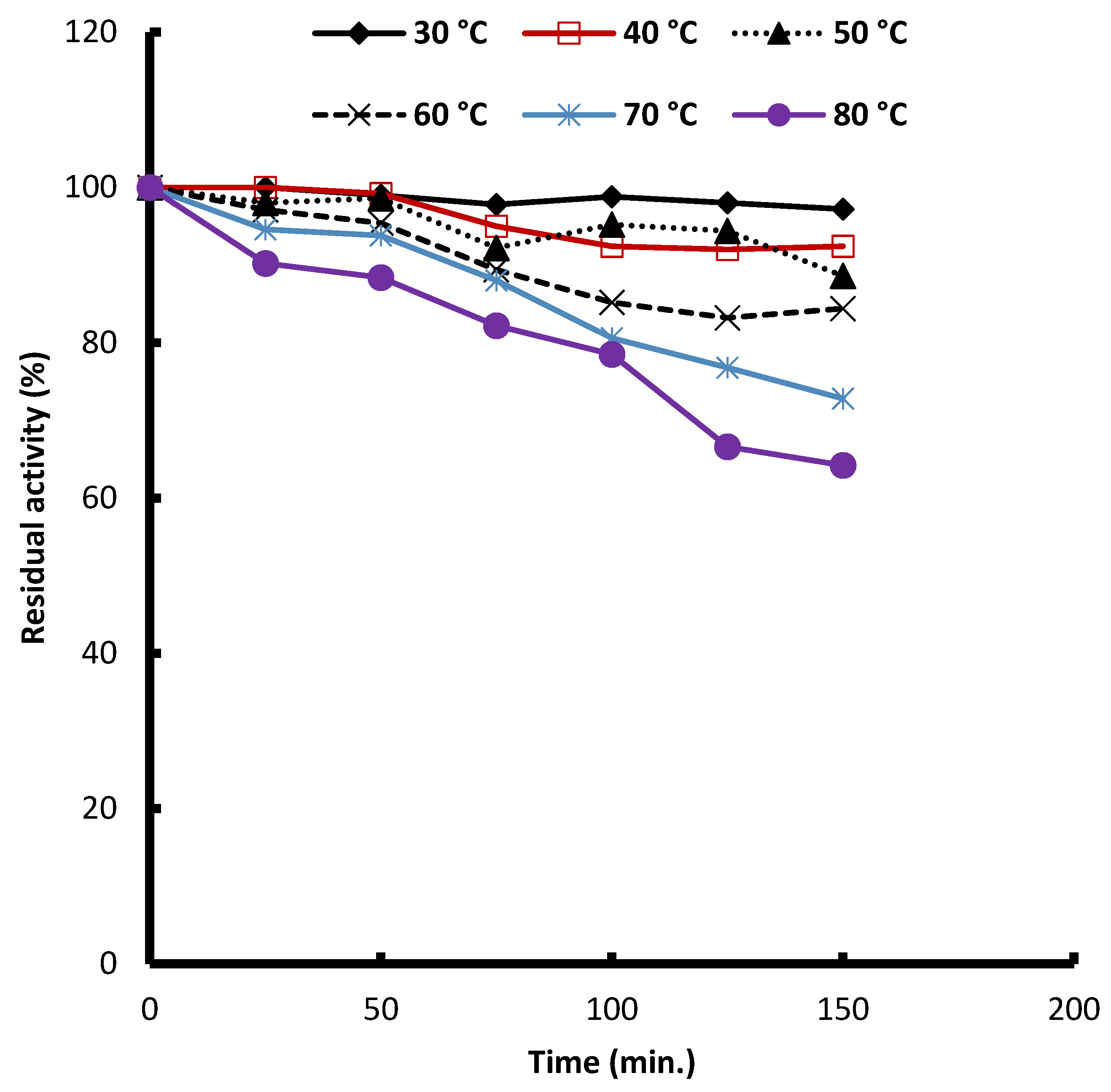
2.9.1. Pigment Stability Evaluation
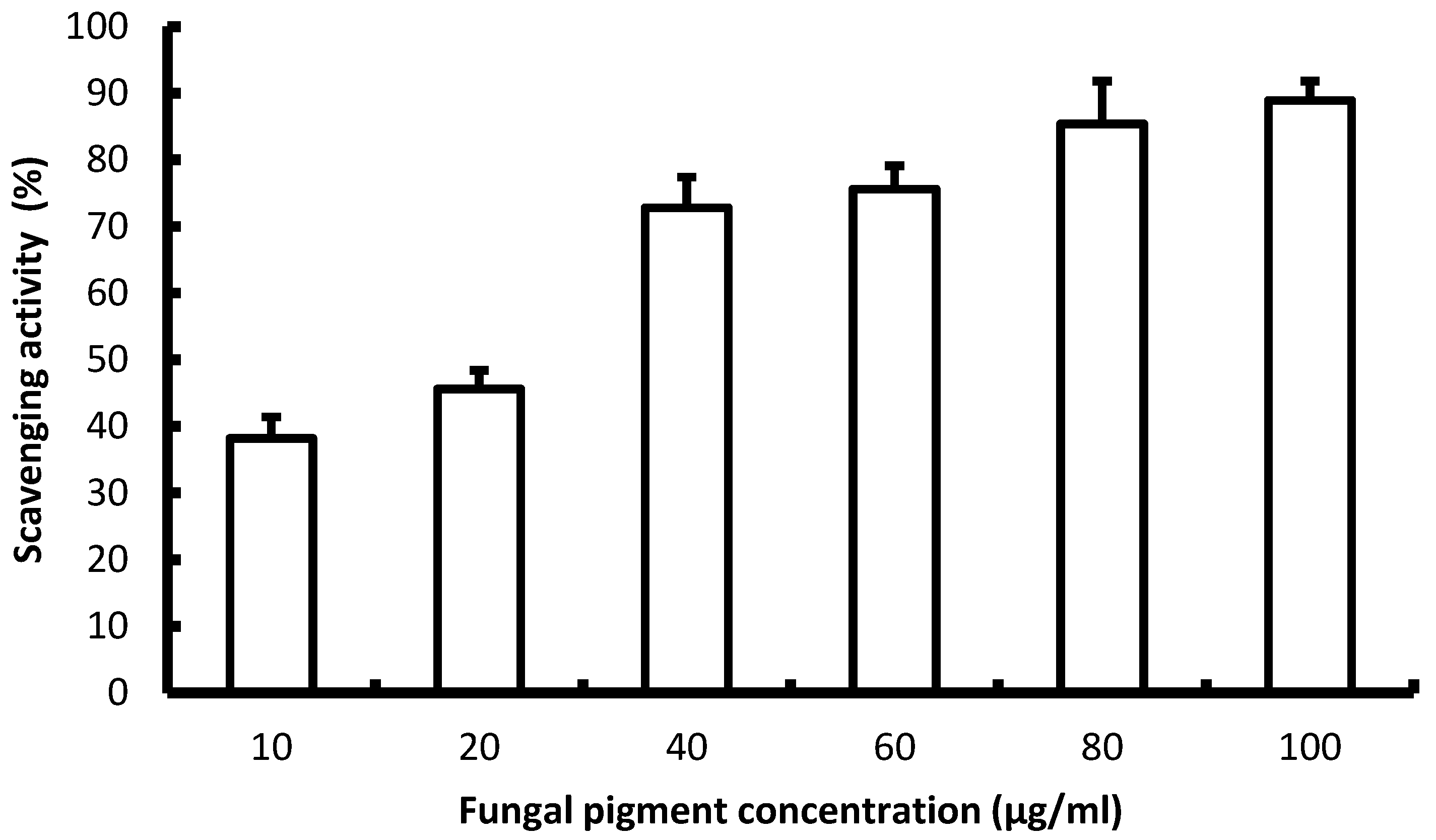
2.9.2. Antioxidant Activity of Fungal Pigment
2.10. Chitosan Production from Remaining Fungal Biomass Wastes
2.11. Antioxidant Properties of Fungal Chitosan/Pigment Composite
2.11.1. Preparation of Chitosan/Pigment Composite
2.11.2. Characterization of the Chitosan/Fungal Pigment Composite
2.11.3. Antioxidant Activity of Fungal Chitosan/Pigment Composite
3. Results
3.1. Characterization of Spoilage Date Palm Fruits
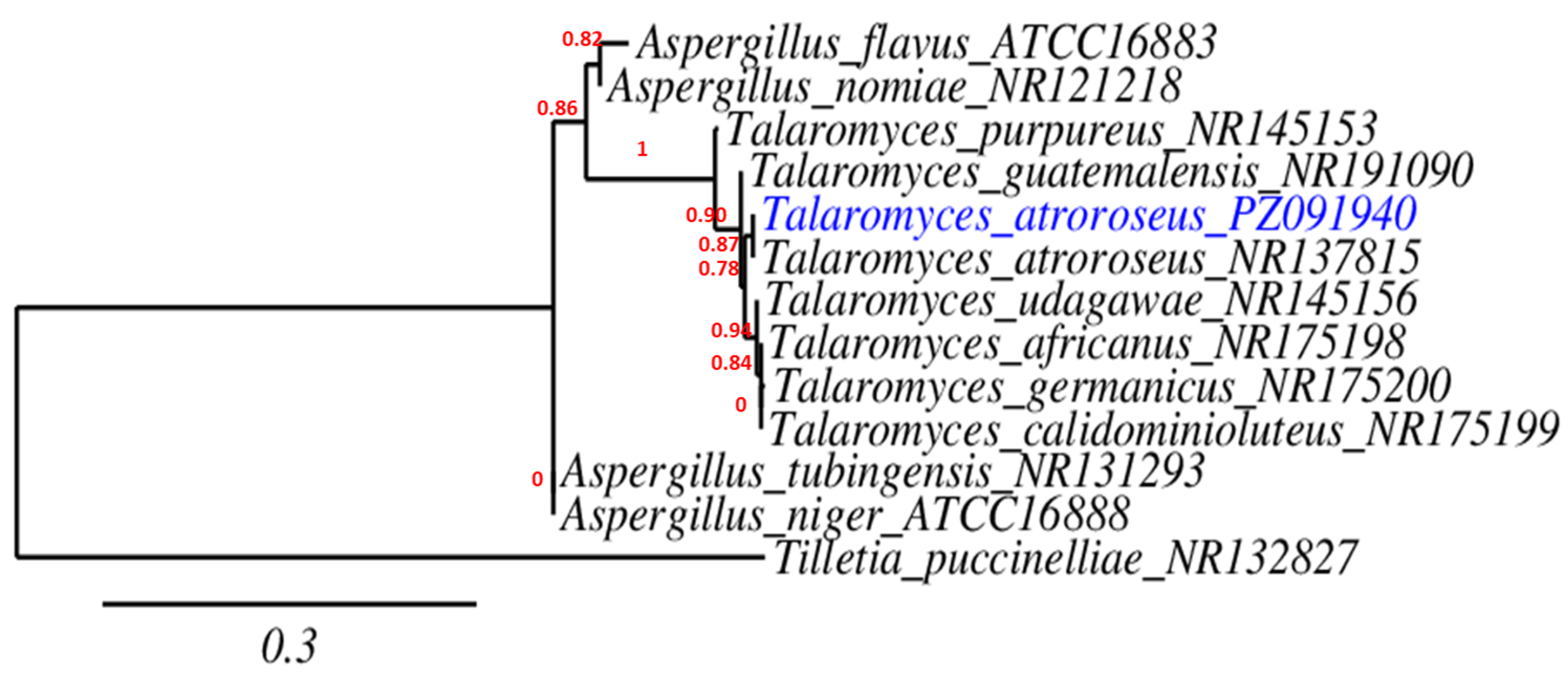
3.2. Identification of the Fungal Strain
3.3. Lipid Production by Talaromyces atroroseus
3.4. Effect of Pre-Treatment Method on Lipid Accumulation
3.5. Biodiesel Production
3.6. Characterization of the Produced Biodiesel
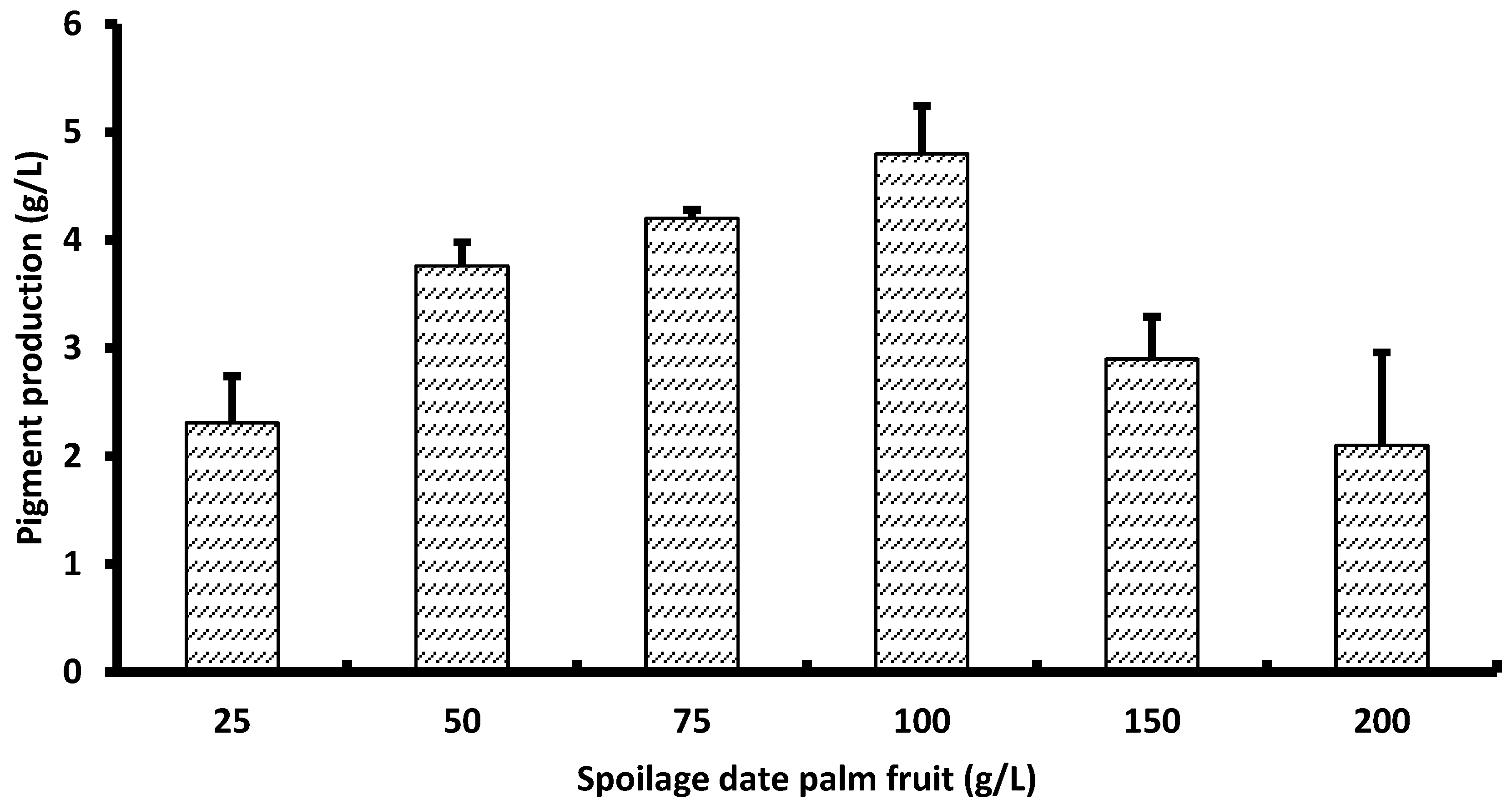
3.7. Pigment Production
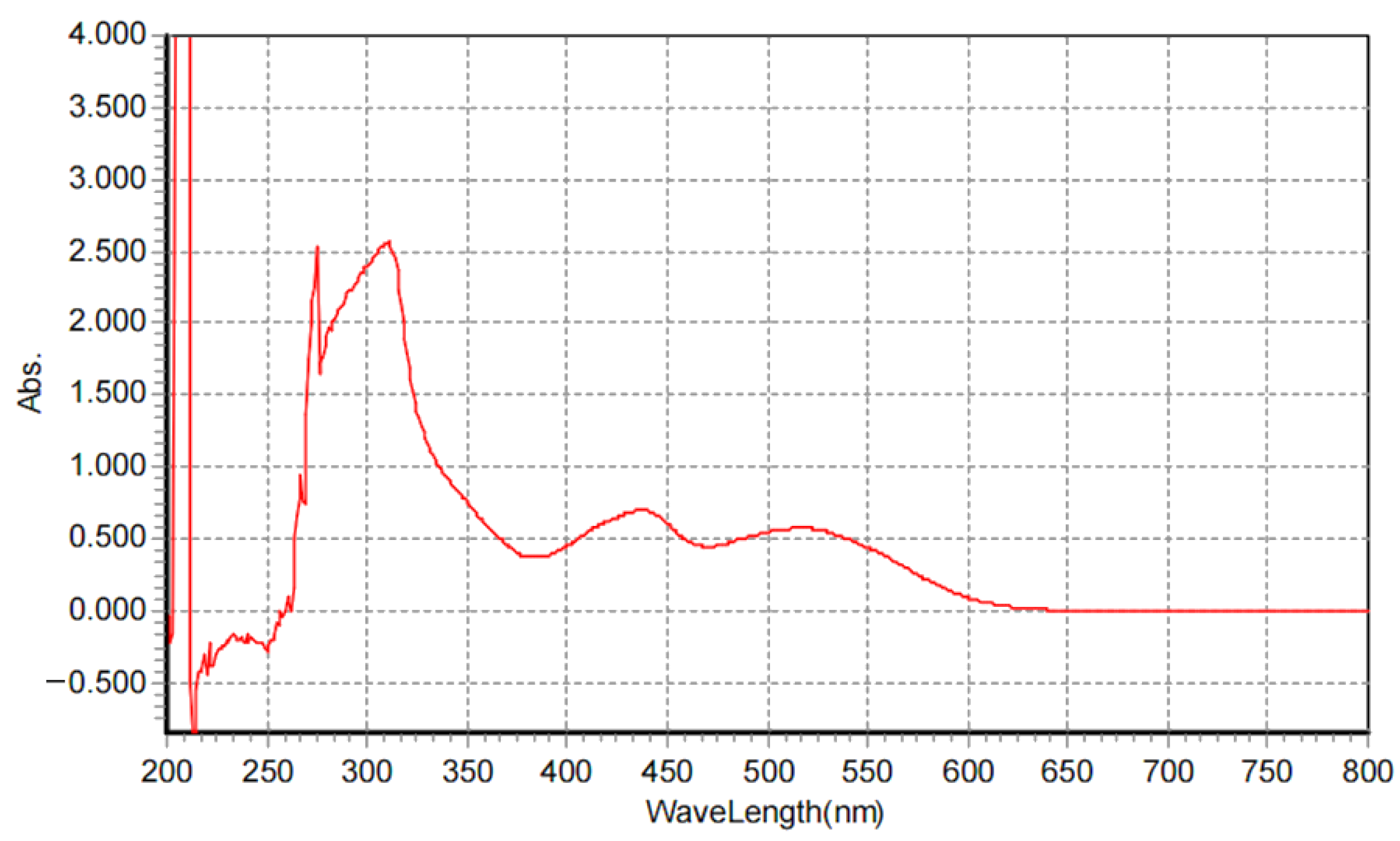
3.7.1. Pigment Characterization
3.7.2. GC/Ms Analysis of Fungal Pigments
3.7.3. Pigment Stability
- a.
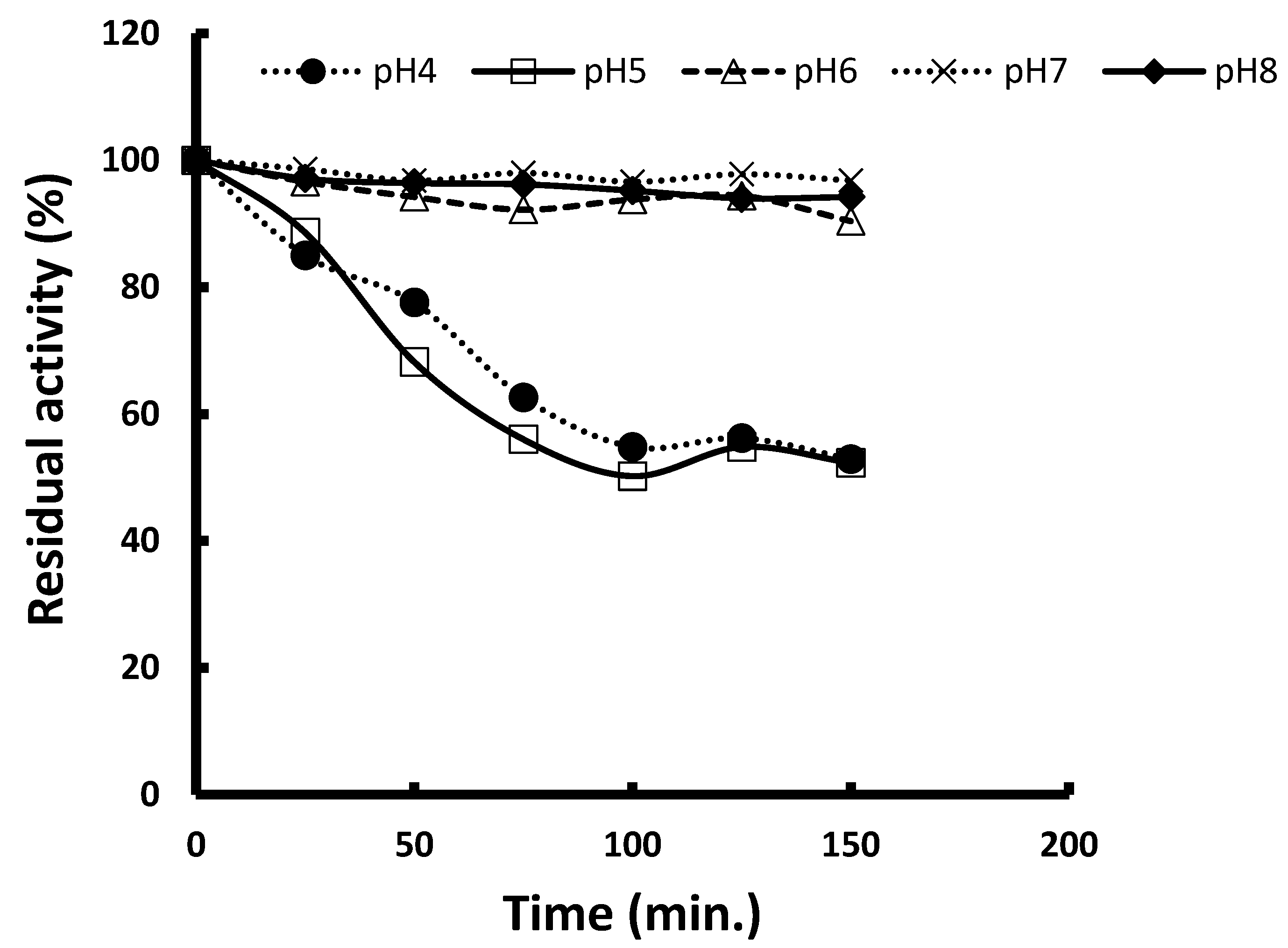
- pH stability
- b.
- Thermal stability
3.7.4. Antioxidant Activity of Fungal Pigments
3.8. Chitosan Production from De-Oiled Fungal Biomass
3.9. Antioxidant Properties of Fungal Chitosan/Pigment Composite
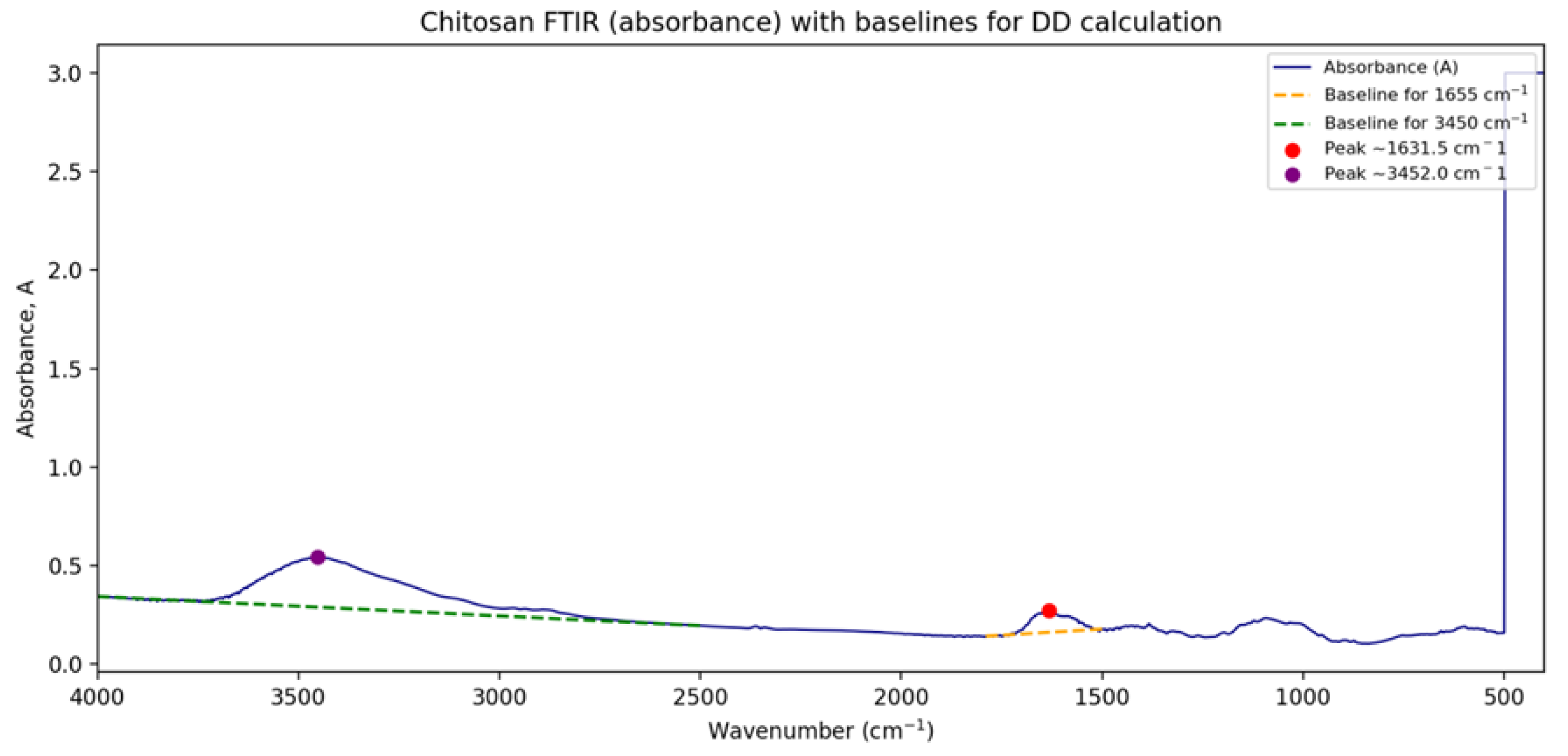
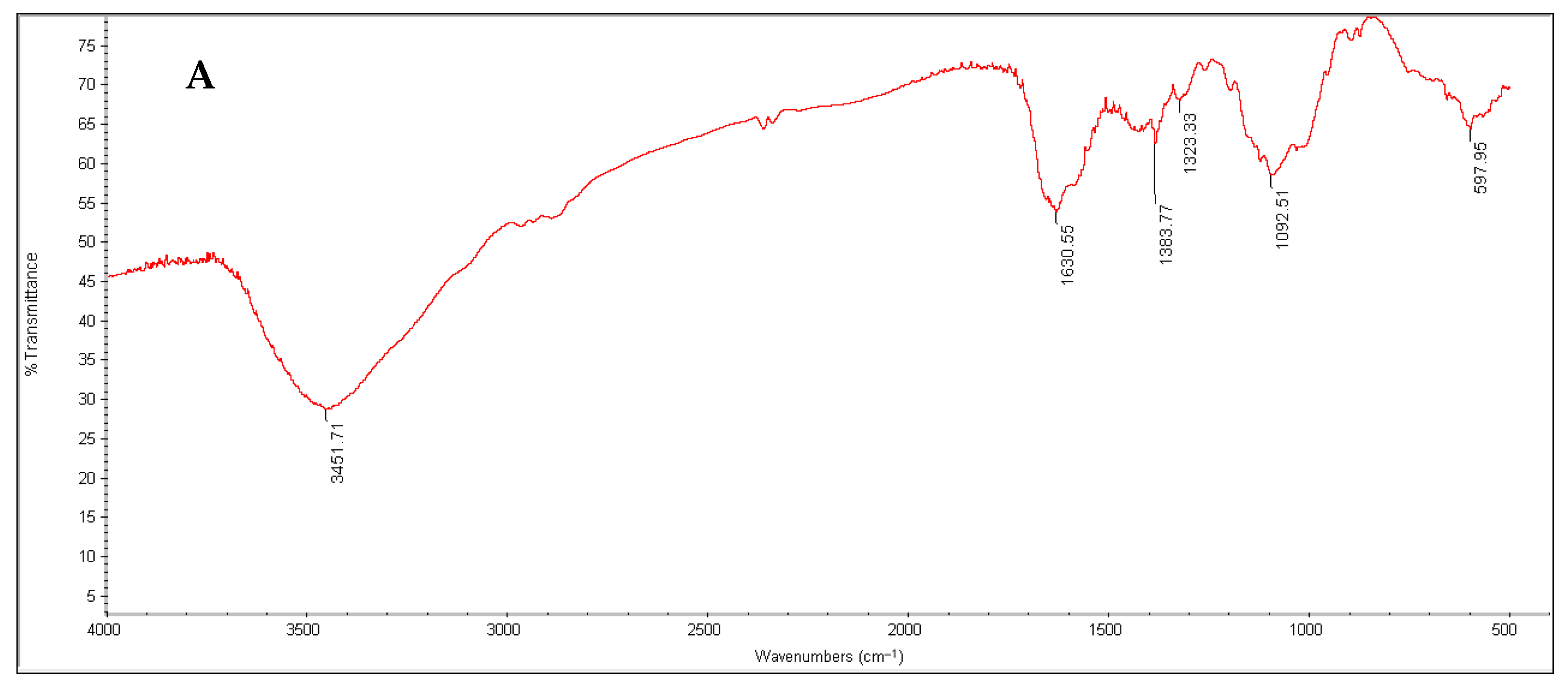
3.9.1. Chitosan/Pigment Composite Characterization
3.9.2. Antioxidant Properties of Fungal Pigments, Chitosan and Fungal Chitosan/Pigment Composite
4. Discussion
5. Conclusions
Funding
Data Availability Statement
Conflicts of Interest
References
- Falcone, P.M. Sustainable energy policies in developing countries: A review of challenges and opportunities. Energies 2023, 16, 6682. [Google Scholar] [CrossRef]
- Dechamps, P. The IEA World Energy Outlook 2022—A brief analysis and implications. Eur. Energy Clim. J. 2023, 11, 100–103. [Google Scholar] [CrossRef]
- Ogunkunle, O.; Ahmed, N.A. Overview of biodiesel combustion in mitigating the adverse impacts of engine emissions on the sustainable human–environment scenario. Sustainability 2021, 13, 5465. [Google Scholar] [CrossRef]
- El-Araby, R. Biofuel production: Exploring renewable energy solutions for a greener future. Biotechnol. Biofuels Bioprod. 2024, 17, 129. [Google Scholar] [CrossRef] [PubMed]
- Bardhan, P.; Baruah, J.; Raj, G.B.; Kalita, E.; Mandal, M. Optimization of culture conditions for biomass and lipid production by oleaginous fungus Penicillium citrinum PKB20 using response surface methodology. Biocatal. Agric. Biotechnol. 2021, 37, 102169. [Google Scholar] [CrossRef]
- Chang, L.; Chen, H.; Tang, X.; Zhao, J.; Zhang, H.; Chen, Y.Q.; Chen, W. Advances in improving the biotechnological application of oleaginous fungus Mortierella alpina. Appl. Microbiol. Biotechnol. 2021, 105, 6275–6289. [Google Scholar] [CrossRef]
- Vorapreeda, T.; Khongto, B.; Thammarongtham, C.; Srisuk, T.; Laoteng, K. Metabolic regulation of sugar assimilation for lipid production in Aspergillus oryzae BCC7051 through comparative transcriptome perspective. Biology 2021, 10, 885. [Google Scholar] [CrossRef]
- Fazili, A.B.A.; Shah, A.M.; Zan, X.; Naz, T.; Nosheen, S.; Nazir, Y.; Ullah, S.; Zhang, H.; Song, Y. Mucor circinelloides: A model organism for oleaginous fungi and its potential applications in bioactive lipid production. Microb. Cell Factories 2022, 21, 29. [Google Scholar] [CrossRef] [PubMed]
- Srivastava, N.; Srivastava, M.; Mishra, P.K.; Gupta, V.K.; Molina, G.; Rodriguez-Couto, S.; Manikanta, A.; Ramteke, P.W. Applications of fungal cellulases in biofuel production: Advances and limitations. Renew. Sustain. Energy Rev. 2018, 82, 2379–2386. [Google Scholar] [CrossRef]
- Dahiya, S.; Rapoport, A.; Singh, B. Biotechnological potential of lignocellulosic biomass as substrates for fungal xylanases and its bioconversion into useful products: A review. Fermentation 2024, 10, 82. [Google Scholar] [CrossRef]
- Tang, X.; Chang, L.; Gu, S.; Zhang, H.; Chen, Y.Q.; Chen, H.; Zhao, J.; Chen, W. Role of β-isopropylmalate dehydrogenase in lipid biosynthesis of the oleaginous fungus Mortierella alpina. Fungal Genet. Biol. 2021, 152, 103572. [Google Scholar] [CrossRef] [PubMed]
- Mhlongo, S.I.; Ezeokoli, O.T.; Roopnarain, A.; Ndaba, B.; Sekoai, P.T.; Habimana, O.; Pohl, C.H. The potential of single-cell oils derived from filamentous fungi as alternative feedstock sources for biodiesel production. Front. Microbiol. 2021, 12, 637381. [Google Scholar] [CrossRef]
- Grewal, J.; Wołacewicz, M.; Pyter, W.; Joshi, N.; Drewniak, L.; Pranaw, K. Colorful treasure from agro-industrial wastes: A sustainable chassis for microbial pigment production. Front. Microbiol. 2022, 13, 832918. [Google Scholar] [CrossRef] [PubMed]
- Nigg, J.T.; Lewis, K.; Edinger, T.; Falk, M. Meta-analysis of ADHD symptoms, restriction diet, and synthetic food color additives. J. Am. Acad. Child Adolesc. Psychiatry 2012, 51, 86–97. [Google Scholar] [CrossRef]
- Reddy, M.S.B.; Ponnamma, D.; Choudhary, R.; Sadasivuni, K.K. A comparative review of natural and synthetic biopolymer composite scaffolds. Polymers 2021, 13, 1105. [Google Scholar] [CrossRef]
- Lagashetti, A.C.; Dufossé, L.; Singh, S.K.; Singh, P.N. Fungal pigments and their prospects in different industries. Microorganisms 2019, 7, 604. [Google Scholar] [CrossRef]
- Elkhateeb, W.; Daba, G. Fungal pigments: Their diversity, chemistry, food and non-food applications. Appl. Microbiol. 2023, 3, 735–751. [Google Scholar] [CrossRef]
- Toma Afroz, M.; Rahman, M.H.; Rahman, M.S.; Arif, M.; Nazir, K.N.H.; Dufossé, L. Fungal pigments: Carotenoids, riboflavin, and polyketides with diverse applications. J. Fungi 2023, 9, 454. [Google Scholar] [CrossRef]
- Thiyam, G.; Dufossé, L.; Sharma, A.K. Characterization of Talaromyces purpureogenus strain F extrolites and development of a production medium for extracellular pigments. Food Bioprod. Process. 2020, 124, 143–158. [Google Scholar] [CrossRef]
- Yilmaz, N.; Houbraken, J.; Hoekstra, E.S.; Frisvad, J.C.; Visagie, C.M.; Samson, R.A. Delimitation and characterisation of Talaromyces purpurogenus and related species. Persoonia 2012, 29, 39–54. [Google Scholar] [CrossRef]
- Ramesh, C.; Prasastha, V.R.; Venkatachalam, M.; Dufossé, L. Natural substrates and culture conditions to produce pigments in submerged fermentation. Fermentation 2022, 8, 460. [Google Scholar] [CrossRef]
- Lebeau, J.; Venkatachalam, M.; Fouillaud, M.; Petit, T.; Vinale, F.; Dufossé, L.; Caro, Y. Production and extraction of polyketide red pigments by ascomycetous fungi. J. Fungi 2017, 3, 34. [Google Scholar] [CrossRef]
- Mohanty, S.S.; Koul, Y.; Varjani, S.; Pandey, A.; Ngo, H.H.; Chang, J.S.; Wong, J.W.; Bui, X.T. A critical review on sustainable feedstocks for biosurfactant production. Microb. Cell Factories 2021, 20, 120. [Google Scholar] [CrossRef]
- Khorshidian, N.; Yousefi, M.; Khosravi-Darani, K. Valorization of date waste using microbial fermentations. Biomass Convers. Biorefin. 2024, 14, 26597–26610. [Google Scholar] [CrossRef]
- Subhash, A.J.; Bamigbade, G.B.; Ayyash, M. Current insights into date by-product valorization for sustainable food industries and technology. Sustain. Food Technol. 2024, 2, 331–361. [Google Scholar] [CrossRef]
- Rahim, M.A.; Hussain, I.; Roobab, U.; Maqsood, S.; Altaf, M.; Al-Asmari, F.; Khan, M. Challenges and opportunities in date palm by-products valorization. In Sustainable Valorization of Date Palm By-Products and Wastes; Academic Press: Cambridge, MA, USA, 2026; pp. 285–312. [Google Scholar]
- Al-Shreed, F.; Al-Jamal, M.; Al-Abbad, A.; Al-Elaiw, Z.; Abdallah, A.B.; Belaifa, H. A study on the export of Saudi Arabian dates in the global markets. J. Dev. Agric. Econ. 2012, 4, 268–274. [Google Scholar] [CrossRef]
- Kumari, S.; Rath, P.K. Extraction and characterization of chitin and chitosan from Labeo rohita fish scales. Procedia Mater. Sci. 2014, 6, 482–489. [Google Scholar] [CrossRef]
- Izadi, H.; Asadi, H.; Bemani, M. Chitin: A comparison between its main sources. Front. Mater. 2025, 12, 1537067. [Google Scholar] [CrossRef]
- Ghormade, V.; Pathan, E.K.; Deshpande, M.V. Can fungi compete with marine sources for chitosan production? Int. J. Biol. Macromol. 2017, 104, 1415–1421. [Google Scholar] [CrossRef]
- Bradford, M.M. A rapid and sensitive method for the quantitation of microgram quantities of protein utilizing the principle of protein–dye binding. Anal. Biochem. 1976, 72, 248–254. [Google Scholar] [CrossRef]
- Anschau, A.; Caruso, C.S.; Kuhn, R.C.; Franco, T.T. Validation of the sulfo-phospho-vanillin method for lipid determination in oleaginous microorganisms. Braz. J. Chem. Eng. 2017, 34, 19–27. [Google Scholar] [CrossRef]
- Miller, G.L. Use of DNS reagent for reducing sugar determination. Anal. Chem. 1959, 31, 426–428. [Google Scholar] [CrossRef]
- Fales, F.W. The assimilation and degradation of carbohydrates by yeast cells. J. Biol. Chem. 1951, 193, 113–124. [Google Scholar] [CrossRef]
- Muting, D.; Kaiser, E. Spectrophotometric determination of amino-N via ninhydrin. Z. Physiol. Chem. 1963, 332, 276. [Google Scholar]
- Tucker, B.B.; Kurtz, L.T. Calcium and magnesium determinations by EDTA titrations. Soil Sci. Soc. Am. J. 1961, 25, 27–29. [Google Scholar] [CrossRef]
- Tawfik, M.A.; Rasmey, A.H.M.; Abosiedah, A.A.; Zhang, L.; Hafez, M. Enhancement of fatty acid esters yield and composition from Cunninghamella echinulata for biodiesel production: Optimizing the direct transesterification process. Biomass Bioenergy 2025, 203, 108288. [Google Scholar] [CrossRef]
- Louhasakul, Y.; Cheirsilp, B.; Maneerat, S.; Prasertsan, P. Direct transesterification of oleaginous yeast lipids into biodiesel: Development of vigorously stirred tank reactor and process optimization. Biochem. Eng. J. 2018, 137, 232–238. [Google Scholar] [CrossRef]
- European Automobile Manufacturers Association (ACEA). Biodiesel Guidelines; ACEA: Brussels, Belgium, 2009. [Google Scholar]
- ASTM D6751-02; Standard Specification for Biodiesel Fuel (B100) Blend Stock for Distillate Fuels. ASTM International: West Conshohocken, PA, USA, 2002.
- Prieto, P.; Pineda, M.; Aguilar, M. Spectrophotometric quantitation of antioxidant capacity through the formation of a phosphomolybdenum complex: Specific application to the determination of vitamin E. Anal. Biochem. 1999, 269, 337–341. [Google Scholar] [CrossRef] [PubMed]
- Synowiecki, J.; Al-Khateeb, N.A.A.Q. Mycelia of Mucor rouxii as a source of chitin and chitosan. Food Chem. 1997, 60, 605–610. [Google Scholar] [CrossRef]
- Huet, J.; Wyckmans, J.; Wintjens, R.; Boussard, P.; Raussens, V.; Vandenbussche, G.; Ruysschaert, J.M.; Azarkan, M.; Looze, Y. Structural characterization of two papaya chitinases, a family GH19 of glycosyl hydrolases. Cell. Mol. Life Sci. 2006, 63, 3042–3054. [Google Scholar] [CrossRef]
- Domszy, J.G.; Roberts, G.A. Evaluation of infrared spectroscopic techniques for analysing chitosan. Makromol. Chem. 1985, 186, 1671–1677. [Google Scholar] [CrossRef]
- Zhu, S.; Bonito, G.; Chen, Y.; Du, Z.-Y. Oleaginous fungi in biorefineries. In Reference Module in Life Sciences; Elsevier: Amsterdam, The Netherlands, 2020. [Google Scholar]
- Adelusi, O.A.; Gbashi, S.; Adebiyi, J.A.; Makhuvele, R.; Adebo, O.A.; Aasa, A.O.; Targuma, S.; Kah, G.; Njobeh, P.B. Variability in Metabolites Produced by Talaromyces pinophilus SPJ22 Cultured on Different Substrates. Fungal Biol. Biotechnol. 2022, 9, 15. [Google Scholar] [CrossRef]
- Morales-Oyervides, L.; Oliveira, J.; Sousa-Gallagher, M.; Méndez-Zavala, A.; Montañez, J.C. Assessment of the Dyeing Properties of the Pigments Produced by Talaromyces spp. J. Fungi 2017, 3, 38. [Google Scholar] [CrossRef]
- Sousa, J.F.; Murtinho, D.; Valente, A.J.; Marques, J.M. The Role of Chitosan-Based Materials in Interactions with Antibiotics: An Overview of In Vitro and In Silico Studies. Int. J. Mol. Sci. 2025, 26, 11070. [Google Scholar] [CrossRef]
- Shi, L.; de Souza, T.S.P.; Ahmadi, F.; Imran, A.; Dunshea, F.R.; Barrow, C.; Suleria, H.A.R. Valorization of date fruit processing waste. Appl. Sci. 2023, 13, 12315. [Google Scholar] [CrossRef]
- Sun, H.; Gao, Z.; Zhang, L.; Wang, X.; Gao, M.; Wang, Q. Microbial lipid production from wastes: Research updates and tendencies. Environ. Sci. Pollut. Res. 2023, 30, 79654–79675. [Google Scholar] [CrossRef]
- Alhomsi, A.; Bayraktar, M.K. Prebiotic Properties of Dates and Their Impact on Health. Turk. J. Agric. Food Sci. Technol. 2025, 13, 229–236. [Google Scholar] [CrossRef]
- Campanella, J.E.M.; Rosa, L.T.; Malavazi, I. Fungal Δ9-Fatty Acid Desaturase: A Unique Enzyme at the Core of Lipid Metabolism in Aspergillus fumigatus and a Promising Target for the Search for Antifungal Strategies. mBio 2025, 16, e00803-24. [Google Scholar] [CrossRef] [PubMed]
- Ratledge, C.; Wynn, J.P. Oils from Microorganisms. In Bailey’s Industrial Oil and Fat Products; John Wiley & Sons: Hoboken, NJ, USA, 2005; pp. 1–34. [Google Scholar]
- Kumar, K.; Nandi, B.K.; Saxena, V.K.; Kumar, R. Experimental Studies of Thermal Behavior, Engine Performance and Emission Characteristics of Biodiesel/Diesel/1-Pentanol Blend in Diesel Engine. Alex. Eng. J. 2024, 106, 411–421. [Google Scholar] [CrossRef]
- Xia, X.; Liu, L.Y.; Liu, M.; Hu, G.J.; Li, W.T.; Wang, Z.Y.; Pei, Y.; Li, Y.H.; Li, J.J.; Wang, Y.X.; et al. Isolation, Identification, and Production Optimization of Natural Functional Pigments Produced by Talaromyces atroroseus LWT-1. Front. Microbiol. 2025, 16, 1612109. [Google Scholar] [CrossRef]
- Kaur, M.; Goel, M.; Mishra, R.C.; Lahane, V.; Yadav, A.K.; Barrow, C.J. Characterization of the Red Biochromes Produced by the Endophytic Fungus Monascus purpureus CPEF02 with Antimicrobial and Antioxidant Activities. Fermentation 2023, 9, 328. [Google Scholar] [CrossRef]
- Silveira, S.T.; Daroit, D.J.; Sant’Anna, V.; Brandelli, A. Stability Modeling of Red Pigments Produced by Monascus purpureus in Submerged Cultivations with Sugarcane Bagasse. Food Bioprocess Technol. 2013, 6, 1007–1014. [Google Scholar] [CrossRef]
- Ogbonna, C.N.; Aoyagi, H.; Ogbonna, J.C. Isolation and Identification of Talaromyces purpurogenus and Preliminary Studies on Its Pigment Production Potentials in Solid State Cultures. Afr. J. Biotechnol. 2017, 16, 672–682. [Google Scholar] [CrossRef]
- Bhatnagar, S.; Aoyagi, H. Extracellular Pigment Production from Talaromyces purpureogenus under Stress Conditions and Potential of Produced Pigments as Anti-Glycation Agents. Appl. Food Res. 2025, 6, 101560. [Google Scholar] [CrossRef]
- Ugwu, C.T.; Ogbonna, C.N.; Ogbonna, J.C.; Aoyagi, H. Production and Stability of Pigments by Talaromyces purpurogenus LC128689 in an Alternating Air Phase–Liquid Phase Cultivation System. Biotechnol. Appl. Biochem. 2022, 69, 1317–1326. [Google Scholar] [CrossRef] [PubMed]



| Constituent | Value (%) |
|---|---|
| Total sugar | 62 |
| Reducing sugars | 21 |
| Total soluble proteins | 3.1 |
| Total lipids | 0.21 |
| Free amino acids | 1.01 |
| Sodium | 0.005 |
| Potassium | 0.042 |
| Calcium | 0.035 |
| Magnesium | 0.08 |
| Phosphorus | 0.079 |
| Zinc | 0.003 |
| Cobalt | 0.006 |
| Copper | 0.004 |
| Fiber | 2.9 |
| Spoilage Date Palm Fruit Concentration (g/L) | Total Sugar Content (g/L) | Dry Weight (g/L) | Lipid Conc. (g/L) | Lipid Content (%) | Residual Sugar (g/L) | Consumed Sugar (g/L) | Lipid Yield (mg Lipid/g Spoilage Date) |
|---|---|---|---|---|---|---|---|
| 25 | 13.6 ± 1.0 | 5.4 ± 0.2 | 0.7 ± 0.1 | 13.7 | 6.3 ± 0.2 | 7.3 ± 0.3 | 29.6 ± 1.4 |
| 50 | 27.2 ± 0.8 | 9.2 ± 0.4 | 1.7 ± 0.4 | 18.8 | 9.5 ± 0.2 | 17.7 ± 1.4 | 34.6 ± 3.6 |
| 75 | 39.8 ± 2.1 | 11.5 ± 0.6 | 2.5 ± 0.7 | 21.4 | 14.9 ± 0.4 | 24.8 ± 2.3 | 32.8 ± 2.4 |
| 100 | 58.1 ± 1.8 | 14.1 ± 0.4 | 3.9 ± 0.3 | 27.6 | 29.0 ± 1.0 | 29.1 ± 0.7 | 38.9 ± 3.2 |
| 150 | 93.1 ± 3.2 | 12.0 ± 0.5 | 2.9 ± 0.4 | 24.2 | 47.1 ± 0.8 | 46.0 ± 4.2 | 19.4 ± 0.8 |
| 200 | 116.4 ± 2.0 | 8.5 ± 0.2 | 1.4 ± 0.2 | 15.9 | 78.3 ± 2.6 | 38.1 ± 2.3 | 6.8 ± 0.2 |
| Treatment Method | Chemical Agent | Temperature (°C) | Total Sugar Content | Dry Weight (g/L) | Lipid Concentration (g/L) | Lipid Content (%) | Pigment Production (g/L) | |
|---|---|---|---|---|---|---|---|---|
| Type | Conc (M) | |||||||
| Thermal | 50 | 43.9 ± 1.2 | 11.5 ± 2.0 | 2.7 ± 0.1 | 23.7 | 4.6 ± 0.4 | ||
| 121 | 56.6 ± 0.8 | 8 ± 2.3 | 3.9 ± 0.2 | 28.3 | 5.7 ± 0.2 | |||
| Thermo-chemical | H2SO4 | 0.05 | 50 | 49.4 ± 1.1 | 15.5 ± 1.0 | 5.2 ± 0.3 | 33.3 | 7.1 ± 0.1 |
| 121 | 63.1 ± 0.9 | 16.5 ± 0.4 | 5.4 ± 0.1 | 32.5 | 7.9 ± 0.1 | |||
| 0.1 | 50 | 55.6 ± 0.3 | 12.1 ± 0.2 | 4.0 ± 0.3 | 32.8 | 6.4 ± 0.2 | ||
| 121 | 71.9 ± 1.4 | 16.1 ± 0.0 | 5.4 ± 0.2 | 33.5 | 7.3 ± 0.2 | |||
| 0.2 | 50 | 64.5 ± 2.1 | 16.0 ± 0.2 | 5.4 ± 0.1 | 34.0 | 6.9 ± 0.4 | ||
| 121 | 82.4 ± 1.3 | 17.0 ± 0.2 | 6.5 ± 0.3 | 38.4 | 8.4 ± 0.1 | |||
| NaOH | 0.5 | 50 | 61.1 ± 0.9 | 14.8 ± 0.4 | 3.6 ± 0.1 | 24.7 | 6.7 ± 0.1 | |
| 121 | 65.0 ± 0.9 | 13.9 ± 0.5 | 3.8 ± 0.1 | 27.5 | 5.2 ± 0.4 | |||
| 1.0 | 50 | 60.9 ± 1.2 | 15.1 ± 0.3 | 4.2 ± 0.4 | 27.9 | 6.8 ± 0.1 | ||
| 121 | 70.4 ± 0.5 | 14.6 ± 0.4 | 4.7 ± 0.1 | 31.98 | 6.5 ± 0.2 | |||
| 1.5 | 50 | 63.0 ± 2.2 | 14.7 ± 0.2 | 4.5 ± 0.2 | 30.54 | 6.7 ± 0.1 | ||
| 121 | 74.8 ± 1.0 | 15.1 ± 0.5 | 5.0 ± 0.8 | 33.11 | 6.9 ± 0.1 | |||
| Fatty Acid Methyl Ester | Common Name | Carbon Atoms: Double Bonds | % of Total | RT (min) |
|---|---|---|---|---|
| Dodecanoic acid, methyl ester | Methyl laurate | C12:0 | 8.497 | 22.17 |
| Methyl tetradecanoate | Methyl myristate | C14:0 | 3.826 | 23.96 |
| Pentadecanoic acid, methyl ester | Methyl pentadecanoate | C15:0 | 1.841 | 24.96 |
| Hexadecanoic acid, methyl ester | Methyl palmitate | C16:0 | 20.156 | 26.24 |
| 9-Hexadecenoic acid, methyl ester, (Z)- | Methyl palmitoleate (Z-9) | C16:1 | 1.744 | 25.90 |
| Methyl stearate | Methyl stearate | C18:0 | 8.289 | 29.42 |
| 7-Octadecenoic acid, methyl ester | Methyl octadecenoate | C18:1 | 21.763 | 29.11 |
| 9,12-Octadecadienoic acid, methyl ester | Methyl linoleate | C18:2 | 18.107 | 28.98 |
| Hexadecanoic acid, 15-methyl-, methyl ester | Branched heptadecanoate methyl ester (iso) | br-C17:0 | 0.937 | 27.71 |
| Hexadecanoic acid, 2-hydroxy-, methyl ester | Hydroxypalmitate methyl ester | OH-C16:0 | 4.645 | 38.14 |
| Methyl 18-methylnonadecanoate | Branched C20 methyl ester | br-C20:0 | 0.878 | 31.74 |
| 2-Decenoic acid, methyl ester | Short-chain unsaturated methyl ester | C10:1 | 0.787 | 16.24 |
| 7-Nonenoic acid, methyl ester | Short-chain unsaturated methyl ester | C9:1 | 6.337 | 20.77 |
| 6-Heptenoic acid, methyl ester | Short-chain unsaturated methyl ester | C7:1 | 1.640 | 16.39 |
| Dodecanoic acid, 12-(4-methylphenylsulfonyloxy)-, methyl ester | Modified dodecanoate methyl ester | — | 0.560 | 30.59 |
| Property | Biodiesel Properties | Standard Biodiesel Properties | |
|---|---|---|---|
| EN 14214 (B100) | ASTM D6751 (B100) | ||
| Density, ρ at 15 °C | 873.8 kg m−3 | 860–900 kg m−3 | No density limit |
| Kinematic viscosity, ν at 40 °C | 4.11 mm2 s−1 | 3.5–5.0 mm2 s−1 | 1.9–6.0 mm2 s−1 |
| Saponification number, SN | 203.65 mg KOH g−1 | ND | ND |
| Iodine value, IV | 61.18 g I2/100 g | ≤120 g I2/100 g | ND |
| Higher heating value, HHV | 40.16 MJ kg−1 | typical biodiesel ~37.5–41 | ND |
| Cetane number, CN | 60.3 | ≥51 | ≥45–47 |
| Compound | % of Total | RT (min.) |
|---|---|---|
| Propionic acid, 4-hydroxy-3-hexyl ester | 7.926972909 | 12.353 |
| 2-Methylbutanoic anhydride | 12.04358068 | 10.464 |
| 3-Methyl-2-butenoic acid, 4-hexadecyl ester | 14.71142521 | 11.557 |
| Butyric acid, 4-pentadecyl ester | 4.776207303 | 16.644 |
| 1-Propoxypropan-2-yl 3-methylbutanoate | 10.41224971 | 19.717 |
| 2,5-Dimethyl-7,7-diphenyl-3-aza-4,6-dioxabicyclo[3.2.0]hept-2-ene | 1.537102473 | 23.305 |
| 8-Azabicyclo[3.2.1]octan-3-ol, 8-(2-hydroxy-2,2-diphenylethyl)- | 48.61601885 | 26.772 |
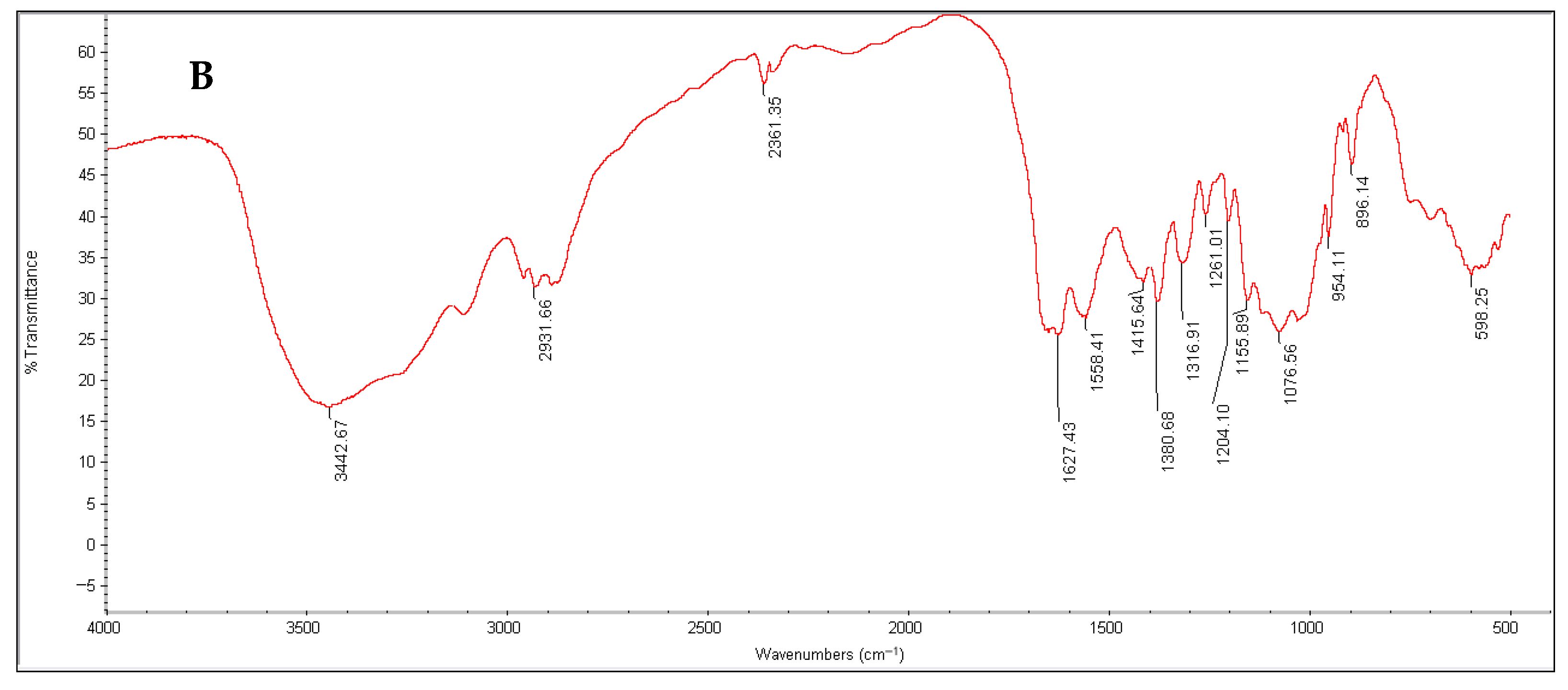
| Functional Groups | Fungal Chitosan (cm−1) | Chitosan/Pigment Composite (cm−1) |
|---|---|---|
| O–H and N–H stretching; H-bonding | 3451.71 | 3412.67 |
| Aliphatic C–H (–CH2/–CH3) stretch | — | 2931.60 |
| CO2 (ambient) | — | 2361.35 |
| Amide I (C=O) ± π–π/H-bond effects | 1630.55 | 1627.43 |
| CH2 bending (scissoring) | — | 1415.41 |
| CH3 bending/amide III contrib. | 1383.77 | 1380.86 |
| Amide III (C–N) + CH | 1323.83 | 1326.41 |
| C–O stretching (pyranose) | — | 1281.01 |
| C–N stretching/skeletal | — | 1261.01 |
| C–O–C stretching (pyranose ring) | 1029.31 | 986.11 |
| β-1,4-glycosidic linkage vibration | — | 886.14 |
| C–H out-of-plane; possible aromatic contribution | 697.95 | 668.14 |
| Low-freq skeletal/ring deformation | — | 589.25 |
Disclaimer/Publisher’s Note: The statements, opinions and data contained in all publications are solely those of the individual author(s) and contributor(s) and not of MDPI and/or the editor(s). MDPI and/or the editor(s) disclaim responsibility for any injury to people or property resulting from any ideas, methods, instructions or products referred to in the content. |
© 2026 by the author. Licensee MDPI, Basel, Switzerland. This article is an open access article distributed under the terms and conditions of the Creative Commons Attribution (CC BY) license.
Share and Cite
Al-Quwaie, D.A.H. Integrated Biorefinery of Rotted Date Fruits: One-Pot Co-Production of Lipids and Pigments by Talaromyces atroroseus PZ091940 and Valorization of Residual Biomass Wastes for Fungal Chitosan. Biology 2026, 15, 688. https://doi.org/10.3390/biology15090688
Al-Quwaie DAH. Integrated Biorefinery of Rotted Date Fruits: One-Pot Co-Production of Lipids and Pigments by Talaromyces atroroseus PZ091940 and Valorization of Residual Biomass Wastes for Fungal Chitosan. Biology. 2026; 15(9):688. https://doi.org/10.3390/biology15090688
Chicago/Turabian StyleAl-Quwaie, Diana A. H. 2026. "Integrated Biorefinery of Rotted Date Fruits: One-Pot Co-Production of Lipids and Pigments by Talaromyces atroroseus PZ091940 and Valorization of Residual Biomass Wastes for Fungal Chitosan" Biology 15, no. 9: 688. https://doi.org/10.3390/biology15090688
APA StyleAl-Quwaie, D. A. H. (2026). Integrated Biorefinery of Rotted Date Fruits: One-Pot Co-Production of Lipids and Pigments by Talaromyces atroroseus PZ091940 and Valorization of Residual Biomass Wastes for Fungal Chitosan. Biology, 15(9), 688. https://doi.org/10.3390/biology15090688