Article

Soil and Foliar Applications of Silicon Mitigate Biotic Stress in Cape Gooseberry Plants Caused by Fusarium Vascular Wilt


by
David Sebastián Chitiva-Sánchez
*,
Ana María Pérez-Rincón
,
Cristhian Camilo Chávez-Arias
,
Hermann Restrepo-Díaz
and
Sandra Gómez-Caro
*
Universidad Nacional de Colombia, Sede Bogotá, Facultad de Ciencias Agrarias, Departamento de Agronomía, Carrera 30 No. 45-03, Bogotá 111321, Colombia
*
Authors to whom correspondence should be addressed.
Biology 2026, 15(7), 536; https://doi.org/10.3390/biology15070536
Submission received: 6 March 2026 / Revised: 20 March 2026 / Accepted: 24 March 2026 / Published: 27 March 2026
(This article belongs to the Special Issue Plant Mineral Nutrition: Enhancing Plant Resilience)

Simple Summary

Vascular wilt is a serious disease that affects cape gooseberry, an important fruit crop in the Andean region. The disease is caused by a soil-borne fungal pathogen and blocks the plant’s water-conducting tissues, leading to leaf yellowing, wilting, reduced growth, and even plant death. Current management mainly relies on chemical fungicides, which may increase production cost and have environmental impacts. This study evaluated whether silicon (Si), a naturally occurring mineral element, could help cape gooseberry plants to tolerate the disease. Si was applied either to the soil or sprayed on the leaves of the plants grown under greenhouse conditions. We found that plants receiving Si, especially through soil application, showed less disease symptoms and better growth compared to untreated infected plants. Si-treated plants also maintained healthier leaves and improved physiological performance under infection. These results indicate that Si can strengthen the plant’s natural ability to cope with the disease. Using Si as a complementary strategy could contribute to more sustainable and environmentally friendly management of vascular wilt in cape gooseberry production.

Abstract

Vascular wilt caused by Fusarium oxysporum f. sp. physali (Foph) severely limits cape gooseberry (Physalis peruviana L.) production in Andean regions, where management options are restricted and largely dependent on fungicides. Silicon (Si) has been proposed as a sustainable strategy to enhance tolerance to vascular pathogens; however, its role in the cape gooseberry–Foph pathosystem remains unknown. This study evaluated the effects of soil and foliar Si applications on disease development and physiological responses in cape gooseberry plants under greenhouse conditions. Three soil doses and three foliar doses were tested, including inoculated and non-inoculated controls without treatment. Si significantly reduced disease progression, decreasing the area under the disease progress curve (AUDPC) and disease severity index, with efficacy values of up to 69% in inoculated plants, particularly at 8 g kg−1 soil application. Si also reduced vascular browning and mitigated pathogen-induced physiological impairment by maintaining higher stomatal conductance, relative chlorophyll content, maximum quantum efficiency of photosystem II, and plant growth. These findings indicate that Si, especially when soil-applied, enhances physiological tolerance to Foph and represents a promising complementary tool for its integrated management.

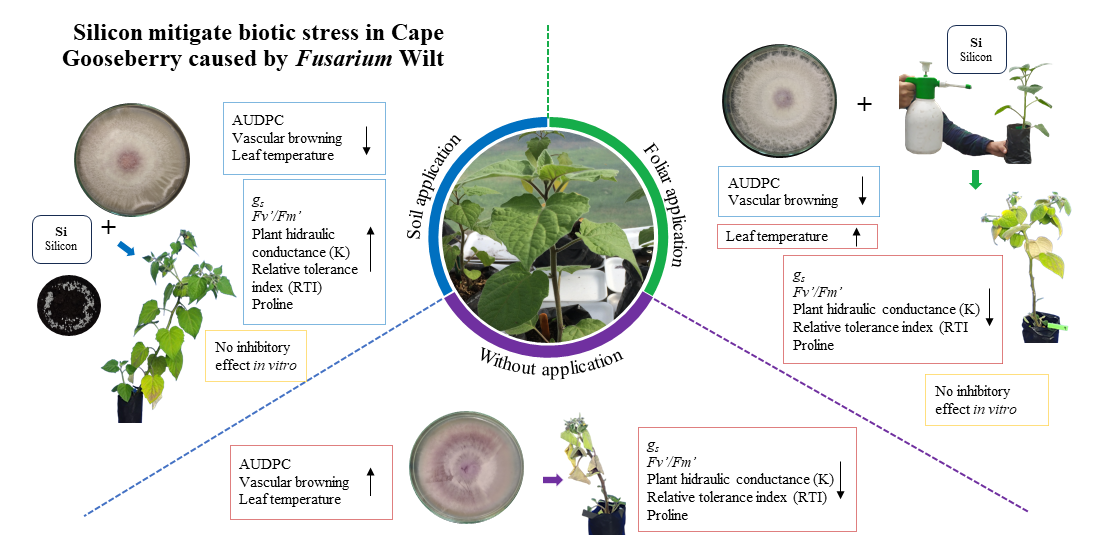
Graphical Abstract

1. Introduction

Cape gooseberry (Physalis peruviana L.) is an important fruit crop due to its wide range of nutritional and medicinal properties [1]; consequently, its production has expanded across both tropical and subtropical countries [2]. Colombia is one of the main producers, with exports reaching 8541 tons of fresh fruit in 2022 [3,4]. In Colombia, three major diseases of economic importance have been reported in this crop: gray leaf spot (Cercospora spp.), dieback (Phoma sp.), and vascular wilt caused by Fusarium oxysporum f. sp. physali (Foph) [5]. The latter is the most limiting and causes the most severe damage. Its main impacts include reduced yield and fruit quality, as well as crop abandonment by farmers due to the persistence of the pathogen in the soil [2,6]. Management of this disease is particularly challenging because of the formation of resistant survival structures in the soil and the susceptibility of commercially available cultivars used by growers [7].
Silicon (Si) has been proposed as a sustainable strategy to enhance plant tolerance to vascular and other plant–pathogens [8]. Recent studies indicate that Si can exert beneficial effects in plant–pathogen interactions by activating defense-related enzymes, stimulating the production of antimicrobial compounds, and modulating signaling networks and genes associated with active plant defense [8,9,10]. In addition, Si has been reported to provide a physical barrier, as it accumulates in plant cell walls, conferring structural reinforcement against pathogen penetration [8,11,12]. The beneficial effects of Si have been observed in various plant species; however, most reports concern grasses such as rice, sugarcane, and certain Cyperaceae due to their high capacity to bioaccumulate this element [13,14,15]. Its positive effects have been described for foliar diseases caused by different pathogens in crops such as lettuce—Bremia lactucae [16], banana—Mycosphaerella fijiensis [17], coffee—Hemileia vastatrix [18], and wheat—Blumeria graminis [19]. For soil-borne diseases, beneficial effects of Si have been reported in oriental melon—Fusarium spp. [20], pepper—Phytophthora capsici [11], and coffee—Meloidogyne exigua [21]. In the case of vascular wilts caused by F. oxysporum, positive effects of Si have been reported in cucumber—F. oxysporum f. sp. cucumerinum [22], tomato—F. oxysporum f. sp. radicis-lycopersici [12], banana—F. oxysporum f. sp. cubense [23], and cotton—F. oxysporum f. sp. vasinfectum [24].
In recent years, the beneficial role of Si and its method of application, whether foliar or soil-based, in the prevention of diseases in dicotyledonous plants has gained increasing importance in tropical environments. Machado-López et al. [25] found that pre-harvest soil treatment with reduced potassium and soluble Si was most effective in controlling Botrytis during the post-harvest phase of rose cv. ‘Brighton’. Furthermore, Vargas-Rojas et al. [26] demonstrated that the application of Si, either to the soil or foliage, reduced leaf diseases, such as ascochyta blight, powdery mildew, and downy mildew, thereby decreasing the reliance on fungicides without affecting yield. Previous studies suggest that Si compounds can be incorporated into disease management strategies for dicot crops. However, to date, no studies have evaluated the effect of Si applications in the cape gooseberry–Foph pathosystem.
Considering the economic importance of this crop and the limiting nature of vascular wilt—largely due to the long-term persistence of the pathogen in soil through chlamydospore production [27] and its difficult control—the identification of alternative management strategies is urgently required. Given the promising reports of reducing vascular wilt severity caused by different formae speciales within the species Fusarium oxysporum following Si application, to evaluate its effect on vascular wilt caused by Foph in cape gooseberry is of significant interest. Therefore, the objective of this study was to assess the effect of different doses of Si applied either foliar or to the soil on the development of vascular wilt in cape gooseberry and on plant physiological performance. The findings suggest that Si is a promising alternative for managing vascular wilt in cape gooseberry crops. It not only helps to control the disease but also enhances plant behavior, making it a viable option for sustainable farming.

2. Materials and Methods

2.1. Plant Material and Growth Conditions

The experiment was conducted between February and June 2021 under greenhouse conditions at the Faculty of Agricultural Science, of the Universidad Nacional de Colombia, Bogotá campus (4°35′56″ N, 74°04′51″ W), with a mean temperature of 18 ± 8 °C, relative humidity ranging from 60 to 90%, and a natural photoperiod of 12 h.
Cape gooseberry (P. peruviana) seedlings of the “Colombia” ecotype, with three to four true leaves, were obtained from the Bio Systems Center Jorge Tadeo Lozano and transplanted into bags containing 1 kg of soil mixed with rice husk (3:1 v/v), previously autoclaved (121 °C, 15 PSI for 60 min). After transplanting, plants were irrigated every three days with 100 mL of a nutrient solution containing Nutri-ponic® (Walco S. A., Funza, Colombia) at a dose of 5 mL L−1 of water during the experiment [28,29]. To confirm the absence of F. oxysporum in the plant material prior to inoculation, basal stem cross sections were evaluated on potato dextrose agar (PDA) (Oxoid®, Basingstoke, UK) for pathogen colony development 10 days after sowing (DAS) [30].

2.2. Plant Inoculation with Foph and Silicon Application

The Map5 strain of Foph, provided by the Biological Control Laboratory of the Colombian Corporation for Agricultural Research (Agrosavia, Mosquera, Colombia), was used as the pathogen source [7,31,32]. For inoculum production, 7-day-old mycelial plugs were transferred into 125 mL of potato dextrose broth (PDB) (Alpha Biosciences, Baltimore, MD, USA) in Erlenmeyer flasks and maintained under constant agitation for 15 days as described by Chávez-Arias et al. [29]. The inoculum volume and conidial density required for plant infection using the drench method were determined in preliminary assays. A concentration of 1 × 10⁶ conidia mL−1 and a volume of 80 mL kg−1 soil were used to achieve infection based on the protocol adjusted of Chávez-Arias et al. [29]. This inoculum density and suspension volume were used to evaluate Si treatments on vascular wilt development.
Two Si sources were used. For soil application, Silizeo-K (Agromil S. A. Ibagué, Colombia, 75% SiO2 and 3% K2O) was applied. Foliar applications were performed using MisilK 360 (Bioest S. A. S. Cota, Colombia, 8.2% K2O and 29.5% SiO2). The application methodology and use of these Si fertilizers were previously validated in tropical cropping systems [33,34]. Specifically, MisilK 360 was applied as a foliar spray, while Silizeo-K was applied at the base of the plant near the root zone at planting and subsequently covered with soil. For each Si source, three doses were evaluated: 2, 4, and 8 g kg−1 soil (soil application) and 0.5, 1, and 2 mL L−1 (foliar application). Two control treatments were included: inoculated plants without Si (Foph+) and non-inoculated plants without Si (Foph−). In total, eight treatments were evaluated: two Si sources (soil and foliar) at three doses each, plus two controls. The experiment was conducted twice over time.

2.3. Evaluation of Vascular Wilt Caused by Foph

Disease development was assessed weekly by visual inspection. Disease incidence (%) was calculated according to Zhang et al. [35]. Disease severity was evaluated using the severity scale described by Moreno-Velandia et al. [32], and the severity index was calculated following Townsend et al. [36].
The area under the disease progress curve (AUDPC) for each treatment was calculated according to Campbell et al. [37]. Treatment efficacy was calculated from AUDPC values using Abbott’s formula [38]:
E f f i c a c y   % = X Y X   ×   100
where X represents the AUDPC of the Foph+ treatment (inoculated without Si) and Y represents the AUDPC of each evaluated treatment.
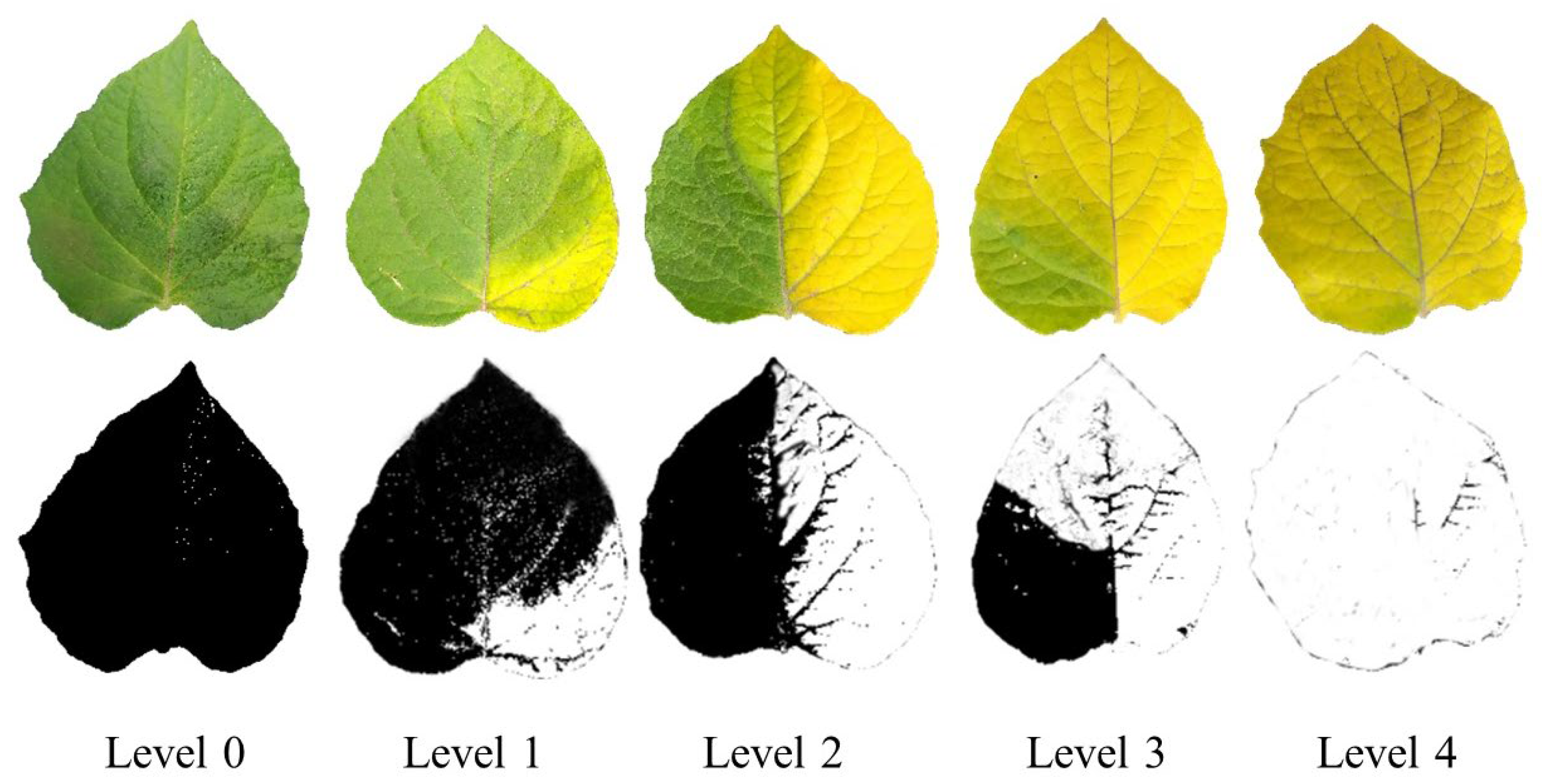
Leaf chlorosis caused by vascular wilt was evaluated using a six-level diagrammatic scale developed in this study (Appendix A, Figure A1). The percentage of necrotic area at the stem base was quantified using cross stem and longitudinal sections analyzed with ImageJ software (V.1.53, National Institutes of Health, Bethesda, MD, USA). At 70 days after inoculation (DAI), the presence of Foph was confirmed by pathogen isolation from explants taken from stem bases on PDA (Oxoid®, Basingstoke, UK), incubated at 24 °C for 7 days, verifying typical colony growth and morphological characteristics of F. oxysporum [30,39].

2.4. Physiological and Growth Variables

Plant height was measured from 14 to 70 DAI at 7-day intervals. Relative growth rate (RGR) was calculated using Castro-Duque et al. [40]:
R G R = L n   S L   T 2 L n   S L   T 1 D S   2 D S   1
where SL T2 and SL T1 are stem lengths at times 2 and 1, respectively, and DS2DS1 is the time interval in days.
At 63 and 70 DAI, leaf temperature (infrared thermometer, FLIR Systems Inc., Wilsonville, OR, USA), stomatal conductance (SC-1 porometer, Decagon Devices Inc., Pullman, WA, USA), relative chlorophyll content (RCC), and chlorophyll fluorescence parameters were measured using a MultispeQ V2 fluorometer (PhotosynQ, East Lansing, MI, USA). Chlorophyll fluorescence parameters included the maximum quantum efficiency of PSII (Fv’/Fm’), quantum efficiency of PSII under light conditions (φII), linear electron flow (LEF), photochemical quenching (qP), non-photochemical quenching (NPQt), uncontrolled non-photochemical dissipation (φNO), and controlled non-photochemical dissipation (φNPQ) were assessed. Measurements were performed on fully expanded upper-third leaves between 9:00 and 11:00 a.m. [29,41,42,43]. The relative tolerance index (RTI) was calculated from stomatal conductance data [44,45]:
R T I = g s   w i t h   F o p h g s   w i t h o u t   F o p h   ×   100  
At 70 DAI, leaf area (ImageJ V.1.53), fresh weight, dry weight, relative water content (RWC), and plant hydraulic conductance (K) were measured using a High-Pressure Flow Meter (HPFM, Dynamax Inc., Houston, TX, USA) [46]. RWC was calculated according to Equation (4) [47,48]:
R W C = F W D W T W D W   ×   100  
where FW is fresh weight, TW is turgid weight (after 24 h distilled water at 4 °C), and DW is dry weight (after 48 h at 70 °C).
Finally, leaf proline concentration was quantified as a biochemical response using the acid ninhydrin method [49].

2.5. In Vitro Effect of Silicon on Mycelial Growth of Foph

The effect of both Si sources on Foph mycelial growth was evaluated using the amended medium technique [50,51,52]. PDA was amended with 0.5, 1, and 2 mL L−1 of MisilK 360 and 2, 4, and 8 g L−1 of Silizeo-K at 35–40 °C before pouring into Petri dishes. A 6-mm mycelial disk from a 7-day-old Foph colony was placed in the center of each plate. Plates were incubated at 22 ± 2 °C (Incucell, Brno-Zábrdovice, Czech Republic). Colony diameter was measured every three days for 15 DAS using a digital caliper (Steren, Mexico City, Mexico). The area under the mycelial growth curve (AUGMC) was calculated [37,53,54]. The experiment was repeated twice.

2.6. Experimental Design and Data Analysis

Both in vivo and in vitro experiments followed a completely randomized design (CRD). For the in vivo experiment, five plants per treatment were used as replicates for the physiological and growth variables assessment. Disease variables (severity index and AUDPC) were evaluated in groups of four plants per replicate and five replicates per treatment were used according to Chaves-Gómez et al. [55]. For the in vitro experiment, six Petri dishes per treatment were used as replicates.
Data were subjected to one-way analysis of variance (ANOVA), considering treatment as the main factor. When significant effects were detected (p ≤ 0.05), means were separated using Tukey’s honestly significant difference (HSD) test. All pairwise comparisons among treatments were performed. p values are reported according to standard conventions, and extremely small values are expressed as p < 0.001. Correlation analyses were performed between RTI and AUDPC, efficacy, RGR, total dry weight, RWC, K, Fv’/Fm’, and proline to determine the most effective treatments under Foph inoculation.
Data were analyzed using Statistix v9.0 (Analytical Software, Tallahassee, FL, USA). Principal component analysis was performed using InfoStat 2020 (analytical software, Universidad Nacional de Córdoba, Córdoba, Argentina) to visualize treatment relationships.

3. Results

3.1. Evaluation of Vascular Wilt Caused by Foph

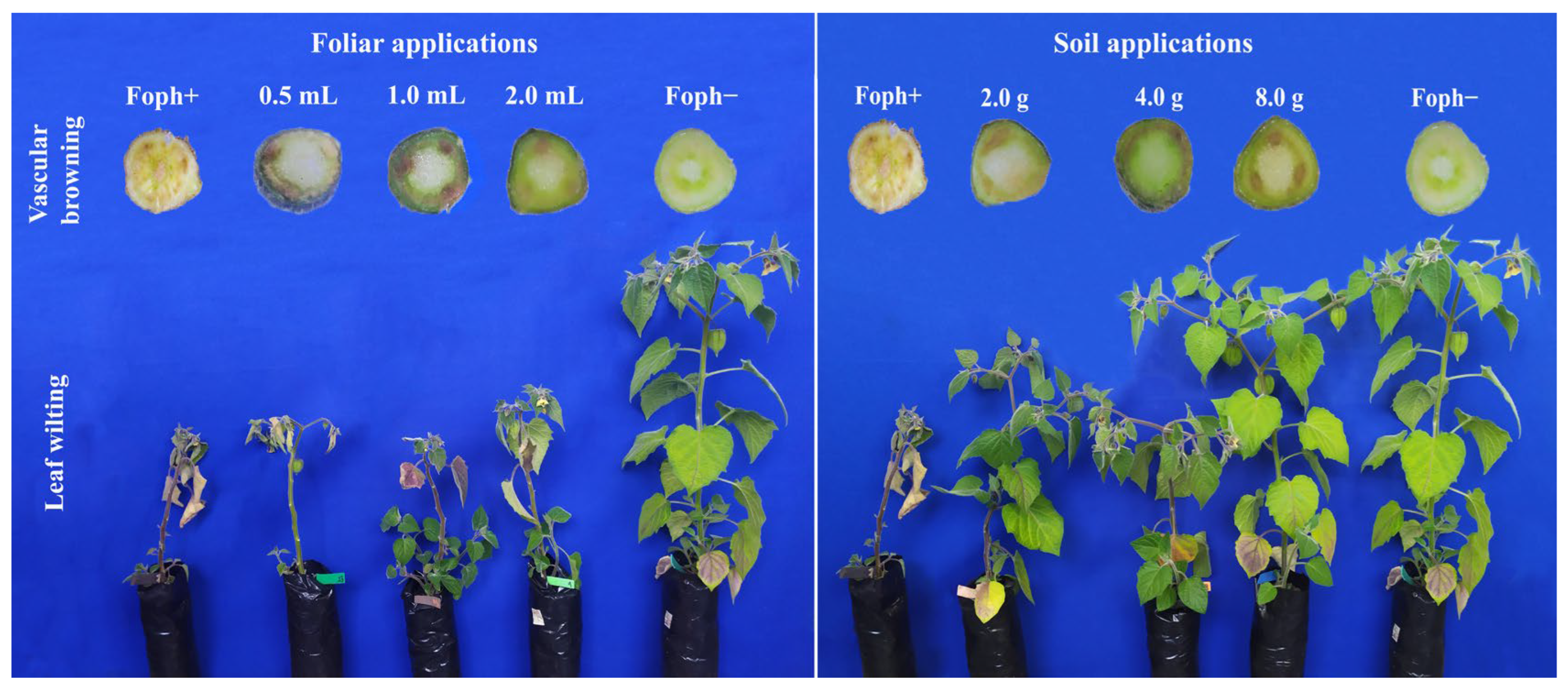
The inoculated plants exhibited typical symptoms of the disease caused by Foph reported by Mendoza-Vargas et al. [56] and Cháves-Arias et al. [45]; however, disease severity varied according to the treatment (Figure 1). Plants subjected to foliar Si applications showed limited visual improvement, displaying symptoms similar to the inoculated control (Foph+), including pronounced leaf wilting and vascular browning. In contrast, soil-applied Si treatments resulted in a noticeable reduction in symptom severity, with a dose-dependent response. The highest soil dose (8.0 g) showed minimal vascular browning and healthy plant appearance comparable to the non-inoculated control (Foph−), while intermediate (4.0 g) and lower doses (2.0 g) exhibited moderate and slight improvements, respectively.
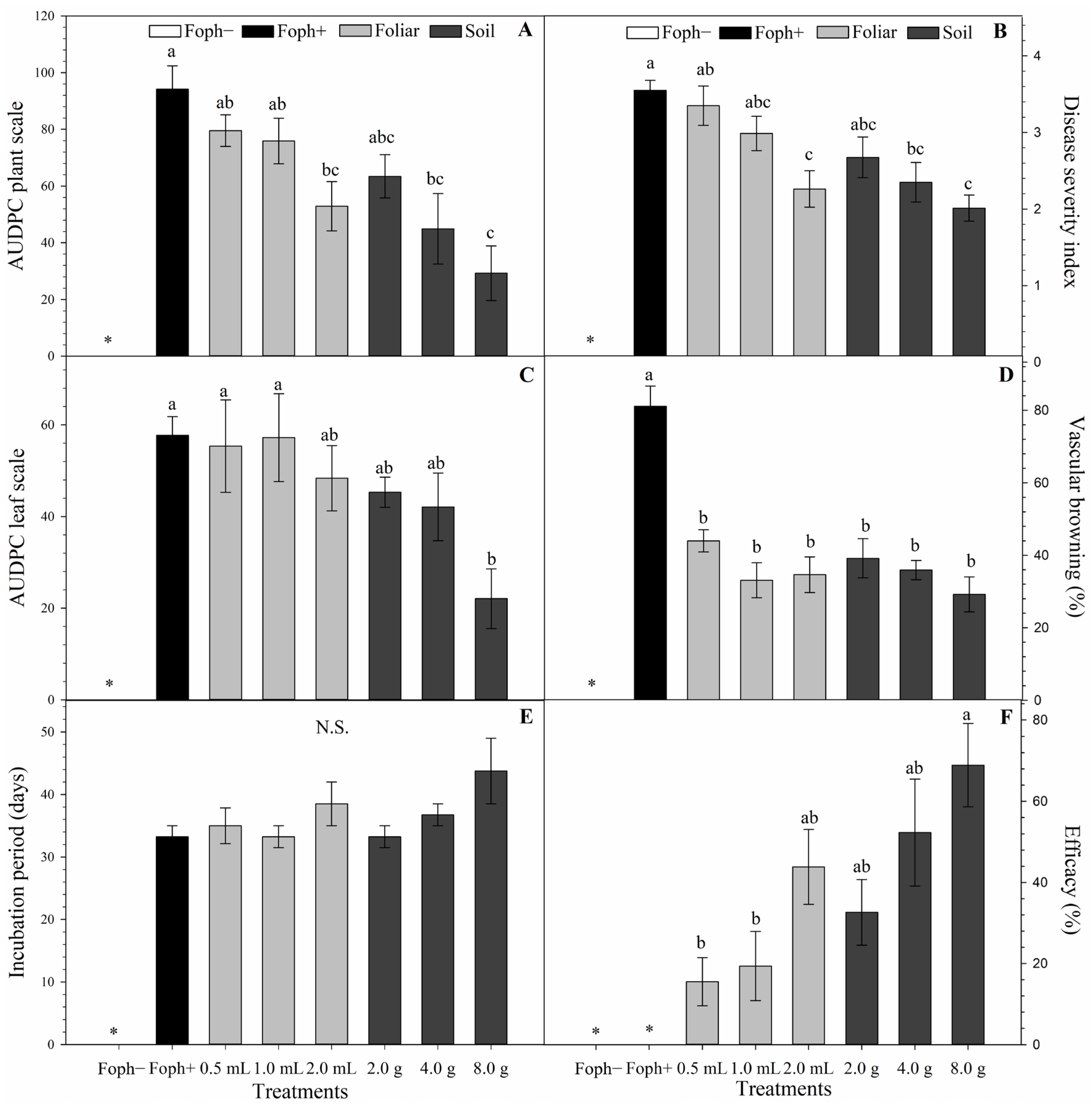
Significant differences were found in AUDPC based on the disease severity scale of Moreno-Velandia et al. [32] (p = 0.0006), AUDPC using the scale proposed in this study (p = 0.0224), disease severity index (p = 0.0005), vascular browning (p < 0.0001), and treatment efficacy (p = 0.0069) (Figure 2A–D,F). The lowest AUDPC value (29.3), lowest vascular browning (29.2%), and highest efficacy (68.9%) were obtained with the highest soil-applied Si dose (8 g kg−1). Soil Si applications resulted in lower AUDPC values (29.3–63.4) and severity indices (2.0–2.7) compared to foliar applications, where AUDPC ranged from 52.9 to 79.5 and severity index from 2.3 to 3.3. Similar results were observed for AUDPC calculated using the proposed scale (Figure 2C), with soil-applied Si treatments ranging from 22.1 to 45.3, whereas foliar treatments ranged from 48.4 to 55.4.
For vascular browning (Figure 2D), soil treatments ranged from 29.2 to 39.2%, while foliar treatments ranged from 33.1 to 44.0%. The incubation period of vascular wilt (Figure 2E) ranged from 33.2 to 43.7 days for soil treatments and from 33.2 to 38.5 days for foliar treatments. In Foph+ control, vascular browning reached 81.1% and incubation period was 33.2 days. Although incubation period differences were not significant, a trend toward higher values was observed with Si application, particularly at higher doses.
Regarding treatment efficacy (Figure 2F), soil applications of 4 and 8 g and the highest foliar dose (2 mL) showed the highest efficacy values (52.3%, 68.9%, and 43.8%, respectively) compared to the Foph+ control.
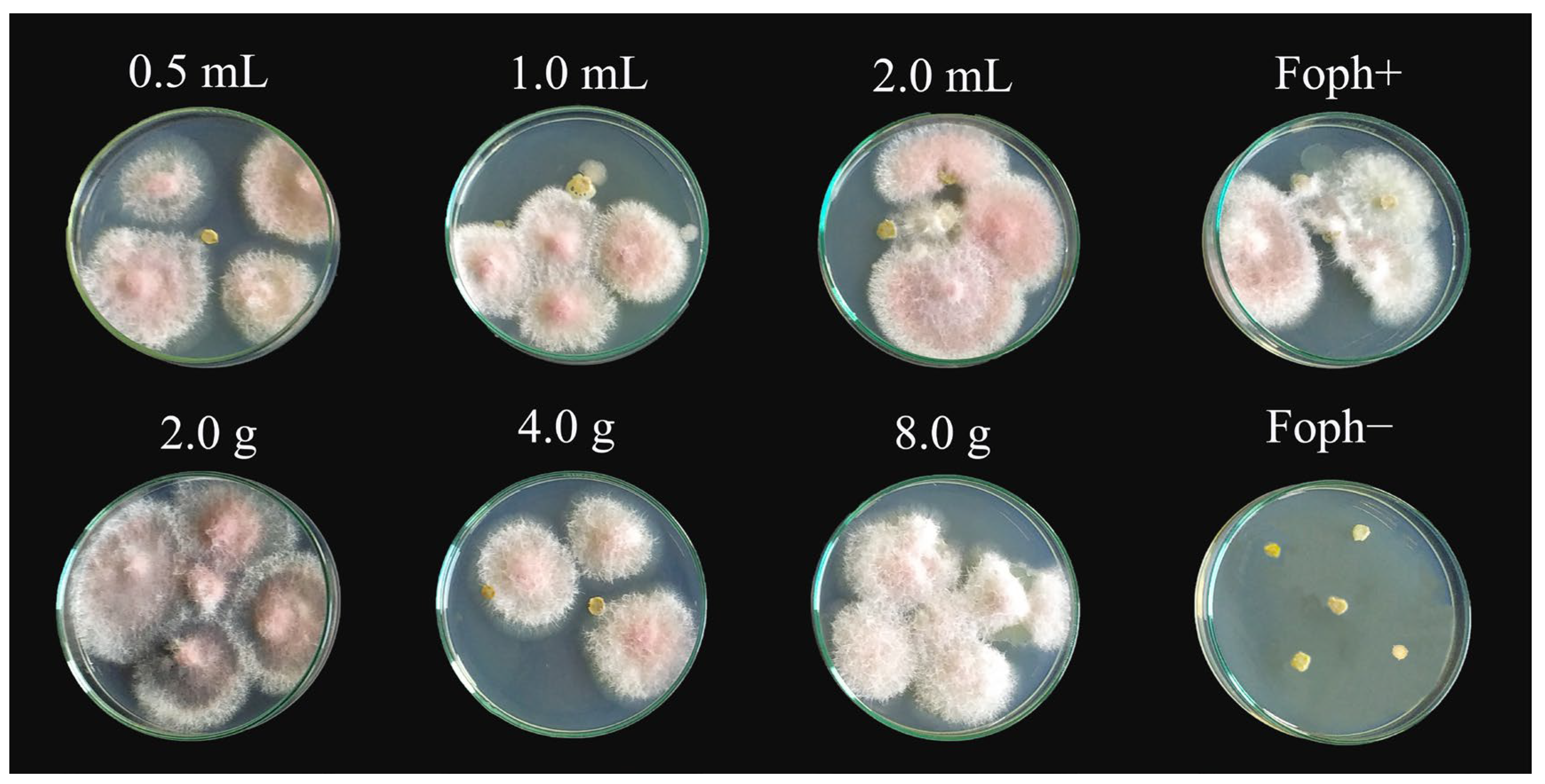
The presence of Foph in symptomatic plants was confirmed at 70 DAI through isolation on PDA medium (Appendix A, Figure A2). The obtained colonies matched the morphological descriptions for F. oxysporum [30,57].

3.2. Physiological and Growth Variables of Cape Gooseberry Plants

Significant differences among treatments were observed in RGR (p < 0.0001), leaf temperature at 63 and 70 DAI (p = 0.0012 and p < 0.0001), and stomatal conductance (gs) at 63 and 70 DAI (p < 0.0001). The highest RGR (0.0204 cm cm−1 d−1) was recorded in the 8 g soil-applied Si treatment, statistically similar to the non-inoculated control (Foph−). A similar pattern was observed for leaf temperature at 63 and 70 DAI in the 8 g soil treatment (23.3 °C and 20.6 °C), with no significant differences compared to Foph− (22.5 °C and 19.6 °C). For stomatal conductance, a general trend of higher gs values was observed in Si-treated plants. At 63 and 70 DAI, the 8 g soil treatment (269.1 and 341.1 mmol CO2 m−2 s−1) was statistically similar to Foph− (307.2 and 352.0 mmol CO2 m−2 s−1) (Table 1).
Regarding photosynthetic parameters, significant differences were observed in RCC at 63 and 70 DAI (p = 0.0018 and 0.0298), Fv’/Fm’ at 70 DAI (p = 0.0177), and LEF at 63 DAI (p = 0.0011). Other evaluated variables showed no statistical differences. RCC was highest in Foph− (48.2 SPAD at 63 and 70 DAI) and the 8 g soil treatment (46.8 and 43.4 SPAD at 63 and 70 DAI, respectively), without significant differences. The lowest values were observed in Foph+ without Si (31.2 and 27.2 SPAD). At 70 DAI, Fv’/Fm’ differed significantly among treatments. The highest value (0.67) was observed in the 8 g soil treatment, while the lowest values were found in Foph+ without Si (0.34) and 0.5 mL foliar Si (0.31) (Table 2).
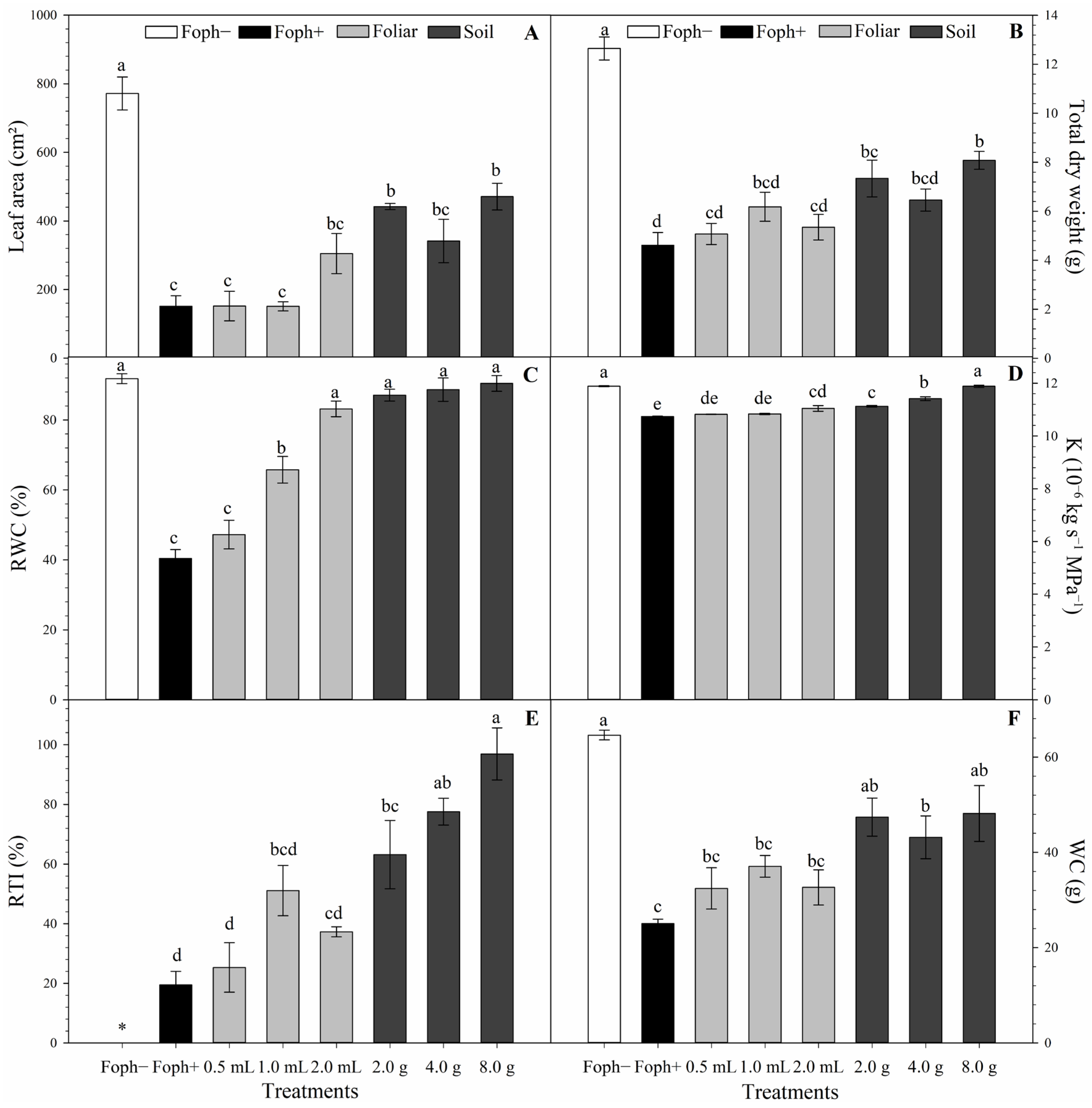
Leaf area, dry weight, RWC, K, RTI, and water content (WC) showed highly significant differences (p < 0.0001). Foph inoculation reduced leaf area and dry weight compared to Foph− (771.6 cm2 and 12.6 g). However, soil-applied Si increased these values compared to Foph+ and foliar treatments. The 8 g soil treatment showed significantly higher values (470.9 cm2 and 8.1 g). For RWC, K, RTI, and WC, soil applications—especially 8 g—showed the best performance, mitigating water stress caused by Foph and reaching values similar to Foph− (90.4%, 11.9 × 10⁻⁶ kg s−1 MPa−1, 96.9%, and 48.2 g, respectively) (Figure 3).
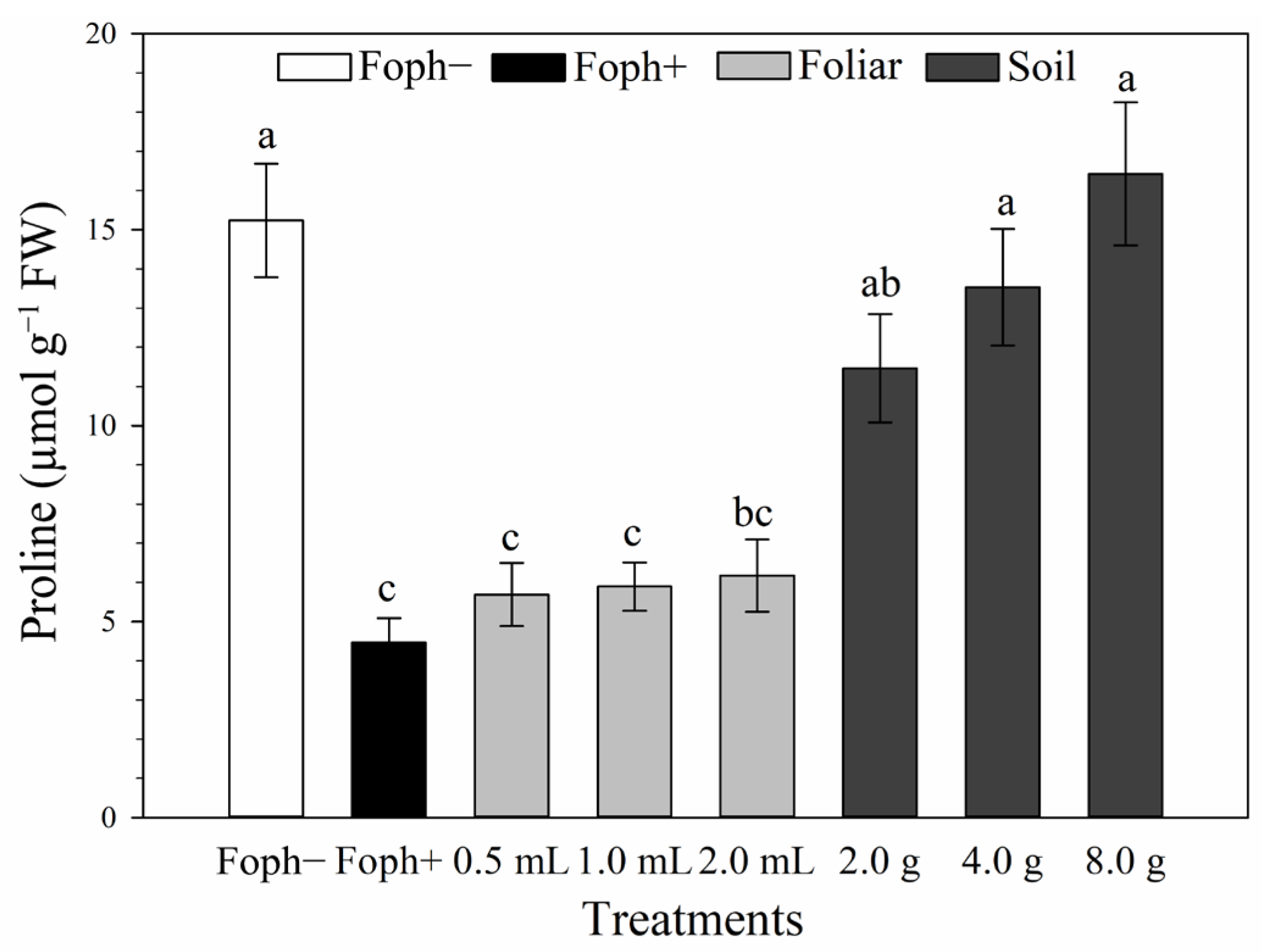
Proline content showed significant differences (p < 0.0001). The Foph− control had 15.2 µmol g−1 FW, similar to soil Si treatments, with the highest value in the 8 g treatment (16.4 µmol g−1 FW) (Figure 4).
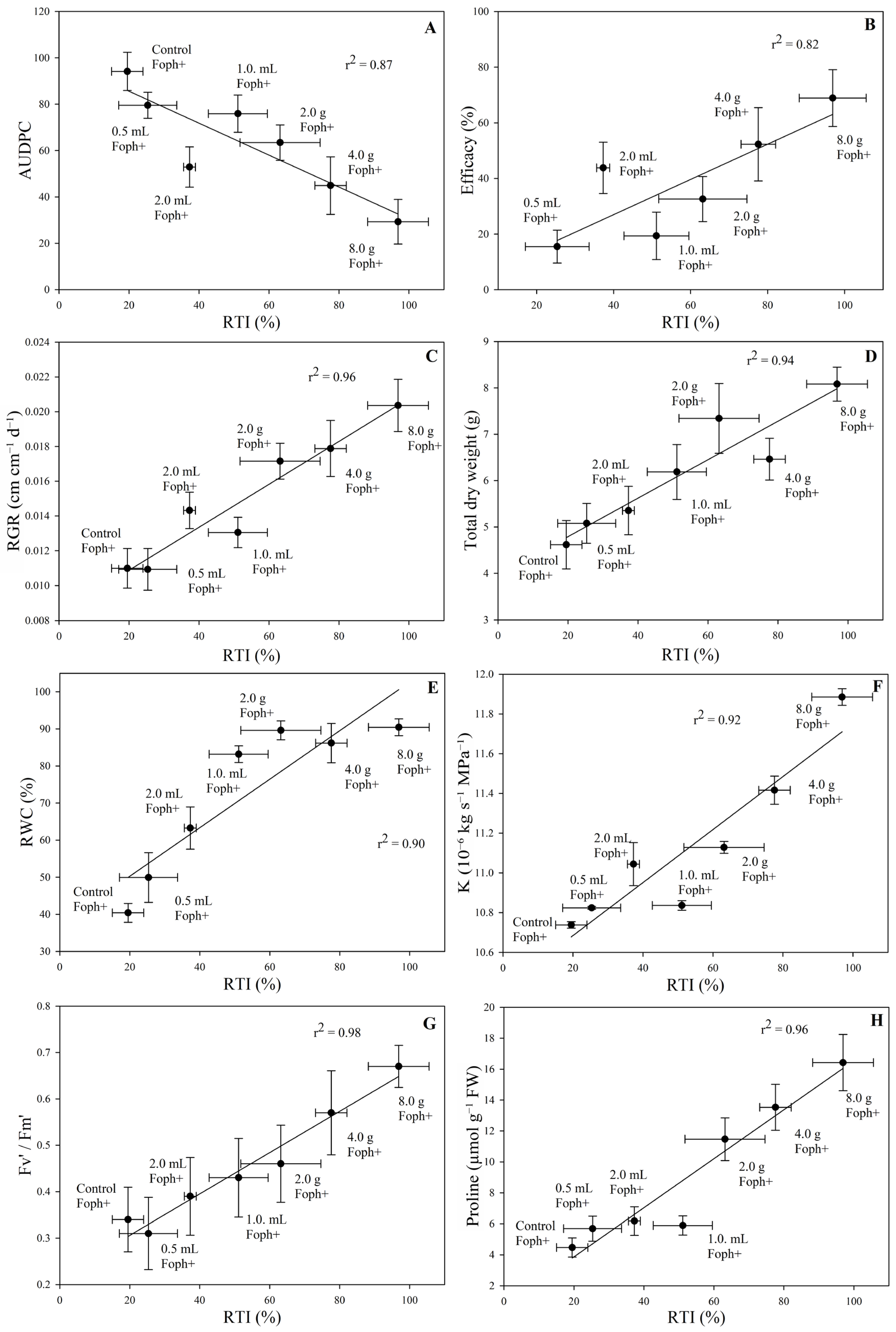
AUDPC showed a negative correlation with RTI (r2 = 0.87; p = 0.0105), indicating that soil applications at 4 and 8 g had the lowest disease progression and highest tolerance (Figure 5A). Efficacy, RGR, total dry weight, RWC, K, Fv’/Fm’, and proline content showed strong positive correlations with RTI (r2 ranging from 0.82 to 0.98), particularly in the 4 and 8 g soil treatments (Figure 5B–H).
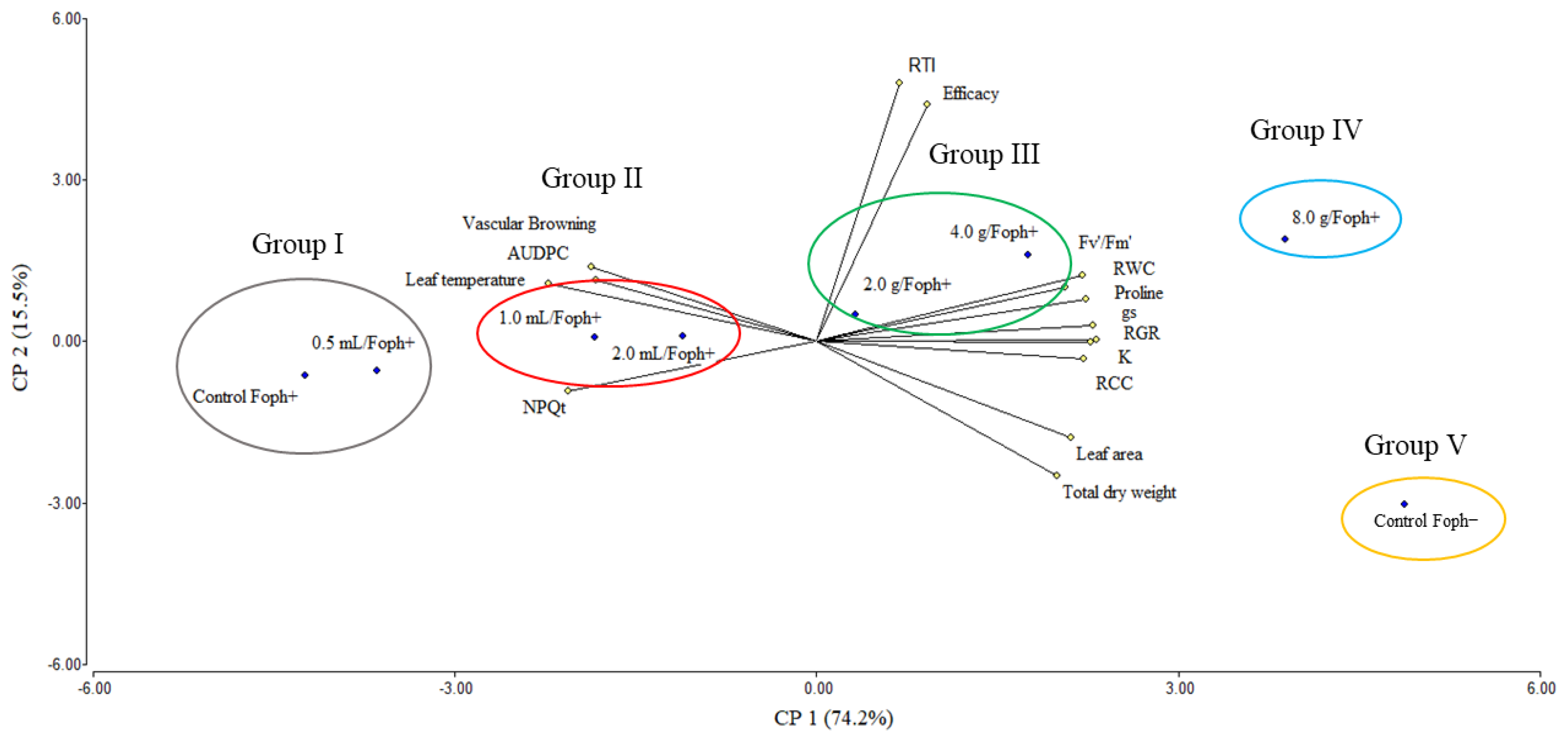
Physiological and biochemical responses at 70 DAI (Figure 6) explained 90% of the variation observed according to principal component analysis (PCA). The variables are represented by vectors, whereas the Si application method and doses are identified by points. Foph− plants formed a distinct group (group V), while Foph+ plants without Si were in the opposite sector (group I), confirming the negative impact of the pathogen. Differential effects associated with Si applications were observed. The 8 g soil treatment clustered close to Foph− (group IV), while 2 and 4 g soil treatments formed an intermediate group (group III). Foliar treatments clustered near Foph+ (group II), indicating a weaker mitigation effect.
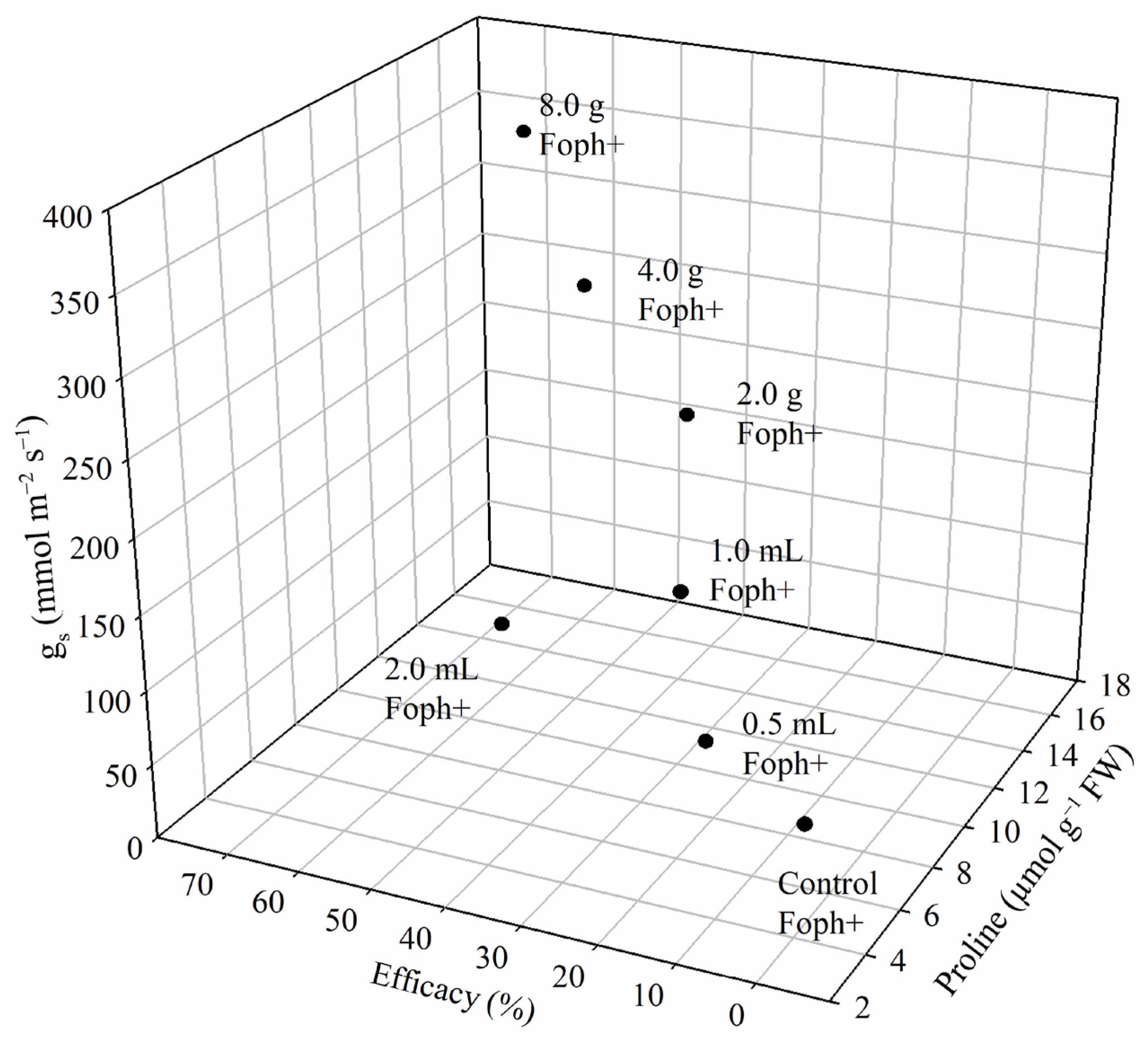
The three-dimensional plot (efficacy percentage, proline content, and gs) confirmed that soil application of 4.0 and 8.0 g Si improved plant response against vascular wilt caused by Foph (Figure 7).

3.3. In Vitro Effect of Silicon on Mycelial Growth of Foph

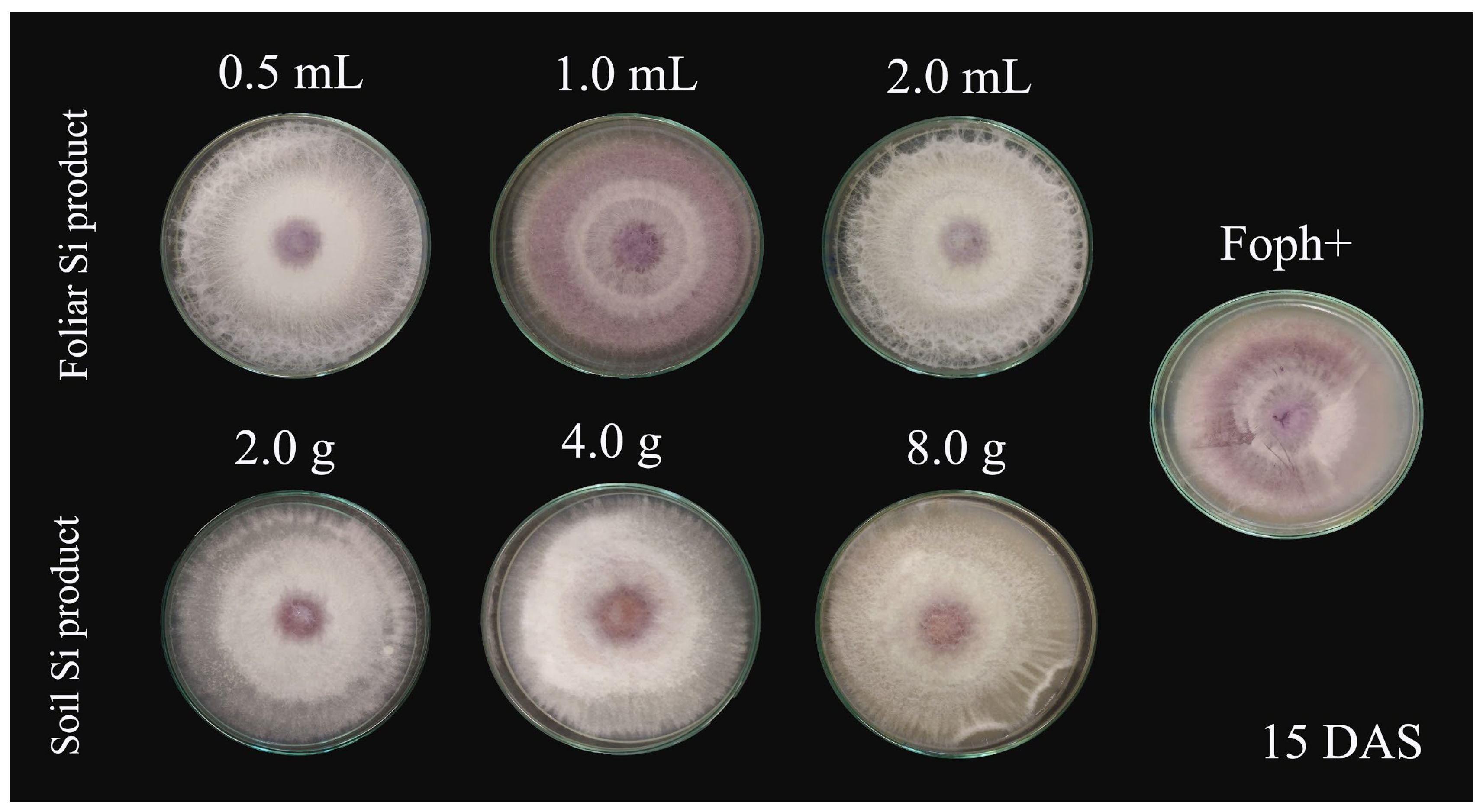
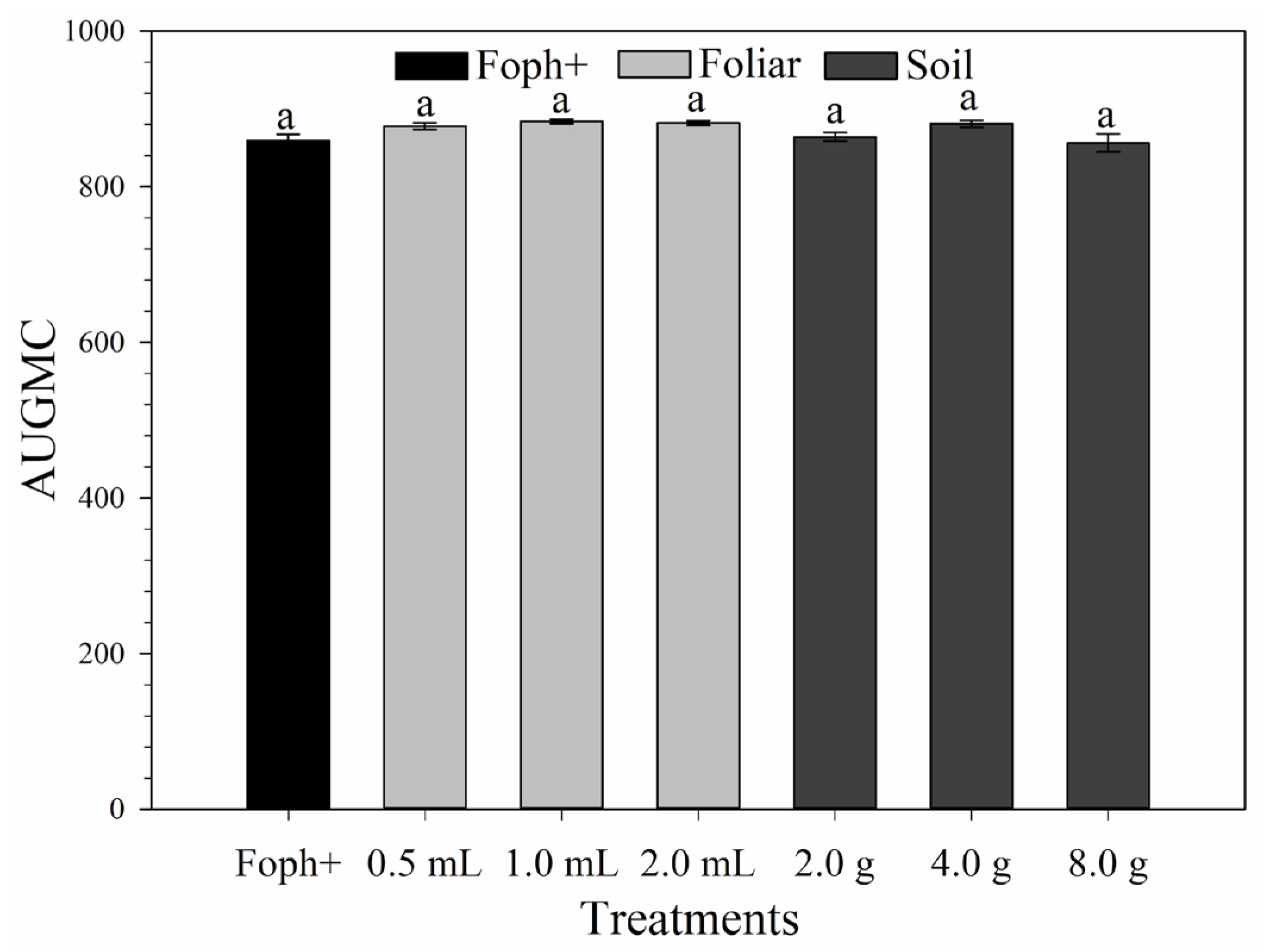
The soil and foliar applied Si products did not show significant inhibitory effects on the in vitro mycelial growth of Foph at any of the evaluated doses (Appendix A, Figure A3 and Figure A4).

4. Discussion

Vascular wilt of cape gooseberry is the most limiting and impactful disease in the main production areas in Colombia, as well as in other Andean regions [58]. Despite its importance, available management strategies remain limited and have relied primarily on fungicide use. However, alternative approaches have been explored [29,32,45,59]. In this context, Si has been proposed as a sustainable alternative capable of inducing tolerance against diverse pathogens, particularly those associated with vascular diseases [8,52]. In this study, the effect of soil and foliar Si applications on the severity of the disease was evaluated. The results demonstrate that Si application in cape gooseberry significantly reduced Foph severity and improved plant performance, thereby confirming the potential of this element as a component of integrated crop management.
Disease analysis showed that Si treatments, particularly soil applications significantly reduced the progression of vascular wilt caused by Foph. Additionally, these treatments exhibited the highest levels of disease control efficacy. These findings are consistent with Sun et al. [52], who observed that soil drench application of Si (1.2 mmol Na2SiO3·9H2O per plant) reduced cucumber wilt caused by F. oxysporum f. sp. cucumerinum with an efficacy of 69.3%. Similarly, Huang et al. [12] reported a 52.5% reduction in AUDPC following the application of 60 mg Si per plant (0.6 g Na2SiO3·9H2O) in tomato inoculated with F. oxysporum f. sp. radicis-lycopersici, compared with inoculated control without Si. Likewise, Fortunato et al. [23] observed a 51.9% reduction in AUDPC in banana plants affected by F. oxysporum f. sp. cubense through the application of 1.75 g calcium silicate (10.5% Si).
The result obtained indicates that, under the Si sources and doses evaluated, the protective effect of Si against vascular wilt in cape gooseberry seems not to be associated with direct antifungal activity but rather with plant-mediated mechanisms. Similar findings were reported by Belhedi et al. [60], who found no significant difference in the mycelial growth of Fusarium brachygibbosum after the application of SiO2 nanoparticles compared with the control. Although some studies have reported partial inhibition (15–50%) of fungal growth depending on Si concentration and formulation in different Fusarium species [52,61,62,63], these responses appear to be context-dependent.
The greater efficacy of Si in mitigating vascular wilt was also reflected in a more favorable plant performance of cape gooseberry plants infected by Foph. Infection by vascular pathogens such as F. oxysporum compromises plant growth, water status, and photosynthetic functionality because of xylem obstruction, water imbalance, increased oxidative stress, and the production of fungal toxins, including fusaric acid, dehydrofusaric acid, and lycomarasmin, which contribute to wilt symptom development [56,64,65]. Consistent with this pattern, plants inoculated only with Foph showed marked reductions in RTI, stomatal conductance, relative chlorophyll content, and maximum quantum efficiency of photosystem II, along with increased leaf temperature. In contrast, soil Si applications maintained these variables at levels close to those observed in non-inoculated plants, suggesting effective attenuation of pathogen-induced physiological stress. Similar results have been reported in other pathosystems, where Si contributed to preserving stomatal conductance, photosynthetic efficiency, and plant water status in Fusarium-infected plants, thereby enhancing tolerance to biotic stress [52,66,67,68].
Proline content has been widely used as a biochemical marker to evaluate plant responses to stress conditions [69]. In this study, soil applications of Si, increased proline content compared with the Foph-inoculated treatment without Si. This increase showed a strong correlation with the RTI, suggesting an enhanced capacity to cope with Foph-induced biotic stress. Increases in proline concentration and defense enzyme activity following Si application have previously been reported in tomato plants affected by fungal and bacterial pathogens [62]. Similarly, Elshahawy et al. [70] observed comparable responses in onion and garlic under attack by Stromatinia cepivora, while Mahdikhani et al. [71] reported increased proline content in squash infected with F. solani f. sp. cucurbitae after Si application compared with the control without Si.
The reduction in the severity of Foph wilt observed in Si-treated cape gooseberry plants may be associated with the activation of structural, biochemical, and molecular defense mechanisms that restrict colonization and progression of Foph within vascular tissues as has been reported previously [8,72]. Si has been found to accumulate in root and vascular cell walls, where it is deposited as silica or associated with cell wall polymers, promoting lignification and wall thickening. This constitutes a physical barrier that hinders penetration and movement of vascular pathogens [73,74]. In addition, Si application has been associated with increased synthesis of phenolic compounds, phytoalexins, and lignin, as well as activation of antioxidant defense-related enzymes [72,75]. Several studies have demonstrated that Si can modulate the expression of defense-related genes and signaling pathways mediated by phytohormones, which are key pathways in responses to vascular pathogens [8,76,77]. In this context, it can be hypothesized that Si would act as a resistance modulator that enables a more efficient defensive response of the host against Foph infection, as described in other pathosystems [8]. However, future studies must be conducted to reveal the mechanisms involved in the Si-mediated resistance observed in the Foph-Physalis peruviana interaction.
The mode of Si application differentially influenced the response of cape gooseberry plants to Foph. Overall, soil application of Si showed greater efficacy in reducing disease severity compared with foliar application, in agreement with reports from other pathosystems, including Podosphaera xanthii in Cucumis sativus [78], Colletotrichum gloeosporioides in Capsicum annuum [79], foliar diseases in Pisum sativum [26], and Fusarium spp. in Triticum spp. [80,81]. This greater efficacy may be related to more efficient root absorption of Si and its subsequent translocation through the xylem, favoring its accumulation in vascular tissues and aerial organs, where it can exert a more consistent effect on host defense mechanisms [73,74]. In contrast, foliar application of Si often shows lower persistence and systemic mobility due to surface accumulation and potential wash-off, limiting its redistribution to internal tissues and reducing its effectiveness against vascular pathogens [82]. Moreover, the higher efficacy of soil-applied Si may also be associated with priming effects, as Si supplied to roots can induce the expression of defense-related enzymes [83].
Multivariate analysis allowed the integration of physiological, photosynthetic, and disease severity responses, demonstrating that Si application coordinately modulates tolerance mechanisms in cape gooseberry under vascular wilt stress. The observed association between photosynthetic variables and lower disease severity suggests that Si contributes to maintaining photosynthetic apparatus functionality under Foph stress, possibly through improved water status, membrane stability, and attenuation of oxidative stress, as reported in other vascular pathosystems [8,73,74]. In this context, our results reinforce the hypothesis that Si does not act on a single process but exerts a systemic effect integrating structural, physiological, and metabolic responses. Likewise, the inverse relationship between disease severity index and physiological parameters supports the use of integrative indicators such as the RTI to more realistically describe plant functional status under stress [45,55,59]. Collectively, these results position Si as a key modulator of physiological resistance in cape gooseberry against Foph, integrating disease reduction with maintenance of plant physiological status.
The evidence generated in this study suggests that the effect of Si in mitigating vascular wilt in cape gooseberry cannot be explained solely by a direct reduction in disease severity, but rather by the induction of a more robust and functional physiological state under biotic stress. The convergence of reduced disease progression, preservation of photosynthetic performance, maintenance of plant water status, and increased accumulation of tolerance-associated metabolites such as proline supports the hypothesis that Si acts as a systemic modulator of the plant–pathogen interaction, as proposed in another host–Fusarium pathosystems [8,52,74]. These findings expand current knowledge on the role of Si in vascular pathosystems and provide strong evidence for its incorporation as a complementary component within integrated management strategies for vascular wilt in cape gooseberry, particularly in scenarios where chemical control options are limited or unsustainable. Nevertheless, future studies aimed at elucidating the underlying molecular mechanisms, as well as field evaluations under natural pathogen pressure, soil variability and environmental stress, will be essential to reinforce the use of Si as an agronomic tool in this crop.

5. Conclusions

Vascular wilt caused by Foph is a limiting disease in cape gooseberry cultivation. The disease can significantly reduce plant development, physiological and photosynthetic status, and ultimately cause plant wilting. In this study, Si application significantly reduced the severity of vascular wilt caused by Foph in cape gooseberry plants, with soil application—particularly at doses of 4 and 8 g per plant—being the most effective (52% and 69%, respectively). Disease mitigation was associated with preservation of physiological and photosynthetic performance in infected plants, as well as with an increase in proline content, indicating an improved capacity to respond to Si-induced biotic stress. Overall, the integration of disease severity, physiological, and photosynthetic variables through multivariate analysis demonstrates that Si acts as a systemic modulator of cape gooseberry tolerance to vascular wilt, beyond an isolated effect on disease progression. These findings support the use of Si as a complementary component within vascular wilt management strategies in cape gooseberry; however, future studies under field conditions and in combination with other management strategies, including crop yield evaluation, will be necessary to consolidate its commercial application. The findings of our study highlight the potential role of Si in Andean fruit production systems, providing valuable insights for sustainable agricultural practices. The significance of this lies in the possibility that Si application could reduce the need for synthetic fungicides making cape gooseberry production more sustainable and better suited for organic or zero-residue markets. Additionally, it expands the range of tools available to growers for integrated disease management, all while minimizing environmental impact.

Author Contributions

Conceptualization, S.G.-C. and H.R.-D.; methodology, S.G.-C., D.S.C.-S., C.C.C.-A. and H.R.-D.; software, D.S.C.-S.; validation, S.G.-C., C.C.C.-A. and H.R.-D.; formal analysis, D.S.C.-S.; investigation, D.S.C.-S. and A.M.P.-R.; resources, S.G.-C. and H.R.-D.; data curation, D.S.C.-S. and A.M.P.-R.; writing—original draft preparation, D.S.C.-S. and A.M.P.-R.; writing—review and editing, S.G.-C.; visualization, D.S.C.-S. and S.G.-C.; supervision, S.G.-C., C.C.C.-A. and H.R.-D.; project administration, S.G.-C.; funding acquisition, S.G.-C. and H.R.-D. All authors have read and agreed to the published version of the manuscript.

Funding

This research received no external funding.

Institutional Review Board Statement

Not applicable.

Informed Consent Statement

Not applicable.

Data Availability Statement

The original contributions presented in this study are included in the article. Further inqueries can be directed to the corresponding authors.

Acknowledgments

We thank the students Angie Carolina Cuervo Sánchez and Nicolás Felipe Restrepo González for their logistical support in setting up the experiment and conducting the samplings.

Conflicts of Interest

The authors declare no conflicts of interest.

Abbreviations

The following abbreviations are used in this manuscript:
AUDPCArea under the disease progress curve
AUGMCArea under the mycelial growth curve
CPPrincipal component
DAIDays after inoculation
DASDays after sowing
FophFusarium oxysporum f. sp. physali
Foph−Non-inoculated control without pathogen
Foph+Inoculated control with pathogen
gsStomatal conductance
KPlant hydraulic conductance
LEFLinear electron flow
NPQtNon-photochemical quenching
PCAPrincipal component analysis
qPPhotochemical quenching
RGRRelative growth rate
RTIRelative tolerance index
RWCRelative water content
SiSilicon
Fv’/Fm’Maximum quantum efficiency of photosystem II
PDAPotato dextrose agar
WCWater content
φIIQuantum efficiency of PSII under light conditions
φNOUncontrolled nonphotochemical dissipation
φNPQControlled non-photochemical dissipation

Appendix A

Appendix A.1

Figure A1. Diagrammatic scale to quantify the severity of vascular wilt caused by Foph on cape gooseberry (Physalis peruviana L.) leaves. 0 = healthy leaf with no chlorosis; 1 = leaf with chlorosis on 25% of the leaf blade; 2 = leaf with chlorosis on 50% of the leaf blade; 3 = leaf with chlorosis on 75% of the leaf blade; 4 = leaf with chlorosis on 100% of the leaf blade; over time, this leaf wilts and may remain attached to the stem or detach, causing defoliation.
Biology 15 00536 g0a1

Appendix A.2

Figure A2. Confirmation of pathogen presence in plants under the different Si treatments evaluated. Typical Foph colonies were observed on PDA medium from explants of cape gooseberry plants subjected to foliar Si applications (0.5, 1, and 2 mL L−1 of water) and soil-applied Si (2.0, 4.0, and 8.0 g kg−1 of soil) after 30 days of incubation at 22 °C. Absence of colonies was observed in the control treatment without the pathogen (Foph−), whereas presence of colonies was confirmed in the treatment inoculated only with the pathogen (Foph+).
Biology 15 00536 g0a2

Appendix A.3

Figure A3. Mycelial growth of Foph MAP5 under the foliar-applied product (MisilK 360) at three doses (0.5, 1.0, and 2.0 mL L−1), and under the soil-applied product (Silizeo-K) at three doses (2.0, 4.0, and 8.0 g kg−1). Images were taken at 15 DAS.
Biology 15 00536 g0a3

Appendix A.4

Figure A4. AUGMC of Foph MAP5 under the foliar-applied product (MisilK 360) at three doses (0.5, 1.0, and 2.0 mL L−1), and under the soil-applied product (Silizeo-K) at three doses (2.0, 4.0, and 8.0 g kg−1). Bars represent the standard error, and letters indicate statistically significant differences according to Tukey’s test (p ≤ 0.05).
Biology 15 00536 g0a4

References

  1. Ramadan, M.F. Bioactive Phytochemicals, Nutritional Value, and Functional Properties of Cape Gooseberry (Physalis peruviana): An Overview. Food Res. Int. 2011, 44, 1830–1836. [Google Scholar] [CrossRef]
  2. Fischer, G.; Almanza-Merchán, P.J.; Miranda, D. Importancia y Cultivo de La Uchuva (Physalis peruviana L.). Rev. Bras. Frutic. 2014, 36, 1–15. [Google Scholar] [CrossRef]
  3. Miranda, D.; Fischer, G. Avances Tecnológicos En El Cultivo de La Uchuva (Physalis peruviana L.) En Colombia. In Avances en el Cultivo de las Berries en el Trópico; Fischer, G., Miranda, D., Magnitskiy, S., Balaguera-López, H.E., Molano, Z., Eds.; Sociedad Colombiana de Ciencias Hortícolas: Bogotá, DC, Colombia, 2021; pp. 14–36. [Google Scholar] [CrossRef]
  4. ANALDEX—Asociación Nacional de Comercio Exterior. Informe Exportaciones de Uchuva 2022; ANALDEX: Bogotá, DC, Colombia, 2023. [Google Scholar]
  5. Forero, M.C. Enfermedades de la uchuva (Physalis peruviana L.). In Physalis Peruviana: Fruta Andina Para el Mundo; Caralho, C.P., Moreno, D.A., Eds.; CYTED-Red Temática CORNUCOPIA: Murcia, Spain, 2014; pp. 49–78. [Google Scholar]
  6. Simbaqueba, J.; Catanzariti, A.-M.; González, C.; Jones, D.A. Evidence for horizontal gene transfer and separation of effector recognition from effector function revealed by analysis of effector genes shared between cape gooseberry- and tomato-infecting formae speciales of Fusarium oxysporum. Mol. Plant Pathol. 2018, 19, 2302–2318. [Google Scholar] [CrossRef]
  7. Rodríguez-Velásquez, E.A. Caracterización de Aislamientos de Fusarium spp. Obtenidos de Zonas Productoras de Uchuva (Physalis peruviana) En Cundinamarca y Boyacá. Master’s Thesis, Universidad Nacional de Colombia, Bogotá, DC, Colombia, 2013. Available online: https://repositorio.unal.edu.co/handle/unal/50425 (accessed on 16 January 2026).
  8. Wang, M.; Gao, L.; Dong, S.; Sun, Y.; Shen, Q.; Guo, S. Role of Silicon on Plant–Pathogen Interactions. Front. Plant Sci. 2017, 8, 701. [Google Scholar] [CrossRef]
  9. Li, Y.C.; Bi, Y.; Ge, Y.H.; Sun, X.J.; Wang, Y. Antifungal Activity of Sodium Silicate on Fusarium sulphureum and Its Effect on Dry Rot of Potato Tubers. J. Food Sci. 2009, 74, M213–M218. [Google Scholar] [CrossRef]
  10. Jayawardana, H.A.R.K.; Weerahewa, H.L.D.; Saparamadu, M.D.J.S. The Mechanisms Underlying the Anthracnose Disease Reduction by Rice Hull as a Silicon Source in Capsicum (Capsicum annuum L.) Grown in Simplified Hydroponics. Procedia Food Sci. 2016, 6, 147–150. [Google Scholar] [CrossRef]
  11. French-Monar, R.D.; Rodrigues, F.A.; Korndörfer, G.H.; Datnoff, L.E. Silicon Suppresses Phytophthora Blight Development on Bell Pepper. J. Phytopathol. 2010, 158, 554–560. [Google Scholar] [CrossRef]
  12. Huang, C.-H.; Roberts, P.D.; Datnoff, L.E. Silicon Suppresses Fusarium Crown and Root Rot of Tomato. J. Phytopathol. 2011, 159, 546–554. [Google Scholar] [CrossRef]
  13. Liang, Y.; Wong, J.W.C.; Wei, L. Silicon-Mediated Enhancement of Cadmium Tolerance in Maize (Zea mays L.) Grown in Cadmium Contaminated Soil. Chemosphere 2005, 58, 475–483. [Google Scholar] [CrossRef] [PubMed]
  14. Liang, Y. Effects of Silicon on Enzyme Activity and Sodium, Potassium and Calcium Concentration in Barley under Salt Stress. Plant Soil 1999, 209, 217–224. [Google Scholar] [CrossRef]
  15. Epstein, E. The Anomaly of Silicon in Plant Biology. Proc. Natl. Acad. Sci. USA 1994, 91, 11–17. [Google Scholar] [CrossRef]
  16. Garibaldi, A.; Gilardi, G.; Cogliati, E.E.; Gullino, M.L. Silicon and Increased Electrical Conductivity Reduce Downy Mildew of Soilless Grown Lettuce. Eur. J. Plant Pathol. 2012, 132, 123–132. [Google Scholar] [CrossRef]
  17. Kablan, L.; Lagauche, A.; Delvaux, B.; Legrève, A. Silicon Reduces Black Sigatoka Development in Banana. Plant Dis. 2011, 96, 273–278. [Google Scholar] [CrossRef]
  18. Carré-Missio, V.; Rodrigues, F.A.; Schurt, D.A.; Resende, R.S.; Souza, N.F.A.; Rezende, D.C.; Moreira, W.R.; Zambolim, L. Effect of Foliar-Applied Potassium Silicate on Coffee Leaf Infection by Hemileia vastatrix. Ann. Appl. Biol. 2014, 164, 396–403. [Google Scholar] [CrossRef]
  19. Moldes, C.A.; de Lima Filho, O.F.; Merini, L.J.; Tsai, S.M.; Camiña, J.M. Occurrence of Powdery Mildew Disease in Wheat Fertilized with Increasing Silicon Doses: A Chemometric Analysis of Antioxidant Response. Acta Physiol. Plant. 2016, 38, 206. [Google Scholar] [CrossRef]
  20. Liu, L.E.I.; Guo, Y.; Bi, Y.; Li, M.; Zhao, J.; Zhao, H.U.A. Inhabited Mechanisms of Silicon Compounds Against Fusarium Rot (Fusarium spp.) of Postharvest Chinese Cantaloupe. J. Food Process. Preserv. 2009, 33, 187–202. [Google Scholar] [CrossRef]
  21. Silva, R.V.; Oliveira, R.D.L.; Nascimento, K.J.T.; Rodrigues, F.A. Biochemical Responses of Coffee Resistance against Meloidogyne exigua Mediated by Silicon. Plant Pathol. 2010, 59, 586–593. [Google Scholar] [CrossRef]
  22. Miyake, Y.; Takahashi, E. Effect of Silicon on the Growth of Solution-Cultured Cucumber Plant. Soil Sci. Plant Nutr. 1983, 29, 71–83. [Google Scholar] [CrossRef]
  23. Fortunato, A.A.; Rodrigues, F.Á.; Baroni, J.C.P.; Soares, G.C.B.; Rodriguez, M.A.D.; Pereira, O.L. Silicon Suppresses Fusarium Wilt Development in Banana Plants. J. Phytopathol. 2012, 160, 674–679. [Google Scholar] [CrossRef]
  24. Whan, J.A.; Dann, E.K.; Aitken, E.A.B. Effects of Silicon Treatment and Inoculation with Fusarium oxysporum f. sp. vasinfectum on Cellular Defences in Root Tissues of Two Cotton Cultivars. Ann. Bot. 2016, 118, 219–226. [Google Scholar] [CrossRef] [PubMed]
  25. Machado López, E.; Darghan, A.; Flórez Roncancio, V.J. Post-harvest Evaluation of the Effect of Foliar and Edaphic Applications of Silicon in Pre-harvest of Rose cv. ‘Brighton’. Plant Signal. Behav. 2025, 20, 2465234. [Google Scholar] [CrossRef]
  26. Vargas-Rojas, V.; Castro-Duque, N.; Moreno-Poveda, G.; Ligarreto-Moreno, G.; Restrepo-Díaz, H.; Gómez-Caro, S. Silicon Contributes to Control Foliar Diseases and Reduces Application Frequency of Synthetic Fungicides in Pea Crop. J. Soil Sci. Plant Nutr. 2025, 25, 10033–10050. [Google Scholar] [CrossRef]
  27. Osorio-Guarín, J.A.; Enciso-Rodríguez, F.E.; González, C.; Fernández-Pozo, N.; Mueller, L.A.; Barrero, L.S. Association Analysis for Disease Resistance to Fusarium oxysporum in Cape Gooseberry (Physalis peruviana L.). BMC Genom. 2016, 17, 248. [Google Scholar] [CrossRef] [PubMed]
  28. Chávez-Arias, C.C.; Gómez-Caro, S.; Restrepo-Díaz, H. Physiological, Biochemical and Chlorophyll Fluorescence Parameters of Physalis peruviana L. Seedlings Exposed to Different Short-Term Waterlogging Periods and Fusarium Wilt Infection. Agronomy 2019, 9, 213. [Google Scholar] [CrossRef]
  29. Chávez-Arias, C.C.; Gómez-Caro, S.; Restrepo-Díaz, H. Physiological Responses to the Foliar Application of Synthetic Resistance Elicitors in Cape Gooseberry Seedlings Infected with Fusarium oxysporum f. sp. physali. Plants 2020, 9, 176. [Google Scholar] [CrossRef]
  30. Leslie, J.F.; Summerell, B.A. The Fusarium Laboratory Manual, 1st ed.; Blackwell Publishing: Ames, IA, USA, 2006. [Google Scholar]
  31. Moreno-Velandia, C.A. Interactions Between Bacillus amyloliquefaciens Bs006, Fusarium oxysporum Map5 and Cape Gooseberry (Physalis peruviana). Ph.D. Thesis, Universidad Nacional de Colombia, Bogotá, DC, Colombia, 2017. Available online: https://repositorio.unal.edu.co/handle/unal/62781 (accessed on 16 January 2026).
  32. Moreno-Velandia, C.A.; Izquierdo-García, L.F.; Ongena, M.; Kloepper, J.W.; Cotes, A.M. Soil Sterilization, Pathogen and Antagonist Concentration Affect Biological Control of Fusarium Wilt of Cape Gooseberry by Bacillus velezensis Bs006. Plant Soil 2019, 435, 39–55. [Google Scholar] [CrossRef]
  33. Ramírez-Godoy, A.; Puentes-Pérez, G.; Restrepo-Díaz, H. An Evaluation of the Use of Calcium, Potassium and Silicon for the Management of Diaphorina citri Populations in Tahiti Lime Trees. Not. Bot. Horti Agrobot. Cluj-Napoca 2018, 46, 546–552. [Google Scholar] [CrossRef]
  34. Ramírez-Godoy, A.; Vera-Hoyos, M.D.P.; Jiménez-Beltrán, N.; Restrepo-Díaz, H. Effect of Potassium Silicate Application on Populations of Asian Citrus Psyllid in Tahiti Lime. HortTechnology 2018, 28, 684–691. [Google Scholar] [CrossRef]
  35. Zhang, J.; Howell, C.R.; Starr, J.L. Suppression of Fusarium Colonization of Cotton Roots and Fusarium Wilt by Seed Treatments with Gliocladium virens and Bacillus subtilis. Biocontrol Sci. Technol. 1996, 6, 175–188. [Google Scholar] [CrossRef]
  36. Townsend, G.R.; Heuberger, J.W. Methods for Estimating Losses Caused by Diseases in Fungicide Experiments. Plant Dis. Rep. 1943, 27, 340–343. [Google Scholar]
  37. Campbell, C.L.; Madden, L.V. Introduction to Plant Disease Epidemiology; John Wiley & Sons: New York, NY, USA, 1990. [Google Scholar]
  38. Abbott, W.S. A Method of Computing the Effectiveness of an Insecticide. J. Econ. Entomol. 1925, 18, 265–267. [Google Scholar] [CrossRef]
  39. Rekah, Y.; Shtienberg, D.; Katan, J. Disease Development Following Infection of Tomato and Basil Foliage by Airborne Conidia of the Soilborne Pathogens Fusarium oxysporum f. sp. radicis-lycopersici and F. oxysporum f. sp. basilici. Phytopathology 2000, 90, 1322–1329. [Google Scholar] [CrossRef]
  40. Castro-Duque, N.E.; Chávez-Arias, C.C.; Restrepo-Díaz, H. Foliar Glycine Betaine or Hydrogen Peroxide Sprays Ameliorate Waterlogging Stress in Cape Gooseberry. Plants 2020, 9, 644. [Google Scholar] [CrossRef]
  41. Kuhlgert, S.; Austic, G.; Zegarac, R.; Osei-Bonsu, I.; Hoh, D.; Chilvers, M.I.; Roth, M.G.; Bi, K.; TerAvest, D.; Weebadde, P.; et al. MultispeQ Beta: A Tool for Large-Scale Plant Phenotyping Connected to the Open PhotosynQ Network. R. Soc. Open Sci. 2016, 3, 160592. [Google Scholar] [CrossRef]
  42. Deva, C.R.; Urban, M.O.; Challinor, A.J.; Falloon, P.; Svitákova, L. Enhanced Leaf Cooling Is a Pathway to Heat Tolerance in Common Bean. Front. Plant Sci. 2020, 11, 19. [Google Scholar] [CrossRef]
  43. Ben-Jabeur, M.; Gracia-Romero, A.; López-Cristoffanini, C.; Vicente, R.; Kthiri, Z.; Kefauver, S.C.; López-Carbonell, M.; Serret, M.D.; Araus, J.L.; Hamada, W. The Promising MultispeQ Device for Tracing the Effect of Seed Coating with Biostimulants on Growth Promotion, Photosynthetic State and Water–Nutrient Stress Tolerance in Durum Wheat. EuroMediterr. J. Environ. Integr. 2020, 6, 8. [Google Scholar] [CrossRef]
  44. Pantoja-Benavides, A.D.; Garces-Varon, G.; Restrepo-Díaz, H. Foliar Cytokinins or Brassinosteroids Applications Influence the Rice Plant Acclimatization to Combined Heat Stress. Front. Plant Sci. 2022, 13, 983276. [Google Scholar] [CrossRef]
  45. Chávez-Arias, C.C.; Gómez-Caro, S.; Restrepo-Díaz, H. Mitigation of the Impact of Vascular Wilt and Soil Hypoxia on Cape Gooseberry Plants by Foliar Application of Synthetic Elicitors. HortScience 2019, 55, 121–132. [Google Scholar] [CrossRef]
  46. Li, S.; Su, P.; Zhang, H.; Zhou, Z.; Shi, R.; Gou, W. Hydraulic Conductivity Characteristics of Desert Plant Organs: Coping with Drought Tolerance Strategy. Water 2018, 10, 1036. [Google Scholar] [CrossRef]
  47. González, L.; González-Vilar, M. Determination of Relative Water Content. In Handbook of Plant Ecophysiology Techniques; Reigosa Roger, M.J., Ed.; Springer: Dordrecht, The Netherlands, 2001; pp. 207–212. [Google Scholar]
  48. Smart, R.E.; Bingham, G.E. Rapid Estimates of Relative Water Content. Plant Physiol. 1974, 53, 258–260. [Google Scholar] [CrossRef]
  49. Bates, L.S.; Waldren, R.P.; Teare, I.D. Rapid Determination of Free Proline for Water-Stress Studies. Plant Soil 1973, 39, 205–207. [Google Scholar] [CrossRef]
  50. D’Addazio, V.; dos Santos, R.A.A.; Leitão, A.S.B.; da Silva, M.B.; Fernandes, A.A.; Falqueto, A.R. Evaluation of in vitro Inhibition of Mycelial Growth of Fusarium solani f. sp. piperis by Different Products in Brazil. Afr. J. Microbiol. Res. 2016, 10, 1992–1999. [Google Scholar] [CrossRef][Green Version]
  51. Sakr, N. pH Variation Inhibits the Mycelial Growth of Fusarium spp. and Cochliobolus sativus. Pak. J. Phytopathol. 2021, 33, 265–273. [Google Scholar] [CrossRef]
  52. Sun, S.; Yang, Z.; Song, Z.; Wang, N.; Guo, N.; Niu, J.; Liu, A.; Bai, B.; Ahammed, G.J.; Chen, S. Silicon Enhances Plant Resistance to Fusarium Wilt by Promoting Antioxidant Potential and Photosynthetic Capacity in Cucumber (Cucumis sativus L.). Front. Plant Sci. 2022, 13, 1011859. [Google Scholar] [CrossRef] [PubMed]
  53. Damasceno, C.L.; Duarte, E.A.A.; dos Santos, L.B.P.R.; de Oliveira, T.A.S.; de Jesus, F.N.; de Oliveira, L.M.; Góes-Neto, A.; Soares, A.C.F. Postharvest Biocontrol of Anthracnose in Bananas by Endophytic and Soil Rhizosphere Bacteria Associated with Sisal (Agave sisalana) in Brazil. Biol. Control 2019, 137, 104016. [Google Scholar] [CrossRef]
  54. Rasiukevičiūtė, N.; Brazaitytė, A.; Vaštakaitė-Kairienė, V.; Kupčinskienė, A.; Duchovskis, P.; Samuolienė, G.; Valiuškaitė, A. The Effect of Monochromatic LED Light Wavelengths and Photoperiods on Botrytis cinerea. J. Fungi 2021, 7, 970. [Google Scholar] [CrossRef]
  55. Cháves-Gómez, J.L.; Becerra-Mutis, L.M.; Chávez-Arias, C.C.; Restrepo-Díaz, H.; Gómez-Caro, S. Screening of Different Physalis Genotypes as Potential Rootstocks or Parents Against Vascular Wilt Using Physiological Markers. Front. Plant Sci. 2020, 11, 806. [Google Scholar] [CrossRef]
  56. Mendoza-Vargas, L.A.; Villamarín-Romero, W.P.; Cotrino-Tierradentro, A.S.; Ramírez-Gil, J.G.; Chávez-Arias, C.C.; Restrepo-Díaz, H.; Gómez-Caro, S. Physiological Response of Cape Gooseberry Plants to Fusarium oxysporum f. sp. physali, Fusaric Acid, and Water Deficit in a Hydrophonic System. Front. Plant Sci. 2021, 12, 702842. [Google Scholar] [CrossRef]
  57. Nelson, P.; Toussoun, T.A.; Marasas, W.F.O. Fusarium Species: An Illustrated Manual for Identification.; Pennsylvania State University Press: Madison, WI, USA, 1983. [Google Scholar]
  58. Nuñez-Zarantes, V.M.; Puertas, D.R.; Luna-Mancilla, L.T.; Ramos-Zambrano, H.S. Chapter 5—Cape Gooseberry: Crop Production System in Colombia. In Handbook of Goldenberry (Physalis peruviana); Ramadan, M.F., Ed.; Academic Press (Elsevier): London, UK, 2024; pp. 55–66. [Google Scholar] [CrossRef]
  59. Chaves-Gómez, J.L.; Chávez-Arias, C.C.; Prado, A.M.C.; Gómez-Caro, S.; Restrepo-Díaz, H. Mixtures of Biological Control Agents and Organic Additives Improve Physiological Behavior in Cape Gooseberry Plants under Vascular Wilt Disease. Plants 2021, 10, 2059. [Google Scholar] [CrossRef]
  60. Belhedi, M.; Sghaier-Hammami, B.; Masiello, M.; Nafati, H.; Somma, S.; Gambacorta, L.; Salhi, R.; Messaoud, M.; Labidi, S.; Moretti, A.; et al. Silicon dioxide (SiO2) nanoparticles affect the morphology, sporulation, mycotoxin production, and pathogenicity of Fusarium brachygibbosum infecting olive trees. Front. Nanotechnol. 2025, 7, 1569453. [Google Scholar] [CrossRef]
  61. Abo-Elyousr, K.A.M.; Almasoudi, N.M.; Mousa, M.A.A.; Ibrahim, O.H.M.; El-Fawy, M.M.; Imran, M.; Sallam, N.M.A. Synergistic effects of Trichoderma spp. and sodium silicate against Fusarium wilt of tomato: In vitro and greenhouse evaluation. J. Plant Pathol. 2025, 108, 719–730. [Google Scholar] [CrossRef]
  62. Parveen, A.; Siddiqui, Z.A. Impact of Silicon Dioxide Nanoparticles on Growth, Photosynthetic Pigments, Proline, Activities of Defense Enzymes and Some Bacterial and Fungal Pathogens of Tomato. Vegetos 2022, 35, 83–93. [Google Scholar] [CrossRef]
  63. Abdulsatar, E.S.; Ibade, K.W. Antagonistic Potencial of Ascorbic Acid and SiO2 Against Fusarium oxysporum, the Causative of Damping-off Disease in Melon Seedlings. IOP Conf. Ser. Earth Environ. Sci. 2024, 1371, 032038. [Google Scholar] [CrossRef]
  64. Singh, V.K.; Singh, H.B.; Upadhyay, R.S. Role of Fusaric Acid in the Development of ‘Fusarium Wilt’ Symptoms in Tomato: Physiological, Biochemical and Proteomic Perspectives. Plant Physiol. Biochem. 2017, 118, 320–332. [Google Scholar] [CrossRef]
  65. Agrios, G.N. Agrios’ Plant Pathology, 6th ed.; Oliver, R.P., Hückelhoven, R., Del Ponte, E.M., Di Pietro, A., Eds.; Elsevier Academic Press: San Diego, CA, USA, 2024. [Google Scholar]
  66. Perez, C.E.A.; Rodrigues, F.Á.; Moreira, W.R.; DaMatta, F.M. Leaf Gas Exchange and Chlorophyll a Fluorescence in Wheat Plants Supplied with Silicon and Infected with Pyricularia oryzae. Phytopathology 2013, 104, 143–149. [Google Scholar] [CrossRef]
  67. Resende, R.S.; Rodrigues, F.Á.; Cavatte, P.C.; Martins, S.C.V.; Moreira, W.R.; Chaves, A.R.M.; DaMatta, F.M. Leaf Gas Exchange and Oxidative Stress in Sorghum Plants Supplied with Silicon and Infected by Colletotrichum sublineolum. Phytopathology 2012, 102, 892–898. [Google Scholar] [CrossRef] [PubMed]
  68. Polanco, L.R.; de Ávila Rodrigues, F.; Nascimento, K.J.T.; Cruz, M.F.A.; da Silva Curvêlo, C.R.; Damatta, F.M.; Vale, F.X.R. Photosynthetic Gas Exchange and Antioxidative System in Common Bean Plants Infected by Colletotrichum lindemuthianum and Supplied with Silicon. Trop. Plant Pathol. 2014, 39, 35–42. [Google Scholar] [CrossRef]
  69. Kaur, G.; Asthir, B. Proline: A Key Player in Plant Abiotic Stress Tolerance. Biol. Plant. 2015, 59, 609–619. [Google Scholar] [CrossRef]
  70. Elshahawy, I.E.; Osman, S.A.; Abd-El-Kareem, F. Protective Effects of Silicon and Silicate Salts against White Rot Disease of Onion and Garlic, Caused by Stromatinia cepivora. J. Plant Pathol. 2021, 103, 27–43. [Google Scholar] [CrossRef]
  71. Mahdikhani, M.; Shahmohammadi, J.; Siavashi, M. Effects of Potassium Silicate on Enhancement of Defense-Related Responses and Free Proline Content in Pumpkin Inoculated with Fusarium solani f. sp. cucurbitae. J. Biol. Environ. Sci. 2016, 12, 1–8. [Google Scholar]
  72. Ahammed, G.J.; Yang, Y. Mechanisms of Silicon-Induced Fungal Disease Resistance in Plants. Plant Physiol. Biochem. 2021, 165, 200–206. [Google Scholar] [CrossRef] [PubMed]
  73. Guntzer, F.; Keller, C.; Meunier, J.-D. Benefits of Plant Silicon for Crops: A Review. Agron. Sustain. Dev. 2012, 32, 201–213. [Google Scholar] [CrossRef]
  74. Debona, D.; Rodrigues, F.A.; Datnoff, L.E. Silicon’s Role in Abiotic and Biotic Plant Stresses. Annu. Rev. Phytopathol. 2017, 55, 85–107. [Google Scholar] [CrossRef]
  75. Sakr, N. The Role of Silicon (Si) in Increasing Plant Resistance against Fungal Diseases. Hell. Plant Prot. J. 2016, 9, 1–15. [Google Scholar] [CrossRef]
  76. Fauteux, F.; Rémus-Borel, W.; Menzies, J.G.; Bélanger, R.R. Silicon and Plant Disease Resistance against Pathogenic Fungi. FEMS Microbiol. Lett. 2005, 249, 1–6. [Google Scholar] [CrossRef]
  77. Singh, S.; Sahoo, M.R.; Acharya, G.C.; Jinger, D.; Nayak, P. Silicon: A Potent Nutrient in Plant Defense Mechanisms Against Arthropods. Silicon 2022, 14, 6493–6505. [Google Scholar] [CrossRef]
  78. Liang, Y.C.; Sun, W.C.; Si, J.; Römheld, V. Effects of Foliar- and Root-Applied Silicon on the Enhancement of Induced Resistance to Powdery Mildew in Cucumis sativus. Plant Pathol. 2005, 54, 678–685. [Google Scholar] [CrossRef]
  79. Jayawardana, H.A.R.K.; Weerahewa, H.L.D.; Saparamadu, M.D.J.S. Effect of Root or Foliar Application of Soluble Silicon on Plant Growth, Fruit Quality and Anthracnose Development of Capsicum. Trop. Agric. Res. 2014, 26, 74–81. [Google Scholar] [CrossRef]
  80. Sakr, N. Soluble Silicon Controls Fusarium Head Blight in Bread and Durum Wheat Plants. Gesunde Pflanz. 2021, 73, 479–493. [Google Scholar] [CrossRef]
  81. Sakr, N.; Kurdali, F. Silicon Root Application to Manage Fusarium Head Blight in Wheat Under Field Conditions. Gesunde Pflanz. 2023, 75, 261–269. [Google Scholar] [CrossRef]
  82. Rodrigues, F.; Dallagnol, L.J.; Duarte, H.S.S.; Datnoff, L. Silicon Control of Foliar Diseases in Monocots and Dicots. In Silicon and Plant Diseases; Rodrigues, F.A., Datnoff, L.E., Eds.; Springer International Publishing: Cham, Switzerland, 2015; pp. 67–108. [Google Scholar] [CrossRef]
  83. Dallagnol, L.J.; Rodrigues, F.A.; Pascholati, S.F.; Fortunato, A.A.; Camargo, L.E.A. Comparison of Root and Foliar Applications of Potassium Silicate in Potentiating Post-Infection Defences of Melon against Powdery Mildew. Plant Pathol. 2015, 64, 1085–1093. [Google Scholar] [CrossRef]
Figure 1. Cape gooseberry plants (Physalis peruviana L.) inoculated with Foph under different Si treatments showing typical symptoms of vascular wilt caused by Foph. Foph+: plants inoculated with Foph without Si; 0.5 mL: plants inoculated with Foph and foliar Si application at 0.5 mL L−1; 1.0 mL: plants inoculated with Foph and foliar Si at 1.0 mL L−1; 2.0 mL: plants inoculated with Foph and foliar Si at 2.0 mL L−1; 2.0 g: plants inoculated with Foph and soil-applied Si at 2 g kg−1 soil; 4.0 g: plants inoculated with Foph and soil-applied Si at 4 g kg−1 soil; 8.0 g: plants inoculated with Foph and soil-applied Si at 8 g kg−1 soil; Foph−: control plants without Foph and without Si.
Biology 15 00536 g001
Figure 2. Development of vascular wilt in Physalis peruviana inoculated with Foph at 70 DAI under Si treatments. (A) AUDPC. (B) Disease severity index. (C) AUDPC calculated using the scale proposed in this study. (D) Vascular browning. (E) Disease incubation period. (F) Efficacy of Si treatments. Bars represent the standard error; values followed by the same letter are not statistically different according to Tukey’s test (p ≤ 0.05). NS, not significant. Asterisk (*) indicates plants with zero values for the evaluated variable.
Biology 15 00536 g002
Figure 3. Effect of foliar and soil Si application on vascular wilt in cape gooseberry plants at 70 DAI: (A) leaf area (cm2); (B) plant dry weight (g); (C) RWC, %); (D) K (10−6 kg s−1 MPa−1); (E) RTI (%); and (F) WC (g). Bars represent the standard error, and letters indicate statistically significant differences according to Tukey’s test (p ≤ 0.05). Asterisk (*) indicates plants with zero values for the evaluated variable.
Biology 15 00536 g003
Figure 4. Effect of foliar and soil Si application on vascular wilt in cape gooseberry plants at 70 DAI on proline concentration (µmol g−1FW). Bars represent the standard error, and letters indicate statistically significant differences according to Tukey’s test (p ≤ 0.05).
Biology 15 00536 g004
Figure 5. Correlation between (A) AUDPC, (B) efficacy, (C) RGR, (D) total dry weight, (E) RWC, (F) K, (G) Fv’/Fm’, (H) proline content, and RTI in cape gooseberry plants with Foph and treated with foliar Si (0.5, 1.0, and 2.0 mL) or soil-applied Si (2.0, 4.0, and 8.0 g) at 70 DAI. Each point represents the mean of five plants. Vertical and horizontal bars indicate the standard error per treatment (n = 5).
Biology 15 00536 g005
Figure 6. Biplot analysis of cape gooseberry plants (Physalis peruviana L.) inoculated with Foph at 70 DAI under foliar and soil Si application. Abbreviations: Foph−, absolute control without Foph inoculation and without Si; Foph+, plants inoculated with Foph without Si; 0.5 mL, plants inoculated with Foph and foliar Si application at 0.5 mL L−1; 1.0 mL, plants inoculated with Foph and foliar Si at 1.0 mL L−1; 2 mL, plants inoculated with Foph and foliar Si at 2.0 mL L−1; 2.0 g, plants inoculated with Foph and soil-applied Si at 2.0 g kg−1; 4.0 g, plants inoculated with Foph and soil-applied Si at 4.0 g kg−1; 8.0 g, plants inoculated with Foph and soil-applied Si at 8.0 g kg−1. PC, principal component.
Biology 15 00536 g006
Figure 7. Efficacy percentage, proline content, and stomatal conductance gs, for cape gooseberry plants inoculated with Foph (Foph+ control), treated with foliar Si applications (0.5, 1.0, and 2.0 mL with Foph+) and soil-applied Si (2.0, 4.0, and 8.0 g with Foph+) at 70 DAI. Data represent the mean of five measurements.
Biology 15 00536 g007
Table 1. Non-destructive physiological parameters of cape gooseberry plants inoculated with Fusarium oxysporum f. sp. physali (Foph) under different foliar Si treatments (0.5, 1.0, and 2.0 mL L−1) and soil Si treatments (2.0, 4.0, and 8.0 g kg−1) at 63 and 70 DAI. RGR, leaf temperature, and stomatal conductance (gs). Control without Foph and without Si (Foph−) and control with Foph without Si (Foph+).
TreatmentRelative Growth Rate (RGR) (cm cm−1 d−1)Leaf Temperature (°C)Stomatal Conductance (gs) (mmol CO2 m−2 s−1)
DAIDAIDAI
7063706370
Foph− absolute control0.0217 a22.5 c19.6 d307.2 a352.0 a
Foph+0.0110 c27.6 ab23.8 ab57.6 c68.6 d
0.5 mL/Foph+0.0110 c27.8 a26.0 a102.1 c89.2 d
1.0 mL/Foph+0.0130 bc26.9 ab23.3 abc186.3 abc179.9 bcd
2.0 mL/Foph+0.0144 bc24.3 abc22.1 bcd142.5 bc131.2 cd
2.0 g/Foph+0.0172 ab26.5 abc24.7 ab184.9 abc222.3 bc
4.0 g/Foph+0.0180 ab26.7 abc23.4 ab193.6 abc273.1 ab
8.0 g/Foph+0.0204 a23.3 bc20.6 cd269.1 ab341.1 a
Significance (p value) 1<0.00010.0012<0.0001<0.0001<0.0001
CV (%) 228.610.610.254.455.7
1 Values within columns followed by different letters are significantly different according to Tukey’s test (p ≤ 0.05). 2 CV: coefficient of variation (n = 5).
Table 2. Photosynthetic parameters of cape gooseberry plants inoculated with Fusarium oxysporum f. sp. physali (Foph) under different foliar Si treatments (0.5, 1.0, and 2.0 mL L−1) and soil Si treatments (2.0, 4.0, and 8.0 g kg−1) at 63 and 70 DAI. RCC (SPAD), Fv’/Fm’, φII, LEF, qP, NPQt, φNO, and φNPQ. Control without Foph and without Si (Foph−) and control with Foph without Si (Foph+).
TreatmentRelative Chlorophyll Content (SPAD Units)Maximum Quantum Efficiency of PSII (Fv’/Fm’)Quantum Efficiency of PSII Under Light Conditions (ϕII)Linear Electron
Flow (LEF)
Photochemical Quenching (qP)Non-Photochemical Quenching (NPQt)Uncontrolled Nonphotochemical Dissipation (ϕNO)Controlled Non-Photochemical Dissipation (ϕNPQ)
DAIDAIDAIDAIDAIDAIDAIDAI
63706370637063706370637063706370
Foph–
absolute control
48.2 a48.2 a0.63 a0.59 ab0.52 a0.4861.1 ab79.70.610.681.9 a2.60.18 a0.150.31 a0.36
Foph+31.2 c27.2 b0.45 a0.34 ab0.38 a0.3138.5 b72.60.650.714.3 a8.00.12 a0.090.50 a0.60
0.5 mL/Foph+35.1 abc32.7 ab0.54 a0.31 b0.47 a0.2841.9 b92.40.590.702.3 a11.30.17 a0.080.36 a0.64
1.0 mL/Foph+32.6 bc31.0 ab0.45 a0.43 ab0.34 a0.3532.0 b76.40.640.665.1 a7.30.11 a0.110.55 a0.54
2.0 mL/Foph+33.6 abc32.8 ab0.47 a0.39 ab0.37 a0.3338.7 b100.90.670.815.0 a8.80.12 a0.090.51 a0.57
2.0 g/Foph+39.4 abc41.0 ab0.53 a0.46 ab0.47 a0.3751.7 b104.00.620.672.8 a7.00.15 a0.120.38 a0.51
4.0 g/Foph+46.4 abc41.5 ab0.62 a0.57 ab0.48 a0.5196.1 a110.20.650.592.6 a2.10.15 a0.190.37 a0.30
8.0 g/Foph+46.8 ab43.4 ab0.67 a0.67 a0.51 a0.5160.7 ab81.40.650.632.3 a2.10.16 a0.170.33 a0.33
Significance (p value) 10.00180.02980.02100.01770.02670.1693 NS0.00110.9504 NS0.3432 NS0.0670 NS0.03070.1113 NS0.02750.0542 NS0.02430.1249 NS
CV (%) 224.530.724.541.227.241.359.655.19.214.274.393.032.148.839.345.4
1 Values within columns followed by the same letters are not significantly different according to Tukey’s test (p ≤ 0.05). 2 CV: coefficient of variation. NS, not significant. (n = 5).
Disclaimer/Publisher’s Note: The statements, opinions and data contained in all publications are solely those of the individual author(s) and contributor(s) and not of MDPI and/or the editor(s). MDPI and/or the editor(s) disclaim responsibility for any injury to people or property resulting from any ideas, methods, instructions or products referred to in the content.