Dual Roles of NIX/BNIP3L in Tumors: Friend or Foe

Simple Summary
Abstract
1. Introduction
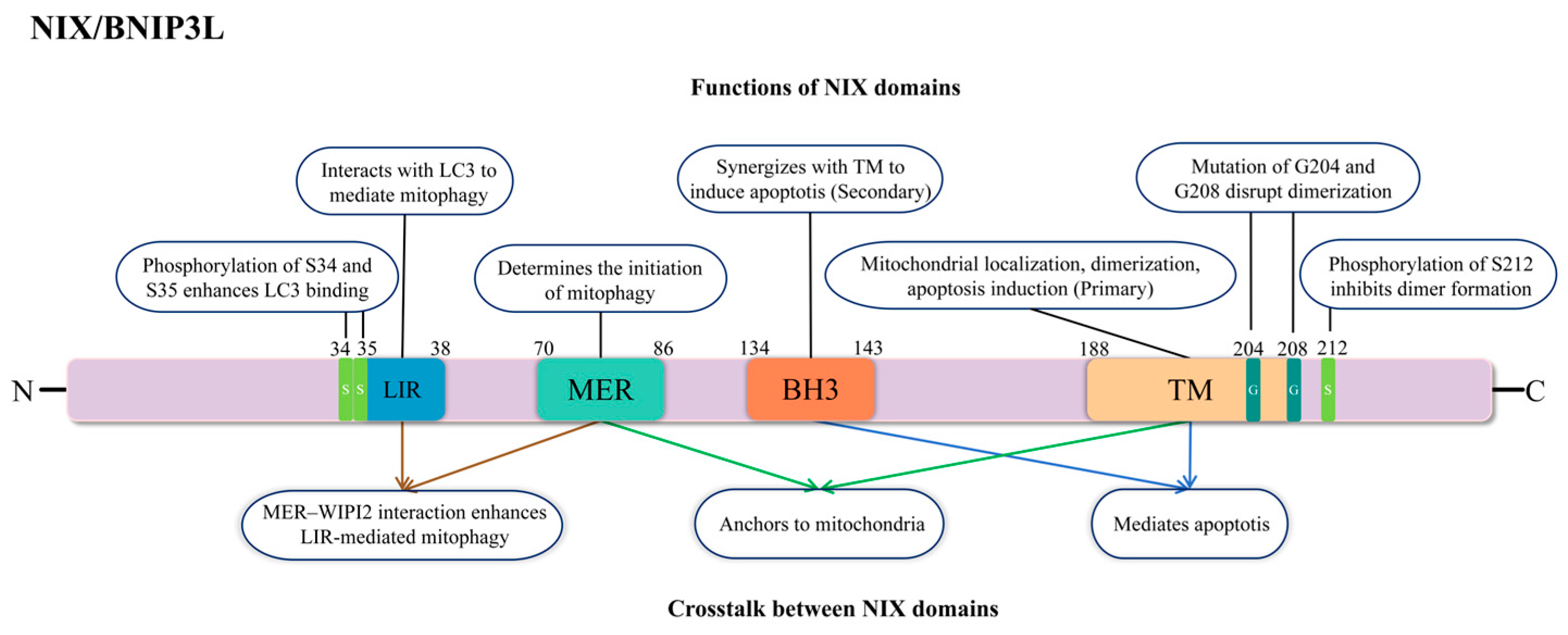
2. Functional Domains of NIX/BNIP3L
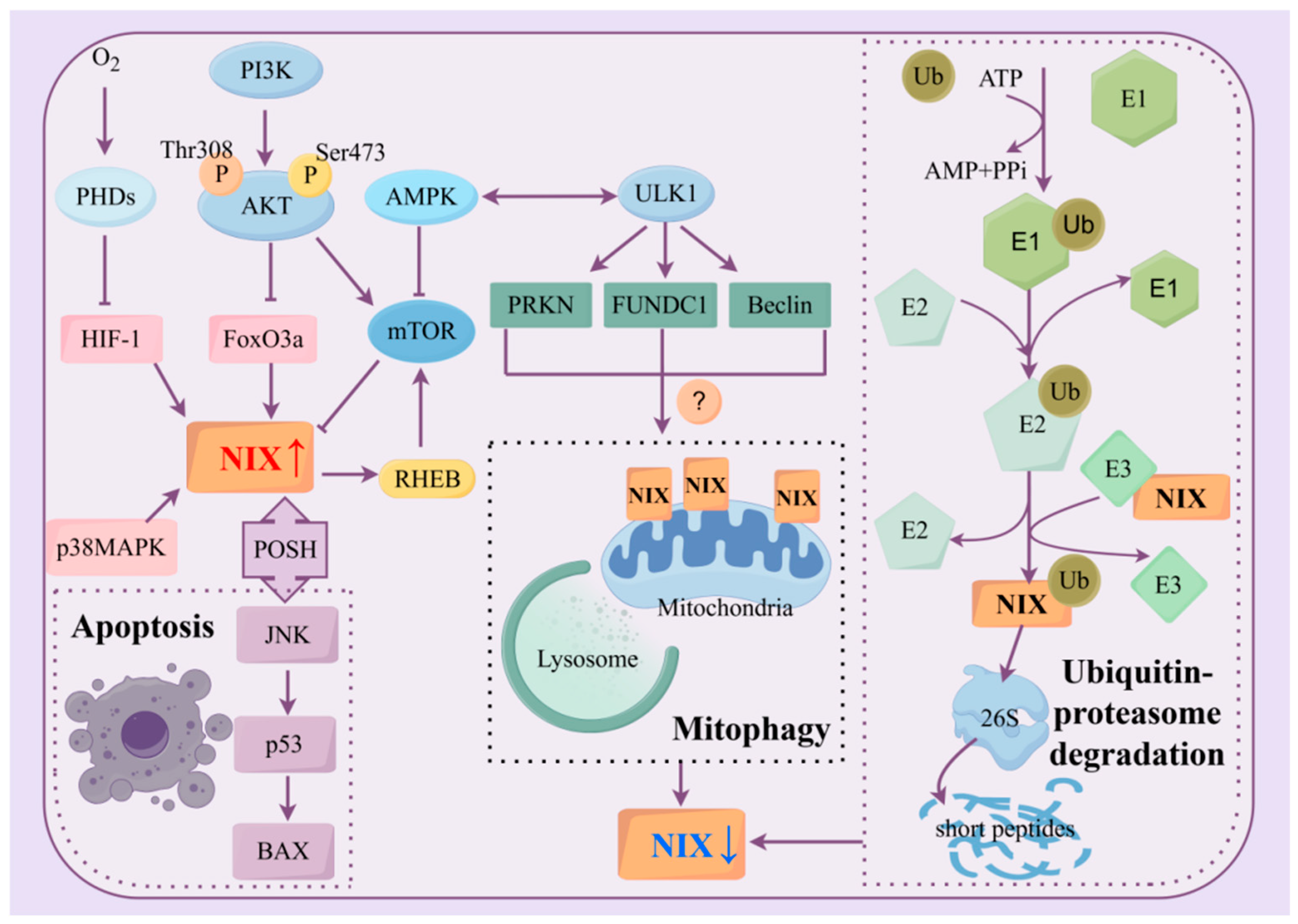
3. Generation and Degradation of NIX/BNIP3L
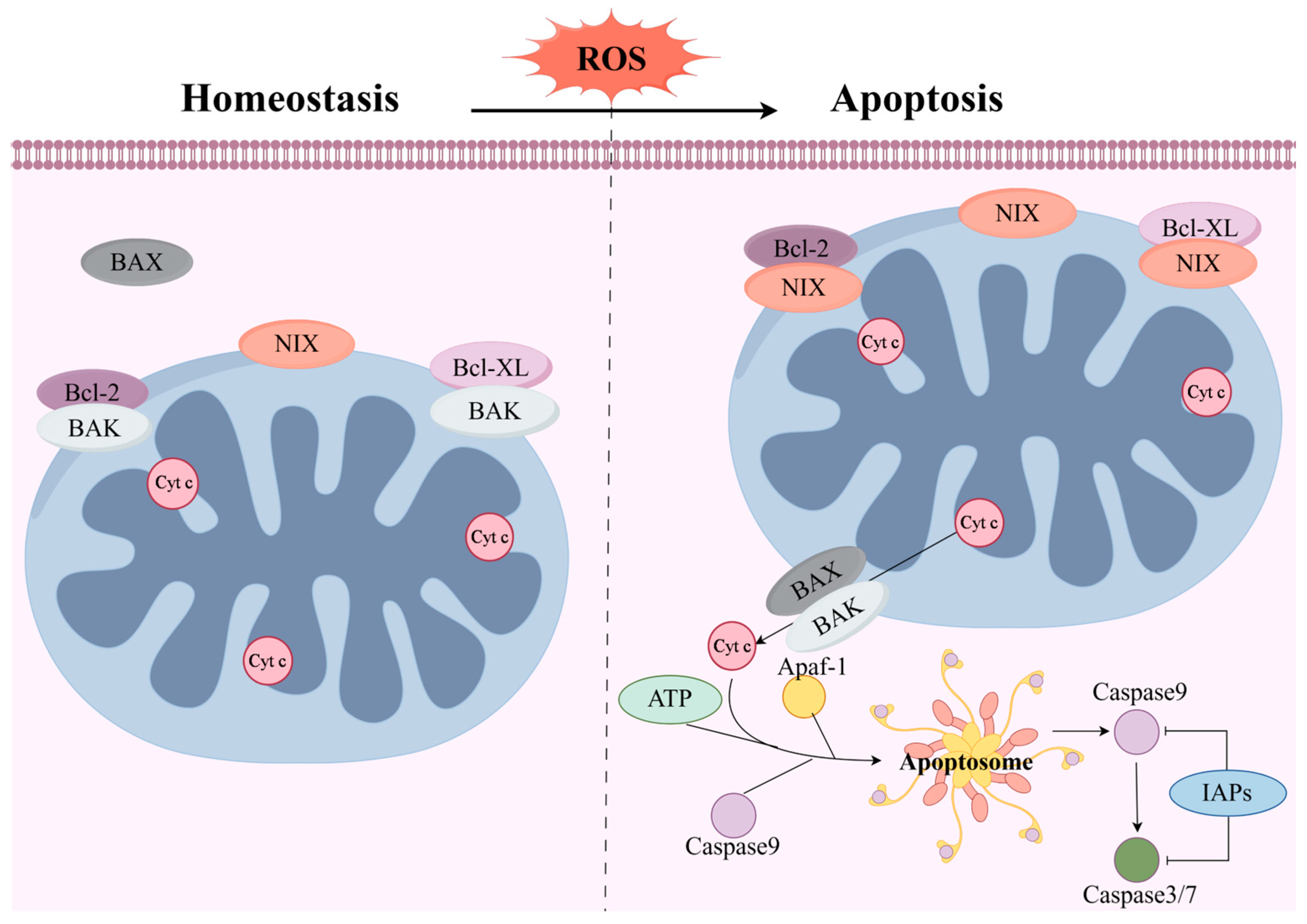
4. Mechanism of NIX-Mediated Apoptosis
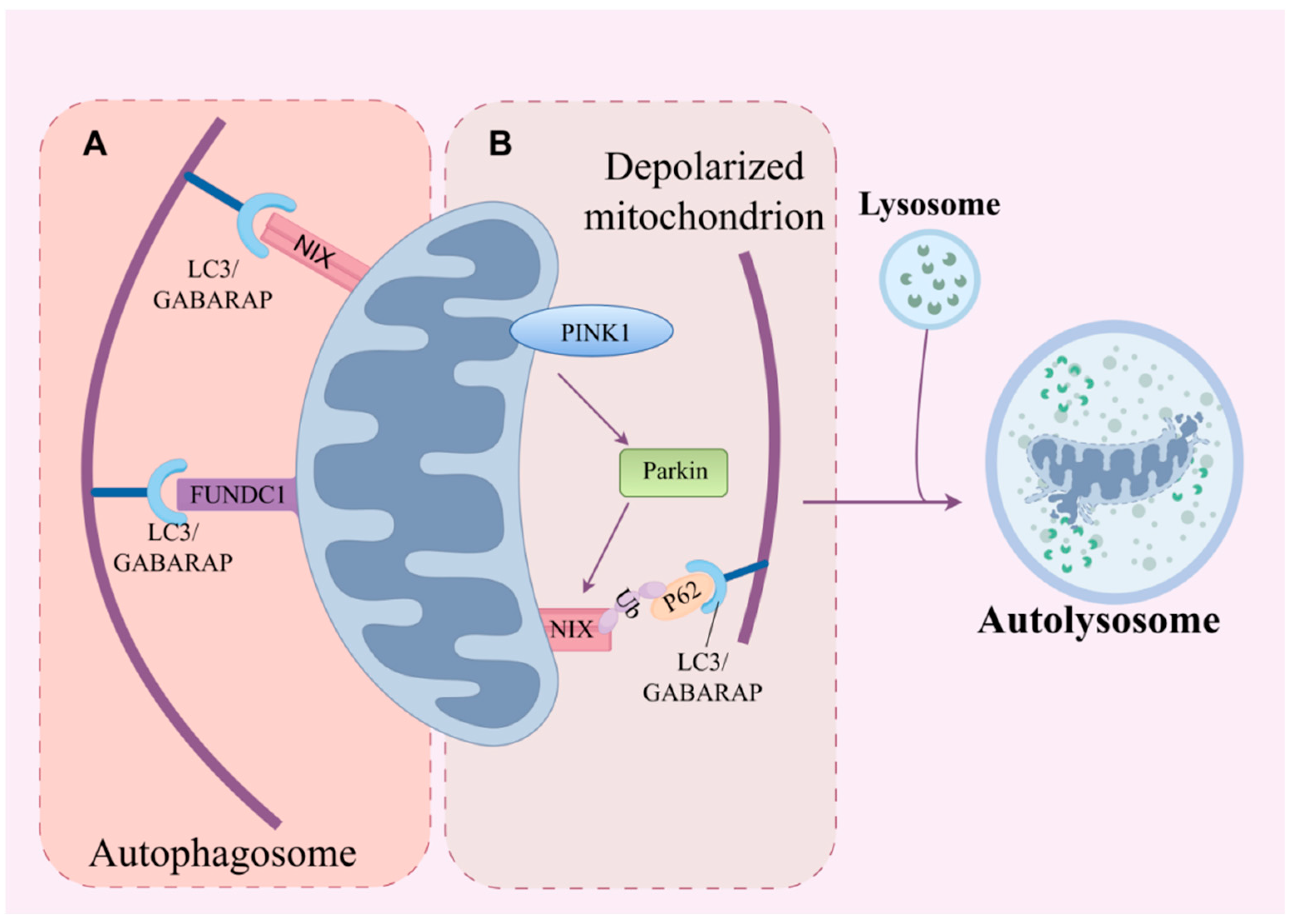
5. Mechanism of NIX-Mediated Mitophagy
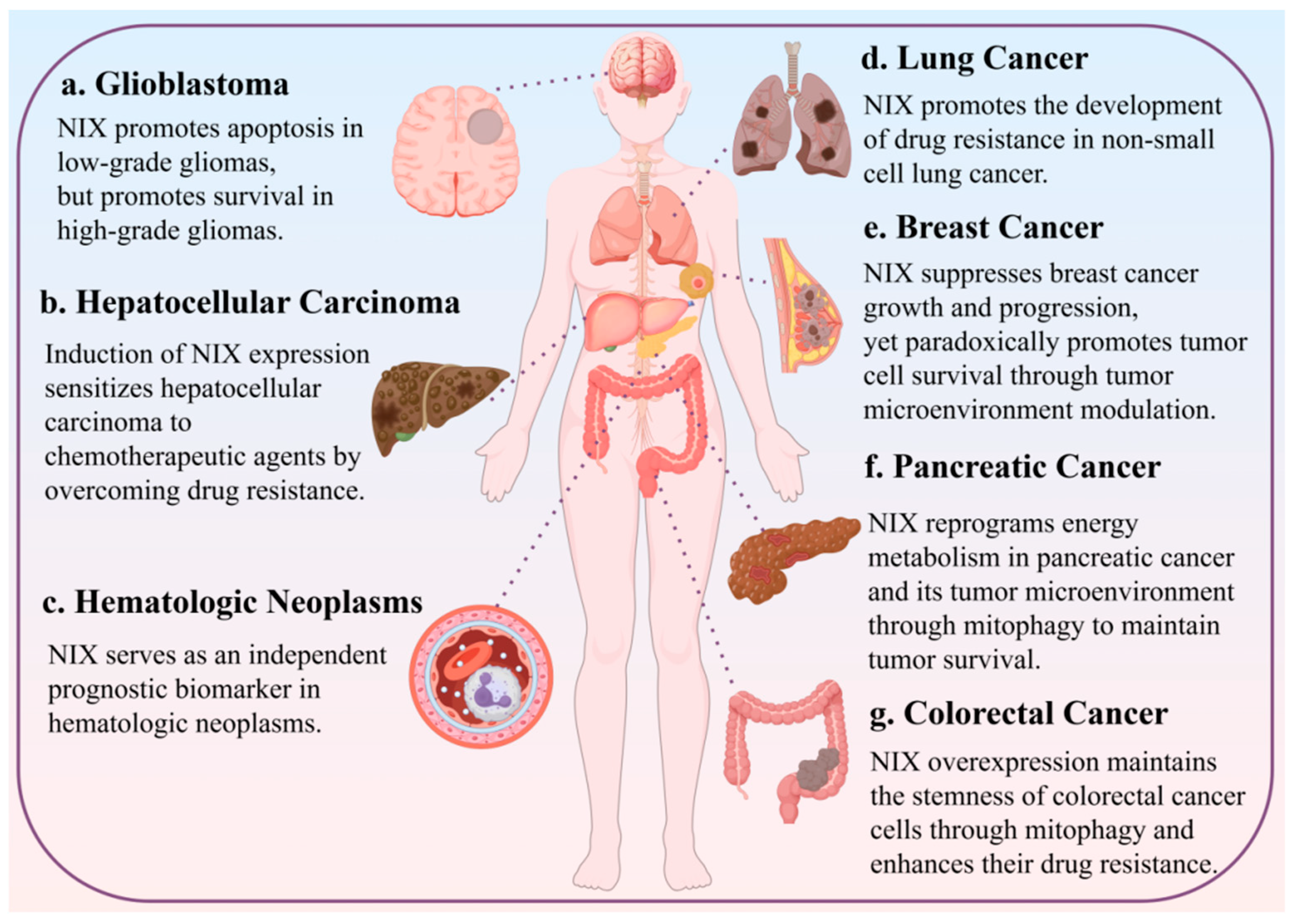
6. Role of NIX-Mediated Apoptosis and Mitophagy in Tumors
6.1. Glioblastoma
6.2. Lung Cancer
6.3. Hepatocellular Carcinoma
6.4. Breast Cancer
6.5. Pancreatic Cancer
6.6. Colorectal Cancer
6.7. Hematologic Neoplasms

| Tumors | Pharmaceutical | Physiological Functions and Disease Links | References |
|---|---|---|---|
| Glioblastoma | Sulforaphane | SFN induced apoptosis via NIX-mediated mitophagy. | [61] |
| Sulforaphane-cysteine | SFN-Cys lowered the expression of NIX. | [53] | |
| Deapioplatycodin D | BNIP3L-mediated mitophagy was induced by Deapioplatycodin D to inhibit Glioblastoma cell growth. | [52] | |
| Pitavastatin | Pitavastatin induces NIX-mediated mitochondrial autophagy and promotes cell death when combined with temozolomide. | [51] | |
| AT 101 | AT 101 stimulates the induction of BNIP3 and BNIP3L, as well as HMOX1, which further amplify mitophagy and partially contribute to AT 101’s toxicity in glioma cells. | [50] | |
| Lung cancer | Cynomorium coccineum | In lung cancer cells, AM-101 modulates the GABA(A) receptor, leading to selective autophagy through GABARAP oligomerization and stabilization of the mitochondrial receptor NIX. | [117] |
| AM101 | In lung cancer cells, AM-101 modulates the GABA(A) receptor, leading to selective autophagy through GABARAP oligomerization and stabilization of the mitochondrial receptor NIX. | [60] | |
| Gemcitabine | Gemcitabine treatment significantly increased BNIP3L expression in Human Lung Cancer Cells. | [62] | |
| Hepatocellular carcinoma | Cynomorium coccineum | Cynomorium coccineum can activate and enhance the expression of the mitochondria-associated cell death proteins BNIP3 and BNIP3L, thereby triggering apoptosis. | [117] |
| Platycodin D2 | PD2 induced mitophagy via NIX, leading to cell senescence through the P21/Cyclin A2 signaling pathway. | [66] | |
| Sorafenib | Sorafenib resistance in human menstrual blood-derived stem cells is suppressed through NIX-dependent mitophagy activation. | [64] | |
| Polygalacin D | Polygalacin D inhibits the proliferation of hepatocellular carcinoma cells via pathways involving BNIP3L-dependent mitophagy and intrinsic apoptosis. | [118] | |
| Breast cancer | Triptolide | Triptolide suppresses the migration and invasiveness of MDA-MB-231 cells by promoting NIX expression. | [72] |
| Acid ground nano-realgar processed product, NRPP | NRPP inhibited breast cancer cells’ growth by inducing mitophagy via the p53/BNIP3/NIX pathway. | [73] | |
| Recombinant lactaptin 2 combined with doxorubicin | Recombinant lactaptin 2 caused an upregulation of BNIP3L/NIX in breast cancer cells. | [78] | |
| Recombinant lactaptin 2 combined with TRAIL | Recombinant lactaptin 2 acts via the upregulation of NIX, leading to the loss of adenosine triphosphate production. | [77] | |
| Pancreatic ductal adenocarcinoma | Lidamycin | Lidamycin activates EMT by inducing the BNIP3L-mediated mitophagy in pancreatic cancer cells. | [89] |
| Octyl gallate | Octyl gallate elevates BNIP3L levels. | [90] | |
| Colorectal cancer | 5-FU combined with CQ | Combined treatment of colon cancer cells with 5-fluorouracil (5-FU) and the autophagy inhibitor chloroquine (CQ) downregulates NIX mRNA by blocking the autophagy pathway. | [94] |
| KP46 | KP46 activates p53 via iron depletion, which, in turn, transcriptionally upregulates NIX. As a key downstream effector, NIX subsequently mediates the cytotoxic effects of KP46 in p53-wild-type colorectal cancer cells by promoting PARKIN-dependent mitophagy and sensitizing the mitochondrial permeability transition (MPT). | [97] | |
| Hematologic neoplasms | Cereblon modulator CC-885 | CC-885 regulates BNIP3L, which depends on mitophagy for E3 ligase-dependent ubiquitination and degradation. | [9] |

7. Conclusions
Author Contributions
Funding
Institutional Review Board Statement
Informed Consent Statement
Data Availability Statement
Acknowledgments
Conflicts of Interest
Abbreviations
| BAK | BCL2-antagonist/killer 1 |
| BAX | BCL2-associated X protein |
| Bcl-2 | B-cell lymphoma/leukemia-2 |
| Bcl-XL | B-cell lymphoma-extra large |
| PRKN | E3 ubiquitin-protein ligase parkin |
| FUNDC1 | FUN14 domain-containing protein 1 |
References
- Min, H.-Y.; Lee, H.-Y. Molecular targeted therapy for anticancer treatment. Exp. Mol. Med. 2022, 54, 1670–1694. [Google Scholar] [CrossRef]
- Ou, X.; Gao, G.; Habaz, I.A.; Wang, Y. Mechanisms of resistance to tyrosine kinase inhibitor-targeted therapy and overcoming strategies. MedComm 2024, 5, e694. [Google Scholar] [CrossRef]
- Dagogo-Jack, I.; Shaw, A.T. Tumour heterogeneity and resistance to cancer therapies. Nat. Rev. Clin. Oncol. 2018, 15, 81–94. [Google Scholar] [CrossRef]
- Flaherty, K.T.G.R.; Chen, A.P.; Li, S.; McShane, L.M.; Patton, D.; Hamilton, S.R.; Williams, P.M.; Iafrate, A.J.; Sklar, J.; Mitchell, E.P.; et al. Molecular Landscape and Actionable Alterations in a Genomically Guided Cancer Clinical Trial: National Cancer Institute Molecular Analysis for Therapy Choice (NCI-MATCH). J. Clin. Oncol. 2022, 38, 3883–3894. [Google Scholar] [CrossRef]
- Adashek, J.J.; Goloubev, A.; Kato, S.; Kurzrock, R. Missing the target in cancer therapy. Nat. Cancer 2021, 2, 369–371. [Google Scholar] [CrossRef]
- Mookerjee, A.; Basu, J.M.; Majumder, S.; Chatterjee, S.; Panda, G.S.; Dutta, P.; Pal, S.; Mukherjee, P.; Efferth, T.; Roy, S.; et al. A novel copper complex induces ROS generation in doxorubicin resistant Ehrlich ascitis carcinoma cells and increases activity of antioxidant enzymes in vital organs in vivo. BMC Cancer 2006, 15, 267. [Google Scholar] [CrossRef]
- Matsushima, M.; Fujiwara, T.; Takahashi, E.I.; Minaguchi, T.; Eguchi, Y.; Tsujimoto, Y.; Suzumori, K.; Nakamura, Y. Isolation, mapping, and functional analysis of a novel human cDNA (BNIP3L) encoding a protein homologous to human NIP3. Genes Chromosomes Cancer 1998, 21, 230–235. [Google Scholar] [CrossRef]
- Shen, J.; Chen, X.; Li, H.; Wang, Y.; Huo, K.; Ke, K. p75 neurotrophin receptor and its novel interaction partner, NIX, are involved in neuronal apoptosis after intracerebral hemorrhage. Cell Tissue Res. 2016, 368, 13–27. [Google Scholar] [CrossRef] [PubMed]
- Hao, B.B.; Li, X.J.; Jia, X.L.; Wang, Y.X.; Zhai, L.H.; Li, D.Z.; Liu, J.; Zhang, D.; Chen, Y.L.; Xu, Y.H.; et al. The novel cereblon modulator CC-885 inhibits mitophagy via selective degradation of BNIP3L. Acta Pharmacol. Sin. 2020, 41, 1246–1254. [Google Scholar] [CrossRef]
- Zhang, J.; Loyd, M.R.; Randall, M.S.; Waddell, M.B.; Kriwacki, R.W.; Ney, P.A. A short linear motif in BNIP3L (NIX) mediates mitochondrial clearance in reticulocytes. Autophagy 2014, 8, 1325–1332. [Google Scholar] [CrossRef] [PubMed]
- Huang, C.F.; Hsieh, Y.H.; Yang, S.F.; Kuo, C.H.; Wang, P.H.; Liu, C.J.; Lin, R.C. Mitophagy Effects of Protodioscin on Human Osteosarcoma Cells by Inhibition of p38MAPK Targeting NIX/LC3 Axis. Cells 2023, 12, 395. [Google Scholar] [CrossRef]
- Barnekow, E.; Liu, W.; Helgadottir, H.T.; Michailidou, K.; Dennis, J.; Bryant, P.; Thutkawkorapin, J.; Wendt, C.; Czene, K.; Hall, P.; et al. A Swedish Genome-Wide Haplotype Association Analysis Identifies a Novel Breast Cancer Susceptibility Locus in 8p21.2 and Characterizes Three Loci on Chromosomes 10, 11 and 16. Cancers 2022, 14, 1206. [Google Scholar] [CrossRef] [PubMed]
- Grist, E.; Friedrich, S.; Brawley, C.; Mendes, L.; Parry, M.; Ali, A.; Haran, A.; Hoyle, A.; Gilson, C.; Lall, S.; et al. Accumulation of copy number alterations and clinical progression across advanced prostate cancer. Genome Med. 2022, 14, 102. [Google Scholar] [CrossRef]
- Marinković, M.; Šprung, M.; Novak, I. Dimerization of mitophagy receptor BNIP3L/NIX is essential for recruitment of autophagic machinery. Autophagy 2020, 17, 1232–1243. [Google Scholar] [CrossRef] [PubMed]
- Field, J.T.; Gordon, J.W. BNIP3 and Nix: Atypical regulators of cell fate. Biochim. Biophys. Acta (BBA)-Mol. Cell Res. 2022, 1869, 119325. [Google Scholar] [CrossRef]
- Mazure, N.M.; Pouysségur, J. Atypical BH3-domains of BNIP3 and BNIP3L lead to autophagy in hypoxia. Autophagy 2009, 5, 868–869. [Google Scholar] [CrossRef]
- Zhang, J.; Ney, P.A. Role of BNIP3 and NIX in cell death, autophagy, and mitophagy. Cell Death Differ. 2009, 16, 939–946. [Google Scholar] [CrossRef]
- Bunker, E.N.; Le Guerroué, F.; Wang, C.; Strub, M.P.; Werner, A.; Tjandra, N.; Youle, R.J. Nix interacts with WIPI2 to induce mitophagy. EMBO J. 2023, 42, e113491. [Google Scholar] [CrossRef] [PubMed]
- Nguyen-Dien, G.T.; Kozul, K.L.; Cui, Y.; Townsend, B.; Kulkarni, P.G.; Ooi, S.S.; Marzio, A.; Carrodus, N.; Zuryn, S.; Pagano, M.; et al. FBXL4 suppresses mitophagy by restricting the accumulation of NIX and BNIP3 mitophagy receptors. EMBO J. 2023, 42, e112767. [Google Scholar] [CrossRef]
- Abaci, H.E.; Truitt, R.; Luong, E.; Drazer, G.; Gerecht, S. Adaptation to oxygen deprivation in cultures of human pluripotent stem cells, endothelial progenitor cells, and umbilical vein endothelial cells. Am. J. Physiol.-Cell Physiol. 2010, 298, C1527–C1537. [Google Scholar] [CrossRef]
- Bacon, A.L.; Fox, S.; Turley, H.; Harris, A.L. Selective silencing of the hypoxia-inducible factor 1 target gene BNIP3 by histone deacetylation and methylation in colorectal cancer. Oncogene 2006, 26, 132–141. [Google Scholar] [CrossRef]
- Yang, Y.; Zhang, J.; Liu, H.; Wang, J.; Xin, J.; Deng, M. Changes in Levels of Hypoxia-Induced Mediators in Rat Hippocampus During Chronic Cerebral Hypoperfusion. Neurochem. Res. 2013, 38, 2433–2439. [Google Scholar] [CrossRef]
- Benarroch, E.E. Hypoxia-induced mediators and neurologic disease. Neurology 2009, 73, 560–565. [Google Scholar] [CrossRef]
- Garg, P.; Ramisetty, S.; Nair, M.; Kulkarni, P.; Horne, D.; Salgia, R.; Singhal, S.S. Strategic advancements in targeting the PI3K/AKT/mTOR pathway for Breast cancer therapy. Biochem. Pharmacol. 2025, 236, 116850. [Google Scholar] [CrossRef]
- Jin, Z.; Zheng, L.; Xin, X.; Li, Y.; Hua, T.; Wu, T.; Wang, H. Upregulation of forkhead box O3 transcription is involved in C2-ceramide induced apoptosis and autophagy in ovarian cancer cells in vitro. Mol. Med. Rep. 2014, 10, 3099–3105. [Google Scholar] [CrossRef]
- Chen, Q.; Chen, X.; Han, C.; Wang, Y.; Huang, T.; Du, Y.; Dong, Z. FGF-2 Transcriptionally Down-Regulates the Expression of BNIP3L via PI3K/Akt/FoxO3a Signaling and Inhibits Necrosis and Mitochondrial Dysfunction Induced by High Concentrations of Hydrogen Peroxide in H9c2 Cells. Cell. Physiol. Biochem. 2016, 40, 1678–1691. [Google Scholar] [CrossRef]
- Zhou, Q.; Zhou, S.; Wang, H.; Li, Y.; Xiao, X.; Yang, J. Stable silencing of ROR1 regulates cell cycle, apoptosis, and autophagy in a lung adenocarcinoma cell line. Int. J. Clin. Exp. Pathol. 2020, 13, 1108–1120. [Google Scholar] [PubMed]
- Rahman, M.A.; Jalouli, M.; Bhajan, S.K.; Al-Zharani, M.; Harrath, A.H. A Comprehensive Review of Nanoparticle-Based Drug Delivery for Modulating PI3K/AKT/mTOR-Mediated Autophagy in Cancer. Int. J. Mol. Sci. 2025, 26, 1868. [Google Scholar] [CrossRef] [PubMed]
- Huang, L.; Zhang, X.O.; Rozen, E.J.; Sun, X.; Sallis, B.; Verdejo-Torres, O.; Wigglesworth, K.; Moon, D.; Huang, T.; Cavaretta, J.P.; et al. PRMT5 activates AKT via methylation to promote tumor metastasis. Nat. Commun. 2022, 13, 3955. [Google Scholar] [CrossRef]
- Jung, J.; Zhang, Y.; Celiku, O.; Zhang, W.; Song, H.; Williams, B.J.; Giles, A.J.; Rich, J.N.; Abounader, R.; Gilbert, M.R.; et al. Mitochondrial NIX Promotes Tumor Survival in the Hypoxic Niche of Glioblastoma. Cancer Res. 2019, 79, 5218–5232. [Google Scholar] [CrossRef] [PubMed]
- Stuard, W.L.; Titone, R.; Robertson, D.M. IGFBP-3 functions as a molecular switch that mediates mitochondrial and metabolic homeostasis. FASEB J. 2022, 36, e22062. [Google Scholar] [CrossRef]
- Hei, C.; Zhou, Y.; Zhang, C.; Gao, F.; Cao, M.; Yuan, S.; Qin, Y.; Li, P.A.; Yang, X. Rapamycin ameliorates brain damage andmaintains mitochondrial dynamic balance indiabetic rats subjected to middle cerebral arteryocclusion. Metab. Brain Dis. 2023, 38, 409–418. [Google Scholar] [CrossRef]
- Ning, H.; Deng, J.; Chen, F.; Liu, Y.; Kong, D.; Shan, L.; Zhang, Z.; Hu, T. β-arrestin1 inhibits hypoxic injury-induced autophagy in human pulmonary artery endothelial cells via the Akt/mTOR signaling pathway. Int. J. Biochem. Cell Biol. 2020, 125, 105791. [Google Scholar] [CrossRef]
- da Silva Rosa, S.C.; Martens, M.D.; Field, J.T.; Nguyen, L.; Kereliuk, S.M.; Hai, Y.; Chapman, D.; Diehl-Jones, W.; Aliani, M.; West, A.R.; et al. BNIP3L/Nix-induced mitochondrial fission, mitophagy, and impaired myocyte glucose uptake are abrogated by PRKA/PKA phosphorylation. Autophagy 2020, 17, 2257–2272. [Google Scholar] [CrossRef] [PubMed]
- Zhou, X.; Lu, Q.; Wang, Q.; Chu, W.; Huang, J.; Yu, J.; Nong, Y.; Lu, W. Diltiazem Hydrochloride Protects Against Myocardial Ischemia/Reperfusion Injury in a BNIP3L/NIX-Mediated Mitophagy Manner. J. Inflamm. Res. 2024, 17, 8905–8919. [Google Scholar] [CrossRef]
- Sung, J.S.; Kang, C.W.; Kang, S.; Jang, Y.; Chae, Y.C.; Kim, B.G.; Cho, N.H. ITGB4-mediated metabolic reprogramming of cancer-associated fibroblasts. Oncogene 2019, 39, 664–676. [Google Scholar] [CrossRef] [PubMed]
- Wu, X.; Zheng, Y.; Liu, M.; Li, Y.; Ma, S.; Tang, W.; Yan, W.; Cao, M.; Zheng, W.; Jiang, L.; et al. BNIP3L/NIX degradation leads to mitophagy deficiency in ischemic brains. Autophagy 2020, 17, 1934–1946. [Google Scholar] [CrossRef]
- Wang, J.; Yue, X.; Meng, C.; Wang, Z.; Jin, X.; Cui, X.; Yang, J.; Shan, C.; Gao, Z.; Yang, Y.; et al. Acute Hyperglycemia May Induce Renal Tubular Injury Through Mitophagy Inhibition. Front. Endocrinol. 2020, 11, 536213. [Google Scholar] [CrossRef] [PubMed]
- Zhu, J.; Wang, Y.F.; Chai, X.M.; Qian, K.; Zhang, L.W.; Peng, P.; Chen, P.M.; Cao, J.F.; Qin, Z.H.; Sheng, R.; et al. Exogenous NADPH ameliorates myocardial ischemia–reperfusion injury in rats through activating AMPK/mTOR pathway. Acta Pharmacol. Sin. 2019, 41, 535–545. [Google Scholar] [CrossRef]
- Saunders, T.L.; Windley, S.P.; Gervinskas, G.; Balka, K.R.; Rowe, C.; Lane, R.; Tailler, M.; Nguyen, T.N.; Ramm, G.; Lazarou, M.; et al. Exposure of the inner mitochondrial membrane triggers apoptotic mitophagy. Cell Death Differ. 2024, 31, 335–347. [Google Scholar] [CrossRef]
- Saller, B.S.; Wöhrle, S.; Fischer, L.; Dufossez, C.; Ingerl, I.L.; Kessler, S.; Mateo-Tortola, M.; Gorka, O.; Lange, F.; Cheng, Y.; et al. Acute suppression of mitochondrial ATP production prevents apoptosis and provides an essential signal for NLRP3 inflammasome activation. Immunity 2025, 58, 90–107.e11. [Google Scholar] [CrossRef]
- Wilhelm, M.; Xu, Z.; Kukekov, N.V.; Gire, S.; Greene, L.A. Proapoptotic Nix Activates the JNK Pathway by Interacting with POSH and Mediates Death in a Parkinson Disease Model. J. Biol. Chem. 2007, 282, 1288–1295. [Google Scholar] [CrossRef] [PubMed]
- Rogov, V.V.; Suzuki, H.; Marinković, M.; Lang, V.; Kato, R.; Kawasaki, M.; Buljubašić, M.; Šprung, M.; Rogova, N.; Wakatsuki, S.; et al. Phosphorylation of the mitochondrial autophagy receptor Nix enhances its interaction with LC3 proteins. Sci. Rep. 2017, 7, 1131. [Google Scholar] [CrossRef]
- Matsuda, N.; Sato, S.; Shiba, K.; Okatsu, K.; Saisho, K.; Gautier, C.A.; Sou, Y.S.; Saiki, S.; Kawajiri, S.; Sato, F.; et al. PINK1 stabilized by mitochondrial depolarization recruits Parkin to damaged mitochondria and activates latent Parkin for mitophagy. J. Cell Biol. 2010, 189, 211–221. [Google Scholar] [CrossRef] [PubMed]
- Gao, F.; Chen, D.; Si, J.; Hu, Q.; Qin, Z.; Fang, M.; Wang, G. The mitochondrial protein BNIP3L is the substrate of PARK2 and mediates mitophagy in PINK1/PARK2 pathway. Hum. Mol. Genet. 2015, 24, 2528–2538. [Google Scholar] [CrossRef] [PubMed]
- Koentjoro, B.; Park, J.S.; Ha, A.D.; Sue, C.M. Phenotypic variability of parkin mutations in single kindred. Mov. Disord. 2012, 27, 1299–1303. [Google Scholar] [CrossRef]
- Koentjoro, B.; Park, J.-S.; Sue, C.M. Nix restores mitophagy and mitochondrial function to protect against PINK1/Parkin-related Parkinson’s disease. Sci. Rep. 2017, 7, 44373. [Google Scholar] [CrossRef]
- Lu, Y.; Wang, L.; He, M.; Huang, W.; Li, H.; Wang, Y.; Kong, J.; Qi, S.; Ouyang, J.; Qiu, X. Nix protein positively regulates NF-κB activation in gliomas. PLoS ONE 2012, 7, e44559. [Google Scholar] [CrossRef]
- Rahman, M.A.; Jalouli, M.; Al-Zharani, M.; Hoque Apu, E.; Harrath, A.H. Mechanistic Insights into Autophagy-Dependent Cell Death (ADCD): A Novel Avenue for Cancer Therapy. Cells 2025, 14, 1072. [Google Scholar] [CrossRef]
- Meyer, N.; Zielke, S.; Michaelis, J.B.; Linder, B.; Warnsmann, V.; Rakel, S.; Osiewacz, H.D.; Fulda, S.; Mittelbronn, M.; Münch, C.; et al. AT 101 induces early mitochondrial dysfunction and HMOX1 (heme oxygenase 1) to trigger mitophagic cell death in glioma cells. Autophagy 2018, 14, 1693–1709. [Google Scholar] [CrossRef]
- Basso, J.; Matos, A.M.; Ghavami, S.; Fortuna, A.; Vitorino, R.; Vitorino, C. Are we better together? Addressing a combined treatment of pitavastatin and temozolomide for brain cancer. Eur. J. Pharmacol. 2024, 985, 177087. [Google Scholar] [CrossRef]
- Sun, Y.; Zhu, G.; Zhao, R.; Li, Y.; Li, H.; Liu, Y.; Jin, N.; Li, X.; Li, Y.; Liu, T. Deapioplatycodin D inhibits glioblastoma cell proliferation by inducing BNIP3L-mediated incomplete mitophagy. Cancer Cell Int. 2025, 25, 11. [Google Scholar] [CrossRef]
- Zhou, Y.; Wang, Y.; Wu, S.; Yan, Y.; Hu, Y.; Zheng, Z.; Li, J.; Wu, W. Sulforaphane-cysteine inhibited migration and invasion via enhancing mitophagosome fusion to lysosome in human glioblastoma cells. Cell Death Dis. 2020, 11, 819. [Google Scholar] [CrossRef]
- Niemi, N.M.; Friedman, J.R. Coordinating BNIP3_NIX-mediated mitophagy in space and time. Biochem. Soc. Trans. 2024, 52, 1969–1979. [Google Scholar] [CrossRef] [PubMed]
- Kanzawa, T.; Zhang, L.; Xiao, L.; Germano, I.M.; Kondo, Y.; Kondo, S. Arsenic trioxide induces autophagic cell death in malignant glioma cells by upregulation of mitochondrial cell death protein BNIP3. Oncogene 2004, 24, 980–991. [Google Scholar] [CrossRef]
- Han, B.; Zheng, R.; Zeng, H.; Wang, S.; Sun, K.; Chen, R.; Li, L.; Wei, W.; He, J. Cancer incidence and mortality in China, 2022. J. Natl. Cancer Cent. 2024, 4, 47–53. [Google Scholar] [CrossRef] [PubMed]
- Bray, F.; Laversanne, M.; Sung, H.; Ferlay, J.; Siegel, R.L.; Soerjomataram, I.; Jemal, A. Global cancer statistics 2022: GLOBOCAN estimates of incidence and mortality worldwide for 36 cancers in 185 countries. CA Cancer J. Clin. 2024, 74, 229–263. [Google Scholar] [CrossRef]
- Liu, L.; Guo, N.A.; Li, X.; Xu, Q.; He, R.; Cheng, L.; Dang, C.; Bai, X.; Bai, Y.; Wang, X.; et al. miR-125b reverses cisplatin resistance by regulating autophagy via targeting RORA/BNIP3L axis in lung adenocarcinoma. Oncol. Res. 2024, 32, 643–658. [Google Scholar] [CrossRef] [PubMed]
- Hasmim, M.; Janji, B.; Khaled, M.; Noman, M.Z.; Louache, F.; Bordereaux, D.; Abderamane, A.; Baud, V.; Mami-Chouaib, F.; Chouaib, S. Cutting Edge: NANOG Activates Autophagy under Hypoxic Stress by Binding to BNIP3L Promoter. J. Immunol. 2017, 198, 1423–1428. [Google Scholar] [CrossRef]
- Bhattacharya, D.; Barrile, R.; Toukam, D.K.; Gawali, V.S.; Kallay, L.; Ahmed, T.; Brown, H.; Rezvanian, S.; Karve, A.; Desai, P.B.; et al. GABA(A) Receptor Activation Drives GABARAP–Nix Mediated Autophagy to Radiation-Sensitize Primary and Brain-Metastatic Lung Adenocarcinoma Tumors. Cancers 2024, 16, 3167. [Google Scholar] [CrossRef]
- Yan, Y.; Zhou, Y.; Li, J.; Zheng, Z.; Hu, Y.; Li, L.; Wu, W. Sulforaphane downregulated fatty acid synthase and inhibited microtubule-mediated mitophagy leading to apoptosis. Cell Death Dis. 2021, 12, 917. [Google Scholar] [CrossRef]
- Wu, H.-M.; Shao, L.-J.; Jiang, Z.-F.; Liu, R.-Y. Gemcitabine-Induced Autophagy Protects Human Lung Cancer Cells from Apoptotic Death. Lung 2016, 194, 959–966. [Google Scholar] [CrossRef]
- Wan, L.; Ma, T.; Li, B.; Shi, X.; Chen, S.; Sun, X.; Ge, H.; Lu, C.; Yu, W.; Zhou, N.; et al. Hypoxia-induced tumor cell-intrinsic PLAU activation drives immunotherapy resistance in collagenic lung adenocarcinoma. Int. Immunopharmacol. 2025, 162, 115161. [Google Scholar] [CrossRef]
- Zhou, S.; Liu, Y.; Zhang, Q.; Xu, H.; Fang, Y.; Chen, X.; Fu, J.; Yuan, Y.; Li, Y.; Yuan, L.; et al. Human menstrual blood-derived stem cells reverse sorafenib resistance in hepatocellular carcinoma cells through the hyperactivation of mitophagy. Stem Cell Res. Ther. 2023, 14, 58. [Google Scholar] [CrossRef] [PubMed]
- Calvisi, D.F.; Ladu, S.; Gorden, A.; Farina, M.; Lee, J.S.; Conner, E.A.; Schroeder, I.; Factor, V.M.; Thorgeirsson, S.S. Mechanistic and prognostic significance of aberrant methylation in the molecular pathogenesis of human hepatocellular carcinoma. J. Clin. Investig. 2007, 117, 2713–2722. [Google Scholar] [CrossRef]
- Sun, L.; Li, Y.; Zhao, R.; Fan, Q.; Liu, F.; Zhu, Y.; Han, J.; Liu, Y.; Jin, N.; Li, X.; et al. Platycodin D2 enhances P21/CyclinA2-mediated senescence of HCC cells by regulating NIX-induced mitophagy. Cancer Cell Int. 2024, 24, 79. [Google Scholar] [CrossRef]
- Chen, Y.Y.; Wang, W.H.; Che, L.; Lan, Y.; Zhang, L.Y.; Zhan, D.L.; Huang, Z.Y.; Lin, Z.N.; Lin, Y.C. BNIP3L-Dependent Mitophagy Promotes HBx-Induced Cancer Stemness of Hepatocellular Carcinoma Cells via Glycolysis Metabolism Reprogramming. Cancers 2020, 12, 655. [Google Scholar] [CrossRef]
- Geisler, S.; Holmström, K.M.; Skujat, D.; Fiesel, F.C.; Rothfuss, O.C.; Kahle, P.J.; Springer, W. PINK1/Parkin-mediated mitophagy is dependent on VDAC1 and p62/SQSTM1. Nat. Cell Biol. 2010, 12, 119–131. [Google Scholar] [CrossRef]
- Li, Y.; Shang, C.; Liu, Z.; Han, J.; Li, W.; Xiao, P.; Li, N.; Li, S.; Xiu, Z.; Song, G.; et al. Apoptin mediates mitophagy and endogenous apoptosis by regulating the level of ROS in hepatocellular carcinoma. Cell Commun. Signal. 2022, 20, 134. [Google Scholar] [CrossRef] [PubMed]
- Cui, Y.; Chen, X.; Li, W.; Li, S.; Jin, N.; Li, X.; Li, Y.; Yue, Y. Ad-VT causes ovarian cancer A2780 cell death via mitochondrial apoptosis and autophagy pathways. Transl. Oncol. 2024, 48, 102067. [Google Scholar] [CrossRef] [PubMed]
- Khoramipour, K.; Soltany, A.; Khosravi, P.; Rezaei, M.H.; Madadizadeh, E.; García-Chico, C.; Maroto-Izquierdo, S.; Khoramipour, K. High intensity interval training as a therapy: Mitophagy restoration in breast cancer. Arch. Biochem. Biophys. 2024, 762, 110213. [Google Scholar] [CrossRef]
- Huang, L.; Xue, R.; Zhu, M.; Xu, S.; Luo, Y.; Qin, C.; Yang, C.; Jia, L.; Tang, K.; Tan, Q. Triptolide’s impact on ACER1 signaling: Inducing autophagy for triple-negative breast cancer suppression. Pathol.-Res. Pract. 2025, 266, 155823. [Google Scholar] [CrossRef] [PubMed]
- Fang, J.; Zou, X.; Gong, L.; Xi, J.; Liu, Y.; Yang, X.; Zhang, X.; Gui, C. Acid ground nano-realgar processed product inhibits breast cancer by inducing mitophagy via the p53/BNIP3/NIX pathway. J. Cell. Mol. Med. 2023, 27, 3478–3490. [Google Scholar] [CrossRef]
- Mpakou, V.; Spathis, A.; Bouchla, A.; Tsakiraki, Z.; Kontsioti, F.; Papageorgiou, S.; Bazani, E.; Gkontopoulos, K.; Thomopoulos, T.; Glezou, I.; et al. Upregulated hypoxia inducible factor 1α signaling pathway in high risk myelodysplastic syndrome and acute myeloid leukemia patients is associated with better response to 5-azacytidine—Data from the Hellenic myelodysplastic syndrome study group. Hematol. Oncol. 2021, 39, 231–242. [Google Scholar] [CrossRef]
- Lazarini, M.; Machado-Neto, J.A.; Duarte, A.S.; Pericole, F.V.; Ferro, K.P.; de Melo Campos, P.; Traina, F.; Saad, S.T. Nix (BNIP3L) Is Downregulated in High-Risk Myelodysplastic Syndromes and Acute Myeloid Leukemia and Its Silencing Enhances Decitabine-Mediated Apoptosis. Blood 2014, 124, 3239. [Google Scholar] [CrossRef]
- Albogami, S.M.; Asiri, Y.; Asiri, A.; Alnefaie, A.A.; Alnefaie, S. Effects of neoadjuvant therapies on genetic regulation of targeted pathways in ER+ primary ductal breast carcinoma: A meta-analysis of microarray datasets. Saudi Pharm. J. 2021, 29, 656–669. [Google Scholar] [CrossRef]
- Wohlfromm, F.; Richter, M.; Otrin, L.; Seyrek, K.; Vidaković-Koch, T.; Kuligina, E.; Richter, V.; Koval, O.; Lavrik, I.N. Interplay Between Mitophagy and Apoptosis Defines a Cell Fate Upon Co-treatment of Breast Cancer Cells with a Recombinant Fragment of Human κ-Casein and Tumor Necrosis Factor-Related Apoptosis-Inducing Ligand. Front. Cell Dev. Biol. 2021, 8, 617762. [Google Scholar] [CrossRef] [PubMed]
- Wohlfromm, F.; Seyrek, K.; Ivanisenko, N.; Troitskaya, O.; Kulms, D.; Richter, V.; Koval, O.; Lavrik, I.N. RL2 Enhances the Elimination of Breast Cancer Cells by Doxorubicin. Cells 2023, 12, 2779. [Google Scholar] [CrossRef]
- Real, P.J.; Benito, A.; Cuevas, J.; Berciano, M.T.; de Juan, A.; Coffer, P.; Gomez-Roman, J.; Lafarga, M.; Lopez-Vega, J.M.; Fernandez-Luna, J.L. Blockade of Epidermal Growth Factor Receptors Chemosensitizes Breast Cancer Cells through Up-Regulation of Bnip3L. Cancer Res. 2005, 65, 8151–8157. [Google Scholar] [CrossRef]
- Lee, E.A.; Angka, L.; Rota, S.G.; Hanlon, T.; Mitchell, A.; Hurren, R.; Wang, X.M.; Gronda, M.; Boyaci, E.; Bojko, B.; et al. Targeting Mitochondria with Avocatin B Induces Selective Leukemia Cell Death. Cancer Res. 2015, 75, 2478–2488. [Google Scholar] [CrossRef]
- Pedanou, V.E.; Gobeil, S.; Tabaries, S.; Simone, T.M.; Zhu, L.J.; Siegel, P.M.; Green, M.R. The histone H3K9 demethylase KDM3A promotes anoikis by transcriptionally activating pro-apoptotic genes BNIP3 and BNIP3L. eLife 2016, 5, e16844. [Google Scholar] [CrossRef]
- Liu, Y.; Jiang, Y.; Wang, N.; Jin, Q.; Ji, F.; Zhong, C.; Zhang, Z.; Yang, J.; Ye, X.; Chen, T. Invalidation of mitophagy by FBP1-mediated repression promotes apoptosis in breast cancer. Tumor Biol. 2017, 39, 1010428317708779. [Google Scholar] [CrossRef]
- Whitaker-Menezes, D.; Martinez-Outschoorn, U.E.; Flomenberg, N.; Birbe, R.; Witkiewicz, A.K.; Howell, A.; Pavlides, S.; Tsirigos, A.; Ertel, A.; Pestell, R.G.; et al. Hyperactivation of oxidative mitochondrial metabolism in epithelial cancer cells in situ. Cell Cycle 2014, 10, 4047–4064. [Google Scholar] [CrossRef]
- Chiavarina, B.; Whitaker-Menezes, D.; Migneco, G.; Martinez-Outschoorn, U.E.; Pavlides, S.; Howell, A.; Tanowitz, H.B.; Casimiro, M.C.; Wang, C.; Pestell, R.G.; et al. HIF1-alpha functions as a tumor promoter in cancer-associated fibroblasts, and as a tumor suppressor in breast cancer cells. Cell Cycle 2014, 9, 3534–3551. [Google Scholar] [CrossRef]
- Martinez-Outschoorn, U.E.; Trimmer, C.; Lin, Z.; Whitaker-Menezes, D.; Chiavarina, B.; Zhou, J.; Wang, C.; Pavlides, S.; Martinez-Cantarin, M.P.; Capozza, F.; et al. Autophagy in cancer associated fibroblasts promotes tumor cell survival. Cell Cycle 2014, 9, 3515–3533. [Google Scholar] [CrossRef]
- Stoffel, E.M.; Brand, R.E.; Goggins, M. Pancreatic Cancer: Changing Epidemiology and New Approaches to Risk Assessment, Early Detection, and Prevention. Gastroenterology 2023, 164, 752–765. [Google Scholar] [CrossRef] [PubMed]
- Luchini, C.; Paolino, G.; Mattiolo, P.; Piredda, M.L.; Cavaliere, A.; Gaule, M.; Melisi, D.; Salvia, R.; Malleo, G.; Shin, J.I.; et al. KRAS wild-type pancreatic ductal adenocarcinoma: Molecular pathology and therapeutic opportunities. J. Exp. Clin. Cancer Res. 2020, 39, 227. [Google Scholar] [CrossRef]
- Humpton, T.J.; Alagesan, B.; DeNicola, G.M.; Lu, D.; Yordanov, G.N.; Leonhardt, C.S.; Yao, M.A.; Alagesan, P.; Zaatari, M.N.; Park, Y.; et al. Oncogenic KRAS Induces NIX-Mediated Mitophagy to Promote Pancreatic Cancer. Cancer Discov. 2019, 9, 1268–1287. [Google Scholar] [CrossRef] [PubMed]
- Wu, B.; Qi, B.; Duan, L.; Chen, J. Lidamycin induces mitophagy in pancreatic cancer cells by regulating the expression of Mfn2. Sci. Rep. 2024, 14, 20713. [Google Scholar] [CrossRef]
- Chua, K.V.; Fan, C.-S.; Chen, C.-C.; Chen, L.-L.; Hsieh, S.-C.; Huang, T.-S. Octyl Gallate Induces Pancreatic Ductal Adenocarcinoma Cell Apoptosis and Suppresses Endothelial-Mesenchymal Transition-Promoted M2-Macrophages, HSP90α Secretion, and Tumor Growth. Cells 2019, 9, 91. [Google Scholar] [CrossRef] [PubMed]
- Furlan, D.; Sahnane, N.; Carnevali, I.; Cerutti, R.; Bertoni, F.; Kwee, I.; Uccella, S.; Bertolini, V.; Chiaravalli, A.M.; Capella, C. Up-regulation of the hypoxia-inducible factor–1 transcriptional pathway in colorectal carcinomas. Hum. Pathol. 2008, 39, 1483–1494. [Google Scholar] [CrossRef]
- Qureshi-Baig, K.; Kuhn, D.; Viry, E.; Pozdeev, V.I.; Schmitz, M.; Rodriguez, F.; Ullmann, P.; Koncina, E.; Nurmik, M.; Frasquilho, S.; et al. Hypoxia-induced autophagy drives colorectal cancer initiation and progression by activating the PRKC/PKC-EZR (ezrin) pathway. Autophagy 2019, 16, 1436–1452. [Google Scholar] [CrossRef]
- Yan, C.; Luo, L.; Guo, C.Y.; Goto, S.; Urata, Y.; Shao, J.H.; Li, T.S. Doxorubicin-induced mitophagy contributes to drug resistance in cancer stem cells from HCT8 human colorectal cancer cells. Cancer Lett. 2017, 388, 34–42. [Google Scholar] [CrossRef]
- Ramirez, J.A.; Romagnoli, G.G.; Falasco, B.F.; Gorgulho, C.M.; Fogolin, C.S.; Dos Santos, D.C.; Junior, J.P.; Lotze, M.T.; Ureshino, R.P.; Kaneno, R. Blocking drug-induced autophagy with chloroquine in HCT-116 colon cancer cells enhances DC maturation and T cell responses induced by tumor cell lysate. Int. Immunopharmacol. 2020, 84, 106495. [Google Scholar] [CrossRef] [PubMed]
- Tang, J.; Peng, W.; Ji, J.; Peng, C.; Wang, T.; Yang, P.; Gu, J.O.; Feng, Y.; Jin, K.; Wang, X.; et al. GPR176 Promotes Cancer Progression by Interacting with G Protein GNAS to Restrain Cell Mitophagy in Colorectal Cancer. Adv. Sci. 2023, 10, e2205627. [Google Scholar] [CrossRef] [PubMed]
- Kuribayashi, K.; Finnberg, N.K.; Jeffers, J.R.; Zambetti, G.P.; El-Deiry, W.S. The relative contribution of pro-apoptotic p53-target genes in the triggering of apoptosis following DNA damage in vitro and in vivo. Cell Cycle 2014, 10, 2380–2389. [Google Scholar] [CrossRef]
- Wilfinger, N.; Austin, S.; Scheiber-Mojdehkar, B.; Berger, W.; Reipert, S.; Praschberger, M.; Paur, J.; Trondl, R.; Keppler, B.K.; Zielinski, C.C.; et al. Novel p53-dependent anticancer strategy by targeting ironsignaling and BNIP3L-induced mitophagy. Oncotarget 2015, 7, 1242–1261. [Google Scholar] [CrossRef] [PubMed]
- Ni, X.; Li, Z.; Li, X.; Zhang, X.; Bai, G.; Liu, Y.; Zheng, R.; Zhang, Y.; Xu, X.; Liu, Y.; et al. Socioeconomic inequalities in cancer incidence and access to health services among children and adolescents in China: A cross-sectional study. Lancet 2022, 400, 1020–1032. [Google Scholar] [CrossRef]
- Tsiakiri, A.; Frigkas, K.; Vlotinou, P.; Papoutselis, M.; Christidi, F.; Karavasilis, E.; Kotsianidis, I.; Kourkoutsakis, N.; Vadikolias, K.; Liapis, K. A Scoping Review on Cognition in Myelodysplastic Syndromes: Advances and Challenges. Med. Sci. 2025, 13, 15. [Google Scholar] [CrossRef]
- Jiang, H.; Yang, L.; Guo, L.; Cui, N.; Zhang, G.; Liu, C.; Xing, L.; Shao, Z.; Wang, H. Impaired Mitophagy of Nucleated Erythroid Cells Leads to Anemia in Patients with Myelodysplastic Syndromes. Oxidative Med. Cell. Longev. 2018, 2018, 6328051. [Google Scholar] [CrossRef]
- Lazarini, M.; Machado-Neto, J.A.; Duarte, A.D.S.S.; Pericole, F.V.; Vieira, K.P.; Niemann, F.S.; Alvarez, M.; Traina, F.; Saad, S.T.O. BNIP3L in myelodysplastic syndromes and acute myeloid leukemia impact on disease outcome and cellular response to decitabine. Haematologica 2016, 101, e445–e448. [Google Scholar] [CrossRef]
- Meng, G.; Li, M.; Xia, Y.; Wu, Y.; Ma, Y.; Ji, M.; Zhang, J.; Ye, J.; Sun, T.; Ji, C. Mitochondrial apoptosis-related gene polymorphisms are associated with responses to anthracycline-based chemotherapy in acute myeloid leukaemia. Front. Oncol. 2023, 13, 1179937. [Google Scholar] [CrossRef] [PubMed]
- Samra, B.; Konopleva, M.; Isidori, A.; Daver, N.; DiNardo, C. Venetoclax-Based Combinations in Acute Myeloid Leukemia: Current Evidence and Future Directions. Front. Oncol. 2020, 10, 562558. [Google Scholar] [CrossRef]
- Lazarini, M.; Machado-Neto, J.; Duarte, A.S.; Pericole, F.V.; Favaro, P.; Barcellos, K.S.; Traina, F.; Saad, S.T. BNIP3 Is Downregulated in Myelodysplastic Syndromes and Acute Myeloid Leukemia and Is a Potential Molecular Target for Decitabine. Blood 2012, 120, 1708. [Google Scholar] [CrossRef]
- Watson, A.S.; Riffelmacher, T.; Stranks, A.; Williams, O.; De Boer, J.; Cain, K.; MacFarlane, M.; McGouran, J.; Kessler, B.; Khandwala, S.; et al. Autophagy limits proliferation and glycolytic metabolism in acute myeloid leukemia. Cell Death Discov. 2015, 1, 15008. [Google Scholar] [CrossRef]
- Škrtić, M.; Sriskanthadevan, S.; Jhas, B.; Gebbia, M.; Wang, X.; Wang, Z.; Hurren, R.; Jitkova, Y.; Gronda, M.; Maclean, N.; et al. Inhibition of Mitochondrial Translation as a Therapeutic Strategy for Human Acute Myeloid Leukemia. Cancer Cell 2011, 20, 674–688. [Google Scholar] [CrossRef]
- Farge, T.; Saland, E.; De Toni, F.; Aroua, N.; Hosseini, M.; Perry, R.; Bosc, C.; Sugita, M.; Stuani, L.; Fraisse, M.; et al. Chemotherapy-Resistant Human Acute Myeloid Leukemia Cells Are Not Enriched for Leukemic Stem Cells but Require Oxidative Metabolism. Cancer Discov. 2017, 7, 716–735. [Google Scholar] [CrossRef]
- Sriskanthadevan, S.; Jeyaraju, D.V.; Chung, T.E.; Prabha, S.; Xu, W.; Skrtic, M.; Jhas, B.; Hurren, R.; Gronda, M.; Wang, X.; et al. AML cells have low spare reserve capacity in their respiratory chain that renders them susceptible to oxidative metabolic stress. Blood 2015, 125, 2120–2130. [Google Scholar] [CrossRef]
- Salwa, A.; Ferraresi, A.; Vallino, L.; Maheshwari, C.; Moia, R.; Gaidano, G.; Isidoro, C. High Mitophagy and Low Glycolysis Predict Better Clinical Outcomes in Acute Myeloid Leukemias. Int. J. Mol. Sci. 2024, 25, 11527. [Google Scholar] [CrossRef] [PubMed]
- de Beauchamp, L.; Himonas, E.; Helgason, G.V. Mitochondrial metabolism as a potential therapeutic target in myeloid leukaemia. Leukemia 2021, 36, 1–12. [Google Scholar] [CrossRef] [PubMed]
- Rodrigo, R.; Mendis, N.; Ibrahim, M.; Ma, C.; Kreinin, E.; Roma, A.; Berg, S.; Blay, J.; Spagnuolo, P.A. Knockdown of BNIP3L or SQSTM1 alters cellular response to mitochondria target drugs. Autophagy 2019, 15, 900–907. [Google Scholar] [CrossRef] [PubMed]
- Tcheng, M.; Samudio, I.; Spagnuolo, P.A. Inhibitors of fatty acid oxidation enhance death of acute myeloid leukemia cells lacking NIX or SQSTM1. Leuk. Lymphoma 2019, 61, 741–744. [Google Scholar] [CrossRef]
- Fader, C.M.; Salassa, B.N.; Grosso, R.A.; Vergara, A.N.; Colombo, M.I. Hemin induces mitophagy in a leukemic erythroblast cell line. Biol. Cell 2016, 108, 77–95. [Google Scholar] [CrossRef]
- Li, R.; Chen, G.; Dang, Y.; He, R.; Liu, A.; Ma, J.; Ling, Z. Expression and Clinical Significance of BCL2 Interacting Protein 3 Like in Multiple Myeloma. Technol. Cancer Res. Treat. 2021, 20, 15330338211024551. [Google Scholar] [CrossRef]
- Zhu, F.X.; Wang, X.T.; Zeng, H.Q.; Yin, Z.H.; Ye, Z.Z. A predicted risk score based on the expression of 16 autophagy-related genes for multiple myeloma survival. Oncol. Lett. 2019, 18, 5310–5324. [Google Scholar] [CrossRef] [PubMed]
- Wang, Q.; Wang, Y.; Wu, J.; Xie, X.; Qin, H.; Huang, C.; Li, Z.; Ling, Z.; Li, R. Association between BCL2 interacting protein 3 like (BNIP3L) genetic polymorphisms and the risk of multiple myeloma in China. Hematology 2024, 29, 2367918. [Google Scholar] [CrossRef]
- Li, X.; Sdiri, M.; Peng, J.; Xie, Y.; Yang, B.B. Identification and characterization of chemical components in the bioactive fractions of Cynomorium coccineum that possess anticancer activity. Int. J. Biol. Sci. 2020, 16, 61–73. [Google Scholar] [CrossRef] [PubMed]
- Na, F.; Na, W.; Yu, Z.; Wa, H.; Cu, X.; Li, J.; Wa, Z.; Wa, B.; Li, Y. Polygalacin D inhibits the growth of hepatocellular carcinoma cells through BNIP3L-mediated mitophagy and endogenous apoptosis pathways. Chin. J. Nat. Med. 2023, 21, 346–358. [Google Scholar]


Disclaimer/Publisher’s Note: The statements, opinions and data contained in all publications are solely those of the individual author(s) and contributor(s) and not of MDPI and/or the editor(s). MDPI and/or the editor(s) disclaim responsibility for any injury to people or property resulting from any ideas, methods, instructions or products referred to in the content. |
© 2026 by the authors. Licensee MDPI, Basel, Switzerland. This article is an open access article distributed under the terms and conditions of the Creative Commons Attribution (CC BY) license.
Share and Cite
Ge, F.; Shu, J.; Liu, Z.; Zhang, H.; Wang, J. Dual Roles of NIX/BNIP3L in Tumors: Friend or Foe. Biology 2026, 15, 302. https://doi.org/10.3390/biology15040302
Ge F, Shu J, Liu Z, Zhang H, Wang J. Dual Roles of NIX/BNIP3L in Tumors: Friend or Foe. Biology. 2026; 15(4):302. https://doi.org/10.3390/biology15040302
Chicago/Turabian StyleGe, Fanghui, Jingxuan Shu, Ziqian Liu, Hong Zhang, and Jiandong Wang. 2026. "Dual Roles of NIX/BNIP3L in Tumors: Friend or Foe" Biology 15, no. 4: 302. https://doi.org/10.3390/biology15040302
APA StyleGe, F., Shu, J., Liu, Z., Zhang, H., & Wang, J. (2026). Dual Roles of NIX/BNIP3L in Tumors: Friend or Foe. Biology, 15(4), 302. https://doi.org/10.3390/biology15040302