

Decoding the Molecular Drivers of Epithelial to Mesenchymal Transition in Breast Cancer: Insights into Epithelial Plasticity and Microenvironment Crosstalk
 , , and
Simple Summary
Abstract
1. Introduction
2. Materials and Methods
2.1. Tissue Samples from BC Patients
2.2. Electrophoresis SDS-PAGE and Western Blotting
2.3. In Silico Bionformatic Analysis
3. Results
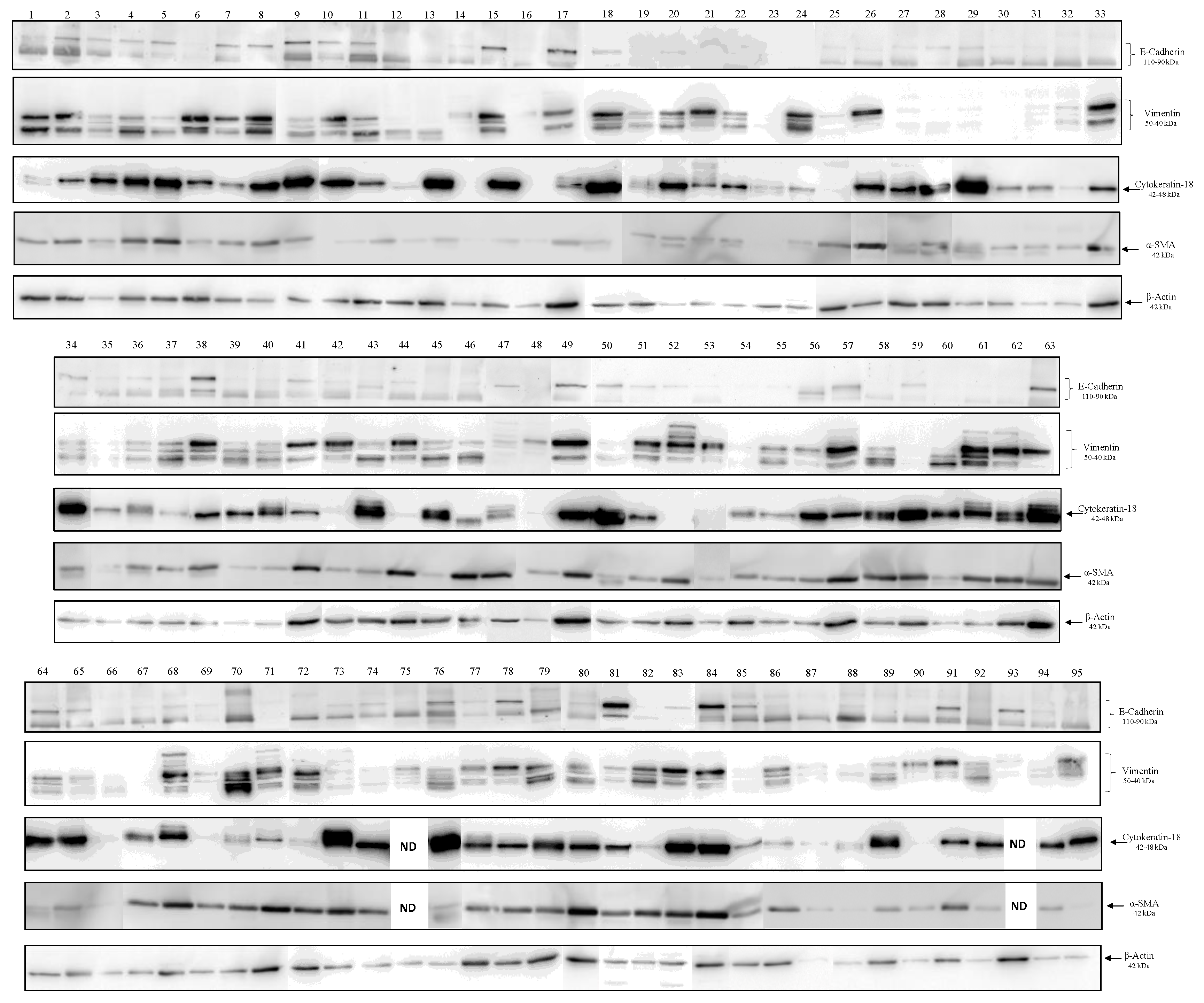
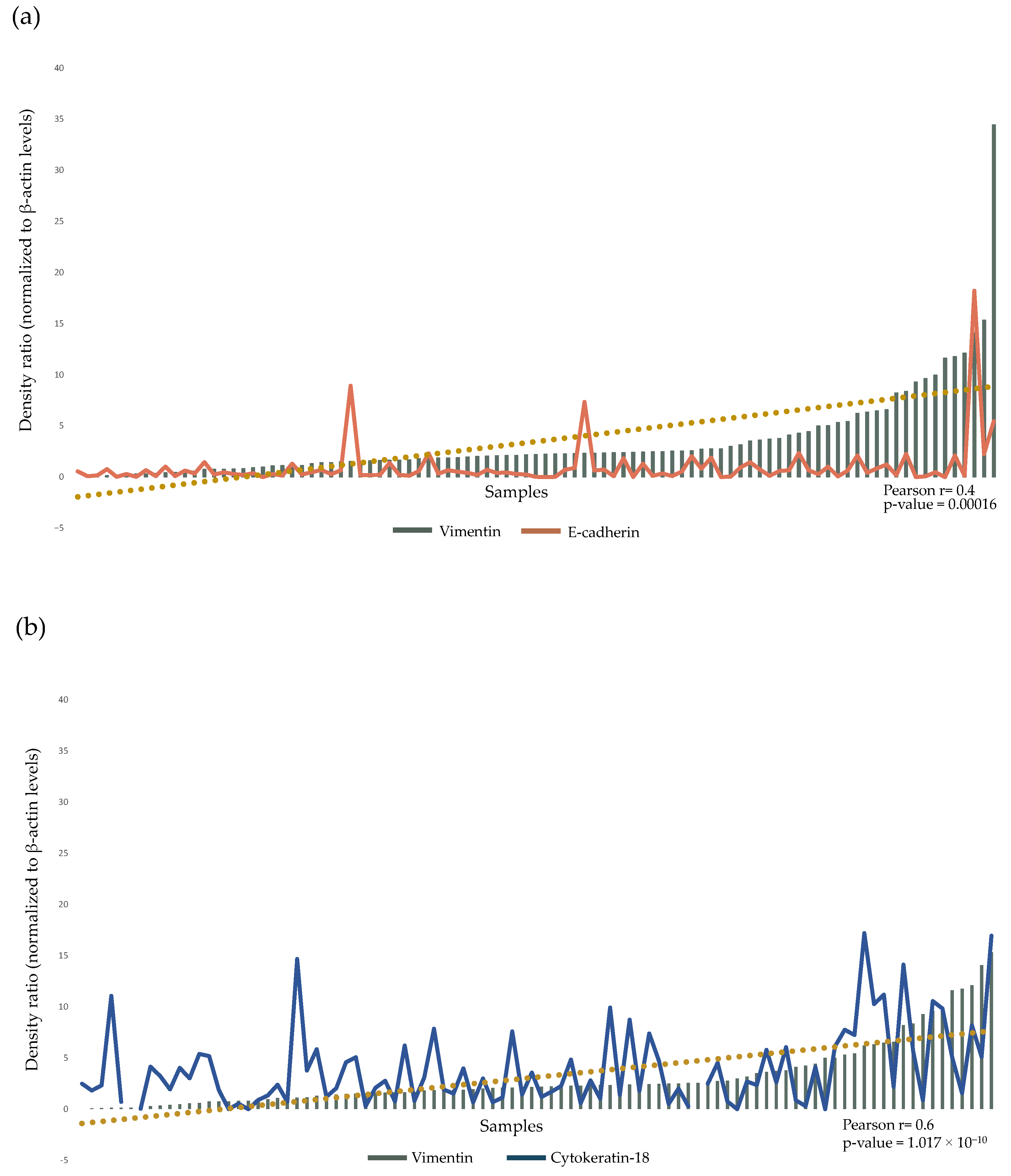
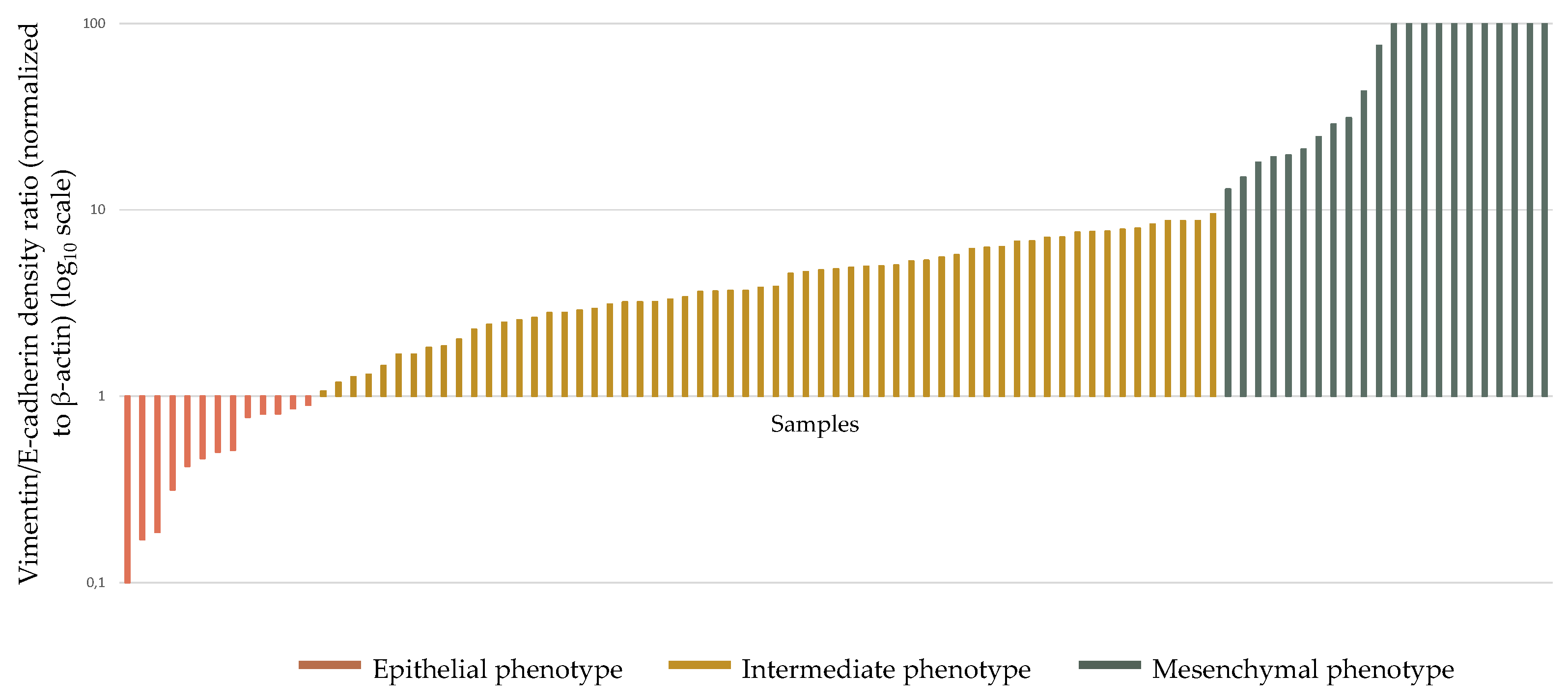
3.1. Proteomic Analysis of Vimentin, α-SMA, Cytokeratin-18 and E-Cadherin in BC Tissues

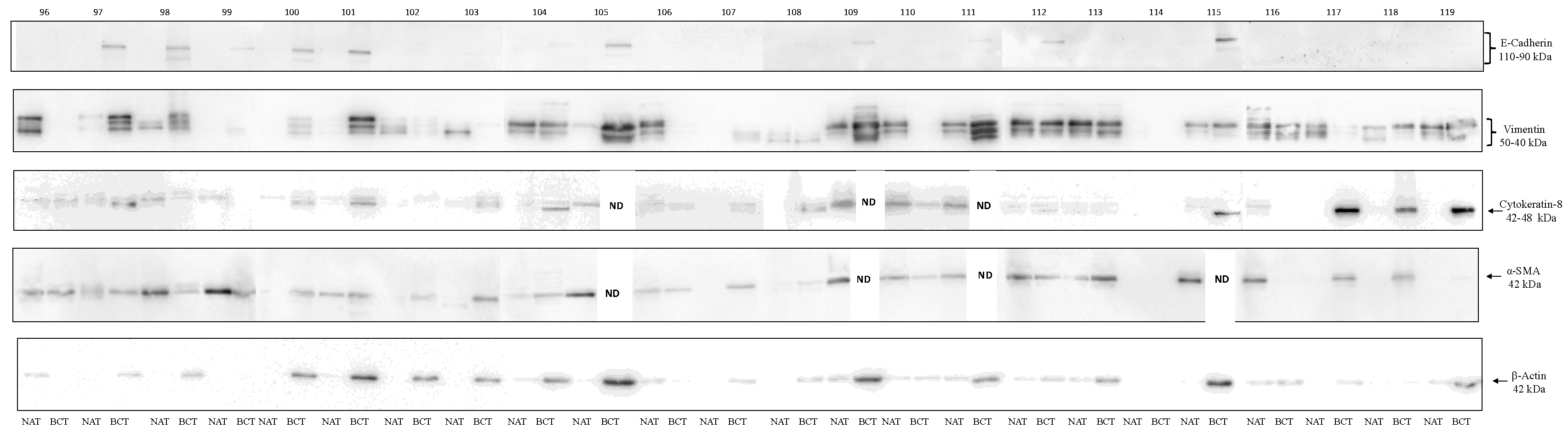
3.2. Proteomic Analysis of Vimentin, α-SMA, Cytokeratin-8, and E-Cadherin in BC Tissues and Matched Normal Tissues
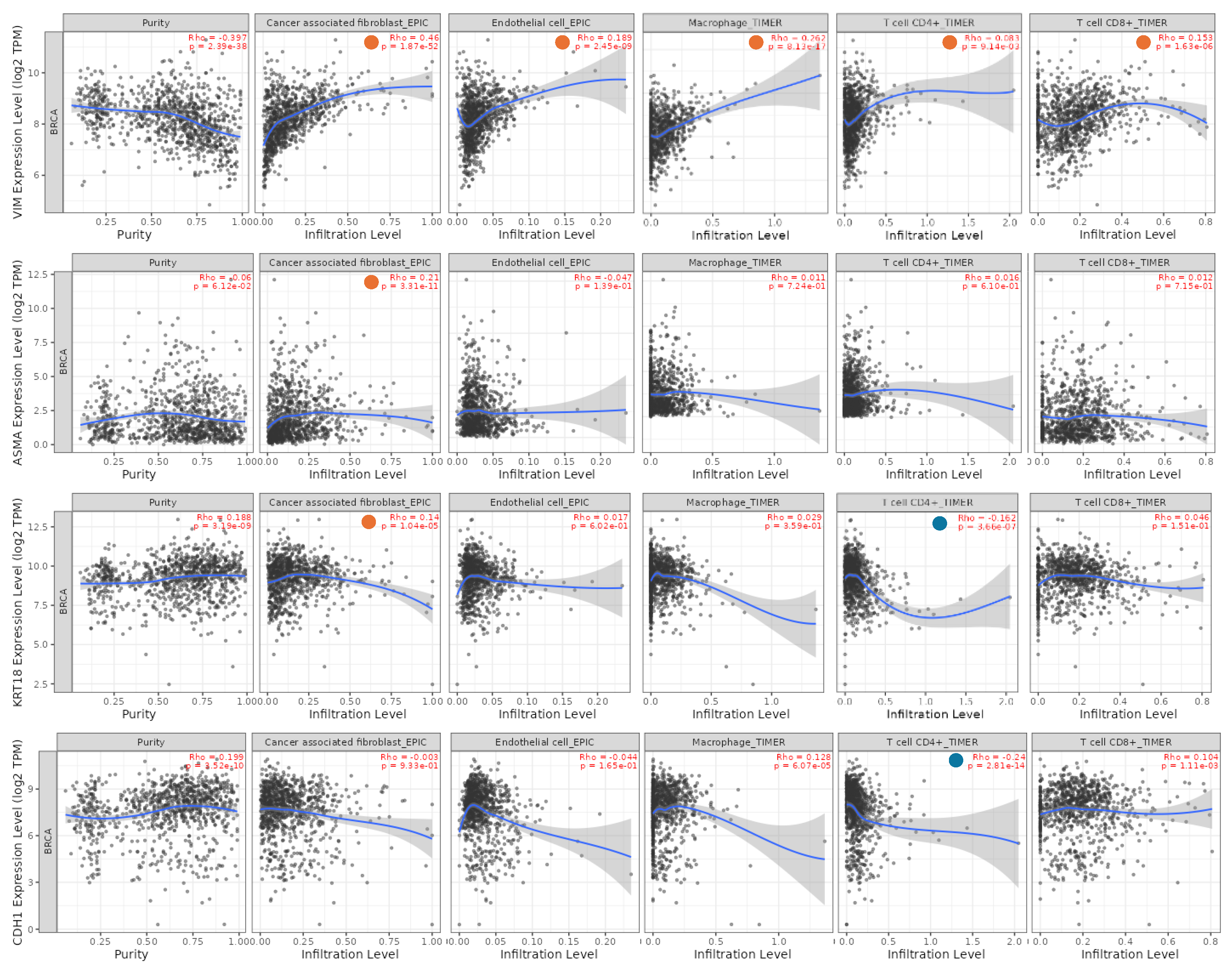
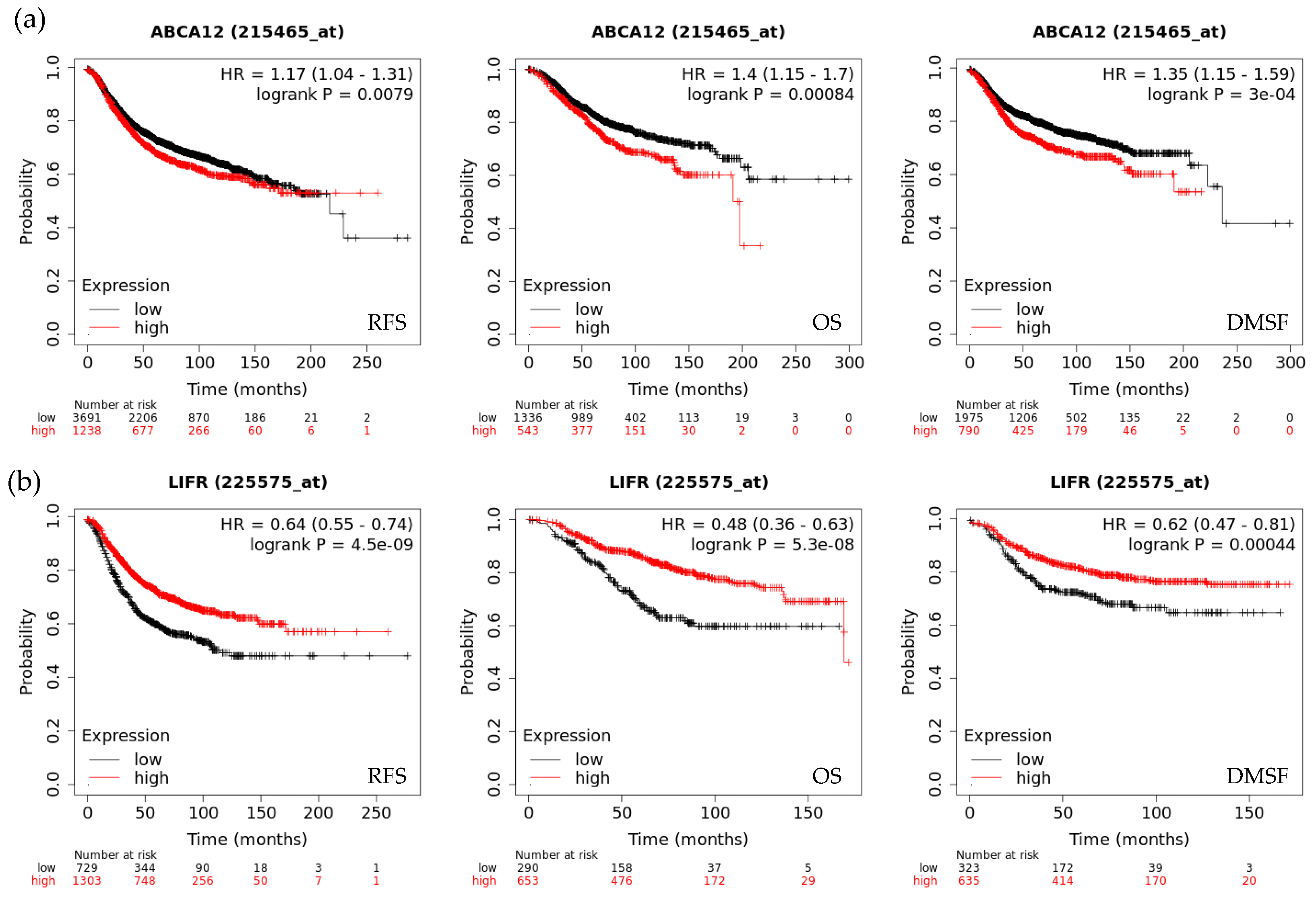
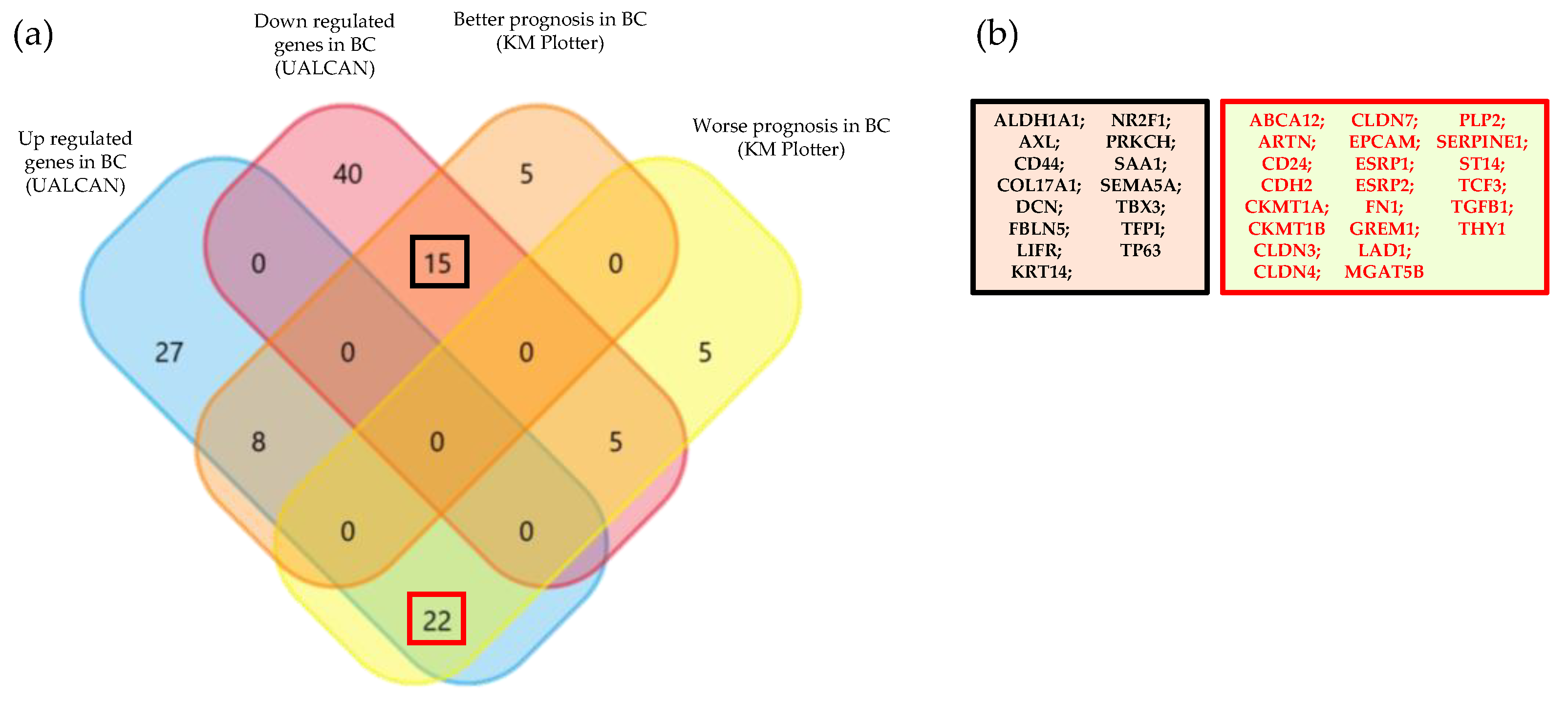
3.3. In Silico Analysis
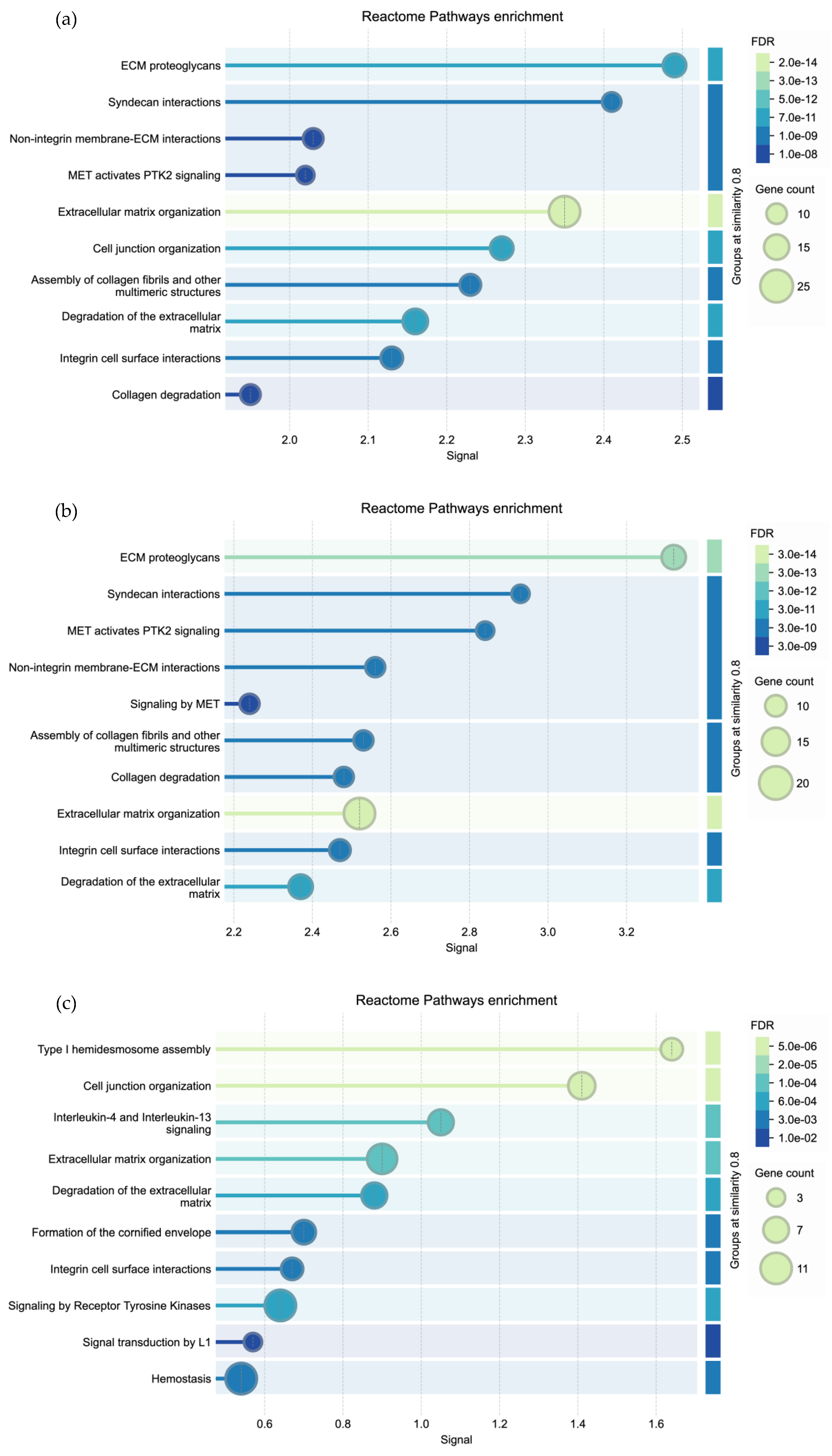
3.4. Biological Connectivity Between the EMT-Selected Genes
4. Discussion
5. Conclusions
Supplementary Materials
Author Contributions
Funding
Institutional Review Board Statement
Informed Consent Statement
Data Availability Statement
Acknowledgments
Conflicts of Interest
Abbreviations
References
- Łukasiewicz, S.; Czeczelewski, M.; Forma, A.; Baj, J.; Sitarz, R.; Stanisławek, A. Breast cancer—Epidemiology, risk factors, classification, prognostic markers, and current treatment strategies—An updated review. Cancers 2021, 13, 4287. [Google Scholar] [CrossRef] [PubMed]
- Wang, Y.; Zhou, B.P. Epithelial-Mesenchymal Transition—A Hallmark of Breast Cancer Metastasis. Cancer Hallm. 2013, 1, 38. [Google Scholar] [CrossRef]
- Thiery, J.P.; Acloque, H.; Huang, R.Y.J.; Nieto, M.A. Epithelial-mesenchymal transitions in development and disease. Cell 2009, 139, 871–890. [Google Scholar] [CrossRef]
- Singh, M.; Yelle, N.; Venugopal, C.; Singh, S.K. EMT: Mechanisms and therapeutic implications. Pharmacol. Ther. 2018, 182, 80–94. [Google Scholar] [CrossRef]
- Yang, J.; Antin, P.; Berx, G.; Blanpain, C.; Brabletz, T.; Bronner, M.; Campbell, K.; Cano, A.; Casanova, J.; Christofori, G.; et al. Guidelines and definitions for research on epithelial-mesenchymal transition. Nat. Rev. Mol. Cell Biol. 2020, 21, 341–352. [Google Scholar] [CrossRef]
- Youssef, K.K.; Narwade, N.; Arcas, A.; Marquez-Galera, A.; Jiménez-Castaño, R.; Lopez-Blau, C.; Fazilaty, H.; García-Gutierrez, D.; Cano, A.; Galcerán, J.; et al. Two distinct epithelial-to-mesenchymal transition programs control invasion and inflammation in segregated tumor cell populations. Nat. Cancer 2024, 5, 1660–1680. [Google Scholar] [CrossRef]
- Lu, W.; Kang, Y. Epithelial-Mesenchymal Plasticity in Cancer Progression and Metastasis. Dev. Cell 2019, 49, 361–374. [Google Scholar] [CrossRef] [PubMed]
- Cook, D.P.; Vanderhyden, B.C. Transcriptional census of epithelial-mesenchymal plasticity in cancer. Sci. Adv. 2022, 8, eabi7640. [Google Scholar] [CrossRef]
- Nassar, D.; Blanpain, C. Cancer Stem Cells: Basic Concepts and Therapeutic Implications. Annu. Rev. Pathol. Mech. Dis. 2016, 11, 47–76. [Google Scholar] [CrossRef]
- Ghafoor, S.; Garcia, E.; Jay, D.J.; Persad, S. Molecular Mechanisms Regulating Epithelial Mesenchymal Transition (EMT) to Promote Cancer Progression. Int. J. Mol. Sci. 2025, 26, 4364. [Google Scholar] [CrossRef] [PubMed]
- Liu, C.; Xie, J.; Lin, B.; Tian, W.; Wu, Y.; Xin, S.; Hong, L.; Li, X.; Liu, L.; Jin, Y.; et al. Pan-Cancer Single-Cell and Spatial-Resolved Profiling Reveals the Immunosuppressive Role of APOE+ Macrophages in Immune Checkpoint Inhibitor Therapy. Adv. Sci. 2024, 11, 2401061. [Google Scholar] [CrossRef] [PubMed]
- Bradford, M.M. A rapid and sensitive method for the quantitation of microgram quantities of protein utilizing the principle of protein-dye binding. Anal. Biochem. 1976, 72, 248–254. [Google Scholar] [CrossRef] [PubMed]
- Buttacavoli, M.; Albanese, N.N.; Roz, E.; Pucci-Minafra, I.; Feo, S.; Cancemi, P. Proteomic Profiling of Colon Cancer Tissues: Discovery of New Candidate Biomarkers. Int. J. Mol. Sci. 2020, 21, 3096. [Google Scholar] [CrossRef]
- Vasaikar, S.V.; Deshmukh, A.P.; den Hollander, P.; Addanki, S.; Kuburich, N.A.; Kudaravalli, S.; Joseph, R.; Chang, J.; Soundararajan, R.; Mani, S. EMTome: A resource for pan-cancer analysis of epithelial-mesenchymal transition genes and signatures. Br. J. Cancer 2021, 124, 259–269. [Google Scholar] [CrossRef]
- Chandrashekar, D.S.; Bashel, B.; Balasubramanya, S.; Creighton, C.; Ponce-Rodriguez, I.; Chakravarthi, B.; Varambally, S. UALCAN: A Portal for Facilitating Tumor Subgroup Gene Expression and Survival Analyses. Neoplasia 2017, 19, 649–658. [Google Scholar] [CrossRef]
- Lánczky, A.; Győrffy, B. Web-Based Survival Analysis Tool Tailored for Medical Research (KMplot): Development and Implementation. J. Med. Internet Res. 2021, 23, e27633. [Google Scholar] [CrossRef]
- Cui, H.; Zhao, G.; Lu, Y.; Zuo, S.; Duan, D.; Luo, X.; Zhao, H.; Li, J.; Zeng, Z.; Chen, Q.; et al. TIMER3: An enhanced resource for tumor immune analysis. Nucleic Acids Res. 2025, 53, W534–W541. [Google Scholar] [CrossRef]
- Szklarczyk, D.; Franceschini, A.; Wyder, S.; Forslund, K.; Heller, D.; Huerta-Cepas, J.; Simonovic, M.; Roth, A.; Santos, A.; Tsafou, K.P.; et al. STRING v10: Protein-protein interaction networks, integrated over the tree of life. Nucleic Acids Res. 2015, 43, D447–D452. [Google Scholar] [CrossRef]
- Jézéquel, P.; Campone, M.; Gouraud, W.; Guérin-Charbonnel, C.; Leux, C.; Ricolleau, G.; Campion, L. bc-GenExMiner: An easy-to-use online platform for gene prognostic analyses in breast cancer. Breast Cancer Res. Treat. 2012, 131, 765–775. [Google Scholar] [CrossRef]
- Ringnér, M.; Fredlund, E.; Häkkinen, J.; Borg, Å.; Staaf, J. GOBO: Gene expression-based outcome for breast cancer online. PLoS ONE 2011, 6, e17911. [Google Scholar] [CrossRef] [PubMed]
- Yodsurang, V.; Tanikawa, C.; Miyamoto, T.; Lo, P.H.Y.; Hirata, M.; Matsuda, K. Identification of a novel p53 target, COL17A1, that inhibits breast cancer cell migration and invasion. Oncotarget 2017, 8, 55790–55803. [Google Scholar] [CrossRef]
- Real, S.A.S.; Parveen, F.; Rehman, A.U.; Shaik, R.; Deo, S.V.S.; Husain, S.A. Mutation, methylation and expression analysis of LIFR gene in Indian breast cancer patients. Mutat. Res. 2019, 816–818, 111677. [Google Scholar] [CrossRef] [PubMed]
- Mohamedi, Y.; Fontanil, T.; Cobo, T.; Vega, J.A.; Cobo, J.L.; Pérez-Basterrechea, M.; Cobo, J.; Obaya, Á.J.; Cal, S. Antitumor potential of fibulin-5 in breast cancer cells depends on its RGD cell adhesion motif. Cell Physiol. Biochem. 2019, 53, 87–100. [Google Scholar] [CrossRef] [PubMed]
- Morel, A.P.; Ouzounova, M. Understanding cancer cell plasticity: EMT, respecialisation, and therapeutic opportunities. EMBO Mol. Med. 2025, 17, 2531–2532. [Google Scholar] [CrossRef] [PubMed]
- Bellomo, C.; Caja, L.; Moustakas, A. Transforming growth factor β as regulator of cancer stemness and metastasis. Br. J. Cancer 2016, 115, 761–769. [Google Scholar] [CrossRef]
- Ansari, N.; Gaurav, K.; Anand, A.; Singh, K.R.; Agarwal, P.; Agarwal, A.; Kumar, S.; Sonkar, A.A. Expression of cancer stem cell markers (CD24, CD44 & ALDH1A3 isoform) in Breast Cancer in Indian population considering clinicopathological characteristics and response to neoadjuvant chemotherapy—A prospective analysis from a university hospital. Indian J. Surg. Oncol. 2024, 15, 874–883. [Google Scholar] [CrossRef]
- Hiraga, T.; Ito, S.; Nakamura, H. EpCAM expression in breast cancer cells is associated with enhanced bone metastasis formation. Int. J. Cancer 2016, 138, 1698–1708. [Google Scholar] [CrossRef]
- Asiedu, M.K.; Beauchamp-Perez, F.D.; Ingle, J.N.; Behrens, M.D.; Radisky, D.C.; Knutson, K.L. AXL induces epithelial-to-mesenchymal transition and regulates the function of breast cancer stem cells. Oncogene 2014, 33, 1316–1324. [Google Scholar] [CrossRef]
- Hsu, H.S.; Liu, C.C.; Lin, J.H.; Hsu, T.W.; Hsu, J.W.; Li, A.F.; Hung, S.C. Involvement of collagen XVII in pluripotency gene expression and metabolic reprogramming of lung cancer stem cells. J. Biomed. Sci. 2020, 27, 5. [Google Scholar] [CrossRef]
- Kozawa, K.; Sekai, M.; Ohba, K.; Ito, S.; Sako, H.; Maruyama, T.; Kakeno, M.; Shirai, T.; Kuromiya, K.; Kamasaki, T.; et al. The CD44/COL17A1 pathway promotes the formation of multilayered, transformed epithelia. Curr. Biol. 2021, 31, 3086–3097.e7. [Google Scholar] [CrossRef]
- Pan, Q.; Yang, X.; Chen, Z.; Deng, Q.; Liu, J.; Ke, Y.; Lin, F.; Huang, W.; Lin, Z.; Yu, X.; et al. AXL enhances the self-renewal of cancer stem-like cells and Osimertinib chemoresistance by regulating SCD1 in non-small cell lung cancer. Biochem. Pharmacol. 2025, 240, 117067. [Google Scholar] [CrossRef]
- Lee, J.M.; Dedhar, S.; Kalluri, R.; Thompson, E.W. The epithelial-mesenchymal transition: New insights in signaling, development, and disease. J. Cell. Biol. 2006, 172, 973–981. [Google Scholar] [CrossRef] [PubMed]
- Nieto, M.A. Epithelial plasticity: A common theme in embryonic and cancer cells. Science 2013, 342, 1234850. [Google Scholar] [CrossRef] [PubMed]
- Allgayer, H.; Mahapatra, S.; Mishra, B.; Swain, B.; Saha, S.; Khanra, S.; Kumari, K.; Panda, V.K.; Malhotra, D.; Patil, N.S.; et al. Epithelial-to-mesenchymal transition (EMT) and cancer metastasis: The status quo of methods and experimental models 2025. Mol. Cancer 2025, 24, 167. [Google Scholar] [CrossRef] [PubMed]
- Schutte, B.; Henfling, M.; Kölgen, W.; Bouman, M.; Meex, S.; Leers, M.P.; Nap, M.; Björklund, V.; Björklund, P.; Björklund, B.; et al. Keratin 8/18 breakdown and reorganization during apoptosis. Exp. Cell Res. 2004, 297, 11–26. [Google Scholar] [CrossRef]
- Davis, M.A.; Fairgrieve, M.R.; Den Hartigh, A.; Yakovenko, O.; Duvvuri, B.; Lood, C.; Thomas, W.E.; Fink, S.L.; Gale, M., Jr. Calpain drives pyroptotic vimentin cleavage, intermediate filament loss, and cell rupture that mediates immunostimulation. Proc. Natl. Acad. Sci. USA 2019, 116, 5061–5070. [Google Scholar] [CrossRef]
- Byun, Y.; Chen, F.; Chang, R.; Trivedi, M.; Green, K.J.; Cryns, V.L. Caspase cleavage of vimentin disrupts intermediate filaments and promotes apoptosis. Cell Death Differ. 2001, 8, 443–450. [Google Scholar] [CrossRef]
- Satelli, A.; Li, S. Vimentin in cancer and its potential as a molecular target for cancer therapy. Cell. Mol. Life Sci. 2011, 68, 3033–3046. [Google Scholar] [CrossRef]
- Heatley, M.; Whiteside, C.; Maxwell, P.; Toner, P. Vimentin expression in benign and malignant breast epithelium. J. Clin. Pathol. 1993, 46, 441–445. [Google Scholar] [CrossRef]
- Rapanotti, M.C.; Cugini, E.; Scioli, M.G.; Cenci, T.; Anzillotti, S.; Puzzuoli, M.; Terrinoni, A.; Ferlosio, A.; De Luca, A.; Orlandi, A. The Clinical Relevance of Epithelial-to-Mesenchymal Transition Hallmarks: A Cut-Off-Based Approach in Healthy and Cancerous Cell Lines. Int. J. Mol. Sci. 2025, 26, 3617. [Google Scholar] [CrossRef]
- Vipparthi, K.; Hari, K.; Chakraborty, P.; Ghosh, S.; Patel, A.K.; Ghosh, A.; Biswas, N.K.; Sharan, R.; Arun, P.; Jolly, M.K.; et al. Emergence of hybrid states of stem-like cancer cells correlates with poor prognosis in oral cancer. iScience 2022, 25, 104317. [Google Scholar] [CrossRef] [PubMed]
- Stavik, B.; Skretting, G.; Aasheim, H.C.; Tinholt, M.; Zernichow, L.; Sletten, M.; Sandset, P.M.; Iversen, N. Downregulation of TFPI in breast cancer cells induces tyrosine phosphorylation signaling and increases metastatic growth by stimulating cell motility. BMC Cancer 2011, 11, 357. [Google Scholar] [CrossRef]
- Zhang, J.; Yin, R.; Xue, Y.; Qin, R.; Wang, X.; Wu, S.; Zhu, J.; Li, Y.S.; Zhang, C.; Wei, Y. Advances in the study of epithelial mesenchymal transition in cancer progression: Role of miRNAs. Prog. Biophys. Mol. Biol. 2025, 196, 69–90. [Google Scholar] [CrossRef] [PubMed]
- Cook, D.P.; Vanderhyden, B.C. Context specificity of the EMT transcriptional response. Nat. Commun. 2020, 11, 2142. [Google Scholar] [CrossRef]
- Miao, C.; Gao, X.; Mao, J.; Wang, W.; Li, Z.; Chen, Z.; Wen, Z.; Huang, Y.; Huang, X.; Liang, X.; et al. A novel vimentin variant from tumor-associated macrophages directs cancer metastasis by engaging IGF-1R. bioRxiv 2025, in press. [Google Scholar] [CrossRef]
- Barb, A.C.; Fenesan, M.P.; Pirtea, M.; Margan, M.M.; Tomescu, L.; Ceban, E.; Cimpean, A.M.; Melnic, E. Reassessing Breast Cancer-Associated Fibroblasts (CAFs) Interactions with Other Stromal Components and Clinico-Pathologic Parameters by Using Immunohistochemistry and Digital Image Analysis (DIA). Cancers 2023, 15, 3823. [Google Scholar] [CrossRef]
- Cui, M.; Dong, H.; Duan, W.; Wang, X.; Liu, Y.; Shi, L.; Zhang, B. The relationship between cancer associated fibroblasts biomarkers and prognosis of breast cancer: A systematic review and meta-analysis. PeerJ 2024, 12, e16958. [Google Scholar] [CrossRef]
- Findakly, D.; Solsi, A.; Arslan, W. A Novel Combination of Metachronous Primary Malignancies of the Thyroid and Breast in a Patient with Neurofibromatosis Type 1. Cureus 2020, 12, e7590. [Google Scholar] [CrossRef]
- Cîmpean, A.M.; Raica, M.; Nariţa, D. Diagnostic significance of the immunoexpression of CD34 and smooth muscle cell actin in benign and malignant tumors of the breast. Rom. J. Morphol. Embryol. 2005, 46, 123–129. [Google Scholar]
- Yuan, J.; Yang, L.; Zhang, H.; Beeraka, N.M.; Zhang, D.; Wang, Q.; Wang, M.; Pr, H.V.; Sethi, G.; Wang, G. Decoding tumor microenvironment: EMT modulation in breast cancer metastasis and therapeutic resistance, and implications of novel immune checkpoint blockers. Pharmacotherapy 2024, 181, 117714. [Google Scholar] [CrossRef]
- Mytilinaiou, M.; Nikitovic, D.; Berdiaki, A.; Kostouras, A.; Papoutsidakis, A.; Tsatsakis, A.M.; Tzanakakis, G.N. Emerging roles of syndecan 2 in epithelial and mesenchymal cancer progression. IUBMB Life 2017, 69, 824–833. [Google Scholar] [CrossRef]
- Cao, H.; Zhang, J.; Liu, H.; Wan, L.; Zhang, H.; Huang, Q.; Xu, E.; Lai, M. IL-13/STAT6 signaling plays a critical role in the epithelial-mesenchymal transition of colorectal cancer cells. Oncotarget 2016, 7, 11282. [Google Scholar] [CrossRef]
- Pérez-González, A.; Bévant, K.; Blanpain, C. Cancer cell plasticity during tumor progression, metastasis and response to therapy. Nat. Cancer 2023, 4, 1063–1082. [Google Scholar] [CrossRef] [PubMed]
- Tomar, R.; Rakheja, G.; Verma, N.; Thakur, S.; Khurana, N.; Ghuliani, D. Role of CD44 as cancer stem cell marker in triple-negative breast cancer and its association with histological grade and angiogenesis. Indian J. Pathol. Microbiol. 2023, 66, 258–263. [Google Scholar] [CrossRef]
- Ghuwalewala, S.; Ghatak, D.; Das, P.; Dey, S.; Sarkar, S.; Alam, N.; Panda, C.K.; Roychoudhury, S. CD44 high CD24 low molecular signature determines the Cancer Stem Cell and EMT phenotype in Oral Squamous Cell Carcinoma. Stem Cell Res. 2016, 16, 405–417. [Google Scholar] [CrossRef] [PubMed]
- Charafe-Jauffret, E.; Ginestier, C.; Iovino, F.; Tarpin, C.; Diebel, M.; Esterni, B.; Houvenaeghel, G.; Extra, J.M.; Bertucci, F.; Jacquemier, J.; et al. Aldehyde dehydrogenase 1-positive cancer stem cells mediate metastasis and poor clinical outcome in inflammatory breast cancer. Clin. Cancer Res. 2010, 16, 45–55. [Google Scholar] [CrossRef] [PubMed]
- Nanba, D.; Toki, F.; Asakawa, K.; Matsumura, H.; Shiraishi, K.; Sayama, K.; Matsuzaki, K.; Toki, H.; Nishimura, E.K. EGFR-mediated epidermal stem cell motility drives skin regeneration through COL17A1 proteolysis. J. Cell Biol. 2021, 220, e202012073. [Google Scholar] [CrossRef]
- Engelsen, A.S.T.; Wnuk-Lipinska, K.; Bougnaud, S.; Pelissier Vatter, F.A.; Tiron, C.; Villadsen, R.; Miyano, M.; Lotsberg, M.L.; Madeleine, N.; Panahandeh, P.; et al. AXL Is a Driver of Stemness in Normal Mammary Gland and Breast Cancer. iScience 2020, 23, 101649. [Google Scholar] [CrossRef]
- Alimperti, S.; Andreadis, S.T. CDH2 and CDH11 act as regulators of stem cell fate decisions. Stem Cell Res. 2015, 14, 270–282. [Google Scholar] [CrossRef]
- Jaggupilli, A.; Elkord, E. Significance of CD44 and CD24 as cancer stem cell markers: An enduring ambiguity. J. Immunol. Res. 2012, 2012, 708036. [Google Scholar] [CrossRef]
- Yan, X.; Xue, Y.; Zhou, Y.; Cheng, Y.; Yin, S.; Ma, Q.; Zeng, F. Activation of proHGF by St14 induces mouse embryonic stem cell differentiation. Protein Cell 2016, 7, 601–605. [Google Scholar] [CrossRef][Green Version]
- Slyper, M.; Shahar, A.; Bar-Ziv, A.; Granit, R.Z.; Hamburger, T.; Maly, B.; Peretz, T. Control of breast cancer growth and initiation by the stem cell-associated transcription factor TCF3. Cancer Res. 2012, 72, 5613–5624. [Google Scholar] [CrossRef] [PubMed]
- Zhang, H.; Brown, R.L.; Wei, Y.; Zhao, P.; Liu, S.; Liu, X.; Deng, Y.; Hu, X.; Zhang, J.; Gao, X.D.; et al. CD44 splice isoform switching determines breast cancer stem cell state. Genes Dev. 2019, 33, 166–179. [Google Scholar] [CrossRef]
- He, C.; Chen, Y.; Zhang, X.; Feng, H.; Rao, Y.; Ji, T.; Wang, W. Down-regulation of ESRP2 inhibits breast cancer cell proliferation via inhibiting cyclinD1. Sci. Rep. 2024, 14, 28475. [Google Scholar] [CrossRef]
- Seeneevassen, L.; Giraud, J.; Molina-Castro, S.; Sifré, E.; Tiffon, C.; Beauvoit, C.; Staedel, C.; Mégraud, F.; Lehours, P.; Martin, O.C.B.; et al. Leukaemia inhibitory factor (LIF) inhibits cancer stem cells tumorigenic properties through hippo kinases activation in gastric cancer. Cancers 2020, 12, 2011. [Google Scholar] [CrossRef] [PubMed]
- Wang, X.; Wen, S.; Du, X.; Zhang, Y.; Yang, X.; Zou, R.; Feng, B.; Fu, X.; Jiang, F.; Zhou, G.; et al. SAA suppresses α-PD-1 induced anti-tumor immunity by driving TH2 polarization in lung adenocarcinoma. Cell Death Dis. 2023, 14, 718. [Google Scholar] [CrossRef] [PubMed]
- Yan, K.; Wu, Q.; Yan, D.H.; Lee, C.H.; Rahim, N.; Tritschler, I.; DeVecchio, J.; Kalady, M.F.; Hjelmeland, A.B.; Rich, J.N. Glioma cancer stem cells secrete Gremlin1 to promote their maintenance within the tumor hierarchy. Genes Dev. 2014, 28, 1085–1100. [Google Scholar] [CrossRef]
- Zhu, D.; Zhao, D.; Wang, N.; Cai, F.; Jiang, M.; Zheng, Z. Current status and prospects of GREM1 research in cancer. Mol. Clin. Oncol. 2023, 19, 69. [Google Scholar] [CrossRef]
- Kim, D.; Olson, J.M.; Cooper, J.A. N-cadherin dynamically regulates pediatric glioma cell migration in complex environments. J. Cell Biol. 2024, 223, e202401057. [Google Scholar] [CrossRef]
- Ghosh, D.; Dutta, A.; Kashyap, A.; Upmanyu, N.; Datta, S. PLP2 drives collective cell migration via ZO-1-mediated cytoskeletal remodeling at the leading edge in human colorectal cancer cells. J. Cell Sci. 2021, 134, jcs253468. [Google Scholar] [CrossRef]
- Sadanandam, A.; Sidhu, S.S.; Wullschleger, S.; Singh, S.; Varney, M.L.; Yang, C.S.; Ashour, A.E.; Batra, S.K.; Singh, R.K. Secreted semaphorin 5A suppressed pancreatic tumour burden but increased metastasis and endothelial cell proliferation. Br. J. Cancer 2012, 107, 501–507. [Google Scholar] [CrossRef]
- Marhuenda, E.; Fabre, C.; Zhang, C.; Martin-Fernandez, M.; Iskratsch, T.; Saleh, A.; Bauchet, L.; Cambedouzou, J.; Hugnot, J.P.; Duffau, H.; et al. Glioma stem cells invasive phenotype at optimal stiffness is driven by MGAT5 dependent mechanosensing. J. Exp. Clin. Cancer Res. 2021, 40, 139. [Google Scholar] [CrossRef] [PubMed]
- Hu, X.; Villodre, E.S.; Larson, R.; Rahal, O.M.; Wang, X.; Gong, Y.; Song, J.; Krishnamurthy, S.; Ueno, N.T.; Tripathy, D.; et al. Decorin-mediated suppression of tumorigenesis, invasion, and metastasis in inflammatory breast cancer. Commun. Biol. 2021, 4, 72. [Google Scholar] [CrossRef] [PubMed]
- Yang, J.; Zhan, X.Z.; Malola, J.; Li, Z.Y.; Pawar, J.S.; Zhang, H.T.; Zha, Z.G. The multiple roles of Thy-1 in cell differentiation and regeneration. Differentiation 2020, 113, 38–48. [Google Scholar] [CrossRef]
- Jiang, Y.; Feng, Y.; Huang, J.; Huang, Z.; Tan, R.; Li, T.; Chen, Z.; Tang, X.; Qiu, J.; Li, C.; et al. LAD1 promotes malignant progression by diminishing ubiquitin-dependent degradation of vimentin in gastric cancer. J. Transl. Med. 2023, 21, 632. [Google Scholar] [CrossRef] [PubMed]
- Gowrikumar, S.; Singh, A.B.; Dhawan, P. Role of claudin proteins in regulating cancer stem cells and chemoresistance-potential implication in disease prognosis and therapy. Int. J. Mol. Sci. 2020, 21, 53. [Google Scholar] [CrossRef]
- Ding, K.; Banerjee, A.; Tan, S.; Zhao, J.; Zhuang, Q.; Li, R.; Qian, P.; Liu, S.; Wu, Z.S.; Lobie, P.E.; et al. Artemin, a member of the glial cell line-derived neurotrophic factor family of ligands, is her2-regulated and mediates acquired trastuzumab resistance by promoting cancer stem cell-like behavior in mammary carcinoma cells. J. Biol. Chem. 2014, 289, 16057–16071. [Google Scholar] [CrossRef]
- Banerjee, A.; Qian, P.; Wu, Z.S.; Ren, X.; Steiner, M.; Bougen, N.M.; Liu, S.; Liu, D.X.; Zhu, T.; Lobie, P.E. Artemin stimulates radio- and chemo-resistance by promoting TWIST1-BCL-2-dependent cancer stem cell-like behavior in mammary carcinoma cells. J. Biol. Chem. 2012, 287, 42502–42515. [Google Scholar] [CrossRef]
- Cui, J.; Christin, J.R.; Reisz, J.A.; Cendali, F.I.; Sanawar, R.; Coutinho De Miranda, M.; D’Alessandro, A.; Guo, W. Targeting ABCA12-controlled ceramide homeostasis inhibits breast cancer stem cell function and chemoresistance. Sci. Adv. 2023, 9, eadh1891. [Google Scholar] [CrossRef]



| Genes Upregulated in BC | Statistical Significance | Genes Upregulated in BC | Statistical Significance | Genes Downregulated in BC | Statistical Significance | Genes Downregulated in BC | Statistical Significance |
|---|---|---|---|---|---|---|---|
| ABCA12 | 6.03 × 10⁻⁵ | KRT18 | 1.62 × 10⁻¹² | ABCC4 | 1.06 × 10⁻³ | KRT17 | 5.55 × 10⁻¹⁶ |
| ARTN | 1.62 × 10⁻¹² | LAD1 | 1.62 × 10⁻¹² | ABLIM1 | 1.62 × 10⁻¹² | KRT5 | <1 × 10⁻¹² |
| CD24 | 1.62 × 10⁻¹² | LRRC1 | 1.11 × 10⁻¹⁶ | ACSL4 | 1.62 × 10⁻¹² | LAMA3 | 1.62 × 10⁻¹² |
| CDH1 | 9.56 × 10⁻⁸ | MAL2 | 1.62 × 10⁻¹² | ADAM9 | 1.27 × 10⁻⁸ | LIFR | <1 × 10⁻¹² |
| CDH2 | 3.45 × 10⁻⁸ | MGAT5B | 1.11 × 10⁻¹⁶ | ALDH1A1 | <1 × 10⁻¹² | MCAM | <1 × 10⁻¹² |
| CKMT1A | <1 × 10⁻¹² | MLPH | 1.62 × 10⁻¹² | ALDH1A3 | 1.62 × 10⁻¹² | NR2F1 | 7.51 × 10⁻⁹ |
| CKMT1B | 1.62 × 10⁻¹² | MMP3 | <1 × 10⁻¹² | ANXA8 | 3.67 × 10 −6 | NRP1 | <1 × 10⁻¹² |
| CLDN3 | <1 × 10⁻¹² | MMP9 | 2.09 × 10⁻⁵ | AXL | 3.33 × 10 −16 | PMP22 | 1.11 × 10⁻¹⁶ |
| CLDN4 | 2.92 × 10⁻⁸ | MST1R | <1 × 10⁻¹² | CD44 | 9.79 × 10⁻⁵ | PRKCH | <1 × 10⁻¹² |
| CLDN7 | 1.62 × 10⁻¹² | OCLN | 1.62 × 10⁻¹² | CDH3 | 1.10 × 10 −3 | PRRX1 | 4 × 10⁻² |
| COL1A1 | 1.62 × 10⁻¹² | PKP3 | 1.62 × 10⁻¹² | COL17A1 | <1 × 10⁻¹² | PTX3 | 1.81 × 10⁻⁸ |
| COL1A2 | 1.62 × 10⁻¹² | PLIN3 | <1 × 10⁻¹² | DCBLD2 | <1 × 10⁻¹² | RGL1 | <1 × 10⁻¹² |
| COL3A1 | <1 × 10⁻¹² | PLP2 | 1.62 × 10⁻¹² | DCN | 1.62 × 10⁻¹² | S100A2 | 2.82 × 10⁻³ |
| COL5A1 | 1.62 × 10⁻¹² | POSTN | 1.62 × 10⁻¹² | DNAJB4 | 1.62 × 10⁻¹² | S100A8 | 1.31 × 10⁻⁶ |
| COL5A2 | 1.62 × 10⁻¹² | RAB25 | <1 × 10⁻¹² | EGFR | 2.22 × 10⁻¹⁶ | SAA1 | 5.55 × 10⁻¹⁶ |
| COL6A1 | <1 × 10⁻¹² | S100A14 | <1 × 10⁻¹² | ELK3 | 1.11 × 10⁻¹⁶ | SEMA5A | 1.62 × 10⁻¹² |
| CORO1A | 1.62 × 10⁻¹² | SAMD9 | <1 × 10⁻¹² | FBLN5 | 1.62 × 10⁻¹² | SERPINB2 | 1.03 × 10⁻⁴ |
| DSP | 6.9 × 10⁻¹⁰ | SERPINE1 | 8.56 × 10⁻¹¹ | FGFBP1 | 2.13 × 10⁻⁵ | SNAI2 | 1.74 × 10⁻¹² |
| ECM1 | 1.62 × 10⁻¹² | SPINT2 | 1.62 × 10⁻¹² | GJB3 | 9.02 × 10⁻¹¹ | SOX10 | <1 × 10⁻¹² |
| EPCAM | 1.62 × 10⁻¹² | SPRR1B | 1.26 × 10⁻³ | GNG11 | <1 × 10⁻¹² | TBX3 | 5.36 × 10⁻⁴ |
| ERBB3 | <1 × 10⁻¹² | ST14 | <1 × 10⁻¹² | IL1B | 3.04 × 10⁻³ | TFPI | <1 × 10⁻¹² |
| ESR1 | <1 × 10⁻¹² | SYK | 2.6 × 10⁻⁶ | IL4R | 1.00 × 10⁻⁹ | TGFB1I1 | <1 × 10⁻¹² |
| ESRP1 | <1 × 10⁻¹² | TCF3 | 1.62 × 10⁻¹² | ITGA6 | <1 × 10⁻¹² | THBD | 1.62 × 10⁻¹² |
| ESRP2 | 1.62 × 10⁻¹² | TGFB1 | 1.62 × 10⁻¹² | ITGB1 | 1.39 × 10⁻¹³ | TP63 | <1 × 10⁻¹² |
| FN1 | <1 × 10⁻¹² | THY1 | 1.62 × 10⁻¹² | JAG1 | 3.33 × 10⁻¹⁶ | TWIST1 | 7.72 × 10⁻¹² |
| FXYD3 | 1.62 × 10⁻¹² | TSPAN1 | 1.62 × 10⁻¹² | KLF10 | <1 × 10⁻¹² | TWIST2 | <1 × 10⁻¹² |
| GREM1 | 2.09 × 10⁻⁹ | VCAN | <1 × 10⁻¹² | KLK5 | 2.34 × 10⁻⁸ | VIM | 1.62 × 10⁻¹² |
| GRHL2 | 1.62 × 10⁻¹² | KRT14 | 1.62 × 10⁻¹² | WNT5A | 1.8 × 10⁻² | ||
| ITGA5 | 2.42 × 10⁻⁴ | KRT15 | <1 × 10⁻¹² | ZEB1 | 1.62 × 10⁻¹² | ||
| ITGBL1 | 3.33 × 10⁻¹⁶ | KRT16 | 8.79 × 10⁻⁸ | ZEB2 | <1 × 10⁻¹² |
| Genes Whose High Expression Correlates with Worse Survival Probability | |||||||
| Gene | DMFS | OS | RFS | Gene | DMFS | OS | RFS |
| ABCA12 | 3 × 10⁻⁴ | 8 × 10⁻⁴ | 7.9 × 10⁻³ | KRT16 | 9.8 × 10⁻⁹ | 1.5 × 10⁻⁵ | 9 × 10⁻¹⁵ |
| ADAM9 | 1.3 × 10⁻⁷ | 3.8 × 10⁻⁵ | 4.6 × 10⁻¹³ | LAD1 | 4.4 × 10⁻¹¹ | 2.4 × 10⁻⁴ | 1.4 × 10⁻⁸ |
| ARTN | 7.5 × 10⁻³ | 3.8 × 10⁻² | 3.1 × 10⁻³ | LAMA3 | 4.9 × 10⁻² | 1.8 × 10⁻² | 7.1 × 10⁻³ |
| CD24 | 1.4 × 10⁻⁷ | 9.2 × 10⁻⁷ | 4 × 10⁻¹² | LTBP1 | 2 × 10⁻⁷ | 1.4 × 10⁻² | 1.6 × 10⁻⁶ |
| CDH2 | 1.2 × 10⁻⁴ | 8.3 × 10⁻⁶ | 4.2 × 10⁻⁷ | MGAT5B | 1.2 × 10⁻² | 1.2 × 10⁻² | 2.1 × 10⁻⁵ |
| CKMT1A | 2.1 × 10⁻¹⁶ | 3.6 × 10⁻⁸ | 7.8 × 10⁻¹⁴ | MT2A | 3.8 × 10⁻⁵ | 8.2 × 10⁻⁵ | 8.5 × 10⁻⁷ |
| CKMT1B | 2.1 × 10⁻¹⁶ | 3.6 × 10⁻⁸ | 7.8 × 10⁻¹⁴ | NDRG1 | 4.6 × 10⁻¹¹ | 3.4 × 10⁻⁷ | < 10−16 |
| CLDN1 | 9.7 × 10⁻⁵ | 2.1 × 10⁻² | 4.5 × 10⁻⁵ | PLP2 | 2.7 × 10⁻⁴ | 8 × 10⁻³ | 3 × 10⁻¹¹ |
| CLDN3 | 2 × 10⁻² | 7.4 × 10⁻⁴ | 6.4 × 10⁻⁵ | S100A8 | 6.9 × 10⁻⁹ | 6.8 × 10⁻⁶ | 1.3 × 10⁻¹² |
| CLDN4 | 9.5 × 10⁻³ | 3 × 10⁻³ | 1.2 × 10⁻² | SERPINE1 | 4.1 × 10⁻³ | 2.5 × 10⁻² | 1.7 × 10⁻⁵ |
| CLDN7 | 5.3 × 10⁻⁶ | 2.1 × 10⁻⁴ | 7.3 × 10⁻³ | SLPI | 1.4 × 10⁻⁶ | 4.5 × 10⁻⁴ | 8.3 × 10⁻⁶ |
| EPCAM | 4.5 × 10⁻⁶ | 2.1 × 10⁻⁴ | <10−16 | SNAI1 | 1.8 × 10⁻⁷ | 1.6 × 10⁻⁴ | 7.4 × 10⁻⁴ |
| ESRP1 | 3.9 × 10⁻⁷ | 3.7 × 10⁻⁵ | 8 × 10⁻¹⁴ | ST14 | 1.6 × 10⁻⁵ | 1.5 × 10⁻⁶ | 4.6 × 10⁻⁹ |
| ESRP2 | 5.4 × 10⁻⁴ | 4.5 × 10⁻⁵ | 3.4 × 10⁻⁴ | TCF3 | 1.5 × 10⁻⁴ | 1.8 × 10⁻³ | 6.6 × 10⁻⁶ |
| FN1 | 9.7 × 10⁻⁴ | 2.9 × 10⁻² | 5 × 10⁻³ | TGFB1 | 3.6 × 10⁻² | 4.6 × 10⁻² | 1.6 × 10⁻² |
| GREM1 | 4.6 × 10⁻⁷ | 2.4 × 10⁻³ | 5.6 × 10⁻¹¹ | THY1 | 1.8 × 10⁻³ | 5.4 × 10⁻³ | 3.7 × 10⁻³ |
| ITGB1 | 1 × 10⁻³ | 5.5 × 10⁻³ | 1.1 × 10⁻⁹ | ||||
| Genes Whose High Expression Correlates with Better Survival Probability | |||||||
| Gene | DMFS | OS | RFS | Gene | DMFS | OS | RFS |
| ALDH1A1 | 1.1 × 10⁻⁶ | 5 × 10⁻⁸ | 8.2 × 10⁻¹⁰ | KCNMA1 | 8.2 × 10⁻⁵ | 4.5 × 10⁻⁵ | 1.7 × 10⁻⁸ |
| AXL | 3.8 × 10⁻² | 1.4 × 10⁻² | 1.3 × 10⁻⁴ | KRT14 | 1.2 × 10⁻⁴ | 2.8 × 10⁻³ | 6.8 × 10⁻⁷ |
| CD44 | 3.6 × 10⁻⁸ | 7.9 × 10⁻⁵ | 3 × 10⁻¹³ | LIFR | 4.4 × 10⁻⁴ | 5.3 × 10⁻⁸ | 4.5 × 10⁻⁹ |
| CDH1 | 3.2 × 10⁻² | 4 × 10⁻² | 3.5 × 10⁻⁶ | MLPH | 2.2 × 10⁻⁸ | 3.9 × 10⁻³ | < 10−16 |
| COL17A1 | 2.5 × 10⁻³ | 7.8 × 10⁻⁴ | 8 × 10⁻¹⁶ | NR2F1 | 2.2 × 10⁻² | 1.6 × 10⁻² | 4.2 × 10⁻² |
| COL6A1 | 3.3 × 10⁻² | 3.6 × 10⁻³ | 1.1 × 10⁻⁴ | PLAT | 5.9 × 10⁻¹⁰ | 2.1 × 10⁻⁴ | 1.1 × 10⁻¹¹ |
| CORO1A | 1.7 × 10⁻³ | 3.1 × 10⁻⁴ | 2.3 × 10⁻³ | PRKCH | 1.4 × 10⁻³ | 8.3 × 10⁻³ | 1.6 × 10⁻⁹ |
| DCN | 8.7 × 10⁻⁵ | 3.4 × 10⁻³ | 1.7 × 10⁻⁴ | S100A14 | 2.9 × 10⁻² | 6 × 10⁻³ | 6.2 × 10⁻³ |
| ERBB3 | 2.6 × 10⁻³ | 5.8 × 10⁻⁴ | 7.9 × 10⁻⁵ | SAA1 | 1.8 × 10⁻⁵ | 4.2 × 10⁻³ | 6.6 × 10⁻⁵ |
| ESR1 | <10−16 | 2.2 × 10⁻⁷ | <10−16 | SEMA5A | 1.9 × 10⁻² | 1.3 × 10⁻² | 5.6 × 10⁻⁶ |
| FBLN5 | 1.1 × 10⁻² | 5.3 × 10⁻⁴ | 5.9 × 10⁻⁷ | SERPINB1 | 1.5 × 10⁻⁴ | 1.4 × 10⁻³ | <10−16 |
| FGFR2 | 1.8 × 10⁻¹¹ | 1.2 × 10⁻⁸ | 3.1 × 10⁻¹¹ | TBX3 | 1.8 × 10⁻⁴ | 5.7 × 10⁻⁴ | 3.1 × 10⁻¹⁰ |
| FST | 4.4 × 10⁻² | 1.8 × 10⁻² | 5 × 10⁻⁷ | TFPI | 4.3 × 10⁻² | 5.5 × 10⁻⁵ | 5.4 × 10⁻³ |
| ITGBL1 | 7.6 × 10⁻³ | 5.2 × 10⁻³ | 4 × 10⁻⁷ | TP63 | 3.7 × 10⁻² | 2.4 × 10⁻³ | 3.5 × 10⁻¹⁰ |
| Gene Name | ER+/PR+ | ER−/PR− | HER2+ | HER2− | N+ | N− | G1 | G2 | G3 |
| ABCA12 | − | − | <0.0001 *** | 0.0002 *** | 0.00324 ** | ||||
| ARTN | <0.0001 *** | <0.0001 *** | − | − | 0.08766 | ||||
| CD24 | <0.0001 *** | <0.0001 *** | 0.0009 *** | <0.0001 *** | |||||
| CDH2 | <0.0001 *** | <0.0001 *** | − | − | 0.0001 *** | ||||
| CKMT1A | / | / | <0.0001 *** | − | − | / | / | / | |
| CKMT1B | <0.0001 *** | <0.0001 *** | 0.0017 ** | / | / | / | |||
| CLDN3 | / | / | 0.0040 ** | <0.0001 *** | 0.0842 | ||||
| CLDN4 | <0.0001 *** | 0.0006 *** | 0.0002 *** | <0.0001 *** | |||||
| CLDN7 | <0.0001 *** | − | − | <0.0001 *** | <0.0001 *** | ||||
| EPCAM | <0.0001 *** | 0.0004 *** | 0.0073 ** | <0.0001 *** | |||||
| ESRP1 | <0.0001 *** | <0.0001 *** | <0.0001 *** | <0.0001 *** | |||||
| ESRP2 | <0.05 * | <0.0001 *** | <0.0001 *** | <0.0001 *** | |||||
| FN1 | − | − | <0.0001 *** | 0.0022 ** | 0.00321 ** | ||||
| GREM1 | <0.0001 *** | <0.0001 *** | <0.0001 *** | 0.02523 * | |||||
| LAD1 | <0.0001 *** | <0.0001 *** | − | − | <0.0001 *** | ||||
| MGAT5B | <0.0001 *** | 0.0020 ** | 0.0385 * | / | / | / | |||
| PLP2 | <0.0001 *** | <0.0001 *** | <0.0001 *** | 0.55961 | |||||
| SERPINE1 | <0.05 * | − | − | <0.0001 *** | 0.00007 *** | ||||
| ST14 | <0.0001 *** | <0.0001 *** | 0.0095 ** | 0.0002 *** | |||||
| TCF3 | <0.0001 *** | <0.0001 *** | − | − | 0.33625 | ||||
| TGFB1 | / | / | − | − | − | − | 0.00033 *** | ||
| THY1 | − | − | <0.0001 *** | − | − | <0.0001 *** | |||
| Gene Name | ER+/PR+ | ER−/PR− | HER2+ | HER2− | N+ | N− | G1 | G2 | G3 |
| ALDH1A1 | <0.01 * | 0.0164 * | 0.0103 * | 0.00292 ** | |||||
| AXL | <0.0001 *** | − | − | − | − | <0.0001 *** | |||
| CD44 | <0.0001 *** | <0.0001 *** | <0.0001 *** | <0.0001 *** | |||||
| COL17A1 | <0.0001 *** | − | − | < 0.0001 *** | <0.0001 *** | ||||
| DCN | <0.0001 *** | − | − | − | − | <0.0001 *** | |||
| FBLN5 | <0.0001 *** | − | − | − | − | <0.0001 *** | |||
| KRT14 | <0.0001 *** | <0.0001 *** | − | − | 0.00002 *** | ||||
| LIFR | <0.0001 *** | <0.0001 *** | 0.0037 ** | 0.00836 ** | |||||
| NR2F1 | <0.0001 *** | <0.0001 *** | 0.0023 ** | <0.0001 *** | |||||
| PRKCH | <0.0001 *** | <0.0001 *** | 0.0006 *** | <0.0001 *** | |||||
| SAA1 | <0.0001 *** | <0.0001 *** | 0.0015 ** | / | / | / | |||
| SEMA5A | <0.0001 *** | − | − | 0.0372 * | <0.0001 *** | ||||
| TBX3 | <0.0001 *** | <0.0001 *** | 0.0113 * | <0.0001 *** | |||||
| TFPI | <0.0001 *** | <0.0001 *** | 0.0074 ** | <0.0001 *** | |||||
| TP63 | <0.0001 *** | − | − | − | − | <0.0001 *** |
Disclaimer/Publisher’s Note: The statements, opinions and data contained in all publications are solely those of the individual author(s) and contributor(s) and not of MDPI and/or the editor(s). MDPI and/or the editor(s) disclaim responsibility for any injury to people or property resulting from any ideas, methods, instructions or products referred to in the content. |
© 2026 by the authors. Licensee MDPI, Basel, Switzerland. This article is an open access article distributed under the terms and conditions of the Creative Commons Attribution (CC BY) license.
Share and Cite
Peri, E.; Buttacavoli, M.; Roz, E.; Pucci-Minafra, I.; Feo, S.; Cancemi, P. Decoding the Molecular Drivers of Epithelial to Mesenchymal Transition in Breast Cancer: Insights into Epithelial Plasticity and Microenvironment Crosstalk. Biology 2026, 15, 265. https://doi.org/10.3390/biology15030265
Peri E, Buttacavoli M, Roz E, Pucci-Minafra I, Feo S, Cancemi P. Decoding the Molecular Drivers of Epithelial to Mesenchymal Transition in Breast Cancer: Insights into Epithelial Plasticity and Microenvironment Crosstalk. Biology. 2026; 15(3):265. https://doi.org/10.3390/biology15030265
Chicago/Turabian StylePeri, Emanuela, Miriam Buttacavoli, Elena Roz, Ida Pucci-Minafra, Salvatore Feo, and Patrizia Cancemi. 2026. "Decoding the Molecular Drivers of Epithelial to Mesenchymal Transition in Breast Cancer: Insights into Epithelial Plasticity and Microenvironment Crosstalk" Biology 15, no. 3: 265. https://doi.org/10.3390/biology15030265
APA StylePeri, E., Buttacavoli, M., Roz, E., Pucci-Minafra, I., Feo, S., & Cancemi, P. (2026). Decoding the Molecular Drivers of Epithelial to Mesenchymal Transition in Breast Cancer: Insights into Epithelial Plasticity and Microenvironment Crosstalk. Biology, 15(3), 265. https://doi.org/10.3390/biology15030265