Immune Determinants of MASLD Progression: From Immunometabolic Reprogramming to Fibrotic Transformation

Simple Summary
Abstract
1. Introduction
2. Immunometabolic Checkpoints Governing MASLD Initiation
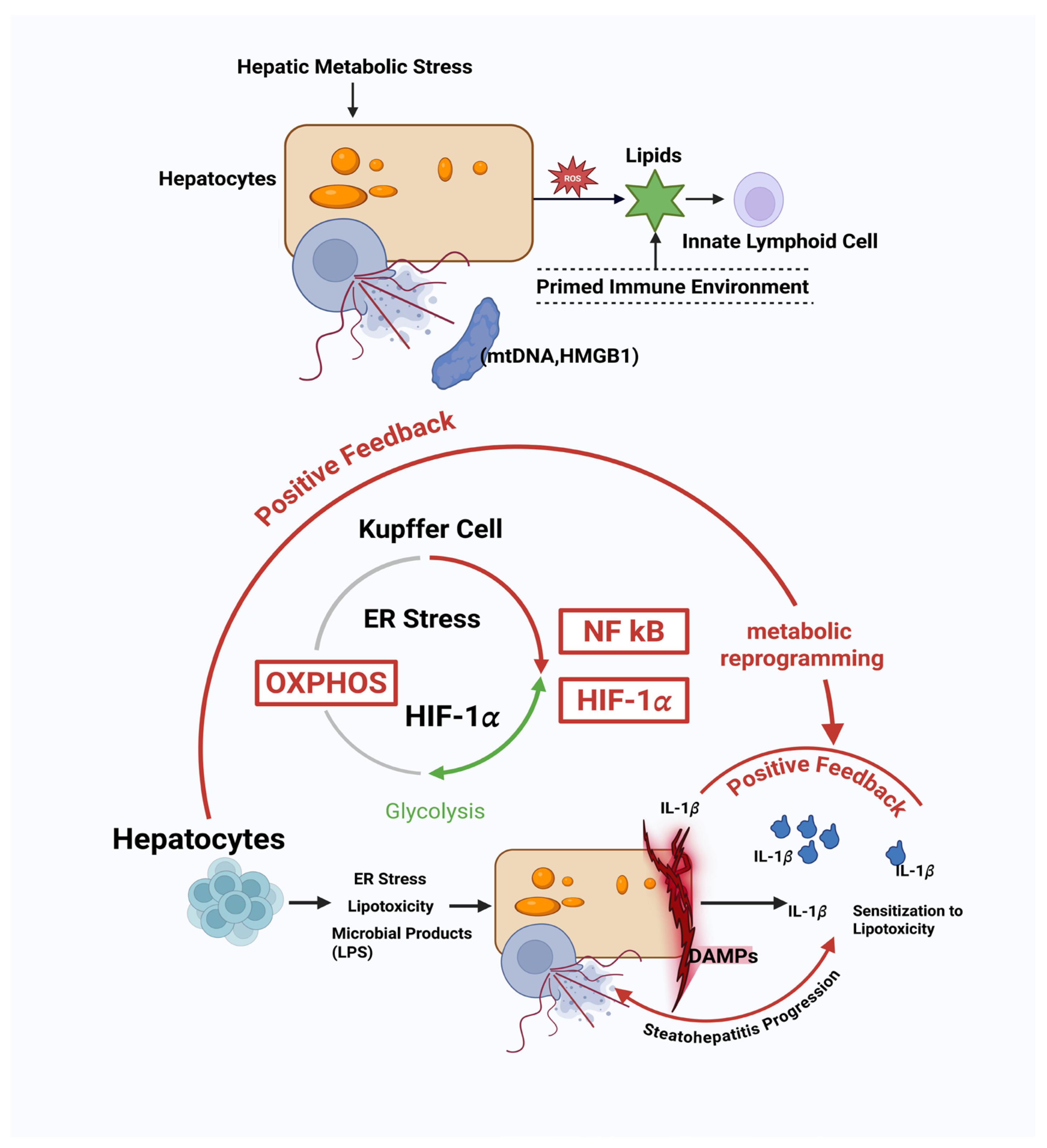
2.1. Hepatic Metabolic Stress as the Immune Priming Signal
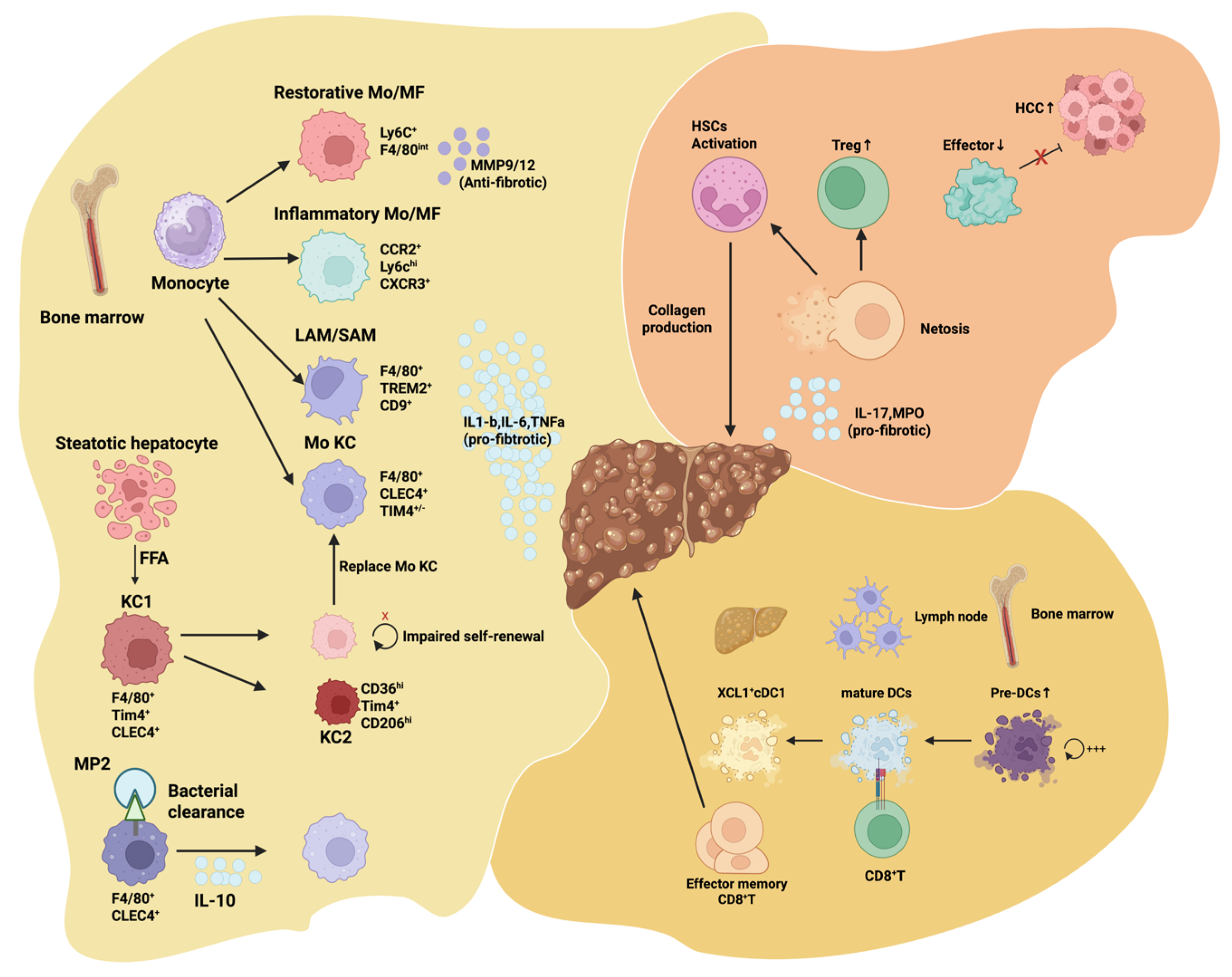
2.2. Metabolic Stress-Induced Kupffer Cell Reprogramming and Immune Activation
2.3. Gut–Liver Axis and Immune Remodeling
2.4. Innate Lymphoid Cells as Early Metabolic Interpreters
2.5. MASLD as an Immune-Threshold Phenomenon
3. Adaptive Immunity Rewiring and Disease Transition to MASH
3.1. Priming of Adaptive Immunity by Lipotoxic and Innate Immune Signals
3.2. Metabolic Reprogramming of Adaptive Lymphocytes in the Lipotoxic Liver
3.3. B Cells as Drivers of Immune Amplification and Fibrotic Signaling
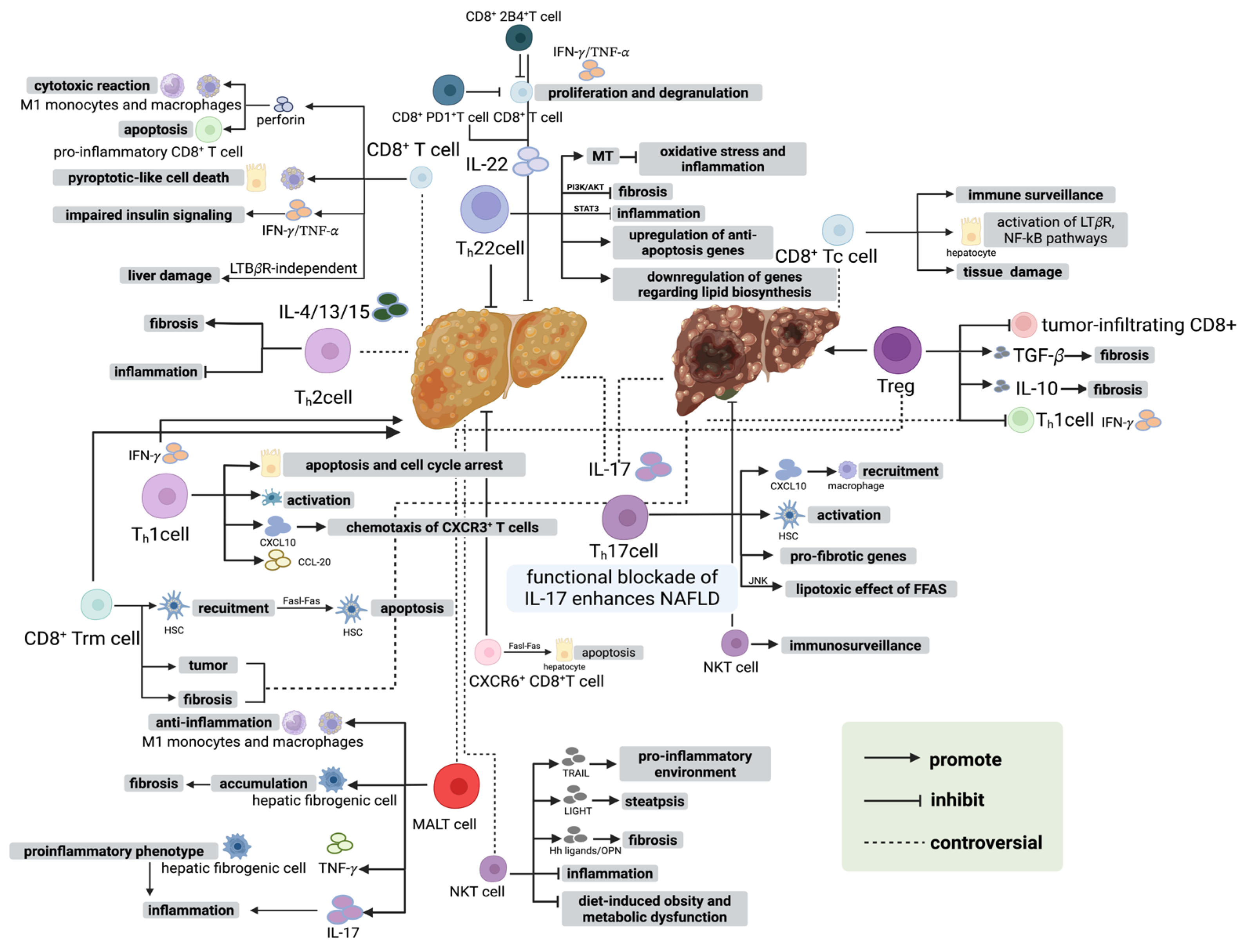
3.4. T Cells as Regulators of Inflammation-Fibrosis Crosstalk
3.5. Loss of Immune Resolution and Establishment of Chronic Inflammatory Loops
4. Cytokine-Guided Stromal and Fibrotic Remodeling
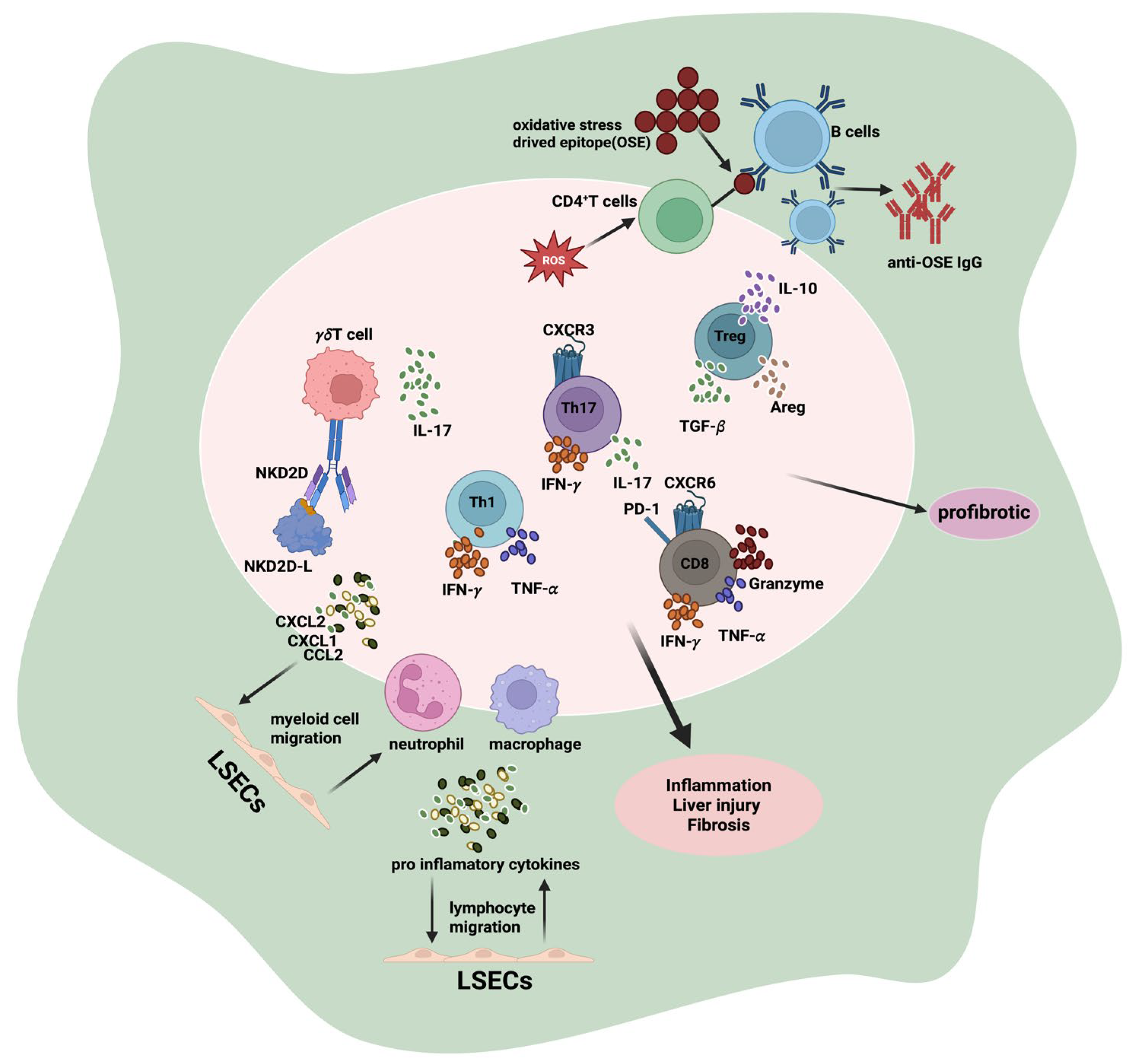
4.1. Cytokine Signatures Linking Immune Cells and Hepatic Stellate Cells
4.2. Chemokine-Mediated Recruitment and Spatial Remodeling
4.3. Feedback Loops Between Stromal Cells and Immune Cytokines
4.4. Temporal Dynamics of Cytokine-Mediated Fibrotic Remodeling
5. Immune–Fibrotic Coupling as a Deterministic Driver of Clinical Outcomes
5.1. Immune–Fibrotic Signatures and Clinical Severity
5.2. Immune–Stromal Interactions in Disease Progression
5.3. Translational Insights and Future Directions
6. Future Directions: Targeting Immunometabolic Circuits for Precision Therapy
6.1. Integrating Immunometabolic Profiling into Clinical Stratification
6.2. Identifying Actionable Nodes for Cross-Stage Intervention
6.3. Cross-System Integration and Multi-Organ Intervention

| System/Organ | Intervention & Assessment | Integration Strategy & Stage | Potential Clinical Outcomes | References |
|---|---|---|---|---|
| Liver | FibroScan, MRI-PDFF, liver function, lipid metabolism; pharmacologic, diet, exercise, rehabilitation, nutritional interventions | Integrated with cardiovascular, renal, endocrine, and gut microbiota; early–mid stage | Improve fat accumulation, reduce inflammation, slow disease progression, enhance quality of life | [245] |
| Cardiovascular | Blood pressure, lipids, cardiac imaging, exercise tolerance; pharmacologic (antihypertensive, lipid-lowering), exercise, psychological, rehabilitation | Integrated with liver metabolism, renal function, neuro-endocrine axis; early–late stage | Reduce cardiovascular event risk, improve circulation, support long-term metabolic stability | [246,247] |
| Kidney | eGFR, proteinuria, fluid balance, electrolytes; pharmacologic, dietary management, fluid management, rehabilitation | Integrated with liver, cardiovascular, and endocrine parameters; mid–late stage | Protect renal function, reduce metabolic complications, maintain fluid-electrolyte balance | [248,249] |
| Endocrine/Metabolic | Blood glucose, insulin resistance, hormones, glycation markers; pharmacologic (glucose-lowering), nutrition, exercise, behavioral interventions | Integrated with liver lipid metabolism and cardiovascular function; early–mid stage | Improve insulin sensitivity, optimize metabolic status, reduce diabetes risk | [250,251] |
| Gut Microbiota | Microbiota diversity, SCFA, LPS levels, gut barrier; probiotics/prebiotics, dietary fiber, diet adjustment | Integrated with liver metabolism, immune status, and neuro-endocrine axis; all stages | Improve gut-liver axis function, reduce inflammation, optimize nutrient absorption | [252,253] |
| Neuro-Endocrine Axis | Hormones (cortisol, adrenaline), stress indicators, sleep quality; psychological, behavioral, cognitive interventions | Integrated with liver, cardiovascular, and metabolic parameters; all stages | Improve stress response, optimize systemic metabolism, promote lifestyle modification | [254] |
| Multi-System Integrated | Composite risk scores, dynamic monitoring, lifestyle, patient-reported outcomes (PRO), functional assessments | Cross-system integration for decision framework; across stages | Enhance overall disease control, reduce complications, optimize long-term management, improve quality of life | [255] |
| Function & QoL | Physical performance, exercise tolerance, daily activity, PRO; rehabilitation, behavioral, psychological interventions | Integrated with liver, cardiovascular, and metabolic indicators; mid–late stage | Improve quality of life, enhance self-management, mitigate functional decline | [256] |
| Physiological Sensors & Dynamic Monitoring | Continuous glucose monitoring, wearable cardiovascular/exercise sensors, sleep monitoring | Real-time feedback integrated with multi-organ indicators; all stages | Improve intervention precision, optimize dynamic management, support personalized decision-making | [257] |
7. Pharmacological Interventions Targeting Immunometabolic Circuits in MASLD
8. Conclusions
Author Contributions
Funding
Data Availability Statement
Conflicts of Interest
References
- Abdelhameed, F.; Kite, C.; Lagojda, L.; Dallaway, A.; Chatha, K.K.; Chaggar, S.S.; Dalamaga, M.; Kassi, E.; Kyrou, I.; Randeva, H.S. Non-invasive Scores and Serum Biomarkers for Fatty Liver in the Era of Metabolic Dysfunction-associated Steatotic Liver Disease (MASLD): A Comprehensive Review from NAFLD to MAFLD and MASLD. Curr. Obes. Rep. 2024, 13, 510–531. [Google Scholar] [CrossRef] [Scilit] [PubMed]
- Li, Y.; Yang, P.; Ye, J.; Xu, Q.; Wu, J.; Wang, Y. Updated mechanisms of MASLD pathogenesis. Lipids Health Dis. 2024, 23, 117. [Google Scholar] [CrossRef] [Scilit] [PubMed]
- Sanyal, A.J.; Bedossa, P.; Fraessdorf, M.; Neff, G.W.; Lawitz, E.; Bugianesi, E.; Anstee, Q.M.; Hussain, S.A.; Newsome, P.N.; Ratziu, V.; et al. A Phase 2 Randomized Trial of Survodutide in MASH and Fibrosis. N. Engl. J. Med. 2024, 391, 311–319. [Google Scholar] [CrossRef] [Scilit] [PubMed]
- Steinberg, G.R.; Valvano, C.M.; De Nardo, W.; Watt, M.J. Integrative metabolism in MASLD and MASH: Pathophysiology and emerging mechanisms. J. Hepatol. 2025, 83, 584–595. [Google Scholar] [CrossRef] [Scilit]
- Tan, Q.; Wang, X.; Xu, W.; Song, K.; Xiong, Y.; Jiang, Z.; Li, J.; Yu, Y.; Ye, W.; Shen, Z.; et al. Calpain inhibition as a novel therapeutic strategy for aortic dissection with acute lower extremity ischemia. Mol. Med. 2025, 31, 144. [Google Scholar] [CrossRef] [Scilit]
- Wang, K.; Liu, Q.; Wang, J.; Wang, M.; Zhang, J.; Yu, Y.; Liu, L.; Liu, H. Noninvasive Assessment of Hepatic Steatosis in Metabolic Dysfunction-Associated Steatotic Liver Disease Patients by Using Ultrasound Attenuation Imaging. J. Ultrasound Med. 2025. [Google Scholar] [CrossRef] [Scilit]
- Bai, W.; Zhu, Z. Multiorgan crosstalk in MASLD/MASH: From hepatic pathogenesis to systemic complications. Front. Endocrinol. 2025, 16, 1720780. [Google Scholar] [CrossRef] [Scilit]
- Guo, J.W.; Liu, X.; Zhang, T.T.; Lin, X.C.; Hong, Y.; Yu, J.; Wu, Q.Y.; Zhang, F.R.; Wu, Q.Q.; Shang, J.Y.; et al. Hepatocyte TMEM16A Deletion Retards NAFLD Progression by Ameliorating Hepatic Glucose Metabolic Disorder. Adv. Sci. 2020, 7, 1903657. [Google Scholar] [CrossRef] [Scilit]
- Guo, J.; Song, Z.; Yu, J.; Li, C.; Jin, C.; Duan, W.; Liu, X.; Liu, Y.; Huang, S.; Tuo, Y.; et al. Hepatocyte-specific TMEM16A deficiency alleviates hepatic ischemia/reperfusion injury via suppressing GPX4-mediated ferroptosis. Cell Death Dis. 2022, 13, 1072. [Google Scholar] [CrossRef] [Scilit]
- Zheng, Y.; Wang, S.; Wu, J.; Wang, Y. Mitochondrial metabolic dysfunction and non-alcoholic fatty liver disease: New insights from pathogenic mechanisms to clinically targeted therapy. J. Transl. Med. 2023, 21, 510. [Google Scholar] [CrossRef] [Scilit]
- Cho, Y.; Szabo, G. Two Faces of Neutrophils in Liver Disease Development and Progression. Hepatology 2021, 74, 503–512. [Google Scholar] [CrossRef] [Scilit]
- Ariño, S.; Aguilar-Bravo, B.; Coll, M.; Lee, W.Y.; Peiseler, M.; Cantallops-Vilà, P.; Sererols-Viñas, L.; Martínez-García de la Torre, R.A.; Martínez-Sánchez, C.; Pedragosa, J.; et al. Ductular reaction-associated neutrophils promote biliary epithelium proliferation in chronic liver disease. J. Hepatol. 2023, 79, 1025–1036. [Google Scholar] [CrossRef] [Scilit] [PubMed]
- Carty, J.R.E.; Devarakonda, K.; O’Connor, R.M.; Krek, A.; Espinoza, D.; Jimenez-Gonzalez, M.; Alvarsson, A.; Hampton, R.F.; Li, R.; Qiu, Y.; et al. Amygdala-liver signalling orchestrates glycaemic responses to stress. Nature 2025, 646, 697–706. [Google Scholar] [CrossRef] [Scilit] [PubMed]
- Goodman, R.P.; Markhard, A.L.; Shah, H.; Sharma, R.; Skinner, O.S.; Clish, C.B.; Deik, A.; Patgiri, A.; Hsu, Y.H.; Masia, R.; et al. Hepatic NADH reductive stress underlies common variation in metabolic traits. Nature 2020, 583, 122–126. [Google Scholar] [CrossRef] [Scilit] [PubMed]
- Li, W.; Yang, Y.; Yang, L.; Chang, N.; Li, L. Monocyte-derived Kupffer cells dominate in the Kupffer cell pool during liver injury. Cell Rep. 2023, 42, 113164. [Google Scholar] [CrossRef] [Scilit]
- Chao, S.; Shan, S.; Liu, Z.; Liu, Z.; Wang, S.; Qiang, Y.; Ni, W.; Li, H.; Cheng, D.; Jia, Q.; et al. Both TREM2-dependent macrophages and Kupffer cells play a protective role in APAP-induced acute liver injury. Int. Immunopharmacol. 2024, 141, 112926. [Google Scholar] [CrossRef] [Scilit]
- Zhang, Z.; Guo, J. Deciphering Oxidative Stress in Cardiovascular Disease Progression: A Blueprint for Mechanistic Understanding and Therapeutic Innovation. Antioxidants 2024, 14, 38. [Google Scholar] [CrossRef] [Scilit]
- Ma, J.; Wang, Y.; Xu, W.; Wang, H.; Wan, Z.; Guo, J. Macrophage pyroptosis in atherosclerosis: Therapeutic potential. Acta Biochim. Biophys. Sin. 2025, 57, 857–870. [Google Scholar] [CrossRef] [Scilit]
- Li, C.; Song, Z.; Gao, P.; Duan, W.; Liu, X.; Liang, S.; Gong, Q.; Guo, J. Transaldolase inhibits CD36 expression by modulating glutathione-p38 signaling, exerting protective effects against macrophage foam cell formation. Acta Biochim. Biophys. Sin. 2023, 55, 1496–1505. [Google Scholar] [CrossRef] [Scilit]
- Moore, H.F.; Usmani, S.; Froghi, S.; Rashidi, H.; Quaglia, A.; Fuller, B.; Davidson, B.R. Immune cells in liver regeneration: Current evidence and potential clinical targets. Int. Rev. Immunol. 2025, 44, 353–392. [Google Scholar] [CrossRef] [Scilit]
- Abdulmajeed, R.J.; Sergi, C.M. Liver Sinusoidal Endothelial Cells and Their Regulation of Immunology, Collagenization, and Bioreactivity in Fatty Liver: A Narrative Review. Int. J. Mol. Sci. 2025, 26, 8006. [Google Scholar] [CrossRef] [Scilit]
- Zhao, J.; Jeong, H.; Yang, D.; Tian, W.; Kim, J.W.; Woong Lim, C.; Kim, B. Toll-like receptor-7 signaling in Kupffer cells exacerbates concanavalin A-induced liver injury in mice. Int. Immunopharmacol. 2023, 119, 110238. [Google Scholar] [CrossRef] [Scilit] [PubMed]
- Horn, P.; Tacke, F. Metabolic reprogramming in liver fibrosis. Cell Metab. 2024, 36, 1439–1455. [Google Scholar] [CrossRef] [Scilit] [PubMed]
- Zhang, J.; Wang, Y.; Fan, M.; Guan, Y.; Zhang, W.; Huang, F.; Zhang, Z.; Li, X.; Yuan, B.; Liu, W.; et al. Reactive oxygen species regulation by NCF1 governs ferroptosis susceptibility of Kupffer cells to MASH. Cell Metab. 2024, 36, 1745–1763.e1746. [Google Scholar] [CrossRef] [Scilit] [PubMed]
- Huang, H.Y.; Chen, Y.Z.; Zhao, C.; Zheng, X.N.; Yu, K.; Yue, J.X.; Ju, H.Q.; Shi, Y.X.; Tian, L. Alternations in inflammatory macrophage niche drive phenotypic and functional plasticity of Kupffer cells. Nat. Commun. 2024, 15, 9337. [Google Scholar] [CrossRef] [Scilit] [PubMed]
- Zhao, H.; Wang, W.; Zhu, P.; Shi, Z. Macrophage-tregs crosstalk: The “hub” of the immune network in MASLD. Front. Immunol. 2025, 16, 1680878. [Google Scholar] [CrossRef] [Scilit]
- Ramachandran, P. Kupffer cells are regulators of intergenerational signalling in MASLD. J. Hepatol. 2025, 83, 1457–1458. [Google Scholar] [CrossRef] [Scilit]
- Tilg, H.; Adolph, T.E.; Trauner, M. Gut-liver axis: Pathophysiological concepts and clinical implications. Cell Metab. 2022, 34, 1700–1718. [Google Scholar] [CrossRef] [Scilit]
- Smith, M.L.; Wade, J.B.; Wolstenholme, J.; Bajaj, J.S. Gut microbiome-brain-cirrhosis axis. Hepatology 2024, 80, 465–485. [Google Scholar] [CrossRef] [Scilit]
- Zhang, S.; Wang, Q.; Tan, D.E.L.; Sikka, V.; Ng, C.H.; Xian, Y.; Li, D.; Muthiah, M.; Chew, N.W.S.; Storm, G.; et al. Gut-liver axis: Potential mechanisms of action of food-derived extracellular vesicles. J. Extracell. Vesicles 2024, 13, e12466. [Google Scholar] [CrossRef] [Scilit]
- Schwärzler, J.; Grabherr, F.; Grander, C.; Adolph, T.E.; Tilg, H. The pathophysiology of MASLD: An immunometabolic perspective. Expert. Rev. Clin. Immunol. 2024, 20, 375–386. [Google Scholar] [CrossRef] [Scilit] [PubMed]
- De Cól, J.P.; de Lima, E.P.; Pompeu, F.M.; Cressoni Araújo, A.; de Alvares Goulart, R.; Bechara, M.D.; Laurindo, L.F.; Méndez-Sánchez, N.; Barbalho, S.M. Underlying Mechanisms behind the Brain-Gut-Liver Axis and Metabolic-Associated Fatty Liver Disease (MAFLD): An Update. Int. J. Mol. Sci. 2024, 25, 3694. [Google Scholar] [CrossRef] [Scilit] [PubMed]
- Li, R.; Wei, R.; Liu, C.; Zhang, K.; He, S.; Liu, Z.; Huang, J.; Tang, Y.; An, Q.; Lin, L.; et al. Heme oxygenase 1-mediated ferroptosis in Kupffer cells initiates liver injury during heat stroke. Acta Pharm. Sin. B 2024, 14, 3983–4000. [Google Scholar] [CrossRef] [Scilit]
- Li, C.; Zhu, X.; Chen, J.; Xie, X.; Liang, S.; Liu, X.; Gong, Q.; Guo, J. Multifaceted role of ferroptosis in cardiovascular disease. Acta Biochim. Biophys. Sin. 2023, 55, 183–193. [Google Scholar] [CrossRef] [Scilit] [PubMed]
- Xie, H.; Cheng, H.S.; Ng, J.X.J.; Zhang, S.; Kim, J.H.S.; Tan, S.H.; Tan, C.H.; Tan, N.S. A gut-liver lipid flux checkpoint mediates FAHFA protection from MASLD. Pharmacol. Res. 2026, 108085. [Google Scholar] [CrossRef] [Scilit]
- Ng, D.Z.W.; Koh, M.; Low, A.; Liu, L.; Jumat, N.H.B.; Zhang, Z.; Koh, X.Q.; Zhu, M.; Muthiah, M.; Dan, Y.Y.; et al. Robust Workflow for Multiclass Host-Gut Microbial Cometabolite Quantitation in Human Stool via 3-Nitrophenylhydrazine Derivatization and LC-MS/MS: A Validated Analytical Platform for Translational Studies. Anal. Chem. 2025. [Google Scholar] [CrossRef] [Scilit]
- Riillo, C.; Parafati, M.; Crupi, F.; Fotschki, B.; Ragusa, M.; Di Vito, A.; Mignogna, C.; Mollace, V.; Janda, E. Bergamot Polyphenols Reduce Hepatic Lipogenesis While Boosting Autophagy and Short-Chain Fatty Acid Production in a Murine “Cafeteria” Model of MASLD. Nutrients 2025, 17, 3684. [Google Scholar] [CrossRef] [Scilit]
- Lange, A.H.; Pedersen, M.G.; Ellegaard, A.M.; Nerild, H.H.; Brønden, A.; Sonne, D.P.; Knop, F.K. The bile-gut axis and metabolic consequences of cholecystectomy. Eur. J. Endocrinol. 2024, 190, R1–R9. [Google Scholar] [CrossRef] [Scilit]
- Mandala, A.; Undi, R.B.; Janssen, R.C.; Sugino, K.Y.; Zhao, W.; Nelson, B.N.; Teague, A.M.; Patil, N.Y.; Zemsky Berry, K.; Varshney, R.; et al. Reprogramming offspring liver health: Maternal indole supplementation as a preventive strategy against MASLD. EBioMedicine 2025, 123, 106098. [Google Scholar] [CrossRef] [Scilit]
- Somm, E.; Perroud, E.; Jo, Y.; Lindner, K.; Ino, F.; Montandon, S.A.; Veyrat-Durebex, C.; Bontems, F.; Visentin, F.; Gaïa, N.; et al. Interleukin-18 binding protein deficiency results in gut microbiota dysbiosis and aggravated diet-induced MASH in mice. JHEP Rep. 2026, 8, 101629. [Google Scholar] [CrossRef] [Scilit]
- Gao, J.; Lan, T.; Kostallari, E.; Guo, Y.; Lai, E.; Guillot, A.; Ding, B.; Tacke, F.; Tang, C.; Shah, V.H. Angiocrine signaling in sinusoidal homeostasis and liver diseases. J. Hepatol. 2024, 81, 543–561. [Google Scholar] [CrossRef] [Scilit] [PubMed]
- Sasaki, K.; Rooge, S.; Gunewardena, S.; Hintz, J.A.; Ghosh, P.; Pulido Ruiz, I.A.; Yuquimpo, K.; Schonfeld, M.; Mehta, H.; Stevenson, H.L.; et al. Kupffer cell diversity maintains liver function in alcohol-associated liver disease. Hepatology 2025, 81, 870–887. [Google Scholar] [CrossRef] [Scilit] [PubMed]
- Schwabe, R.F.; Brenner, D.A. Hepatic stellate cells: Balancing homeostasis, hepatoprotection and fibrogenesis in health and disease. Nat. Rev. Gastroenterol. Hepatol. 2025, 22, 481–499. [Google Scholar] [CrossRef] [Scilit] [PubMed]
- Xu, X.; Pang, Y.; Fan, X. Mitochondria in oxidative stress, inflammation and aging: From mechanisms to therapeutic advances. Signal Transduct. Target. Ther. 2025, 10, 190. [Google Scholar] [CrossRef] [Scilit]
- Luo, R.; Yang, Y.; Zhang, Y.; Xue, X.; Guo, M.; Li, X. Mitochondrial damage-associated molecular patterns (mito-DAMPs): Determinants of hepatopathy progression and therapeutic implications. Pharmacol. Res. 2025, 221, 107980. [Google Scholar] [CrossRef] [Scilit]
- Shan, S.; Chao, S.; Liu, Z.; Wang, S.; Liu, Z.; Zhang, C.; Cheng, D.; Su, Z.; Song, F. TREM2 protects against inflammation by regulating the release of mito-DAMPs from hepatocytes during liver fibrosis. Free Radic. Biol. Med. 2024, 220, 154–165. [Google Scholar] [CrossRef] [Scilit]
- Bourinet, M.; Anty, R.; Gual, P.; Luci, C. Roles of innate lymphoid cells in metabolic and alcohol-associated liver diseases. JHEP Rep. 2024, 6, 100962. [Google Scholar] [CrossRef] [Scilit]
- Zhang, P.; Liu, J.; Lee, A.; Tsaur, I.; Ohira, M.; Duong, V.; Vo, N.; Watari, K.; Su, H.; Kim, J.Y.; et al. IL-22 resolves MASLD via enterocyte STAT3 restoration of diet-perturbed intestinal homeostasis. Cell Metab. 2024, 36, 2341–2354.e2346. [Google Scholar] [CrossRef] [Scilit]
- Calvi, M.; Di Vito, C.; Frigo, A.; Trabanelli, S.; Jandus, C.; Mavilio, D. Development of Human ILCs and Impact of Unconventional Cytotoxic Subsets in the Pathophysiology of Inflammatory Diseases and Cancer. Front. Immunol. 2022, 13, 914266. [Google Scholar] [CrossRef] [Scilit]
- Bourinet, M.; Vieira, E.; Rousseau, D.; Bonnafous, S.; Soysouvanh, F.; Strazzulla, A.; Elliot, C.; Patouraux, S.; Leclère, P.S.; Moskalevska, I.; et al. CD44 in Group 1 Innate Lymphoid Cells Impacts the Development and Progression of Steatohepatitis. Liver Int. 2025, 45, e70299. [Google Scholar] [CrossRef] [Scilit]
- Krämer, B.; Nalin, A.P.; Ma, F.; Eickhoff, S.; Lutz, P.; Leonardelli, S.; Goeser, F.; Finnemann, C.; Hack, G.; Raabe, J.; et al. Single-cell RNA sequencing identifies a population of human liver-type ILC1s. Cell Rep. 2023, 42, 111937. [Google Scholar] [CrossRef] [Scilit] [PubMed]
- Israelsen, M.; Torp, N.; Johansen, S.; Hansen, C.D.; Hansen, E.D.; Thorhauge, K.; Hansen, J.K.; Villesen, I.; Bech, K.; Wernberg, C.; et al. Validation of the new nomenclature of steatotic liver disease in patients with a history of excessive alcohol intake: An analysis of data from a prospective cohort study. Lancet Gastroenterol. Hepatol. 2024, 9, 218–228. [Google Scholar] [CrossRef] [Scilit] [PubMed]
- Yang Zhou, J. Innate immunity and early liver inflammation. Front. Immunol. 2023, 14, 1175147. [Google Scholar] [CrossRef] [Scilit] [PubMed]
- Raabe, J.; Kaiser, K.M.; ToVinh, M.; Finnemann, C.; Lutz, P.; Hoffmeister, C.; Bischoff, J.; Goeser, F.; Kaczmarek, D.J.; Glowka, T.R.; et al. Identification and characterization of a hepatic IL-13-producing ILC3-like population potentially involved in liver fibrosis. Hepatology 2023, 78, 787–802. [Google Scholar] [CrossRef] [Scilit]
- Wang, X.; Li, J.; Rebuffet, L.; Cheng, M.; Bao, B.; Chen, Y.; Zheng, X.; Chen, Y.; Sun, H.; Sun, R.; et al. Innate lymphoid cells originate from fetal liver-derived tissue-resident progenitors. Sci. Immunol. 2025, 10, eadu7962. [Google Scholar] [CrossRef] [Scilit]
- Heinrich, B.; Gertz, E.M.; Schäffer, A.A.; Craig, A.; Ruf, B.; Subramanyam, V.; McVey, J.C.; Diggs, L.P.; Heinrich, S.; Rosato, U.; et al. The tumour microenvironment shapes innate lymphoid cells in patients with hepatocellular carcinoma. Gut 2022, 71, 1161–1175. [Google Scholar] [CrossRef] [Scilit]
- He, J.; Gao, L.; Wang, P.; Chan, W.K.; Zheng, Y.; Zhang, Y.; Sun, J.; Li, X.; Wang, J.; Li, X.H.; et al. Prdm1 positively regulates liver Group 1 ILCs cancer immune surveillance and preserves functional heterogeneity. eLife 2024, 13, e92948. [Google Scholar] [CrossRef]
- Liu, T.; Li, J.; Li, Q.; Liang, Y.; Gao, J.; Meng, Z.; Li, P.; Yao, M.; Gu, J.; Tu, H.; et al. Environmental eustress promotes liver regeneration through the sympathetic regulation of type 1 innate lymphoid cells to increase IL-22 in mice. Hepatology 2023, 78, 136–149. [Google Scholar] [CrossRef] [Scilit]
- Wang, P.; Zheng, Y.; Sun, J.; Zhang, Y.; Chan, W.K.; Lu, Y.; Li, X.; Yang, Z.; Wang, Y. Sepsis induced dysfunction of liver type 1 innate lymphoid cells. BMC Immunol. 2024, 25, 57. [Google Scholar] [CrossRef] [Scilit]
- Li, J.; Chen, X.; Song, S.; Jiang, W.; Geng, T.; Wang, T.; Xu, Y.; Zhu, Y.; Lu, J.; Xia, Y.; et al. Hexokinase 2-mediated metabolic stress and inflammation burden of liver macrophages via histone lactylation in MASLD. Cell Rep. 2025, 44, 115350. [Google Scholar] [CrossRef] [Scilit]
- Liao, Y.; Chen, Q.; Liu, L.; Huang, H.; Sun, J.; Bai, X.; Jin, C.; Li, H.; Sun, F.; Xiao, X.; et al. Amino acid is a major carbon source for hepatic lipogenesis. Cell Metab. 2024, 36, 2437–2448.e2438. [Google Scholar] [CrossRef] [Scilit] [PubMed]
- Lee, W.H.; Kipp, Z.A.; Bates, E.A.; Pauss, S.N.; Martinez, G.J.; Hinds, T.D., Jr. The physiology of MASLD: Molecular pathways between liver and adipose tissues. Clin. Sci. 2025, 139, 1015–1046. [Google Scholar] [CrossRef] [Scilit] [PubMed]
- Roy, S.; Saha, P.; Bose, D.; Trivedi, A.; More, M.; Xiao, S.; Diehl, A.M.; Chatterjee, S. Hepatic NLRP3-Derived Hsp70 Binding to TLR4 Mediates MASLD to MASH Progression upon Inhibition of PP2A by Harmful Algal Bloom Toxin Microcystin, a Second Hit. Int. J. Mol. Sci. 2023, 24, 6354. [Google Scholar] [CrossRef] [Scilit] [PubMed]
- De Ponti, F.F.; Liu, Z.; Scott, C.L. Understanding the complex macrophage landscape in MASLD. JHEP Rep. 2024, 6, 101196. [Google Scholar] [CrossRef] [Scilit]
- Zheng, C.; Wang, L.; Zou, T.; Lian, S.; Luo, J.; Lu, Y.; Hao, H.; Xu, Y.; Xiang, Y.; Zhang, X.; et al. Ileitis promotes MASLD progression via bile acid modulation and enhanced TGR5 signaling in ileal CD8+ T cells. J. Hepatol. 2024, 80, 764–777. [Google Scholar] [CrossRef] [Scilit]
- Meyer, M.; Schwärzler, J.; Jukic, A.; Tilg, H. Innate Immunity and MASLD. Biomolecules 2024, 14, 476. [Google Scholar] [CrossRef] [Scilit]
- Dong, T.; Li, J.; Liu, Y.; Zhou, S.; Wei, X.; Hua, H.; Tang, K.; Zhang, X.; Wang, Y.; Wu, Z.; et al. Roles of immune dysregulation in MASLD. Biomed. Pharmacother. 2024, 170, 116069. [Google Scholar] [CrossRef] [Scilit]
- Liu, C.H.; Cheng, P.N.; Fang, Y.J.; Chen, C.Y.; Kao, W.Y.; Lin, C.L.; Yang, S.S.; Shih, Y.L.; Peng, C.Y.; Chang, Y.P.; et al. Risk of de novo HCC in patients with MASLD following direct-acting antiviral-induced cure of HCV infection. J. Hepatol. 2025, 82, 582–593. [Google Scholar] [CrossRef] [Scilit]
- Yu, L.; Gao, F.; Li, Y.; Su, D.; Han, L.; Li, Y.; Zhang, X.; Feng, Z. Role of pattern recognition receptors in the development of MASLD and potential therapeutic applications. Biomed. Pharmacother. 2024, 175, 116724. [Google Scholar] [CrossRef] [Scilit]
- Booijink, R.; Ramachandran, P.; Bansal, R. Implications of innate immune sexual dimorphism for MASLD pathogenesis and treatment. Trends Pharmacol. Sci. 2024, 45, 614–627. [Google Scholar] [CrossRef] [Scilit]
- Wang, X.; Zhang, L.; Dong, B. Molecular mechanisms in MASLD/MASH-related HCC. Hepatology 2025, 82, 1303–1324. [Google Scholar] [CrossRef] [Scilit] [PubMed]
- Sawada, K.; Chung, H.; Softic, S.; Moreno-Fernandez, M.E.; Divanovic, S. The bidirectional immune crosstalk in metabolic dysfunction-associated steatotic liver disease. Cell Metab. 2023, 35, 1852–1871. [Google Scholar] [CrossRef] [Scilit] [PubMed]
- Wei, X.; Wu, D.; Li, J.; Wu, M.; Li, Q.; Che, Z.; Cheng, X.; Cheng, Q.; Yin, F.; Zhang, H.; et al. Myeloid beta-arrestin 2 depletion attenuates metabolic dysfunction-associated steatohepatitis via the metabolic reprogramming of macrophages. Cell Metab. 2024, 36, 2281–2297.e2287. [Google Scholar] [CrossRef] [Scilit] [PubMed]
- Steixner-Kumar, A.A.; Santacruz, D.; Geiger, T.; Rust, W.; Böttner, D.; Krenkel, O.; Bahrami, E.; Okafo, G.; Barth, T.F.E.; Haenle, M.; et al. Single-cell landscape of peripheral immune cells in MASLD/MASH. Hepatol. Commun. 2025, 9. [Google Scholar] [CrossRef] [Scilit]
- Fiorucci, S.; Marchianò, S.; Urbani, G.; Di Giorgio, C.; Distrutti, E.; Zampella, A.; Biagioli, M. Immunology of bile acids regulated receptors. Prog. Lipid Res. 2024, 95, 101291. [Google Scholar] [CrossRef] [Scilit]
- Sandireddy, R.; Sakthivel, S.; Gupta, P.; Behari, J.; Tripathi, M.; Singh, B.K. Systemic impacts of metabolic dysfunction-associated steatotic liver disease (MASLD) and metabolic dysfunction-associated steatohepatitis (MASH) on heart, muscle, and kidney related diseases. Front. Cell Dev. Biol. 2024, 12, 1433857. [Google Scholar] [CrossRef] [Scilit]
- Bansal, S.K.; Bansal, M.B. Pathogenesis of MASLD and MASH—Role of insulin resistance and lipotoxicity. Aliment. Pharmacol. Ther. 2024, 59, S10–S22. [Google Scholar] [CrossRef] [Scilit]
- Zhu, J.H.; Ouyang, S.X.; Zhang, G.Y.; Cao, Q.; Xin, R.; Yin, H.; Wu, J.W.; Zhang, Y.; Zhang, Z.; Liu, Y.; et al. GSDME promotes MASLD by regulating pyroptosis, Drp1 citrullination-dependent mitochondrial dynamic, and energy balance in intestine and liver. Cell Death Differ. 2024, 31, 1467–1486. [Google Scholar] [CrossRef] [Scilit]
- Kim, Y.; Park, Y.; Rho, H.; Yao, T.; Gao, B.; Hwang, S. Inflammation in MASLD progression and cancer. JHEP Rep. 2025, 7, 101414. [Google Scholar] [CrossRef] [Scilit]
- Kuchay, M.S.; Choudhary, N.S.; Ramos-Molina, B. Pathophysiological underpinnings of metabolic dysfunction-associated steatotic liver disease. Am. J. Physiol. Cell Physiol. 2025, 328, C1637–C1666. [Google Scholar] [CrossRef] [Scilit]
- Zhang, J.; Ouyang, H.; Gu, X.; Dong, S.; Lu, B.; Huang, Z.; Li, J.; Ji, L. Caffeic acid ameliorates metabolic dysfunction-associated steatotic liver disease via alleviating oxidative damage and lipid accumulation in hepatocytes through activating Nrf2 via targeting Keap1. Free Radic. Biol. Med. 2024, 224, 352–365. [Google Scholar] [CrossRef] [Scilit] [PubMed]
- Castañé, H.; Jiménez-Franco, A.; Hernández-Aguilera, A.; Martínez-Navidad, C.; Cambra-Cortés, V.; Onoiu, A.I.; Jiménez-Aguilar, J.M.; París, M.; Hernández, M.; Parada, D.; et al. Multi-omics profiling reveals altered mitochondrial metabolism in adipose tissue from patients with metabolic dysfunction-associated steatohepatitis. EBioMedicine 2025, 111, 105532. [Google Scholar] [CrossRef] [Scilit] [PubMed]
- Zhang, X.; Chan, D.C.L.; Zhu, J.; Sin, D.Z.Y.; Peng, Y.; Wong, M.K.L.; Zhu, W.; Tsui, Y.; Haqq, A.M.; Ting, J.Y.; et al. Early-life antibiotic exposure aggravates hepatic steatosis through enhanced endotoxemia and lipotoxic effects driven by gut Parabacteroides. MedComm (2020) 2025, 6, e70104. [Google Scholar] [CrossRef] [Scilit] [PubMed]
- Dukewich, M.; Yuan, L.; Terrault, N.A. At the Crossroads of Health and Disease: Consequences of Fat in the Liver. Annu. Rev. Physiol. 2025, 87, 325–352. [Google Scholar] [CrossRef] [Scilit]
- Iturbe-Rey, S.; Maccali, C.; Arrese, M.; Aspichueta, P.; Oliveira, C.P.; Castro, R.E.; Lapitz, A.; Izquierdo-Sanchez, L.; Bujanda, L.; Perugorria, M.J.; et al. Lipotoxicity-driven metabolic dysfunction-associated steatotic liver disease (MASLD). Atherosclerosis 2025, 400, 119053. [Google Scholar] [CrossRef] [Scilit]
- Ramos-Molina, B.; Rossell, J.; Pérez-Montes de Oca, A.; Pardina, E.; Genua, I.; Rojo-López, M.I.; Julián, M.T.; Alonso, N.; Julve, J.; Mauricio, D. Therapeutic implications for sphingolipid metabolism in metabolic dysfunction-associated steatohepatitis. Front. Endocrinol. 2024, 15, 1400961. [Google Scholar] [CrossRef] [Scilit]
- Weiskirchen, R.; Lonardo, A. Sex Hormones and Metabolic Dysfunction-Associated Steatotic Liver Disease. Int. J. Mol. Sci. 2025, 26, 9594. [Google Scholar] [CrossRef] [Scilit]
- Branković, M.; Dukić, M.; Gmizić, T.; Popadić, V.; Nikolić, N.; Sekulić, A.; Brajković, M.; Đokić, J.; Mahmutović, E.; Lasica, R.; et al. New Therapeutic Approaches for the Treatment of Patients with Metabolic Dysfunction-Associated Steatotic Liver Disease (MASLD) and Increased Cardiovascular Risk. Diagnostics 2024, 14, 229. [Google Scholar] [CrossRef] [Scilit]
- Kang, M.; Song, J.; Kang, E.S.; Jang, S.; Kwak, T.; Kim, Y.; Sha, M.; Lee, H.; Jeong, S. Pathophysiology, development, and mortality of major non-communicable diseases in metabolic dysfunction-associated steatotic liver disease: A comprehensive review. Int. J. Biol. Sci. 2025, 21, 5691–5703. [Google Scholar] [CrossRef] [Scilit]
- Wan, Z.; Cai, X.; Liu, X.; Chen, H.; Chen, X.; Yang, X.; Feng, Q.; Cao, H.; Zhao, Q.; Deng, H. Hepatocyte-derived Pumilio1-enriched exosomes inhibit HSC activation by suppressing tropomyosin-4 translation. Hepatol. Commun. 2025, 9, e0759. [Google Scholar] [CrossRef] [Scilit]
- Mahmoud, M.C.; Abdelmalek, M.F. The Liver in Diabetes and Metabolic Syndrome. Clin. Liver Dis. 2025, 29, 407–429. [Google Scholar] [CrossRef] [Scilit] [PubMed]
- Kakiyama, G.; Bai-Kamara, N.; Rodriguez-Agudo, D.; Takei, H.; Minowa, K.; Fuchs, M.; Biddinger, S.; Windle, J.J.; Subler, M.A.; Murai, T.; et al. Liver specific transgenic expression of CYP7B1 attenuates early western diet-induced MASLD progression. J. Lipid Res. 2025, 66, 100757. [Google Scholar] [CrossRef] [Scilit] [PubMed]
- Solleiro-Villavicencio, H.; Viurcos-Sanabria, R.; Aguayo-Guerrero, J.A.; Pineda-Pérez, P.F.; Méndez-García, L.A. Inflammation: A key mechanism connecting metabolic-associated steatotic liver disease and systemic arterial hypertension. Front. Immunol. 2025, 16, 1620585. [Google Scholar] [CrossRef] [Scilit] [PubMed]
- Svobodová, G.; Horní, M.; Velecká, E.; Boušová, I. Metabolic dysfunction-associated steatotic liver disease-induced changes in the antioxidant system: A review. Arch. Toxicol. 2025, 99, 1–22. [Google Scholar] [CrossRef] [Scilit]
- Modares, N.F.; Hendrikse, L.D.; Smith, L.K.; Paul, M.S.; Haight, J.; Luo, P.; Liu, S.; Fortin, J.; Tong, F.K.; Wakeham, A.C.; et al. B cell-derived acetylcholine promotes liver regeneration by regulating Kupffer cell and hepatic CD8+ T cell function. Immunity 2025, 58, 1201–1216.e1207. [Google Scholar] [CrossRef] [Scilit]
- Chaudhary, R.; Weiskirchen, R.; Ehrlich, M.; Henis, Y.I. Dual signaling pathways of TGF-β superfamily cytokines in hepatocytes: Balancing liver homeostasis and disease progression. Front. Pharmacol. 2025, 16, 1580500. [Google Scholar] [CrossRef] [Scilit]
- Truong, X.T.; Lee, D.H. Hepatic Insulin Resistance and Steatosis in Metabolic Dysfunction-Associated Steatotic Liver Disease: New Insights into Mechanisms and Clinical Implications. Diabetes Metab. J. 2025, 49, 964–986. [Google Scholar] [CrossRef] [Scilit]
- Cansby, E.; Caputo, M.; Andersson, E.; Saghaleyni, R.; Henricsson, M.; Xia, Y.; Asiedu, B.; Blüher, M.; Svensson, L.T.; Hoy, A.J.; et al. GCKIII kinases control hepatocellular lipid homeostasis via shared mode of action. J. Lipid Res. 2024, 65, 100669. [Google Scholar] [CrossRef] [Scilit]
- Chen, Y.; Yang, F.; Wang, Y.; Shi, Y.; Liu, L.; Luo, W.; Zhou, J.; Yan, Y. Mesenchymal stem cell-derived small extracellular vesicles reduced hepatic lipid accumulation in MASLD by suppressing mitochondrial fission. Stem Cell Res. Ther. 2025, 16, 116. [Google Scholar] [CrossRef] [Scilit]
- Petriv, N.; Suo, H.; Hochnadel, I.; Timrott, K.; Bondarenko, N.; Neubert, L.; Reinhard, E.; Jedicke, N.; Kaufhold, P.; Guzmán, C.A.; et al. Essential roles of B cell subsets in the progression of MASLD and HCC. JHEP Rep. 2024, 6, 101189. [Google Scholar] [CrossRef] [Scilit]
- Jiang, S.; Lu, J.; Li, N.; Bai, X.; Shi, L.; Tian, Z.; Zhou, J.; Zhang, W. Liver B Cells Promotes MASLD Progression via the Apelin/APLNR System. Int. J. Med. Sci. 2025, 22, 197–208. [Google Scholar] [CrossRef] [Scilit] [PubMed]
- Yang, Z.; Zhang, J.; Wang, Q.; Xu, H.; Qin, X.; Lv, F. A PBX1-IL7R axis mediates liver fibrosis in non-alcoholic fatty liver disease. Life Sci. 2025, 380, 123948. [Google Scholar] [CrossRef] [Scilit] [PubMed]
- Taranto, D.; Kloosterman, D.J.; Akkari, L. Macrophages and T cells in metabolic disorder-associated cancers. Nat. Rev. Cancer 2024, 24, 744–767. [Google Scholar] [CrossRef] [Scilit] [PubMed]
- Fu, J.T.; Liu, J.; Wu, W.B.; Chen, Y.T.; Lu, G.D.; Cao, Q.; Meng, H.B.; Tong, J.; Zhu, J.H.; Wang, X.J.; et al. Targeting EFHD2 inhibits interferon-γ signaling and ameliorates non-alcoholic steatohepatitis. J. Hepatol. 2024, 81, 389–403. [Google Scholar] [CrossRef] [Scilit]
- Aki, D.; Hayakawa, T.; Srirat, T.; Shichino, S.; Ito, M.; Saitoh, S.I.; Mise-Omata, S.; Yoshimura, A. The Nr4a family regulates intrahepatic Treg proliferation and liver fibrosis in MASLD models. J. Clin. Invest. 2024, 134. [Google Scholar] [CrossRef] [Scilit]
- Zheng, Y.; Zhao, L.; Xiong, Z.; Huang, C.; Yong, Q.; Fang, D.; Fu, Y.; Gu, S.; Chen, C.; Li, J.; et al. Ursolic acid targets secreted phosphoprotein 1 to regulate Th17 cells against metabolic dysfunction-associated steatotic liver disease. Clin. Mol. Hepatol. 2024, 30, 449–467. [Google Scholar] [CrossRef] [Scilit]
- Zhang, Y.; Xie, M.; Wen, J.; Liang, C.; Song, Q.; Liu, W.; Liu, Y.; Song, Y.; Lau, H.C.H.; Cheung, A.H.; et al. Hepatic TM6SF2 activates antitumour immunity to suppress metabolic dysfunction-associated steatotic liver disease-related hepatocellular carcinoma and boosts immunotherapy. Gut 2025, 74, 639–651. [Google Scholar] [CrossRef] [Scilit]
- Deschler, S.; Pohl-Topcu, J.; Ramsauer, L.; Meiser, P.; Erlacher, S.; Schenk, R.P.; Maurer, H.C.; Shen, P.; Kager, J.; Zink, J.; et al. Polyunsaturated fatty acid-induced metabolic exhaustion and ferroptosis impair the anti-tumour function of MAIT cells in MASLD. J. Hepatol. 2025, 83, 1364–1378. [Google Scholar] [CrossRef] [Scilit]
- Li, Z.; Wang, S.; Xu, Q.; Su, X.; Wang, Y.; Wang, L.; Zhang, Y. The double roles of T cell-mediated immune response in the progression of MASLD. Biomed. Pharmacother. 2024, 173, 116333. [Google Scholar] [CrossRef] [Scilit]
- Wang, H.; Tsung, A.; Mishra, L.; Huang, H. Regulatory T cell: A double-edged sword from metabolic-dysfunction-associated steatohepatitis to hepatocellular carcinoma. EBioMedicine 2024, 101, 105031. [Google Scholar] [CrossRef] [Scilit]
- Xu, Y.; Li, Q.; Jiao, X. Immunosenescence and metabolic reprogramming in MASLD: An age-dependent immunometabolic vicious cycle and therapeutic opportunities. Front. Cell Dev. Biol. 2025, 13, 1650677. [Google Scholar] [CrossRef] [Scilit] [PubMed]
- Liu, Y.J.; Kimura, M.; Li, X.; Sulc, J.; Wang, Q.; Rodríguez-López, S.; Scantlebery, A.M.L.; Strotjohann, K.; Gallart-Ayala, H.; Vijayakumar, A.; et al. ACMSD inhibition corrects fibrosis, inflammation, and DNA damage in MASLD/MASH. J. Hepatol. 2025, 82, 174–188. [Google Scholar] [CrossRef] [Scilit] [PubMed]
- Min, B.H.; Devi, S.; Kwon, G.H.; Gupta, H.; Jeong, J.J.; Sharma, S.P.; Won, S.M.; Oh, K.K.; Yoon, S.J.; Park, H.J.; et al. Gut microbiota-derived indole compounds attenuate metabolic dysfunction-associated steatotic liver disease by improving fat metabolism and inflammation. Gut Microbes 2024, 16, 2307568. [Google Scholar] [CrossRef] [Scilit] [PubMed]
- LeFort, K.R.; Rungratanawanich, W.; Song, B.J. Contributing roles of mitochondrial dysfunction and hepatocyte apoptosis in liver diseases through oxidative stress, post-translational modifications, inflammation, and intestinal barrier dysfunction. Cell Mol. Life Sci. 2024, 81, 34. [Google Scholar] [CrossRef] [Scilit]
- Dong, K.; Zheng, Y.; Wang, Y.; Guo, Q. Predictive role of neutrophil percentage-to-albumin ratio, neutrophil-to-lymphocyte ratio, and systemic immune-inflammation index for mortality in patients with MASLD. Sci. Rep. 2024, 14, 30403. [Google Scholar] [CrossRef] [Scilit]
- He, Y.; Chen, Y.; Qian, S.; van Der Merwe, S.; Dhar, D.; Brenner, D.A.; Tacke, F. Immunopathogenic mechanisms and immunoregulatory therapies in MASLD. Cell Mol. Immunol. 2025, 22, 1159–1177. [Google Scholar] [CrossRef] [Scilit]
- Kineman, R.D.; Del Rio-Moreno, M.; Waxman, D.J. Liver-specific actions of GH and IGF1 that protect against MASLD. Nat. Rev. Endocrinol. 2025, 21, 105–117. [Google Scholar] [CrossRef] [Scilit]
- Guo, W.; Li, Z.; Anagnostopoulos, G.; Kong, W.T.; Zhang, S.; Chakarov, S.; Shin, A.; Qian, J.; Zhu, Y.; Bai, W.; et al. Notch signaling regulates macrophage-mediated inflammation in metabolic dysfunction-associated steatotic liver disease. Immunity 2024, 57, 2310–2327.e2316. [Google Scholar] [CrossRef] [Scilit]
- Bradić, I.; Kuentzel, K.B.; Pirchheim, A.; Rainer, S.; Schwarz, B.; Trauner, M.; Larsen, M.R.; Vujić, N.; Kratky, D. From LAL-D to MASLD: Insights into the role of LAL and Kupffer cells in liver inflammation and lipid metabolism. Biochim. Biophys. Acta Mol. Cell Biol. Lipids 2025, 1870, 159575. [Google Scholar] [CrossRef] [Scilit]
- Wang, J.; Wang, H.; Yang, W.; Zhao, D.; Liu, D.; Tang, L.; Chen, X.P. GPNMB regulates the differentiation and transformation of monocyte-derived macrophages during MASLD. Int. Immunopharmacol. 2025, 154, 114554. [Google Scholar] [CrossRef] [Scilit]
- De Ponti, F.F.; Bujko, A.; Liu, Z.; Collins, P.J.; Schuermans, S.; Maueroder, C.; Amstelveen, S.; Thoné, T.; Martens, L.; McKendrick, J.G.; et al. Spatially restricted and ontogenically distinct hepatic macrophages are required for tissue repair. Immunity 2025, 58, 362–380.e310. [Google Scholar] [CrossRef] [Scilit]
- Zhang, Y.H.; Xie, R.; Dai, C.S.; Gao, H.W.; Zhou, G.; Qi, T.T.; Wang, W.Y.; Wang, H.; Cui, Y.M. Thyroid hormone receptor-beta agonist HSK31679 alleviates MASLD by modulating gut microbial sphingolipids. J. Hepatol. 2025, 82, 189–202. [Google Scholar] [CrossRef] [Scilit] [PubMed]
- Yan, M.; Man, S.; Ma, L.; Guo, L.; Huang, L.; Gao, W. Immunological mechanisms in steatotic liver diseases: An overview and clinical perspectives. Clin. Mol. Hepatol. 2024, 30, 620–648. [Google Scholar] [CrossRef] [Scilit] [PubMed]
- Zhang, P.; Li, X.; Liang, J.; Zheng, Y.; Tong, Y.; Shen, J.; Chen, Y.; Han, P.; Chu, S.; Liu, R.; et al. Chenodeoxycholic acid modulates cholestatic niche through FXR/Myc/P-selectin axis in liver endothelial cells. Nat. Commun. 2025, 16, 2093. [Google Scholar] [CrossRef] [Scilit] [PubMed]
- Arai, J.; Okumura, A.; Kimoto, S.; Sakamoto, K.; Kitada, T.; Kitano, R.; Inoue, T.; Nishimura, S.; Inden, N.; Muraki, Y.; et al. Efficacy of measuring natural killer-activating receptor ligands to predict the pathogenesis of metabolic dysfunction-associated steatotic liver disease. Hepatol. Int. 2025, 19, 836–845. [Google Scholar] [CrossRef] [Scilit]
- Bitterer, F.; Kupke, P.; Adenugba, A.; Evert, K.; Glehr, G.; Riquelme, P.; Scheibert, L.; Preverin, G.; Böhm, C.; Hornung, M.; et al. Soluble CD46 as a diagnostic marker of hepatic steatosis. EBioMedicine 2024, 104, 105184. [Google Scholar] [CrossRef] [Scilit]
- Tian, P.; Tian, X.; Gao, L.; Ma, C.; Liang, X. Early-life antibiotic exposure aggravate the metabolic dysfunction-associated steatotic liver disease associated hepatocellular carcinoma. BMC Cancer 2024, 24, 1358. [Google Scholar] [CrossRef] [Scilit]
- Xie, H.; Wang, J.; Zhao, Q. Identification of potential metabolic biomarkers and immune cell infiltration for metabolic associated steatohepatitis by bioinformatics analysis and machine learning. Sci. Rep. 2025, 15, 16596. [Google Scholar] [CrossRef] [Scilit]
- Gao, C.; Wang, S.; Xie, X.; Ramadori, P.; Li, X.; Liu, X.; Ding, X.; Liang, J.; Xu, B.; Feng, Y.; et al. Single-cell Profiling of Intrahepatic Immune Cells Reveals an Expansion of Tissue-resident Cytotoxic CD4+ T Lymphocyte Subset Associated With Pathogenesis of Alcoholic-associated Liver Diseases. Cell Mol. Gastroenterol. Hepatol. 2025, 19, 101411. [Google Scholar] [CrossRef] [Scilit]
- Cuño-Gómiz, C.; de Gregorio, E.; Tutusaus, A.; Rider, P.; Andrés-Sánchez, N.; Colell, A.; Morales, A.; Marí, M. Sex-based differences in natural killer T cell-mediated protection against diet-induced steatohepatitis in Balb/c mice. Biol. Sex. Differ. 2023, 14, 85. [Google Scholar] [CrossRef] [Scilit]
- Cai, C.; Shang, W.X.; Zheng, S.J.; Chen, C.; Xu, K.; Chen, L.; Wang, Y.J.; Wang, Y.Q.; Chen, R.C.; Cai, Y.J.; et al. Tissue-resident memory CD8+T cells might enhance HBV DNA clearance in CHB patients with MASLD complication and normal ALT via the CCL-CCR pathways. Front. Cell Infect. Microbiol. 2025, 15, 1653566. [Google Scholar] [CrossRef] [Scilit]
- Jia, L.; Bai, X.; Ni, W.; Yin, S.; Shi, J.; Yang, Y.; Li, J. B cells in metabolic dysfunction-associated steatotic liver disease (MASLD): From mechanisms to therapeutic exploration. Int. Immunopharmacol. 2025, 166, 115553. [Google Scholar] [CrossRef] [Scilit] [PubMed]
- Wang, Y.; Zhou, M.; Liu, L.; Wang, L.; Zou, M.; Xie, Q.; Yao, D.; Yao, M. PD-1+/CXCR6+CD8+T lymphocytes promote MASLD malignant progression through inflammatory and immune dysregulation. Int. Immunopharmacol. 2026, 168, 115847. [Google Scholar] [CrossRef] [Scilit] [PubMed]
- Pipitone, R.M.; Lupo, G.; Zito, R.; Javed, A.; Petta, S.; Pennisi, G.; Grimaudo, S. The PD-1/PD-L1 Axis in the Biology of MASLD. Int. J. Mol. Sci. 2024, 25, 3671. [Google Scholar] [CrossRef] [Scilit] [PubMed]
- Zhang, S.; Xu, H.; Li, M.; Yuan, G.; Nie, J.; Zhang, Q.; Shi, J.; Liu, D.; Meng, H.; Dong, W.; et al. An etiology-stratified single-cell atlas identifies FABP4 as a prognostic marker for MASLD-related HCC. J. Hepatol. 2025. [Google Scholar] [CrossRef] [Scilit]
- Fukumoto, K.; Hikita, H.; Saito, Y.; Makino, Y.; Soma, K.; Kato, S.; Sasaki, Y.; Myojin, Y.; Sato, K.; Sakane, S.; et al. Liver Sinusoidal Endothelial Cells Promote Metabolic Dysfunction-associated Steatohepatitis Progression via Interleukin-1R1-mediated Chemokine Production Induced by Macrophage-derived Interleukin-1β. Cell Mol. Gastroenterol. Hepatol. 2025, 101698. [Google Scholar] [CrossRef] [Scilit]
- Han, R.; Li, Y.; Liu, Y.; Li, M.; Ren, L.; Lin, W.; Jiang, Y. Deficiency of Ugcg in LSECs alleviates high-fat diet-induced MASLD. Hepatol. Commun. 2025, 9, e0793. [Google Scholar] [CrossRef] [Scilit]
- Winkler, M.; Staniczek, T.; Suhayda, M.; Kürschner-Zacharias, S.W.; Hoffmann, J.; Cordero, J.; Kraske, L.; Maude, H.; Nagy, D.; Manco, R.; et al. Endothelial c-Maf prevents MASLD-like liver fibrosis by regulating chromatin accessibility to suppress pathogenic microvascular cell subsets. JHEP Rep. 2025, 7, 101475. [Google Scholar] [CrossRef] [Scilit]
- Anton, A.; Friedman, S.L.; Cogliati, B. Hepatic fibrosis and liver cancer. Semin. Liver Dis. 2025. [Google Scholar] [CrossRef] [Scilit]
- De Nardo, W.; Bayliss, J.; Elahee Doomun, S.N.; Lee, O.; Miotto, P.M.; Suriani, N.D.; Nie, S.; Leeming, M.; Miranda, D.A.; De Souza, D.P.; et al. Effect of free fatty acids on TGF-β1 mediated fibrogenesis in hepatic stellate cells. Mol. Metab. 2025, 102309. [Google Scholar] [CrossRef] [Scilit]
- Dong, L.; Lin, S.; Slavin, J.; Gunnam, S.; Cheng, Z.; Nie, S.; Leeming, M.G.; Williamson, N.A.; Montgomery, M.K. Phosphatidylserine Supplementation Improves Metabolic Liver Disease and Glycemic Control in the Presence of Suppressed Oxidative Glucose Metabolism. Diabetes 2025. [Google Scholar] [CrossRef] [Scilit]
- Li, Z.; Luo, G.; Gan, C.; Zhang, H.; Li, L.; Zhang, X.; Xing, X.; Hu, S.; Tan, X.; Ding, J.; et al. Spatially resolved multi-omics of human metabolic dysfunction-associated steatotic liver disease. Nat. Genet. 2025, 57, 3112–3125. [Google Scholar] [CrossRef] [Scilit]
- Andrés-Rozas, M.; Boyer-Diaz, Z.; Ruiz-Cánovas, E.; Aristu-Zabalza, P.; Guixé-Muntet, S.; Fernández-Asensio, C.; Lozano, J.J.; García-Delgado, N.; Fuster, C.; Mercade, J.; et al. GTX-11 improves portal hypertension, liver fibrosis, and sinusoidal cells phenotype in experimental MASH. JHEP Rep. 2025, 7, 101497. [Google Scholar] [CrossRef] [Scilit]
- Gries, J.J.; Lazarus, J.V.; Brennan, P.N.; Siddiqui, M.S.; Targher, G.; Lang, C.C.; Virani, S.S.; Lavie, C.J.; Isaacs, S.; Arab, J.P.; et al. Interdisciplinary perspectives on the co-management of metabolic dysfunction-associated steatotic liver disease and coronary artery disease. Lancet Gastroenterol. Hepatol. 2025, 10, 82–94. [Google Scholar] [CrossRef] [Scilit] [PubMed]
- Chen, T.T.; Shan, S.; Chen, Y.N.; Li, M.Q.; Zhang, H.J.; Li, L.; Gao, P.P.; Li, N.; Huang, Y.; Li, X.L.; et al. Deficiency of β-arrestin2 ameliorates MASLD in mice by promoting the activation of TAK1/AMPK signaling. Arch. Pharm. Res. 2025, 48, 384–403. [Google Scholar] [CrossRef] [Scilit] [PubMed]
- Xin, X.; Chen, C.; Xu, X.; Lv, S.; Sun, Q.; An, Z.; Chen, Y.; Xiong, Z.; Hu, Y.; Feng, Q. Caffeine ameliorates metabolic-associated steatohepatitis by rescuing hepatic Dusp9. Redox Biol. 2025, 80, 103499. [Google Scholar] [CrossRef] [Scilit] [PubMed]
- Márquez-Quiroga, L.V.; Cardoso-Lezama, I.; Alarcón-Sánchez, B.R.; Gaitán-González, P.; Idelfonso-García, O.G.; Vargas-Pozada, E.E.; Piña-Vázquez, C.; Ramos-Tovar, E.; Villa-Treviño, S.; Arellanes-Robledo, J.; et al. The progression of metabolic dysfunction-associated steatotic liver disease toward hepatocellular carcinoma in an efficient rat model. Biochem. Pharmacol. 2025, 242, 117369. [Google Scholar] [CrossRef] [Scilit]
- Crouchet, E.; Dachraoui, M.; Jühling, F.; Roehlen, N.; Oudot, M.A.; Durand, S.C.; Ponsolles, C.; Gadenne, C.; Meiss-Heydmann, L.; Moehlin, J.; et al. Targeting the liver clock improves fibrosis by restoring TGF-β signaling. J. Hepatol. 2025, 82, 120–133. [Google Scholar] [CrossRef] [Scilit]
- Zou, Z.; Liu, X.; Yu, J.; Ban, T.; Zhang, Z.; Wang, P.; Huang, R.; Zheng, F.; Chang, Y.; Peng, W.; et al. Nuclear miR-204-3p mitigates metabolic dysfunction-associated steatotic liver disease in mice. J. Hepatol. 2024, 80, 834–845. [Google Scholar] [CrossRef] [Scilit]
- Steinhauser, S.; Estoppey, D.; Buehler, D.P.; Xiong, Y.; Pizzato, N.; Rietsch, A.; Wu, F.; Leroy, N.; Wunderlin, T.; Claerr, I.; et al. The transcription factor ZNF469 regulates collagen production in liver fibrosis. JCI Insight 2025, 10, e182232. [Google Scholar] [CrossRef] [Scilit]
- Yan, M.; Cui, Y.; Xiang, Q. Metabolism of hepatic stellate cells in chronic liver diseases: Emerging molecular and therapeutic interventions. Theranostics 2025, 15, 1715–1740. [Google Scholar] [CrossRef] [Scilit] [PubMed]
- Ramachandran, P.; Brice, M.; Sutherland, E.F.; Hoy, A.M.; Papachristoforou, E.; Jia, L.; Turner, F.; Kendall, T.J.; Marwick, J.A.; Carragher, N.O.; et al. Aberrant basement membrane production by HSCs in MASLD is attenuated by the bile acid analog INT-767. Hepatol. Commun. 2024, 8, e0574. [Google Scholar] [CrossRef] [Scilit] [PubMed]
- Kim, H.Y.; Rosenthal, S.B.; Liu, X.; Miciano, C.; Hou, X.; Miller, M.; Buchanan, J.; Poirion, O.B.; Chilin-Fuentes, D.; Han, C.; et al. Multi-modal analysis of human hepatic stellate cells identifies novel therapeutic targets for metabolic dysfunction-associated steatotic liver disease. J. Hepatol. 2025, 82, 882–897. [Google Scholar] [CrossRef] [Scilit] [PubMed]
- Shang, Y.; Sun, Q.; Xin, X.; Wang, Z.; Gao, S.; Lin, R.; Hu, Y.; Wang, X.; Feng, Q. The role of glycolysis in MASLD development: Pathogenesis and therapeutic strategies. Pharmacol. Res. 2025, 221, 107990. [Google Scholar] [CrossRef] [Scilit]
- Prasad, K.; Bhattacharya, D.; Shams, S.G.E.; Izarraras, K.; Hart, T.; Mayfield, B.; Blaszczyk, M.B.; Zhou, Z.; Pajvani, U.B.; Friedman, S.L.; et al. Kisspeptin Alleviates Human Hepatic Fibrogenesis by Inhibiting TGFβ Signaling in Hepatic Stellate Cells. Cells 2024, 13, 1651. [Google Scholar] [CrossRef] [Scilit]
- Chen, J.; Jian, L.; Guo, Y.; Tang, C.; Huang, Z.; Gao, J. Liver Cell Mitophagy in Metabolic Dysfunction-Associated Steatotic Liver Disease and Liver Fibrosis. Antioxidants 2024, 13, 729. [Google Scholar] [CrossRef] [Scilit]
- Castanho Martins, M.; Dixon, E.D.; Lupo, G.; Claudel, T.; Trauner, M.; Rombouts, K. Role of PNPLA3 in Hepatic Stellate Cells and Hepatic Cellular Crosstalk. Liver Int. 2025, 45, e16117. [Google Scholar] [CrossRef] [Scilit]
- Lee, W.H.; Bates, E.A.; Kipp, Z.A.; Pauss, S.N.; Martinez, G.J.; Blair, C.A.; Hinds, T.D., Jr. Insulin receptor responsiveness governs TGFβ-induced hepatic stellate cell activation: Insulin resistance instigates liver fibrosis. FASEB J. 2025, 39, e70427. [Google Scholar] [CrossRef] [Scilit]
- Xu, C.; Fang, T.; Qu, J.; Miao, Y.; Tian, L.; Zhang, M.; Zhuang, H.; Sun, B.; Chen, L. RASSF4 Attenuates Metabolic Dysfunction-Associated Steatotic Liver Disease Progression via Hippo Signaling and Suppresses Hepatocarcinogenesis. Cell Mol. Gastroenterol. Hepatol. 2024, 18, 101348. [Google Scholar] [CrossRef] [Scilit]
- Zou, Y.; Wu, J.; Cheng, S.; Cheng, D.; Chen, T.; Guo, X.; Tang, L.; Su, X.; Zhang, M.; Zhang, X.; et al. Hepatic stellate cell-specific Kcnma1 deletion mitigates metabolic dysfunction-associated steatotic liver disease progression via upregulating Amphiregulin secretion. Mol. Metab. 2025, 97, 102164. [Google Scholar] [CrossRef] [Scilit]
- Bates, E.A.; Kipp, Z.A.; Lee, W.H.; Martinez, G.J.; Weaver, L.; Becker, K.N.; Pauss, S.N.; Creeden, J.F.; Anspach, G.B.; Helsley, R.N.; et al. FOXS1 is increased in liver fibrosis and regulates TGFβ responsiveness and proliferation pathways in human hepatic stellate cells. J. Biol. Chem. 2024, 300, 105691. [Google Scholar] [CrossRef] [Scilit]
- Zhu, C.; Cheng, Y.; Yang, L.; Lyu, Y.; Li, J.; Zhao, P.; Zhu, Y.; Xin, X.; Yin, L. Notch1 siRNA and AMD3100 Ameliorate Metabolic Dysfunction-Associated Steatotic Liver Disease. Biomedicines 2025, 13, 486. [Google Scholar] [CrossRef] [Scilit]
- Hardwick, J.P.; Song, B.J.; Rote, P.; Leahy, C.; Lee, Y.K.; Wolf, A.R.; Diegisser, D.; Garcia, V. The CYP4/20-HETE/GPR75 axis in the progression metabolic dysfunction-associated steatosis liver disease (MASLD) to chronic liver disease. Front. Physiol. 2024, 15, 1497297. [Google Scholar] [CrossRef] [Scilit] [PubMed]
- Zhang, K.; Miao, J.; Du, J.; Yang, Y.; Xia, B.; Peng, H.; Xu, S.; Fan, J.; Wang, Y.; Schroyen, M.; et al. Cellular communication networks in fibrosis: Insights from the MASLD pig model. Hepatol. Commun. 2025, 9, e0667. [Google Scholar] [CrossRef] [Scilit] [PubMed]
- Møller, S.; Sjöstedt, S.M.S.; Hobolth, L.; Mortensen, C.; Kimer, N. The pathophysiological role of portal hypertension in metabolic dysfunction-associated steatotic liver disease. Hepatol. Commun. 2025, 9, e0817. [Google Scholar] [CrossRef] [Scilit] [PubMed]
- Habibi, M.; Ferguson, D.; Eichler, S.J.; Chan, M.M.; Fu, C.; Pietka, T.A.; Bredemeyer, A.L.; LaPoint, A.; Shew, T.M.; He, M.; et al. A Critical Role for the Mitochondrial Pyruvate Carrier in Hepatic Stellate Cell Activation. Cell Mol. Gastroenterol. Hepatol. 2025, 19, 101517. [Google Scholar] [CrossRef] [Scilit]
- Anastasopoulos, N.A.; Barbouti, A.; Goussia, A.C.; Christodoulou, D.K.; Glantzounis, G.K. Exploring the Role of Metabolic Hyperferritinaemia (MHF) in Steatotic Liver Disease (SLD) and Hepatocellular Carcinoma (HCC). Cancers 2025, 17, 842. [Google Scholar] [CrossRef] [Scilit]
- Huang, Z.; Li, L.; Dudley, K.; Xiao, L.; Huang, G.; Subramaniam, V.N.; Chen, C.; Crawford, R.; Xiao, Y. Three-Dimensional Dynamic Cell Models for Metabolic Dysfunction-Associated Steatotic Liver Disease Progression. BME Front. 2025, 6, 0181. [Google Scholar] [CrossRef] [Scilit]
- Shi, Y.; Yi, L.; Chen, Y.; Yang, F.; Qian, H.; Abouelnazar, F.A.; Yan, Y.; Wang, Y. Small extracellular vesicles derived from lipotoxic hepatocytes transport FASN to promote hepatic stellate cell activation. Hepatol. Int. 2025. [Google Scholar] [CrossRef] [Scilit]
- Li, T.; Liu, R.; Cao, H.; Deng, S.; Wang, G.; Wang, X.; Zhao, P.; Li, X.; Zhu, J.; Shao, S.; et al. Epithelial membrane protein 1 drives hepatic stellate cell activation via the TLN1/FAK cascade in MASLD donor liver transplantation. Mol. Biomed. 2025, 6, 116. [Google Scholar] [CrossRef] [Scilit]
- Zhang, T.; Horn, P.; Peiseler, M.; Tacke, F. Macrophage Heterogeneity and Plasticity in Liver Injury and Repair Mechanisms. Stem Cells 2025. [Google Scholar] [CrossRef] [Scilit]
- Tsoneva, D.K.; Buzova, D.; Bianco, S.D.; Braghini, M.R.; Andolina, G.; Liguori, A.; D’ Ambrosio, F.; Urbani, A.; Gasbarrini, A.; Pompili, M.; et al. Circulating histones as potential biomarkers of MASLD-MASH-HCC progression. Epigenomics 2026, 1–12. [Google Scholar] [CrossRef] [Scilit]
- Ma, J.; Xie, N.; Wang, Z.; Liang, X.; Han, Y.; Zhao, Q.; Wang, M.; Lu, H.; Kou, W.; Alazawi, W.; et al. Liver Stiffness Rises Early in MASLD and Drives Inflammation, Lipid Dysmetabolism, and Fibrosis via Piezo1-YAP Mechanotransduction. Adv. Sci. 2026, e19109. [Google Scholar] [CrossRef] [Scilit]
- Gjurašin, B.; Radmanić Matotek, L.; Šamadan Marković, L.; Papić, N. Metabolic Dysfunction-Associated Steatotic Liver Disease Shapes a Distinct Semaphorin-Cytokine Immune Signature in Severe Community-Acquired Pneumonia. Int. J. Mol. Sci. 2025, 26, 8095. [Google Scholar] [CrossRef] [Scilit] [PubMed]
- Choi, J.; Choi, Y.R.; Jeong, M.K.; Song, H.H.; Yu, J.S.; Song, S.H.; Park, J.H.; Kim, M.J.; Park, H.; Ham, Y.L.; et al. Phocaeicola dorei ameliorates progression of steatotic liver disease by regulating bile acid, lipid, inflammation and proliferation. Gut Microbes 2025, 17, 2539448. [Google Scholar] [CrossRef] [Scilit]
- Somm, E.; Rahman, M.; Szanto, I.; Gariani, K.; Jornayvaz, F.R. Modulation of STAT6 signaling for hepatoprotection. Front. Pharmacol. 2025, 16, 1659227. [Google Scholar] [CrossRef] [Scilit]
- Zhu, Z.; Xu, Z.; Cao, X.; Zhao, N.; Lei, J.; Li, L.; Li, X.; Li, Y.; Li, M.; Ren, T.; et al. Conjugated bile acid-driven CD14+CD16+ monocyte infiltration promotes cholestatic liver injury by enhancing hepatocyte necroptosis. JHEP Rep. 2025, 7, 101517. [Google Scholar] [CrossRef] [Scilit]
- Liu, J.; Wu, H.; Zhou, L.; Jin, Q.; Ji, H.; Hu, B.; Wu, H.; Chen, T.; Wang, X.; Hong, J.; et al. DC-SIGN+ macrophages alleviate metabolic dysfunction-associated steatotic liver disease via fine-tuning TLR4 signaling and inflammatory secretory profiles. Metabolism 2026, 175, 156453. [Google Scholar] [CrossRef] [Scilit]
- Saldarriaga, O.A.; Wanninger, T.G.; Arroyave, E.; Gosnell, J.; Krishnan, S.; Oneka, M.; Bao, D.; Millian, D.E.; Kueht, M.L.; Moghe, A.; et al. Heterogeneity in intrahepatic macrophage populations and druggable target expression in patients with steatotic liver disease-related fibrosis. JHEP Rep. 2024, 6, 100958. [Google Scholar] [CrossRef] [Scilit]
- Yan, J.; Nie, Y.; Ding, M.; Zhou, M.; Li, T.; Xu, S.; Zhang, S. Quzhou-sourced Fructus Aurantii ameliorates MASLD by modulating glycolysis-dependent M1 polarization in hepatic macrophages. Phytomedicine 2025, 150, 157572. [Google Scholar] [CrossRef] [Scilit]
- Steinberg, G.R.; Carpentier, A.C.; Wang, D. MASH: The nexus of metabolism, inflammation, and fibrosis. J. Clin. Invest. 2025, 135, e186420. [Google Scholar] [CrossRef] [Scilit] [PubMed]
- Wu, Y.; Le, W.; Zhang, H.; Zhu, Y. Liver sinusoidal endothelial cells: Central mediators of MASLD pathogenesis and sepsis susceptibility. Life Sci. 2025, 379, 123879. [Google Scholar] [CrossRef] [Scilit] [PubMed]
- Wang, J.; Guo, Y.; Hu, J.; Peng, J. STING Activation in Various Cell Types in Metabolic Dysfunction-Associated Steatotic Liver Disease. Liver Int. 2025, 45, e70063. [Google Scholar] [CrossRef] [Scilit] [PubMed]
- Rennie, C.; Donnelly, S.; McGrath, K. Albumin Reduces Hepatic Steatosis and Inflammation in High-Fat-Diet-Fed Mice. Int. J. Mol. Sci. 2025, 26, 7156. [Google Scholar] [CrossRef] [Scilit]
- Zyśk, B.; Ostrowska, L.; Smarkusz-Zarzecka, J.; Orywal, K.; Mroczko, B.; Cwalina, U. Evaluation of the Diagnostic Utility of Selected Serum Adipokines and Cytokines in Subjects with MASLD-A Pilot Study. Nutrients 2024, 16, 1381. [Google Scholar] [CrossRef] [Scilit]
- Wang, D.; Miao, J.; Zhang, L.; Zhang, L. Research advances in the diagnosis and treatment of MASLD/MASH. Ann. Med. 2025, 57, 2445780. [Google Scholar] [CrossRef] [Scilit]
- Rama, K.; Jahagirdar, V.; Idalsoaga, F.; Blaney, H.; Rhoads, S.F.; Díaz, L.A.; Arrese, M.; Arab, J.P. Novel Biomarkers for Alcohol-Associated Liver Disease and Their Implications Across Clinical Settings. Clin. Mol. Hepatol. 2025. [Google Scholar] [CrossRef] [Scilit]
- Zhou, X.D.; Fan, Q.Y.; Byrne, C.D.; Targher, G.; Muthiah, M.D.; Huang, D.Q.; Chen, Q.F.; Noureddin, M.; Li, W.; Ratziu, V.; et al. Combination therapies for metabolic dysfunction-associated steatohepatitis: Challenges and opportunities. Gut 2025. [Google Scholar] [CrossRef] [Scilit]
- Targher, G.; Byrne, C.D.; Tilg, H. MASLD: A systemic metabolic disorder with cardiovascular and malignant complications. Gut 2024, 73, 691–702. [Google Scholar] [CrossRef] [Scilit]
- Carli, F.; Della Pepa, G.; Sabatini, S.; Vidal Puig, A.; Gastaldelli, A. Lipid metabolism in MASLD and MASH: From mechanism to the clinic. JHEP Rep. 2024, 6, 101185. [Google Scholar] [CrossRef] [Scilit]
- Ha, S.; Wong, V.W.; Zhang, X.; Yu, J. Interplay between gut microbiome, host genetic and epigenetic modifications in MASLD and MASLD-related hepatocellular carcinoma. Gut 2024, 74, 141–152. [Google Scholar] [CrossRef] [Scilit] [PubMed]
- Yang, Y.; Lu, J.; Liu, Y.; Zhang, N.; Luo, Y.; Ma, M.; Dong, Z.; Zhang, S.; Zheng, M.H.; Ruan, C.C.; et al. Improvement of MASLD and MASH by suppression of hepatic N-acetyltransferase 10. Mol. Metab. 2024, 89, 102030. [Google Scholar] [CrossRef] [Scilit] [PubMed]
- Rose, J.P.; Morgan, D.A.; Sullivan, A.I.; Fu, X.; Inigo-Vollmer, M.; Burgess, S.C.; Meyerholz, D.K.; Rahmouni, K.; Potthoff, M.J. FGF21 reverses MASH through coordinated actions on the CNS and liver. Cell Metab. 2025, 37, 1515–1529.e1516. [Google Scholar] [CrossRef] [Scilit] [PubMed]
- Do, A.; Zahrawi, F.; Mehal, W.Z. Therapeutic landscape of metabolic dysfunction-associated steatohepatitis (MASH). Nat. Rev. Drug Discov. 2025, 24, 171–189. [Google Scholar] [CrossRef] [Scilit]
- Lindén, D.; Tesz, G.; Loomba, R. Targeting PNPLA3 to Treat MASH and MASH Related Fibrosis and Cirrhosis. Liver Int. 2025, 45, e16186. [Google Scholar] [CrossRef] [Scilit]
- Lekakis, V.; Papatheodoridis, G.V. Natural history of metabolic dysfunction-associated steatotic liver disease. Eur. J. Intern. Med. 2024, 122, 3–10. [Google Scholar] [CrossRef] [Scilit]
- Ali, S.M.J.; Lai, M. Metabolic Dysfunction-Associated Steatotic Liver Disease. Ann. Intern. Med. 2025, 178, Itc1–Itc16. [Google Scholar] [CrossRef] [Scilit]
- Zhang, Y.; Wang, X.; Lin, J.; Liu, J.; Wang, K.; Nie, Q.; Ye, C.; Sun, L.; Ma, Y.; Qu, R.; et al. A microbial metabolite inhibits the HIF-2α-ceramide pathway to mediate the beneficial effects of time-restricted feeding on MASH. Cell Metab. 2024, 36, 1823–1838.e1826. [Google Scholar] [CrossRef] [Scilit]
- Allen, A.M.; Younossi, Z.M.; Diehl, A.M.; Charlton, M.R.; Lazarus, J.V. Envisioning how to advance the MASH field. Nat. Rev. Gastroenterol. Hepatol. 2024, 21, 726–738. [Google Scholar] [CrossRef] [Scilit]
- Younossi, Z.M.; Zelber-Sagi, S.; Lazarus, J.V.; Wong, V.W.; Yilmaz, Y.; Duseja, A.; Eguchi, Y.; Castera, L.; Pessoa, M.G.; Oliveira, C.P.; et al. Global Consensus Recommendations for Metabolic Dysfunction-Associated Steatotic Liver Disease and Steatohepatitis. Gastroenterology 2025, 169, 1017–1032.e1012. [Google Scholar] [CrossRef] [Scilit]
- Scoditti, E.; Sabatini, S.; Carli, F.; Gastaldelli, A. Hepatic glucose metabolism in the steatotic liver. Nat. Rev. Gastroenterol. Hepatol. 2024, 21, 319–334. [Google Scholar] [CrossRef] [Scilit]
- Singh, A.; Sohal, A.; Batta, A. GLP-1, GIP/GLP-1, and GCGR/GLP-1 receptor agonists: Novel therapeutic agents for metabolic dysfunction-associated steatohepatitis. World J. Gastroenterol. 2024, 30, 5205–5211. [Google Scholar] [CrossRef] [Scilit]
- Wang, S.L.; Liang, S.; Li, S.Y.; Fu, J.W.; Wang, Z.Y.; Zhu, D.Q.; Chen, N. Lactobacillus rhamnosus GG attenuates MASLD/MASH progression by modulating gut microbiota and metabolic pathways. Front. Microbiol. 2025, 16, 1586678. [Google Scholar] [CrossRef] [Scilit]
- Syed-Abdul, M.M. Lipid Metabolism in Metabolic-Associated Steatotic Liver Disease (MASLD). Metabolites 2023, 14, 12. [Google Scholar] [CrossRef] [Scilit] [PubMed]
- Caddeo, A.; Romeo, S. Precision medicine and nucleotide-based therapeutics to treat steatotic liver disease. Clin. Mol. Hepatol. 2025, 31, S76–S93. [Google Scholar] [CrossRef] [Scilit] [PubMed]
- Donninger, H.; Hobbing, K.; Arteel, G.E.; Clark, G.J. NORE1A loss promotes MASLD/MASH. Transgenic Res. 2024, 33, 527–533. [Google Scholar] [CrossRef] [Scilit] [PubMed]
- Devasia, A.G.; Ramasamy, A.; Leo, C.H. Current Therapeutic Landscape for Metabolic Dysfunction-Associated Steatohepatitis. Int. J. Mol. Sci. 2025, 26, 1778. [Google Scholar] [CrossRef] [Scilit]
- Zhang, X.; Zheng, M.H.; Liu, D.; Lin, Y.; Song, S.J.; Chu, E.S.; Liu, D.; Singh, S.; Berman, M.; Lau, H.C.; et al. A blood-based biomarker panel for non-invasive diagnosis of metabolic dysfunction-associated steatohepatitis. Cell Metab. 2025, 37, 59–68.e53. [Google Scholar] [CrossRef] [Scilit]
- Schneider, C.V.; Schneider, K.M.; Raptis, A.; Huang, H.; Trautwein, C.; Loomba, R. Prevalence of at-risk MASH, MetALD and alcohol-associated steatotic liver disease in the general population. Aliment. Pharmacol. Ther. 2024, 59, 1271–1281. [Google Scholar] [CrossRef] [Scilit]
- Zhang, X.; Lau, H.C.; Yu, J. Pharmacological treatment for metabolic dysfunction-associated steatotic liver disease and related disorders: Current and emerging therapeutic options. Pharmacol. Rev. 2025, 77, 100018. [Google Scholar] [CrossRef] [Scilit]
- Jones, E.V.; Wang, Y.; Wei, W.; Reed, J.C.; Chaudhari, S.N.; Li, D.K.; Boursier, J.; Lang, S.; Demir, M.; Diehl, A.M.; et al. Bile salt hydrolase activity as a rational target for MASLD therapy. Gut Microbes 2026, 18, 2608437. [Google Scholar] [CrossRef] [Scilit] [PubMed]
- Zhou, G.; Xing, R.; Wang, Z.; Li, R.; Liu, S.; Li, H.; Li, G. Chitosan and chito-oligosaccharides as multifunctional therapeutics for metabolic dysfunction-associated steatotic liver disease (MASLD). Carbohydr. Polym. 2026, 375, 124737. [Google Scholar] [CrossRef] [Scilit] [PubMed]
- Fernández-Tussy, P.; Cardelo, M.P.; Zhang, H.; Sun, J.; Price, N.L.; Boutagy, N.E.; Goedeke, L.; Cadena-Sandoval, M.; Xirouchaki, C.E.; Brown, W.; et al. miR-33 deletion in hepatocytes attenuates MASLD-MASH-HCC progression. JCI Insight 2024, 9, e168476. [Google Scholar] [CrossRef] [Scilit] [PubMed]
- European Association for the Study of the Liver; European Association for the Study of Diabetes; European Association for the Study of Obesity. EASL-EASD-EASO Clinical Practice Guidelines on the management of metabolic dysfunction-associated steatotic liver disease (MASLD): Executive Summary. Diabetologia 2024, 67, 2375–2392. [Google Scholar] [CrossRef] [Scilit]
- Abushamat, L.A.; Shah, P.A.; Eckel, R.H.; Harrison, S.A.; Barb, D. The Emerging Role of Glucagon-Like Peptide-1 Receptor Agonists for the Treatment of Metabolic Dysfunction-Associated Steatohepatitis. Clin. Gastroenterol. Hepatol. 2024, 22, 1565–1574. [Google Scholar] [CrossRef] [Scilit]
- Armandi, A.; Bugianesi, E. Dietary and pharmacological treatment in patients with metabolic-dysfunction associated steatotic liver disease. Eur. J. Intern. Med. 2024, 122, 20–27. [Google Scholar] [CrossRef] [Scilit]
- Yao, L.; Qiu, X.Z.; Zou, J.; Liang, J.R.; Qin, M.B.; Zhang, J.X.; Peng, P.; Huang, J.A. Heme Oxygenase-1 Regulates the JAK/STAT Pathway to Inhibit Ferroptosis in Metabolic Dysfunction-Associated Steatotic Liver Disease. J. Biochem. Mol. Toxicol. 2026, 40, e70661. [Google Scholar] [CrossRef] [Scilit]
- Li, X.; Wang, Y.; Xiong, M.; Xie, C.; Yang, D. The therapeutic effect of curcumin in metabolic dysfunction-associated steatotic liver disease: A systematic review and meta-analysis of animal studies. Front. Pharmacol. 2025, 16, 1714245. [Google Scholar] [CrossRef] [Scilit]
- Zöggeler, T.; Kavallar, A.M.; Pollio, A.R.; Aldrian, D.; Decristoforo, C.; Scholl-Bürgi, S.; Müller, T.; Vogel, G.F. Meta-analysis of shotgun sequencing of gut microbiota in obese children with MASLD or MASH. Gut Microbes 2025, 17, 2508951. [Google Scholar] [CrossRef] [Scilit]
- Noh, S.W.; Ryu, H.S.; Kim, Y.H.; Oh, B.C. SGLT2 Inhibitors as Systemic Metabolic Modulators: Linking Glucose Excretion to Liver Function Restoration. Endocrinol. Metab. 2025, 40, 851–865. [Google Scholar] [CrossRef] [Scilit]
- Cosma, T.; Avram, L.; Donca, V.; Grosu, A.; Stoicescu, L.; Buzdugan, E.; Nemes, A.; Balan, A.M.; Crisan, D. Refining MASLD Phenotypes: Clinical, Metabolic, and Elastographic Differences Between Adipose Tissue Dysfunction and Obesity-Driven Disease. Nutrients 2025, 17, 3940. [Google Scholar] [CrossRef] [Scilit] [PubMed]
- Yu, W.; Zhang, Y.; Sun, L.; Huang, W.; Li, X.; Xia, N.; Chen, X.; Wikana, L.P.; Xiao, Y.; Chen, M.; et al. Myeloid Trem2 ameliorates the progression of metabolic dysfunction-associated steatotic liver disease by regulating macrophage pyroptosis and inflammation resolution. Metabolism 2024, 155, 155911. [Google Scholar] [CrossRef] [Scilit] [PubMed]
- Farrugia, M.A.; Pini, E.; Tran, A.; Chevalier, N.; Anty, R.; Gual, P. Incretins and MASLD: At the Crossroads of Endocrine and Hepatic Disorders. Curr. Obes. Rep. 2025, 14, 56. [Google Scholar] [CrossRef] [Scilit] [PubMed]
- Targher, G.; Mantovani, A.; Byrne, C.D.; Tilg, H. Recent advances in incretin-based therapy for MASLD: From single to dual or triple incretin receptor agonists. Gut 2025, 74, 487–497. [Google Scholar] [CrossRef] [Scilit]
- Cichocka, E.; Maj-Podsiadło, A.; Górczyńska-Kosiorz, S.B.; Szweda-Gandor, N.; Gumprecht, J. Interaction Between CTLA-4, FOXO-3, and PTPN-22 Variants and Environmental Factors in Type 1 Diabetes-Observational Association Study. Nutrients 2025, 17, 3886. [Google Scholar] [CrossRef] [Scilit]
- Radosavljevic, T.; Brankovic, M.; Samardzic, J.; Djuretić, J.; Vukicevic, D.; Vucevic, D.; Jakovljevic, V. Altered Mitochondrial Function in MASLD: Key Features and Promising Therapeutic Approaches. Antioxidants 2024, 13, 906. [Google Scholar] [CrossRef] [Scilit]
- Boutari, C.; Triantafyllou, A.; Papalavrentios, L.; Goulis, I.; Sinakos, E. FGF21 Analogues and MASLD: A Summary of Preclinical and Clinical Data. Curr. Pharm. Des. 2025. [Google Scholar] [CrossRef] [Scilit]
- Tilg, H.; Petta, S.; Stefan, N.; Targher, G. Metabolic Dysfunction-Associated Steatotic Liver Disease in Adults: A Review. JAMA 2025. [Google Scholar] [CrossRef] [Scilit]
- Queathem, E.D.; Stagg, D.B.; Nelson, A.B.; Chaves, A.B.; Crown, S.B.; Fulghum, K.; d’Avignon, D.A.; Ryder, J.R.; Bolan, P.J.; Hayir, A.; et al. Ketogenesis mitigates metabolic dysfunction-associated steatotic liver disease through mechanisms that extend beyond fat oxidation. J. Clin. Invest. 2025, 135, e191021. [Google Scholar] [CrossRef] [Scilit]
- Leyh, C.; Coombes, J.D.; Schmidt, H.H.; Canbay, A.; Manka, P.P.; Best, J. MASLD-Related HCC-Update on Pathogenesis and Current Treatment Options. J. Pers. Med. 2024, 14, 370. [Google Scholar] [CrossRef] [Scilit]
- Zhu, Y.; Cai, B. Mechanisms and therapeutic insights into MASH-associated fibrosis. Trends Endocrinol. Metab. 2025. [Google Scholar] [CrossRef] [Scilit] [PubMed]
- Zeng, J.; Way, G.; Wu, N.; Jiang, X.; Tai, Y.L.; Zhao, D.; Su, L.; Yan, Q.; Wang, X.; Gurley, E.C.; et al. Transcriptomics, lipidomics, and single-nucleus RNA sequencing integration: Exploring sphingolipids in MASH-HCC progression. Cell Biosci. 2025, 15, 34. [Google Scholar] [CrossRef] [Scilit] [PubMed]
- De Nardo, W.; Lee, O.; Johari, Y.; Bayliss, J.; Pensa, M.; Miotto, P.M.; Keenan, S.N.; Ryan, A.; Rucinski, A.; Svinos, T.M.; et al. Integrated liver-secreted and plasma proteomics identify a predictive model that stratifies MASH. Cell Rep. Med. 2025, 6, 102085. [Google Scholar] [CrossRef] [Scilit] [PubMed]
- Silva, M.L.; Prado, R. Systematic Mapping of Worldwide Research on Metabolic Dysfunction-Associated Steatotic Liver Disease (MASLD) and Metabolic Dysfunction-Associated Steatohepatitis (MASH). Dig. Dis. Sci. 2025. [Google Scholar] [CrossRef] [Scilit]
- Jain, P.; Jain, A.; Deshmukh, R.; Samal, P.; Satapathy, T.; Ajazuddin. Metabolic dysfunction-associated steatotic liver disease (MASLD): Exploring systemic impacts and innovative therapies. Clin. Res. Hepatol. Gastroenterol. 2025, 49, 102584. [Google Scholar] [CrossRef] [Scilit]
- Zhao, K.; Zhang, H.; Ding, W.; Yu, X.; Hou, Y.; Liu, X.; Li, X.; Wang, X. Adipokines regulate the development and progression of MASLD through organellar oxidative stress. Hepatol. Commun. 2025, 9, e0639. [Google Scholar] [CrossRef] [Scilit]
- Liu, A.; Deng, X.; Hou, S.; Xi, Y.; Xu, K. Activated Immune and Complement C3 Are Potential Contributors in MASH via Stimulating Neutrophil Extracellular Traps. Cells 2025, 14, 740. [Google Scholar] [CrossRef] [Scilit]
- Dua, A.; Kumari, R.; Singh, M.; Kumar, R.; Pradeep, S.; Ojesina, A.I.; Kumar, R. Metabolic Dysfunction-Associated Steatotic Liver Disease (MASLD): The interplay of gut microbiome, insulin resistance, and diabetes. Front. Med. 2025, 12, 1618275. [Google Scholar] [CrossRef] [Scilit]
- Mahajan, S.; Malladi, N.; Banerjee, S.K. Future potential therapeutics to treat MASH. Drug Discov. Today 2025, 30, 104451. [Google Scholar] [CrossRef] [Scilit]
- Schwenger, K.J.P.; Copeland, J.K.; Ghorbani, Y.; Chen, L.; Comelli, E.M.; Guttman, D.S.; Fischer, S.E.; Jackson, T.D.; Okrainec, A.; Allard, J.P. Characterization of liver, adipose, and fecal microbiome in obese patients with MASLD: Links with disease severity and metabolic dysfunction parameters. Microbiome 2025, 13, 9. [Google Scholar] [CrossRef] [Scilit]
- Zhou, D.; Fan, J. Drug treatment for metabolic dysfunction-associated steatotic liver disease: Progress and direction. Chin. Med. J. 2024, 137, 2687–2696. [Google Scholar] [CrossRef] [Scilit]
- Zhang, J.; Wang, W.; Wang, X.Q.; Hao, H.R.; Hu, W.; Ding, Z.L.; Dong, L.; Liang, H.; Zhang, Y.Y.; Kong, L.H.; et al. A robust diagnostic model for high-risk MASH: Integrating clinical parameters and circulating biomarkers through a multi-omics approach. Hepatol. Int. 2025, 19, 820–835. [Google Scholar] [CrossRef] [Scilit]
- James, L.; Diamond, C.; Al-Mossawi, H.; Andersson, A.; Pandya, P.; Shumbayawonda, E.; Izadi Firouzabadi, L.; Watson, L.; Savage, L.J.; Thomaides-Brears, H.; et al. High prevalence of MASLD in psoriasis and psoriatic arthritis assessed with multiparametric magnetic resonance imaging. Rheumatology 2025, 64, 5741–5750. [Google Scholar] [CrossRef] [Scilit]
- Cathcart, J.; Barrett, R.; Bowness, J.S.; Mukhopadhya, A.; Lynch, R.; Dillon, J.F. Accuracy of Non-Invasive Imaging Techniques for the Diagnosis of MASH in Patients With MASLD: A Systematic Review. Liver Int. 2025, 45, e16127. [Google Scholar] [CrossRef] [Scilit] [PubMed]
- Simbrunner, B.; Paternostro, R.; Reiberger, T.; Trauner, M. Bile acid signaling in MASLD: From pathogenesis to therapeutic applications. Hepatology 2025. [Google Scholar] [CrossRef] [Scilit] [PubMed]
- Xie, W.; Gan, J.; Zhou, X.; Tian, H.; Pan, X.; Liu, W.; Li, X.; Du, J.; Xu, A.; Zheng, M.; et al. Myocardial infarction accelerates the progression of MASH by triggering immunoinflammatory response and induction of periosti. Cell Metab. 2024, 36, 1269–1286.e1269. [Google Scholar] [CrossRef] [Scilit] [PubMed]
- Petta, S.; Targher, G.; Romeo, S.; Pajvani, U.B.; Zheng, M.H.; Aghemo, A.; Valenti, L.V.C. The first MASH drug therapy on the horizon: Current perspectives of resmetirom. Liver Int. 2024, 44, 1526–1536. [Google Scholar] [CrossRef] [Scilit]
- Younossi, Z.M.; Kalligeros, M.; Henry, L. Epidemiology of metabolic dysfunction-associated steatotic liver disease. Clin. Mol. Hepatol. 2025, 31, S32–S50. [Google Scholar] [CrossRef] [Scilit]
- Zannad, F.; Sanyal, A.J.; Butler, J.; Ferreira, J.P.; Girerd, N.; Miller, V.; Pandey, A.; Parikh, C.R.; Ratziu, V.; Younossi, Z.M.; et al. MASLD and MASH at the crossroads of hepatology trials and cardiorenal metabolic trials. J. Intern. Med. 2024, 296, 24–38. [Google Scholar] [CrossRef] [Scilit]
- Handelsman, Y.; Anderson, J.E.; Bakris, G.L.; Ballantyne, C.M.; Bhatt, D.L.; Bloomgarden, Z.T.; Bozkurt, B.; Budoff, M.J.; Butler, J.; Cherney, D.Z.I.; et al. DCRM 2.0: Multispecialty practice recommendations for the management of diabetes, cardiorenal, and metabolic diseases. Metabolism 2024, 159, 155931. [Google Scholar] [CrossRef] [Scilit]
- Zisis, M.; Chondrogianni, M.E.; Androutsakos, T.; Rantos, I.; Oikonomou, E.; Chatzigeorgiou, A.; Kassi, E. Linking Cardiovascular Disease and Metabolic Dysfunction-Associated Steatotic Liver Disease (MASLD): The Role of Cardiometabolic Drugs in MASLD Treatment. Biomolecules 2025, 15, 324. [Google Scholar] [CrossRef] [Scilit]
- Termite, F.; Archilei, S.; D’Ambrosio, F.; Petrucci, L.; Viceconti, N.; Iaccarino, R.; Liguori, A.; Gasbarrini, A.; Miele, L. Gut Microbiota at the Crossroad of Hepatic Oxidative Stress and MASLD. Antioxidants 2025, 14, 56. [Google Scholar] [CrossRef] [Scilit] [PubMed]
- Perazza, F.; Leoni, L.; Selvatici, B.; Girolami, F.; Bonalumi, A.; Beretta, A.; Ferri, S.; Petroni, M.L.; Piscaglia, F.; Ravaioli, F.; et al. Dietary Strategies to Modulate Gut Microbiota in Metabolic Dysfunction-Associated Steatotic Liver Disease (MASLD). Nutrients 2025, 17, 1906. [Google Scholar] [CrossRef] [Scilit] [PubMed]
- Portincasa, P.; Khalil, M.; Mahdi, L.; Perniola, V.; Idone, V.; Graziani, A.; Baffy, G.; Di Ciaula, A. Metabolic Dysfunction-Associated Steatotic Liver Disease: From Pathogenesis to Current Therapeutic Options. Int. J. Mol. Sci. 2024, 25, 5640. [Google Scholar] [CrossRef] [Scilit] [PubMed]
- Lin, S.Z.; Xie, Y.; Cheng, Y.Q.; Xue, R.; Su, Y.S.; Liu, M.; Chen, Y.W.; Fan, J.G. C/EBPβ-VCAM1 axis in Kupffer cells promotes hepatic inflammation in MASLD. JHEP Rep. 2025, 7, 101418. [Google Scholar] [CrossRef] [Scilit]
- Sangineto, M.; Ciarnelli, M.; Colangelo, T.; Moola, A.; Bukke, V.N.; Duda, L.; Villani, R.; Romano, A.; Giandomenico, S.; Kanwal, H.; et al. Monocyte bioenergetics: An immunometabolic perspective in metabolic dysfunction-associated steatohepatitis. Cell Rep. Med. 2024, 5, 101564. [Google Scholar] [CrossRef] [Scilit]
- Paolini, E.; Longo, M.; Meroni, M.; Dongiovanni, P. Hepatic Zonation in MASLD: Old Question, New Challenge in the Era of Spatial Omics. Int. J. Mol. Sci. 2025, 26, 10701. [Google Scholar] [CrossRef] [Scilit]
- Wang, K.; Zhang, Y.; Wang, G.; Hao, H.; Wang, H. FXR agonists for MASH therapy: Lessons and perspectives from obeticholic acid. Med. Res. Rev. 2024, 44, 568–586. [Google Scholar] [CrossRef] [Scilit]
- Souza, M.; Al-Sharif, L.; Antunes, V.L.J.; Huang, D.Q.; Loomba, R. Comparison of pharmacological therapies in metabolic dysfunction-associated steatohepatitis for fibrosis regression and MASH resolution: Systematic review and network meta-analysis. Hepatology 2025, 82, 1523–1533. [Google Scholar] [CrossRef] [Scilit]
- Inia, J.A.; Morrison, M.C.; van Koppen, A.; Gart, E.; Caspers, M.P.M.; Menke, A.L.; Worms, N.; Kleemann, R.; Verschuren, L.; Jukema, J.W.; et al. Fibrogenic Gene Signature as Early Prediction for the Efficacy of Pharmacological Interventions for MASH-Associated Fibrosis. FASEB J. 2025, 39, e70735. [Google Scholar] [CrossRef] [Scilit]
- Noureddin, M.; Charlton, M.R.; Harrison, S.A.; Bansal, M.B.; Alkhouri, N.; Loomba, R.; Sanyal, A.J.; Rinella, M.E. Expert Panel Recommendations: Practical Clinical Applications for Initiating and Monitoring Resmetirom in Patients With MASH/NASH and Moderate to Noncirrhotic Advanced Fibrosis. Clin. Gastroenterol. Hepatol. 2024, 22, 2367–2377. [Google Scholar] [CrossRef] [Scilit]
- Castañé, H.; Jiménez-Franco, A.; Onoiu, A.I.; Cambra-Cortés, V.; Hernández-Aguilera, A.; Parada, D.; Riu, F.; Zorzano, A.; Camps, J.; Joven, J. Dysregulation of the FGF21-Adiponectin Axis in a Large Cohort of Patients with Severe Obesity and Liver Disease. Int. J. Mol. Sci. 2025, 26, 8510. [Google Scholar] [CrossRef] [Scilit]
- Babuta, M.; Nagesh, P.T.; Datta, A.A.; Remotti, V.; Zhuang, Y.; Mehta, J.; Lami, F.; Wang, Y.; Szabo, G. Combined Insults of a MASH Diet and Alcohol Binges Activate Intercellular Communication and Neutrophil Recruitment via the NLRP3-IL-1β Axis in the Liver. Cells 2024, 13, 960. [Google Scholar] [CrossRef] [Scilit] [PubMed]
- Lopez-Pascual, A.; Russo-Cabrera, J.S.; Ardaiz, N.; Palmer, T.; Graham, A.R.; Uriarte, I.; Gomar, C.; Ruiz-Guillamon, D.; Latasa, M.U.; Arechederra, M.; et al. Non-mitogenic FGF19 mRNA-based therapy for the treatment of experimental metabolic dysfunction-associated steatotic liver disease (MASLD). Clin. Sci. 2024, 138, 1265–1284. [Google Scholar] [CrossRef] [Scilit] [PubMed]
- Heldens, A.; Antwi, M.; Onghena, L.; Meese, T.; Gansemans, Y.; Smet, J.; Dupont, E.; Verhelst, X.; Raevens, S.; Van Vlierberghe, H.; et al. Mitochondrial dysfunction characterises the multigenerational effects of maternal obesity on MASLD. JHEP Rep. 2025, 7, 101404. [Google Scholar] [CrossRef] [Scilit] [PubMed]
- Hua, Y.; Liu, Y.; Xing, L.; Yu, X.; Zheng, P.; Yang, L.; Song, H. Targeting THR-β for MASLD: Mechanisms and Drug Development. Drug Des. Devel Ther. 2025, 19, 10473–10483. [Google Scholar] [CrossRef] [Scilit]
- Xia, Y.; Yang, J.; Lu, S.; Cheng, W.; Ren, M.; Liu, Z.; Yang, L.; Shen, Q.; Liang, Y.; Huang, H.; et al. Microbial changes resulting from VSG attenuate MASLD by modulating bile acid metabolism and the intestinal FXR-FGF19 axis. mSystems 2025, 10, e0063425. [Google Scholar] [CrossRef] [Scilit]


| Immune Cell Type | Dysfunctional Features | Key Molecular/Signaling Markers | References |
|---|---|---|---|
| Kupffer Cells (KCs) | Shift toward pro-inflammatory phenotype; impaired phagocytosis | Clec4f ↓, Tim4 ↓; TNF-α ↑, IL-1β ↑; NLRP3 activation | [118,119] |
| Monocyte-derived Macrophages (MoMFs) | Massive infiltration; amplified inflammatory response | CCR2/CCR5 ↑, CX3CR1 ↑; Ccl2 ↑; S100A8/A9 ↑ | [120,121] |
| Dendritic Cells (DCs) | Enhanced antigen presentation or tolerogenic skewing | CD80/CD86 ↑; CD103+ DC linked with Treg induction | [122,123] |
| Neutrophils | Increased NET formation; promote hepatocyte injury | MPO ↑, NE ↑; PAD4 ↑ | [124] |
| NK Cells | Altered cytotoxicity; dual roles in fibrosis | NKG2D shifts; IFN-γ fluctuations; TRAIL signaling | [125,126] |
| NKT Cells | Reduced number but pro-inflammatory shift | CD1d ↓; altered IL-4/IFN-γ ratio | [127] |
| γδ T Cells | Contribute to early inflammation and impaired regeneration | IL-17A ↑; RORγt ↑ | [128] |
| CD4+ T Cells | Th1/Th17 polarization; Treg dysfunction | IL-17A ↑, IFN-γ ↑; Foxp3 ↓, IL-10 ↓ | [129,130] |
| CD8+ T Cells | Enhanced cytotoxicity; drive hepatocyte killing | GzmB ↑, Perforin ↑; CXCR6 ↑ | [131] |
| B Cells | Autoantibody production; expanded pro-inflammatory B2 cells | BAFF ↑; IgA ↑; CD19+ B2 cell expansion | [132,133] |
| Drug/Compound | Primary Target | Mechanism of Action | Multi-Organ/Immunometabolic Effects | Clinical Stage | References |
|---|---|---|---|---|---|
| Obeticholic acid | FXR | Reduces hepatic lipogenesis, enhances bile acid signaling, suppresses pro-inflammatory cytokines | Improves insulin sensitivity, modulates gut-liver axis | Phase III | [258] |
| Selonsertib | ASK1 | Inhibits stress-activated JNK/p38 signaling, reducing HSC activation | Attenuates oxidative stress and apoptosis | Phase III | [259] |
| Cenicriviroc | CCR2/CCR5 | Blocks monocyte/macrophage recruitment, limits HSC activation | Modulates immune-stromal feedback, reduces systemic inflammation | Phase III | [260] |
| Resmetirom | THR-β | Enhances hepatic lipid oxidation, decreases steatosis | Improves metabolic profile, reduces pro-inflammatory signals | Phase III | [261] |
| Galectin-3 inhibitors | Galectin-3 | Inhibits ECM deposition, reduces HSC activation | Modulates immune cell recruitment and fibrosis | Phase II | [262] |
| IL-1β inhibitors | IL-1β | Suppresses pro-inflammatory signaling | Reduces liver inflammation and systemic metabolic dysfunction | Phase II | [263] |
| FGF19 analogs | FGF19 receptor | Regulates bile acid metabolism and glucose homeostasis | Reduces lipotoxicity, modulates immune cell activation | Phase II | [264] |
| FGF21 analogs | FGF21 receptor | Improves lipid and glucose metabolism | Reduces hepatocyte stress, modulates macrophage polarization, enhances Treg activity | Phase II | [265] |
| Thyroid hormone receptor-β agonists | THR-β | Enhances fatty acid oxidation, reduces hepatic lipid accumulation | Decreases hepatic inflammation, indirectly modulates innate and adaptive immune responses | Phase I/II | [266] |
| Gut-restricted FXR/FGF19 modulators | FXR/FGF19 | Localized modulation of bile acid signaling and microbiota-liver crosstalk | Improves gut barrier, reduces portal endotoxin exposure, modulates Kupffer cell activation | Early clinical | [267] |
Disclaimer/Publisher’s Note: The statements, opinions and data contained in all publications are solely those of the individual author(s) and contributor(s) and not of MDPI and/or the editor(s). MDPI and/or the editor(s) disclaim responsibility for any injury to people or property resulting from any ideas, methods, instructions or products referred to in the content. |
© 2026 by the authors. Licensee MDPI, Basel, Switzerland. This article is an open access article distributed under the terms and conditions of the Creative Commons Attribution (CC BY) license.
Share and Cite
Xu, S.; Zhang, Z.; Zhou, Z.; Guo, J. Immune Determinants of MASLD Progression: From Immunometabolic Reprogramming to Fibrotic Transformation. Biology 2026, 15, 148. https://doi.org/10.3390/biology15020148
Xu S, Zhang Z, Zhou Z, Guo J. Immune Determinants of MASLD Progression: From Immunometabolic Reprogramming to Fibrotic Transformation. Biology. 2026; 15(2):148. https://doi.org/10.3390/biology15020148
Chicago/Turabian StyleXu, Senping, Zhaoshan Zhang, Zhongquan Zhou, and Jiawei Guo. 2026. "Immune Determinants of MASLD Progression: From Immunometabolic Reprogramming to Fibrotic Transformation" Biology 15, no. 2: 148. https://doi.org/10.3390/biology15020148
APA StyleXu, S., Zhang, Z., Zhou, Z., & Guo, J. (2026). Immune Determinants of MASLD Progression: From Immunometabolic Reprogramming to Fibrotic Transformation. Biology, 15(2), 148. https://doi.org/10.3390/biology15020148