
Seasonal Elevational Migration Shapes Temperate Bird Community in the Gyirong Valley, Central Himalayas
by
 , , and
Huaiming Jin
1,2,3,† ,
,
Shuqing Zhao
1,2,†,
Zhifeng Ding
4,
Yongbing Yang
5,
Gang Song
6,
Shuaishuai Huang
1,2,3 ,
,
Ruojin Liu
1,2,3,
Shengling Zhou
4,
Le Yang
5,* and
Yonghong Zhou
1,2,3,* 1
Key Laboratory of Biodiversity and Environment on the Qinghai-Tibetan Plateau, Ministry of Education, Xizang University, Lhasa 850099, China
2
School of Ecology and Environment, Xizang University, Lhasa 850099, China
3
Yani Wetland Ecosystem Positioning Observation and Research Station, Xizang, Lhasa 850099, China
4
Guangdong Key Laboratory of Animal Conservation and Resource Utilization, Institute of Zoology, Guangdong Academy of Sciences, Guangzhou 510260, China
5
Key Laboratory of Biological Resources and Biosafety, Institute of Plateau Biology Research of Xizang Autonomous Region, Lahsa 850000, China
6
Key Laboratory of Animal Biodiversity Conservation and Integrated Pest Management, Institute of Zoology, Chinese Academy of Sciences, Beijing 100101, China
*
Authors to whom correspondence should be addressed.
†
These authors contributed equally to this work.
Biology 2026, 15(2), 138; https://doi.org/10.3390/biology15020138
Submission received: 30 November 2025
/
Revised: 25 December 2025
/
Accepted: 10 January 2026
/
Published: 13 January 2026
(This article belongs to the Section Conservation Biology and Biodiversity)
Simple Summary
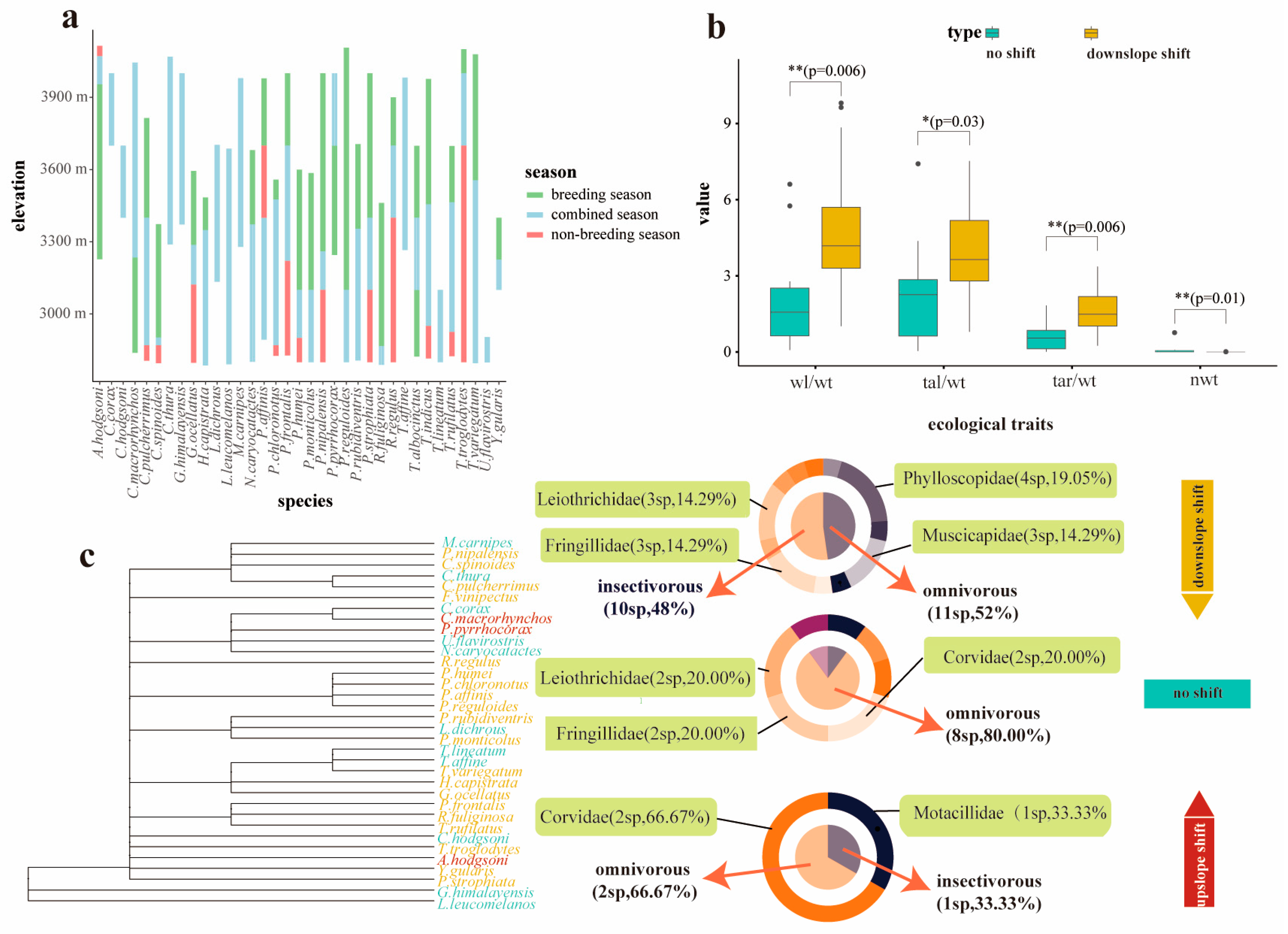
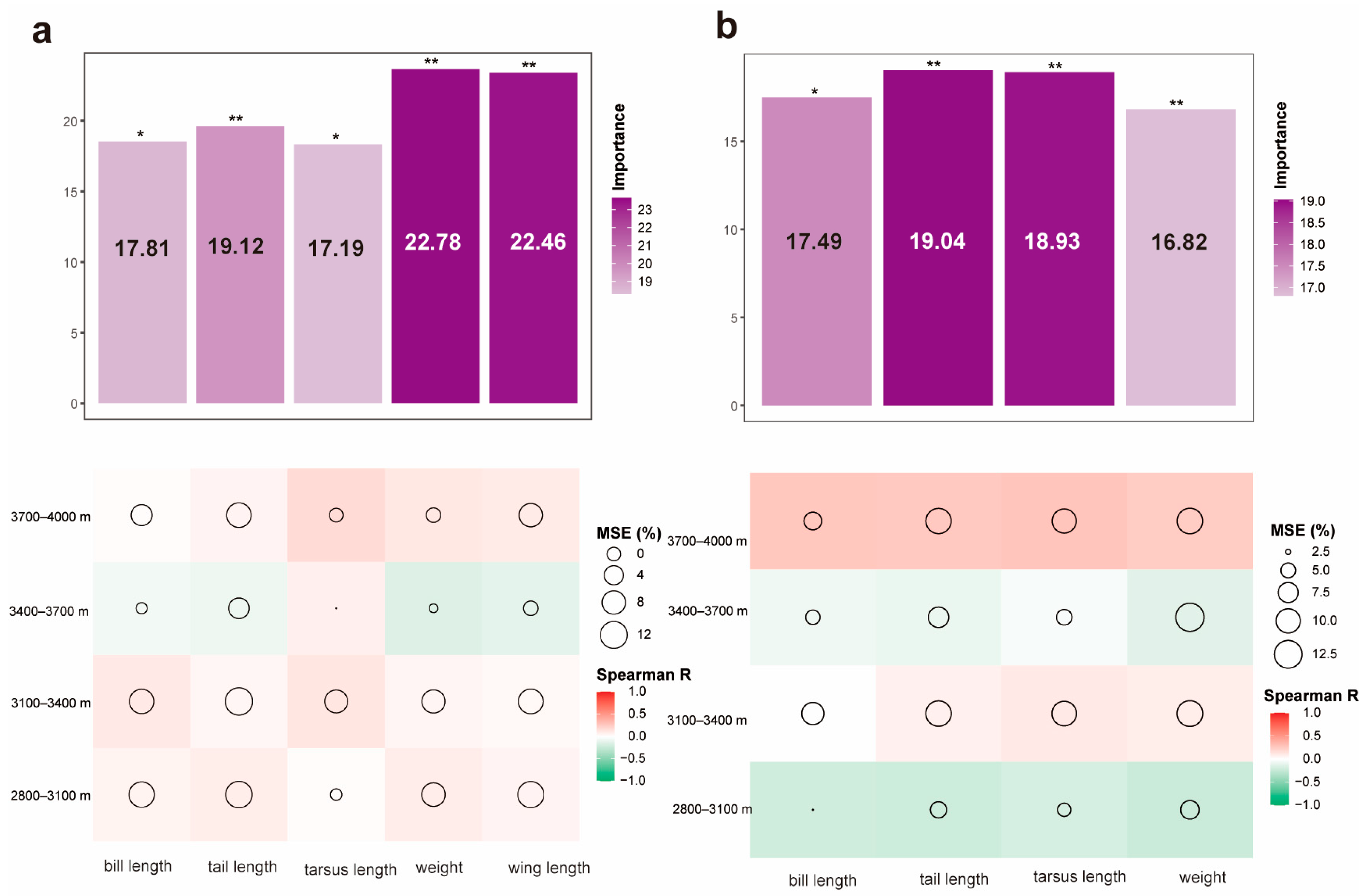
This study explores how birds in the Gyirong Valley of the central Himalayas adapt to seasonal changes by moving up and down mountain slopes. We aimed to understand their migration patterns and how this affects bird communities. Our findings show that birds exhibit four main patterns: some do not migrate, others move downhill, some uphill, and a few contraction to mid-elevation. Smaller birds with longer wings and tails relative to their weight tend to migrate downhill to escape cold weather. Insect-eating birds often move downhill together, while birds that eat both plants and insects show more flexible responses. Seasonal migration reshapes how bird traits relate to their distribution, leading to significant community changes during breeding season and greater stability in non-breeding periods. These results support the idea that birds separate their niches seasonally to reduce competition and cope with environmental stress. This research is valuable for conservation efforts, emphasizing the need to protect low-elevation winter habitats and create dynamic protected areas to help birds survive climate change, ultimately benefiting biodiversity management.
Abstract
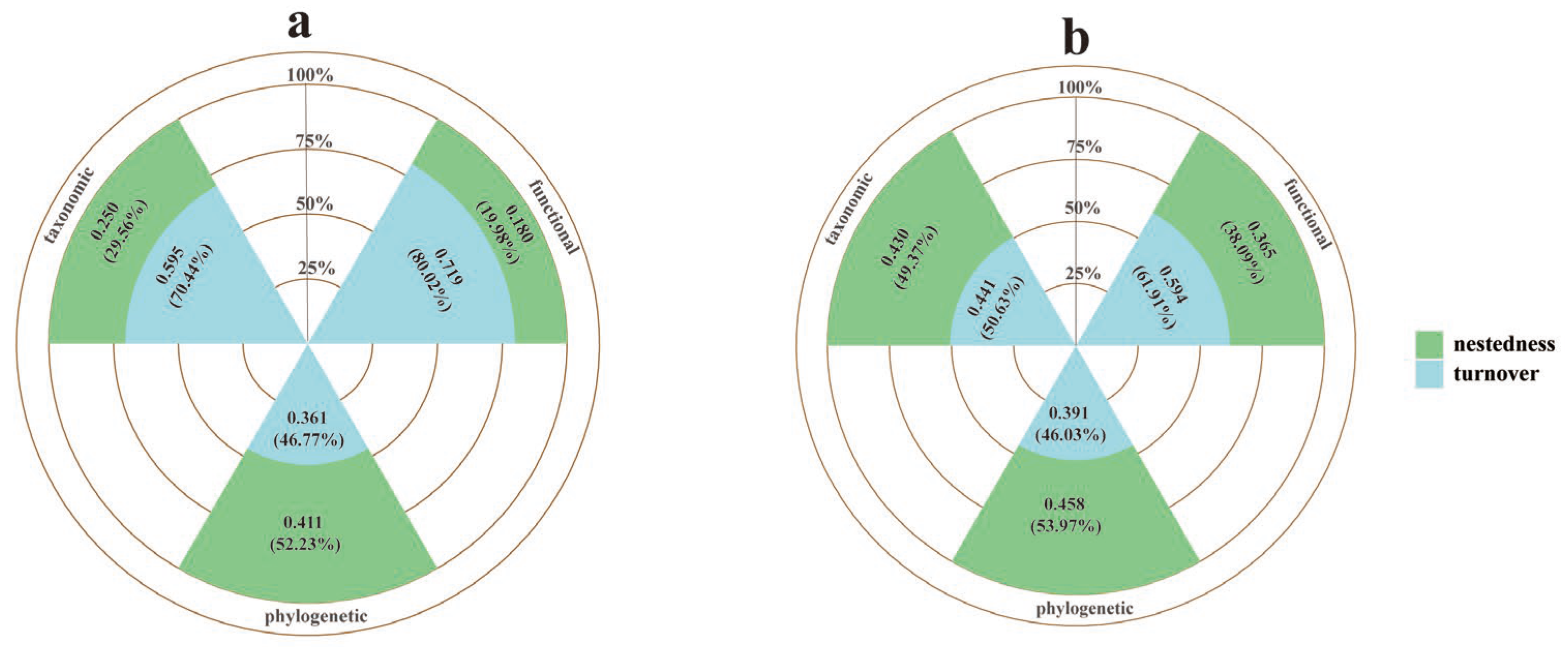
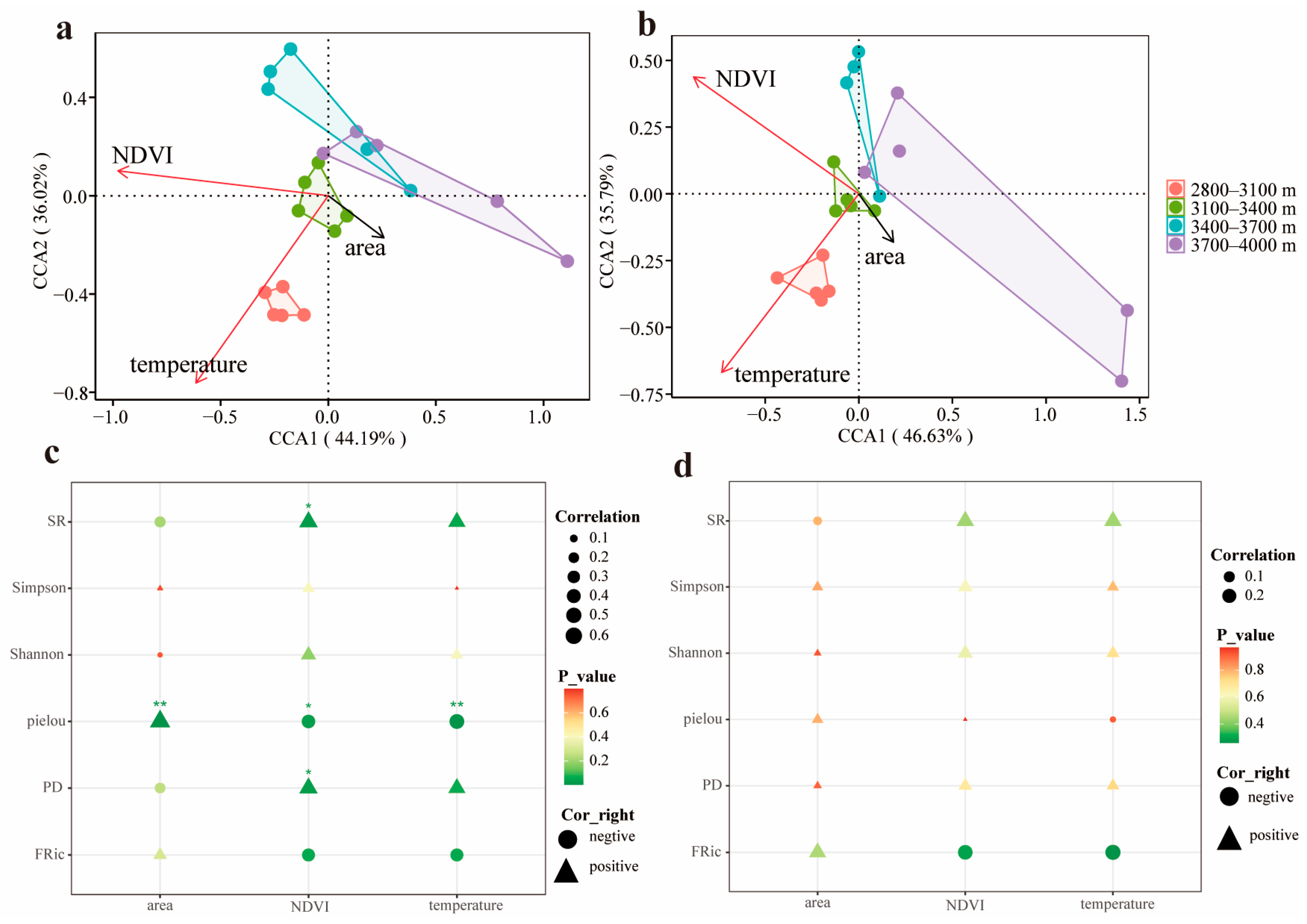
Understanding the mechanisms underlying seasonal community dynamics is important for predicting biodiversity responses to environmental fluctuations, enhancing ecological forecasting, and informing conservation strategies. In this study, we use standard transect and mist netting methods investigated seasonal altitudinal migration patterns of montane bird species in the Gyirong Valley, Central Himalayas. Our results showed four distinct altitudinal migration patterns among montane bird species: no shift, downslope shift, upslope shift, and contraction to mid-elevation zones. Species with smaller body weight and higher ratios of wing length, tail length, and tarsus length to body weight tended to migrate to lower elevations. Insectivorous birds exhibited a collective downslope shift, while omnivorous birds showed a wider range of migratory responses to seasonal variation. Migratory behavior was found to dynamically modulate the association between phenotypic traits and habitat preferences. During the breeding season, species (70.44%) and functional turnover (80.02%) dominated, while in the non-breeding season, nestedness significantly contributed to species (49.37%) and functional diversity (38.09%). In addition, migration can disrupt the direct influence of environmental variables on biodiversity patterns, providing important insights for montane biodiversity conservation under climate change. Our results highlight the critical need to safeguard low-elevation winter habitats and create dynamic protected areas to aid bird conservation amidst climate change.