1. Introduction
Oviposition site selection is a major determinant of insect reproductive success because females evaluate substrate quality, including nutritional resources, microbial cues, potential toxic compounds, and risks of competition or predation, thereby choosing sites that support offspring feeding, survival, and development [
1,
2,
3]. Many herbivorous insects typically breed on fermenting or decaying fruits or other plant substrates, where yeasts and bacteria transform plant tissues into nutritionally suitable larval resources [
4,
5]. Microbial activity also produces volatile and contact cues, such as ethanol, acetic acid, ethyl acetate, and other yeast- or fermentation-derived compounds, that guide adult attraction, feeding, and egg-laying behavior [
4,
6,
7,
8]. Thus, for many drosophilids, fermentation-associated cues are not merely by-products of decay but reliable indicators of suitable reproductive substrates.
Within this broader ecological context, one species,
Drosophila suzukii, represents a notable exception to the common association with damaged or decaying fruit [
9]. Unlike most drosophilids, females of
D. suzukii lay eggs at a specific fruit developmental stage: ripe fruit, but not rotten fruits [
9,
10]. This behavior allows larvae to develop inside fresh fruit before harvest and has contributed to the status of
D. suzukii as a major invasive pest of soft-skinned fruit crops [
11]. Beyond its economic importance, the ability of
D. suzukii to exploit intact ripening fruit has attracted considerable attention because it is associated with coordinated changes in sensory perception, oviposition behavior, and ovipositor morphology. These linked adaptations provide a valuable model for studying how multiple trait systems evolve during shifts in reproductive niche use [
12].
The transition from decaying-fruit use to fresh-fruit use imposes at least two linked challenges on ovipositing females [
10,
12,
13]. First, females need to evaluate fruit-stage cues that change during ripening and decay. As fruits progress from ripening to rotting, their sugar composition and acidity shift, while microbial communities and volatile profiles also change [
14]. Decaying substrates are often enriched in yeast- and fermentation-associated cues, including compounds such as ethyl acetate and acetic acid, which can stimulate attraction or oviposition in many drosophilids [
4,
6]. In contrast, fresh or ripening fruits are less dominated by fermentation-associated chemistry and require females to evaluate fruit-stage cues differently [
15,
16]. Second, females exploiting fresh fruits must overcome the mechanical barrier imposed by intact fruit skin and firmer tissues, which requires them to penetrate, cut, or otherwise access a more resistant oviposition substrate compared with softened decaying materials [
10,
12].
Previous studies have identified several traits associated with fresh-fruit use, including responses to texture and chemical cues in
D. suzukii [
12,
16]. These include altered olfactory responses to fruit and fermentation cues, changes in gustatory and mechanosensory pathways, and the evolution of an enlarged serrated ovipositor capable of penetrating intact fruit skin [
17,
18,
19,
20,
21]. These findings support the view that fresh-fruit use in
D. suzukii involves coordinated sensory and biomechanical adaptation [
12,
18]. However, most previous comparisons have focused on
D. suzukii and close relatives, or on contrasts between
D. suzukii and the laboratory model
D. melanogaster [
12,
13,
18]. This leaves a broader evolutionary question unresolved: does fresh-fruit exploitation require a complete
D. suzukii-like specialist syndrome, or can partial fresh-fruit use arise through different combinations of sensory, behavioral, and morphological traits?
Most previous studies on the evolution of fresh-fruit specialization have focused on
D. suzukii and its close relatives. However, evidence that these relatives reproduce in ripe fruit under natural conditions remains limited. The closely related species
D. subpulchrella can puncture intact ripe-fruit skin during laboratory oviposition assays [
10]. A recent field study also recovered
D. immigrans, a species generally associated with decaying substrates, from ripe strawberries [
22,
23]. However, its development may depend partly on prior fruit damage, and the extent to which it can independently exploit intact fresh fruit remains unclear. Because
D. immigrans is phylogenetically distant from
D. suzukii, it provides a useful comparison for distinguishing traits associated with facultative fresh-fruit use from those associated with strong specialization.
Here, we combined field emergence surveys, comparative oviposition assays, volatile organic compound profiling, substrate firmness measurements, and ovipositor morphological analyses across multiple drosophilid species. We asked three related questions. First, do phylogenetically distant species, especially D. suzukii and D. immigrans, overlap in natural fruit-associated breeding substrates? Second, are species differences in ripe- versus rotten-fruit oviposition associated with differential responses to yeast, sugar, and fermentation-associated volatiles? Third, are differences in fresh-fruit use accompanied by variation in substrate firmness, ovipositor architecture, and ovipositor sensilla organization? In this study, we aimed to clarify how distinct trait combinations can converge on similar ecological outcomes and thereby illuminate the diversification pathways underlying fresh-fruit use in drosophilids.
2. Materials and Methods
2.1. Experimental Design Overview
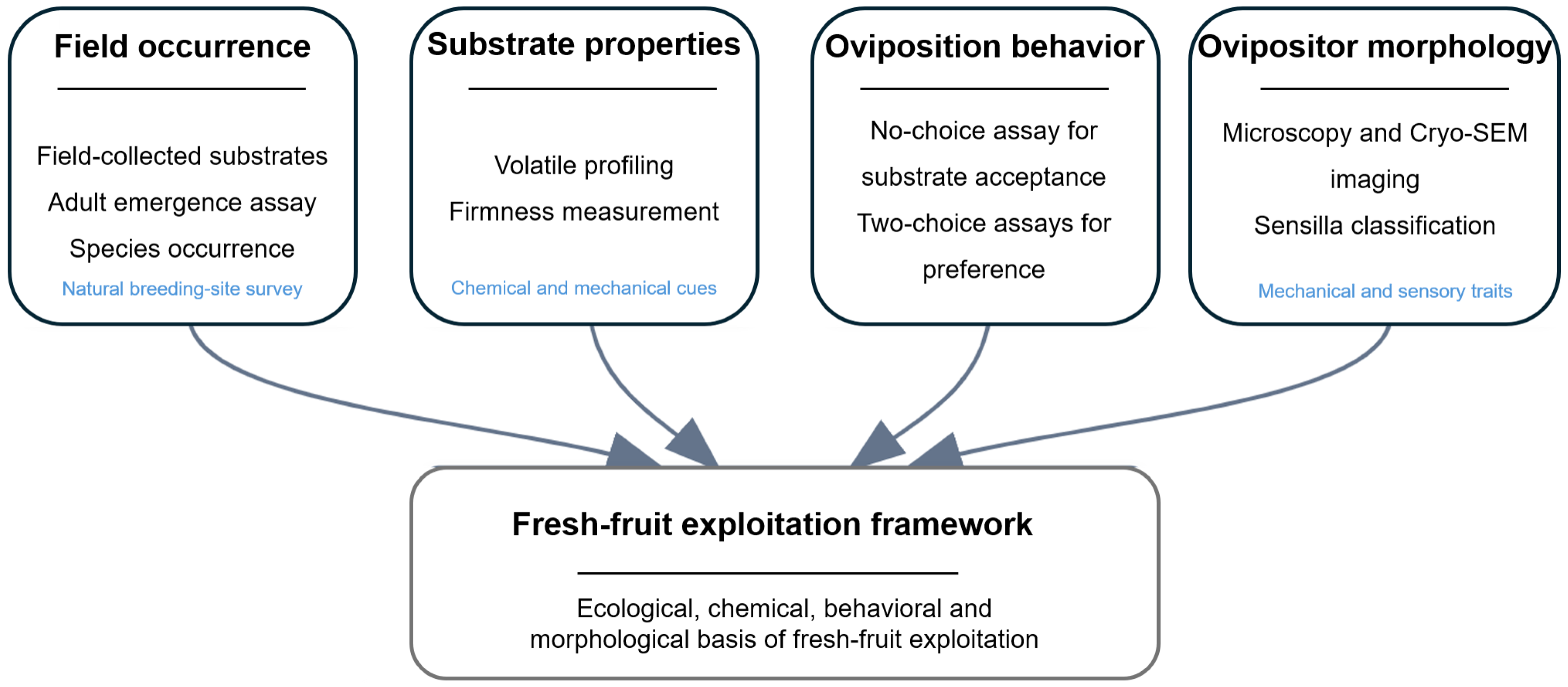
This study combined field emergence assays, substrate characterization, behavioral assays, and morphological analyses to evaluate whether fresh-fruit exploitation in drosophilids is associated with coordinated ecological, chemical, behavioral, and morphological traits. A schematic overview of the experimental design is provided in
Figure 1.
2.2. Drosophila Husbandry and Strains
For standardization of behavioral and morphological experiments, a panel of wild-type strains was obtained from the Ehime Stock Center (ESC, Matsuyama, Japan), comprising D. melanogaster (Caton S), D. biarmipes (CJB214), D. suzukii (HJ), D. mercatorum (mer1527.01), D. hydei (DJB34), D. virilis (viri-HUE), D. melanica, D. albomicans (CJ56), D. immigrans (MT91-1), D. simulans (Rakujuen), D. ananassae (AABBg1), D. saltans (SHR43), and the outgroup Scaptodrosophila lebanonensis (leb0011.00). Fly stocks were maintained on a standard cornmeal–yeast–agar medium under strictly controlled environmental conditions: 24 °C, 60% relative humidity, and a 12:12 h light/dark cycle (lights on at 08:00). The standard diet consisted of 6 g agar, 7.5 g sucrose, 50 g maltodextrin, 24.5 g yeast, and 73 g cornmeal per liter of water, supplemented with 17.5 mL of methyl 4-hydroxybenzoate (10% w/v in ethanol) and 4 mL of propionic acid to inhibit microbial growth.
2.3. Field Collection
To identify the natural breeding sites of co-occurring drosophilids, we collected a range of plant substrates from the field (Lang Mountain region in Xinning, Hunan, China) and assayed adult emergence in the laboratory. Field collections were conducted across multiple sampling dates because different fruit species and substrates were available at different times during the sampling period. However, each substrate type was collected within a single sampling event, and samples were processed separately to minimize potential temporal variation within individual substrate categories. A total of 19 types of plant fruits were collected as substrates, including those from the genera Citrus, Diospyros, Actinidia, Rubus, and Amygdalus. For each substrate, 10 g was weighed and transferred into a custom emergence chamber constructed from a 10 cm diameter disposable plastic container with a lid. A 4 cm diameter aperture was cut in the center of the lid, and a layer of breathable non-woven fabric was placed between the lid and the container. Our design prevented external flies from ovipositing in the substrate while retaining newly emerged adults inside the chamber. Chambers were inspected daily. Newly emerged adults were collected with a mouth aspirator and preserved in 75% ethanol. Species were identified by combined morphological examination and DNA barcoding. Four independent biological replicates were performed for each substrate type (n = 4). It is important to note that flies emerging from field-collected substrates were used only to characterize substrate-associated species occurrence and were not used in the behavioral or morphological assays conducted in this study.
2.4. Characterization of Fruit Substrates
2.4.1. Volatile Compound Collection and Identification
Headspace solid-phase microextraction coupled with gas chromatography–mass spectrometry (HS-SPME-GC-MS) was used to collect and identify volatile organic compounds (VOCs) emitted from fruits. Before sampling, individual fruit samples were placed in headspace vials. Volatiles were collected using an 85 μm CAR/PDMS SPME fiber (57334-U, Supelco-Sigma-Aldrich, St. Louis, MO, USA), with an empty vial serving as a blank control. Following extraction, the SPME fiber was manually inserted into the injection port of the gas chromatograph (GC) to desorb the analytes. We used an Agilent 7890A GC system (Agilent Technologies, Santa Clara, CA, USA) coupled with a 5975C mass spectrometry (MS) detector to identify each analyte extracted by the SPME fiber. The temperature of the GC injector was set to 280 °C, and the fiber was thermally desorbed for 1 min. The HP-5MS GC column (Agilent Technologies) was held isothermally at 40 °C for 2 min and then heated up at a rate of 12 °C/min to 300 °C and held for 3 min. The front inlet was set in splitless mode with 13.867 psi pressure, and helium was used as the carrier gas at a flow of 1 mL/min in the column. The MS source was operated at 230 °C and the MS quadrupole at 150 °C; the scanning of the MS detector was undertaken in EI mode (70 eV) and carried out from 40 to 550 at 172 scans/min. The GC–MS analysis was performed following a previously described protocol [
24], without any modifications. We used commercial standard products (>95% purity; Sigma Aldrich, Saint Louis, MO, USA) of the putative compounds to compare retention time.
2.4.2. Oviposition Substrate Firmness Measurements
To quantify the mechanical resistance that ovipositing females encounter, the firmness of agarose substrates across a range of concentrations and of a panel of fruits, vegetables, flaxseeds, and cacti was measured as previously described [
25]. Agarose plates were prepared from a 20 mL solution in a 90 mm diameter dish (Nest, Wuxi, China). Substrate hardness was measured with a TA.HDplus Texture Analyzer (Stable Micro Systems, Godalming, UK) using a 50 mm aluminum cylinder probe with the following instrument settings: measured force in compression, pre-test speed: 1.0 mm s
−1; test speed: 2.0 mm s
−1; post-test speed: 10.0 mm s
−1; strain: 50%; and trigger force: 5 g. The maximum force was used as a measure of sample firmness. All textural analyses were carried out using Texture Exponent software version 6.1.5.0 (Stable Micro Systems). The sample was positioned centrally under the probe during testing.
2.5. Egg-Laying Assays
2.5.1. No-Choice Oviposition Assay
No-choice assays were used to determine whether females accepted a given substrate for oviposition in the absence of alternative egg-laying sites. To test acceptance of intact fruit at different ripening stages, 10 females were placed in a columnar chamber (height 10 cm, diameter 8 cm) containing a single ripe or rotten strawberry. Trials lasted 12 h in the dark (n = 12–19 per species), and eggs were counted by oviposition position. Ripe strawberries were purchased from a local supermarket on the day of the experiment. Ripe strawberries are defined as commercially obtained, with intact skins and no obvious physical damage. Rotten strawberries (same variety) were produced by holding fruit at 24 °C and 60% relative humidity for five days; rotten status was confirmed by visible bruising, softening, or surface discoloration before use.
To test whether individual fermentation-associated volatiles alter oviposition, 20 females were transferred into a chamber (60 mm diameter; Nest, Wuxi, China) containing a 0.5% agarose substrate supplemented with acetic acid or ethyl acetate at a final concentration of 5%, with substrates without odor supplementation serving as blank controls. The concentrations of the experimental compounds were set based on this reference [
26]. After 24 h, flies were removed and eggs were counted manually under a stereomicroscope (
n = 15).
2.5.2. Two-Choice Oviposition Assay
Two-choice assays were used to test relative oviposition preference when females were allowed to choose between two substrates. Four-quadrant plastic Petri dishes (90 mm diameter; Nast, China) were used as egg-laying chambers, with opposite quadrants loaded with 5 mL agarose at the specified concentration. Unless otherwise indicated, agarose solutions were not supplemented with any other chemicals. Filled dishes were allowed to solidify for 1 h at room temperature. Twenty females were briefly cold-anaesthetized on an ice pad and immediately introduced into the chamber. After 24 h, eggs on each agarose pad were counted, and the oviposition preference index (OPI) was calculated as (eggs on experimental substrate − eggs on control substrate)/(eggs on experimental substrate + eggs on control substrate). Only assays in which females laid more than 20 eggs were recorded and analyzed, with 12–15 replicate assays per species at each concentration.
For yeast preference assays, experimental substrates were 0.5% agarose and contained 6.5% w/v yeast; control substrates were 0.5% agarose. For sucrose preference assays, experimental substrates were 0.5% agarose and contained 100 mM sucrose; control substrates were 0.5% agarose. In the strawberry puree assay, experimental substrates were filled with 35% w/v strawberry puree (ripe or rotten) in 0.5% agarose. Ripe strawberry puree was prepared by mechanically homogenizing whole ripe fruits on the day of the experiment. Rotten strawberry puree was prepared by incubating ripe strawberry puree at 24 °C and 60% relative humidity for 4–5 days before the experiment. The strawberry puree was mixed together with molten agarose cooled to approximately 45–50 °C. For the preference assay between ripe and rotten strawberry puree, experimental substrates were filled with 35% w/v ripe strawberry puree and 35% w/v rotten strawberry puree in 0.5% agarose. For the ripe or rotten strawberry puree preference assay, experimental substrates were 0.5% agarose and contained 35% w/v ripe or rotten strawberry puree; control substrates were 0.5% agarose.
2.6. Morphological Analysis of the Ovipositor
2.6.1. Ovipositor Morphology Identification
Bright-field microscopy: Adult females were collected shortly after eclosion and euthanized at −20 °C. These were supplemented with ethanol-preserved field specimens. Ovipositors were carefully extruded and dissected from the abdomen using fine forceps under a stereomicroscope to ensure full morphological exposure. Specimens were mounted on a transparent resin base and imaged using a LEICA M205C or LEICA M165FC stereomicroscope (Leica Microsystems, Wetzlar, Germany). Scale bars (in μm) were calibrated and applied to all bright-field micrographs.
Cryogenic scanning electron microscopy (cryoSEM): Late-stage pupae were isolated from the standard medium and transferred to clean glass bottles (40–60 pupae per species). These bottles were lined with four layers of absorbent tissue paper saturated with a 5% sucrose solution to provision newly emerged adults. Following eclosion, adult flies were euthanized at −20 °C. Ovipositors were subsequently dissected and examined using a Hitachi SU8100 scanning electron microscope (Hitachi Ltd., Tokyo, Japan). Micrographs were acquired at optimal magnifications to resolve the ultrastructural details of the ovipositor sensilla.
2.6.2. Sensilla Classification and Quantification
Following established morphological criteria for
Drosophila ovipositors [
10,
27,
28], bristles across the examined species were categorized into three primary functional morphotypes: conical peg sensilla (CP), trichoid sensilla (TS), and chaetic sensilla (CS). The conical peg sensilla were further partitioned into three distinct subtypes based on fine ultrastructural features: standard conical pegs (CP1), coeloconic conical pegs (CP2), and elongate conical pegs with finely tapered tips (CP3). Subtypes CP1 and CP2 were differentiated primarily by basal socket diameter, which is relatively smaller in CP1 and larger in CP2. In total, five bristle morphotypes were cataloged and quantified from the cryoSEM micrographs. Assuming bilateral symmetry of the terminalia, counts were performed unilaterally and reported as the number of sensilla per hemilateral plate. For each species, the number, shape, and distribution of ovipositor bristles were examined in 20 females.
2.7. Statistical Analysis
Statistical analyses were performed using GraphPad Prism 10.5.0. Oviposition preference indices were tested against zero using Wilcoxon signed-rank tests. Egg counts among treatments were analyzed using Kruskal–Wallis tests followed by Dunn’s multiple-comparison tests. For comparisons between two independent groups, Mann–Whitney U tests were used. Data are presented as mean ± SEM unless otherwise stated. “n.s.” indicates no significant difference; “*” indicates a significant difference (
p < 0.05); “**” indicates a highly significant difference (
p < 0.01); and “***” indicates a highly significant difference at
p < 0.001. The same notation is used for all subsequent figures. The number of biological replicates (
n) for each experiment is indicated in the corresponding
Section 2 and
Section 3, and figure legends. Data visualization and structural mapping were conducted utilizing GraphPad Prism 10.5.0, OriginPro 2023, Adobe Photoshop 2022, and Microsoft Office 2019.
3. Results
3.1. Phylogenetically Distant Fruit Flies Overlap in Natural Breeding Substrates
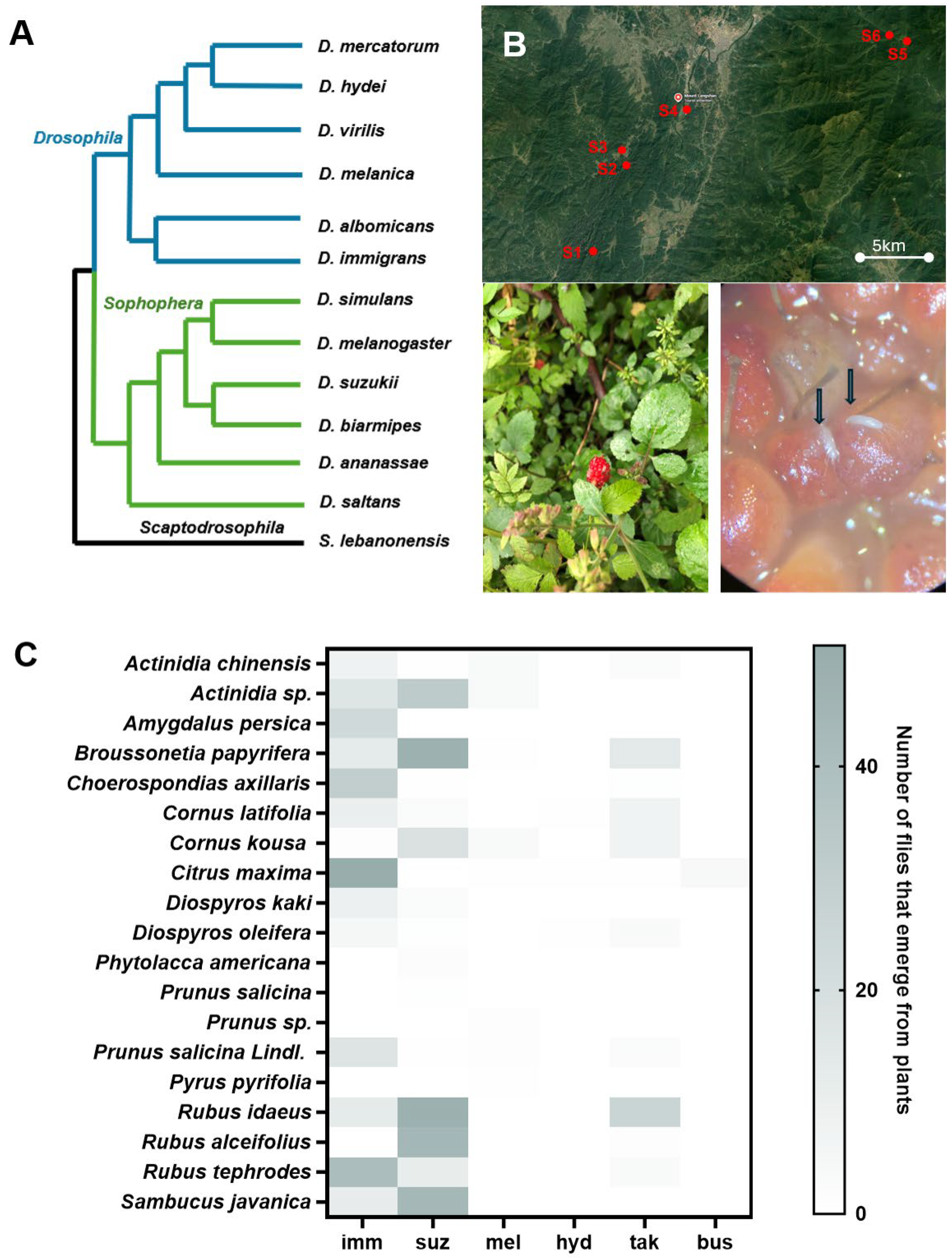
We collected fruit- and plant-associated substrates from the Lang Mountain region in Xinning, Hunan, China, and monitored adult emergence in laboratory chambers. Emerged adults were identified using morphological characters and DNA barcoding, allowing us to infer which species had successfully developed in each field-collected substrate. The field survey covered 19 substrate categories and yielded a total of 577 adults representing six drosophilid species across four replicates per substrate type.
Substrate use was not restricted to closely related species, and the emergence data revealed substantial ecological overlap between the phylogenetically distant species
D. immigrans and
D. suzukii (
Figure 2A). These two species were recovered from the same substrate categories in 10 of the 19 categories surveyed (
Figure 2B,C). In addition, direct field observations showed
D. immigrans adults on fresh berries, including behavior consistent with feeding and egg laying on
Rubus hirsutus fruit (
Figure 2B). These observations suggest that
D. immigrans may associate with fresh or relatively intact fruit substrates under natural conditions. However, emergence assays cannot determine whether eggs were deposited into intact fruit or whether larvae developed after fruit damage occurred. Therefore, these data should be interpreted as evidence of ecological overlap and the potential for fresh-fruit exploitation rather than direct confirmation of intact fruit oviposition under natural field conditions.
Together, these findings show that phylogenetically distant drosophilid species can use overlapping fruit-associated breeding habitats. This ecological overlap provides a basis for testing whether D. immigrans and D. suzukii show shared or distinct behavioral, chemical, and morphological traits associated with different degrees of fresh-fruit exploitation.
3.2. Chemical Fruit-Stage Cues Separate D. suzukii from Fermenting-Substrate Species
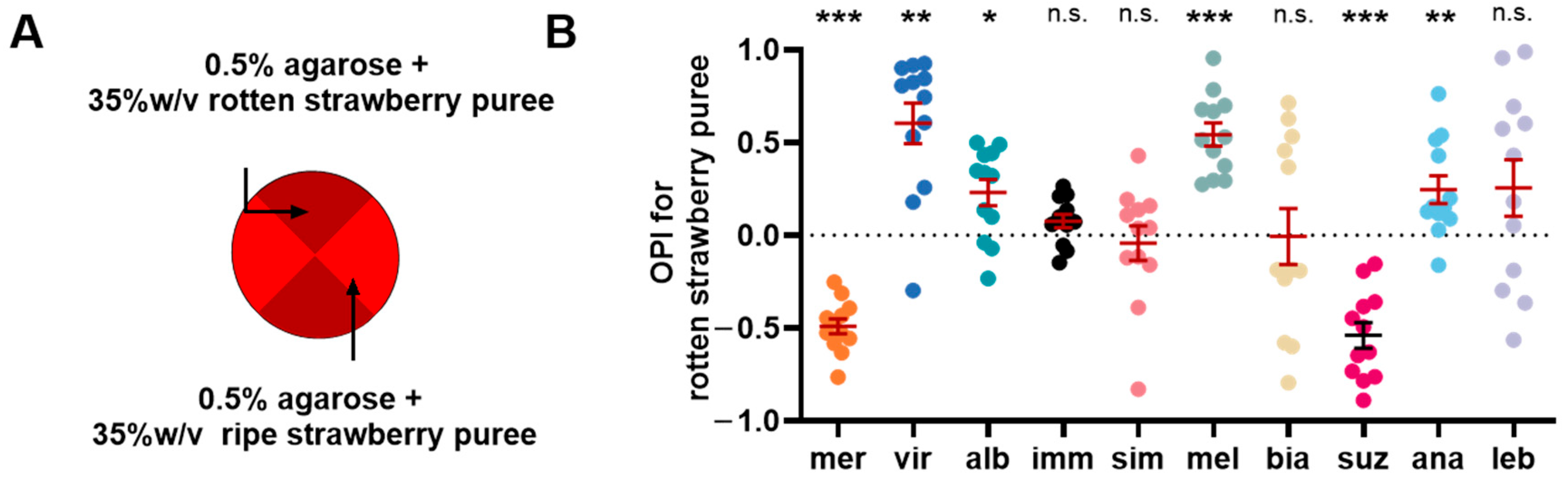
Fresh and rotten fruits differ in both chemical and mechanical properties, making it difficult to attribute oviposition preferences to either factor alone. To isolate the contribution of fruit-stage chemical cues, we performed a two-choice oviposition assay in a four-quadrant arena using ripe and rotten strawberry purees as standardized fruit-stage cues (
Figure 3A). Each substrate consisted of ripe or rotten strawberry puree, to match the chemical stimuli of whole fruits, and equivalent concentrations of agarose (0.5%) were added to each puree to minimize mechanosensory cues. Results showed that
D. suzukii consistently preferred substrates containing ripe strawberry puree. This result indicates that ripe-fruit chemical cues alone can support ripe-fruit-biased oviposition under mechanically standardized conditions (
Figure 3B). By contrast, several other fruit flies preferred rotten strawberry puree, consistent with the widespread use of fermentation-associated substrates in this group. The lack of a strong ripe vs. rotten preference in
D. immigrans is consistent with broader substrate acceptance, but alternative explanations, including assay-specific sensitivity, cannot be excluded without further behavioral validation (
Figure 3B).
We then tested whether the ripe-biased response of
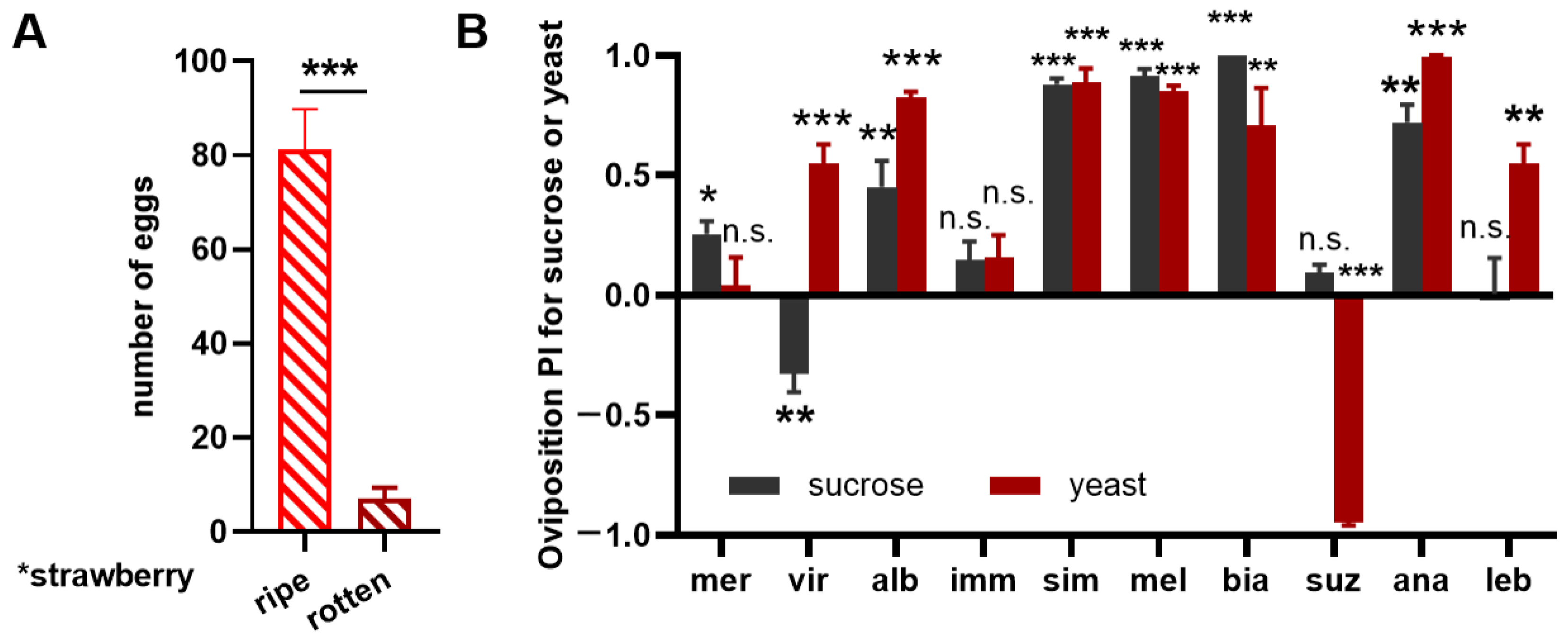
D. suzukii was also evident in a whole-fruit context. In no-choice assays using an intact ripe or rotten strawberry, our results showed that
D. suzukii deposited fewer eggs on rotten strawberries than on ripe strawberries (
Figure 4A). Because no-choice assays measure substrate acceptance rather than long-range attraction, we interpret this result as reduced oviposition acceptance of rotten fruits rather than direct evidence of odor-mediated repellency.
Because fruits undergo ripening and fermentation, a multitude of metabolic processes occurs, leading to changes in chemical cues such as sugar and yeast composition [
30]. We then tested whether responses to yeast or sugar were associated with the observed species differences in fruit-stage preference. In two-choice assays, females of
D. suzukii showed no strong preference for sucrose under the tested conditions but strongly avoided yeast-containing substrates (
Figure 4B). This response differed from several other drosophilid species that preferred sucrose, yeast, or both. In particular, fly species with stronger responses to rotten fruit tended to deposit more eggs on yeast-containing substrates, consistent with the role of yeast as a reproductive resource cue in many drosophilids. However,
D. immigrans did not show the strong yeast avoidance observed in
D. suzukii; yeast failed to elicit a significant oviposition preference in
D. immigrans females.
These results separate the species into distinct behavioral classes. Females of D. suzukii showed a strong ripe-fruit-associated response, typical fermenting-substrate users preferred rotten-fruit cues, and D. immigrans occupied an intermediate position. The yeast assay further links the ripe-fruit preference of D. suzukii to its reduced acceptance of fermentation-associated substrates.
3.3. Fruit Decay Shifts Volatile Profiles Toward Fermentation-Associated Compounds
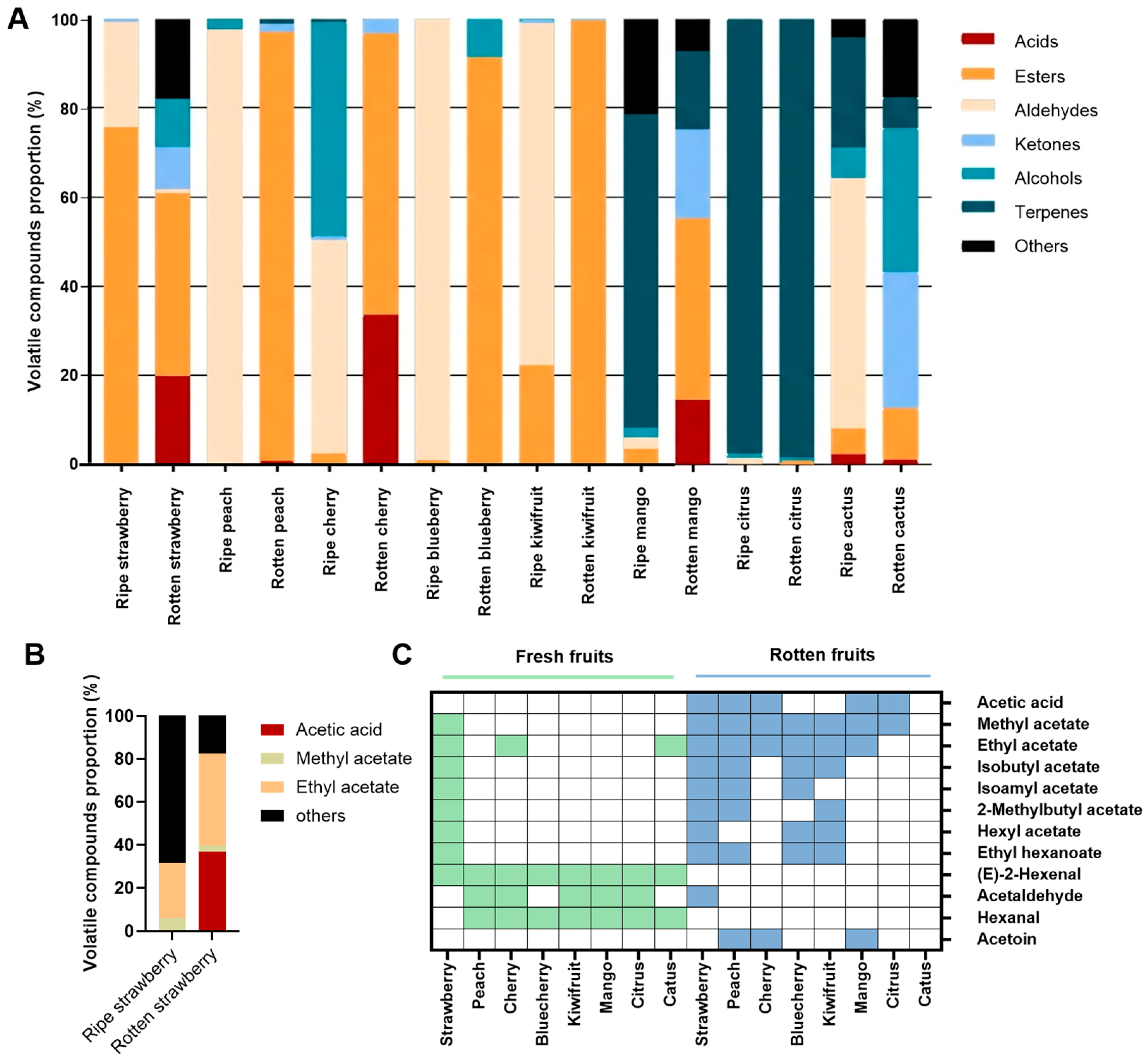
To identify candidate chemical features associated with fruit stage, we profiled VOCs emitted by ripe and rotten fruits using headspace solid-phase microextraction coupled with GC-MS. At the compound-class level, ripe samples displayed distinct fruit-specific compositions. For example, ripe strawberries were dominated by esters, ripe peaches and blueberries by aldehydes, and ripe mangoes and citrus fruits by terpenes (
Figure 5A). Changes associated with decay were not uniform across all fruit types. Nevertheless, several rotten samples showed greater relative representation or more frequent detection of fermentation-associated acids and esters (
Figure 5A,C). In strawberries, rotten samples showed higher relative peak-area proportions of acetic acid and ethyl acetate than ripe samples (
Figure 5B). Across the broader fruit panel, the presence–absence matrix showed that selected fermentation-associated compounds, including acetic acid and ethyl acetate, were detected in a broader range of rotten- than ripe-fruit samples (
Figure 5C). Together, these descriptive results indicate recurring shifts toward shared fermentation-associated volatile features during fruit decay.
Yeast-containing substrates also emitted fermentation-associated compounds that overlapped with those detected in rotten fruits, including ethyl acetate and acetic acid (
Table A1). This overlap was consistent with microbial fermentation contributing to some of the volatile features observed during fruit decay. It also identified ethyl acetate and acetic acid as candidate fermentation-associated compounds for the subsequent oviposition assays.
3.4. Fermentation Volatiles Suppress Oviposition in D. suzukii but Stimulate Oviposition in Other Fruit Flies
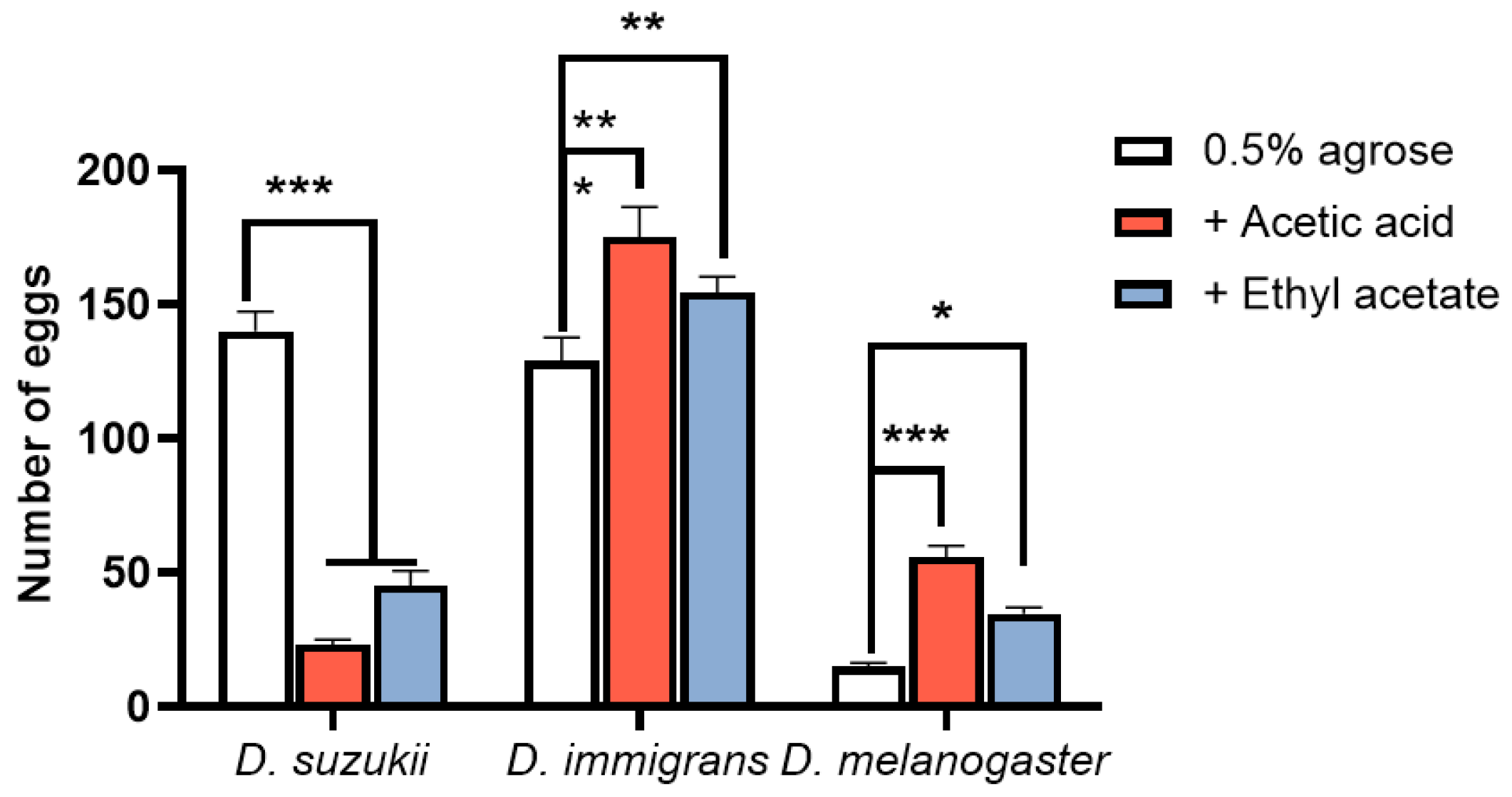
Having shown that decay enriches rotten fruits and yeast headspace in ethyl acetate and acetic acid, we next tested whether these two compounds could alter oviposition behavior. In no-choice assays, females of
D. suzukii,
D. immigrans, and
D. melanogaster were allowed to lay eggs on control substrates or on substrates supplemented with ethyl acetate or acetic acid (
Figure 6). The three species showed contrasting responses to these compounds. Females of
D. melanogaster and
D. immigrans deposited more eggs on substrates containing ethyl acetate or acetic acid than on control agarose. This result suggests that these fermentation-associated compounds can stimulate oviposition in both species. By contrast,
D. suzukii laid fewer eggs on substrates containing either compound, demonstrating that the same chemical cues suppress oviposition in this fresh-fruit specialist (
Figure 6).
Together, these results identify ethyl acetate and acetic acid as candidate fermentation-associated cues that differentially bias oviposition across drosophilid species. In D. melanogaster and D. immigrans, increased egg laying on compound-supplemented substrates is consistent with the interpretation that these cues can signal microbial activity or suitable larval resources. In D. suzukii, however, the same compounds reduced egg laying, suggesting that fermentation-associated cues may mark substrates that are less acceptable for oviposition. This contrast supports the idea that reduced acceptance of fermentation-associated compounds is one behavioral component of strong fresh-fruit specialization in D. suzukii, whereas D. immigrans shows a more flexible response rather than a D. suzukii-like avoidance pattern.
3.5. Decay Reduces Substrate Firmness and Defines the Mechanical Challenge of Fresh-Fruit Exploitation
Chemical discrimination alone cannot explain fresh-fruit exploitation because intact fruit also presents a mechanical barrier. To quantify this physical barrier, we measured the firmness of agarose substrates and a panel of plant substrates in both fresh and rotten conditions. Fresh fruits varied in firmness, with cactus showing the highest resistance and mango, citrus, kiwi, cherry, peach, and blueberry also exceeding the firmness of the low-concentration agarose substrates used in behavioral assays (
Table 1).
By contrast, the decay of fruits and vegetables strongly reduced substrate firmness. Across the fruit substrates measured, rotten samples shifted toward uniformly low resistance values, approximately equal to or lower than the firmness of 0.5% agarose (
Table 1). This result indicates that decay substantially reduces the mechanical barrier that ovipositing females encounter on intact or firmer substrates. Thus, rotten fruits differ from fresh fruits not only in fermentation-associated chemistry, but also in physical accessibility. These measurements provide a quantitative description of the mechanical environments associated with different oviposition substrates and fruit stages. Variation in substrate firmness may influence how readily females gain access to oviposition sites and therefore represent an important physical dimension of host use alongside chemical cues.
3.6. Ovipositors Show Divergent Structural Routes to Substrate Penetration and Assessment
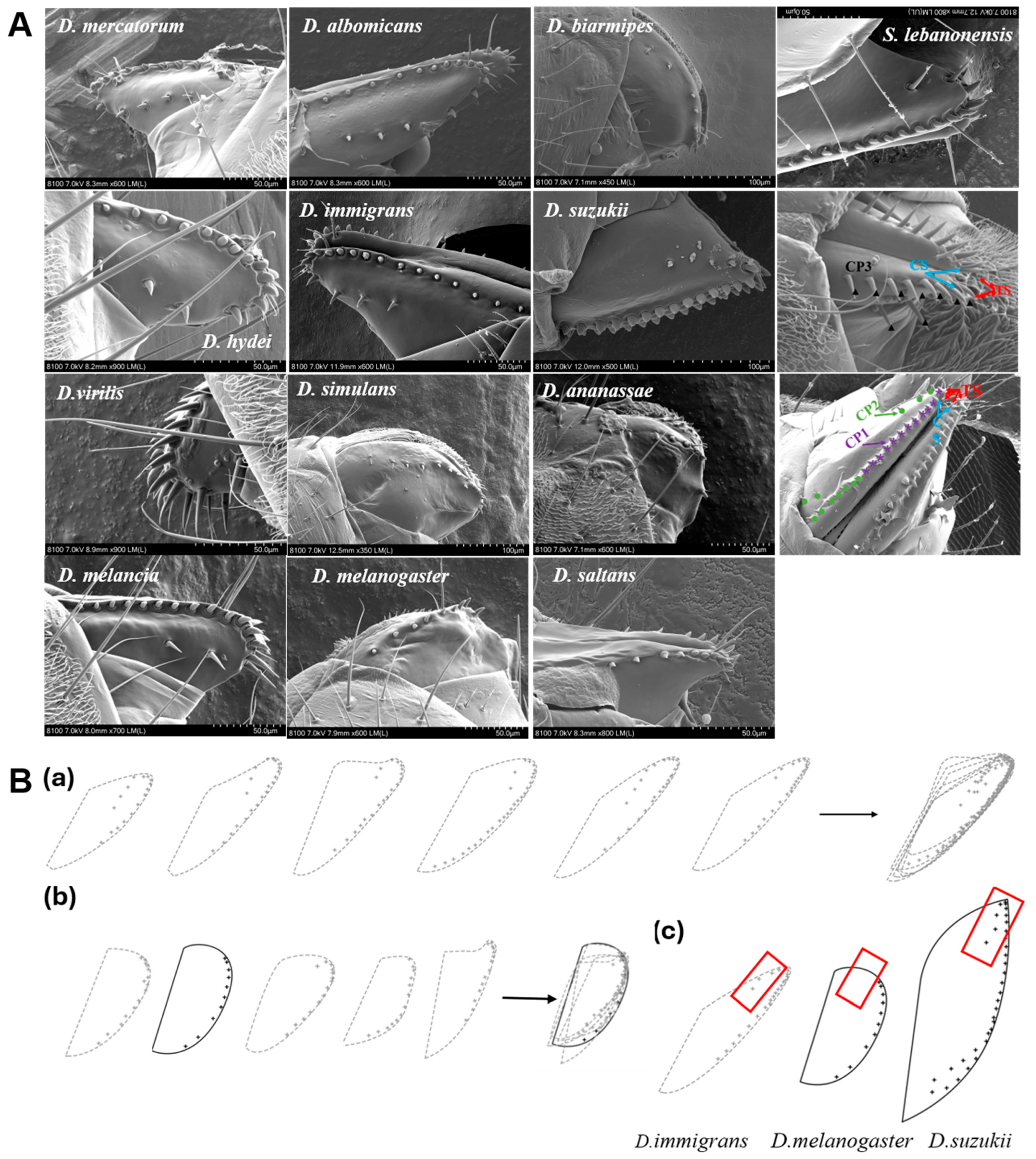
We compared ovipositor morphology across the fruit fly panel using bright-field microscopy and cryogenic scanning electron microscopy. Most examined
Sophophora species possessed relatively short, blunt ovipositor plates, consistent with the use of softer oviposition substrates (
Figure 7A). Although
D. suzukii belongs to
Sophophora, it was a clear morphological outlier, possessing an elongated, serrated ovipositor (
Figure 7A). By contrast, several species in the subgenus
Drosophila, including
D. immigrans, had long, narrow, needle-like ovipositors that differed from both the blunt
Sophophora form and the serrated ovipositor of
D. suzukii.
We next classified and quantified ovipositor bristles and sensilla. Five morphotypes were recognized in the current analysis: standard conical peg sensilla (CP1), coeloconic conical peg sensilla (CP2), elongated conical peg sensilla with tapered tips (CP3), trichoid sensilla (TS), and chaetic sensilla (CS) (
Table A2). Across species, conical peg sensilla tended to increase in size and density toward the distal end of the ovipositor plate, the region most likely to contact the substrate during oviposition. This distal enrichment is consistent with a role for the ovipositor in substrate assessment, in addition to its mechanical role during oviposition.
Our observations showed that
D. suzukii has a particularly distinctive sensilla organization. It possessed a high total number of bristles and prominent CP1 sensilla that were not observed in the other examined species (
Table A2). Several species in the subgenus
Drosophila had more bristles than most
Sophophora species, and some displayed CP3-type sensilla. Mapping bristle positions further showed that lateral plate bristles were present in species from the subgenus
Drosophila, in
D. suzukii, and in the outgroup species, but absent from many other
Sophophora species (
Figure 7B).
Together, these observations show that ovipositor traits vary across multiple structural and sensory dimensions, including plate shape, distal architecture, bristle number, sensillum type, and lateral bristle distribution. This variation appears to reflect broad phylogenetic differences, whereas the serrated ovipositor and distinctive CP1 enrichment of D. suzukii are consistent with a specialized condition associated with fresh-fruit oviposition. By contrast, the needle-like ovipositors observed in several Drosophila species, including D. immigrans, represent a different morphology and should not be interpreted as a direct equivalent of the D. suzukii ovipositor. These patterns support a modular view of ovipositor evolution, in which substrate interaction may involve different combinations of plate shape, penetration-related structures, and sensory traits across drosophilid lineages.




 ,
,