Conservation of the Bird Cherry (Padus Mill.) Germplasm by Cold Storage and Cryopreservation of Winter Cuttings



1
N.I. Vavilov Institute of Plant Genetic Resources, 190000 Saint-Petersburg, Russia
2
Department of Storage Technology and Processing of Agricultural Products, Saint-Petersburg State Agrarian University, 196605 Saint-Petersburg, Russia
3
Department of Crop Production named I.A. Stebut, Saint-Petersburg State Agrarian University, 196605 Saint-Petersburg, Russia
*
Author to whom correspondence should be addressed.
Biology 2023, 12(8), 1071; https://doi.org/10.3390/biology12081071
Submission received: 27 March 2023
/
Revised: 21 July 2023
/
Accepted: 28 July 2023
/
Published: 30 July 2023
(This article belongs to the Special Issue Improvement and Innovation of Cryopreservation and In Vitro Methods in Plant Resources Protection)
Simple Summary
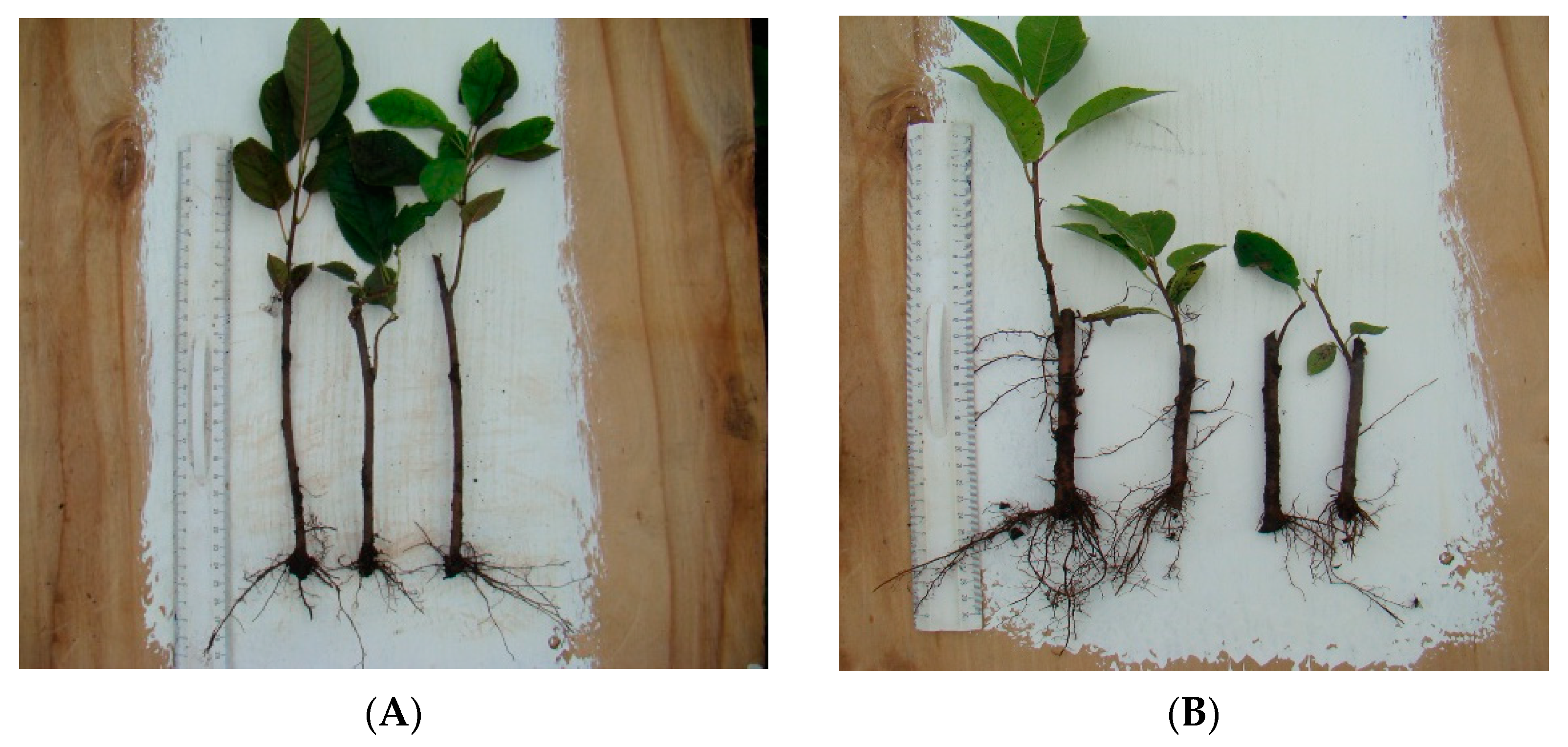
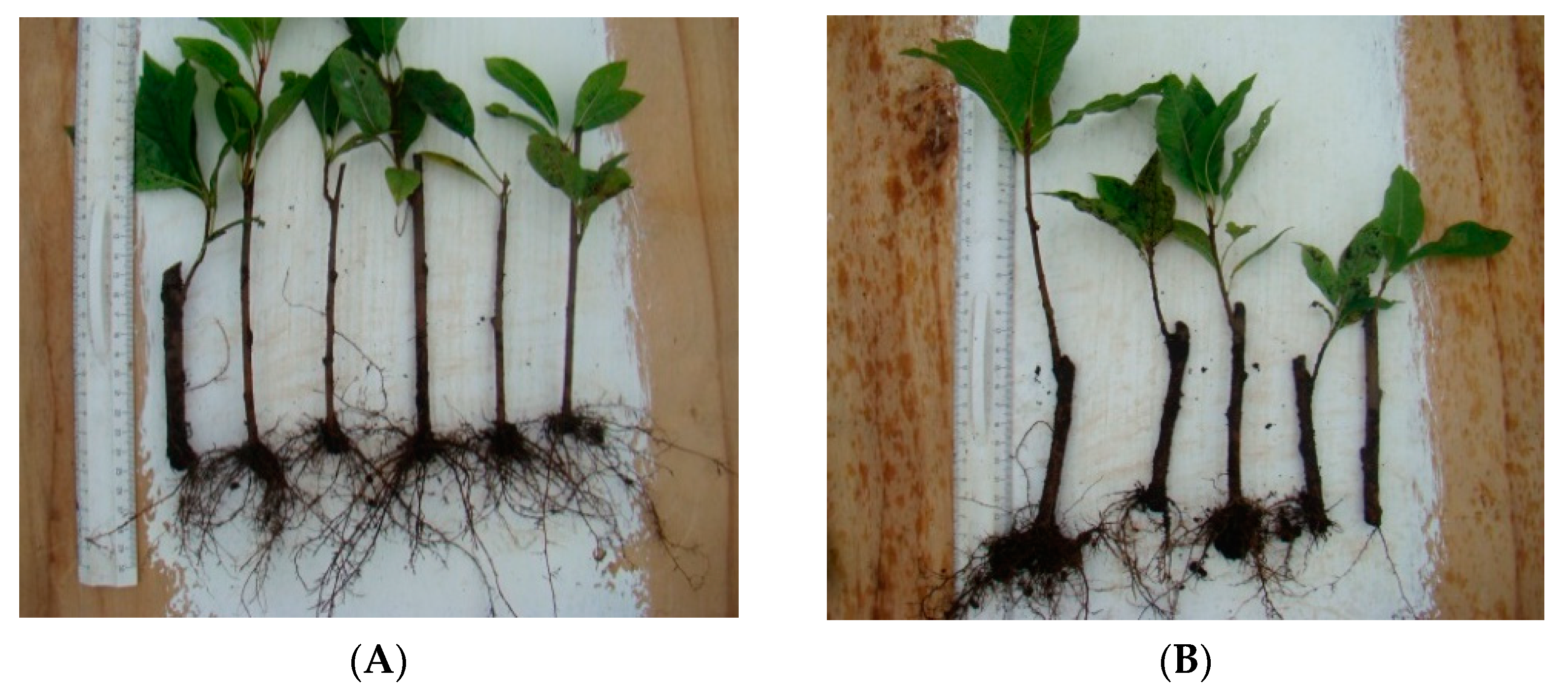
This is the first study describing successful recovery of winter cuttings from five bird cherry varieties of different genetic origin after six months of cryopreservation in liquid nitrogen vapor (−183–−185 °C). This study also included analysis of morphometric data collected for plants developed from cryopreserved cuttings, and biochemical analysis of fruits produced by plants after cryopreservation in the field during three consecutive years. The viability of cuttings recovered after six months of cryopreservation varied from 43 to 50% which exceeded the internationally accepted genebank viability standard (40%). Cryopreservation had little to no impact on the morphological parameters of the developed plants and no influence on the biochemical composition of the fruits. All parameters measured for plants after cryopreservation were comparable to those recorded after cold storage at −5 °C, which implies suitability of these storage methods for long- and mid-term conservation, respectively, of the bird cherry genetic collection.
Abstract
Conservation at cryogenic temperatures, usually in liquid nitrogen (LN) or in its vapor, is the only reliable method for the long-term ex situ conservation of fruit and berry crops with vegetative reproduction. In this study, five bird cherry (Padus Mill.) varieties of different genetic origin from the bird cherry genebank at the N.I. Vavilov All-Russian Institute of Plant Genetic Resources (VIR, Russia) were tested for their response to cryopreservation in LN vapor (−183–−185 °C). The response included viability under laboratory and field conditions, morphological assessment of the developed plants and biochemical analysis of fruits produced during three consecutive years by plants developed from cryopreserved cuttings. All parameters were compared to those recorded after cold storage of cuttings (−5 °C), a routine mid-term conservation method currently used at the VIR genebank. The initial viability of winter cuttings varied from 86.7% to 93.3%. Six-month cold storage and cryopreservation reduced viability to 53.3–86.7% and 43.3–60.0%, respectively, which was above the 40% viability threshold in all varieties tested. Cuttings after cold storage showed better viability when recovered in the laboratory (80% mean viability) than in the field (58% mean viability); viability of cryopreserved cuttings was not affected by recovery conditions. The results of a two-way analysis of covariance suggested that storage and recovery conditions had the most significant effect on viability (p < 0.0001), while the effects of genotype (p = 0.062) and factor interactions (p = 0.921) were minor. Cryopreservation had little or no influence on morphological parameters of the plants recovered in the field, including plant height, number of shoots, internodes and roots, and root length. Similarly, no effect of cryopreservation was recorded on dry matter content, total sugar content and ascorbic acid concentration in fruits produced by plants developed from the cryopreserved cuttings. These results suggest that cryopreservation in LN vapor is a reliable method for conservation of the bird cherry genetic collection and is worth testing with a broader variety of genotypes.