In Vivo Monitoring of Acetylcholine Release from Nerve Endings in Salivary Gland
1
Department of Clinical Pharmacology, School of Medicine, Tokai University, Isehara 259-1193, Japan
2
Tokyo Dental College, Tokyo 101-0061, Japan
*
Author to whom correspondence should be addressed.
Biology 2021, 10(5), 351; https://doi.org/10.3390/biology10050351
Submission received: 31 March 2021
/
Revised: 19 April 2021
/
Accepted: 19 April 2021
/
Published: 21 April 2021
(This article belongs to the Special Issue Deficiencies of Behavioral or Phenotypes Characteristics Based on Environments, Genetics, Disease and Another Factors)
Simple Summary
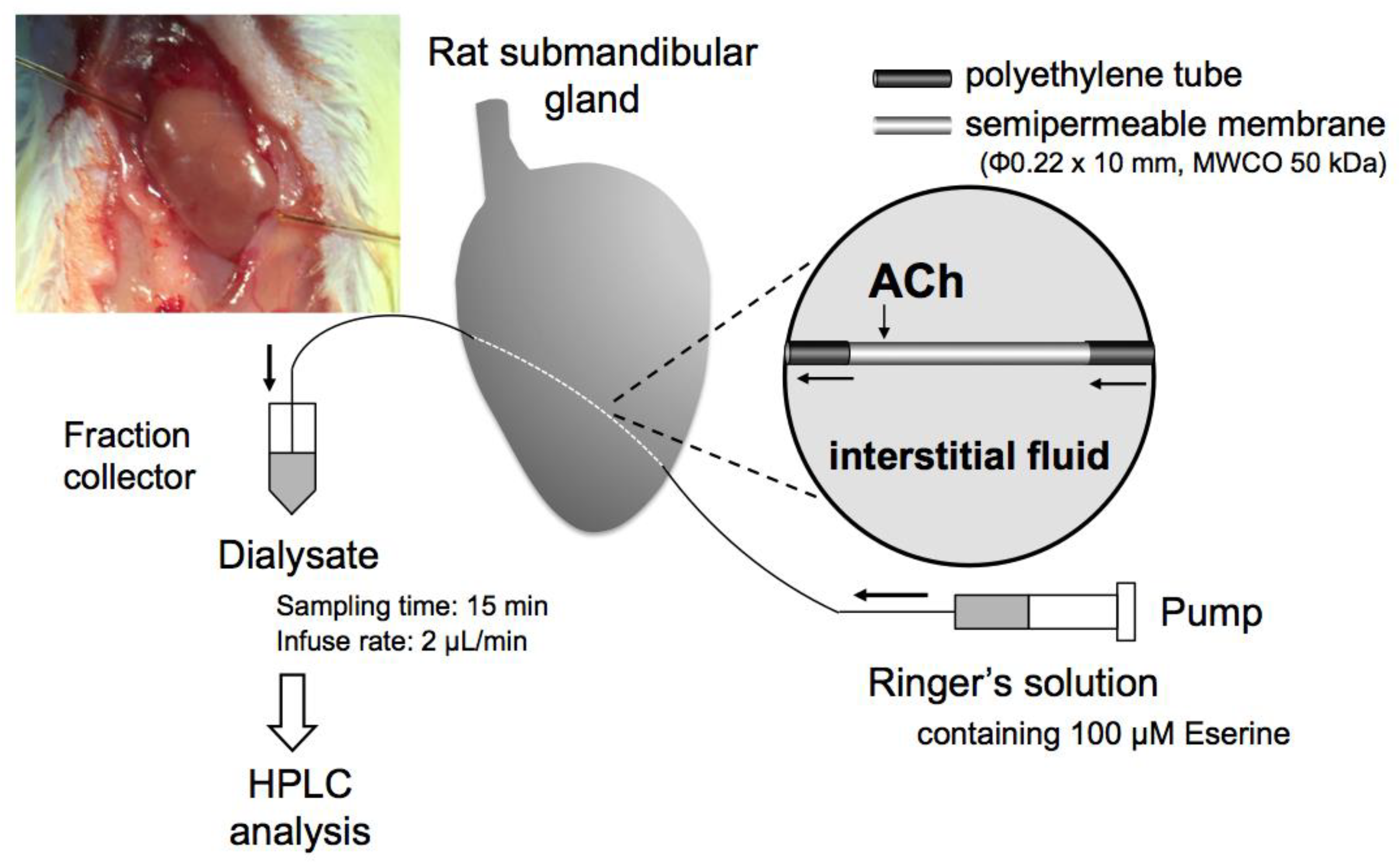
Stimulation of the parasympathetic nervous system results in the secretion of saliva. Previous studies have demonstrated acetylcholine content in homogenate obtained from salivary glands. Acetylcholine in homogenate, however, includes that stored in the cells, as well as that released in the interstitial fluid. The activity of the parasympathetic nervous system is mainly determined by the amount of acetylcholine released. We established an in vivo microdialysis method for monitoring the acetylcholine released from nerve endings in the salivary glands in rats. The results of the present study demonstrated that acetylcholine levels in the dialysate reflect acetylcholine levels in the interstitial fluid of the submandibular gland, and that an increase in the acetylcholine level in the dialysate depends predominantly on the release of acetylcholine from the parasympathetic nerve endings.
Abstract
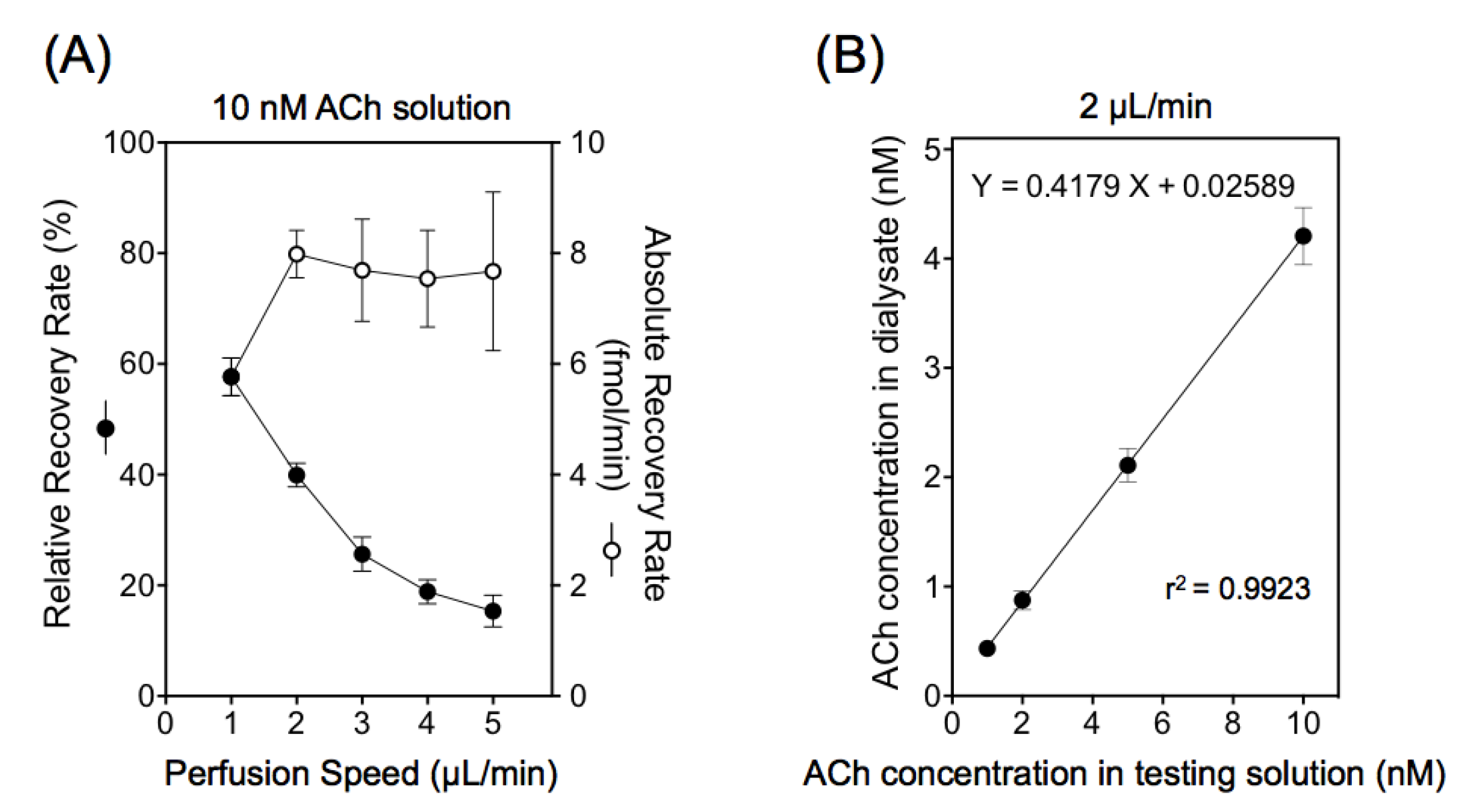
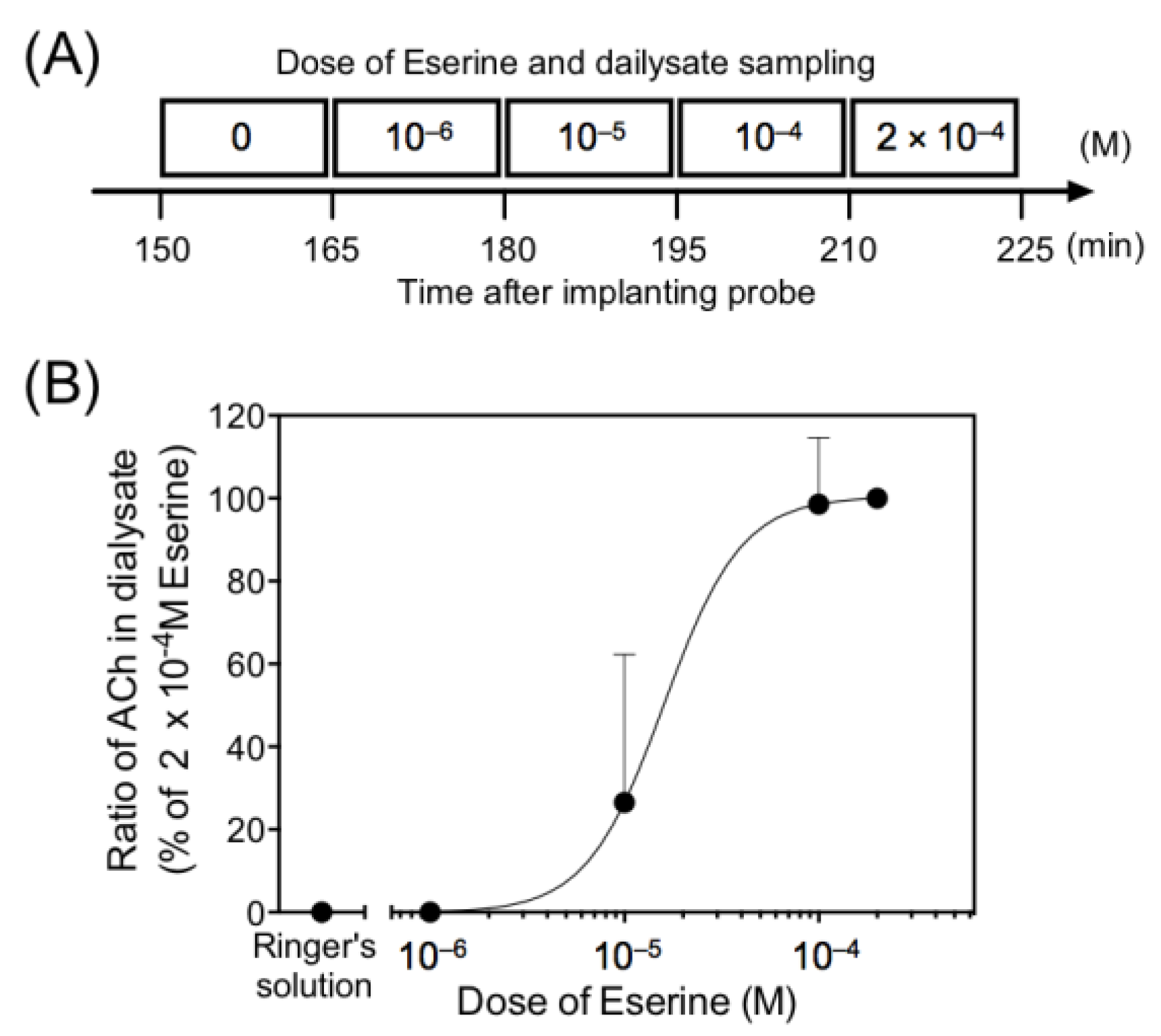
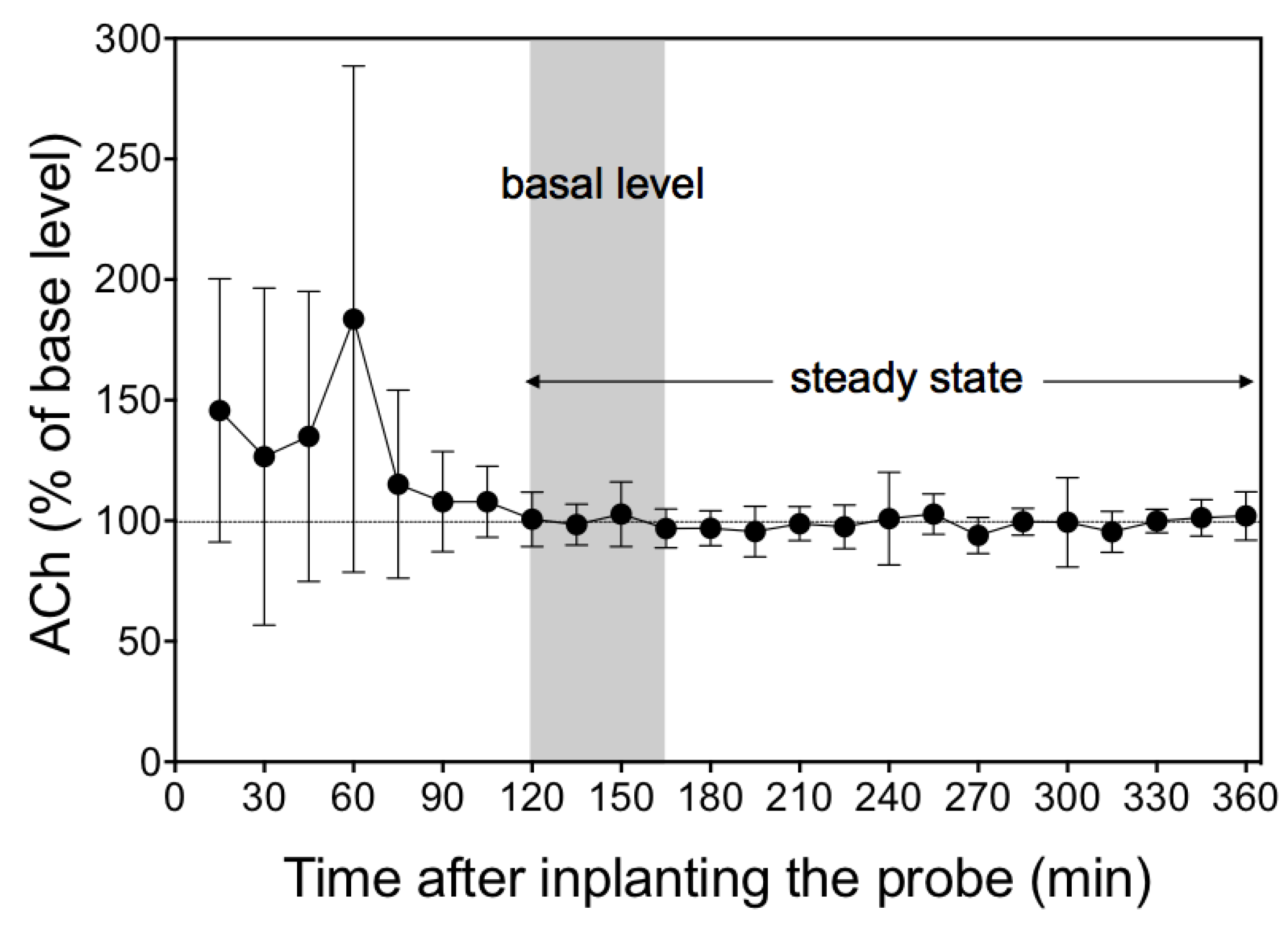
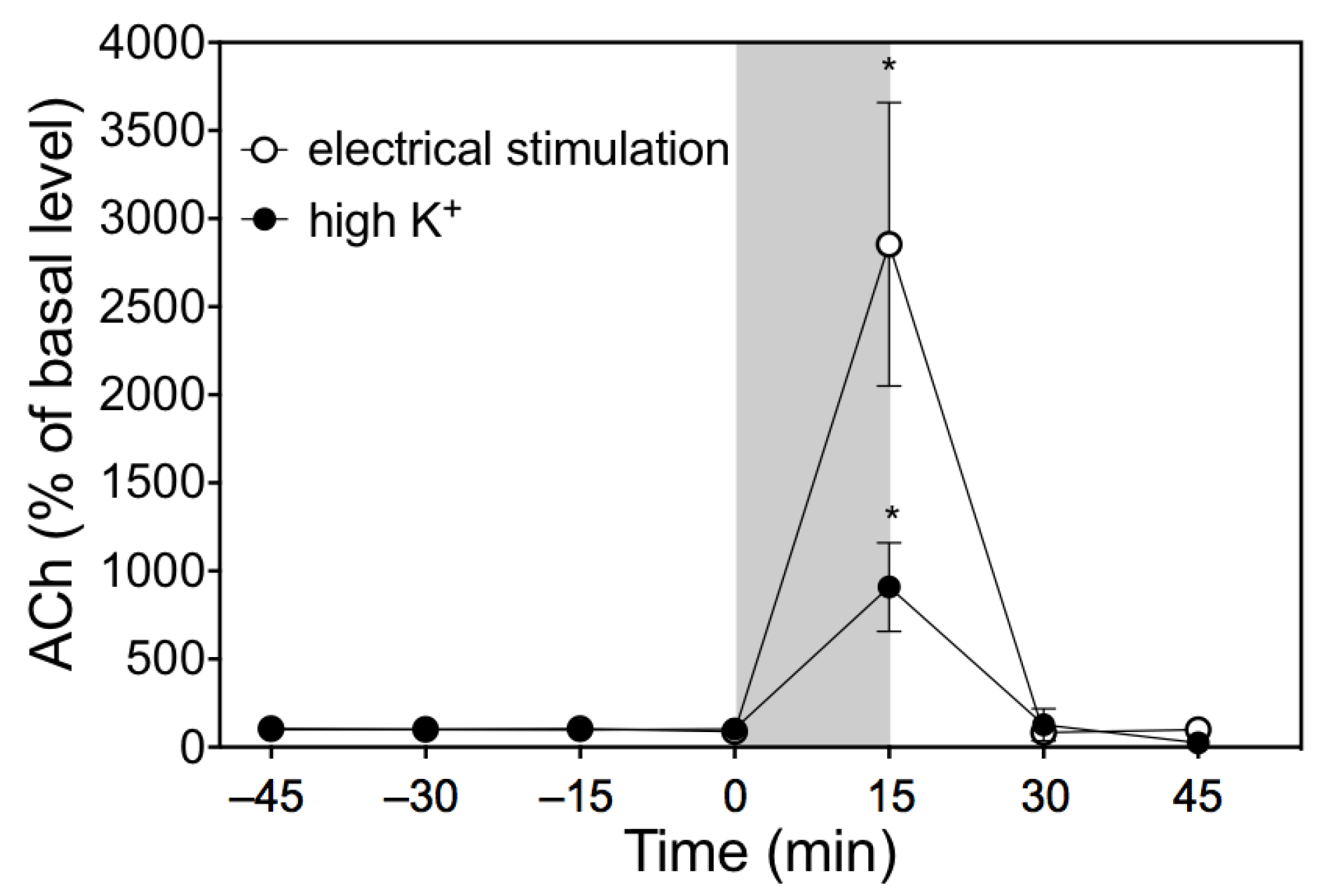
A microdialysis technique was used to monitor acetylcholine levels in the local interstitial fluid in rat submandibular glands, with the aim of determining parasympathetic nerve activity in vivo. The dialysis probe housed a 10 × 0.22 mm semipermeable membrane (molecular weight cutoffs: 50,000 Da). When the probe was perfused at 2 μL/min in vitro, the mean relative recovery of acetylcholine was 41.7% ± 2.5%. The dialysis probes were implanted in the submandibular glands of anesthetized rats and perfusion with Ringer’s solution, at 2 μL/min, was performed. Acetylcholine concentrations in the dialysate were measured by high-performance liquid chromatography and electrochemical detection. The results revealed the following: (1) that mixing Eserine with Ringer’s solution allowed acetylcholine in the salivary glands to be quantified; (2) that acetylcholine concentrations in the dialysate were highly variable and unstable over the first 120 min after probe implantation, but reached a nearly stable level (4.8 ± 2.7 nM) thereafter in the presence of 100 µM of Eserine; and (3) that electrical stimulation of the chorda tympani nerve, or perfusion with high potassium Ringer’s solution, significantly increased acetylcholine concentrations in the dialysate. These results indicate that the present microdialysis technique offers a powerful tool for detecting changes in parasympathetic activity within the salivary glands.
Keywords:
salivary gland; acetylcholine; microdialysis