Article

Fluoropolymer-Wrapped Conductive Threads for Textile Touch Sensors Operating via the Triboelectric Effect


Departments of Chemistry and Chemical Engineering, University of Massachusetts Amherst, Amherst, MA 01003, USA
*
Author to whom correspondence should be addressed.
Fibers 2018, 6(2), 41; https://doi.org/10.3390/fib6020041
Submission received: 3 May 2018 / Revised: 2 June 2018 / Accepted: 6 June 2018 / Published: 11 June 2018
(This article belongs to the Special Issue Smart Coatings on Fibers and Textiles)

Abstract

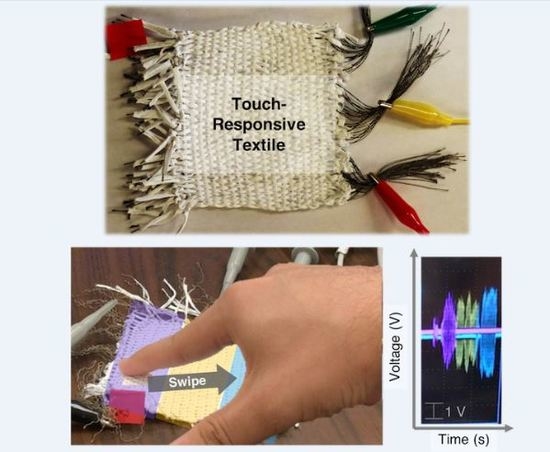
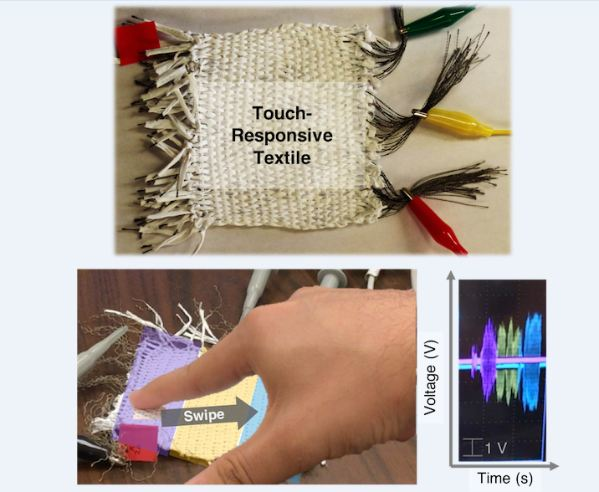
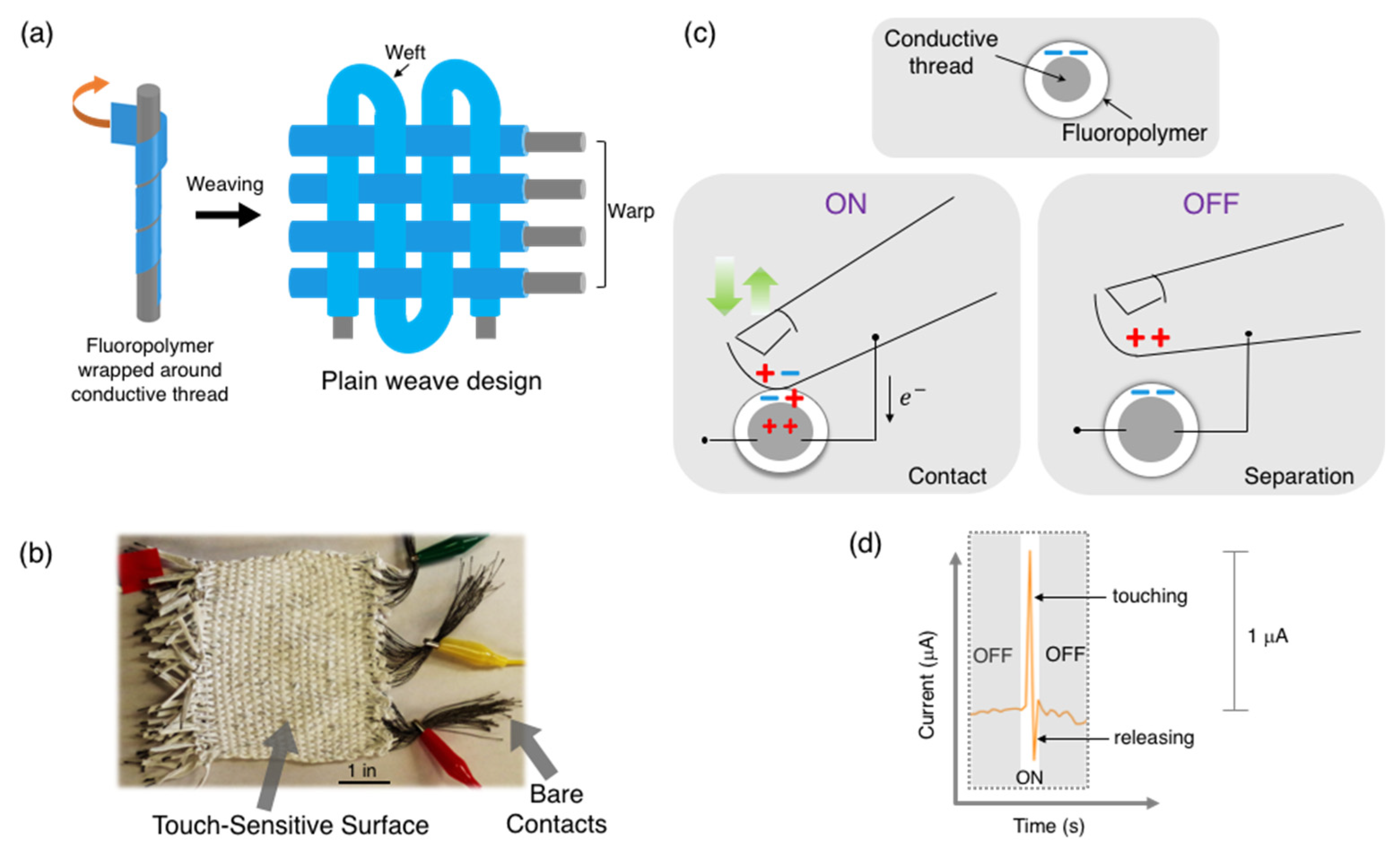
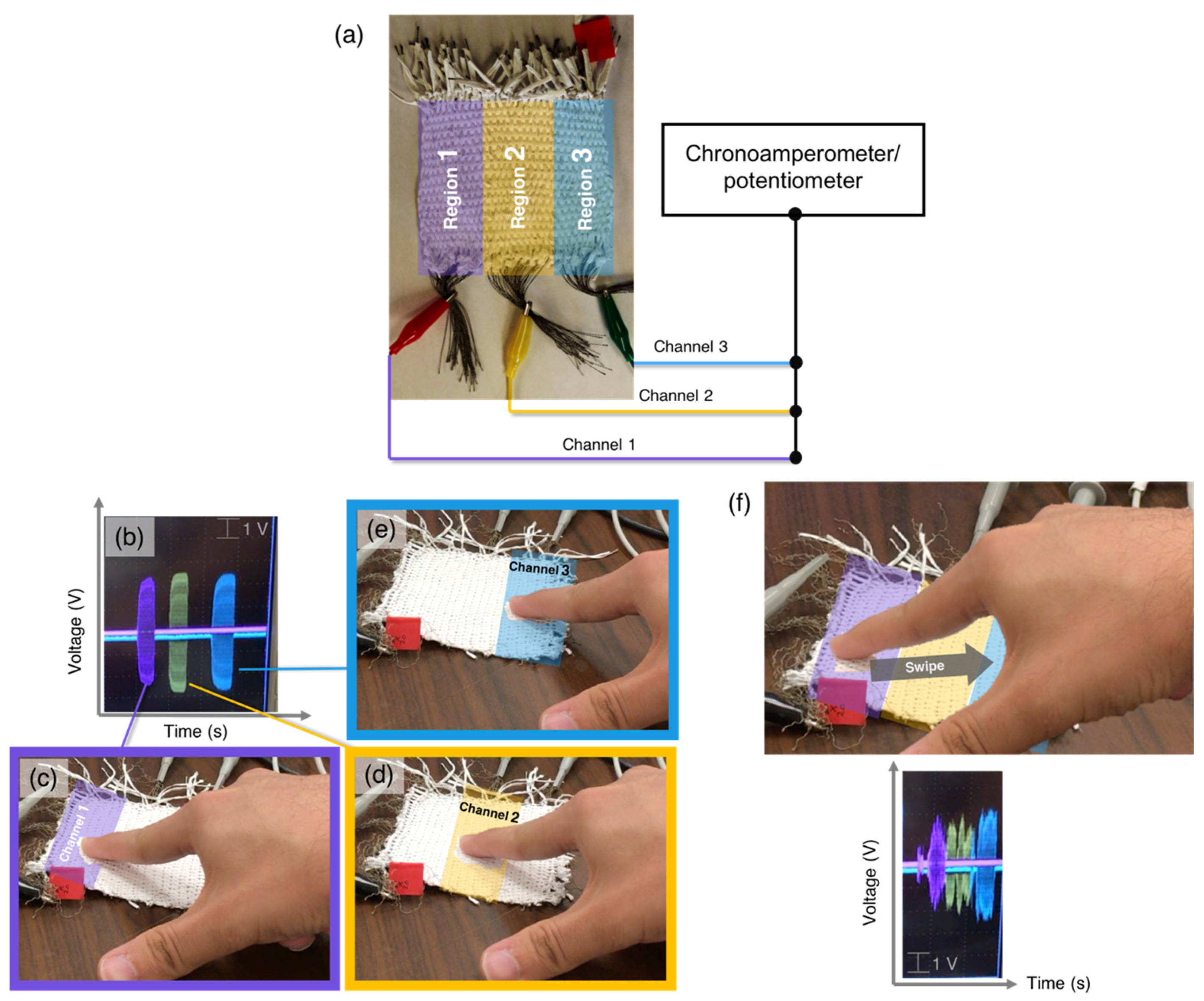
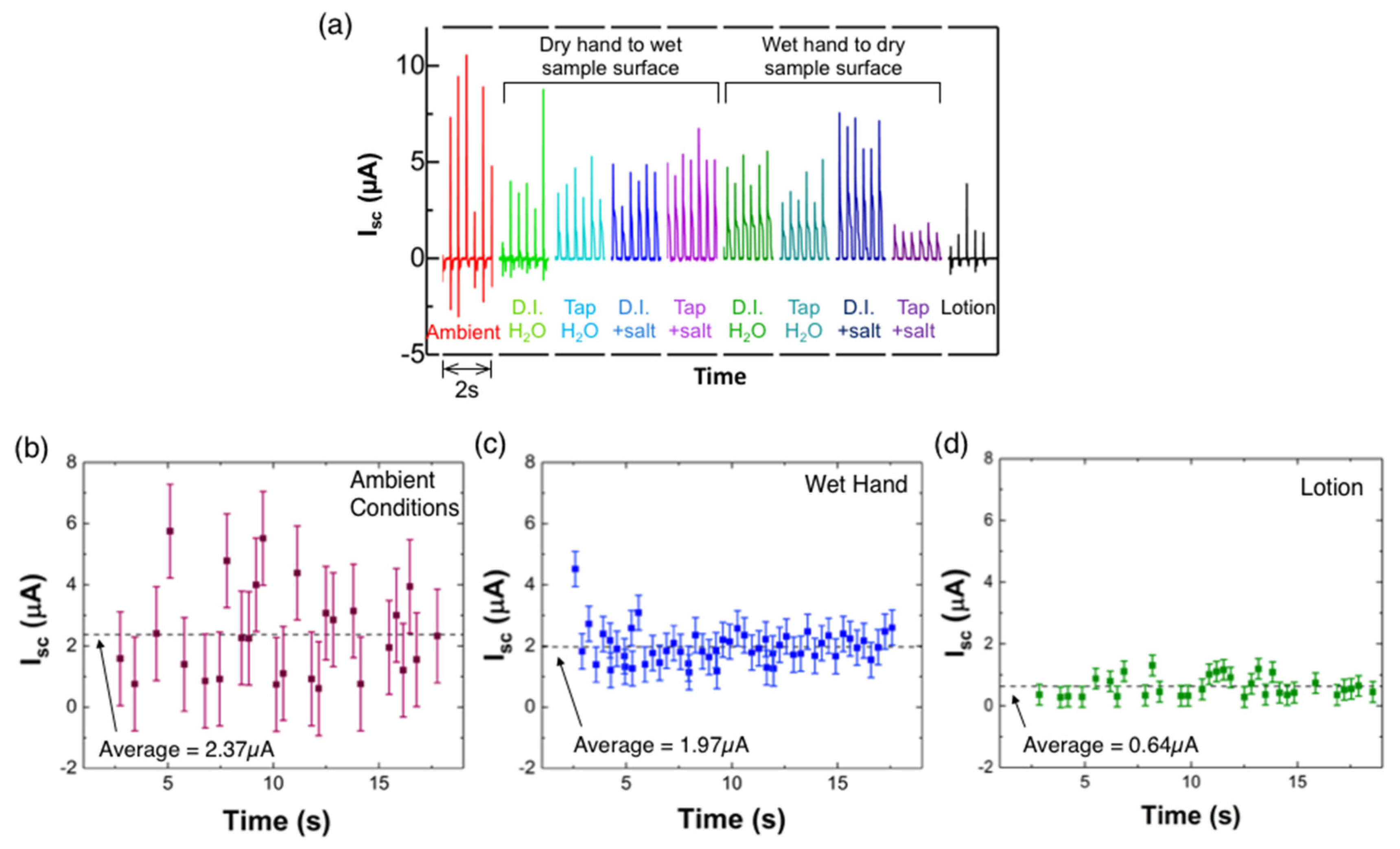
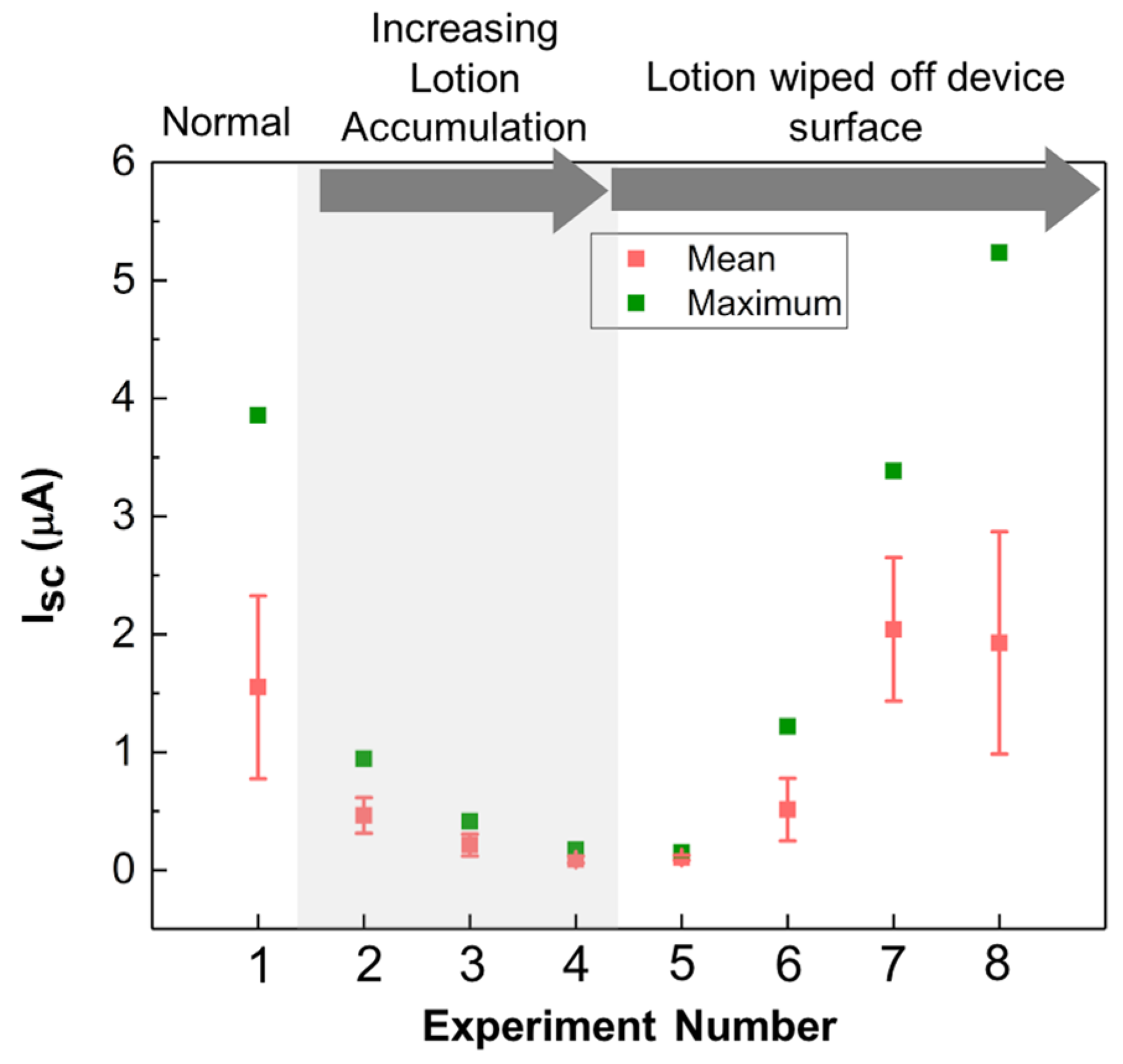
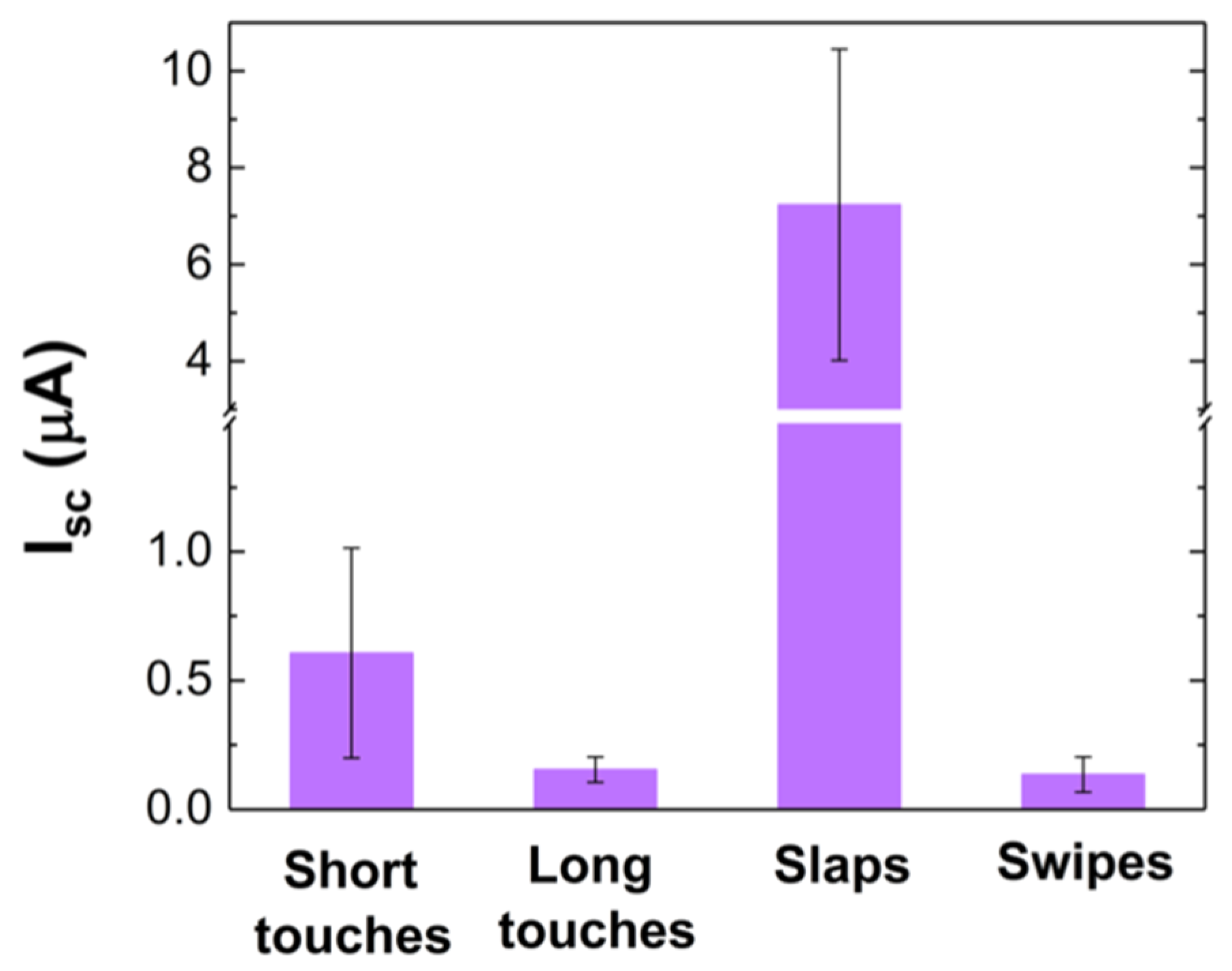
Touch-sensitive electrical arrays are the primary user interface for modern consumer electronics. Most contemporary touch sensors, including known iterations of textile-based touch sensors, function by detecting capacitive changes within a circuit resulting from direct skin contact. However, this method of operation fails when the user’s skin or the surface of the touch sensor is dirty, oily or wet, preventing practical use of textile-based touch sensors in real-world scenarios. Here, an electrically touch-responsive woven textile is described, which is composed of fluoropolymer-wrapped conductive threads. The fluoropolymer wrapping prevents contaminant buildup on the textile surface and also electrically insulates the conductive thread core. The woven textile touch sensor operates via surface potential changes created upon skin contact. This method of operation, called the triboelectric effect, has not been widely used to create textile touch sensors, to date. The influences of surface wetness and varying skin surface chemistry are studied, and the triboelectric textile touch sensors are found to be advantageously insensitive to these environmental variables, indicating that triboelectric textiles have promise for practical use as touch interfaces in furniture and interior design.
Keywords: textile electronics; plain weave; touch sensor; triboelectricity textile electronics; plain weave; touch sensor; triboelectricity
Graphical Abstract